FINAL ACCOUNTING E.MADHU LECTURER IN COMMERCE Introduction to Financial Accounting Systematic Process: Accounting involves a structured and organized approach to handling financial information. It follows a set of rules, principles, and
"FINAL ACCOUNTING E.MADHU LECTURER IN COMMERCE" is the property of its rightful owner. Permission is granted to
download and print the materials on this website for personal, non-commercial use only, and to display it
on your personal computer provided you do not modify the materials and that you retain all copyright
notices contained in the materials. By downloading content from our website, you accept the terms of this
agreement.
Presentation Transcript
01
FINAL ACCOUNTING E.MADHU
LECTURER IN COMMERCE<br>
02
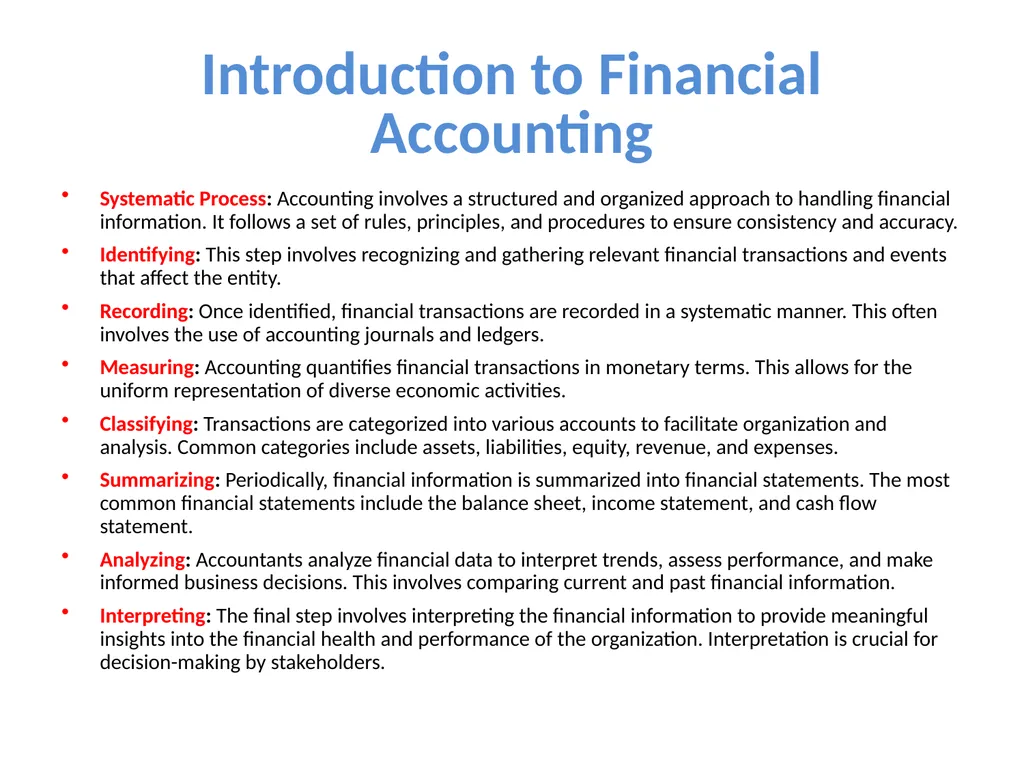
Introduction to Financial Accounting Systematic Process: Accounting involves a structured and organized approach to handling financial information. It follows a set of rules, principles, and procedures to ensure consistency and accuracy.
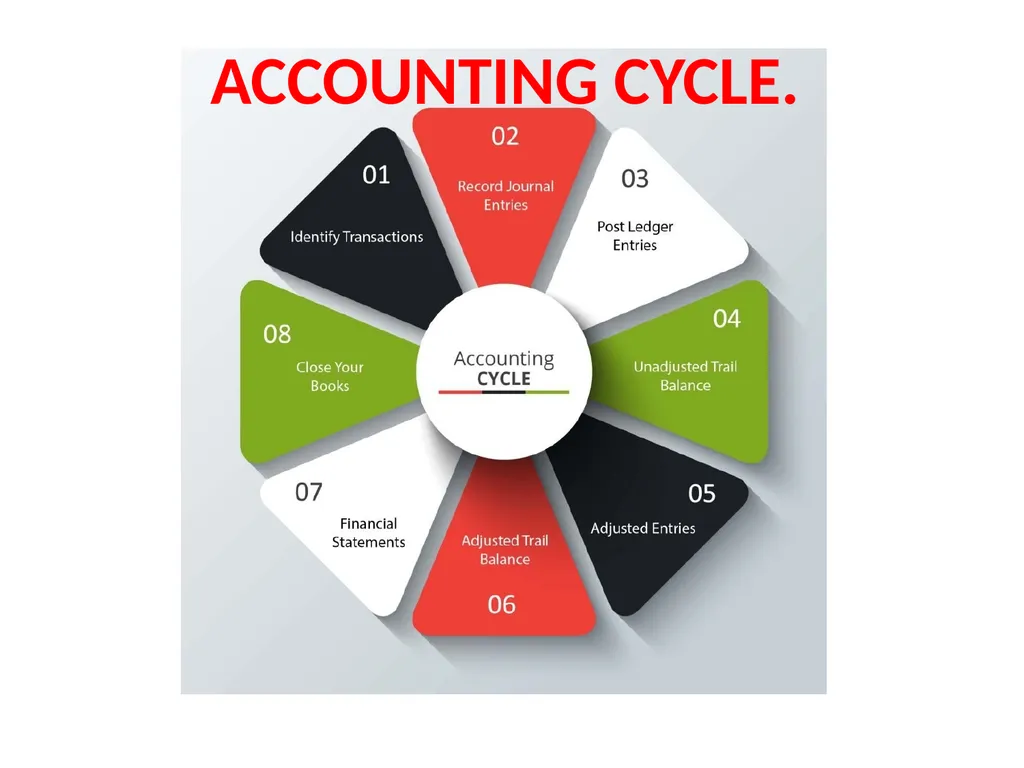
Identifying: This step involves recognizing and gathering relevant financial transactions and events that affect the entity.
Recording: Once identified, financial transactions are recorded in a systematic manner. This often involves the use of accounting journals and ledgers.
Measuring: Accounting quantifies financial transactions in monetary terms. This allows for the uniform representation of diverse economic activities.
Classifying: Transactions are categorized into various accounts to facilitate organization and analysis. Common categories include assets, liabilities, equity, revenue, and expenses.
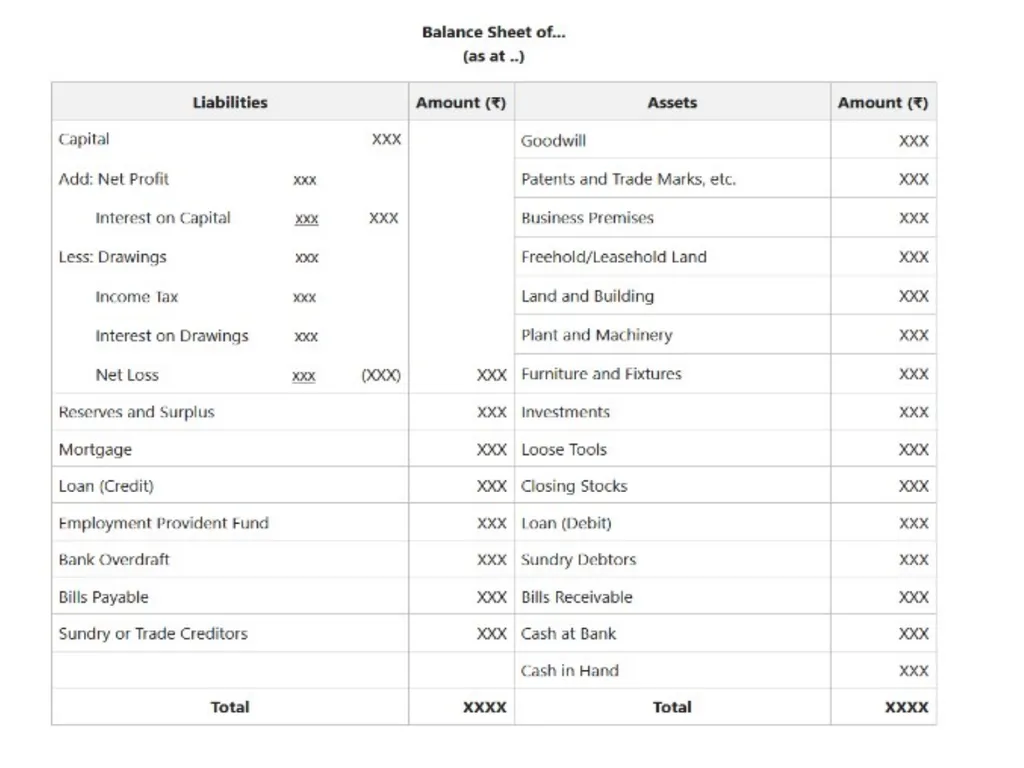
Summarizing: Periodically, financial information is summarized into financial statements. The most common financial statements include the balance sheet, income statement, and cash flow statement.
Analyzing: Accountants analyze financial data to interpret trends, assess performance, and make informed business decisions. This involves comparing current and past financial information.
Interpreting: The final step involves interpreting the financial information to provide meaningful insights into the financial health and performance of the organization. Interpretation is crucial for decision-making by stakeholders.<br>
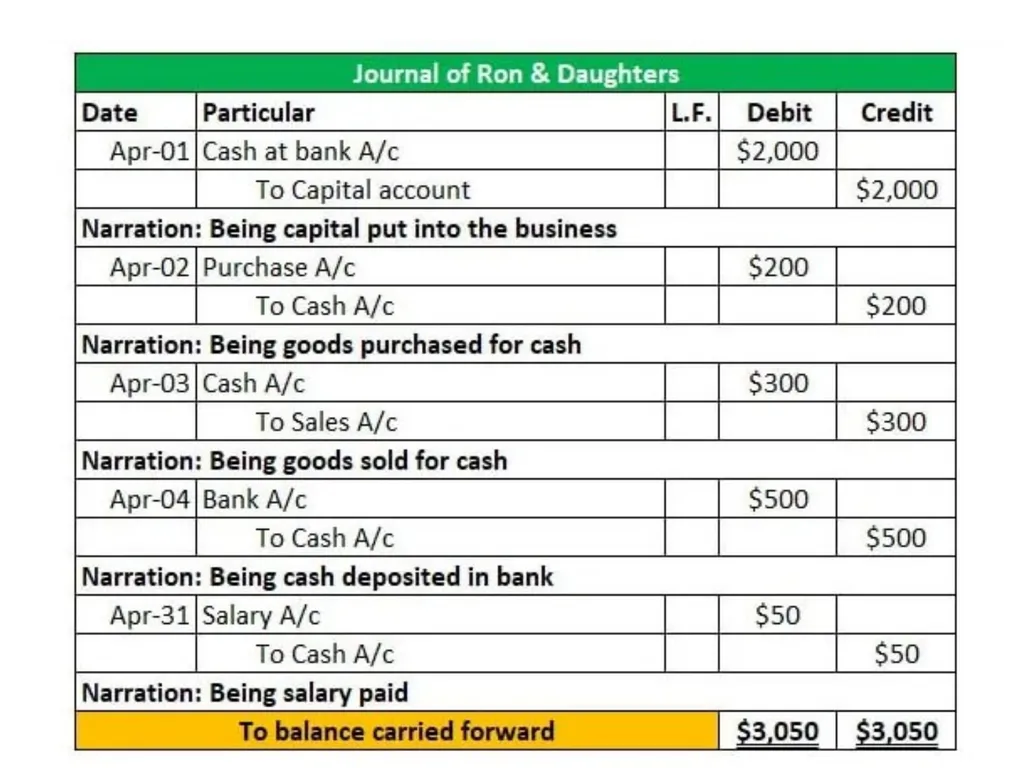
JOUNRAL A journal entry is a record of a business transaction in your business books.
In double-entry bookkeeping,
you make at least two journal entries for every transaction. Because a transaction can create a lot of changes in a business,
a bookkeeper tracks them all with journal entries.<br>
08
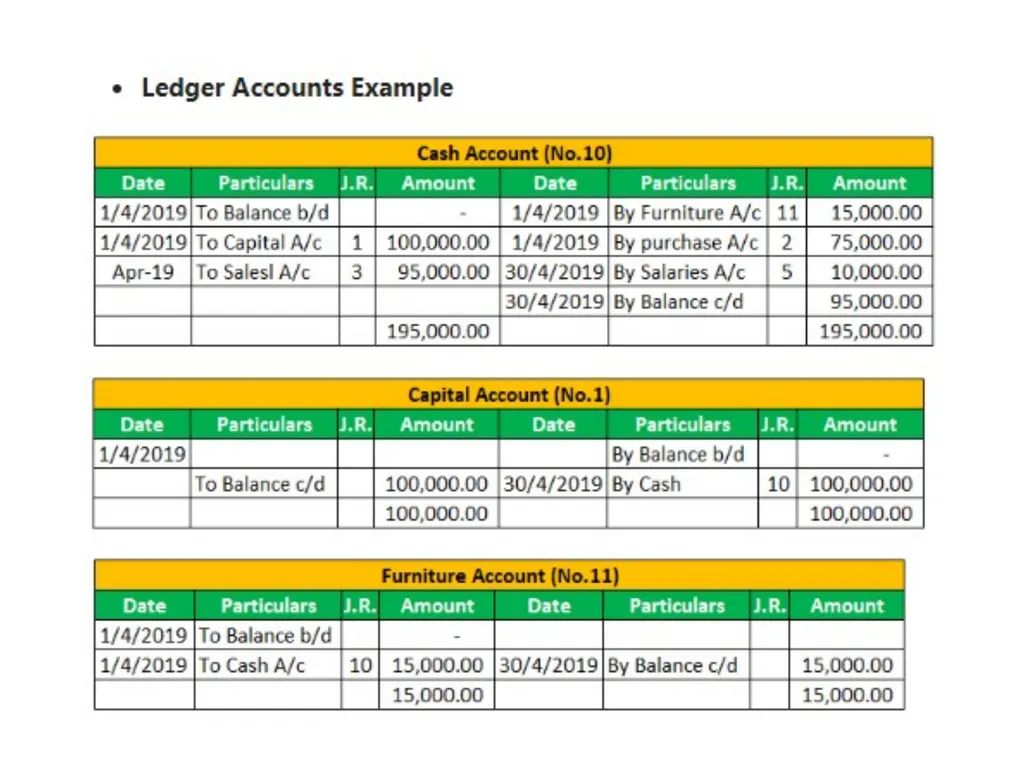
LEDGER A ledger is a record-keeping system that tracks financial transactions, assets, liabilities, and other economic activities.
It can refer to a book or electronic database used in accounting to maintain a chronological and systematic account of financial transactions.
In the context of blockchain, a ledger often refers to a decentralized and transparent record of transactions.<br>
09
Example
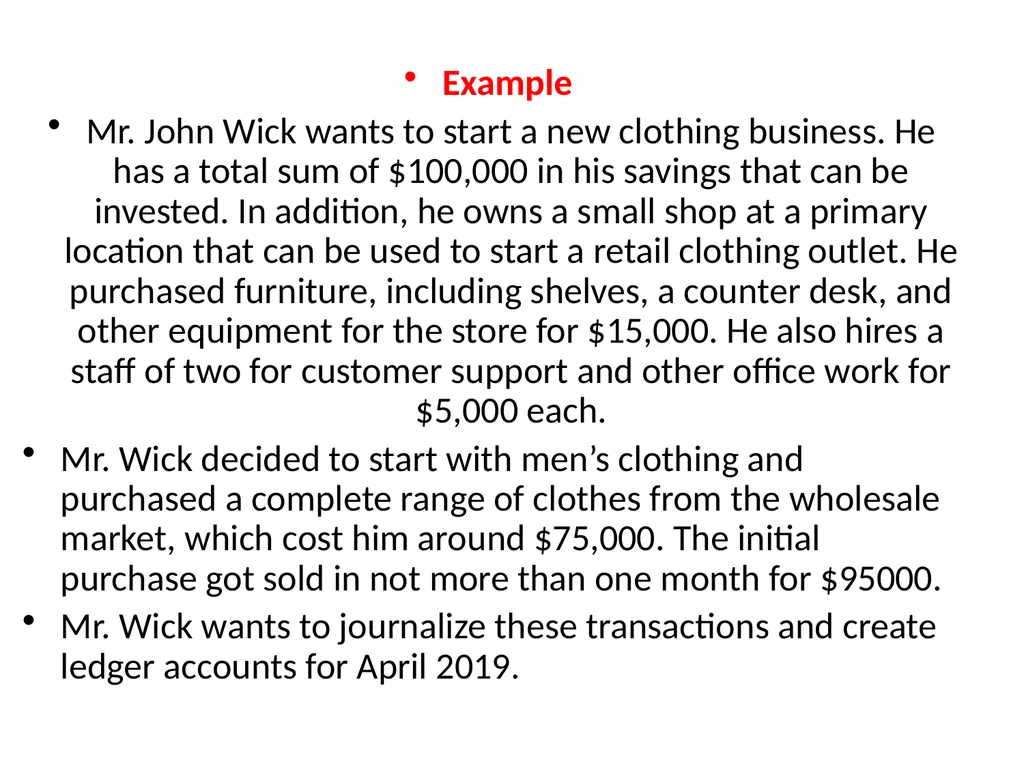
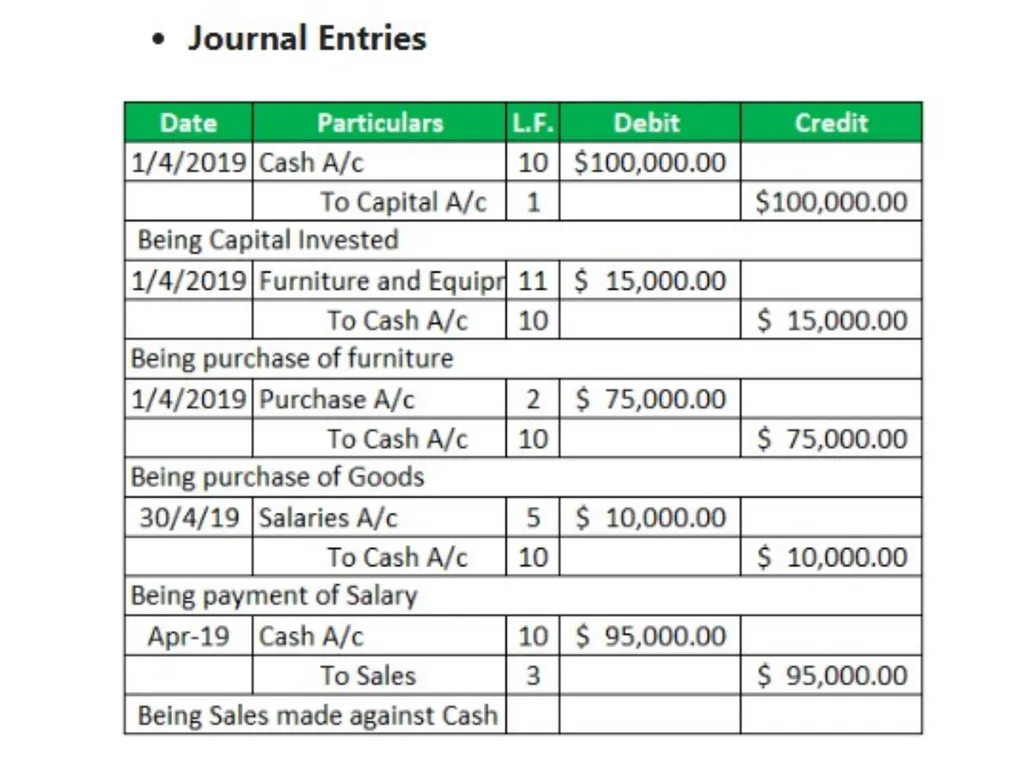
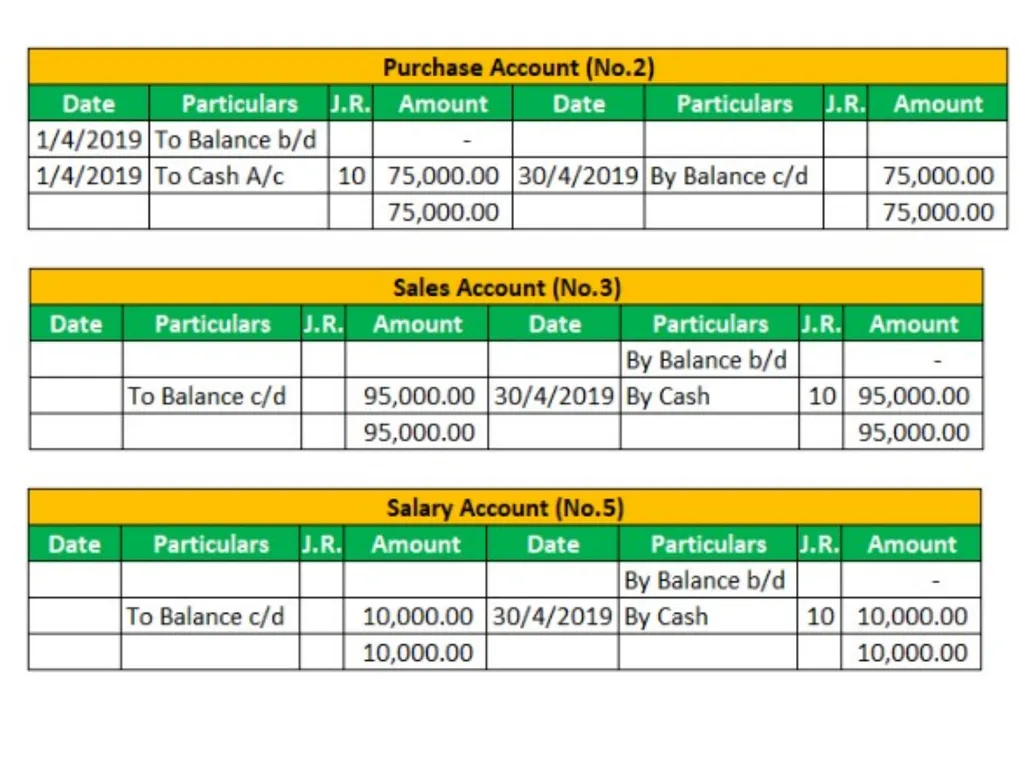
Mr. John Wick wants to start a new clothing business. He has a total sum of $100,000 in his savings that can be invested. In addition, he owns a small shop at a primary location that can be used to start a retail clothing outlet. He purchased furniture, including shelves, a counter desk, and other equipment for the store for $15,000. He also hires a staff of two for customer support and other office work for $5,000 each.
Mr. Wick decided to start with men’s clothing and purchased a complete range of clothes from the wholesale market, which cost him around $75,000. The initial purchase got sold in not more than one month for $95000.
Mr. Wick wants to journalize these transactions and create ledger accounts for April 2019.<br>
10
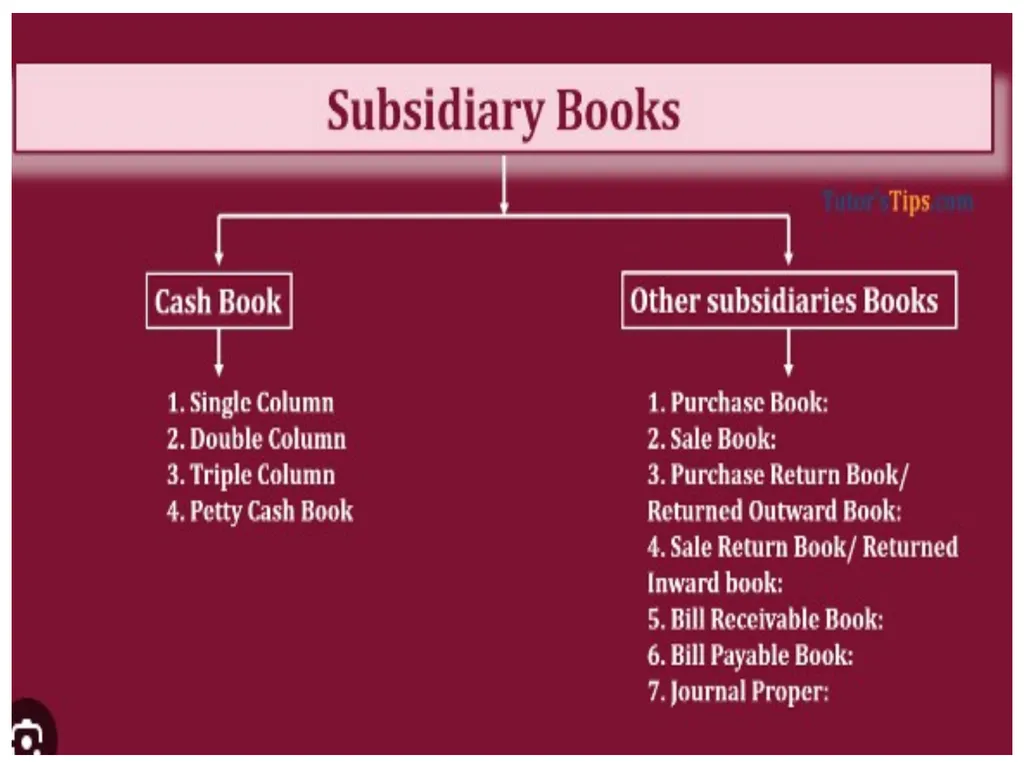
SUBSIDIARY BOOKS Subsidiary Books are books of Original Entry. They are also known as Day Book or special journals.
We record transactions of similar nature are in Subsidiary Books.
They are helpful in overcoming the limitations of journal book or journal entries.<br>
11
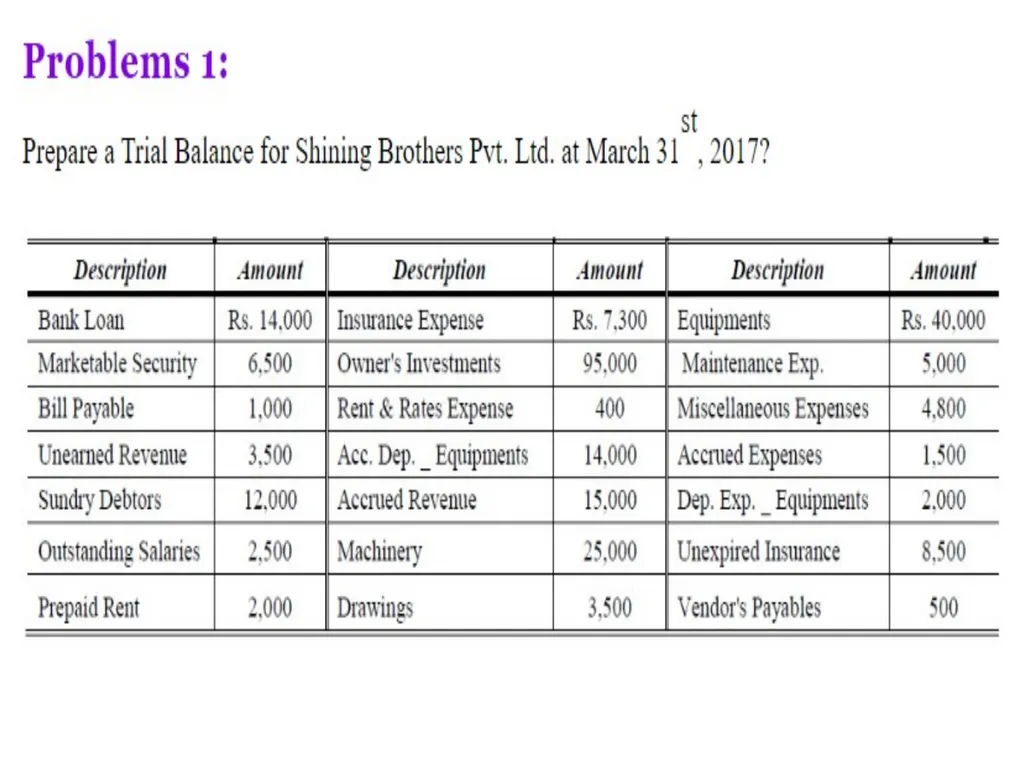
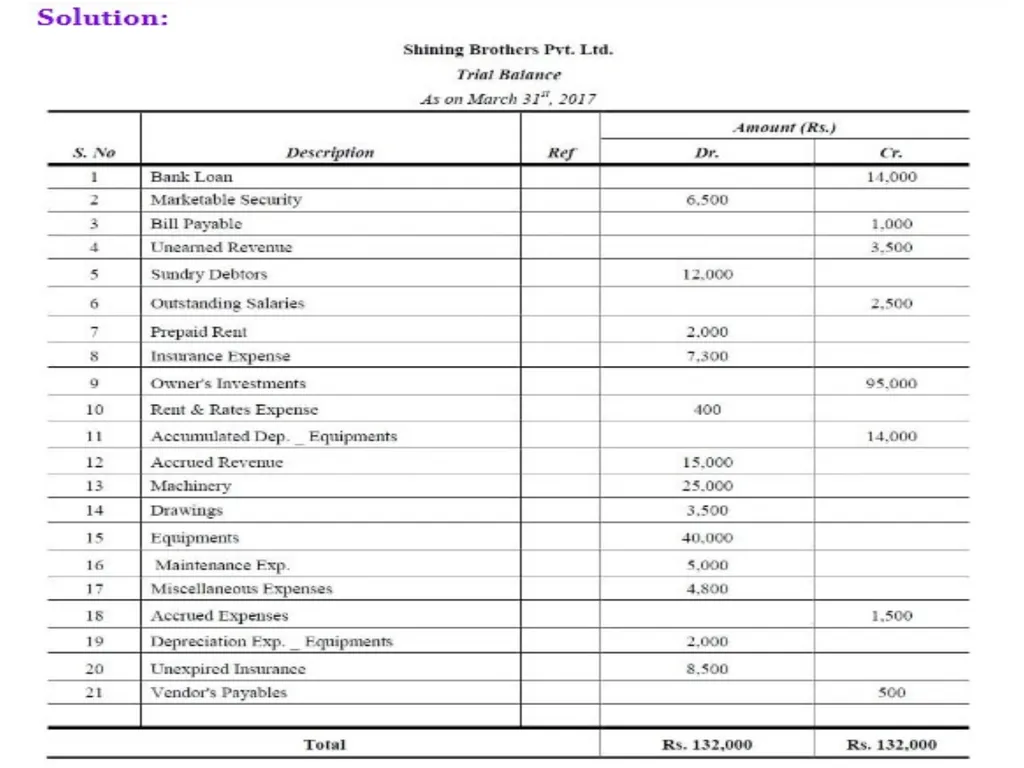
TRAIL BALANCE The basis of final accounts is the trial balance. The trial balance includes all the balances of the ledger accounts, including the account balances of expenses, revenue, assets, liabilities, capital, and drawings.
A trial balance has two columns: debit and credit.<br>
12
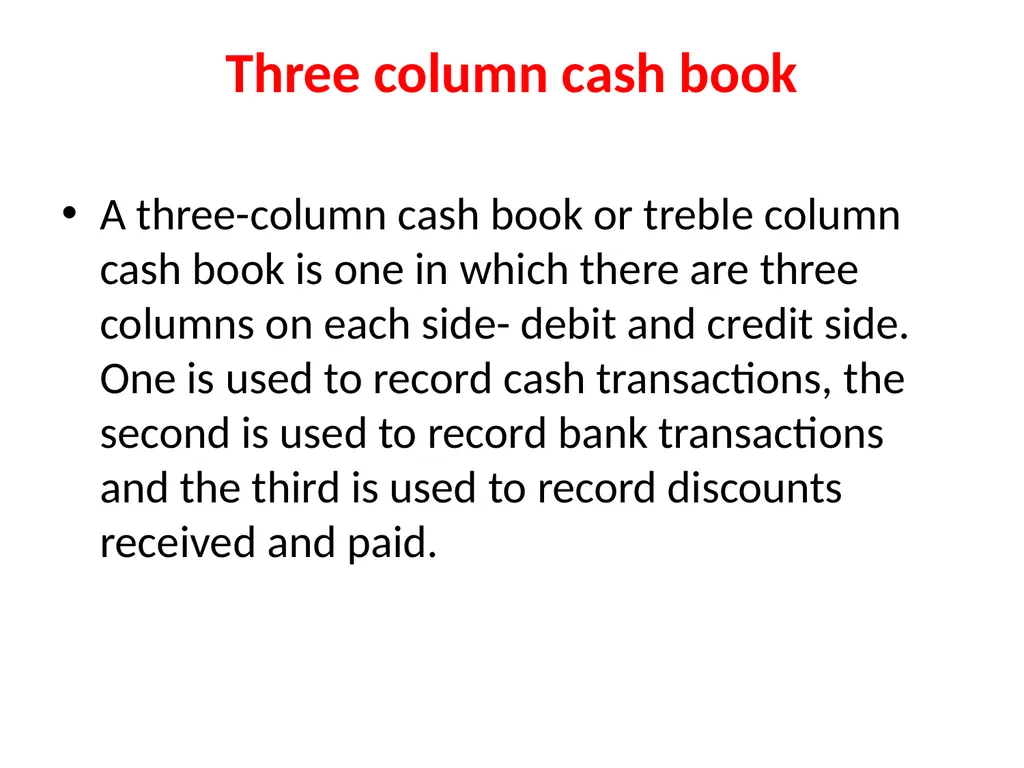
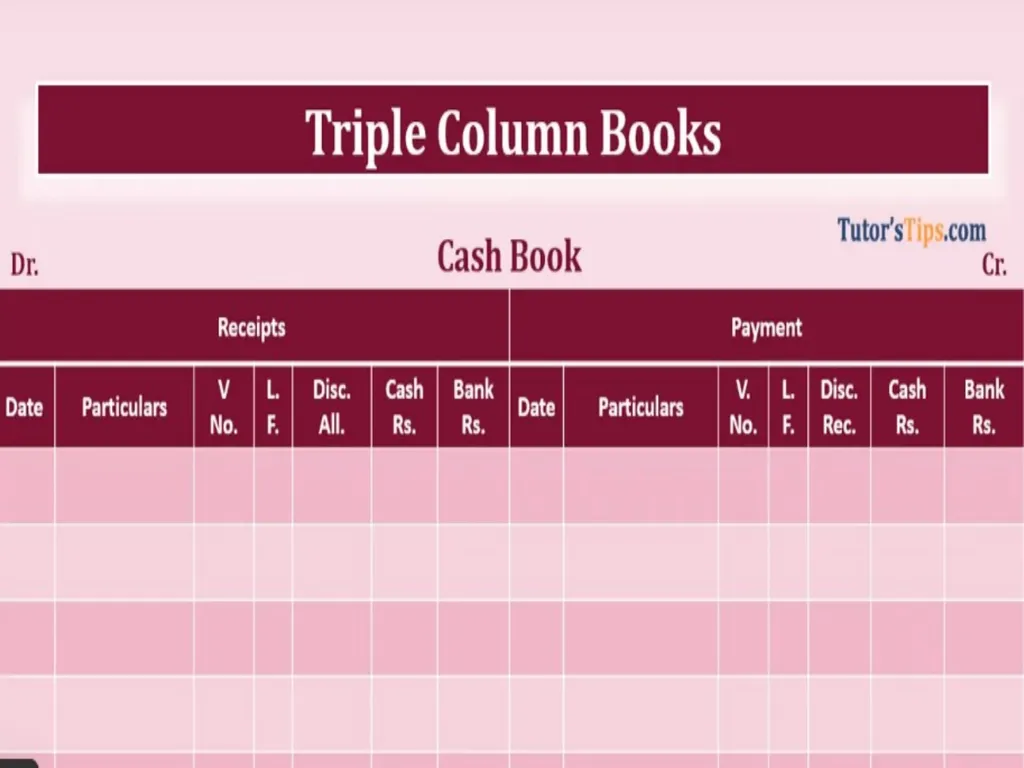
Three column cash book A three-column cash book or treble column cash book is one in which there are three columns on each side- debit and credit side. One is used to record cash transactions, the second is used to record bank transactions and the third is used to record discounts received and paid.<br>
13
Contra entry Contra entry represents deposits or withdrawals of cash from bank or vice-versa. The purpose of contra entry is to indicate the transactions that affect both cash and bank balances.
This entry does not affect the financial positions of a business.<br>
14
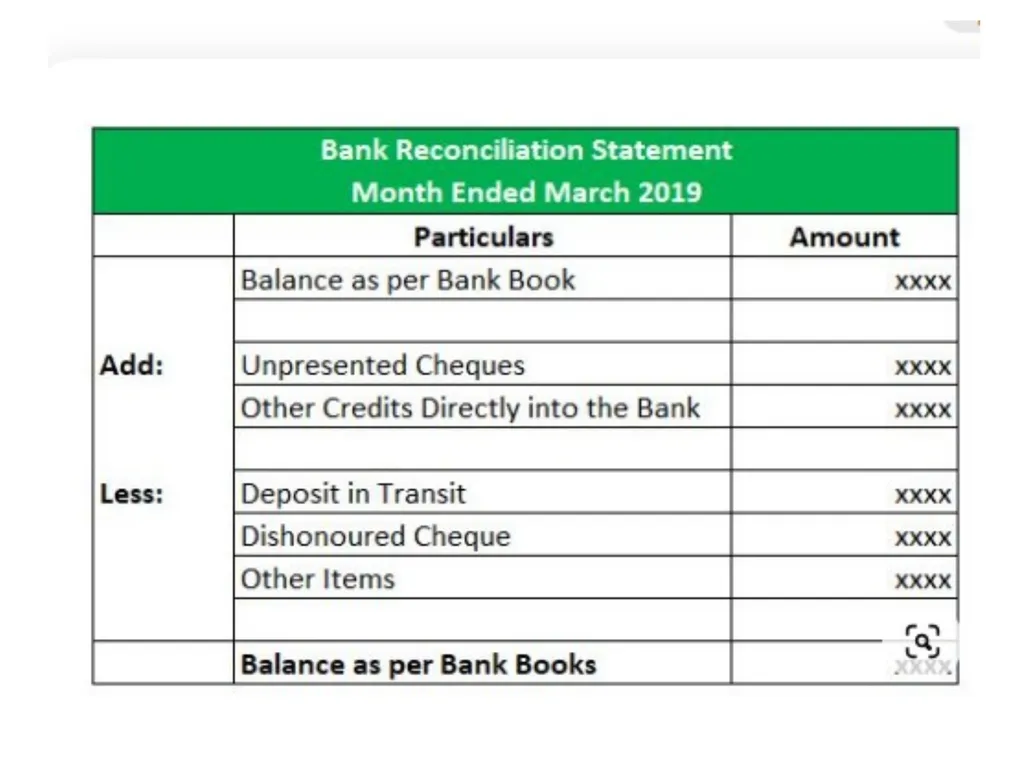
Bank reconciliation statement A bank reconciliation statement is a summary of all the transactions (deposits, withdrawals, extra charges and interest) on a company's bank account and its equation with its financial records.<br>
15
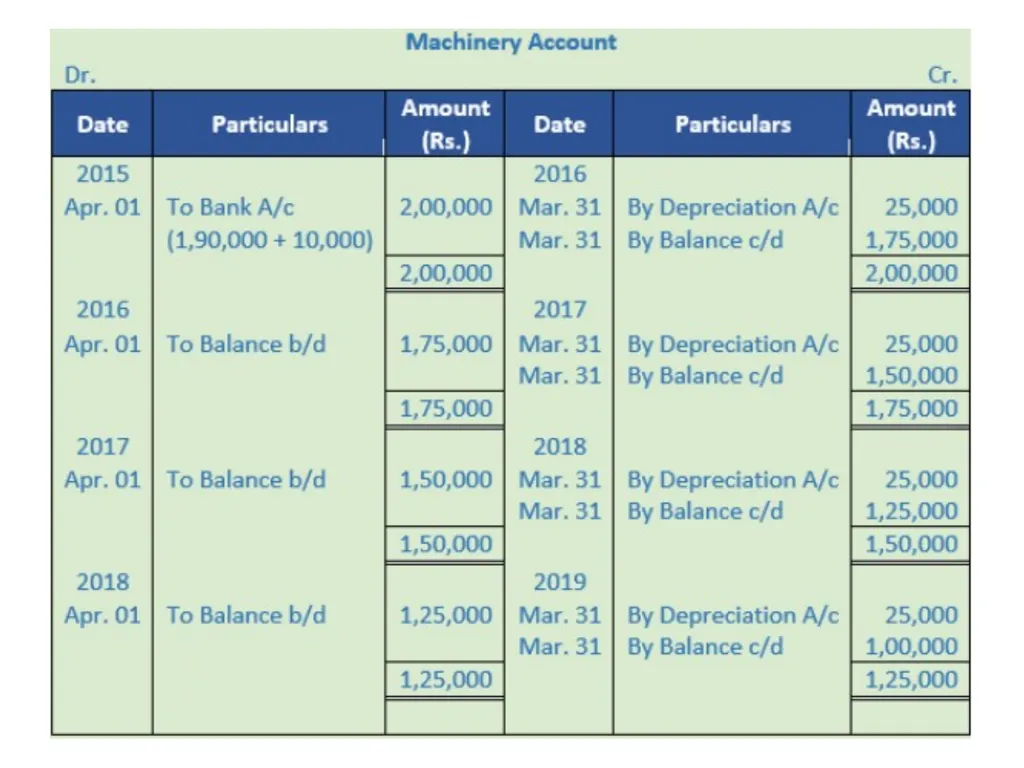
Depreciation is an accounting Depreciation is an accounting practice used to spread the cost of a tangible or physical asset over its useful life.
Depreciation represents how much of the asset's value has been used up in any given time period.<br>
16
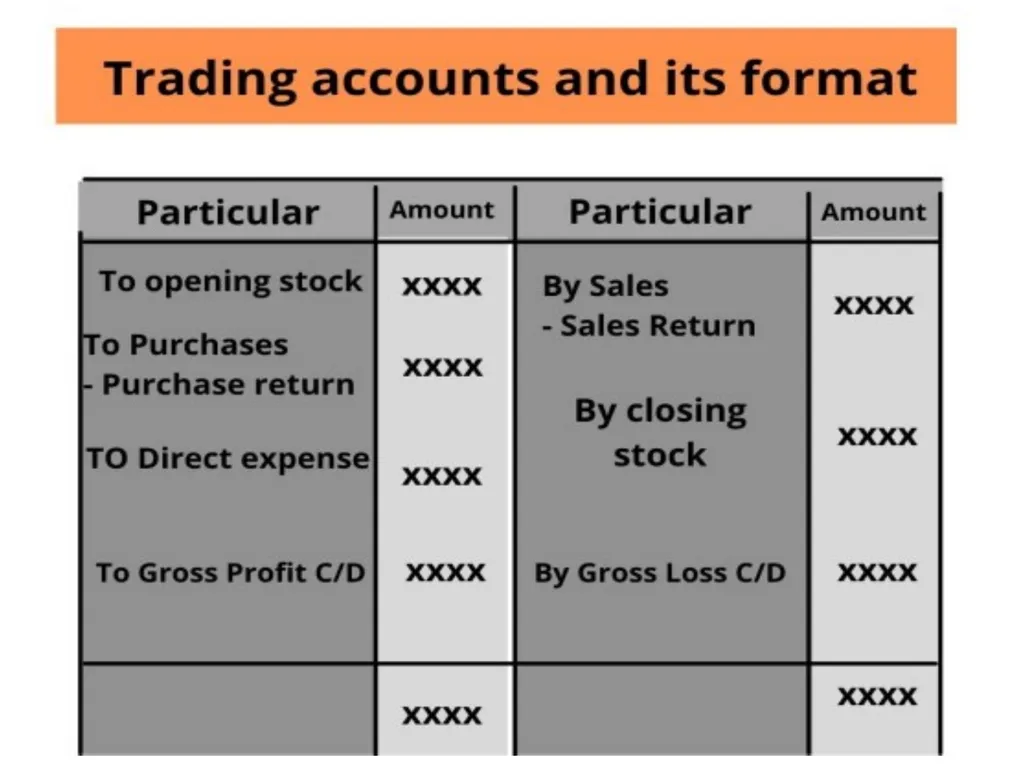
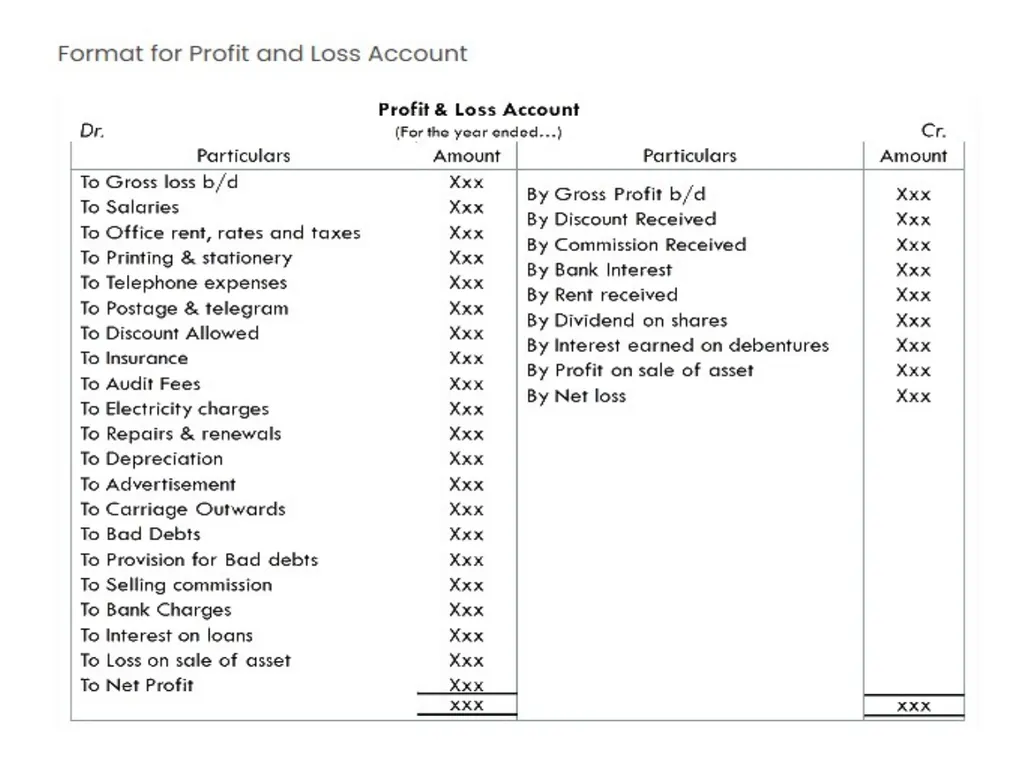
Final accounts. Final accounts are those accounts that are prepared by a joint stock company at the end of a fiscal year.
The purpose of creating final accounts is to provide a clear picture of the financial position of the organisation to its management, owners, or any other users of such accounting information.<br>