Finance Basics The Financial Analysis had to Consider Both Criteria profits cash flow Basic Assessment 3 Project can earn an adequate rate of return based on market Weighted Average Cost of Capital. Basic Assessment Project cash flow is
"Finance Basics The Financial Analysis had to" is the property of its rightful owner. Permission is granted to
download and print the materials on this website for personal, non-commercial use only, and to display it
on your personal computer provided you do not modify the materials and that you retain all copyright
notices contained in the materials. By downloading content from our website, you accept the terms of this
agreement.
Presentation Transcript
01
Finance Basics<br>
02
The Financial Analysis had to Consider Both Criteria profits cash flow<br>
03
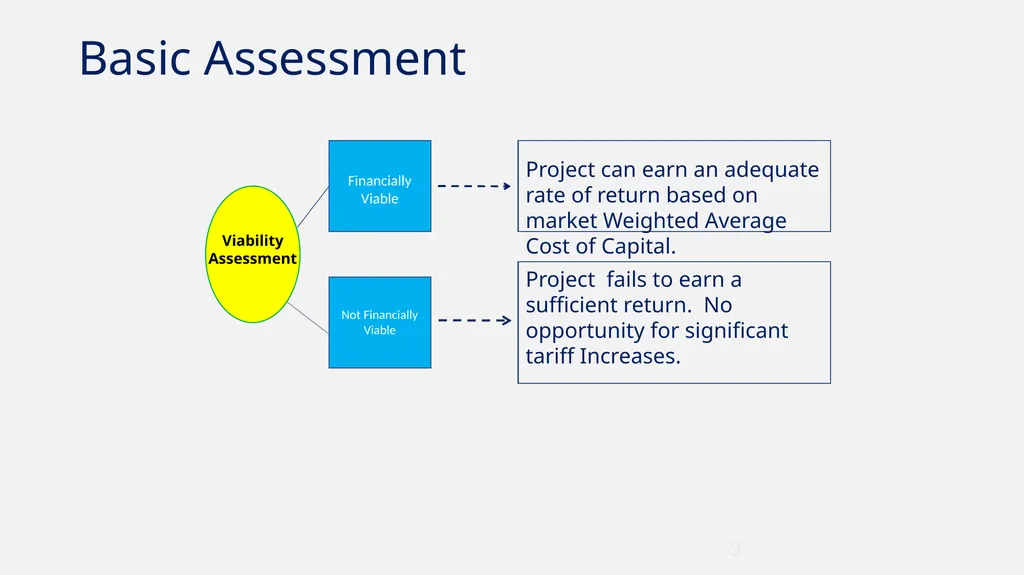
Basic Assessment 3 Project can earn an adequate rate of return based on market Weighted Average Cost of Capital.<br>
04
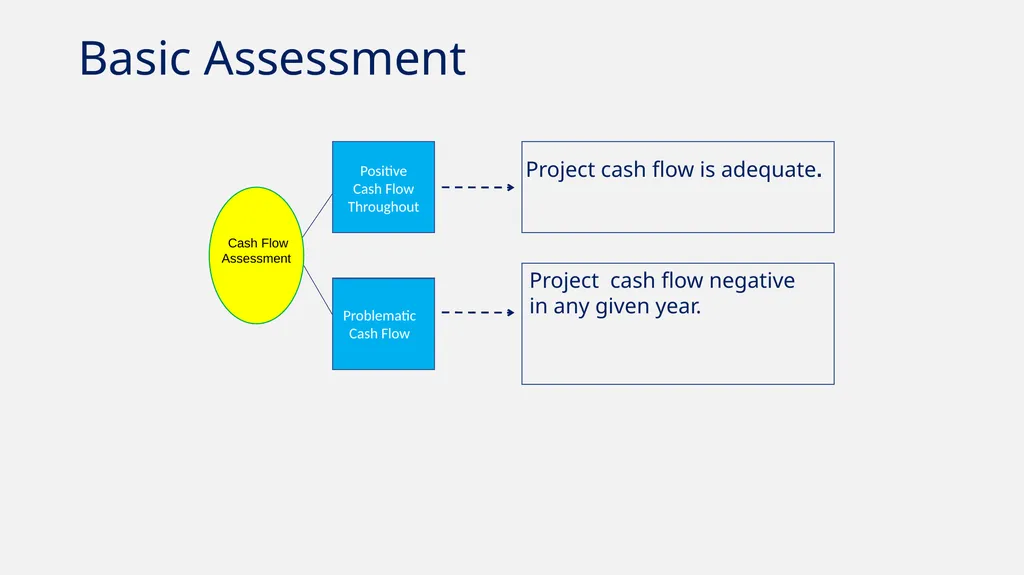
Basic Assessment Project cash flow is adequate. Problematic Cash Flow<br>
05
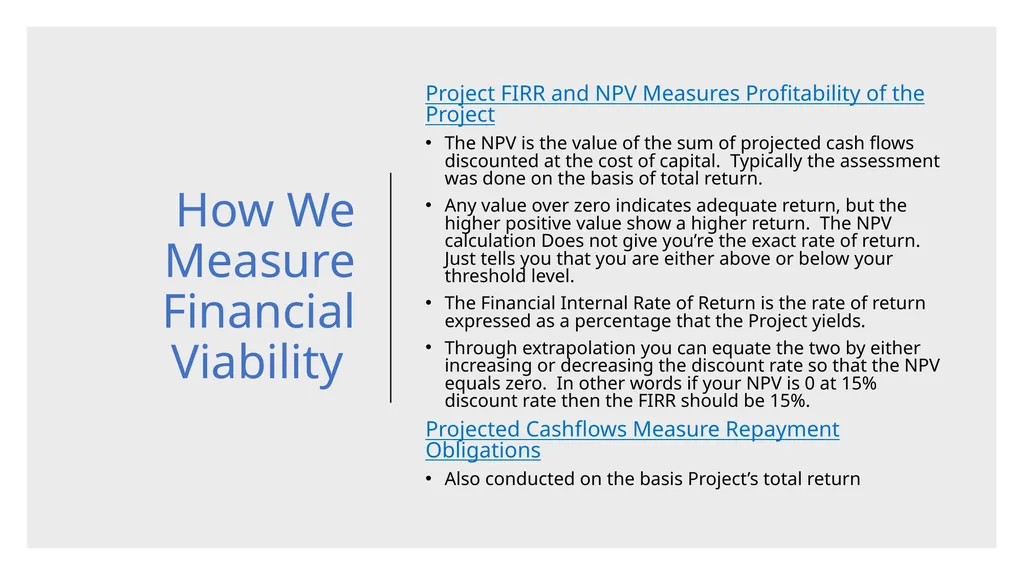
How We Measure Financial Viability Project FIRR and NPV Measures Profitability of the Project
The NPV is the value of the sum of projected cash flows discounted at the cost of capital. Typically the assessment was done on the basis of total return.
Any value over zero indicates adequate return, but the higher positive value show a higher return. The NPV calculation Does not give you’re the exact rate of return. Just tells you that you are either above or below your threshold level.
The Financial Internal Rate of Return is the rate of return expressed as a percentage that the Project yields.
Through extrapolation you can equate the two by either increasing or decreasing the discount rate so that the NPV equals zero. In other words if your NPV is 0 at 15% discount rate then the FIRR should be 15%.
Projected Cashflows Measure Repayment Obligations
Also conducted on the basis Project’s total return<br>
06
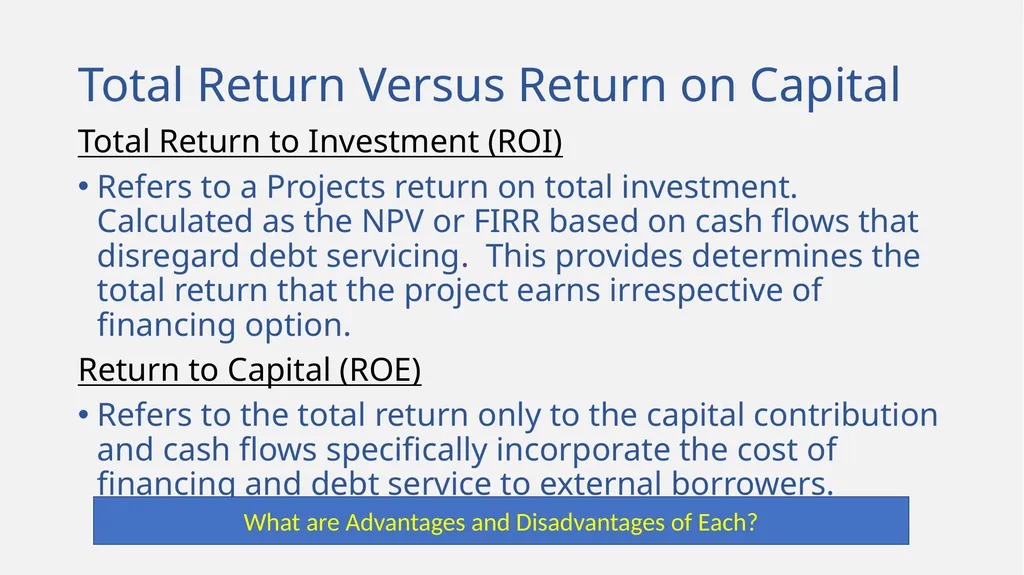
Total Return Versus Return on Capital Total Return to Investment (ROI)
Refers to a Projects return on total investment. Calculated as the NPV or FIRR based on cash flows that disregard debt servicing. This provides determines the total return that the project earns irrespective of financing option.
Return to Capital (ROE)
Refers to the total return only to the capital contribution and cash flows specifically incorporate the cost of financing and debt service to external borrowers. What are Advantages and Disadvantages of Each?<br>
07
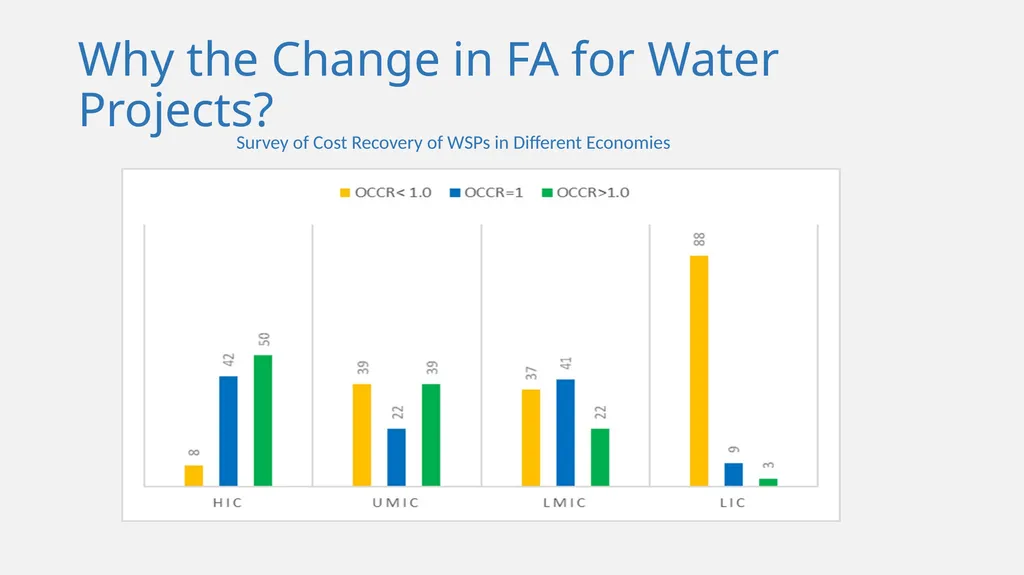
Why the Change in FA for Water Projects? Survey of Cost Recovery of WSPs in Different Economies<br>
08
Why the Change? How Meaningful is a Project FIRR in an Environment Where Most WSPs Have Difficulty Recovering Even their O&M Costs?
How Meaningful is the Project’s cash flow?<br>
09
What Does it Take to Become Financially Sustainable?<br>
10
If Money Could Truly Grow on Trees<br>
11
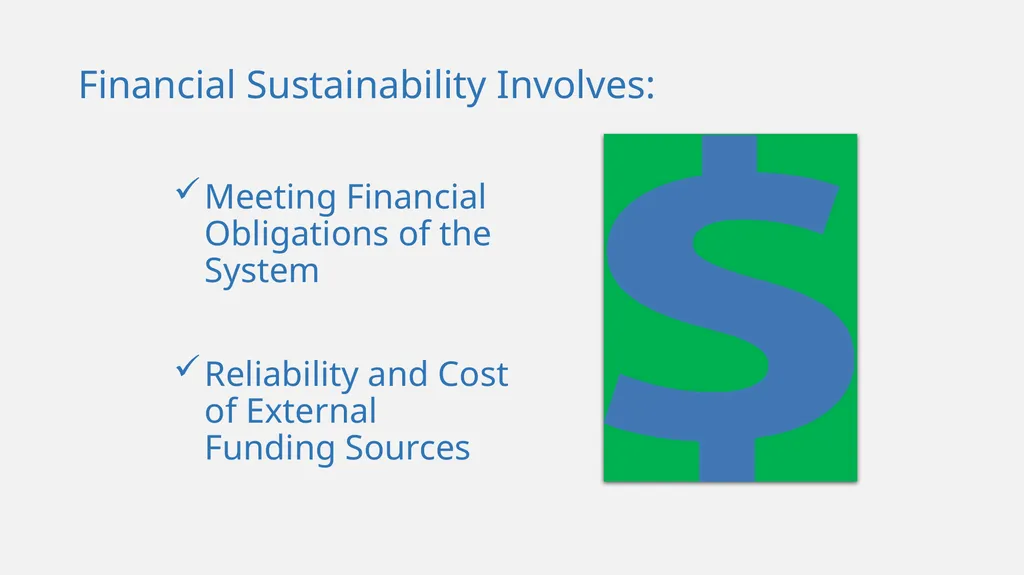
Financial Sustainability Involves: Meeting Financial Obligations of the System
Reliability and Cost of External Funding Sources<br>
12
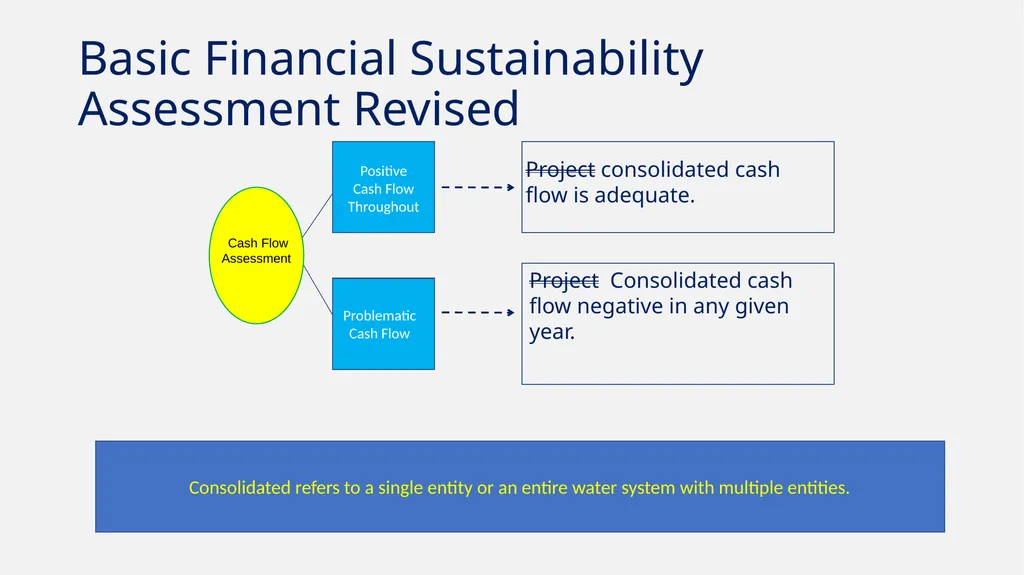
Basic Financial Sustainability Assessment Revised Project consolidated cash flow is adequate. Problematic Cash Flow Consolidated refers to a single entity or an entire water system with multiple entities.<br>
13
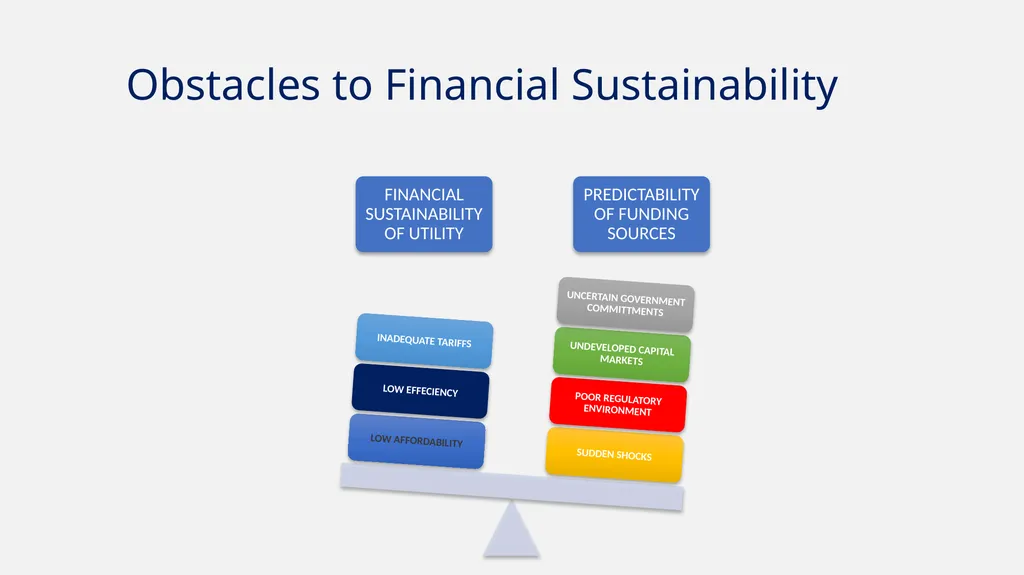
Obstacles to Financial Sustainability<br>
14
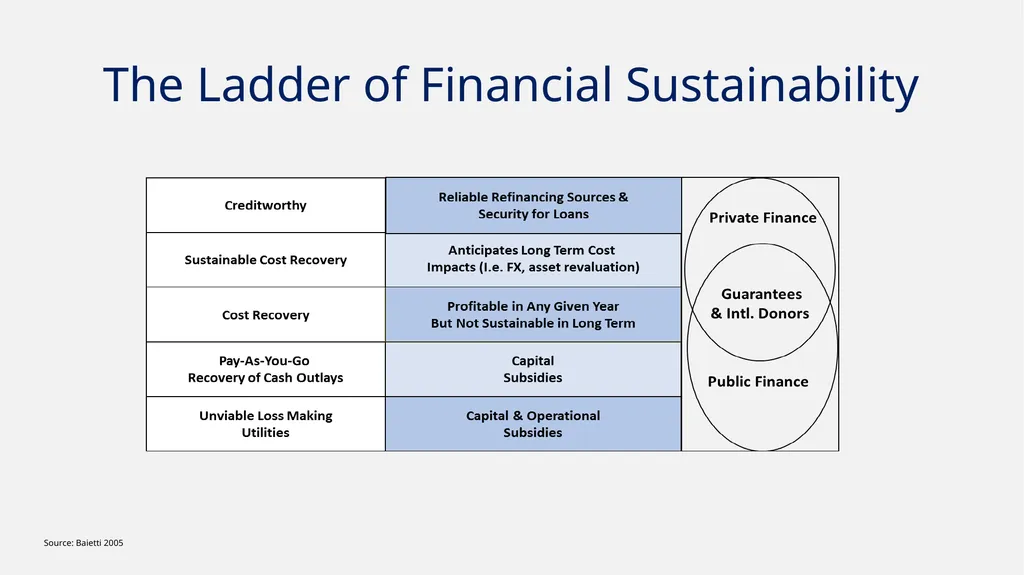
The Ladder of Financial Sustainability Source: Baietti 2005<br>
15
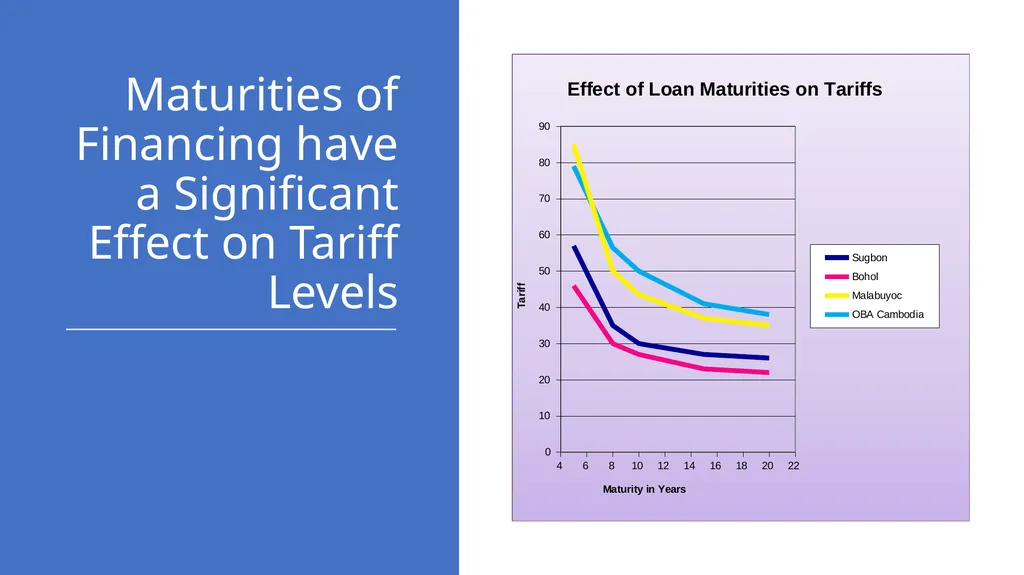
Maturities of Financing have a Significant Effect on Tariff Levels<br>
16
The Financial Analysis Primarily Consists of Two Parts The Diagnostic – Measuring Historical Financial Performance
The Consolidated Financial Projection Incorporating Debt Service Analysis<br>