
Financial DW EPIC - Common Ambulatory Applications

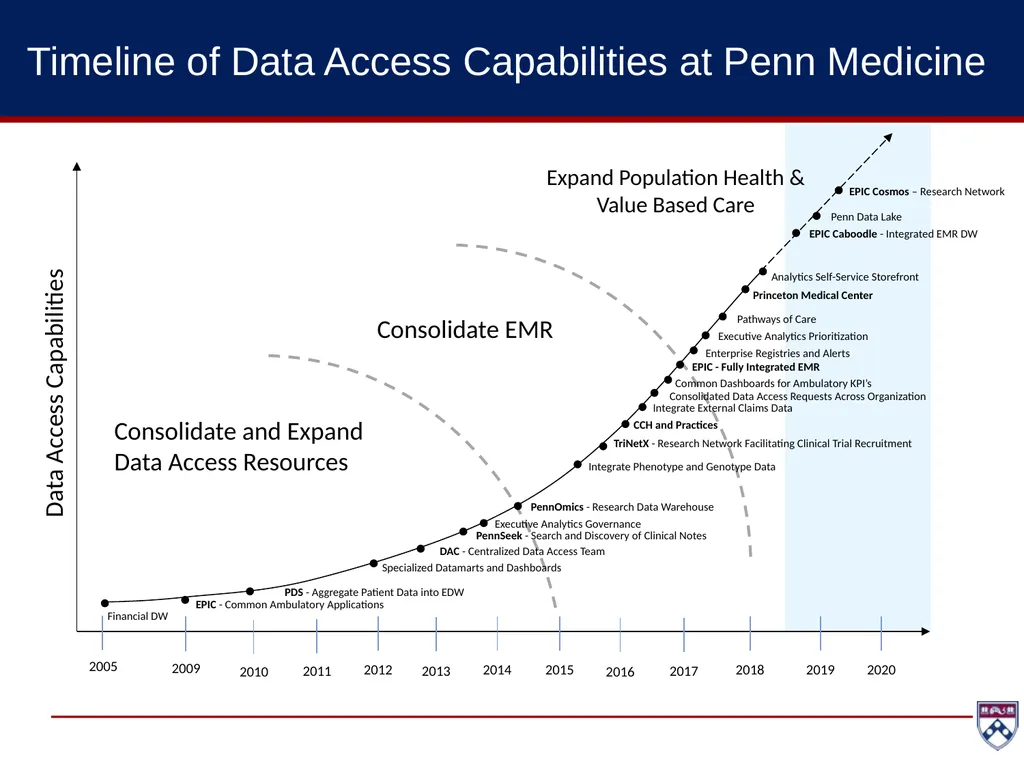
Description: Financial DW EPIC - Common Ambulatory Applications DAC - Centralized Data Access Team EPIC - Fully Integrated EMR PDS - Aggregate Patient Data into EDW PennOmics - Research Data Warehouse PennSeek - Search and Discovery of Clinical Notes
Related Topics
Download Presentation
"Financial DW EPIC - Common Ambulatory Applications" is the property of its rightful owner. Permission is granted to download and print the materials on this website for personal, non-commercial use only, and to display it on your personal computer provided you do not modify the materials and that you retain all copyright notices contained in the materials. By downloading content from our website, you accept the terms of this agreement.
Presentation Transcript
slide1. Financial DW EPIC - Common Ambulatory Applications DAC - Centralized Data Access Team EPIC - Fully Integrated EMR PDS - Aggregate Patient Data into EDW PennOmics - Research Data Warehouse PennSeek - Search and Discovery of Clinical Notes Executive Analytics Governance Executive Analytics Prioritization EPIC Caboodle - Integrated EMR DW EPIC Cosmos – Research Network Integrate Phenotype and Genotype Data Penn Data Lake Common Dashboards for Ambulatory KPI’s Specialized Datamarts and Dashboards CCH and Practices Enterprise Registries and Alerts Integrate External Claims Data Pathways of Care Consolidate EMR Expand Population Health &
Value Based Care Consolidate and Expand
Data Access Resources Princeton Medical Center Data Access Capabilities TriNetX - Research Network Facilitating Clinical Trial Recruitment Consolidated Data Access Requests Across Organization Analytics Self-Service Storefront Timeline of Data Access Capabilities at Penn Medicine<br>
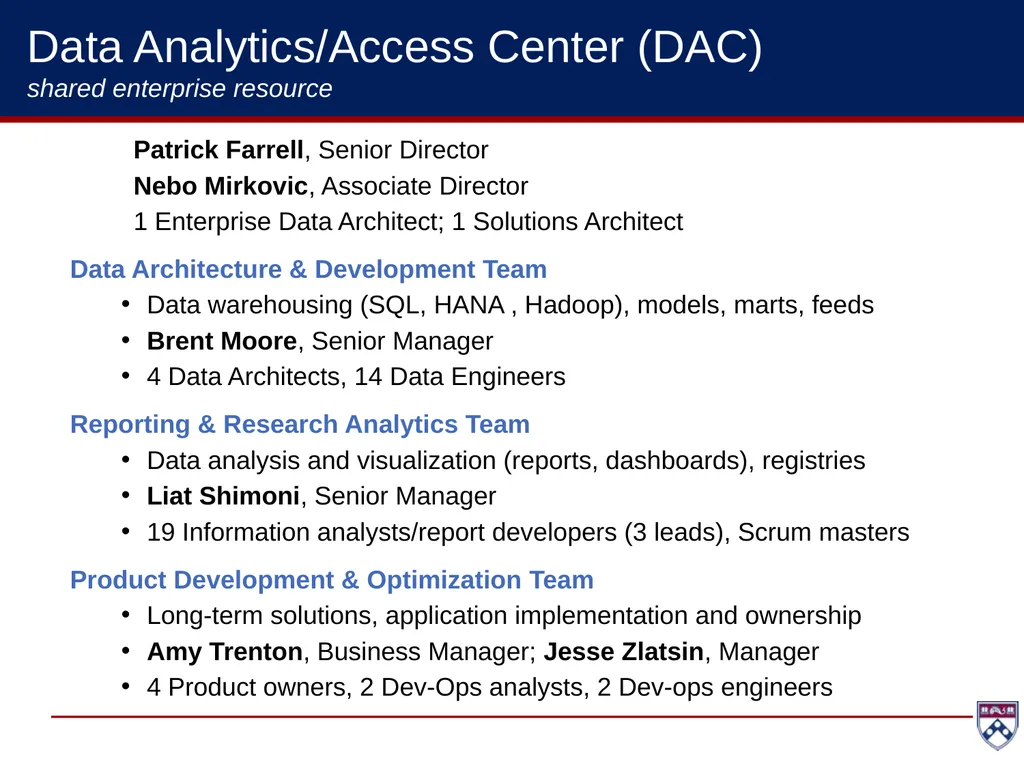
slide2. Data Analytics/Access Center (DAC) shared enterprise resource Patrick Farrell, Senior Director
Nebo Mirkovic, Associate Director
1 Enterprise Data Architect; 1 Solutions Architect
Data Architecture & Development Team
Data warehousing (SQL, HANA , Hadoop), models, marts, feeds
Brent Moore, Senior Manager
4 Data Architects, 14 Data Engineers
Reporting & Research Analytics Team
Data analysis and visualization (reports, dashboards), registries
Liat Shimoni, Senior Manager
19 Information analysts/report developers (3 leads), Scrum masters
Product Development & Optimization Team
Long-term solutions, application implementation and ownership
Amy Trenton, Business Manager; Jesse Zlatsin, Manager
4 Product owners, 2 Dev-Ops analysts, 2 Dev-ops engineers<br>
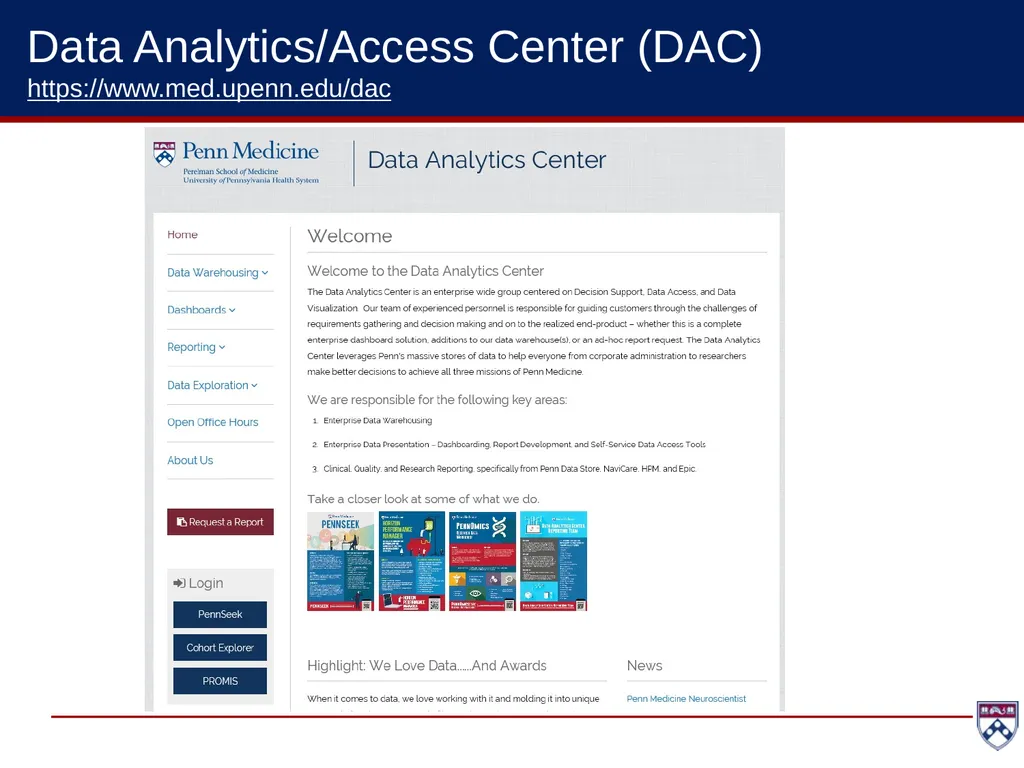
slide3. Data Analytics/Access Center (DAC) https://www.med.upenn.edu/dac<br>
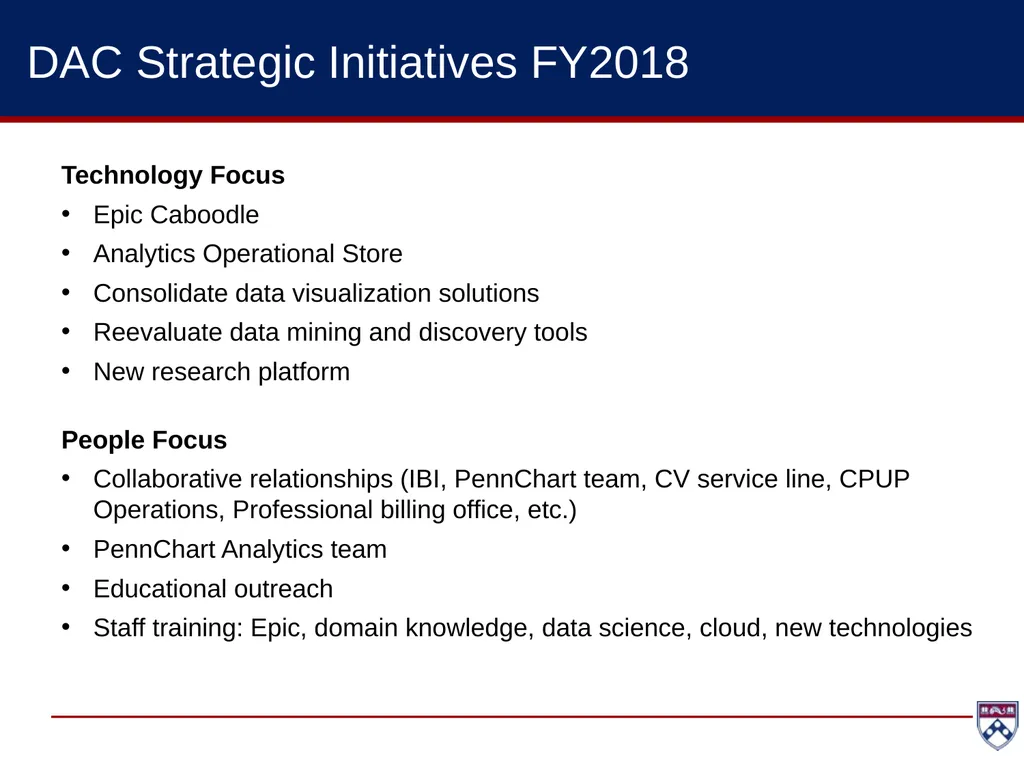
slide4. DAC Strategic Initiatives FY2018 Technology Focus
Epic Caboodle
Analytics Operational Store
Consolidate data visualization solutions
Reevaluate data mining and discovery tools
New research platform
People Focus
Collaborative relationships (IBI, PennChart team, CV service line, CPUP Operations, Professional billing office, etc.)
PennChart Analytics team
Educational outreach
Staff training: Epic, domain knowledge, data science, cloud, new technologies<br>
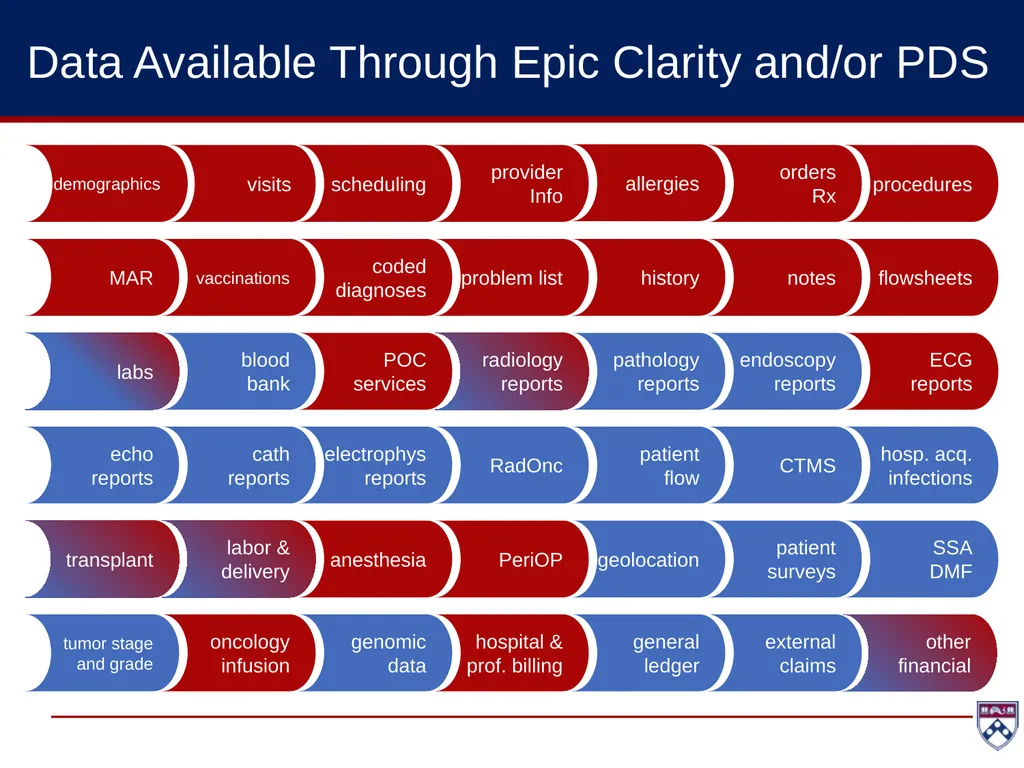
slide5. visits scheduling patient
flow provider Info orders
Rx demographics procedures coded diagnoses problem list history notes MAR POC services pathology reports endoscopy reports ECG reports labs cath reports electrophys reports PeriOP hosp. acq. infections echo reports anesthesia patient surveys geolocation CTMS SSA
DMF allergies tumor stage and grade oncology infusion genomic data hospital & prof. billing external claims vaccinations flowsheets Data Available Through Epic Clarity and/or PDS blood
bank RadOnc labor & delivery radiology reports transplant general ledger other financial<br>
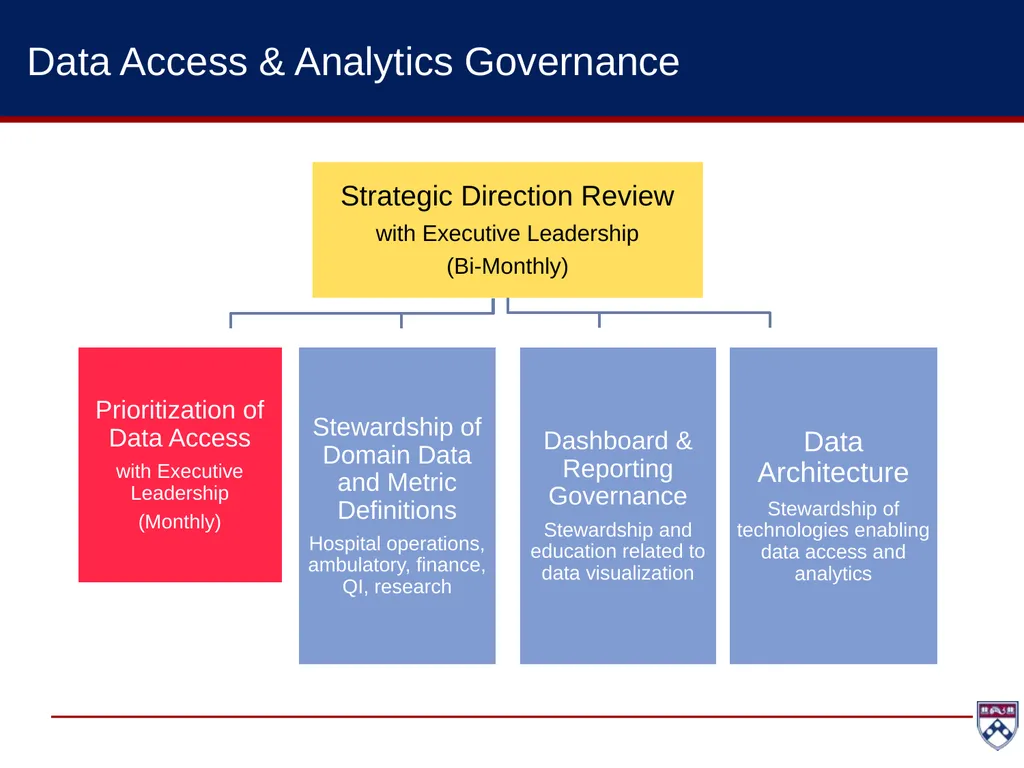
slide6. Data Access & Analytics Governance<br>
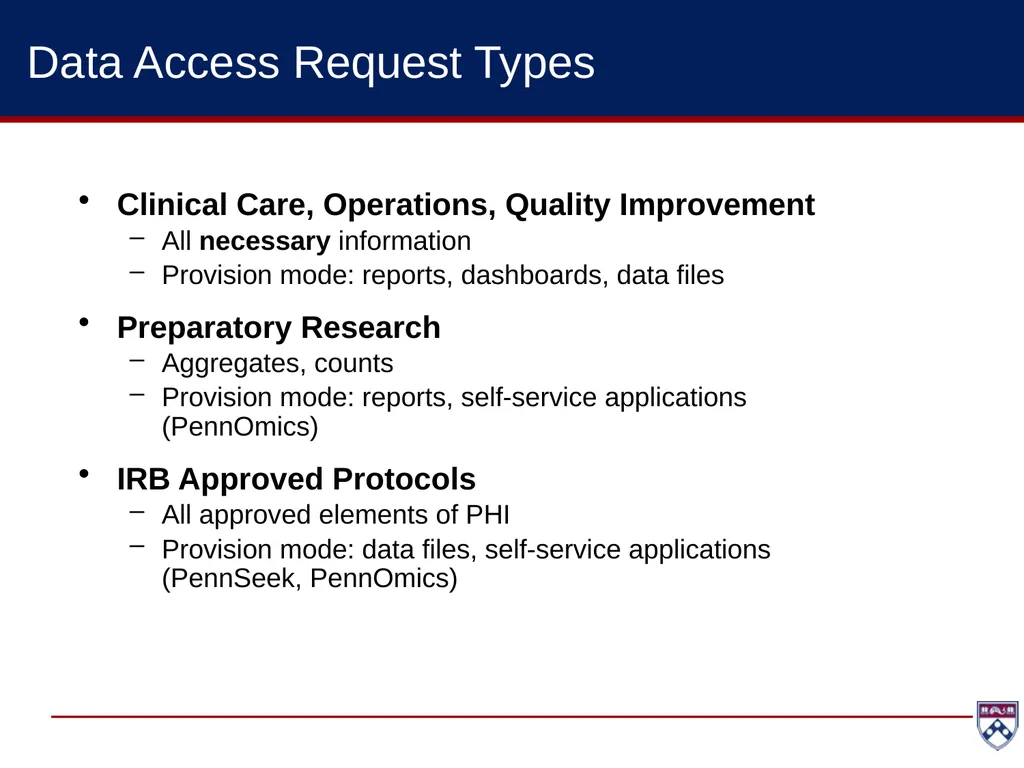
slide7. Data Access Request Types Clinical Care, Operations, Quality Improvement
All necessary information
Provision mode: reports, dashboards, data files
Preparatory Research
Aggregates, counts
Provision mode: reports, self-service applications (PennOmics)
IRB Approved Protocols
All approved elements of PHI
Provision mode: data files, self-service applications (PennSeek, PennOmics)<br>
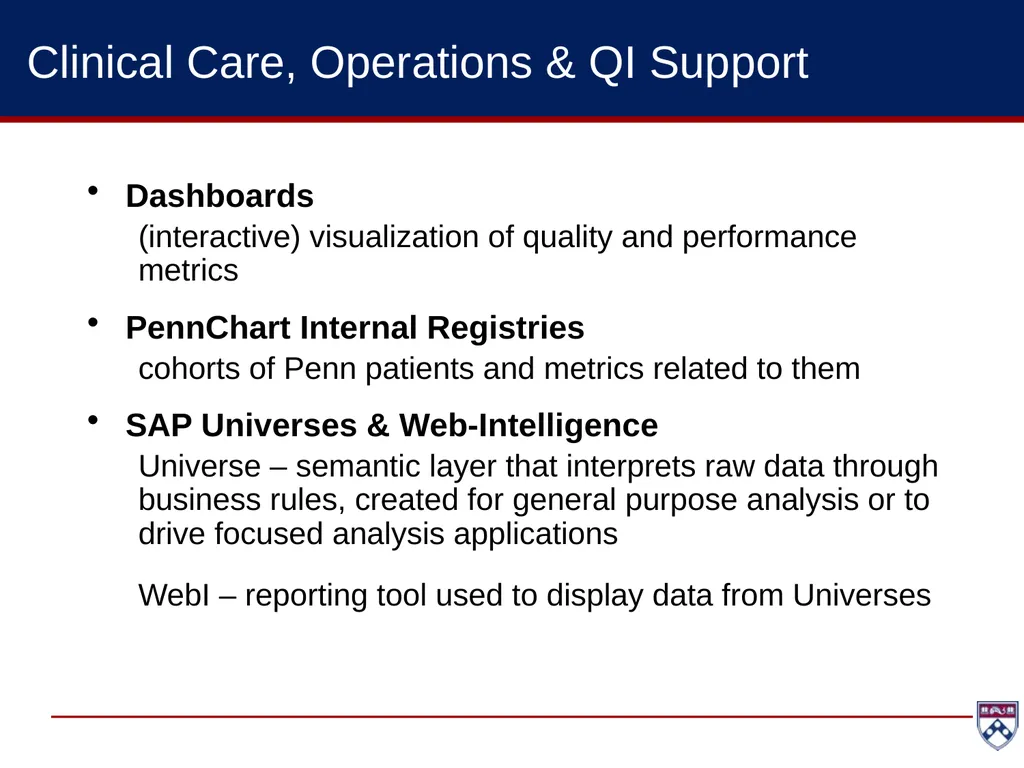
slide8. Clinical Care, Operations & QI Support Dashboards
(interactive) visualization of quality and performance metrics
PennChart Internal Registries
cohorts of Penn patients and metrics related to them
SAP Universes & Web-Intelligence
Universe – semantic layer that interprets raw data through business rules, created for general purpose analysis or to drive focused analysis applications
WebI – reporting tool used to display data from Universes<br>
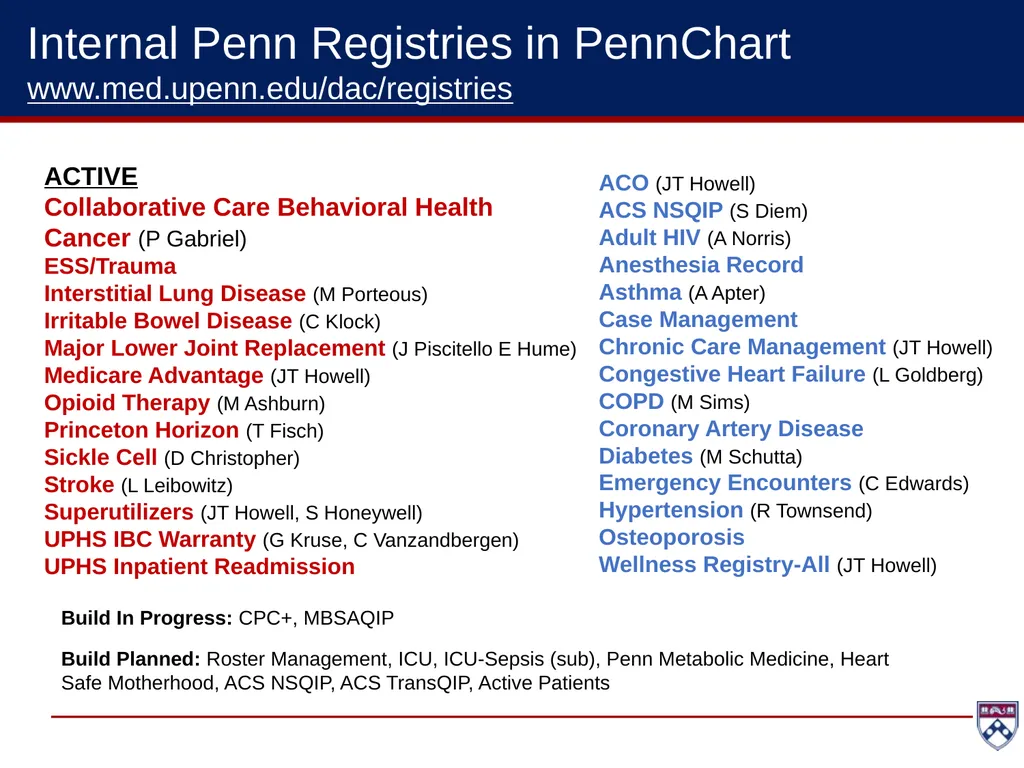
slide9. Internal Penn Registries in PennChart www.med.upenn.edu/dac/registries Build In Progress: CPC+, MBSAQIP
Build Planned: Roster Management, ICU, ICU-Sepsis (sub), Penn Metabolic Medicine, Heart Safe Motherhood, ACS NSQIP, ACS TransQIP, Active Patients<br>
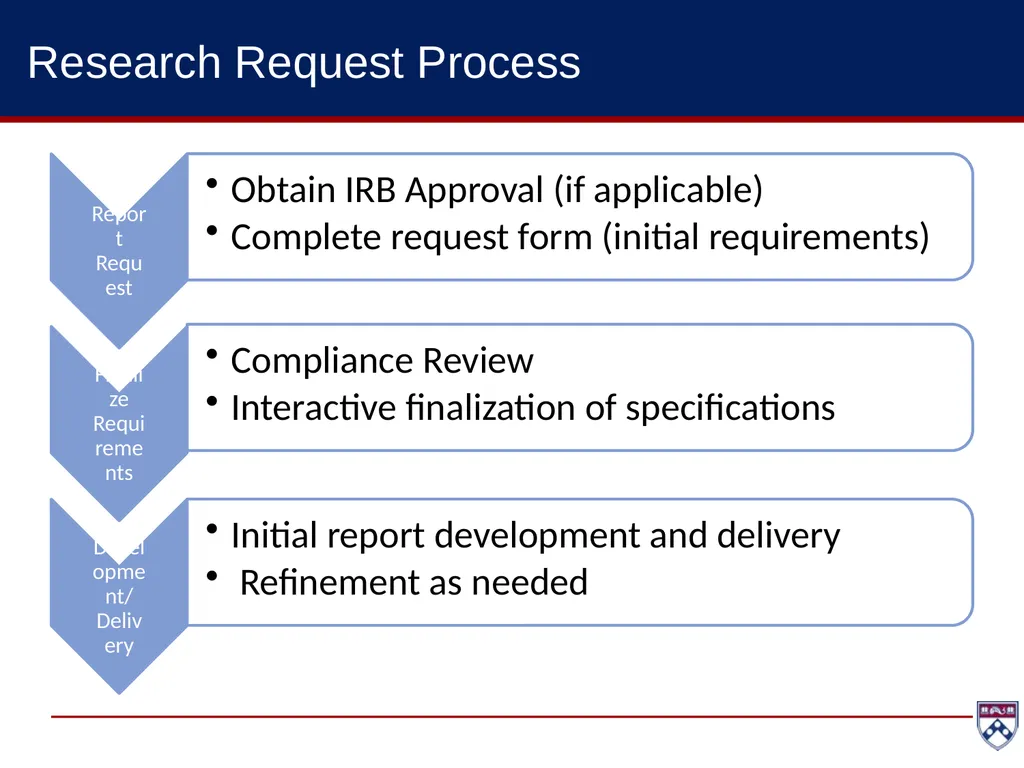
slide10. Research Request Process<br>
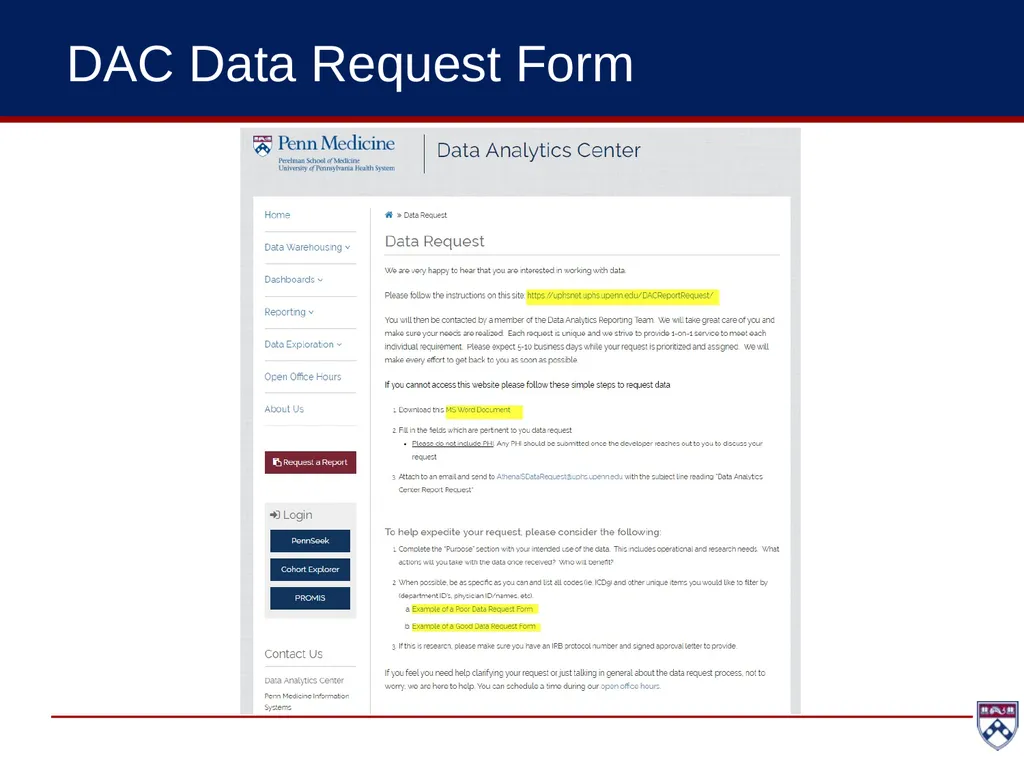
slide11. DAC Data Request Form<br>
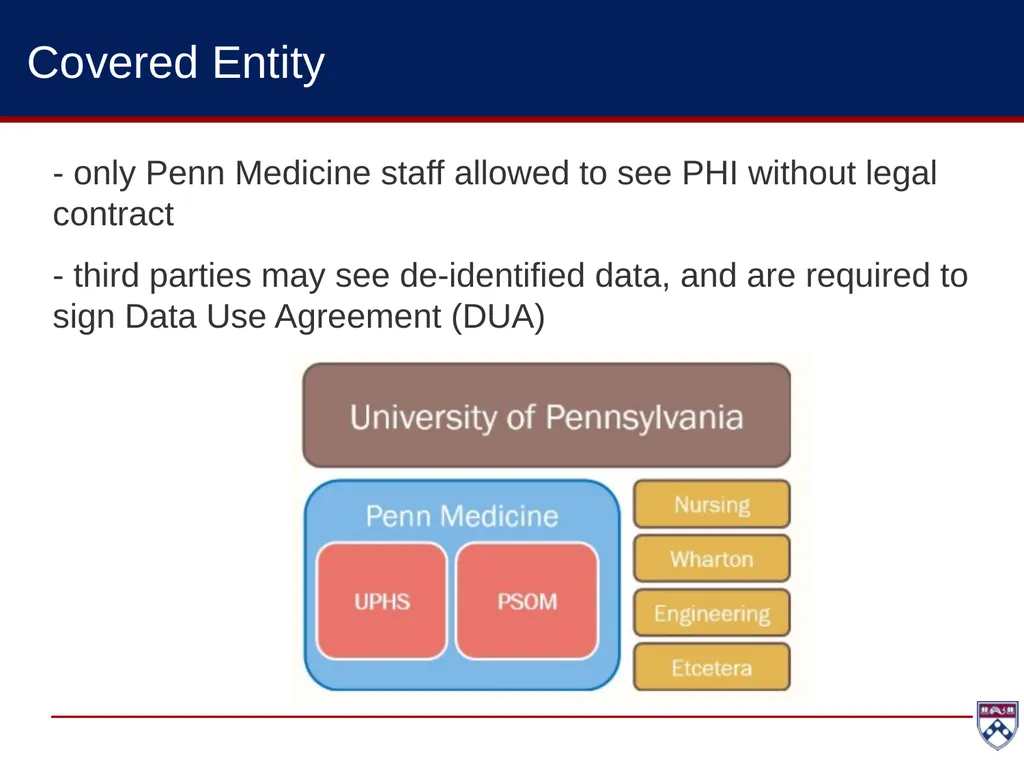
slide12. Covered Entity - only Penn Medicine staff allowed to see PHI without legal contract
- third parties may see de-identified data, and are required to sign Data Use Agreement (DUA)<br>
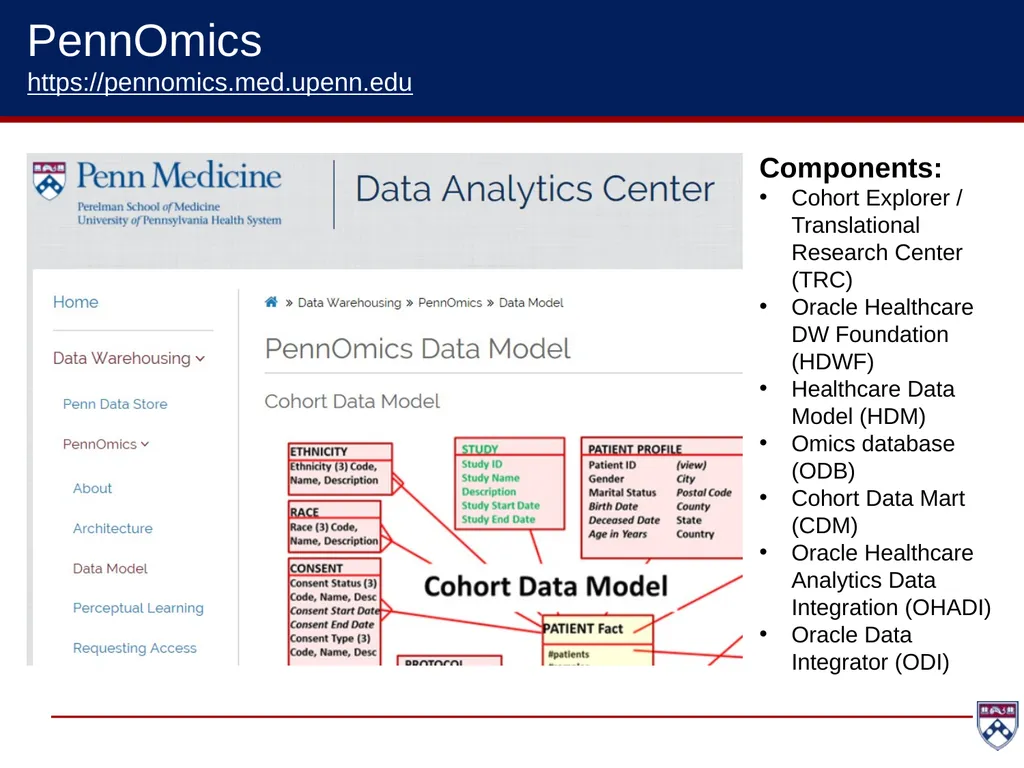
slide13. PennOmics https://pennomics.med.upenn.edu Components:
Cohort Explorer / Translational Research Center (TRC)
Oracle Healthcare DW Foundation (HDWF)
Healthcare Data Model (HDM)
Omics database (ODB)
Cohort Data Mart (CDM)
Oracle Healthcare Analytics Data Integration (OHADI)
Oracle Data Integrator (ODI)<br>
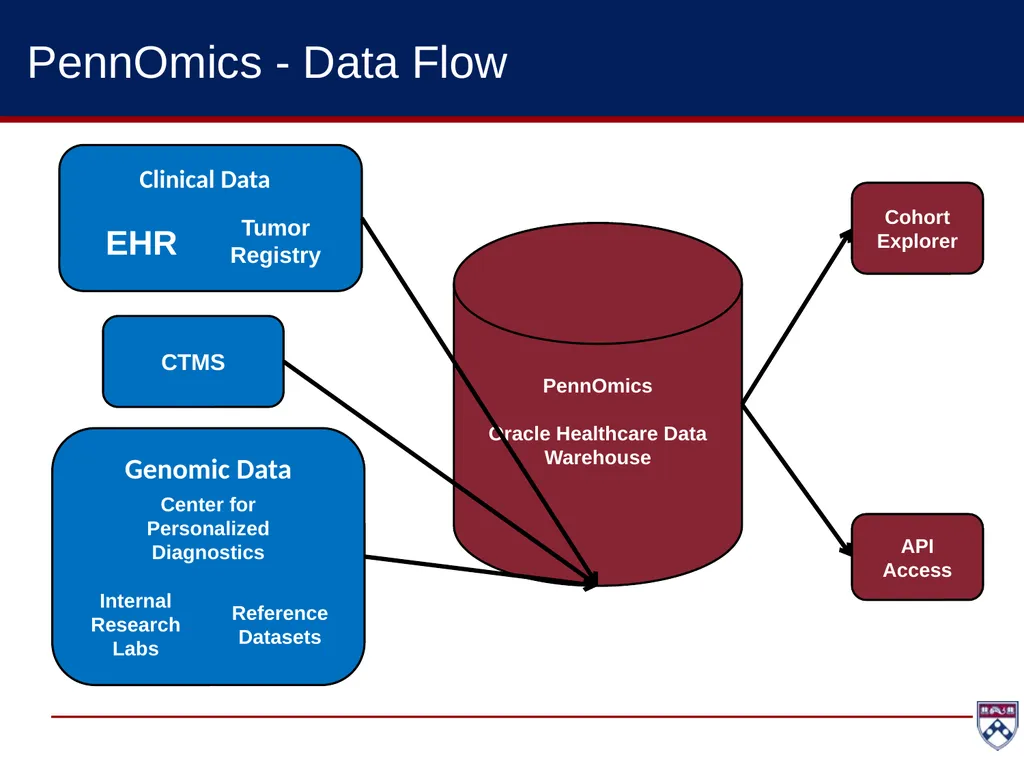
slide14. PennOmics - Data Flow PennOmics
Oracle Healthcare Data Warehouse CTMS Cohort Explorer API Access Tumor Registry<br>
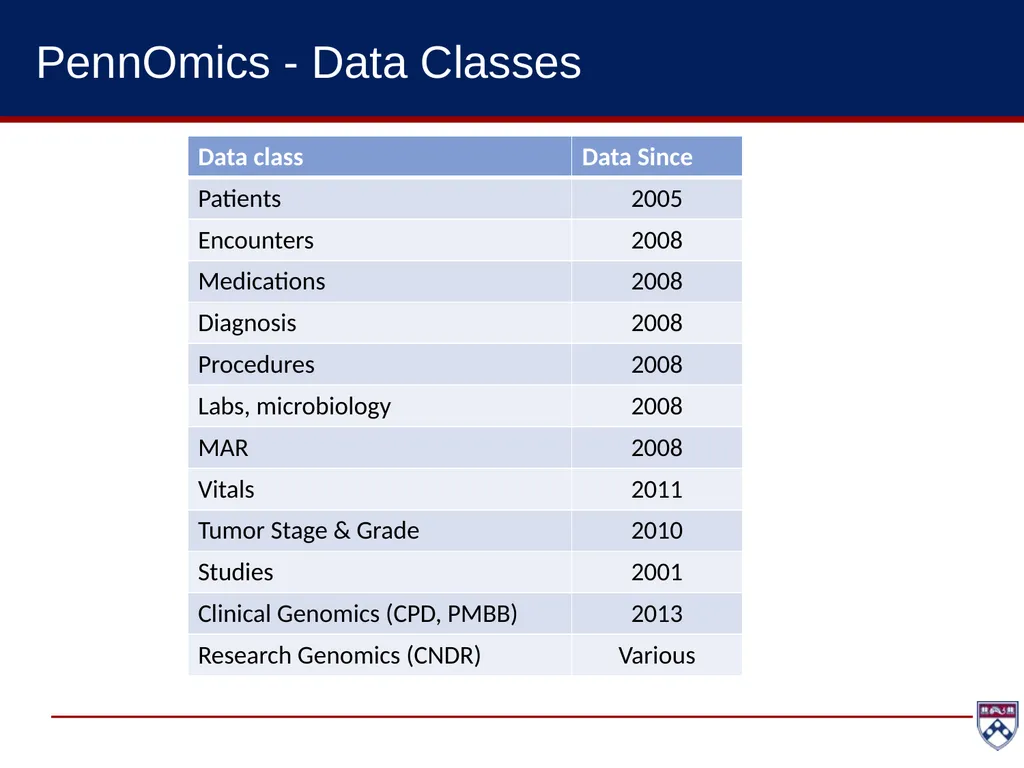
slide15. PennOmics - Data Classes<br>
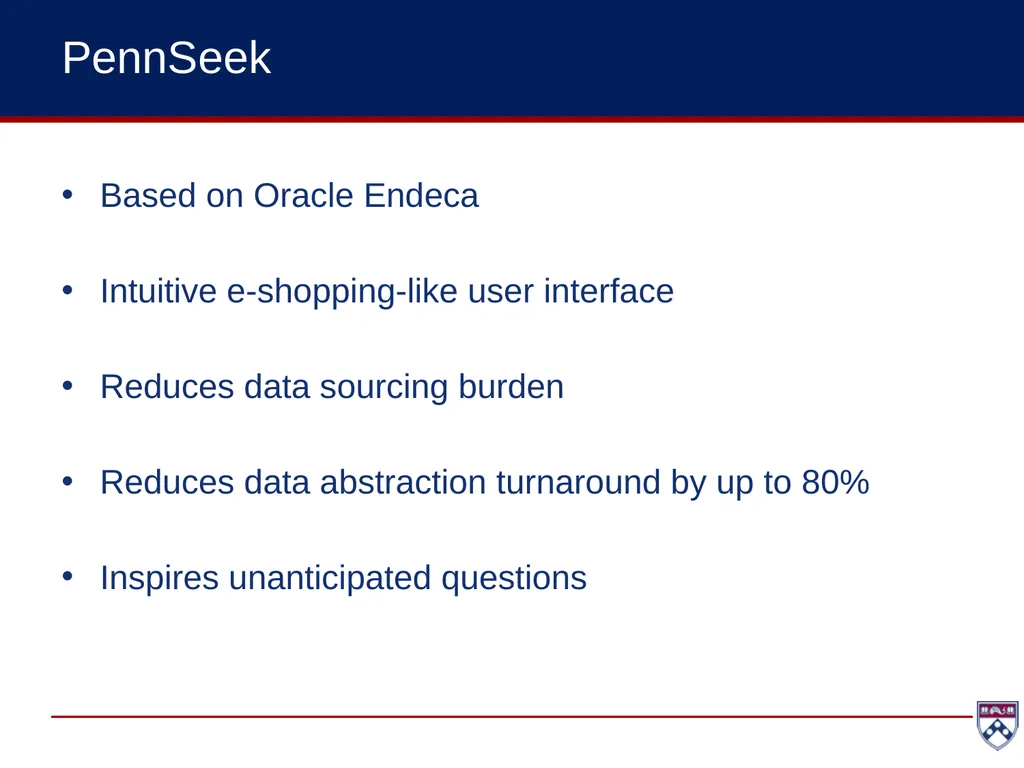
slide16. PennSeek Based on Oracle Endeca
Intuitive e-shopping-like user interface
Reduces data sourcing burden
Reduces data abstraction turnaround by up to 80%
Inspires unanticipated questions<br>
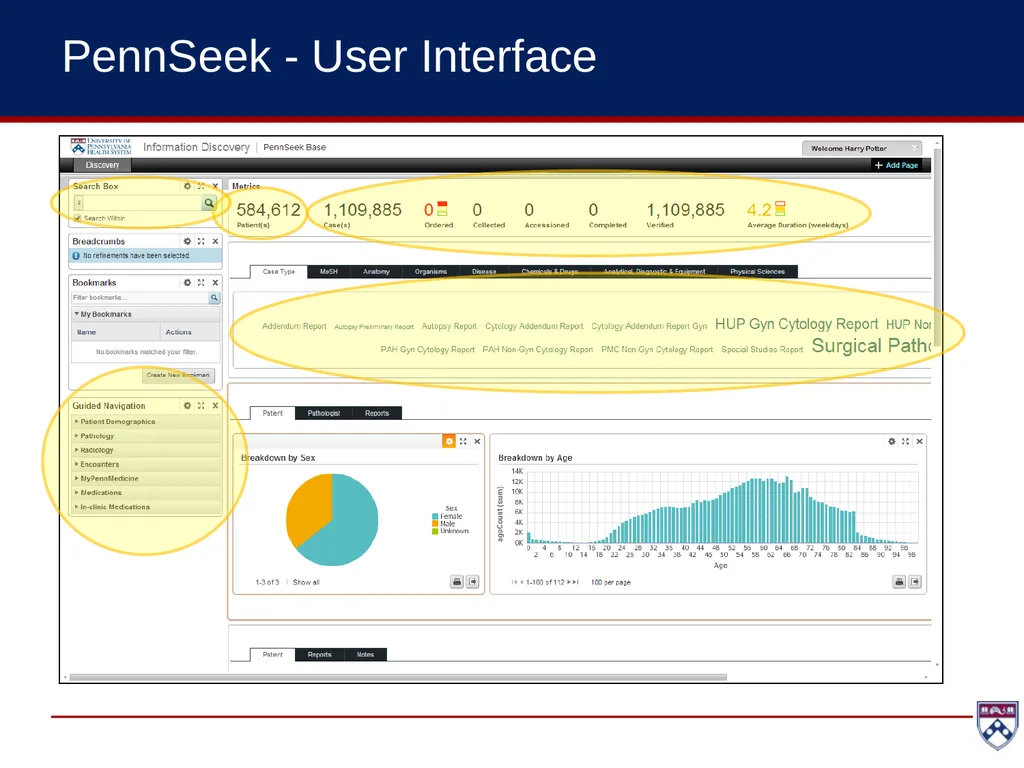
slide17. PennSeek - User Interface<br>
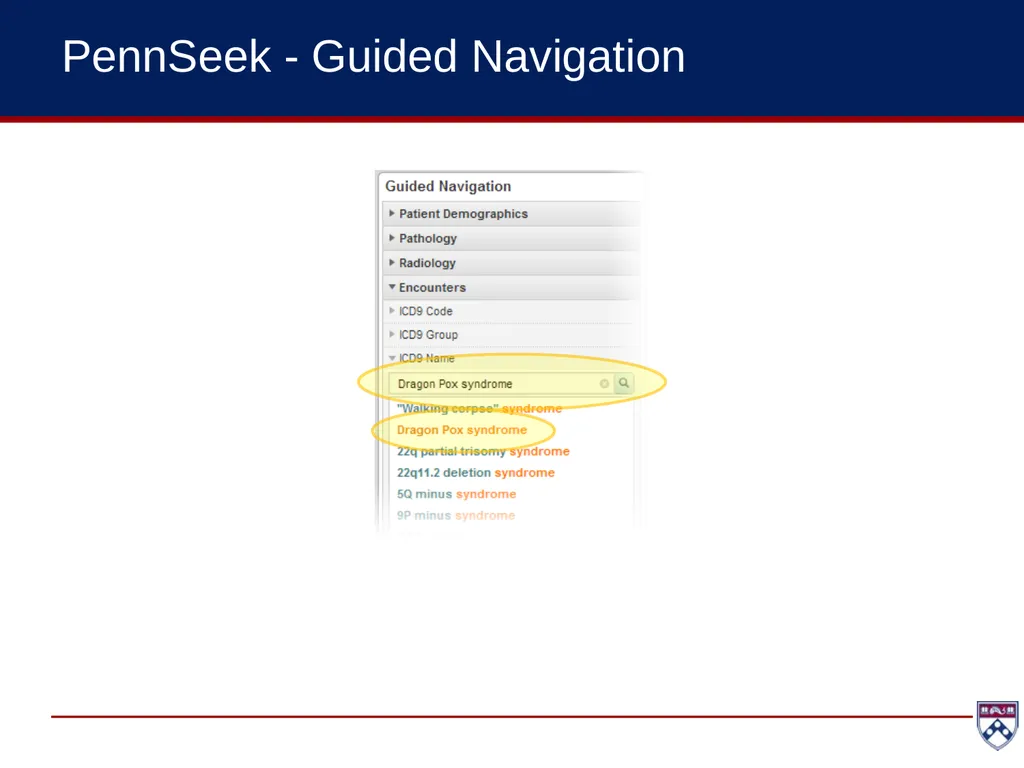
slide18. PennSeek - Guided Navigation<br>
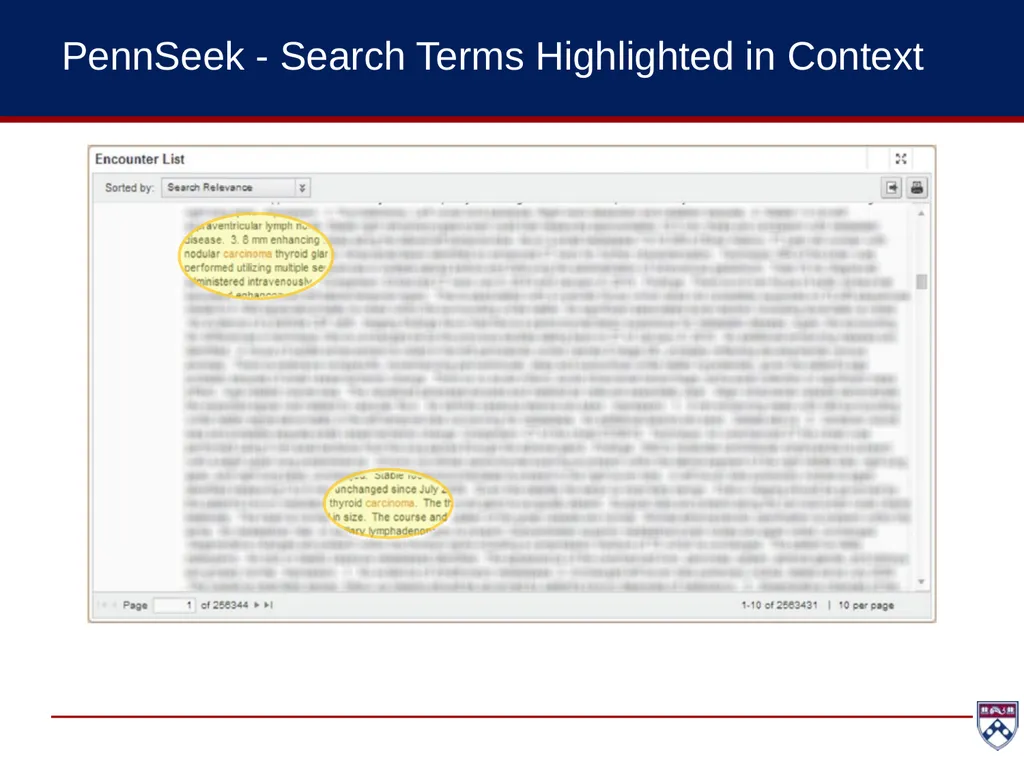
slide19. PennSeek - Search Terms Highlighted in Context<br>
slide20. TriNetX https://live.trinetx.com Global research network: 11 countries, 100M patients, ~70 HCOs (e.g. Penn, TJ, Drexel, Temple, Penn State)
Over 50% of CTSA program hub sites use TNX
Optimizes / lowers cost / speeds up clinical research design and patient recruitment
Value to participants:
Attract sponsored studies from pharma and CROs, by finding and recruiting patients that match protocol criteria
Free-of-charge (TNX provides servers)
Design protocols with inclusion and exclusion criteria<br>
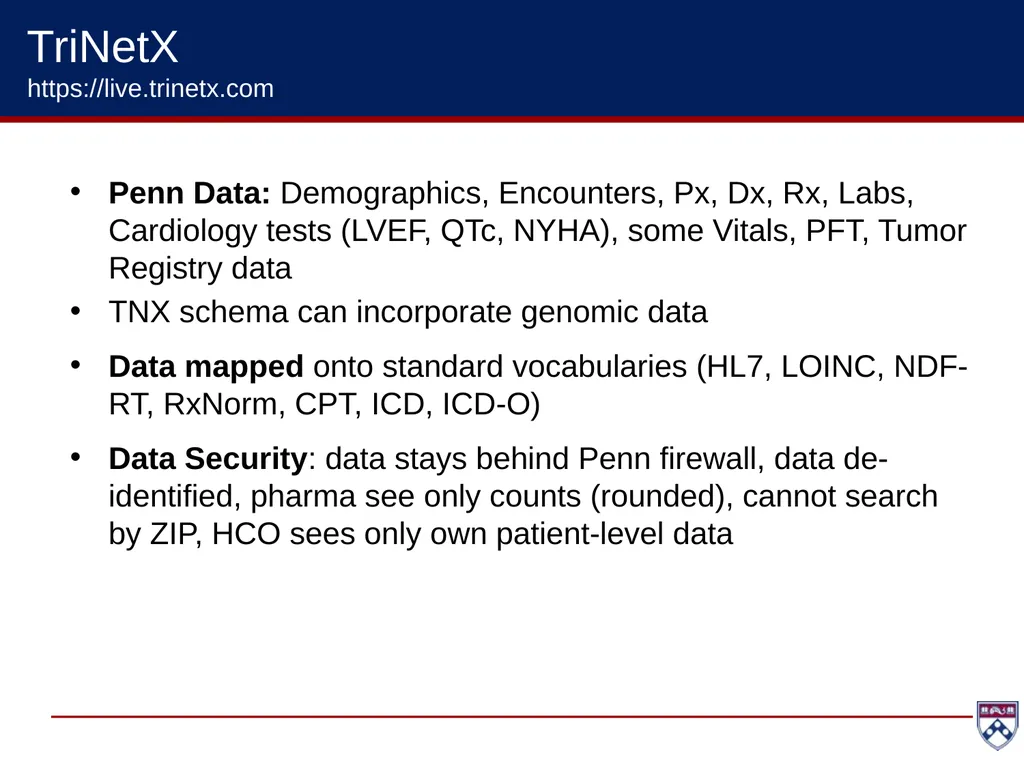
slide21. TriNetX https://live.trinetx.com Penn Data: Demographics, Encounters, Px, Dx, Rx, Labs, Cardiology tests (LVEF, QTc, NYHA), some Vitals, PFT, Tumor Registry data
TNX schema can incorporate genomic data
Data mapped onto standard vocabularies (HL7, LOINC, NDF-RT, RxNorm, CPT, ICD, ICD-O)
Data Security: data stays behind Penn firewall, data de-identified, pharma see only counts (rounded), cannot search by ZIP, HCO sees only own patient-level data<br>
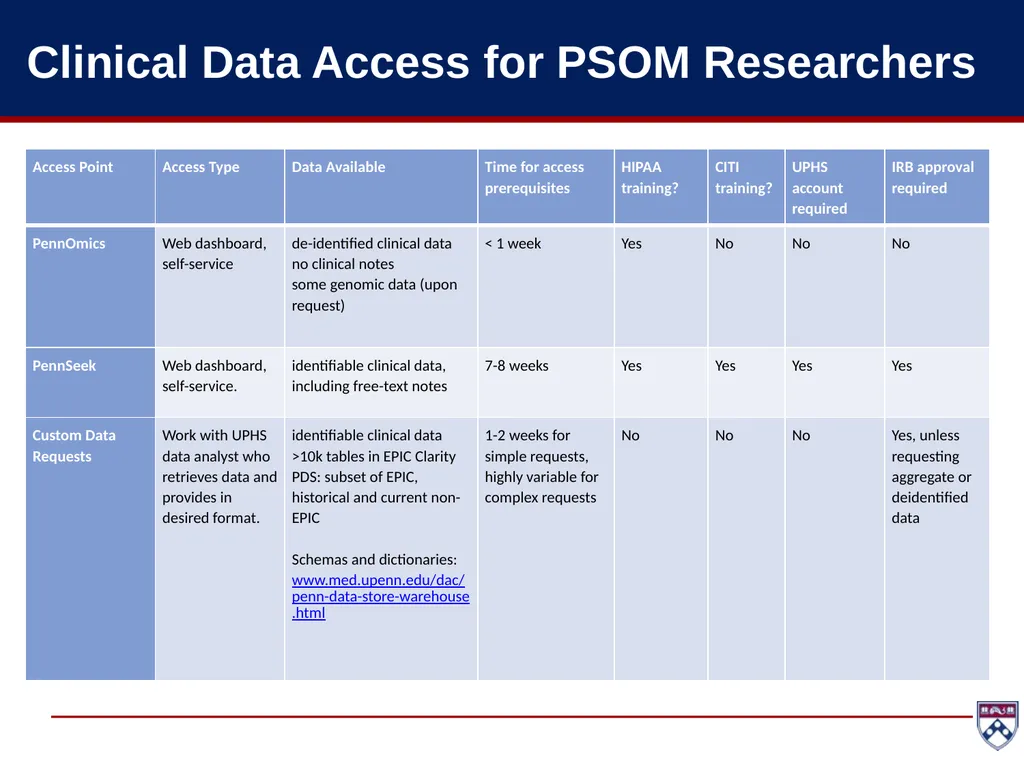
slide22. Clinical Data Access for PSOM Researchers<br>
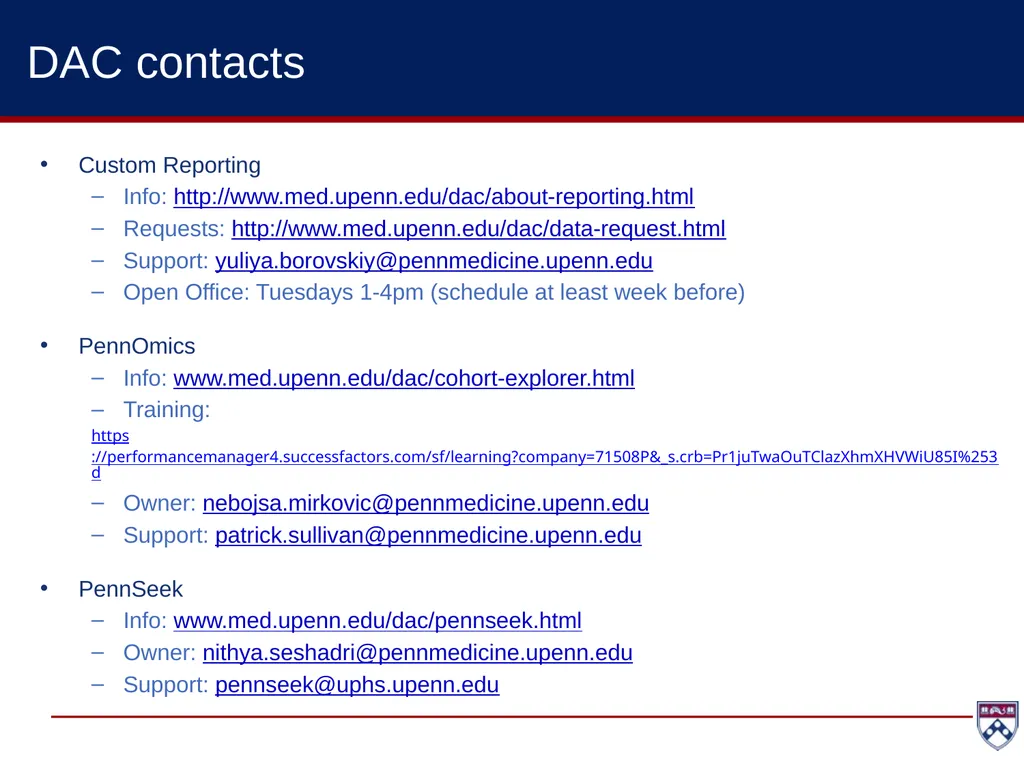
slide23. DAC contacts Custom Reporting
Info: http://www.med.upenn.edu/dac/about-reporting.html
Requests: http://www.med.upenn.edu/dac/data-request.html
Support: yuliya.borovskiy@pennmedicine.upenn.edu
Open Office: Tuesdays 1-4pm (schedule at least week before)
PennOmics
Info: www.med.upenn.edu/dac/cohort-explorer.html
Training:
https://performancemanager4.successfactors.com/sf/learning?company=71508P&_s.crb=Pr1juTwaOuTClazXhmXHVWiU85I%253d
Owner: nebojsa.mirkovic@pennmedicine.upenn.edu
Support: patrick.sullivan@pennmedicine.upenn.edu
PennSeek
Info: www.med.upenn.edu/dac/pennseek.html
Owner: nithya.seshadri@pennmedicine.upenn.edu
Support: pennseek@uphs.upenn.edu<br>
Value Based Care Consolidate and Expand
Data Access Resources Princeton Medical Center Data Access Capabilities TriNetX - Research Network Facilitating Clinical Trial Recruitment Consolidated Data Access Requests Across Organization Analytics Self-Service Storefront Timeline of Data Access Capabilities at Penn Medicine<br>
slide2. Data Analytics/Access Center (DAC) shared enterprise resource Patrick Farrell, Senior Director
Nebo Mirkovic, Associate Director
1 Enterprise Data Architect; 1 Solutions Architect
Data Architecture & Development Team
Data warehousing (SQL, HANA , Hadoop), models, marts, feeds
Brent Moore, Senior Manager
4 Data Architects, 14 Data Engineers
Reporting & Research Analytics Team
Data analysis and visualization (reports, dashboards), registries
Liat Shimoni, Senior Manager
19 Information analysts/report developers (3 leads), Scrum masters
Product Development & Optimization Team
Long-term solutions, application implementation and ownership
Amy Trenton, Business Manager; Jesse Zlatsin, Manager
4 Product owners, 2 Dev-Ops analysts, 2 Dev-ops engineers<br>
slide3. Data Analytics/Access Center (DAC) https://www.med.upenn.edu/dac<br>
slide4. DAC Strategic Initiatives FY2018 Technology Focus
Epic Caboodle
Analytics Operational Store
Consolidate data visualization solutions
Reevaluate data mining and discovery tools
New research platform
People Focus
Collaborative relationships (IBI, PennChart team, CV service line, CPUP Operations, Professional billing office, etc.)
PennChart Analytics team
Educational outreach
Staff training: Epic, domain knowledge, data science, cloud, new technologies<br>
slide5. visits scheduling patient
flow provider Info orders
Rx demographics procedures coded diagnoses problem list history notes MAR POC services pathology reports endoscopy reports ECG reports labs cath reports electrophys reports PeriOP hosp. acq. infections echo reports anesthesia patient surveys geolocation CTMS SSA
DMF allergies tumor stage and grade oncology infusion genomic data hospital & prof. billing external claims vaccinations flowsheets Data Available Through Epic Clarity and/or PDS blood
bank RadOnc labor & delivery radiology reports transplant general ledger other financial<br>
slide6. Data Access & Analytics Governance<br>
slide7. Data Access Request Types Clinical Care, Operations, Quality Improvement
All necessary information
Provision mode: reports, dashboards, data files
Preparatory Research
Aggregates, counts
Provision mode: reports, self-service applications (PennOmics)
IRB Approved Protocols
All approved elements of PHI
Provision mode: data files, self-service applications (PennSeek, PennOmics)<br>
slide8. Clinical Care, Operations & QI Support Dashboards
(interactive) visualization of quality and performance metrics
PennChart Internal Registries
cohorts of Penn patients and metrics related to them
SAP Universes & Web-Intelligence
Universe – semantic layer that interprets raw data through business rules, created for general purpose analysis or to drive focused analysis applications
WebI – reporting tool used to display data from Universes<br>
slide9. Internal Penn Registries in PennChart www.med.upenn.edu/dac/registries Build In Progress: CPC+, MBSAQIP
Build Planned: Roster Management, ICU, ICU-Sepsis (sub), Penn Metabolic Medicine, Heart Safe Motherhood, ACS NSQIP, ACS TransQIP, Active Patients<br>
slide10. Research Request Process<br>
slide11. DAC Data Request Form<br>
slide12. Covered Entity - only Penn Medicine staff allowed to see PHI without legal contract
- third parties may see de-identified data, and are required to sign Data Use Agreement (DUA)<br>
slide13. PennOmics https://pennomics.med.upenn.edu Components:
Cohort Explorer / Translational Research Center (TRC)
Oracle Healthcare DW Foundation (HDWF)
Healthcare Data Model (HDM)
Omics database (ODB)
Cohort Data Mart (CDM)
Oracle Healthcare Analytics Data Integration (OHADI)
Oracle Data Integrator (ODI)<br>
slide14. PennOmics - Data Flow PennOmics
Oracle Healthcare Data Warehouse CTMS Cohort Explorer API Access Tumor Registry<br>
slide15. PennOmics - Data Classes<br>
slide16. PennSeek Based on Oracle Endeca
Intuitive e-shopping-like user interface
Reduces data sourcing burden
Reduces data abstraction turnaround by up to 80%
Inspires unanticipated questions<br>
slide17. PennSeek - User Interface<br>
slide18. PennSeek - Guided Navigation<br>
slide19. PennSeek - Search Terms Highlighted in Context<br>
slide20. TriNetX https://live.trinetx.com Global research network: 11 countries, 100M patients, ~70 HCOs (e.g. Penn, TJ, Drexel, Temple, Penn State)
Over 50% of CTSA program hub sites use TNX
Optimizes / lowers cost / speeds up clinical research design and patient recruitment
Value to participants:
Attract sponsored studies from pharma and CROs, by finding and recruiting patients that match protocol criteria
Free-of-charge (TNX provides servers)
Design protocols with inclusion and exclusion criteria<br>
slide21. TriNetX https://live.trinetx.com Penn Data: Demographics, Encounters, Px, Dx, Rx, Labs, Cardiology tests (LVEF, QTc, NYHA), some Vitals, PFT, Tumor Registry data
TNX schema can incorporate genomic data
Data mapped onto standard vocabularies (HL7, LOINC, NDF-RT, RxNorm, CPT, ICD, ICD-O)
Data Security: data stays behind Penn firewall, data de-identified, pharma see only counts (rounded), cannot search by ZIP, HCO sees only own patient-level data<br>
slide22. Clinical Data Access for PSOM Researchers<br>
slide23. DAC contacts Custom Reporting
Info: http://www.med.upenn.edu/dac/about-reporting.html
Requests: http://www.med.upenn.edu/dac/data-request.html
Support: yuliya.borovskiy@pennmedicine.upenn.edu
Open Office: Tuesdays 1-4pm (schedule at least week before)
PennOmics
Info: www.med.upenn.edu/dac/cohort-explorer.html
Training:
https://performancemanager4.successfactors.com/sf/learning?company=71508P&_s.crb=Pr1juTwaOuTClazXhmXHVWiU85I%253d
Owner: nebojsa.mirkovic@pennmedicine.upenn.edu
Support: patrick.sullivan@pennmedicine.upenn.edu
PennSeek
Info: www.med.upenn.edu/dac/pennseek.html
Owner: nithya.seshadri@pennmedicine.upenn.edu
Support: pennseek@uphs.upenn.edu<br>