Financial Literacy 101 Back to the Basics Budgeting Tracking Income and Expenses Reducing Expenses Credit as a Consumer Credit Reports Credit Scores Improving Credit Power Pay Debt Budgeting 101 Benefits: maximize assets, minimize debt Step
"Financial Literacy 101 Back to the Basics" is the property of its rightful owner. Permission is granted to
download and print the materials on this website for personal, non-commercial use only, and to display it
on your personal computer provided you do not modify the materials and that you retain all copyright
notices contained in the materials. By downloading content from our website, you accept the terms of this
agreement.
Presentation Transcript
01
Financial Literacy 101<br>
02
Back to the Basics Budgeting
Tracking Income and Expenses
Reducing Expenses
Credit as a Consumer
Credit Reports
Credit Scores
Improving Credit
Power Pay Debt<br>
Step 1: Calculating Income
Step 2: Calculating Expenses
Tracking
Step 3: Develop a Spending Plan
Step 4: Minimize Expenses
Distinguish: necessities and luxuries<br>
04
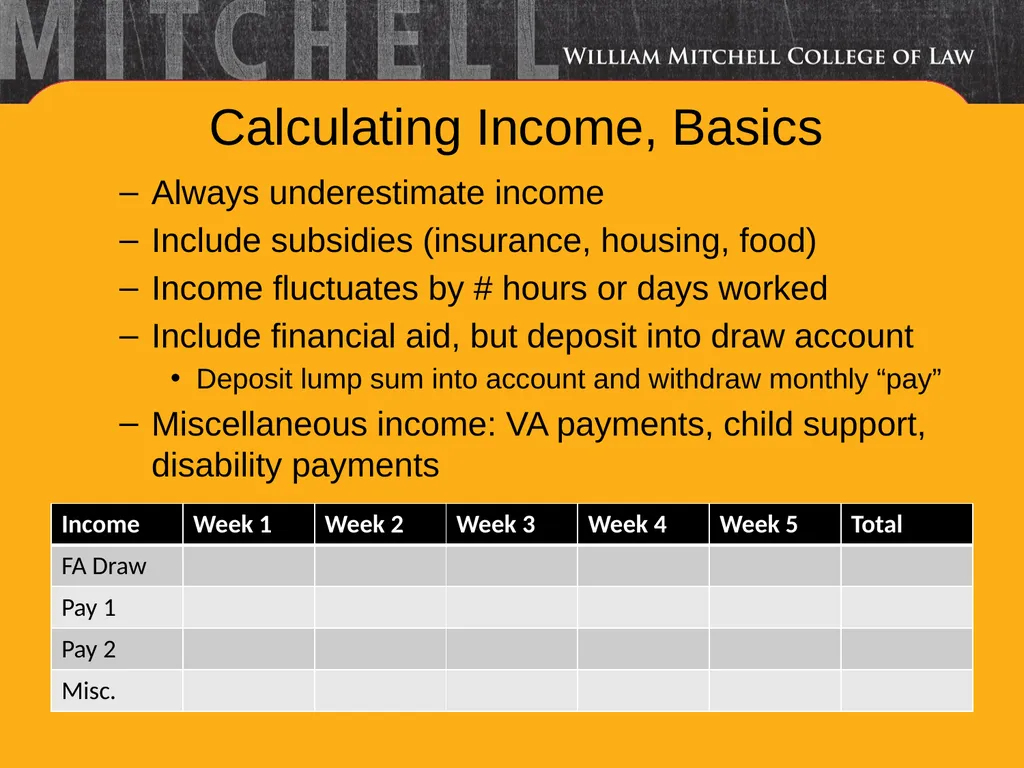
Calculating Income, Basics Always underestimate income
Include subsidies (insurance, housing, food)
Income fluctuates by # hours or days worked
Include financial aid, but deposit into draw account
Deposit lump sum into account and withdraw monthly “pay”
Miscellaneous income: VA payments, child support, disability payments<br>
05
Tracking Expenses, Basics Determine where the money goes
Goal: get your money to last longer
Methods:
Keep receipts
Balancing a checkbook
Notebook or ledger
Calendar
Software or websites
Envelops with Money<br>
06
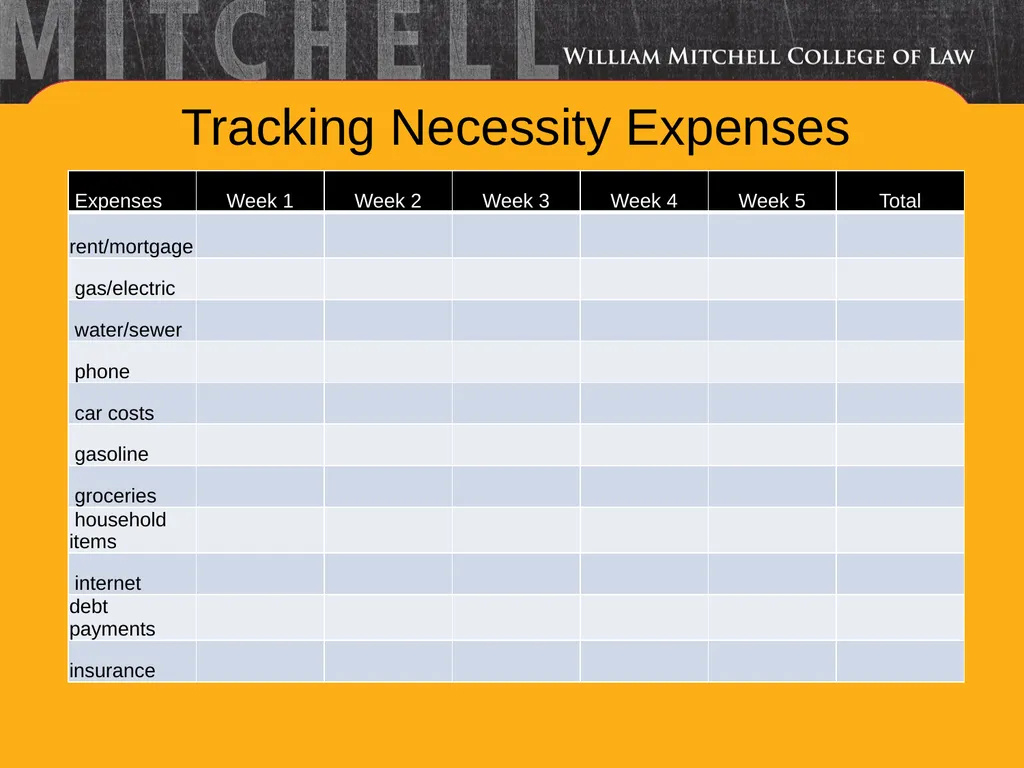
Tracking Necessity Expenses<br>
07
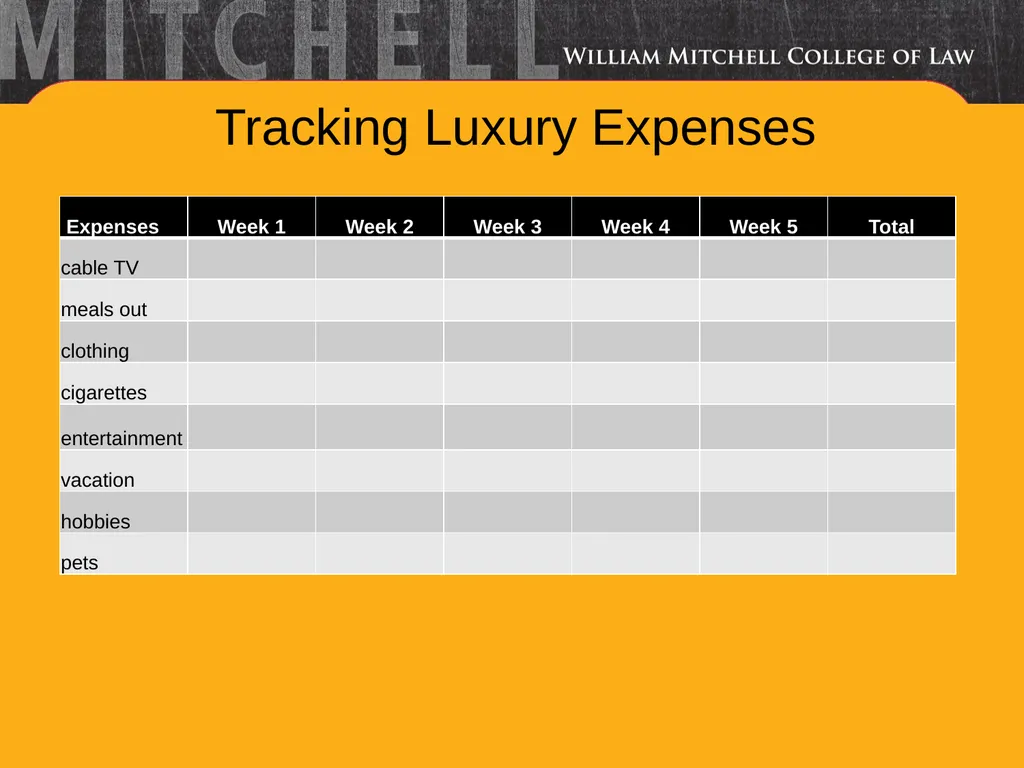
Tracking Luxury Expenses<br>
08
Ways to Reduce Spending Standard of living expectations
Live large now with debt, live smaller later and longer
Eliminate or reducing eating out
Studio apt v. 1-bedroom apt
Living with roommates
Smart phone v. cellphone
Shop with Lists<br>
09
Increasing Income for Students Full-time students: work 20 hours or less
FT: 12 credits or more
On-campus or off-campus
Part-time students: work 40 hours or less
PT: 11 credits or less
Downside: May add time to graduation
Benefits:
Time for more work experience for resume
Earning income to reduce need for financial aid debt
Lower cost per credit at 11 credits<br>
10
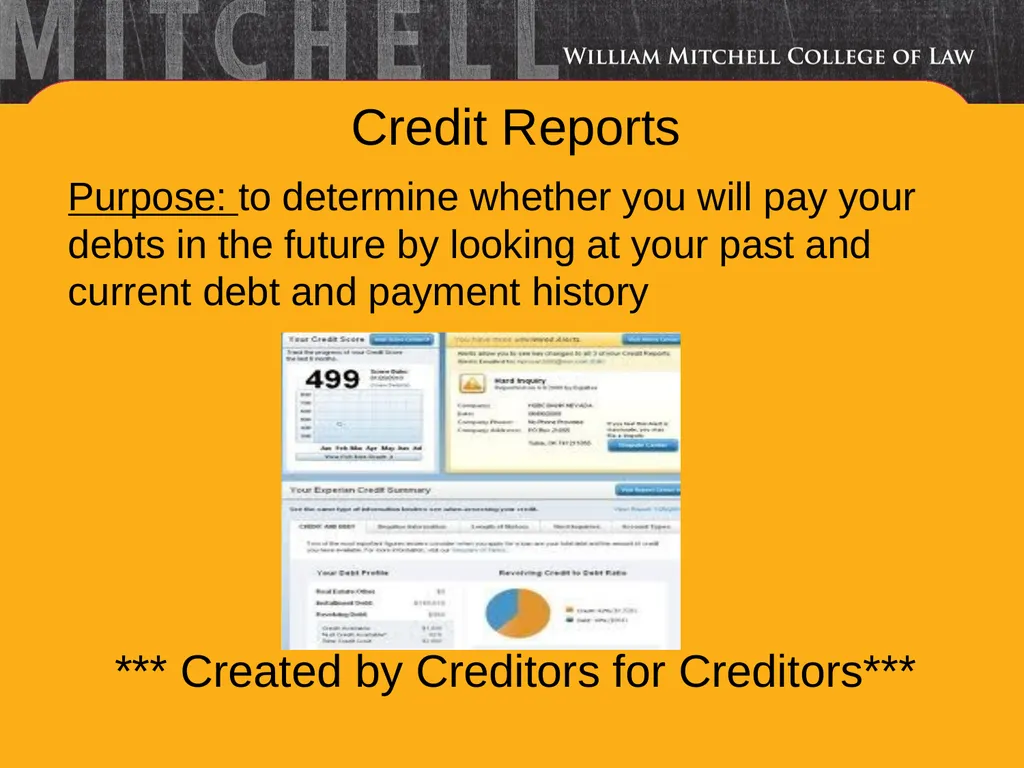
Credit Reports Purpose: to determine whether you will pay your debts in the future by looking at your past and current debt and payment history
*** Created by Creditors for Creditors***<br>
11
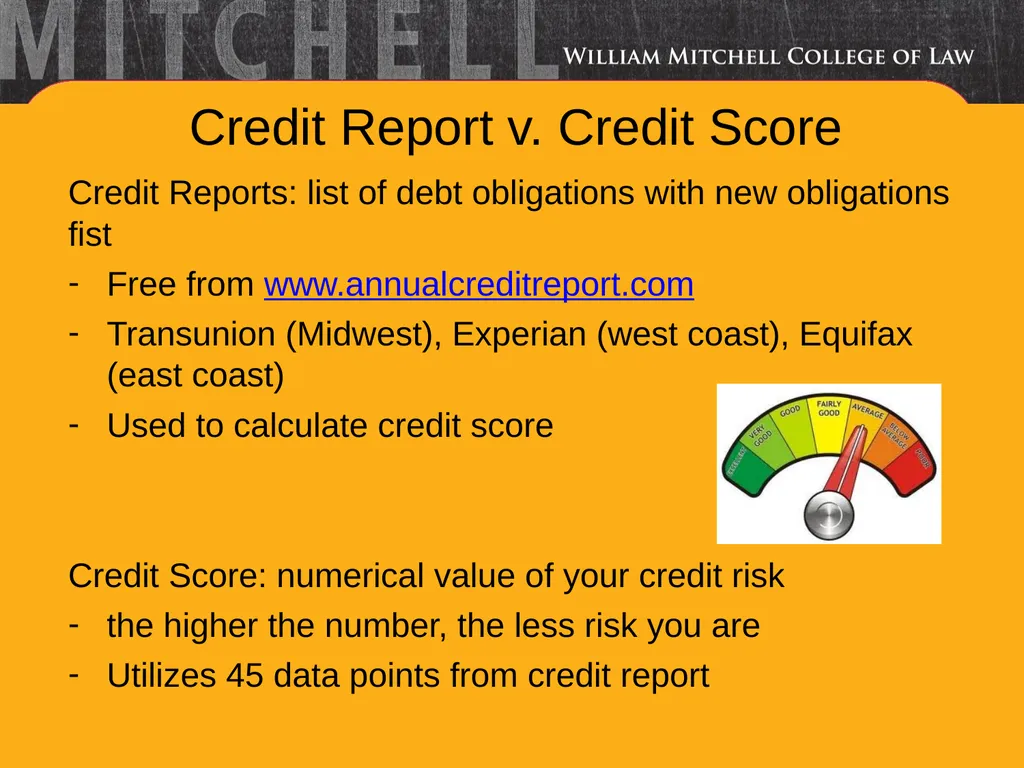
Credit Report v. Credit Score Credit Reports: list of debt obligations with new obligations fist
Free from www.annualcreditreport.com
Transunion (Midwest), Experian (west coast), Equifax (east coast)
Used to calculate credit score
Credit Score: numerical value of your credit risk
the higher the number, the less risk you are
Utilizes 45 data points from credit report<br>
12
Making the Most of Your Credit Report Information includes:
Employment & Address History
Number & Types of Inquiries
Payment History on All Debt
Amount, Age, and Types of Debts
Public Records: evictions, bankruptcies, court judgments
Negative information lasts 7 or 10 years<br>
13
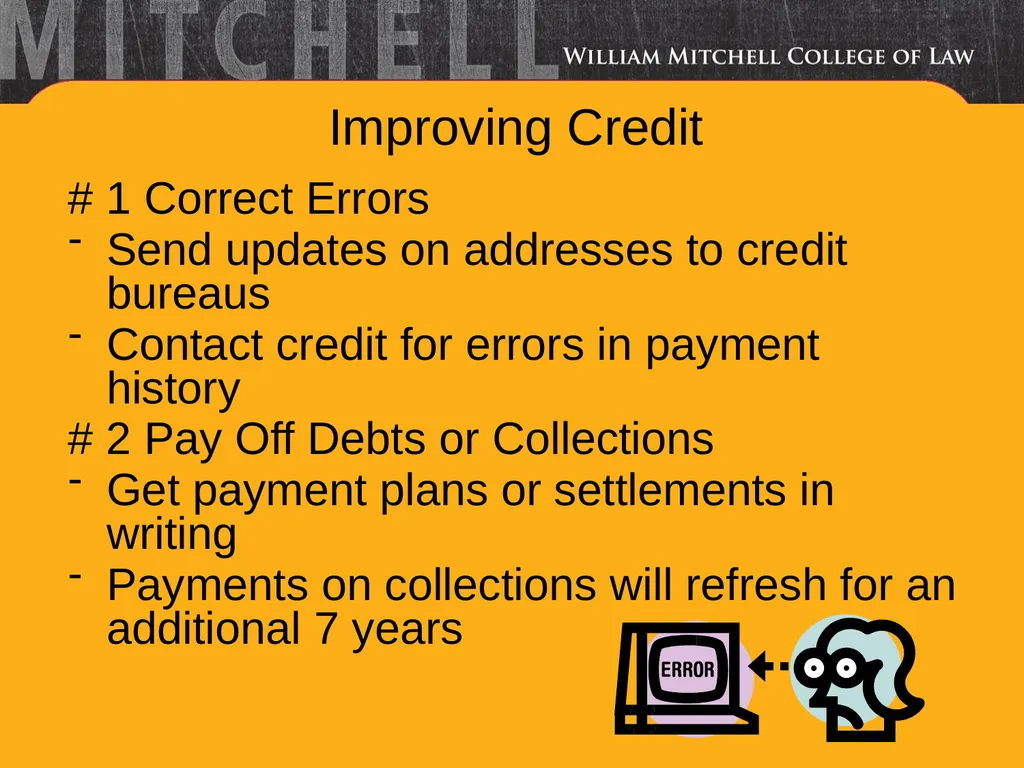
Improving Credit # 1 Correct Errors
Send updates on addresses to credit bureaus
Contact credit for errors in payment history
# 2 Pay Off Debts or Collections
Get payment plans or settlements in writing
Payments on collections will refresh for an additional 7 years<br>
14
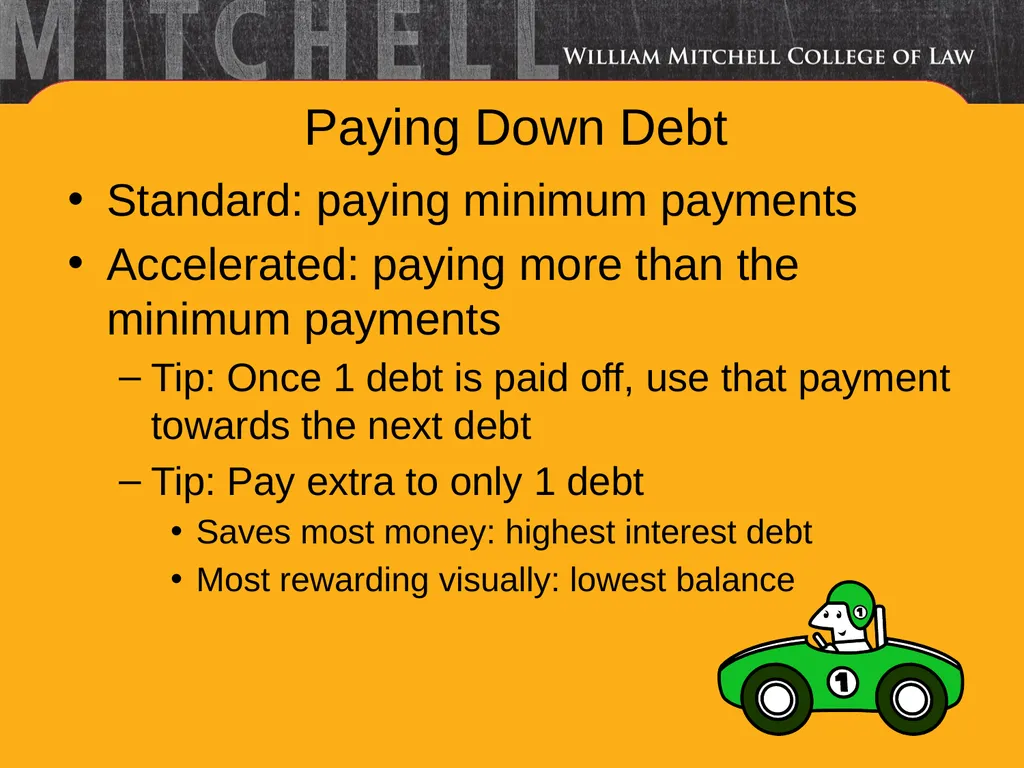
Paying Down Debt Standard: paying minimum payments
Accelerated: paying more than the minimum payments
Tip: Once 1 debt is paid off, use that payment towards the next debt
Tip: Pay extra to only 1 debt
Saves most money: highest interest debt
Most rewarding visually: lowest balance<br>
15
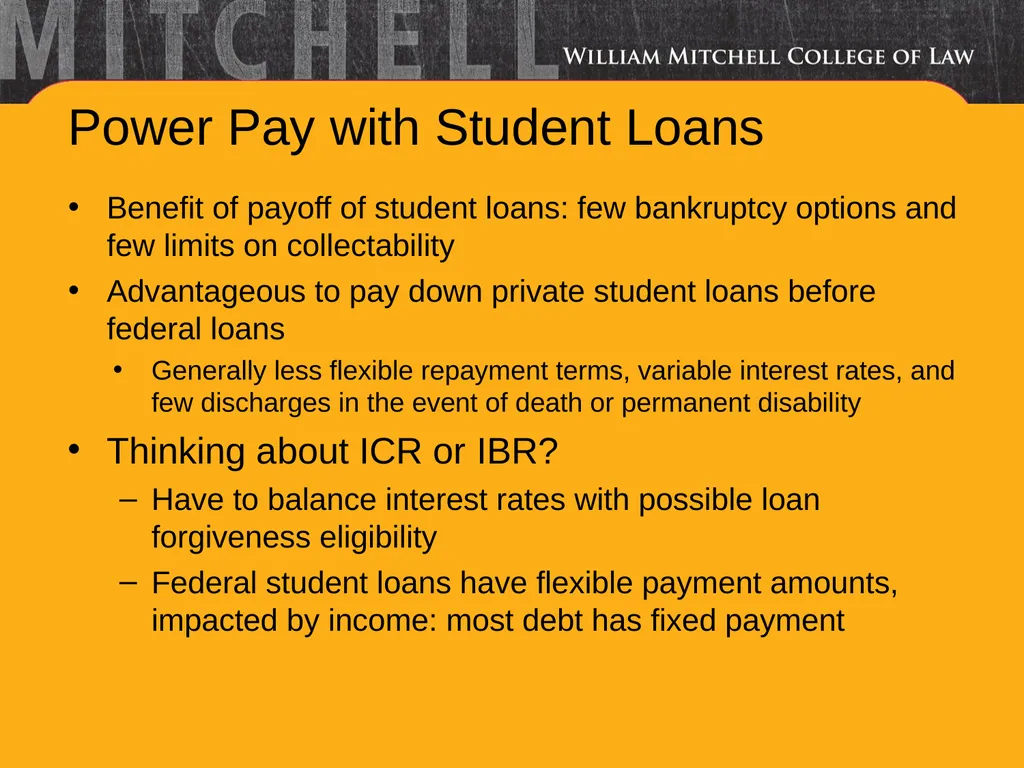
Power Pay with Student Loans Benefit of payoff of student loans: few bankruptcy options and few limits on collectability
Advantageous to pay down private student loans before federal loans
Generally less flexible repayment terms, variable interest rates, and few discharges in the event of death or permanent disability
Thinking about ICR or IBR?
Have to balance interest rates with possible loan forgiveness eligibility
Federal student loans have flexible payment amounts, impacted by income: most debt has fixed payment<br>
16
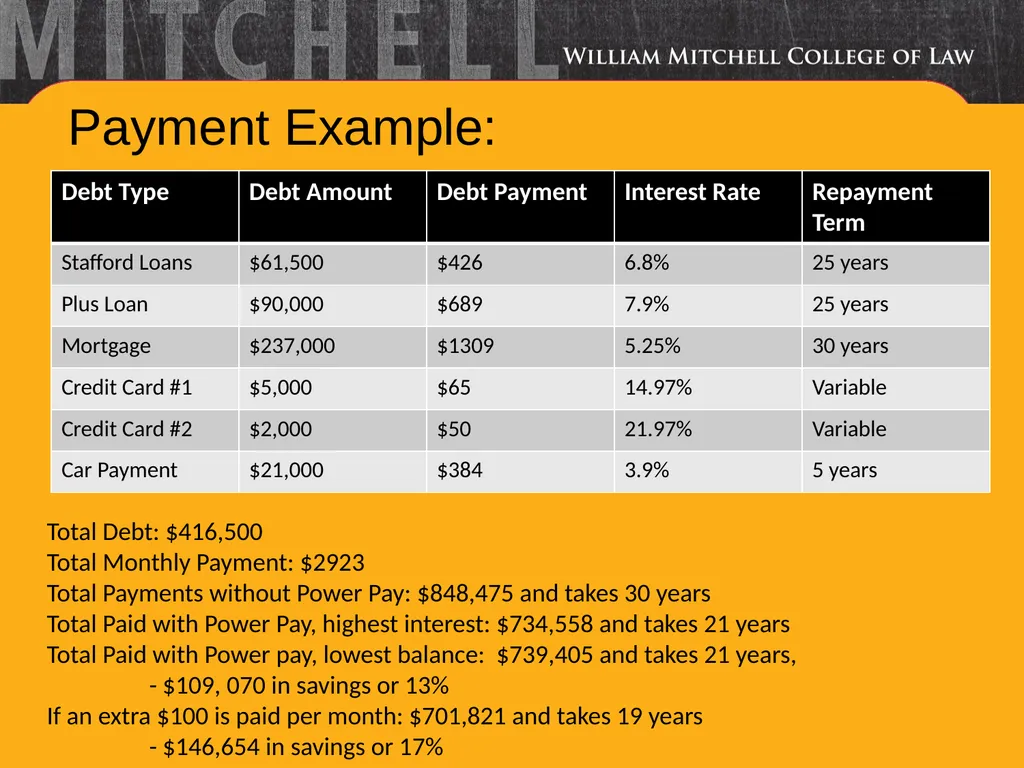
Payment Example: Total Debt: $416,500
Total Monthly Payment: $2923
Total Payments without Power Pay: $848,475 and takes 30 years
Total Paid with Power Pay, highest interest: $734,558 and takes 21 years
Total Paid with Power pay, lowest balance: $739,405 and takes 21 years,
- $109, 070 in savings or 13%
If an extra $100 is paid per month: $701,821 and takes 19 years
- $146,654 in savings or 17%<br>
17
Questions? Email: finaid@wmitchell.edu
Call: 651-290-6403
Want a free spreadsheet to track your debt?
Coming Attraction: October 23 and October 27
Financial PLP on Federal Loans and Public Service Loan Forgiveness<br>