
Financial Literacy and Behavior Change Helen




Description: Financial Literacy and Behavior Change Helen Colby, Ph.D. Indiana University, Kelley School of Business Overview Effectiveness of financial education and training Unexpected effects of financial literacy education Predictors of positive
Related Topics
Download Presentation
"Financial Literacy and Behavior Change Helen" is the property of its rightful owner. Permission is granted to download and print the materials on this website for personal, non-commercial use only, and to display it on your personal computer provided you do not modify the materials and that you retain all copyright notices contained in the materials. By downloading content from our website, you accept the terms of this agreement.
Presentation Transcript
slide1. Financial Literacy and Behavior Change Helen Colby, Ph.D.
Indiana University, Kelley School of Business<br>
slide2. Overview Effectiveness of financial education and training
Unexpected effects of financial literacy education
Predictors of positive financial behavior
New methods<br>
slide3. Knowledge and Attitudes Versus Behaviors Many financial literacy interventions use knowledge as an outcome measure
Knowledge change is, relatively, easy
Others use attitude changes
Real attitude change is hard, measured attitude change is less hard
Assumption was that these lead to behavior change<br>
slide4. Effectiveness of Financial Education Meta analysis
168 published papers
201 separate studies
How effective is financial education at changing behaviors? Fernandes, Lynch, & Netemeyer (2013)<br>
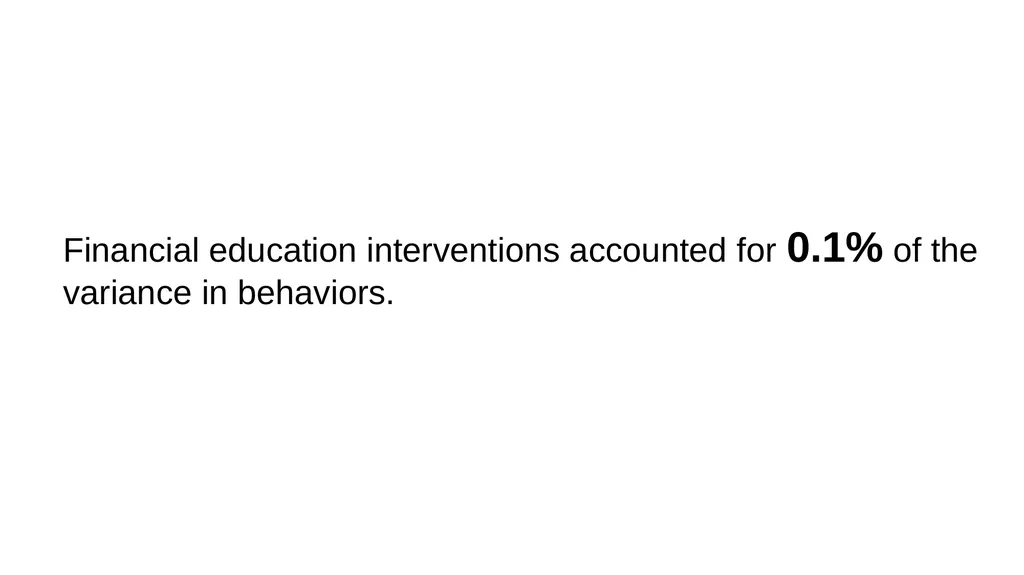
slide5. Financial education interventions accounted for 0.1% of the variance in behaviors.<br>
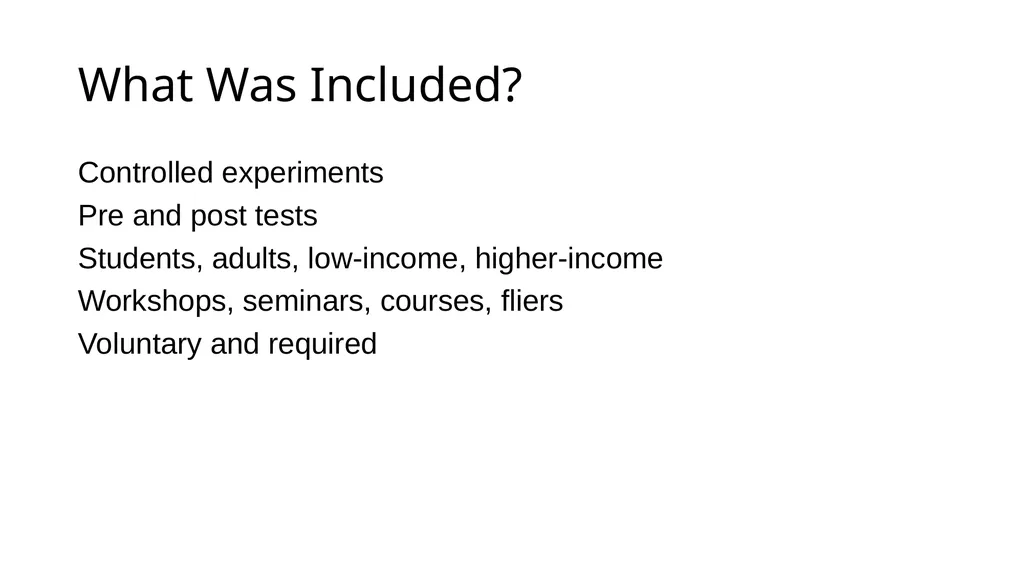
slide6. What Was Included? Controlled experiments
Pre and post tests
Students, adults, low-income, higher-income
Workshops, seminars, courses, fliers
Voluntary and required<br>
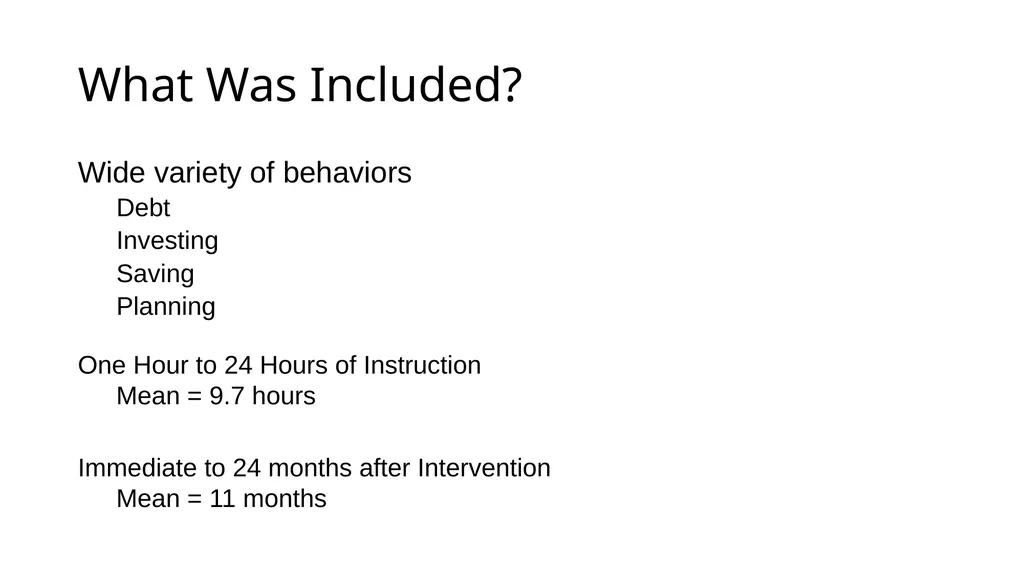
slide7. What Was Included? Wide variety of behaviors
Debt
Investing
Saving
Planning One Hour to 24 Hours of Instruction
Mean = 9.7 hours Immediate to 24 months after Intervention
Mean = 11 months<br>
slide8. Time Effects Effects decayed significantly over time
No effect of 24 hours of instruction at 18 months<br>
slide9. General Financial Knowledge Meta analysis
Current financial knowledge
No intervention<br>
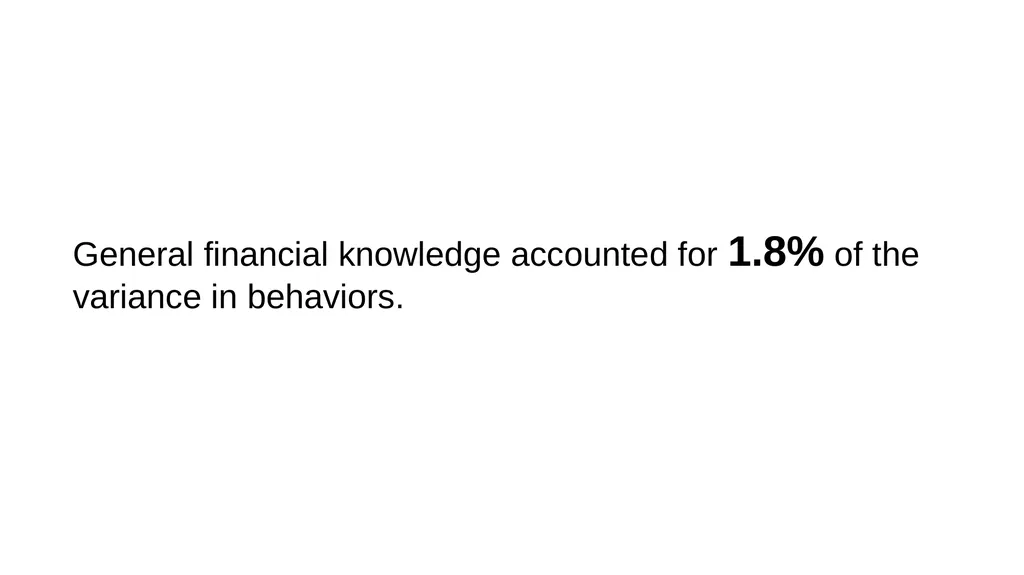
slide10. General financial knowledge accounted for 1.8% of the variance in behaviors.<br>
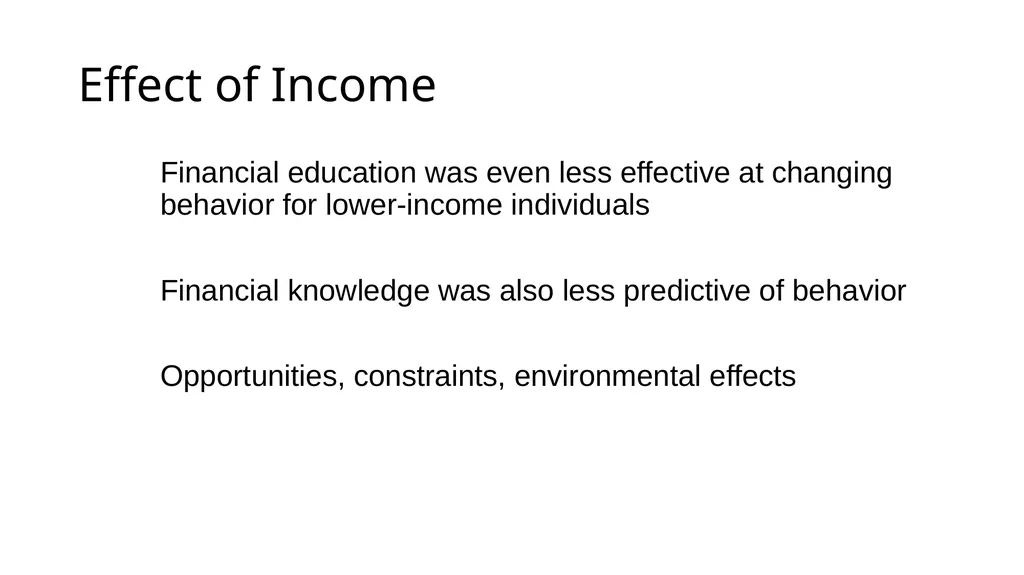
slide11. Effect of Income Financial education was even less effective at changing behavior for lower-income individuals
Financial knowledge was also less predictive of behavior
Opportunities, constraints, environmental effects<br>
slide12. Why is financial literacy training ineffective?<br>
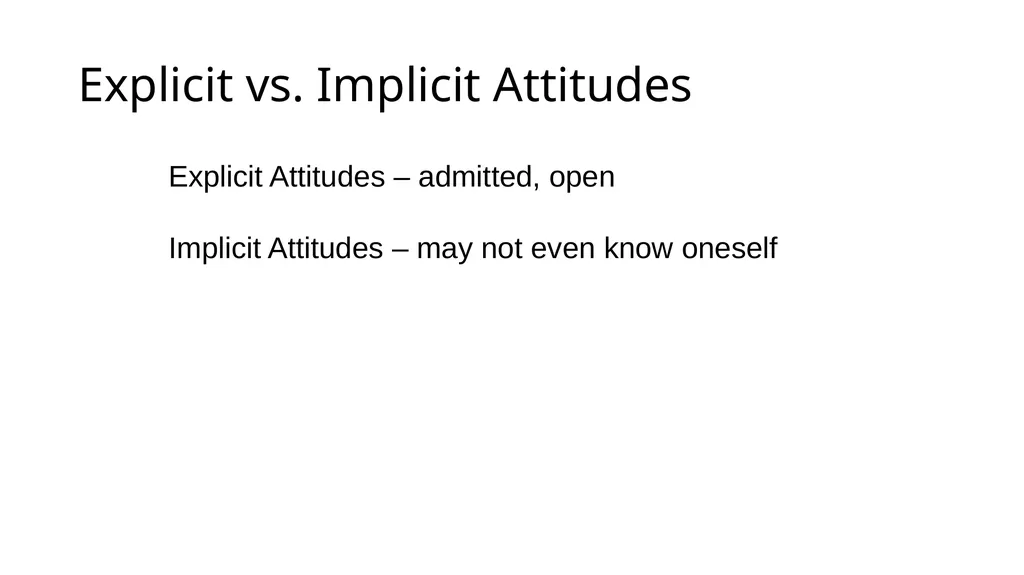
slide13. Explicit vs. Implicit Attitudes Explicit Attitudes – admitted, open
Implicit Attitudes – may not even know oneself<br>
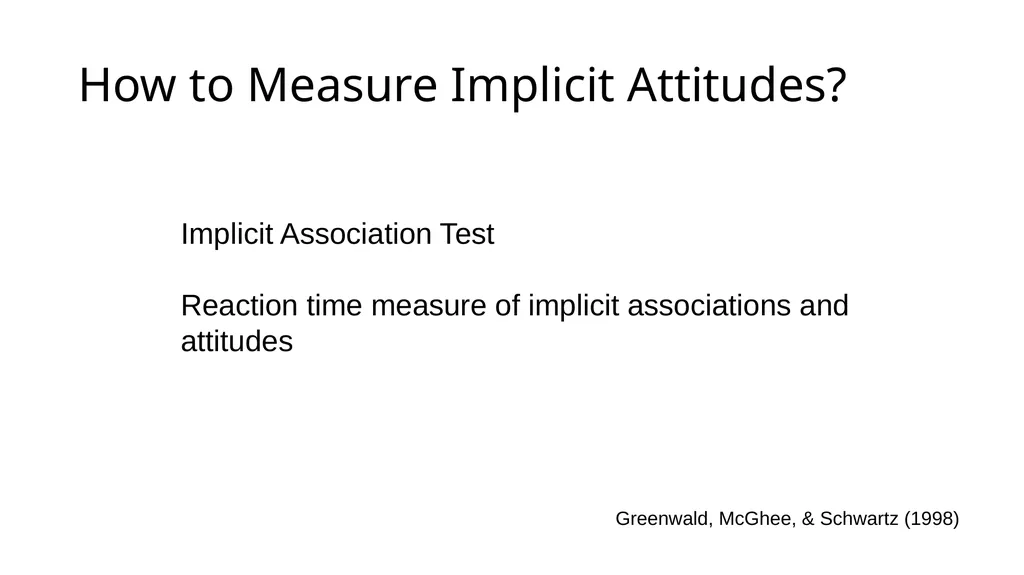
slide14. How to Measure Implicit Attitudes? Implicit Association Test
Reaction time measure of implicit associations and attitudes Greenwald, McGhee, & Schwartz (1998)<br>
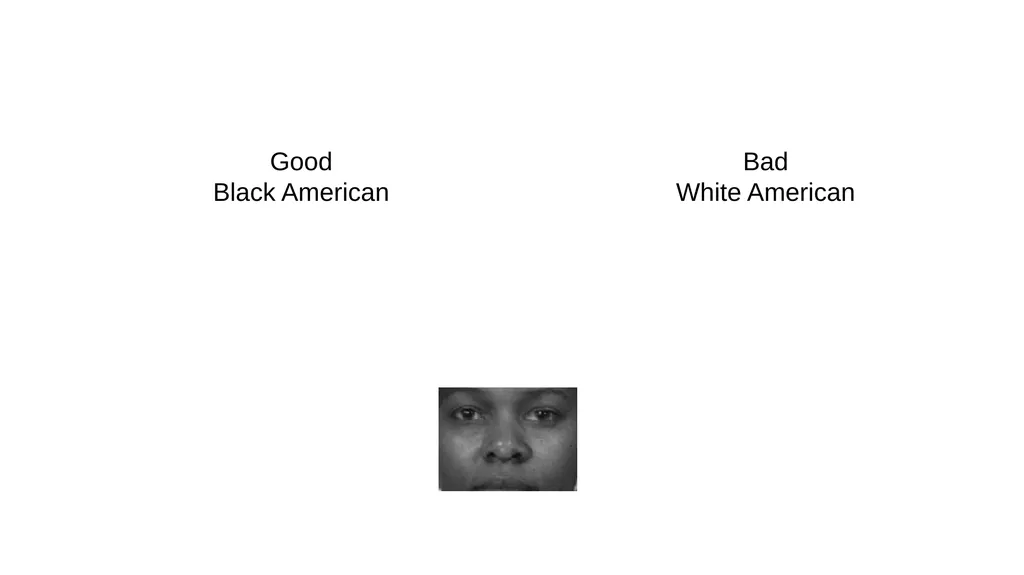
slide15. Good
Black American Bad
White American<br>
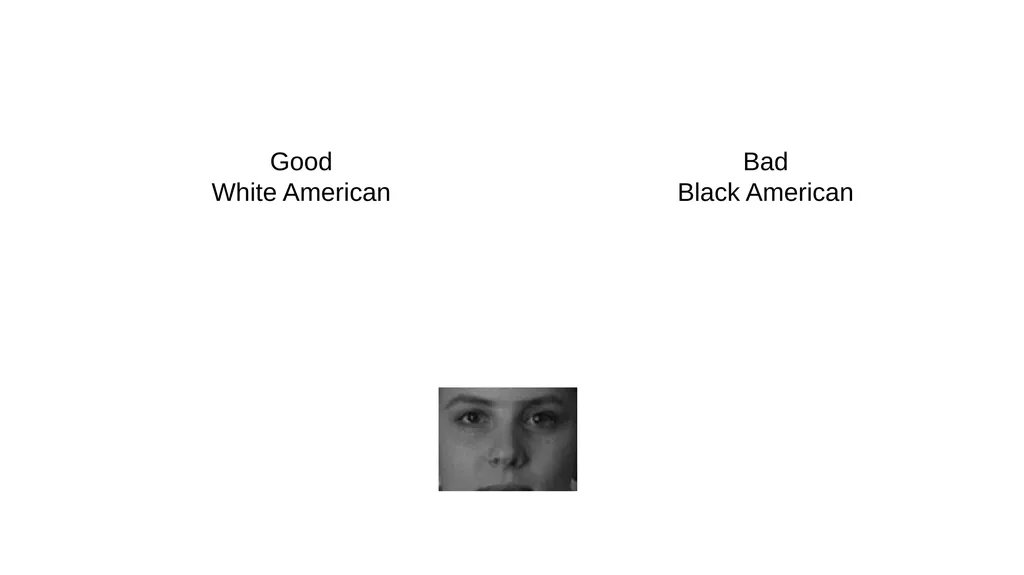
slide16. Good
White American Bad
Black American<br>
slide17. How to Measure Implicit Attitudes? Used to study race, gender, obesity, and many others
Financial attitudes? Greenwald, McGhee, & Schwartz (1998)<br>
slide18. Good
Spend Bad
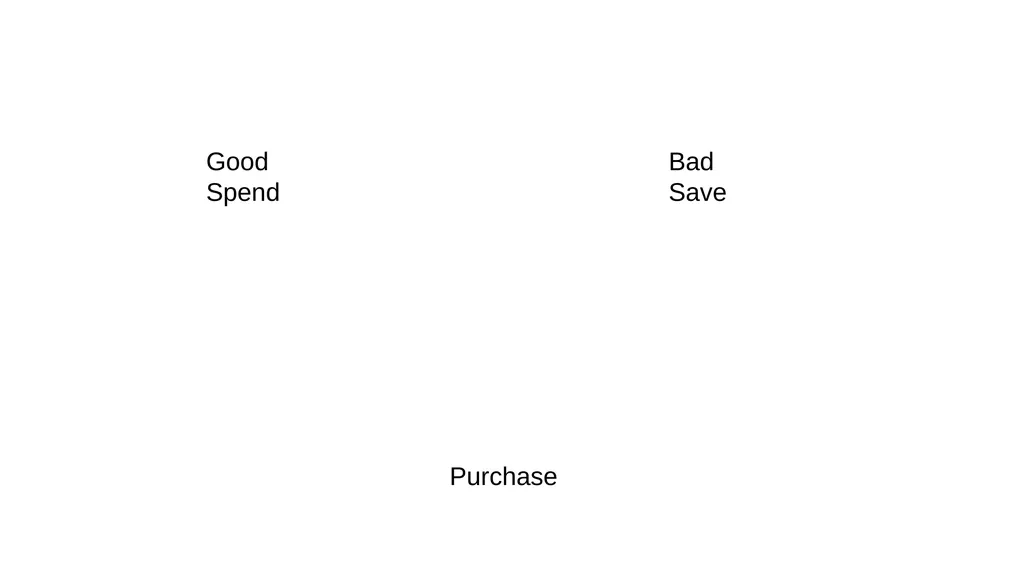
Save Purchase<br>
slide19. Good
Save Bad
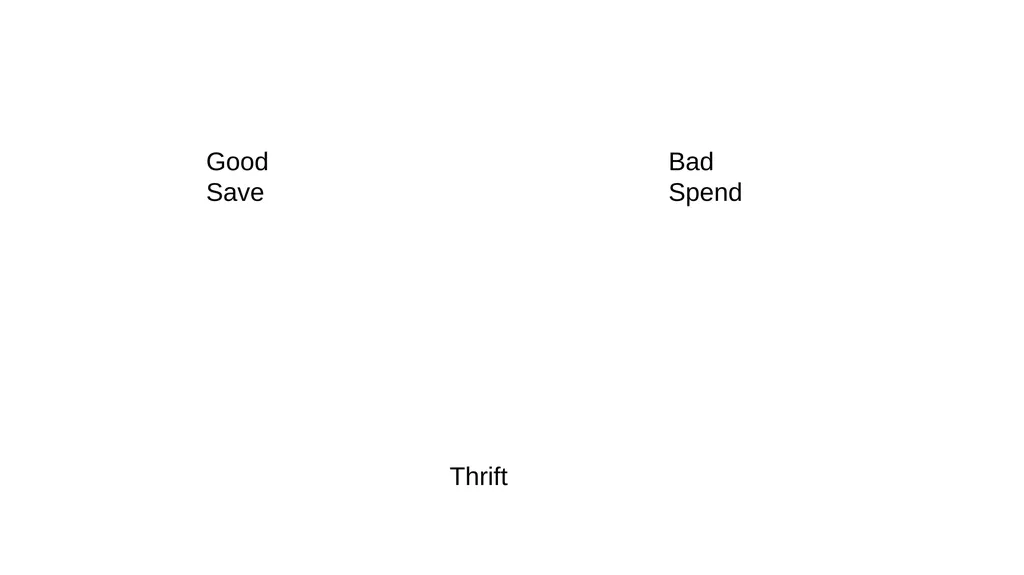
Spend Thrift<br>
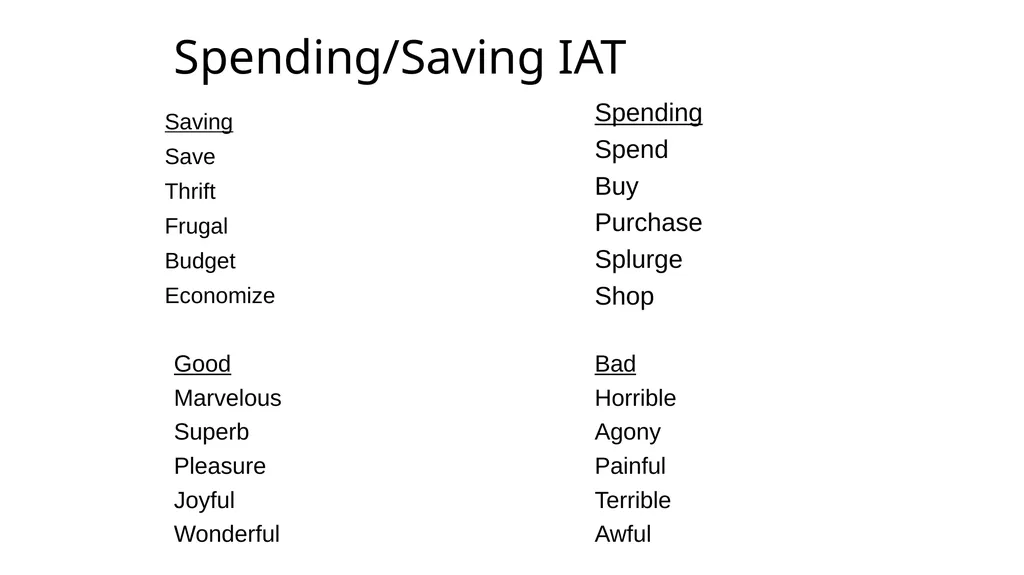
slide20. Spending/Saving IAT Saving
Save
Thrift
Frugal
Budget
Economize Spending
Spend
Buy
Purchase
Splurge
Shop Bad
Horrible
Agony
Painful
Terrible
Awful Good
Marvelous
Superb
Pleasure
Joyful
Wonderful<br>
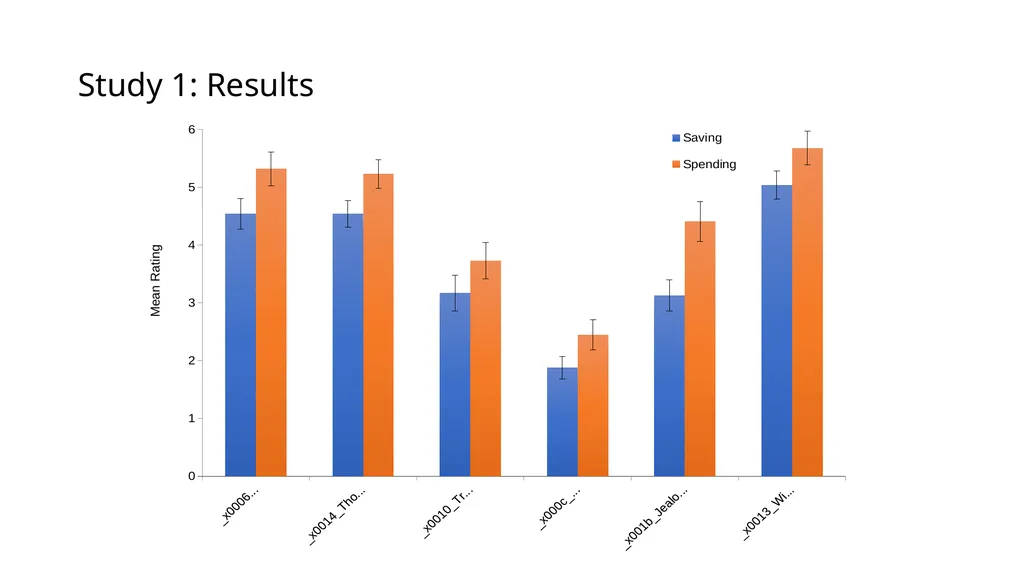
slide21. Study 1: Implicit Attitudes and Financial Stress Completed Spending/Saving IAT
Completed a battery of financial health questions<br>
slide22. Study 1: Results Mean Rating<br>
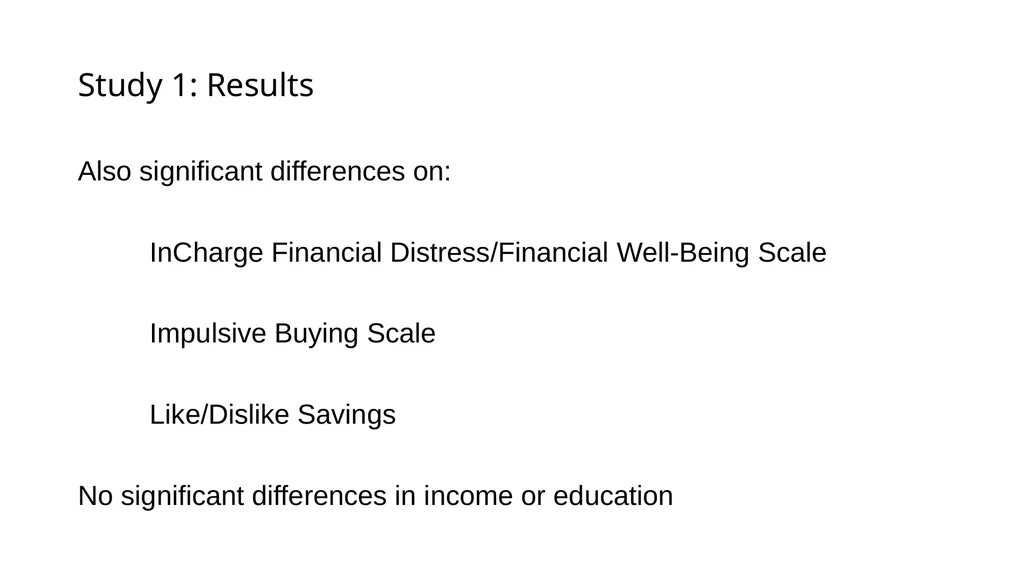
slide23. Study 1: Results Also significant differences on:
InCharge Financial Distress/Financial Well-Being Scale
Impulsive Buying Scale
Like/Dislike Savings
No significant differences in income or education<br>
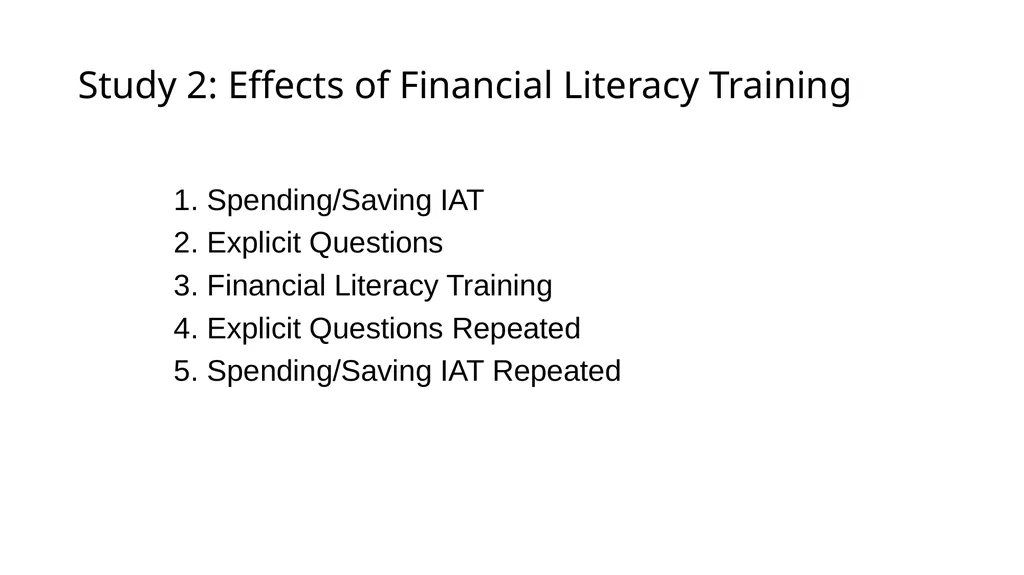
slide24. Study 2: Effects of Financial Literacy Training 1. Spending/Saving IAT
2. Explicit Questions
3. Financial Literacy Training
4. Explicit Questions Repeated
5. Spending/Saving IAT Repeated<br>
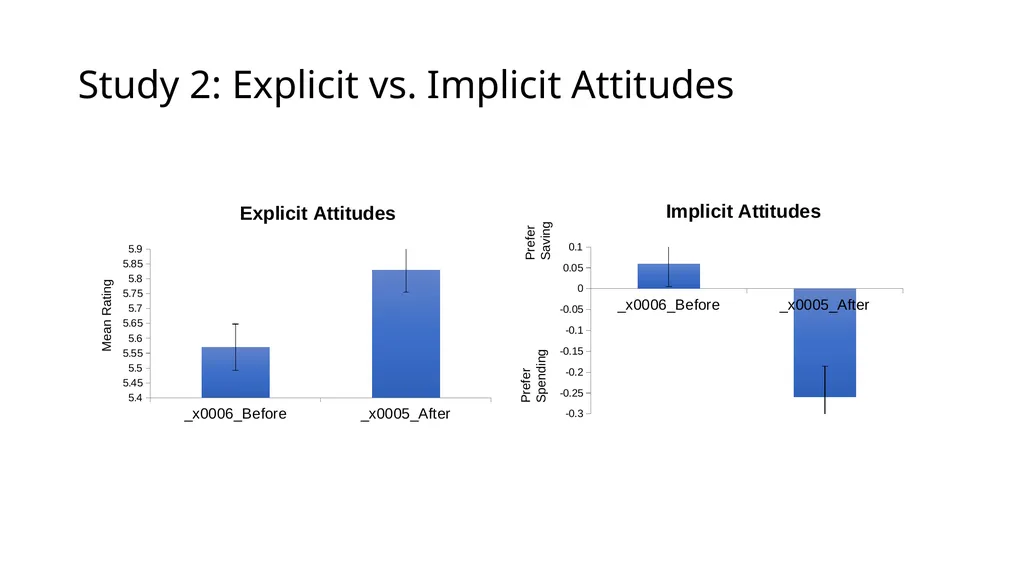
slide25. Study 2: Explicit vs. Implicit Attitudes Prefer Saving Prefer Spending Mean Rating<br>
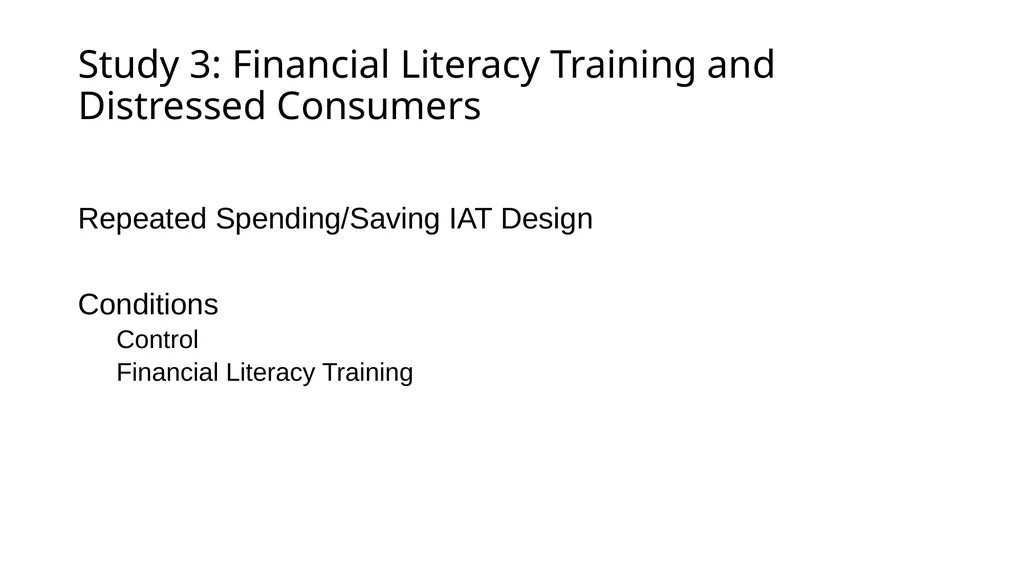
slide26. Study 3: Financial Literacy Training and Distressed Consumers Repeated Spending/Saving IAT Design
Conditions
Control
Financial Literacy Training<br>
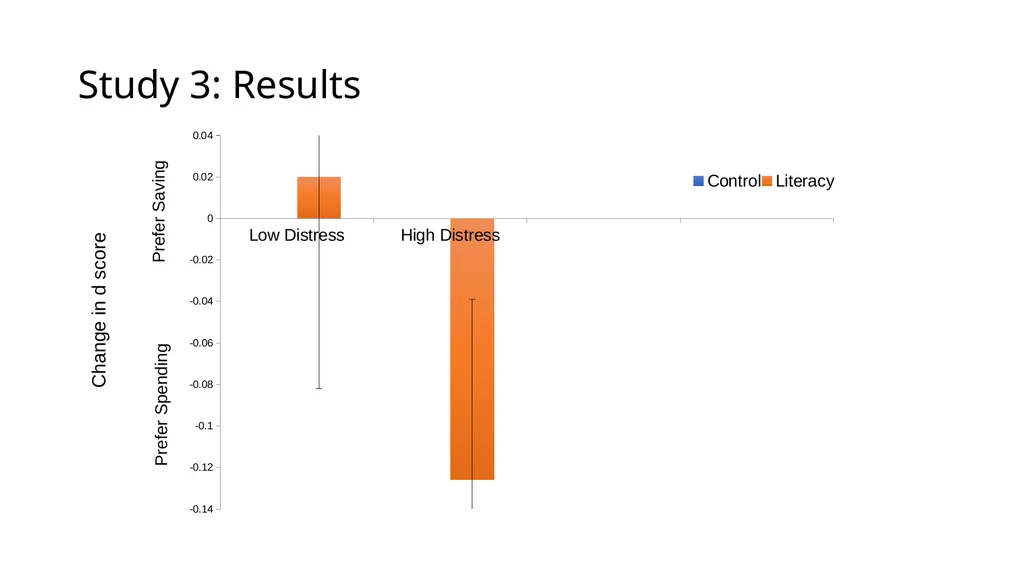
slide27. Study 3: Results Change in d score Prefer Saving Prefer Spending<br>
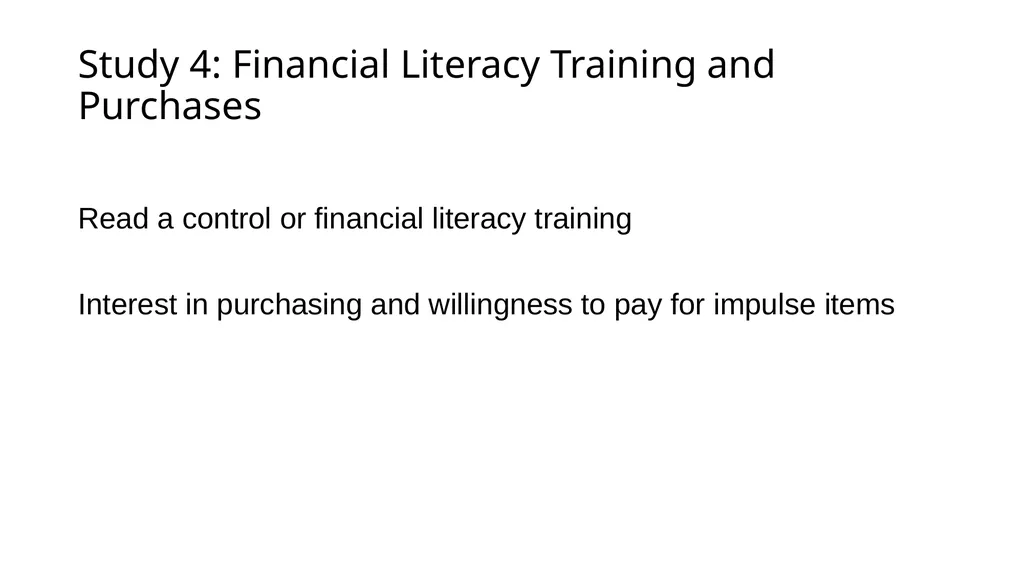
slide28. Study 4: Financial Literacy Training and Purchases Read a control or financial literacy training
Interest in purchasing and willingness to pay for impulse items<br>
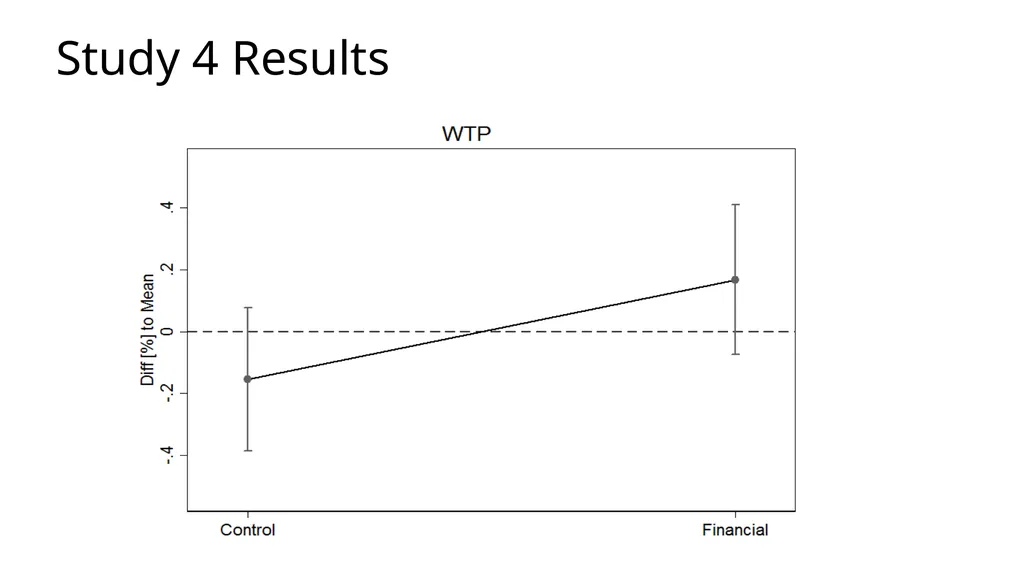
slide29. Study 4 Results<br>
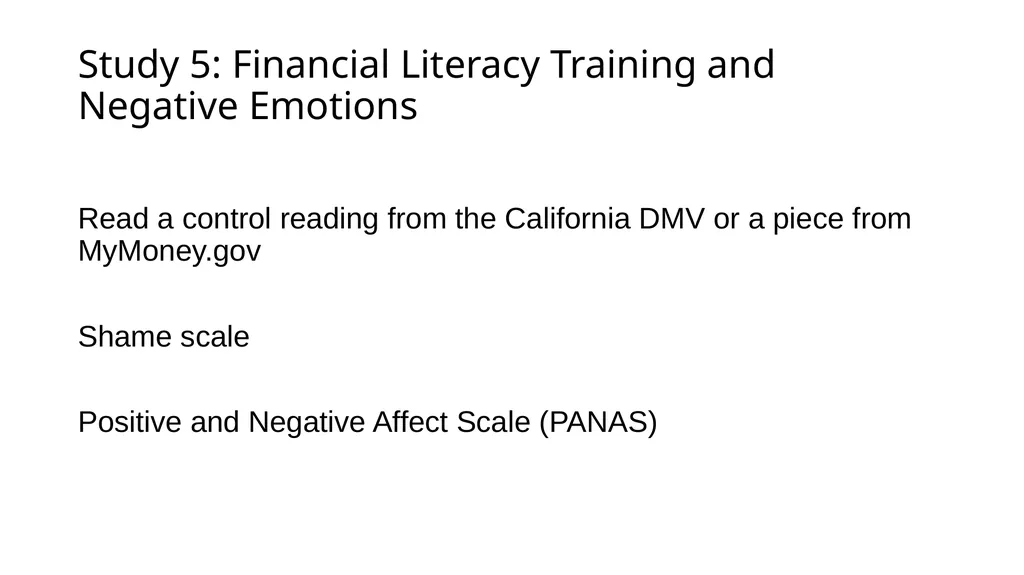
slide30. Study 5: Financial Literacy Training and Negative Emotions Read a control reading from the California DMV or a piece from MyMoney.gov
Shame scale
Positive and Negative Affect Scale (PANAS)<br>
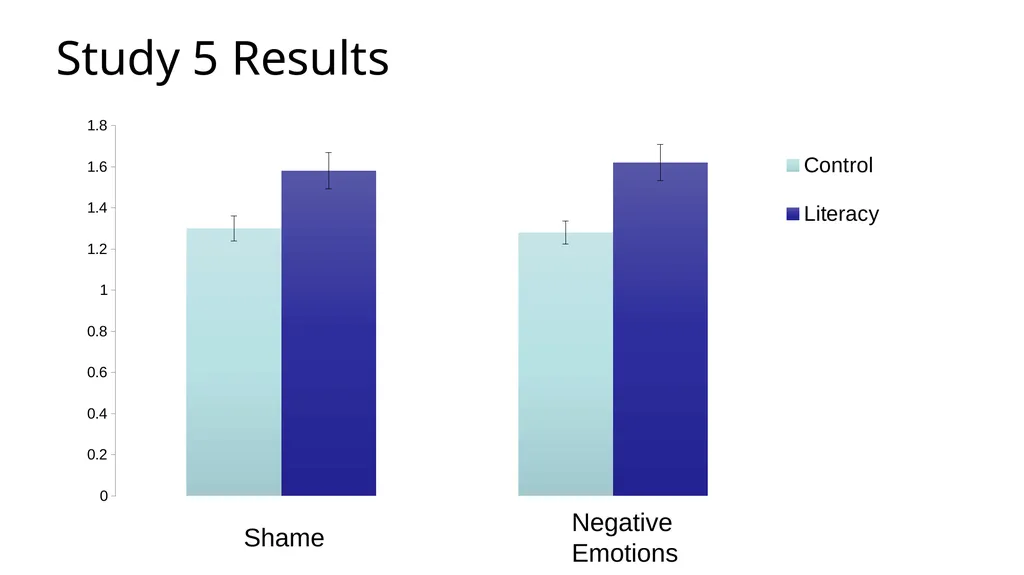
slide31. Study 5 Results Shame Negative Emotions<br>
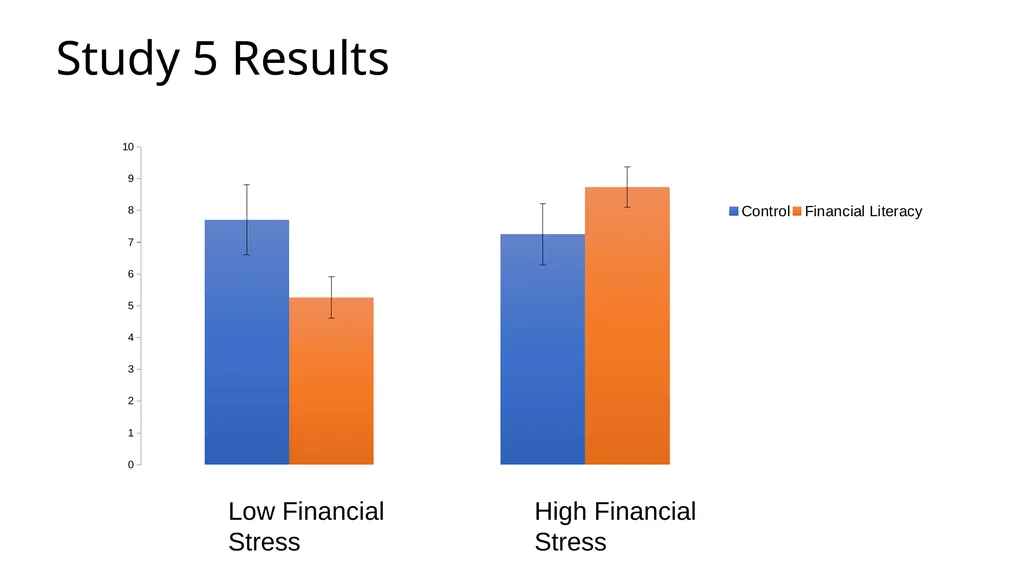
slide32. Study 5 Results Low Financial Stress High Financial Stress<br>
slide33. But, there is some good news!<br>
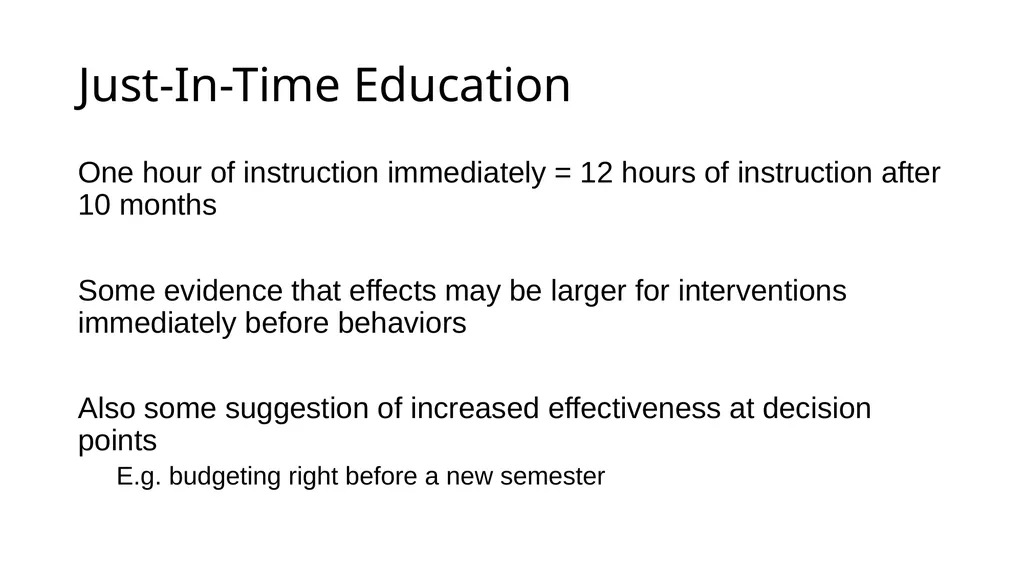
slide34. Just-In-Time Education One hour of instruction immediately = 12 hours of instruction after 10 months
Some evidence that effects may be larger for interventions immediately before behaviors
Also some suggestion of increased effectiveness at decision points
E.g. budgeting right before a new semester<br>
slide35. Other Factors Financial literacy is much less predictive when you include other factors
Propensity to plan
Confidence in financial information search
Willingness to take investment risks
Economic Locus of Control<br>
slide36. Economic Locus of Control Internal – belief that one can shape one’s economic outcomes
External – belief that external forces are responsible for an individual’s financial situation
Growing up with insecurity (economic, psychological, etc.) leads to external locus of control<br>
slide37. Economic Locus of Control Individuals with an internal locus of control are:
More likely to save money
Accumulate more savings overall
More likely to plan when under economic threat<br>
slide38. Going Forward Traditional financial education is not effective at changing behaviors.
However, that doesn’t mean these behaviors cannot be changed!
Teaching financial skills indirectly (e.g. locus of control, propensity to plan)
Providing the right training at the right time
There are other ways to provide financial education
Humor
Sharing experiences
Community support groups<br>
slide39. Thank you!<br>
Indiana University, Kelley School of Business<br>
slide2. Overview Effectiveness of financial education and training
Unexpected effects of financial literacy education
Predictors of positive financial behavior
New methods<br>
slide3. Knowledge and Attitudes Versus Behaviors Many financial literacy interventions use knowledge as an outcome measure
Knowledge change is, relatively, easy
Others use attitude changes
Real attitude change is hard, measured attitude change is less hard
Assumption was that these lead to behavior change<br>
slide4. Effectiveness of Financial Education Meta analysis
168 published papers
201 separate studies
How effective is financial education at changing behaviors? Fernandes, Lynch, & Netemeyer (2013)<br>
slide5. Financial education interventions accounted for 0.1% of the variance in behaviors.<br>
slide6. What Was Included? Controlled experiments
Pre and post tests
Students, adults, low-income, higher-income
Workshops, seminars, courses, fliers
Voluntary and required<br>
slide7. What Was Included? Wide variety of behaviors
Debt
Investing
Saving
Planning One Hour to 24 Hours of Instruction
Mean = 9.7 hours Immediate to 24 months after Intervention
Mean = 11 months<br>
slide8. Time Effects Effects decayed significantly over time
No effect of 24 hours of instruction at 18 months<br>
slide9. General Financial Knowledge Meta analysis
Current financial knowledge
No intervention<br>
slide10. General financial knowledge accounted for 1.8% of the variance in behaviors.<br>
slide11. Effect of Income Financial education was even less effective at changing behavior for lower-income individuals
Financial knowledge was also less predictive of behavior
Opportunities, constraints, environmental effects<br>
slide12. Why is financial literacy training ineffective?<br>
slide13. Explicit vs. Implicit Attitudes Explicit Attitudes – admitted, open
Implicit Attitudes – may not even know oneself<br>
slide14. How to Measure Implicit Attitudes? Implicit Association Test
Reaction time measure of implicit associations and attitudes Greenwald, McGhee, & Schwartz (1998)<br>
slide15. Good
Black American Bad
White American<br>
slide16. Good
White American Bad
Black American<br>
slide17. How to Measure Implicit Attitudes? Used to study race, gender, obesity, and many others
Financial attitudes? Greenwald, McGhee, & Schwartz (1998)<br>
slide18. Good
Spend Bad
Save Purchase<br>
slide19. Good
Save Bad
Spend Thrift<br>
slide20. Spending/Saving IAT Saving
Save
Thrift
Frugal
Budget
Economize Spending
Spend
Buy
Purchase
Splurge
Shop Bad
Horrible
Agony
Painful
Terrible
Awful Good
Marvelous
Superb
Pleasure
Joyful
Wonderful<br>
slide21. Study 1: Implicit Attitudes and Financial Stress Completed Spending/Saving IAT
Completed a battery of financial health questions<br>
slide22. Study 1: Results Mean Rating<br>
slide23. Study 1: Results Also significant differences on:
InCharge Financial Distress/Financial Well-Being Scale
Impulsive Buying Scale
Like/Dislike Savings
No significant differences in income or education<br>
slide24. Study 2: Effects of Financial Literacy Training 1. Spending/Saving IAT
2. Explicit Questions
3. Financial Literacy Training
4. Explicit Questions Repeated
5. Spending/Saving IAT Repeated<br>
slide25. Study 2: Explicit vs. Implicit Attitudes Prefer Saving Prefer Spending Mean Rating<br>
slide26. Study 3: Financial Literacy Training and Distressed Consumers Repeated Spending/Saving IAT Design
Conditions
Control
Financial Literacy Training<br>
slide27. Study 3: Results Change in d score Prefer Saving Prefer Spending<br>
slide28. Study 4: Financial Literacy Training and Purchases Read a control or financial literacy training
Interest in purchasing and willingness to pay for impulse items<br>
slide29. Study 4 Results<br>
slide30. Study 5: Financial Literacy Training and Negative Emotions Read a control reading from the California DMV or a piece from MyMoney.gov
Shame scale
Positive and Negative Affect Scale (PANAS)<br>
slide31. Study 5 Results Shame Negative Emotions<br>
slide32. Study 5 Results Low Financial Stress High Financial Stress<br>
slide33. But, there is some good news!<br>
slide34. Just-In-Time Education One hour of instruction immediately = 12 hours of instruction after 10 months
Some evidence that effects may be larger for interventions immediately before behaviors
Also some suggestion of increased effectiveness at decision points
E.g. budgeting right before a new semester<br>
slide35. Other Factors Financial literacy is much less predictive when you include other factors
Propensity to plan
Confidence in financial information search
Willingness to take investment risks
Economic Locus of Control<br>
slide36. Economic Locus of Control Internal – belief that one can shape one’s economic outcomes
External – belief that external forces are responsible for an individual’s financial situation
Growing up with insecurity (economic, psychological, etc.) leads to external locus of control<br>
slide37. Economic Locus of Control Individuals with an internal locus of control are:
More likely to save money
Accumulate more savings overall
More likely to plan when under economic threat<br>
slide38. Going Forward Traditional financial education is not effective at changing behaviors.
However, that doesn’t mean these behaviors cannot be changed!
Teaching financial skills indirectly (e.g. locus of control, propensity to plan)
Providing the right training at the right time
There are other ways to provide financial education
Humor
Sharing experiences
Community support groups<br>
slide39. Thank you!<br>