
Fire Reintroduction in a Long Fire Excluded Red

Description: Fire Reintroduction in a Long Fire Excluded Red Pine Woodland -Red pine woodlands in northern MN -What is a natural fire regime in this setting? -The Sunken Lake project: collaborative restoration Brian Palik USDA Forest Service Northern
Related Topics
Download Presentation
"Fire Reintroduction in a Long Fire Excluded Red" is the property of its rightful owner. Permission is granted to download and print the materials on this website for personal, non-commercial use only, and to display it on your personal computer provided you do not modify the materials and that you retain all copyright notices contained in the materials. By downloading content from our website, you accept the terms of this agreement.
Presentation Transcript
slide1. Fire Reintroduction in a Long Fire Excluded
Red Pine Woodland -Red pine woodlands in northern MN
-What is a natural fire regime in this setting?
-The Sunken Lake project: collaborative restoration Brian Palik
USDA Forest Service
Northern Research Station
Grand Rapids MN<br>
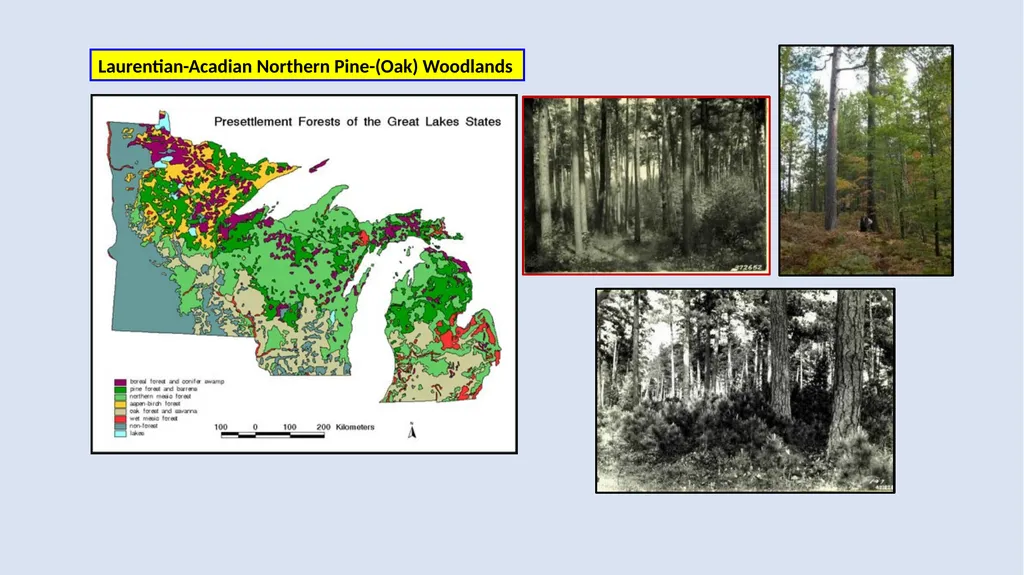
slide2. Laurentian-Acadian Northern Pine-(Oak) Woodlands<br>
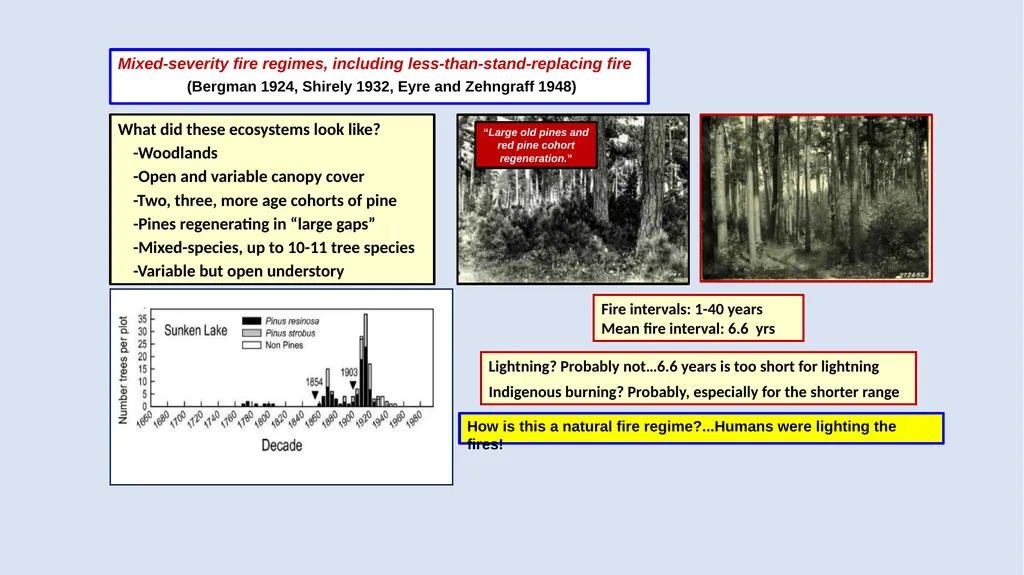
slide4. Mixed-severity fire regimes, including less-than-stand-replacing fire
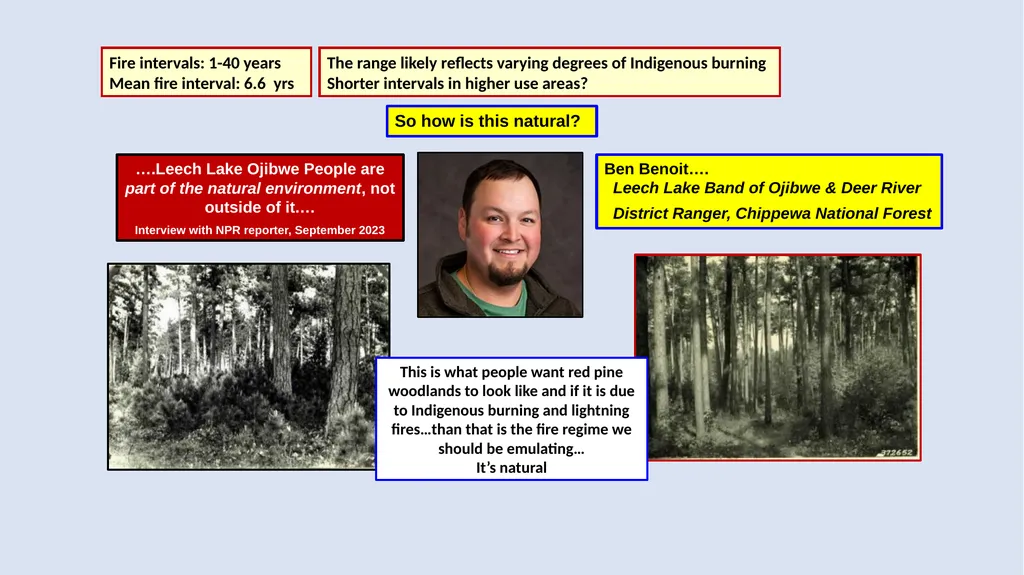
(Bergman 1924, Shirely 1932, Eyre and Zehngraff 1948) How is this a natural fire regime?...Humans were lighting the fires!<br>
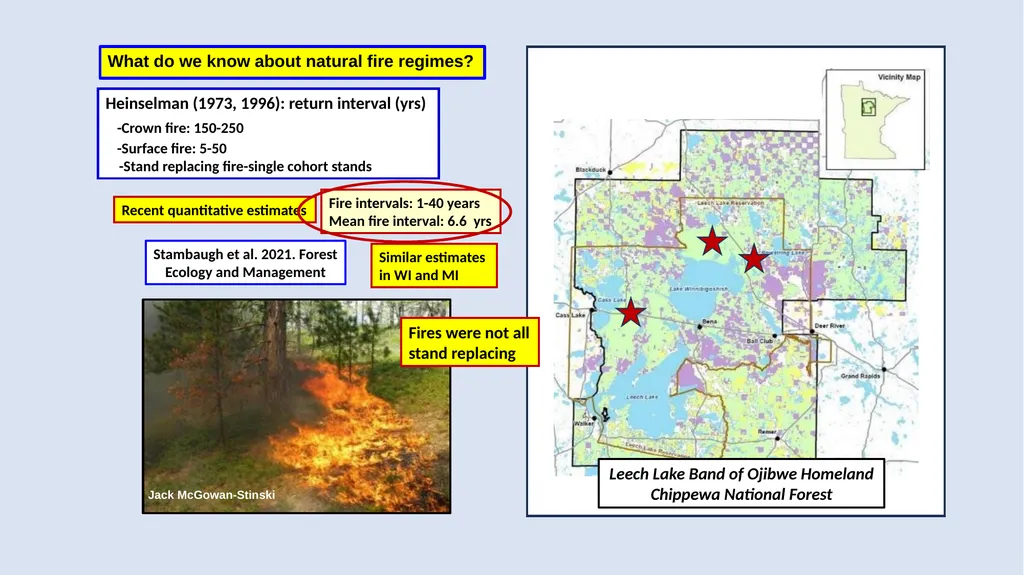
slide5. The range likely reflects varying degrees of Indigenous burning
Shorter intervals in higher use areas? So how is this natural? Fire intervals: 1-40 years
Mean fire interval: 6.6 yrs<br>
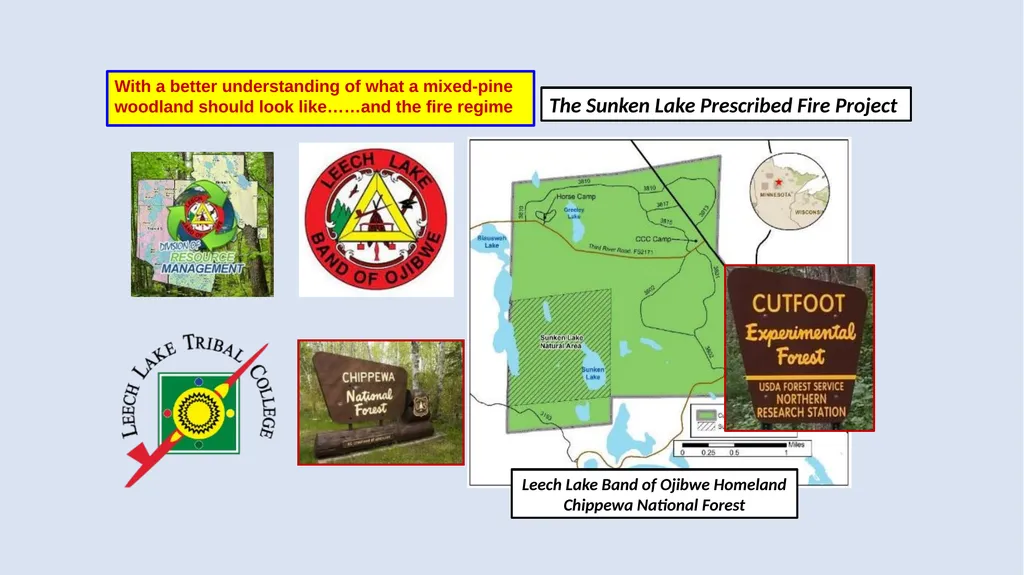
slide6. The Sunken Lake Prescribed Fire Project With a better understanding of what a mixed-pine woodland should look like……and the fire regime Leech Lake Band of Ojibwe Homeland
Chippewa National Forest<br>
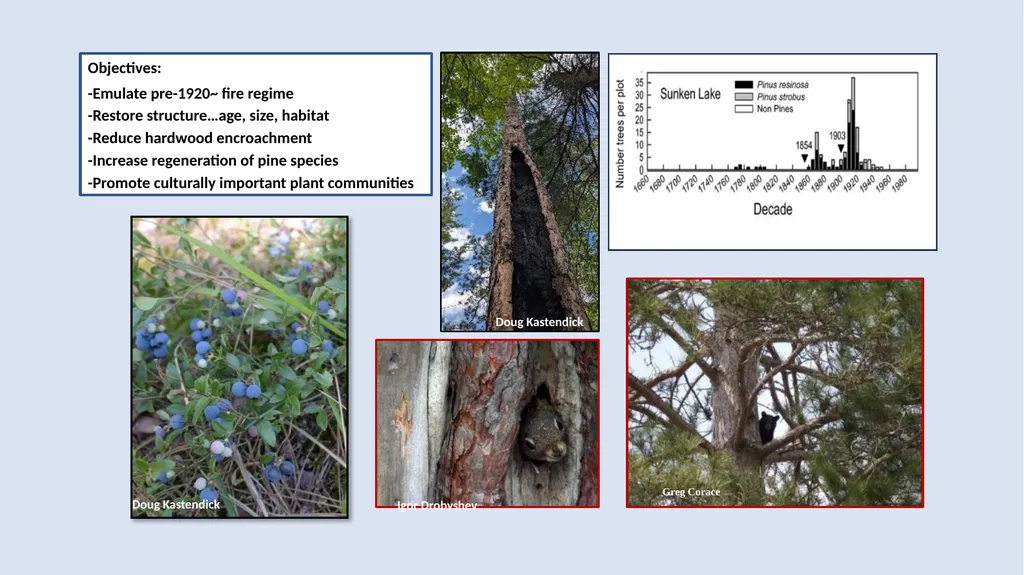
slide7. Objectives:
-Emulate pre-1920~ fire regime
-Restore structure…age, size, habitat
-Reduce hardwood encroachment
-Increase regeneration of pine species
-Promote culturally important plant communities Igor Drobyshev Doug Kastendick<br>
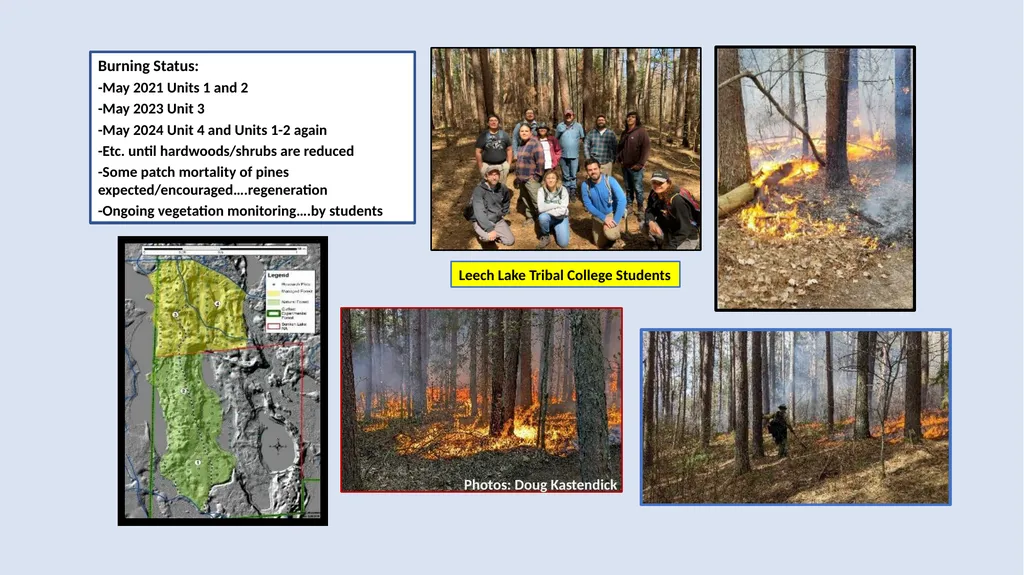
slide8. Burning Status:
-May 2021 Units 1 and 2
-May 2023 Unit 3
-May 2024 Unit 4 and Units 1-2 again
-Etc. until hardwoods/shrubs are reduced
-Some patch mortality of pines expected/encouraged….regeneration
-Ongoing vegetation monitoring….by students Photos: Doug Kastendick<br>
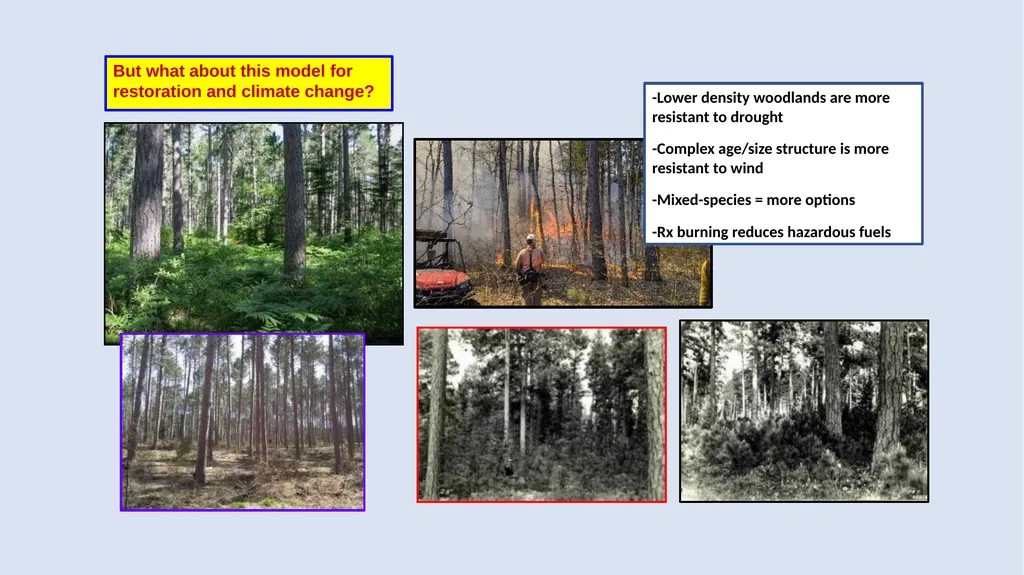
slide9. But what about this model for restoration and climate change? -Lower density woodlands are more resistant to drought
-Complex age/size structure is more resistant to wind
-Mixed-species = more options
-Rx burning reduces hazardous fuels<br>
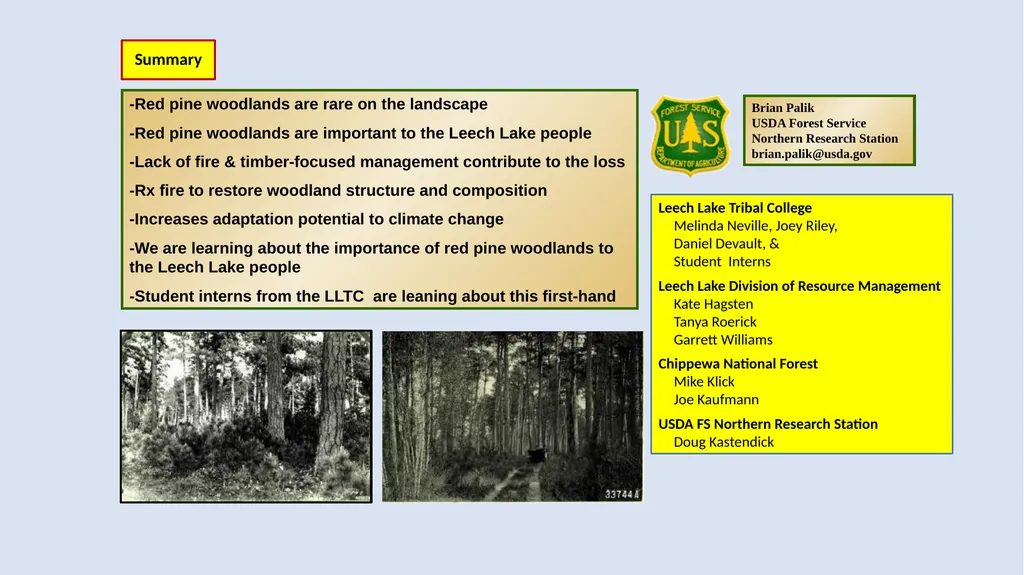
slide10. Summary -Red pine woodlands are rare on the landscape
-Red pine woodlands are important to the Leech Lake people
-Lack of fire & timber-focused management contribute to the loss
-Rx fire to restore woodland structure and composition
-Increases adaptation potential to climate change
-We are learning about the importance of red pine woodlands to the Leech Lake people
-Student interns from the LLTC are leaning about this first-hand<br>
-What is a natural fire regime in this setting?
-The Sunken Lake project: collaborative restoration Brian Palik
USDA Forest Service
Northern Research Station
Grand Rapids MN<br>
slide2. Laurentian-Acadian Northern Pine-(Oak) Woodlands<br>
slide4. Mixed-severity fire regimes, including less-than-stand-replacing fire
(Bergman 1924, Shirely 1932, Eyre and Zehngraff 1948) How is this a natural fire regime?...Humans were lighting the fires!<br>
slide5. The range likely reflects varying degrees of Indigenous burning
Shorter intervals in higher use areas? So how is this natural? Fire intervals: 1-40 years
Mean fire interval: 6.6 yrs<br>
slide6. The Sunken Lake Prescribed Fire Project With a better understanding of what a mixed-pine woodland should look like……and the fire regime Leech Lake Band of Ojibwe Homeland
Chippewa National Forest<br>
slide7. Objectives:
-Emulate pre-1920~ fire regime
-Restore structure…age, size, habitat
-Reduce hardwood encroachment
-Increase regeneration of pine species
-Promote culturally important plant communities Igor Drobyshev Doug Kastendick<br>
slide8. Burning Status:
-May 2021 Units 1 and 2
-May 2023 Unit 3
-May 2024 Unit 4 and Units 1-2 again
-Etc. until hardwoods/shrubs are reduced
-Some patch mortality of pines expected/encouraged….regeneration
-Ongoing vegetation monitoring….by students Photos: Doug Kastendick<br>
slide9. But what about this model for restoration and climate change? -Lower density woodlands are more resistant to drought
-Complex age/size structure is more resistant to wind
-Mixed-species = more options
-Rx burning reduces hazardous fuels<br>
slide10. Summary -Red pine woodlands are rare on the landscape
-Red pine woodlands are important to the Leech Lake people
-Lack of fire & timber-focused management contribute to the loss
-Rx fire to restore woodland structure and composition
-Increases adaptation potential to climate change
-We are learning about the importance of red pine woodlands to the Leech Lake people
-Student interns from the LLTC are leaning about this first-hand<br>