First, Second, and Third Person First, second, and third person are ways of describing points of view. First person is the Iwe perspective. Second person is the you perspective. Third person is the hesheitthey perspective. 1st person
"First, Second, and Third Person First, second, and" is the property of its rightful owner. Permission is granted to
download and print the materials on this website for personal, non-commercial use only, and to display it
on your personal computer provided you do not modify the materials and that you retain all copyright
notices contained in the materials. By downloading content from our website, you accept the terms of this
agreement.
Presentation Transcript
01
First, Second, and Third Person<br>
02
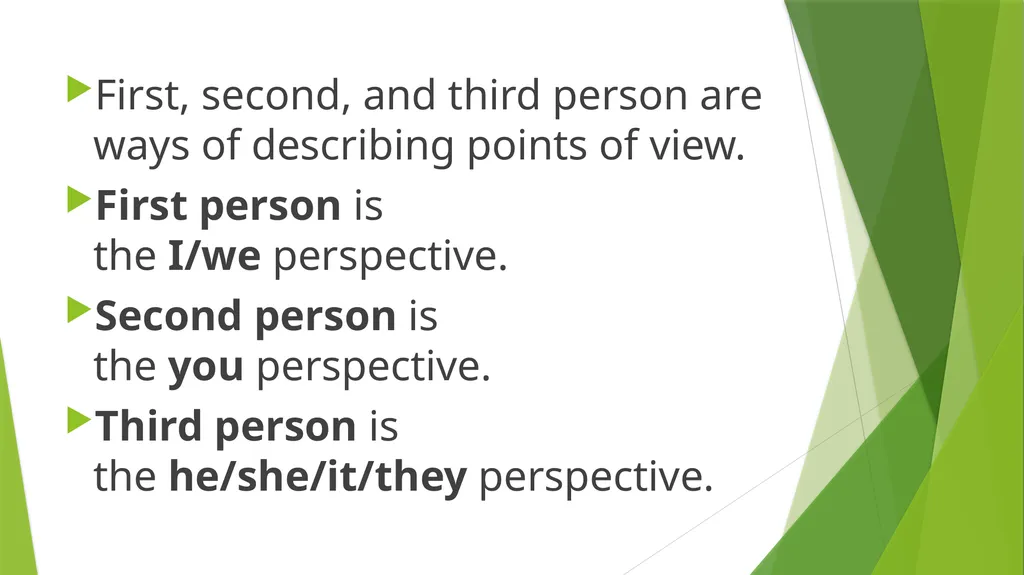
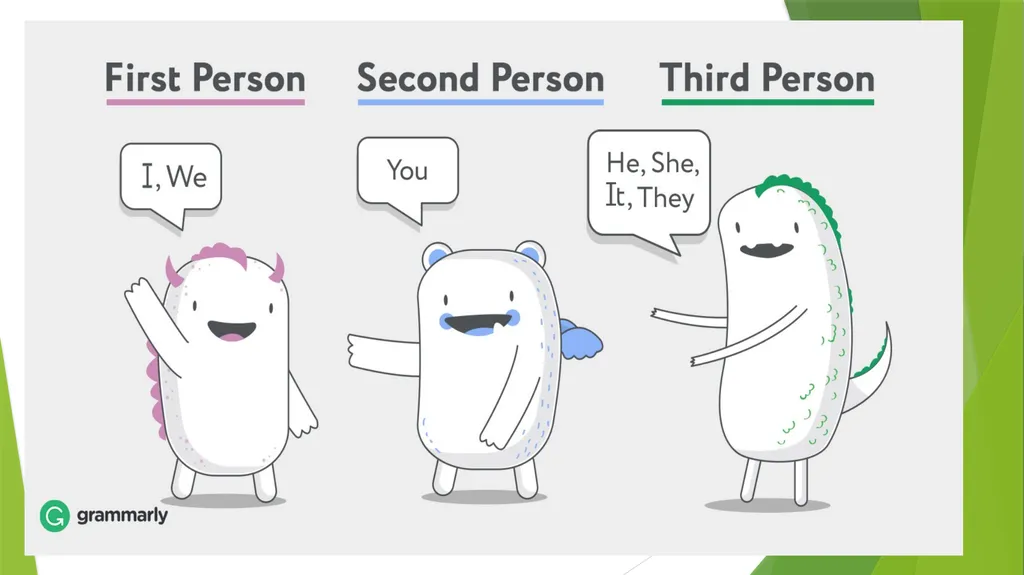
First, second, and third person are ways of describing points of view.
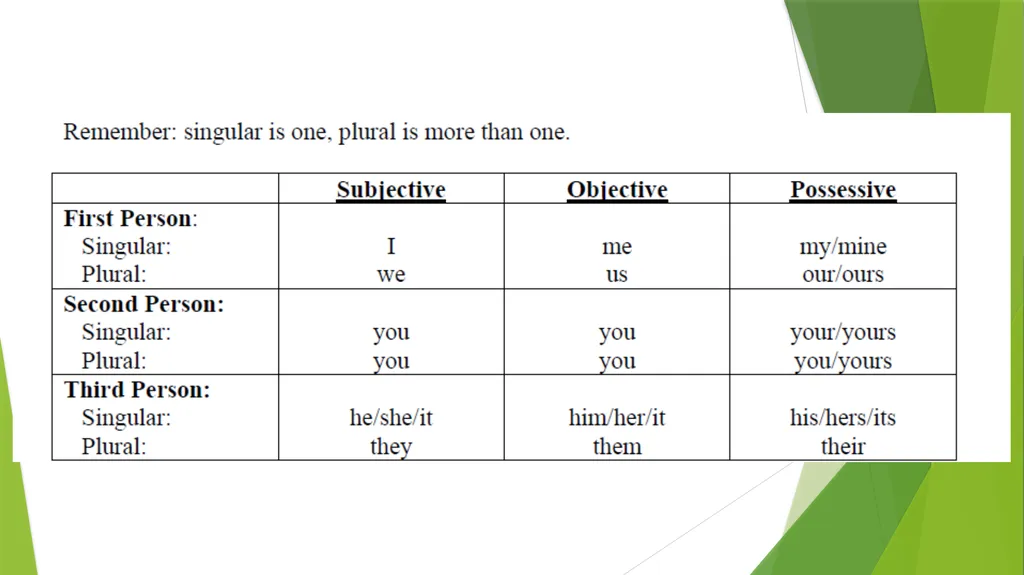
First person is the I/we perspective.
Second person is the you perspective.
Third person is the he/she/it/they perspective.<br>
03
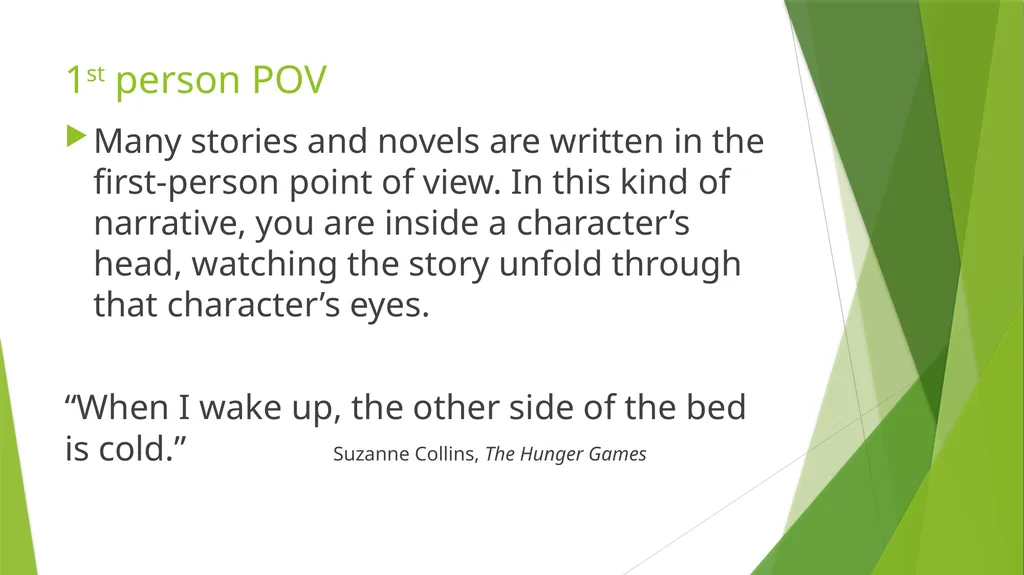
1st person POV Many stories and novels are written in the first-person point of view. In this kind of narrative, you are inside a character’s head, watching the story unfold through that character’s eyes.
“When I wake up, the other side of the bed is cold.” Suzanne Collins, The Hunger Games<br>
04
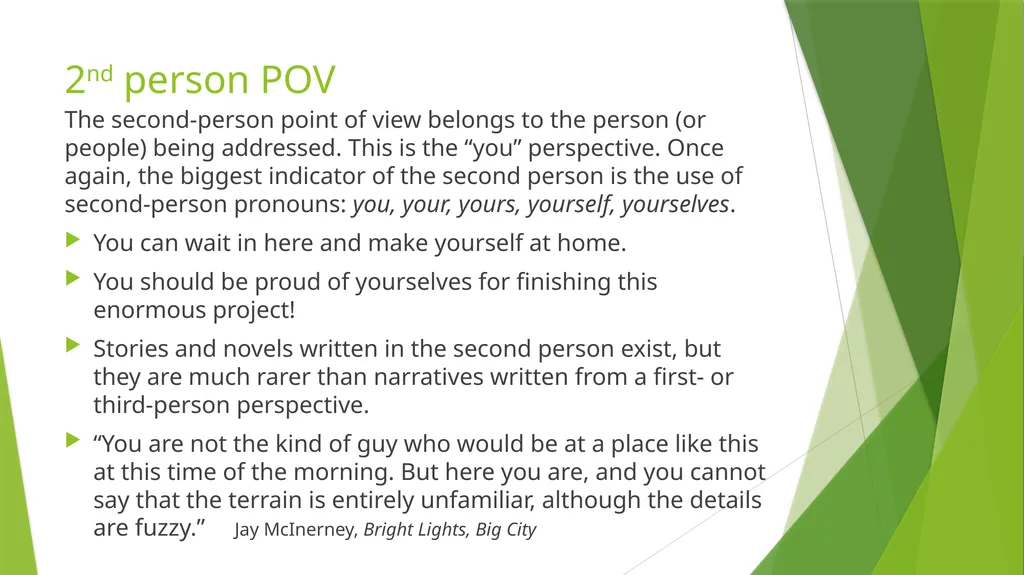
2nd person POV The second-person point of view belongs to the person (or people) being addressed. This is the “you” perspective. Once again, the biggest indicator of the second person is the use of second-person pronouns: you, your, yours, yourself, yourselves.
You can wait in here and make yourself at home.
You should be proud of yourselves for finishing this enormous project!
Stories and novels written in the second person exist, but they are much rarer than narratives written from a first- or third-person perspective.
“You are not the kind of guy who would be at a place like this at this time of the morning. But here you are, and you cannot say that the terrain is entirely unfamiliar, although the details are fuzzy.” Jay McInerney, Bright Lights, Big City<br>
05
Third-Person Point of View The third-person point of view belongs to the person (or people) being talked about. The third-person pronouns include he, him, his, himself, she, her, hers, herself, it, its, itself, they, them, their, theirs, and themselves.
Tiffany used her prize money from the science fair to buy herself a new microscope.
The concert goers roared their approval when they realized they’d be getting an encore.
You can’t always rely on pronouns to tell you the perspective of a sentence. Not all sentences include pronouns, especially in the third person:
Mike always hated school.
But if you look at this sentence and think “Mike isn’t me,” you can eliminate the first person. You can also think “I’m not talking to Mike,” so that eliminates the second person. You’re left with the third person.<br>
06
Third-Person Point of View …continued Plenty of stories and novels are written in the third person. In this type of story, a disembodied narrator describes what the characters do and what happens to them. You don’t see directly through a character’s eyes as you do in a first-person narrative, but often the narrator describes the main character’s thoughts and feelings about what’s going on.
“Sam Vimes sighed when he heard the scream, but he finished shaving before he did anything about it.” Terry Pratchett, Night Watch<br>
07
Let’s have 3rd person party day!!! Speaking in the Third Person
Most of the time when people talk about themselves, they speak in the first person. It would certainly be eccentric to talk about yourself in the third person all the time, but you may do it once in a while for comedic effect or to grab someone’s attention.
Tina: Let’s get sushi for lunch. It’s Jeff’s favorite! Tom: No, Jeff hates sushi. I think he’d rather get burritos. Jeff: Um, does Jeff get a vote?