
Fiscal Policy Chapter 10 © Dünhaupt, Dullien,
MT
Published · 47 slides · 0 views

1 / 1


Description
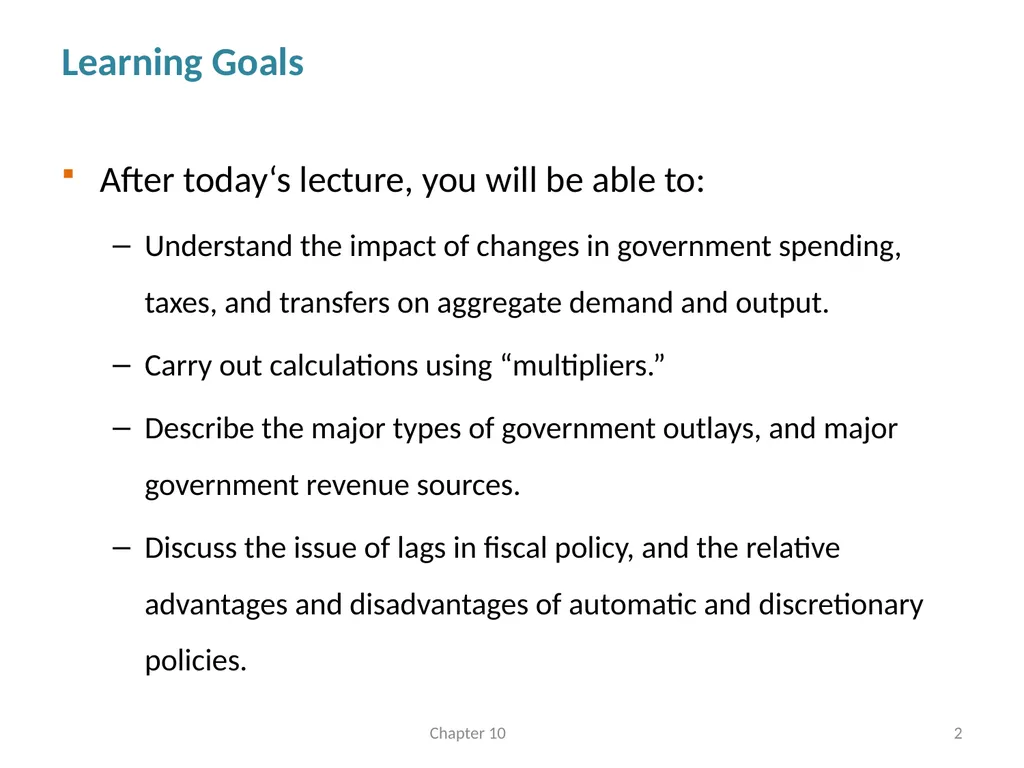
Fiscal Policy Chapter 10 Dünhaupt, Dullien, Goodwin, Harris, Nelson, Roach, Torras Learning Goals After todays lecture, you will be able to: Understand the impact of changes in government spending, taxes, and transfers on aggregate
Related Topics
Share
Embed code
Download this presentation From Below
"Fiscal Policy Chapter 10 © Dünhaupt, Dullien," is the property of its rightful owner. Permission is granted to download and print the materials on this website for personal, non-commercial use only, and to display it on your personal computer provided you do not modify the materials and that you retain all copyright notices contained in the materials. By downloading content from our website, you accept the terms of this agreement.
Presentation Transcript
01
Fiscal Policy Chapter 10 © Dünhaupt, Dullien, Goodwin, Harris, Nelson, Roach, Torras<br>
02
Learning Goals After today‘s lecture, you will be able to:
Understand the impact of changes in government spending, taxes, and transfers on aggregate demand and output.
Carry out calculations using “multipliers.”
Describe the major types of government outlays, and major government revenue sources.
Discuss the issue of lags in fiscal policy, and the relative advantages and disadvantages of automatic and discretionary policies. Chapter 10 2<br>
Understand the impact of changes in government spending, taxes, and transfers on aggregate demand and output.
Carry out calculations using “multipliers.”
Describe the major types of government outlays, and major government revenue sources.
Discuss the issue of lags in fiscal policy, and the relative advantages and disadvantages of automatic and discretionary policies. Chapter 10 2<br>
03
Chapter Outline The Role of Government Spending and Taxes
Public Budgets in Europe
Policy Issues Chapter 10 3<br>
Public Budgets in Europe
Policy Issues Chapter 10 3<br>
04
The Role of Government Spending and Taxes<br>
05
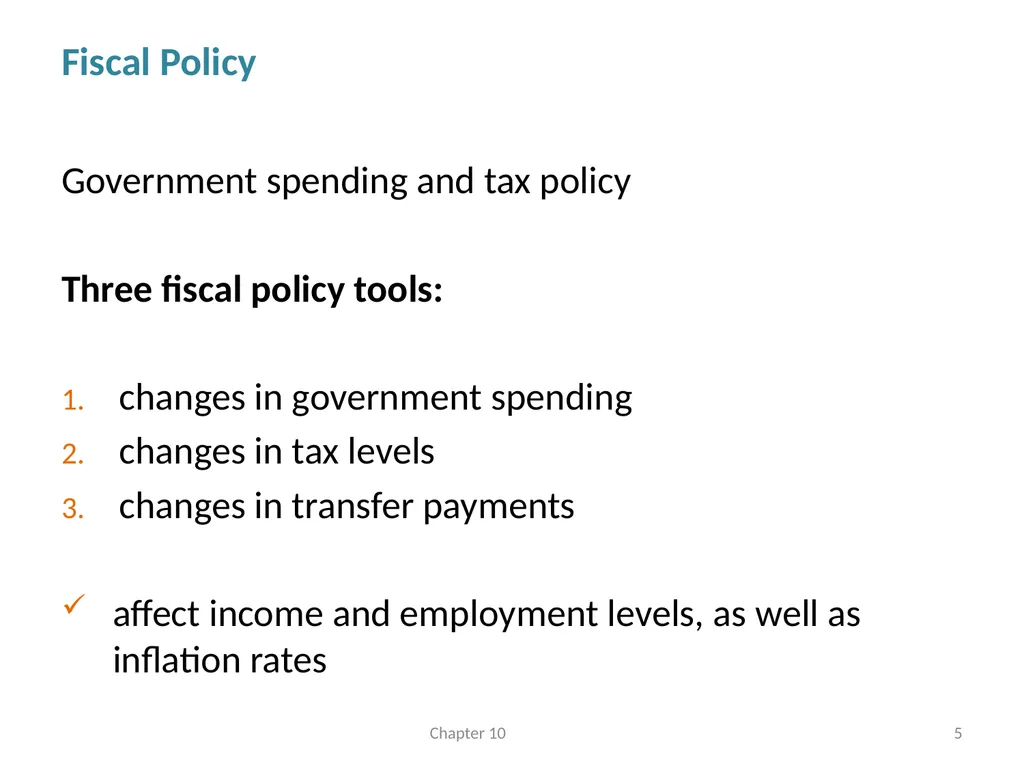
Fiscal Policy Government spending and tax policy
Three fiscal policy tools:
changes in government spending
changes in tax levels
changes in transfer payments
affect income and employment levels, as well as inflation rates Chapter 10 5<br>
Three fiscal policy tools:
changes in government spending
changes in tax levels
changes in transfer payments
affect income and employment levels, as well as inflation rates Chapter 10 5<br>
06
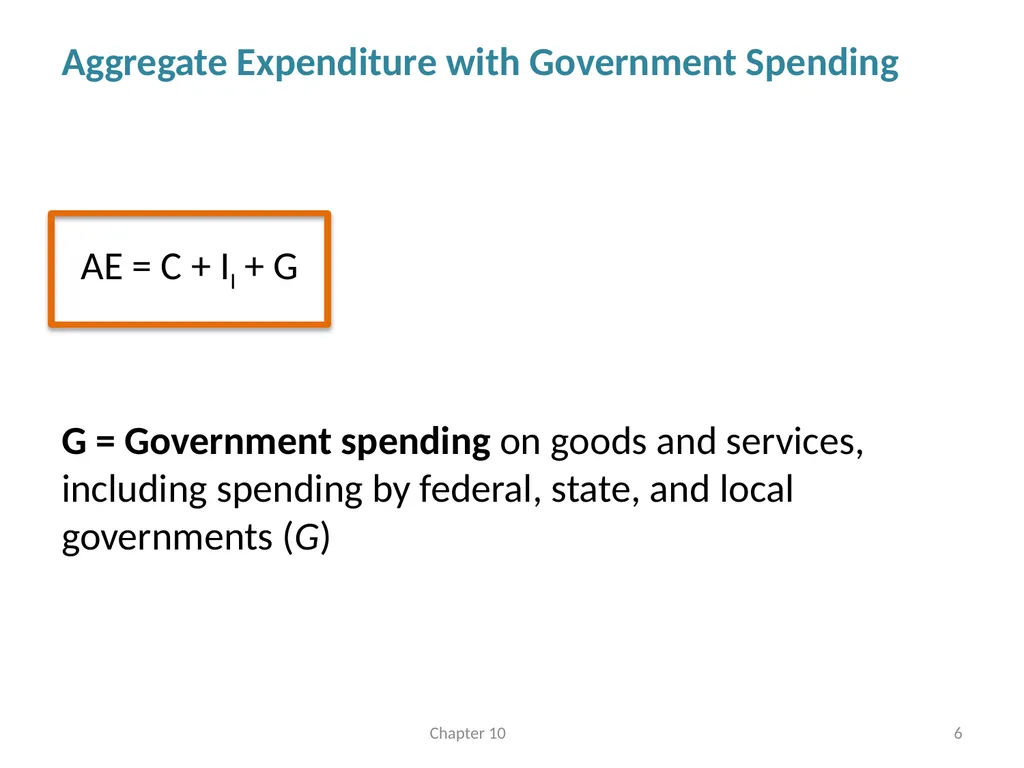
Aggregate Expenditure with Government Spending G = Government spending on goods and services, including spending by federal, state, and local governments (G) Chapter 10 6 AE = C + II + G<br>
07
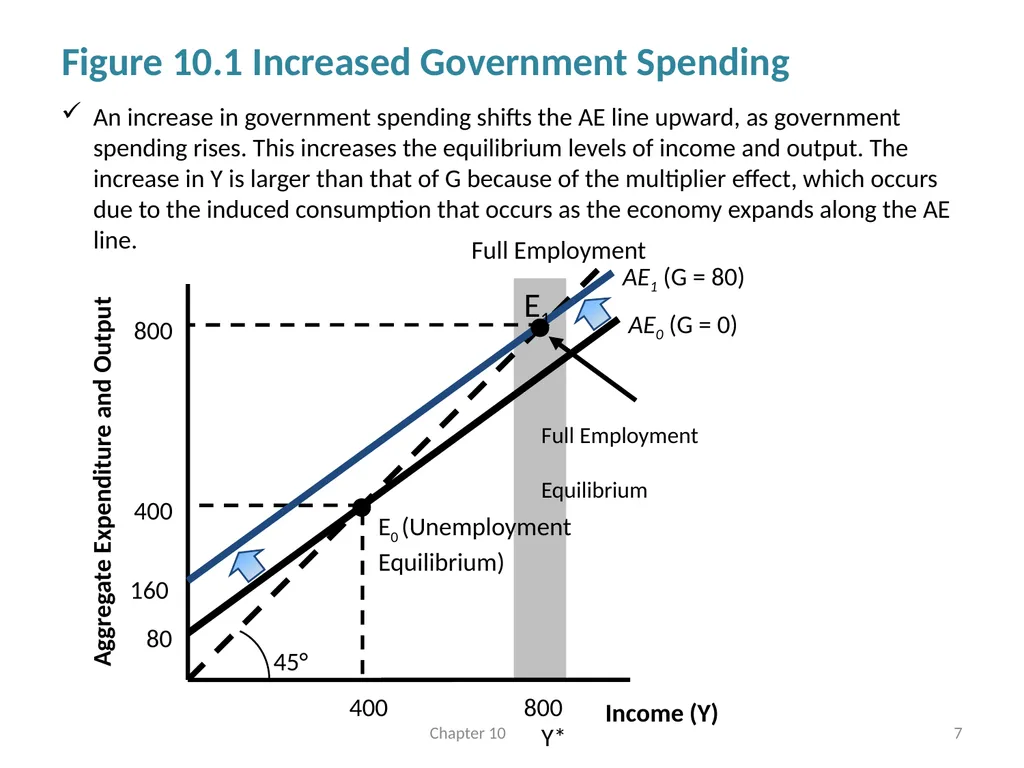
Figure 10.1 Increased Government Spending Chapter 10 7 An increase in government spending shifts the AE line upward, as government spending rises. This increases the equilibrium levels of income and output. The increase in Y is larger than that of G because of the multiplier effect, which occurs due to the induced consumption that occurs as the economy expands along the AE line.<br>
08
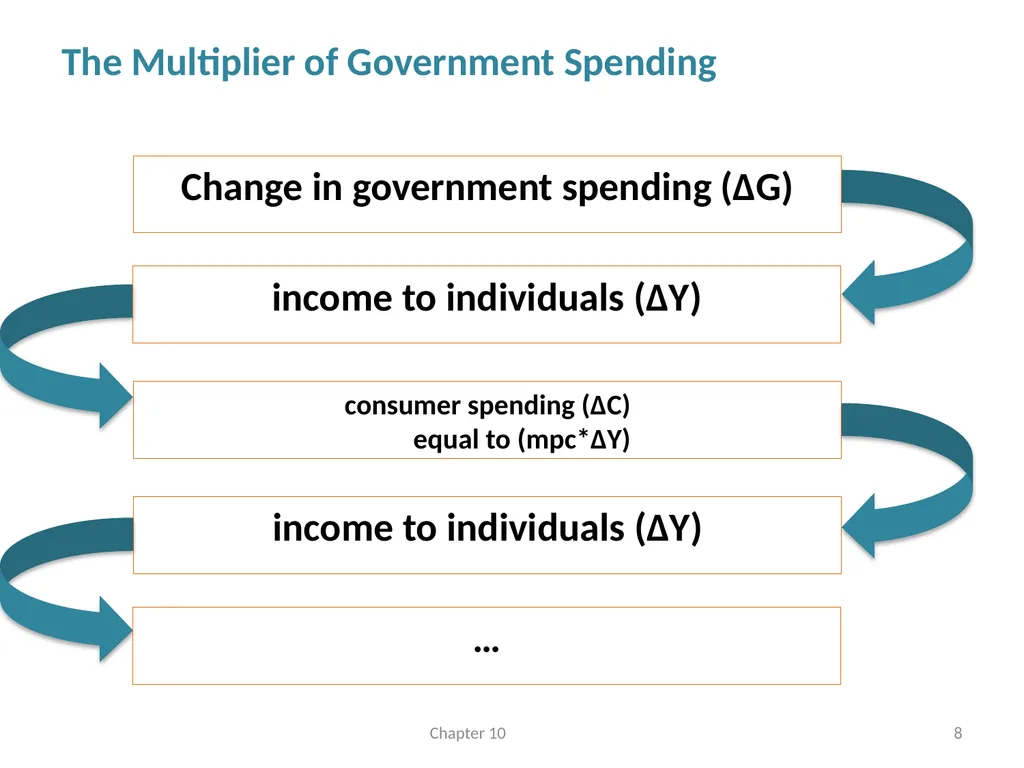
The Multiplier of Government Spending Chapter 10 8 Change in government spending (ΔG) consumer spending (ΔC)
equal to (mpc*ΔY) income to individuals (ΔY) … income to individuals (ΔY)<br>
09
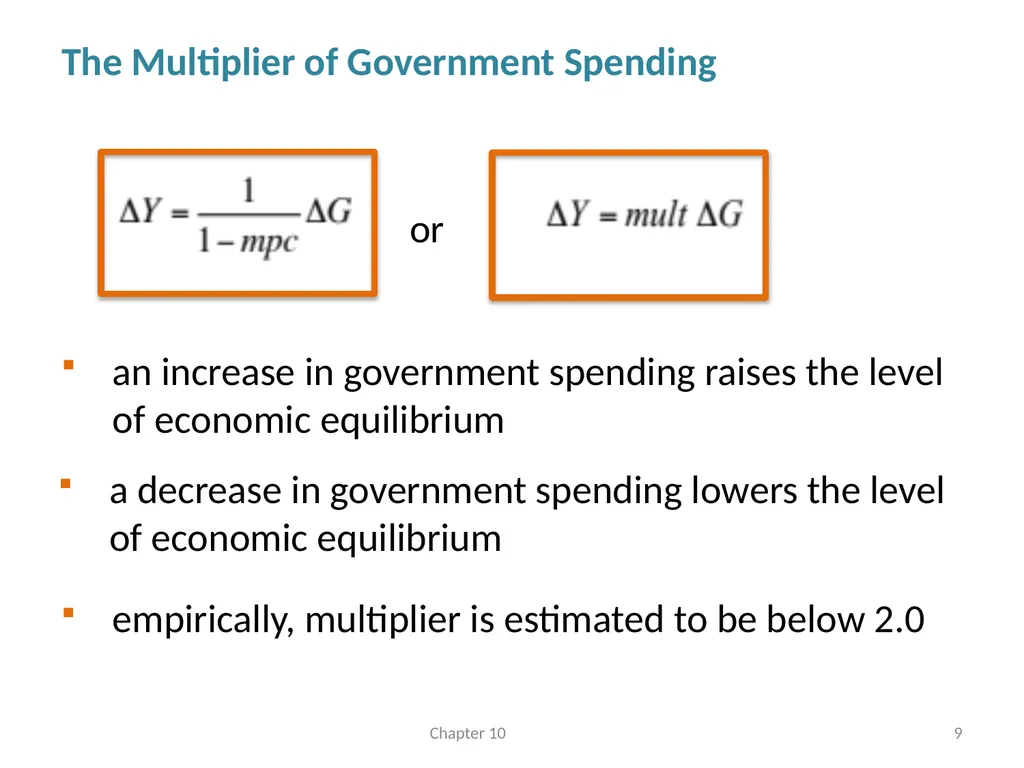
The Multiplier of Government Spending Chapter 10 9 or an increase in government spending raises the level of economic equilibrium a decrease in government spending lowers the level of economic equilibrium empirically, multiplier is estimated to be below 2.0<br>
10
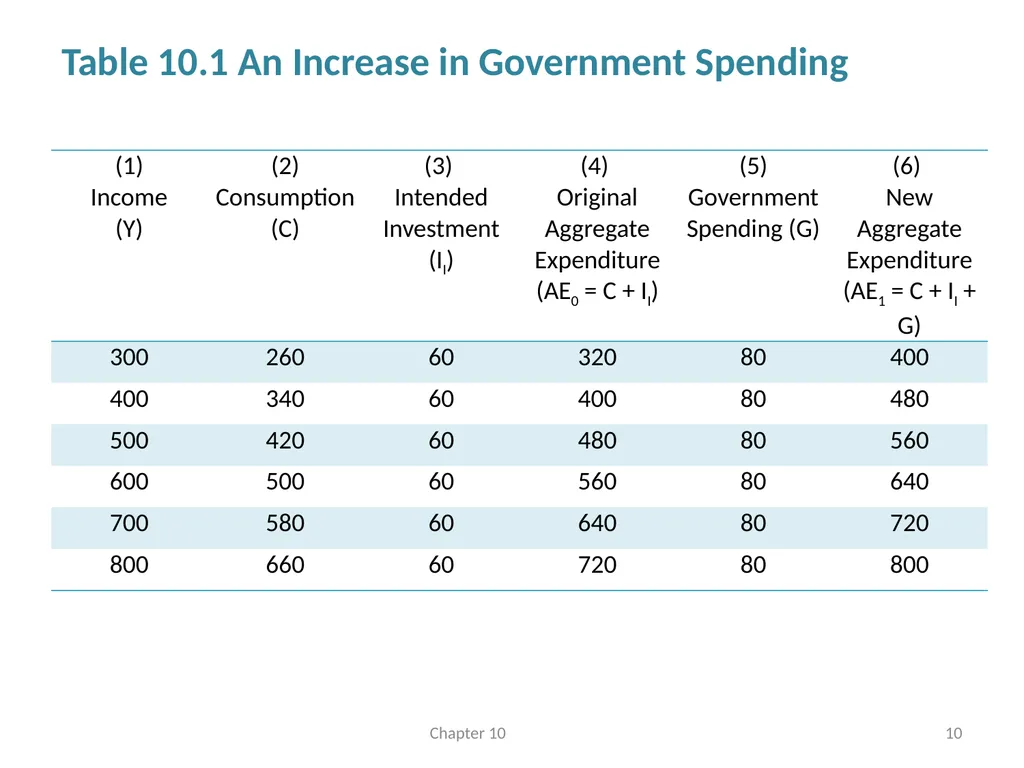
Table 10.1 An Increase in Government Spending Chapter 10 10<br>
11
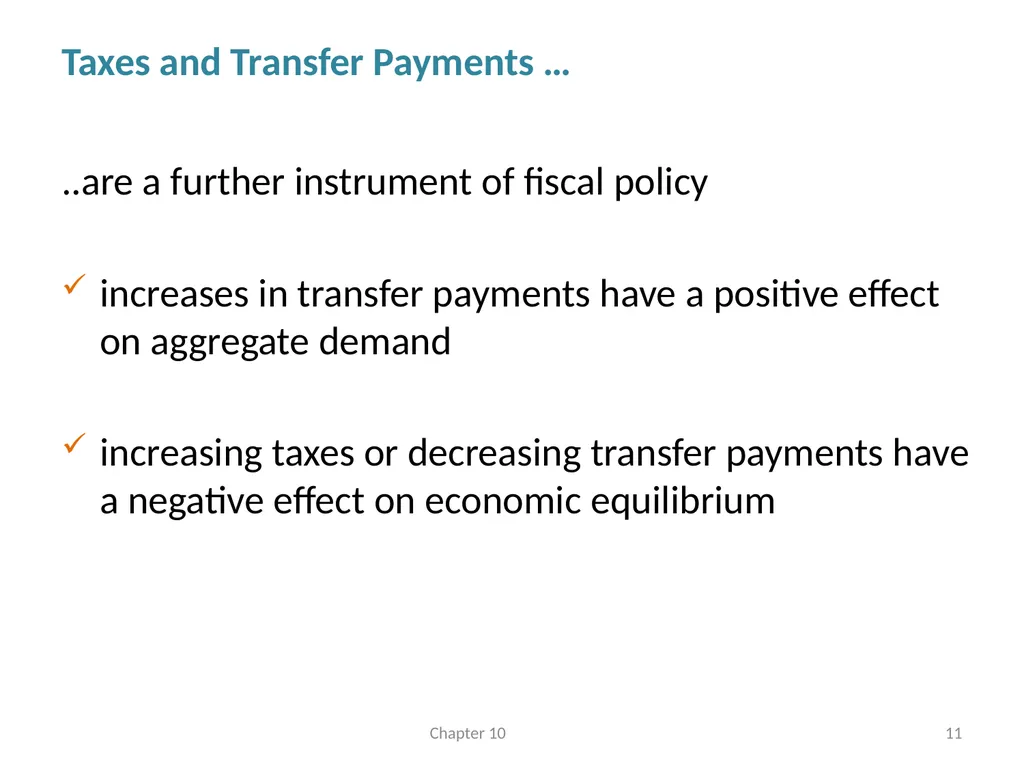
Taxes and Transfer Payments … ..are a further instrument of fiscal policy
increases in transfer payments have a positive effect on aggregate demand
increasing taxes or decreasing transfer payments have a negative effect on economic equilibrium Chapter 10 11<br>
increases in transfer payments have a positive effect on aggregate demand
increasing taxes or decreasing transfer payments have a negative effect on economic equilibrium Chapter 10 11<br>
12
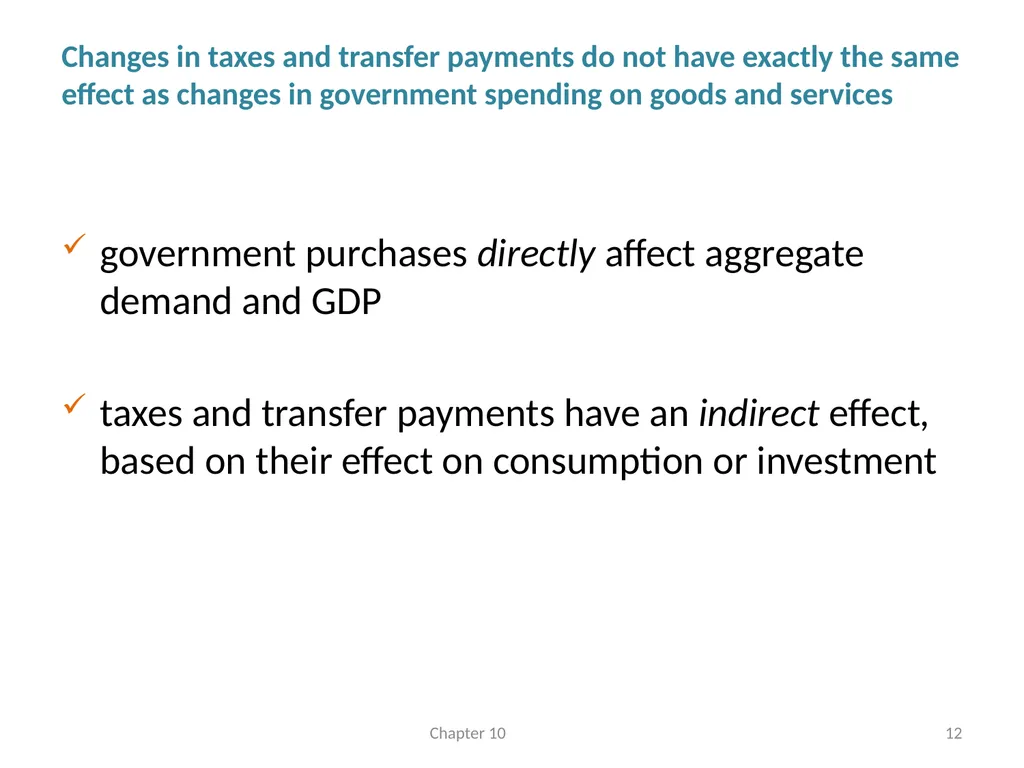
Changes in taxes and transfer payments do not have exactly the same effect as changes in government spending on goods and services government purchases directly affect aggregate demand and GDP
taxes and transfer payments have an indirect effect, based on their effect on consumption or investment Chapter 10 12<br>
taxes and transfer payments have an indirect effect, based on their effect on consumption or investment Chapter 10 12<br>
13
Transfer payments Chapter 10 13 payments by government to individuals or firms, including pension payments, unemployment compensation and subsidies<br>
14
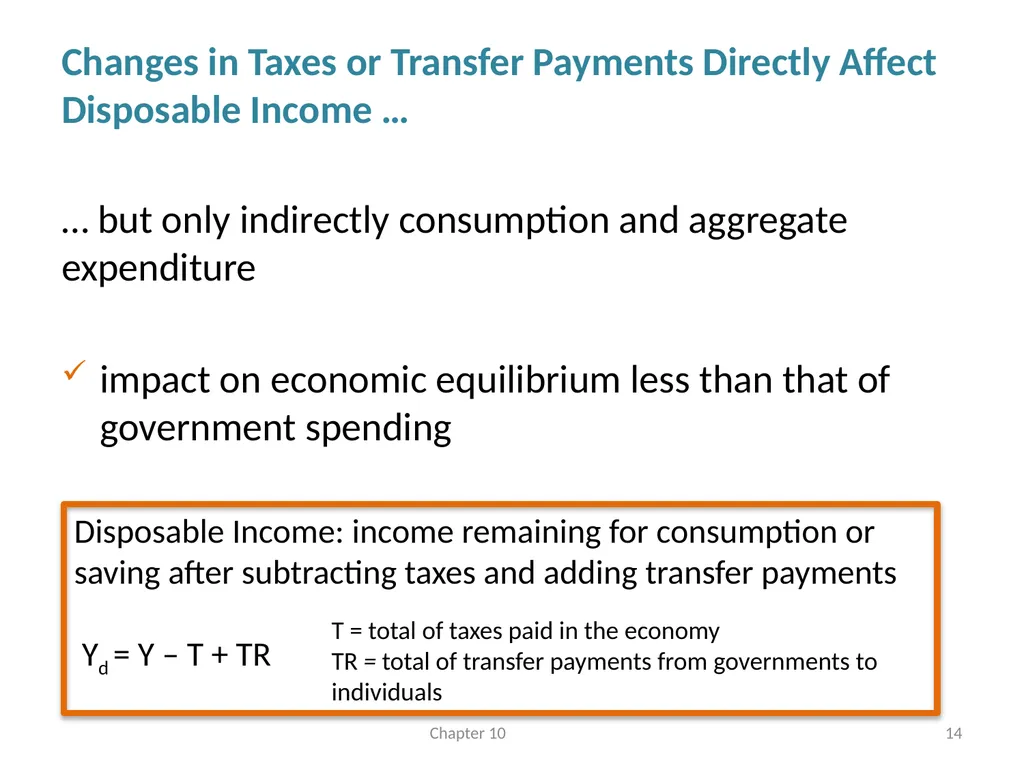
Changes in Taxes or Transfer Payments Directly Affect Disposable Income … … but only indirectly consumption and aggregate expenditure
impact on economic equilibrium less than that of government spending Chapter 10 14 Disposable Income: income remaining for consumption or saving after subtracting taxes and adding transfer payments
Yd = Y – T + TR T = total of taxes paid in the economy
TR = total of transfer payments from governments to individuals<br>
impact on economic equilibrium less than that of government spending Chapter 10 14 Disposable Income: income remaining for consumption or saving after subtracting taxes and adding transfer payments
Yd = Y – T + TR T = total of taxes paid in the economy
TR = total of transfer payments from governments to individuals<br>
15
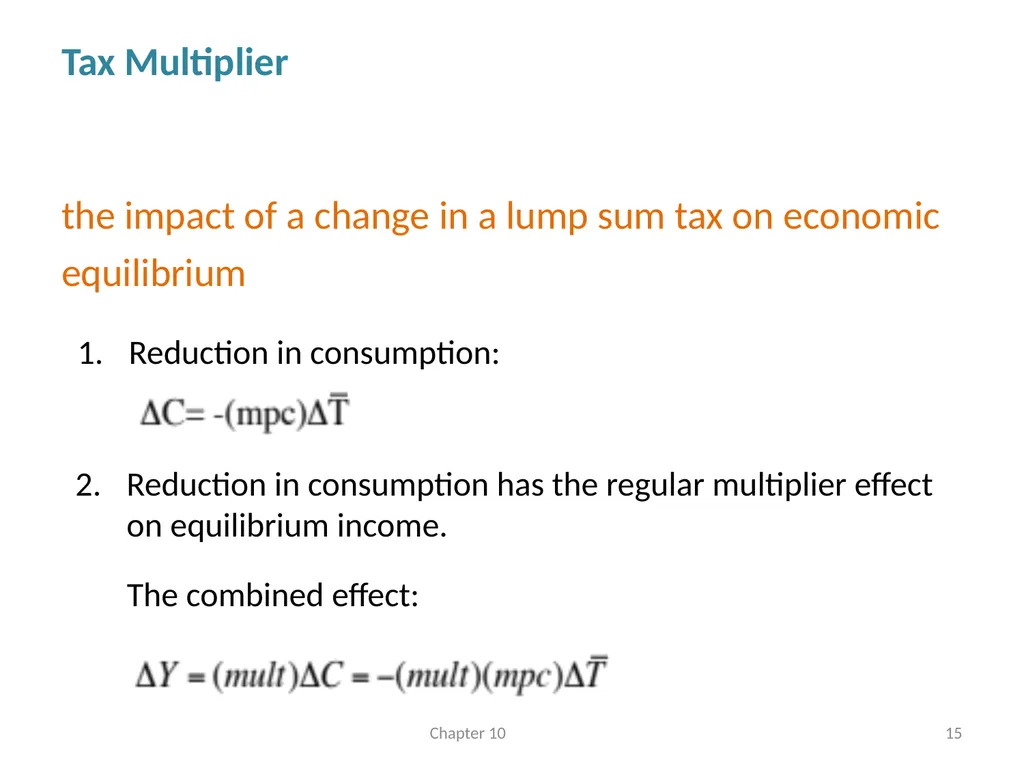
Tax Multiplier Chapter 10 15 the impact of a change in a lump sum tax on economic equilibrium Reduction in consumption: Reduction in consumption has the regular multiplier effect on equilibrium income. The combined effect:<br>
16
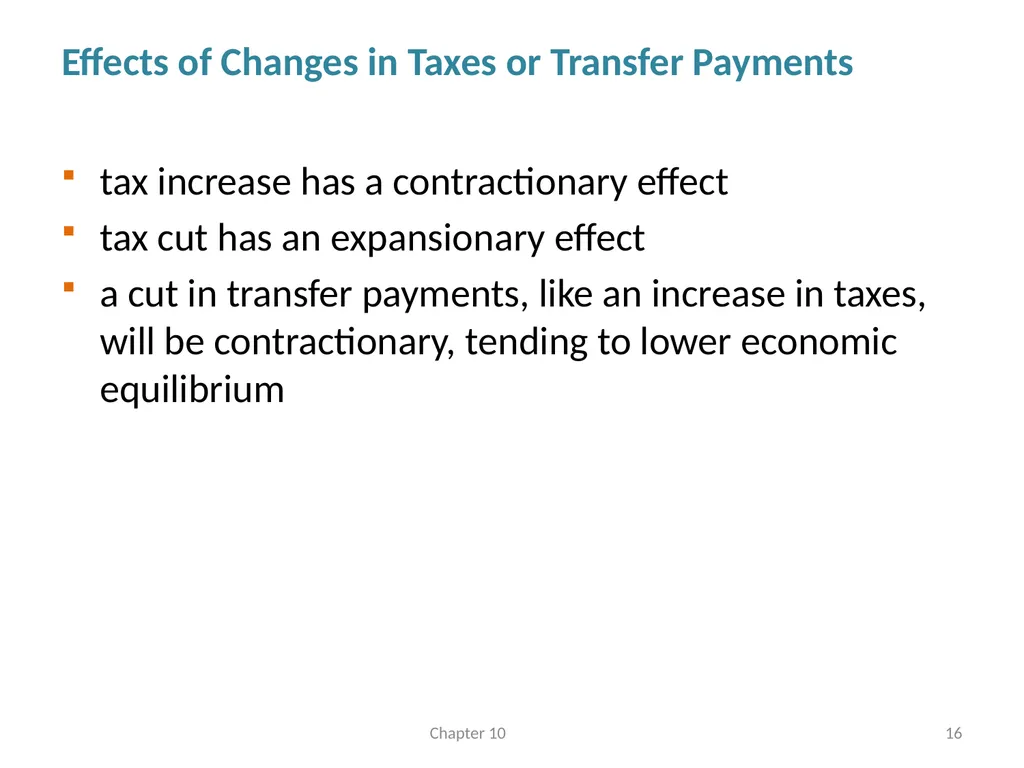
Effects of Changes in Taxes or Transfer Payments tax increase has a contractionary effect
tax cut has an expansionary effect
a cut in transfer payments, like an increase in taxes, will be contractionary, tending to lower economic equilibrium Chapter 10 16<br>
tax cut has an expansionary effect
a cut in transfer payments, like an increase in taxes, will be contractionary, tending to lower economic equilibrium Chapter 10 16<br>
17
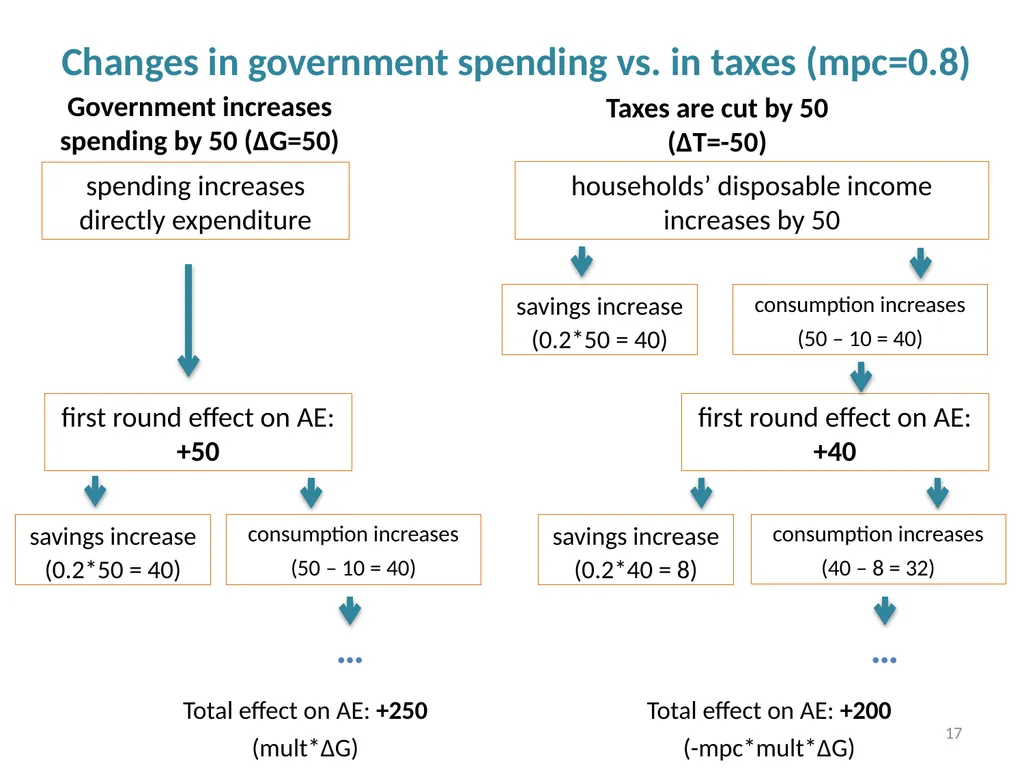
Changes in government spending vs. in taxes (mpc=0.8) 17 spending increases directly expenditure first round effect on AE: +50 consumption increases
(50 – 10 = 40) first round effect on AE: +40 households’ disposable income increases by 50 Government increases spending by 50 (ΔG=50) Taxes are cut by 50
(ΔT=-50) savings increase
(0.2*50 = 40) Total effect on AE: +250
(mult*ΔG) consumption increases
(50 – 10 = 40) savings increase
(0.2*50 = 40) consumption increases
(40 – 8 = 32) savings increase
(0.2*40 = 8) … … Total effect on AE: +200
(-mpc*mult*ΔG)<br>
(50 – 10 = 40) first round effect on AE: +40 households’ disposable income increases by 50 Government increases spending by 50 (ΔG=50) Taxes are cut by 50
(ΔT=-50) savings increase
(0.2*50 = 40) Total effect on AE: +250
(mult*ΔG) consumption increases
(50 – 10 = 40) savings increase
(0.2*50 = 40) consumption increases
(40 – 8 = 32) savings increase
(0.2*40 = 8) … … Total effect on AE: +200
(-mpc*mult*ΔG)<br>
18
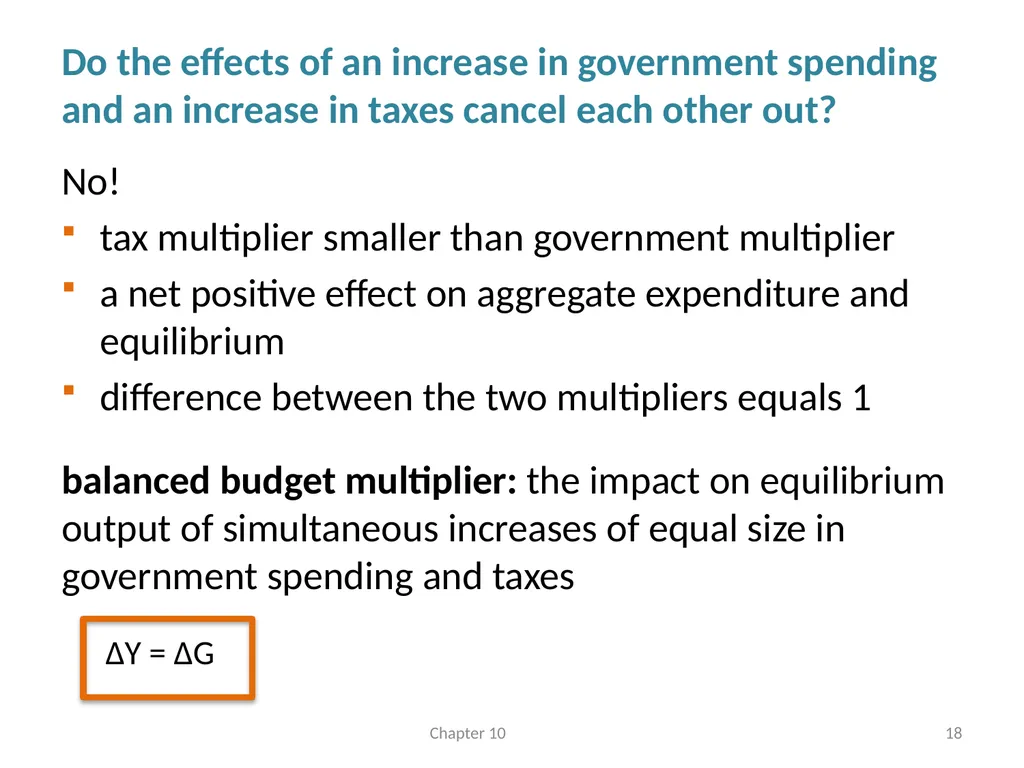
Do the effects of an increase in government spending and an increase in taxes cancel each other out? No!
tax multiplier smaller than government multiplier
a net positive effect on aggregate expenditure and equilibrium
difference between the two multipliers equals 1
balanced budget multiplier: the impact on equilibrium output of simultaneous increases of equal size in government spending and taxes Chapter 10 18<br>
tax multiplier smaller than government multiplier
a net positive effect on aggregate expenditure and equilibrium
difference between the two multipliers equals 1
balanced budget multiplier: the impact on equilibrium output of simultaneous increases of equal size in government spending and taxes Chapter 10 18<br>
19
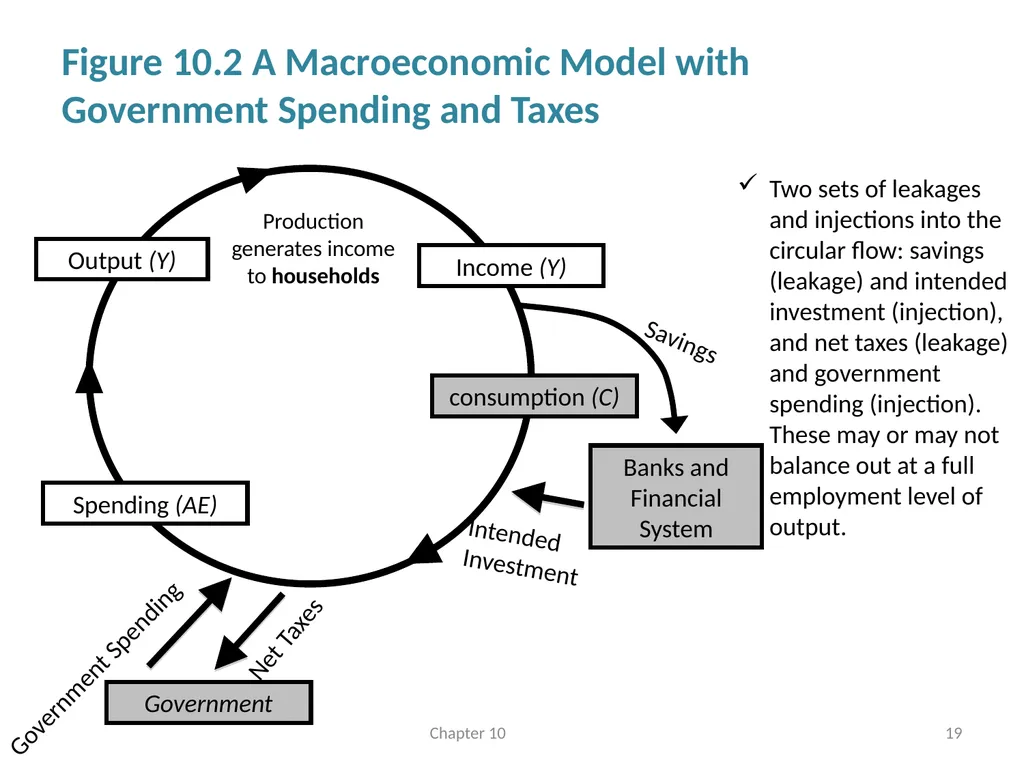
Figure 10.2 A Macroeconomic Model with Government Spending and Taxes Chapter 10 19 Two sets of leakages and injections into the circular flow: savings (leakage) and intended investment (injection), and net taxes (leakage) and government spending (injection). These may or may not balance out at a full employment level of output.<br>
20
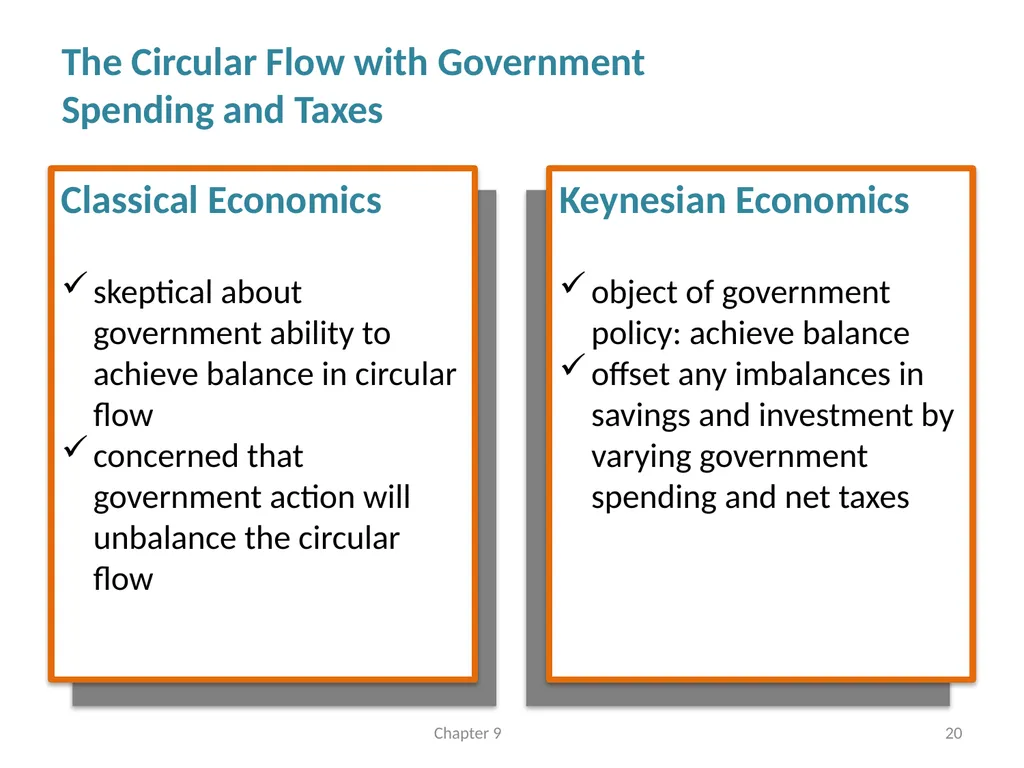
Chapter 9 20 Classical Economics
skeptical about government ability to achieve balance in circular flow
concerned that government action will unbalance the circular flow Keynesian Economics
object of government policy: achieve balance
offset any imbalances in savings and investment by varying government spending and net taxes The Circular Flow with Government Spending and Taxes<br>
skeptical about government ability to achieve balance in circular flow
concerned that government action will unbalance the circular flow Keynesian Economics
object of government policy: achieve balance
offset any imbalances in savings and investment by varying government spending and net taxes The Circular Flow with Government Spending and Taxes<br>
21
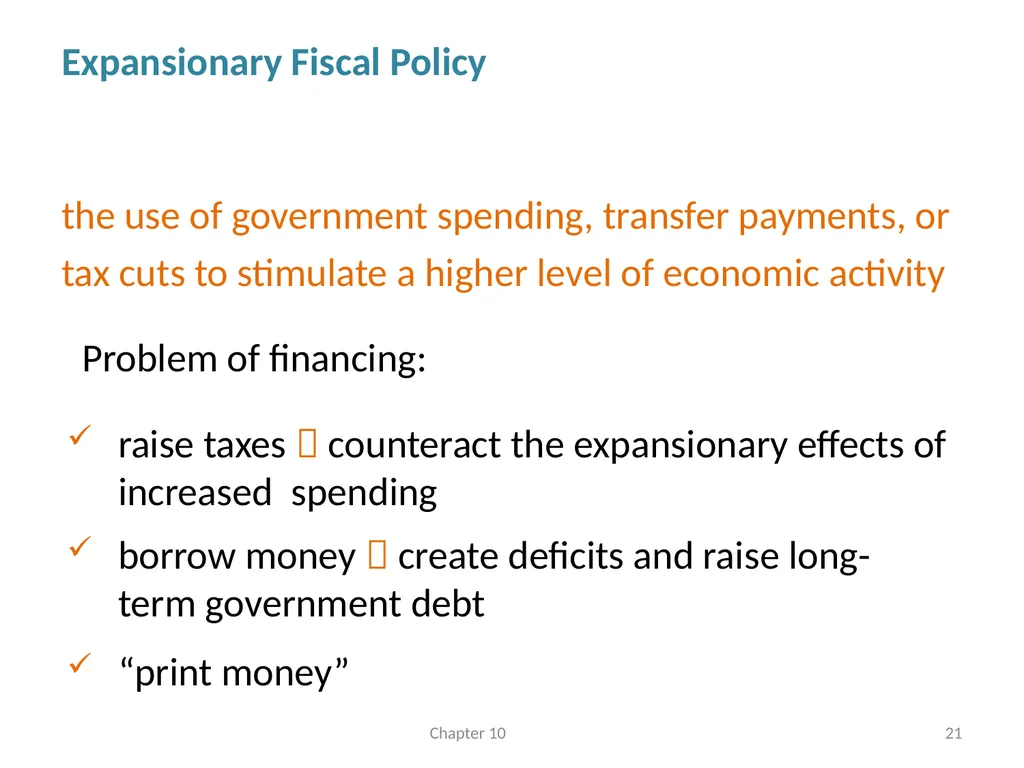
Expansionary Fiscal Policy Chapter 10 21 the use of government spending, transfer payments, or tax cuts to stimulate a higher level of economic activity raise taxes counteract the expansionary effects of increased spending “print money” borrow money create deficits and raise long-term government debt Problem of financing:<br>
22
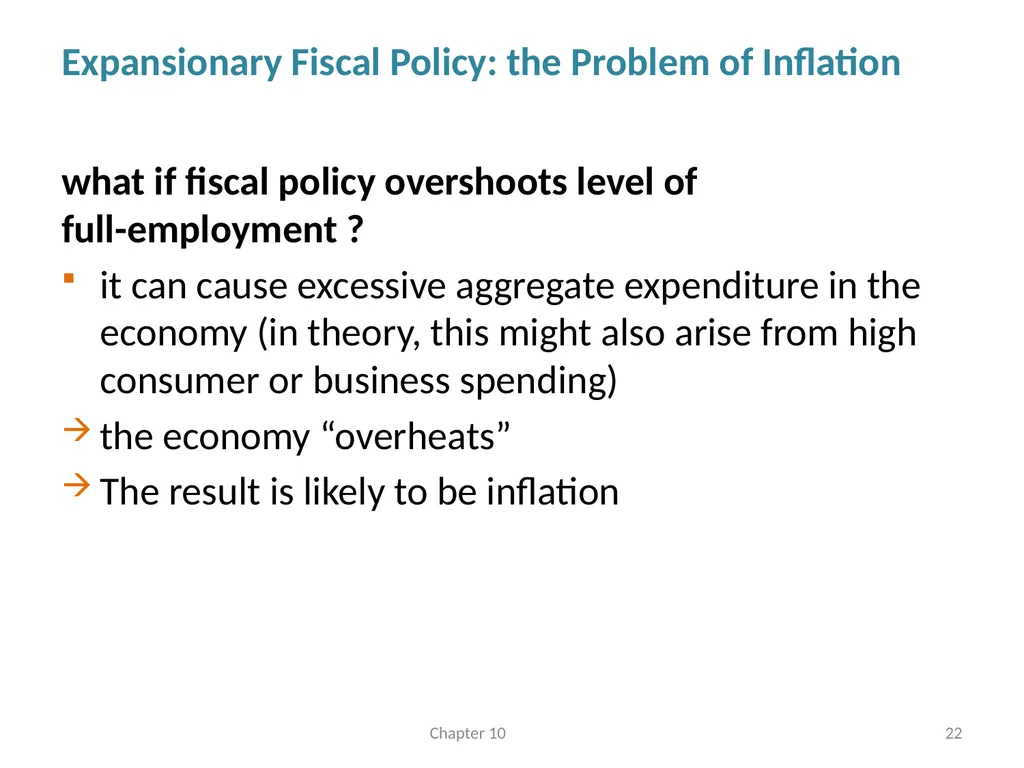
Expansionary Fiscal Policy: the Problem of Inflation what if fiscal policy overshoots level of
full-employment ?
it can cause excessive aggregate expenditure in the economy (in theory, this might also arise from high consumer or business spending)
the economy “overheats”
The result is likely to be inflation Chapter 10 22<br>
it can cause excessive aggregate expenditure in the economy (in theory, this might also arise from high consumer or business spending)
the economy “overheats”
The result is likely to be inflation Chapter 10 22<br>
23
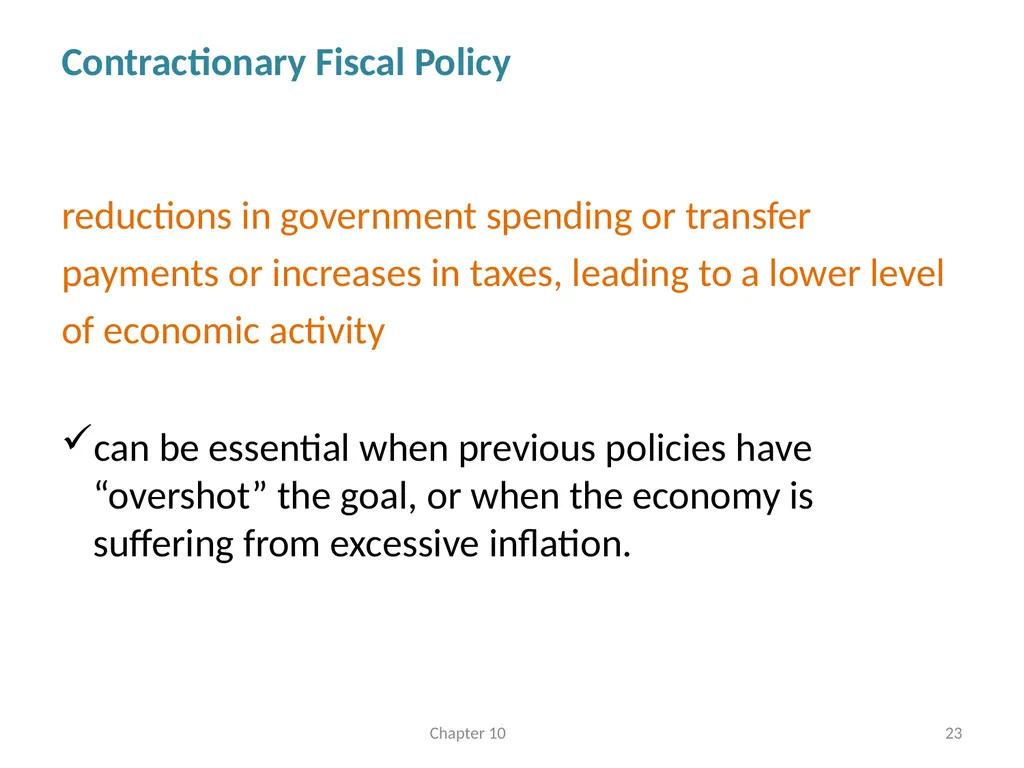
Contractionary Fiscal Policy Chapter 10 23 reductions in government spending or transfer payments or increases in taxes, leading to a lower level of economic activity can be essential when previous policies have “overshot” the goal, or when the economy is suffering from excessive inflation.<br>
24
Public Budgets in Europe<br>
25
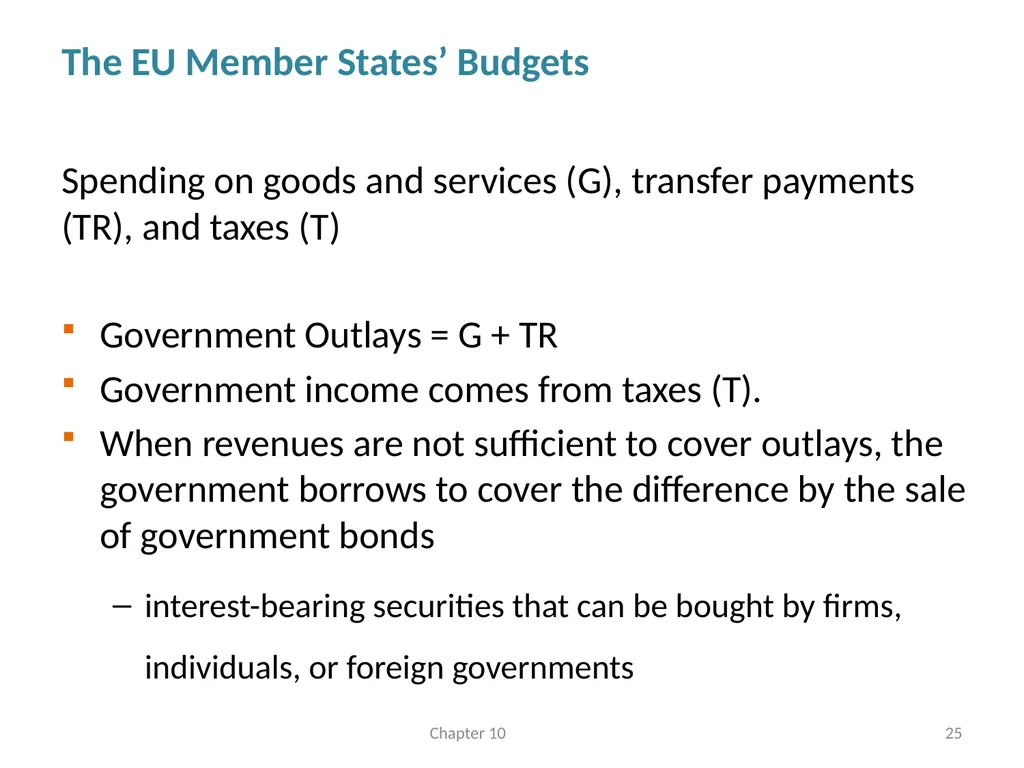
The EU Member States’ Budgets Spending on goods and services (G), transfer payments (TR), and taxes (T)
Government Outlays = G + TR
Government income comes from taxes (T).
When revenues are not sufficient to cover outlays, the government borrows to cover the difference by the sale of government bonds
interest-bearing securities that can be bought by firms, individuals, or foreign governments Chapter 10 25<br>
Government Outlays = G + TR
Government income comes from taxes (T).
When revenues are not sufficient to cover outlays, the government borrows to cover the difference by the sale of government bonds
interest-bearing securities that can be bought by firms, individuals, or foreign governments Chapter 10 25<br>
26
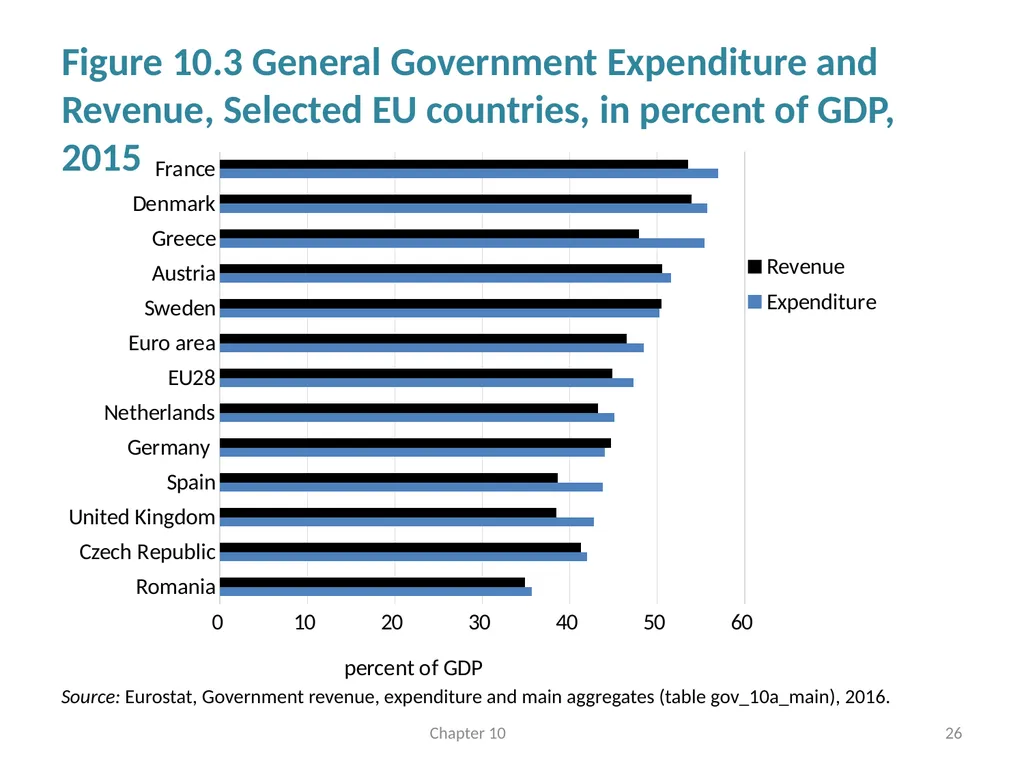
Figure 10.3 General Government Expenditure and Revenue, Selected EU countries, in percent of GDP, 2015 Chapter 10 26 Source: Eurostat, Government revenue, expenditure and main aggregates (table gov_10a_main), 2016.<br>
27
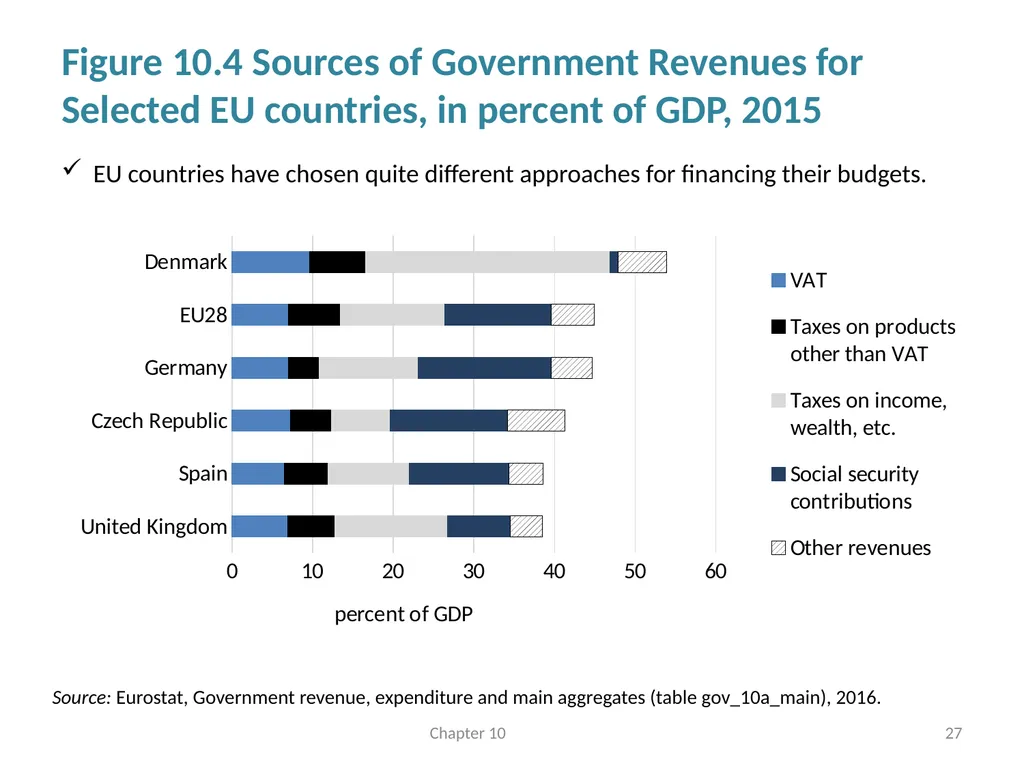
Figure 10.4 Sources of Government Revenues for Selected EU countries, in percent of GDP, 2015 Chapter 10 27 Source: Eurostat, Government revenue, expenditure and main aggregates (table gov_10a_main), 2016. EU countries have chosen quite different approaches for financing their budgets.<br>
28
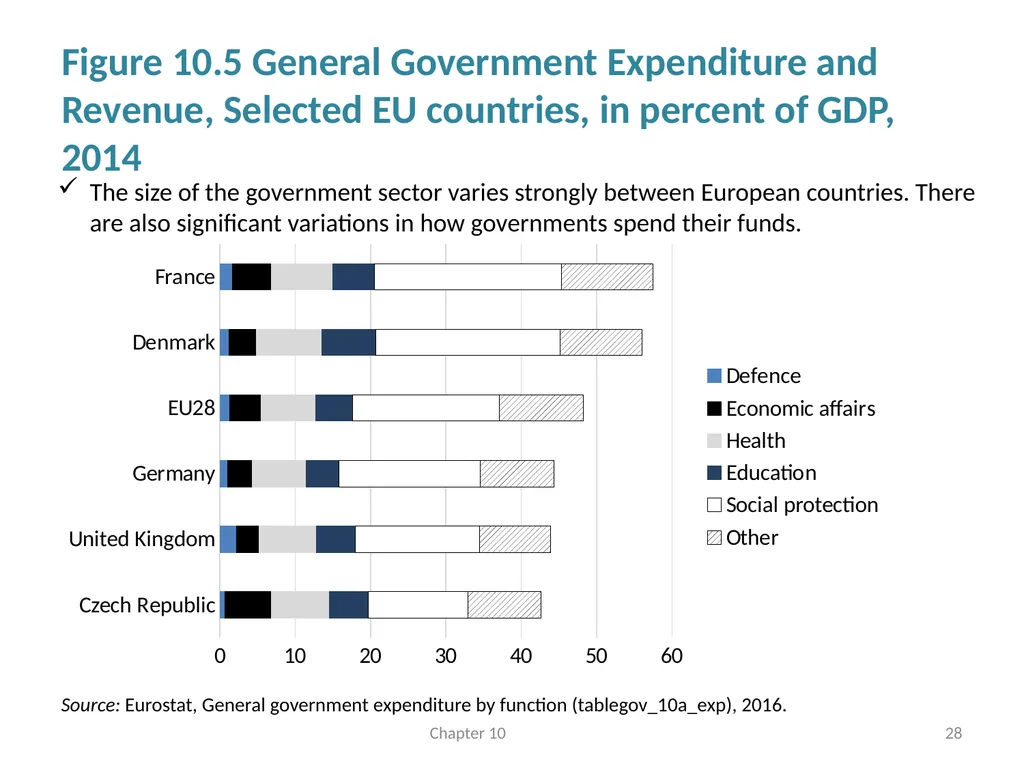
Figure 10.5 General Government Expenditure and Revenue, Selected EU countries, in percent of GDP, 2014 Chapter 10 28 Source: Eurostat, General government expenditure by function (tablegov_10a_exp), 2016. The size of the government sector varies strongly between European countries. There are also significant variations in how governments spend their funds.<br>
29
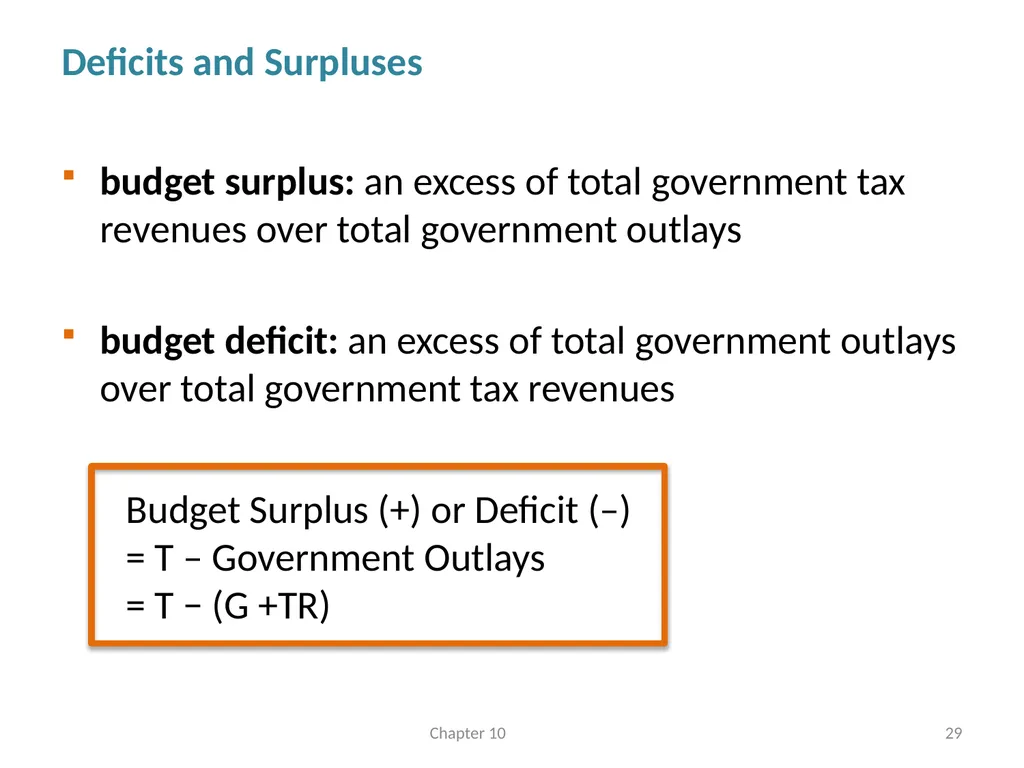
Deficits and Surpluses budget surplus: an excess of total government tax revenues over total government outlays
budget deficit: an excess of total government outlays over total government tax revenues Chapter 10 29 Budget Surplus (+) or Deficit (–) = T – Government Outlays = T − (G +TR)<br>
budget deficit: an excess of total government outlays over total government tax revenues Chapter 10 29 Budget Surplus (+) or Deficit (–) = T – Government Outlays = T − (G +TR)<br>
30
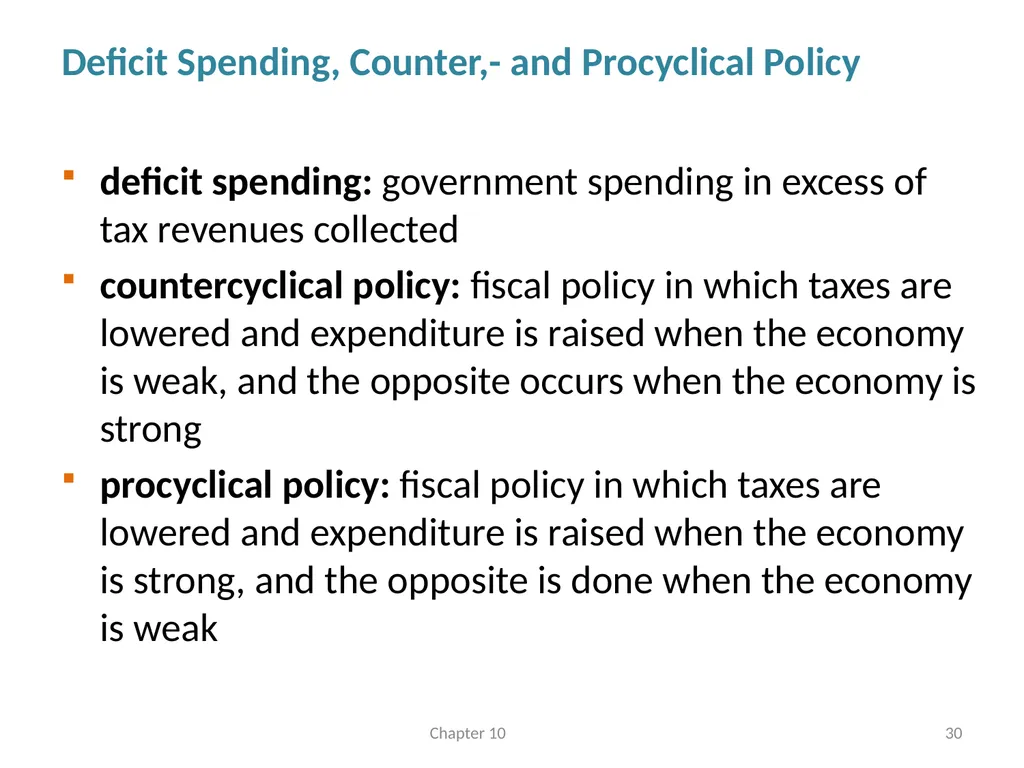
Deficit Spending, Counter,- and Procyclical Policy deficit spending: government spending in excess of tax revenues collected
countercyclical policy: fiscal policy in which taxes are lowered and expenditure is raised when the economy is weak, and the opposite occurs when the economy is strong
procyclical policy: fiscal policy in which taxes are lowered and expenditure is raised when the economy is strong, and the opposite is done when the economy is weak Chapter 10 30<br>
countercyclical policy: fiscal policy in which taxes are lowered and expenditure is raised when the economy is weak, and the opposite occurs when the economy is strong
procyclical policy: fiscal policy in which taxes are lowered and expenditure is raised when the economy is strong, and the opposite is done when the economy is weak Chapter 10 30<br>
31
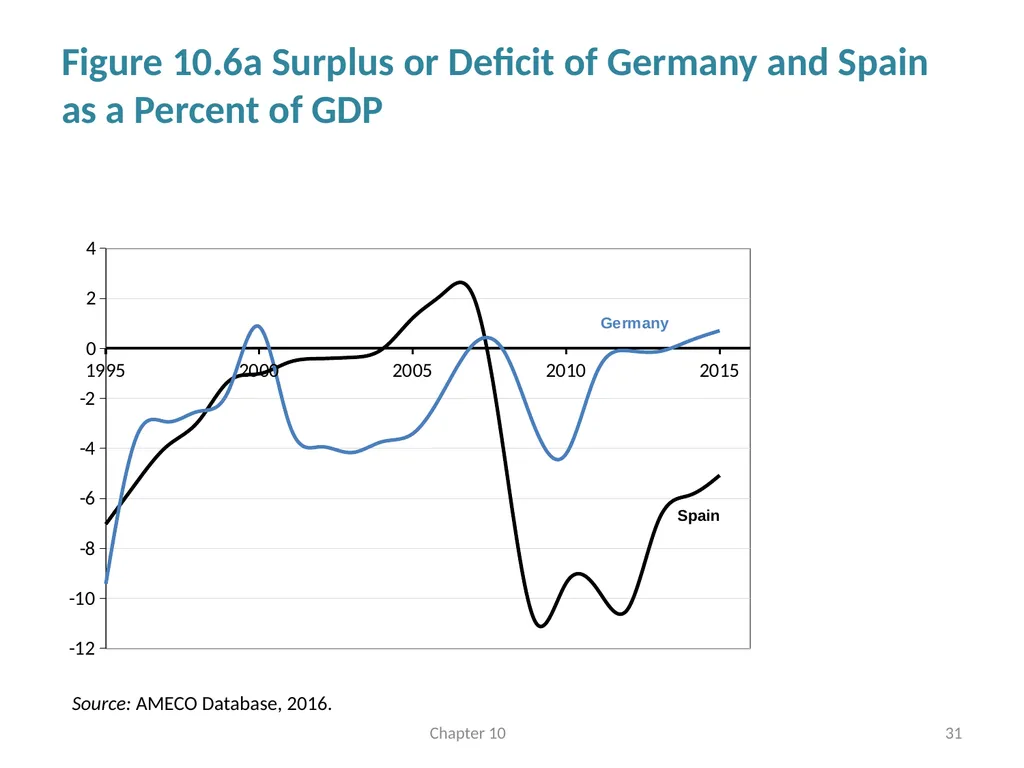
Figure 10.6a Surplus or Deficit of Germany and Spain as a Percent of GDP Chapter 10 31 Source: AMECO Database, 2016.<br>
32
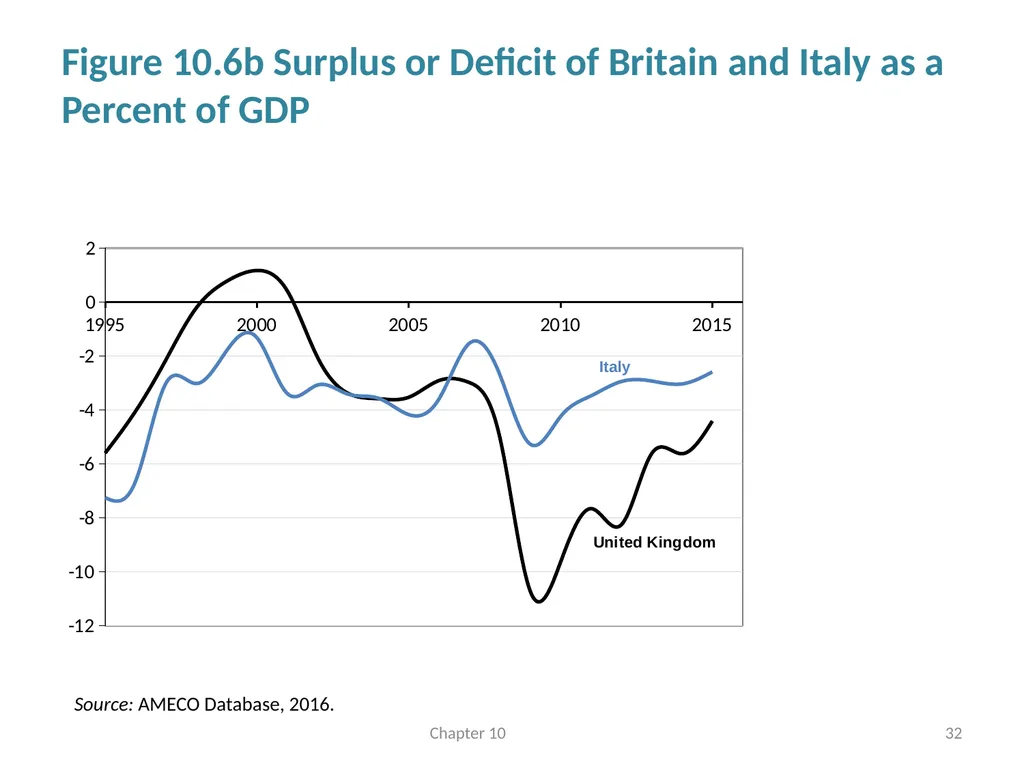
Figure 10.6b Surplus or Deficit of Britain and Italy as a Percent of GDP Chapter 10 32 Source: AMECO Database, 2016.<br>
33
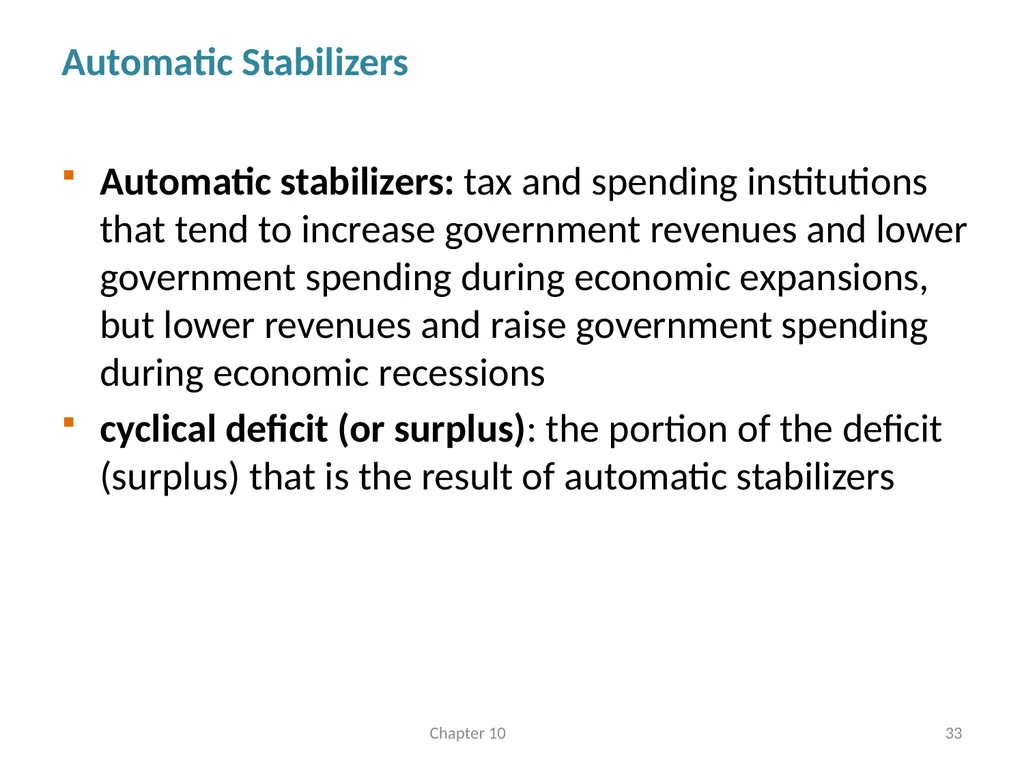
Automatic Stabilizers Automatic stabilizers: tax and spending institutions that tend to increase government revenues and lower government spending during economic expansions, but lower revenues and raise government spending during economic recessions
cyclical deficit (or surplus): the portion of the deficit (surplus) that is the result of automatic stabilizers Chapter 10 33<br>
cyclical deficit (or surplus): the portion of the deficit (surplus) that is the result of automatic stabilizers Chapter 10 33<br>
34
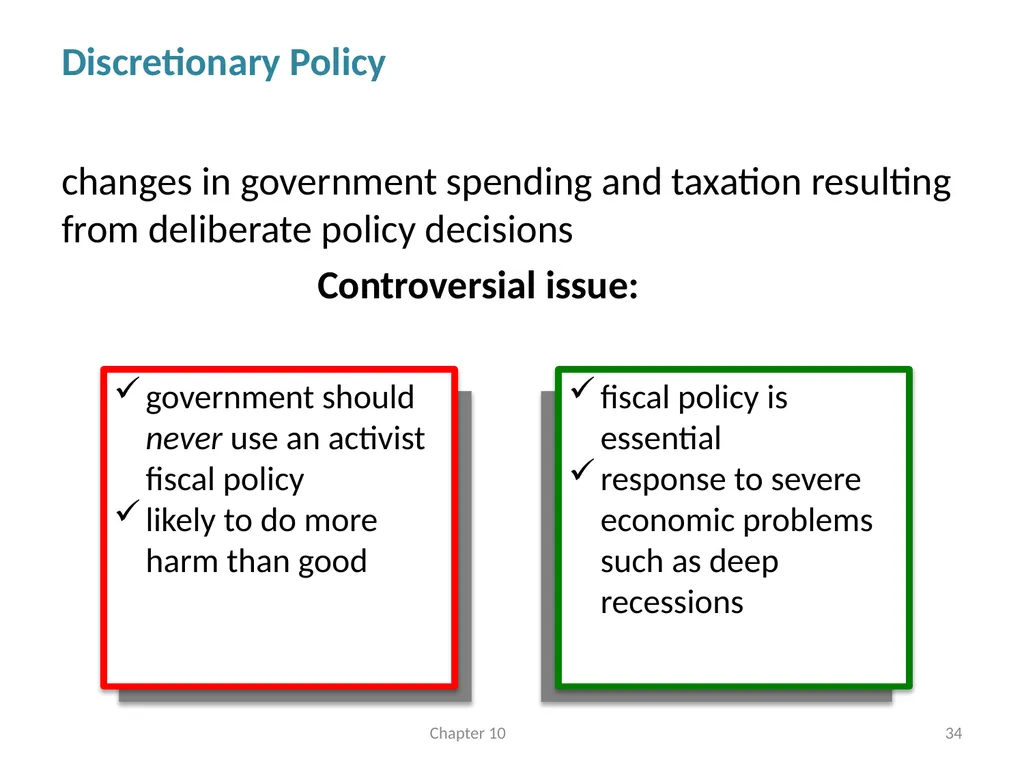
Discretionary Policy changes in government spending and taxation resulting from deliberate policy decisions
Controversial issue: Chapter 10 34 fiscal policy is essential
response to severe economic problems such as deep recessions government should never use an activist fiscal policy
likely to do more harm than good<br>
Controversial issue: Chapter 10 34 fiscal policy is essential
response to severe economic problems such as deep recessions government should never use an activist fiscal policy
likely to do more harm than good<br>
35
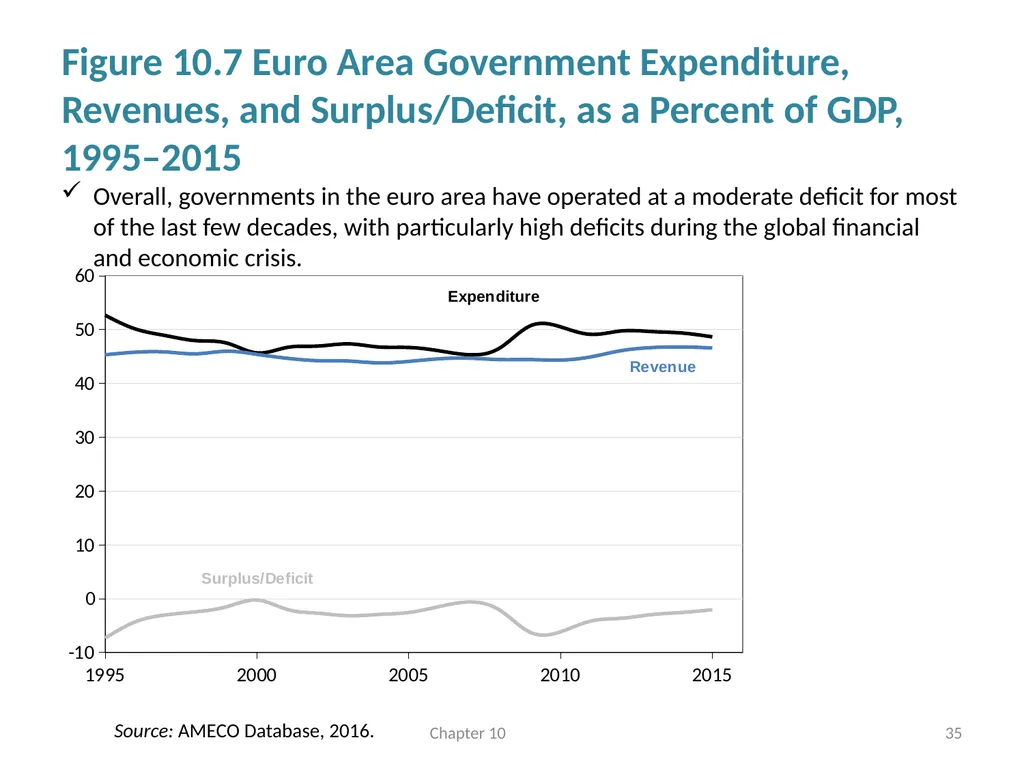
Figure 10.7 Euro Area Government Expenditure, Revenues, and Surplus/Deficit, as a Percent of GDP, 1995–2015 Chapter 10 35 Overall, governments in the euro area have operated at a moderate deficit for most of the last few decades, with particularly high deficits during the global financial and economic crisis. Source: AMECO Database, 2016.<br>
36
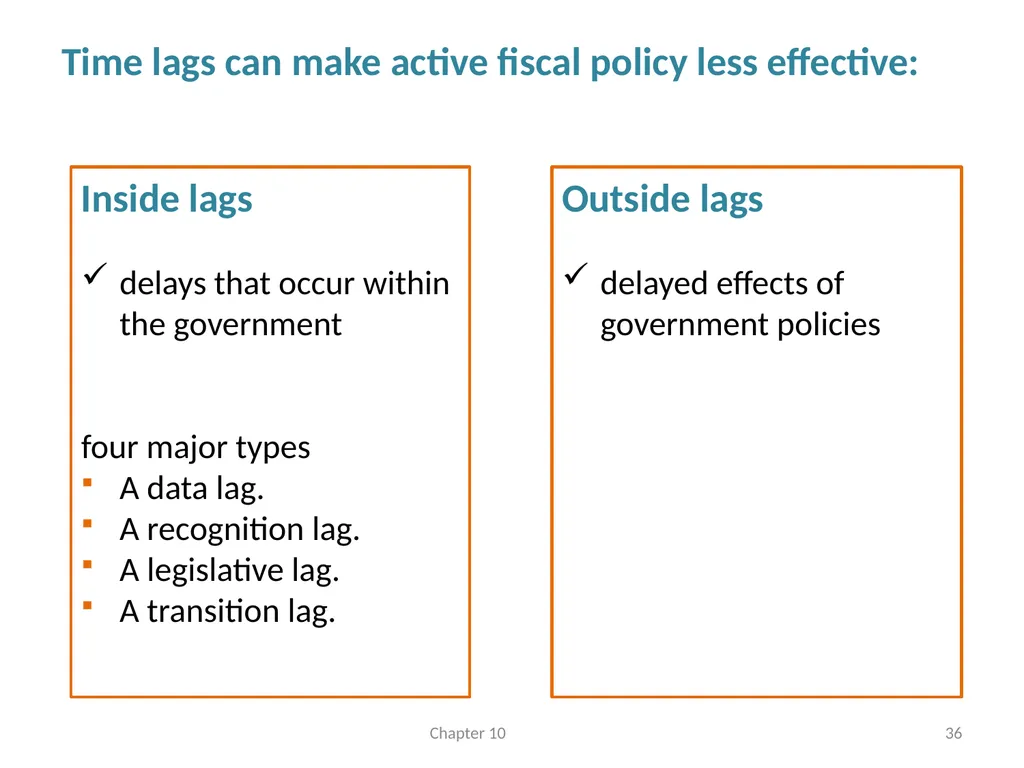
Time lags can make active fiscal policy less effective: Chapter 10 36 Inside lags
delays that occur within the government
four major types
A data lag.
A recognition lag.
A legislative lag.
A transition lag. Outside lags
delayed effects of government policies<br>
delays that occur within the government
four major types
A data lag.
A recognition lag.
A legislative lag.
A transition lag. Outside lags
delayed effects of government policies<br>
37
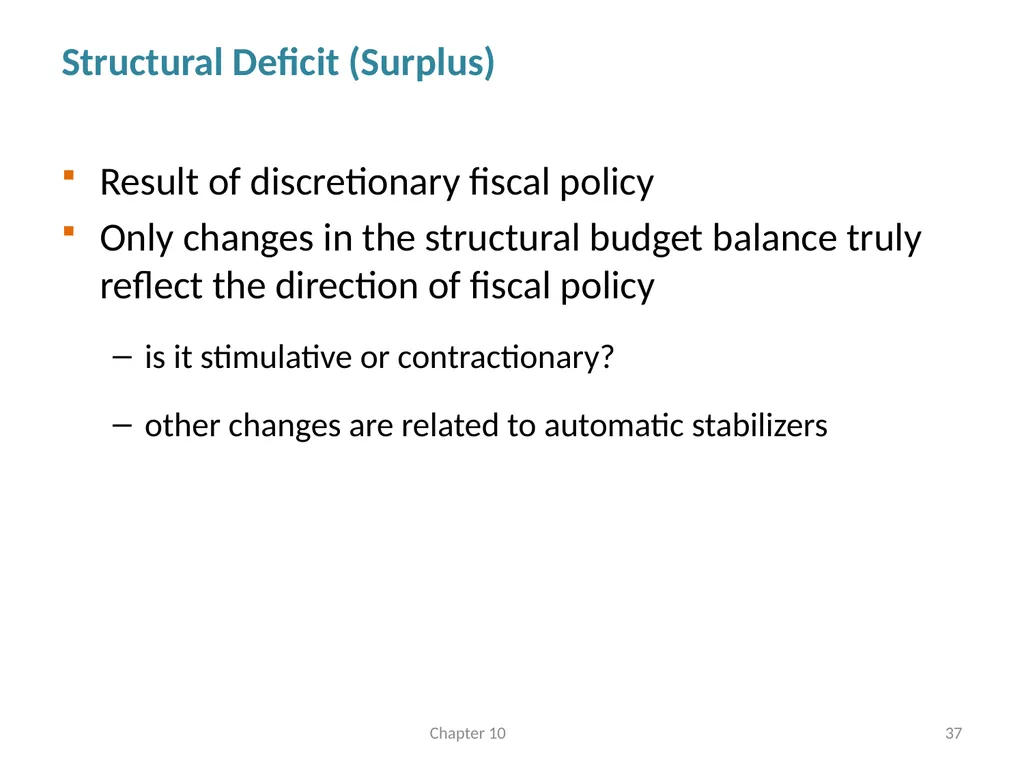
Structural Deficit (Surplus) Result of discretionary fiscal policy
Only changes in the structural budget balance truly reflect the direction of fiscal policy
is it stimulative or contractionary?
other changes are related to automatic stabilizers Chapter 10 37<br>
Only changes in the structural budget balance truly reflect the direction of fiscal policy
is it stimulative or contractionary?
other changes are related to automatic stabilizers Chapter 10 37<br>
38
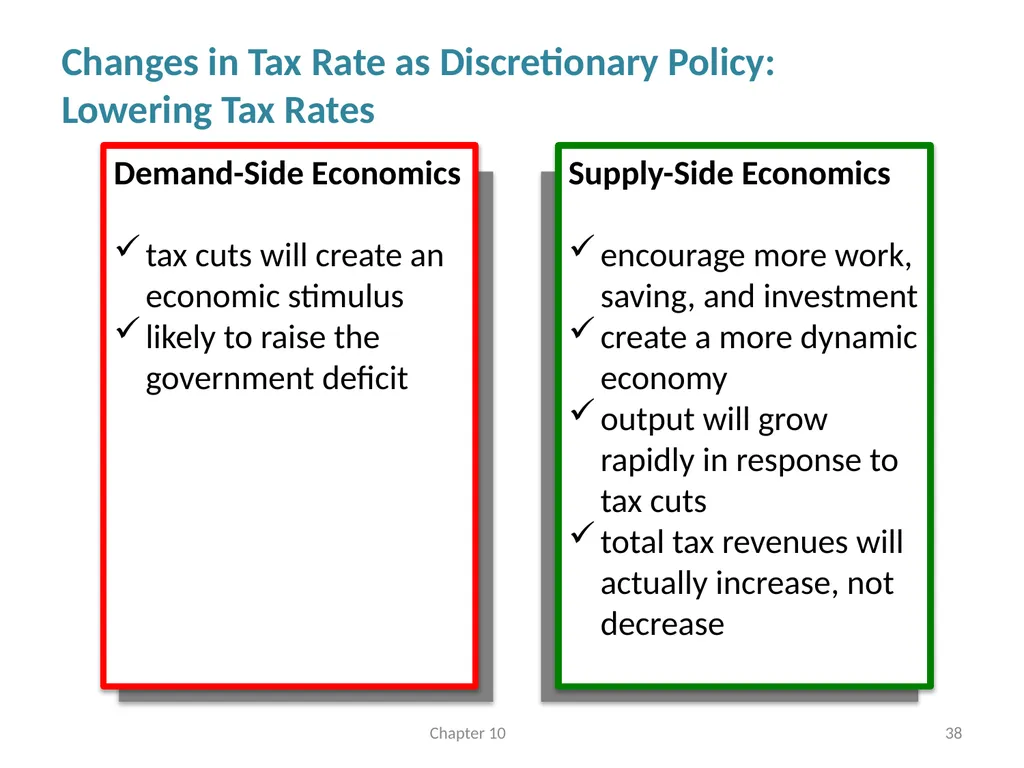
Changes in Tax Rate as Discretionary Policy:
Lowering Tax Rates Chapter 10 38 Supply-Side Economics
encourage more work, saving, and investment
create a more dynamic economy
output will grow rapidly in response to tax cuts
total tax revenues will actually increase, not decrease Demand-Side Economics
tax cuts will create an economic stimulus
likely to raise the government deficit<br>
encourage more work, saving, and investment
create a more dynamic economy
output will grow rapidly in response to tax cuts
total tax revenues will actually increase, not decrease Demand-Side Economics
tax cuts will create an economic stimulus
likely to raise the government deficit<br>
39
Policy Issues<br>
40
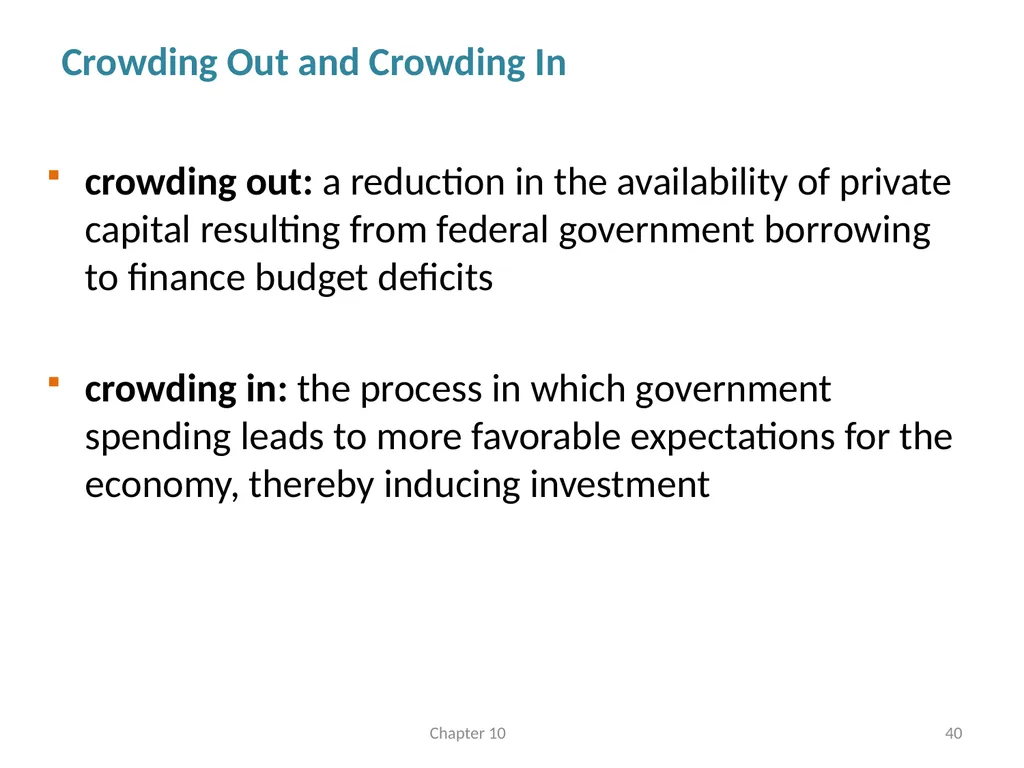
Crowding Out and Crowding In crowding out: a reduction in the availability of private capital resulting from federal government borrowing to finance budget deficits
crowding in: the process in which government spending leads to more favorable expectations for the economy, thereby inducing investment Chapter 10 40<br>
crowding in: the process in which government spending leads to more favorable expectations for the economy, thereby inducing investment Chapter 10 40<br>
41
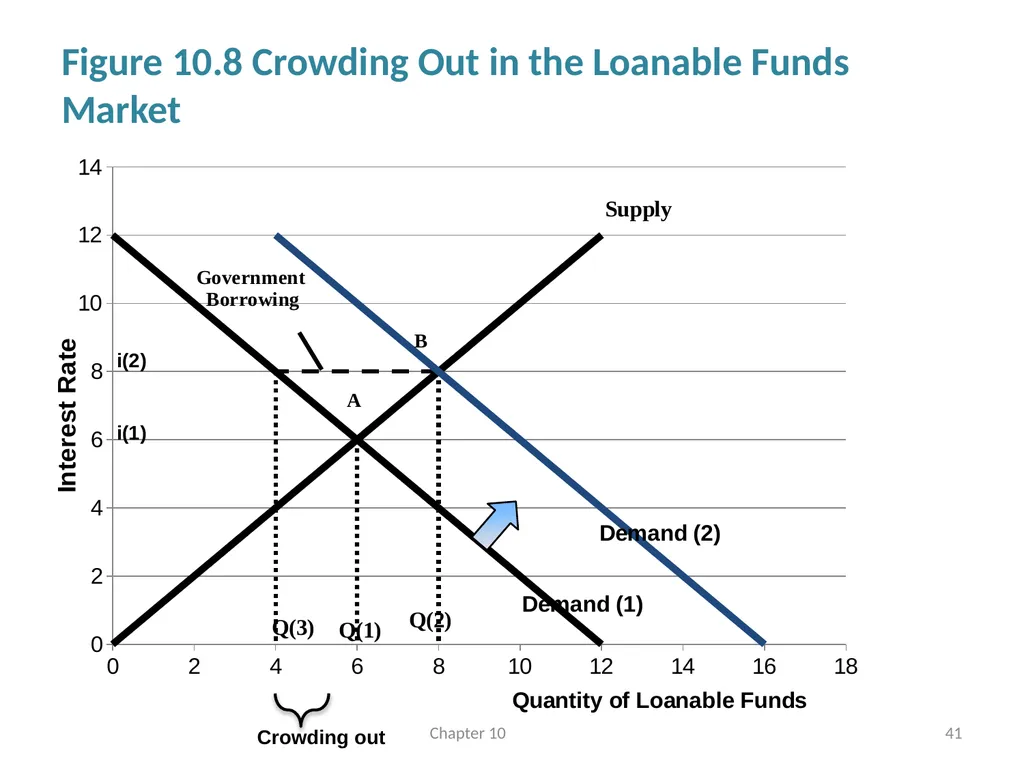
Figure 10.8 Crowding Out in the Loanable Funds Market Chapter 10 41 Crowding out<br>
42
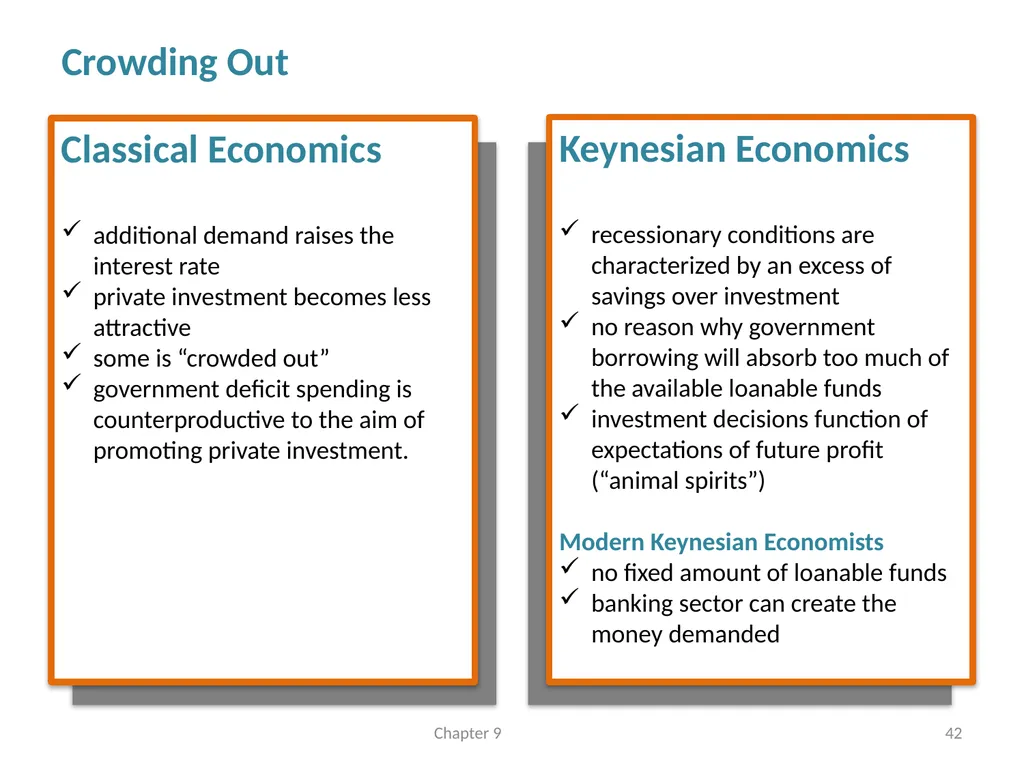
Chapter 9 42 Classical Economics
additional demand raises the interest rate
private investment becomes less attractive
some is “crowded out”
government deficit spending is counterproductive to the aim of promoting private investment. Keynesian Economics
recessionary conditions are characterized by an excess of savings over investment
no reason why government borrowing will absorb too much of the available loanable funds
investment decisions function of expectations of future profit (“animal spirits”)
Modern Keynesian Economists
no fixed amount of loanable funds
banking sector can create the money demanded Crowding Out<br>
additional demand raises the interest rate
private investment becomes less attractive
some is “crowded out”
government deficit spending is counterproductive to the aim of promoting private investment. Keynesian Economics
recessionary conditions are characterized by an excess of savings over investment
no reason why government borrowing will absorb too much of the available loanable funds
investment decisions function of expectations of future profit (“animal spirits”)
Modern Keynesian Economists
no fixed amount of loanable funds
banking sector can create the money demanded Crowding Out<br>
43
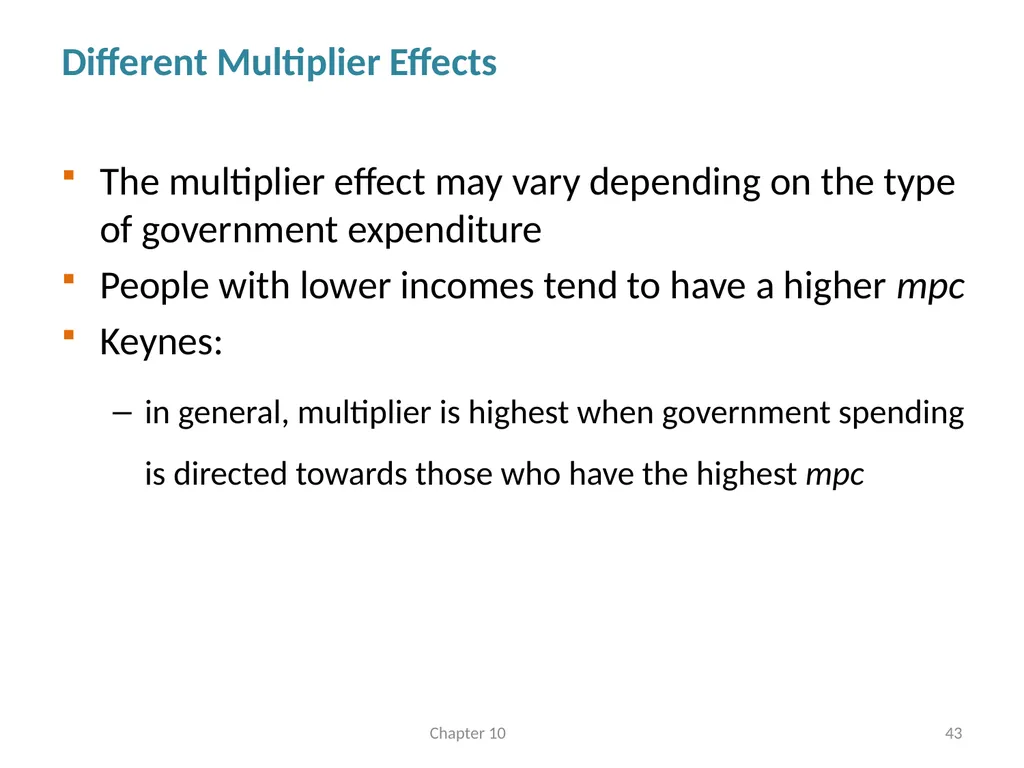
Different Multiplier Effects The multiplier effect may vary depending on the type of government expenditure
People with lower incomes tend to have a higher mpc
Keynes:
in general, multiplier is highest when government spending is directed towards those who have the highest mpc Chapter 10 43<br>
People with lower incomes tend to have a higher mpc
Keynes:
in general, multiplier is highest when government spending is directed towards those who have the highest mpc Chapter 10 43<br>
44
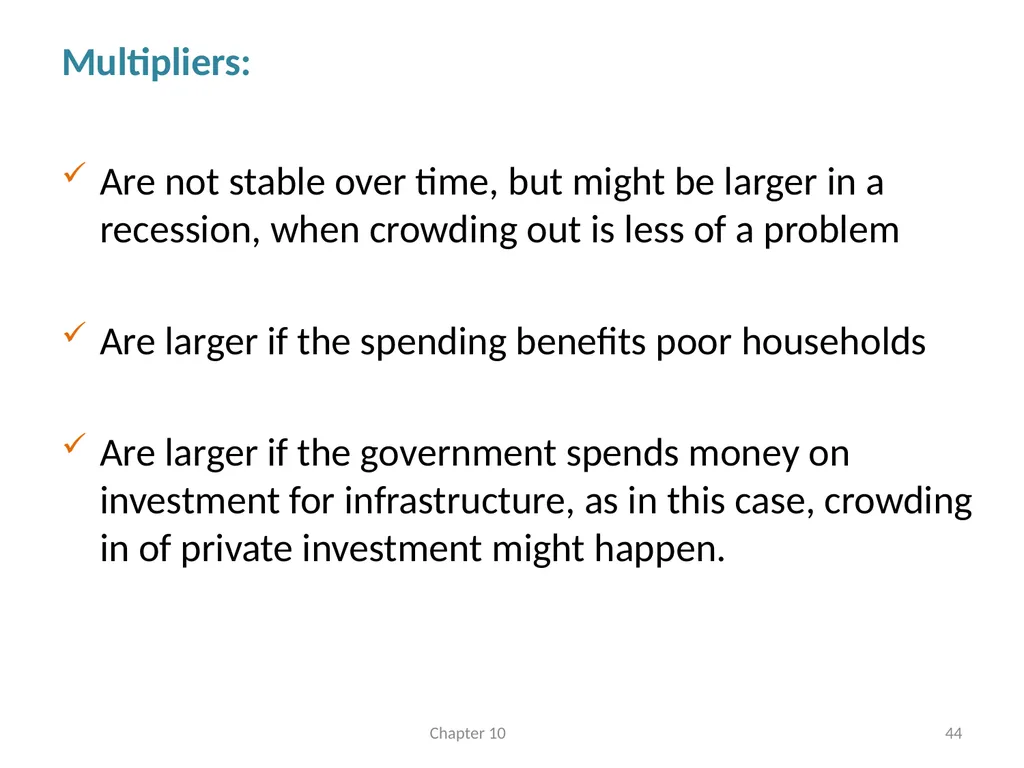
Multipliers: Are not stable over time, but might be larger in a recession, when crowding out is less of a problem
Are larger if the spending benefits poor households
Are larger if the government spends money on investment for infrastructure, as in this case, crowding in of private investment might happen. Chapter 10 44<br>
Are larger if the spending benefits poor households
Are larger if the government spends money on investment for infrastructure, as in this case, crowding in of private investment might happen. Chapter 10 44<br>
45
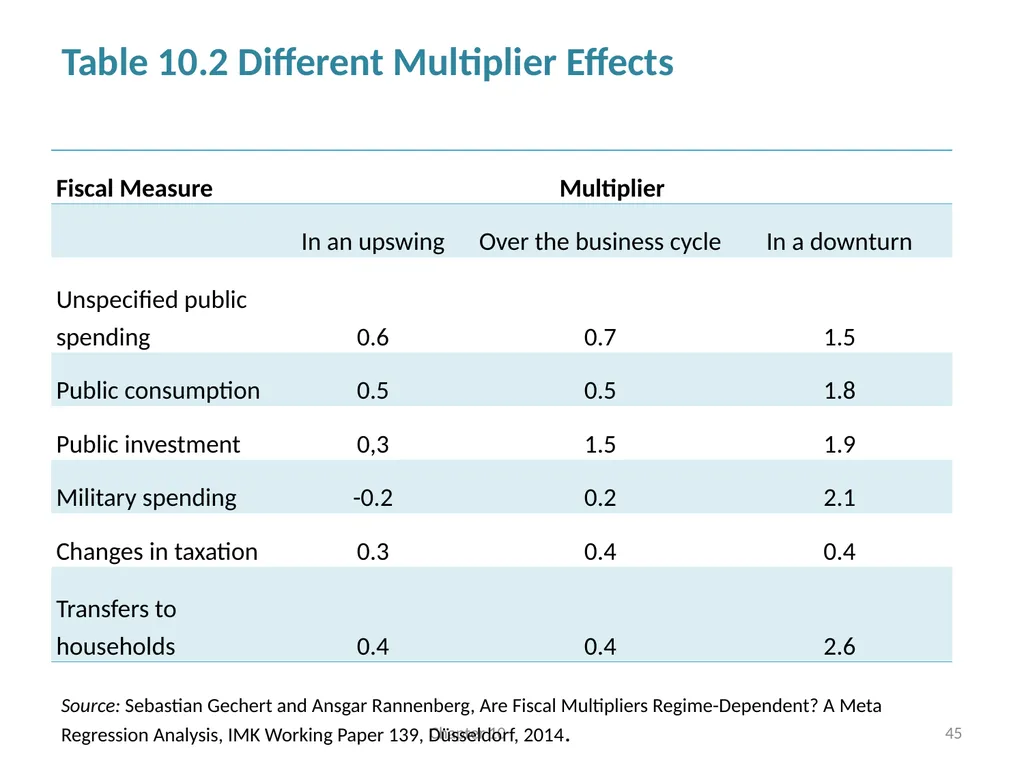
Table 10.2 Different Multiplier Effects Chapter 10 45 Source: Sebastian Gechert and Ansgar Rannenberg, Are Fiscal Multipliers Regime-Dependent? A Meta Regression Analysis, IMK Working Paper 139, Düsseldorf, 2014.<br>
46
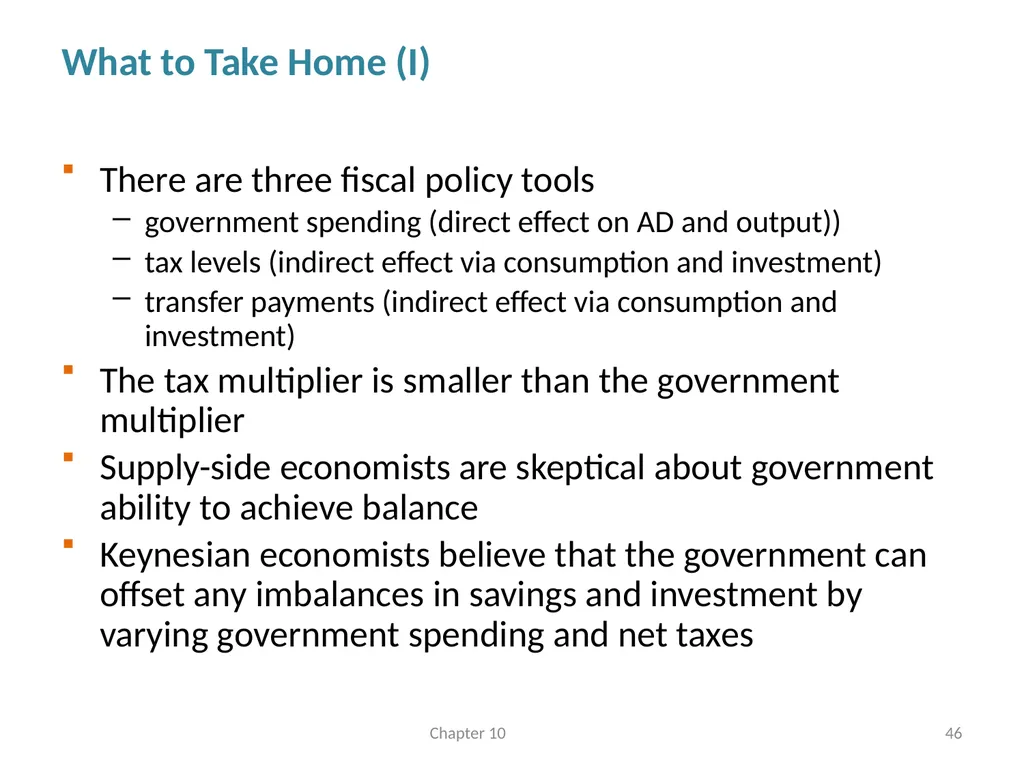
What to Take Home (I) There are three fiscal policy tools
government spending (direct effect on AD and output))
tax levels (indirect effect via consumption and investment)
transfer payments (indirect effect via consumption and investment)
The tax multiplier is smaller than the government multiplier
Supply-side economists are skeptical about government ability to achieve balance
Keynesian economists believe that the government can offset any imbalances in savings and investment by varying government spending and net taxes Chapter 10 46<br>
government spending (direct effect on AD and output))
tax levels (indirect effect via consumption and investment)
transfer payments (indirect effect via consumption and investment)
The tax multiplier is smaller than the government multiplier
Supply-side economists are skeptical about government ability to achieve balance
Keynesian economists believe that the government can offset any imbalances in savings and investment by varying government spending and net taxes Chapter 10 46<br>
47
What to Take Home (II) EU countries have chosen different approaches for financing their budgets. Also the size of the government sector varies strongly between European countries
Automatic stabilizers offset fluctuations in economic activity without direct intervention by governments
Discretionary policy is a controversial issue
Time lags can make active fiscal policy less effective
Classical economists fear crowding out Chapter 10 47<br>
Automatic stabilizers offset fluctuations in economic activity without direct intervention by governments
Discretionary policy is a controversial issue
Time lags can make active fiscal policy less effective
Classical economists fear crowding out Chapter 10 47<br>