
Fixed Functional Appliances Introduction








Description: Fixed Functional Appliances Introduction Classification Indications Contraindications Design of Appliances Conclusion CONTENTS Fixed functional appliances first appeared in the early 1900s, when Emil Herbst in 1905 presented his system at
Related Topics
Download Presentation
"Fixed Functional Appliances Introduction" is the property of its rightful owner. Permission is granted to download and print the materials on this website for personal, non-commercial use only, and to display it on your personal computer provided you do not modify the materials and that you retain all copyright notices contained in the materials. By downloading content from our website, you accept the terms of this agreement.
Presentation Transcript
slide1. Fixed Functional Appliances<br>
slide2. Introduction
Classification
Indications
Contraindications
Design of Appliances
Conclusion CONTENTS<br>
slide3. Fixed functional appliances first appeared in the early 1900s, when Emil Herbst in 1905 presented his system at the Berlin International Dental Congress.
This device was one of the early attempts to produce mechanically a “jumping of the bite”; an idea that had earlier been advocated by Kingsley, among others. Introduction<br>
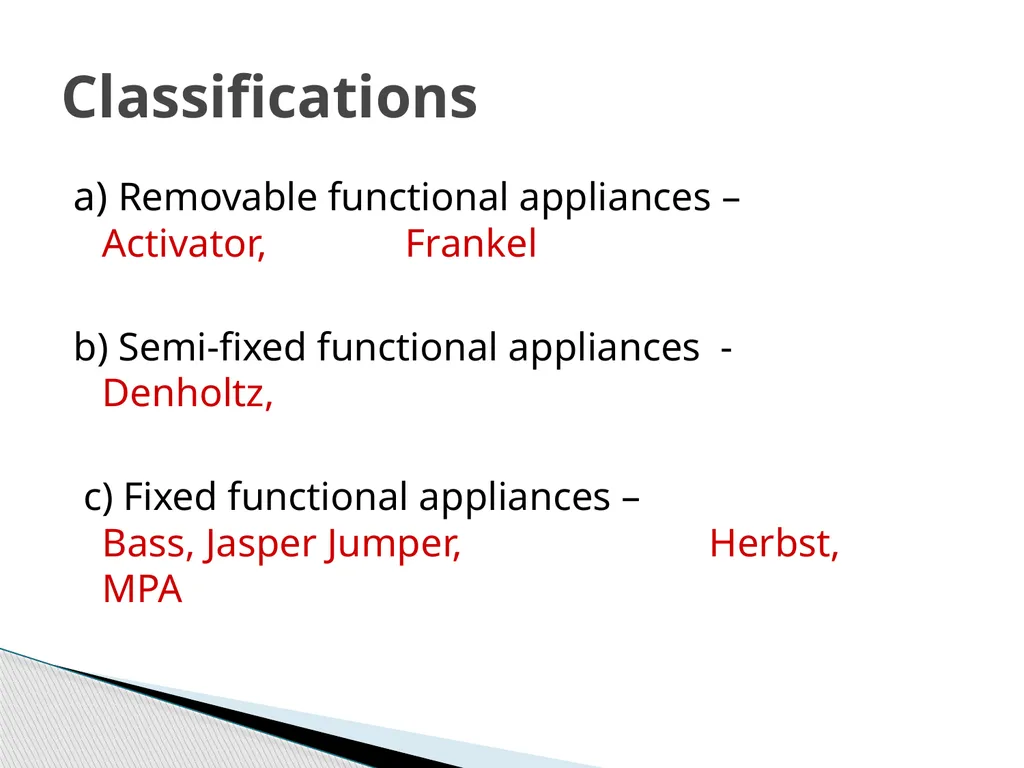
slide4. a) Removable functional appliances – Activator, Frankel
b) Semi-fixed functional appliances - Denholtz,
c) Fixed functional appliances – Bass, Jasper Jumper, Herbst, MPA Classifications<br>
slide5. Classification Of Fixed Functional Appliances 1) Flexible fixed functional appliances.
eg. Jasper jumper
Churro jumper
2) Rigid fixed functional appliances
eg. Herbst appliance
3) Hybrid fixed functional appliances
eg. Eureka spring.<br>
slide6. Herbst Appliance
Jasper Jumper
Mandibular Protraction Appliance (MPA)
Mandibular Advancing Repositioning Splint (MARS) Appliance
Adjustable Bite Corrector
Churro Jumper
Eureka Spring
Rick-e –Nator
The Klapper Super Spring<br>
slide7. Bite Fixer
Magnetic Telescopic Device
Amoric Torsion Coils
Scandee Tubular Jumper
Universal Bite Jumper
BioPedic Appliance
Mandibular Anterior Repositioning Appliance
Intraoral Snoring-Therapy (IST) Appliance
Ritto Appliance
Twin Force Bite Corrector<br>
slide8. It is used primarily in actively growing individuals with favorable facial growth patterns.
Cl . II skeletal pattern with mandibular deficiency
Lack of vertical development in lower face height Indications<br>
slide9. Cl. II molar relationship
True deep over bite, with infraocclusion of the posterior segments
The mandibular incisor teeth should be positioned upright over basal bone structures
The maxillary and mandibular teeth should be well aligned<br>
slide10. Non-growing individuals
Cl . II skeletal pattern with maxillary excess
Increased lower anterior face height Contraindications<br>
slide11. Cl. I molar relationship
Shallow over bite
Pseudo deep bite due to supra eruption of the anterior teeth (“Gummy” smile)
Proclined mandibular anterior teeth
Decreased overjet/ Retroclined maxillary anterior teeth<br>
slide12. Herbst Appliance
Jasper Jumper
Mandibular Protraction Appliance Design Of The Appliances<br>
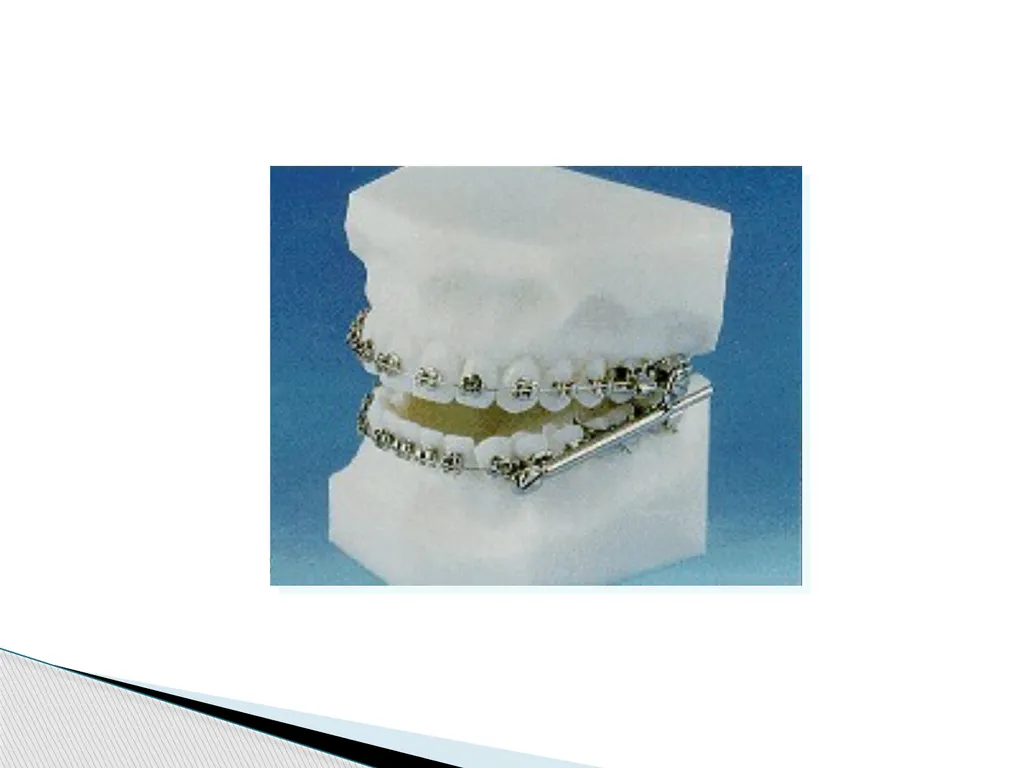
slide13. The appliance can be compared to an artificial joint working between the maxilla and the mandible.
A bilateral telescope mechanism attached to orthodontic bands keeps the mandible mechanically in a continuous anterior jumped position Herbst Appliance<br>
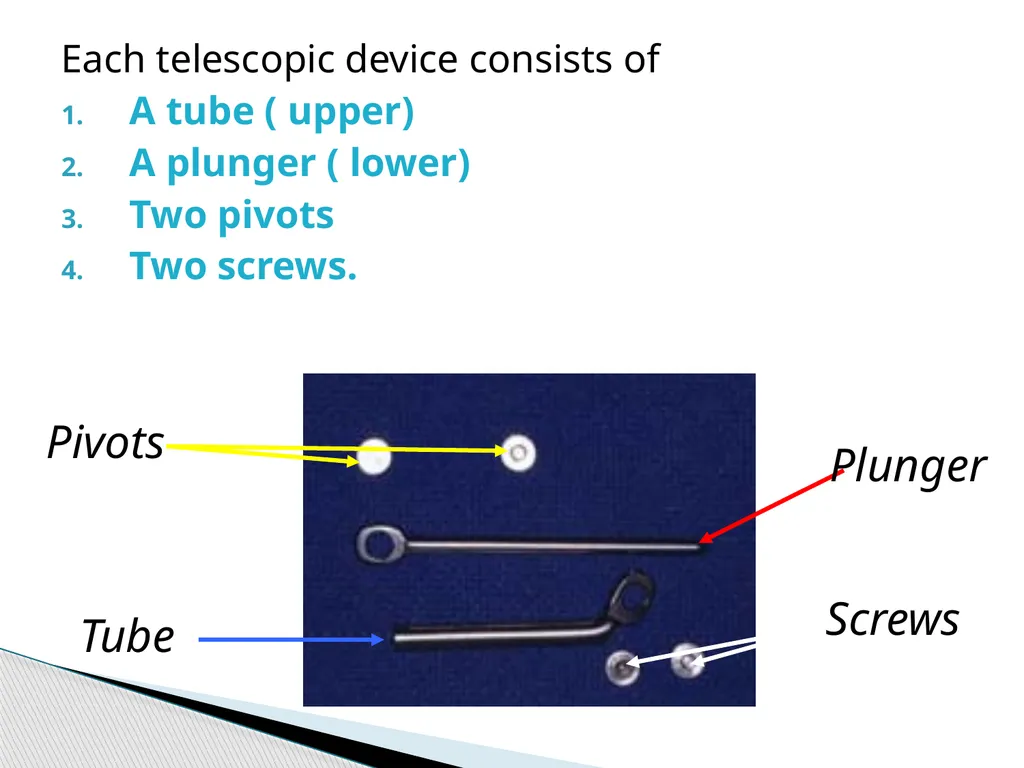
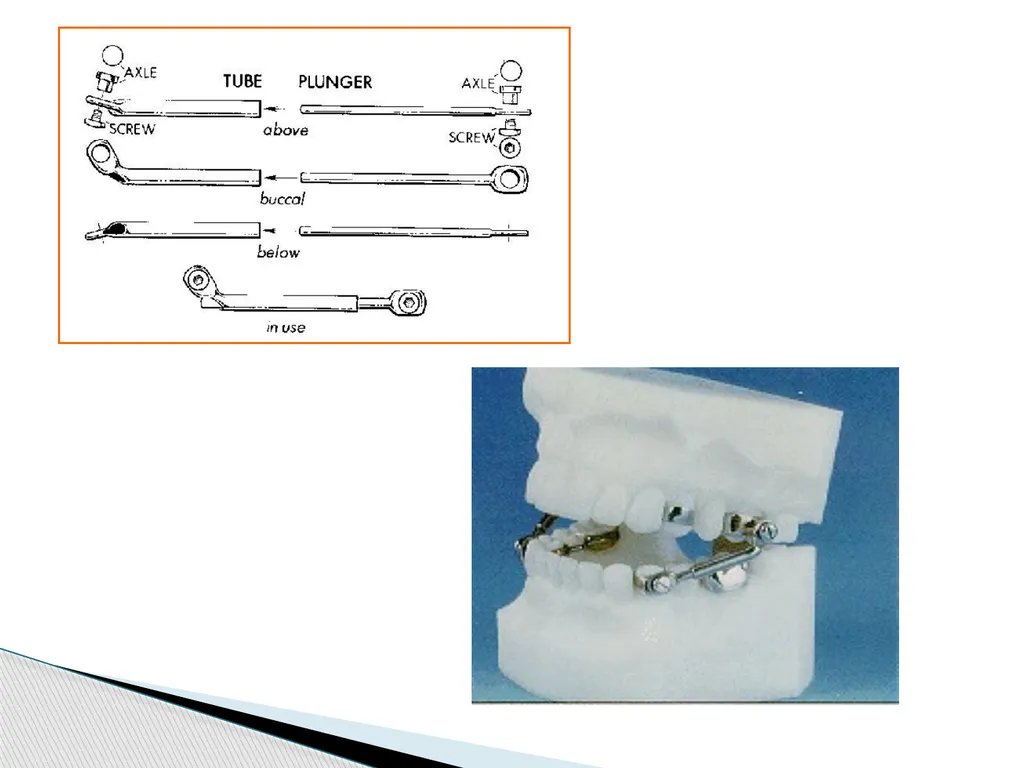
slide14. Each telescopic device consists of
A tube ( upper)
A plunger ( lower)
Two pivots
Two screws. Plunger Tube Pivots Screws<br>
slide17. The pivot for the tube is usually soldered to the maxillary permanent first molar band, and the pivot for the plunger to the mandibular first premolar band.
The screws prevent the telescoping parts from slipping off the pivots.<br>
slide18. The length of the tube determines the amount of bite jumping.
Usually the mandible is retained in an incisal end-to-end relationship.<br>
slide19. The length of the plunger is kept at a maximum in order to prevent it from slipping out of the tube when the mouth is opened wide.
If the plunger is too long, however, it may protrude far behind the tube and injure the buccal mucosa distal to the maxillary permanent first molar.<br>
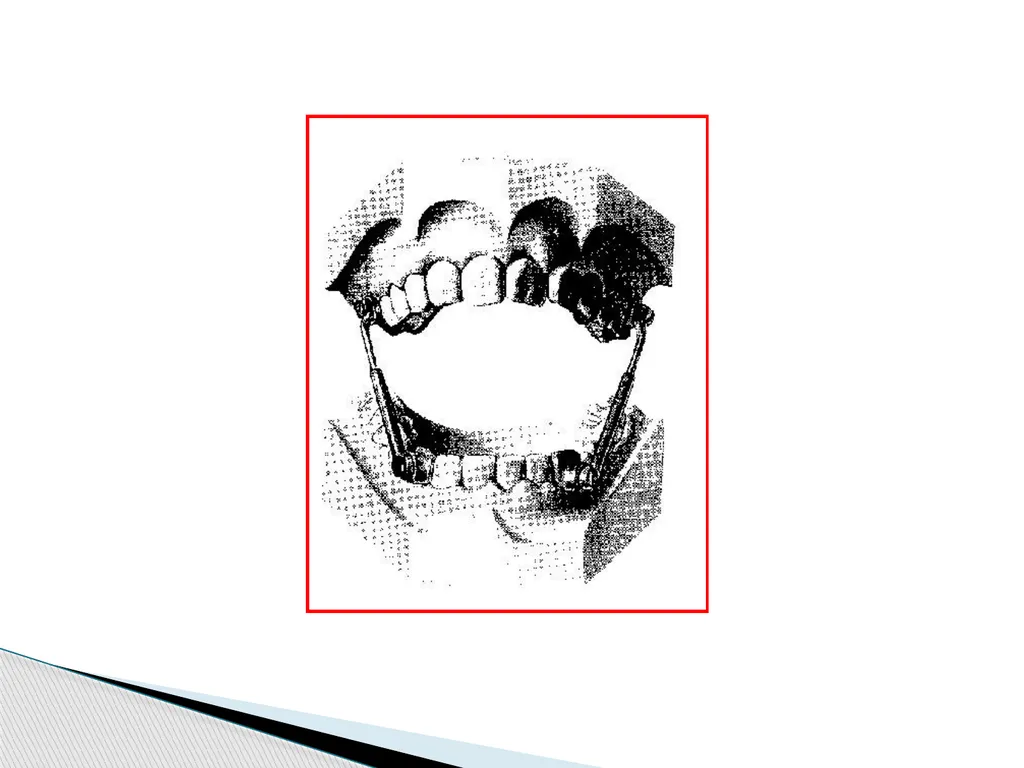
slide21. The mechanism permits vertical opening movements and, when properly constructed, also lateral movements of the mandible.
The pivot openings for the tube and plunger should be wide enough to provide a loose fit of the telescoping parts at their points of attachment. This increases the lateral movement capacity of the lower jaw.<br>
slide22. There are a number of modifications/ variations to the original Herbst design, which would include the following:
Cast splint Herbst
Stainless steel crown Herbst
Acrylic splint herbst
Cantilevered Bite Jumper
MALU – Mandibular Advancement Locking Unit
Flip-Lock Herbst Appliance
Ventral Telescope<br>
slide23. The system is composed of two parts
The Force Module and
The Anchor Units. Jasper Jumper<br>
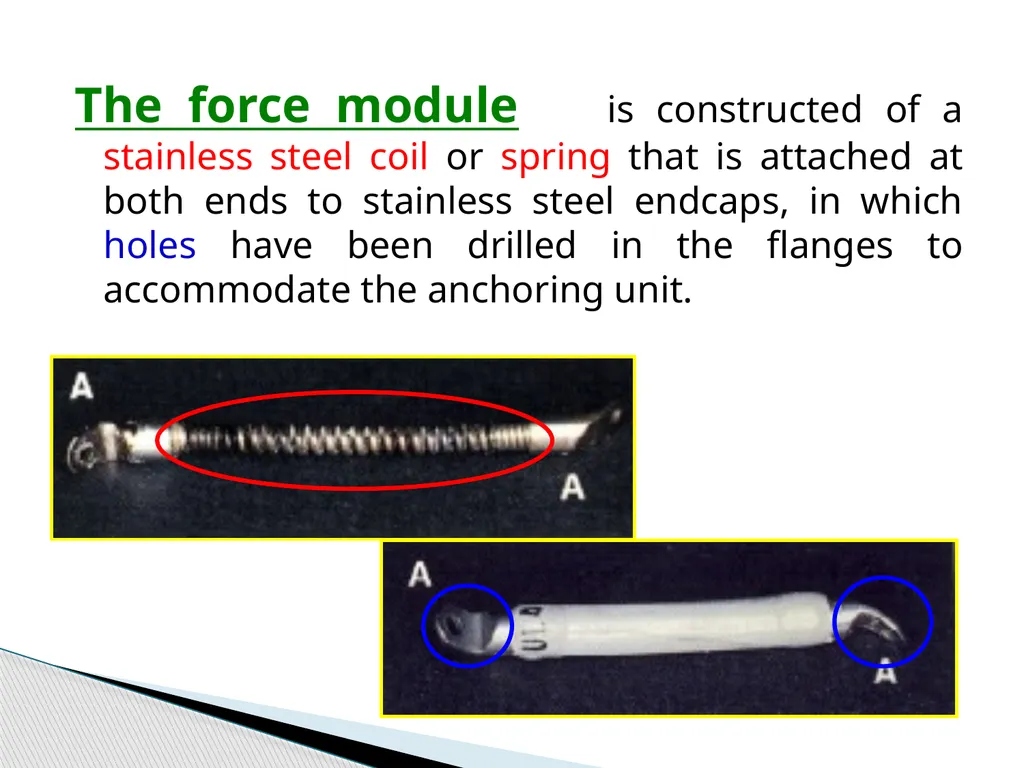
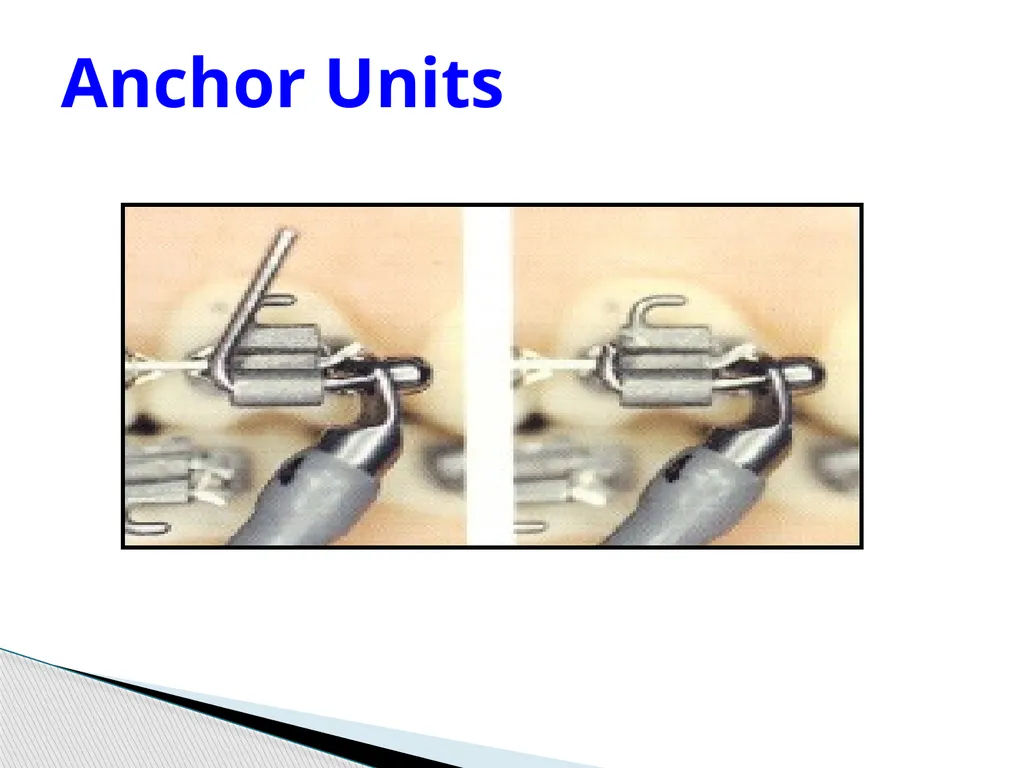
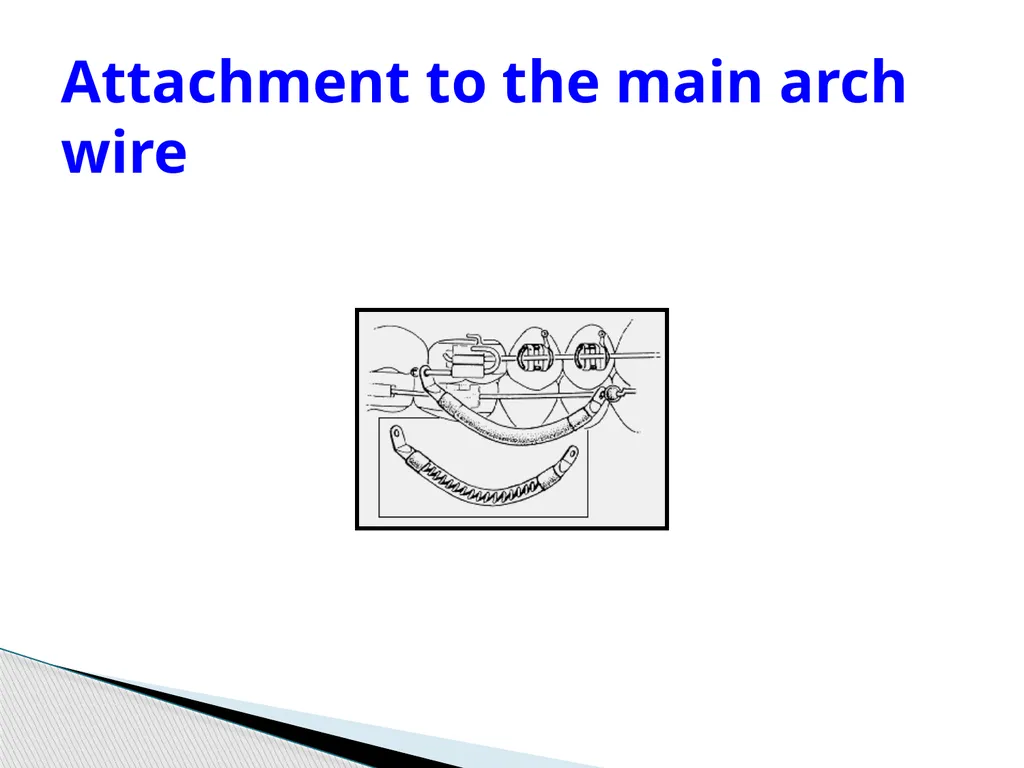
slide24. The force module is constructed of a stainless steel coil or spring that is attached at both ends to stainless steel endcaps, in which holes have been drilled in the flanges to accommodate the anchoring unit.<br>
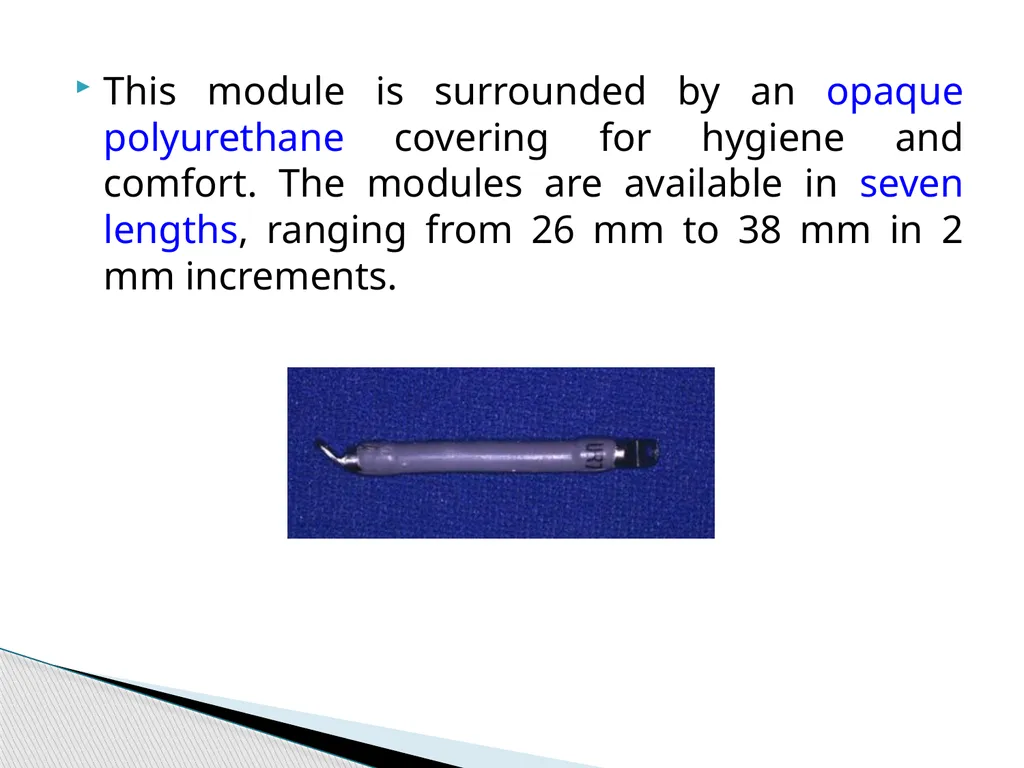
slide25. This module is surrounded by an opaque polyurethane covering for hygiene and comfort. The modules are available in seven lengths, ranging from 26 mm to 38 mm in 2 mm increments.<br>
slide26. Anchor Units<br>
slide27. Attachment to the main arch wire<br>
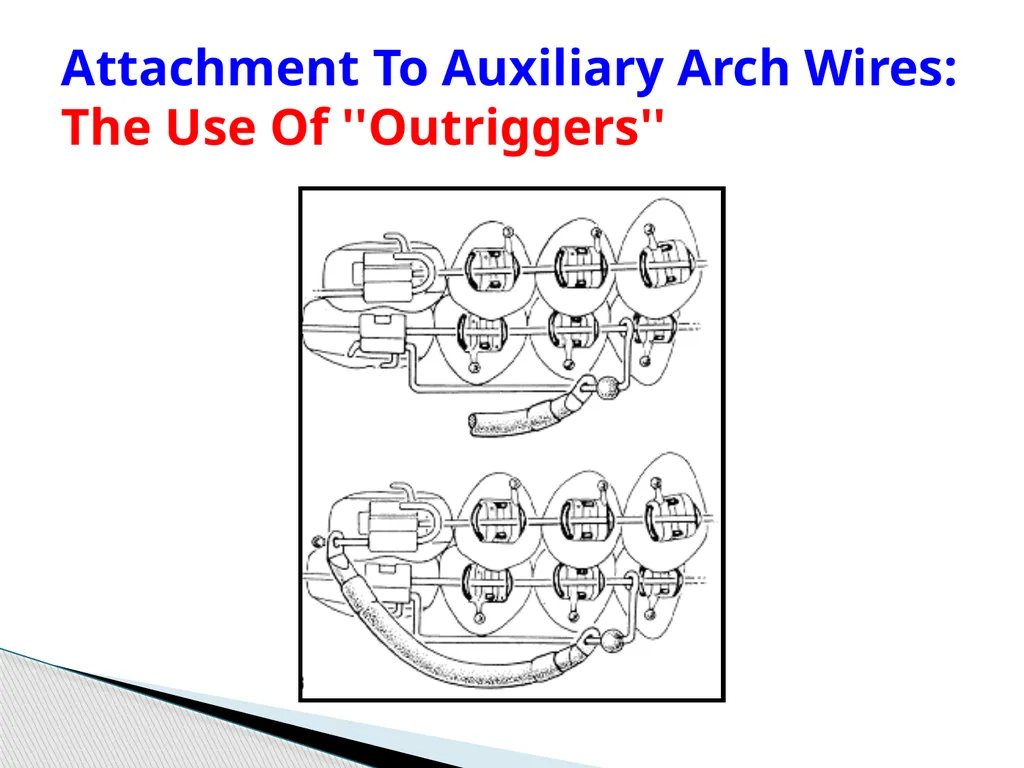
slide28. Attachment To Auxiliary Arch Wires: The Use Of ''Outriggers''<br>
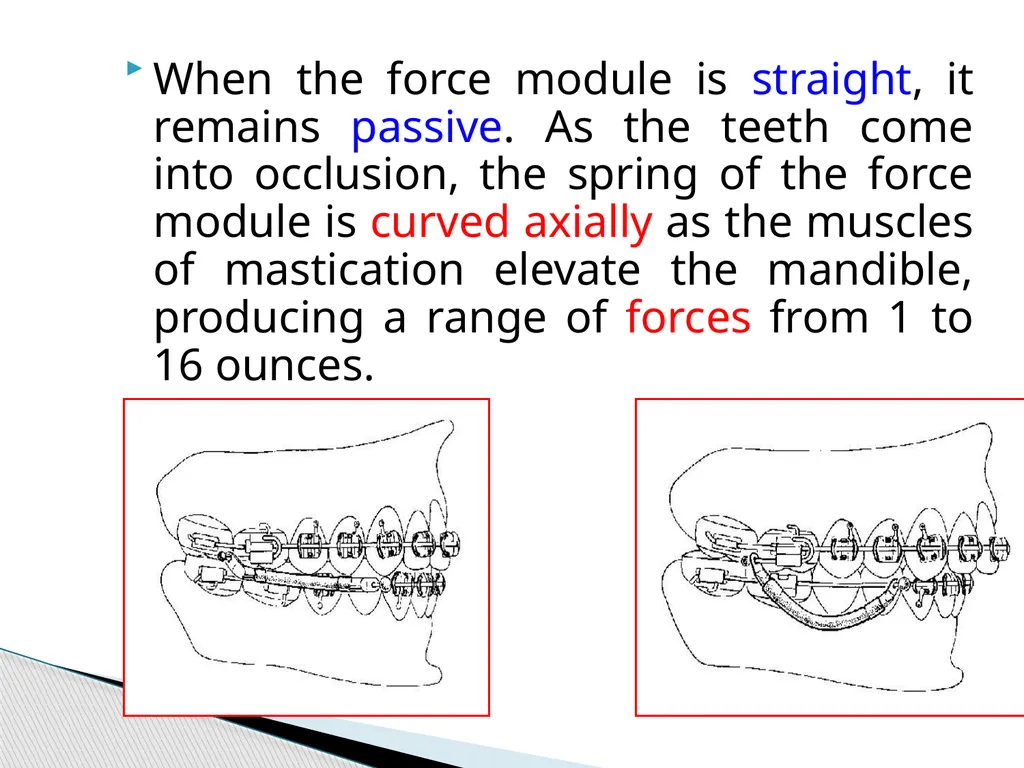
slide29. When the force module is straight, it remains passive. As the teeth come into occlusion, the spring of the force module is curved axially as the muscles of mastication elevate the mandible, producing a range of forces from 1 to 16 ounces.<br>
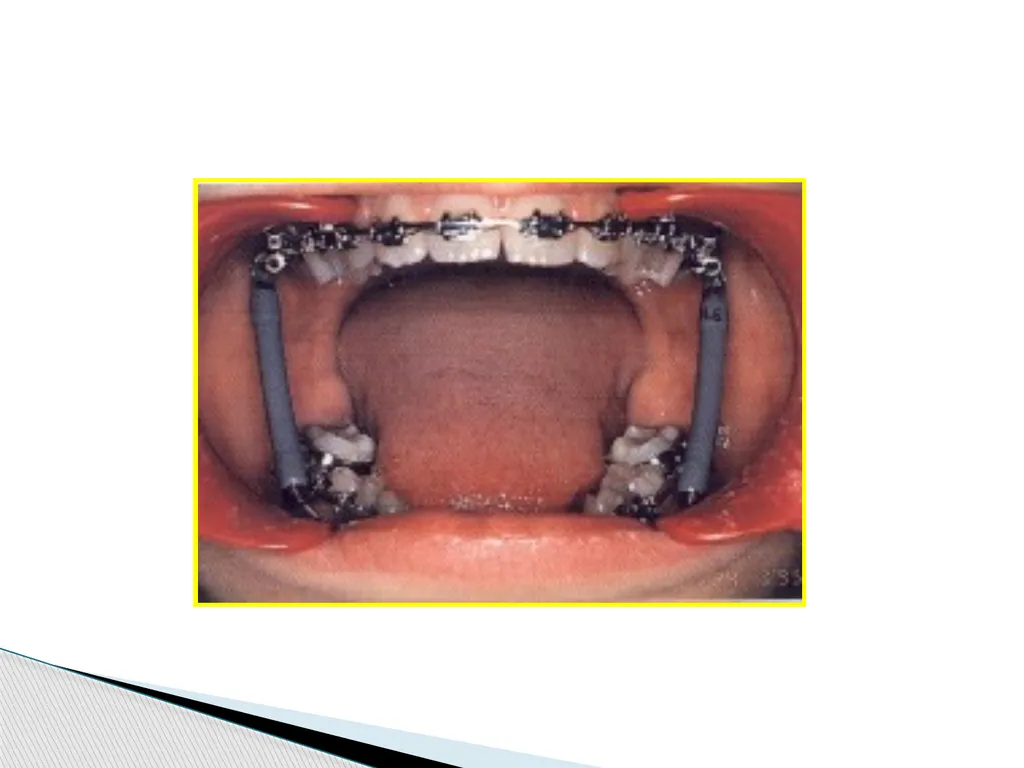
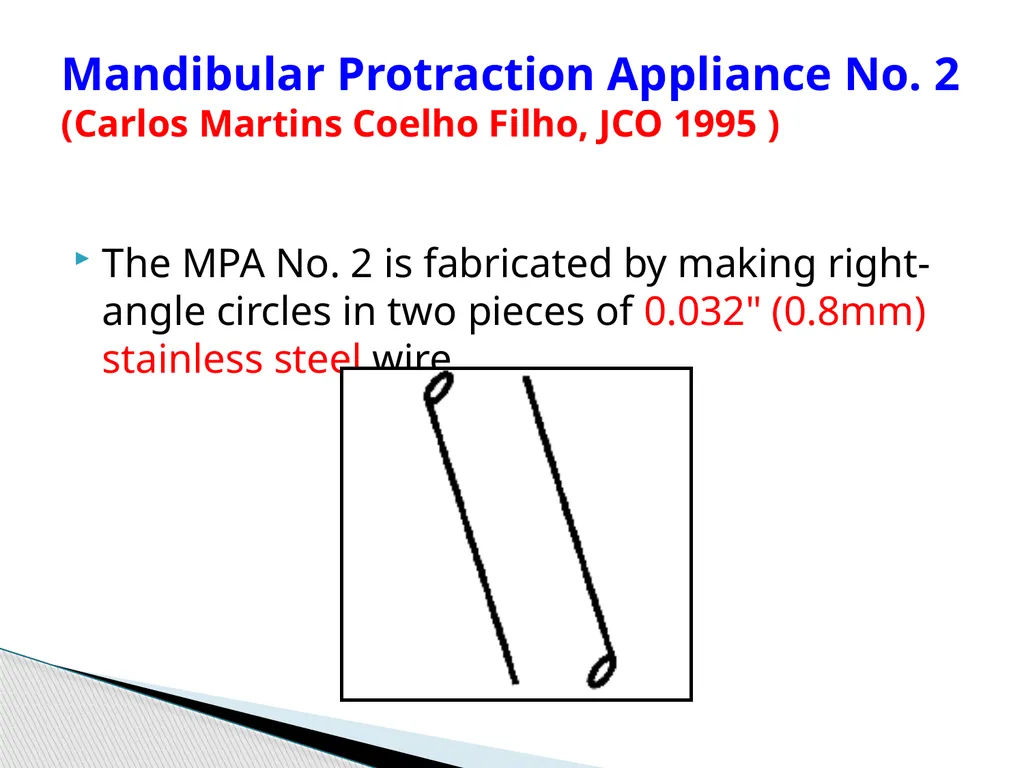
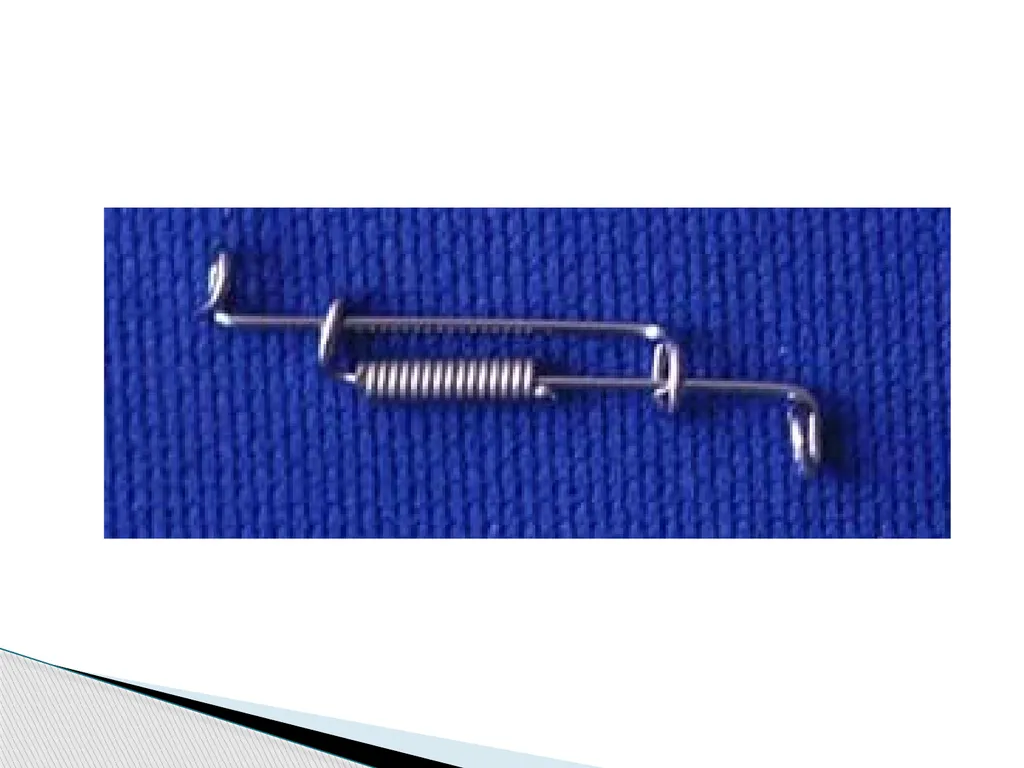
slide31. Mandibular Protraction Appliance No. 2 (Carlos Martins Coelho Filho, JCO 1995 ) The MPA No. 2 is fabricated by making right-angle circles in two pieces of 0.032" (0.8mm) stainless steel wire<br>
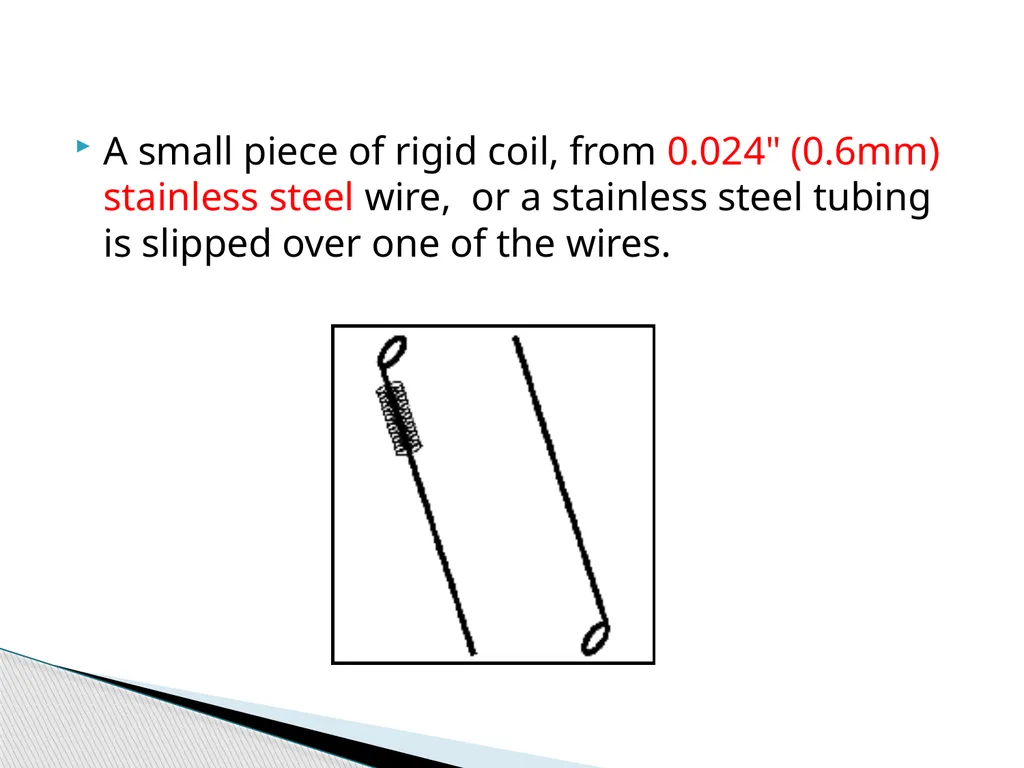
slide32. A small piece of rigid coil, from 0.024" (0.6mm) stainless steel wire, or a stainless steel tubing is slipped over one of the wires.<br>
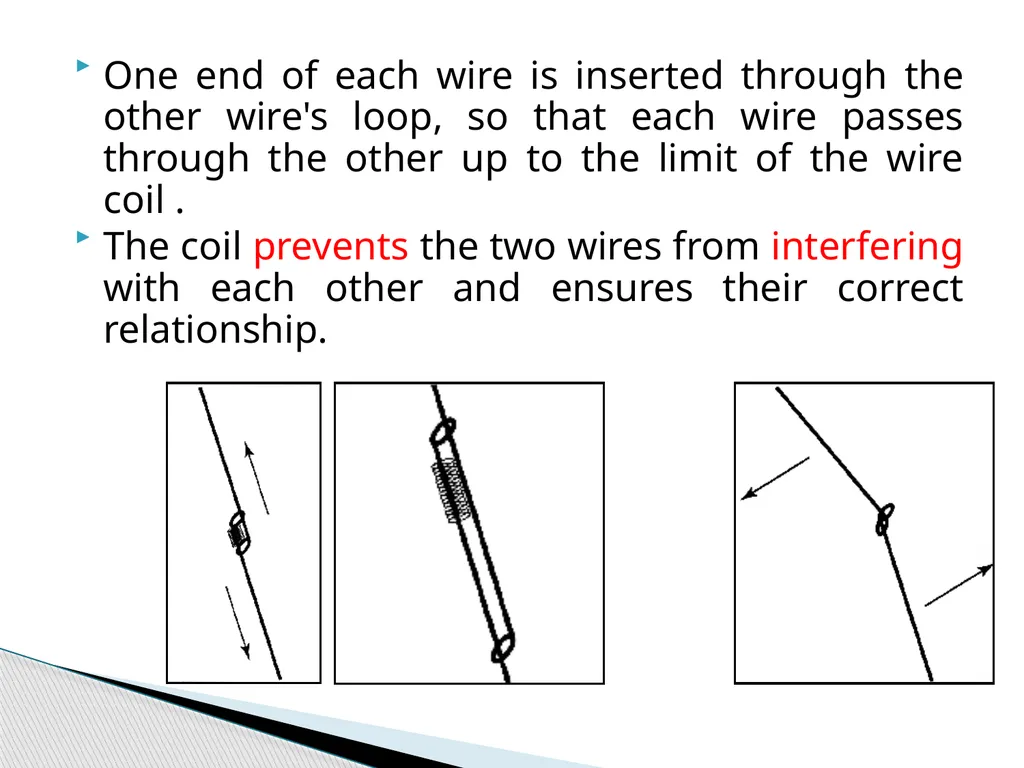
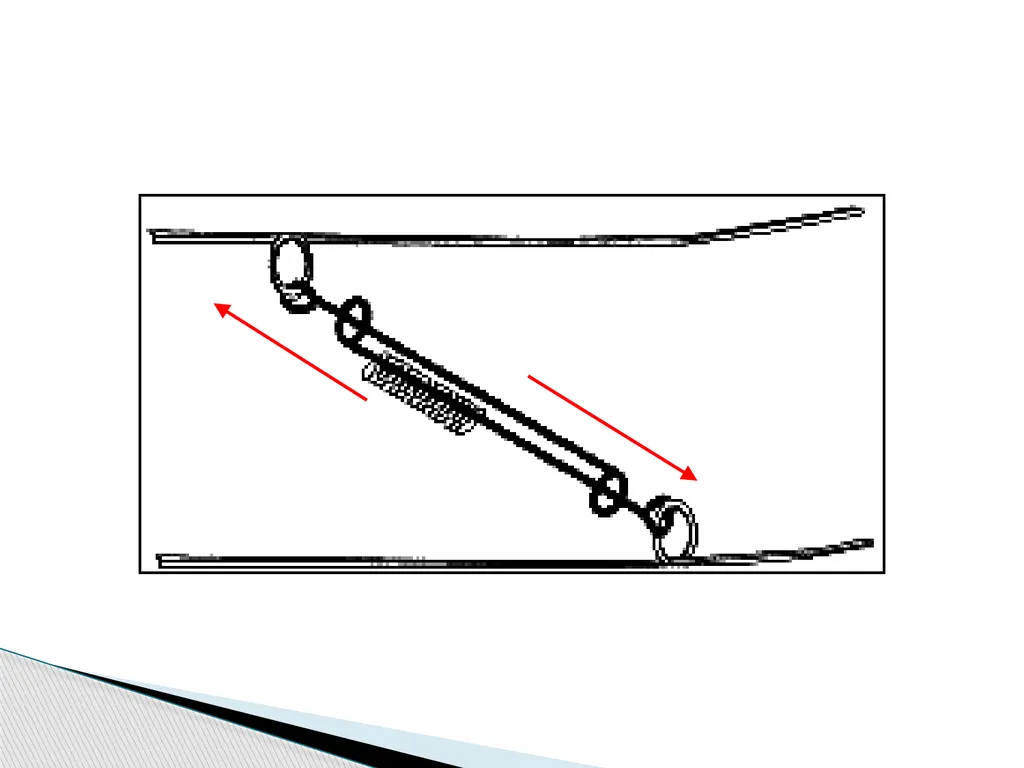
slide33. One end of each wire is inserted through the other wire's loop, so that each wire passes through the other up to the limit of the wire coil .
The coil prevents the two wires from interfering with each other and ensures their correct relationship.<br>
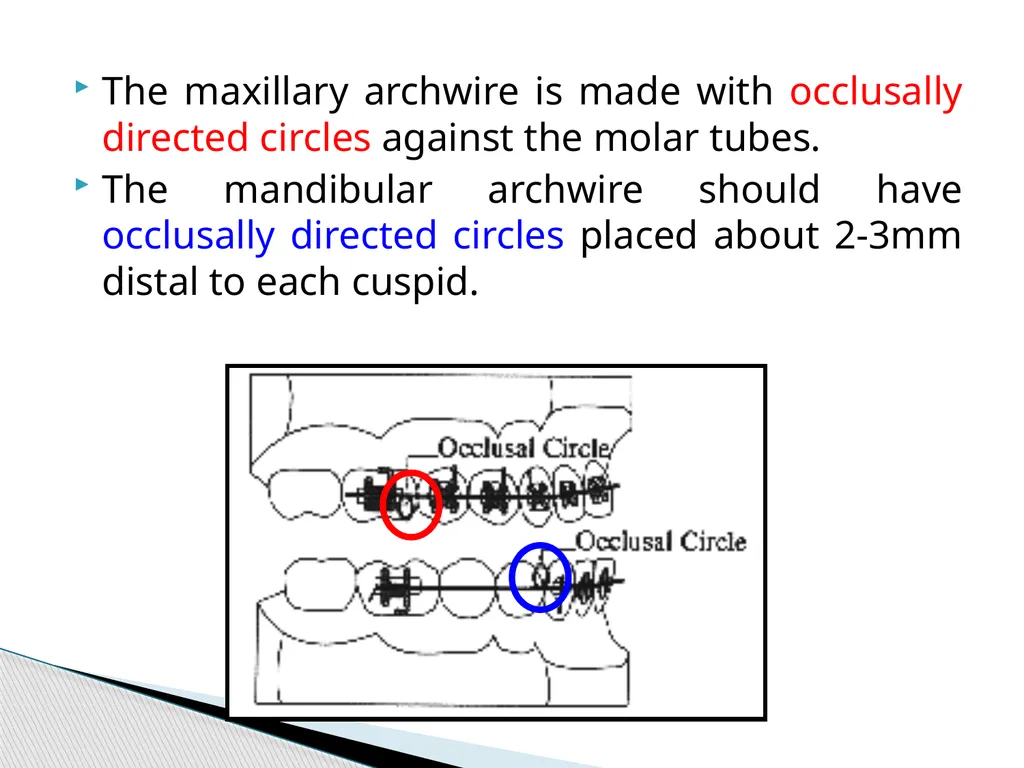
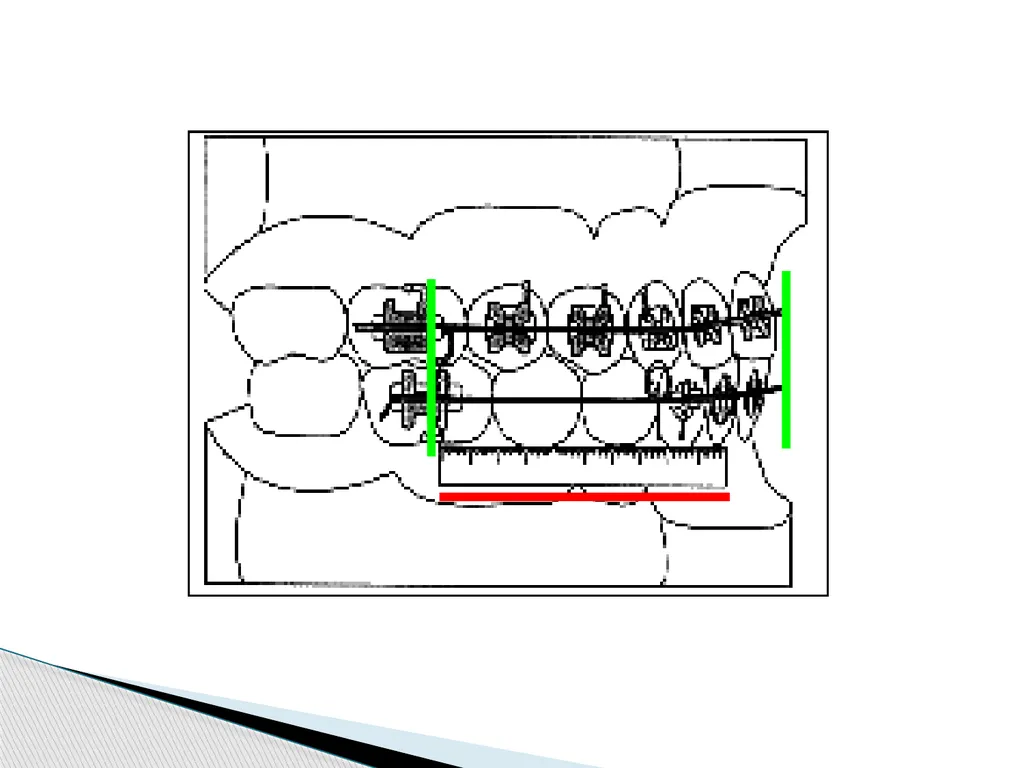
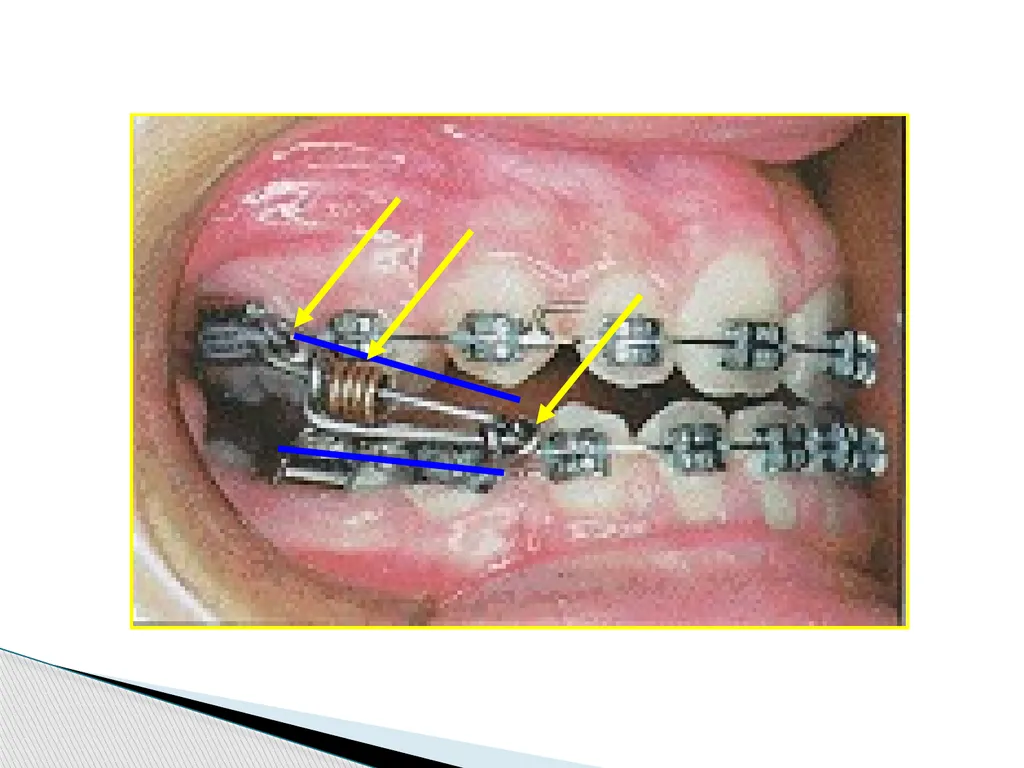
slide35. The maxillary archwire is made with occlusally directed circles against the molar tubes.
The mandibular archwire should have occlusally directed circles placed about 2-3mm distal to each cuspid.<br>
slide39. Fixed functional appliances are normally known as "non-compliance Class II correctors" giving a false idea about the co-operation necessary during treatment. Mode of actions<br>
slide40. When we compare them to removable appliances, we can clearly recognize fixed appliances as non-compliance devices.
However, for treatment to be successful, good co-operation is always necessary, especially if skeletal modifications instead of dentoalveolar compensations are desired.<br>
slide41. According to Proffit, there are two mechanisms to protrusion: Active & Passive.
In PASSIVE protrusion, the mandible is held forward by the orthodontic appliance. This the case with fixed functional appliances.<br>
slide42. In ACTIVE protrusion, the patient ‘responds’ to the appliance by using his or her muscles, especially the lateral pterygoid to hold the mandible forward.
Stimulating the muscles was thought to be important from the beginning of functional appliance therapy, hence both the generic functional name and the specific term activator.<br>
slide43. Whether the patient actively uses his musculature to posture the mandible forward or passively rests against the appliance may or may not affect the amount of mandibular growth.
But this definitely affects the amount of tooth movement that occurs and may determine the effect on the maxilla.<br>
slide44. For example, with the Herbst appliance, the condyle is displaced anteriorly at all times.
Therefore this appliance should be considered, potentially, the most effective of the functional appliances in altering jaw growth.<br>
slide45. Though with the Herbst appliance, the condyle is displaced anteriorly at all times, the amount of force against the teeth is very much under the patients control.
The patient can use his/her own muscles to hold the jaw forwards with the Herbst appliance serving only as a stimulus to do so.
Or the appliance can passively hold the jaw forward, with little or no contribution from the muscles.<br>
slide46. When there is no contribution from the muscles, i.e. when the muscles relax, the reaction force is distributed to the maxilla and also to the maxillary and mandibular teeth.
Thus, if the muscles hold the jaw forward, there is little or no reactive force against the teeth and minimal tooth movement occurs.
If the jaw repositioning is entirely passive, force against the teeth can displace the teeth quite significantly.<br>
slide47. Fixed functional appliances are, and will remain, an invaluable tool for every orthodontist.
Having said so, it would not be inappropriate to say that knowing the mechanics of the same would be mandatory for every clinician.
By knowing this the clinician can not only minimize the unwanted side effects but also optimise his treatment results. Conclusion<br>
slide48. Thank You<br>
slide2. Introduction
Classification
Indications
Contraindications
Design of Appliances
Conclusion CONTENTS<br>
slide3. Fixed functional appliances first appeared in the early 1900s, when Emil Herbst in 1905 presented his system at the Berlin International Dental Congress.
This device was one of the early attempts to produce mechanically a “jumping of the bite”; an idea that had earlier been advocated by Kingsley, among others. Introduction<br>
slide4. a) Removable functional appliances – Activator, Frankel
b) Semi-fixed functional appliances - Denholtz,
c) Fixed functional appliances – Bass, Jasper Jumper, Herbst, MPA Classifications<br>
slide5. Classification Of Fixed Functional Appliances 1) Flexible fixed functional appliances.
eg. Jasper jumper
Churro jumper
2) Rigid fixed functional appliances
eg. Herbst appliance
3) Hybrid fixed functional appliances
eg. Eureka spring.<br>
slide6. Herbst Appliance
Jasper Jumper
Mandibular Protraction Appliance (MPA)
Mandibular Advancing Repositioning Splint (MARS) Appliance
Adjustable Bite Corrector
Churro Jumper
Eureka Spring
Rick-e –Nator
The Klapper Super Spring<br>
slide7. Bite Fixer
Magnetic Telescopic Device
Amoric Torsion Coils
Scandee Tubular Jumper
Universal Bite Jumper
BioPedic Appliance
Mandibular Anterior Repositioning Appliance
Intraoral Snoring-Therapy (IST) Appliance
Ritto Appliance
Twin Force Bite Corrector<br>
slide8. It is used primarily in actively growing individuals with favorable facial growth patterns.
Cl . II skeletal pattern with mandibular deficiency
Lack of vertical development in lower face height Indications<br>
slide9. Cl. II molar relationship
True deep over bite, with infraocclusion of the posterior segments
The mandibular incisor teeth should be positioned upright over basal bone structures
The maxillary and mandibular teeth should be well aligned<br>
slide10. Non-growing individuals
Cl . II skeletal pattern with maxillary excess
Increased lower anterior face height Contraindications<br>
slide11. Cl. I molar relationship
Shallow over bite
Pseudo deep bite due to supra eruption of the anterior teeth (“Gummy” smile)
Proclined mandibular anterior teeth
Decreased overjet/ Retroclined maxillary anterior teeth<br>
slide12. Herbst Appliance
Jasper Jumper
Mandibular Protraction Appliance Design Of The Appliances<br>
slide13. The appliance can be compared to an artificial joint working between the maxilla and the mandible.
A bilateral telescope mechanism attached to orthodontic bands keeps the mandible mechanically in a continuous anterior jumped position Herbst Appliance<br>
slide14. Each telescopic device consists of
A tube ( upper)
A plunger ( lower)
Two pivots
Two screws. Plunger Tube Pivots Screws<br>
slide17. The pivot for the tube is usually soldered to the maxillary permanent first molar band, and the pivot for the plunger to the mandibular first premolar band.
The screws prevent the telescoping parts from slipping off the pivots.<br>
slide18. The length of the tube determines the amount of bite jumping.
Usually the mandible is retained in an incisal end-to-end relationship.<br>
slide19. The length of the plunger is kept at a maximum in order to prevent it from slipping out of the tube when the mouth is opened wide.
If the plunger is too long, however, it may protrude far behind the tube and injure the buccal mucosa distal to the maxillary permanent first molar.<br>
slide21. The mechanism permits vertical opening movements and, when properly constructed, also lateral movements of the mandible.
The pivot openings for the tube and plunger should be wide enough to provide a loose fit of the telescoping parts at their points of attachment. This increases the lateral movement capacity of the lower jaw.<br>
slide22. There are a number of modifications/ variations to the original Herbst design, which would include the following:
Cast splint Herbst
Stainless steel crown Herbst
Acrylic splint herbst
Cantilevered Bite Jumper
MALU – Mandibular Advancement Locking Unit
Flip-Lock Herbst Appliance
Ventral Telescope<br>
slide23. The system is composed of two parts
The Force Module and
The Anchor Units. Jasper Jumper<br>
slide24. The force module is constructed of a stainless steel coil or spring that is attached at both ends to stainless steel endcaps, in which holes have been drilled in the flanges to accommodate the anchoring unit.<br>
slide25. This module is surrounded by an opaque polyurethane covering for hygiene and comfort. The modules are available in seven lengths, ranging from 26 mm to 38 mm in 2 mm increments.<br>
slide26. Anchor Units<br>
slide27. Attachment to the main arch wire<br>
slide28. Attachment To Auxiliary Arch Wires: The Use Of ''Outriggers''<br>
slide29. When the force module is straight, it remains passive. As the teeth come into occlusion, the spring of the force module is curved axially as the muscles of mastication elevate the mandible, producing a range of forces from 1 to 16 ounces.<br>
slide31. Mandibular Protraction Appliance No. 2 (Carlos Martins Coelho Filho, JCO 1995 ) The MPA No. 2 is fabricated by making right-angle circles in two pieces of 0.032" (0.8mm) stainless steel wire<br>
slide32. A small piece of rigid coil, from 0.024" (0.6mm) stainless steel wire, or a stainless steel tubing is slipped over one of the wires.<br>
slide33. One end of each wire is inserted through the other wire's loop, so that each wire passes through the other up to the limit of the wire coil .
The coil prevents the two wires from interfering with each other and ensures their correct relationship.<br>
slide35. The maxillary archwire is made with occlusally directed circles against the molar tubes.
The mandibular archwire should have occlusally directed circles placed about 2-3mm distal to each cuspid.<br>
slide39. Fixed functional appliances are normally known as "non-compliance Class II correctors" giving a false idea about the co-operation necessary during treatment. Mode of actions<br>
slide40. When we compare them to removable appliances, we can clearly recognize fixed appliances as non-compliance devices.
However, for treatment to be successful, good co-operation is always necessary, especially if skeletal modifications instead of dentoalveolar compensations are desired.<br>
slide41. According to Proffit, there are two mechanisms to protrusion: Active & Passive.
In PASSIVE protrusion, the mandible is held forward by the orthodontic appliance. This the case with fixed functional appliances.<br>
slide42. In ACTIVE protrusion, the patient ‘responds’ to the appliance by using his or her muscles, especially the lateral pterygoid to hold the mandible forward.
Stimulating the muscles was thought to be important from the beginning of functional appliance therapy, hence both the generic functional name and the specific term activator.<br>
slide43. Whether the patient actively uses his musculature to posture the mandible forward or passively rests against the appliance may or may not affect the amount of mandibular growth.
But this definitely affects the amount of tooth movement that occurs and may determine the effect on the maxilla.<br>
slide44. For example, with the Herbst appliance, the condyle is displaced anteriorly at all times.
Therefore this appliance should be considered, potentially, the most effective of the functional appliances in altering jaw growth.<br>
slide45. Though with the Herbst appliance, the condyle is displaced anteriorly at all times, the amount of force against the teeth is very much under the patients control.
The patient can use his/her own muscles to hold the jaw forwards with the Herbst appliance serving only as a stimulus to do so.
Or the appliance can passively hold the jaw forward, with little or no contribution from the muscles.<br>
slide46. When there is no contribution from the muscles, i.e. when the muscles relax, the reaction force is distributed to the maxilla and also to the maxillary and mandibular teeth.
Thus, if the muscles hold the jaw forward, there is little or no reactive force against the teeth and minimal tooth movement occurs.
If the jaw repositioning is entirely passive, force against the teeth can displace the teeth quite significantly.<br>
slide47. Fixed functional appliances are, and will remain, an invaluable tool for every orthodontist.
Having said so, it would not be inappropriate to say that knowing the mechanics of the same would be mandatory for every clinician.
By knowing this the clinician can not only minimize the unwanted side effects but also optimise his treatment results. Conclusion<br>
slide48. Thank You<br>