Flour Mixtures Introduction What is a flour

Published  . 0 views
↓ Download
Flour Mixtures Introduction What is a flour
1 / 1
Flour Mixtures Introduction What is a flour - slide 1 of 23 Flour Mixtures Introduction What is a flour - slide 2 of 23 Flour Mixtures Introduction What is a flour - slide 3 of 23 Flour Mixtures Introduction What is a flour - slide 4 of 23 Flour Mixtures Introduction What is a flour - slide 5 of 23 Flour Mixtures Introduction What is a flour - slide 6 of 23 Flour Mixtures Introduction What is a flour - slide 7 of 23 Flour Mixtures Introduction What is a flour - slide 8 of 23 Flour Mixtures Introduction What is a flour - slide 9 of 23 Flour Mixtures Introduction What is a flour - slide 10 of 23 Flour Mixtures Introduction What is a flour - slide 11 of 23 Flour Mixtures Introduction What is a flour - slide 12 of 23 Flour Mixtures Introduction What is a flour - slide 13 of 23 Flour Mixtures Introduction What is a flour - slide 14 of 23 Flour Mixtures Introduction What is a flour - slide 15 of 23 Flour Mixtures Introduction What is a flour - slide 16 of 23 Flour Mixtures Introduction What is a flour - slide 17 of 23 Flour Mixtures Introduction What is a flour - slide 18 of 23 Flour Mixtures Introduction What is a flour - slide 19 of 23 Flour Mixtures Introduction What is a flour - slide 20 of 23 Flour Mixtures Introduction What is a flour - slide 21 of 23 Flour Mixtures Introduction What is a flour - slide 22 of 23 Flour Mixtures Introduction What is a flour - slide 23 of 23
Description: Flour Mixtures Introduction What is a flour mixture? A baked product with flour as the main ingredient Examples: -Pastries -Biscuits -Cookies -Muffins What is a Quick Bread? A baked product prepared quickly and easily without yeast. It is

Related Topics

Download Presentation

"Flour Mixtures Introduction What is a flour" is the property of its rightful owner. Permission is granted to download and print the materials on this website for personal, non-commercial use only, and to display it on your personal computer provided you do not modify the materials and that you retain all copyright notices contained in the materials. By downloading content from our website, you accept the terms of this agreement.

Presentation Transcript

slide1. Flour Mixtures Introduction<br>
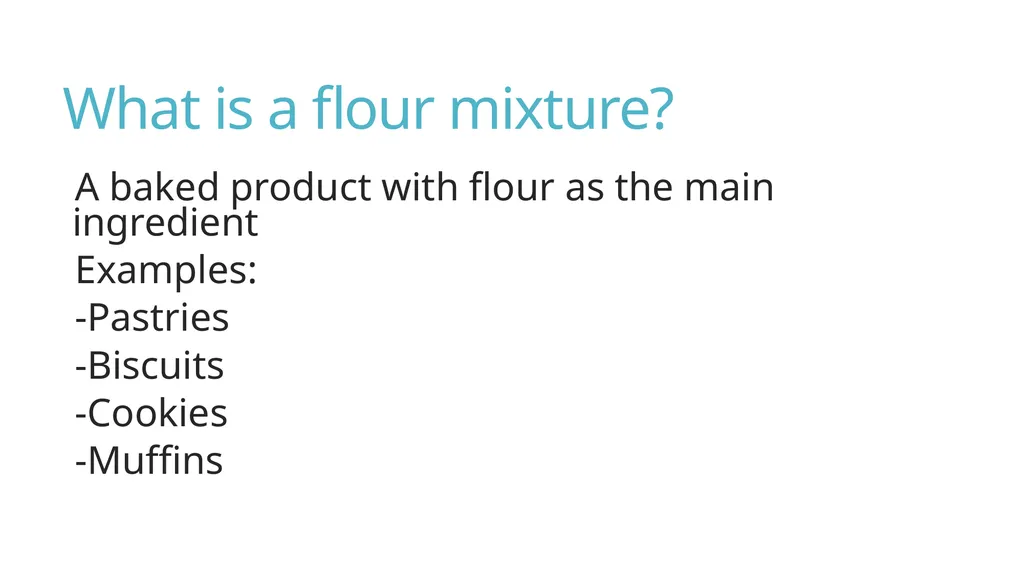
slide2. What is a flour mixture? A baked product with flour as the main ingredient
Examples:
-Pastries
-Biscuits
-Cookies
-Muffins<br>
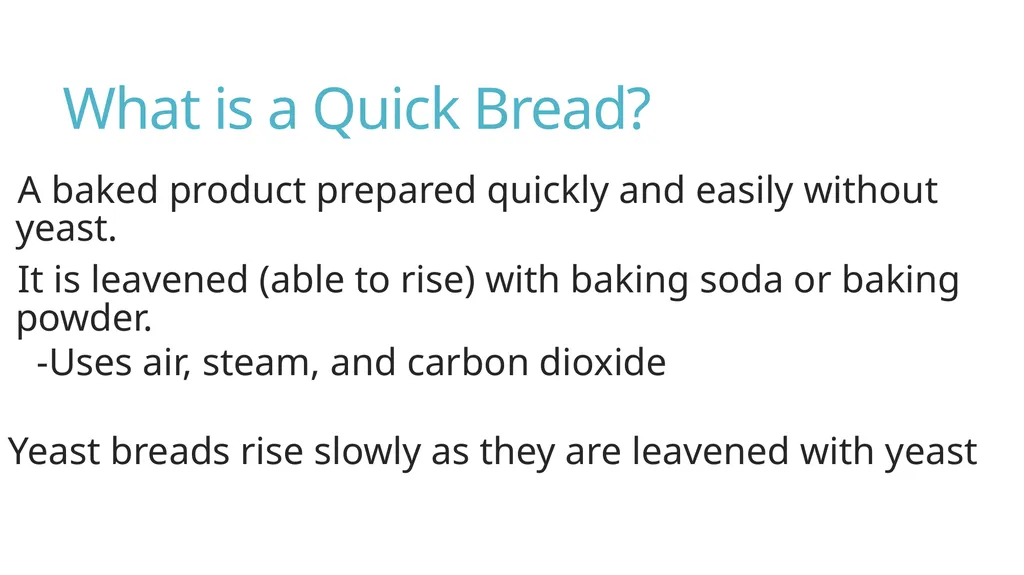
slide3. What is a Quick Bread? A baked product prepared quickly and easily without yeast.
It is leavened (able to rise) with baking soda or baking powder.
-Uses air, steam, and carbon dioxide

Yeast breads rise slowly as they are leavened with yeast<br>
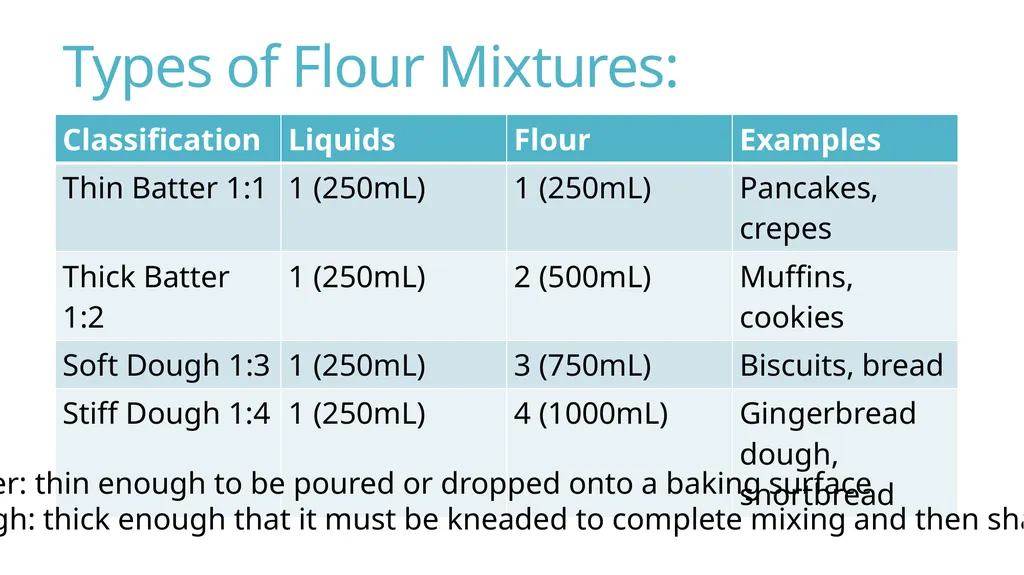
slide4. Types of Flour Mixtures: Batter: thin enough to be poured or dropped onto a baking surface
Dough: thick enough that it must be kneaded to complete mixing and then shaped<br>
slide5. Ingredient Review<br>
slide6. We will explore the functions of the following: -Flour
-Liquid
-Fat
-Eggs
-Sugar
-Leaveners
-Salt<br>
slide7. Flour -Provides gluten, a protein substance, which forms elastic strands when mixed with liquid
-Gives structure to a product<br>
slide8. Liquid: -Needed to develop gluten in flour
-Provides solvent for dry ingredients and steam for leavening
-Examples: milk, water, juice, eggs, flavourings, oil, melted fat<br>
slide9. Fats -Tenderizes product by interfering with gluten development
-Can affect flavor and colour of recipe
-Examples: oil, butter, margarine, shortening, lard<br>
slide10. Eggs -Holds (or binds) ingredients together
-Adds flavor, nutrients, and colour<br>
slide11. Leavening Agents -An ingredient or combination of ingredients
-Produce a leavener: helps a product rise and becomes light and porous
-Air, steam, CO2
-Expands and increases in volume when heated
-Examples: yeast, baking powder, baking soda, liquid, air<br>
slide12. Sugar -Adds colour to product due to browning or caramelization
-Increases tenderness (absorbs water, preventing gluten development)
-Adds flavor

Salt
-Enhances flavor of other ingredients
-Controls the action of yeast<br>

slide13. Flavourings -Enhances flavor of product
-Examples: spices, herbs, extracts (i.e. vanilla)<br>
slide14. Combining Ingredients<br>
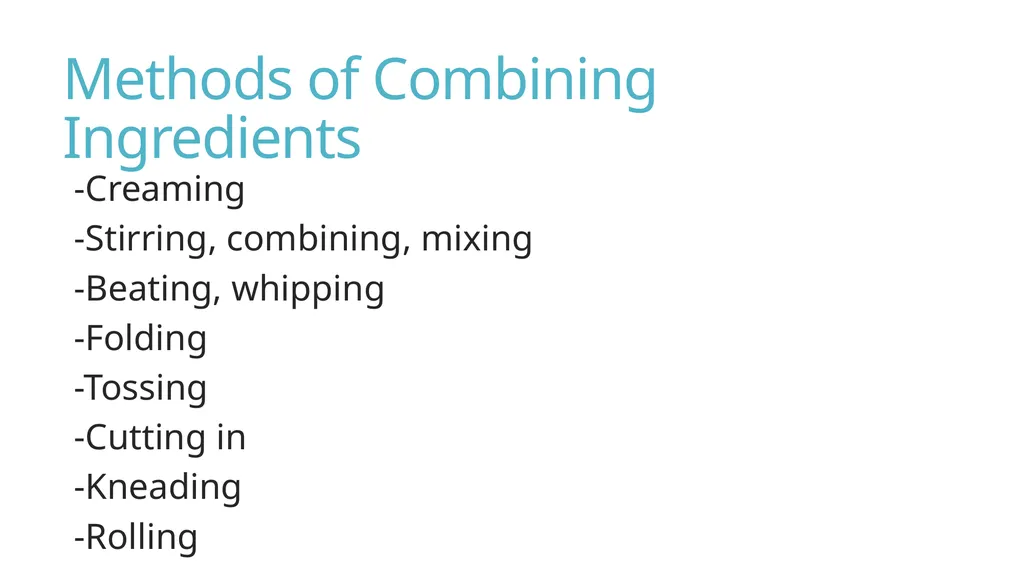
slide15. Methods of Combining Ingredients -Creaming
-Stirring, combining, mixing
-Beating, whipping
-Folding
-Tossing
-Cutting in
-Kneading
-Rolling<br>
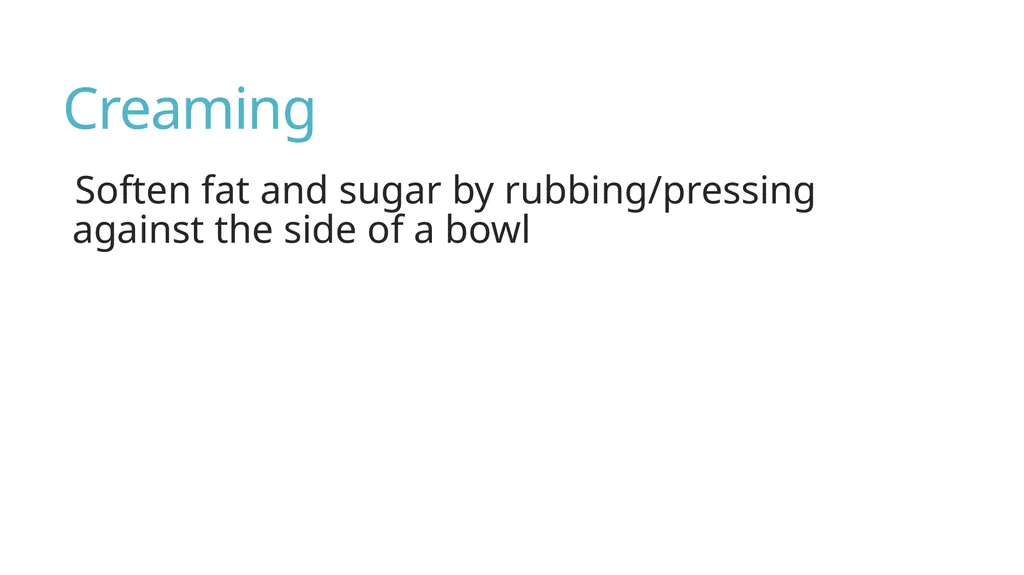
slide16. Creaming Soften fat and sugar by rubbing/pressing against the side of a bowl<br>
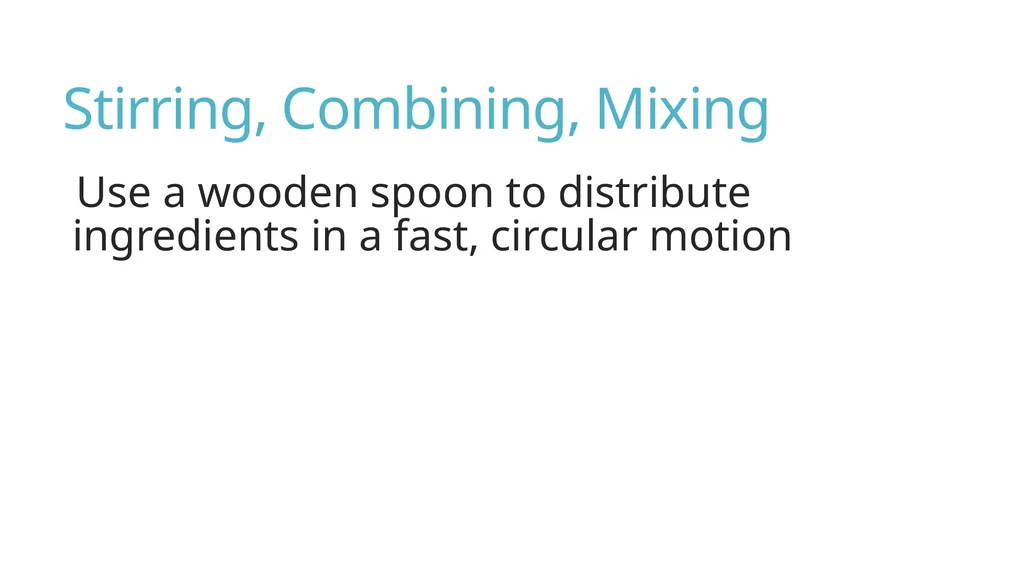
slide17. Stirring, Combining, Mixing Use a wooden spoon to distribute ingredients in a fast, circular motion<br>
slide18. Beating, Whipping Using a wooden spoon, whisk, or beater in rapid, circular motions, combine ingredients to add air<br>
slide19. Folding Use a rubber spatula to cut vertically through a mixture, sliding across the bottom of the bowl, up the sides, then turning over<br>
slide20. Tossing Using a fork to lift up ingredients<br>
slide21. Cutting In Using a pastry blender to cut solid fat into dry ingredients until the size of small peas (or rolled oats)<br>
slide22. Kneading Use hands to fold dough over on itself. Push down and away with the heels of your hands. Turn a ΒΌ turn after each push<br>
slide23. Rolling Use a rolling pin to roll out dough evenly on a floured surface<br>