
Fluids: Archimedes’ Principle, Pascal’s Law,





Description: Fluids: Archimedes Principle, Pascals Law, Bernoullis Principle Fluids and Buoyant Force Archimedes Principle Any object completely or partially submerged in a fluid experiences an upward force equal in magnitude to the weight of the
Related Topics
Download Presentation
"Fluids: Archimedes’ Principle, Pascal’s Law," is the property of its rightful owner. Permission is granted to download and print the materials on this website for personal, non-commercial use only, and to display it on your personal computer provided you do not modify the materials and that you retain all copyright notices contained in the materials. By downloading content from our website, you accept the terms of this agreement.
Presentation Transcript
slide1. Fluids: Archimedes’ Principle, Pascal’s Law, Bernoulli’s Principle<br>
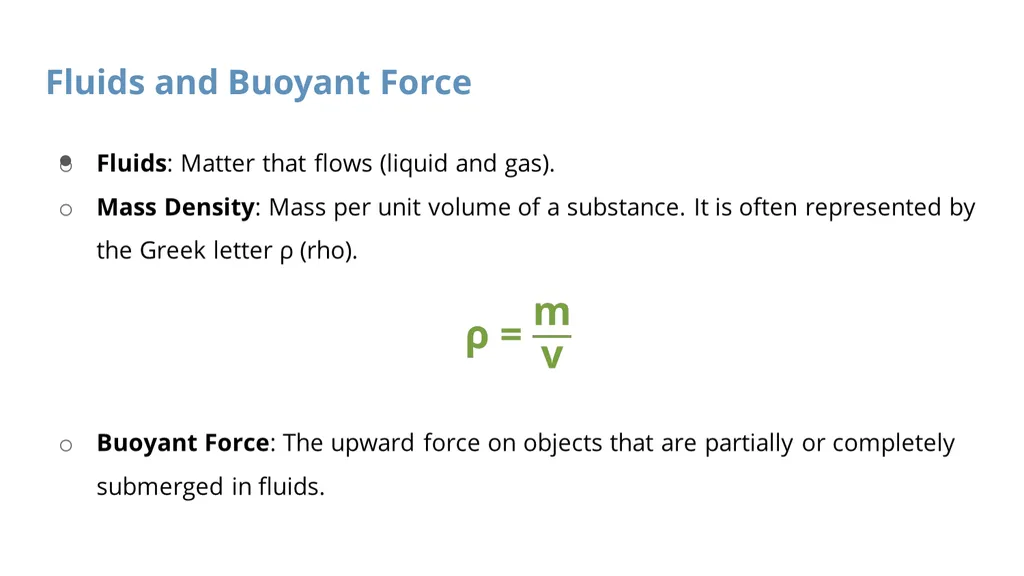
slide2. Fluids and Buoyant Force<br>
slide3. Archimedes’ Principle<br>
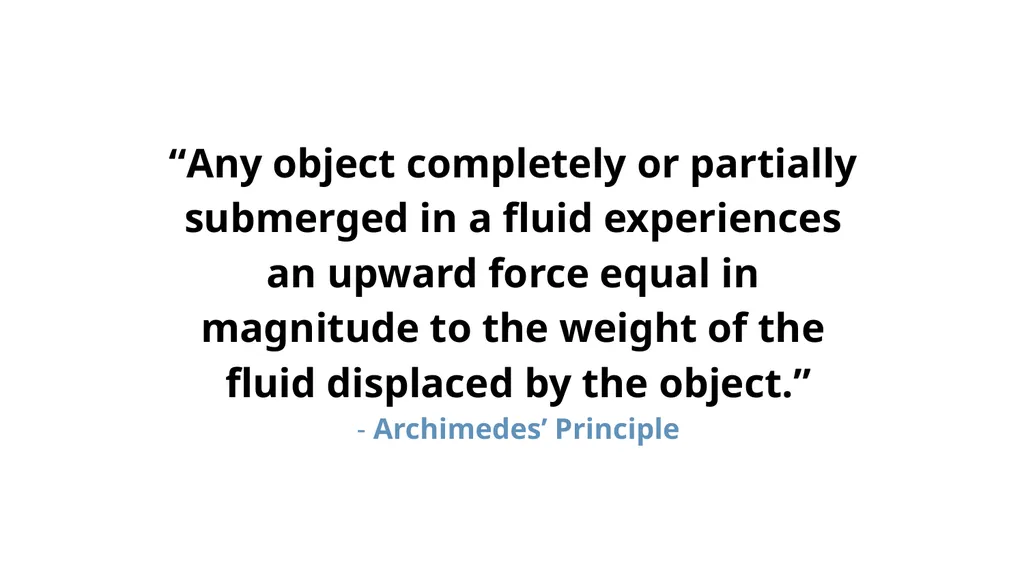
slide4. “Any object completely or partially
submerged in a fluid experiences
an upward force equal in
magnitude to the weight of the
fluid displaced by the object.”
- Archimedes’ Principle<br>
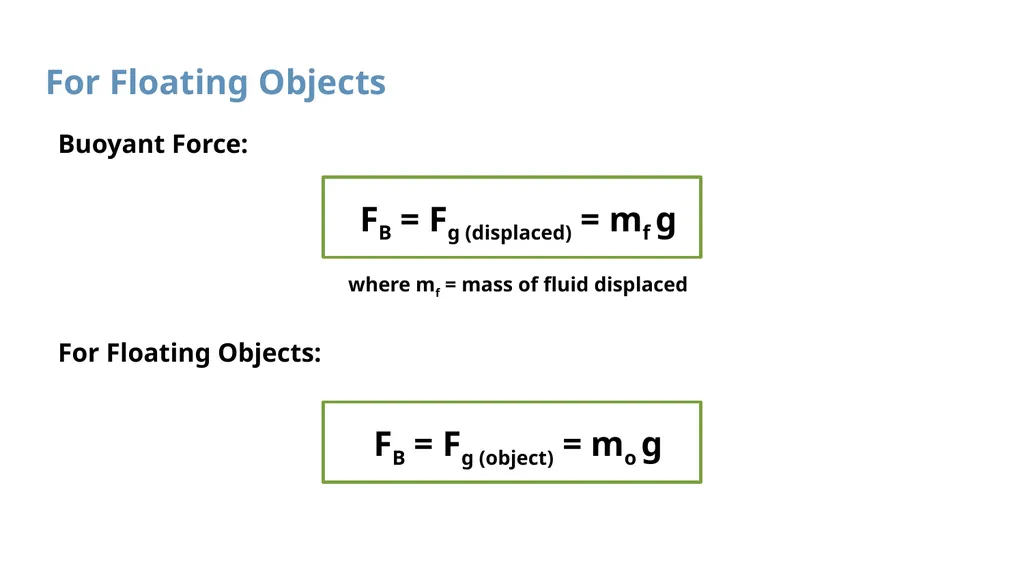
slide5. For Floating Objects Buoyant Force: For Floating Objects: FB = Fg (displaced) = mf g FB = Fg (object) = mo g where mf = mass of fluid displaced<br>
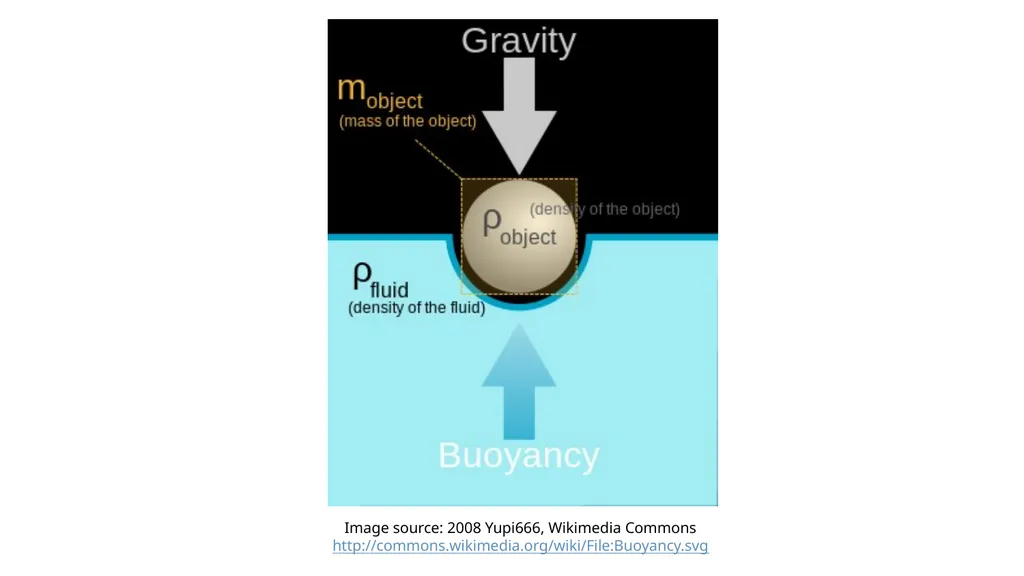
slide6. Image source: 2008 Yupi666, Wikimedia Commons http://commons.wikimedia.org/wiki/File:Buoyancy.svg<br>
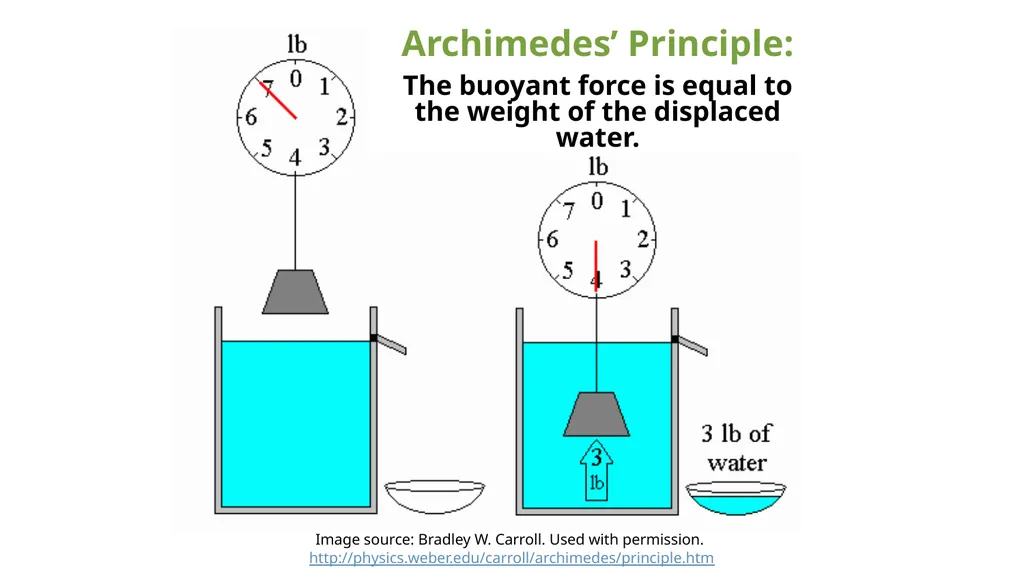
slide7. Archimedes’ Principle:
The buoyant force is equal to the weight of the displaced water. Image source: Bradley W. Carroll. Used with permission. http://physics.weber.edu/carroll/archimedes/principle.htm<br>
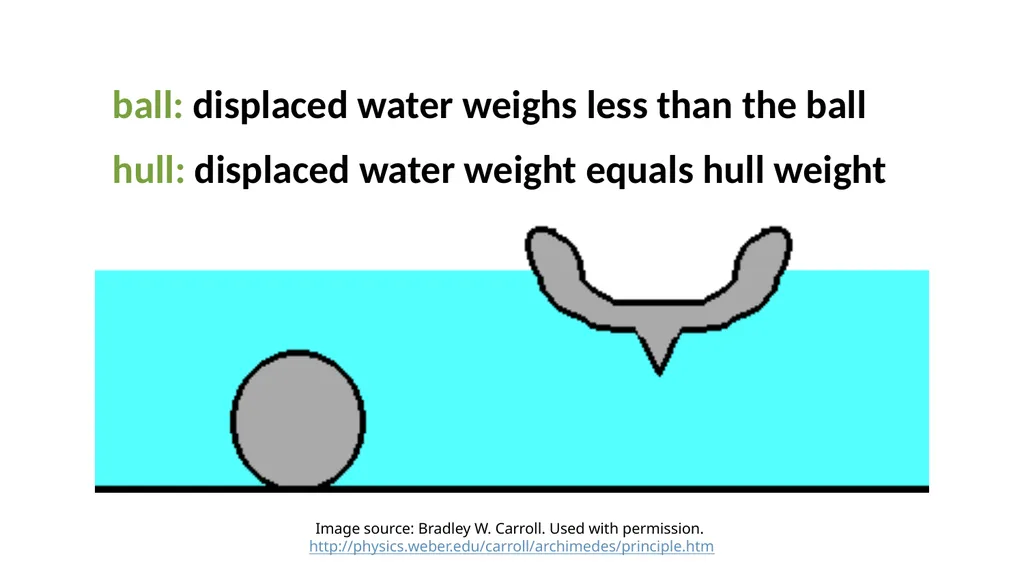
slide8. Image source: Bradley W. Carroll. Used with permission. http://physics.weber.edu/carroll/archimedes/principle.htm ball: displaced water weighs less than the ball
hull: displaced water weight equals hull weight<br>
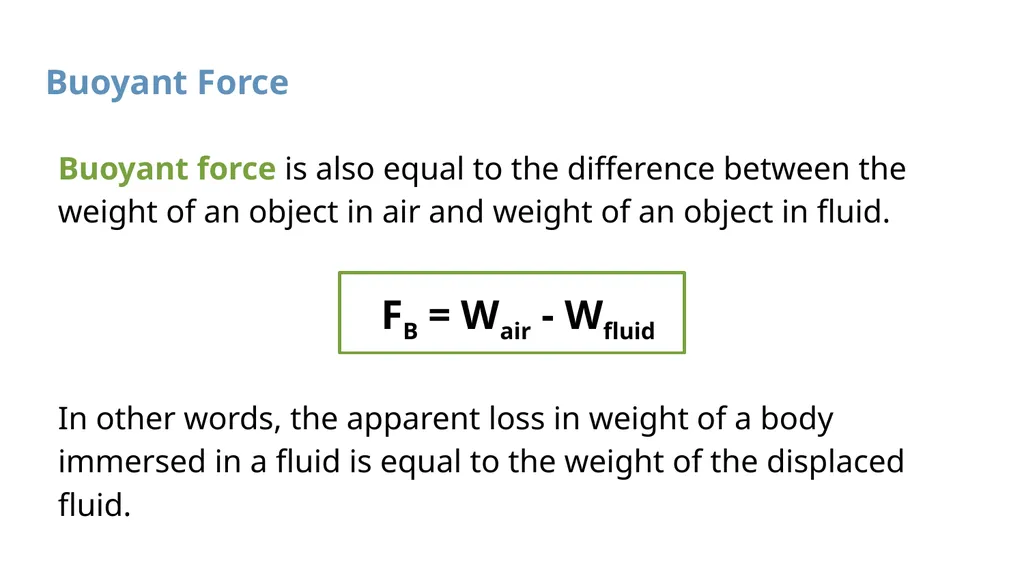
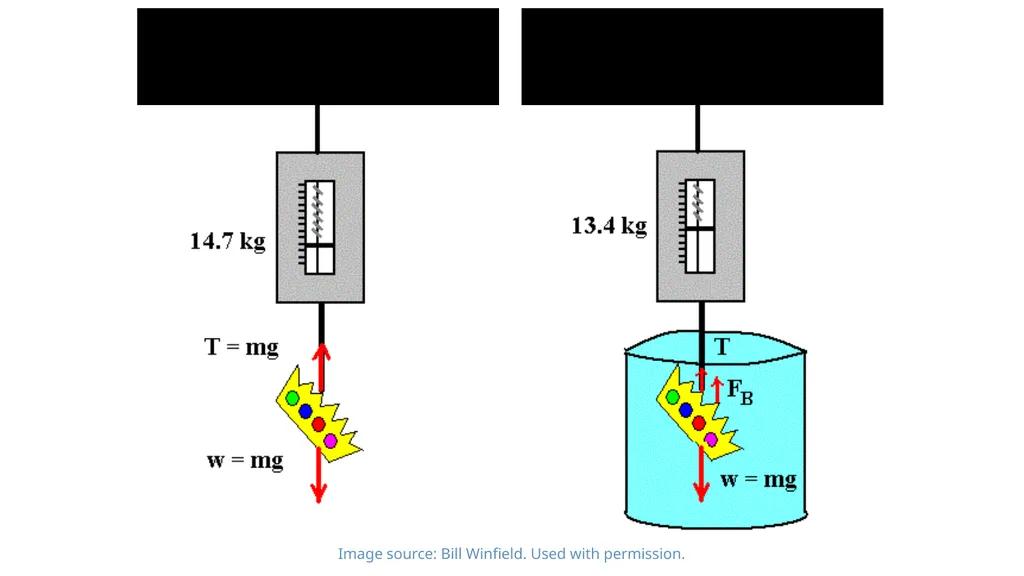
slide9. Buoyant Force Buoyant force is also equal to the difference between the weight of an object in air and weight of an object in fluid. FB = Wair - Wfluid In other words, the apparent loss in weight of a body immersed in a fluid is equal to the weight of the displaced fluid.<br>
slide10. Image source: Bill Winfield. Used with permission.<br>
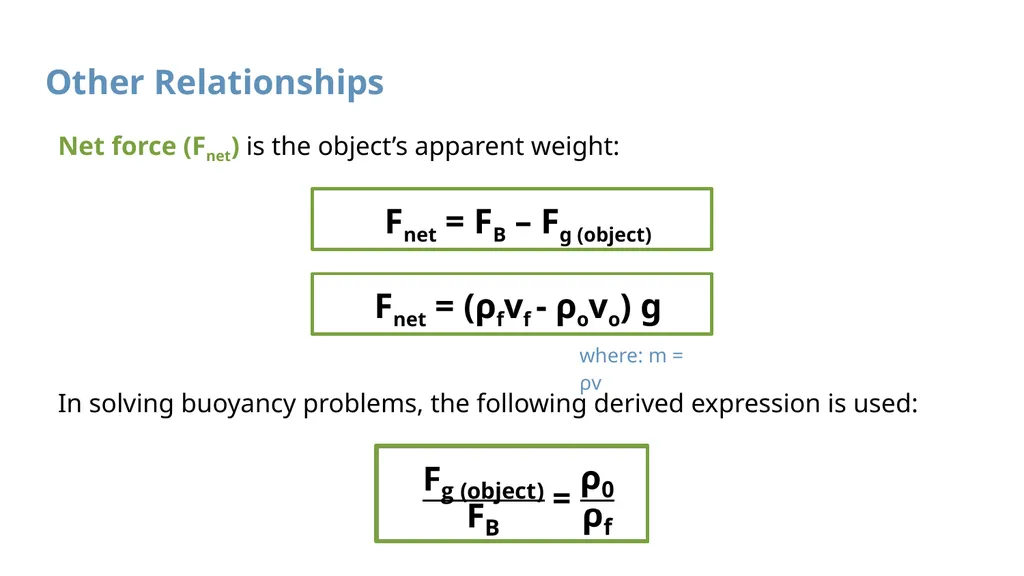
slide11. Other Relationships Net force (Fnet) is the object’s apparent weight: Fnet = FB – Fg (object) Fnet = (ρfvf - ρovo) g In solving buoyancy problems, the following derived expression is used: where: m = ρv<br>
slide12. Pascal’s Law<br>
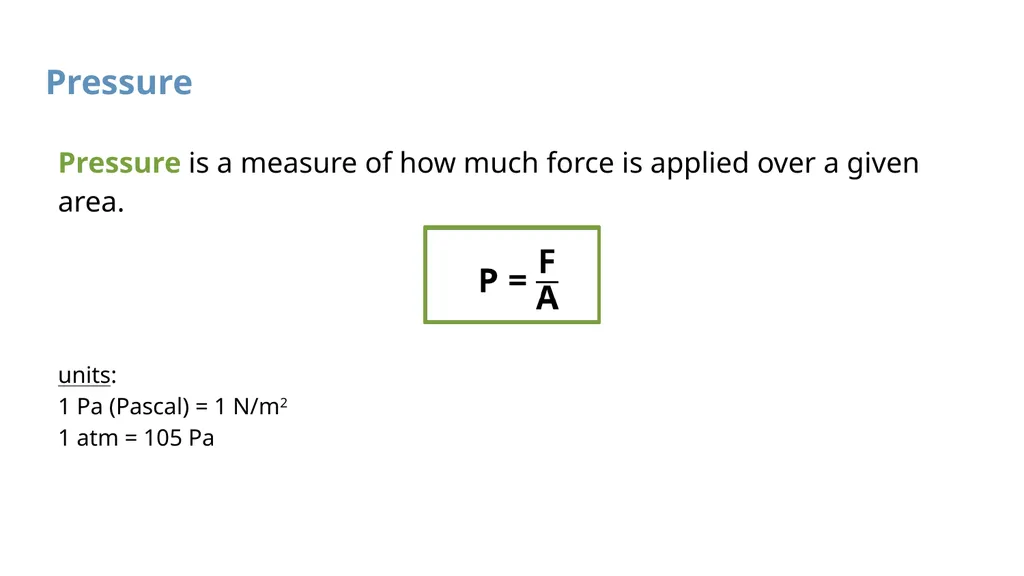
slide13. Pressure Pressure is a measure of how much force is applied over a given area. units:
1 Pa (Pascal) = 1 N/m2
1 atm = 105 Pa<br>
slide14. “Pressure applied to a fluid in a closed container is
transmitted equally to every
point of the fluid and to
the walls of the container.”
- Pascal’s Law<br>
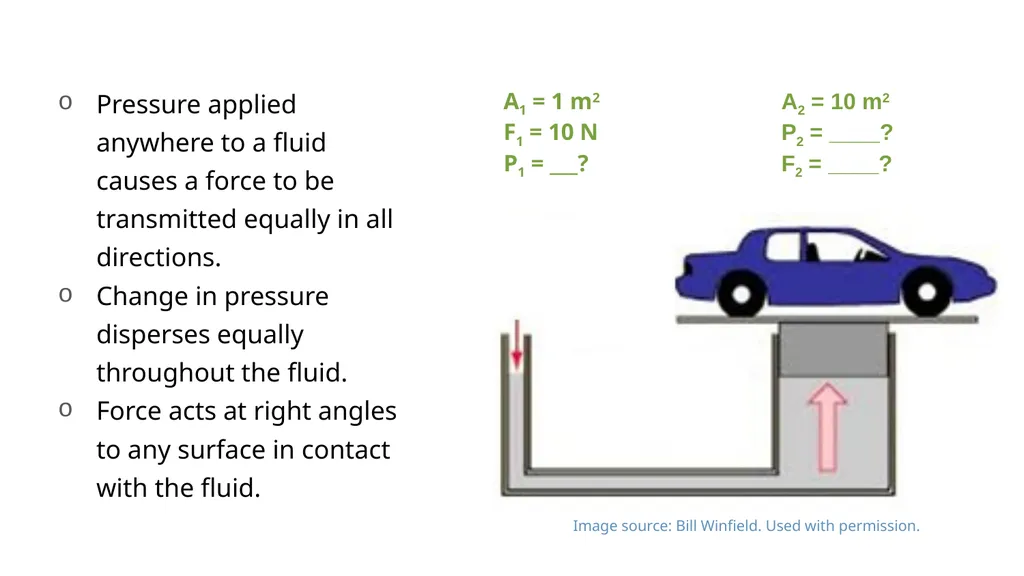
slide15. Pressure applied anywhere to a fluid causes a force to be transmitted equally in all directions.
Change in pressure disperses equally throughout the fluid.
Force acts at right angles to any surface in contact with the fluid. Image source: Bill Winfield. Used with permission. A1 = 1 m2
F1 = 10 N
P1 = ___? A2 = 10 m2
P2 = ____?
F2 = ____?<br>
slide16. Bernoulli’s Principle<br>
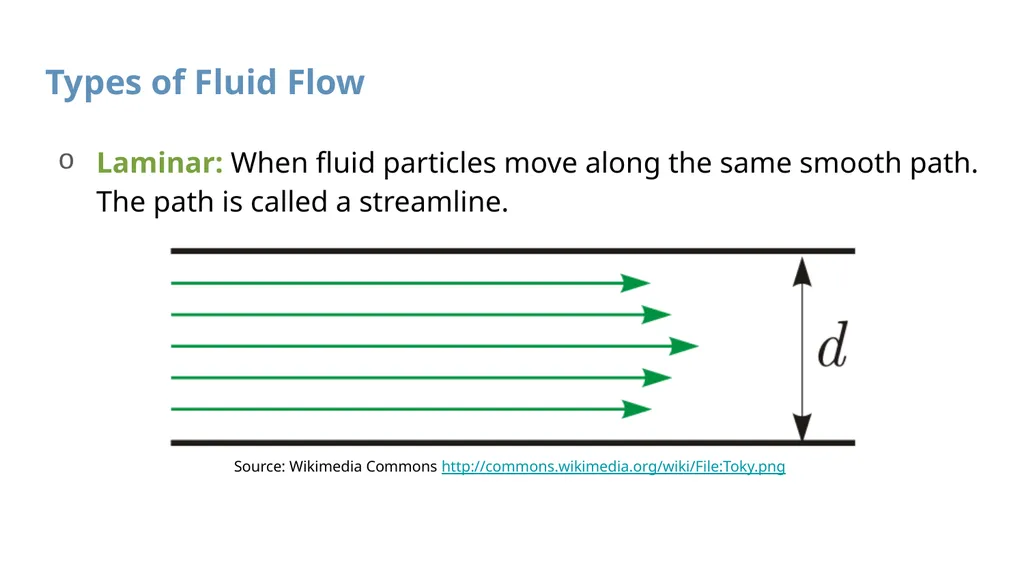
slide17. Types of Fluid Flow Laminar: When fluid particles move along the same smooth path. The path is called a streamline. Source: Wikimedia Commons http://commons.wikimedia.org/wiki/File:Toky.png<br>
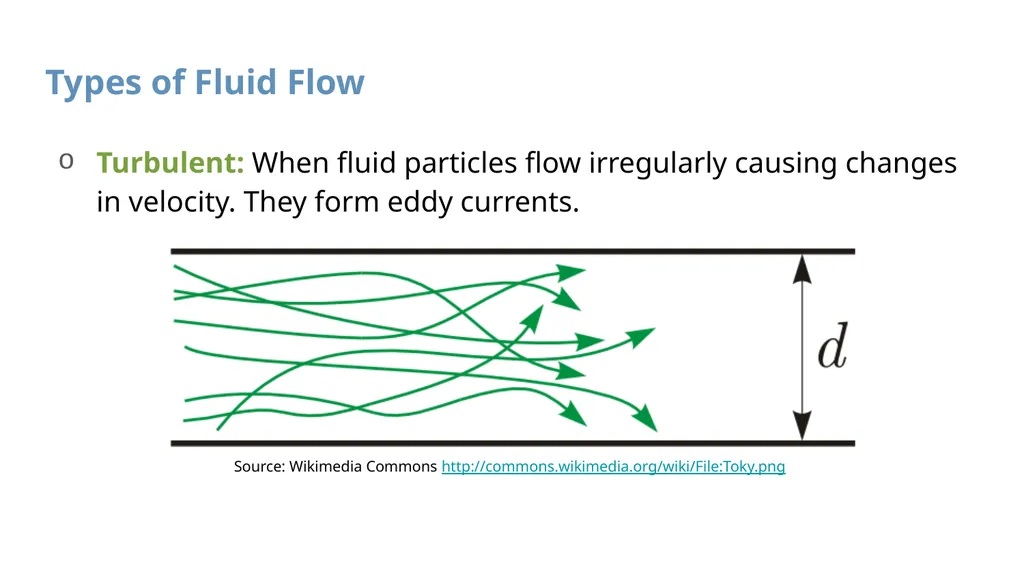
slide18. Types of Fluid Flow Turbulent: When fluid particles flow irregularly causing changes in velocity. They form eddy currents. Source: Wikimedia Commons http://commons.wikimedia.org/wiki/File:Toky.png<br>
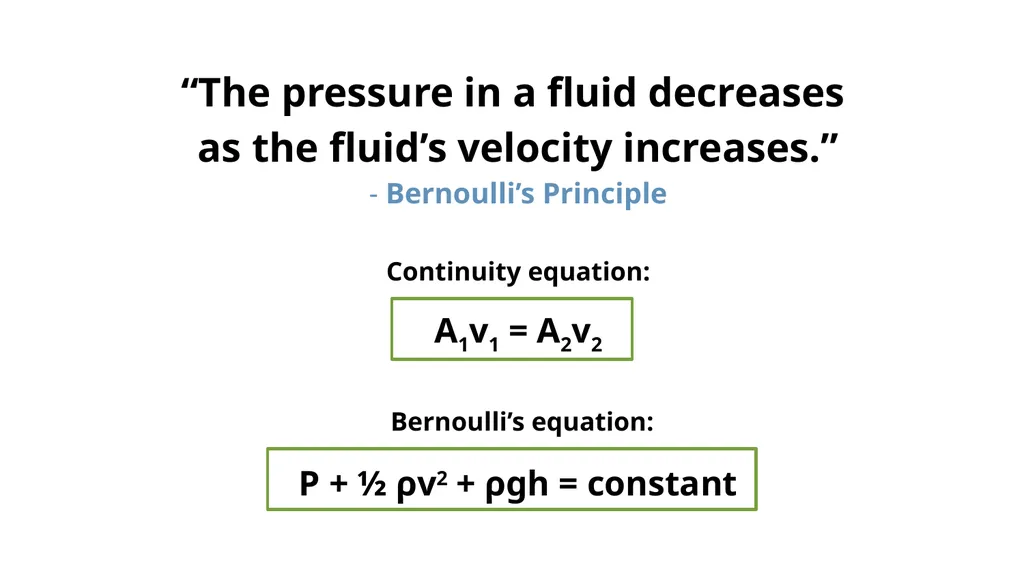
slide19. Continuity equation: A1v1 = A2v2 P + ½ ρv2 + ρgh = constant Bernoulli’s equation: “The pressure in a fluid decreases
as the fluid’s velocity increases.”
- Bernoulli’s Principle<br>
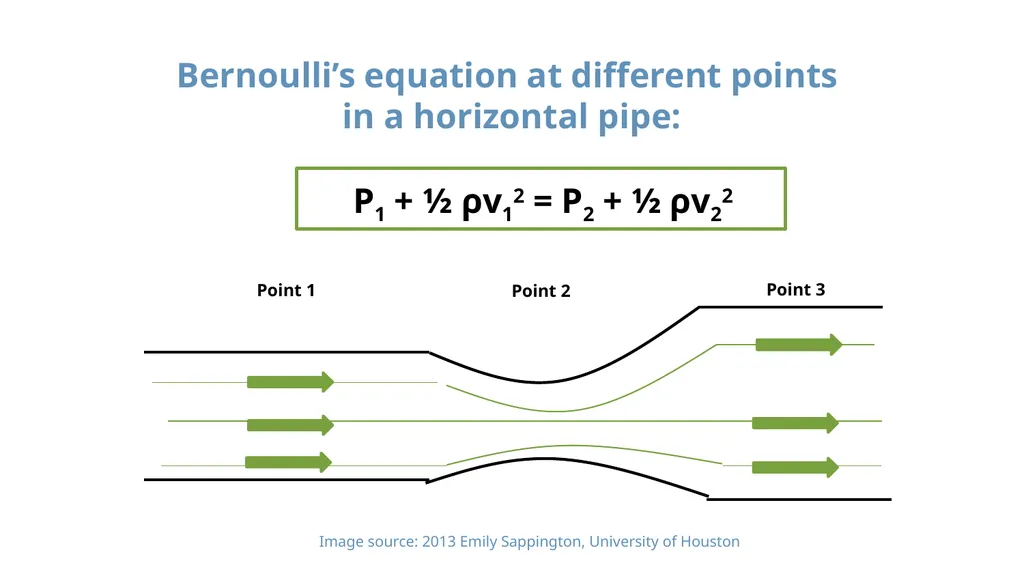
slide20. Bernoulli’s equation at different points in a horizontal pipe: Image source: 2013 Emily Sappington, University of Houston Point 1 Point 3 Point 2 P1 + ½ ρv12 = P2 + ½ ρv22<br>
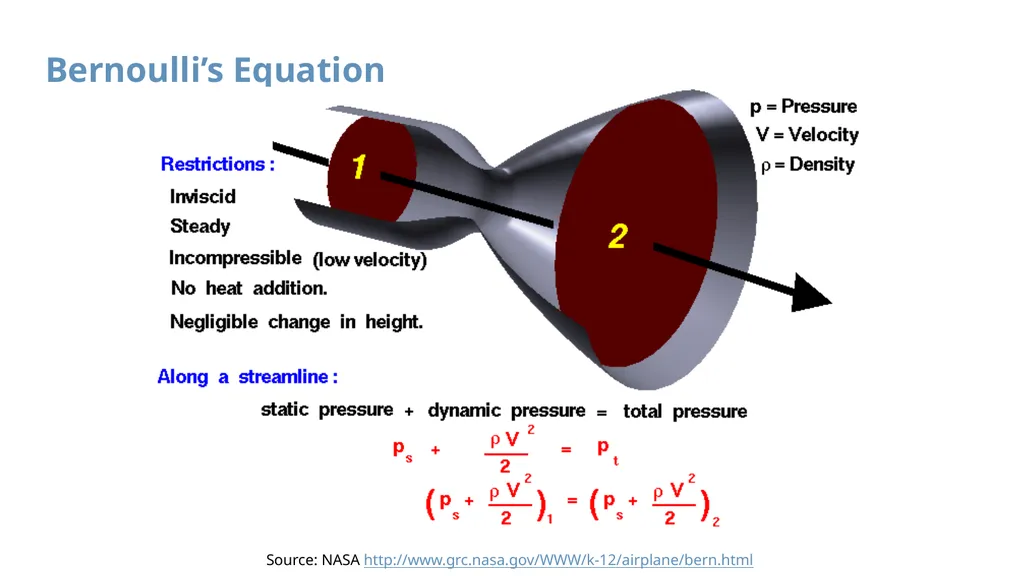
slide21. Bernoulli’s Equation Source: NASA http://www.grc.nasa.gov/WWW/k-12/airplane/bern.html<br>
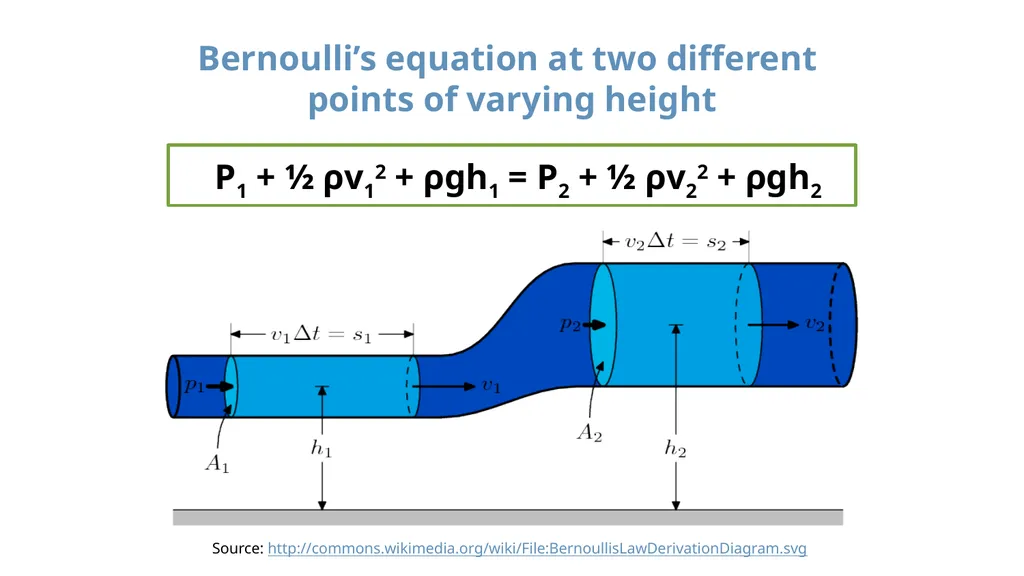
slide22. Bernoulli’s equation at two different points of varying height P1 + ½ ρv12 + ρgh1 = P2 + ½ ρv22 + ρgh2 Source: http://commons.wikimedia.org/wiki/File:BernoullisLawDerivationDiagram.svg<br>
slide2. Fluids and Buoyant Force<br>
slide3. Archimedes’ Principle<br>
slide4. “Any object completely or partially
submerged in a fluid experiences
an upward force equal in
magnitude to the weight of the
fluid displaced by the object.”
- Archimedes’ Principle<br>
slide5. For Floating Objects Buoyant Force: For Floating Objects: FB = Fg (displaced) = mf g FB = Fg (object) = mo g where mf = mass of fluid displaced<br>
slide6. Image source: 2008 Yupi666, Wikimedia Commons http://commons.wikimedia.org/wiki/File:Buoyancy.svg<br>
slide7. Archimedes’ Principle:
The buoyant force is equal to the weight of the displaced water. Image source: Bradley W. Carroll. Used with permission. http://physics.weber.edu/carroll/archimedes/principle.htm<br>
slide8. Image source: Bradley W. Carroll. Used with permission. http://physics.weber.edu/carroll/archimedes/principle.htm ball: displaced water weighs less than the ball
hull: displaced water weight equals hull weight<br>
slide9. Buoyant Force Buoyant force is also equal to the difference between the weight of an object in air and weight of an object in fluid. FB = Wair - Wfluid In other words, the apparent loss in weight of a body immersed in a fluid is equal to the weight of the displaced fluid.<br>
slide10. Image source: Bill Winfield. Used with permission.<br>
slide11. Other Relationships Net force (Fnet) is the object’s apparent weight: Fnet = FB – Fg (object) Fnet = (ρfvf - ρovo) g In solving buoyancy problems, the following derived expression is used: where: m = ρv<br>
slide12. Pascal’s Law<br>
slide13. Pressure Pressure is a measure of how much force is applied over a given area. units:
1 Pa (Pascal) = 1 N/m2
1 atm = 105 Pa<br>
slide14. “Pressure applied to a fluid in a closed container is
transmitted equally to every
point of the fluid and to
the walls of the container.”
- Pascal’s Law<br>
slide15. Pressure applied anywhere to a fluid causes a force to be transmitted equally in all directions.
Change in pressure disperses equally throughout the fluid.
Force acts at right angles to any surface in contact with the fluid. Image source: Bill Winfield. Used with permission. A1 = 1 m2
F1 = 10 N
P1 = ___? A2 = 10 m2
P2 = ____?
F2 = ____?<br>
slide16. Bernoulli’s Principle<br>
slide17. Types of Fluid Flow Laminar: When fluid particles move along the same smooth path. The path is called a streamline. Source: Wikimedia Commons http://commons.wikimedia.org/wiki/File:Toky.png<br>
slide18. Types of Fluid Flow Turbulent: When fluid particles flow irregularly causing changes in velocity. They form eddy currents. Source: Wikimedia Commons http://commons.wikimedia.org/wiki/File:Toky.png<br>
slide19. Continuity equation: A1v1 = A2v2 P + ½ ρv2 + ρgh = constant Bernoulli’s equation: “The pressure in a fluid decreases
as the fluid’s velocity increases.”
- Bernoulli’s Principle<br>
slide20. Bernoulli’s equation at different points in a horizontal pipe: Image source: 2013 Emily Sappington, University of Houston Point 1 Point 3 Point 2 P1 + ½ ρv12 = P2 + ½ ρv22<br>
slide21. Bernoulli’s Equation Source: NASA http://www.grc.nasa.gov/WWW/k-12/airplane/bern.html<br>
slide22. Bernoulli’s equation at two different points of varying height P1 + ½ ρv12 + ρgh1 = P2 + ½ ρv22 + ρgh2 Source: http://commons.wikimedia.org/wiki/File:BernoullisLawDerivationDiagram.svg<br>