04
Types of menu All menus, no matter how simple or complex, are based on the two basic menu types:
table d’hôte
à la carte
Some menus offer combinations of these two classes<br>
05
Other menu terms Carte du jour (literally card of the day)
Menu of the day
Prix fixe (fixed price)
Tasting menu (‘menu degustation’)
Tasting menus can also be offered with a flight (selection) of wines
For all menus the price of the meal might also include wine or other drinks<br>
06
Classic menu sequence Hors-d’oeuvres
Soups (potages)
Egg dishes (oeufs)
Pasta and rice (farineux)
Fish (poisson)
Entrée
Sorbet
Relevé (roasts or other larger joints) Roast (rôti) (roasted game or poultry)
Vegetables (légumes)
Salad (salade)
Cold buffet (buffet froid)
Cheese (fromage)
Sweets (entremets)
Savoury (savoureux)
Fresh Fruit (dessert)<br>
07
Most simple menu Might comprise:
Starters
Main courses
Sides
Afters (cheese/dessert/sweet)
Beverages<br>
08
Modern menu structures Classic menu sequence derived from traditional European cuisine and service influences
Menu structure and menu sequences change considerably within the various world cuisines
Menu terms are culturally bound and vary with location<br>
09
Menu construction In addition to traditional meal types there are demands for:
Special party or function menus
National or specialty menus
Hospital menus
Menus for people at work
Menus for children
Floor/room service menus
Lounge service menus
Airline tray service menus
Rail service menus<br>
10
Menu policy Developed to:
Establish the needs of the customer
Predict what the customer is likely to buy
Determine how much the customer will spend
Ensure efficient purchasing
Effectively control the operation
Ensure a means of communication with customers<br>
11
Key influences on menus Gastro-history and gastro-geography
Relationship between health and eating
Dietary requirements
Cultural and religious influences
Vegetarianism
Prominent chefs and media
Trends, fads and fashions
Ethical influences<br>
12
Local gastronomy a result of: Gastro-geography - determines how foods and beverages, cooking methods, customs and eating habits are, and have been, influenced by climate, soil, crops, history, tradition, psychology, commerce and the peoples
Gastro-history - determines the influences of the places surrounding a location, and also those beyond, with which the peoples have been, and are, involved<br>
13
Health and eating Relationship between health and eating is about having a healthy diet
Individual foods or drinks are not healthier or less healthy
Customers want:
Availability of choices
More specific information on methods of cooking used<br>
14
Medical dietary requirements Includes prevention of allergic reactions
Customers need to know about the ingredients
Certain things may cause illness or be fatal
Server must be:
Accurate
Never guess
If in doubt, seek further information<br>
15
Other dietary requirements Cultural and religious including:
Hindus; Jews; Muslims; Sikhs; Rastafarians; Roman Catholics
Vegetarianism including:
semi; lacto-ovo; lacto; vegans; fruitarians<br>
16
Prominent chefs and media Great influence by prominent chefs
Also from:
Media generally
Social media
Chef, cookery and consumer programmes<br>
17
Trends, fads and fashions Trends: developments in technology, cuisine and restaurant styles that lead to long term adoption
Fads and fashions: things that appear, are widely adopted, and just as quickly disappear<br>
18
Ethical influences Sustainability of food supply
Fair trade
Acceptability of genetically modified or irradiated foods
Reducing food packaging and food waste
Reducing the effects that food production has on the environment generally<br>
19
Essential knowledge Server must know what they are serving
The service requirements
How to advise the customer on:
the content of dishes
the methods used in making the dishes
the accompaniments offered<br>
20
Developing menus Essential considerations:
Location and competition
Customer needs and spending power
Number of items and price range of menus
Potential throughput
Space and equipment required
Amount, availability and capability of labour
Supplies and storage
Accuracy of costing
Nutritional information<br>
21
Menu construction Daily menus
Pre-planned / pre-designed
Cyclical menus<br>
22
Menu content and design Can be presentation in a variety of formats
Need to ensure the look and feel of the menu matches the overall design of the restaurant
And must include:
Clear and accurate descriptions
Clear indication of pricing
Dietary information
Items or groups of items with names customers recognise and understand<br>
23
Menu layout Tactics include:
Highlighting customer’s favourites to draw attention to them
Placing more profitable dishes in first and last position on the menu
Keeping prices in the body of the description paragraph
Using illustrations and photos
Responding to eye gaze motion theory
Keeping current by evaluating every six months<br>
24
Menu copy Approaches to menu copy include:
Ensuring sufficient description to aid understanding
Ensure right emphasis is given
Culinary terms properly used
Names are those people recognise and understand
Emphasis is maintained by good use of print size and style<br>
25
Kitchen management Legacy of Escoffier
Partie system (product based approach)
Standard cuisine terms
Vast development in cooking techniques and equipment
Operations now rationalised and redesigned for efficiency
Alternative process approach (based on production techniques and processes)<br>
26
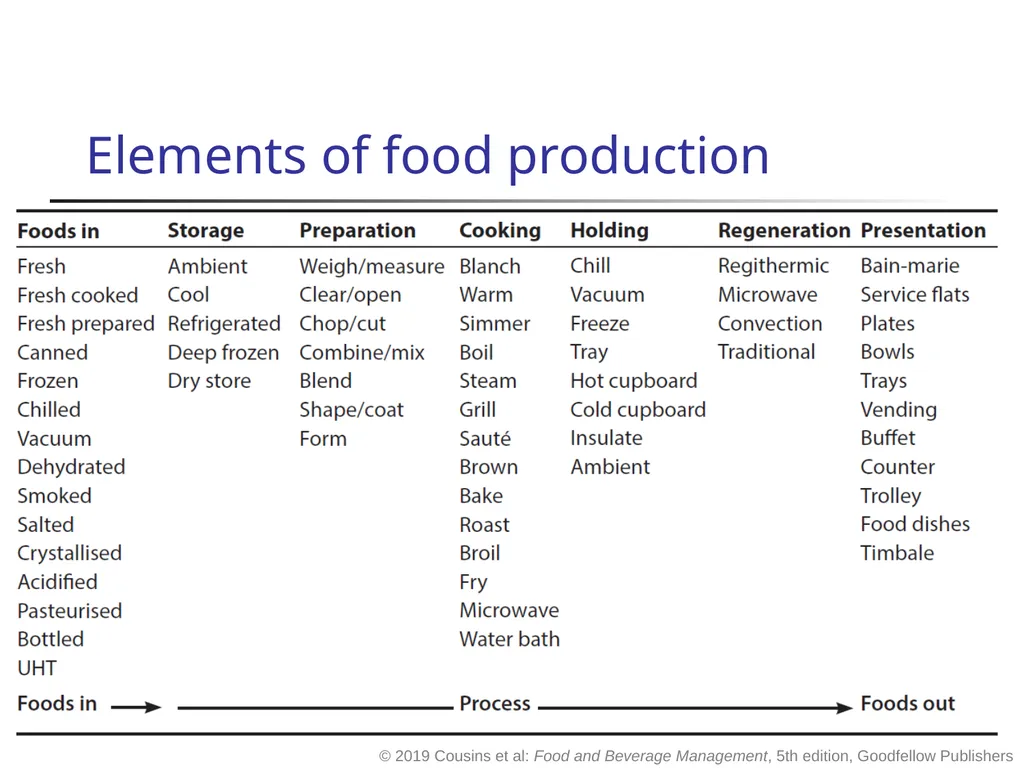
Elements of food production<br>
27
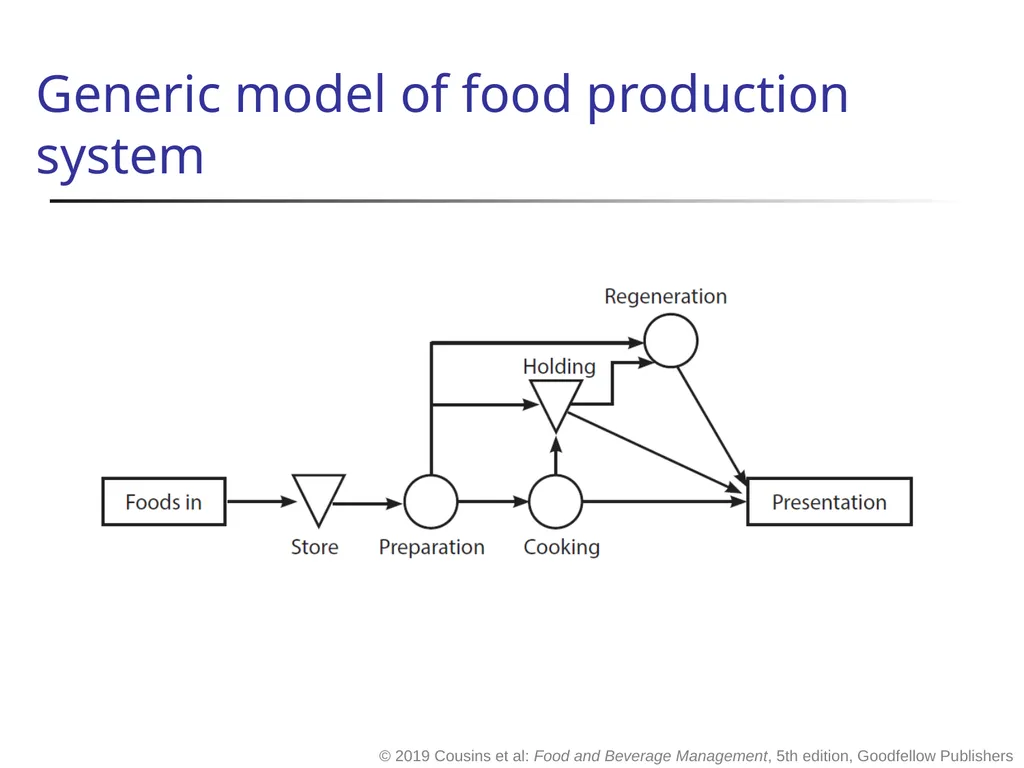
Generic model of food production system<br>
28
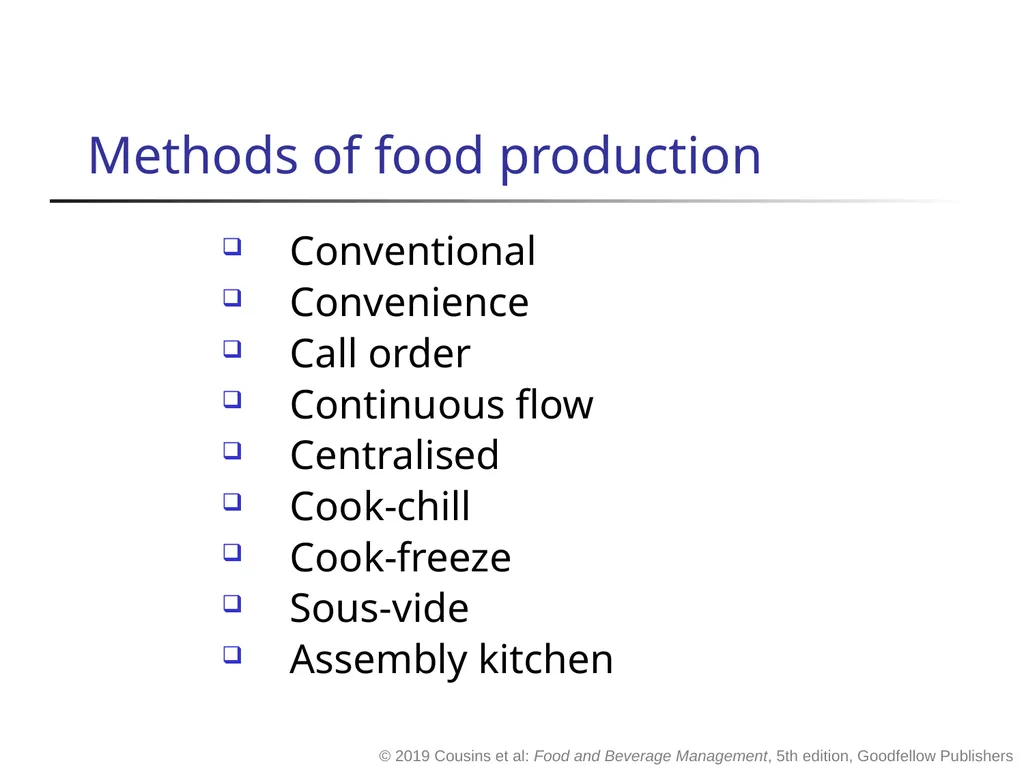
Methods of food production Conventional
Convenience
Call order
Continuous flow
Centralised
Cook-chill
Cook-freeze
Sous-vide
Assembly kitchen<br>
29
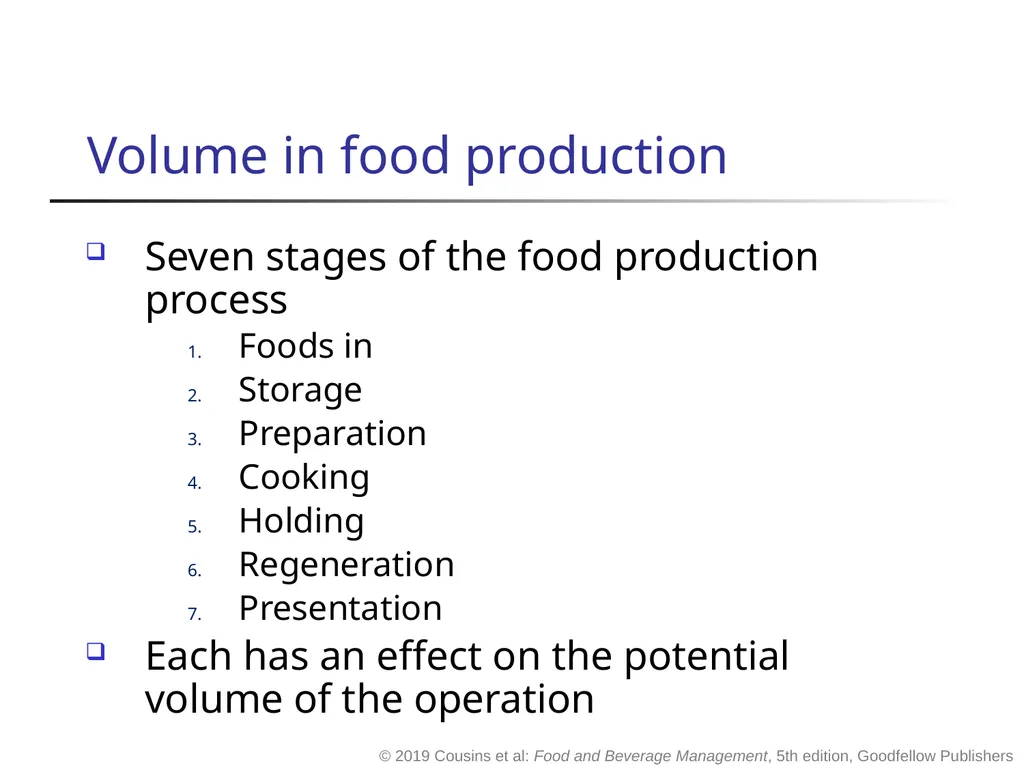
Volume in food production Seven stages of the food production process
Foods in
Storage
Preparation
Cooking
Holding
Regeneration
Presentation
Each has an effect on the potential volume of the operation<br>
30
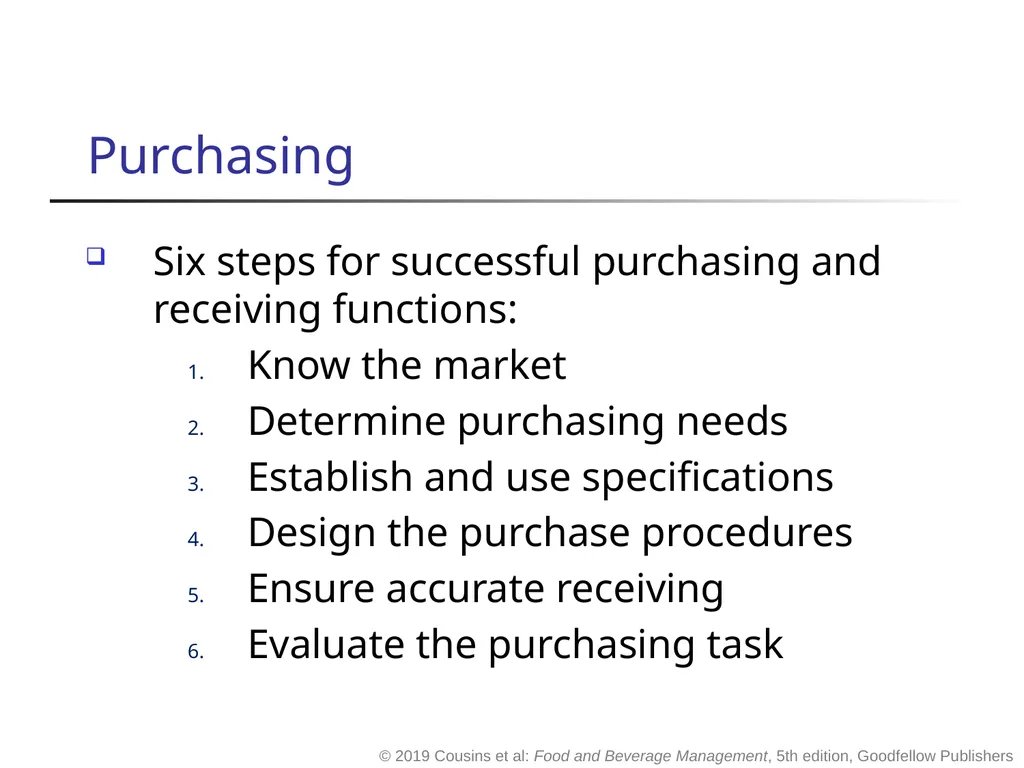
Purchasing Six steps for successful purchasing and receiving functions:
Know the market
Determine purchasing needs
Establish and use specifications
Design the purchase procedures
Ensure accurate receiving
Evaluate the purchasing task<br>
31
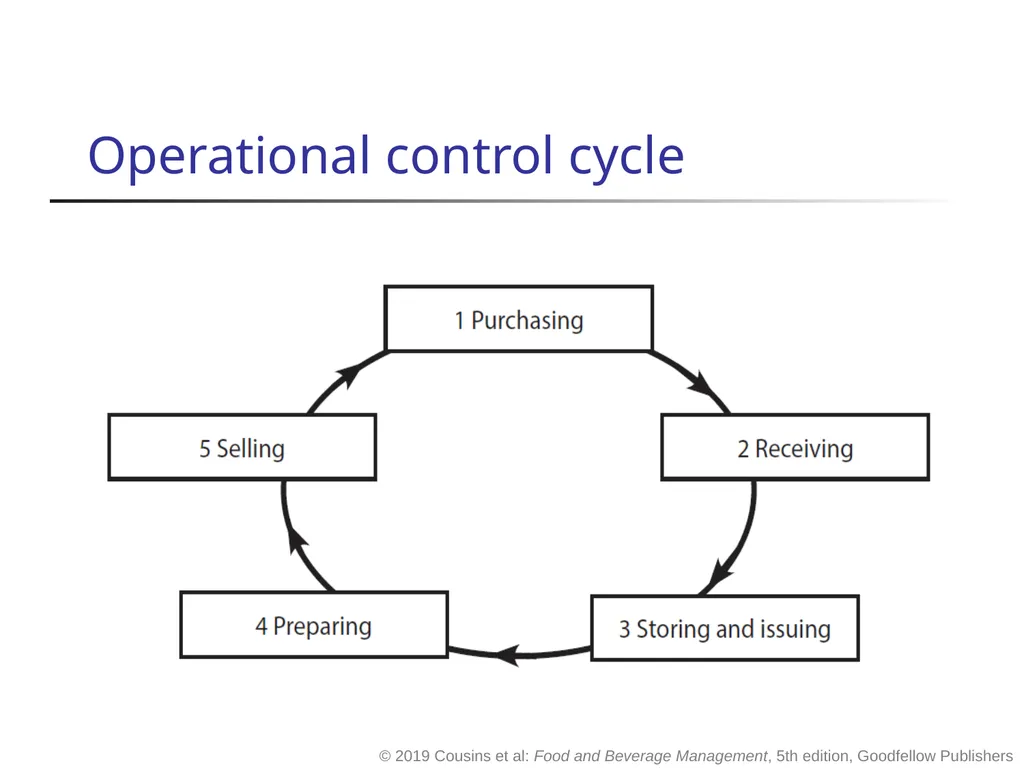
Operational control cycle<br>
32
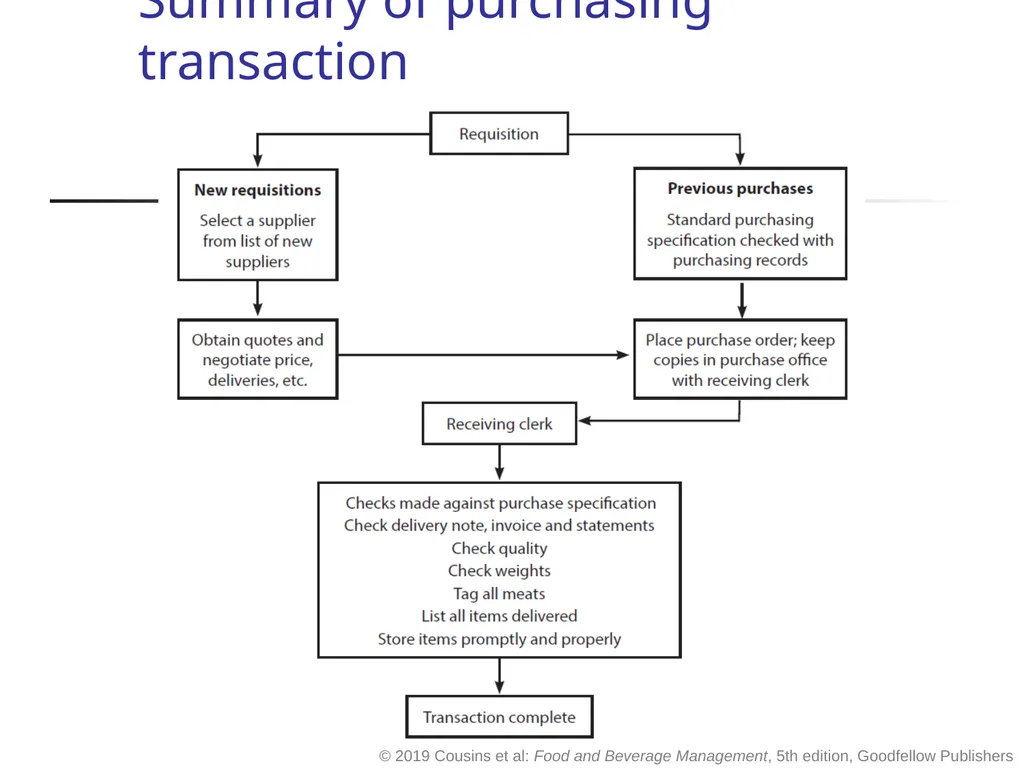
Summary of purchasing transaction<br>
33
Control and profitability Summary of the key factors:
Efficient preparation of raw materials
Correct cooking of food to minimise portion loss
Correct portion control
Minimising wastage and reducing theft
Accurate ordering and checking procedures
Reference marks to standardised recipes and yield factors
Sufficient research into suppliers
Accurate forecasting and sound menu planning<br>