For each single bond count one sigma bond, for each double bond count one sigma bond and one pi bond, and finally for each triple bond count one sigma bond and two pi bonds. 8.4 Number of bonds 8.3 Example Name the following compounds and
"For each single bond count one sigma bond, for" is the property of its rightful owner. Permission is granted to
download and print the materials on this website for personal, non-commercial use only, and to display it
on your personal computer provided you do not modify the materials and that you retain all copyright
notices contained in the materials. By downloading content from our website, you accept the terms of this
agreement.
Presentation Transcript
01
For each single bond count one sigma bond, for each double bond count one sigma bond and one pi bond, and finally for each triple bond count one sigma bond and two pi bonds. 8.4 Number of bonds<br>
02
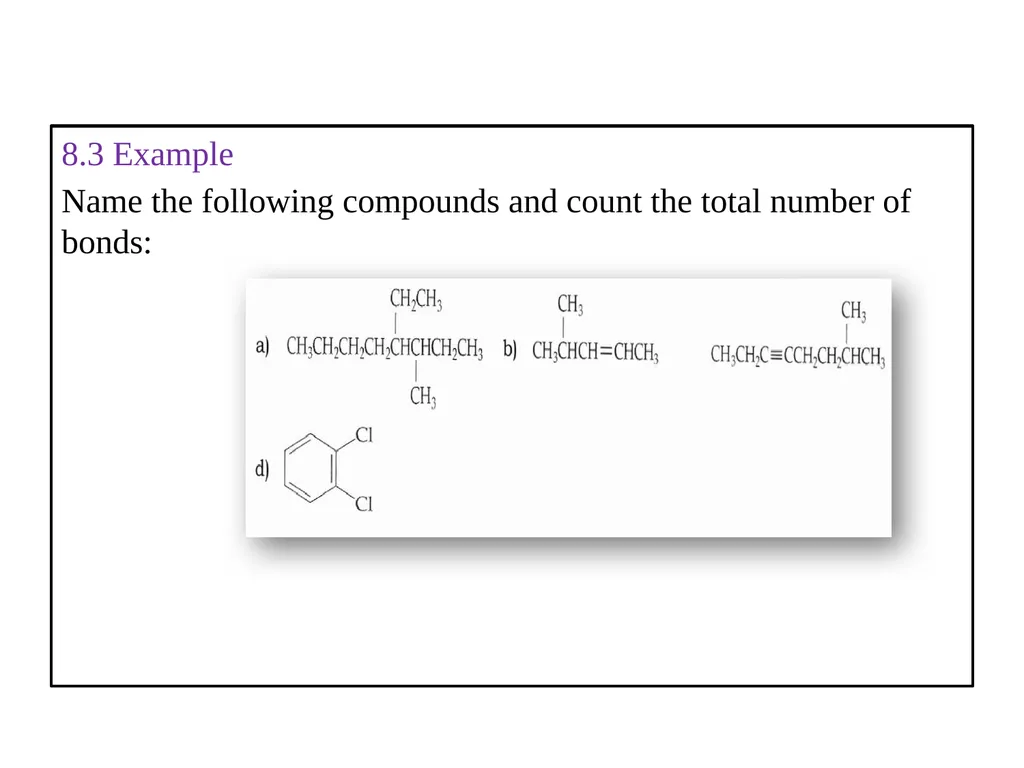
8.3 Example
Name the following compounds and count the total number of bonds:<br>
03
Answer 8.3:
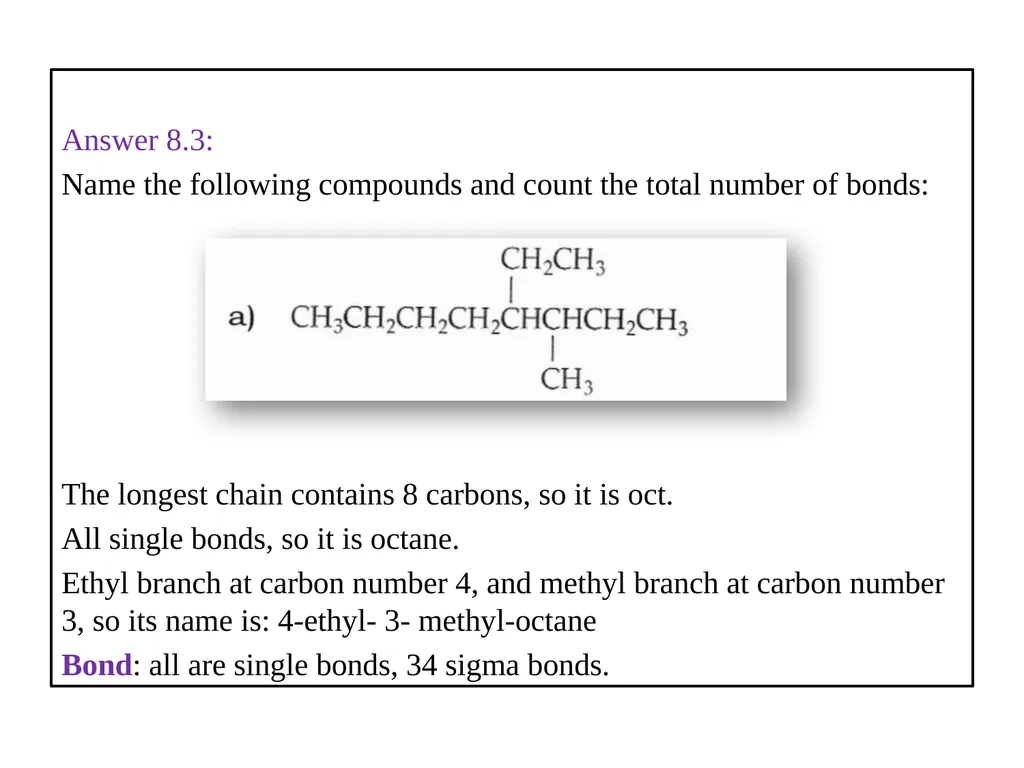
Name the following compounds and count the total number of bonds:
The longest chain contains 8 carbons, so it is oct.
All single bonds, so it is octane.
Ethyl branch at carbon number 4, and methyl branch at carbon number 3, so its name is: 4-ethyl- 3- methyl-octane
Bond: all are single bonds, 34 sigma bonds.<br>
04
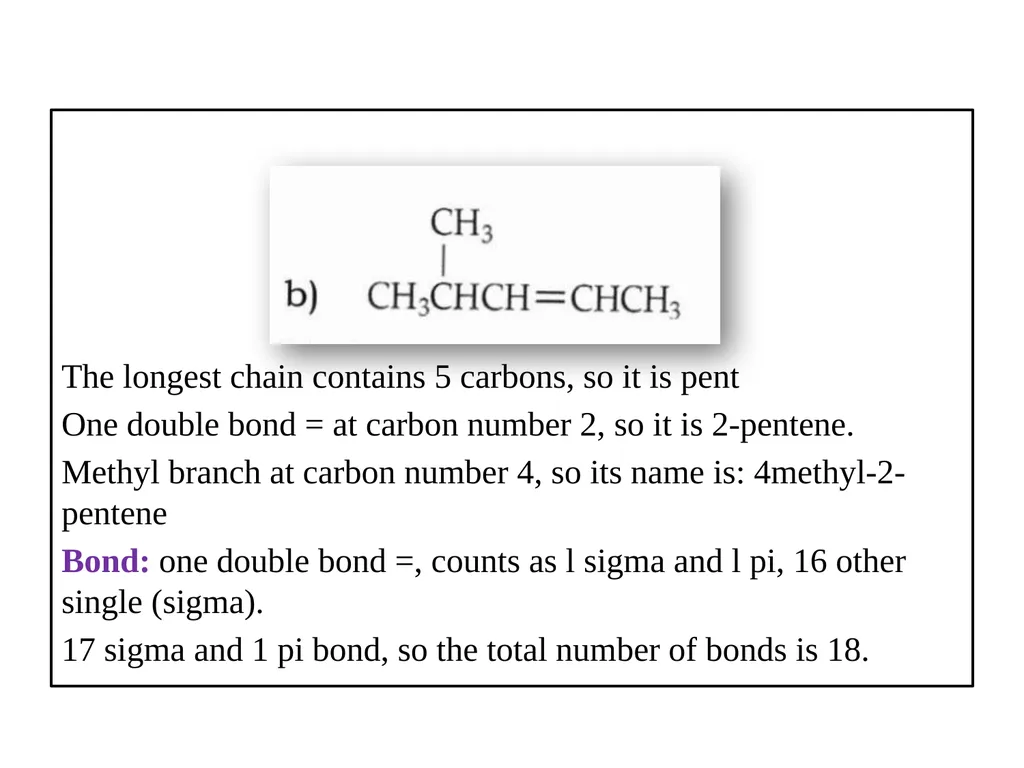
The longest chain contains 5 carbons, so it is pent
One double bond = at carbon number 2, so it is 2-pentene.
Methyl branch at carbon number 4, so its name is: 4methyl-2-pentene
Bond: one double bond =, counts as l sigma and l pi, 16 other single (sigma).
17 sigma and 1 pi bond, so the total number of bonds is 18.<br>
05
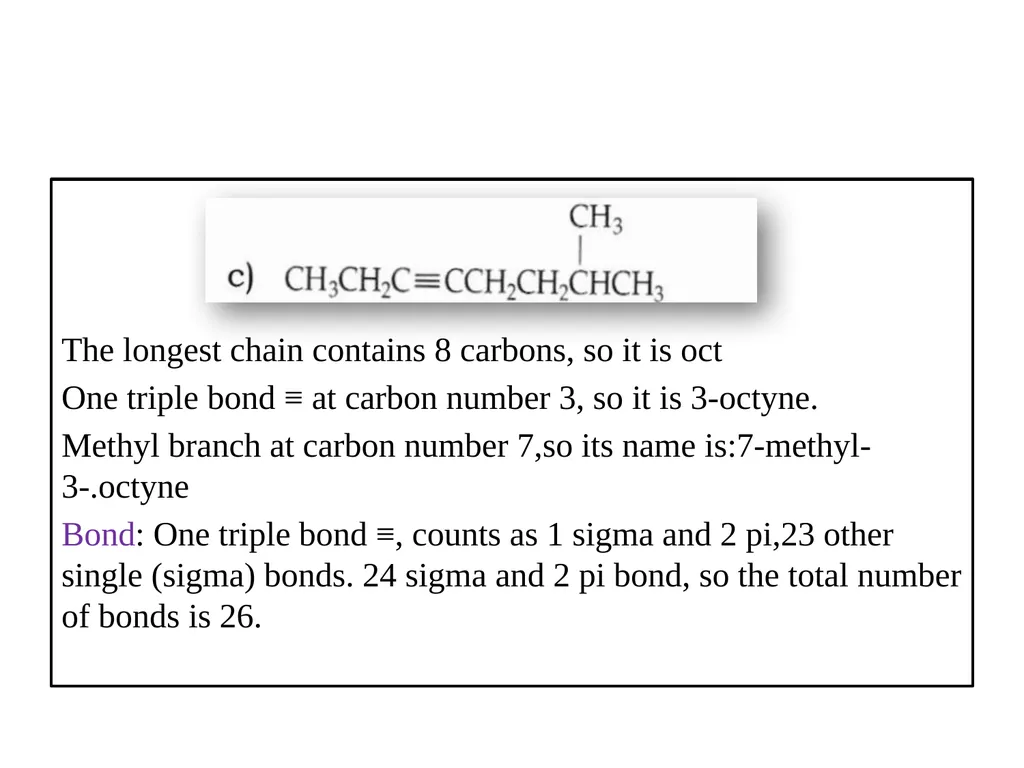
The longest chain contains 8 carbons, so it is oct
One triple bond ≡ at carbon number 3, so it is 3-octyne.
Methyl branch at carbon number 7,so its name is:7-methyl-3-.octyne
Bond: One triple bond ≡, counts as 1 sigma and 2 pi,23 other single (sigma) bonds. 24 sigma and 2 pi bond, so the total number of bonds is 26.<br>
06
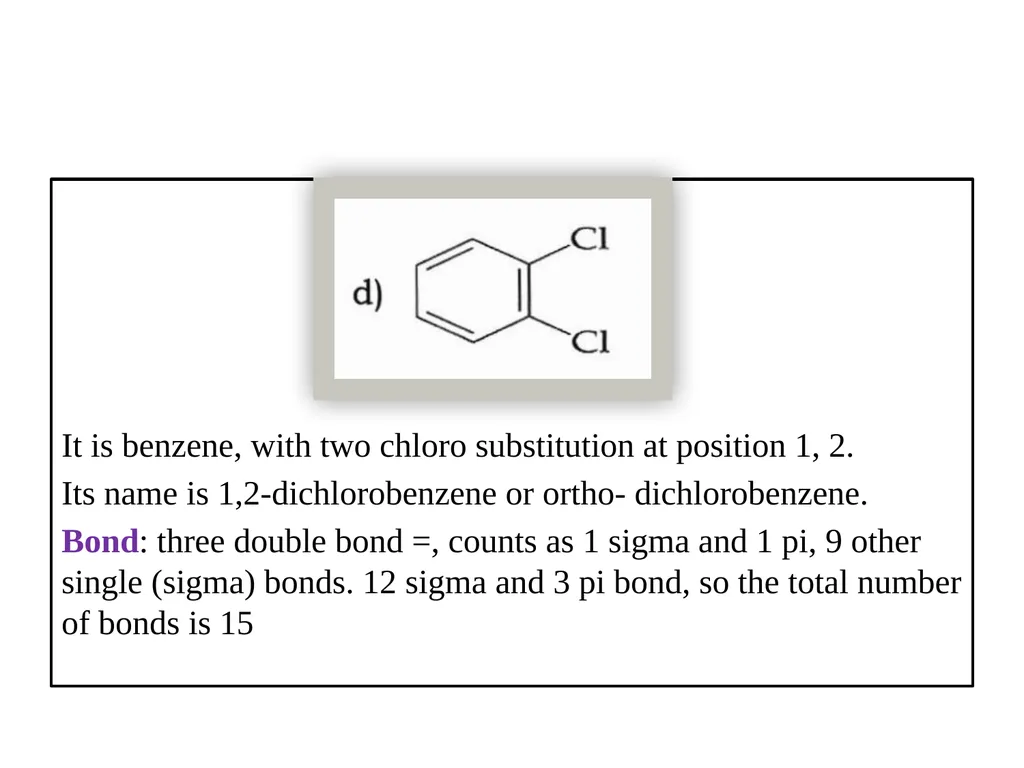
It is benzene, with two chloro substitution at position 1, 2.
Its name is 1,2-dichlorobenzene or ortho- dichlorobenzene.
Bond: three double bond =, counts as 1 sigma and 1 pi, 9 other single (sigma) bonds. 12 sigma and 3 pi bond, so the total number of bonds is 15<br>
07
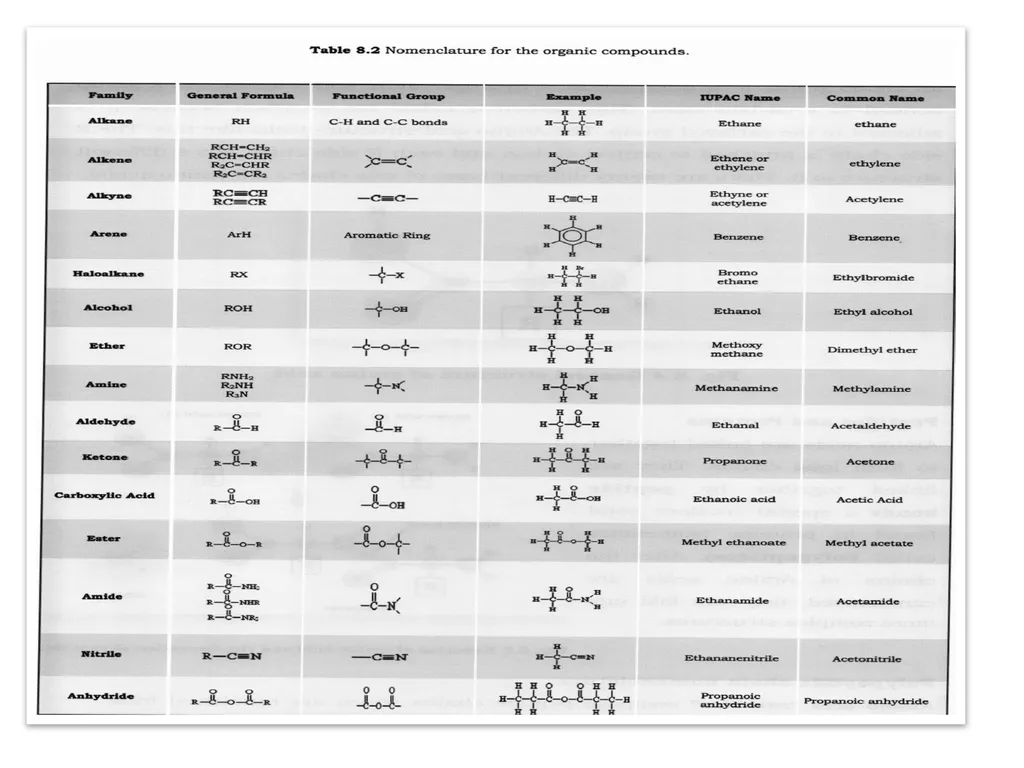
organic chemistry contains many compounds and table 8.2 explains the nomenclature and examples for most of these organic compounds. 8.5 Organic chemistry nomenclature<br>
08
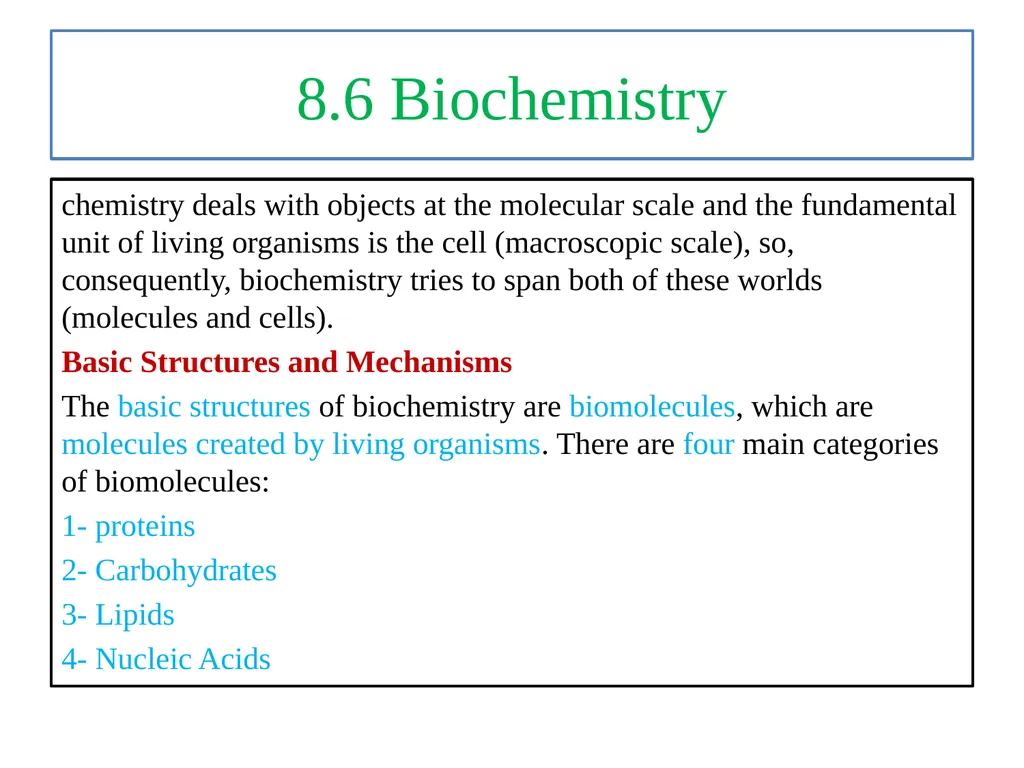
chemistry deals with objects at the molecular scale and the fundamental unit of living organisms is the cell (macroscopic scale), so, consequently, biochemistry tries to span both of these worlds (molecules and cells).
Basic Structures and Mechanisms
The basic structures of biochemistry are biomolecules, which are molecules created by living organisms. There are four main categories of biomolecules:
1- proteins
2- Carbohydrates
3- Lipids
4- Nucleic Acids 8.6 Biochemistry<br>