Foreign Investment In INDIA Foreign Direct Investment (FDI) What is FDI Why we need FDI Process of the Inflow of FDI Benefits Types Advantages and disadvantages FII Diff between FII and FDI Modes of FDI 1) By Direction Inward Outward 2)
"Foreign Investment In INDIA Foreign Direct" is the property of its rightful owner. Permission is granted to
download and print the materials on this website for personal, non-commercial use only, and to display it
on your personal computer provided you do not modify the materials and that you retain all copyright
notices contained in the materials. By downloading content from our website, you accept the terms of this
agreement.
Presentation Transcript
01
Foreign Investment In INDIA<br>
02
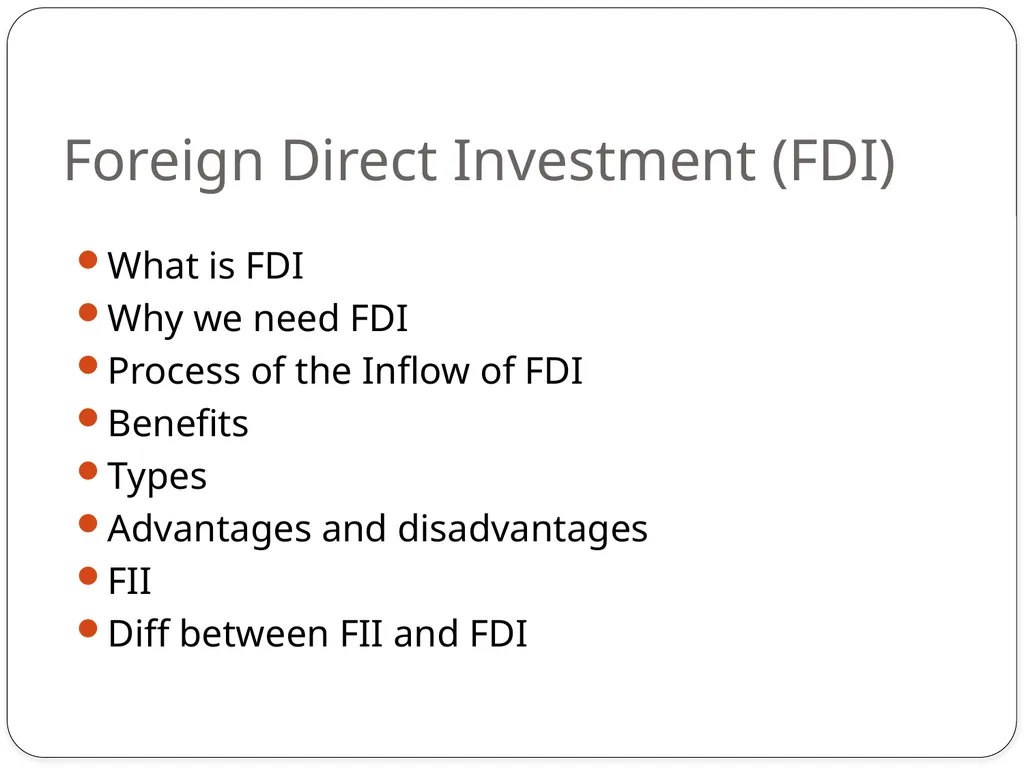
Foreign Direct Investment (FDI) What is FDI
Why we need FDI
Process of the Inflow of FDI
Benefits
Types
Advantages and disadvantages
FII
Diff between FII and FDI<br>
03
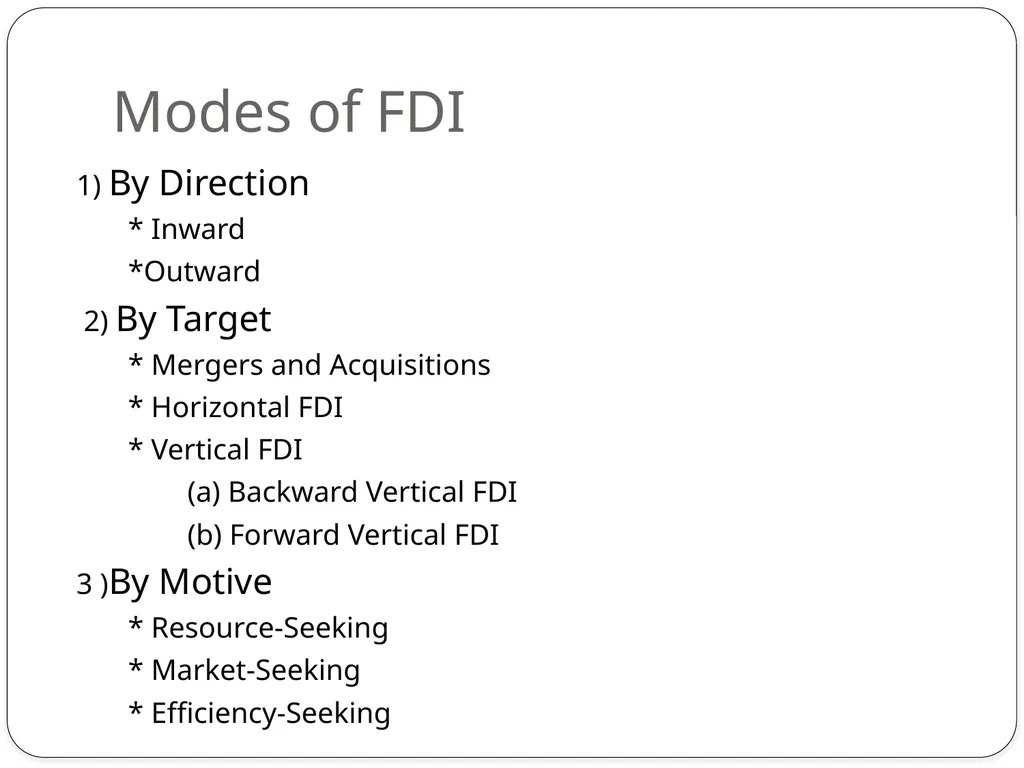
Modes of FDI 1) By Direction
* Inward
*Outward
2) By Target
* Mergers and Acquisitions
* Horizontal FDI
* Vertical FDI
(a) Backward Vertical FDI
(b) Forward Vertical FDI
3 )By Motive
* Resource-Seeking
* Market-Seeking
* Efficiency-Seeking<br>
04
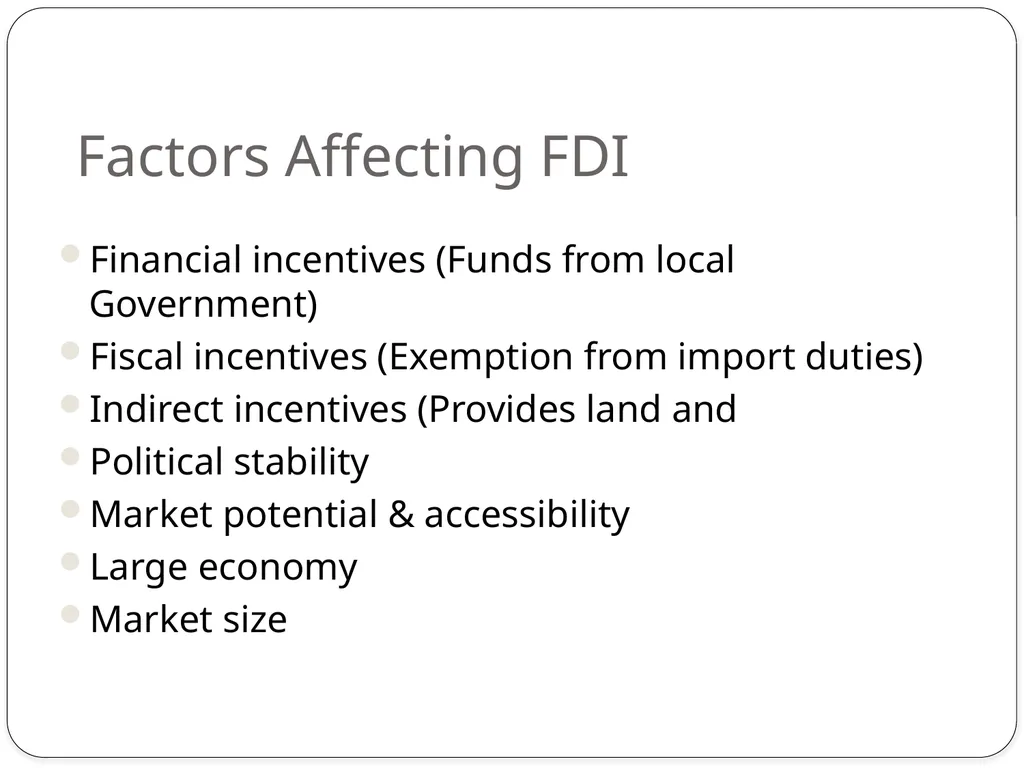
Factors Affecting FDI Financial incentives (Funds from local Government)
Fiscal incentives (Exemption from import duties)
Indirect incentives (Provides land and
Political stability
Market potential & accessibility
Large economy
Market size<br>
05
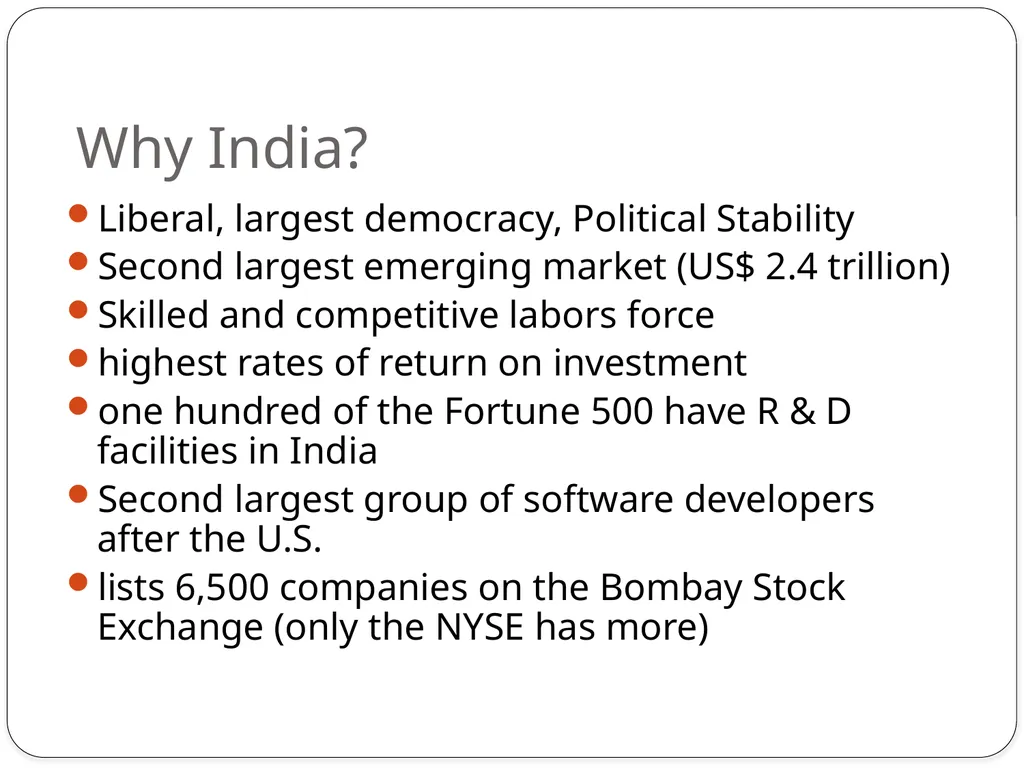
Why India? Liberal, largest democracy, Political Stability
Second largest emerging market (US$ 2.4 trillion)
Skilled and competitive labors force
highest rates of return on investment
one hundred of the Fortune 500 have R & D facilities in India
Second largest group of software developers after the U.S.
lists 6,500 companies on the Bombay Stock Exchange (only the NYSE has more)<br>
06
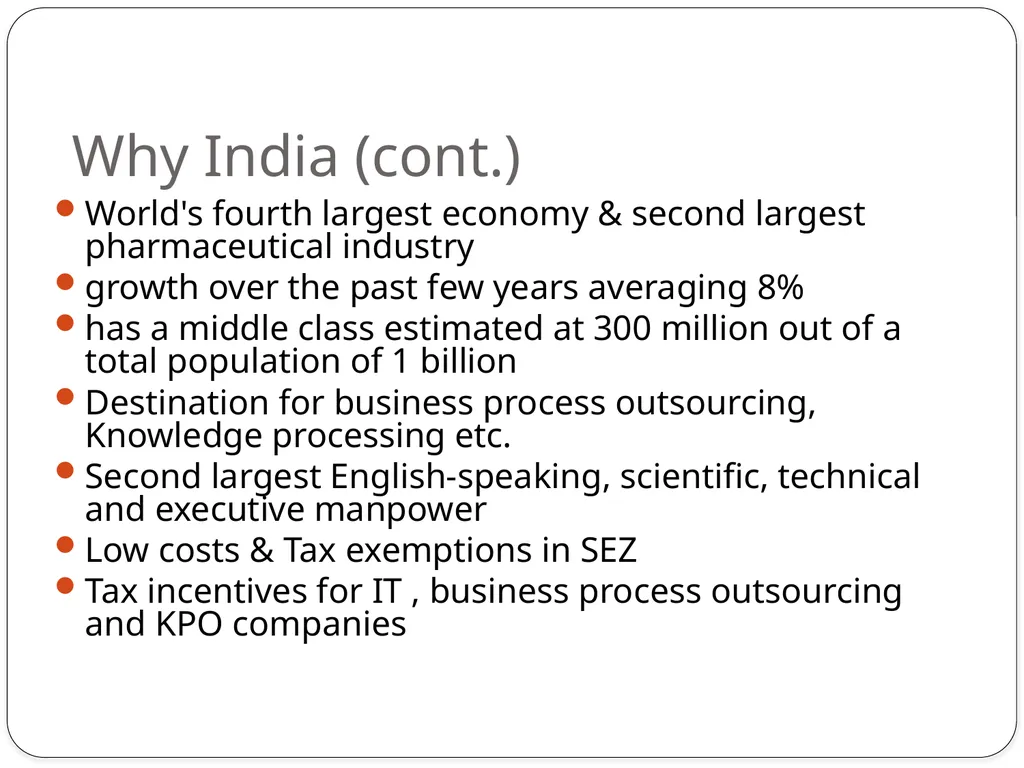
Why India (cont.) World's fourth largest economy & second largest pharmaceutical industry
growth over the past few years averaging 8%
has a middle class estimated at 300 million out of a total population of 1 billion
Destination for business process outsourcing, Knowledge processing etc.
Second largest English-speaking, scientific, technical and executive manpower
Low costs & Tax exemptions in SEZ
Tax incentives for IT , business process outsourcing and KPO companies<br>
07
Government policies Automatic Route
Prior Permission (FIPB)<br>
08
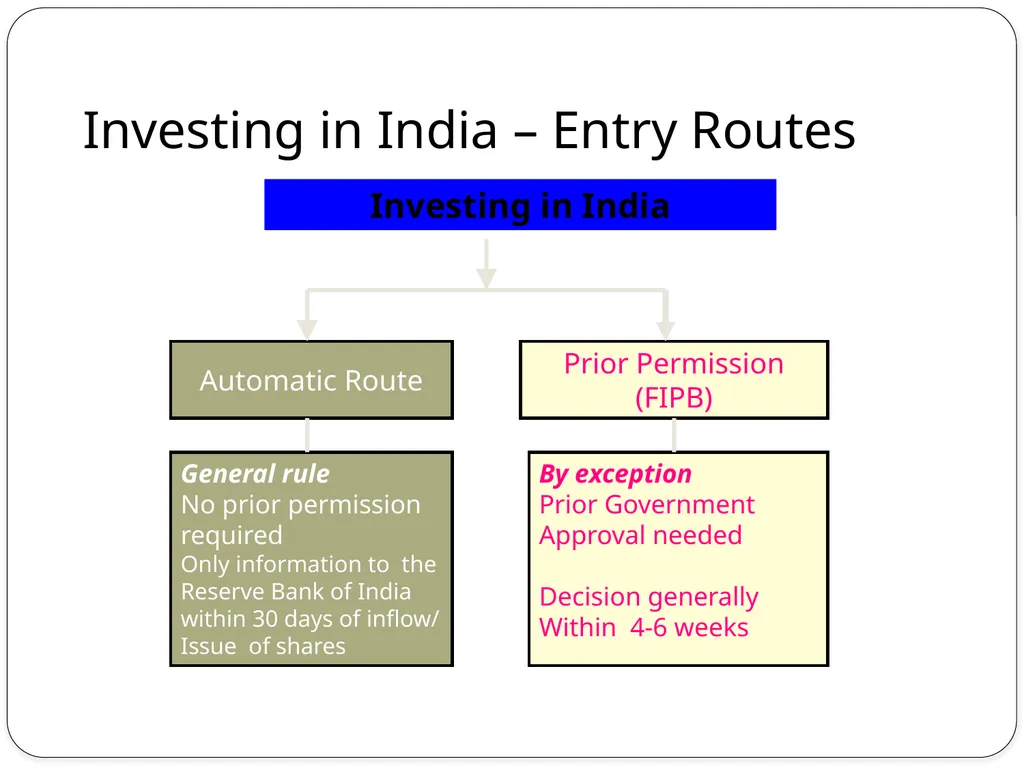
Investing in India – Entry Routes Investing in India Automatic Route Prior Permission
(FIPB) General rule
No prior permission
required
Only information to the
Reserve Bank of India
within 30 days of inflow/
Issue of shares By exception
Prior Government
Approval needed
Decision generally
Within 4-6 weeks<br>
09
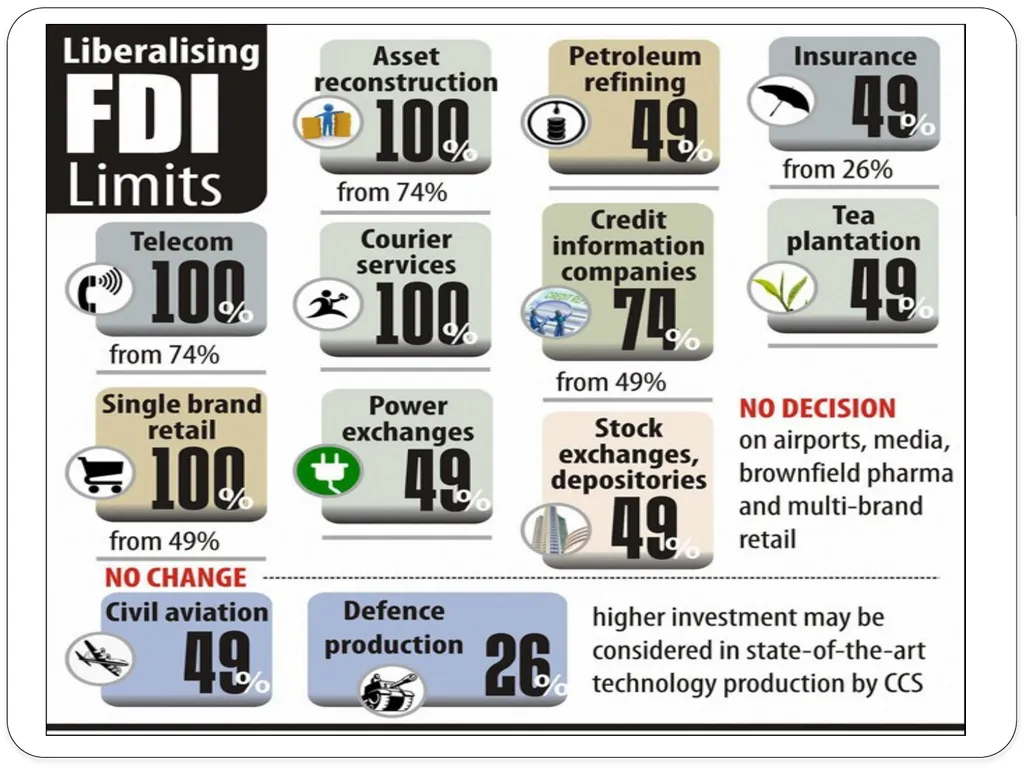
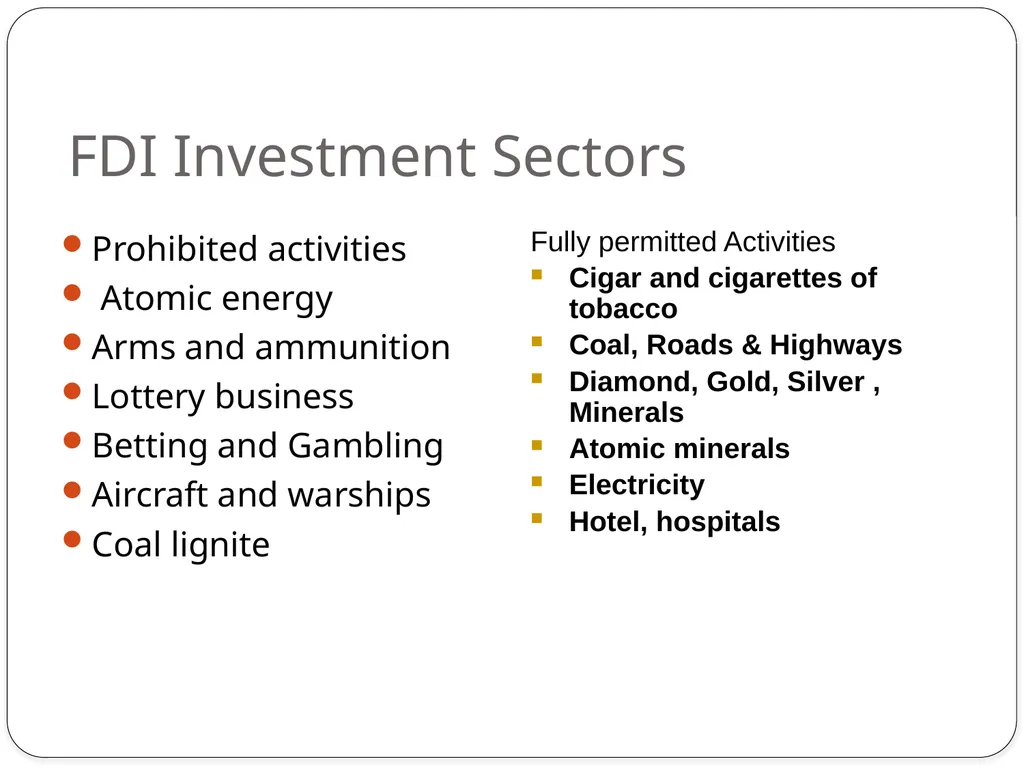
FDI Investment Sectors Prohibited activities
Atomic energy
Arms and ammunition
Lottery business
Betting and Gambling
Aircraft and warships
Coal lignite Fully permitted Activities
Cigar and cigarettes of tobacco
Coal, Roads & Highways
Diamond, Gold, Silver , Minerals
Atomic minerals
Electricity
Hotel, hospitals<br>
10
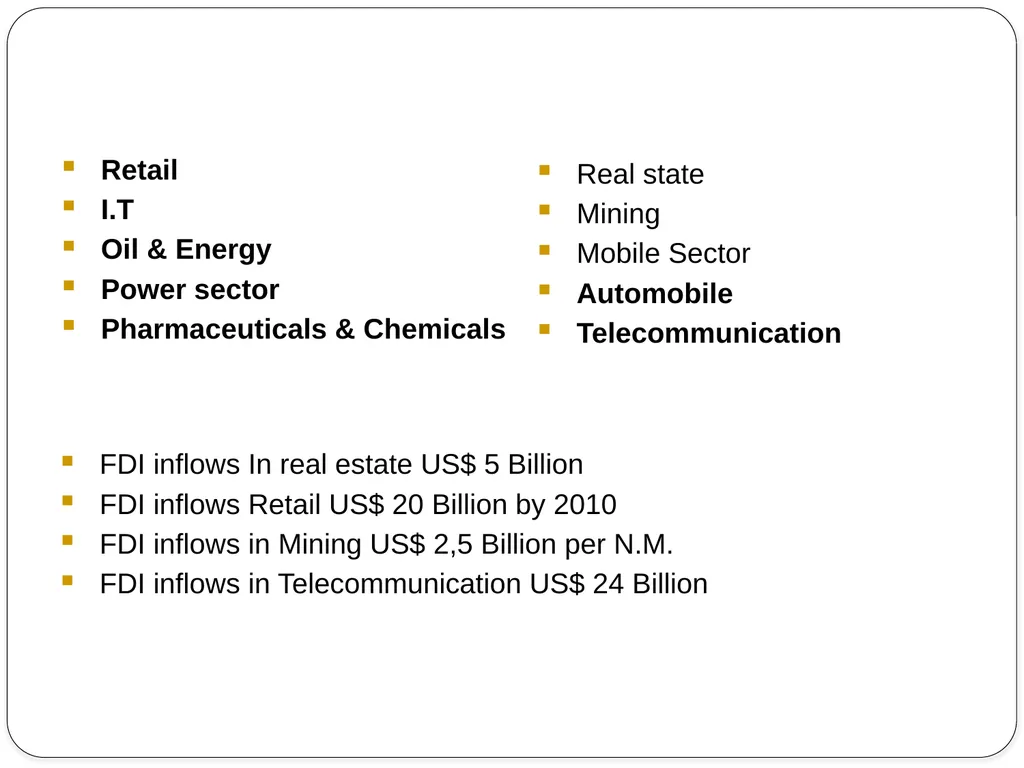
Retail
I.T
Oil & Energy
Power sector
Pharmaceuticals & Chemicals Real state
Mining
Mobile Sector
Automobile
Telecommunication FDI inflows In real estate US$ 5 Billion
FDI inflows Retail US$ 20 Billion by 2010
FDI inflows in Mining US$ 2,5 Billion per N.M.
FDI inflows in Telecommunication US$ 24 Billion<br>
11
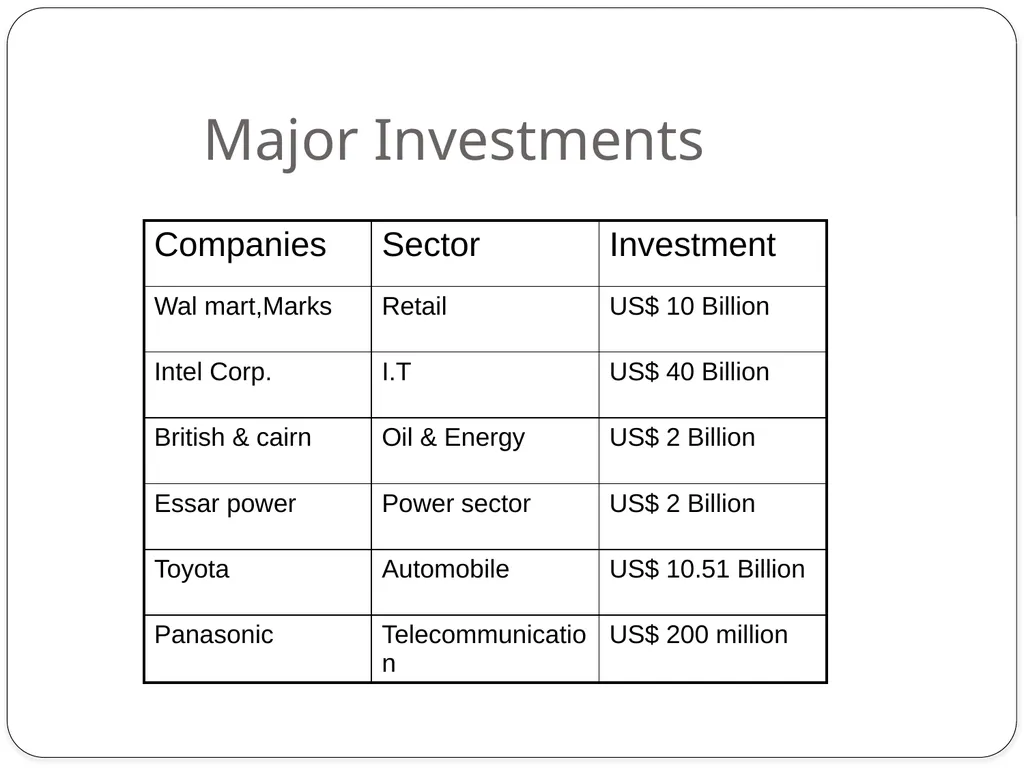
Major Investments<br>
12
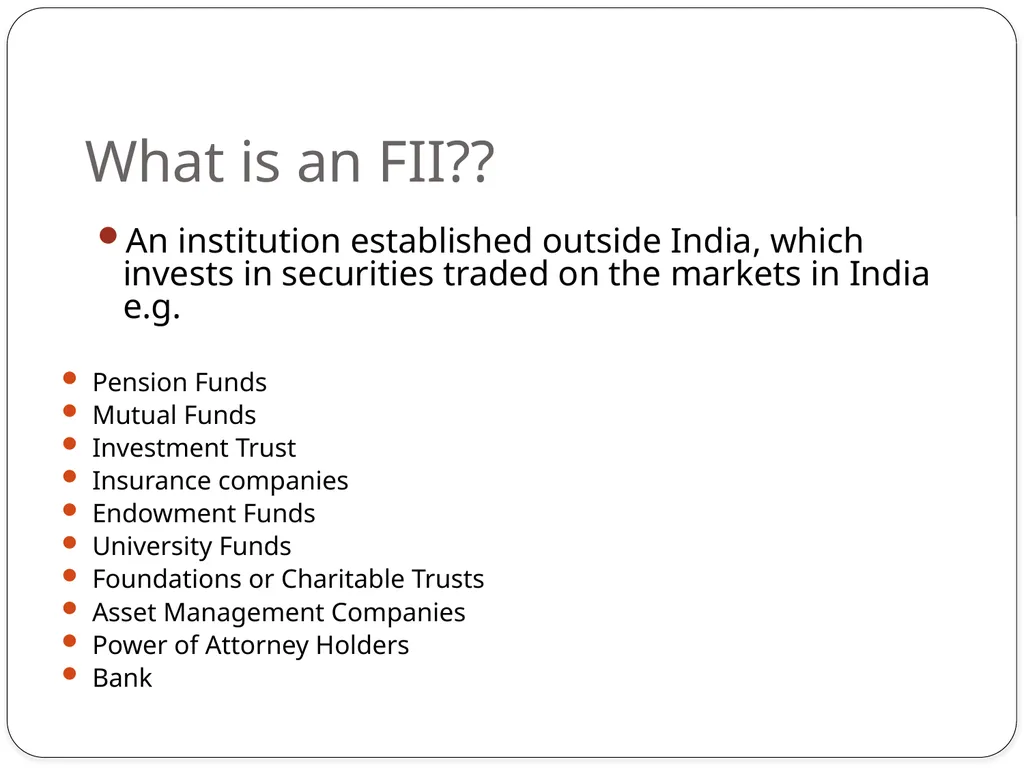
What is an FII?? An institution established outside India, which invests in securities traded on the markets in India e.g.
Pension Funds
Mutual Funds
Investment Trust
Insurance companies
Endowment Funds
University Funds
Foundations or Charitable Trusts
Asset Management Companies
Power of Attorney Holders
Bank<br>
13
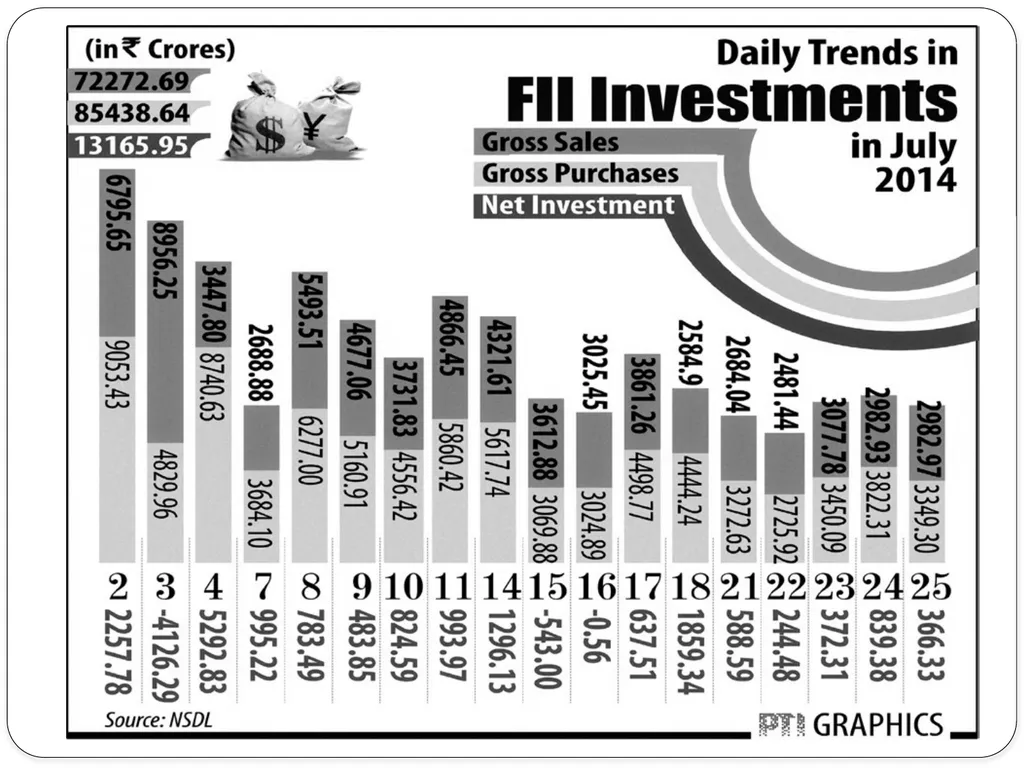
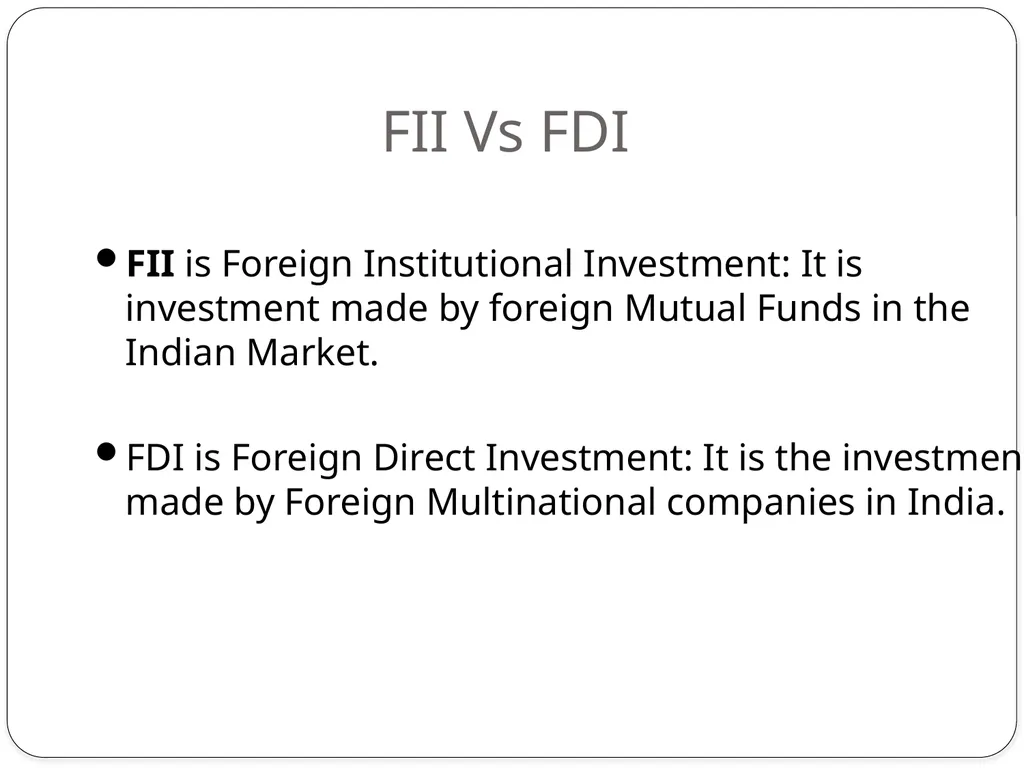
FII Vs FDI FII is Foreign Institutional Investment: It is investment made by foreign Mutual Funds in the Indian Market.
FDI is Foreign Direct Investment: It is the investment made by Foreign Multinational companies in India.<br>
14
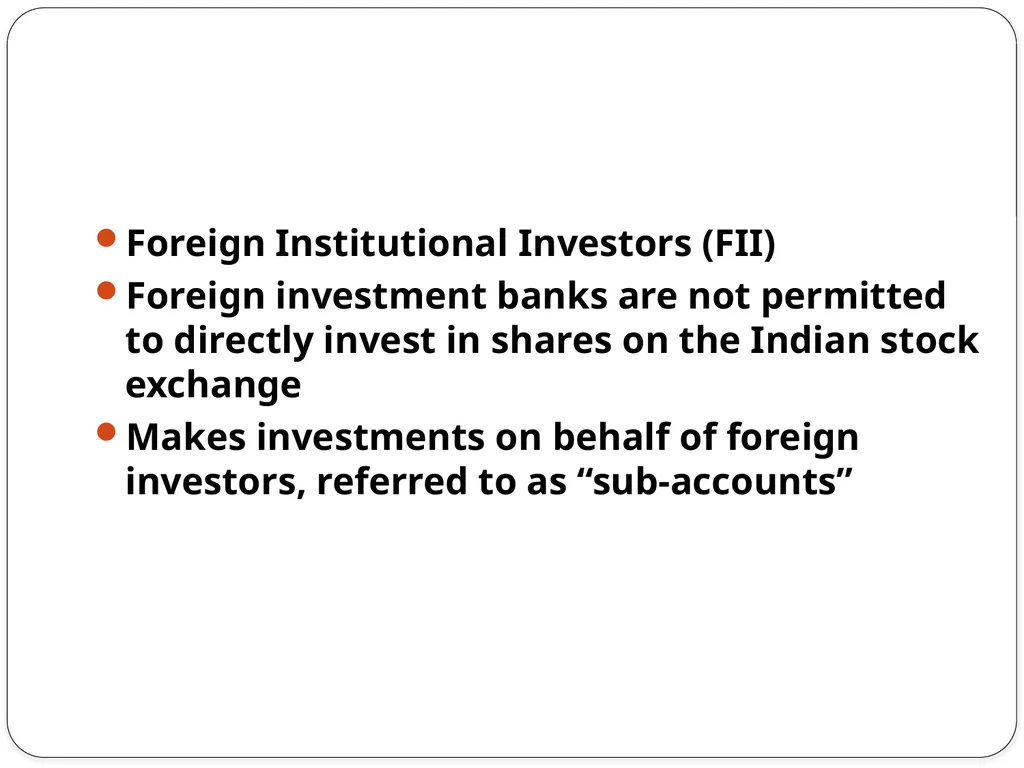
Foreign Institutional Investors (FII)
Foreign investment banks are not permitted to directly invest in shares on the Indian stock exchange
Makes investments on behalf of foreign investors, referred to as “sub-accounts”<br>
15
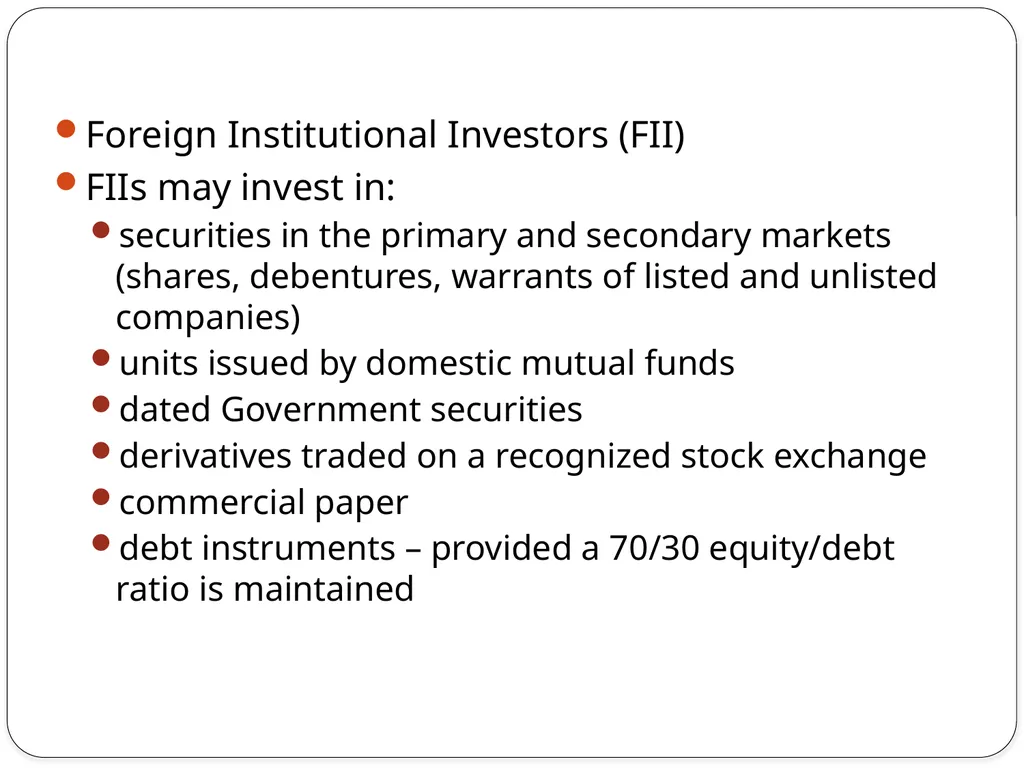
Foreign Institutional Investors (FII)
FIIs may invest in:
securities in the primary and secondary markets (shares, debentures, warrants of listed and unlisted companies)
units issued by domestic mutual funds
dated Government securities
derivatives traded on a recognized stock exchange
commercial paper
debt instruments – provided a 70/30 equity/debt ratio is maintained<br>
16
Foreign Institutional Investors (FII)
Limits on the type and amount of investments apply to FIIs
no more than 10% of the equity in any one company
no more than 10% in the equity in any one company on behalf of a fund sub-account
no more than 5% in the equity in any one company on behalf of a corporate/individual sub-account
no more than 24% in the aggregate of the total issued capital of a company to be held by FIIs<br>