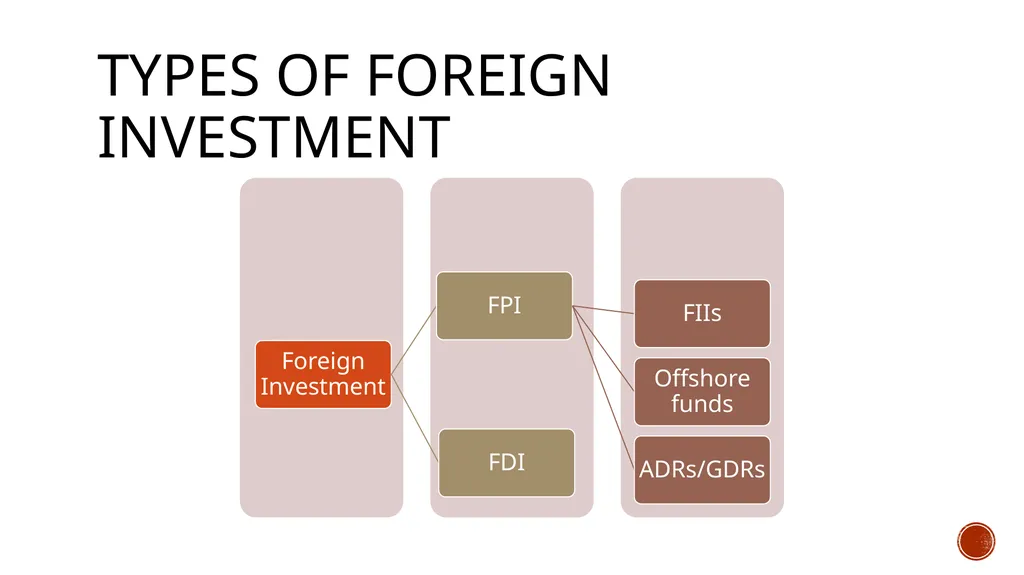
Foreign investment-types and flows Types of foreign investment Foreign direct investment (FDI) FDI occurs when a firm invests directly in facilities to produce andor market a product in a foreign country. Foreign direct investment (FDI) is
"Foreign investment-types and flows Types of" is the property of its rightful owner. Permission is granted to
download and print the materials on this website for personal, non-commercial use only, and to display it
on your personal computer provided you do not modify the materials and that you retain all copyright
notices contained in the materials. By downloading content from our website, you accept the terms of this
agreement.
Presentation Transcript
01
Foreign investment-types and flows<br>
02
Types of foreign investment<br>
03
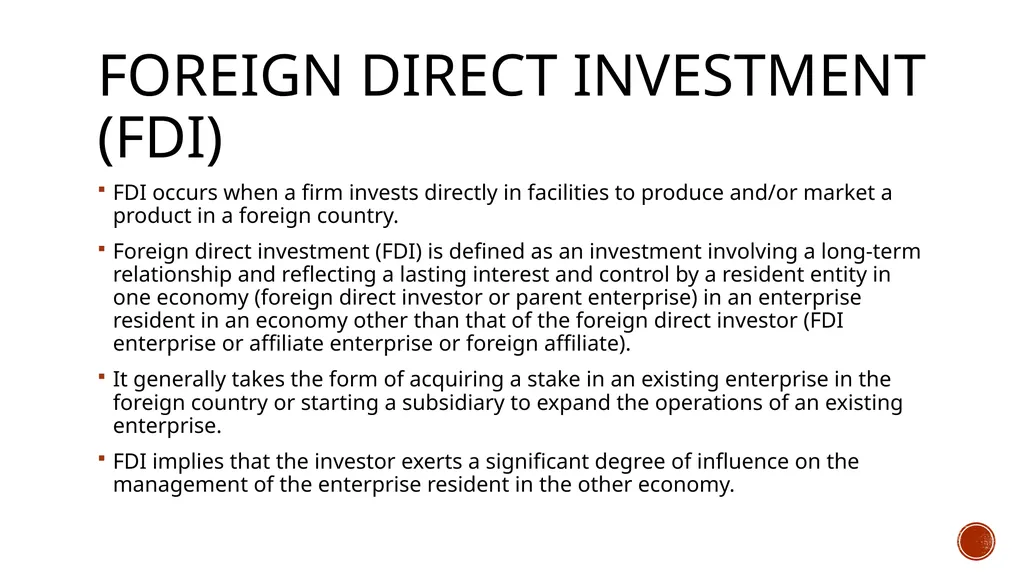
Foreign direct investment (FDI) FDI occurs when a firm invests directly in facilities to produce and/or market a product in a foreign country.
Foreign direct investment (FDI) is defined as an investment involving a long-term relationship and reflecting a lasting interest and control by a resident entity in one economy (foreign direct investor or parent enterprise) in an enterprise resident in an economy other than that of the foreign direct investor (FDI enterprise or affiliate enterprise or foreign affiliate).
It generally takes the form of acquiring a stake in an existing enterprise in the foreign country or starting a subsidiary to expand the operations of an existing enterprise.
FDI implies that the investor exerts a significant degree of influence on the management of the enterprise resident in the other economy.<br>
04
Foreign portfolio investment (FPI) FPI involves investment in foreign financial assets like stocks, bonds, commodities etc.
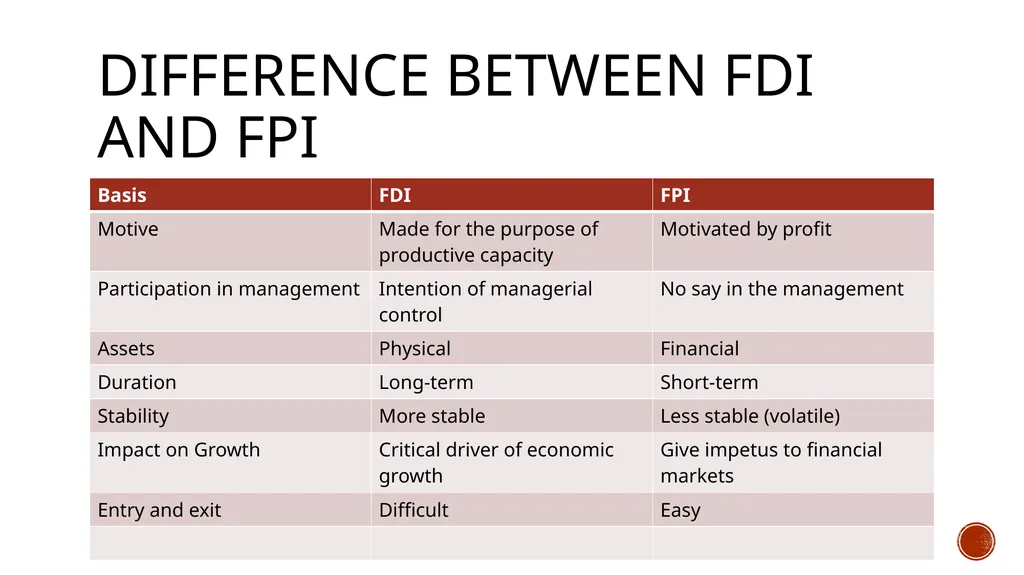
This type of investment is not made with the intention of acquiring a controlling interest in the issuing company.
Typically, this type of investment is short term in nature and is made to take advantage of favorable changes in exchange rates or to earn short term profits on interest rate differences.
It provides the investor with an opportunity to diversify their portfolios and better manage the associated risk.<br>
05
Difference between FDI and FPI<br>
06
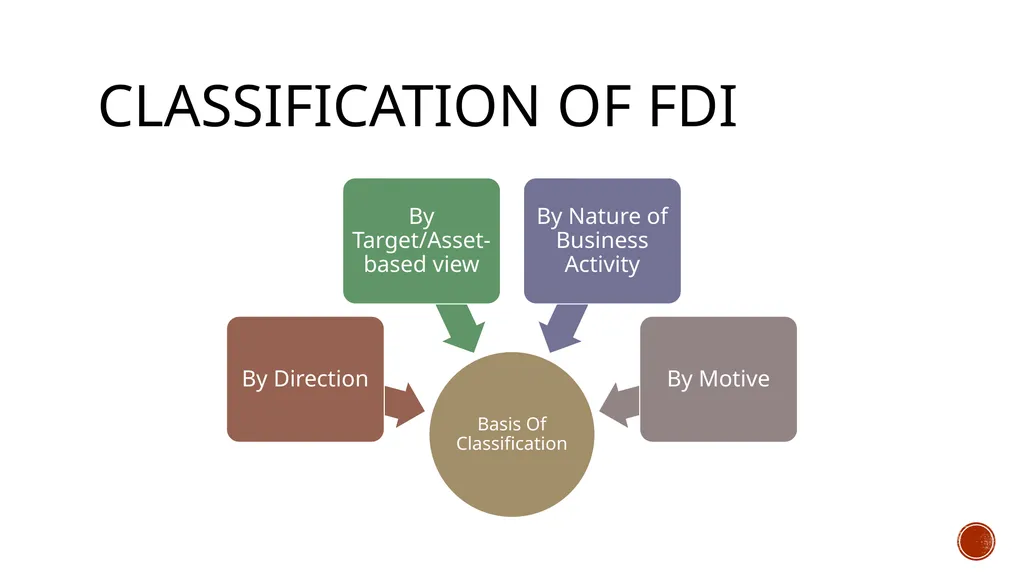
Classification of FDI<br>
07
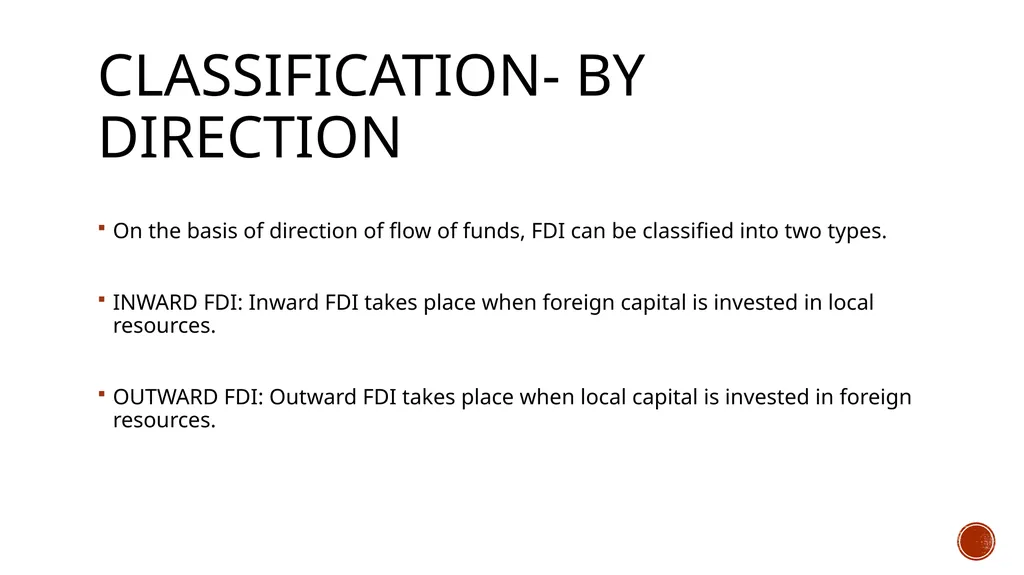
Classification- By direction On the basis of direction of flow of funds, FDI can be classified into two types.
INWARD FDI: Inward FDI takes place when foreign capital is invested in local resources.
OUTWARD FDI: Outward FDI takes place when local capital is invested in foreign resources.<br>
08
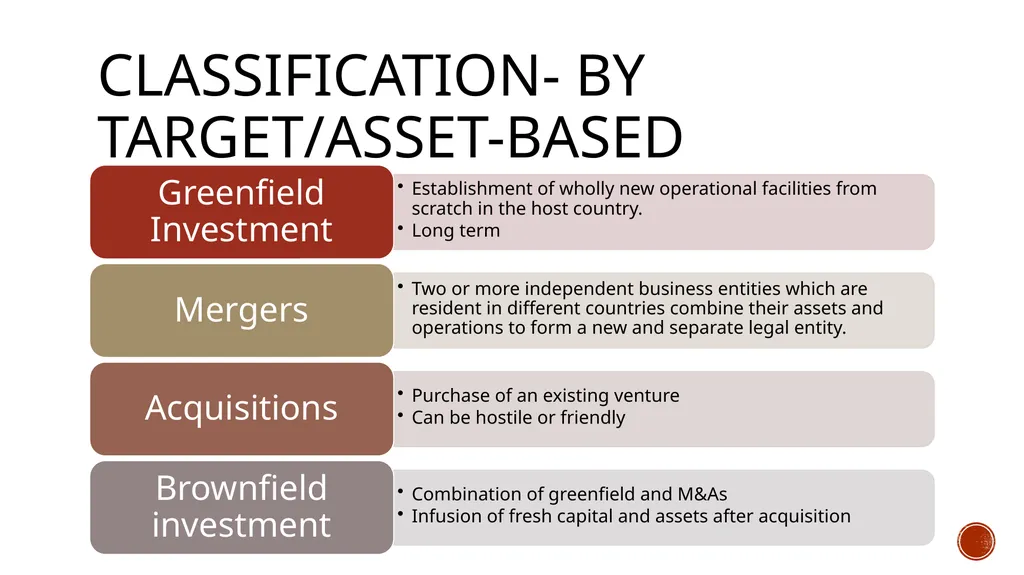
Classification- By target/asset-based<br>
09
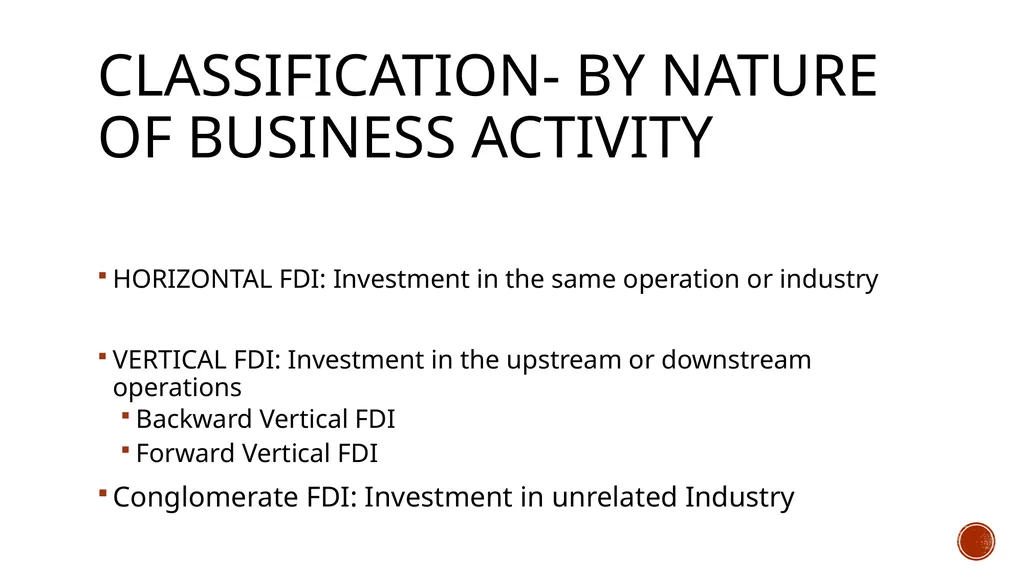
Classification- By Nature of Business Activity HORIZONTAL FDI: Investment in the same operation or industry
VERTICAL FDI: Investment in the upstream or downstream operations
Backward Vertical FDI
Forward Vertical FDI
Conglomerate FDI: Investment in unrelated Industry<br>
10
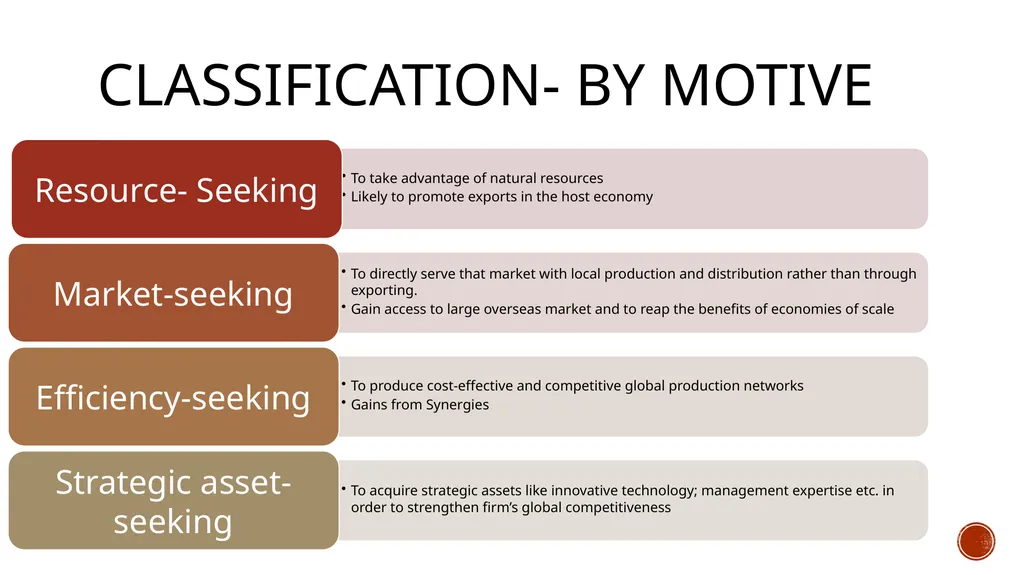
Classification- by motive<br>
11
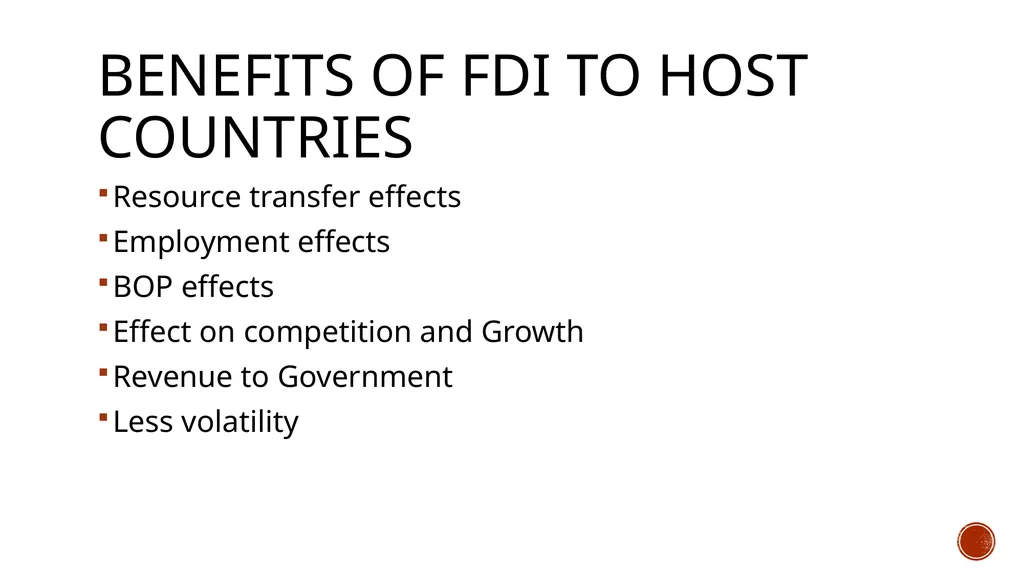
Benefits of FDI to host countries Resource transfer effects
Employment effects
BOP effects
Effect on competition and Growth
Revenue to Government
Less volatility<br>
12
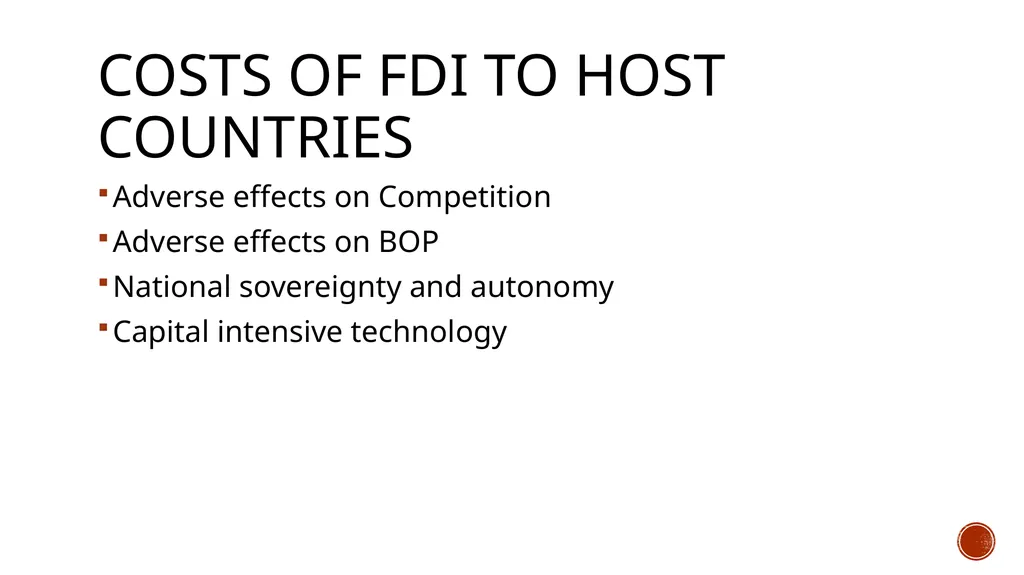
Costs of FDI to host countries Adverse effects on Competition
Adverse effects on BOP
National sovereignty and autonomy
Capital intensive technology<br>
13
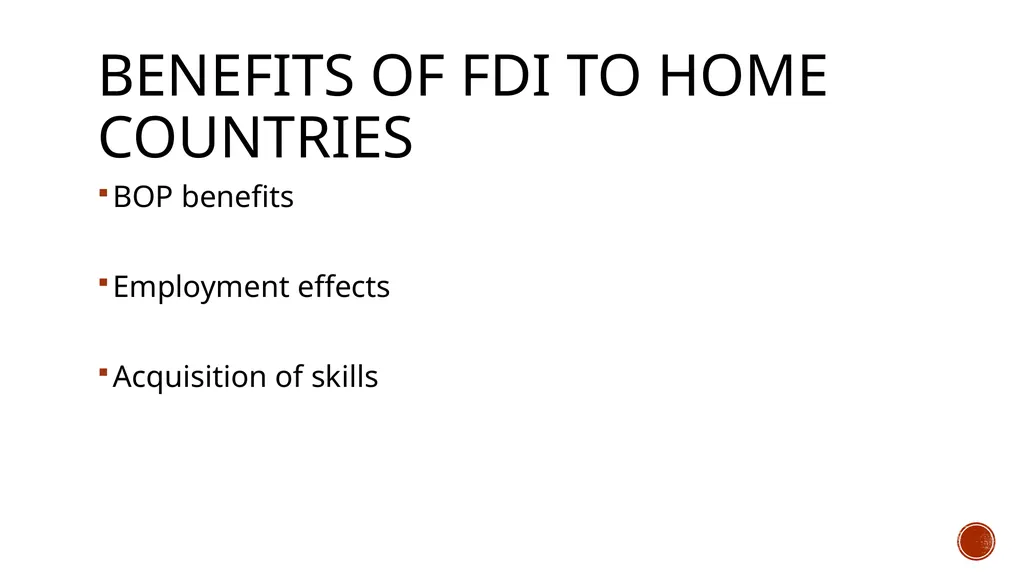
Benefits of FDI to home countries BOP benefits
Employment effects
Acquisition of skills<br>
14
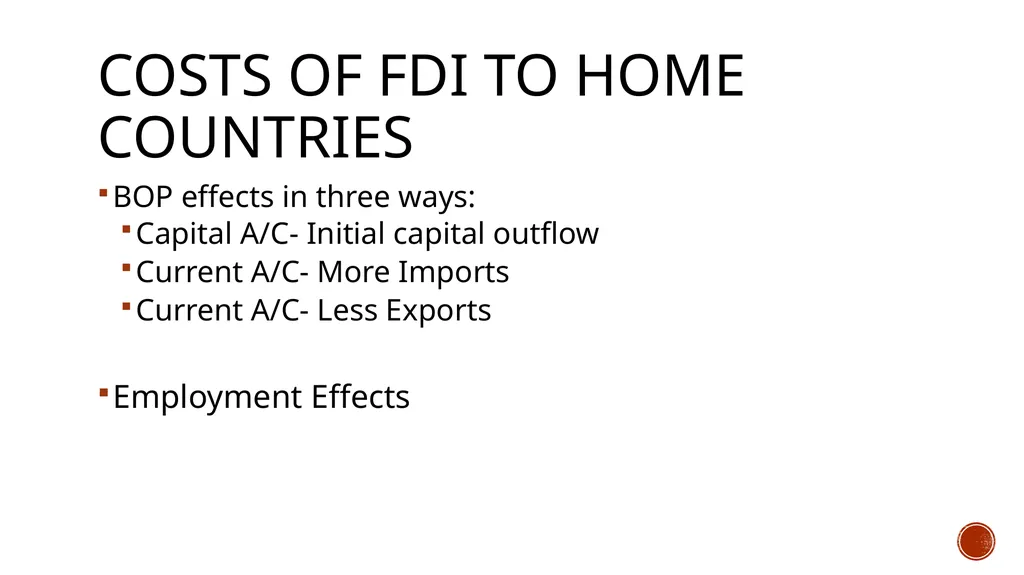
Costs of FDI to home countries BOP effects in three ways:
Capital A/C- Initial capital outflow
Current A/C- More Imports
Current A/C- Less Exports