Fowl Pox Dr Mritunjay Kumar Associate Professor VMD, BVC, BASU, Patna Department of Veterinary Medicine Bihar Veterinary College, BASU, Patna Avian PoxFowl Pox It is a sporadic infectious disease of chickens caused by Avianpox virus and
"Fowl Pox Dr Mritunjay Kumar Associate Professor" is the property of its rightful owner. Permission is granted to
download and print the materials on this website for personal, non-commercial use only, and to display it
on your personal computer provided you do not modify the materials and that you retain all copyright
notices contained in the materials. By downloading content from our website, you accept the terms of this
agreement.
Presentation Transcript
01
Fowl Pox Dr Mritunjay Kumar
Associate Professor
VMD, BVC, BASU, Patna Department of Veterinary Medicine
Bihar Veterinary College, BASU, Patna<br>
02
Avian Pox/Fowl Pox
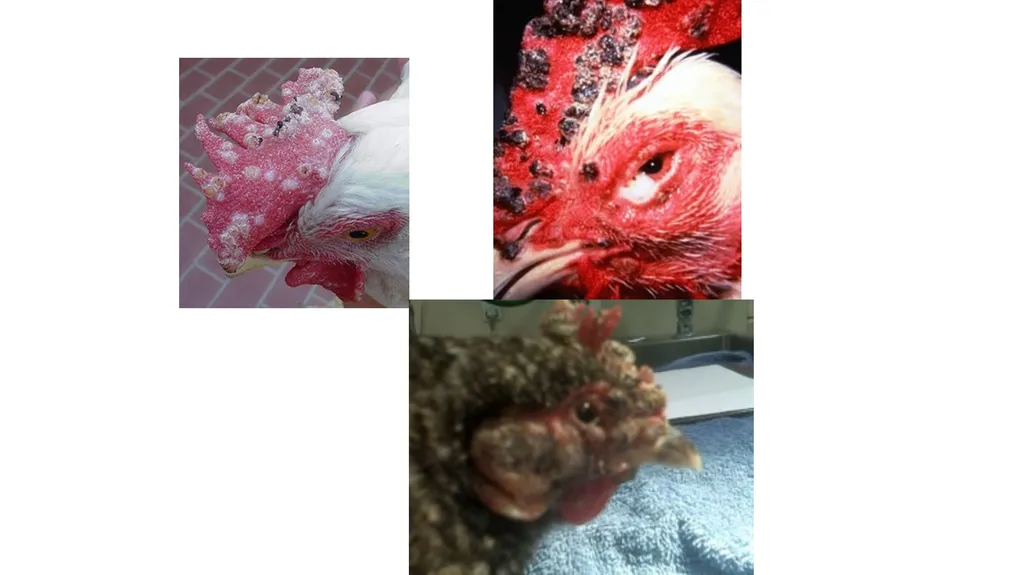
It is a sporadic infectious disease of chickens caused by Avianpox virus and characterised by wart like pox lesions in the head, oral cavity and other featherless parts of the body
Etiology
The virus is included in the family poxviridae
It is DNA virus having a complex symmetry
The virus can survive for a prolonged period of time in dry condition i.e scabs
It agglutinates RBCs and can be cultured in chorio-allantoic membrane of the developing chicken embryo
Here it produce typical pock like lesions
It also can be grown in chicken embryo fibroblast cell culture<br>
03
Epidemiology
Incidence: worldwide
Birds of all ages, sexes and breeds are susceptible
The virus has been isolated from 60 species of wild birds representing 20 families
Usually it occurs as a sporadic disease and can even occur in outbreaks also
Transmission
By contact and also by intermediate hosts like mosquitoes (Culex, Aedes), ticks, biting flies and lice
Pathogenesis
All the different stages of typical pox lesions may occur but commonly there will be hyperplasia of the epithelial cells of the skin and later on scab like lesions appearing like warts<br>
04
Clinical findings
Three forms of the disease
Cutaneous form: Wart like lesions are seen on the combs, wattles, eyelids, corner of beak and later on legs, feet and vent (dry pox)
Oculo-nasal form: Lesions are seen in the eye and nasal cavity with coryza like signs
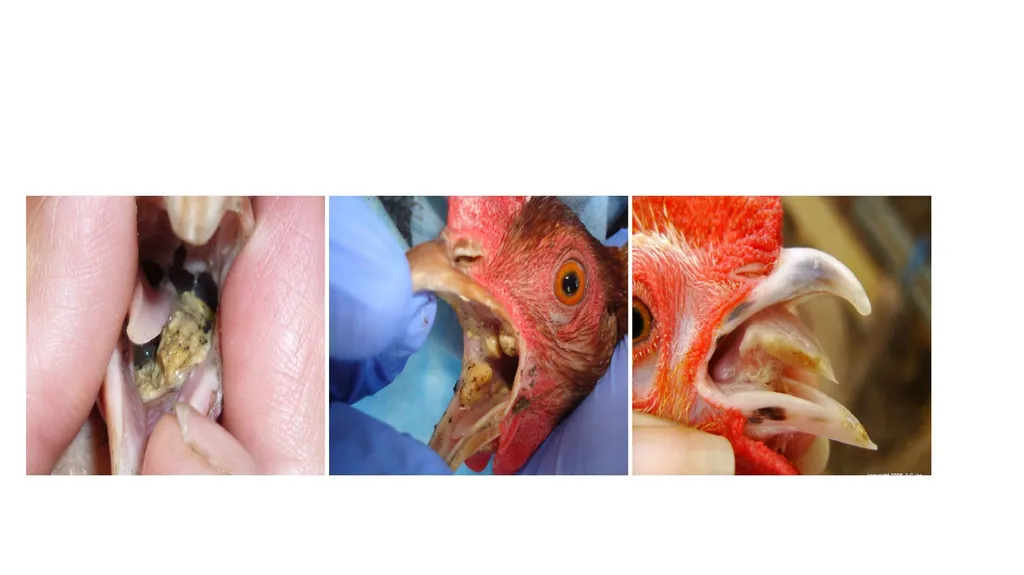
Diptheritic or oral form: In this form nodular type of lesions are seen on the side of tongue, palate, epiglottis and also infra-orbital sinus, pharynx, larynx, oesophagus (wet pox)
The nodules coalesce together to form a diptheritic membrane
These lesions comes in the way of ingestion of water and feed and also respiration
In this form majority of bird died due to asphyxia<br>
05
Diagnosis
By signs and lesions, this disease can be diagnosed easily
By demonstration of inclusion bodies- the virus produces intra-cytoplasmic inclusion bodies called Bollinger bodies which are 179-314 nm in diameter and contains small granules called borrel granules
These can be demonstrated in the epithelial cells from the lesions
Scabs can be sent to laboratory
Isolation of virus: The scab can be submitted. Here also by using CAM method of the chicken embryos the pock lesions on the CAM develops and is confirmed by HA and HI tests
Serological tests: HIT, AGPT, FAT, ELISA, VNT
Treatment
There is no specific treatment for fowl pox
Control
Isolation of affected fowls and general hygienic measures
Vector control<br>
06
Vaccination
Fowl pox vaccine, live chick embryo virus (freeze dried): It is modified living virus vaccine (MLV) prepared from CAM of the chicken embryo and used in fowls but not in pigeons
100 dose vaccine is available
Mode of administration: The tip of medium sized sewing needle at the eye end is broken and rubbed on the stone to make it smooth
Hold the wing of the bird, dip the needle in the vaccine and make 2 punctures in the wing
This is called wing web puncture method. Examine the vaccinated bird after 7 days for take
Pigeon pox vaccine: This vaccine can be used to protect the birds (fowls, pigeons) of all age group and also adult birds in the face of an outbreak.
It is available in 100 and 500 doses with diluents
Mode of administration: Remove few feathers from one side of the thigh of the bird
Dip the Johnsons ear bud or glass rod with the cotton swab in the vaccine and paint the lesion where the feathers have been removed<br>
07
Fowl pox B-M strain (Bio-Med): 100 and 500 doses available
It is a live attenuated vaccine
The vaccine is reconstituted and 0.2 ml is injected i/m or s/c in the thigh region
First Dose: 14-15 weeks
Second Dose: 16-18 weeks
Fowl pox vaccine (live) (BAIF): 200 and 500 doses with diluents. It is a modified fowl pox virus vaccine.
Administered using wing web method in 6-8 weeks old chickens and then every year it is repeated<br>
08
Choose most appropriate answer 1.What is the causative agent of fowl pox?
A) Avian influenza virus
B) Newcastle disease virus
C) Fowl pox virus
D) Infectious bronchitis virus
2.Which of the following is a common form of transmission for fowl pox?
A) Airborne droplets
B) Direct contact with infected birds
C) Contaminated feed and water
D) All of the above
3.What are the primary clinical signs of the cutaneous form of fowl pox?
A) Respiratory distress
B) Lesions on the skin and comb
C) Diarrhea
D) Swelling of the abdomen
4. In which age group of poultry is fowl pox most commonly observed?
A) Chicks under 2 weeks
B) Birds 6 weeks to 6 months old
C) Adult birds
D) Birds older than 1 year
5.What is the primary method for preventing fowl pox in poultry flocks?
A) Antibiotic treatment
B) Vaccination
C) Dietary supplementation
D) Environmental management<br>
09
6. What is a common symptom of the diphtheritic form of fowl pox?
A) Swollen joints
B) White lesions in the mouth
C) Excessive feather loss
D) Sudden death
7. How is fowl pox typically diagnosed?
A) Blood tests for antibodies
B) Clinical signs and lesion examination
C) PCR testing of feces
D) Serological testing of eggs
8.Which of the following birds are susceptible to fowl pox?
A) Only chickens
B) Chickens and turkeys
C) Only ducks
D) All poultry species
9.What type of virus is the fowl pox virus classified as?
A) RNA virus
B) DNA virus
C) Retrovirus
D) Envelope virus
10.What is a potential complication of fowl pox in infected birds?
A) Immunosuppression
B) Increased egg production
C) Improved feed conversion
D) Rapid weight gain<br>