Functional Skills Maths Metric and Imperial
Description: Functional Skills Maths Metric and Imperial measurements Curriculum links Adult Numeracy MSS1L1.7 Convert units of measure in the same system (a) know the relationship between metric units MSS1L2.5 Calculate with units of measure within
Related Topics
Download Presentation
"Functional Skills Maths Metric and Imperial" is the property of its rightful owner. Permission is granted to download and print the materials on this website for personal, non-commercial use only, and to display it on your personal computer provided you do not modify the materials and that you retain all copyright notices contained in the materials. By downloading content from our website, you accept the terms of this agreement.
Presentation Transcript
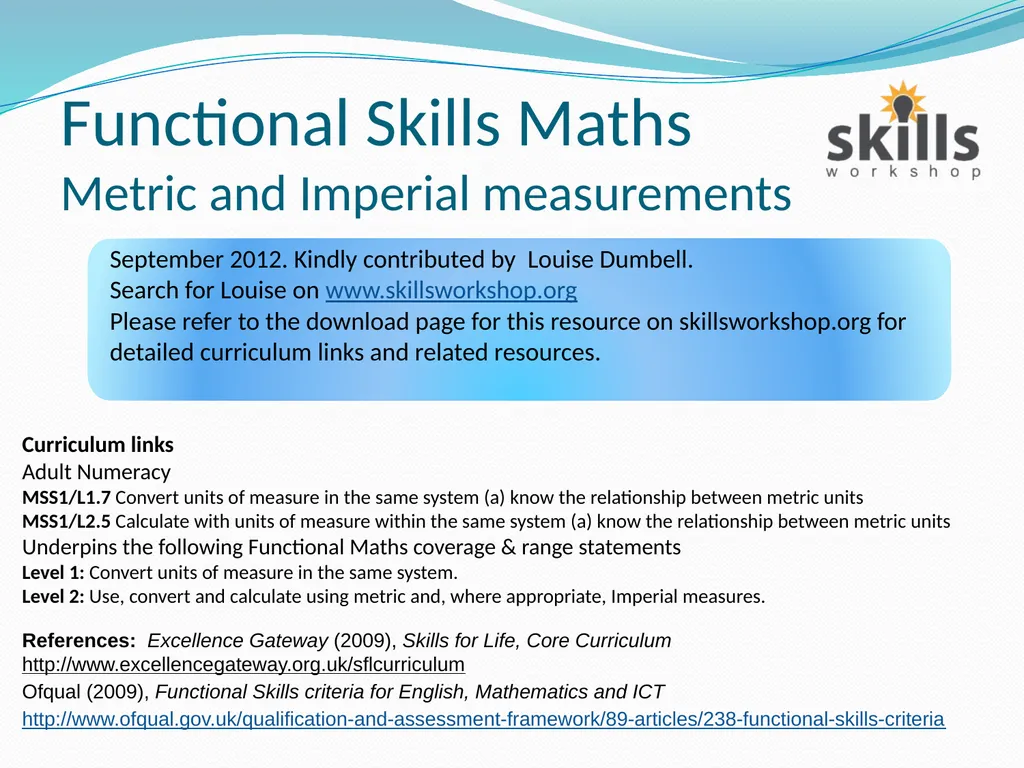
slide1. Functional Skills MathsMetric and Imperial measurements Curriculum links
Adult Numeracy
MSS1/L1.7 Convert units of measure in the same system (a) know the relationship between metric units
MSS1/L2.5 Calculate with units of measure within the same system (a) know the relationship between metric units
Underpins the following Functional Maths coverage & range statements
Level 1: Convert units of measure in the same system.
Level 2: Use, convert and calculate using metric and, where appropriate, Imperial measures.
References: Excellence Gateway (2009), Skills for Life, Core Curriculum http://www.excellencegateway.org.uk/sflcurriculum
Ofqual (2009), Functional Skills criteria for English, Mathematics and ICT
http://www.ofqual.gov.uk/qualification-and-assessment-framework/89-articles/238-functional-skills-criteria September 2012. Kindly contributed by Louise Dumbell.
Search for Louise on www.skillsworkshop.org
Please refer to the download page for this resource on skillsworkshop.org for detailed curriculum links and related resources.<br>
slide2. Functional Skills - Maths Metric and Imperial Measurements<br>
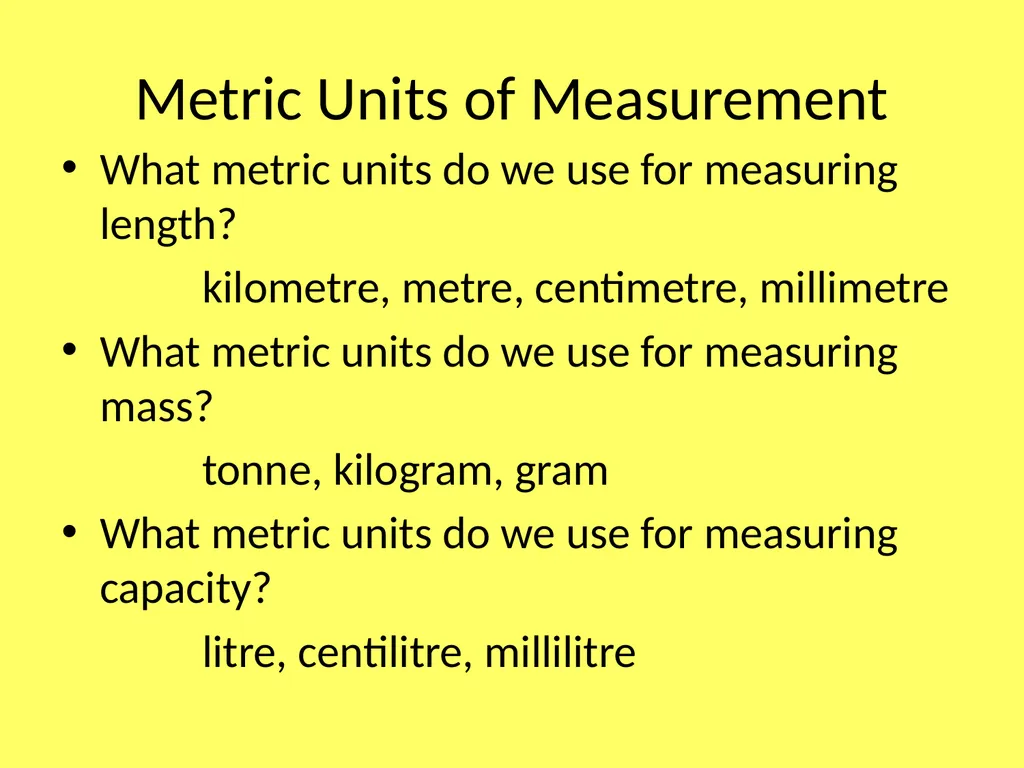
slide3. Metric Units of Measurement What metric units do we use for measuring length?
kilometre, metre, centimetre, millimetre
What metric units do we use for measuring mass?
tonne, kilogram, gram
What metric units do we use for measuring capacity?
litre, centilitre, millilitre<br>
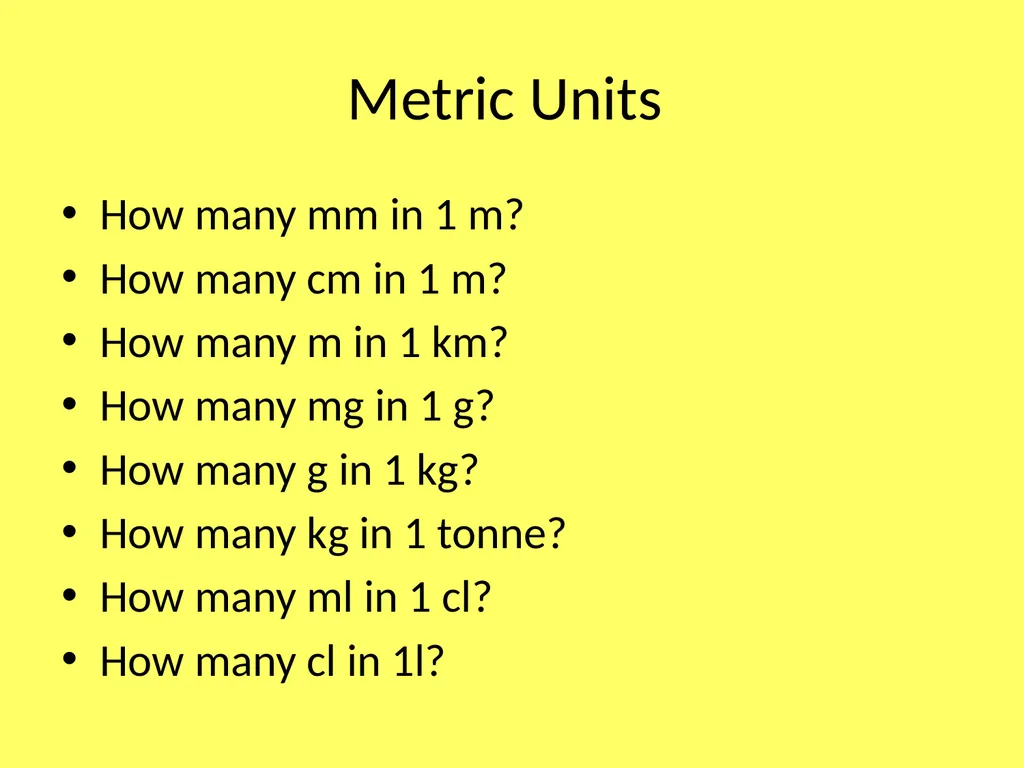
slide4. Metric Units How many mm in 1 m?
How many cm in 1 m?
How many m in 1 km?
How many mg in 1 g?
How many g in 1 kg?
How many kg in 1 tonne?
How many ml in 1 cl?
How many cl in 1l?<br>
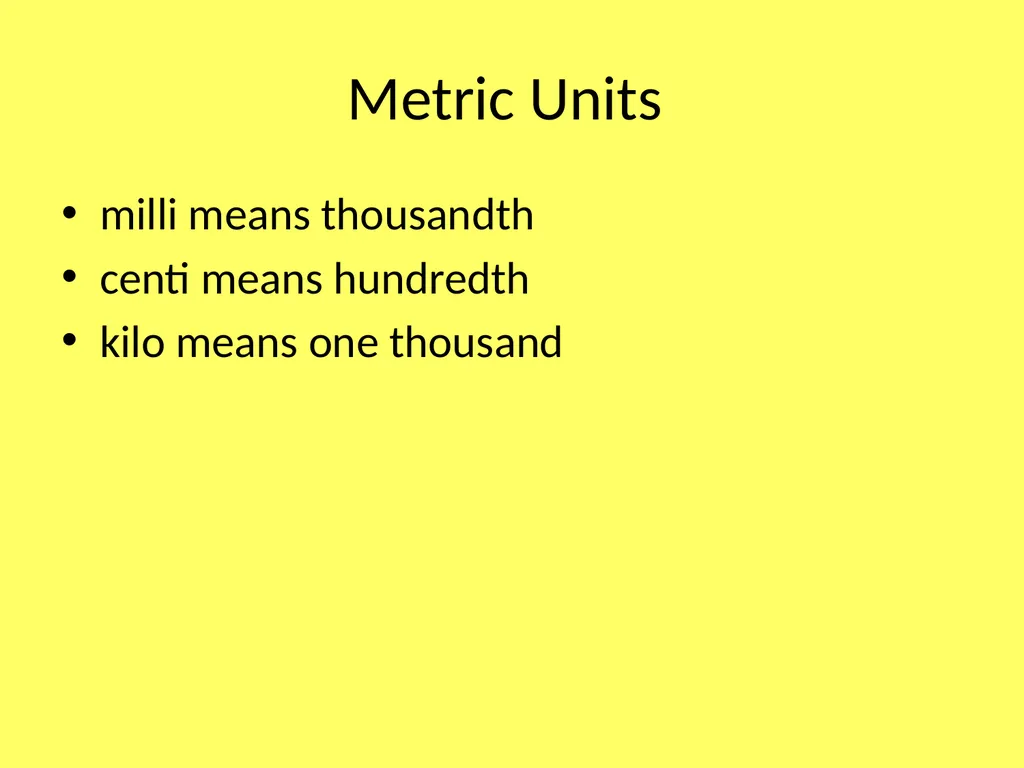
slide5. Metric Units milli means thousandth
centi means hundredth
kilo means one thousand<br>
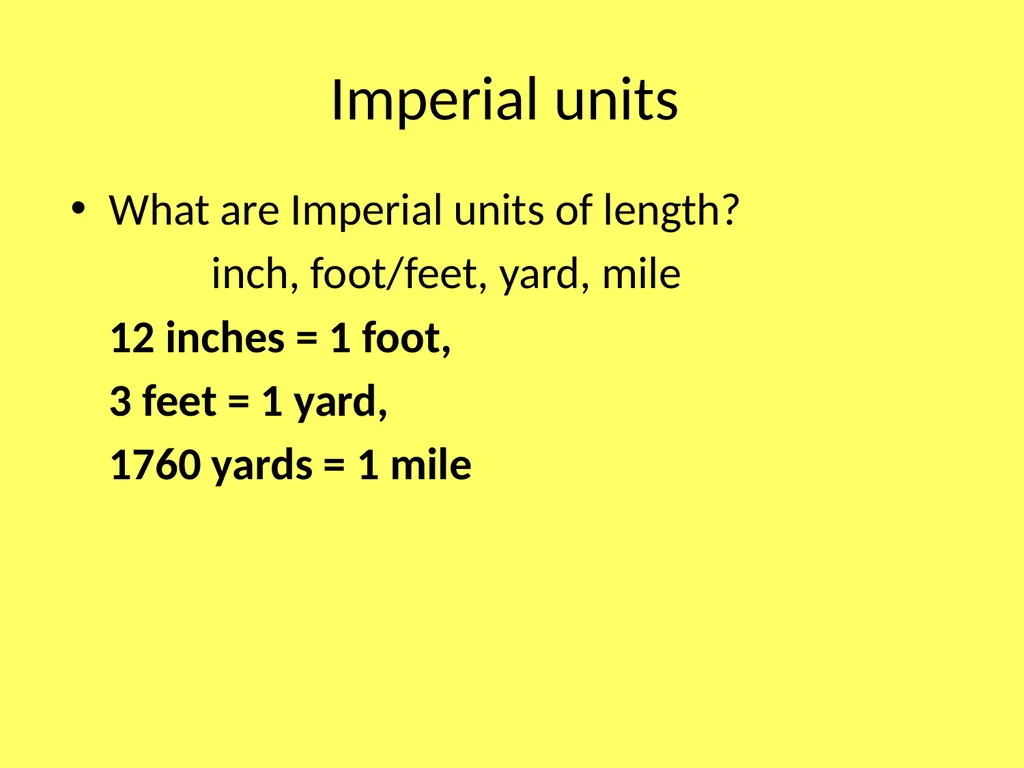
slide6. Imperial units What are Imperial units of length?
inch, foot/feet, yard, mile
12 inches = 1 foot,
3 feet = 1 yard,
1760 yards = 1 mile<br>
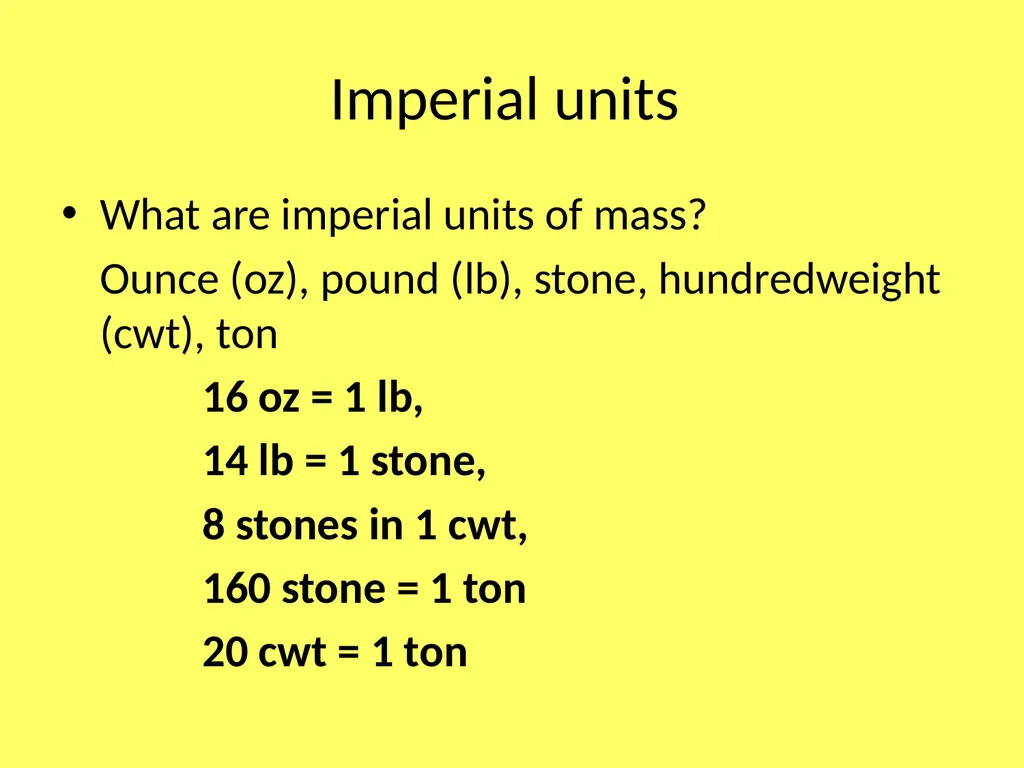
slide7. Imperial units What are imperial units of mass?
Ounce (oz), pound (lb), stone, hundredweight (cwt), ton
16 oz = 1 lb,
14 lb = 1 stone,
8 stones in 1 cwt,
160 stone = 1 ton
20 cwt = 1 ton<br>
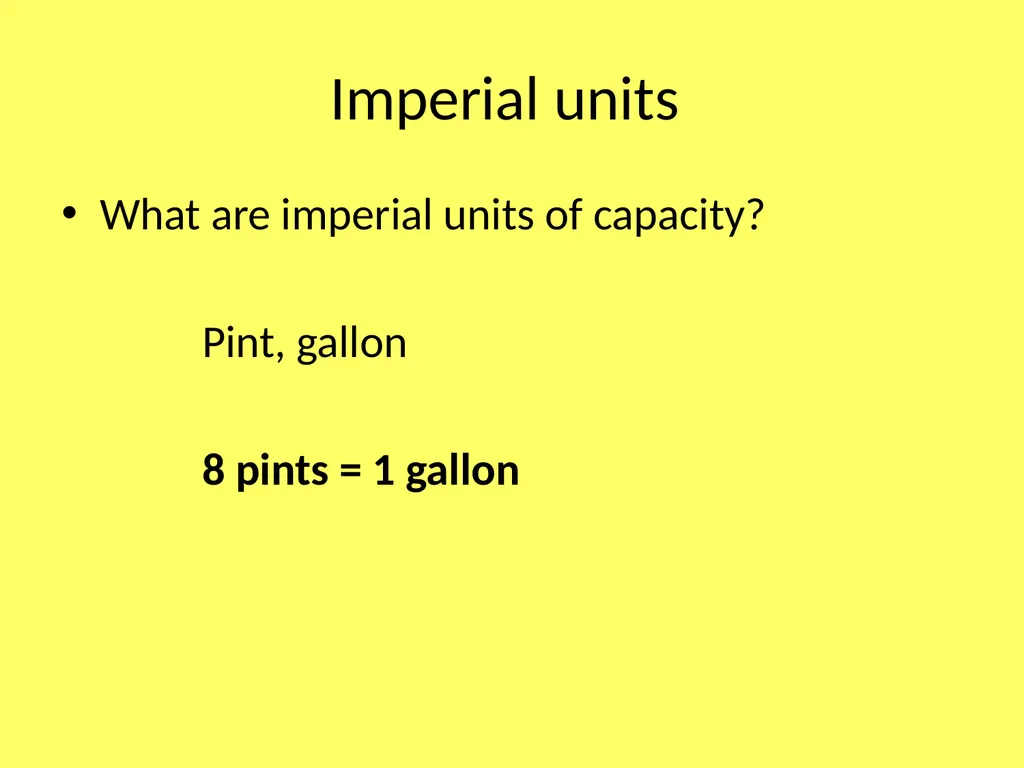
slide8. Imperial units What are imperial units of capacity?
Pint, gallon
8 pints = 1 gallon<br>
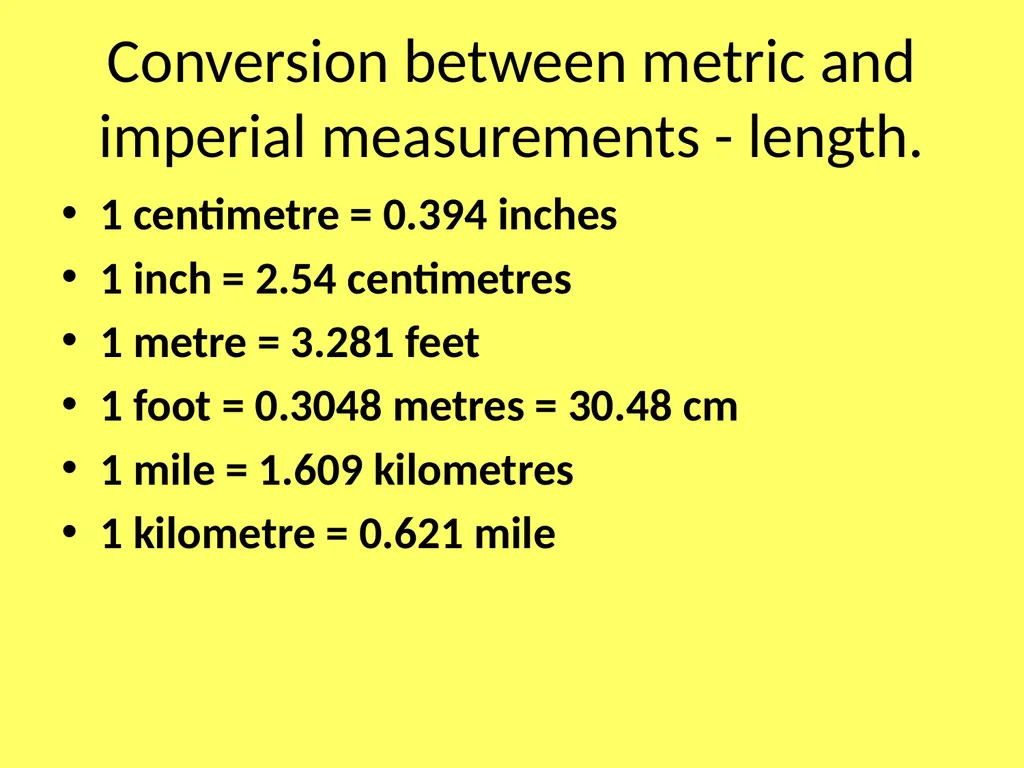
slide9. Conversion between metric and imperial measurements - length. 1 centimetre = 0.394 inches
1 inch = 2.54 centimetres
1 metre = 3.281 feet
1 foot = 0.3048 metres = 30.48 cm
1 mile = 1.609 kilometres
1 kilometre = 0.621 mile<br>

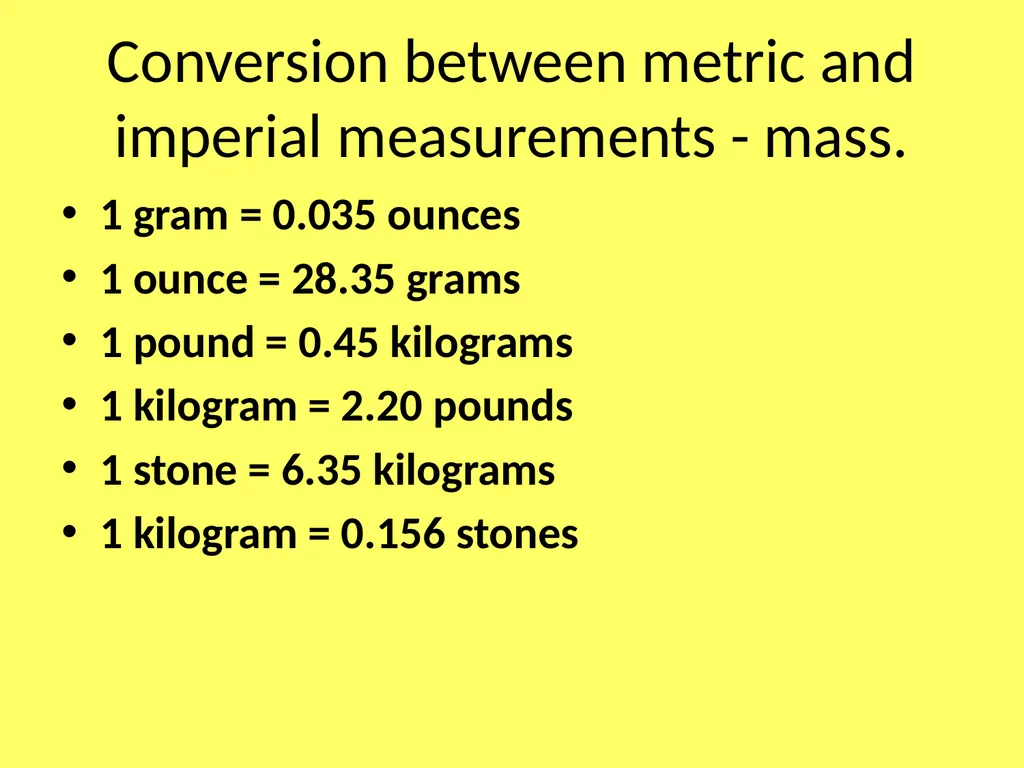
slide10. Conversion between metric and imperial measurements - mass. 1 gram = 0.035 ounces
1 ounce = 28.35 grams
1 pound = 0.45 kilograms
1 kilogram = 2.20 pounds
1 stone = 6.35 kilograms
1 kilogram = 0.156 stones<br>
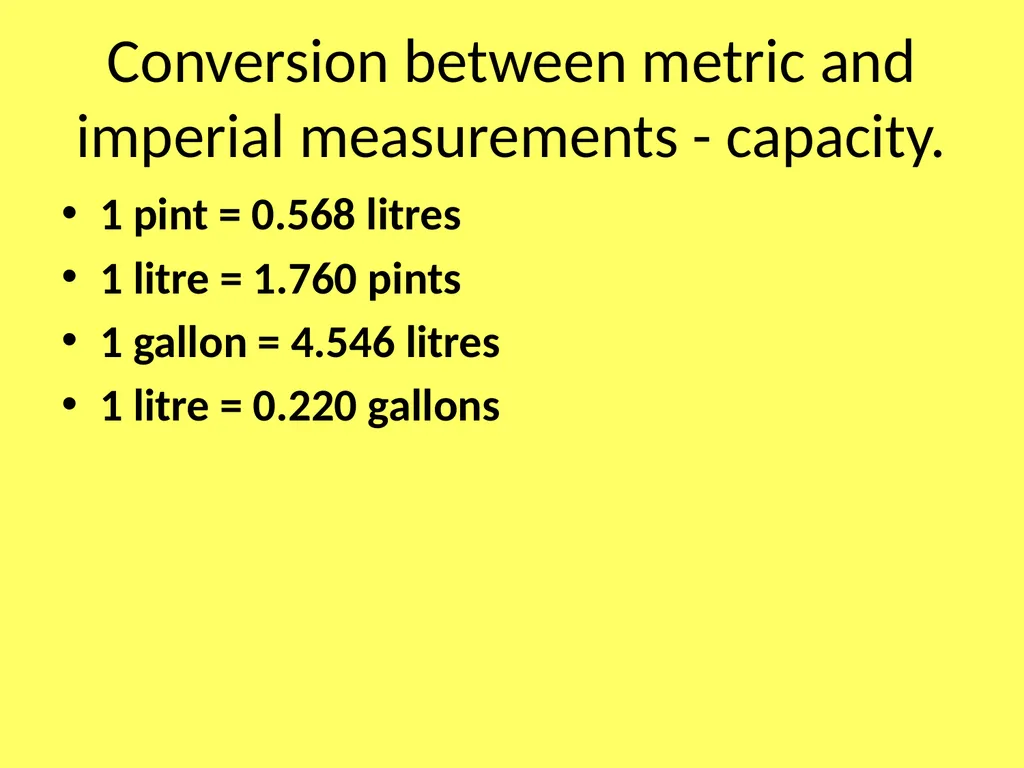
slide11. Conversion between metric and imperial measurements - capacity. 1 pint = 0.568 litres
1 litre = 1.760 pints
1 gallon = 4.546 litres
1 litre = 0.220 gallons<br>
Adult Numeracy
MSS1/L1.7 Convert units of measure in the same system (a) know the relationship between metric units
MSS1/L2.5 Calculate with units of measure within the same system (a) know the relationship between metric units
Underpins the following Functional Maths coverage & range statements
Level 1: Convert units of measure in the same system.
Level 2: Use, convert and calculate using metric and, where appropriate, Imperial measures.
References: Excellence Gateway (2009), Skills for Life, Core Curriculum http://www.excellencegateway.org.uk/sflcurriculum
Ofqual (2009), Functional Skills criteria for English, Mathematics and ICT
http://www.ofqual.gov.uk/qualification-and-assessment-framework/89-articles/238-functional-skills-criteria September 2012. Kindly contributed by Louise Dumbell.
Search for Louise on www.skillsworkshop.org
Please refer to the download page for this resource on skillsworkshop.org for detailed curriculum links and related resources.<br>
slide2. Functional Skills - Maths Metric and Imperial Measurements<br>
slide3. Metric Units of Measurement What metric units do we use for measuring length?
kilometre, metre, centimetre, millimetre
What metric units do we use for measuring mass?
tonne, kilogram, gram
What metric units do we use for measuring capacity?
litre, centilitre, millilitre<br>
slide4. Metric Units How many mm in 1 m?
How many cm in 1 m?
How many m in 1 km?
How many mg in 1 g?
How many g in 1 kg?
How many kg in 1 tonne?
How many ml in 1 cl?
How many cl in 1l?<br>
slide5. Metric Units milli means thousandth
centi means hundredth
kilo means one thousand<br>
slide6. Imperial units What are Imperial units of length?
inch, foot/feet, yard, mile
12 inches = 1 foot,
3 feet = 1 yard,
1760 yards = 1 mile<br>
slide7. Imperial units What are imperial units of mass?
Ounce (oz), pound (lb), stone, hundredweight (cwt), ton
16 oz = 1 lb,
14 lb = 1 stone,
8 stones in 1 cwt,
160 stone = 1 ton
20 cwt = 1 ton<br>
slide8. Imperial units What are imperial units of capacity?
Pint, gallon
8 pints = 1 gallon<br>
slide9. Conversion between metric and imperial measurements - length. 1 centimetre = 0.394 inches
1 inch = 2.54 centimetres
1 metre = 3.281 feet
1 foot = 0.3048 metres = 30.48 cm
1 mile = 1.609 kilometres
1 kilometre = 0.621 mile<br>
slide10. Conversion between metric and imperial measurements - mass. 1 gram = 0.035 ounces
1 ounce = 28.35 grams
1 pound = 0.45 kilograms
1 kilogram = 2.20 pounds
1 stone = 6.35 kilograms
1 kilogram = 0.156 stones<br>
slide11. Conversion between metric and imperial measurements - capacity. 1 pint = 0.568 litres
1 litre = 1.760 pints
1 gallon = 4.546 litres
1 litre = 0.220 gallons<br>