
GameStop digital transformation strategy

Description: GameStop digital transformation strategy presenting to: George Sherman Sarah Beattie Team presented by: Decio Soares Nahana Caetano Romilson Teles Tobias Walzberg Insper Sao Paulo Brazil agenda 1 Analysis of the situation 2
Related Topics
Download Presentation
"GameStop digital transformation strategy" is the property of its rightful owner. Permission is granted to download and print the materials on this website for personal, non-commercial use only, and to display it on your personal computer provided you do not modify the materials and that you retain all copyright notices contained in the materials. By downloading content from our website, you accept the terms of this agreement.
Presentation Transcript
slide1. GameStop
digital transformation strategy presenting to:
George Sherman
Sarah Beattie & Team presented by:
Decio Soares
Nahana Caetano
Romilson Teles
Tobias Walzberg Insper | Sao Paulo – Brazil<br>
slide2. agenda 1 | Analysis of the situation
2 | Alternatives & recommendations
3 | Implementation
4 | Wrap-up<br>
slide3. 1 analysis of the situation<br>
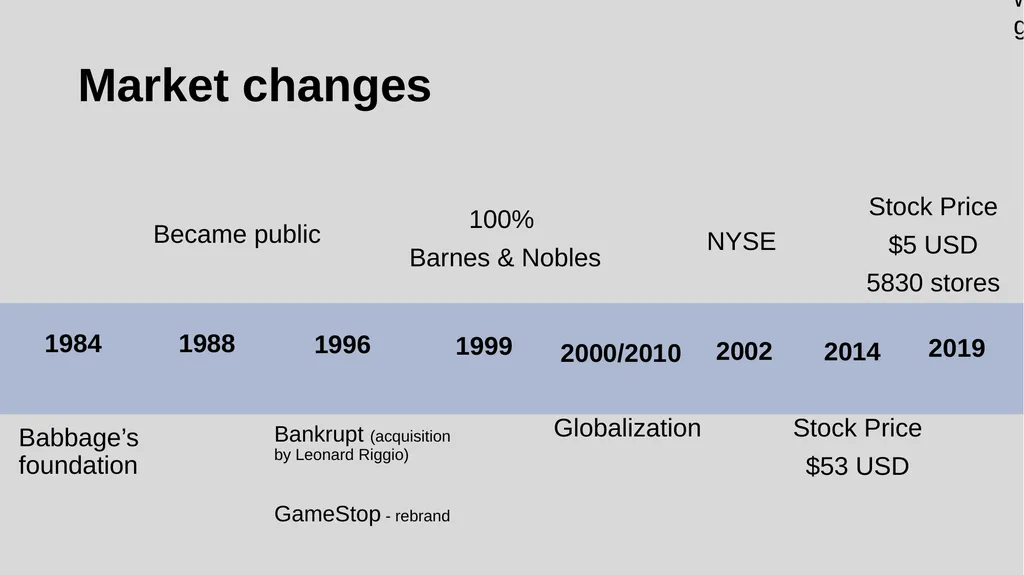
slide4. Market changes 1984 Technology
Traditional “shrink-wrapped” video games titles 1999 2000/2010 2002 2014 1988 2019 1996 Babbage’s foundation Became public Bankrupt (acquisition by Leonard Riggio)
GameStop - rebrand 100%
Barnes & Nobles Globalization Stock Price
$53 USD NYSE Stock Price
$5 USD
5830 stores<br>
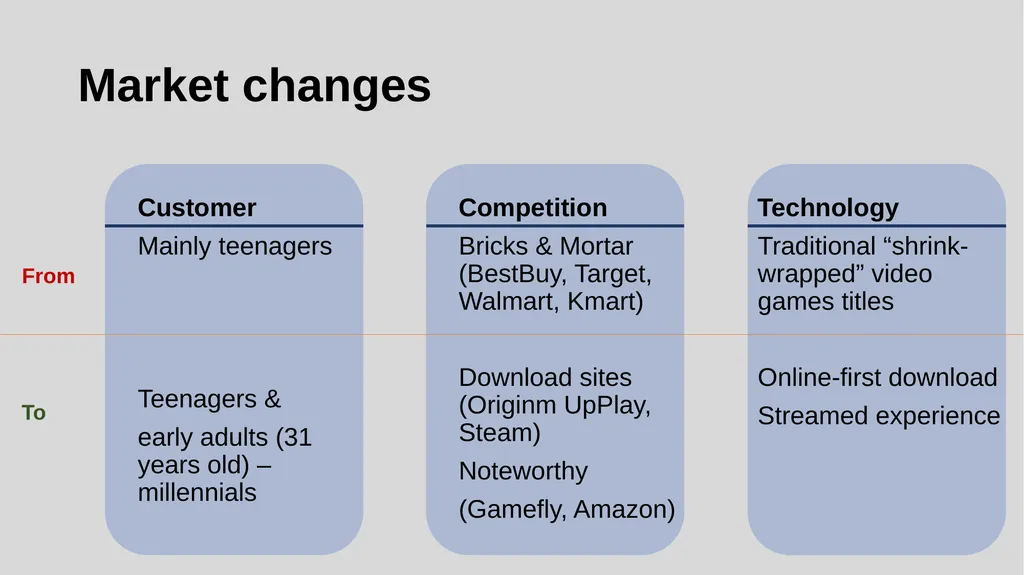
slide5. Market changes Customer
Mainly teenagers
Teenagers &
early adults (31 years old) – millennials Competition
Bricks & Mortar (BestBuy, Target, Walmart, Kmart)
Download sites (Originm UpPlay, Steam)
Noteworthy
(Gamefly, Amazon) From To Technology
Traditional “shrink-wrapped” video games titles
Online-first download
Streamed experience<br>
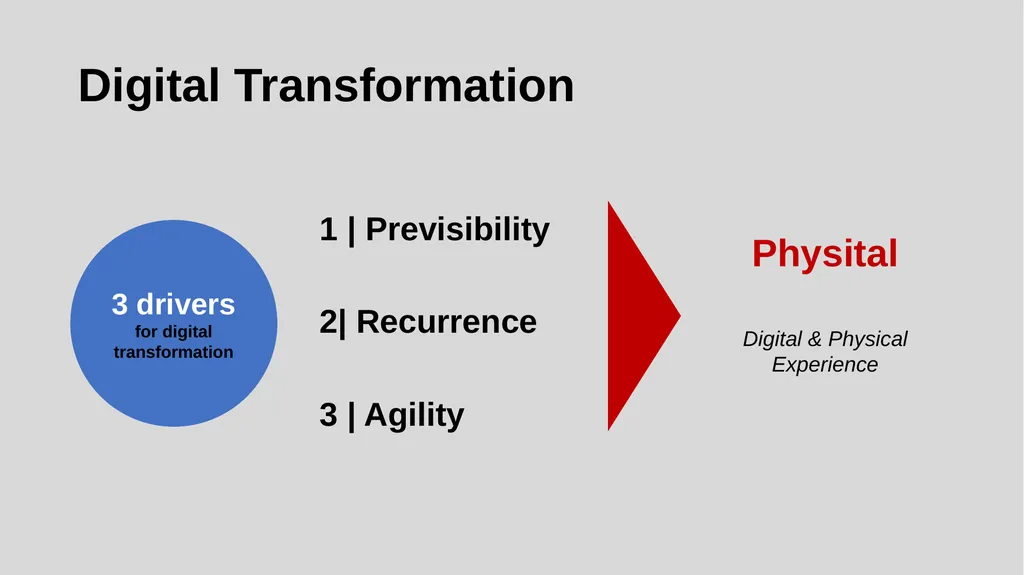
slide6. Digital Transformation 1 | Previsibility
2| Recurrence
3 | Agility Physital
Digital & Physical Experience 3 drivers for digital transformation<br>
slide7. 2 alternatives & recommendations<br>
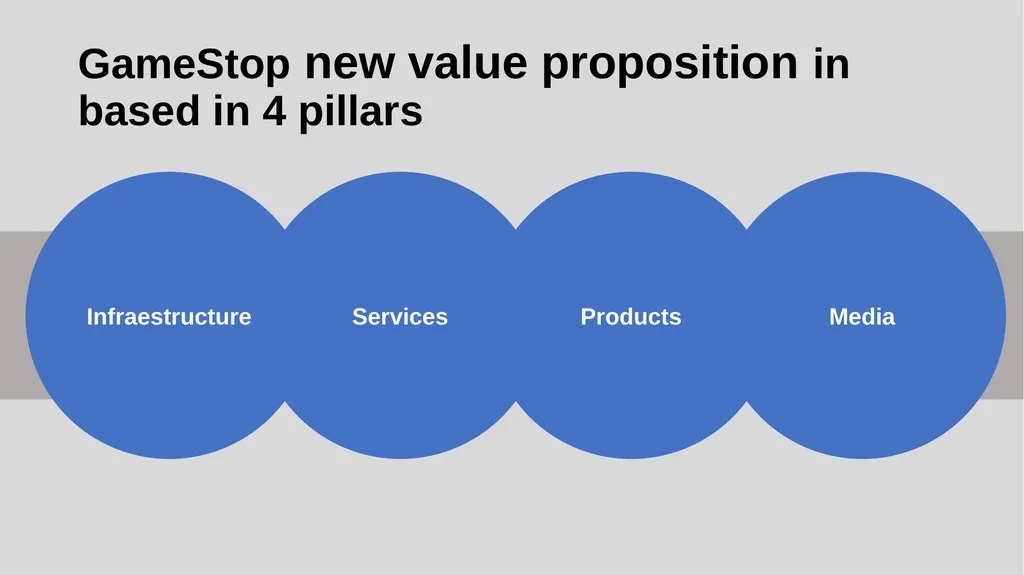
slide8. Infraestructure Services Products Media GameStop new value proposition in based in 4 pillars<br>
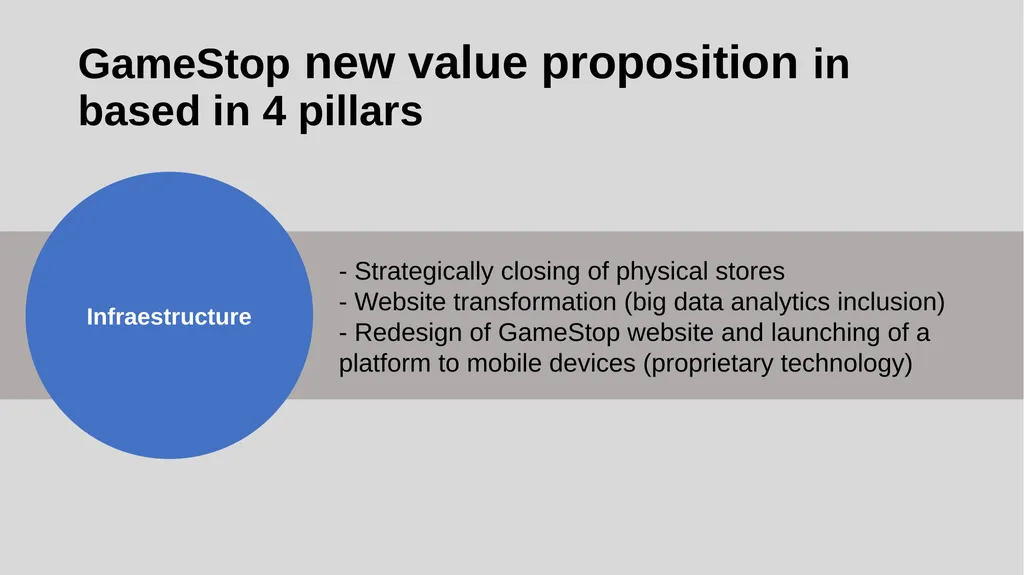
slide9. - Strategically closing of physical stores
- Website transformation (big data analytics inclusion)
- Redesign of GameStop website and launching of a platform to mobile devices (proprietary technology) Infraestructure GameStop new value proposition in based in 4 pillars<br>
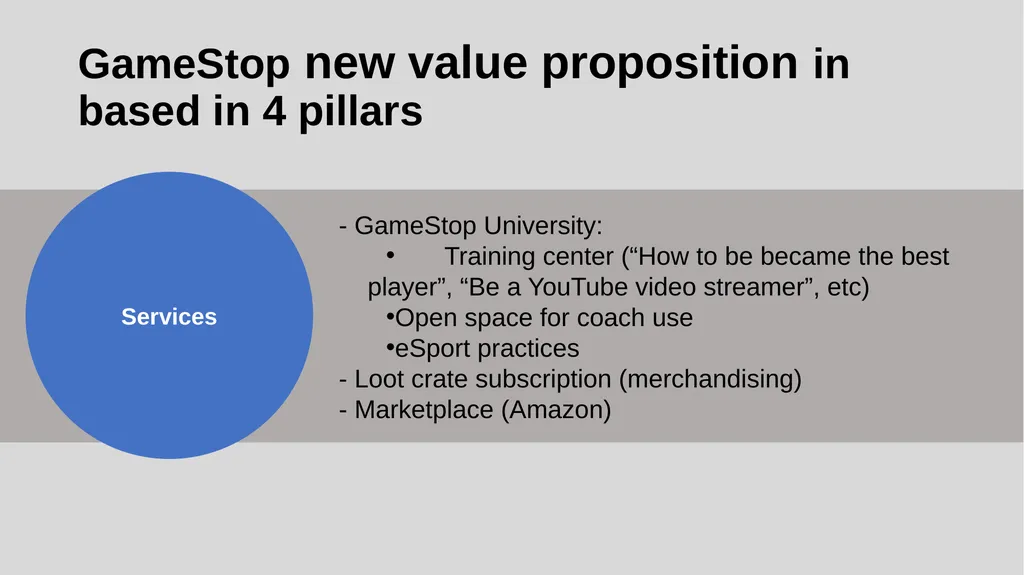
slide10. - GameStop University:
Training center (“How to be became the best player”, “Be a YouTube video streamer”, etc)
Open space for coach use
eSport practices
- Loot crate subscription (merchandising)
- Marketplace (Amazon) Services GameStop new value proposition in based in 4 pillars<br>
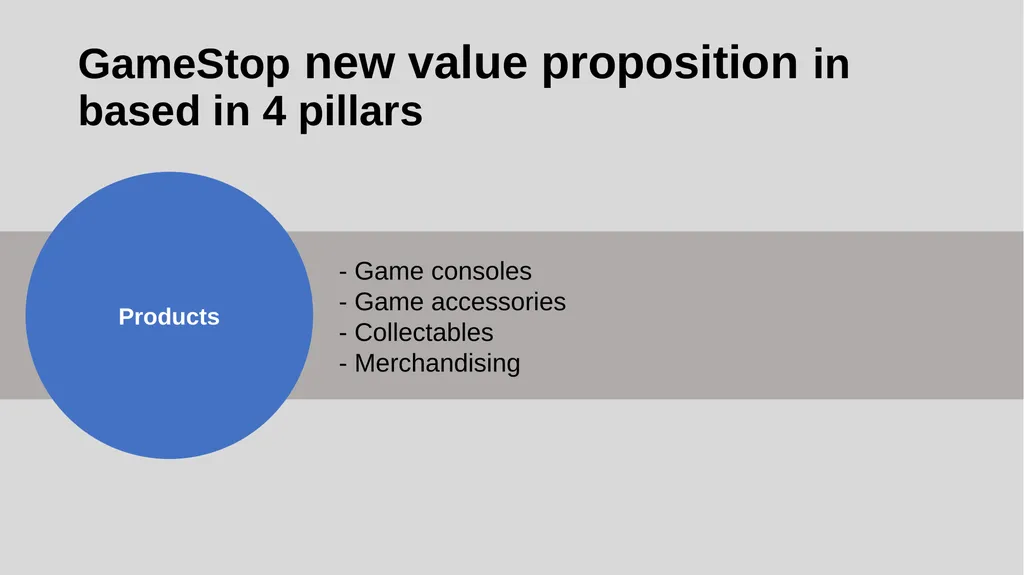
slide11. - Game consoles
- Game accessories
- Collectables
- Merchandising Products GameStop new value proposition in based in 4 pillars<br>
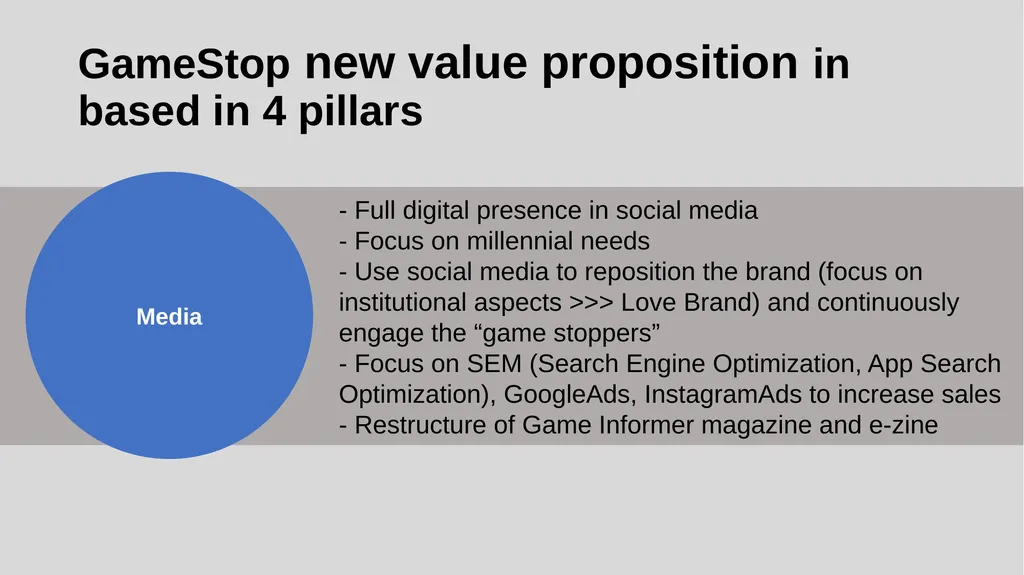
slide12. - Full digital presence in social media
- Focus on millennial needs
- Use social media to reposition the brand (focus on institutional aspects >>> Love Brand) and continuously engage the “game stoppers”
- Focus on SEM (Search Engine Optimization, App Search Optimization), GoogleAds, InstagramAds to increase sales
- Restructure of Game Informer magazine and e-zine Media GameStop new value proposition in based in 4 pillars<br>
slide13. 3 implementation<br>
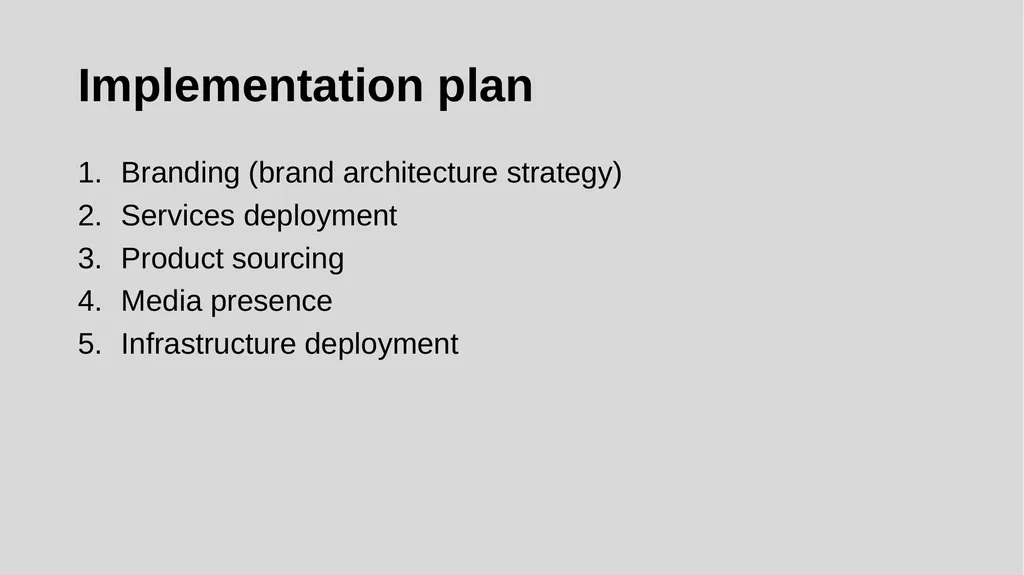
slide14. Implementation plan Branding (brand architecture strategy)
Services deployment
Product sourcing
Media presence
Infrastructure deployment<br>
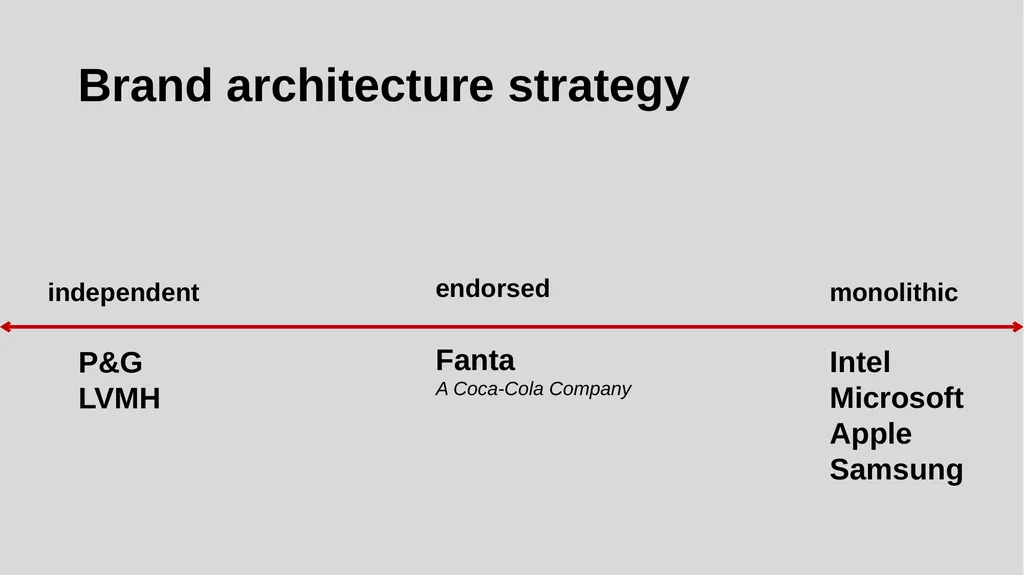
slide15. Brand architecture strategy independent endorsed monolithic P&G
LVMH Fanta
A Coca-Cola Company Intel
Microsoft
Apple
Samsung<br>
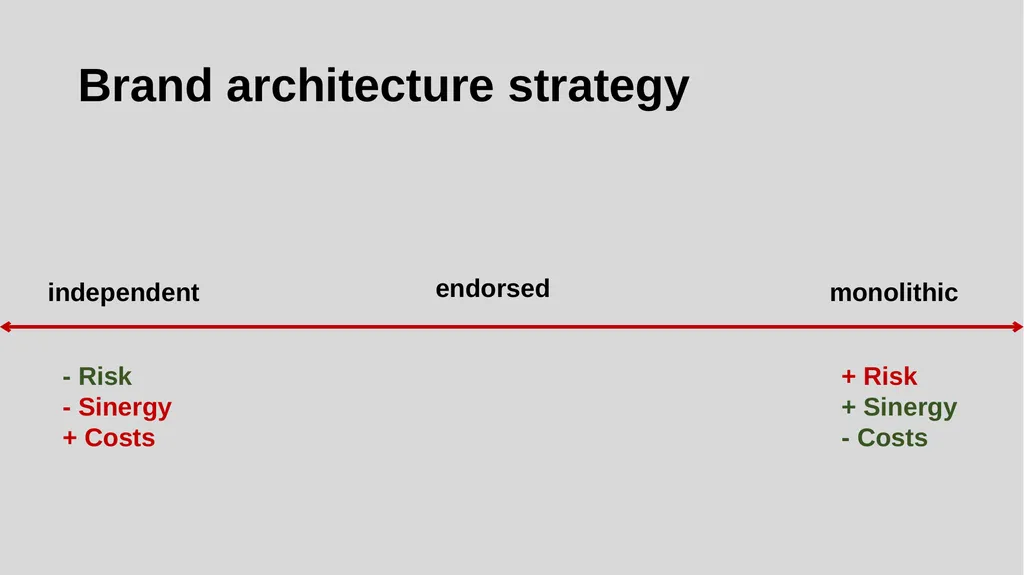
slide16. Brand architecture strategy independent endorsed monolithic - Risk
- Sinergy
+ Costs + Risk
+ Sinergy
- Costs<br>
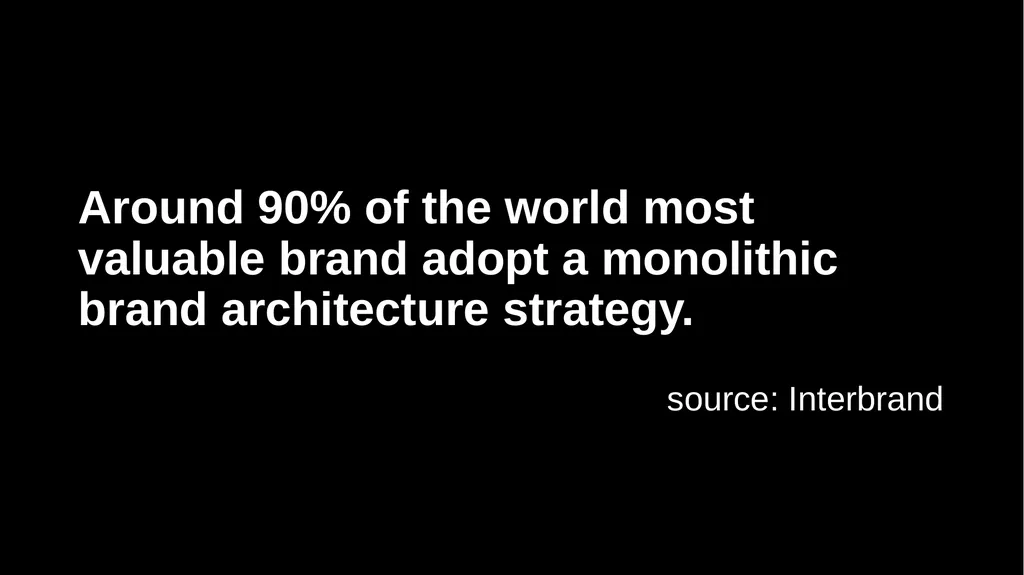
slide17. Around 90% of the world most valuable brand adopt a monolithic brand architecture strategy. source: Interbrand<br>
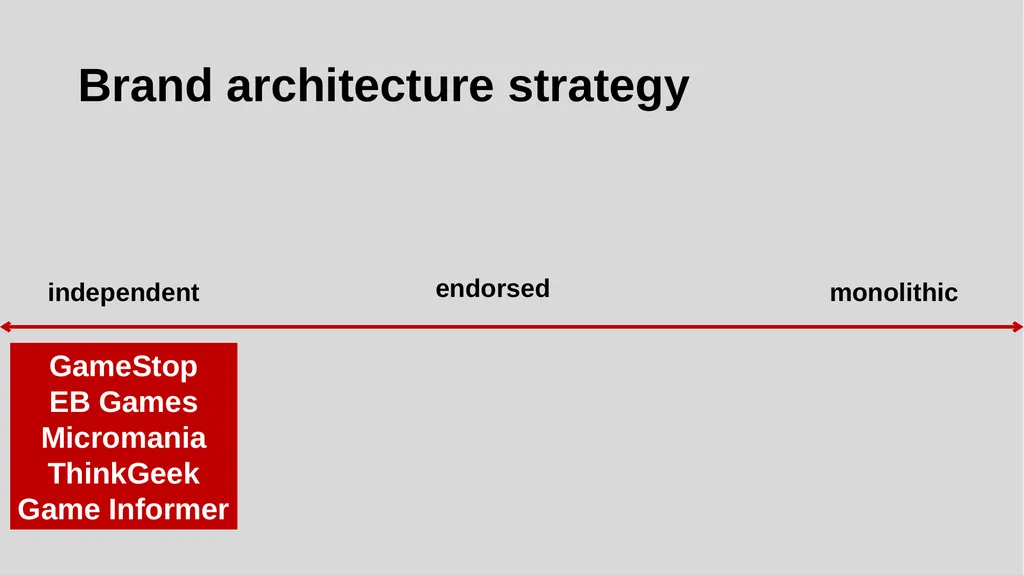
slide18. Brand architecture strategy independent endorsed monolithic GameStop
EB Games
Micromania
ThinkGeek
Game Informer<br>
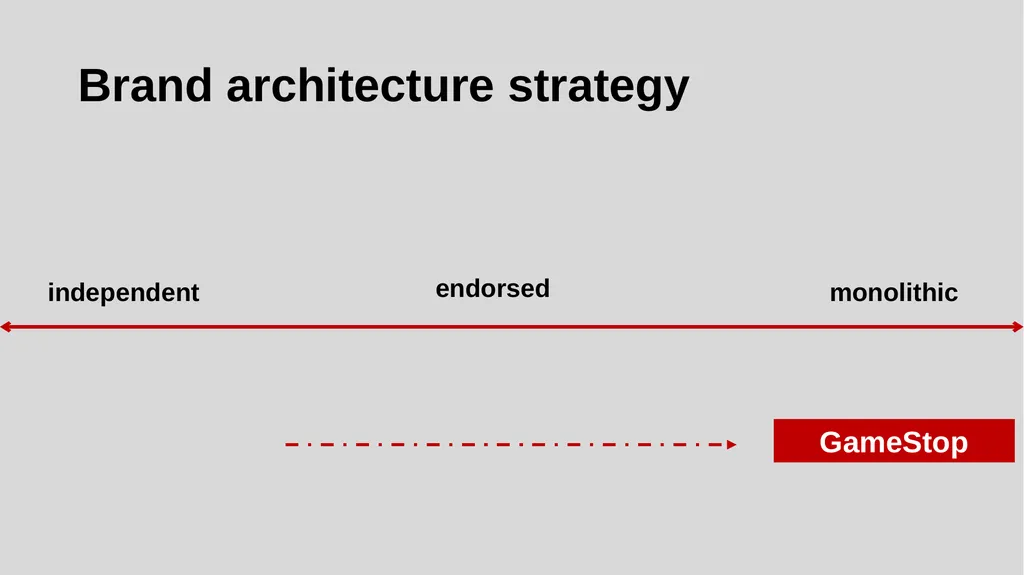
slide19. Brand architecture strategy independent endorsed monolithic GameStop<br>
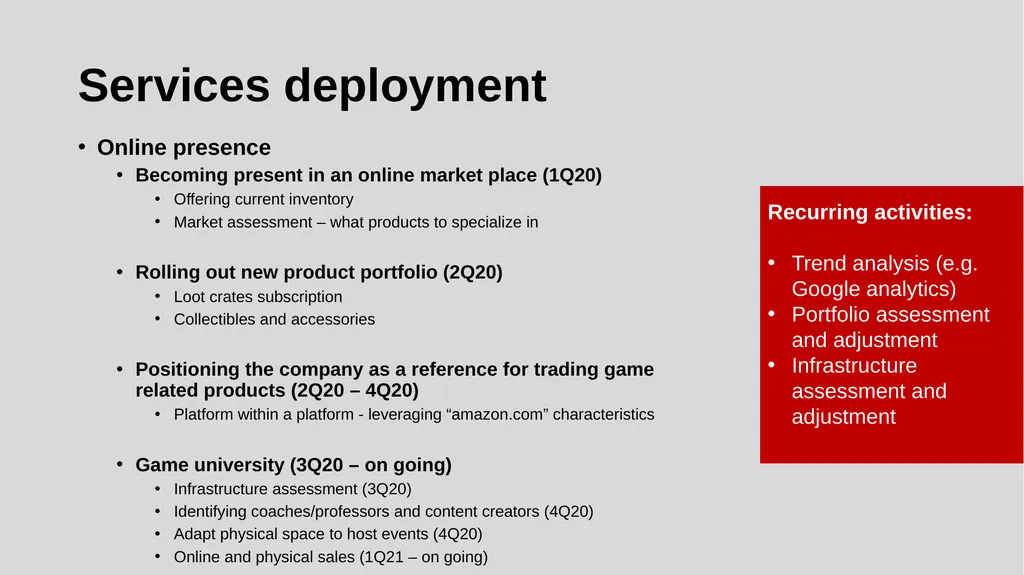
slide20. Services deployment Online presence
Becoming present in an online market place (1Q20)
Offering current inventory
Market assessment – what products to specialize in
Rolling out new product portfolio (2Q20)
Loot crates subscription
Collectibles and accessories
Positioning the company as a reference for trading game related products (2Q20 – 4Q20)
Platform within a platform - leveraging “amazon.com” characteristics
Game university (3Q20 – on going)
Infrastructure assessment (3Q20)
Identifying coaches/professors and content creators (4Q20)
Adapt physical space to host events (4Q20)
Online and physical sales (1Q21 – on going) Recurring activities:
Trend analysis (e.g. Google analytics)
Portfolio assessment and adjustment
Infrastructure assessment and adjustment<br>
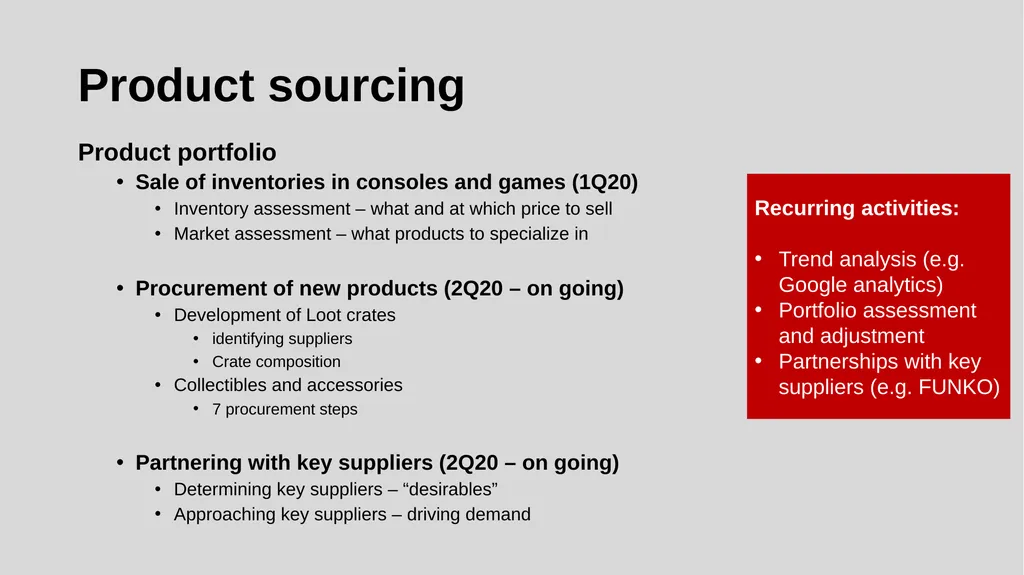
slide21. Product sourcing Product portfolio
Sale of inventories in consoles and games (1Q20)
Inventory assessment – what and at which price to sell
Market assessment – what products to specialize in
Procurement of new products (2Q20 – on going)
Development of Loot crates
identifying suppliers
Crate composition
Collectibles and accessories
7 procurement steps
Partnering with key suppliers (2Q20 – on going)
Determining key suppliers – “desirables”
Approaching key suppliers – driving demand Recurring activities:
Trend analysis (e.g. Google analytics)
Portfolio assessment and adjustment
Partnerships with key suppliers (e.g. FUNKO)<br>
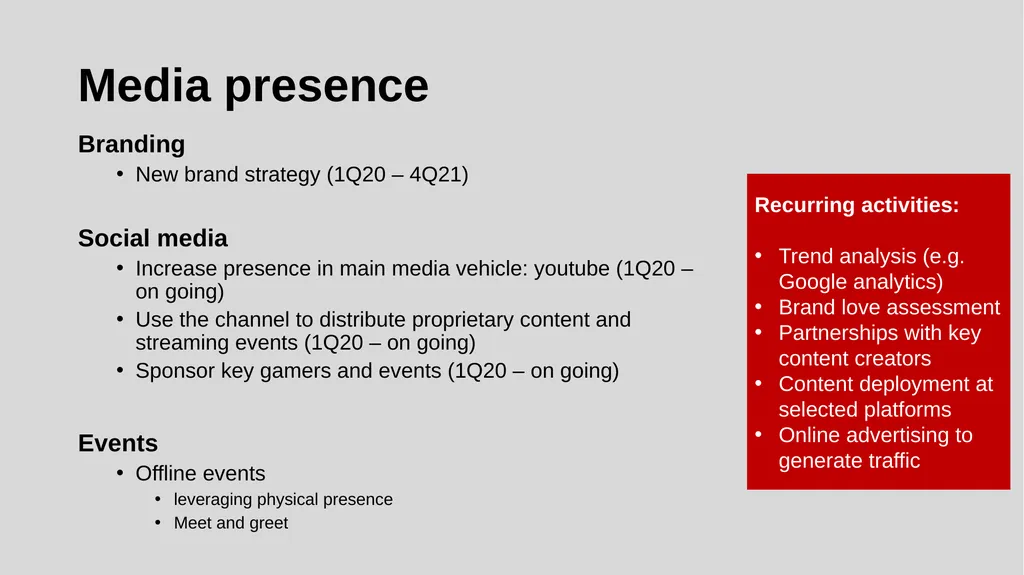
slide22. Media presence Branding
New brand strategy (1Q20 – 4Q21)
Social media
Increase presence in main media vehicle: youtube (1Q20 – on going)
Use the channel to distribute proprietary content and streaming events (1Q20 – on going)
Sponsor key gamers and events (1Q20 – on going)
Events
Offline events
leveraging physical presence
Meet and greet Recurring activities:
Trend analysis (e.g. Google analytics)
Brand love assessment
Partnerships with key content creators
Content deployment at selected platforms
Online advertising to generate traffic<br>
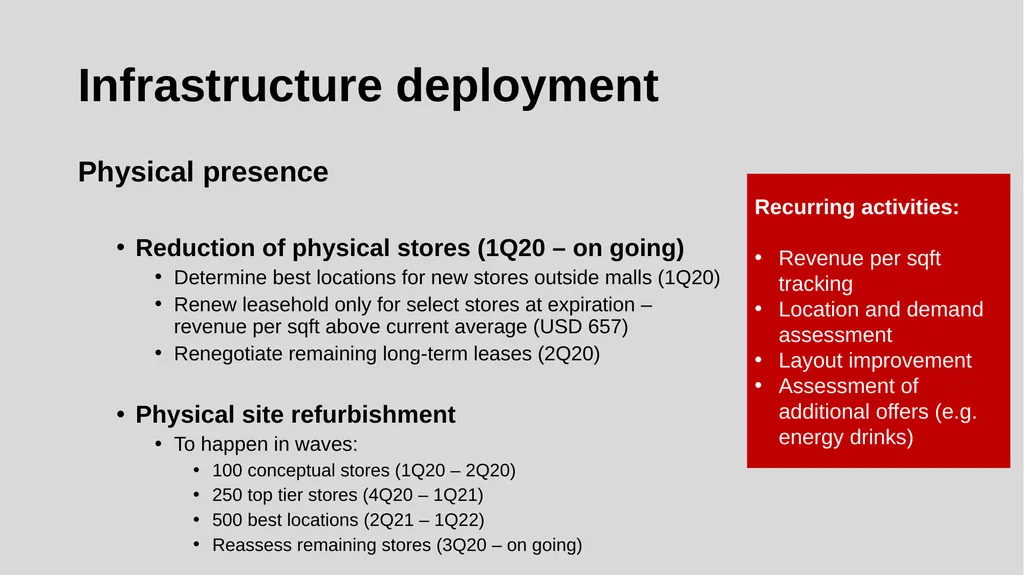
slide23. Infrastructure deployment Physical presence
Reduction of physical stores (1Q20 – on going)
Determine best locations for new stores outside malls (1Q20)
Renew leasehold only for select stores at expiration – revenue per sqft above current average (USD 657)
Renegotiate remaining long-term leases (2Q20)
Physical site refurbishment
To happen in waves:
100 conceptual stores (1Q20 – 2Q20)
250 top tier stores (4Q20 – 1Q21)
500 best locations (2Q21 – 1Q22)
Reassess remaining stores (3Q20 – on going) Recurring activities:
Revenue per sqft tracking
Location and demand assessment
Layout improvement
Assessment of additional offers (e.g. energy drinks)<br>
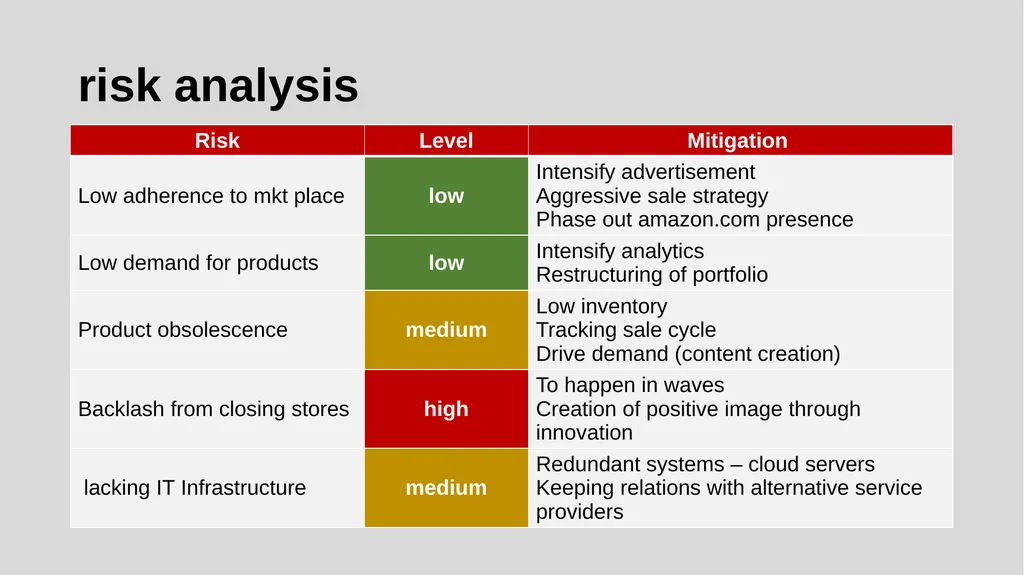
slide24. risk analysis<br>
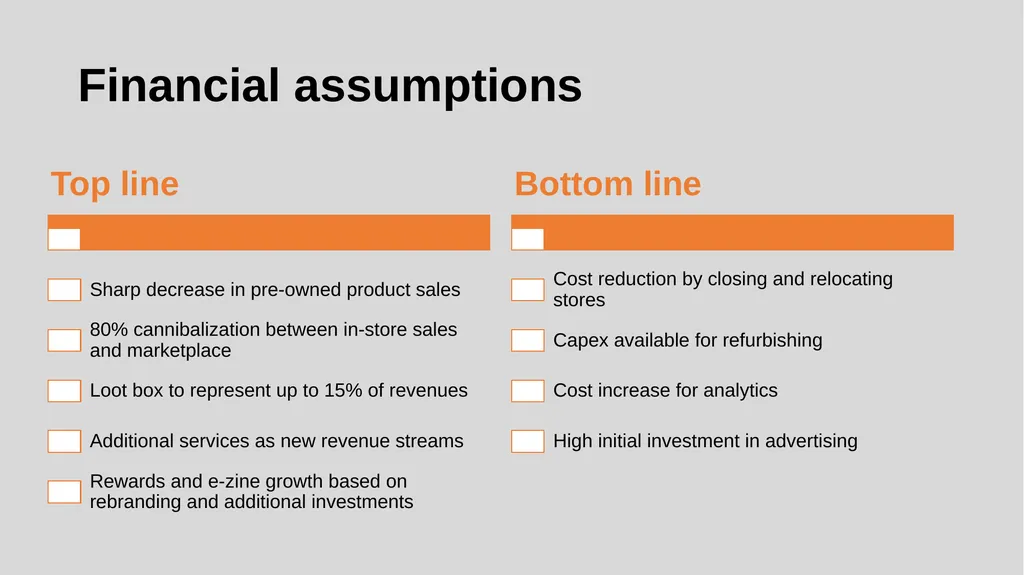
slide25. Financial assumptions<br>
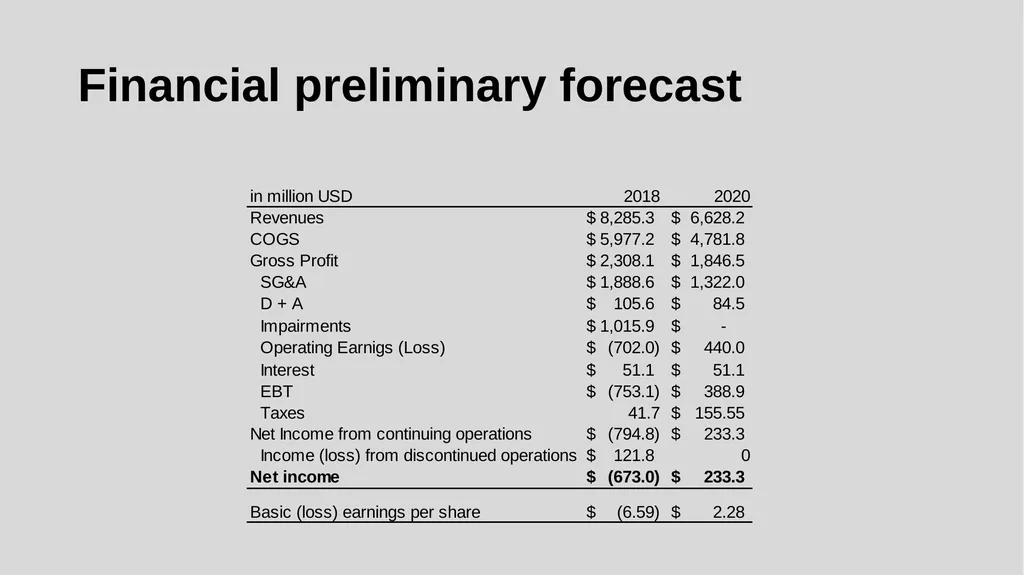
slide26. Financial preliminary forecast<br>
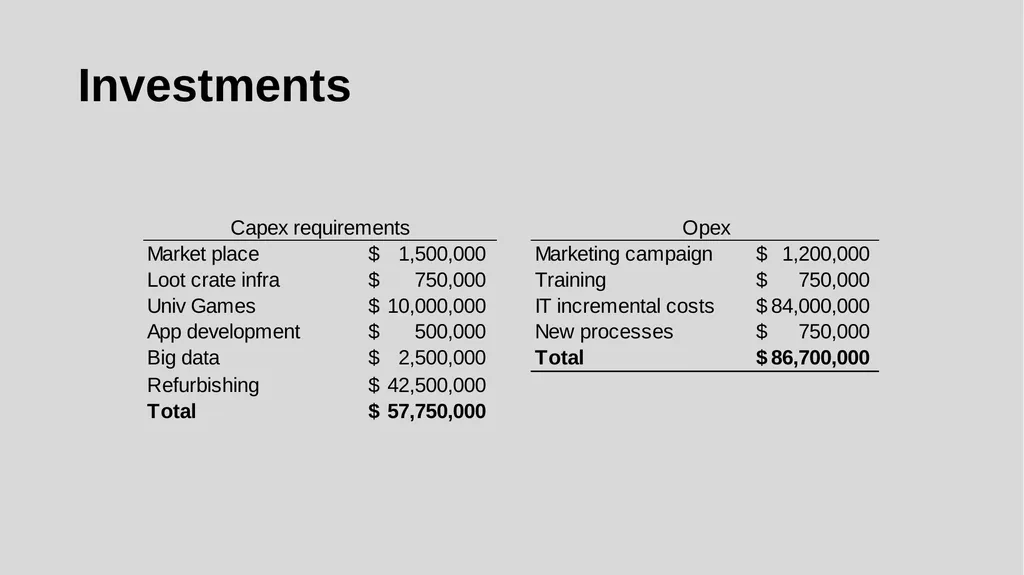
slide27. Investments<br>
slide28. 2 wrap-up<br>
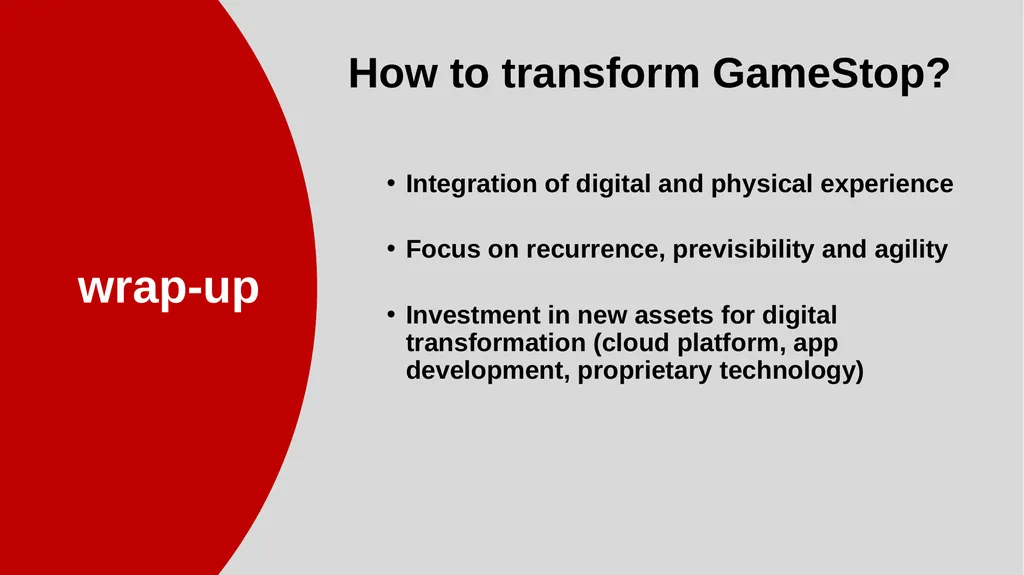
slide29. wrap-up How to transform GameStop? Integration of digital and physical experience
Focus on recurrence, previsibility and agility
Investment in new assets for digital transformation (cloud platform, app development, proprietary technology)<br>
George Sherman
Sarah Beattie & Team presented by:
Decio Soares
Nahana Caetano
Romilson Teles
Tobias Walzberg Insper | Sao Paulo – Brazil<br>
slide2. agenda 1 | Analysis of the situation
2 | Alternatives & recommendations
3 | Implementation
4 | Wrap-up<br>
slide3. 1 analysis of the situation<br>
slide4. Market changes 1984 Technology
Traditional “shrink-wrapped” video games titles 1999 2000/2010 2002 2014 1988 2019 1996 Babbage’s foundation Became public Bankrupt (acquisition by Leonard Riggio)
GameStop - rebrand 100%
Barnes & Nobles Globalization Stock Price
$53 USD NYSE Stock Price
$5 USD
5830 stores<br>
slide5. Market changes Customer
Mainly teenagers
Teenagers &
early adults (31 years old) – millennials Competition
Bricks & Mortar (BestBuy, Target, Walmart, Kmart)
Download sites (Originm UpPlay, Steam)
Noteworthy
(Gamefly, Amazon) From To Technology
Traditional “shrink-wrapped” video games titles
Online-first download
Streamed experience<br>
slide6. Digital Transformation 1 | Previsibility
2| Recurrence
3 | Agility Physital
Digital & Physical Experience 3 drivers for digital transformation<br>
slide7. 2 alternatives & recommendations<br>
slide8. Infraestructure Services Products Media GameStop new value proposition in based in 4 pillars<br>
slide9. - Strategically closing of physical stores
- Website transformation (big data analytics inclusion)
- Redesign of GameStop website and launching of a platform to mobile devices (proprietary technology) Infraestructure GameStop new value proposition in based in 4 pillars<br>
slide10. - GameStop University:
Training center (“How to be became the best player”, “Be a YouTube video streamer”, etc)
Open space for coach use
eSport practices
- Loot crate subscription (merchandising)
- Marketplace (Amazon) Services GameStop new value proposition in based in 4 pillars<br>
slide11. - Game consoles
- Game accessories
- Collectables
- Merchandising Products GameStop new value proposition in based in 4 pillars<br>
slide12. - Full digital presence in social media
- Focus on millennial needs
- Use social media to reposition the brand (focus on institutional aspects >>> Love Brand) and continuously engage the “game stoppers”
- Focus on SEM (Search Engine Optimization, App Search Optimization), GoogleAds, InstagramAds to increase sales
- Restructure of Game Informer magazine and e-zine Media GameStop new value proposition in based in 4 pillars<br>
slide13. 3 implementation<br>
slide14. Implementation plan Branding (brand architecture strategy)
Services deployment
Product sourcing
Media presence
Infrastructure deployment<br>
slide15. Brand architecture strategy independent endorsed monolithic P&G
LVMH Fanta
A Coca-Cola Company Intel
Microsoft
Apple
Samsung<br>
slide16. Brand architecture strategy independent endorsed monolithic - Risk
- Sinergy
+ Costs + Risk
+ Sinergy
- Costs<br>
slide17. Around 90% of the world most valuable brand adopt a monolithic brand architecture strategy. source: Interbrand<br>
slide18. Brand architecture strategy independent endorsed monolithic GameStop
EB Games
Micromania
ThinkGeek
Game Informer<br>
slide19. Brand architecture strategy independent endorsed monolithic GameStop<br>
slide20. Services deployment Online presence
Becoming present in an online market place (1Q20)
Offering current inventory
Market assessment – what products to specialize in
Rolling out new product portfolio (2Q20)
Loot crates subscription
Collectibles and accessories
Positioning the company as a reference for trading game related products (2Q20 – 4Q20)
Platform within a platform - leveraging “amazon.com” characteristics
Game university (3Q20 – on going)
Infrastructure assessment (3Q20)
Identifying coaches/professors and content creators (4Q20)
Adapt physical space to host events (4Q20)
Online and physical sales (1Q21 – on going) Recurring activities:
Trend analysis (e.g. Google analytics)
Portfolio assessment and adjustment
Infrastructure assessment and adjustment<br>
slide21. Product sourcing Product portfolio
Sale of inventories in consoles and games (1Q20)
Inventory assessment – what and at which price to sell
Market assessment – what products to specialize in
Procurement of new products (2Q20 – on going)
Development of Loot crates
identifying suppliers
Crate composition
Collectibles and accessories
7 procurement steps
Partnering with key suppliers (2Q20 – on going)
Determining key suppliers – “desirables”
Approaching key suppliers – driving demand Recurring activities:
Trend analysis (e.g. Google analytics)
Portfolio assessment and adjustment
Partnerships with key suppliers (e.g. FUNKO)<br>
slide22. Media presence Branding
New brand strategy (1Q20 – 4Q21)
Social media
Increase presence in main media vehicle: youtube (1Q20 – on going)
Use the channel to distribute proprietary content and streaming events (1Q20 – on going)
Sponsor key gamers and events (1Q20 – on going)
Events
Offline events
leveraging physical presence
Meet and greet Recurring activities:
Trend analysis (e.g. Google analytics)
Brand love assessment
Partnerships with key content creators
Content deployment at selected platforms
Online advertising to generate traffic<br>
slide23. Infrastructure deployment Physical presence
Reduction of physical stores (1Q20 – on going)
Determine best locations for new stores outside malls (1Q20)
Renew leasehold only for select stores at expiration – revenue per sqft above current average (USD 657)
Renegotiate remaining long-term leases (2Q20)
Physical site refurbishment
To happen in waves:
100 conceptual stores (1Q20 – 2Q20)
250 top tier stores (4Q20 – 1Q21)
500 best locations (2Q21 – 1Q22)
Reassess remaining stores (3Q20 – on going) Recurring activities:
Revenue per sqft tracking
Location and demand assessment
Layout improvement
Assessment of additional offers (e.g. energy drinks)<br>
slide24. risk analysis<br>
slide25. Financial assumptions<br>
slide26. Financial preliminary forecast<br>
slide27. Investments<br>
slide28. 2 wrap-up<br>
slide29. wrap-up How to transform GameStop? Integration of digital and physical experience
Focus on recurrence, previsibility and agility
Investment in new assets for digital transformation (cloud platform, app development, proprietary technology)<br>