GCSE Science Parent information evening Mr L
Description: GCSE Science Parent information evening Mr L Macauley Director of Learning Pearson Edexcel specifications (Combined science) Specification code: 1SCO https:qualifications.pearson.comenqualificationsedexcel-gcsessciences-2016.html
Related Topics
Download Presentation
"GCSE Science Parent information evening Mr L" is the property of its rightful owner. Permission is granted to download and print the materials on this website for personal, non-commercial use only, and to display it on your personal computer provided you do not modify the materials and that you retain all copyright notices contained in the materials. By downloading content from our website, you accept the terms of this agreement.
Presentation Transcript
slide1. GCSE Science Parent information evening
Mr L Macauley – Director of Learning<br>
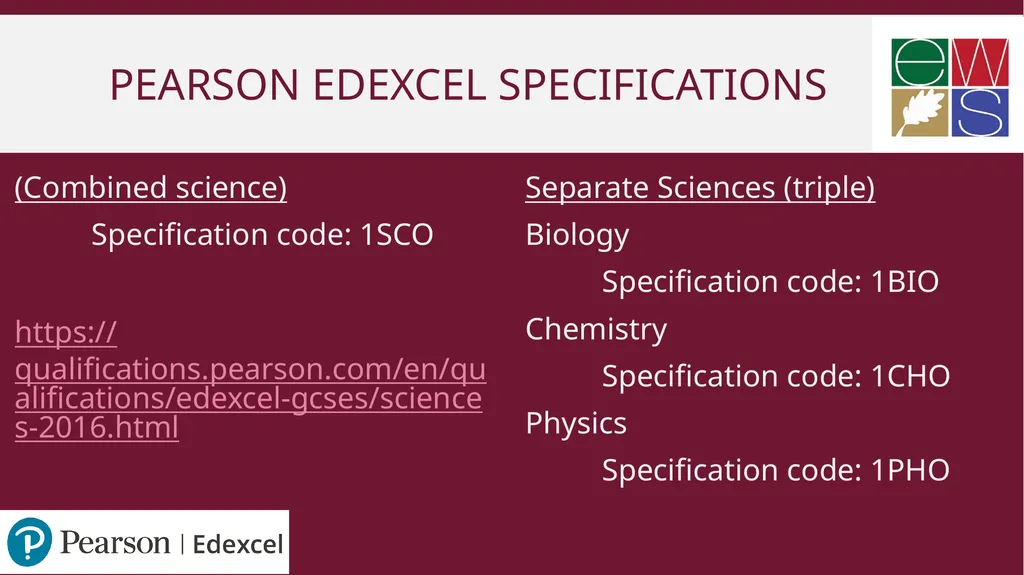
slide2. Pearson Edexcel specifications (Combined science)
Specification code: 1SCO
https://qualifications.pearson.com/en/qualifications/edexcel-gcses/sciences-2016.html Separate Sciences (triple)
Biology
Specification code: 1BIO
Chemistry
Specification code: 1CHO
Physics
Specification code: 1PHO<br>
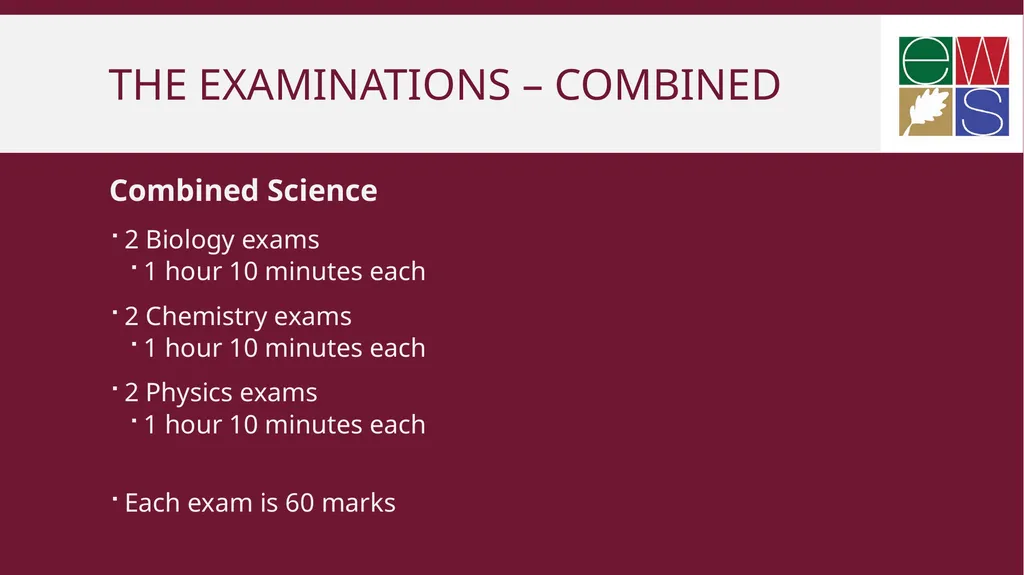
slide3. The examinations – COMBINED Combined Science 2 Biology exams
1 hour 10 minutes each
2 Chemistry exams
1 hour 10 minutes each
2 Physics exams
1 hour 10 minutes each
Each exam is 60 marks<br>
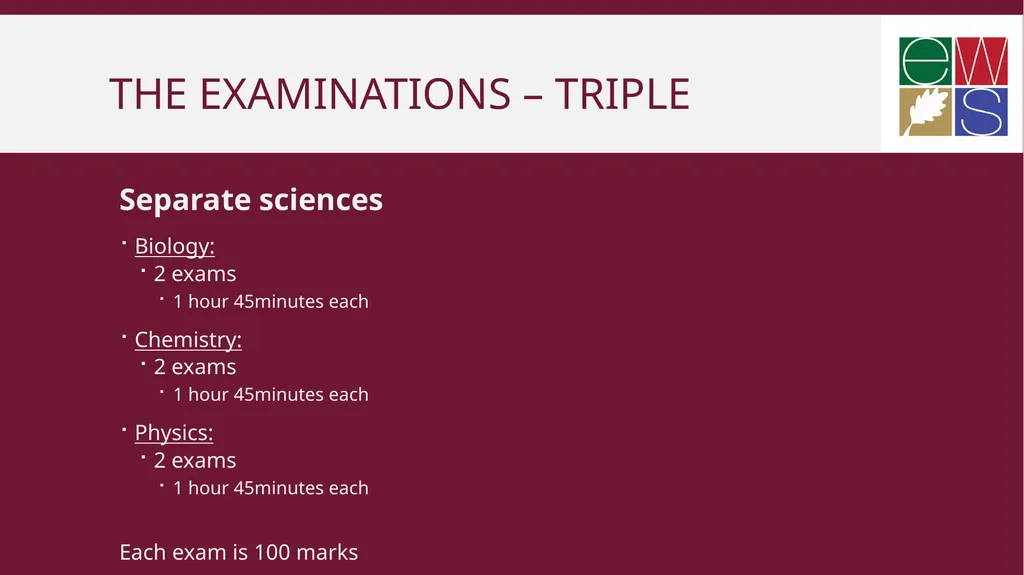
slide4. The examinations – triple Separate sciences Biology:
2 exams
1 hour 45minutes each
Chemistry:
2 exams
1 hour 45minutes each
Physics:
2 exams
1 hour 45minutes each
Each exam is 100 marks<br>
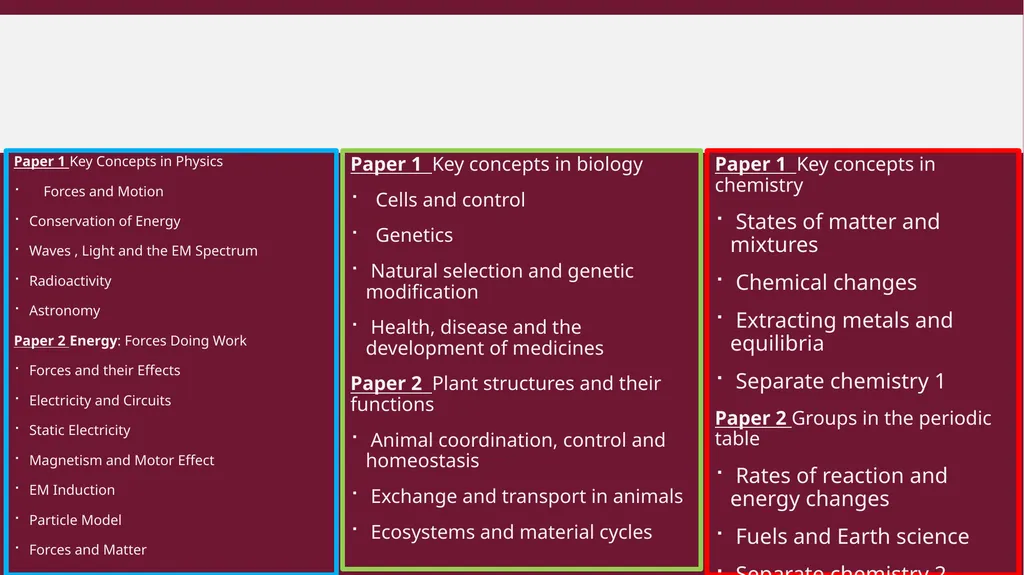
slide5. Paper 1 Key Concepts in Physics
Forces and Motion
Conservation of Energy
Waves , Light and the EM Spectrum
Radioactivity
Astronomy
Paper 2 Energy: Forces Doing Work
Forces and their Effects
Electricity and Circuits
Static Electricity
Magnetism and Motor Effect
EM Induction
Particle Model
Forces and Matter Paper 1 Key concepts in biology
Cells and control
Genetics
Natural selection and genetic modification
Health, disease and the development of medicines
Paper 2 Plant structures and their functions
Animal coordination, control and homeostasis
Exchange and transport in animals
Ecosystems and material cycles Paper 1 Key concepts in chemistry
States of matter and mixtures
Chemical changes
Extracting metals and equilibria
Separate chemistry 1
Paper 2 Groups in the periodic table
Rates of reaction and energy changes
Fuels and Earth science
Separate chemistry 2 TRIPLE SCIENCE TOPICS<br>
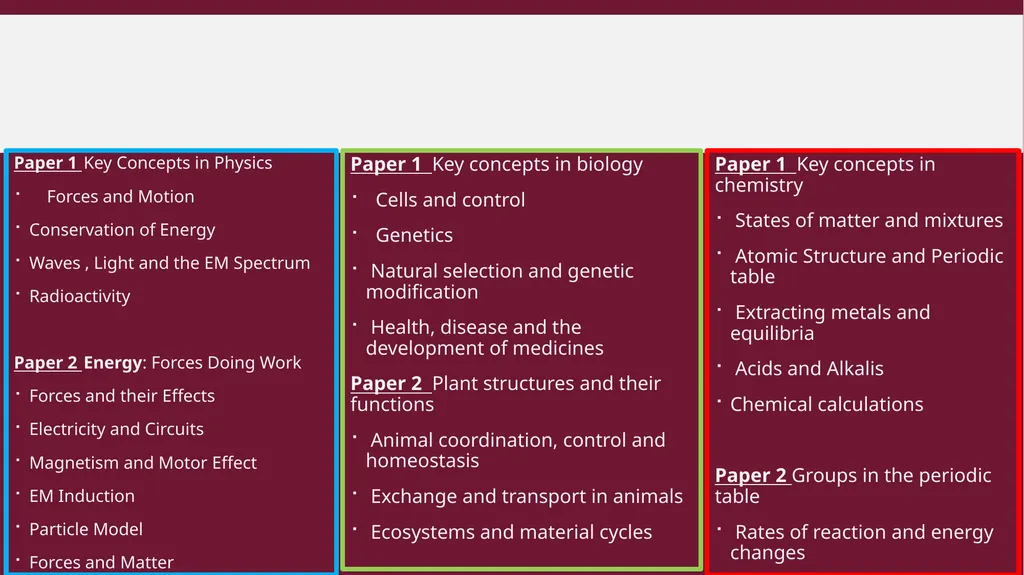
slide6. Paper 1 Key Concepts in Physics
Forces and Motion
Conservation of Energy
Waves , Light and the EM Spectrum
Radioactivity
Paper 2 Energy: Forces Doing Work
Forces and their Effects
Electricity and Circuits
Magnetism and Motor Effect
EM Induction
Particle Model
Forces and Matter Paper 1 Key concepts in biology
Cells and control
Genetics
Natural selection and genetic modification
Health, disease and the development of medicines
Paper 2 Plant structures and their functions
Animal coordination, control and homeostasis
Exchange and transport in animals
Ecosystems and material cycles Paper 1 Key concepts in chemistry
States of matter and mixtures
Atomic Structure and Periodic table
Extracting metals and equilibria
Acids and Alkalis
Chemical calculations
Paper 2 Groups in the periodic table
Rates of reaction and energy changes
Fuels and Earth science COMBINED SCIENCE TOPICS<br>
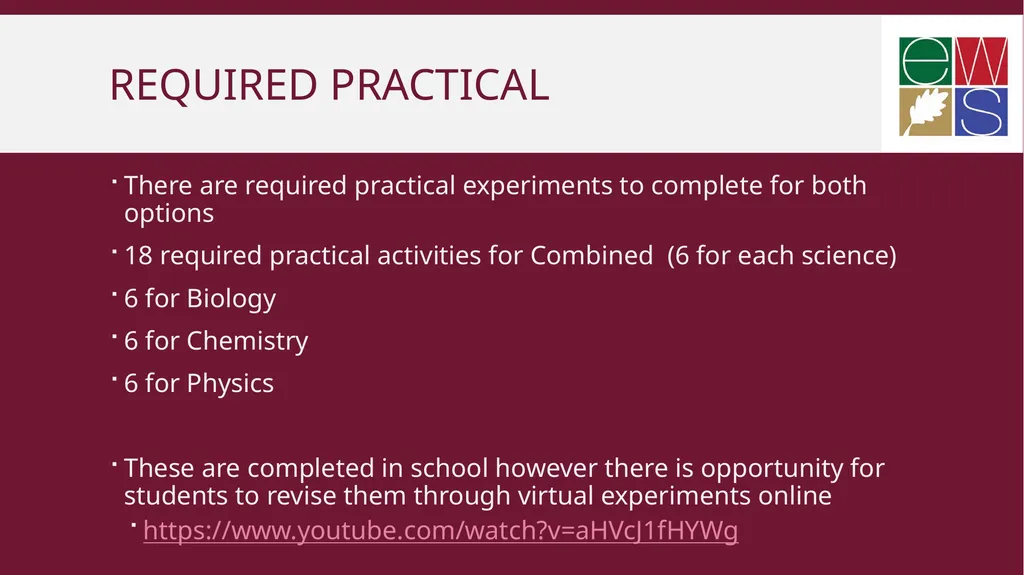
slide7. Required practical There are required practical experiments to complete for both options
18 required practical activities for Combined (6 for each science)
6 for Biology
6 for Chemistry
6 for Physics
These are completed in school however there is opportunity for students to revise them through virtual experiments online
https://www.youtube.com/watch?v=aHVcJ1fHYWg<br>
slide8. Y9 Baseline assessments Each student will completed a baseline assessment
This assessment will help us understand if the student is ready for KS4 or not
We will use the data to provide support to students which are not ready for KS4
We will use the data to identify areas for development in terms of scientific skills and aptitude.<br>
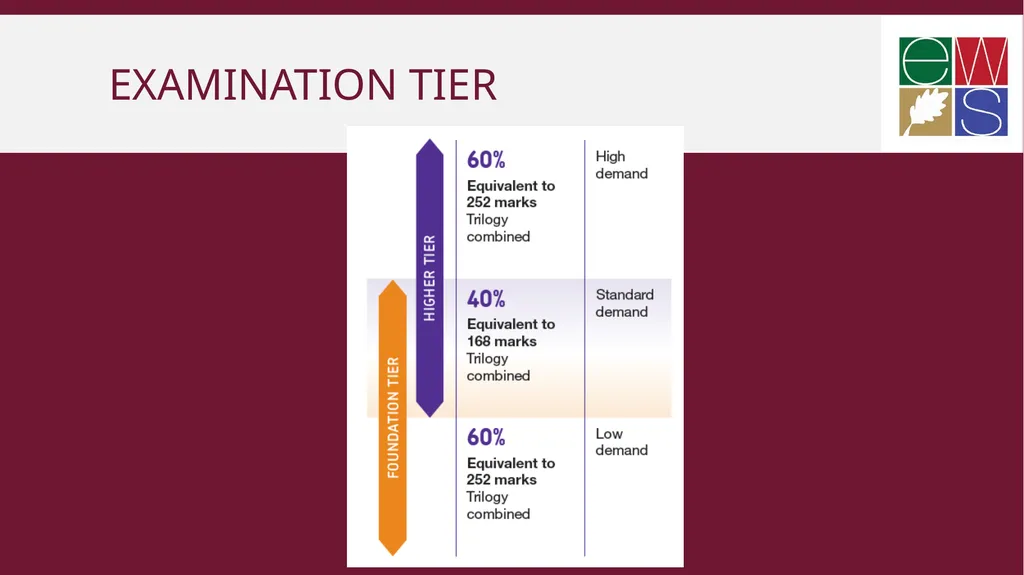
slide9. Examination tier<br>
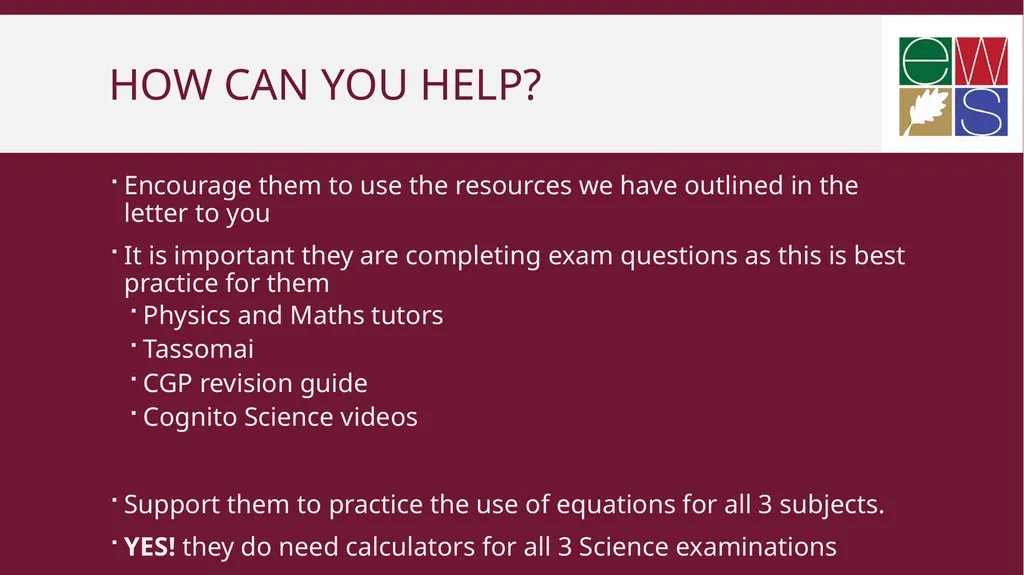
slide10. How can you help? Encourage them to use the resources we have outlined in the letter to you
It is important they are completing exam questions as this is best practice for them
Physics and Maths tutors
Tassomai
CGP revision guide
Cognito Science videos
Support them to practice the use of equations for all 3 subjects.
YES! they do need calculators for all 3 Science examinations<br>
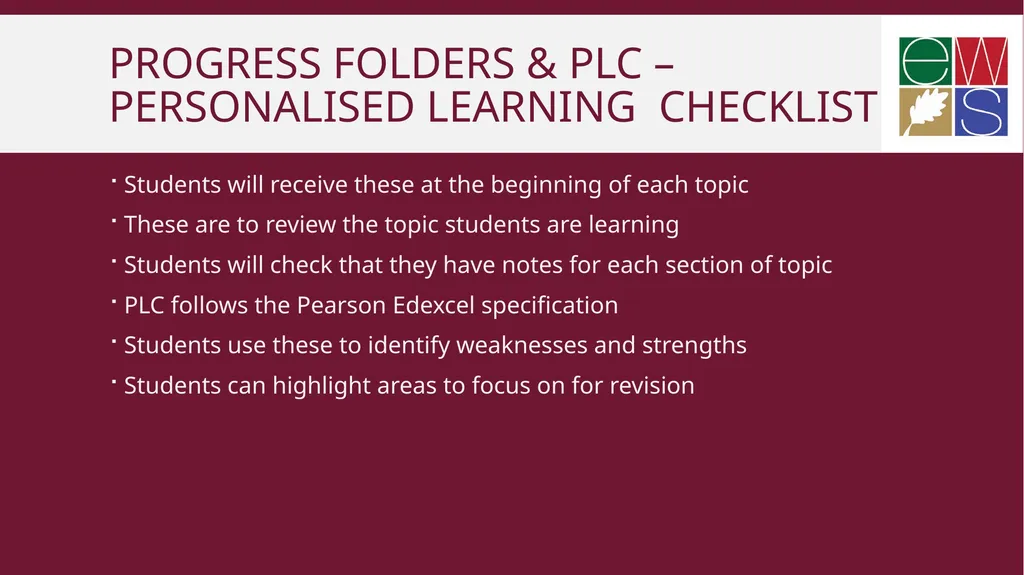
slide11. Progress folders & PLC – personalised learning checklist Students will receive these at the beginning of each topic
These are to review the topic students are learning
Students will check that they have notes for each section of topic
PLC follows the Pearson Edexcel specification
Students use these to identify weaknesses and strengths
Students can highlight areas to focus on for revision<br>
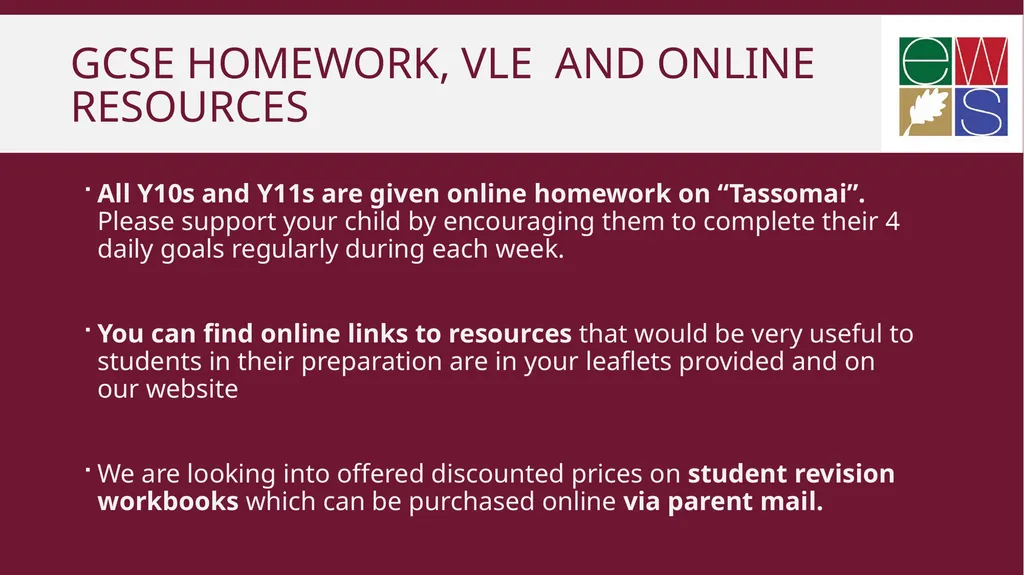
slide12. GCSE homework, VLE and online resources All Y10s and Y11s are given online homework on “Tassomai”. Please support your child by encouraging them to complete their 4 daily goals regularly during each week.
You can find online links to resources that would be very useful to students in their preparation are in your leaflets provided and on our website
We are looking into offered discounted prices on student revision workbooks which can be purchased online via parent mail.<br>
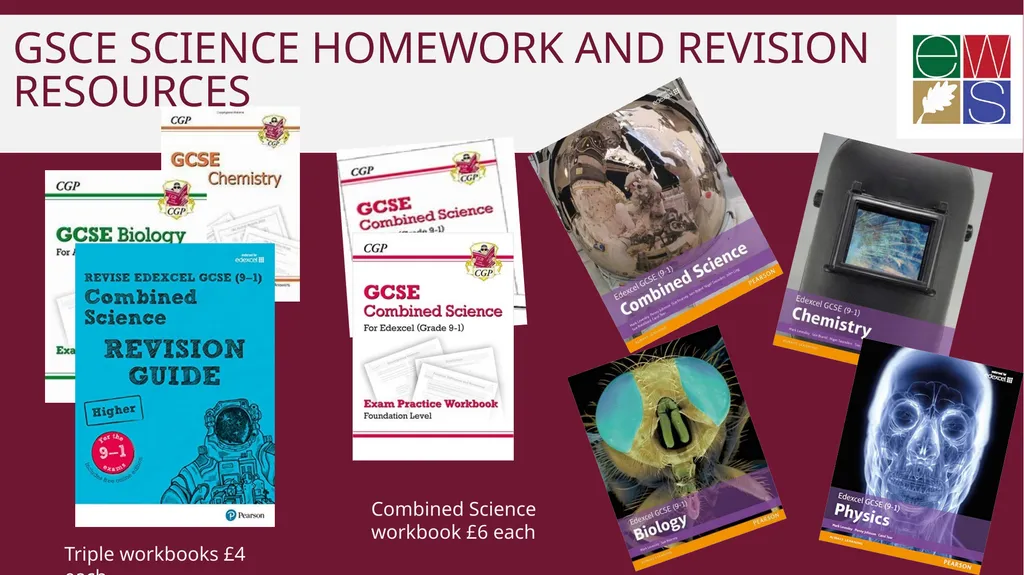
slide13. GSCE SCIENCE homework and Revision resources Triple workbooks £4 each Combined Science workbook £6 each<br>

slide14. Any Questions? Thank You<br>
Mr L Macauley – Director of Learning<br>
slide2. Pearson Edexcel specifications (Combined science)
Specification code: 1SCO
https://qualifications.pearson.com/en/qualifications/edexcel-gcses/sciences-2016.html Separate Sciences (triple)
Biology
Specification code: 1BIO
Chemistry
Specification code: 1CHO
Physics
Specification code: 1PHO<br>
slide3. The examinations – COMBINED Combined Science 2 Biology exams
1 hour 10 minutes each
2 Chemistry exams
1 hour 10 minutes each
2 Physics exams
1 hour 10 minutes each
Each exam is 60 marks<br>
slide4. The examinations – triple Separate sciences Biology:
2 exams
1 hour 45minutes each
Chemistry:
2 exams
1 hour 45minutes each
Physics:
2 exams
1 hour 45minutes each
Each exam is 100 marks<br>
slide5. Paper 1 Key Concepts in Physics
Forces and Motion
Conservation of Energy
Waves , Light and the EM Spectrum
Radioactivity
Astronomy
Paper 2 Energy: Forces Doing Work
Forces and their Effects
Electricity and Circuits
Static Electricity
Magnetism and Motor Effect
EM Induction
Particle Model
Forces and Matter Paper 1 Key concepts in biology
Cells and control
Genetics
Natural selection and genetic modification
Health, disease and the development of medicines
Paper 2 Plant structures and their functions
Animal coordination, control and homeostasis
Exchange and transport in animals
Ecosystems and material cycles Paper 1 Key concepts in chemistry
States of matter and mixtures
Chemical changes
Extracting metals and equilibria
Separate chemistry 1
Paper 2 Groups in the periodic table
Rates of reaction and energy changes
Fuels and Earth science
Separate chemistry 2 TRIPLE SCIENCE TOPICS<br>
slide6. Paper 1 Key Concepts in Physics
Forces and Motion
Conservation of Energy
Waves , Light and the EM Spectrum
Radioactivity
Paper 2 Energy: Forces Doing Work
Forces and their Effects
Electricity and Circuits
Magnetism and Motor Effect
EM Induction
Particle Model
Forces and Matter Paper 1 Key concepts in biology
Cells and control
Genetics
Natural selection and genetic modification
Health, disease and the development of medicines
Paper 2 Plant structures and their functions
Animal coordination, control and homeostasis
Exchange and transport in animals
Ecosystems and material cycles Paper 1 Key concepts in chemistry
States of matter and mixtures
Atomic Structure and Periodic table
Extracting metals and equilibria
Acids and Alkalis
Chemical calculations
Paper 2 Groups in the periodic table
Rates of reaction and energy changes
Fuels and Earth science COMBINED SCIENCE TOPICS<br>
slide7. Required practical There are required practical experiments to complete for both options
18 required practical activities for Combined (6 for each science)
6 for Biology
6 for Chemistry
6 for Physics
These are completed in school however there is opportunity for students to revise them through virtual experiments online
https://www.youtube.com/watch?v=aHVcJ1fHYWg<br>
slide8. Y9 Baseline assessments Each student will completed a baseline assessment
This assessment will help us understand if the student is ready for KS4 or not
We will use the data to provide support to students which are not ready for KS4
We will use the data to identify areas for development in terms of scientific skills and aptitude.<br>
slide9. Examination tier<br>
slide10. How can you help? Encourage them to use the resources we have outlined in the letter to you
It is important they are completing exam questions as this is best practice for them
Physics and Maths tutors
Tassomai
CGP revision guide
Cognito Science videos
Support them to practice the use of equations for all 3 subjects.
YES! they do need calculators for all 3 Science examinations<br>
slide11. Progress folders & PLC – personalised learning checklist Students will receive these at the beginning of each topic
These are to review the topic students are learning
Students will check that they have notes for each section of topic
PLC follows the Pearson Edexcel specification
Students use these to identify weaknesses and strengths
Students can highlight areas to focus on for revision<br>
slide12. GCSE homework, VLE and online resources All Y10s and Y11s are given online homework on “Tassomai”. Please support your child by encouraging them to complete their 4 daily goals regularly during each week.
You can find online links to resources that would be very useful to students in their preparation are in your leaflets provided and on our website
We are looking into offered discounted prices on student revision workbooks which can be purchased online via parent mail.<br>
slide13. GSCE SCIENCE homework and Revision resources Triple workbooks £4 each Combined Science workbook £6 each<br>
slide14. Any Questions? Thank You<br>