"GENETICS & GENOMICS WORKGROUP REPORT CDC- ACBCYW" is the property of its rightful owner. Permission is granted to
download and print the materials on this website for personal, non-commercial use only, and to display it
on your personal computer provided you do not modify the materials and that you retain all copyright
notices contained in the materials. By downloading content from our website, you accept the terms of this
agreement.
Presentation Transcript
01
GENETICS & GENOMICS WORKGROUP REPORT
CDC- ACBCYW February 2020<br>
02
WORKGROUP MEMBERS Co-Chairs
Shubhada Dhage, MD, FACS and Joyce Turner, MS, CGC
Susan Brown, MS, RN
Sue Friedman, DVM
Sadie Hudson, PhD, RN, WHNP, FAANP<br>
03
Provide the committee with an overview of utilization of genetic and genomic testing in interpreting risk outcomes for young women facing breast cancer WORKGROUP CHARGE<br>
04
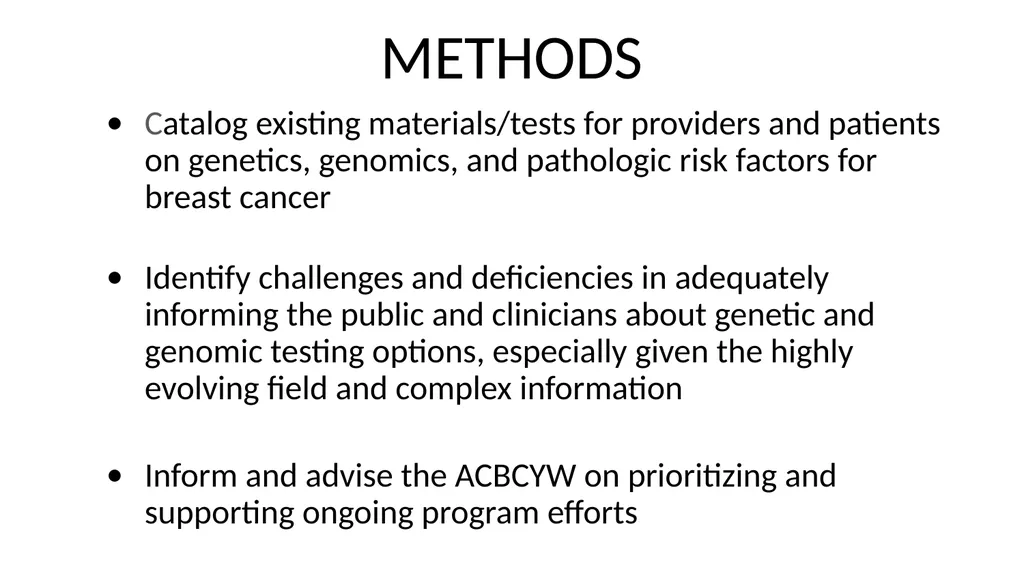
METHODS Catalog existing materials/tests for providers and patients on genetics, genomics, and pathologic risk factors for breast cancer
Identify challenges and deficiencies in adequately informing the public and clinicians about genetic and genomic testing options, especially given the highly evolving field and complex information
Inform and advise the ACBCYW on prioritizing and supporting ongoing program efforts<br>
05
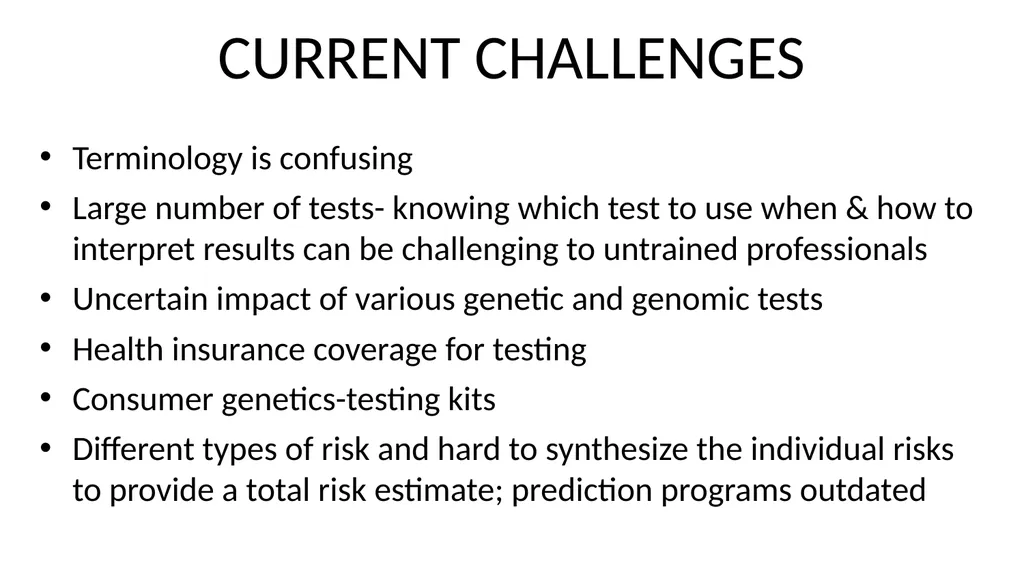
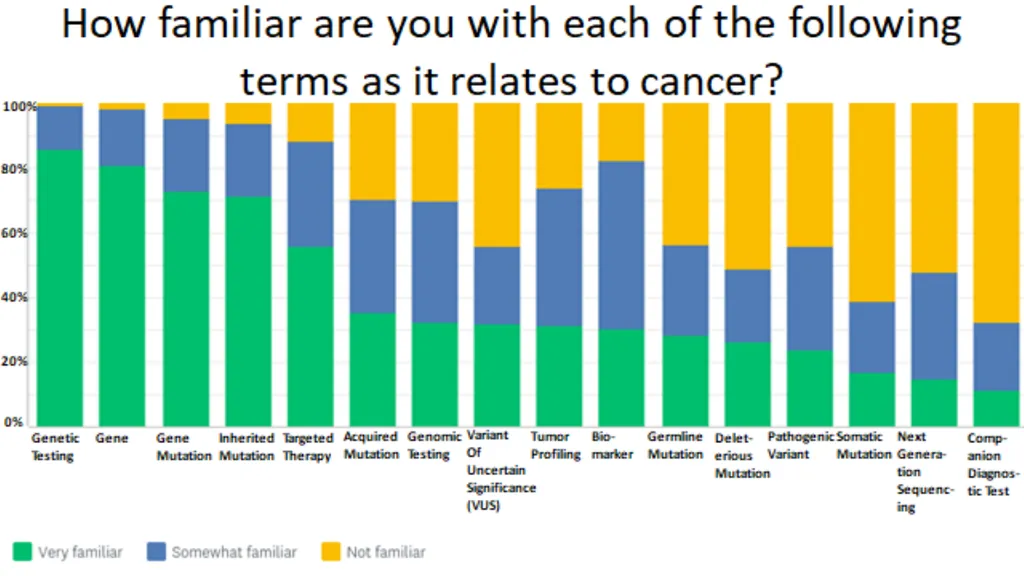
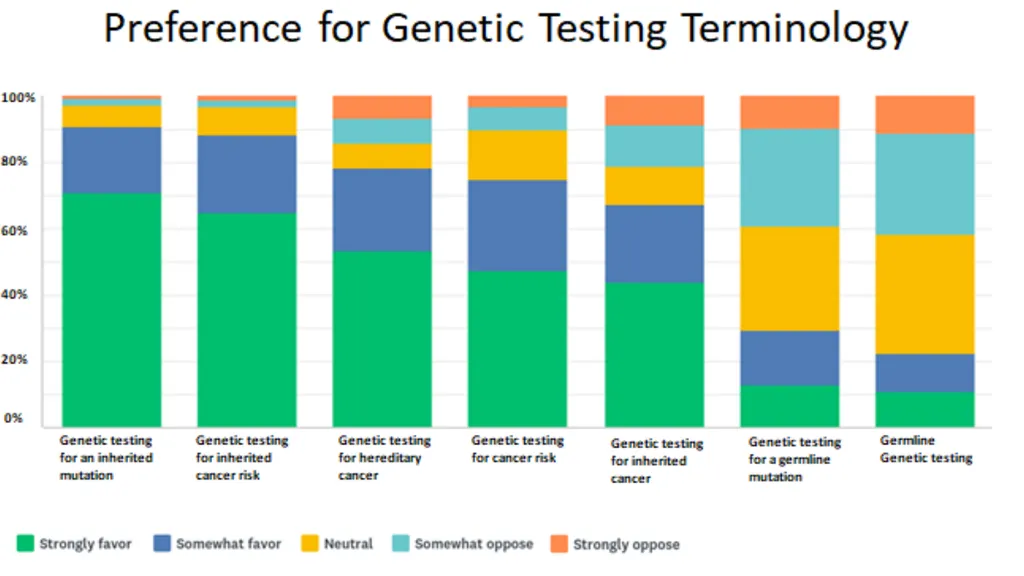
CURRENT CHALLENGES Terminology is confusing
Large number of tests- knowing which test to use when & how to interpret results can be challenging to untrained professionals
Uncertain impact of various genetic and genomic tests
Health insurance coverage for testing
Consumer genetics-testing kits
Different types of risk and hard to synthesize the individual risks to provide a total risk estimate; prediction programs outdated<br>
06
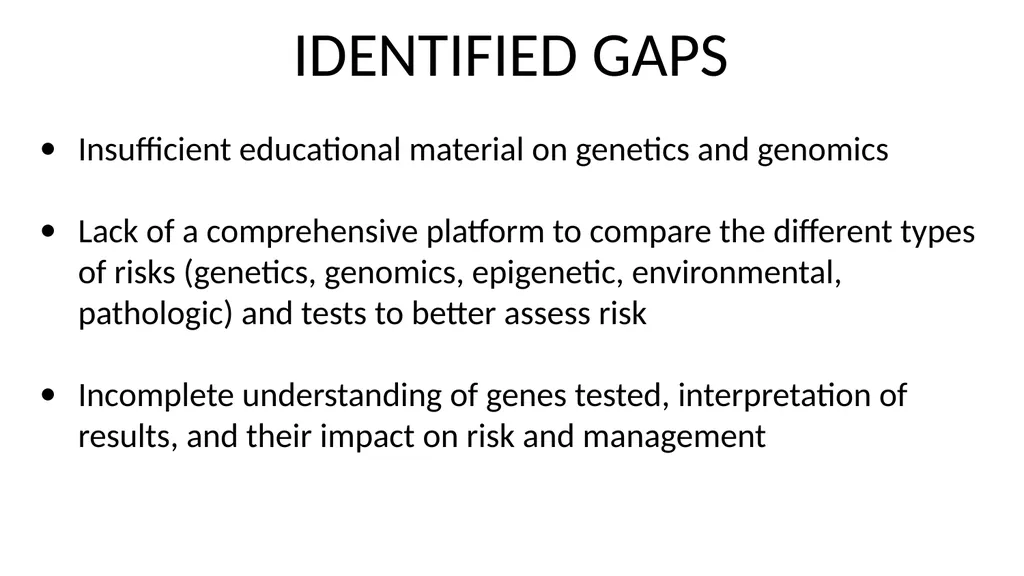
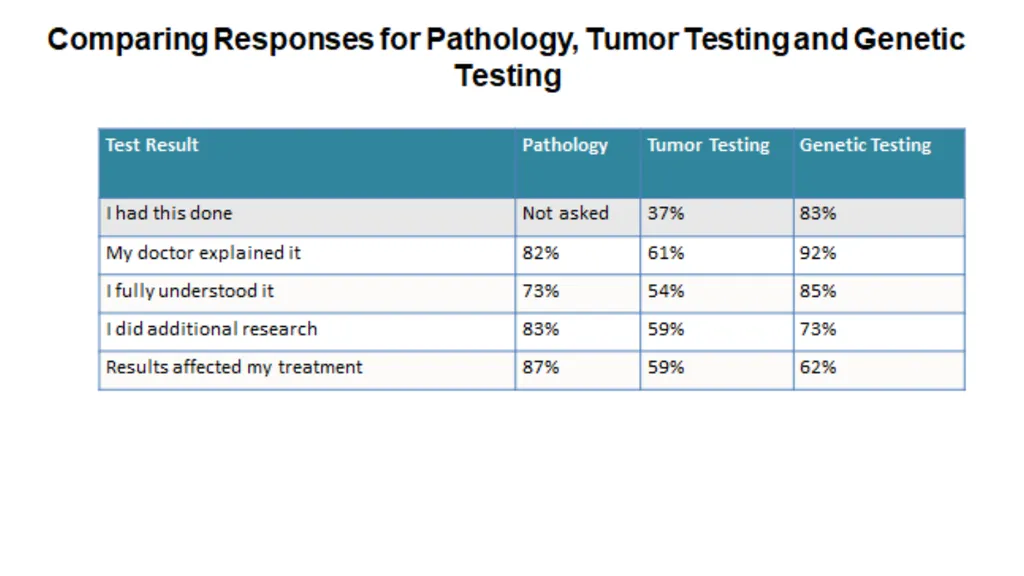
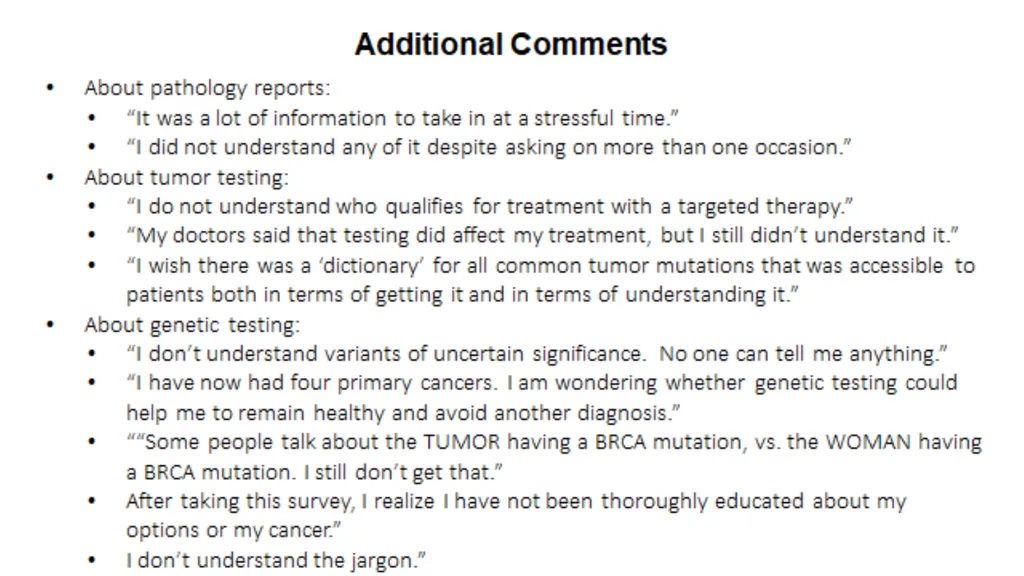
IDENTIFIED GAPS Insufficient educational material on genetics and genomics
Lack of a comprehensive platform to compare the different types of risks (genetics, genomics, epigenetic, environmental, pathologic) and tests to better assess risk
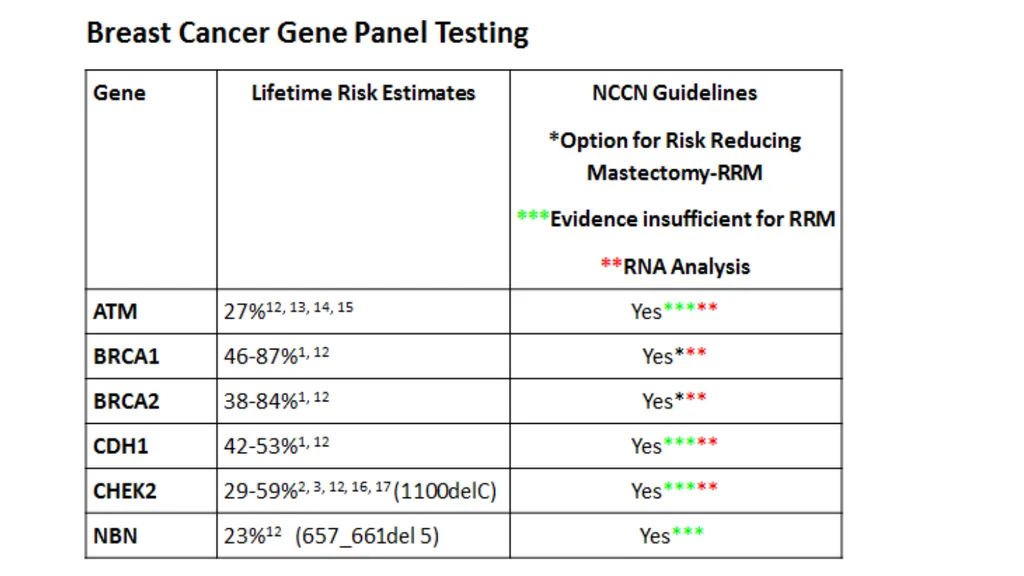
Incomplete understanding of genes tested, interpretation of results, and their impact on risk and management<br>
07
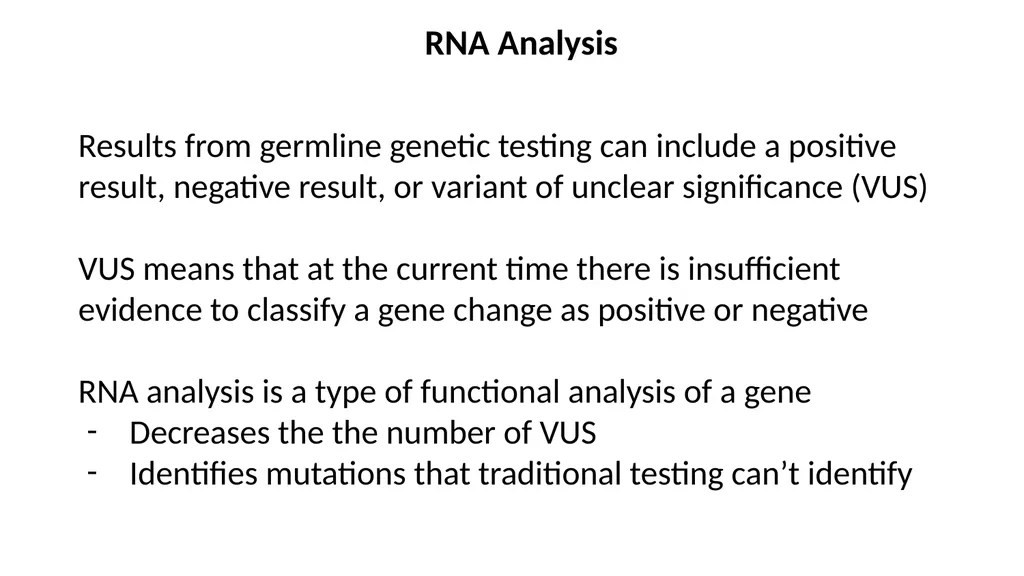
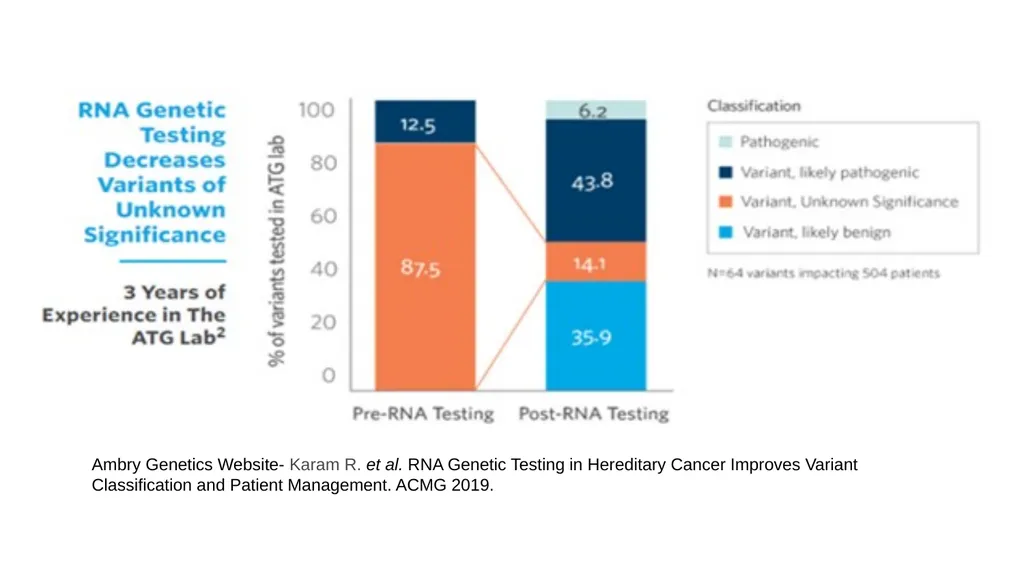
RNA Analysis
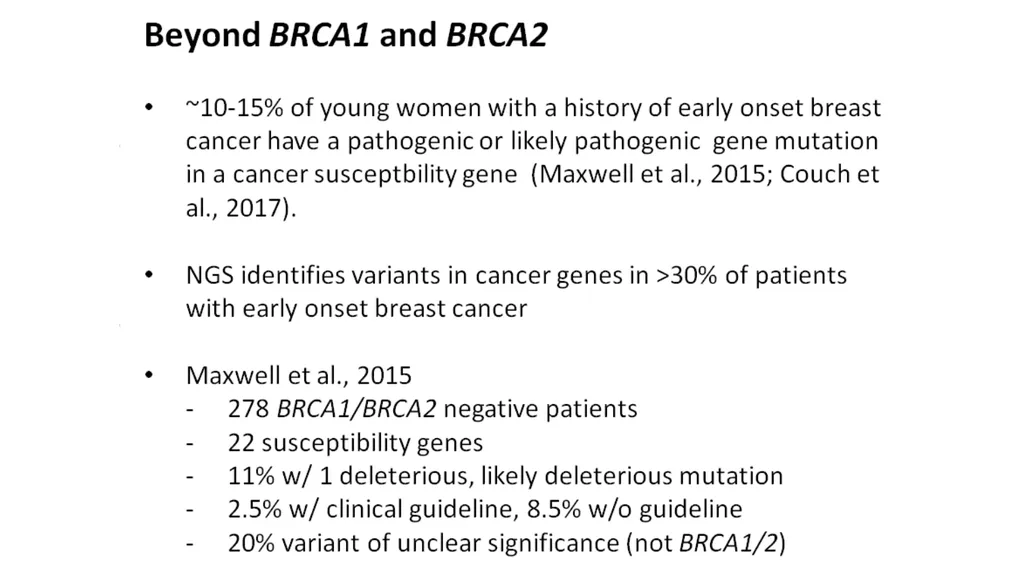
Results from germline genetic testing can include a positive result, negative result, or variant of unclear significance (VUS)
VUS means that at the current time there is insufficient evidence to classify a gene change as positive or negative
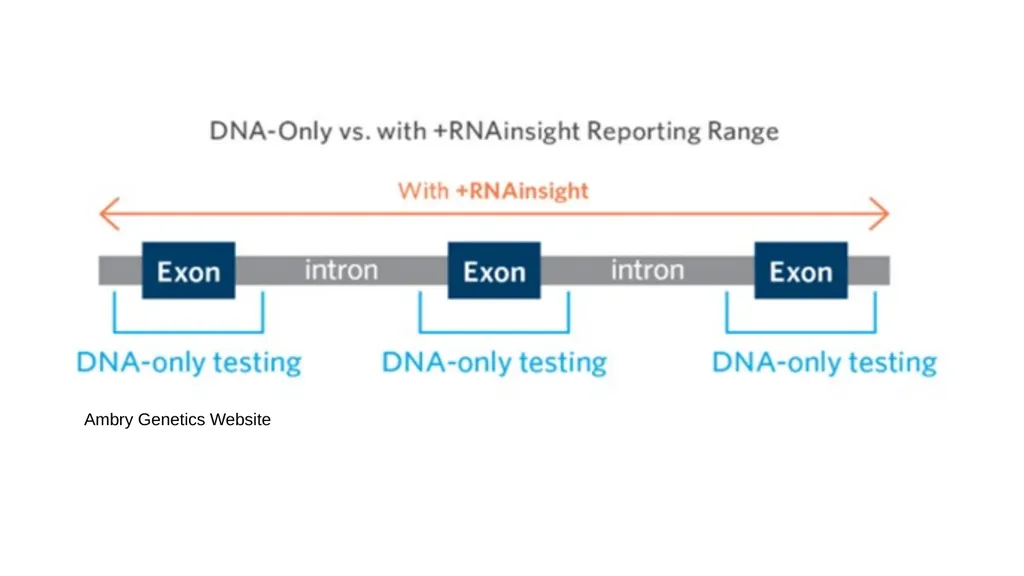
RNA analysis is a type of functional analysis of a gene
Decreases the the number of VUS
Identifies mutations that traditional testing can’t identify<br>
08
Ambry Genetics Website<br>
09
Ambry Genetics Website- Karam R. et al. RNA Genetic Testing in Hereditary Cancer Improves Variant Classification and Patient Management. ACMG 2019.<br>
10
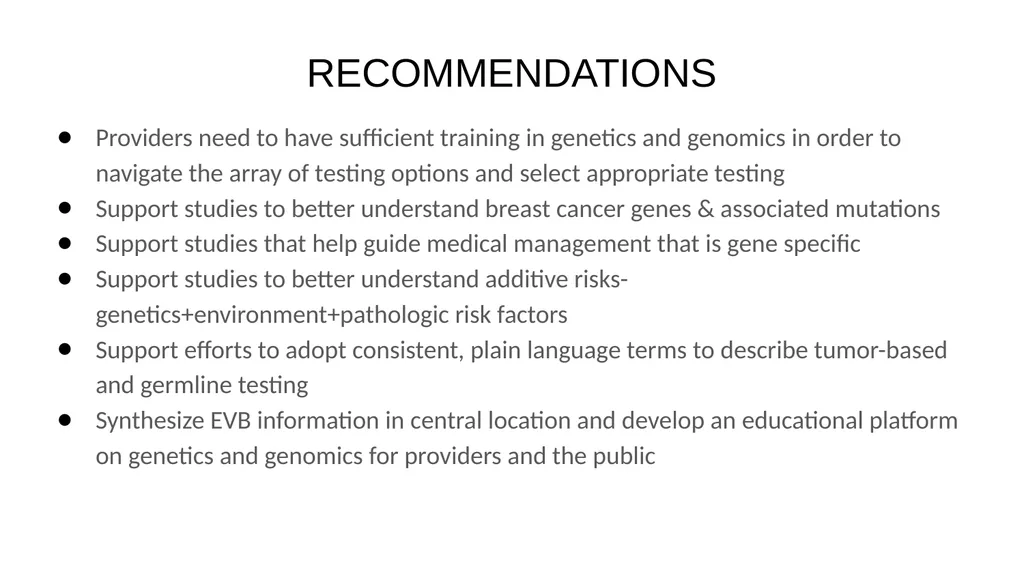
RECOMMENDATIONS Providers need to have sufficient training in genetics and genomics in order to navigate the array of testing options and select appropriate testing
Support studies to better understand breast cancer genes & associated mutations
Support studies that help guide medical management that is gene specific
Support studies to better understand additive risks- genetics+environment+pathologic risk factors
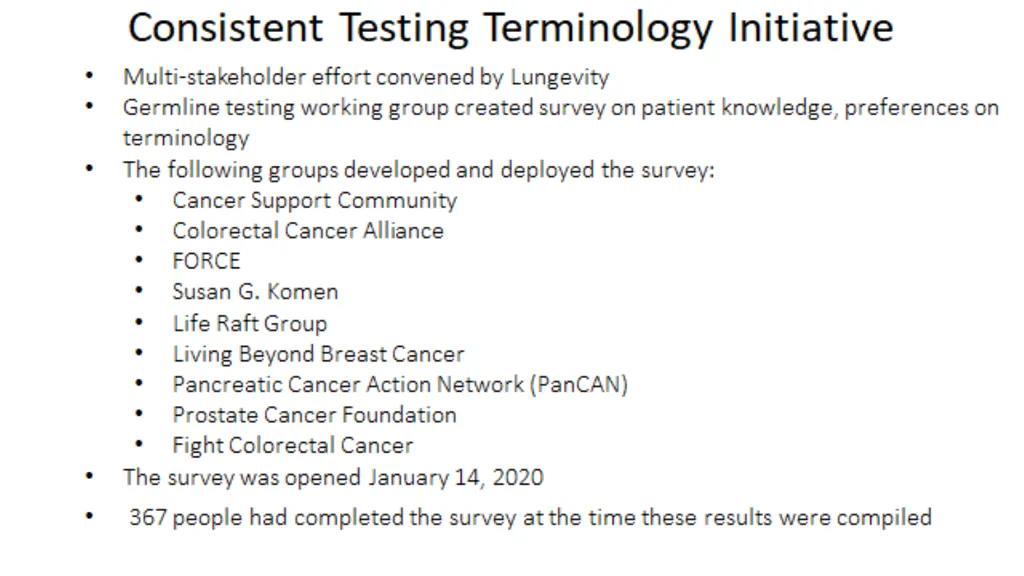
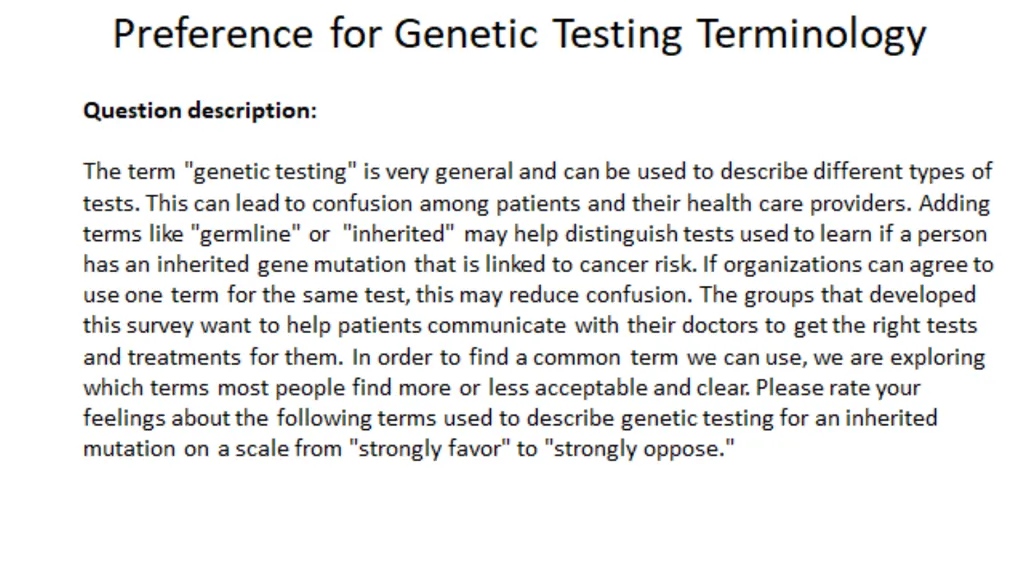
Support efforts to adopt consistent, plain language terms to describe tumor-based and germline testing
Synthesize EVB information in central location and develop an educational platform on genetics and genomics for providers and the public<br>