04
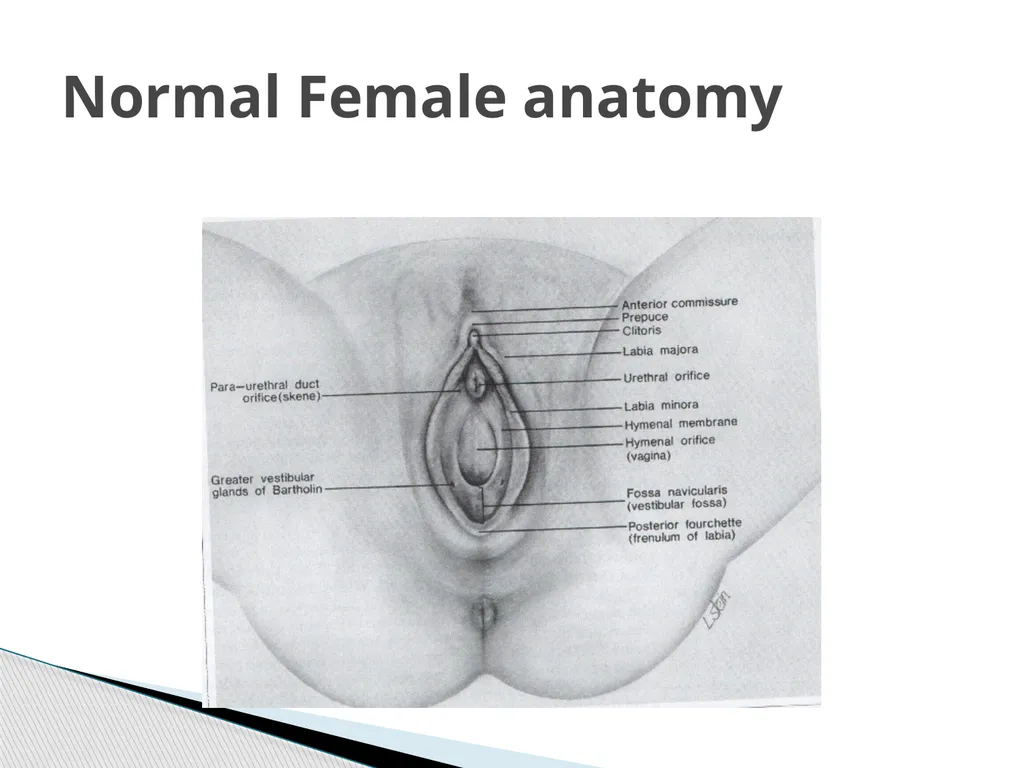
Normal Female anatomy<br>
05
The examination Comfortable position and clothing
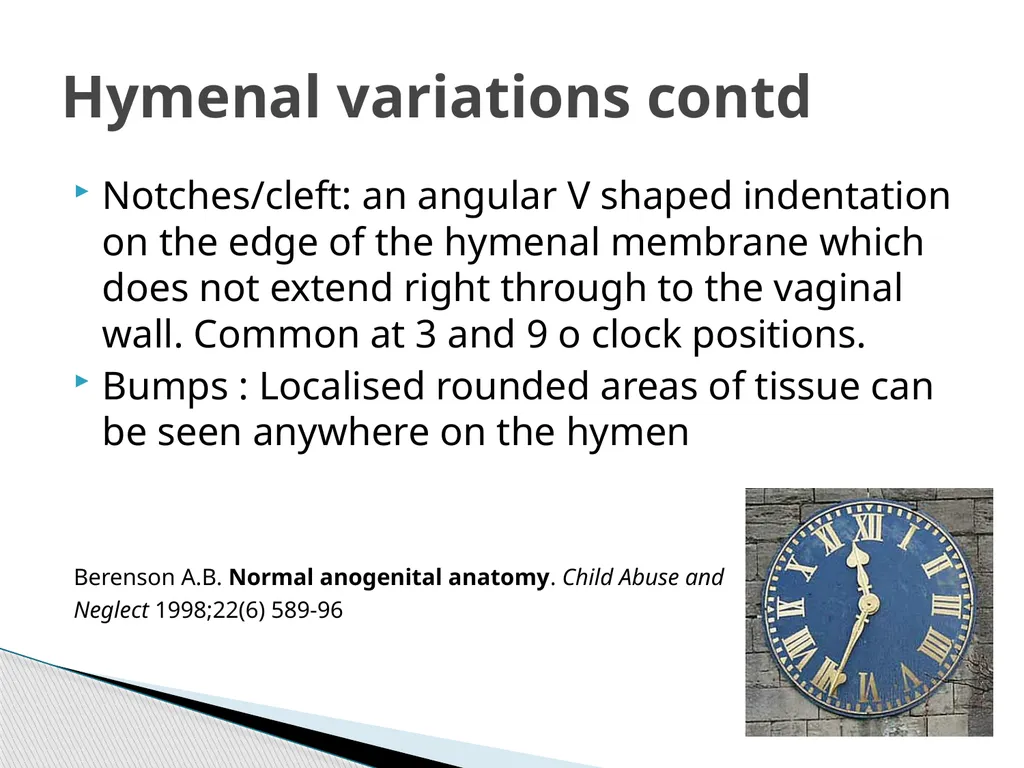
The hymen as a clock face
Position of patient
Supine frog leg
Prone knee-chest
Left lateral
Supine knee chest<br>
06
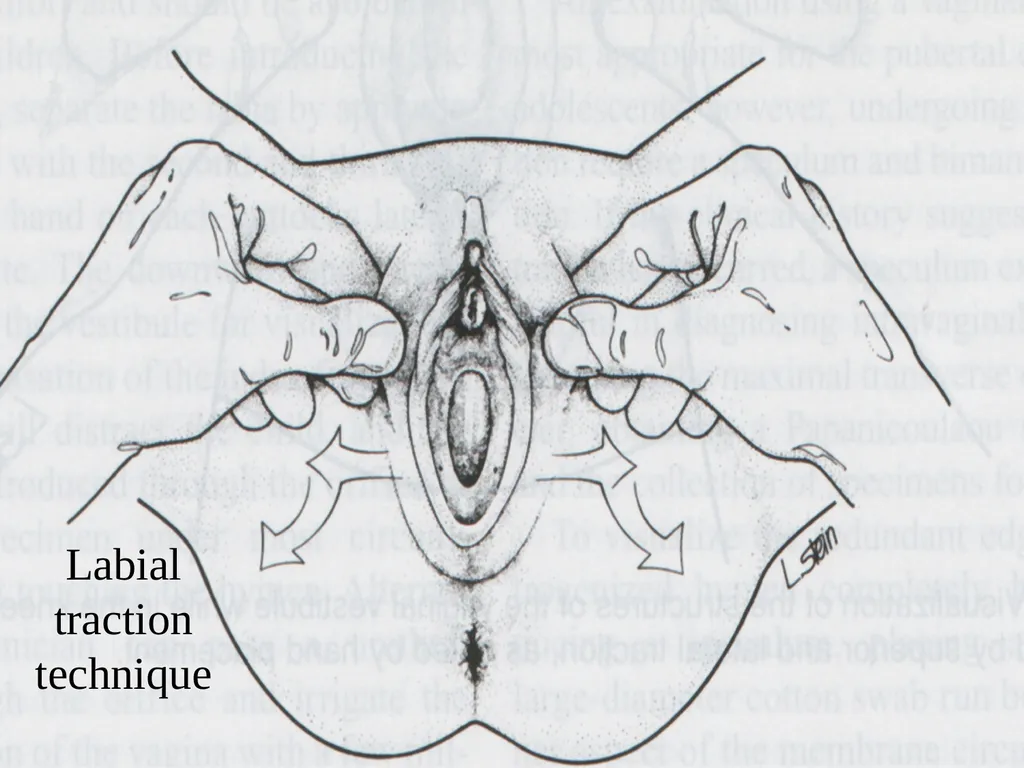
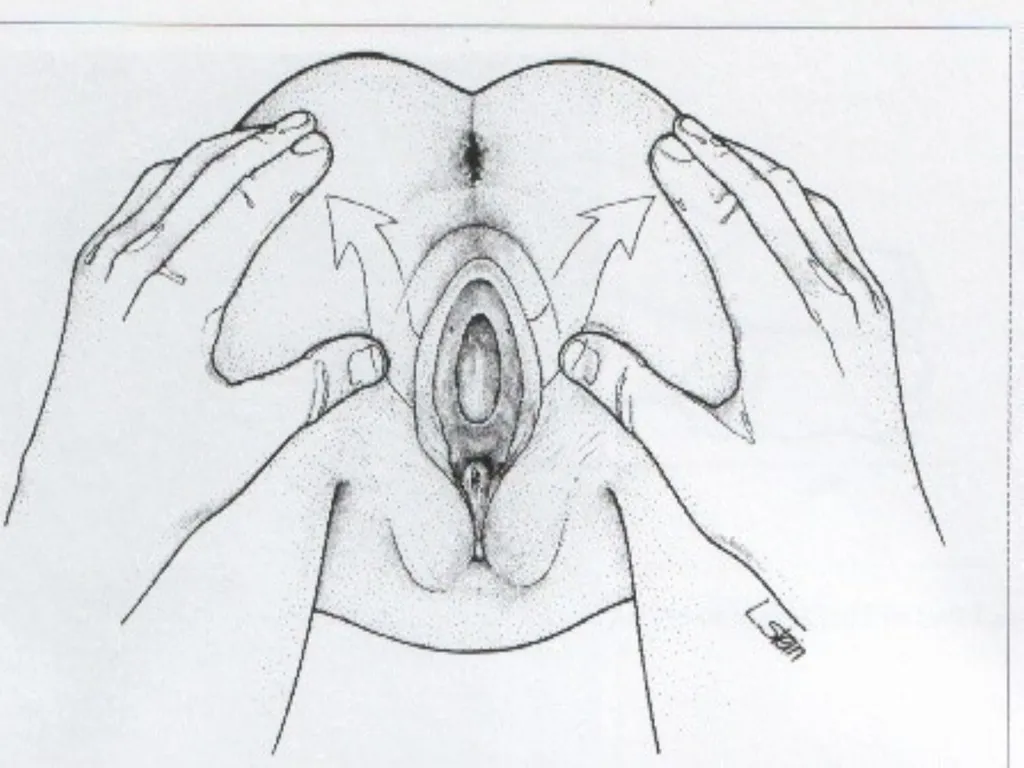
Labial traction technique<br>
07
Handy hints Don’t forget that the prepubertal hymen is sensitive
Relaxation enables a better view of the hymen
Elevation of the pelvis may help visualisation
Reposition
Extra pair of hands!
Moistened swab in adolescents
May need a repeat examination in certain
cases<br>
08
Normal Female Anatomy Several changes from neonatal period to adolescence
Oestrogen effects may remain for the first year or two
Pre-pubertal: Less oestrogen effect, thin atrophic tissues,
Labia majora flat appearance, labia minora thin,<br>
09
Pubertal changes Influence of Oestrogen returns
Thickened hymenal tissue with more elastic and fibre content
Fimbriated appearance
Thicker tissues less vulnerable to damage and infection<br>
10
Hymenal membrane “The most insignificant anatomical structure of the female without an analog in the male has assumed a social importance at variance with its almost neutral physiologic value or its potential influence upon health”
Wile Is The Psychology of the hymen . J Nerv Ment Dis .1937 (Feb):143-156<br>
11
Hymenal Variations Vary with age
Newborn hymens annular or
fimbriated
Hymenal configuration changed
in 65%
68% of hymenal tags present at birth disappeared, 9 tags formed Berenson, A, A longitudinal study of hymenal morphology in the first 3 years of life, Pediatrics 1995; 95: 490-496<br>
12
Hymenal variations contd Cresenteric configuration more common as children aged
The number of mounds and intravaginal ridges increased as the children aged
No deep notches or transections observed in those who did not have a history of sexual abuse
A decrease in the amount of tissue in the posterior hymen was noted but some tissue always present
Berenson, AB, Grady, JJ, A longitudinal study of hymenal development from 3 to 9 years of age, Journal of Pediatrics, 2002; 140: 600-607<br>
13
Hymenal variations contd Notches/cleft: an angular V shaped indentation on the edge of the hymenal membrane which does not extend right through to the vaginal wall. Common at 3 and 9 o clock positions.
Bumps : Localised rounded areas of tissue can be seen anywhere on the hymen
Berenson A.B. Normal anogenital anatomy. Child Abuse and
Neglect 1998;22(6) 589-96<br>
14
Hymenal Variations contd Tags : Flaps or appendages extending more than 1mm from the rim. Common in the newborn
Hymenal Ridges : External ridges may be seen at 12 and 6 oclock. Most easily observed at birth . 86% of newborns in one study. Usually tend to resolve
Berenson et al Appearance of the hymen in newborns Pediatrics ,87,458-465<br>
15
Other genital variants Linea vestibularis : Pale midline avascular streaks of the posterior vestibule
Median Raphe: More obvious in males also present in females
Failure of midline fusion: The defect can extend from the fossa navicularis to the anus. The tissue at the base of the defect is pale and avascular with smooth borders.
Periurethral bands<br>
16
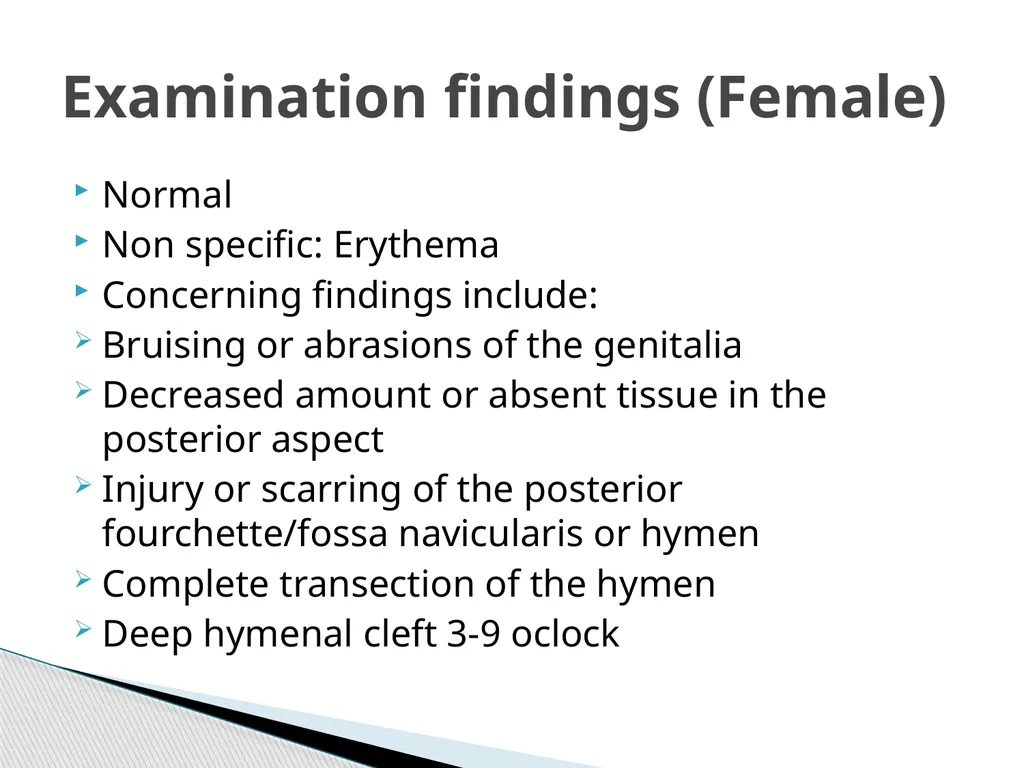
Examination findings (Female) Normal
Non specific: Erythema
Concerning findings include:
Bruising or abrasions of the genitalia
Decreased amount or absent tissue in the posterior aspect
Injury or scarring of the posterior fourchette/fossa navicularis or hymen
Complete transection of the hymen
Deep hymenal cleft 3-9 oclock<br>
17
Examination findings Case control study “Most hymenal measurements lack sensitivity or specificity to be used to confirm previous penetration”
Berenson A.B. et al Use of hymenal measurements in the diagnosis of previous penetration Pediatrics2002;109(2) p 228-235
Berenson et al A case control study of anatomic changes resulting from sexual abuseAmJ Obstet Gynecol2000;182:820-34
Vaginal discharge more common in abused children
A hymenal transection,perforation, or deep notch was observed in 4 children all of whom were abused
Kellog N et al Genital Anatomy in Pregnant Adolescents: “Normal” doesn’t mean “Nothing Happened”Pediatrics 2004;113e67-e69
Only 2/36 had definitive findings of penetration<br>
18
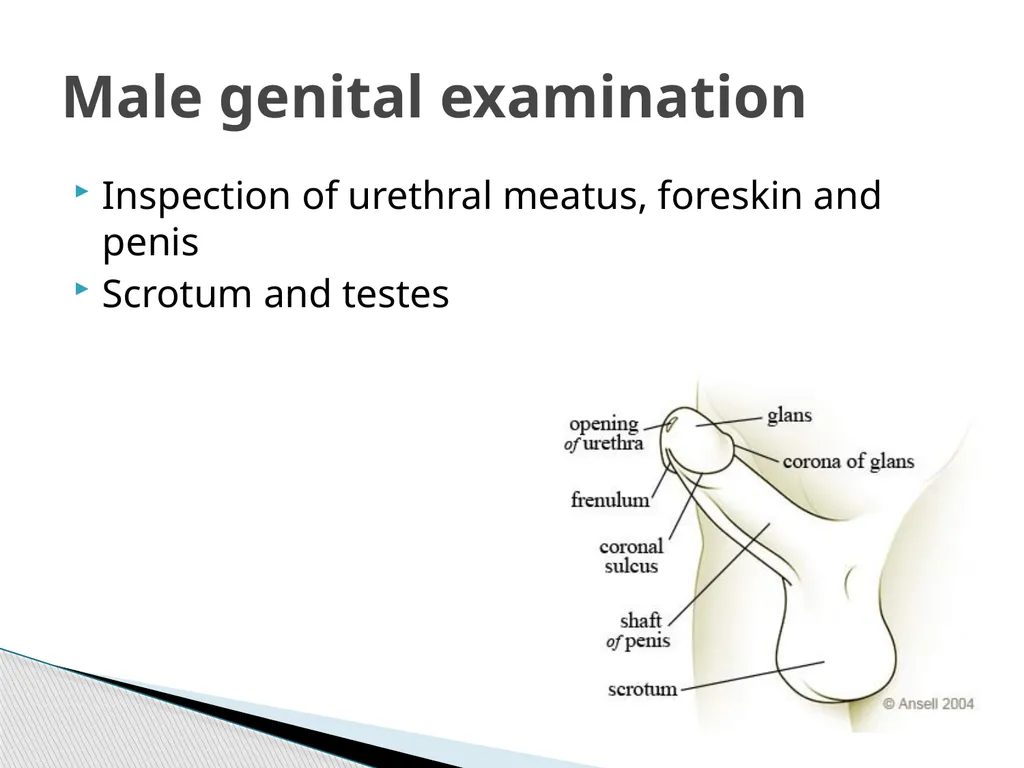
Male genital examination Inspection of urethral meatus, foreskin and penis
Scrotum and testes<br>
19
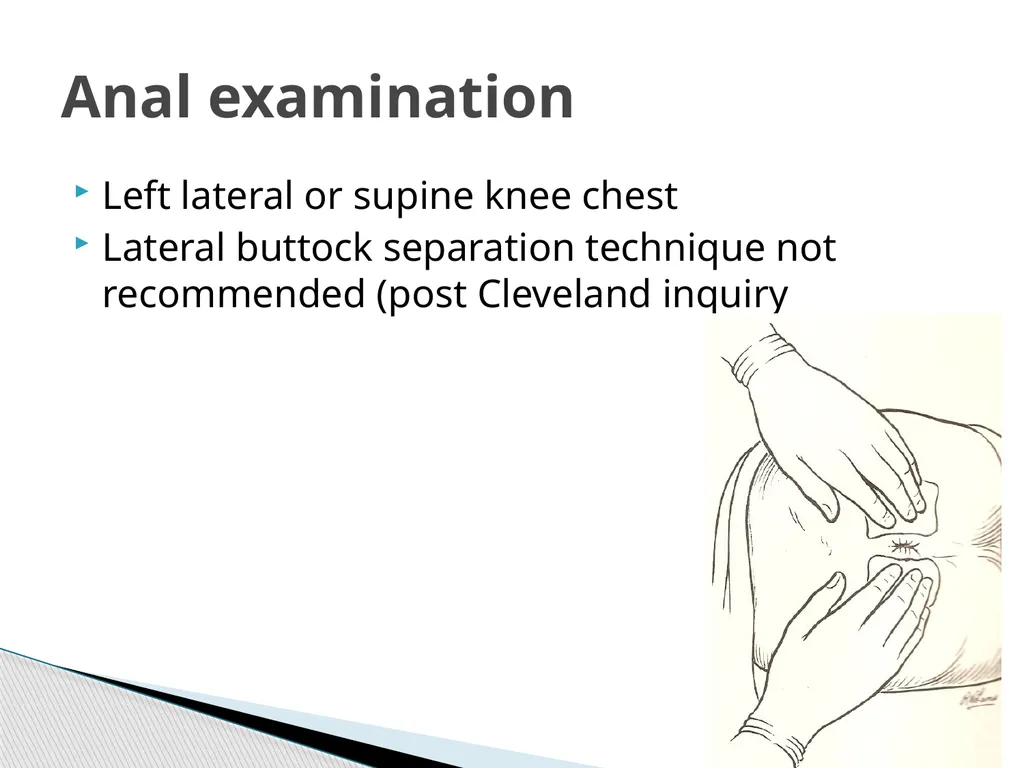
Anal examination Left lateral or supine knee chest
Lateral buttock separation technique not recommended (post Cleveland inquiry<br>
20
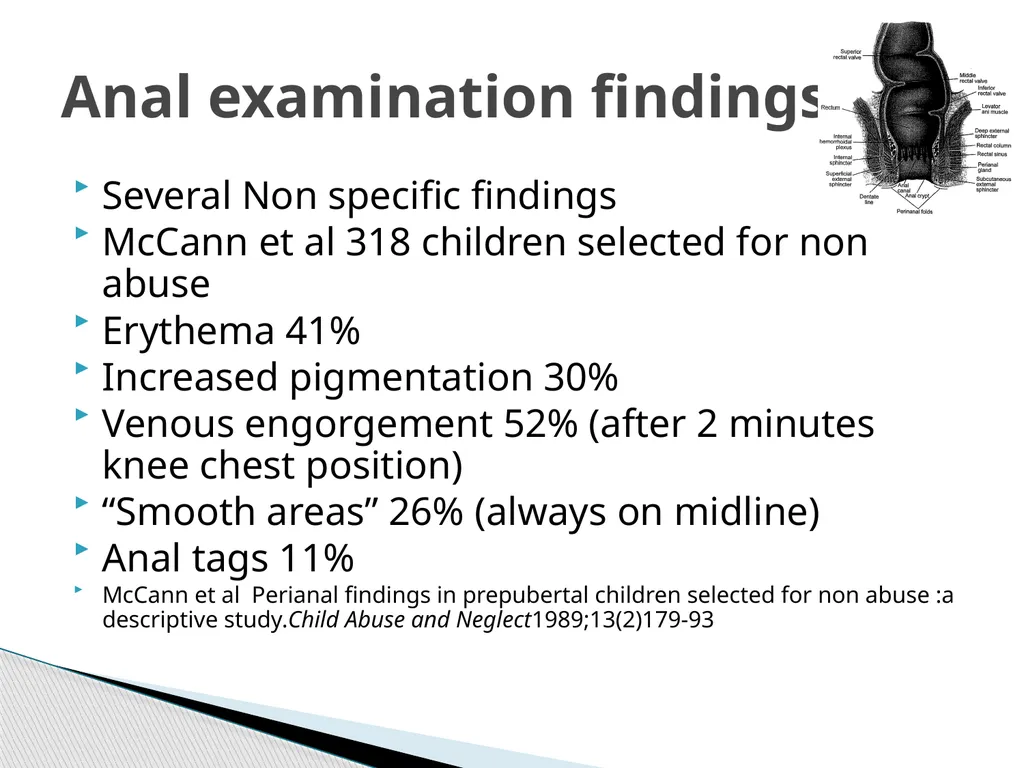
Anal examination findings Several Non specific findings
McCann et al 318 children selected for non abuse
Erythema 41%
Increased pigmentation 30%
Venous engorgement 52% (after 2 minutes knee chest position)
“Smooth areas” 26% (always on midline)
Anal tags 11%
McCann et al Perianal findings in prepubertal children selected for non abuse :a descriptive study.Child Abuse and Neglect1989;13(2)179-93<br>
21
Anal dilatation McCann study 49% of children ( AP diameter <0.1cm-2.5cm , mean 1.0cm)
Small % (1.2%) > 20mm without the presence of stool
Hobbs and Wynne “ Dilatation over 0.5cm does not in our experience occur in normal children”
McCann et al Perianal findings in prepubertal chilren selected for non abuse :a descriptive study.Child Abuse and Neglect1989;13(2)179-93
Hobbs C.J. & Wynne J.M. Sexual abuse of boys and girls: The importance of anal examination.Child abuse and Neglect 13 (2) : 195-210 1989<br>
22
Anal dilatation contd Cleveland inquiry : 125 children diagnosed as sexually abused over a 5 month period.
Several other causes of anal dilatation
Chronic constipation
Crohn’s disease
Neurological disorders
During anaesthesia
Summary of the Cleveland Inquiry BMJ ;297: July 1988 : p190-191<br>
23
Concerning findings Anal lacerations (may need further surgical intervention/ EUA)
Anal tags outside the midline (not noted in McCann’s study)
Important to correlate clinical findings and relevant history and medical history<br>
24
Berenson and McCann studies
Gall J et al Current Practice in Forensic Medicine” chapter on “The paediatric hymen”
Child Abuse and Neglect , diagnosis, treatment and evidence Carole Jenny. Chapter 10 &11
Child Abuse, Medical Diagnosis and management 3rd edition Reece & Christian Resources<br>
25
Summary The genital examination is only a part of the overall evaluation of sexual abuse in children
Preparation is important
A detailed knowledge of normal anatomy and variants is required
Most examinations are normal<br>