
Geological Time Geology needs a Time Scale An

Description: Geological Time Geology needs a Time Scale An investigation of the history of Earth Understanding how features of landscape developed and formed Reconstructing the history of Earth Uniformitarianism (Hutton (late 1700s)) Processes that
Related Topics
Download Presentation
"Geological Time Geology needs a Time Scale An" is the property of its rightful owner. Permission is granted to download and print the materials on this website for personal, non-commercial use only, and to display it on your personal computer provided you do not modify the materials and that you retain all copyright notices contained in the materials. By downloading content from our website, you accept the terms of this agreement.
Presentation Transcript
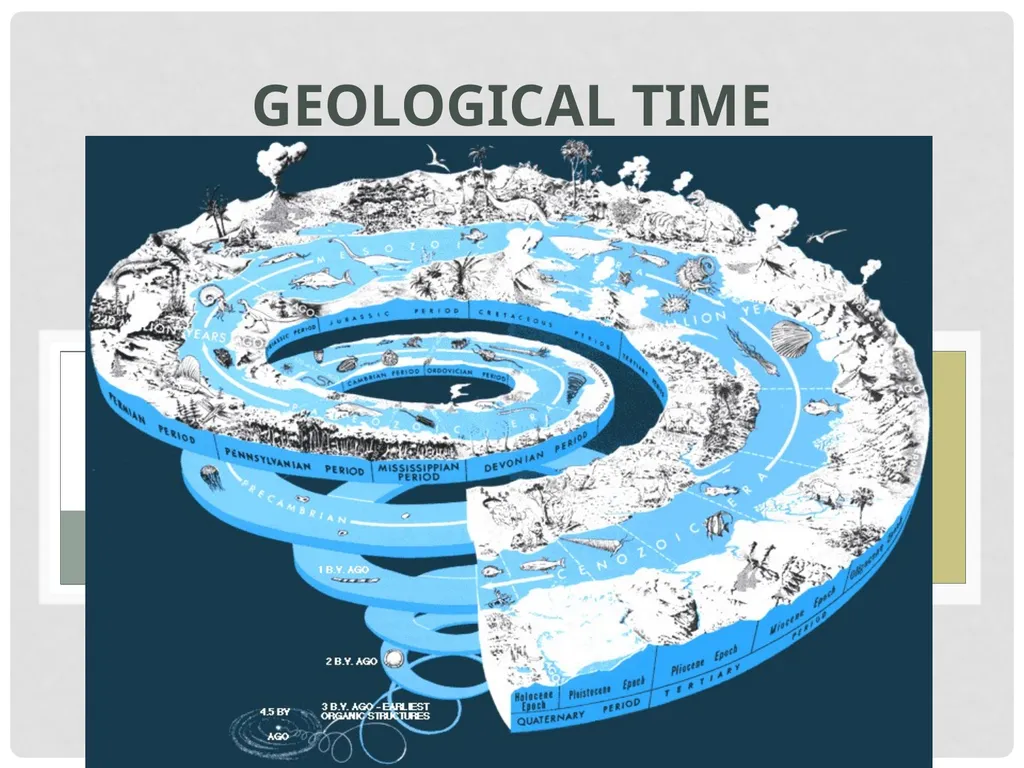
slide1. Geological Time<br>
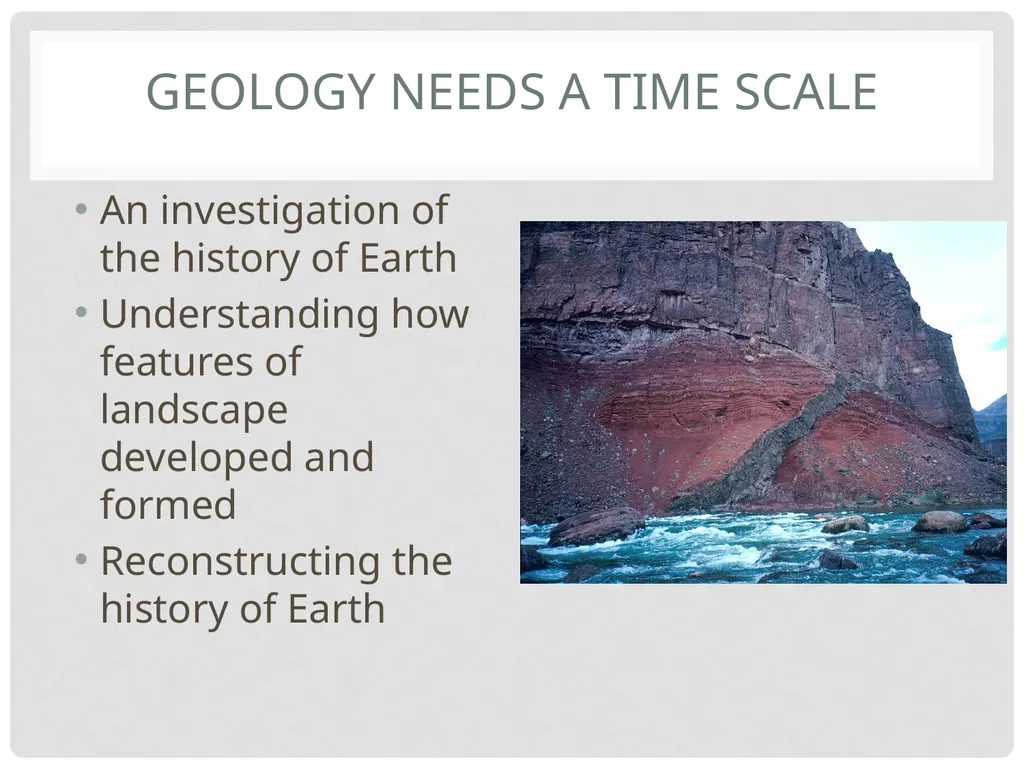
slide2. Geology needs a Time Scale An investigation of the history of Earth
Understanding how features of landscape developed and formed
Reconstructing the history of Earth<br>
slide3. Uniformitarianism (Hutton (late 1700s)) Processes that formed past landscapes are the same processes that exist on Earth today
These processes are extremely slow
“The present is the key to the past”
In order for uniformitarianism to occur, Earth must be at least millions of years old<br>
slide4. Relative Age Dating Describes if layers are older or younger than one another
• Not an exact age
• A way of reconstructing the geological history of an area<br>
slide5. Laws of Relative Age Dating 1. Superposition
2. Original Horizontality
3. Cross-cutting relationships
4. Inclusions<br>
slide6. Law of Superposition sedimentary layers on the bottom are the oldest
sedimentary layers on top are the youngest
occurs in undisturbed sequence of rock layers only<br>
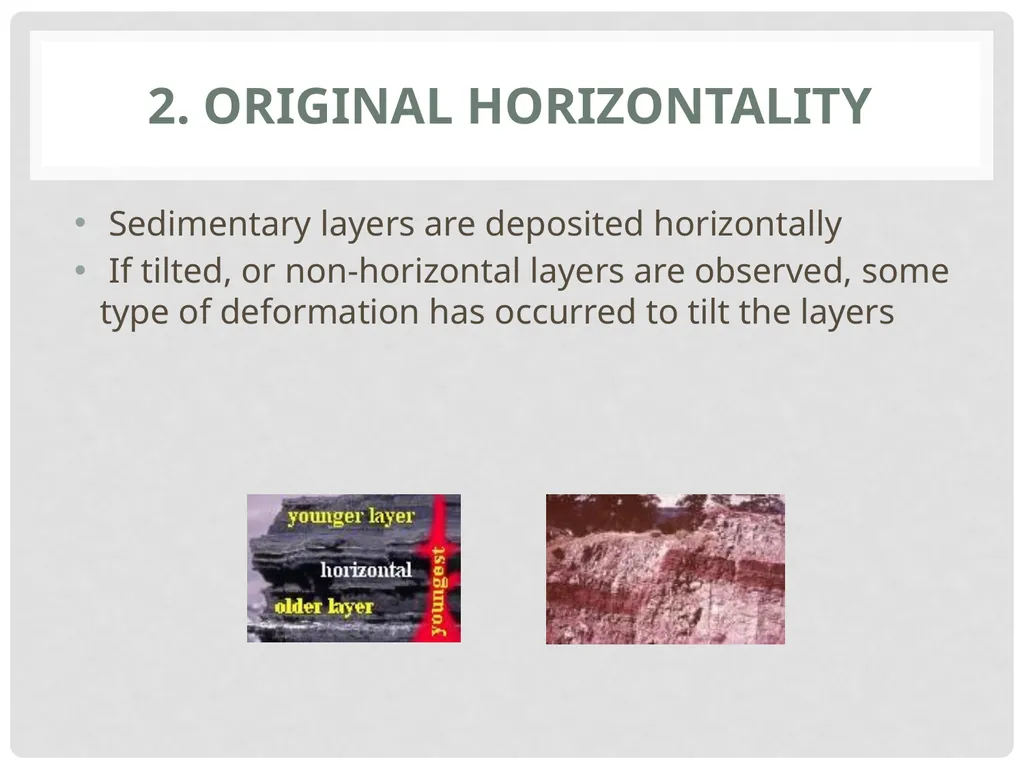
slide7. 2. Original Horizontality Sedimentary layers are deposited horizontally
If tilted, or non-horizontal layers are observed, some type of deformation has occurred to tilt the layers<br>
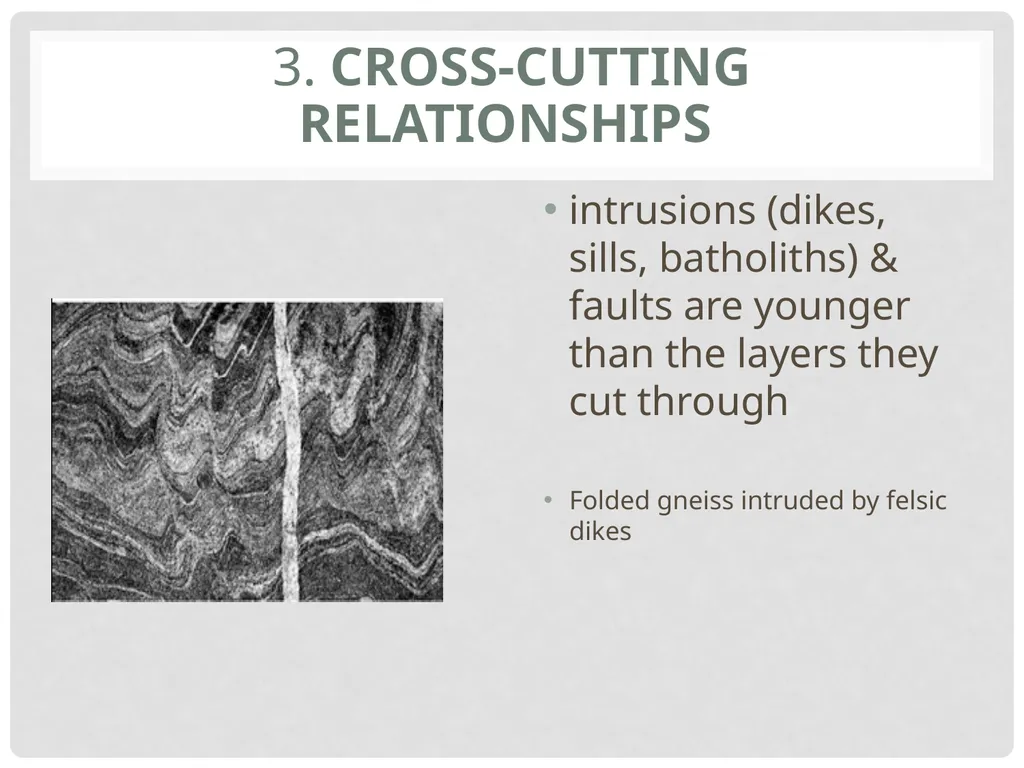
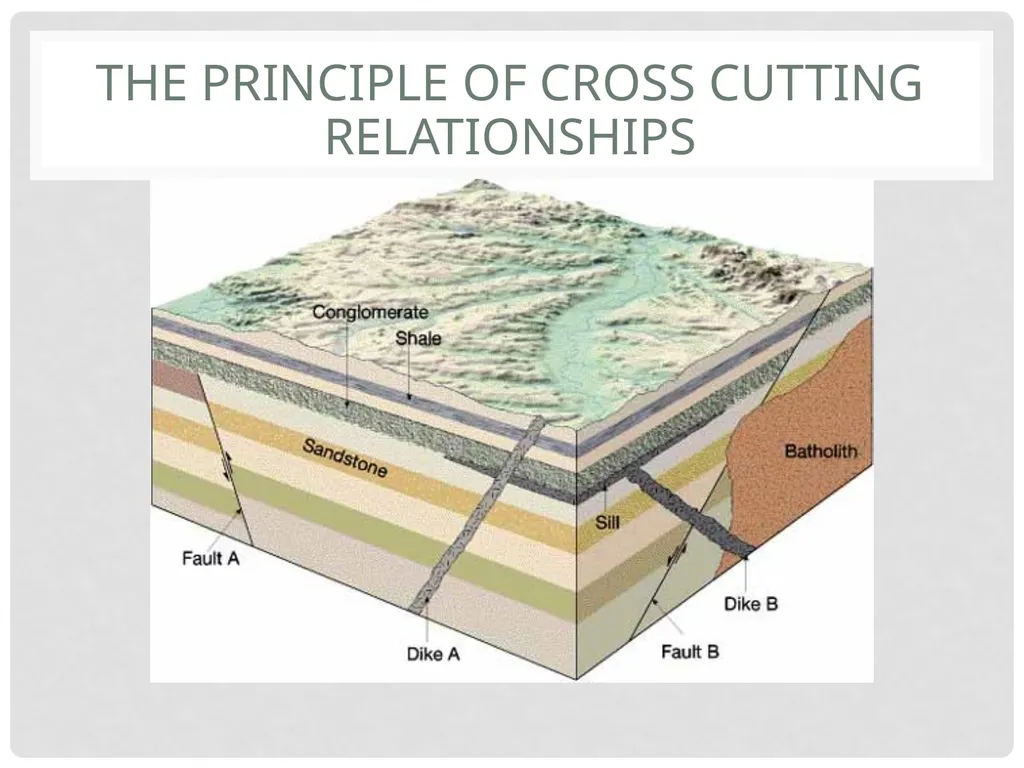
slide8. 3. Cross-Cutting Relationships intrusions (dikes, sills, batholiths) & faults are younger than the layers they cut through
Folded gneiss intruded by felsic dikes<br>
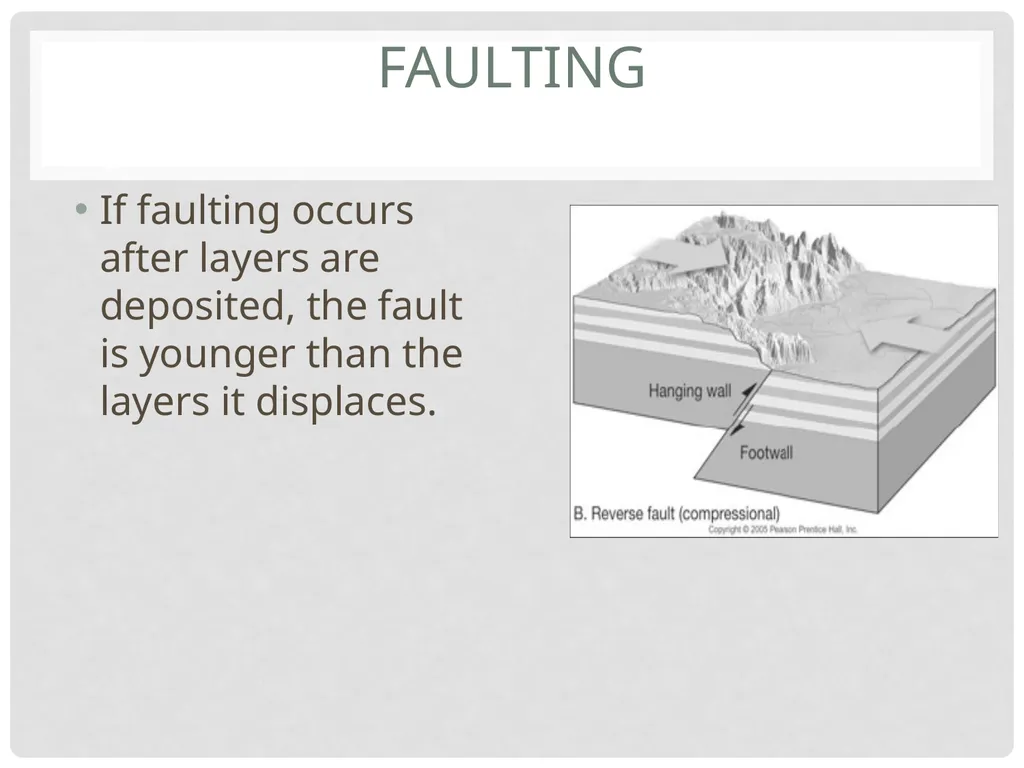
slide9. Faulting If faulting occurs after layers are deposited, the fault is younger than the layers it displaces.<br>
slide10. The Principle of Cross Cutting Relationships<br>
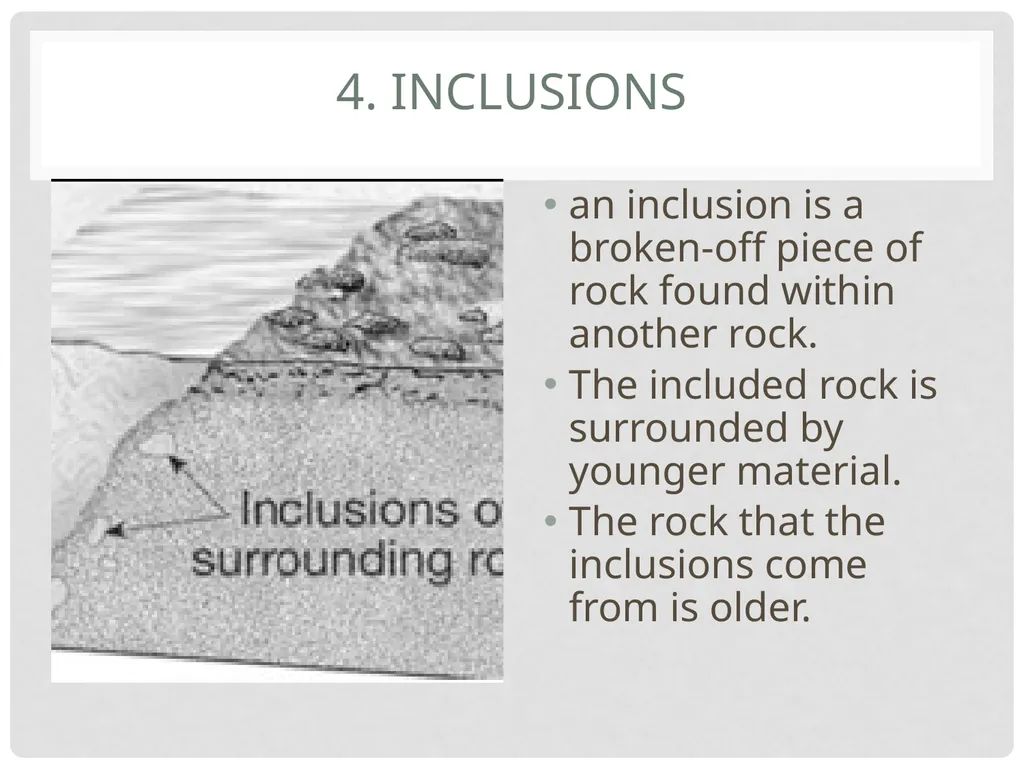
slide11. 4. Inclusions an inclusion is a broken-off piece of rock found within another rock.
The included rock is surrounded by younger material.
The rock that the inclusions come from is older.<br>
slide12. Sequencing Events in Rocks: Terms to Know and Use Unconformity – a break or gap in the geological rock record.
emergence (uplift)
submergence (sinking)
deposition
tilting
faulting
intrusion/extrusion
melting/solidification<br>
slide13. In Conclusion Keep the Laws of Relative Age Dating in mind when deciding the order of events in rock formation!!!<br>
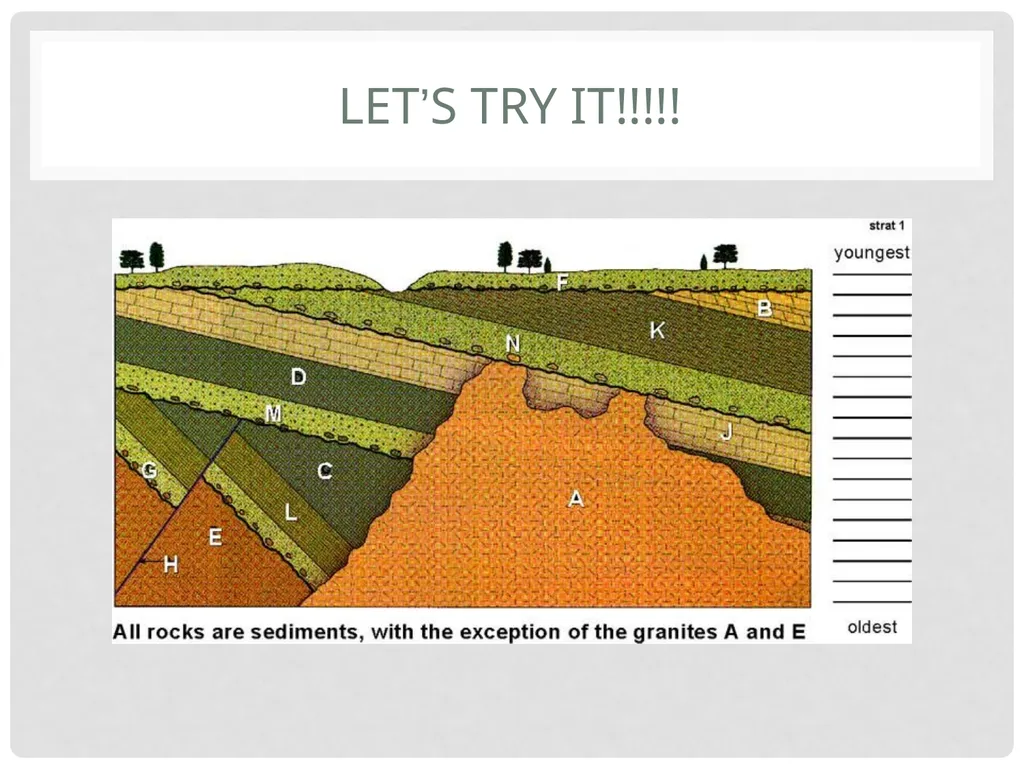
slide14. Let’s try it!!!!!<br>
slide15. Conformable strata are layers of rock (strata) that show a complete geological history UNCONFORMITIES<br>
slide16. Unconformities Gap in the rock record
Missing layers
Cause is either non-deposition or erosion
3 Types:
Non-conformity
Angular Unconformity
Disconformity<br>
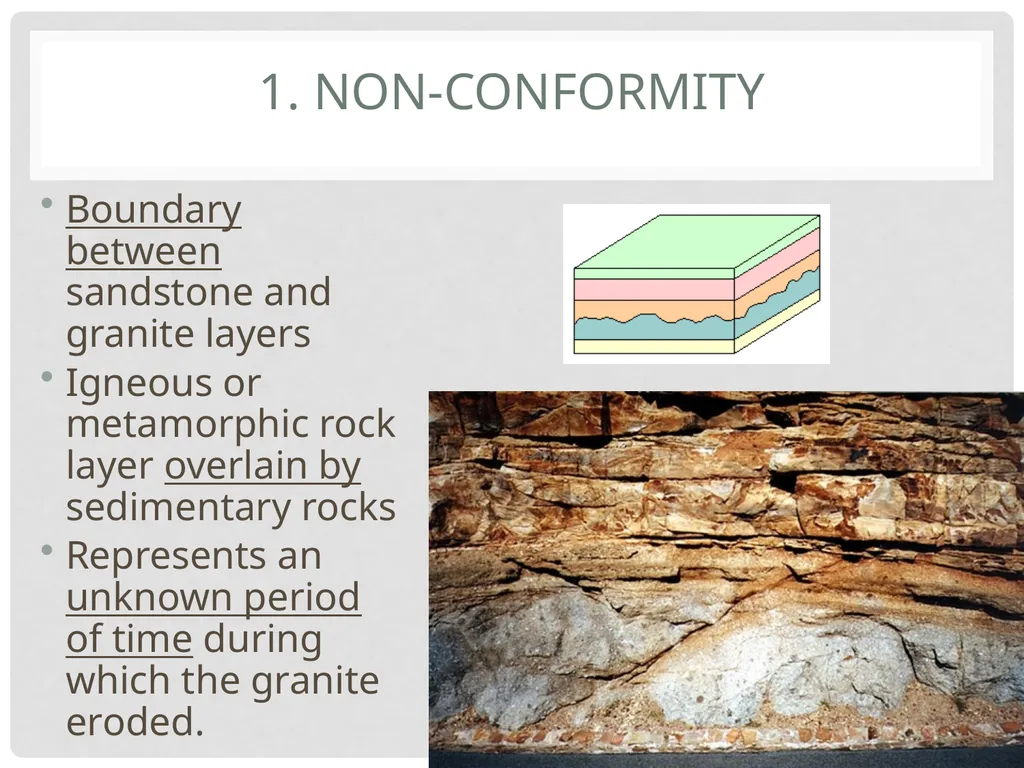
slide17. 1. Non-Conformity Boundary between sandstone and granite layers
Igneous or metamorphic rock layer overlain by sedimentary rocks
Represents an unknown period of time during which the granite eroded.<br>
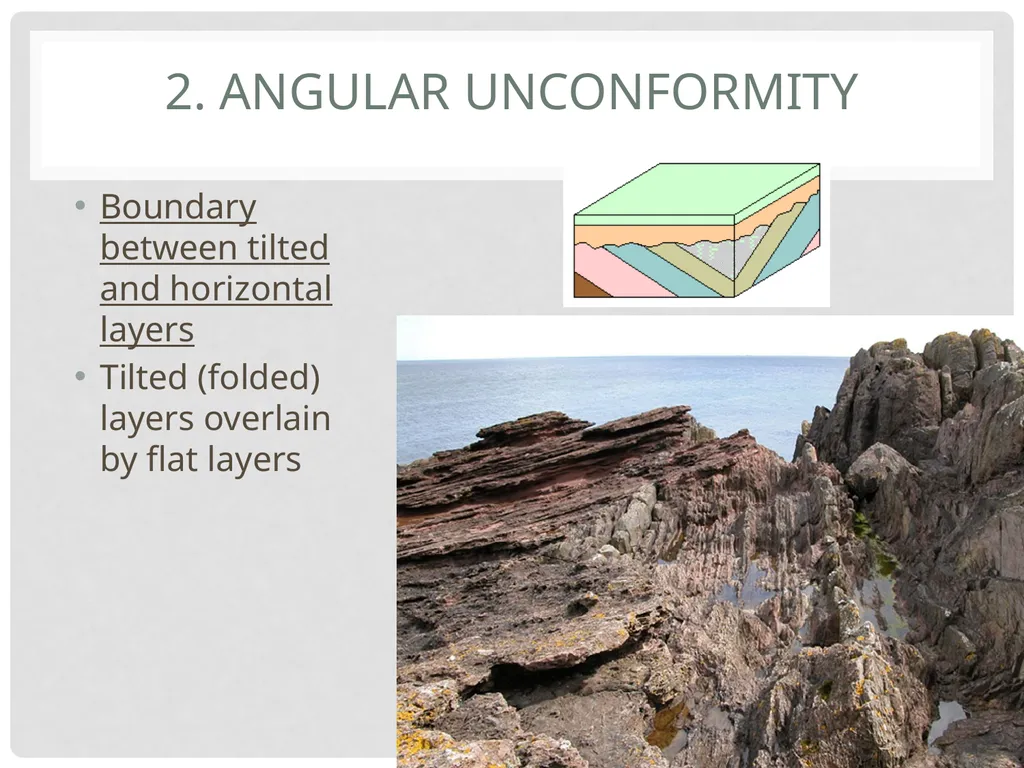
slide18. 2. Angular Unconformity Boundary between tilted and horizontal layers
Tilted (folded) layers overlain by flat layers<br>
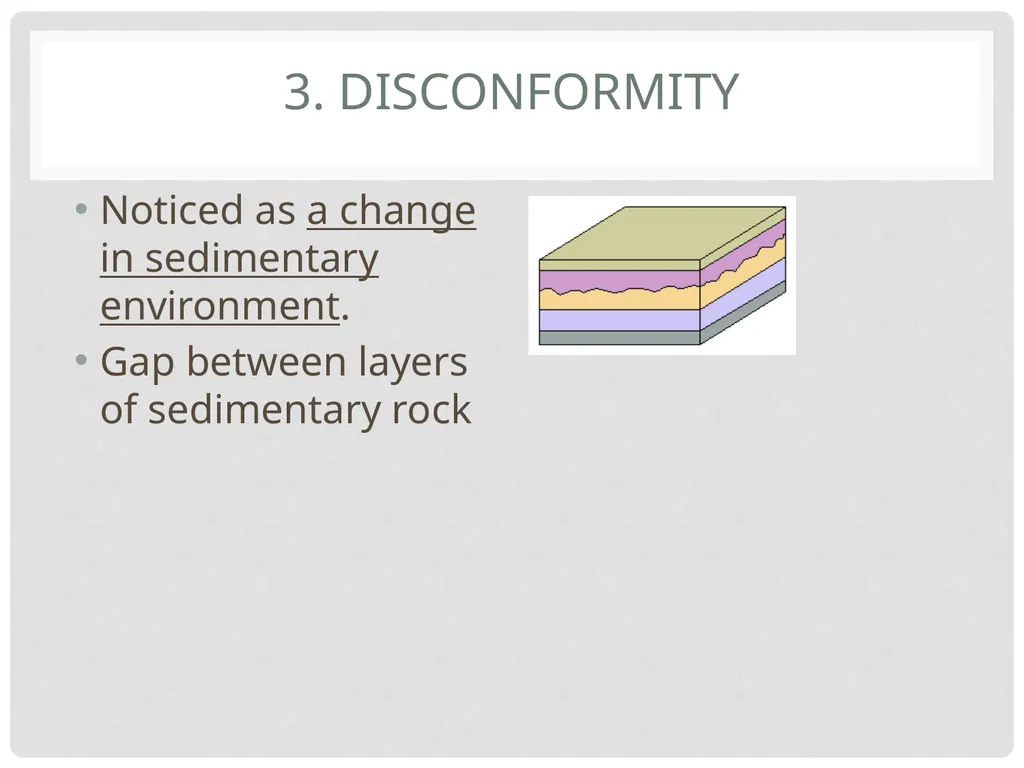
slide19. 3. Disconformity Noticed as a change in sedimentary environment.
Gap between layers of sedimentary rock<br>
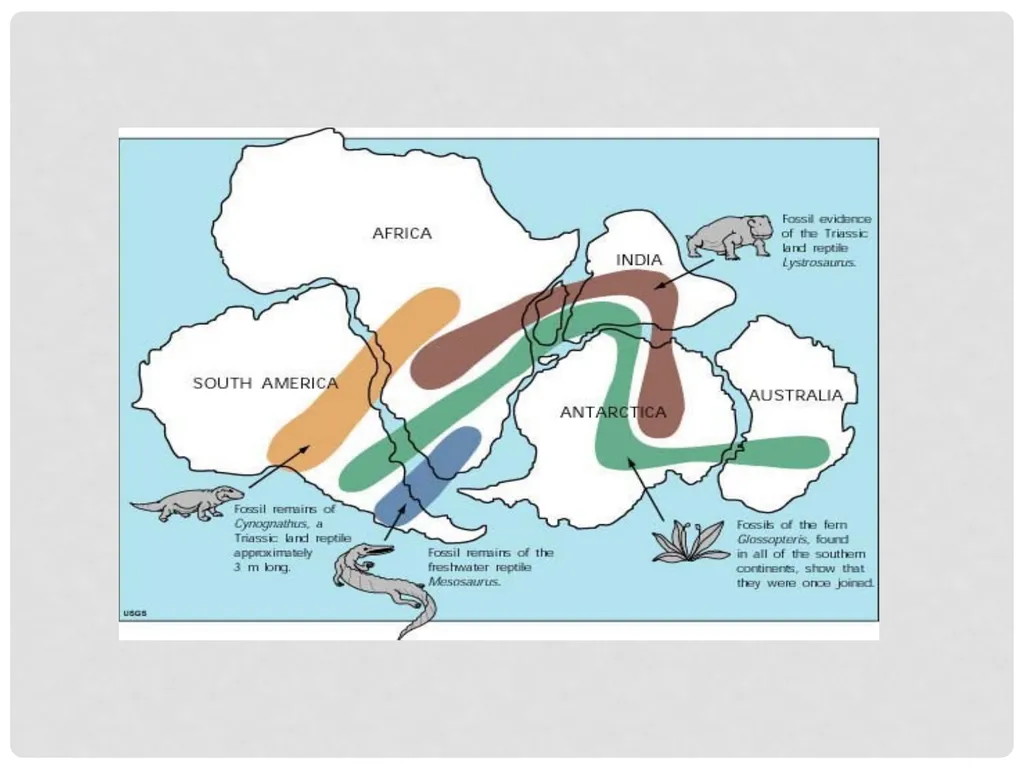
slide20. CORRELATION What does ‘To Correlate’ mean?
Connect in a systematic way, match-up
How do we correlate rocks?
Walking the outcrop
Looking for time markers – volcanic ash
Matching up index fossils<br>
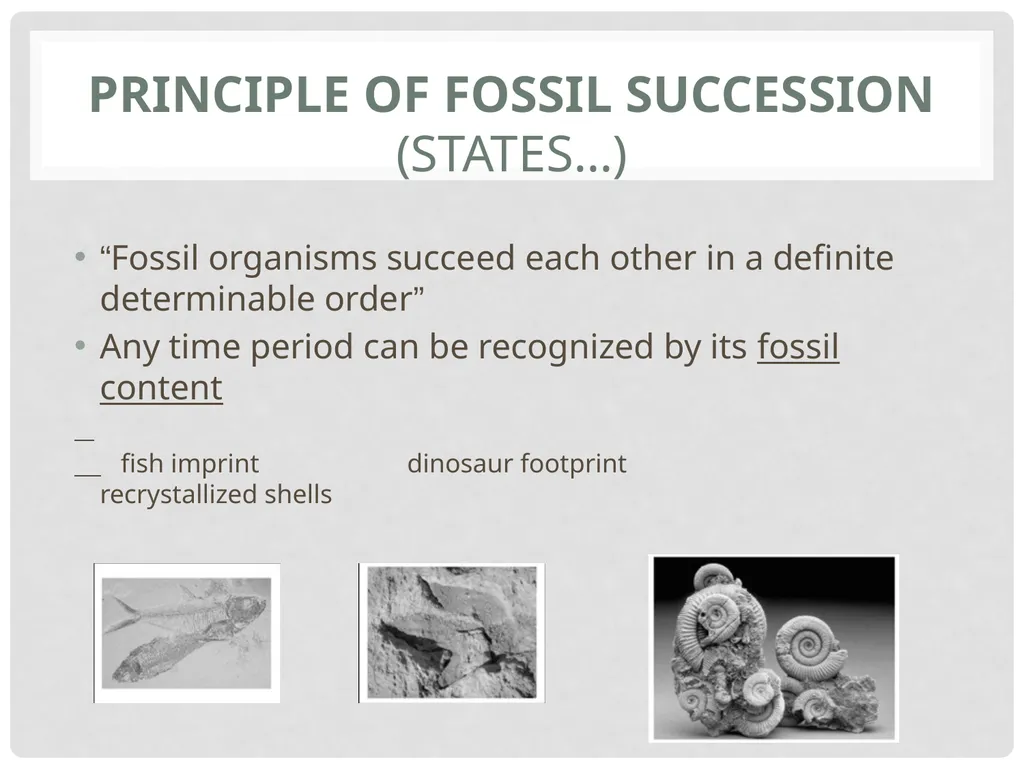
slide22. Principle of Fossil Succession (states…) “Fossil organisms succeed each other in a definite determinable order”
Any time period can be recognized by its fossil content
fish imprint dinosaur footprint recrystallized shells<br>
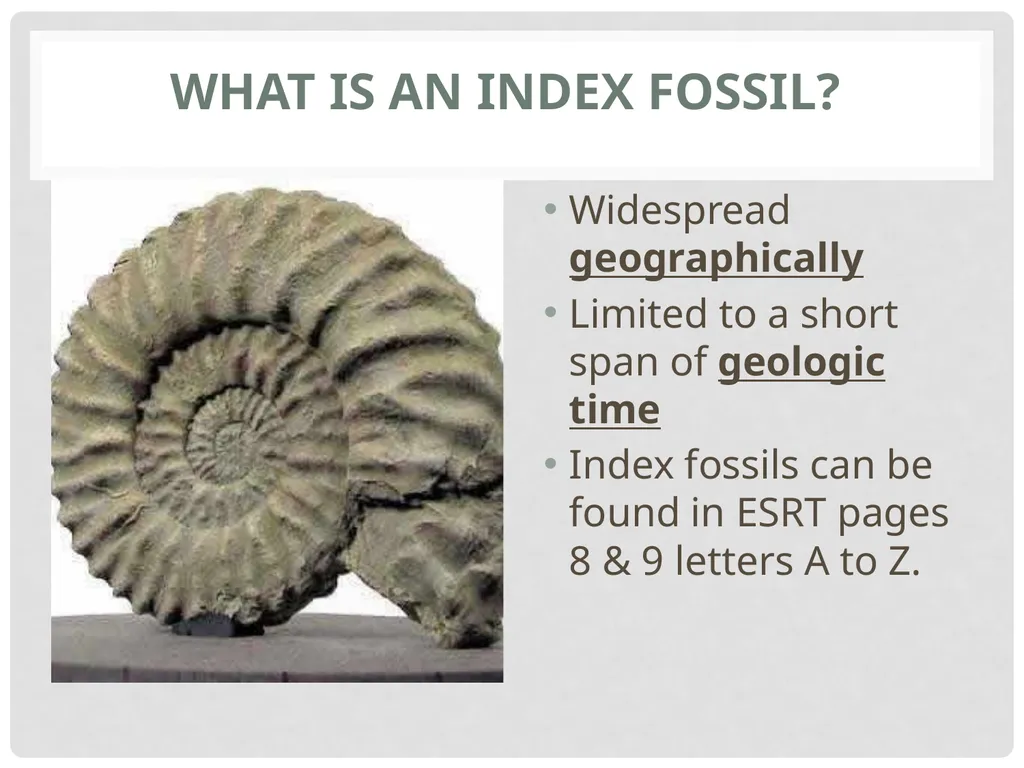
slide23. What is an index fossil? Widespread geographically
Limited to a short span of geologic time
Index fossils can be found in ESRT pages 8 & 9 letters A to Z.<br>
slide24. Bias of the fossil record: The fossil record typically shows records of organisms with:
a. Hard parts
b. most of the fossil record is made up of marine organisms
Ex. Limestone with clam shells = region of shallow seas<br>
slide2. Geology needs a Time Scale An investigation of the history of Earth
Understanding how features of landscape developed and formed
Reconstructing the history of Earth<br>
slide3. Uniformitarianism (Hutton (late 1700s)) Processes that formed past landscapes are the same processes that exist on Earth today
These processes are extremely slow
“The present is the key to the past”
In order for uniformitarianism to occur, Earth must be at least millions of years old<br>
slide4. Relative Age Dating Describes if layers are older or younger than one another
• Not an exact age
• A way of reconstructing the geological history of an area<br>
slide5. Laws of Relative Age Dating 1. Superposition
2. Original Horizontality
3. Cross-cutting relationships
4. Inclusions<br>
slide6. Law of Superposition sedimentary layers on the bottom are the oldest
sedimentary layers on top are the youngest
occurs in undisturbed sequence of rock layers only<br>
slide7. 2. Original Horizontality Sedimentary layers are deposited horizontally
If tilted, or non-horizontal layers are observed, some type of deformation has occurred to tilt the layers<br>
slide8. 3. Cross-Cutting Relationships intrusions (dikes, sills, batholiths) & faults are younger than the layers they cut through
Folded gneiss intruded by felsic dikes<br>
slide9. Faulting If faulting occurs after layers are deposited, the fault is younger than the layers it displaces.<br>
slide10. The Principle of Cross Cutting Relationships<br>
slide11. 4. Inclusions an inclusion is a broken-off piece of rock found within another rock.
The included rock is surrounded by younger material.
The rock that the inclusions come from is older.<br>
slide12. Sequencing Events in Rocks: Terms to Know and Use Unconformity – a break or gap in the geological rock record.
emergence (uplift)
submergence (sinking)
deposition
tilting
faulting
intrusion/extrusion
melting/solidification<br>
slide13. In Conclusion Keep the Laws of Relative Age Dating in mind when deciding the order of events in rock formation!!!<br>
slide14. Let’s try it!!!!!<br>
slide15. Conformable strata are layers of rock (strata) that show a complete geological history UNCONFORMITIES<br>
slide16. Unconformities Gap in the rock record
Missing layers
Cause is either non-deposition or erosion
3 Types:
Non-conformity
Angular Unconformity
Disconformity<br>
slide17. 1. Non-Conformity Boundary between sandstone and granite layers
Igneous or metamorphic rock layer overlain by sedimentary rocks
Represents an unknown period of time during which the granite eroded.<br>
slide18. 2. Angular Unconformity Boundary between tilted and horizontal layers
Tilted (folded) layers overlain by flat layers<br>
slide19. 3. Disconformity Noticed as a change in sedimentary environment.
Gap between layers of sedimentary rock<br>
slide20. CORRELATION What does ‘To Correlate’ mean?
Connect in a systematic way, match-up
How do we correlate rocks?
Walking the outcrop
Looking for time markers – volcanic ash
Matching up index fossils<br>
slide22. Principle of Fossil Succession (states…) “Fossil organisms succeed each other in a definite determinable order”
Any time period can be recognized by its fossil content
fish imprint dinosaur footprint recrystallized shells<br>
slide23. What is an index fossil? Widespread geographically
Limited to a short span of geologic time
Index fossils can be found in ESRT pages 8 & 9 letters A to Z.<br>
slide24. Bias of the fossil record: The fossil record typically shows records of organisms with:
a. Hard parts
b. most of the fossil record is made up of marine organisms
Ex. Limestone with clam shells = region of shallow seas<br>