
GET TRAINED© A program for school nurses to train
T
Published · 35 slides · 0 views

1 / 1






Description
GET TRAINED A program for school nurses to train school staff to administer epinephrine using an auto-injector 2015 Get Trained 2016 Updates Information in this presentation was reviewed and updated in August 2016 by: Mary Blackborow,
Related Topics
Share
Embed code
Download this presentation From Below
"GET TRAINED© A program for school nurses to train" is the property of its rightful owner. Permission is granted to download and print the materials on this website for personal, non-commercial use only, and to display it on your personal computer provided you do not modify the materials and that you retain all copyright notices contained in the materials. By downloading content from our website, you accept the terms of this agreement.
Presentation Transcript
01
GET TRAINED© A program for school nurses to train school staff to administer epinephrine using an auto-injector © 2015<br>
02
Get Trained 2016 Updates Information in this presentation was reviewed and updated in August 2016 by:
Mary Blackborow, MSN, RN
Cathy Grano, MSN, RN,CSN<br>
Mary Blackborow, MSN, RN
Cathy Grano, MSN, RN,CSN<br>
03
It’s time for all school staff to
GET TRAINED
to administer an epinephrine auto-injector
in an emergency! This program is supported by an unrestricted grant from Mylan<br>
GET TRAINED
to administer an epinephrine auto-injector
in an emergency! This program is supported by an unrestricted grant from Mylan<br>
04
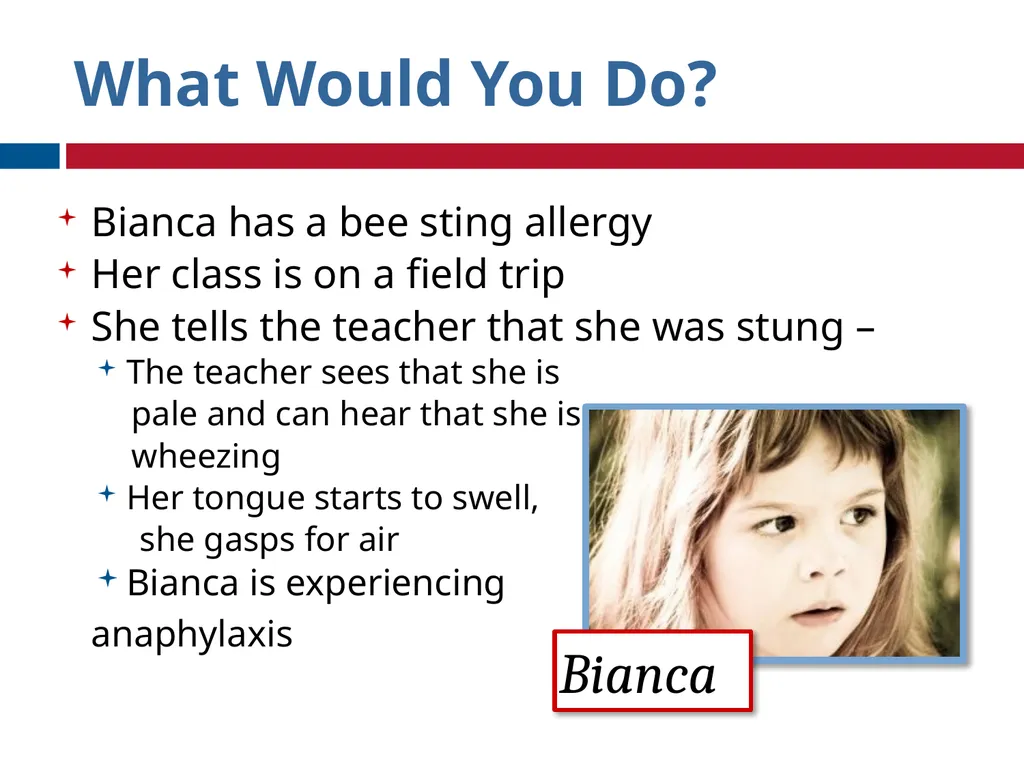
What Would You Do? Bianca has a bee sting allergy
Her class is on a field trip
She tells the teacher that she was stung –
The teacher sees that she is
pale and can hear that she is
wheezing
Her tongue starts to swell,
she gasps for air
Bianca is experiencing
anaphylaxis<br>
Her class is on a field trip
She tells the teacher that she was stung –
The teacher sees that she is
pale and can hear that she is
wheezing
Her tongue starts to swell,
she gasps for air
Bianca is experiencing
anaphylaxis<br>
05
You have moments to react Bianca is having a life-threatening allergic reaction
Without prompt treatment with a drug called epinephrine, Bianca could die within minutes
Do you know what to do?
Do you know how to give epinephrine?<br>
Without prompt treatment with a drug called epinephrine, Bianca could die within minutes
Do you know what to do?
Do you know how to give epinephrine?<br>
06
BE EMPOWERED TO SAVE A LIFE -<br>
07
Objectives Learn the signs and symptoms of anaphylaxis
Have the skills to administer an epinephrine auto-injector
Review the use of an Emergency Care Plan in responding to a student health emergency
Learn to save the life of a child like Bianca!<br>
Have the skills to administer an epinephrine auto-injector
Review the use of an Emergency Care Plan in responding to a student health emergency
Learn to save the life of a child like Bianca!<br>
08
Insert your state’s specific laws and regulations here<br>
09
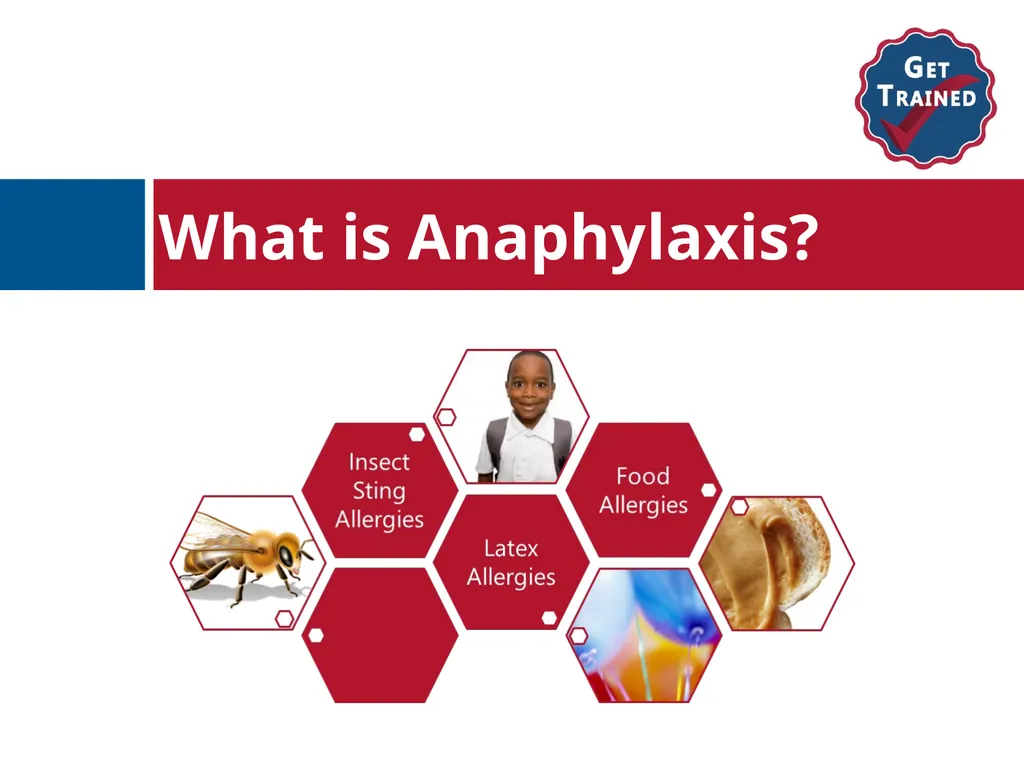
What is Anaphylaxis?<br>
10
What is an allergic reaction? An allergy occurs when the immune system sees something normal as a harmful thing
Triggers the sudden release of chemicals, including histamine, causing the reaction
The symptoms may be mild or severe – may progress over minutes or hours
FAAN, 2012<br>
Triggers the sudden release of chemicals, including histamine, causing the reaction
The symptoms may be mild or severe – may progress over minutes or hours
FAAN, 2012<br>
11
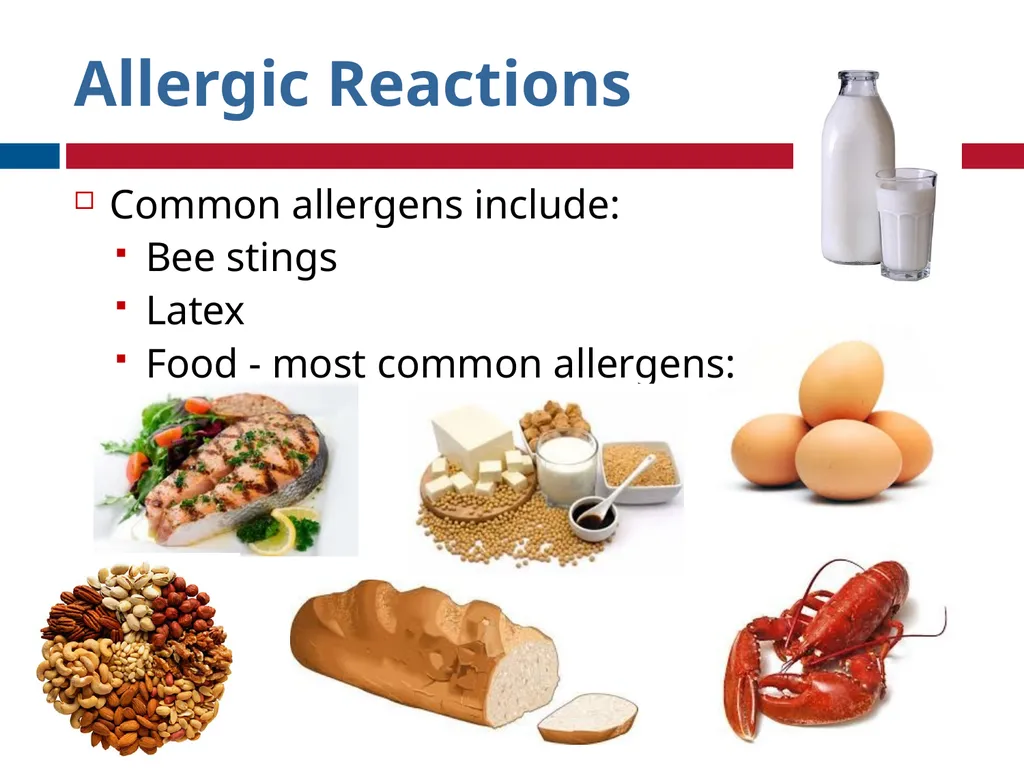
Allergic Reactions Common allergens include:
Bee stings
Latex
Food - most common allergens:<br>
Bee stings
Latex
Food - most common allergens:<br>
12
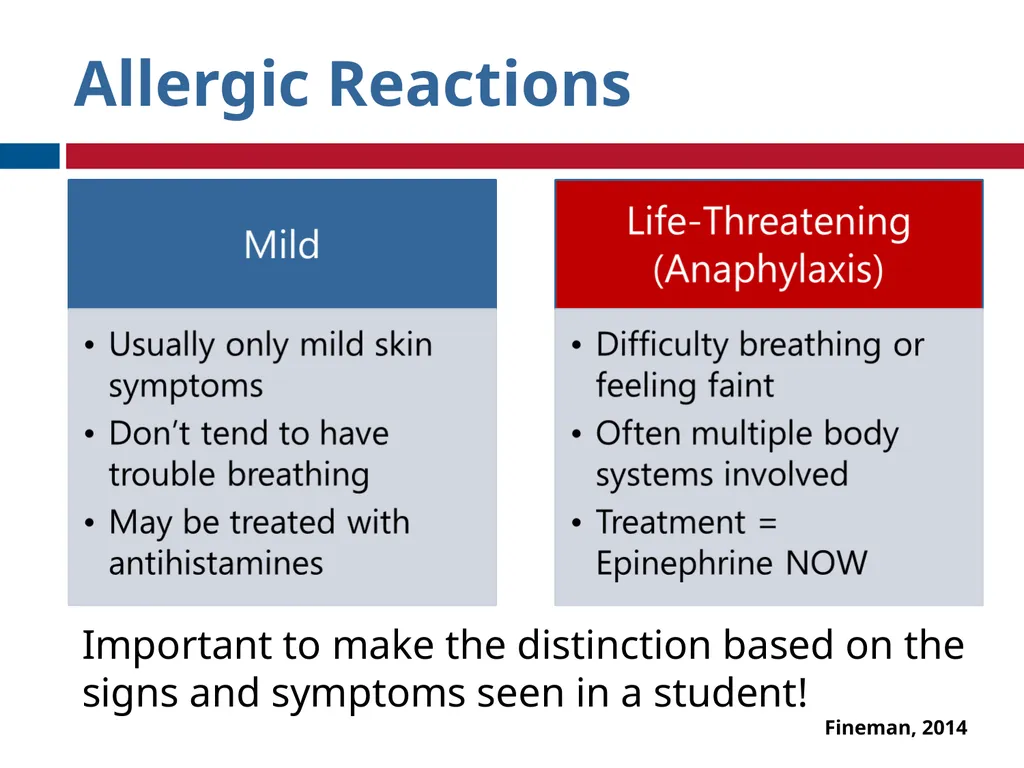
Allergic Reactions Important to make the distinction based on the signs and symptoms seen in a student!
Fineman, 2014<br>
Fineman, 2014<br>
13
Anaphylaxis (“an-a-fi-LAK-sis”) Anaphylaxis is a severe allergic reaction that can be life-threatening in a matter of minutes
Almost always unanticipated
It must be treated immediately
The drug of choice is epinephrine
The time to learn how to give life-saving medication is NOW– it needs to be given without delay
It’s time to GET TRAINED!
Sicherer & Simons, 2007
Schoessler & White, 2013<br>
Almost always unanticipated
It must be treated immediately
The drug of choice is epinephrine
The time to learn how to give life-saving medication is NOW– it needs to be given without delay
It’s time to GET TRAINED!
Sicherer & Simons, 2007
Schoessler & White, 2013<br>
14
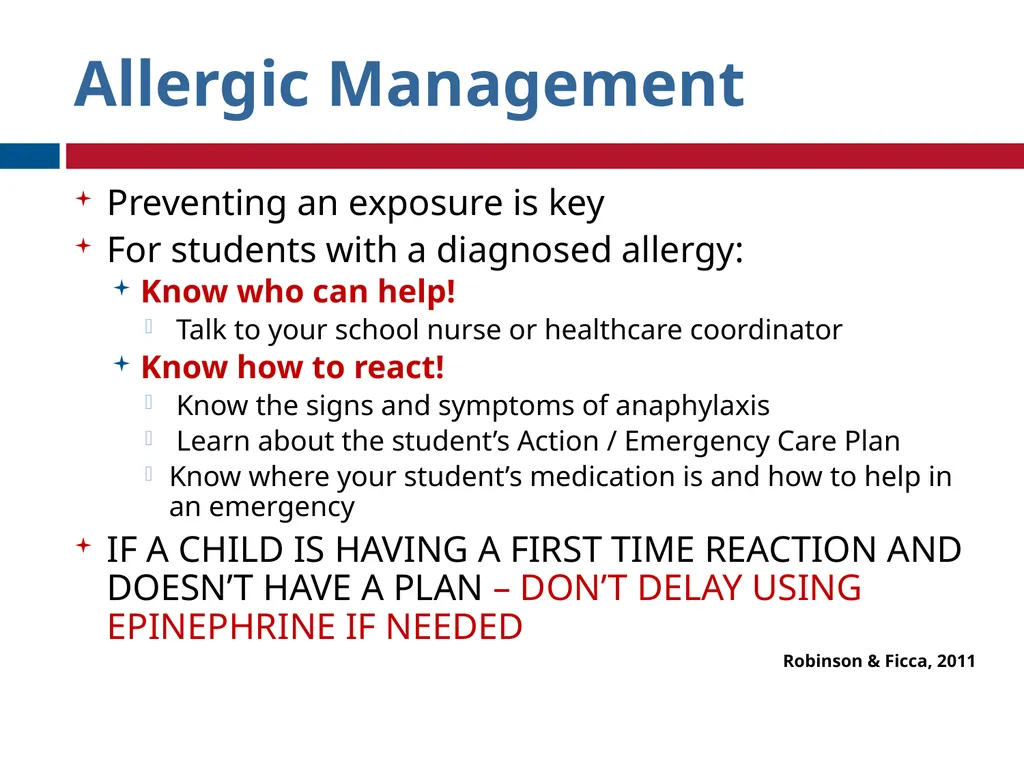
Allergic Management Preventing an exposure is key
For students with a diagnosed allergy:
Know who can help!
Talk to your school nurse or healthcare coordinator
Know how to react!
Know the signs and symptoms of anaphylaxis
Learn about the student’s Action / Emergency Care Plan
Know where your student’s medication is and how to help in an emergency
IF A CHILD IS HAVING A FIRST TIME REACTION AND DOESN’T HAVE A PLAN – DON’T DELAY USING EPINEPHRINE IF NEEDED
Robinson & Ficca, 2011<br>
For students with a diagnosed allergy:
Know who can help!
Talk to your school nurse or healthcare coordinator
Know how to react!
Know the signs and symptoms of anaphylaxis
Learn about the student’s Action / Emergency Care Plan
Know where your student’s medication is and how to help in an emergency
IF A CHILD IS HAVING A FIRST TIME REACTION AND DOESN’T HAVE A PLAN – DON’T DELAY USING EPINEPHRINE IF NEEDED
Robinson & Ficca, 2011<br>
15
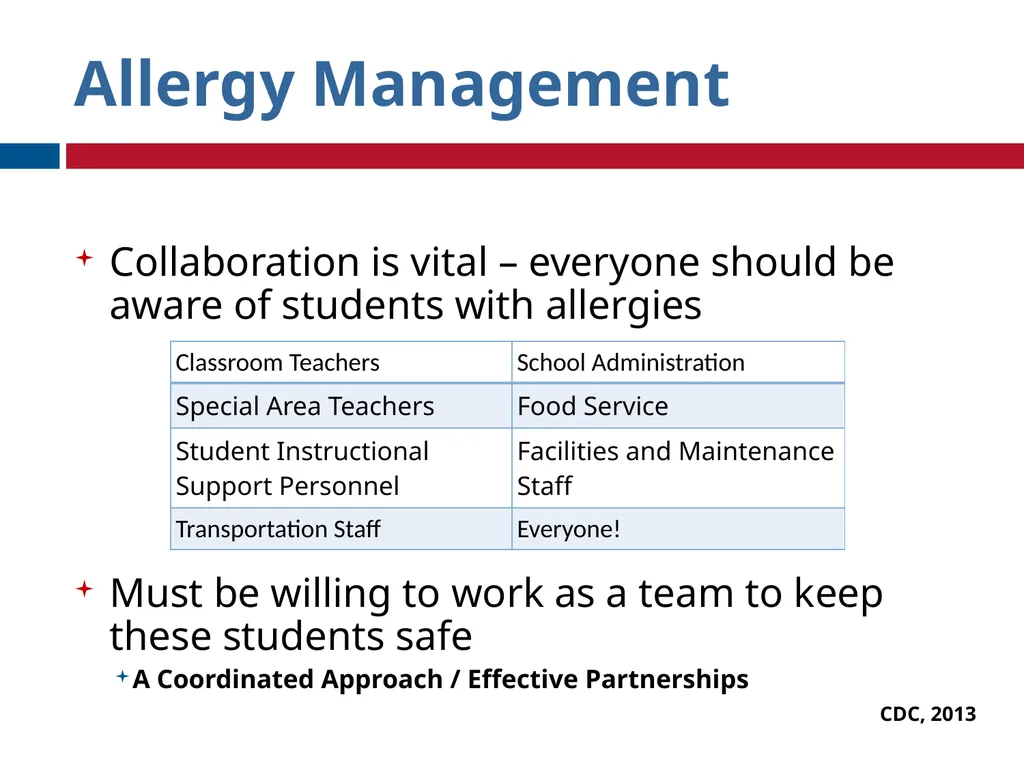
Allergy Management Collaboration is vital – everyone should be aware of students with allergies
Must be willing to work as a team to keep these students safe
A Coordinated Approach / Effective Partnerships
CDC, 2013<br>
Must be willing to work as a team to keep these students safe
A Coordinated Approach / Effective Partnerships
CDC, 2013<br>
16
Signs and Symptoms<br>
17
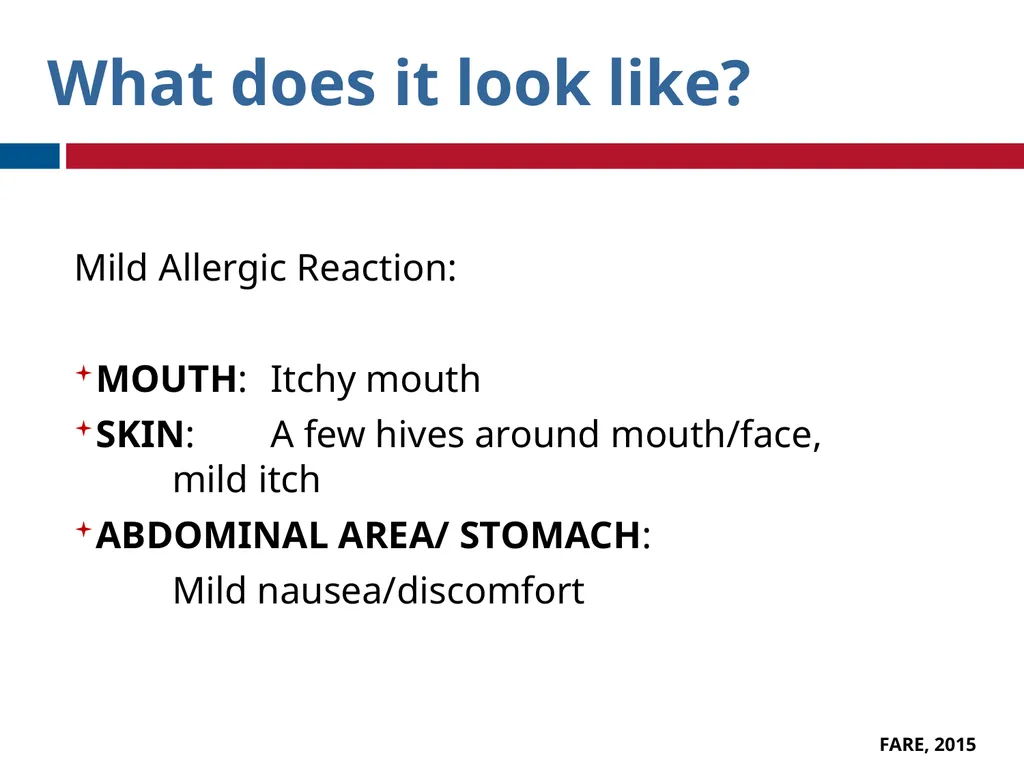
What does it look like? Mild Allergic Reaction:
MOUTH: Itchy mouth
SKIN: A few hives around mouth/face, mild itch
ABDOMINAL AREA/ STOMACH:
Mild nausea/discomfort
FARE, 2015<br>
MOUTH: Itchy mouth
SKIN: A few hives around mouth/face, mild itch
ABDOMINAL AREA/ STOMACH:
Mild nausea/discomfort
FARE, 2015<br>
18
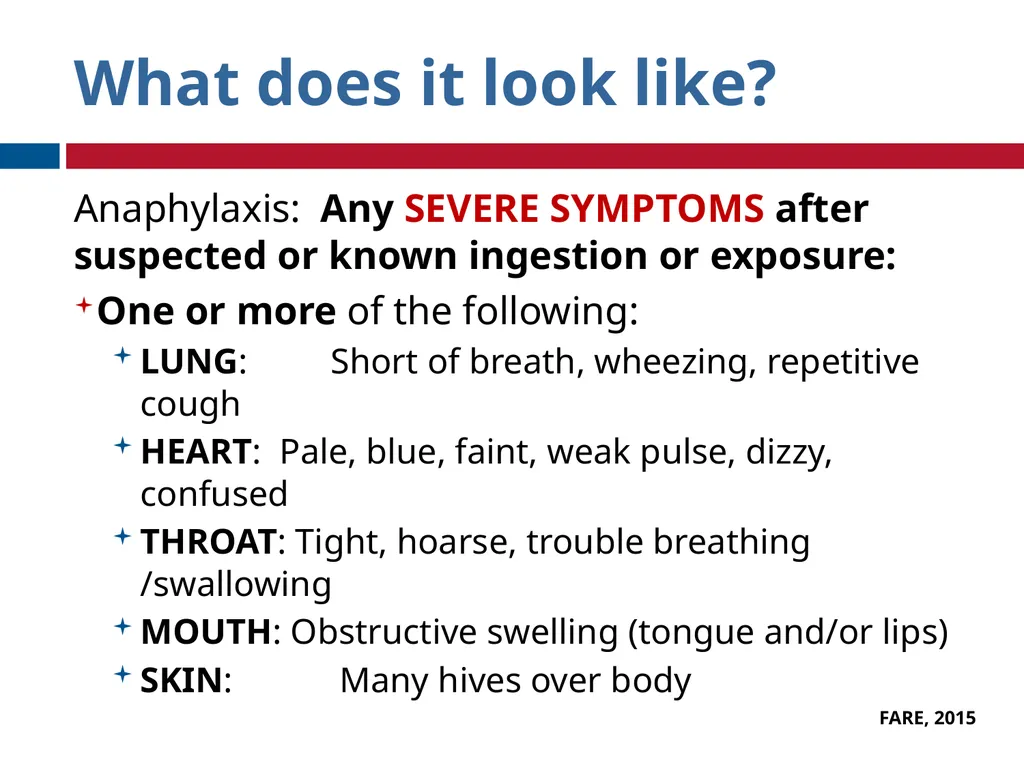
What does it look like? Anaphylaxis: Any SEVERE SYMPTOMS after suspected or known ingestion or exposure:
One or more of the following:
LUNG: Short of breath, wheezing, repetitive cough
HEART: Pale, blue, faint, weak pulse, dizzy, confused
THROAT: Tight, hoarse, trouble breathing /swallowing
MOUTH: Obstructive swelling (tongue and/or lips)
SKIN: Many hives over body
FARE, 2015<br>
One or more of the following:
LUNG: Short of breath, wheezing, repetitive cough
HEART: Pale, blue, faint, weak pulse, dizzy, confused
THROAT: Tight, hoarse, trouble breathing /swallowing
MOUTH: Obstructive swelling (tongue and/or lips)
SKIN: Many hives over body
FARE, 2015<br>
19
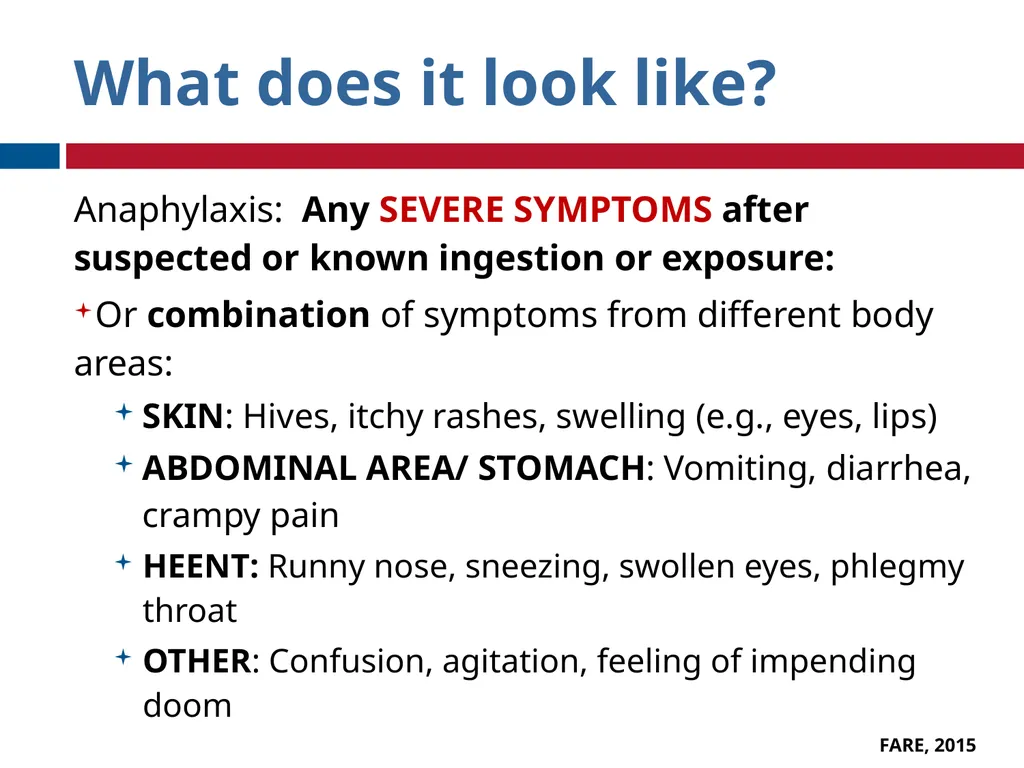
What does it look like? Anaphylaxis: Any SEVERE SYMPTOMS after suspected or known ingestion or exposure:
Or combination of symptoms from different body areas:
SKIN: Hives, itchy rashes, swelling (e.g., eyes, lips)
ABDOMINAL AREA/ STOMACH: Vomiting, diarrhea, crampy pain
HEENT: Runny nose, sneezing, swollen eyes, phlegmy throat
OTHER: Confusion, agitation, feeling of impending doom
FARE, 2015<br>
Or combination of symptoms from different body areas:
SKIN: Hives, itchy rashes, swelling (e.g., eyes, lips)
ABDOMINAL AREA/ STOMACH: Vomiting, diarrhea, crampy pain
HEENT: Runny nose, sneezing, swollen eyes, phlegmy throat
OTHER: Confusion, agitation, feeling of impending doom
FARE, 2015<br>
20
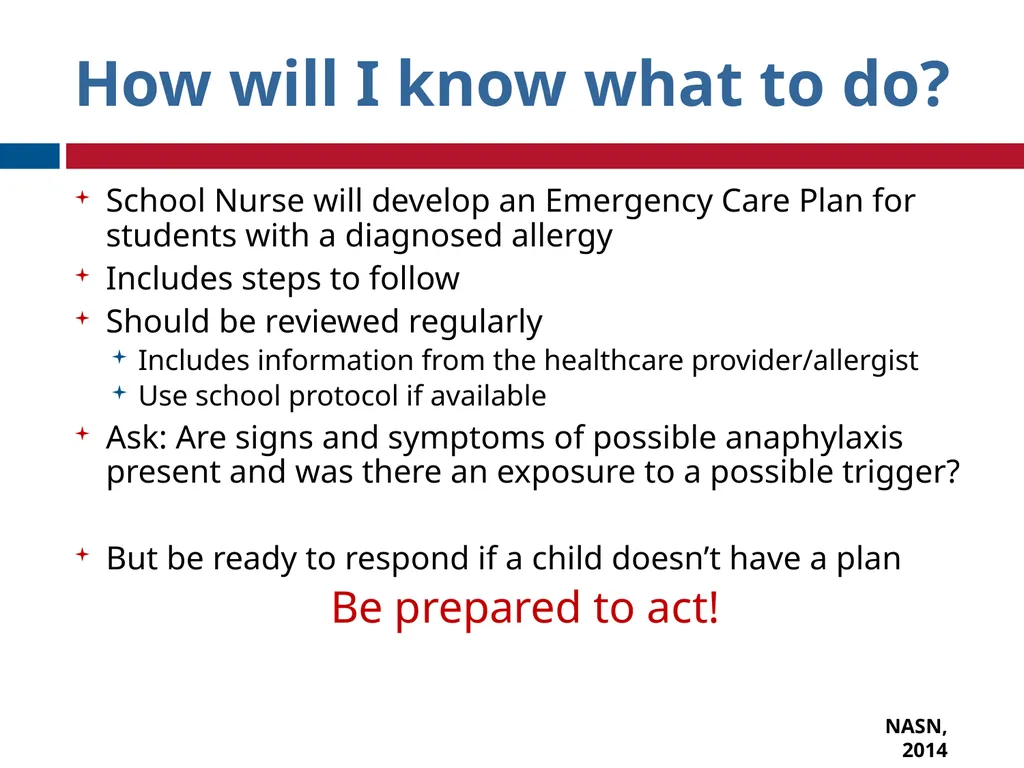
How will I know what to do? School Nurse will develop an Emergency Care Plan for students with a diagnosed allergy
Includes steps to follow
Should be reviewed regularly
Includes information from the healthcare provider/allergist
Use school protocol if available
Ask: Are signs and symptoms of possible anaphylaxis present and was there an exposure to a possible trigger?
But be ready to respond if a child doesn’t have a plan
Be prepared to act! NASN, 2014<br>
Includes steps to follow
Should be reviewed regularly
Includes information from the healthcare provider/allergist
Use school protocol if available
Ask: Are signs and symptoms of possible anaphylaxis present and was there an exposure to a possible trigger?
But be ready to respond if a child doesn’t have a plan
Be prepared to act! NASN, 2014<br>
21
Allergy Action/Emergency Care Plan FARE, 2014 Individual – specific to the student
Plan should be shared with school staff responsible for care
Information should be treated with care
Everyone should know where medication is and HOW TO REACT<br>
Plan should be shared with school staff responsible for care
Information should be treated with care
Everyone should know where medication is and HOW TO REACT<br>
22
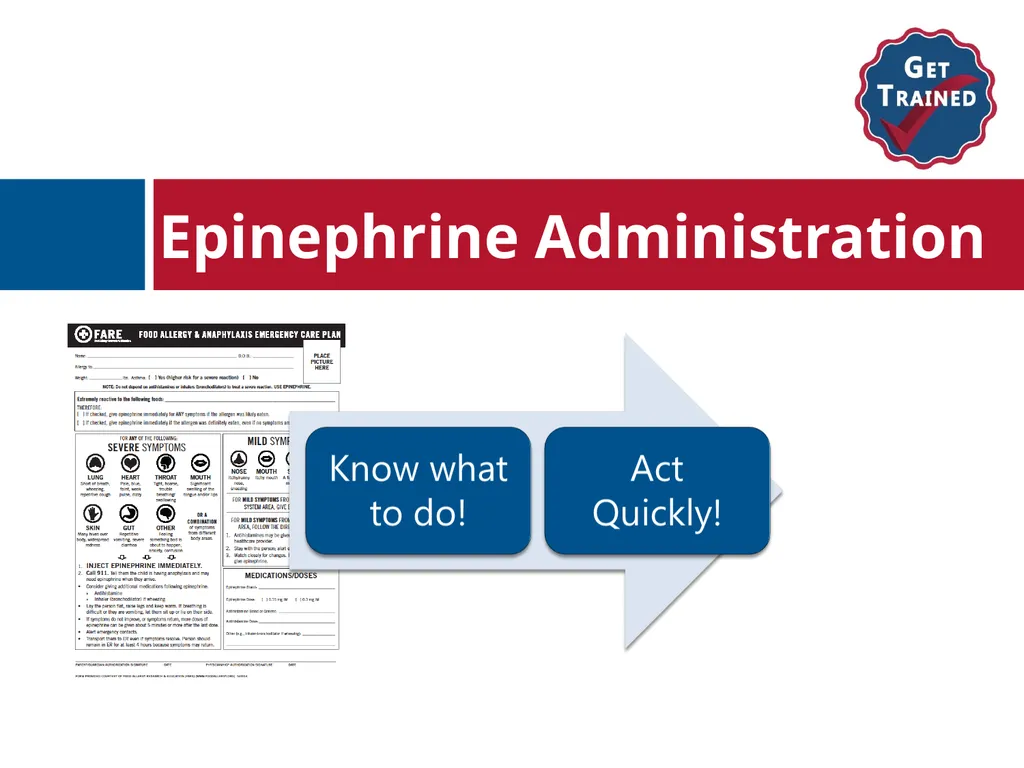
Epinephrine Administration<br>
23
Epinephrine Epinephrine is the drug of choice for anaphylaxis
Should be administered PROMPTLY
Some protocols call for epinephrine to be administered with or without symptoms
A delay in treatment can have devastating results
Robinson & Ficca, 2011
Sicherer & Simons, 2007<br>
Should be administered PROMPTLY
Some protocols call for epinephrine to be administered with or without symptoms
A delay in treatment can have devastating results
Robinson & Ficca, 2011
Sicherer & Simons, 2007<br>
24
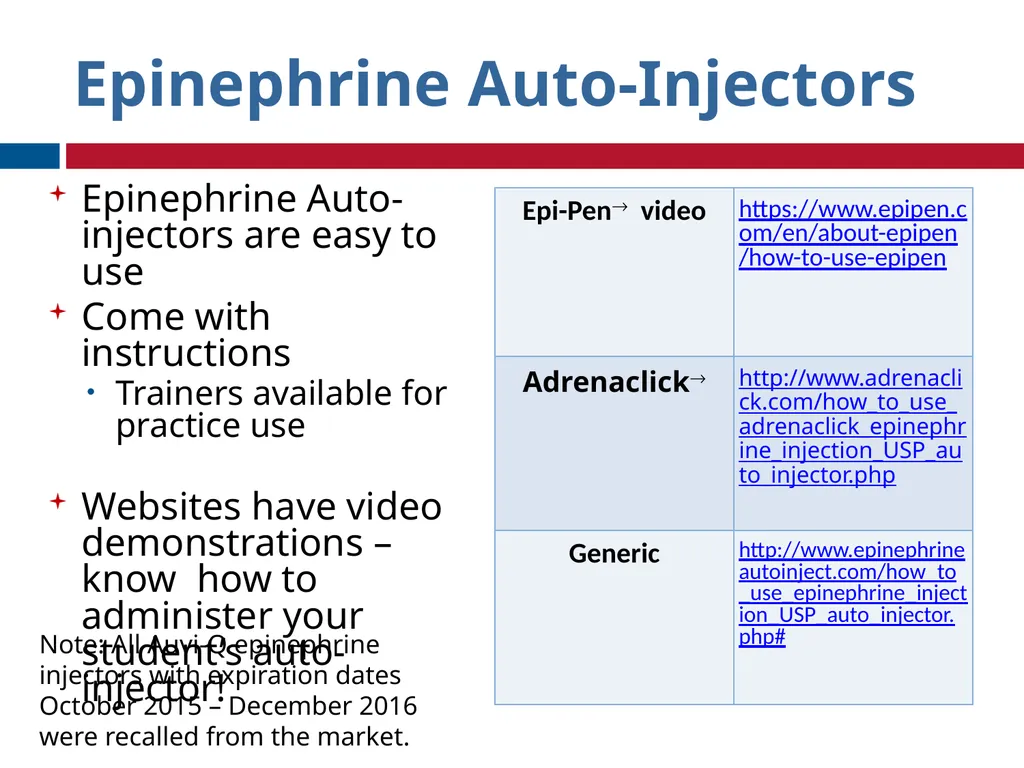
Epinephrine Auto-Injectors Epinephrine Auto-injectors are easy to use
Come with instructions
Trainers available for practice use
Websites have video demonstrations – know how to administer your student’s auto-injector! Note: All Auvi-Q epinephrine injectors with expiration dates October 2015 – December 2016 were recalled from the market.<br>
Come with instructions
Trainers available for practice use
Websites have video demonstrations – know how to administer your student’s auto-injector! Note: All Auvi-Q epinephrine injectors with expiration dates October 2015 – December 2016 were recalled from the market.<br>
25
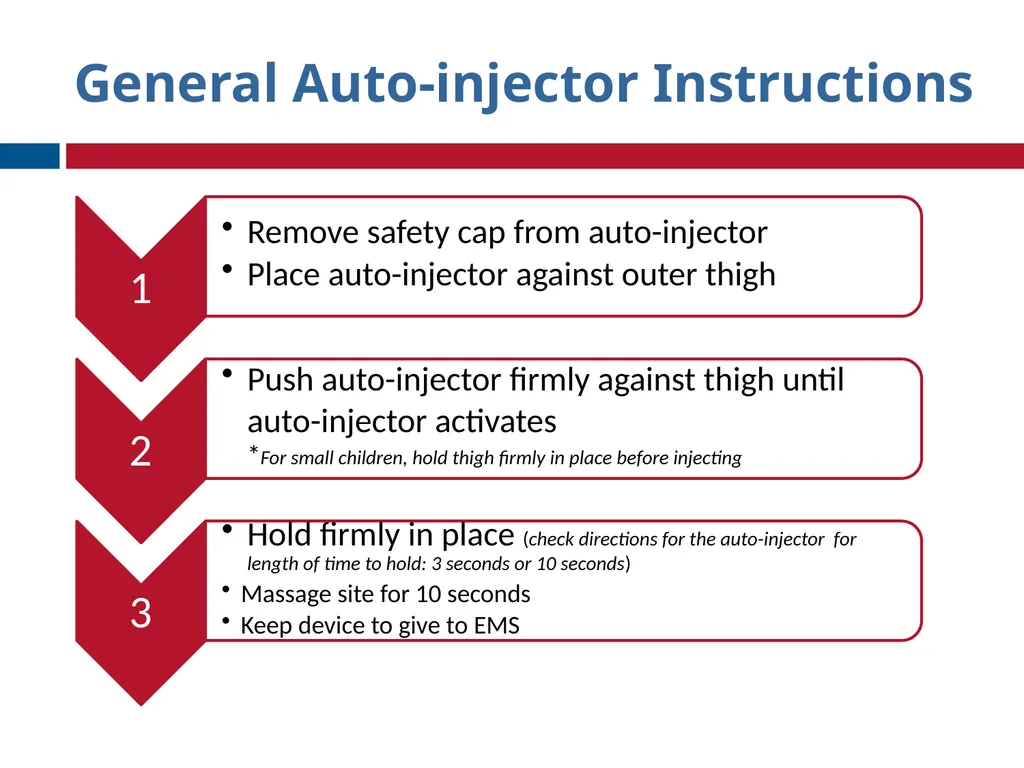
General Auto-injector Instructions GET SPECIFIC DEMONSTRATION/TRAINING FROM YOUR SCHOOL NURSE
It is preferable to use training device from student’s brand of epinephrine auto-injector
Determine that the student requires epinephrine – use protocol or identify symptoms
Call 911 – have someone call EMS while you administer epinephrine
Check medication expiration date NASN, 2014<br>
It is preferable to use training device from student’s brand of epinephrine auto-injector
Determine that the student requires epinephrine – use protocol or identify symptoms
Call 911 – have someone call EMS while you administer epinephrine
Check medication expiration date NASN, 2014<br>
26
General Auto-injector Instructions<br>
27
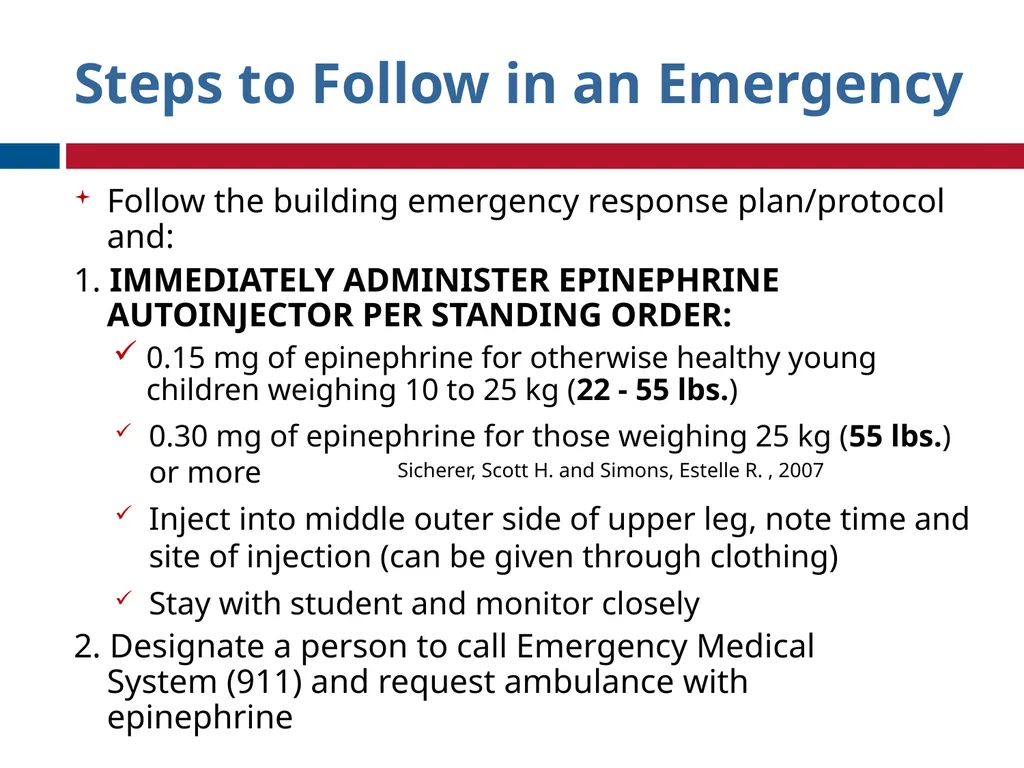
Steps to Follow in an Emergency Follow the building emergency response plan/protocol and:
1. IMMEDIATELY ADMINISTER EPINEPHRINE AUTOINJECTOR PER STANDING ORDER:
0.15 mg of epinephrine for otherwise healthy young children weighing 10 to 25 kg (22 - 55 lbs.)
0.30 mg of epinephrine for those weighing 25 kg (55 lbs.) or more
Inject into middle outer side of upper leg, note time and site of injection (can be given through clothing)
Stay with student and monitor closely
2. Designate a person to call Emergency Medical System (911) and request ambulance with epinephrine Sicherer, Scott H. and Simons, Estelle R. , 2007<br>
1. IMMEDIATELY ADMINISTER EPINEPHRINE AUTOINJECTOR PER STANDING ORDER:
0.15 mg of epinephrine for otherwise healthy young children weighing 10 to 25 kg (22 - 55 lbs.)
0.30 mg of epinephrine for those weighing 25 kg (55 lbs.) or more
Inject into middle outer side of upper leg, note time and site of injection (can be given through clothing)
Stay with student and monitor closely
2. Designate a person to call Emergency Medical System (911) and request ambulance with epinephrine Sicherer, Scott H. and Simons, Estelle R. , 2007<br>
28
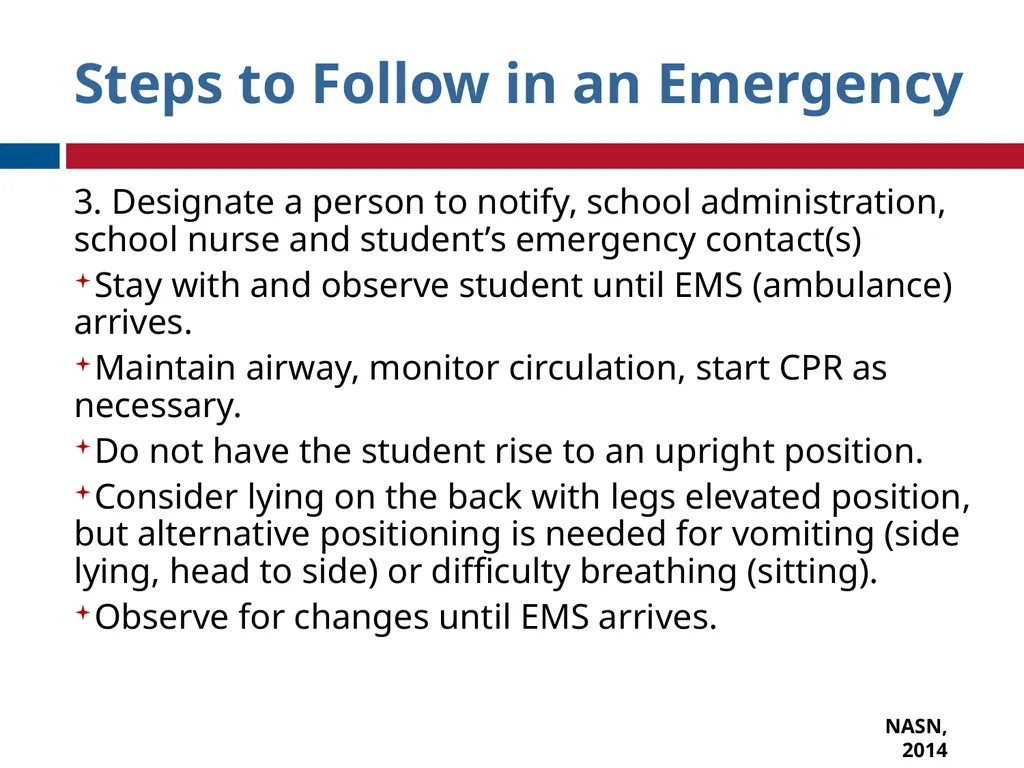
Steps to Follow in an Emergency 3. Designate a person to notify, school administration, school nurse and student’s emergency contact(s)
Stay with and observe student until EMS (ambulance) arrives.
Maintain airway, monitor circulation, start CPR as necessary.
Do not have the student rise to an upright position.
Consider lying on the back with legs elevated position, but alternative positioning is needed for vomiting (side lying, head to side) or difficulty breathing (sitting).
Observe for changes until EMS arrives. NASN, 2014<br>
Stay with and observe student until EMS (ambulance) arrives.
Maintain airway, monitor circulation, start CPR as necessary.
Do not have the student rise to an upright position.
Consider lying on the back with legs elevated position, but alternative positioning is needed for vomiting (side lying, head to side) or difficulty breathing (sitting).
Observe for changes until EMS arrives. NASN, 2014<br>
29
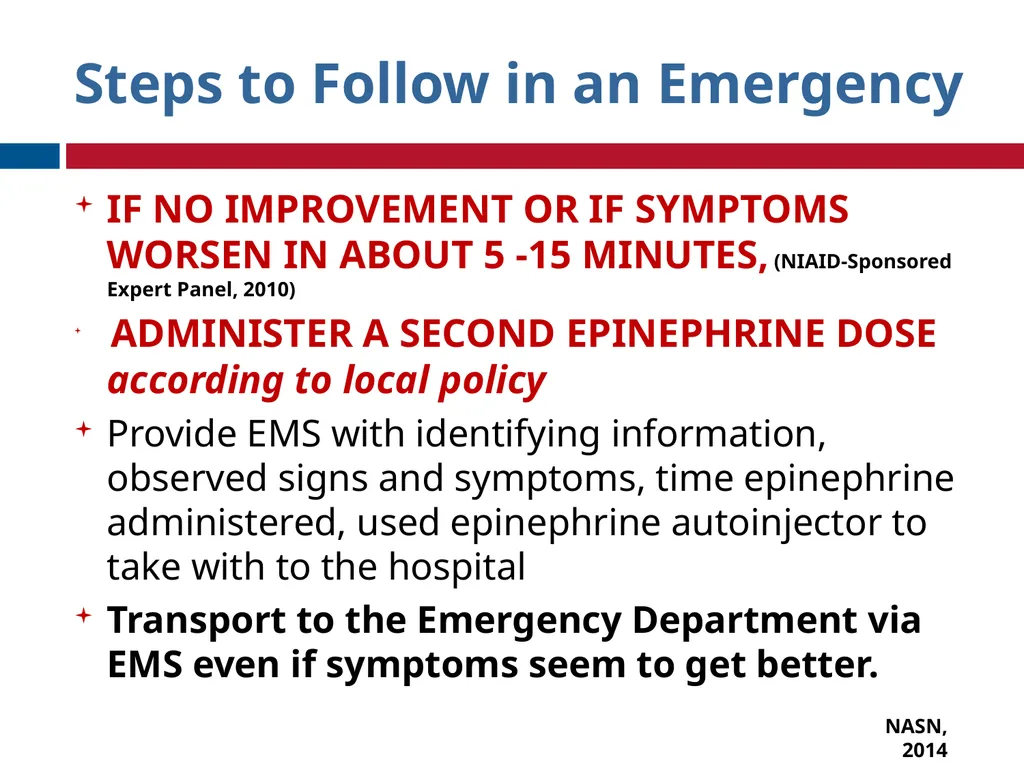
Steps to Follow in an Emergency IF NO IMPROVEMENT OR IF SYMPTOMS WORSEN IN ABOUT 5 -15 MINUTES, (NIAID-Sponsored Expert Panel, 2010)
ADMINISTER A SECOND EPINEPHRINE DOSE according to local policy
Provide EMS with identifying information, observed signs and symptoms, time epinephrine administered, used epinephrine autoinjector to take with to the hospital
Transport to the Emergency Department via EMS even if symptoms seem to get better. NASN, 2014<br>
ADMINISTER A SECOND EPINEPHRINE DOSE according to local policy
Provide EMS with identifying information, observed signs and symptoms, time epinephrine administered, used epinephrine autoinjector to take with to the hospital
Transport to the Emergency Department via EMS even if symptoms seem to get better. NASN, 2014<br>
30
Document and Debrief Discuss with the school nurse how to record that you gave an epinephrine auto-injector dose and the symptoms you witnessed
Have a debriefing meeting with the nurse and school administration after giving an epinephrine auto-injector
Talk about how response went
Talk about feelings
Talk about ways to improve in the future
Robinson & Ficca, 2011<br>
Have a debriefing meeting with the nurse and school administration after giving an epinephrine auto-injector
Talk about how response went
Talk about feelings
Talk about ways to improve in the future
Robinson & Ficca, 2011<br>
31
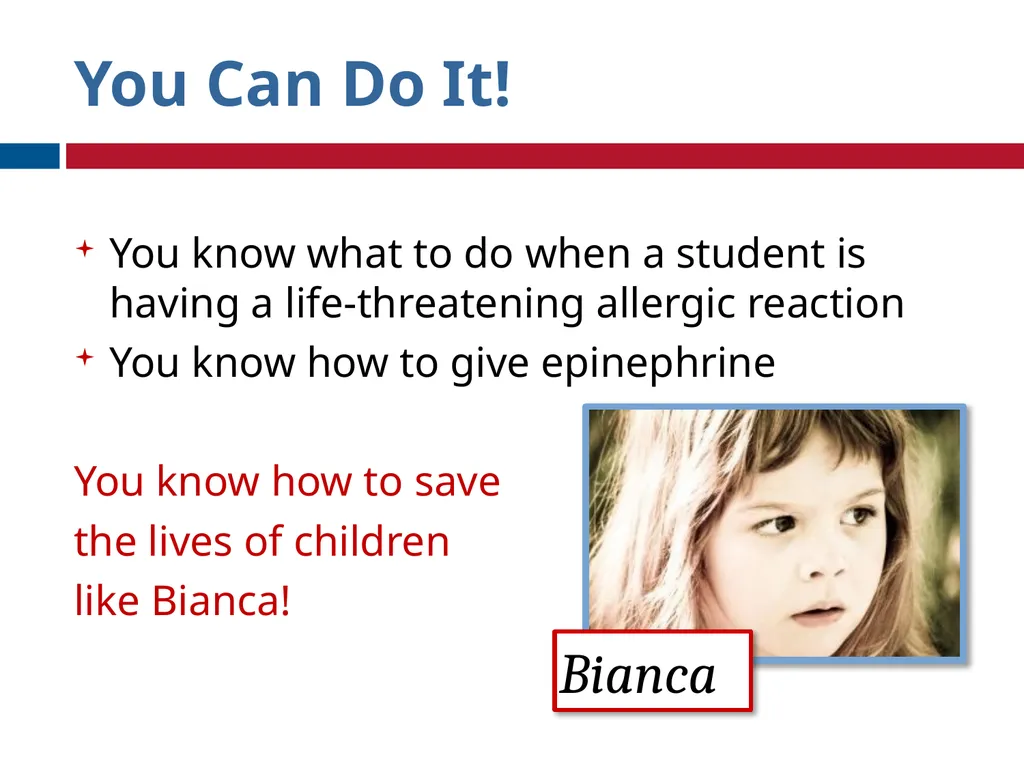
You Can Do It! You know what to do when a student is having a life-threatening allergic reaction
You know how to give epinephrine
You know how to save
the lives of children
like Bianca!<br>
You know how to give epinephrine
You know how to save
the lives of children
like Bianca!<br>
32
YOU'VE BEEN EMPOWERED TO SAVE A LIFE!<br>
33
Thank you for taking the time to
GET TRAINED
to administer an epinephrine auto-injector
in an emergency!<br>
GET TRAINED
to administer an epinephrine auto-injector
in an emergency!<br>
34
References Guidelines for the Diagnosis and Management of Food Allergy in the United States: Report of the NIAID-Sponsored Expert Panel (2010). Journal of Allergy and Clinical Immunology, Volume 126 , Issue 6 , S1 - S58 http://dx.doi.org/10.1016/j.jaci.2010.10.007
Centers for Disease Control and Prevention (CDC). (2013). Voluntary guidelines for managing food allergies in schools and early care and education programs. Washington DC: US Department of Health and Human Services.
Fineman, S. (2014). Optimal treatment of anaphylaxis: antihistamines versus epinephrine. Postgraduate Medicine, 126 (4), 73-81. doi: 10.3810/pgm.2014.07.2785
Food Allergy Research and Education (FARE) (2014). Retrieved from: http://www.foodallergy.org/<br>
Centers for Disease Control and Prevention (CDC). (2013). Voluntary guidelines for managing food allergies in schools and early care and education programs. Washington DC: US Department of Health and Human Services.
Fineman, S. (2014). Optimal treatment of anaphylaxis: antihistamines versus epinephrine. Postgraduate Medicine, 126 (4), 73-81. doi: 10.3810/pgm.2014.07.2785
Food Allergy Research and Education (FARE) (2014). Retrieved from: http://www.foodallergy.org/<br>
35
References National Association of School Nurses (NASN). (2014) Sample protocol for treatment of anaphylaxis. Retrieved from: http://www.nasn.org/portals/0/resources/Sample_Anaphylaxis_Epinephrine_Administration_Protocol.pdf
Robinson, J. & Ficca, M. (2011). Managing the student with severe food allergies. Journal of School Nursing, 28(3), 187-194. doi: 10.1177/1059840511429686.
Schoessler, S. & White, M. (2013) Recognition and treatment of anaphylaxis in the school setting: The essential role of the school nurse. NASN School Nurse, 29: 407-415. doi: 10.1177/1059840513506014
Sicherer, S. & Simons, F.E. (2007). Self-injectable epinephrine for first aid management of anaphylaxis. Pediatrics, 119(3), 638-646. doi: 10.1542/peds.2006-3689.<br>
Robinson, J. & Ficca, M. (2011). Managing the student with severe food allergies. Journal of School Nursing, 28(3), 187-194. doi: 10.1177/1059840511429686.
Schoessler, S. & White, M. (2013) Recognition and treatment of anaphylaxis in the school setting: The essential role of the school nurse. NASN School Nurse, 29: 407-415. doi: 10.1177/1059840513506014
Sicherer, S. & Simons, F.E. (2007). Self-injectable epinephrine for first aid management of anaphylaxis. Pediatrics, 119(3), 638-646. doi: 10.1542/peds.2006-3689.<br>