
Getting comfortable with VNS Programming Edward
Description: Getting comfortable with VNS Programming Edward Maa, MD Chief of the Comprehensive Epilepsy Program- DHMC Associate Professor of Neurology- University of Colorado and DVAMC First Clinic Visit Usually 2 weeks after implantation Visualize
Related Topics
Download Presentation
"Getting comfortable with VNS Programming Edward" is the property of its rightful owner. Permission is granted to download and print the materials on this website for personal, non-commercial use only, and to display it on your personal computer provided you do not modify the materials and that you retain all copyright notices contained in the materials. By downloading content from our website, you accept the terms of this agreement.
Presentation Transcript
slide1. Getting comfortable with VNS Programming Edward Maa, MD
Chief of the Comprehensive Epilepsy Program- DHMC
Associate Professor of Neurology- University of Colorado and DVAMC<br>
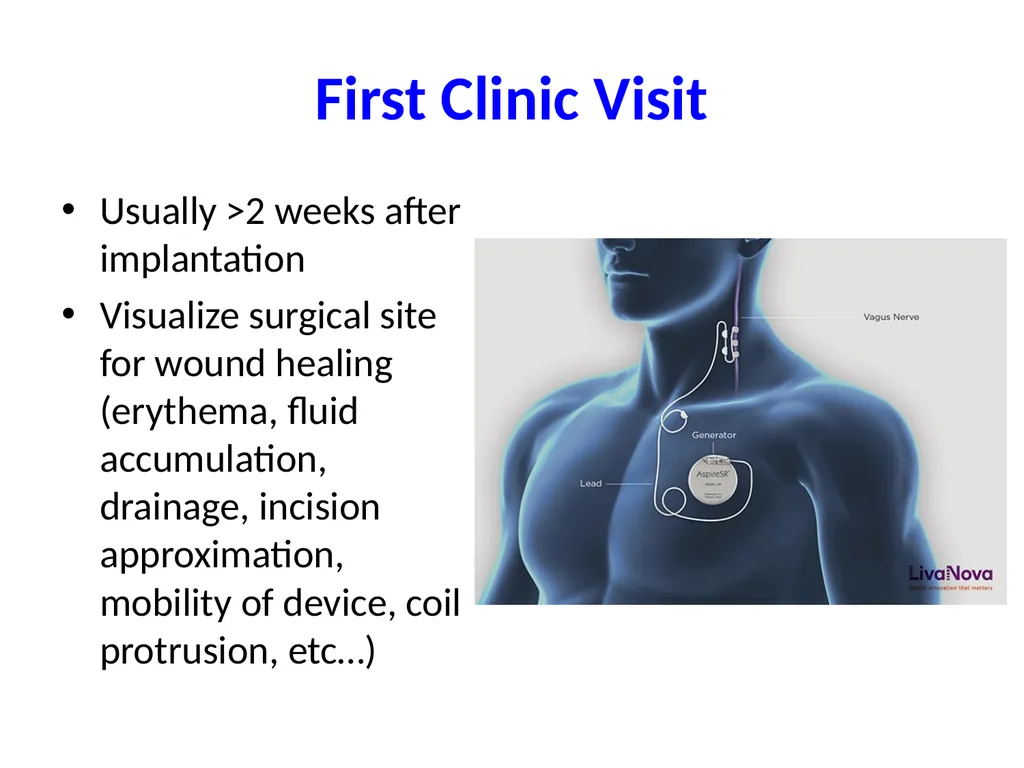
slide2. First Clinic Visit Usually >2 weeks after implantation
Visualize surgical site for wound healing (erythema, fluid accumulation, drainage, incision approximation, mobility of device, coil protrusion, etc…)<br>
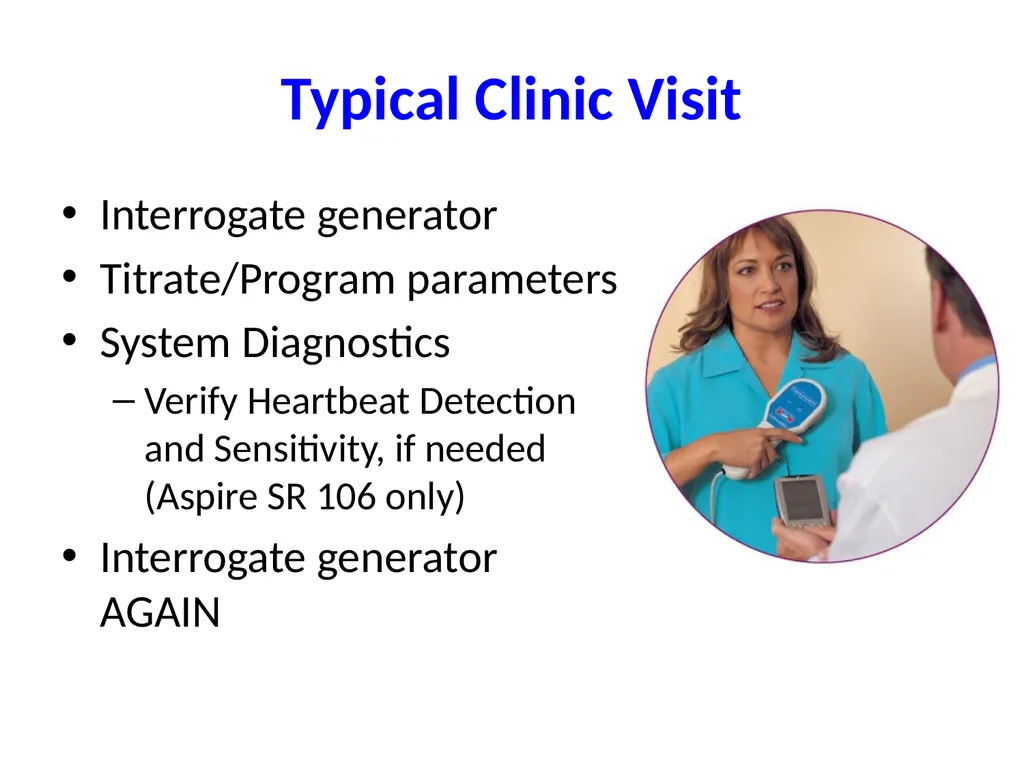
slide3. Typical Clinic Visit Interrogate generator
Titrate/Program parameters
System Diagnostics
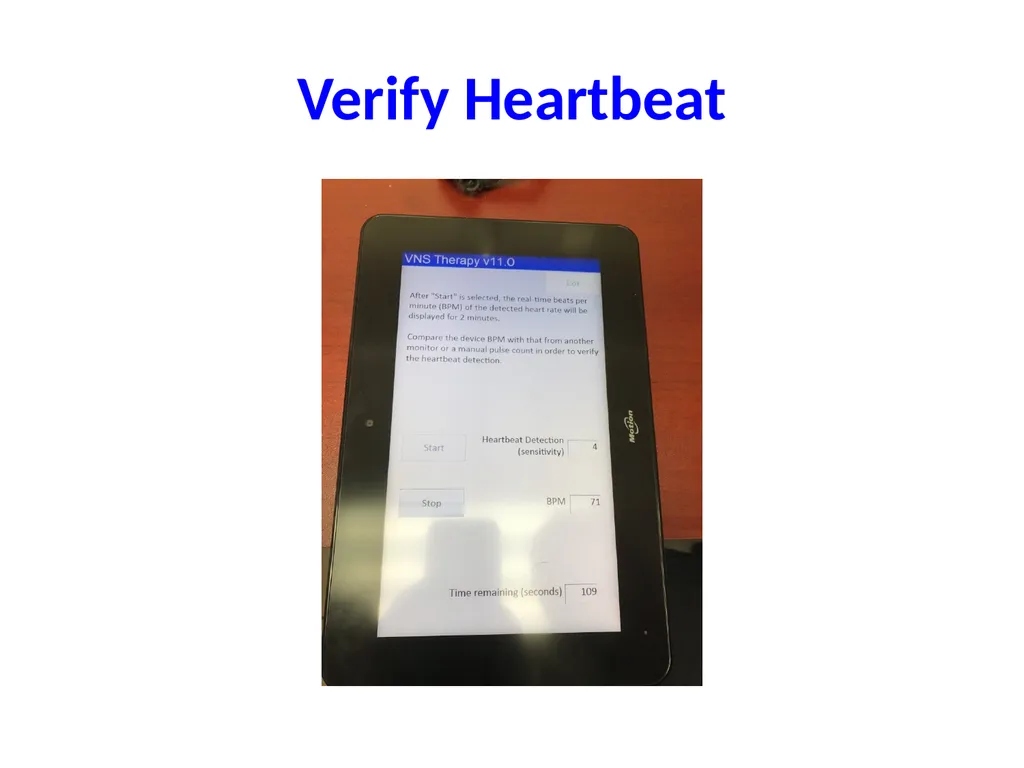
Verify Heartbeat Detection and Sensitivity, if needed (Aspire SR 106 only)
Interrogate generator AGAIN<br>
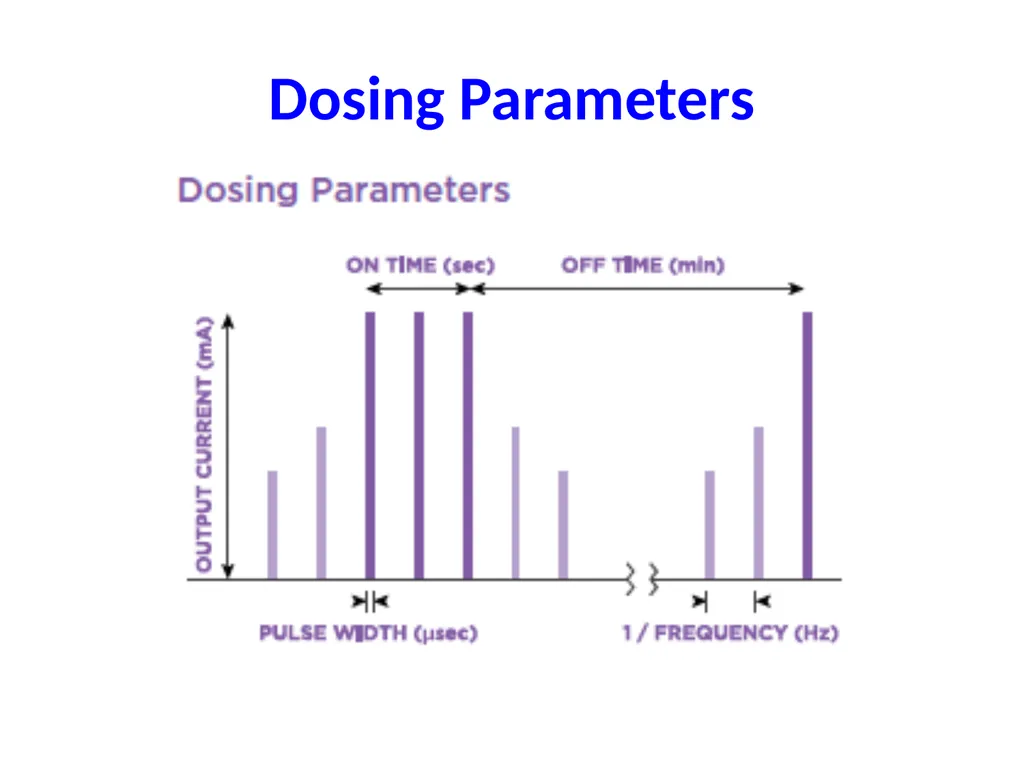
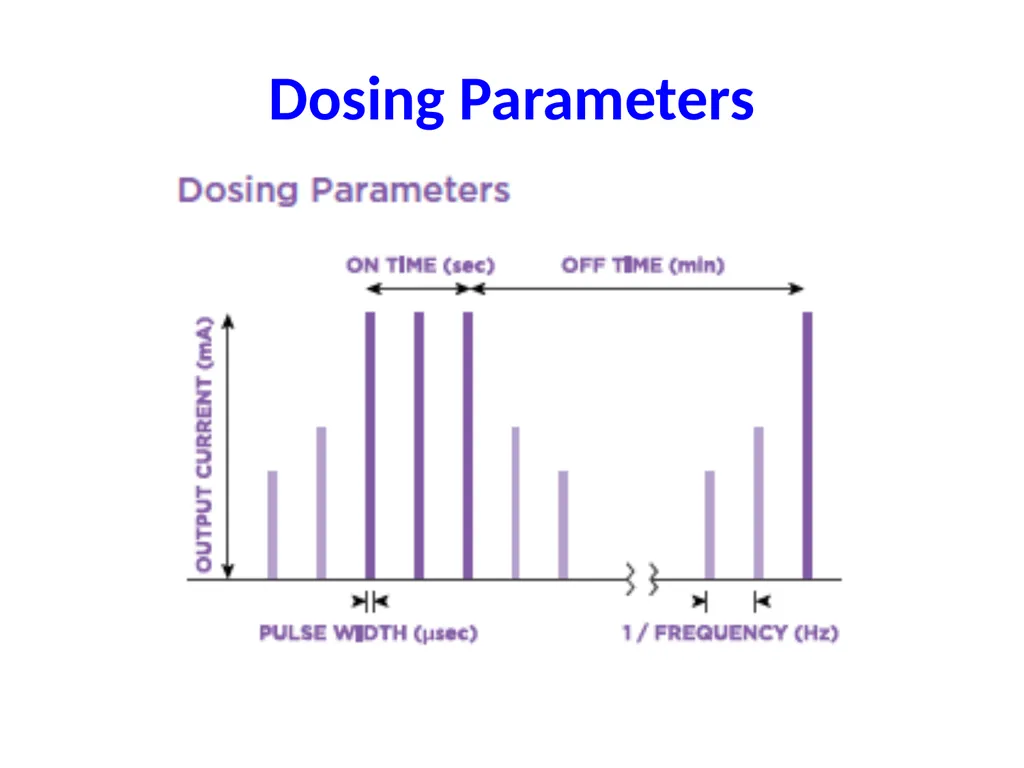
slide4. Dosing Parameters<br>
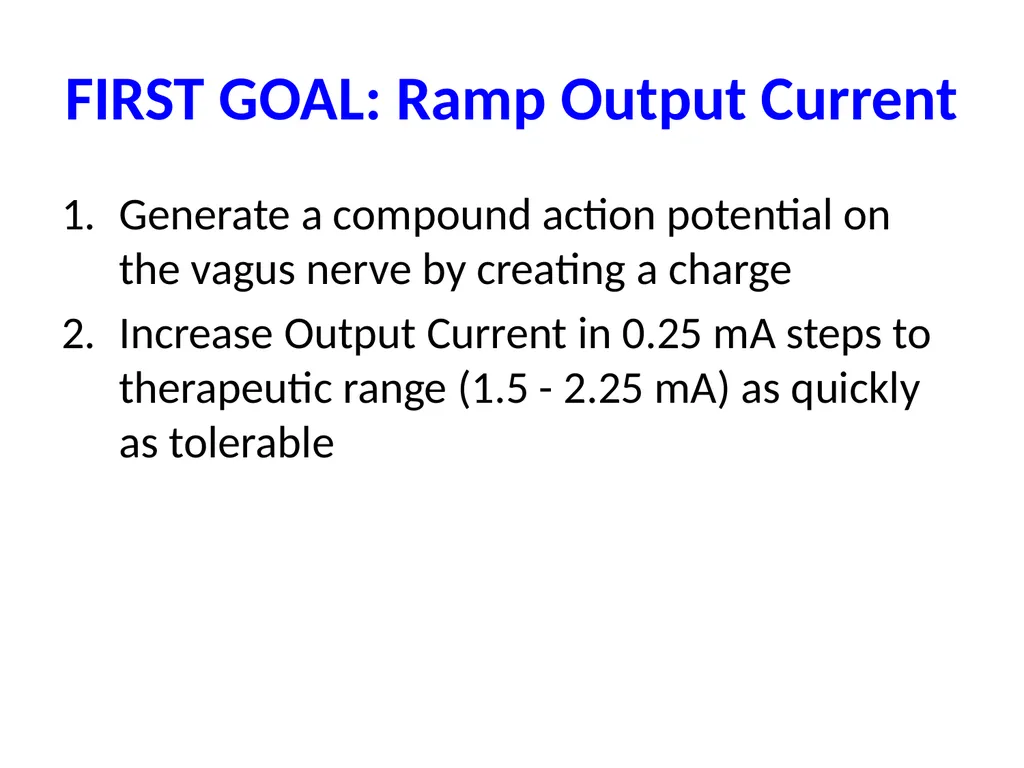
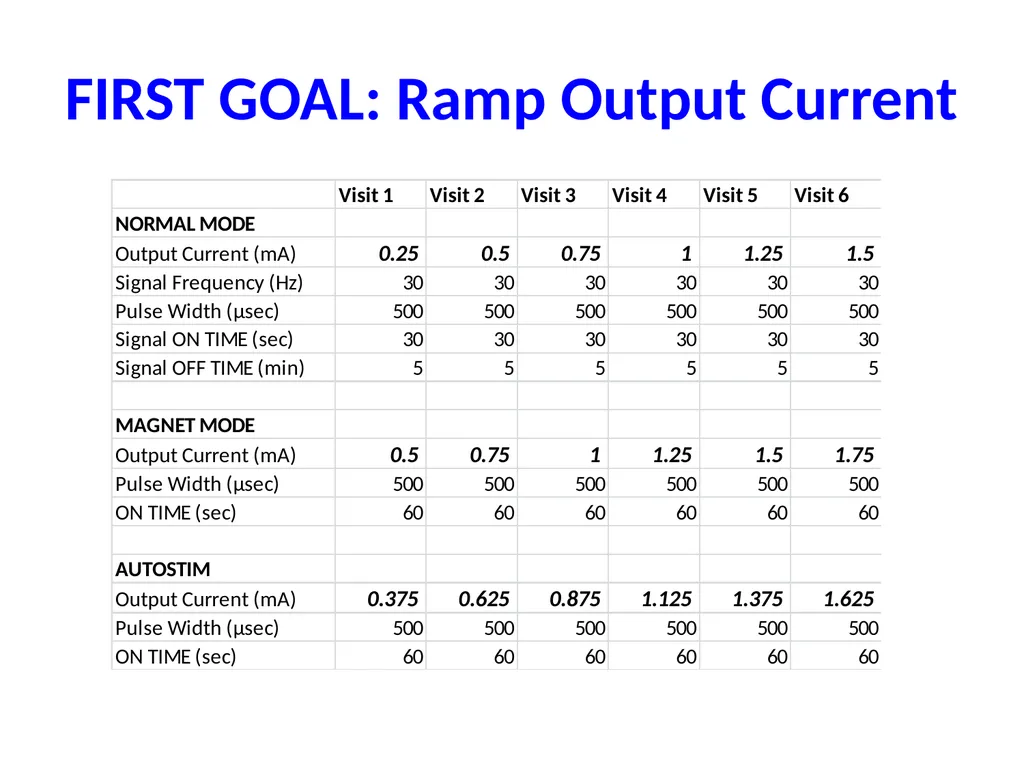
slide5. FIRST GOAL: Ramp Output Current Generate a compound action potential on the vagus nerve by creating a charge
Increase Output Current in 0.25 mA steps to therapeutic range (1.5 - 2.25 mA) as quickly as tolerable<br>
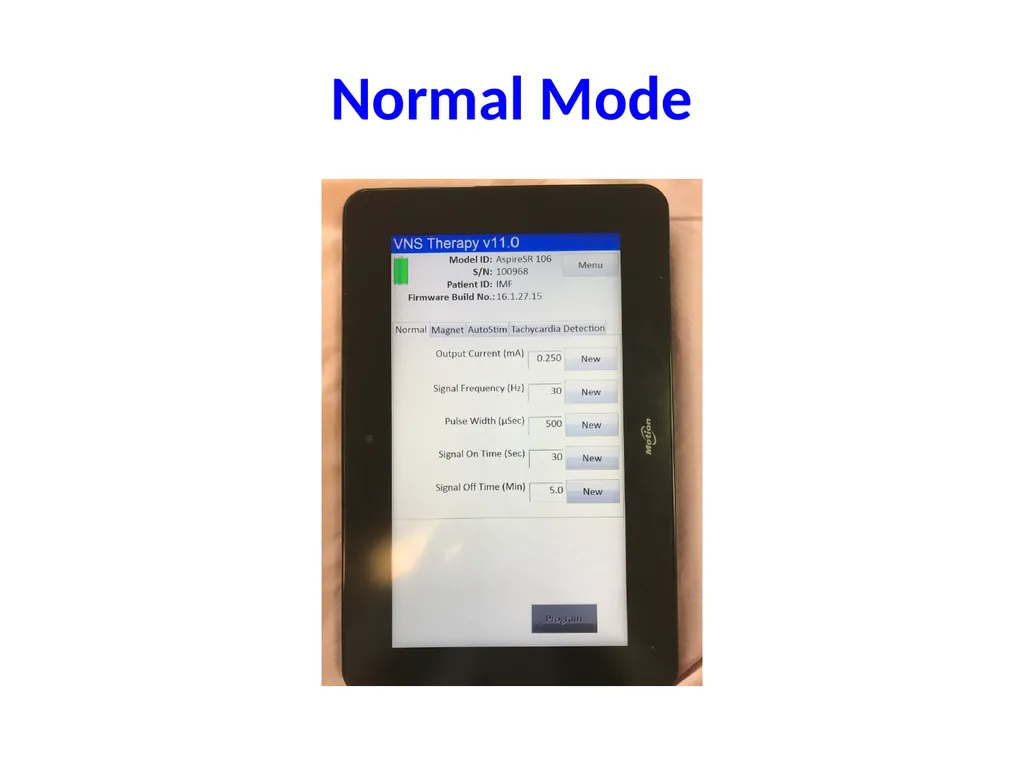
slide6. Normal Mode<br>
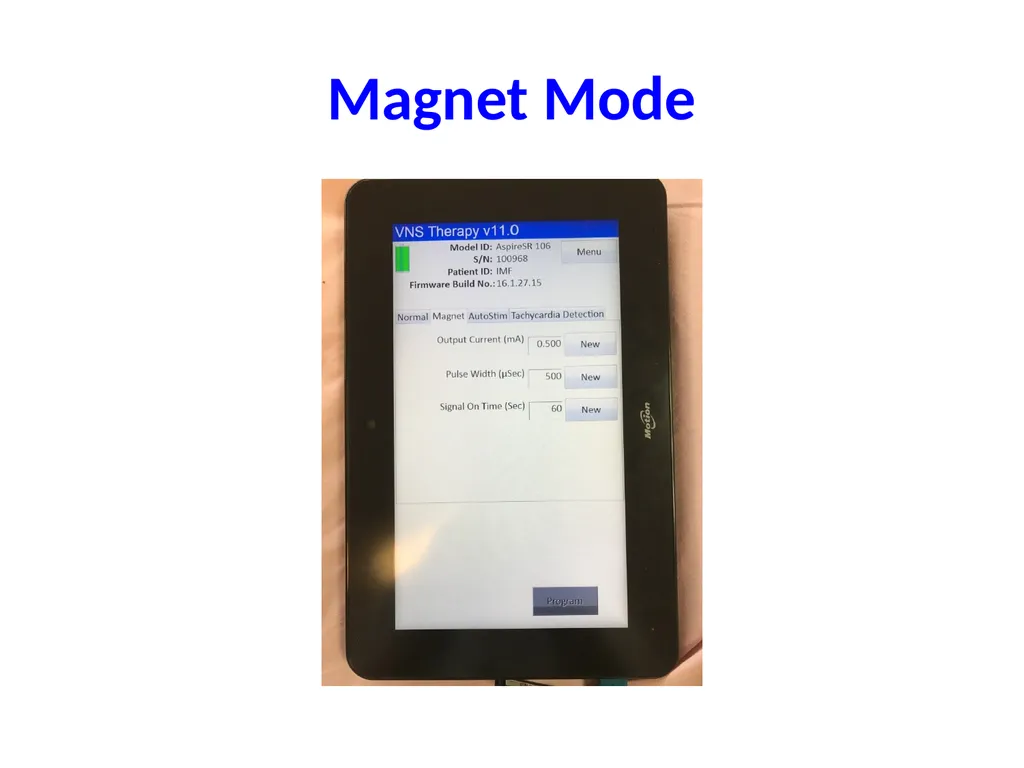
slide7. Magnet Mode<br>
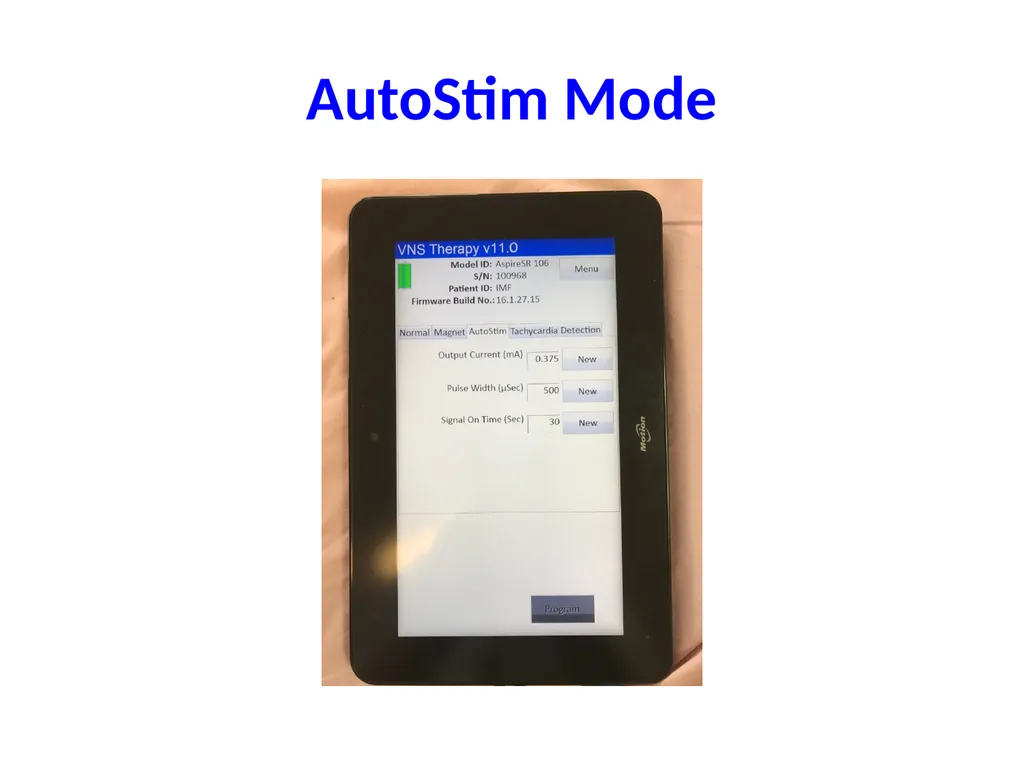
slide8. AutoStim Mode<br>
slide9. FIRST GOAL: Ramp Output Current<br>
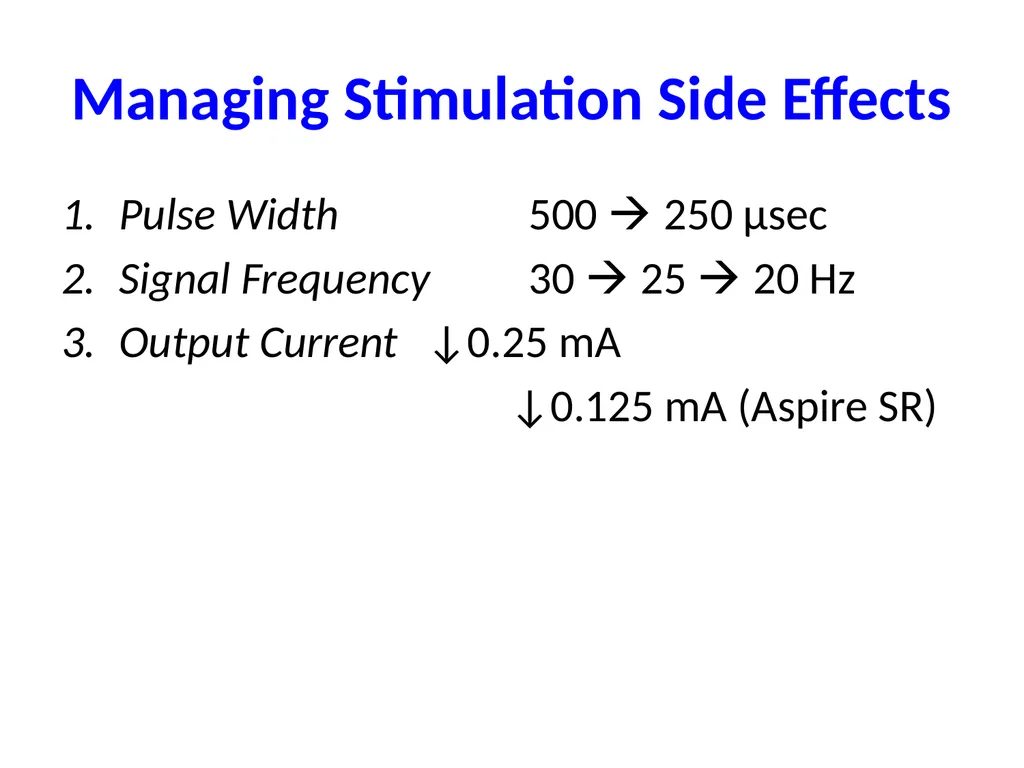
slide10. Managing Stimulation Side Effects Pulse Width 500 250 µsec
Signal Frequency 30 25 20 Hz
Output Current ↓0.25 mA
↓0.125 mA (Aspire SR)<br>
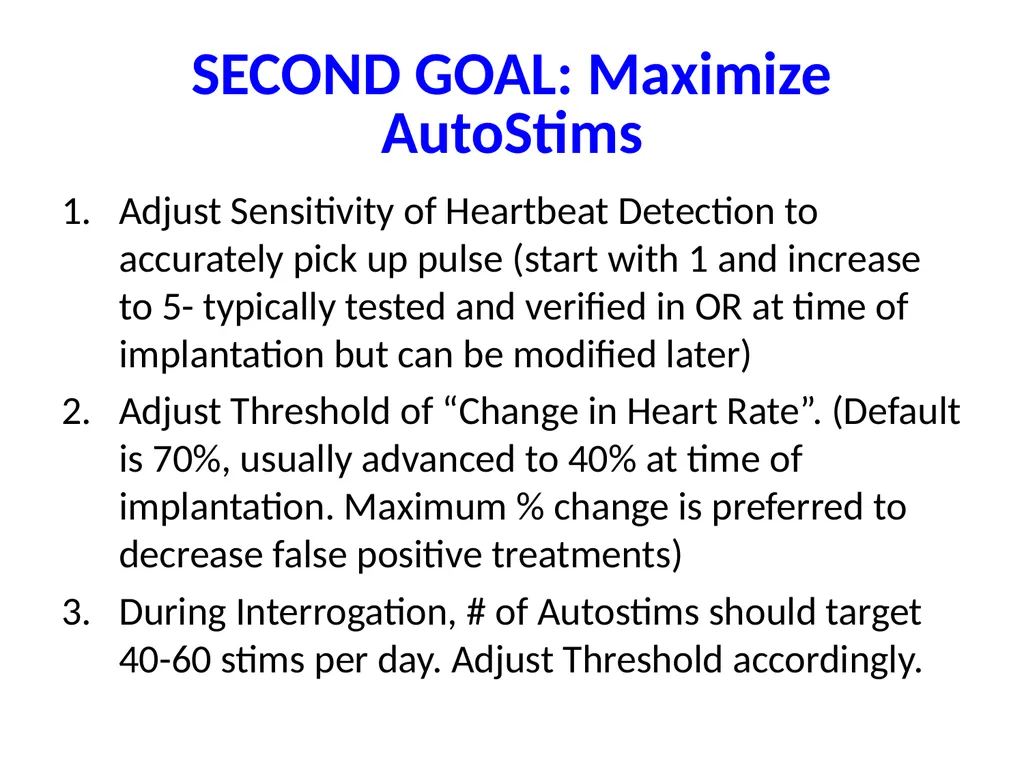
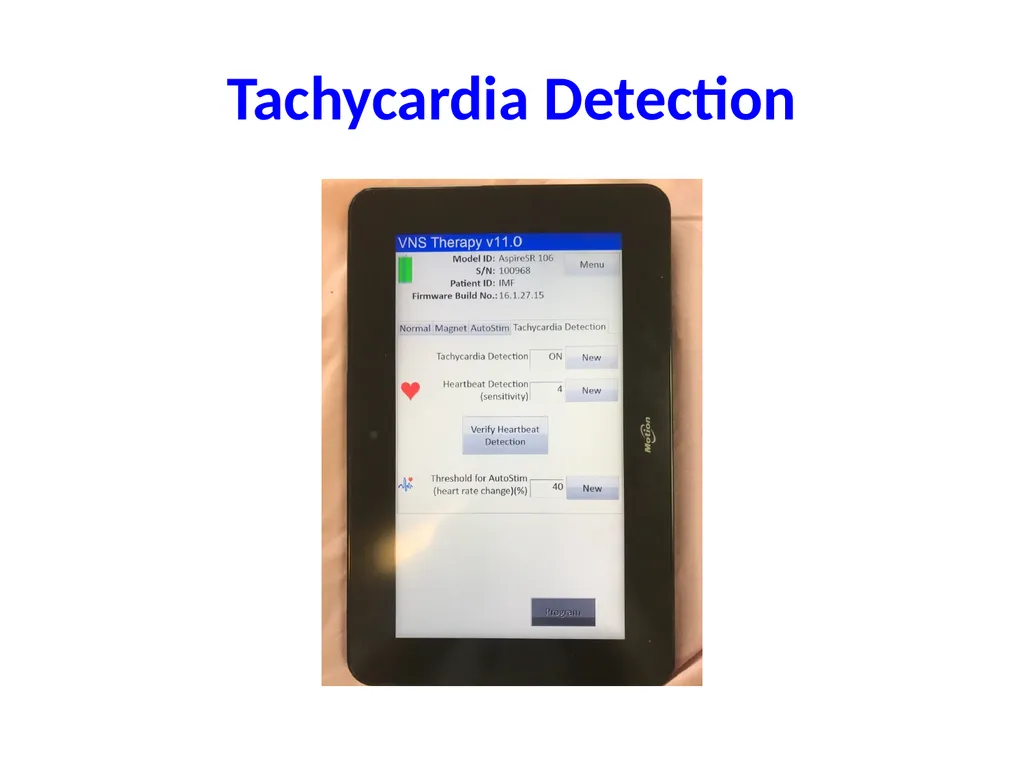
slide11. SECOND GOAL: Maximize AutoStims Adjust Sensitivity of Heartbeat Detection to accurately pick up pulse (start with 1 and increase to 5- typically tested and verified in OR at time of implantation but can be modified later)
Adjust Threshold of “Change in Heart Rate”. (Default is 70%, usually advanced to 40% at time of implantation. Maximum % change is preferred to decrease false positive treatments)
During Interrogation, # of Autostims should target 40-60 stims per day. Adjust Threshold accordingly.<br>
slide12. Tachycardia Detection<br>
slide13. Verify Heartbeat<br>
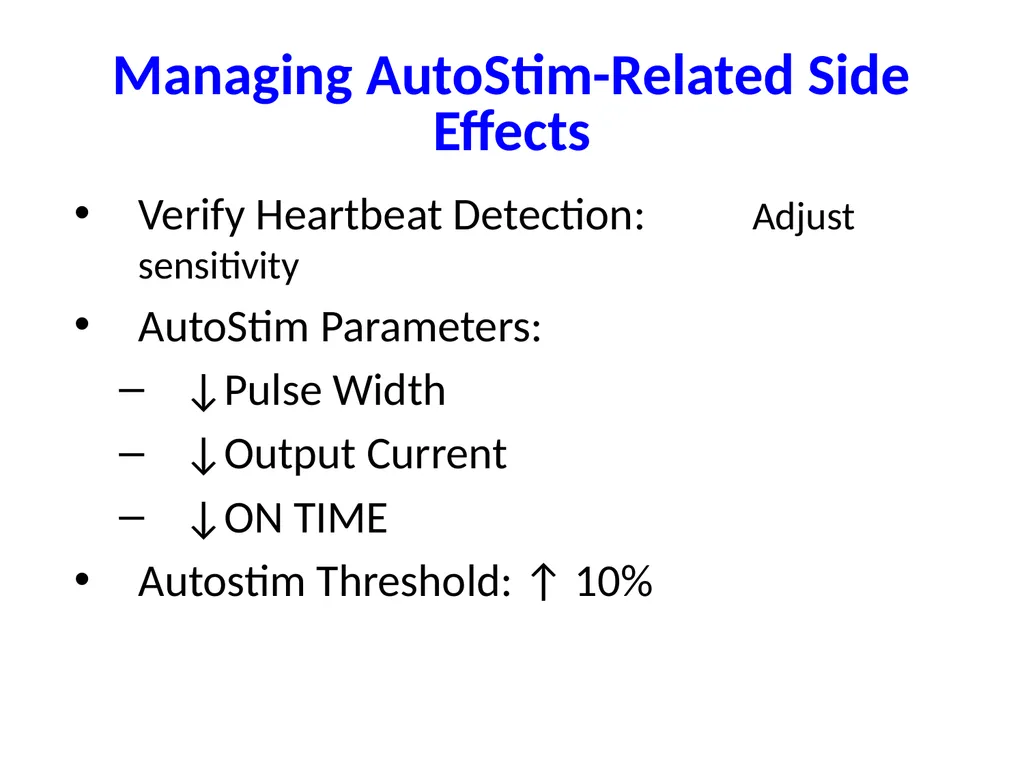
slide14. Managing AutoStim-Related Side Effects Verify Heartbeat Detection: Adjust sensitivity
AutoStim Parameters:
↓Pulse Width
↓Output Current
↓ON TIME
Autostim Threshold: ↑ 10%<br>
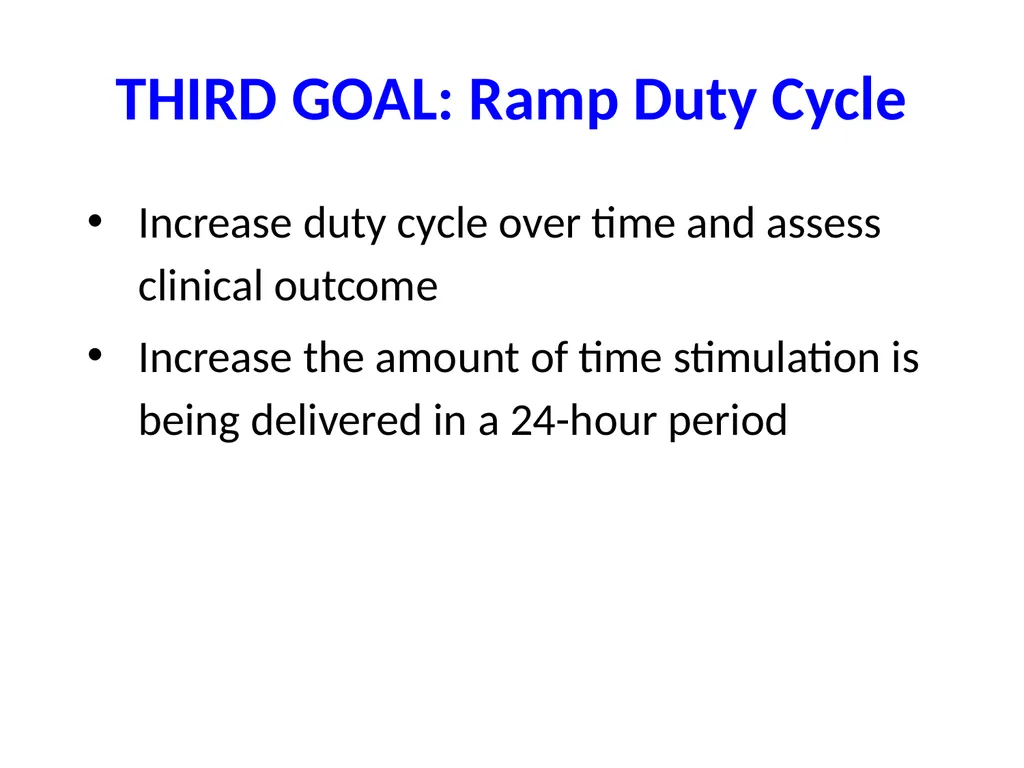
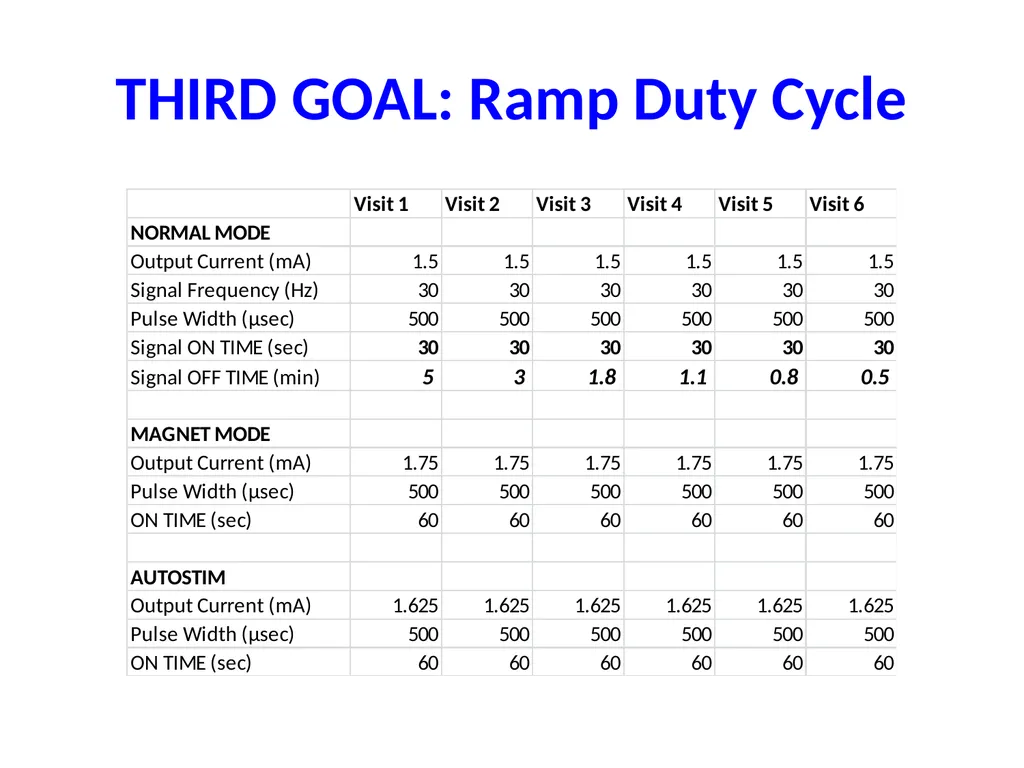
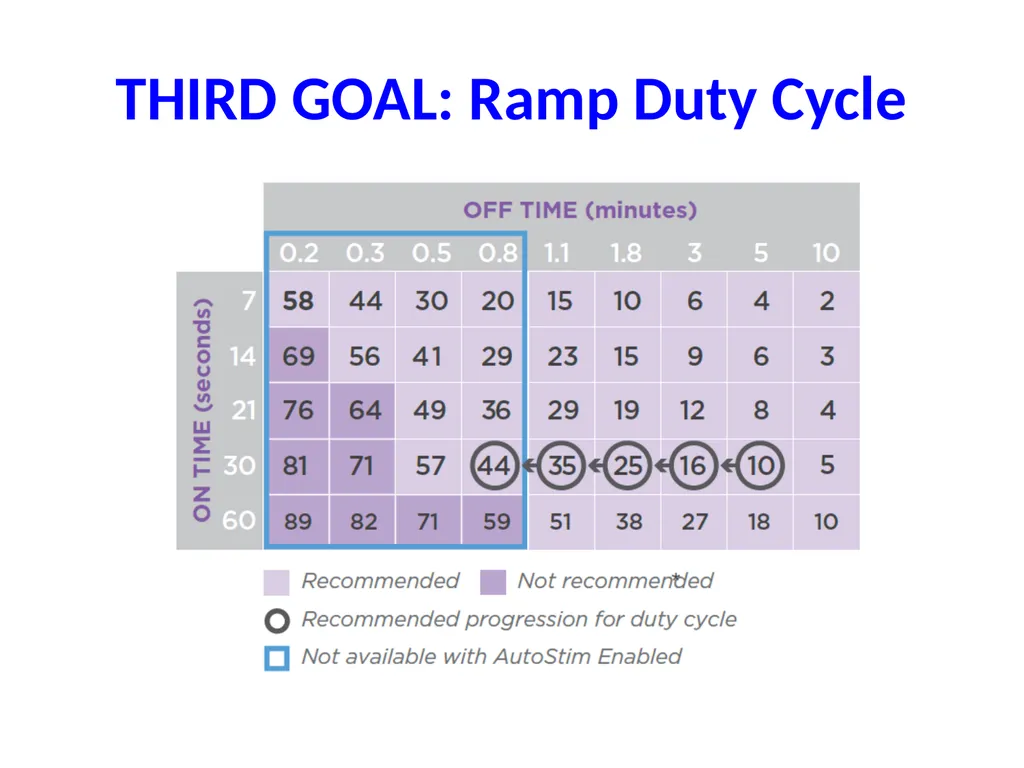
slide15. THIRD GOAL: Ramp Duty Cycle Increase duty cycle over time and assess clinical outcome
Increase the amount of time stimulation is being delivered in a 24-hour period<br>
slide16. Dosing Parameters<br>
slide17. THIRD GOAL: Ramp Duty Cycle<br>
slide18. THIRD GOAL: Ramp Duty Cycle<br>
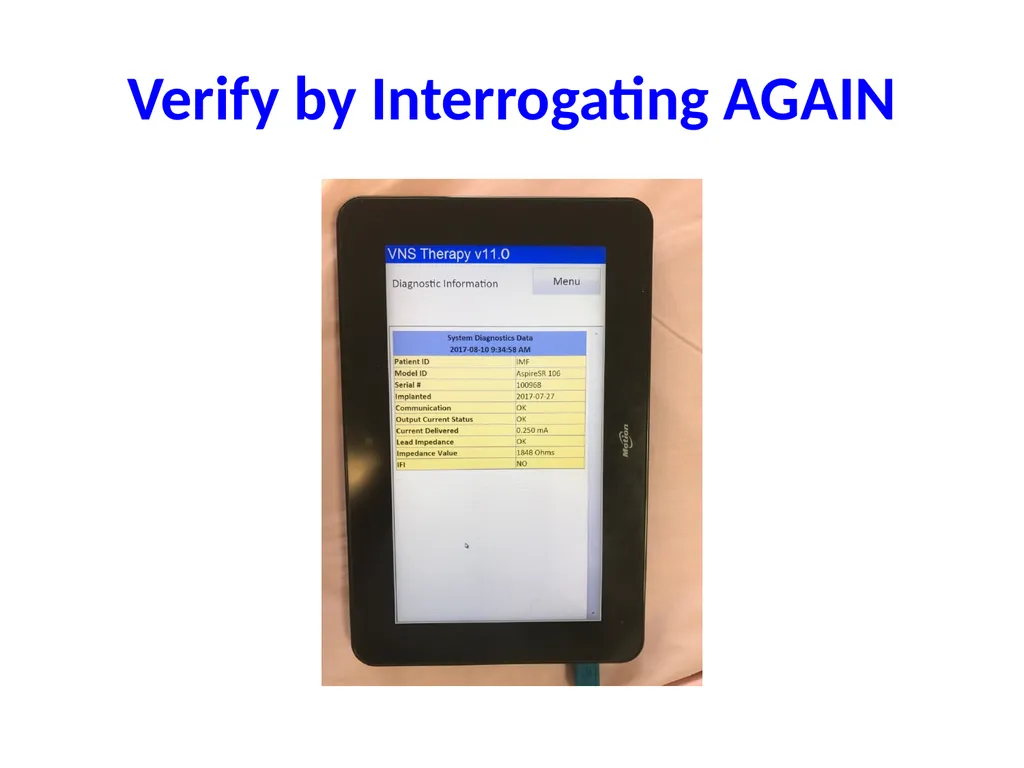
slide19. Verify by Interrogating AGAIN<br>
slide20. Personal Notes Tailoring titration to tolerability is more important than rigid adherence to programming targets, especially early.
History of frequent/very brief events may require “Rapid Cycling” programming, even sacrificing AutoStim
Seizure frequency reduction post implant and prior to turning on device tends to suggest good response to therapy when therapeutic dosing is reached.
“0.75 Syndrome”
Multistep dosing in same visit is common, especially when patient is remote to clinic
If patient keeps good seizure log, downloading VNS data may help verify if autostim or magnet activations were triggered at time of clinical seizure (default timestamps CST- Houston)
Watch for asthma and OSA exacerbation post implant; screen beforehand
Significant SOB with stimulation may be current leak to Phrenic nerve<br>
Chief of the Comprehensive Epilepsy Program- DHMC
Associate Professor of Neurology- University of Colorado and DVAMC<br>
slide2. First Clinic Visit Usually >2 weeks after implantation
Visualize surgical site for wound healing (erythema, fluid accumulation, drainage, incision approximation, mobility of device, coil protrusion, etc…)<br>
slide3. Typical Clinic Visit Interrogate generator
Titrate/Program parameters
System Diagnostics
Verify Heartbeat Detection and Sensitivity, if needed (Aspire SR 106 only)
Interrogate generator AGAIN<br>
slide4. Dosing Parameters<br>
slide5. FIRST GOAL: Ramp Output Current Generate a compound action potential on the vagus nerve by creating a charge
Increase Output Current in 0.25 mA steps to therapeutic range (1.5 - 2.25 mA) as quickly as tolerable<br>
slide6. Normal Mode<br>
slide7. Magnet Mode<br>
slide8. AutoStim Mode<br>
slide9. FIRST GOAL: Ramp Output Current<br>
slide10. Managing Stimulation Side Effects Pulse Width 500 250 µsec
Signal Frequency 30 25 20 Hz
Output Current ↓0.25 mA
↓0.125 mA (Aspire SR)<br>
slide11. SECOND GOAL: Maximize AutoStims Adjust Sensitivity of Heartbeat Detection to accurately pick up pulse (start with 1 and increase to 5- typically tested and verified in OR at time of implantation but can be modified later)
Adjust Threshold of “Change in Heart Rate”. (Default is 70%, usually advanced to 40% at time of implantation. Maximum % change is preferred to decrease false positive treatments)
During Interrogation, # of Autostims should target 40-60 stims per day. Adjust Threshold accordingly.<br>
slide12. Tachycardia Detection<br>
slide13. Verify Heartbeat<br>
slide14. Managing AutoStim-Related Side Effects Verify Heartbeat Detection: Adjust sensitivity
AutoStim Parameters:
↓Pulse Width
↓Output Current
↓ON TIME
Autostim Threshold: ↑ 10%<br>
slide15. THIRD GOAL: Ramp Duty Cycle Increase duty cycle over time and assess clinical outcome
Increase the amount of time stimulation is being delivered in a 24-hour period<br>
slide16. Dosing Parameters<br>
slide17. THIRD GOAL: Ramp Duty Cycle<br>
slide18. THIRD GOAL: Ramp Duty Cycle<br>
slide19. Verify by Interrogating AGAIN<br>
slide20. Personal Notes Tailoring titration to tolerability is more important than rigid adherence to programming targets, especially early.
History of frequent/very brief events may require “Rapid Cycling” programming, even sacrificing AutoStim
Seizure frequency reduction post implant and prior to turning on device tends to suggest good response to therapy when therapeutic dosing is reached.
“0.75 Syndrome”
Multistep dosing in same visit is common, especially when patient is remote to clinic
If patient keeps good seizure log, downloading VNS data may help verify if autostim or magnet activations were triggered at time of clinical seizure (default timestamps CST- Houston)
Watch for asthma and OSA exacerbation post implant; screen beforehand
Significant SOB with stimulation may be current leak to Phrenic nerve<br>