04
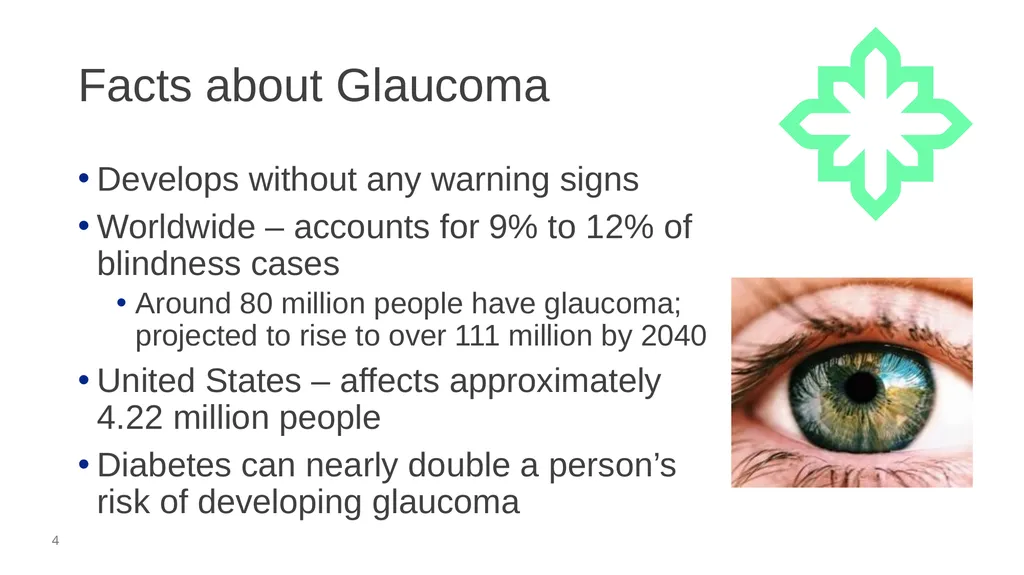
Facts about Glaucoma Develops without any warning signs
Worldwide – accounts for 9% to 12% of blindness cases
Around 80 million people have glaucoma; projected to rise to over 111 million by 2040
United States – affects approximately 4.22 million people
Diabetes can nearly double a person’s risk of developing glaucoma<br>
05
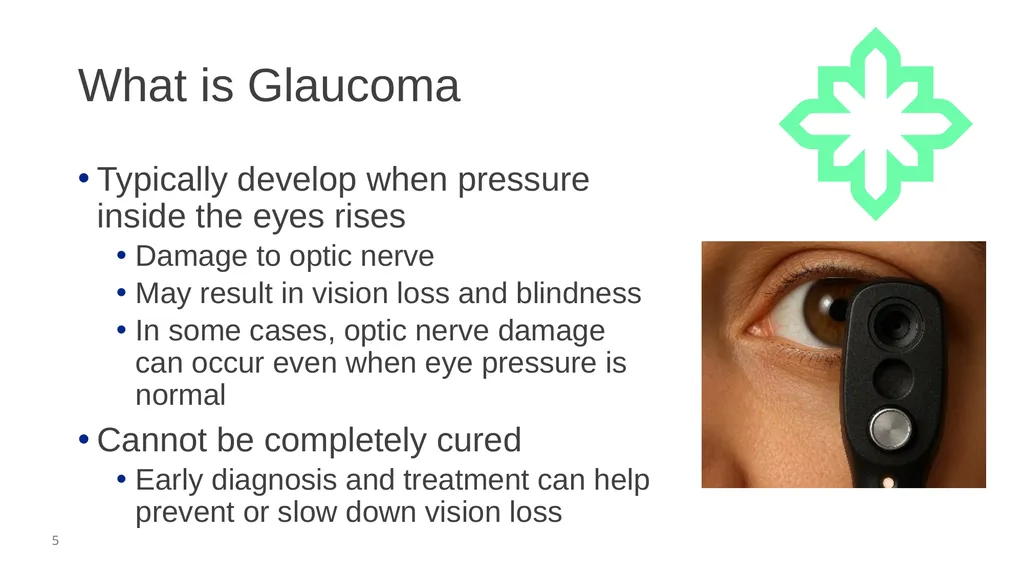
What is Glaucoma Typically develop when pressure inside the eyes rises
Damage to optic nerve
May result in vision loss and blindness
In some cases, optic nerve damage can occur even when eye pressure is normal
Cannot be completely cured
Early diagnosis and treatment can help prevent or slow down vision loss<br>
06
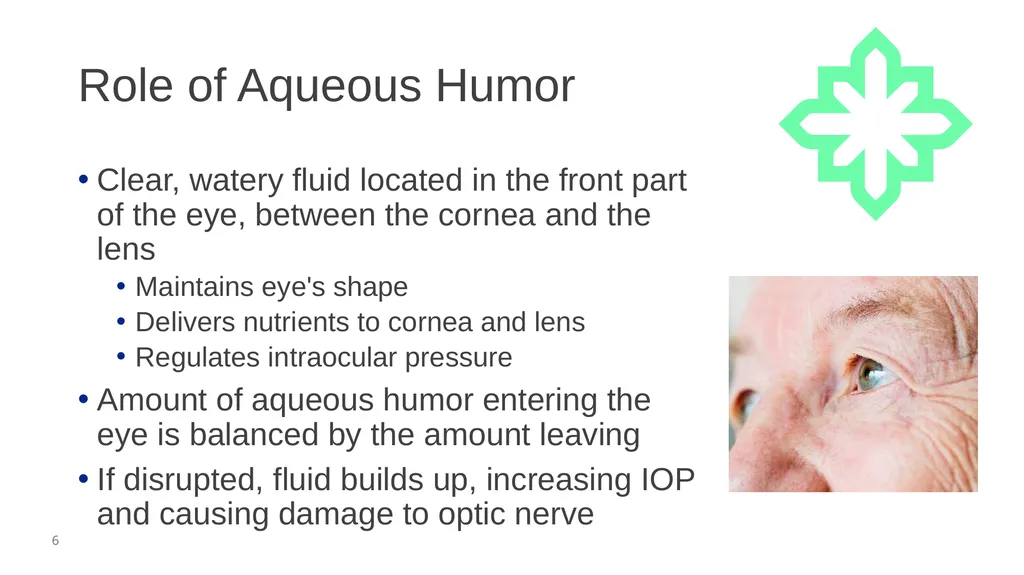
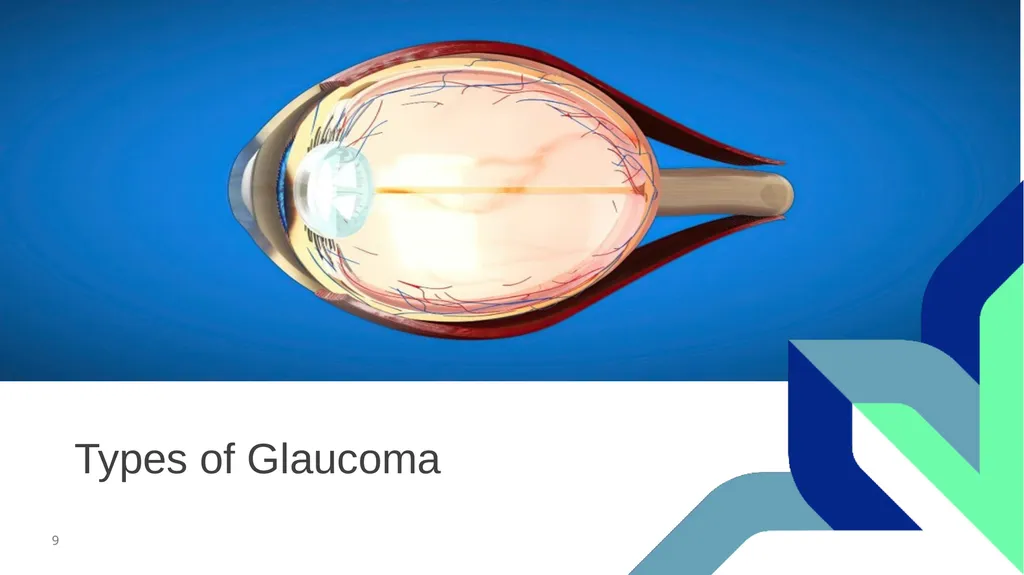
Role of Aqueous Humor Clear, watery fluid located in the front part of the eye, between the cornea and the lens
Maintains eye's shape
Delivers nutrients to cornea and lens
Regulates intraocular pressure
Amount of aqueous humor entering the eye is balanced by the amount leaving
If disrupted, fluid builds up, increasing IOP and causing damage to optic nerve<br>
07
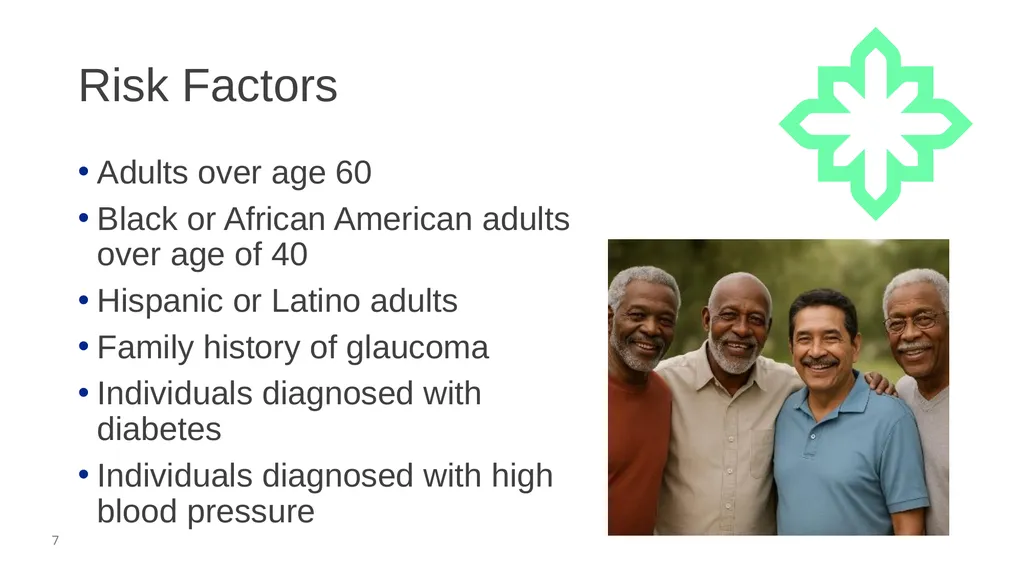
Risk Factors Adults over age 60
Black or African American adults over age of 40
Hispanic or Latino adults
Family history of glaucoma
Individuals diagnosed with diabetes
Individuals diagnosed with high blood pressure<br>
08
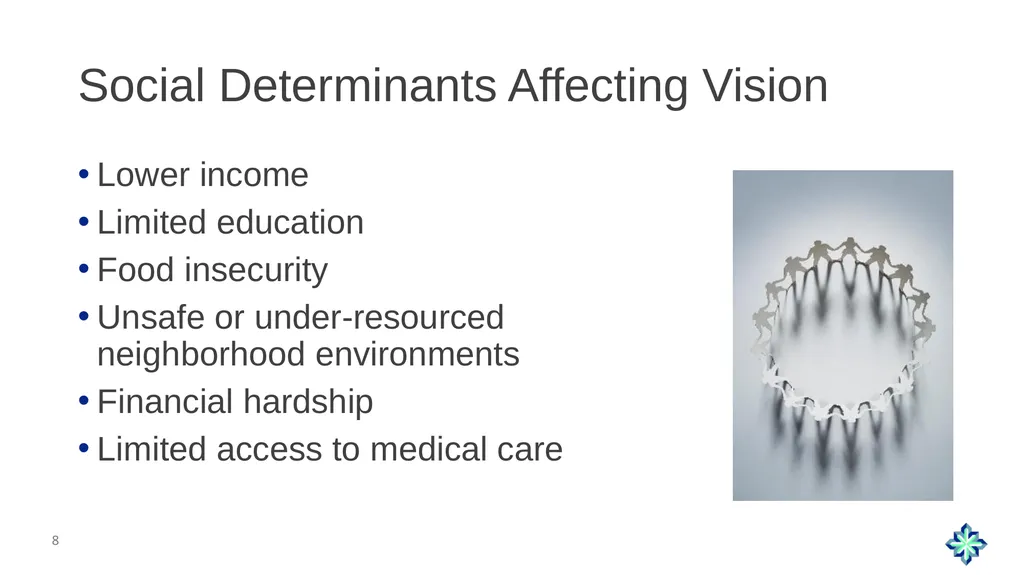
Social Determinants Affecting Vision Lower income
Limited education
Food insecurity
Unsafe or under-resourced neighborhood environments
Financial hardship
Limited access to medical care<br>
10
Open-angle Glaucoma Most common form of glaucoma
Often called “sneak thief of sight”
Often asymptomatic in early stages
Aqueous humor in eye fails to drain properly
Increased resistance within the trabecular meshwork reduces outflow Patients often remain unaware until they notice
Blind spots
Loss of peripheral vision
Potentially leading to blindness
Treatment
Medications
Laser therapy
Surgery<br>
11
Angle-closure Glaucoma Medical emergency
Blocked drainage angle
Symptoms
Severe eye or forehead pain
Headache
Redness in the eye
Blurry or decreased vision
Nausea and vomiting
Seeing rainbow - colored rings, halos, or both around light If left untreated, can lead to blindness within a few days
Treatment
Medications
Laser therapy
Surgery (if necessary)<br>
12
Other Types of Glaucoma Normal-tension glaucoma or low-tension glaucoma
Normal eye pressure but still develop signs of glaucoma
Cause unknown
Congenital or childhood glaucoma
Develops in infancy Secondary glaucoma
Can develop due to factors such as
Eye trauma
Inflammation
Specific medications
Advanced cases of cataracts
Diabetes<br>
13
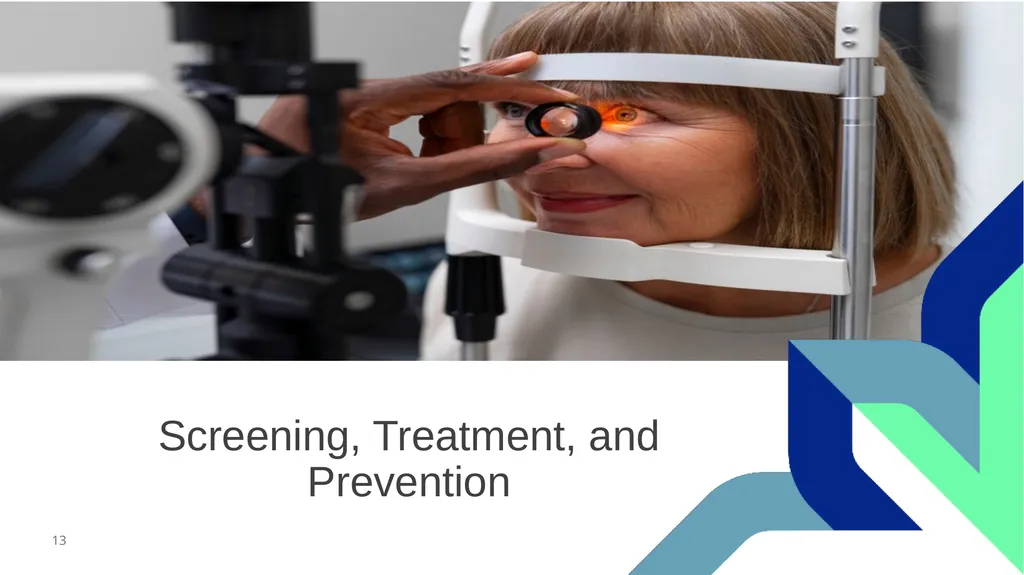
Screening, Treatment, and Prevention<br>
14
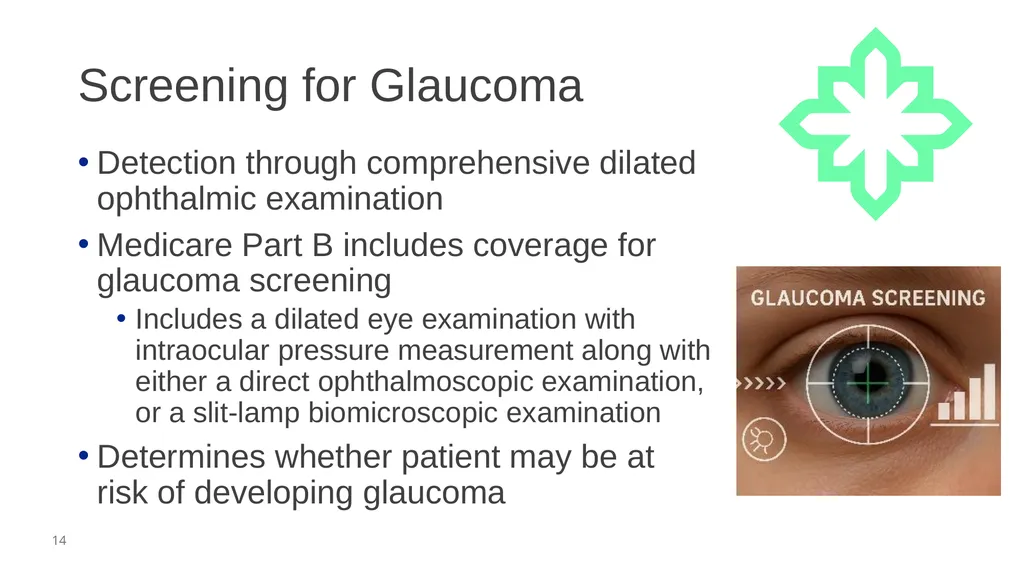
Screening for Glaucoma Detection through comprehensive dilated ophthalmic examination
Medicare Part B includes coverage for glaucoma screening
Includes a dilated eye examination with intraocular pressure measurement along with either a direct ophthalmoscopic examination, or a slit-lamp biomicroscopic examination
Determines whether patient may be at risk of developing glaucoma<br>
15
Treatment Medications
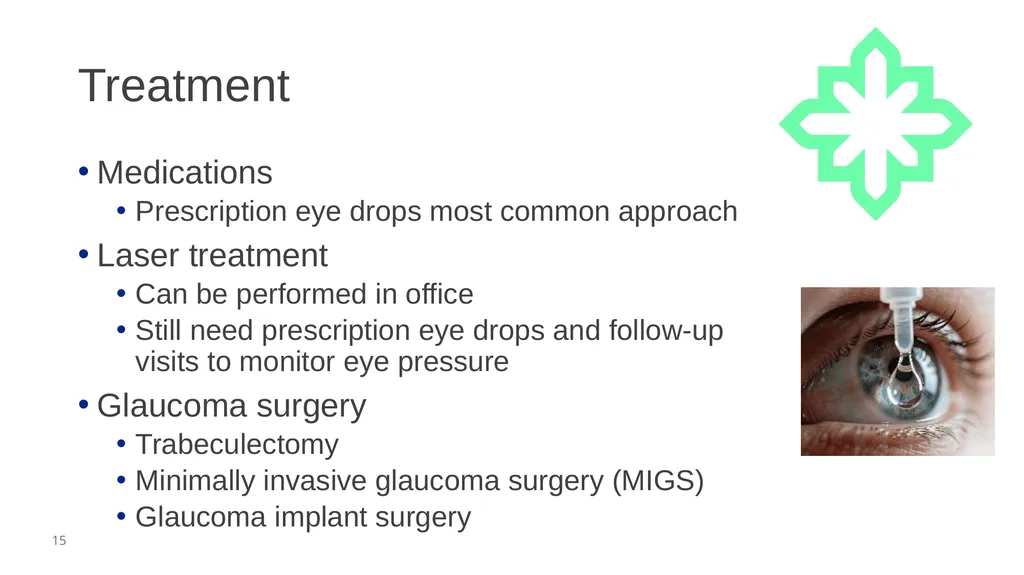
Prescription eye drops most common approach
Laser treatment
Can be performed in office
Still need prescription eye drops and follow-up visits to monitor eye pressure
Glaucoma surgery
Trabeculectomy
Minimally invasive glaucoma surgery (MIGS)
Glaucoma implant surgery<br>
16
Prevention Comprehensive dilated eye exam
Eating balanced diet
Maintaining healthy weight
Limiting caffeine and alcohol intake
Engaging in regular physical activity Wearing polarized sunglasses and hat when outdoors
Wearing protective eyewear to prevent eye injuries
Managing blood pressure and treating hypertension when necessary
Quitting smoking<br>
17
Eligibility and Coverage<br>
18
Eligibility Medicare Part B cover annual glaucoma screenings for beneficiaries who fall into at least one of the following high-risk groups
Individuals with diabetes mellitus
Those with glaucoma in their family history
Black or African American adults aged 50 and older
Hispanics or Latino adults aged 65 and older
At least 11 full months must have passed since last Medicare-covered glaucoma screening<br>
19
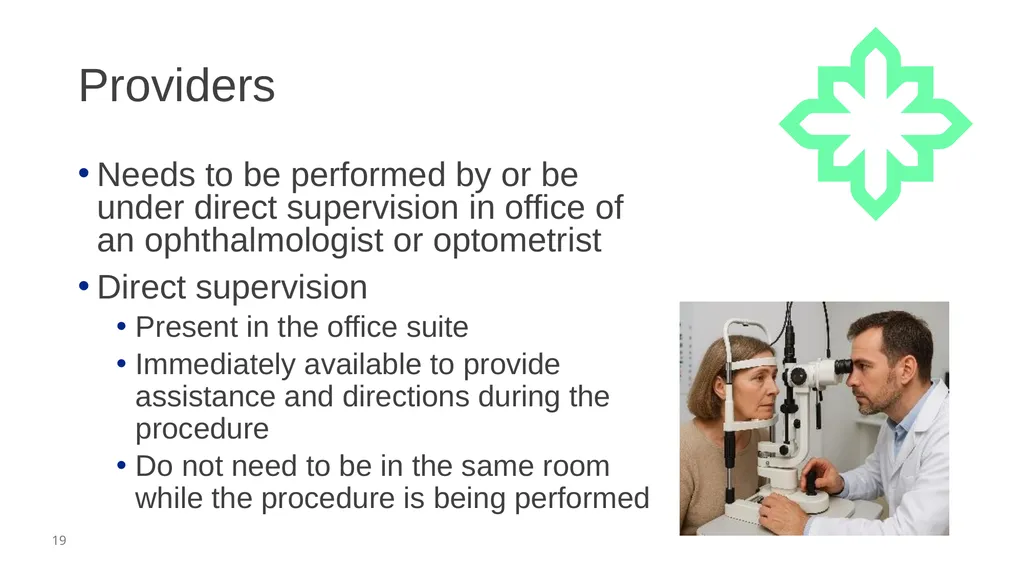
Providers Needs to be performed by or be under direct supervision in office of an ophthalmologist or optometrist
Direct supervision
Present in the office suite
Immediately available to provide assistance and directions during the procedure
Do not need to be in the same room while the procedure is being performed<br>
20
Settings Independent or clinic-based ophthalmologists or optometrists (or qualified providers under direct professional supervision)
Comprehensive outpatient rehabilitation facility
Critical access hospital Skilled nursing facility
Hospital outpatient
Rural Health Clinic paid under the All-Inclusive Rate
Federally Qualified Health Center under the FQHC Prospective Payment System<br>
21
Codes G0117 – Glaucoma screening for high-risk patients furnished by an optometrist or ophthalmologist
G0118 –Glaucoma screening for high-risk patient furnished under the direct supervision of an optometrist or ophthalmologist
Z13.5 – Encounter for screening for eye and ear disorders
Reference: MLN907165 Medicare Vision Services<br>
22
Cost Copayments or coinsurance, and deductible apply
Once the annual Part B deductible is met, beneficiary responsible for 20% of Medicare-approved amount
Copayment also required if services provided in a hospital outpatient setting<br>
24
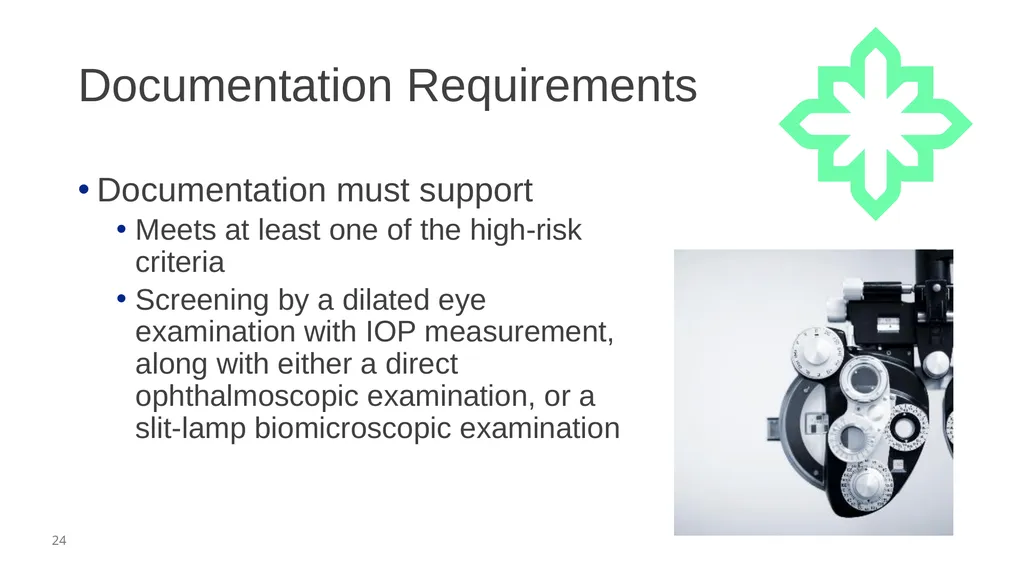
Documentation Requirements Documentation must support
Meets at least one of the high-risk criteria
Screening by a dilated eye examination with IOP measurement, along with either a direct ophthalmoscopic examination, or a slit-lamp biomicroscopic examination<br>
25
Additional Documentation Date service was provided
Office visit notes for date of service
Screening results, along with documentation of any follow-up care or counseling provided based on the evaluation of those results
Documentation to support medical necessity of glaucoma screening<br>
26
Review of Today’s Webinar During today’s webinar, we
Provided background information about glaucoma
Covered the different types of glaucoma
Discussed how glaucoma is screened
Explored available treatment options and preventive strategies
Reviewed the Medicare Part B coverage criteria for Glaucoma Screening<br>
27
Resources MLN006559 Medicare Preventive Services – Glaucoma Screening
Medicare Claims Processing Manual, Chapter 18 - Preventive and Screening Services, § 70
Advancing Health Equity: Social Determinants and Vision Loss
NIH National Eye Institute – Glaucoma Surgery
Encore: Preventive Services: Glaucoma Screening<br>
28
Questions and Answers<br>
29
Survey Let us know what you think!
Take time to complete our survey now.
Survey link in chat
Redirect after closing webinar<br>
30
Thanks for attending!<br>
31
Disclaimers This material is a tool to assist the provider community. Medicare rules change often. Access CMS’ website for current coverage, regulations and rulings.
The basis for answers given today rely on facts given in the question. Medicare rules determine final coverage.
Do not record the event as CMS does not allow this for profit making purposes.<br>