
Global data structure definitions Arturo de la

Description: Global data structure definitions Arturo de la Fuente Eurostat What is ? Standard for statistical data and metadata transmissions Necessary for (transmissions feeding) global SEEA databases SDMX is applicable to any statistical domain But
Related Topics
Download Presentation
"Global data structure definitions Arturo de la" is the property of its rightful owner. Permission is granted to download and print the materials on this website for personal, non-commercial use only, and to display it on your personal computer provided you do not modify the materials and that you retain all copyright notices contained in the materials. By downloading content from our website, you accept the terms of this agreement.
Presentation Transcript
slide1. Global data structure definitions Arturo de la Fuente
Eurostat<br>
slide2. What is ? Standard for statistical data and metadata transmissions
Necessary for (transmissions feeding) global SEEA databases
SDMX is applicable to any statistical domain
But we need to create data structure definitions (DSDs) for SEEA data
International agencies are concerned, countries too?
https://sdmx.org/<br>
slide3. SDMX solutions for countries Voluntary implementation(*)
Options
use a questionnaire, e.g. in Excel, with a converter which generates SDMX files for transmission. Converter supplied by the international agency
generate a csv file from the country production database using a specific tool
set up automatic machine-to-machine communication between country and international agency (*) Mandatory in the EU<br>
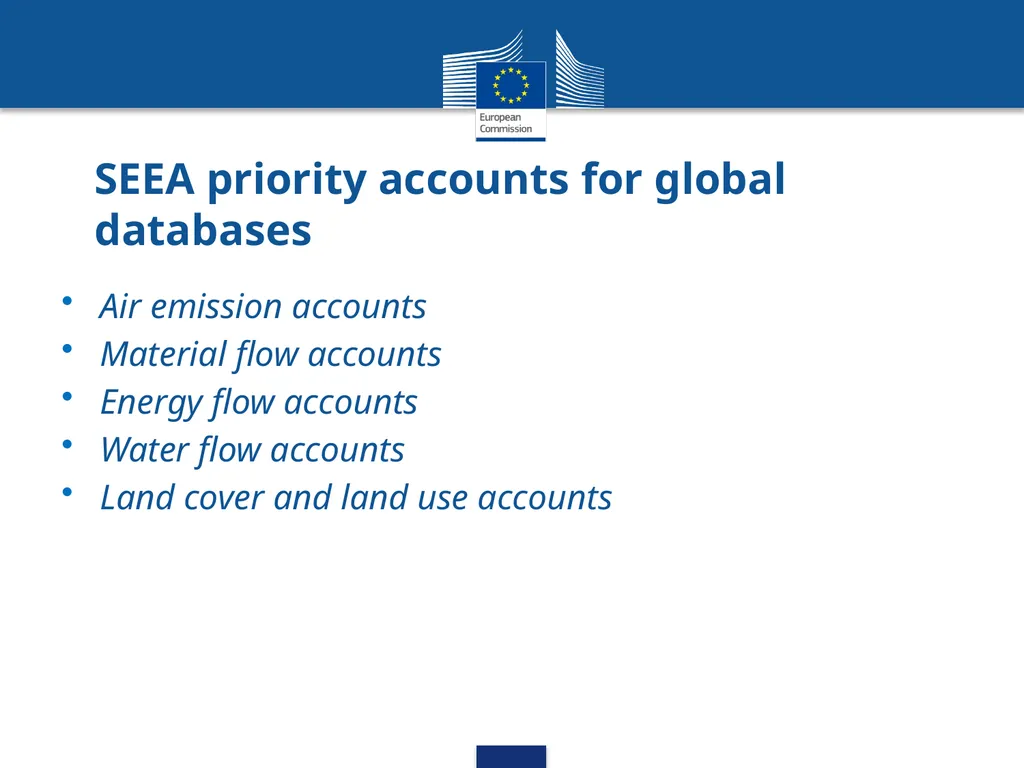
slide4. SEEA priority accounts for global databases Air emission accounts
Material flow accounts
Energy flow accounts
Water flow accounts
Land cover and land use accounts<br>
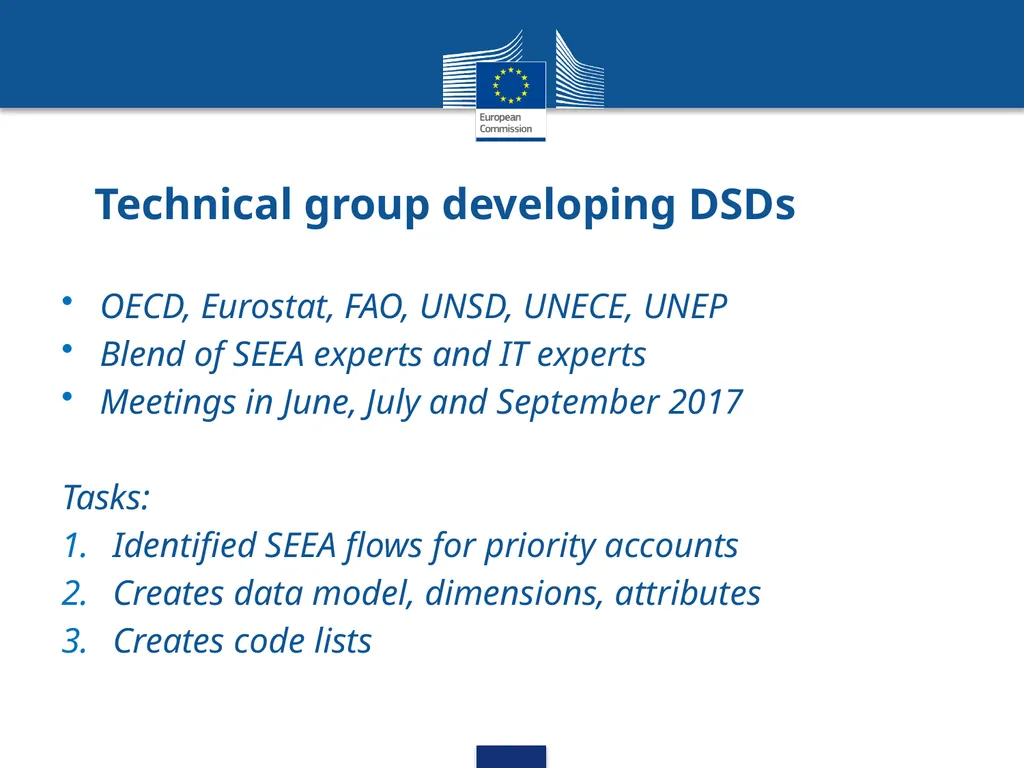
slide5. Technical group developing DSDs OECD, Eurostat, FAO, UNSD, UNECE, UNEP
Blend of SEEA experts and IT experts
Meetings in June, July and September 2017
Tasks:
Identified SEEA flows for priority accounts
Creates data model, dimensions, attributes
Creates code lists<br>
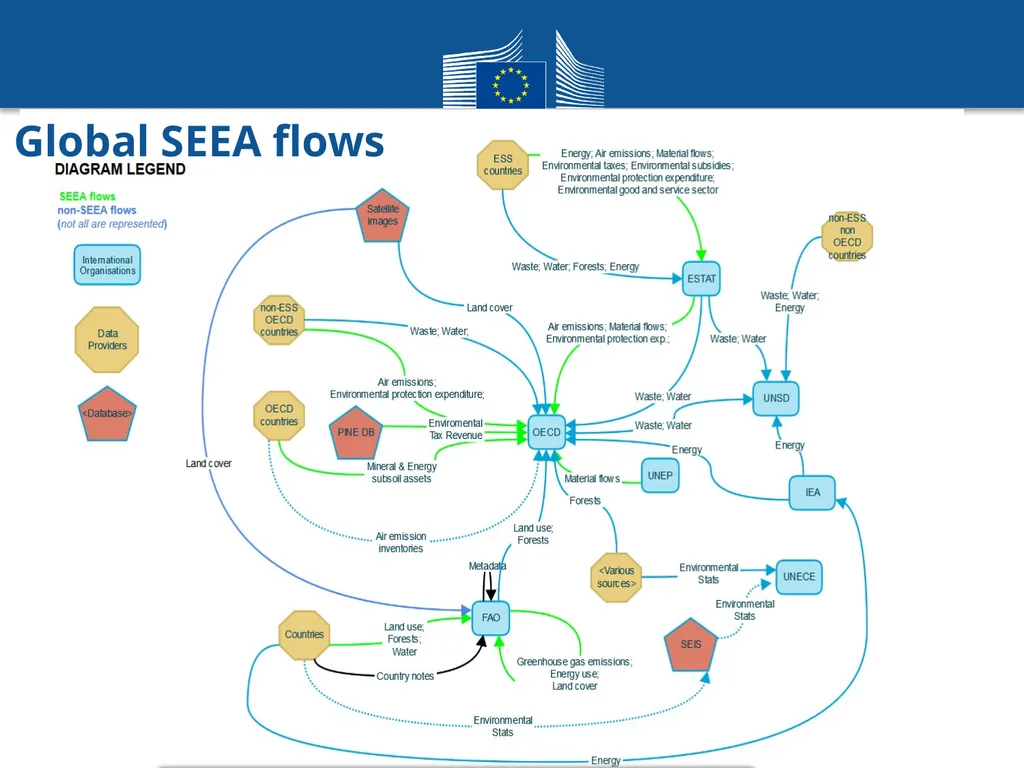
slide6. Global SEEA flows<br>
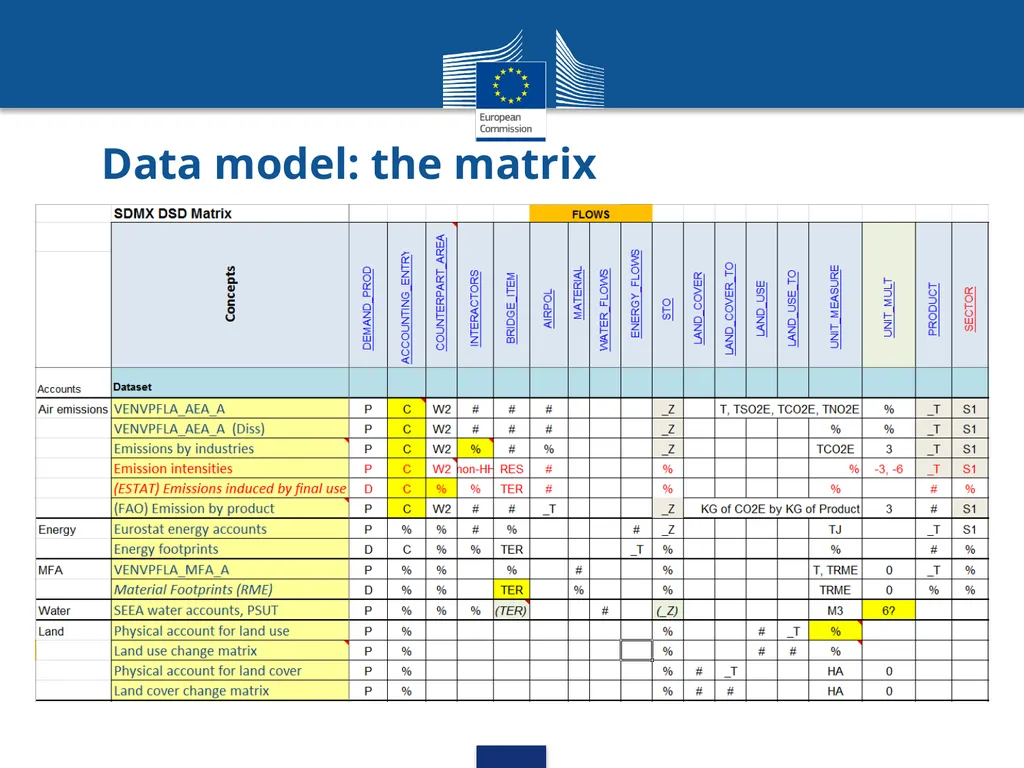
slide7. Data model: the matrix<br>
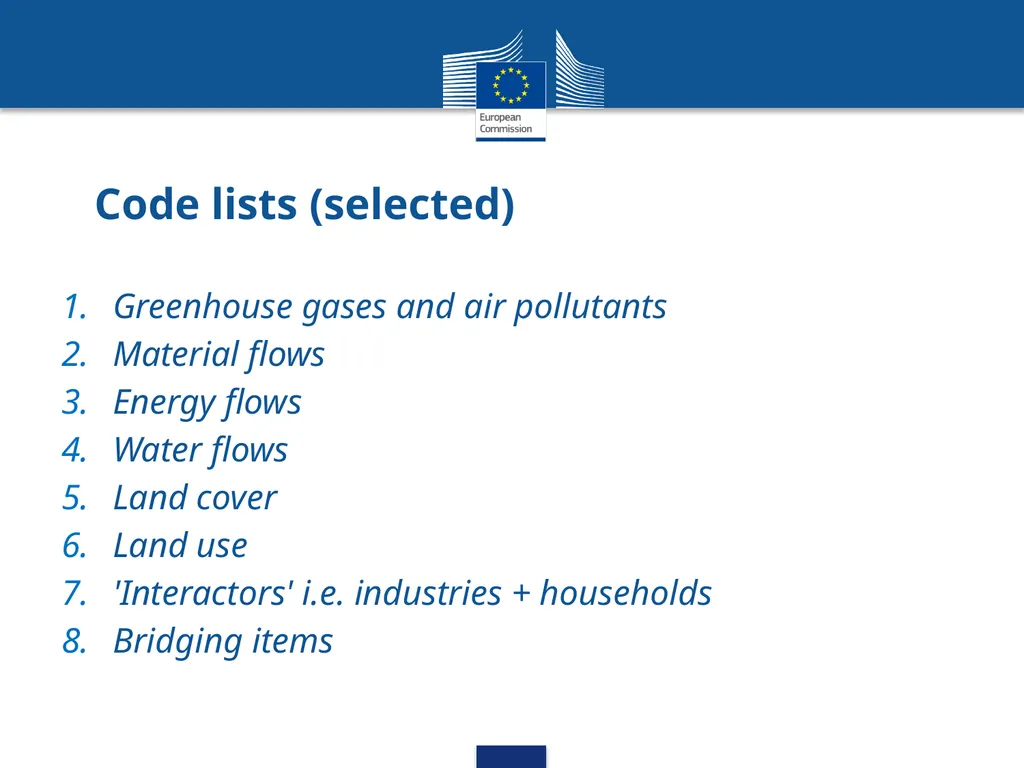
slide8. Code lists (selected) Greenhouse gases and air pollutants
Material flows
Energy flows
Water flows
Land cover
Land use
'Interactors' i.e. industries + households
Bridging items<br>
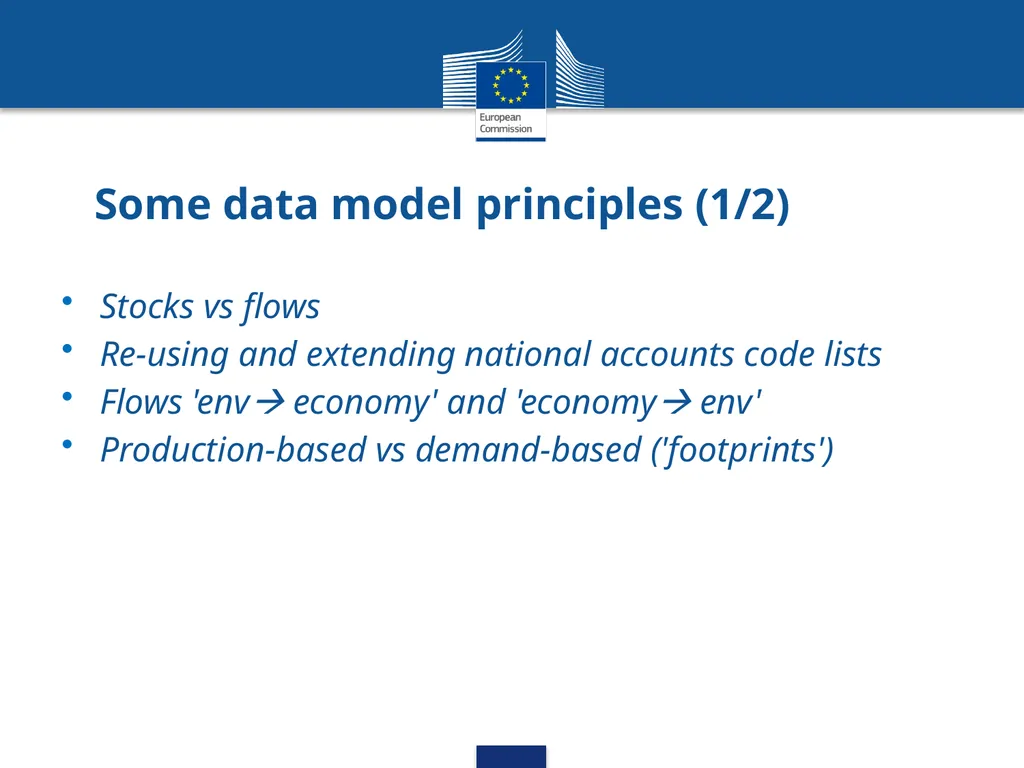
slide9. Some data model principles (1/2) Stocks vs flows
Re-using and extending national accounts code lists
Flows 'env economy' and 'economy env'
Production-based vs demand-based ('footprints')<br>
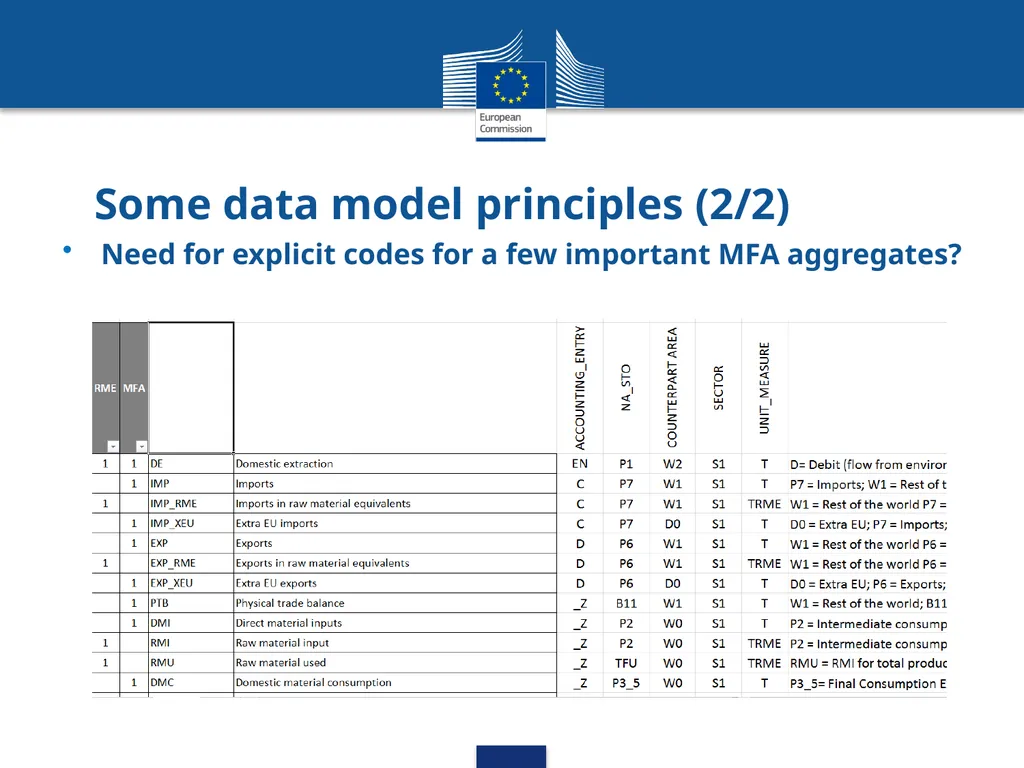
slide10. Some data model principles (2/2) Need for explicit codes for a few important MFA aggregates?
Not strictly needed for IT but needed for humans?<br>
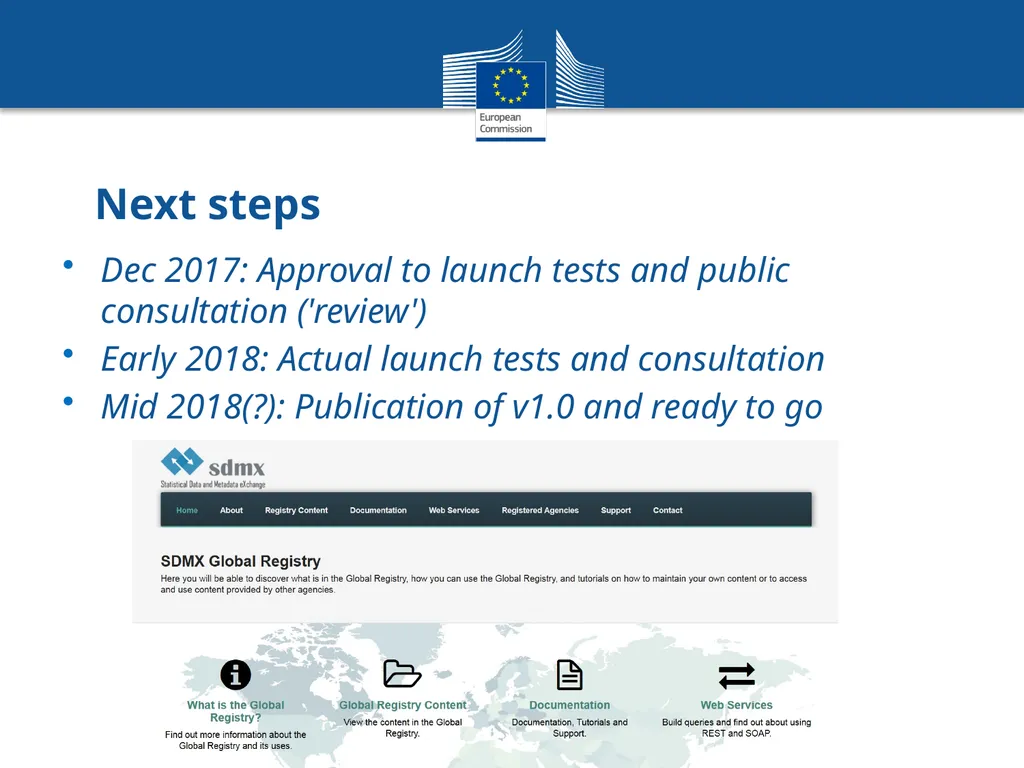
slide11. Next steps Dec 2017: Approval to launch tests and public consultation ('review')
Early 2018: Actual launch tests and consultation
Mid 2018(?): Publication of v1.0 and ready to go<br>
slide12. Questions for London Group Check code lists in the document!
Discuss need for codes for MFA aggregates
Volunteer for consultation and tests<br>
slide13. Thank you!
arturo.de-la-fuente@ec.europa.eu<br>
Eurostat<br>
slide2. What is ? Standard for statistical data and metadata transmissions
Necessary for (transmissions feeding) global SEEA databases
SDMX is applicable to any statistical domain
But we need to create data structure definitions (DSDs) for SEEA data
International agencies are concerned, countries too?
https://sdmx.org/<br>
slide3. SDMX solutions for countries Voluntary implementation(*)
Options
use a questionnaire, e.g. in Excel, with a converter which generates SDMX files for transmission. Converter supplied by the international agency
generate a csv file from the country production database using a specific tool
set up automatic machine-to-machine communication between country and international agency (*) Mandatory in the EU<br>
slide4. SEEA priority accounts for global databases Air emission accounts
Material flow accounts
Energy flow accounts
Water flow accounts
Land cover and land use accounts<br>
slide5. Technical group developing DSDs OECD, Eurostat, FAO, UNSD, UNECE, UNEP
Blend of SEEA experts and IT experts
Meetings in June, July and September 2017
Tasks:
Identified SEEA flows for priority accounts
Creates data model, dimensions, attributes
Creates code lists<br>
slide6. Global SEEA flows<br>
slide7. Data model: the matrix<br>
slide8. Code lists (selected) Greenhouse gases and air pollutants
Material flows
Energy flows
Water flows
Land cover
Land use
'Interactors' i.e. industries + households
Bridging items<br>
slide9. Some data model principles (1/2) Stocks vs flows
Re-using and extending national accounts code lists
Flows 'env economy' and 'economy env'
Production-based vs demand-based ('footprints')<br>
slide10. Some data model principles (2/2) Need for explicit codes for a few important MFA aggregates?
Not strictly needed for IT but needed for humans?<br>
slide11. Next steps Dec 2017: Approval to launch tests and public consultation ('review')
Early 2018: Actual launch tests and consultation
Mid 2018(?): Publication of v1.0 and ready to go<br>
slide12. Questions for London Group Check code lists in the document!
Discuss need for codes for MFA aggregates
Volunteer for consultation and tests<br>
slide13. Thank you!
arturo.de-la-fuente@ec.europa.eu<br>