GOVERNMENT-WIDE EDIUM-TERM NFORMATION AND COMMUNICATIONS ECHNOLOGY ARMONIZATION NITIATIVE M I T H I GOVERNMENT INFORMATION SYSTEMS PLAN Issued through EO 265 on July, 2000 Framework and guide for computerization of key frontline and common
"GOVERNMENT-WIDE EDIUM-TERM NFORMATION AND" is the property of its rightful owner. Permission is granted to
download and print the materials on this website for personal, non-commercial use only, and to display it
on your personal computer provided you do not modify the materials and that you retain all copyright
notices contained in the materials. By downloading content from our website, you accept the terms of this
agreement.
Presentation Transcript
01
GOVERNMENT-WIDE EDIUM-TERM NFORMATION AND COMMUNICATIONS ECHNOLOGY ARMONIZATION NITIATIVE M I T H I<br>
02
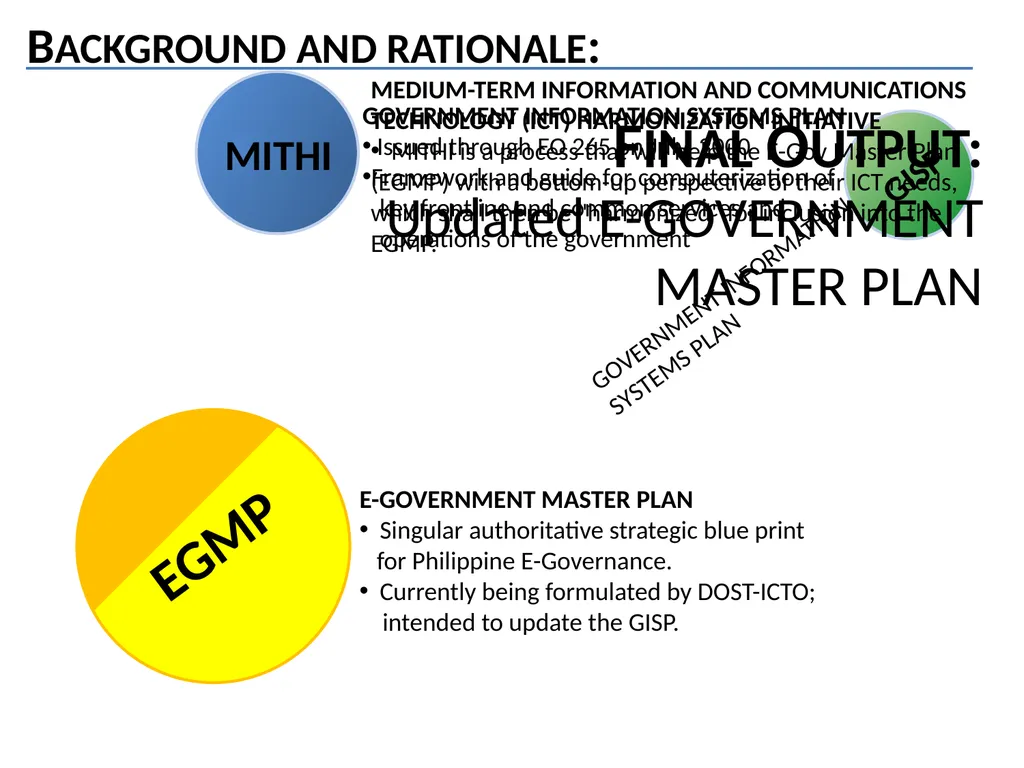
GOVERNMENT INFORMATION SYSTEMS PLAN
Issued through EO 265 on July, 2000
Framework and guide for computerization of
key frontline and common services and
operations of the government E-GOVERNMENT MASTER PLAN
Singular authoritative strategic blue print
for Philippine E-Governance.
Currently being formulated by DOST-ICTO;
intended to update the GISP. GOVERNMENT INFORMATION
SYSTEMS PLAN GISP MEDIUM-TERM INFORMATION AND COMMUNICATIONS
TECHNOLOGY (ICT) HARMONIZATION INITIATIVE
MITHI is a process that will help the E-Gov Master Plan (EGMP) with a bottom-up perspective of their ICT needs, which shall then be "harmonized" for inclusion into the EGMP. EGMP FINAL OUTPUT:
Updated E-GOVERNMENT
MASTER PLAN BACKGROUND AND RATIONALE:<br>
03
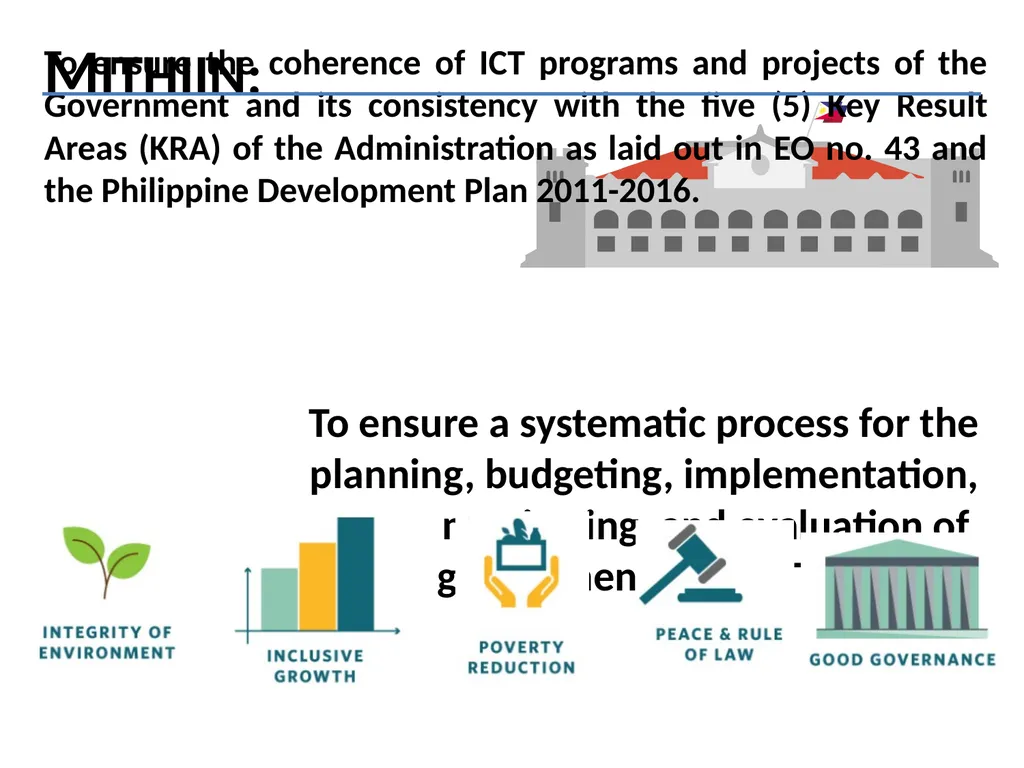
To ensure a systematic process for the planning, budgeting, implementation, monitoring, and evaluation of
government-wide ICT projects. To ensure the coherence of ICT programs and projects of the Government and its consistency with the five (5) Key Result Areas (KRA) of the Administration as laid out in EO no. 43 and the Philippine Development Plan 2011-2016. MITHIIN:<br>
04
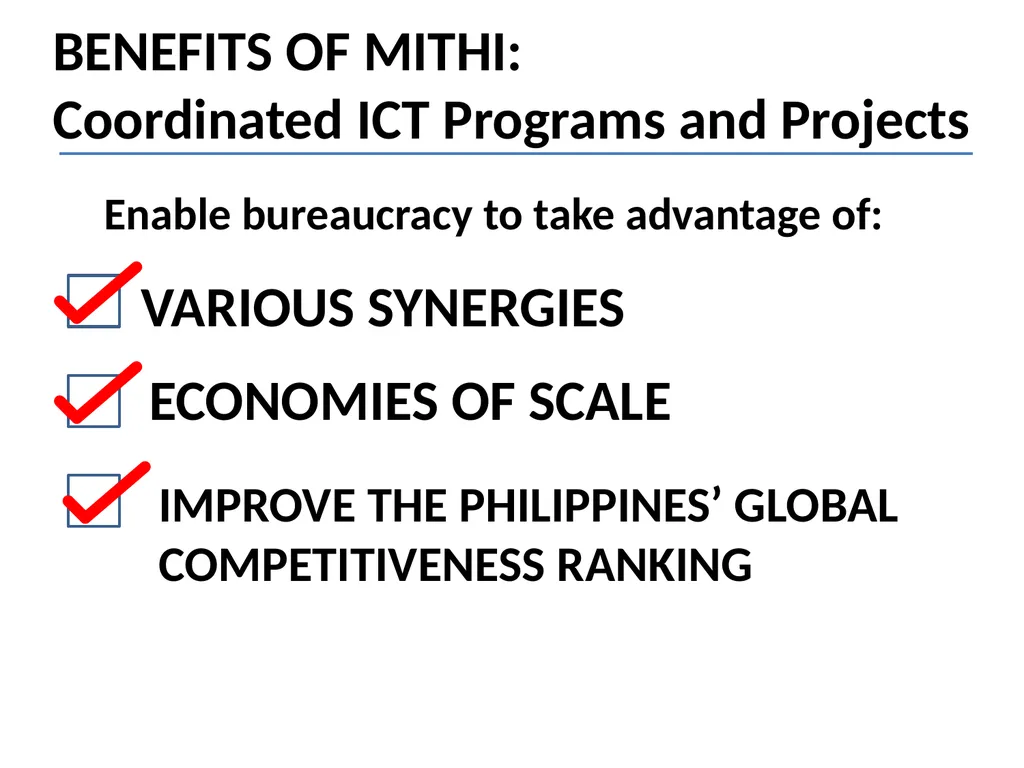
VARIOUS SYNERGIES Enable bureaucracy to take advantage of: ECONOMIES OF SCALE BENEFITS OF MITHI:
Coordinated ICT Programs and Projects IMPROVE THE PHILIPPINES’ GLOBAL
COMPETITIVENESS RANKING<br>
05
LEAD AGENCIES: Comprised of all Departments, Agencies, State Universities And Colleges (SUCs), Government-owned Or-Controlled Corporations (GOCCs), The Congress, And Constitutional Fiscal Autonomy Group (CFAG). PARTICIPATING AGENCIES: ADVISORY MEMBERS:<br>
06
BENEFITS OF FAITHFUL PARTICIPATION ICT programs and projects that were approved under the auspices of MITHI shall be considered as evaluated and endorsed by recognized technically proficient government stakeholders, which:
Will facilitate ERB examination by the DBM.
May be considered sufficient compliance to ISSP by the DOST
May be deemed equivalent to docs required for NEDA-ICC review (as applicable).<br>
07
BENEFITS OF FAITHFUL PARTICIPATION Programs and projects requiring review and endorsement of other agencies (e.g. NEDA-ICC), shall undergo existing processes.<br>
08
EFFECT OF NON-PARTICIPATION Resources, programs, and projects that are not processed through the methods and venues prescribed by this Circular and subsequent pertinent issuances related to MITHI may not be accorded funding.<br>
09
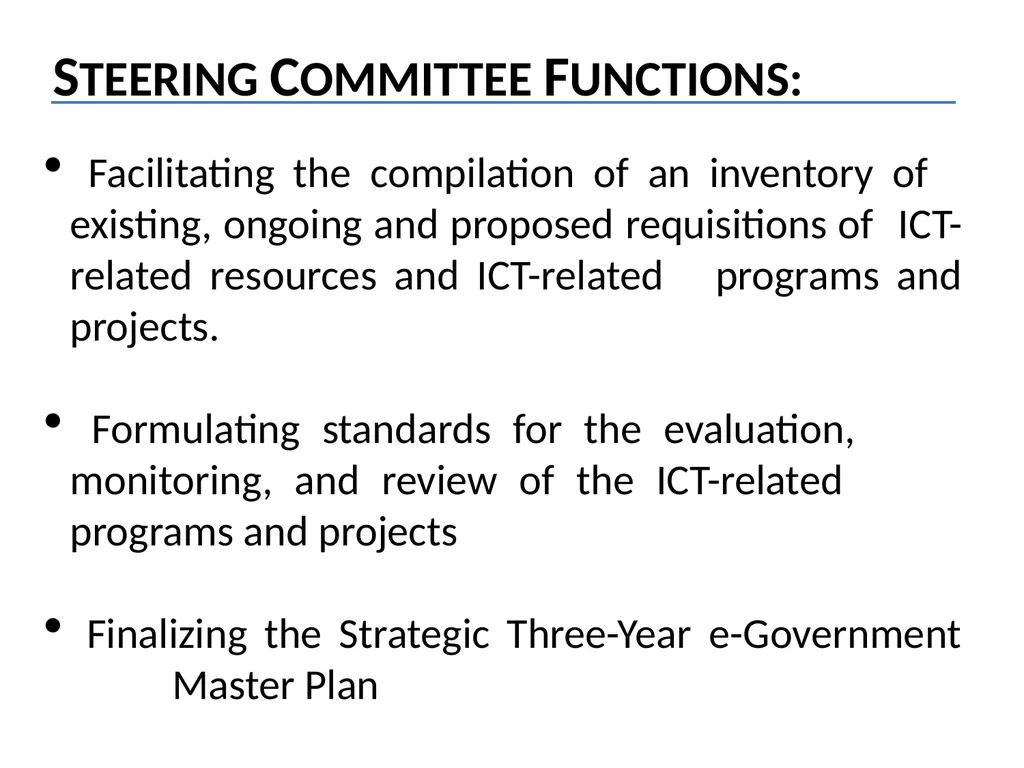
Facilitating the compilation of an inventory of existing, ongoing and proposed requisitions of ICT-related resources and ICT-related programs and projects.
Formulating standards for the evaluation, monitoring, and review of the ICT-related programs and projects
Finalizing the Strategic Three-Year e-Government Master Plan STEERING COMMITTEE FUNCTIONS:<br>
10
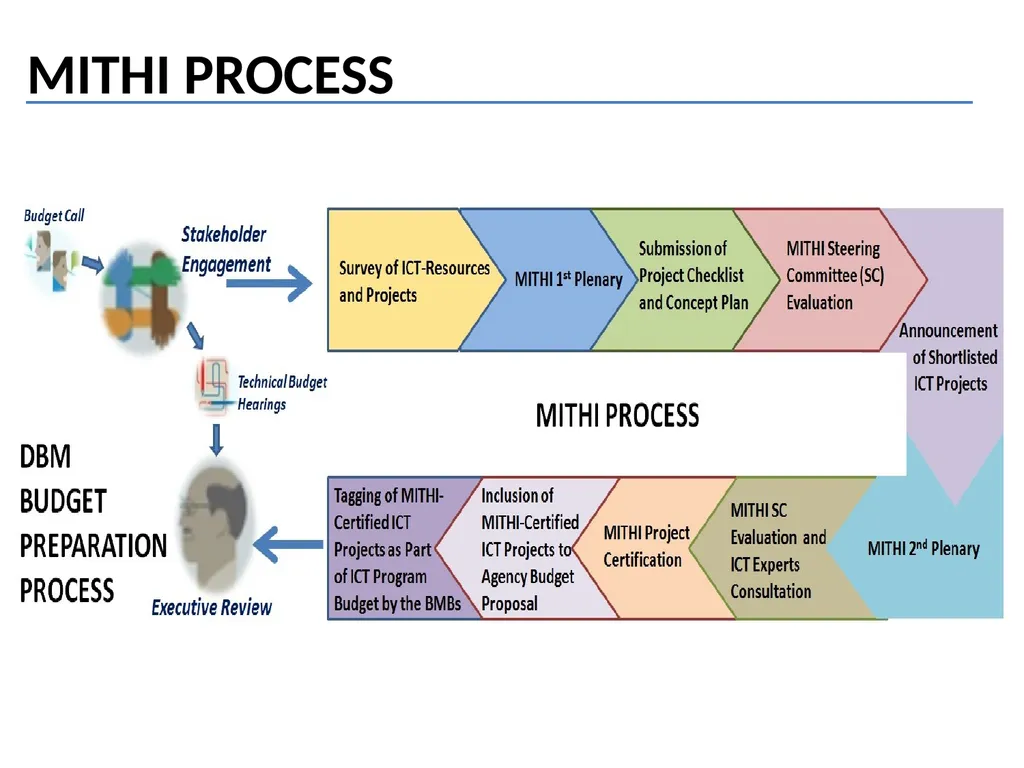
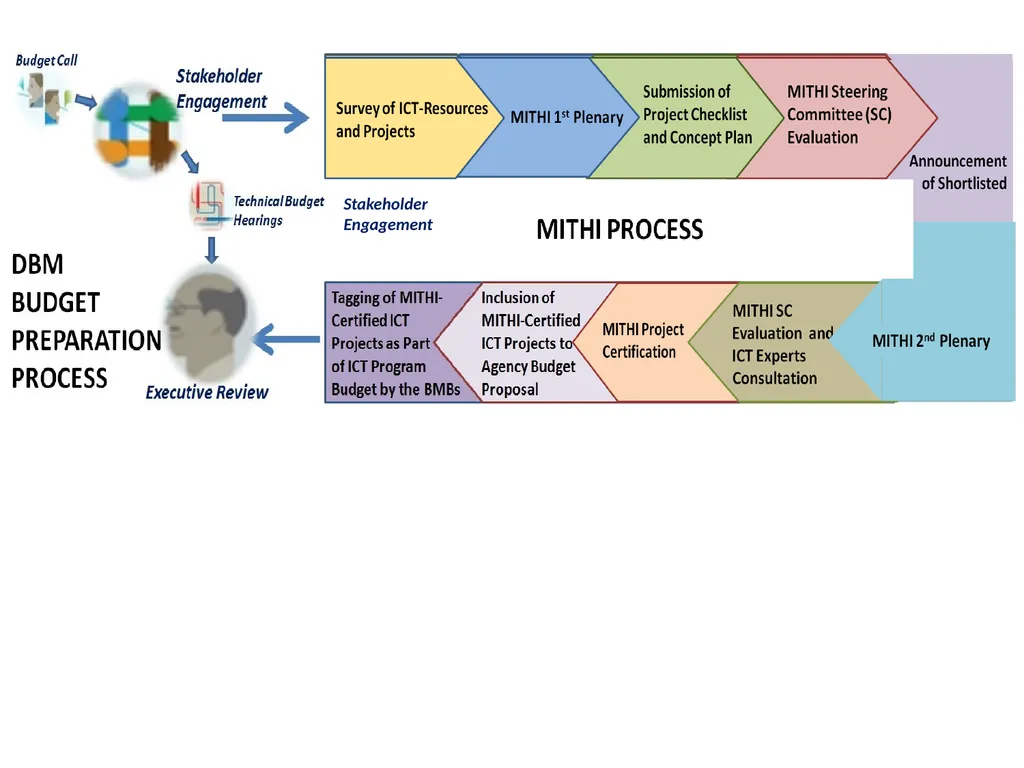
MITHI PROCESS<br>
11
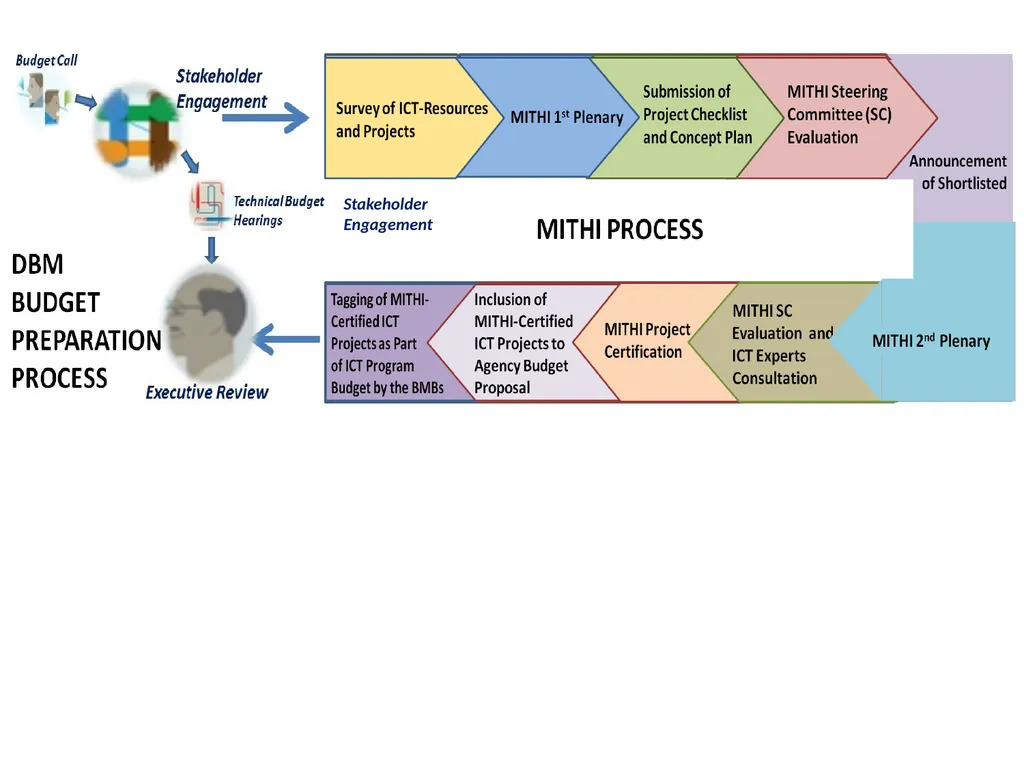
Stakeholder Engagement Stakeholder
Engagement MITHI process will happen during the Stakeholder Engagement Phase of the Budget Process. MITHI seeks the participation of civil society organizations (CSOs) and IT associations so that a multi-sectoral technical evaluation of ICT-related resources, programs and projects can be done as departments, agencies and government-owned or controlled corporations craft their agency budget proposals (e.g. BP 202, 203).<br>
12
Submissions providing information on ICT-related resources, programs, and projects (both existing and proposed), among other items, shall constitute a primary portion of agency participation to MITHI. All submissions shall be subject to the review and evaluation of the MITHI Steering Committee. Stakeholder
Engagement<br>
13
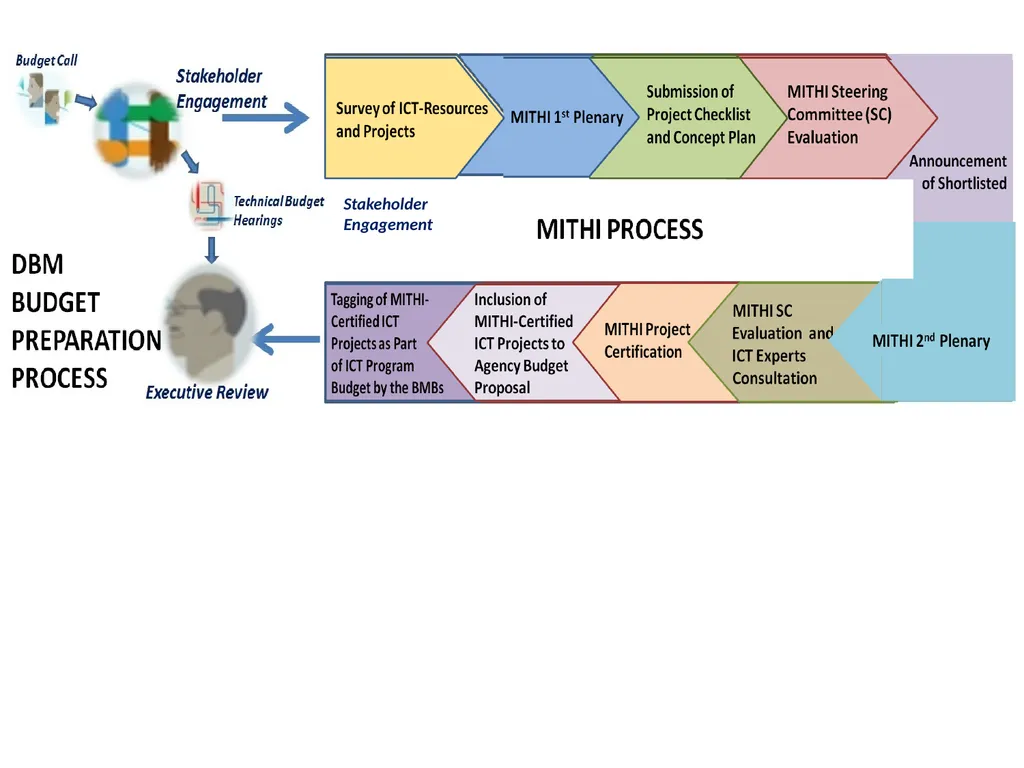
ICT programs and projects will be considered as evaluated and endorsed by technically proficient stakeholders. Stakeholder
Engagement<br>
14
Programs and projects approved by the MITHI Steering Committee shall then form part of the budget proposals of each agency. These shall undergo the same processes as required by the Budget Call. Stakeholder
Engagement<br>
15
The DBM ERB shall have final authority to make decisions on the said programs and projects. Stakeholder
Engagement Executive Review<br>
16
Programs and projects requiring NEDA Investment Coordination Committee (ICC) review and endorsement, and other similar processes requiring the review and endorsement of other agencies, shall undergo existing processes.
The ISSP as required for submission to the DOST shall continue to be mandatory, except that the DOST may consider participation in MITHI and the corollary submissions as sufficient compliance with the requirement. OTHER RELEVANT INFORMATION<br>
17
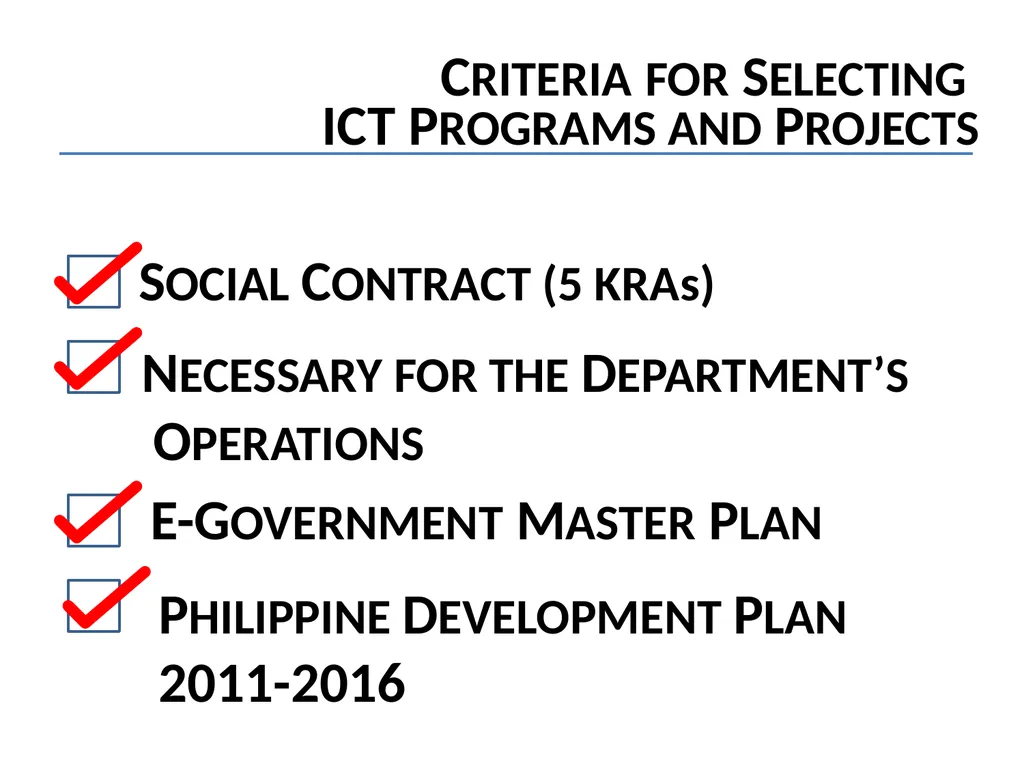
NECESSARY FOR THE DEPARTMENT’S
OPERATIONS SOCIAL CONTRACT (5 KRAs) E-GOVERNMENT MASTER PLAN CRITERIA FOR SELECTING ICT PROGRAMS AND PROJECTS PHILIPPINE DEVELOPMENT PLAN
2011-2016<br>