
Grade 8: Common Core State Standards Alignment
MT
Published · 66 slides · 0 views

1 / 1








Description
Grade 8: Common Core State Standards Alignment Guidance Reading for Literature and Reading for Informational Texts Standards Session Objective The purpose of these materials is to help develop understanding of the expectations of
Related Topics
Share
Embed code
Download this presentation From Below
"Grade 8: Common Core State Standards Alignment" is the property of its rightful owner. Permission is granted to download and print the materials on this website for personal, non-commercial use only, and to display it on your personal computer provided you do not modify the materials and that you retain all copyright notices contained in the materials. By downloading content from our website, you accept the terms of this agreement.
Presentation Transcript
01
Grade 8: Common Core State Standards Alignment Guidance Reading for Literature and Reading for Informational Texts Standards<br>
02
Session Objective The purpose of these materials is to help develop understanding of the expectations of high-quality summative assessment items. The concepts shown throughout these modules can be useful for classroom questioning and assessment, but the items themselves may need to be slightly modified.<br>
03
Reading Standards for Literature<br>
04
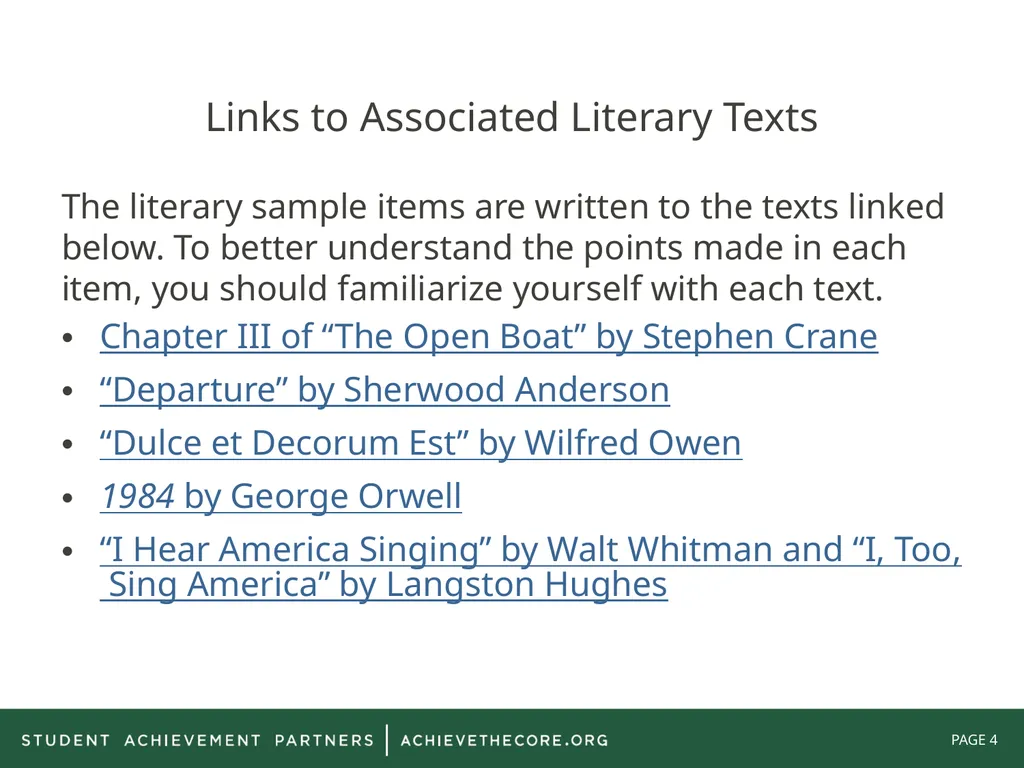
Links to Associated Literary Texts The literary sample items are written to the texts linked below. To better understand the points made in each item, you should familiarize yourself with each text.
Chapter III of “The Open Boat” by Stephen Crane
“Departure” by Sherwood Anderson
“Dulce et Decorum Est” by Wilfred Owen
1984 by George Orwell
“I Hear America Singing” by Walt Whitman and “I, Too, Sing America” by Langston Hughes<br>
Chapter III of “The Open Boat” by Stephen Crane
“Departure” by Sherwood Anderson
“Dulce et Decorum Est” by Wilfred Owen
1984 by George Orwell
“I Hear America Singing” by Walt Whitman and “I, Too, Sing America” by Langston Hughes<br>
05
Diving into the Specific Grade-Level Standards Remember that Standards 1 and 10 are bookends requiring:
all passages to be appropriately complex
all items to be answered using textual evidence
Items should never be aligned to Standard 1 only. Instead, items should be aligned to Standard 1 and at least one other standard.<br>
all passages to be appropriately complex
all items to be answered using textual evidence
Items should never be aligned to Standard 1 only. Instead, items should be aligned to Standard 1 and at least one other standard.<br>
06
CCSS.ELA-Literacy.RL.8.2 Determine a theme or central idea of a text and analyze its development over the course of the text, including its relationship to the characters, setting, and plot; provide an objective summary of the text.<br>
07
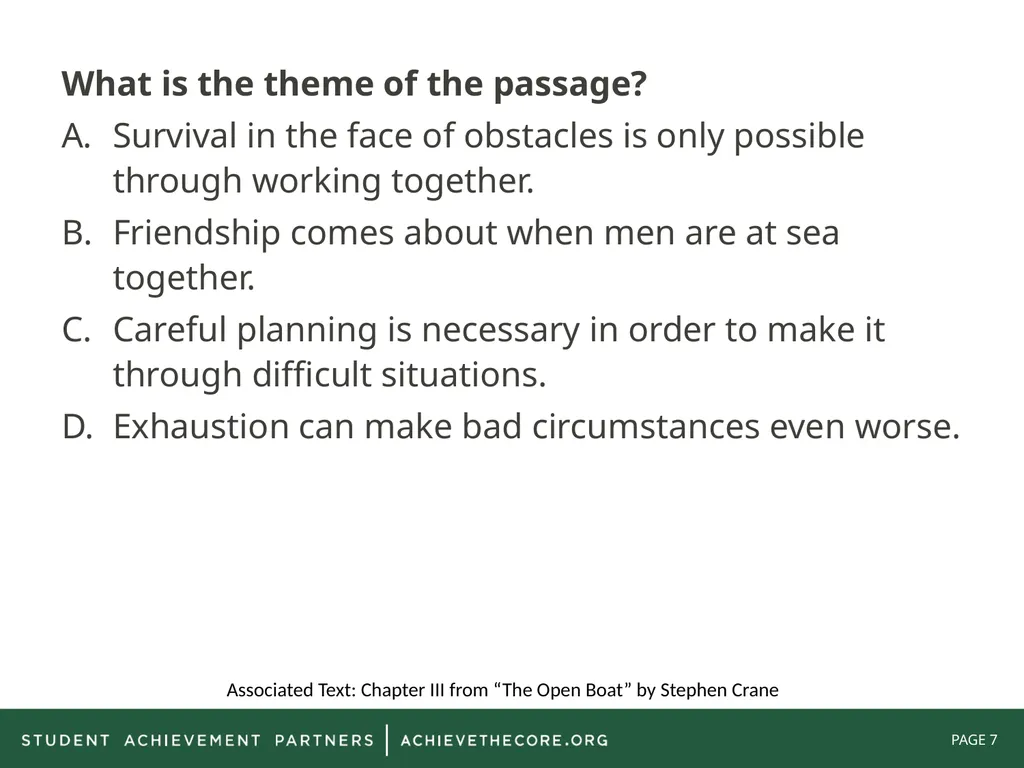
What is the theme of the passage?
Survival in the face of obstacles is only possible through working together.
Friendship comes about when men are at sea together.
Careful planning is necessary in order to make it through difficult situations.
Exhaustion can make bad circumstances even worse. Associated Text: Chapter III from “The Open Boat” by Stephen Crane<br>
Survival in the face of obstacles is only possible through working together.
Friendship comes about when men are at sea together.
Careful planning is necessary in order to make it through difficult situations.
Exhaustion can make bad circumstances even worse. Associated Text: Chapter III from “The Open Boat” by Stephen Crane<br>
08
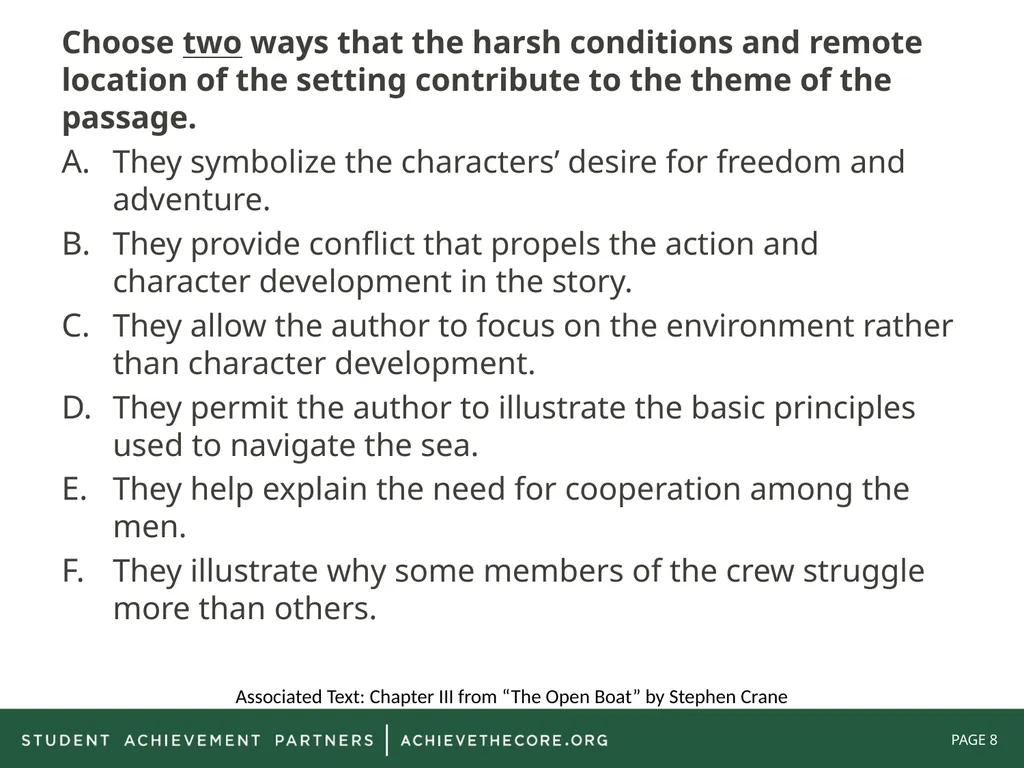
Choose two ways that the harsh conditions and remote location of the setting contribute to the theme of the passage.
They symbolize the characters’ desire for freedom and adventure.
They provide conflict that propels the action and character development in the story.
They allow the author to focus on the environment rather than character development.
They permit the author to illustrate the basic principles used to navigate the sea.
They help explain the need for cooperation among the men.
They illustrate why some members of the crew struggle more than others. Associated Text: Chapter III from “The Open Boat” by Stephen Crane<br>
They symbolize the characters’ desire for freedom and adventure.
They provide conflict that propels the action and character development in the story.
They allow the author to focus on the environment rather than character development.
They permit the author to illustrate the basic principles used to navigate the sea.
They help explain the need for cooperation among the men.
They illustrate why some members of the crew struggle more than others. Associated Text: Chapter III from “The Open Boat” by Stephen Crane<br>
09
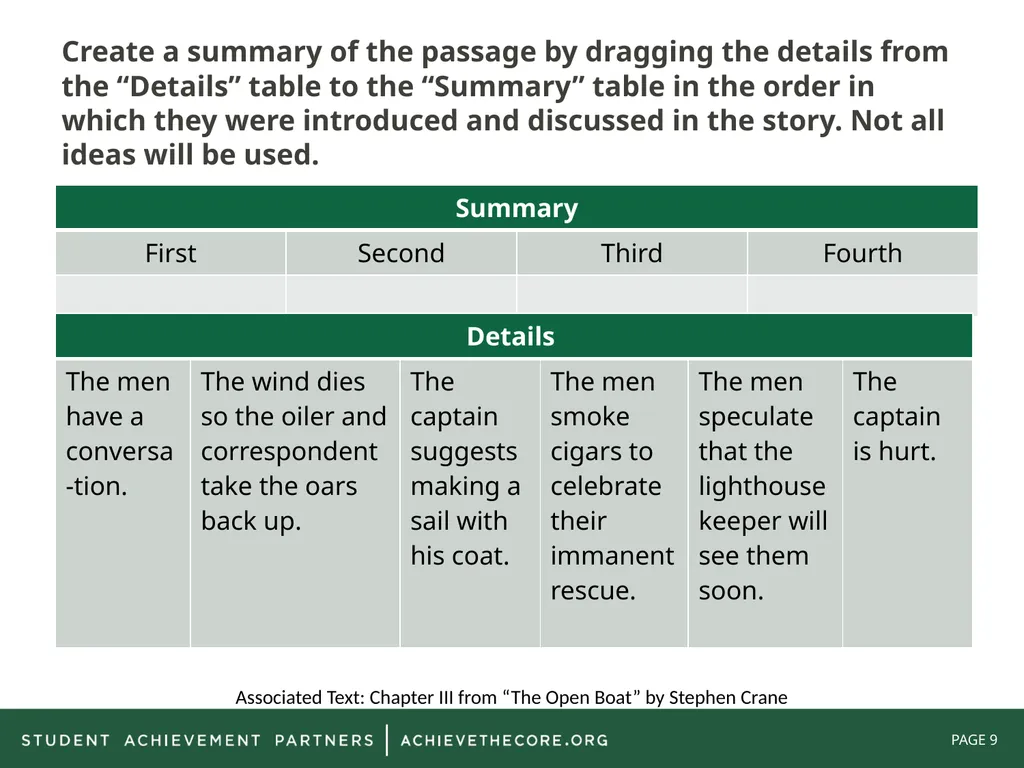
Create a summary of the passage by dragging the details from the “Details” table to the “Summary” table in the order in which they were introduced and discussed in the story. Not all ideas will be used. Associated Text: Chapter III from “The Open Boat” by Stephen Crane<br>
10
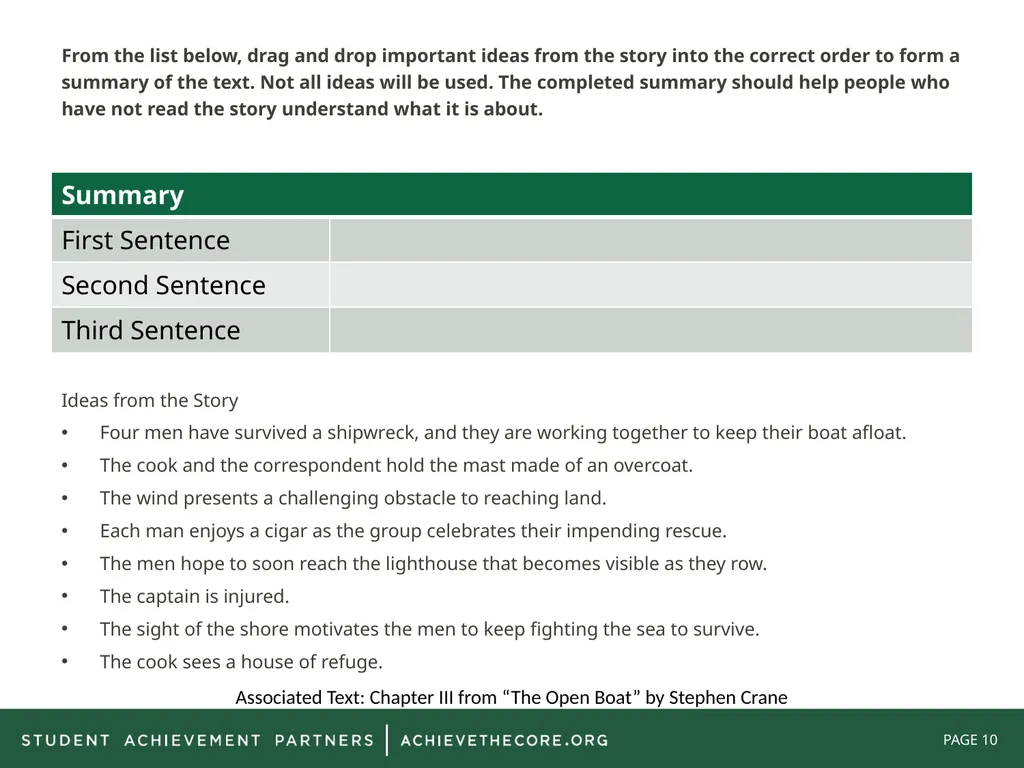
From the list below, drag and drop important ideas from the story into the correct order to form a summary of the text. Not all ideas will be used. The completed summary should help people who have not read the story understand what it is about.
Ideas from the Story
Four men have survived a shipwreck, and they are working together to keep their boat afloat.
The cook and the correspondent hold the mast made of an overcoat.
The wind presents a challenging obstacle to reaching land.
Each man enjoys a cigar as the group celebrates their impending rescue.
The men hope to soon reach the lighthouse that becomes visible as they row.
The captain is injured.
The sight of the shore motivates the men to keep fighting the sea to survive.
The cook sees a house of refuge. Associated Text: Chapter III from “The Open Boat” by Stephen Crane<br>
Ideas from the Story
Four men have survived a shipwreck, and they are working together to keep their boat afloat.
The cook and the correspondent hold the mast made of an overcoat.
The wind presents a challenging obstacle to reaching land.
Each man enjoys a cigar as the group celebrates their impending rescue.
The men hope to soon reach the lighthouse that becomes visible as they row.
The captain is injured.
The sight of the shore motivates the men to keep fighting the sea to survive.
The cook sees a house of refuge. Associated Text: Chapter III from “The Open Boat” by Stephen Crane<br>
11
CCSS.ELA-Literacy.RL.8.3 Analyze how particular lines of dialogue or incidents in a story or drama propel the action, reveal aspects of a character, or provoke a decision.<br>
12
On the morning George plans to leave, how does he feel about his upcoming departure?
confused
regretful
nervous
thrilled Associated Text: “Departure” by Sherwood Anderson<br>
confused
regretful
nervous
thrilled Associated Text: “Departure” by Sherwood Anderson<br>
13
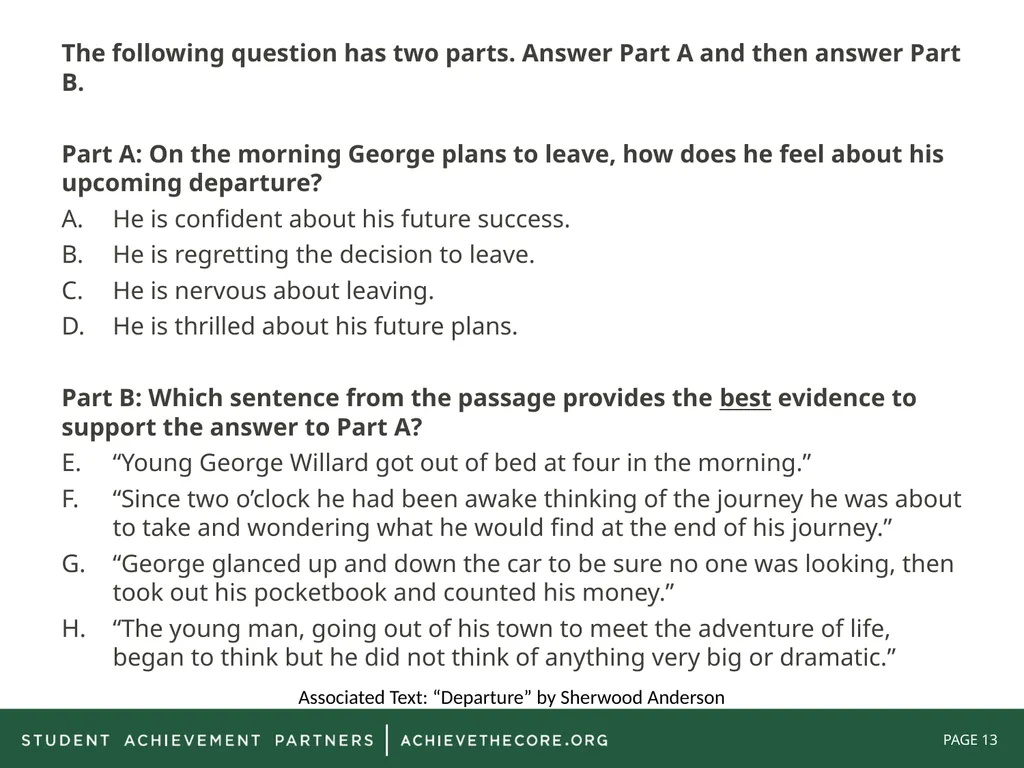
The following question has two parts. Answer Part A and then answer Part B.
Part A: On the morning George plans to leave, how does he feel about his upcoming departure?
He is confident about his future success.
He is regretting the decision to leave.
He is nervous about leaving.
He is thrilled about his future plans.
Part B: Which sentence from the passage provides the best evidence to support the answer to Part A?
“Young George Willard got out of bed at four in the morning.”
“Since two o’clock he had been awake thinking of the journey he was about to take and wondering what he would find at the end of his journey.”
“George glanced up and down the car to be sure no one was looking, then took out his pocketbook and counted his money.”
“The young man, going out of his town to meet the adventure of life, began to think but he did not think of anything very big or dramatic.” Associated Text: “Departure” by Sherwood Anderson<br>
Part A: On the morning George plans to leave, how does he feel about his upcoming departure?
He is confident about his future success.
He is regretting the decision to leave.
He is nervous about leaving.
He is thrilled about his future plans.
Part B: Which sentence from the passage provides the best evidence to support the answer to Part A?
“Young George Willard got out of bed at four in the morning.”
“Since two o’clock he had been awake thinking of the journey he was about to take and wondering what he would find at the end of his journey.”
“George glanced up and down the car to be sure no one was looking, then took out his pocketbook and counted his money.”
“The young man, going out of his town to meet the adventure of life, began to think but he did not think of anything very big or dramatic.” Associated Text: “Departure” by Sherwood Anderson<br>
14
CCSS.ELA-Literacy.RL.8.4 Determine the meaning of words and phrases as they are used in a text, including figurative and connotative meanings; analyze the impact of specific word choices on meaning and tone, including analogies or allusions to other texts.<br>
15
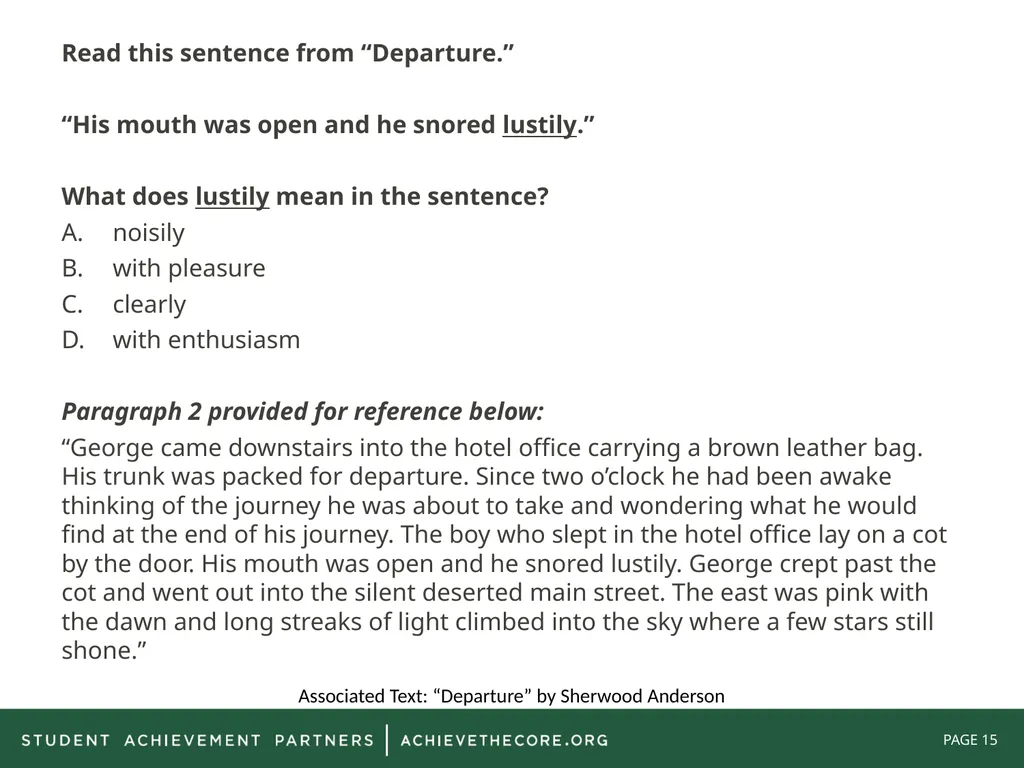
Read this sentence from “Departure.”
“His mouth was open and he snored lustily.”
What does lustily mean in the sentence?
noisily
with pleasure
clearly
with enthusiasm
Paragraph 2 provided for reference below:
“George came downstairs into the hotel office carrying a brown leather bag. His trunk was packed for departure. Since two o’clock he had been awake thinking of the journey he was about to take and wondering what he would find at the end of his journey. The boy who slept in the hotel office lay on a cot by the door. His mouth was open and he snored lustily. George crept past the cot and went out into the silent deserted main street. The east was pink with the dawn and long streaks of light climbed into the sky where a few stars still shone.” Associated Text: “Departure” by Sherwood Anderson<br>
“His mouth was open and he snored lustily.”
What does lustily mean in the sentence?
noisily
with pleasure
clearly
with enthusiasm
Paragraph 2 provided for reference below:
“George came downstairs into the hotel office carrying a brown leather bag. His trunk was packed for departure. Since two o’clock he had been awake thinking of the journey he was about to take and wondering what he would find at the end of his journey. The boy who slept in the hotel office lay on a cot by the door. His mouth was open and he snored lustily. George crept past the cot and went out into the silent deserted main street. The east was pink with the dawn and long streaks of light climbed into the sky where a few stars still shone.” Associated Text: “Departure” by Sherwood Anderson<br>
16
The following question has two parts. Answer Part A and then answer Part B.
Part A: In paragraph 17, what does the phrase “impending rescue” mean?
A rescue occurring against many odds
A rescue organized according to the rules
A rescue involving many people
A rescue happening soon
Part B: Which sentence from the passage provides the best clue for the meaning of the phrase “impending rescue”?
“For these reasons, and for others, neither the oiler nor the correspondent was fond of rowing at this time.” (Paragraph 9)
“‘We’ll never be able to make the lighthouse now,’ said the captain.” (Paragraph 14)
“In an hour, perhaps, they would be ashore.” (Paragraph 16)
“Their backbones had become thoroughly used to balancing in the boat, and they now rode this wild colt of a dinghy like circus men.” (Paragraph 17) Associated Text: Chapter III from “The Open Boat” by Stephen Crane<br>
Part A: In paragraph 17, what does the phrase “impending rescue” mean?
A rescue occurring against many odds
A rescue organized according to the rules
A rescue involving many people
A rescue happening soon
Part B: Which sentence from the passage provides the best clue for the meaning of the phrase “impending rescue”?
“For these reasons, and for others, neither the oiler nor the correspondent was fond of rowing at this time.” (Paragraph 9)
“‘We’ll never be able to make the lighthouse now,’ said the captain.” (Paragraph 14)
“In an hour, perhaps, they would be ashore.” (Paragraph 16)
“Their backbones had become thoroughly used to balancing in the boat, and they now rode this wild colt of a dinghy like circus men.” (Paragraph 17) Associated Text: Chapter III from “The Open Boat” by Stephen Crane<br>
17
In “Departure,” the narrator states that in summer “the land becomes a wide green billiard table on which tiny human insects toil up and down.” What kind of figurative language is the author using?
Metaphor
Simile
Personification
Hyperbole Associated Text: “Departure” by Sherwood Anderson<br>
Metaphor
Simile
Personification
Hyperbole Associated Text: “Departure” by Sherwood Anderson<br>
18
How does the phrase “tiny human insects” in paragraph 3 impact the meaning of the text?
It reveals that the lives of individuals are not considered important in Winesburg.
It emphasizes the vast contrast in size between the farmland and the farmers.
It implies that George’s decision to leave Winesburg will not affect his life in a significant way.
It introduces the relative insignificance of farming as an occupation. Associated Text: “Departure” by Sherwood Anderson<br>
It reveals that the lives of individuals are not considered important in Winesburg.
It emphasizes the vast contrast in size between the farmland and the farmers.
It implies that George’s decision to leave Winesburg will not affect his life in a significant way.
It introduces the relative insignificance of farming as an occupation. Associated Text: “Departure” by Sherwood Anderson<br>
19
What word best describes the tone of Stanza 1 of the poem?
weary
lonely
frustrated
sad Associated Text: “Dulce et Decorum Est” by Wilfred Owen<br>
weary
lonely
frustrated
sad Associated Text: “Dulce et Decorum Est” by Wilfred Owen<br>
20
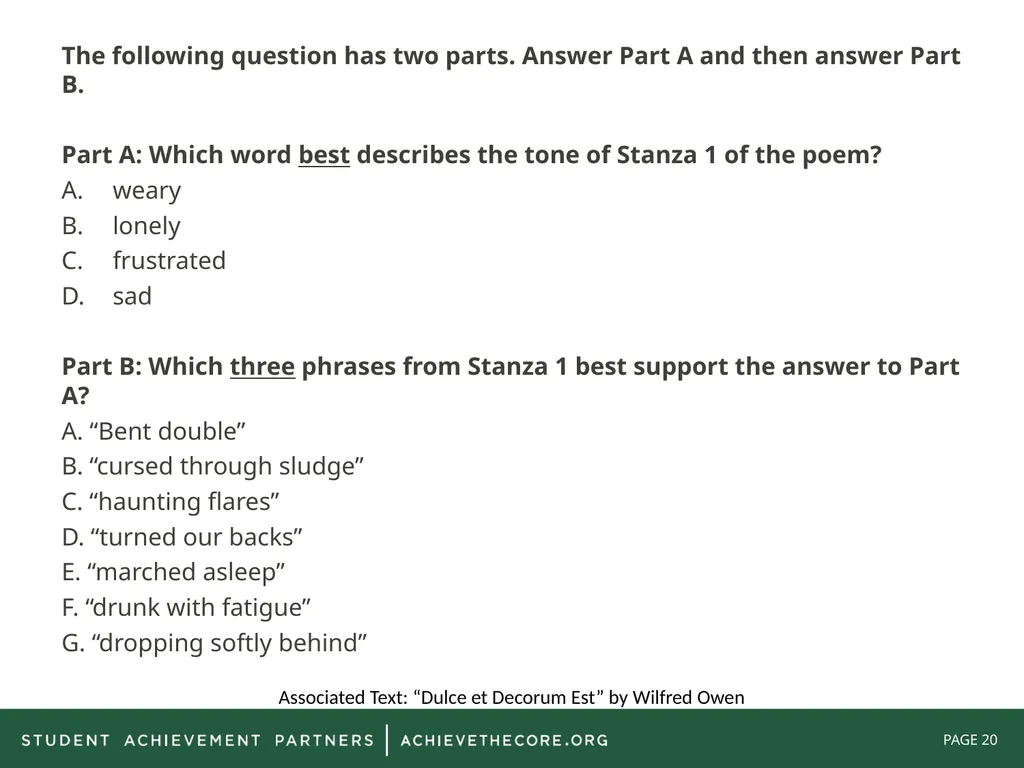
The following question has two parts. Answer Part A and then answer Part B.
Part A: Which word best describes the tone of Stanza 1 of the poem?
weary
lonely
frustrated
sad
Part B: Which three phrases from Stanza 1 best support the answer to Part A?
A. “Bent double”
B. “cursed through sludge”
C. “haunting flares”
D. “turned our backs”
E. “marched asleep”
F. “drunk with fatigue”
G. “dropping softly behind” Associated Text: “Dulce et Decorum Est” by Wilfred Owen<br>
Part A: Which word best describes the tone of Stanza 1 of the poem?
weary
lonely
frustrated
sad
Part B: Which three phrases from Stanza 1 best support the answer to Part A?
A. “Bent double”
B. “cursed through sludge”
C. “haunting flares”
D. “turned our backs”
E. “marched asleep”
F. “drunk with fatigue”
G. “dropping softly behind” Associated Text: “Dulce et Decorum Est” by Wilfred Owen<br>
21
CCSS.ELA-Literacy.RL.8.5 Compare and contrast the structure of two or more texts and analyze how the differing structure of each text contributes to its meaning and style.<br>
22
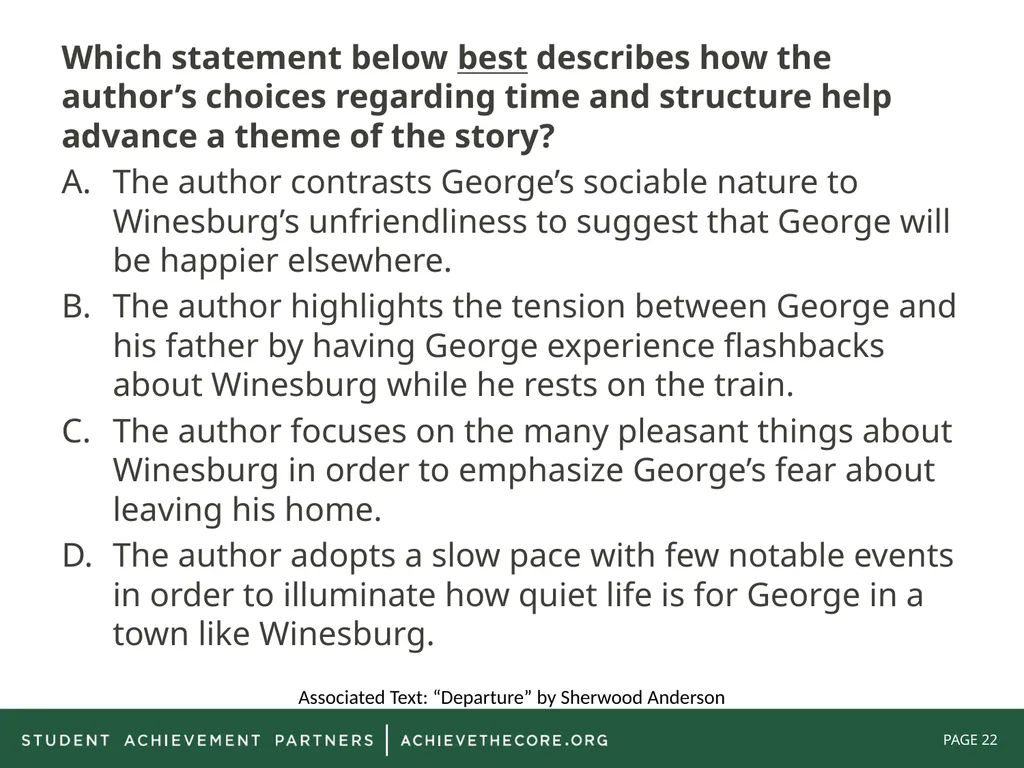
Which statement below best describes how the author’s choices regarding time and structure help advance a theme of the story?
The author contrasts George’s sociable nature to Winesburg’s unfriendliness to suggest that George will be happier elsewhere.
The author highlights the tension between George and his father by having George experience flashbacks about Winesburg while he rests on the train.
The author focuses on the many pleasant things about Winesburg in order to emphasize George’s fear about leaving his home.
The author adopts a slow pace with few notable events in order to illuminate how quiet life is for George in a town like Winesburg. Associated Text: “Departure” by Sherwood Anderson<br>
The author contrasts George’s sociable nature to Winesburg’s unfriendliness to suggest that George will be happier elsewhere.
The author highlights the tension between George and his father by having George experience flashbacks about Winesburg while he rests on the train.
The author focuses on the many pleasant things about Winesburg in order to emphasize George’s fear about leaving his home.
The author adopts a slow pace with few notable events in order to illuminate how quiet life is for George in a town like Winesburg. Associated Text: “Departure” by Sherwood Anderson<br>
23
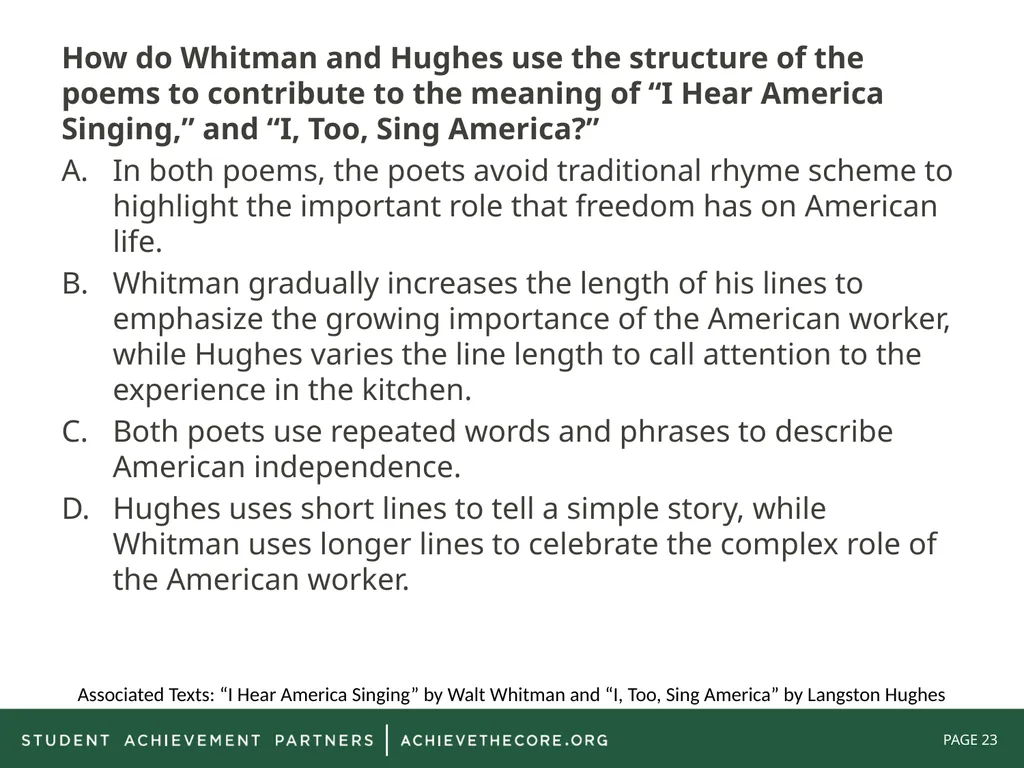
How do Whitman and Hughes use the structure of the poems to contribute to the meaning of “I Hear America Singing,” and “I, Too, Sing America?”
In both poems, the poets avoid traditional rhyme scheme to highlight the important role that freedom has on American life.
Whitman gradually increases the length of his lines to emphasize the growing importance of the American worker, while Hughes varies the line length to call attention to the experience in the kitchen.
Both poets use repeated words and phrases to describe American independence.
Hughes uses short lines to tell a simple story, while Whitman uses longer lines to celebrate the complex role of the American worker. Associated Texts: “I Hear America Singing” by Walt Whitman and “I, Too, Sing America” by Langston Hughes<br>
In both poems, the poets avoid traditional rhyme scheme to highlight the important role that freedom has on American life.
Whitman gradually increases the length of his lines to emphasize the growing importance of the American worker, while Hughes varies the line length to call attention to the experience in the kitchen.
Both poets use repeated words and phrases to describe American independence.
Hughes uses short lines to tell a simple story, while Whitman uses longer lines to celebrate the complex role of the American worker. Associated Texts: “I Hear America Singing” by Walt Whitman and “I, Too, Sing America” by Langston Hughes<br>
24
CCSS.ELA-LITERACY.RL.8.6 Analyze how differences in the points of view of the characters and the audience or reader (e.g., created through the use of dramatic irony) create such effects as suspense or humor.<br>
25
What is the point of view of “Departure” and how does it impact the story?
First person—George tells the story to the reader making it more personal and emotional.
Second person—The author speaks directly to “you,” the reader, making the reader a participant in George’s experiences.
Third person omniscient—The author tells George’s thoughts and those of the other characters.
Third person limited—The author tells the reader George’s thoughts but no one else’s. Associated Text: “Departure” by Sherwood Anderson<br>
First person—George tells the story to the reader making it more personal and emotional.
Second person—The author speaks directly to “you,” the reader, making the reader a participant in George’s experiences.
Third person omniscient—The author tells George’s thoughts and those of the other characters.
Third person limited—The author tells the reader George’s thoughts but no one else’s. Associated Text: “Departure” by Sherwood Anderson<br>
26
Please read the following excerpt from Edgar Allan Poe’s “The Tell Tale Heart.”
If still you think me mad, you will think so no longer when I describe the wise precautions I took for the concealment of the body. The night waned, and I worked hastily, but in silence. First of all I dismembered the corpse. I cut off the head and the arms and the legs.
I then took up three planks from the flooring of the chamber, and deposited all between the scantlings. I then replaced the boards so cleverly, so cunningly, that no human eye --not even his --could have detected any thing wrong. There was nothing to wash out --no stain of any kind --no blood-spot whatever. I had been too wary for that. A tub had caught all --ha! ha!
When I had made an end of these labors, it was four o'clock --still dark as midnight. As the bell sounded the hour, there came a knocking at the street door. I went down to open it with a light heart, --for what had I now to fear? There entered three men, who introduced themselves, with perfect suavity, as officers of the police. A shriek had been heard by a neighbour during the night; suspicion of foul play had been aroused; information had been lodged at the police office, and they (the officers) had been deputed to search the premises.
I smiled, --for what had I to fear? I bade the gentlemen welcome. The shriek, I said, was my own in a dream. The old man, I mentioned, was absent in the country. I took my visitors all over the house. I bade them search --search well. I led them, at length, to his chamber. I showed them his treasures, secure, undisturbed. In the enthusiasm of my confidence, I brought chairs into the room, and desired them here to rest from their fatigues, while I myself, in the wild audacity of my perfect triumph, placed my own seat upon the very spot beneath which reposed the corpse of the victim. Associated Text: “The Tell Tale Heart” by Edgar Allan Poe<br>
If still you think me mad, you will think so no longer when I describe the wise precautions I took for the concealment of the body. The night waned, and I worked hastily, but in silence. First of all I dismembered the corpse. I cut off the head and the arms and the legs.
I then took up three planks from the flooring of the chamber, and deposited all between the scantlings. I then replaced the boards so cleverly, so cunningly, that no human eye --not even his --could have detected any thing wrong. There was nothing to wash out --no stain of any kind --no blood-spot whatever. I had been too wary for that. A tub had caught all --ha! ha!
When I had made an end of these labors, it was four o'clock --still dark as midnight. As the bell sounded the hour, there came a knocking at the street door. I went down to open it with a light heart, --for what had I now to fear? There entered three men, who introduced themselves, with perfect suavity, as officers of the police. A shriek had been heard by a neighbour during the night; suspicion of foul play had been aroused; information had been lodged at the police office, and they (the officers) had been deputed to search the premises.
I smiled, --for what had I to fear? I bade the gentlemen welcome. The shriek, I said, was my own in a dream. The old man, I mentioned, was absent in the country. I took my visitors all over the house. I bade them search --search well. I led them, at length, to his chamber. I showed them his treasures, secure, undisturbed. In the enthusiasm of my confidence, I brought chairs into the room, and desired them here to rest from their fatigues, while I myself, in the wild audacity of my perfect triumph, placed my own seat upon the very spot beneath which reposed the corpse of the victim. Associated Text: “The Tell Tale Heart” by Edgar Allan Poe<br>
27
How does Poe’s description of events create dramatic irony (when the reader knows something that other characters do not)? What effect does his technique have on the reader? Use details from the passage to support your answer. Associated Text: “The Tell Tale Heart” by Edgar Allan Poe<br>
28
CCSS.ELA-Literacy.8.7 Analyze the extent to which a filmed or live production of a story or drama stays faithful to or departs from the text or script, evaluating the choices made by the director or actors.<br>
29
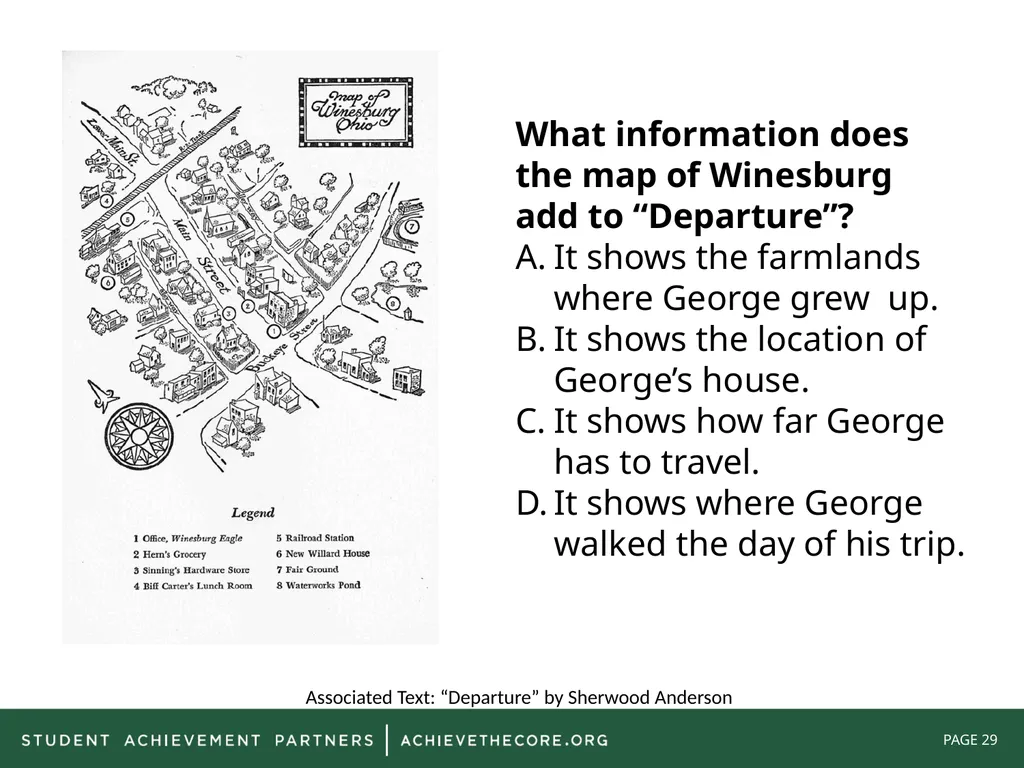
What information does the map of Winesburg add to “Departure”?
It shows the farmlands where George grew up.
It shows the location of George’s house.
It shows how far George has to travel.
It shows where George walked the day of his trip. Associated Text: “Departure” by Sherwood Anderson<br>
It shows the farmlands where George grew up.
It shows the location of George’s house.
It shows how far George has to travel.
It shows where George walked the day of his trip. Associated Text: “Departure” by Sherwood Anderson<br>
30
Watch this clip from the film version of 1984:
https://www.youtube.com/watch?v=fCZBnUt6rZ0&feature=youtu.be
Begin viewing the film at minute 4:37 and end at 6:10.
In the scene of the film version of 1984, which detail of the text is emphasized through the actions of the actor portraying Winston?
the compelling nature of Big Brother’s speeches
the absolute control that Big Brother had on the lives of the people
the poverty that surrounds Winston
the exhaustion that Winston feels on a daily basis Associated Stimuli: 1984 by George Orwell<br>
https://www.youtube.com/watch?v=fCZBnUt6rZ0&feature=youtu.be
Begin viewing the film at minute 4:37 and end at 6:10.
In the scene of the film version of 1984, which detail of the text is emphasized through the actions of the actor portraying Winston?
the compelling nature of Big Brother’s speeches
the absolute control that Big Brother had on the lives of the people
the poverty that surrounds Winston
the exhaustion that Winston feels on a daily basis Associated Stimuli: 1984 by George Orwell<br>
31
CCSS.ELA-Literacy.RL.8.8 Standard 8 does not apply to literature.<br>
32
CCSS.ELA-Literacy.RL.8.9 Analyze how a modern work of fiction draws on themes, patterns of events, or character types from myths, traditional stories, or religious works such as the Bible, including describing how the material is rendered new.<br>
33
Write a paragraph explaining how George Willard’s departure from Winesburg represents the archetypal journey. Use details from the passage to support your answer. Associated Text: “Departure” by Sherwood Anderson<br>
34
Langston Hughes cited Walt Whitman as one of his greatest influences, and some believe that Hughes wrote, “I, Too, Sing America” in response to Whitman’s “I Hear America Singing.” Using textual evidence from both poems to support your answer, describe how Hughes’ poem builds on Whitman’s poem. Consider aspects such as structure, theme, word choice, etc., as you craft your response. Associated Texts: “I Hear America Singing” by Walt Whitman and “I, Too, Sing America” by Langston Hughes<br>
35
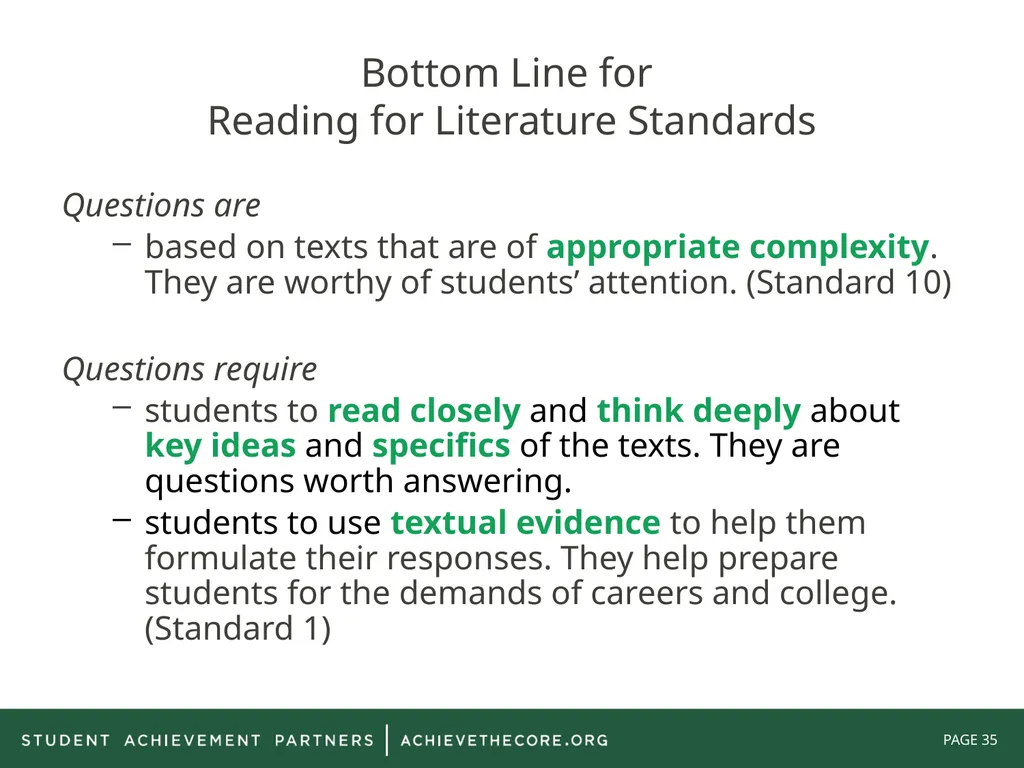
Bottom Line for
Reading for Literature Standards Questions are
based on texts that are of appropriate complexity. They are worthy of students’ attention. (Standard 10)
Questions require
students to read closely and think deeply about key ideas and specifics of the texts. They are questions worth answering.
students to use textual evidence to help them formulate their responses. They help prepare students for the demands of careers and college. (Standard 1)<br>
based on texts that are of appropriate complexity. They are worthy of students’ attention. (Standard 10)
Questions require
students to read closely and think deeply about key ideas and specifics of the texts. They are questions worth answering.
students to use textual evidence to help them formulate their responses. They help prepare students for the demands of careers and college. (Standard 1)<br>
36
Reading Standards for Informational Text<br>
37
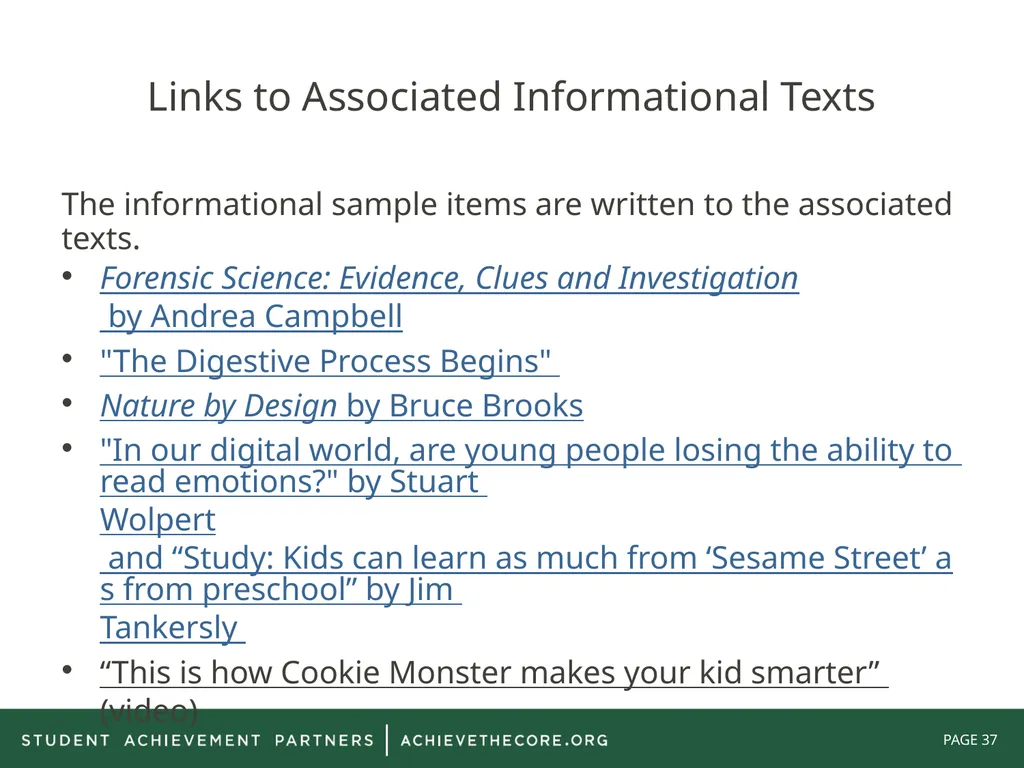
Links to Associated Informational Texts The informational sample items are written to the associated texts.
Forensic Science: Evidence, Clues and Investigation by Andrea Campbell
"The Digestive Process Begins"
Nature by Design by Bruce Brooks
"In our digital world, are young people losing the ability to read emotions?" by Stuart Wolpert and “Study: Kids can learn as much from ‘Sesame Street’ as from preschool” by Jim Tankersly
“This is how Cookie Monster makes your kid smarter” (video)<br>
Forensic Science: Evidence, Clues and Investigation by Andrea Campbell
"The Digestive Process Begins"
Nature by Design by Bruce Brooks
"In our digital world, are young people losing the ability to read emotions?" by Stuart Wolpert and “Study: Kids can learn as much from ‘Sesame Street’ as from preschool” by Jim Tankersly
“This is how Cookie Monster makes your kid smarter” (video)<br>
38
Diving into the Specific Grade-Level Standards Remember that Standards 1 and 10 are bookends requiring:
all passages to be appropriately complex
all items to be answered using textual evidence<br>
all passages to be appropriately complex
all items to be answered using textual evidence<br>
39
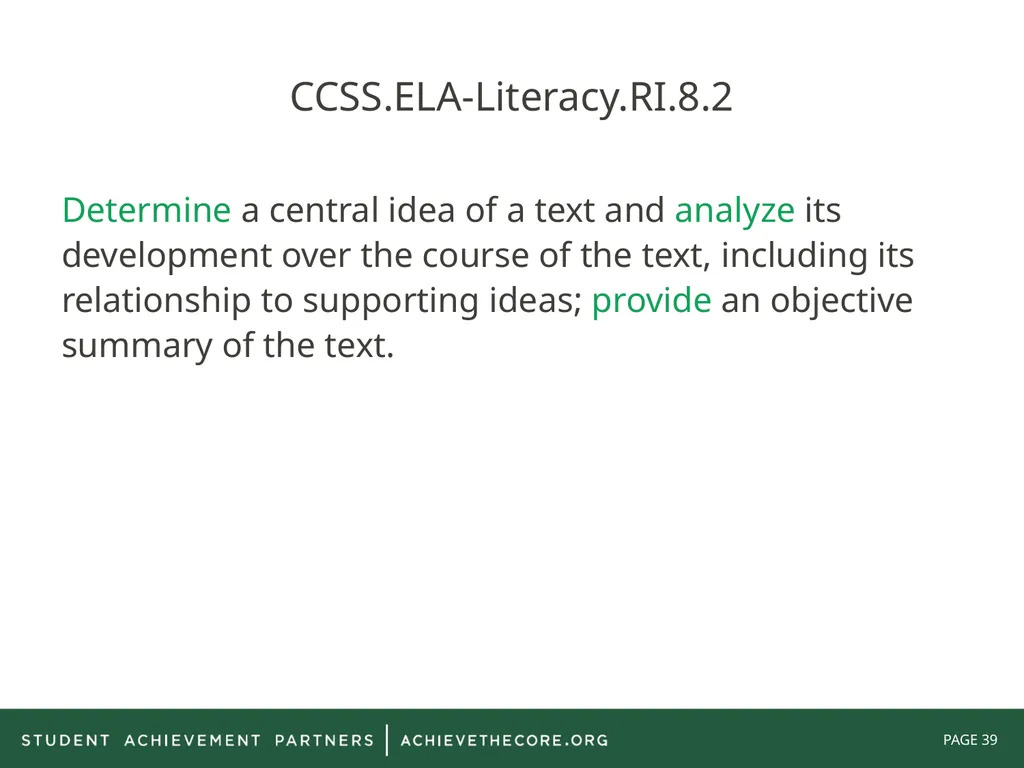
CCSS.ELA-Literacy.RI.8.2 Determine a central idea of a text and analyze its development over the course of the text, including its relationship to supporting ideas; provide an objective summary of the text.<br>
40
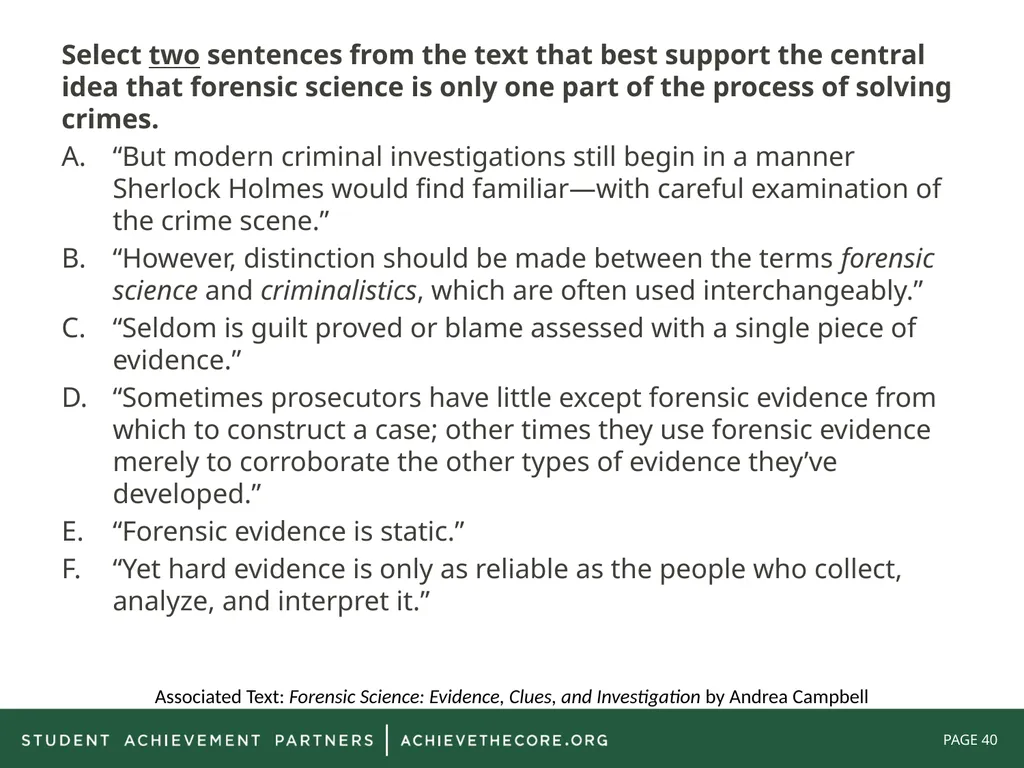
Select two sentences from the text that best support the central idea that forensic science is only one part of the process of solving crimes.
“But modern criminal investigations still begin in a manner Sherlock Holmes would find familiar—with careful examination of the crime scene.”
“However, distinction should be made between the terms forensic science and criminalistics, which are often used interchangeably.”
“Seldom is guilt proved or blame assessed with a single piece of evidence.”
“Sometimes prosecutors have little except forensic evidence from which to construct a case; other times they use forensic evidence merely to corroborate the other types of evidence they’ve developed.”
“Forensic evidence is static.”
“Yet hard evidence is only as reliable as the people who collect, analyze, and interpret it.” Associated Text: Forensic Science: Evidence, Clues, and Investigation by Andrea Campbell<br>
“But modern criminal investigations still begin in a manner Sherlock Holmes would find familiar—with careful examination of the crime scene.”
“However, distinction should be made between the terms forensic science and criminalistics, which are often used interchangeably.”
“Seldom is guilt proved or blame assessed with a single piece of evidence.”
“Sometimes prosecutors have little except forensic evidence from which to construct a case; other times they use forensic evidence merely to corroborate the other types of evidence they’ve developed.”
“Forensic evidence is static.”
“Yet hard evidence is only as reliable as the people who collect, analyze, and interpret it.” Associated Text: Forensic Science: Evidence, Clues, and Investigation by Andrea Campbell<br>
41
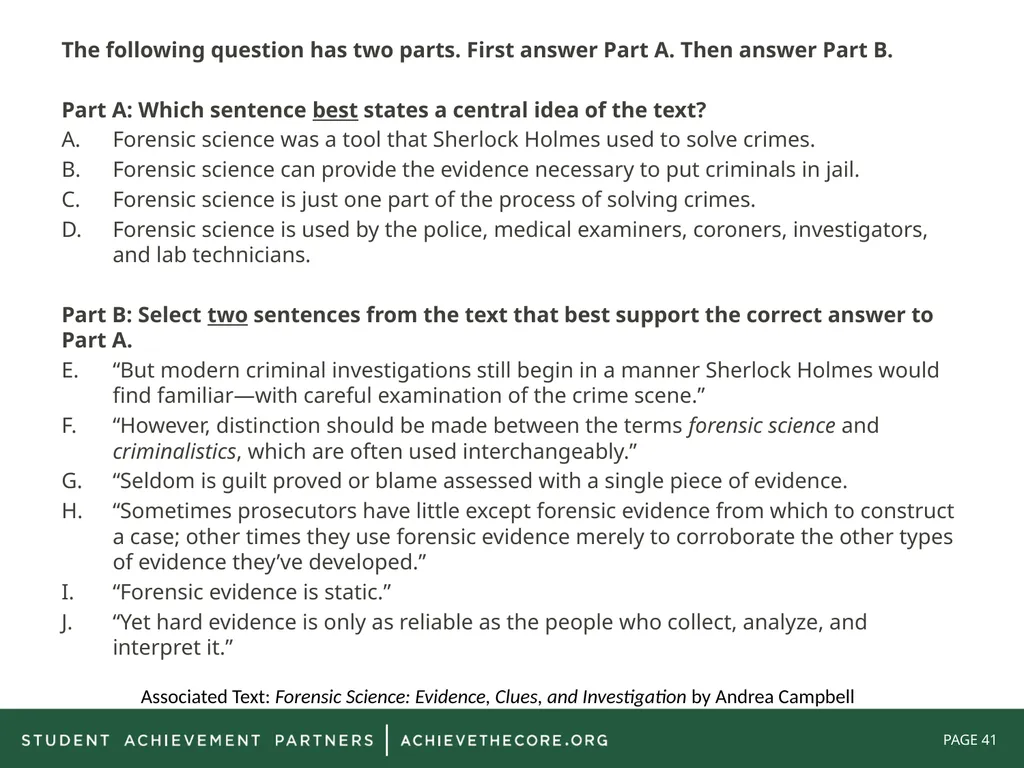
The following question has two parts. First answer Part A. Then answer Part B.
Part A: Which sentence best states a central idea of the text?
Forensic science was a tool that Sherlock Holmes used to solve crimes.
Forensic science can provide the evidence necessary to put criminals in jail.
Forensic science is just one part of the process of solving crimes.
Forensic science is used by the police, medical examiners, coroners, investigators, and lab technicians.
Part B: Select two sentences from the text that best support the correct answer to Part A.
“But modern criminal investigations still begin in a manner Sherlock Holmes would find familiar—with careful examination of the crime scene.”
“However, distinction should be made between the terms forensic science and criminalistics, which are often used interchangeably.”
“Seldom is guilt proved or blame assessed with a single piece of evidence.
“Sometimes prosecutors have little except forensic evidence from which to construct a case; other times they use forensic evidence merely to corroborate the other types of evidence they’ve developed.”
“Forensic evidence is static.”
“Yet hard evidence is only as reliable as the people who collect, analyze, and interpret it.” Associated Text: Forensic Science: Evidence, Clues, and Investigation by Andrea Campbell<br>
Part A: Which sentence best states a central idea of the text?
Forensic science was a tool that Sherlock Holmes used to solve crimes.
Forensic science can provide the evidence necessary to put criminals in jail.
Forensic science is just one part of the process of solving crimes.
Forensic science is used by the police, medical examiners, coroners, investigators, and lab technicians.
Part B: Select two sentences from the text that best support the correct answer to Part A.
“But modern criminal investigations still begin in a manner Sherlock Holmes would find familiar—with careful examination of the crime scene.”
“However, distinction should be made between the terms forensic science and criminalistics, which are often used interchangeably.”
“Seldom is guilt proved or blame assessed with a single piece of evidence.
“Sometimes prosecutors have little except forensic evidence from which to construct a case; other times they use forensic evidence merely to corroborate the other types of evidence they’ve developed.”
“Forensic evidence is static.”
“Yet hard evidence is only as reliable as the people who collect, analyze, and interpret it.” Associated Text: Forensic Science: Evidence, Clues, and Investigation by Andrea Campbell<br>
42
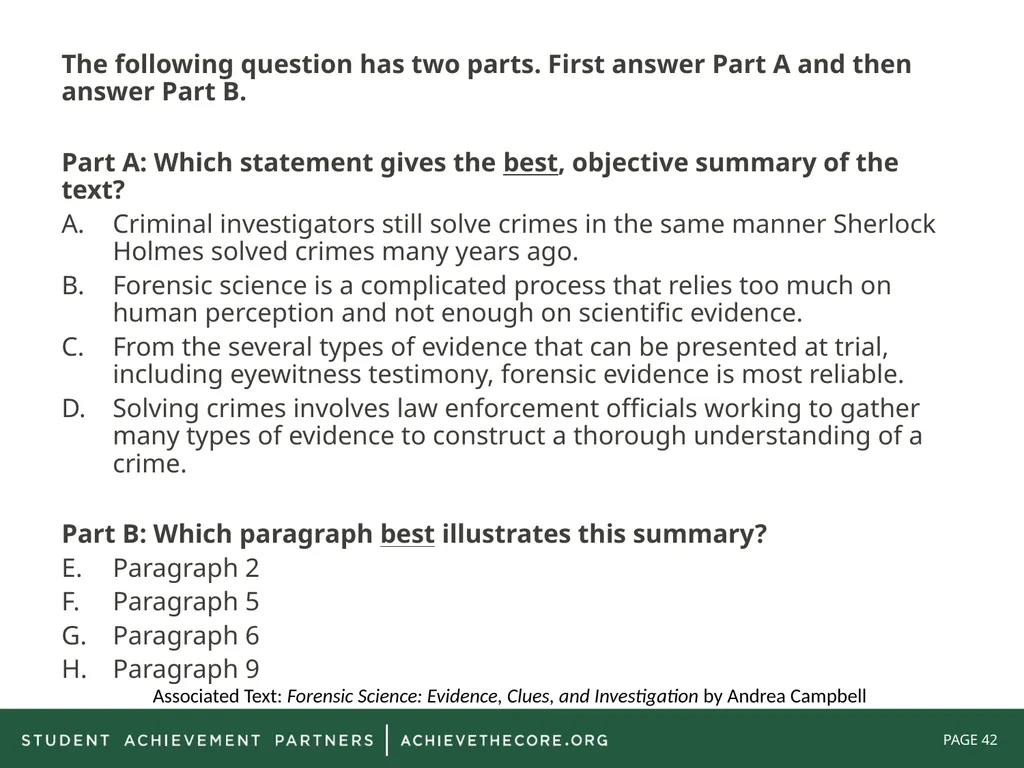
The following question has two parts. First answer Part A and then answer Part B.
Part A: Which statement gives the best, objective summary of the text?
Criminal investigators still solve crimes in the same manner Sherlock Holmes solved crimes many years ago.
Forensic science is a complicated process that relies too much on human perception and not enough on scientific evidence.
From the several types of evidence that can be presented at trial, including eyewitness testimony, forensic evidence is most reliable.
Solving crimes involves law enforcement officials working to gather many types of evidence to construct a thorough understanding of a crime.
Part B: Which paragraph best illustrates this summary?
Paragraph 2
Paragraph 5
Paragraph 6
Paragraph 9 Associated Text: Forensic Science: Evidence, Clues, and Investigation by Andrea Campbell<br>
Part A: Which statement gives the best, objective summary of the text?
Criminal investigators still solve crimes in the same manner Sherlock Holmes solved crimes many years ago.
Forensic science is a complicated process that relies too much on human perception and not enough on scientific evidence.
From the several types of evidence that can be presented at trial, including eyewitness testimony, forensic evidence is most reliable.
Solving crimes involves law enforcement officials working to gather many types of evidence to construct a thorough understanding of a crime.
Part B: Which paragraph best illustrates this summary?
Paragraph 2
Paragraph 5
Paragraph 6
Paragraph 9 Associated Text: Forensic Science: Evidence, Clues, and Investigation by Andrea Campbell<br>
43
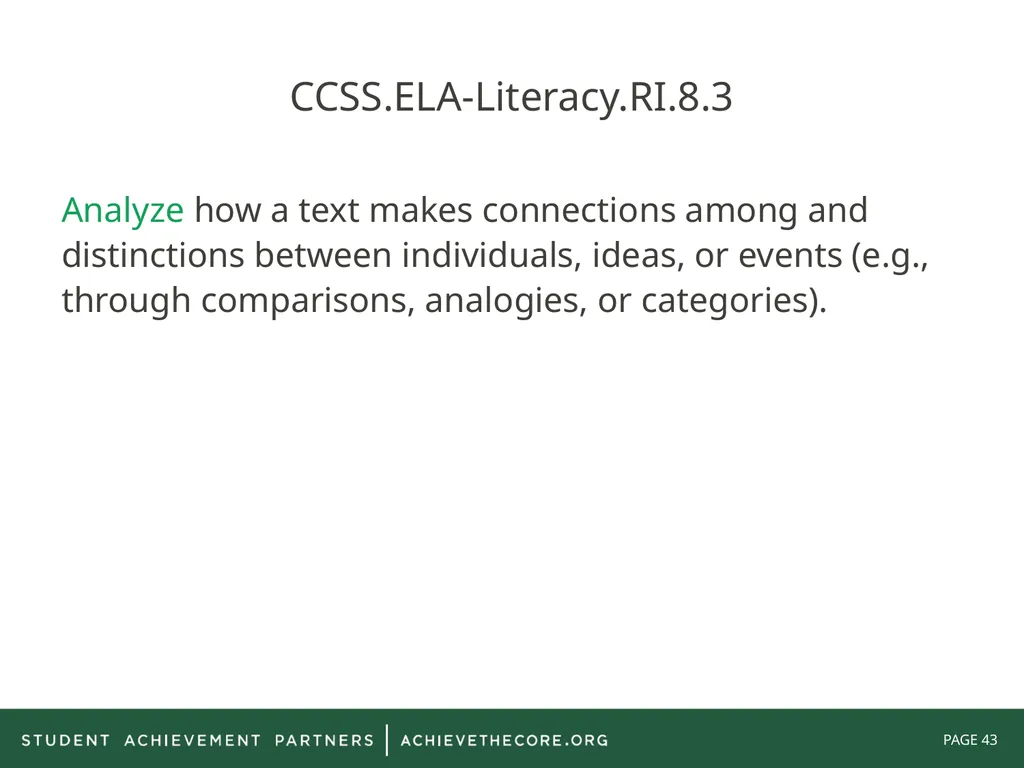
CCSS.ELA-Literacy.RI.8.3 Analyze how a text makes connections among and distinctions between individuals, ideas, or events (e.g., through comparisons, analogies, or categories).<br>
44
What do scientists do when they practice forensic serology?
Study blood or other fluids.
Study blood and other fluid evidence to reconstruct a crime or accident
Study forensic evidence
Study forensic evidence to solve a crime Associated Text: Forensic Science: Evidence, Clues, and Investigation by Andrea Campbell<br>
Study blood or other fluids.
Study blood and other fluid evidence to reconstruct a crime or accident
Study forensic evidence
Study forensic evidence to solve a crime Associated Text: Forensic Science: Evidence, Clues, and Investigation by Andrea Campbell<br>
45
According to paragraph 3, which statement accurately represents the relationship between forensic science and criminalistics?
Criminalistics combines concepts from many areas of study, but forensic science does not.
Forensic science can be useful in court cases, while criminalistics cannot.
Criminalistics is a subset of the larger field of forensic science.
Forensic science involves more scientific collection than criminalistics does. Associated Text: Forensic Science: Evidence, Clues, and Investigation by Andrea Campbell<br>
Criminalistics combines concepts from many areas of study, but forensic science does not.
Forensic science can be useful in court cases, while criminalistics cannot.
Criminalistics is a subset of the larger field of forensic science.
Forensic science involves more scientific collection than criminalistics does. Associated Text: Forensic Science: Evidence, Clues, and Investigation by Andrea Campbell<br>
46
CCSS.ELA-Literacy.RI.8.4 Determine the meaning of words and phrases as they are used in a text, including figurative, connotative, and technical meanings; analyze the impact of specific word choices on meaning and tone, including analogies or allusions to other texts.<br>
47
In paragraph 7, what is the meaning of the word alibi?
evidence of absence
account of what happened
expression of innocence
answer to a question
Text provided below for reference:
Seldom is guilt proved or blame assessed with a single piece of evidence. But forensic evidence, which falls into the fourth category above, often serves as the added weight that helps tip the scales of justice. It may be used to reconstruct the crime, identify participants, or confirm or discredit an alibi. It also frequently helps to eliminate suspects. It establishes the facts of the crime—for example, that the bullet that lodged in the victim’s heart and caused his death came from the defendant’s gun. It can provide a step-by-step analysis of the events leading up to, including, and following the incident. In short, forensic science can be the glue that holds all the facts of a case together. Associated Text: Forensic Science: Evidence, Clues, and Investigation by Andrea Campbell<br>
evidence of absence
account of what happened
expression of innocence
answer to a question
Text provided below for reference:
Seldom is guilt proved or blame assessed with a single piece of evidence. But forensic evidence, which falls into the fourth category above, often serves as the added weight that helps tip the scales of justice. It may be used to reconstruct the crime, identify participants, or confirm or discredit an alibi. It also frequently helps to eliminate suspects. It establishes the facts of the crime—for example, that the bullet that lodged in the victim’s heart and caused his death came from the defendant’s gun. It can provide a step-by-step analysis of the events leading up to, including, and following the incident. In short, forensic science can be the glue that holds all the facts of a case together. Associated Text: Forensic Science: Evidence, Clues, and Investigation by Andrea Campbell<br>
48
The author of “The Digestive Process Begins” describes the processes of absorption and elimination in paragraph 4. What is the technical meaning of elimination in this paragraph?
To expel something
To remove something from consideration
To cut something out
To reduce something to a lower quantity Associated Text: “The Digestive Process Begins”<br>
To expel something
To remove something from consideration
To cut something out
To reduce something to a lower quantity Associated Text: “The Digestive Process Begins”<br>
49
In paragraph 2, how does the author’s use of the phrase “like an apple made of ashes” contribute to the meaning of the passage?
The phrase helps explain the color and weight of the wasp house.
The phrase helps explain the size and shape of the wasp house.
The phrase helps explain how the wasp house was attached to the barn.
The phrase helps explain why the boy found the wasp house interesting. Associated Text: Nature by Design by Bruce Brooks<br>
The phrase helps explain the color and weight of the wasp house.
The phrase helps explain the size and shape of the wasp house.
The phrase helps explain how the wasp house was attached to the barn.
The phrase helps explain why the boy found the wasp house interesting. Associated Text: Nature by Design by Bruce Brooks<br>
50
CCSS.ELA-Literacy.RI.8.5 Analyze in detail the structure of a specific paragraph in a text, including the role of particular sentences in developing and refining a key concept.<br>
51
How is the organizational structure of paragraph 7 of Forensic Science best described?
compare and contrast
main idea and supporting details
problem and solution
chronological order Associated Text: Forensic Science: Evidence, Clues, and Investigation by Andrea Campbell<br>
compare and contrast
main idea and supporting details
problem and solution
chronological order Associated Text: Forensic Science: Evidence, Clues, and Investigation by Andrea Campbell<br>
52
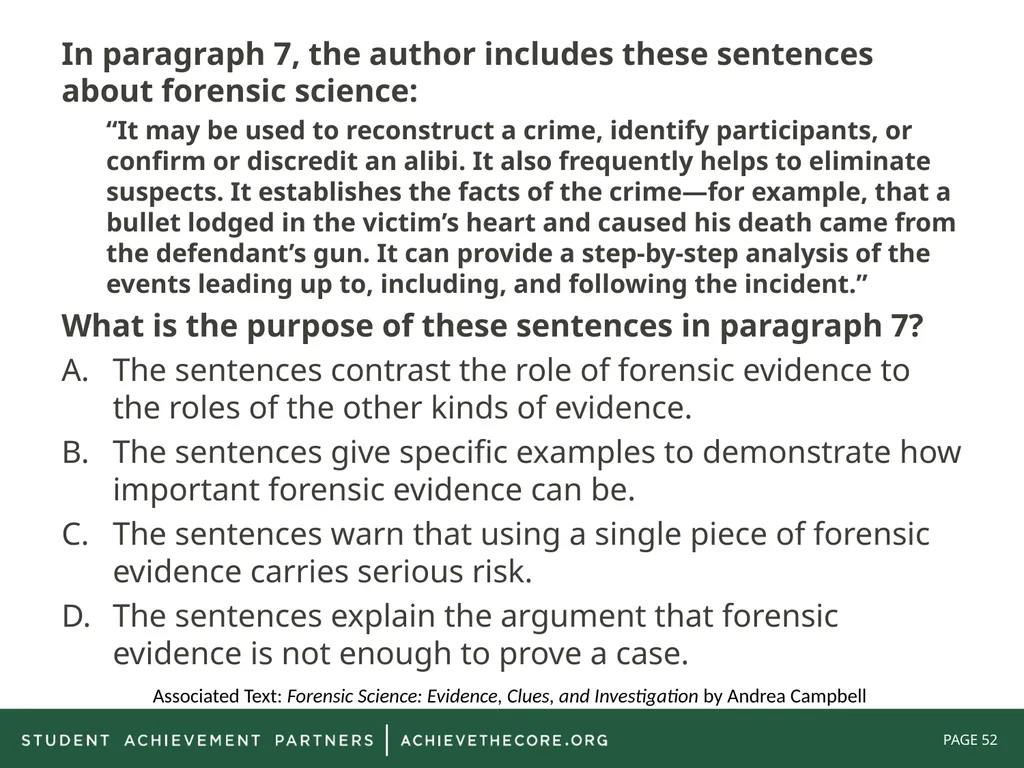
In paragraph 7, the author includes these sentences about forensic science:
“It may be used to reconstruct a crime, identify participants, or confirm or discredit an alibi. It also frequently helps to eliminate suspects. It establishes the facts of the crime—for example, that a bullet lodged in the victim’s heart and caused his death came from the defendant’s gun. It can provide a step-by-step analysis of the events leading up to, including, and following the incident.”
What is the purpose of these sentences in paragraph 7?
The sentences contrast the role of forensic evidence to the roles of the other kinds of evidence.
The sentences give specific examples to demonstrate how important forensic evidence can be.
The sentences warn that using a single piece of forensic evidence carries serious risk.
The sentences explain the argument that forensic evidence is not enough to prove a case. Associated Text: Forensic Science: Evidence, Clues, and Investigation by Andrea Campbell<br>
“It may be used to reconstruct a crime, identify participants, or confirm or discredit an alibi. It also frequently helps to eliminate suspects. It establishes the facts of the crime—for example, that a bullet lodged in the victim’s heart and caused his death came from the defendant’s gun. It can provide a step-by-step analysis of the events leading up to, including, and following the incident.”
What is the purpose of these sentences in paragraph 7?
The sentences contrast the role of forensic evidence to the roles of the other kinds of evidence.
The sentences give specific examples to demonstrate how important forensic evidence can be.
The sentences warn that using a single piece of forensic evidence carries serious risk.
The sentences explain the argument that forensic evidence is not enough to prove a case. Associated Text: Forensic Science: Evidence, Clues, and Investigation by Andrea Campbell<br>
53
CCSS.ELA.RI.8.6 Determine an author’s point of view or purpose in a text and analyze how the author acknowledges and responds to conflicting evidence or viewpoints.<br>
54
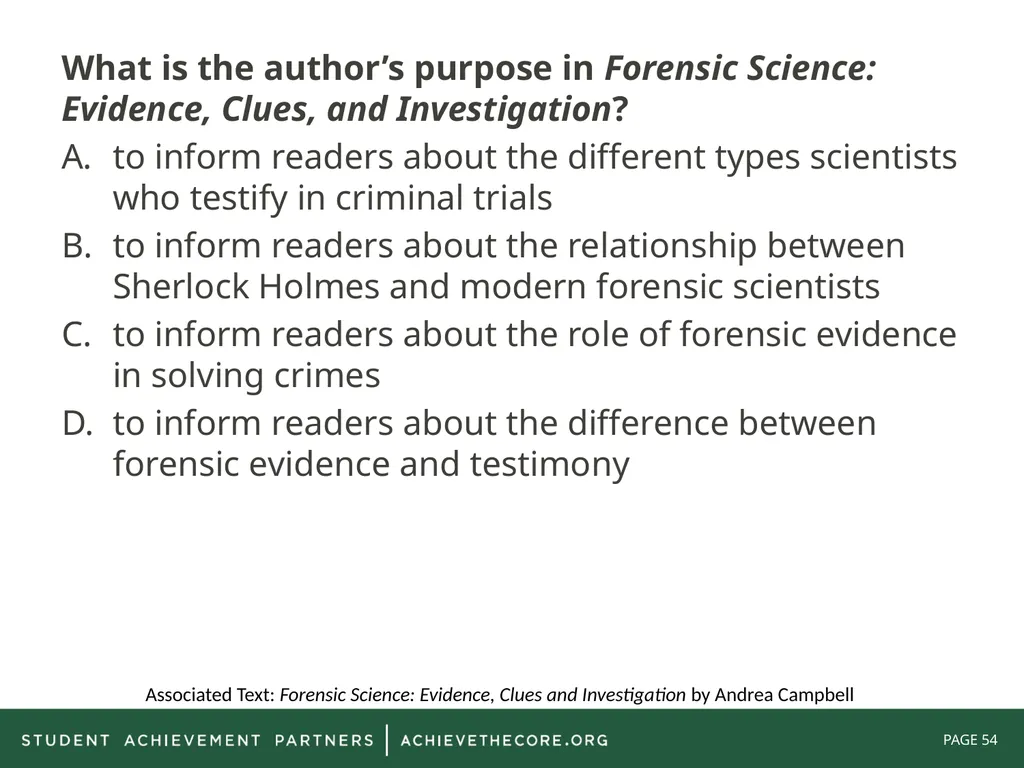
What is the author’s purpose in Forensic Science: Evidence, Clues, and Investigation?
to inform readers about the different types scientists who testify in criminal trials
to inform readers about the relationship between Sherlock Holmes and modern forensic scientists
to inform readers about the role of forensic evidence in solving crimes
to inform readers about the difference between forensic evidence and testimony Associated Text: Forensic Science: Evidence, Clues and Investigation by Andrea Campbell<br>
to inform readers about the different types scientists who testify in criminal trials
to inform readers about the relationship between Sherlock Holmes and modern forensic scientists
to inform readers about the role of forensic evidence in solving crimes
to inform readers about the difference between forensic evidence and testimony Associated Text: Forensic Science: Evidence, Clues and Investigation by Andrea Campbell<br>
55
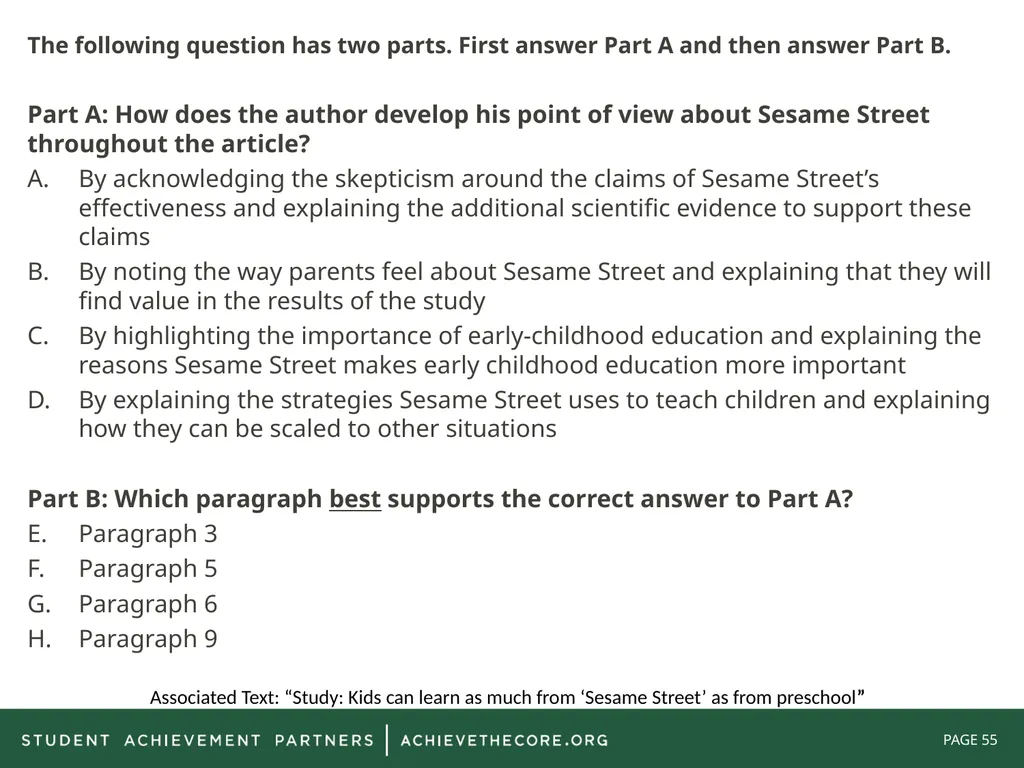
Associated Text: “Study: Kids can learn as much from ‘Sesame Street’ as from preschool” The following question has two parts. First answer Part A and then answer Part B.
Part A: How does the author develop his point of view about Sesame Street throughout the article?
By acknowledging the skepticism around the claims of Sesame Street’s effectiveness and explaining the additional scientific evidence to support these claims
By noting the way parents feel about Sesame Street and explaining that they will find value in the results of the study
By highlighting the importance of early-childhood education and explaining the reasons Sesame Street makes early childhood education more important
By explaining the strategies Sesame Street uses to teach children and explaining how they can be scaled to other situations
Part B: Which paragraph best supports the correct answer to Part A?
Paragraph 3
Paragraph 5
Paragraph 6
Paragraph 9<br>
Part A: How does the author develop his point of view about Sesame Street throughout the article?
By acknowledging the skepticism around the claims of Sesame Street’s effectiveness and explaining the additional scientific evidence to support these claims
By noting the way parents feel about Sesame Street and explaining that they will find value in the results of the study
By highlighting the importance of early-childhood education and explaining the reasons Sesame Street makes early childhood education more important
By explaining the strategies Sesame Street uses to teach children and explaining how they can be scaled to other situations
Part B: Which paragraph best supports the correct answer to Part A?
Paragraph 3
Paragraph 5
Paragraph 6
Paragraph 9<br>
56
CCSS.ELA-Literacy.RI.8.7 Evaluate the advantages and disadvantages of using different mediums (e.g., print or digital text, video, multimedia) to present a particular topic or idea.<br>
57
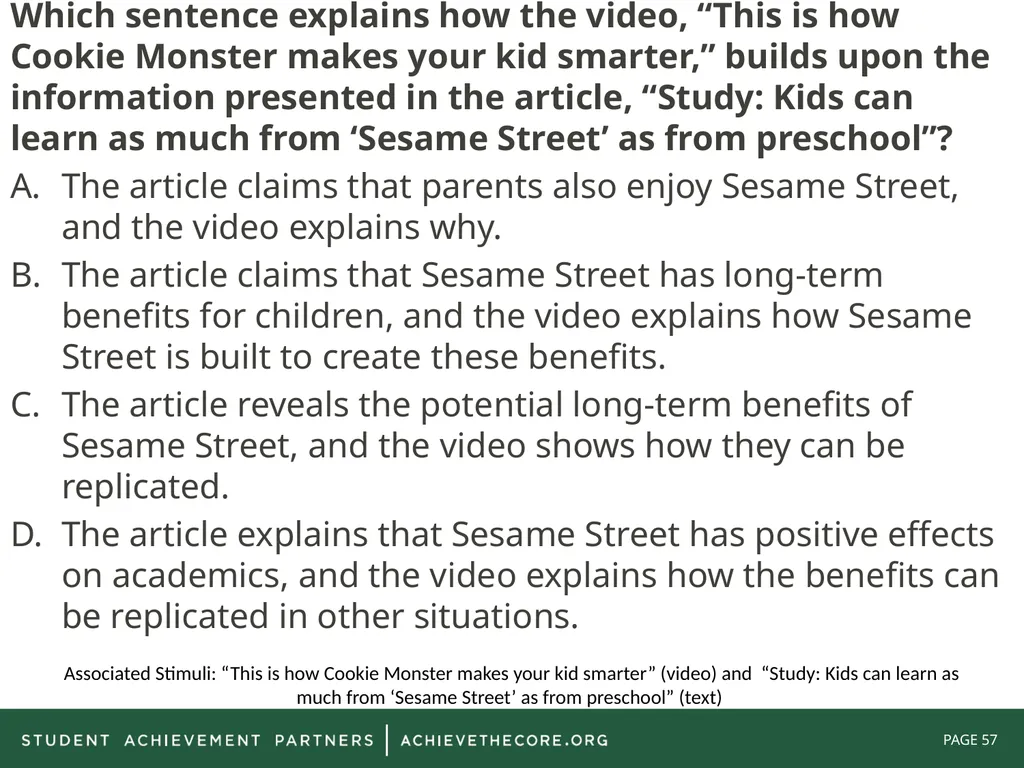
Which sentence explains how the video, “This is how Cookie Monster makes your kid smarter,” builds upon the information presented in the article, “Study: Kids can learn as much from ‘Sesame Street’ as from preschool”?
The article claims that parents also enjoy Sesame Street, and the video explains why.
The article claims that Sesame Street has long-term benefits for children, and the video explains how Sesame Street is built to create these benefits.
The article reveals the potential long-term benefits of Sesame Street, and the video shows how they can be replicated.
The article explains that Sesame Street has positive effects on academics, and the video explains how the benefits can be replicated in other situations. Associated Stimuli: “This is how Cookie Monster makes your kid smarter” (video) and “Study: Kids can learn as much from ‘Sesame Street’ as from preschool” (text)<br>
The article claims that parents also enjoy Sesame Street, and the video explains why.
The article claims that Sesame Street has long-term benefits for children, and the video explains how Sesame Street is built to create these benefits.
The article reveals the potential long-term benefits of Sesame Street, and the video shows how they can be replicated.
The article explains that Sesame Street has positive effects on academics, and the video explains how the benefits can be replicated in other situations. Associated Stimuli: “This is how Cookie Monster makes your kid smarter” (video) and “Study: Kids can learn as much from ‘Sesame Street’ as from preschool” (text)<br>
58
Write an essay outlining the advantages and disadvantages of using text versus video to present information about the way Sesame Street impacts childhood learning. Use details from both the text and the video to support your answer. Associated Stimuli : “This is how Cookie Monster makes your kid smarter” (video) and “Study: Kids can learn as much from ‘Sesame Street’ as from preschool” (text)<br>
59
CCSS.ELA-Literacy.RI.8.8 Delineate and evaluate the argument and specific claims in a text, assessing whether the reasoning is sound and evidence is relevant and sufficient; recognize when irrelevant evidence is introduced.<br>
60
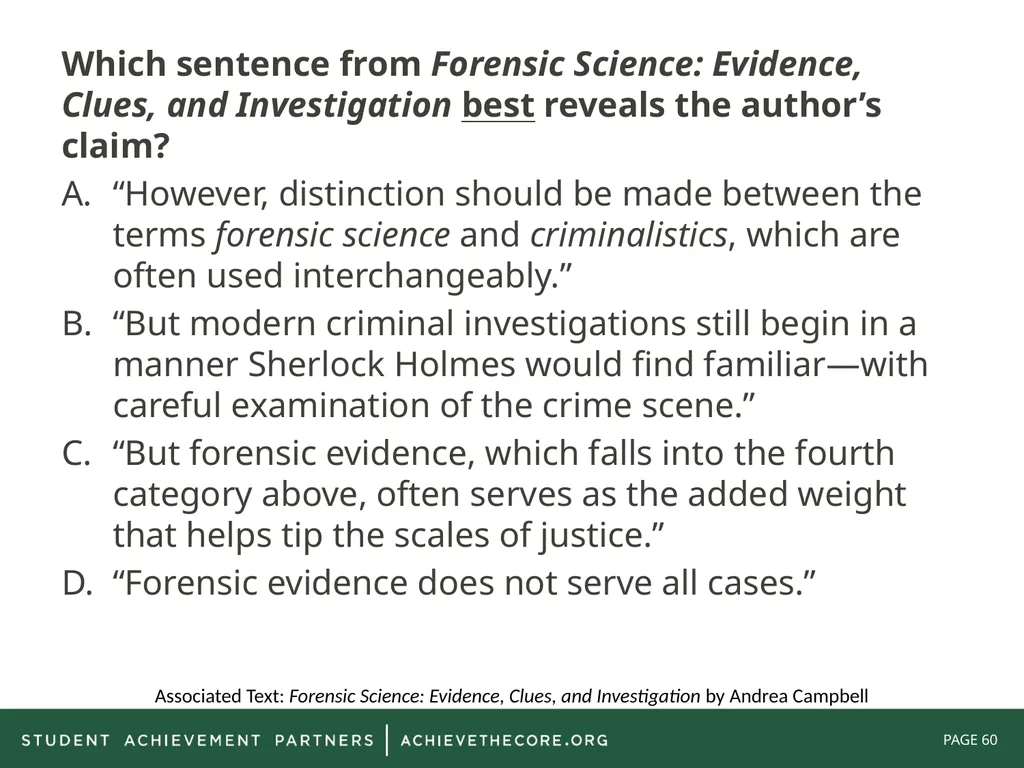
Which sentence from Forensic Science: Evidence, Clues, and Investigation best reveals the author’s claim?
“However, distinction should be made between the terms forensic science and criminalistics, which are often used interchangeably.”
“But modern criminal investigations still begin in a manner Sherlock Holmes would find familiar—with careful examination of the crime scene.”
“But forensic evidence, which falls into the fourth category above, often serves as the added weight that helps tip the scales of justice.”
“Forensic evidence does not serve all cases.” Associated Text: Forensic Science: Evidence, Clues, and Investigation by Andrea Campbell<br>
“However, distinction should be made between the terms forensic science and criminalistics, which are often used interchangeably.”
“But modern criminal investigations still begin in a manner Sherlock Holmes would find familiar—with careful examination of the crime scene.”
“But forensic evidence, which falls into the fourth category above, often serves as the added weight that helps tip the scales of justice.”
“Forensic evidence does not serve all cases.” Associated Text: Forensic Science: Evidence, Clues, and Investigation by Andrea Campbell<br>
61
In Forensic Science: Evidence, Clues, and Investigation, the author makes a claim about the nature of truth-seeking in criminal justice. Write an essay that describes the author’s claim, and then evaluates the quality of the evidence she uses to support this claim. Is the evidence relevant and sufficient enough to justify the claim? Does the author use the evidence in a logical way to develop her perspective on criminal investigations? Use details from the passage to support your answer. Associated Text: Forensic Science: Evidence, Clues, and Investigation by Andrea Campbell<br>
62
CCSS.ELA-Literacy.RI.8.9 Analyze a case in which two or more texts provide conflicting information on the same topic and identify where the texts disagree on matters of fact or interpretation.<br>
63
How do the authors of “Study: Kids can learn as much from ‘Sesame Street’ as from preschool” and “In our digital world, are young people losing their ability to read emotions?” view technology? Write an essay that identifies each author’s opinion of technology. Use details from both texts to support your answer. Associated Texts: “Study: Kids can learn as much from ‘Sesame Street’ as from preschool” and “In our digital world, are young people losing the ability to read emotions?”<br>
64
In each text, the author presents a unique perspective regarding children and technology. Write an essay that outlines each author’s position on the relationship children have with technology. Describe points on which the authors’ disagree, and then explain which author presents the strongest argument. Use details from both articles to support your claims. Associated Texts: “Study: Kids can learn as much from ‘Sesame Street’ as from preschool” and “In our digital world, are young people losing the ability to read emotions?”<br>
65
Bottom Line for
Reading for Information Standards Questions are
based on texts that are of appropriate complexity. They are worthy of students’ attention. (Standard 10)
Questions require
students to read closely and think deeply about key ideas and specifics of the texts. They are questions worth answering.
students to use textual evidence to help them formulate their responses. They help prepare students for the demands of careers and college. (Standard 1)<br>
based on texts that are of appropriate complexity. They are worthy of students’ attention. (Standard 10)
Questions require
students to read closely and think deeply about key ideas and specifics of the texts. They are questions worth answering.
students to use textual evidence to help them formulate their responses. They help prepare students for the demands of careers and college. (Standard 1)<br>
66
Thank You!<br>