Great Plains Landscape Conservation Cooperative
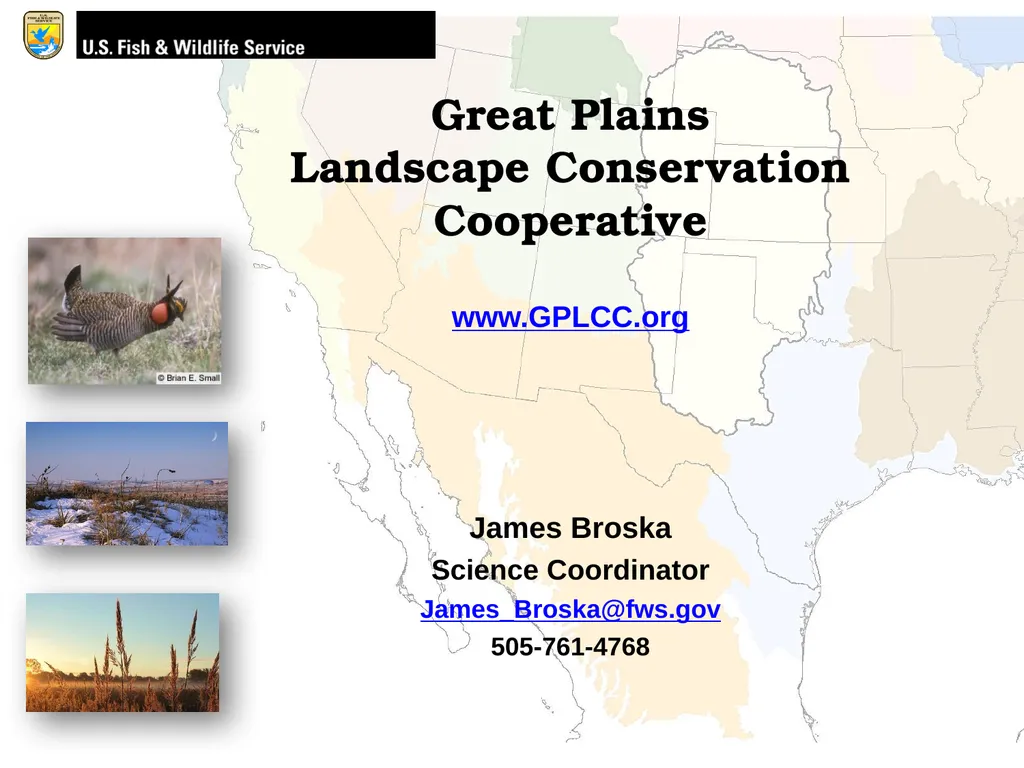
Description: Great Plains Landscape Conservation Cooperative www.GPLCC.org James Broska Science Coordinator JamesBroskafws.gov 505-761-4768 The mission of the Great Plains LCC is to lead the development, facilitation and integration of science and
Related Topics
Download Presentation
"Great Plains Landscape Conservation Cooperative" is the property of its rightful owner. Permission is granted to download and print the materials on this website for personal, non-commercial use only, and to display it on your personal computer provided you do not modify the materials and that you retain all copyright notices contained in the materials. By downloading content from our website, you accept the terms of this agreement.
Presentation Transcript
slide1. Great Plains
Landscape Conservation
Cooperative
www.GPLCC.org
James Broska
Science Coordinator
James_Broska@fws.gov
505-761-4768<br>
slide2. The mission of the Great Plains LCC is to lead the development, facilitation and integration of science and management to ensure strategic natural resource conservation on the Great Plains.
The objective of the GPLCC is to maximize stakeholder effort across the landscape and optimize data collection, use, and management in order to conserve habitat and priority species through the development and application of scientific data.<br>
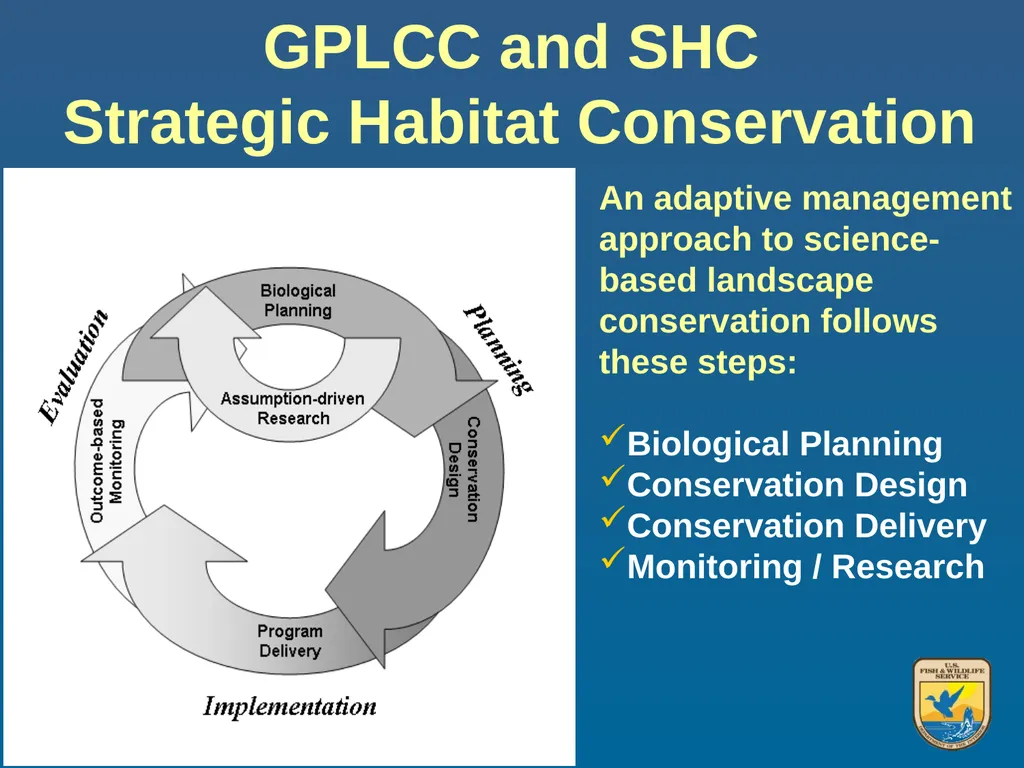
slide3. An adaptive management approach to science-based landscape conservation follows these steps:
Biological Planning
Conservation Design
Conservation Delivery
Monitoring / Research GPLCC and SHC
Strategic Habitat Conservation<br>
slide4. A principal function of LCCs will be to provide scientific and technical expertise to produce landscape-scale conservation designs.
Provide scientific and technical support for conservation for the entire range of a priority species or groups of species.
Support biological planning, conservation design, research, and inventory and monitoring programs through partner engagement and shared resources. LCCs, SHC and
Landscape Conservation Design<br>
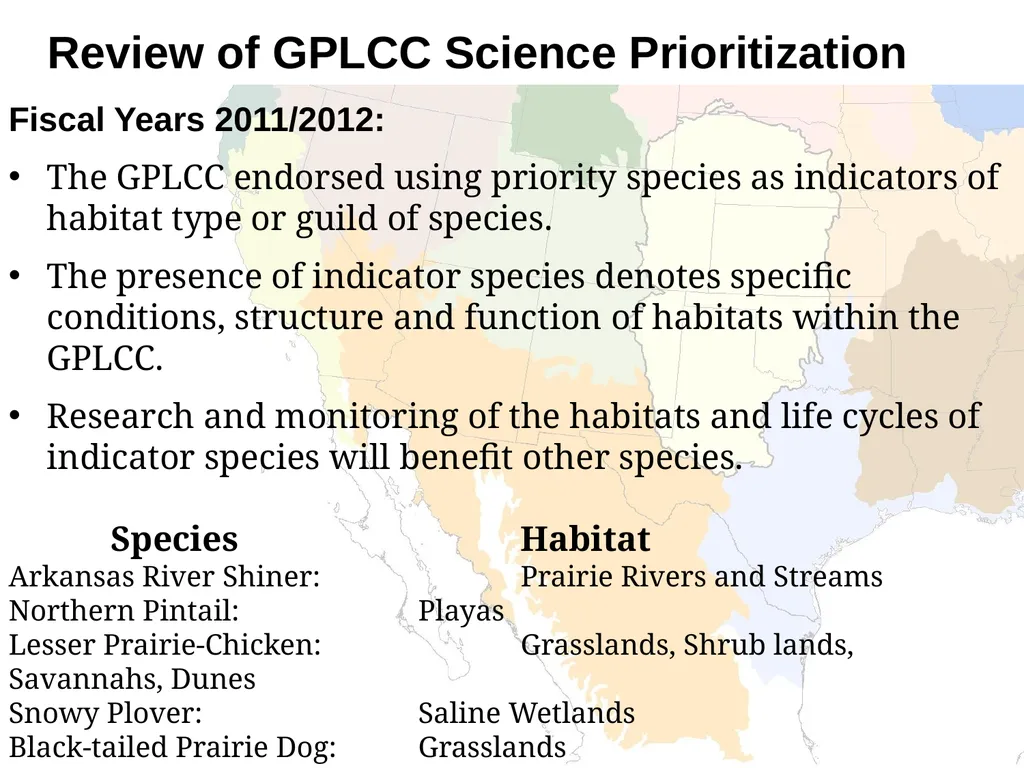
slide5. Fiscal Years 2011/2012:
The GPLCC endorsed using priority species as indicators of habitat type or guild of species.
The presence of indicator species denotes specific conditions, structure and function of habitats within the GPLCC.
Research and monitoring of the habitats and life cycles of indicator species will benefit other species.
Species Habitat
Arkansas River Shiner: Prairie Rivers and Streams
Northern Pintail: Playas
Lesser Prairie-Chicken: Grasslands, Shrub lands, Savannahs, Dunes
Snowy Plover: Saline Wetlands
Black-tailed Prairie Dog: Grasslands Review of GPLCC Science Prioritization<br>
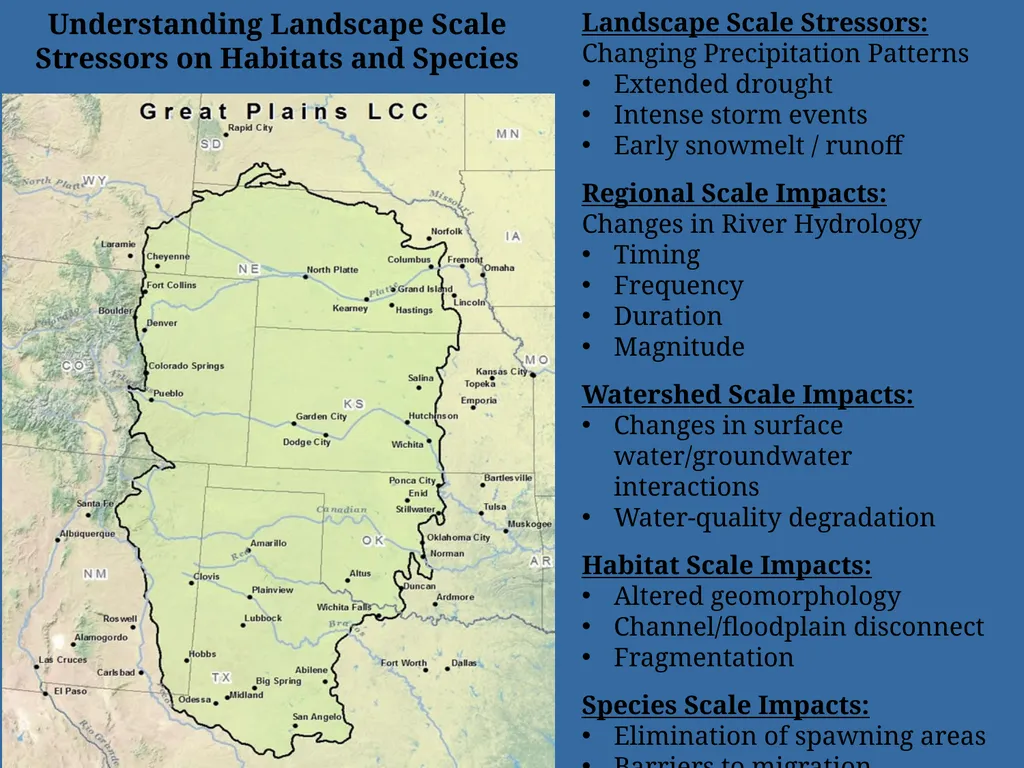
slide6. Landscape Scale Stressors:
Changing Precipitation Patterns
Extended drought
Intense storm events
Early snowmelt / runoff
Regional Scale Impacts:
Changes in River Hydrology
Timing
Frequency
Duration
Magnitude
Watershed Scale Impacts:
Changes in surface water/groundwater interactions
Water-quality degradation
Habitat Scale Impacts:
Altered geomorphology
Channel/floodplain disconnect
Fragmentation
Species Scale Impacts:
Elimination of spawning areas
Barriers to migration Understanding Landscape Scale Stressors on Habitats and Species<br>
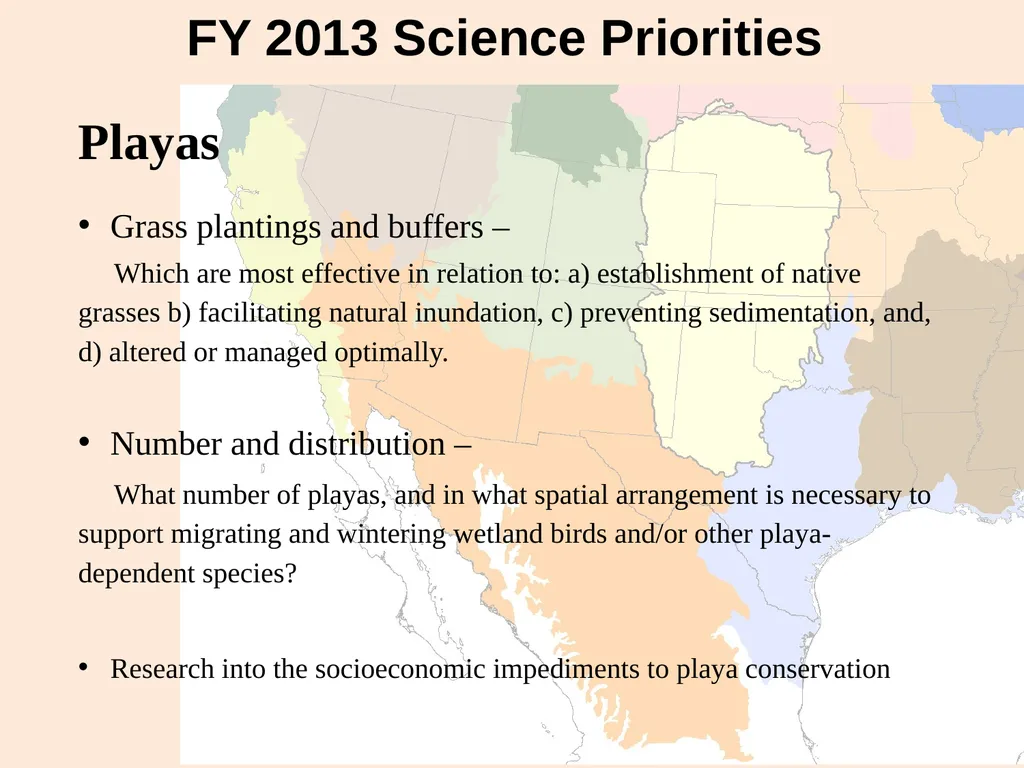
slide7. FY 2013 Science Priorities Playas
Grass plantings and buffers –
Which are most effective in relation to: a) establishment of native grasses b) facilitating natural inundation, c) preventing sedimentation, and, d) altered or managed optimally.
Number and distribution –
What number of playas, and in what spatial arrangement is necessary to support migrating and wintering wetland birds and/or other playa-dependent species?
Research into the socioeconomic impediments to playa conservation<br>
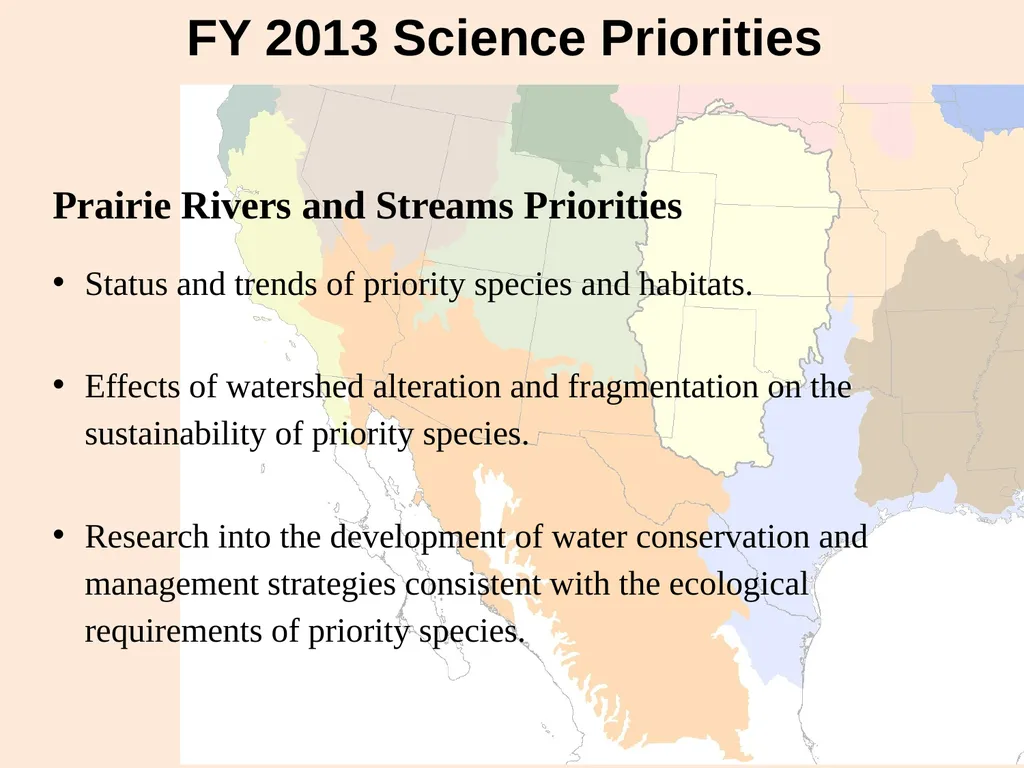
slide8. FY 2013 Science Priorities Prairie Rivers and Streams Priorities
Status and trends of priority species and habitats.
Effects of watershed alteration and fragmentation on the sustainability of priority species.
Research into the development of water conservation and management strategies consistent with the ecological requirements of priority species.<br>
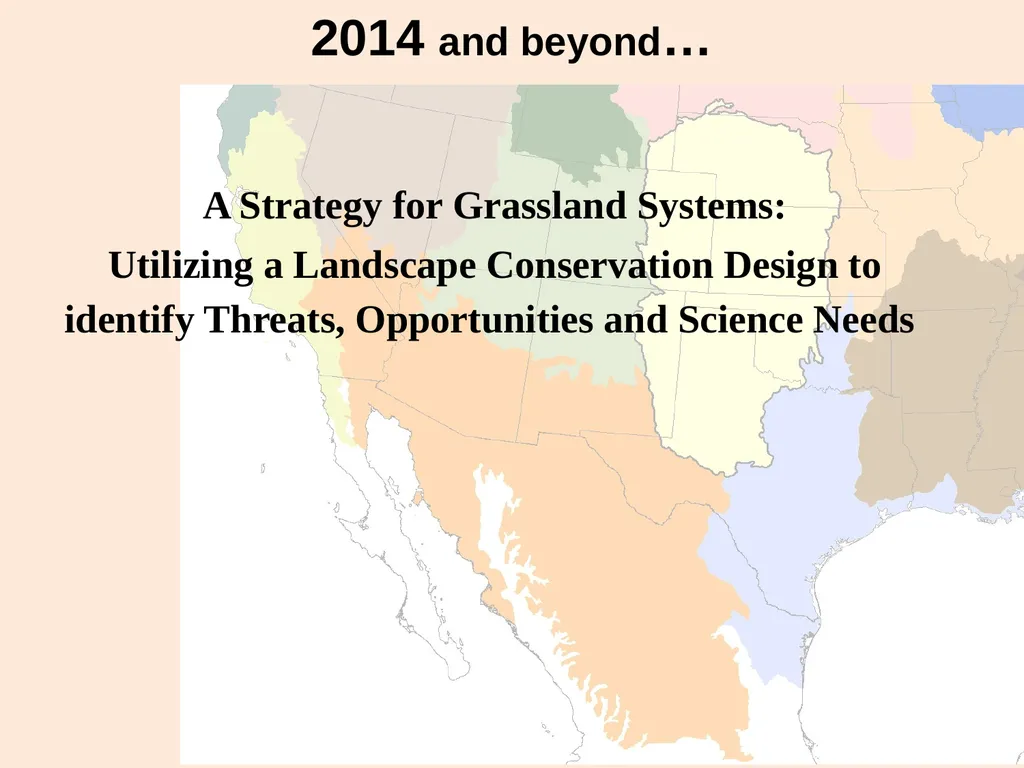
slide9. 2014 and beyond… A Strategy for Grassland Systems:
Utilizing a Landscape Conservation Design to identify Threats, Opportunities and Science Needs<br>

Landscape Conservation
Cooperative
www.GPLCC.org
James Broska
Science Coordinator
James_Broska@fws.gov
505-761-4768<br>
slide2. The mission of the Great Plains LCC is to lead the development, facilitation and integration of science and management to ensure strategic natural resource conservation on the Great Plains.
The objective of the GPLCC is to maximize stakeholder effort across the landscape and optimize data collection, use, and management in order to conserve habitat and priority species through the development and application of scientific data.<br>
slide3. An adaptive management approach to science-based landscape conservation follows these steps:
Biological Planning
Conservation Design
Conservation Delivery
Monitoring / Research GPLCC and SHC
Strategic Habitat Conservation<br>
slide4. A principal function of LCCs will be to provide scientific and technical expertise to produce landscape-scale conservation designs.
Provide scientific and technical support for conservation for the entire range of a priority species or groups of species.
Support biological planning, conservation design, research, and inventory and monitoring programs through partner engagement and shared resources. LCCs, SHC and
Landscape Conservation Design<br>
slide5. Fiscal Years 2011/2012:
The GPLCC endorsed using priority species as indicators of habitat type or guild of species.
The presence of indicator species denotes specific conditions, structure and function of habitats within the GPLCC.
Research and monitoring of the habitats and life cycles of indicator species will benefit other species.
Species Habitat
Arkansas River Shiner: Prairie Rivers and Streams
Northern Pintail: Playas
Lesser Prairie-Chicken: Grasslands, Shrub lands, Savannahs, Dunes
Snowy Plover: Saline Wetlands
Black-tailed Prairie Dog: Grasslands Review of GPLCC Science Prioritization<br>
slide6. Landscape Scale Stressors:
Changing Precipitation Patterns
Extended drought
Intense storm events
Early snowmelt / runoff
Regional Scale Impacts:
Changes in River Hydrology
Timing
Frequency
Duration
Magnitude
Watershed Scale Impacts:
Changes in surface water/groundwater interactions
Water-quality degradation
Habitat Scale Impacts:
Altered geomorphology
Channel/floodplain disconnect
Fragmentation
Species Scale Impacts:
Elimination of spawning areas
Barriers to migration Understanding Landscape Scale Stressors on Habitats and Species<br>
slide7. FY 2013 Science Priorities Playas
Grass plantings and buffers –
Which are most effective in relation to: a) establishment of native grasses b) facilitating natural inundation, c) preventing sedimentation, and, d) altered or managed optimally.
Number and distribution –
What number of playas, and in what spatial arrangement is necessary to support migrating and wintering wetland birds and/or other playa-dependent species?
Research into the socioeconomic impediments to playa conservation<br>
slide8. FY 2013 Science Priorities Prairie Rivers and Streams Priorities
Status and trends of priority species and habitats.
Effects of watershed alteration and fragmentation on the sustainability of priority species.
Research into the development of water conservation and management strategies consistent with the ecological requirements of priority species.<br>
slide9. 2014 and beyond… A Strategy for Grassland Systems:
Utilizing a Landscape Conservation Design to identify Threats, Opportunities and Science Needs<br>