04
“If you’ve seen one captive…
Then you’ve seen one captive”
Dave Provost, Department of Financial Regulation - Vermont<br>
05
Common Group Captive Structures Casualty Group Captive – middle market businesses coming together to leverage group purchasing power to drive down fixed costs and share in severity claims
Employee Benefits – Allows middle market businesses to self-fund in a more stable environment. Take advantage of the law of large numbers & share in severity claims<br>
06
Who is an Ideal Fit for a Casualty Group Captive? (WC, GL & AL) $200k-$3M In Casualty Premium
Loss Ratio < 50%
Commitment to Safety & Loss Control
Long Term Mindset
Financially Secure<br>
07
Reasons to Evaluate A Casualty Captive Loss Rated Premium
Retain UW Profits
Quantified Amount of Risk
Unbundled Program
Long Term Stabilization
Transparency & Increased Control<br>
08
Common Concerns Risk Appetite
Risk Sharing
Collateral
Historical Experience<br>
09
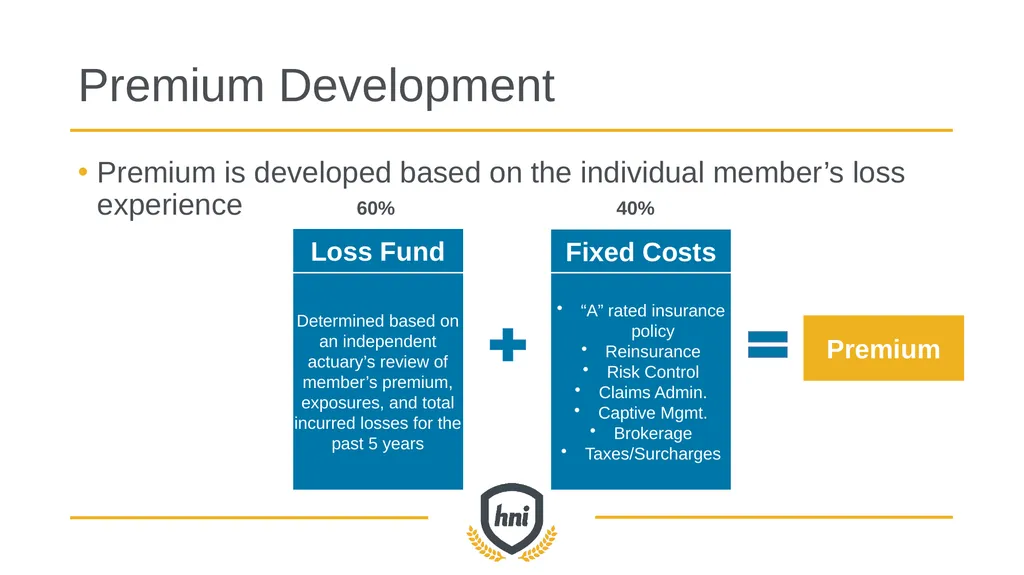
Premium Development Premium is developed based on the individual member’s loss experience Loss Fund Determined based on an independent actuary’s review of member’s premium, exposures, and total incurred losses for the past 5 years Fixed Costs “A” rated insurance policy
Reinsurance
Risk Control
Claims Admin.
Captive Mgmt.
Brokerage
Taxes/Surcharges Premium 60% 40%<br>
10
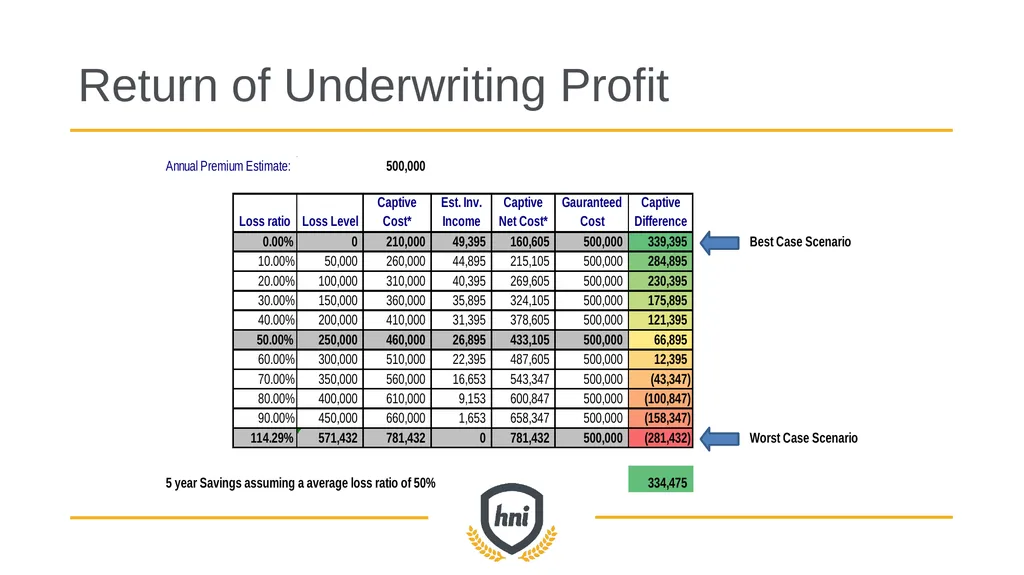
Return of Underwriting Profit<br>
11
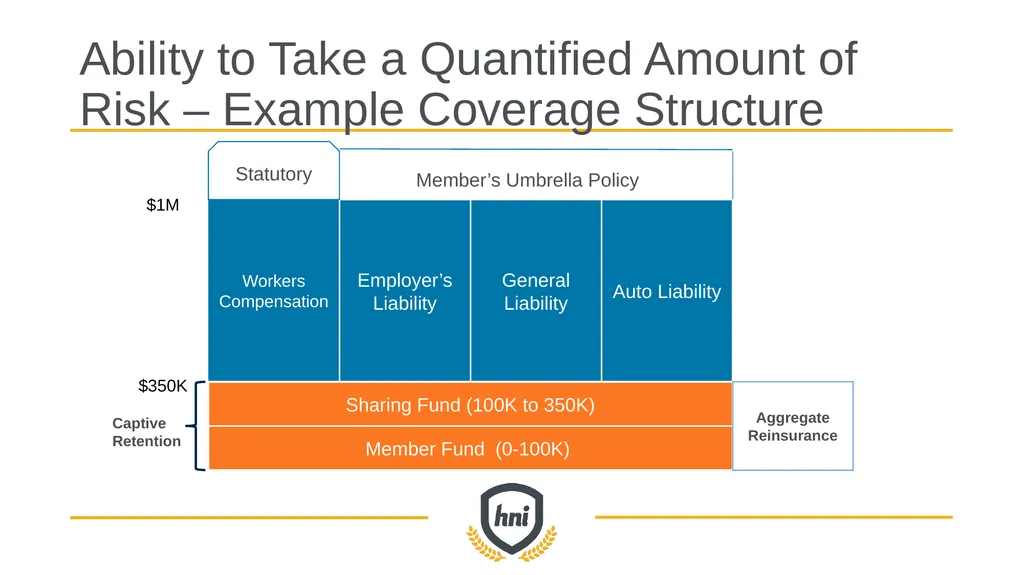
Ability to Take a Quantified Amount of Risk – Example Coverage Structure Workers Compensation Employer’s Liability General Liability Auto Liability Statutory Sharing Fund (100K to 350K) Member Fund (0-100K) $1M $350K Captive
Retention Aggregate Reinsurance Member’s Umbrella Policy<br>
12
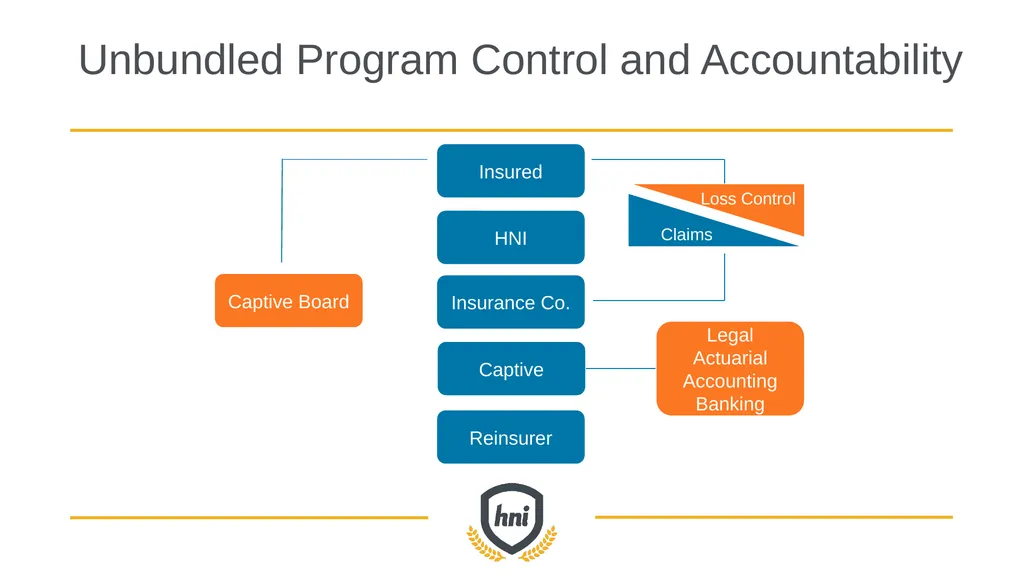
Unbundled Program Control and Accountability Captive Board Insured HNI Insurance Co. Captive Reinsurer Legal
Actuarial
Accounting
Banking Claims Loss Control<br>
13
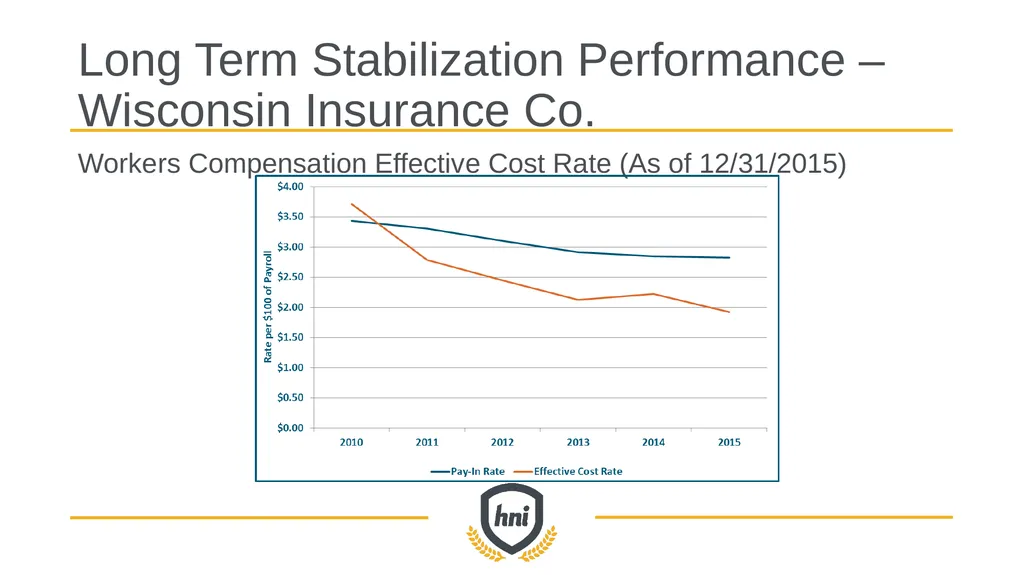
Long Term Stabilization Performance – Wisconsin Insurance Co. Workers Compensation Effective Cost Rate (As of 12/31/2015)<br>
14
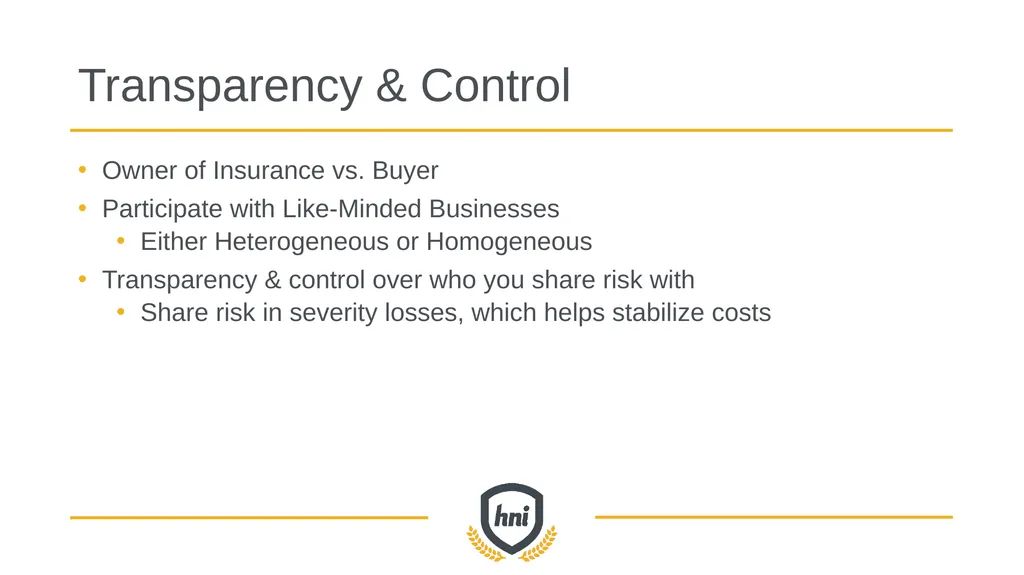
Transparency & Control Owner of Insurance vs. Buyer
Participate with Like-Minded Businesses
Either Heterogeneous or Homogeneous
Transparency & control over who you share risk with
Share risk in severity losses, which helps stabilize costs<br>
15
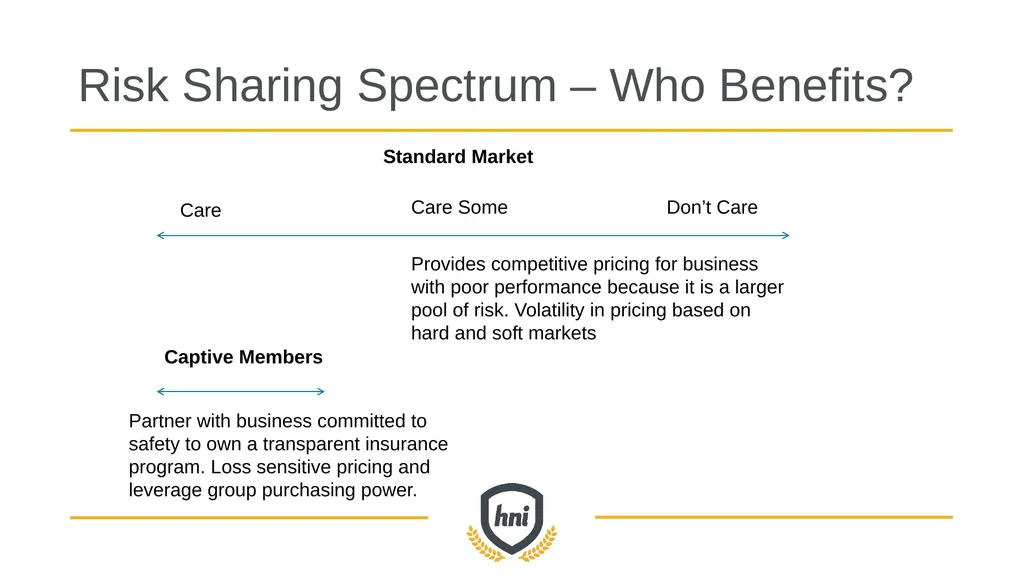
Risk Sharing Spectrum – Who Benefits? Standard Market Provides competitive pricing for business with poor performance because it is a larger pool of risk. Volatility in pricing based on hard and soft markets Captive Members Partner with business committed to safety to own a transparent insurance program. Loss sensitive pricing and leverage group purchasing power. Care Care Some Don’t Care<br>
16
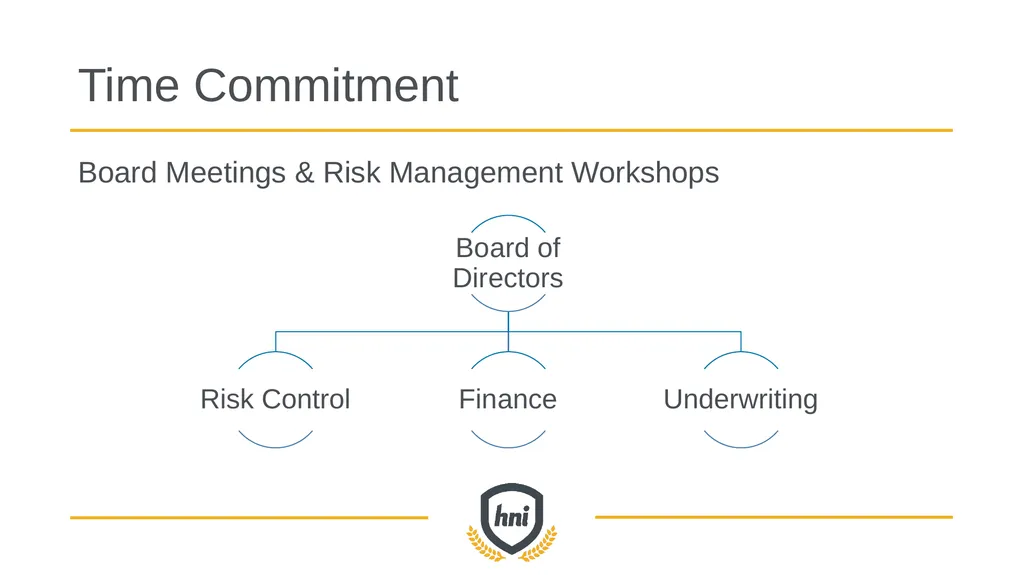
Time Commitment Board Meetings & Risk Management Workshops<br>
17
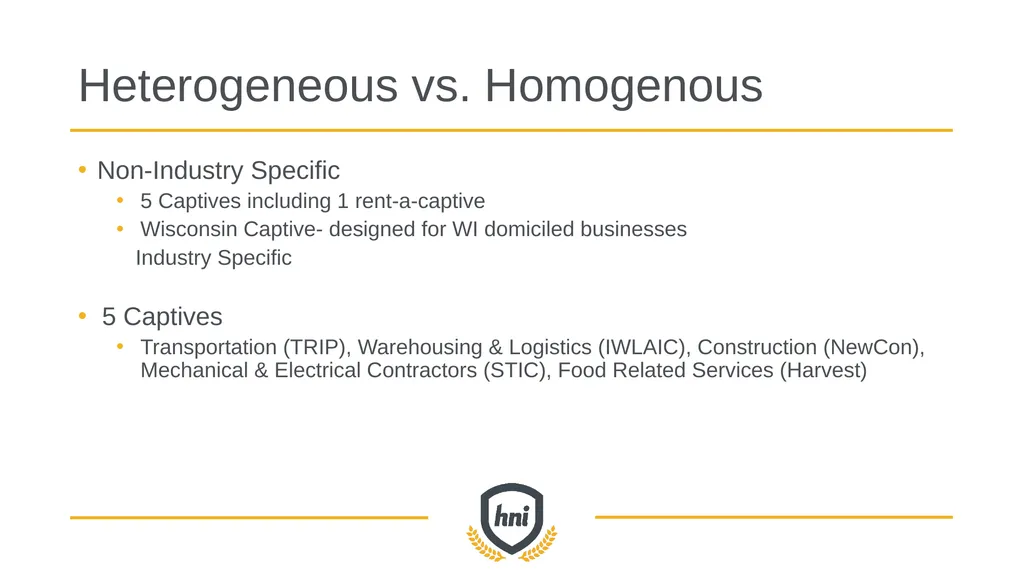
Heterogeneous vs. Homogenous Non-Industry Specific
5 Captives including 1 rent-a-captive
Wisconsin Captive- designed for WI domiciled businesses
Industry Specific
5 Captives
Transportation (TRIP), Warehousing & Logistics (IWLAIC), Construction (NewCon), Mechanical & Electrical Contractors (STIC), Food Related Services (Harvest)<br>
18
Employee Benefits Captive<br>
19
Who is an Ideal Fit for a Group Captive? 50-900 employees
Commitment to employee engagement & wellness
Long term mindset
Fully insured or self-funded<br>
20
Reasons to Evaluate Employee Benefits Captive Self fund in a more stable environment
Take advantage of the law of large numbers, while self-funding
Increased control in the working layer of risk
Flexible Program Structure
Impact cost drivers through collective risk management & wellness programs<br>
21
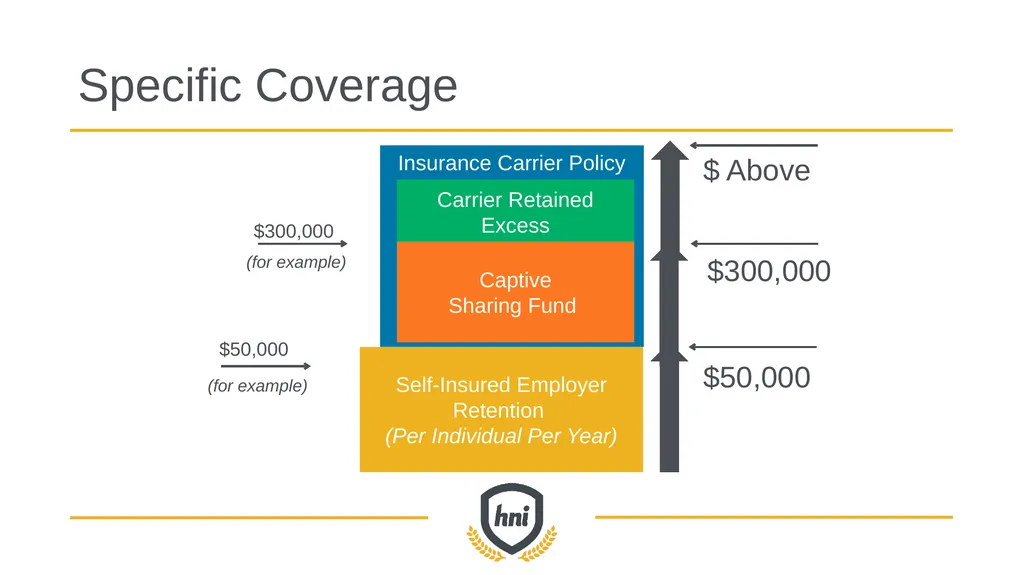
Specific Coverage Self-Insured Employer Retention
(Per Individual Per Year) $50,000 (for example) Insurance Carrier Policy Carrier Retained Excess Captive
Sharing Fund $300,000 (for example) $50,000 $300,000 $ Above<br>
22
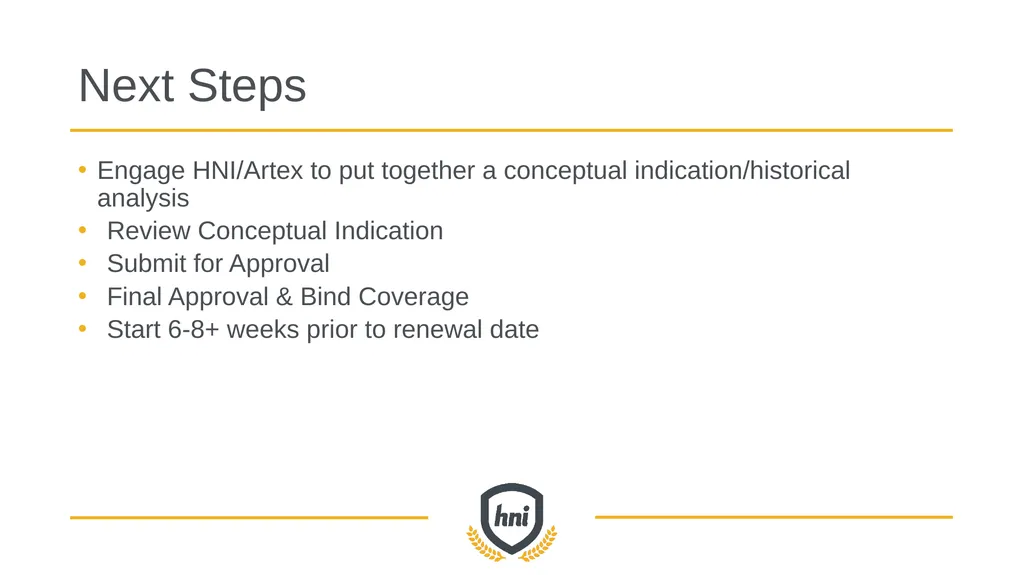
Next Steps Engage HNI/Artex to put together a conceptual indication/historical analysis
Review Conceptual Indication
Submit for Approval
Final Approval & Bind Coverage
Start 6-8+ weeks prior to renewal date<br>
25
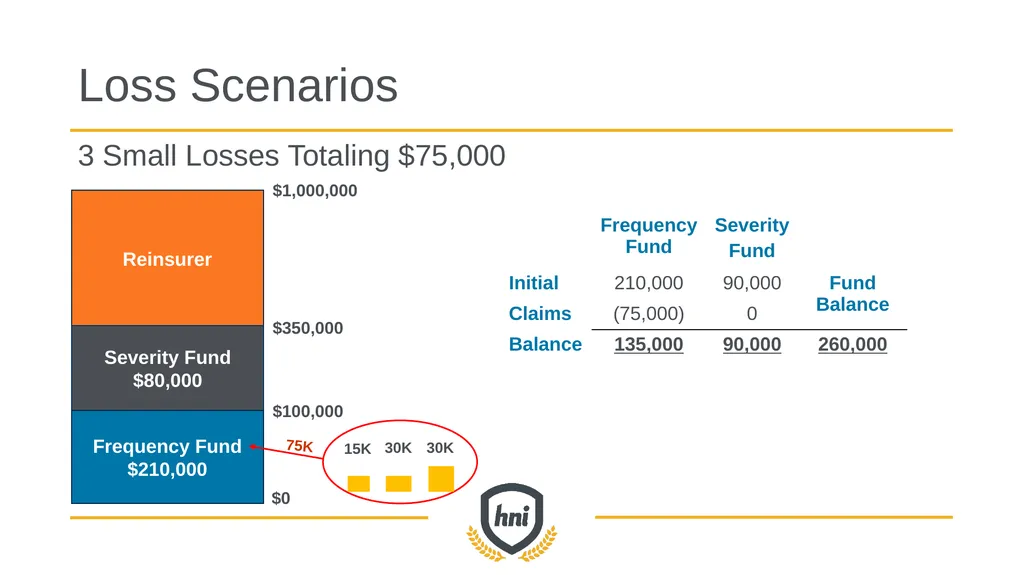
Loss Scenarios 3 Small Losses Totaling $75,000 $1,000,000 $350,000 $100,000 Reinsurer Severity Fund�$80,000 Frequency Fund�$210,000 $0 15K 30K 30K<br>
26
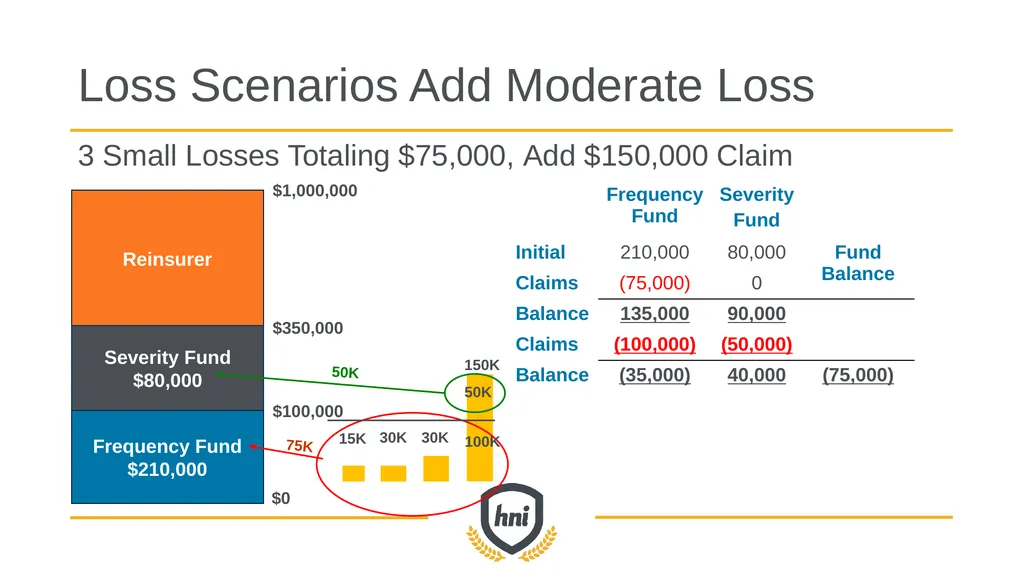
Loss Scenarios Add Moderate Loss 3 Small Losses Totaling $75,000, Add $150,000 Claim $1,000,000 $350,000 $100,000 Reinsurer Severity Fund�$80,000 Frequency Fund�$210,000 $0 15K 30K 30K 150K<br>
27
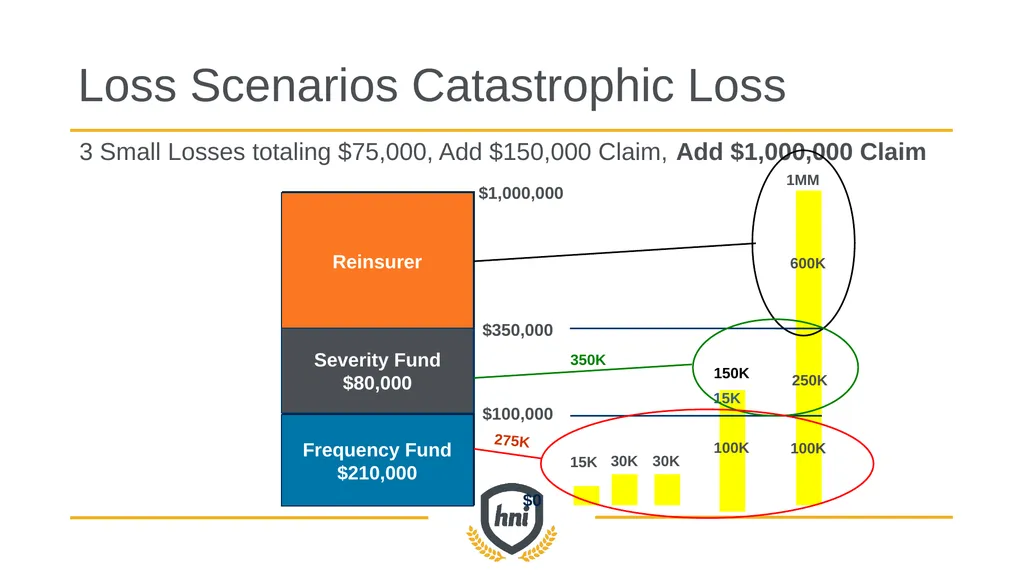
Loss Scenarios Catastrophic Loss 3 Small Losses totaling $75,000, Add $150,000 Claim, Add $1,000,000 Claim $0 Reinsurer $1,000,000 $350,000 $100,000 Severity Fund�$90,000 Frequency Fund�$245,000 15K 30K 30K 1MM 600K Reinsurer Severity Fund�$80,000 Frequency Fund�$210,000<br>
28
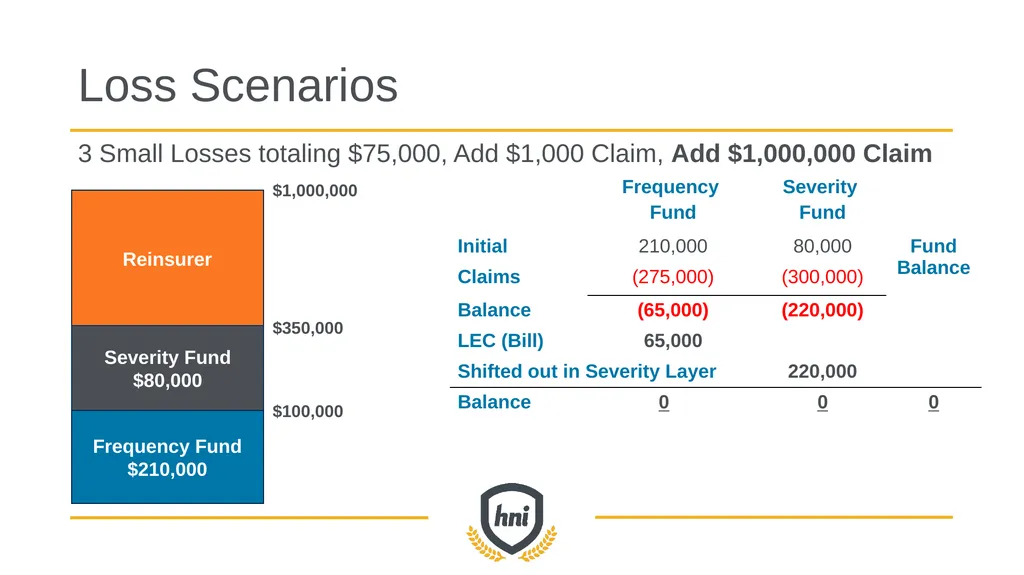
Loss Scenarios 3 Small Losses totaling $75,000, Add $1,000 Claim, Add $1,000,000 Claim $1,000,000 $350,000 $100,000 Reinsurer Severity Fund�$80,000 Frequency Fund�$210,000<br>
29
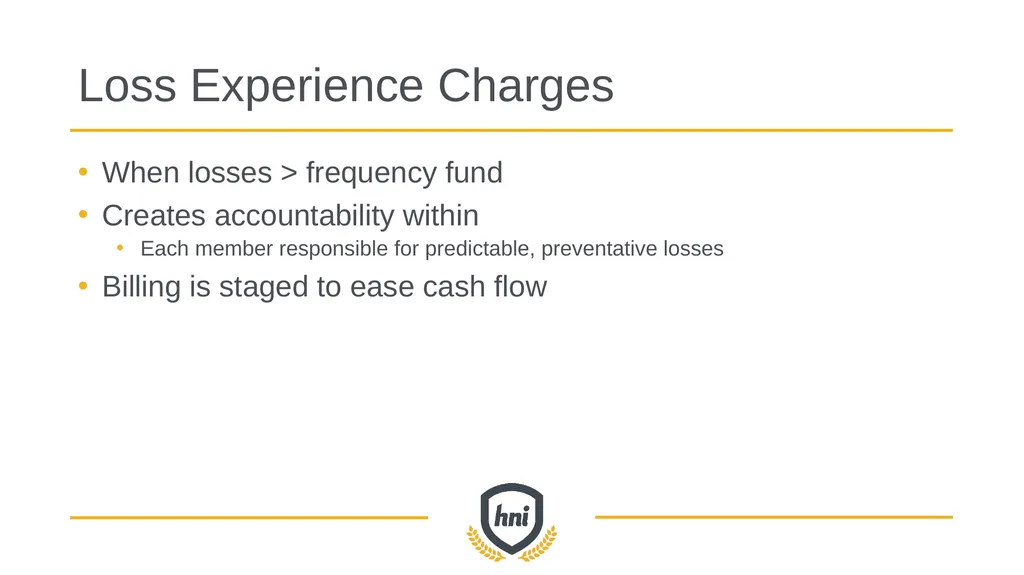
Loss Experience Charges When losses > frequency fund
Creates accountability within
Each member responsible for predictable, preventative losses
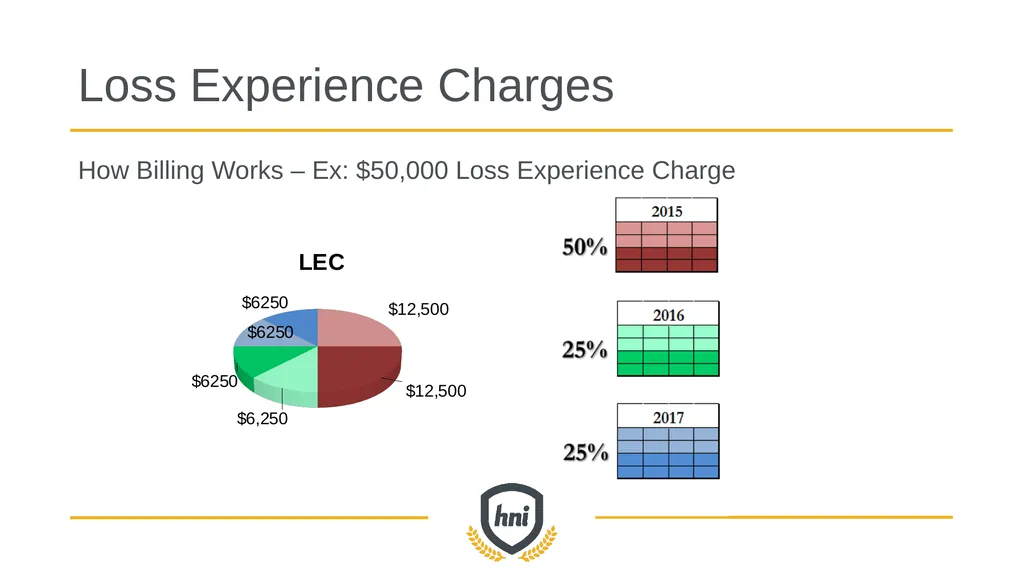
Billing is staged to ease cash flow<br>
30
Loss Experience Charges How Billing Works – Ex: $50,000 Loss Experience Charge<br>
31
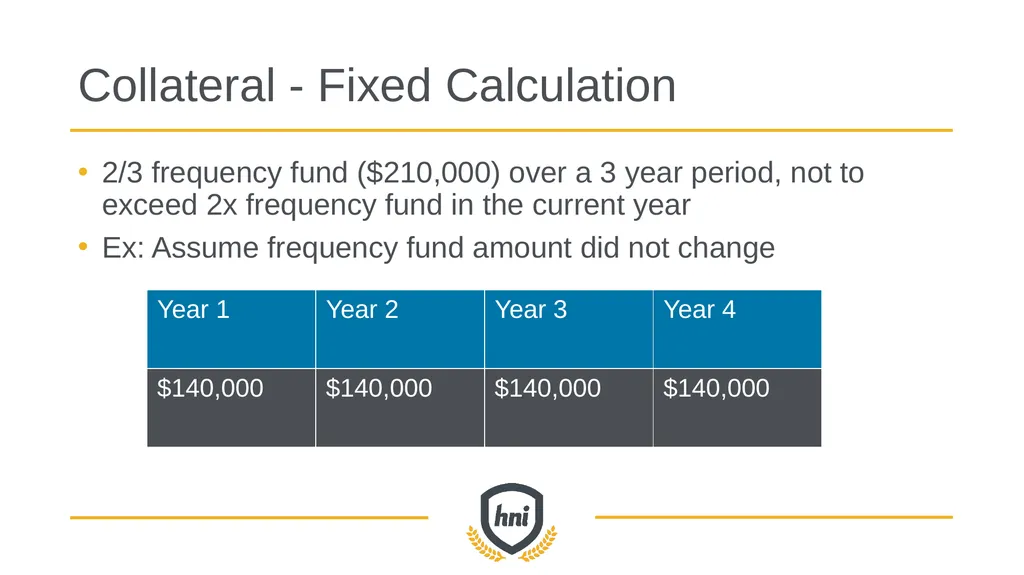
Collateral - Fixed Calculation 2/3 frequency fund ($210,000) over a 3 year period, not to exceed 2x frequency fund in the current year
Ex: Assume frequency fund amount did not change<br>
32
Thank you��J.D. Seymour �630.438.1577�jd.Seymour@artexrisk.com<br>