Guidance for Institutions Participating in the
Description: Guidance for Institutions Participating in the Child and Adult Care Food Program (CACFP) Child Meal Patterns Training Objectives Successfully determine whether a childs meal contains all of the meal pattern components requirements Develop
Related Topics
Download Presentation
"Guidance for Institutions Participating in the" is the property of its rightful owner. Permission is granted to download and print the materials on this website for personal, non-commercial use only, and to display it on your personal computer provided you do not modify the materials and that you retain all copyright notices contained in the materials. By downloading content from our website, you accept the terms of this agreement.
Presentation Transcript
slide1. Guidance for Institutions Participating in the Child and Adult Care Food Program (CACFP) Child Meal Patterns<br>
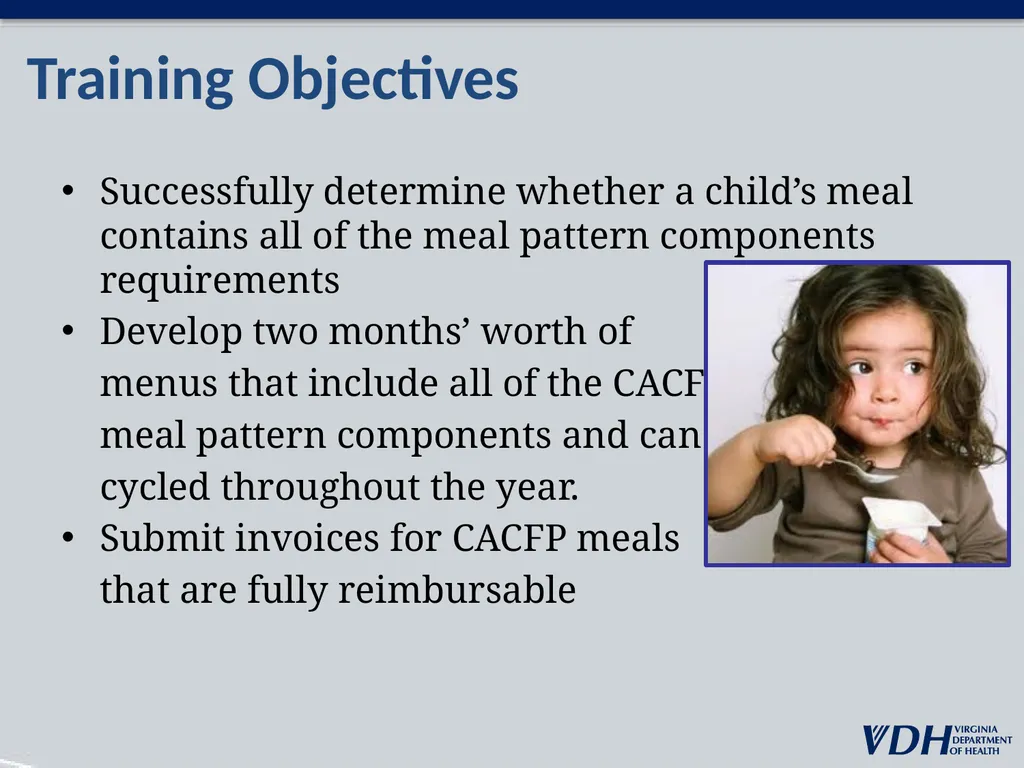
slide2. Training Objectives Successfully determine whether a child’s meal contains all of the meal pattern components requirements
Develop two months’ worth of
menus that include all of the CACFP
meal pattern components and can be
cycled throughout the year.
Submit invoices for CACFP meals
that are fully reimbursable<br>
slide3. Meal Pattern Requirements CACFP meal pattern requirements assist the menu planner in providing well-balanced meals and snacks for children that:
Meet nutritional needs of children
Are consistent with the Dietary Guidelines for Americans
Taste appetizing and contain a variety of food items (rotating foods)<br>
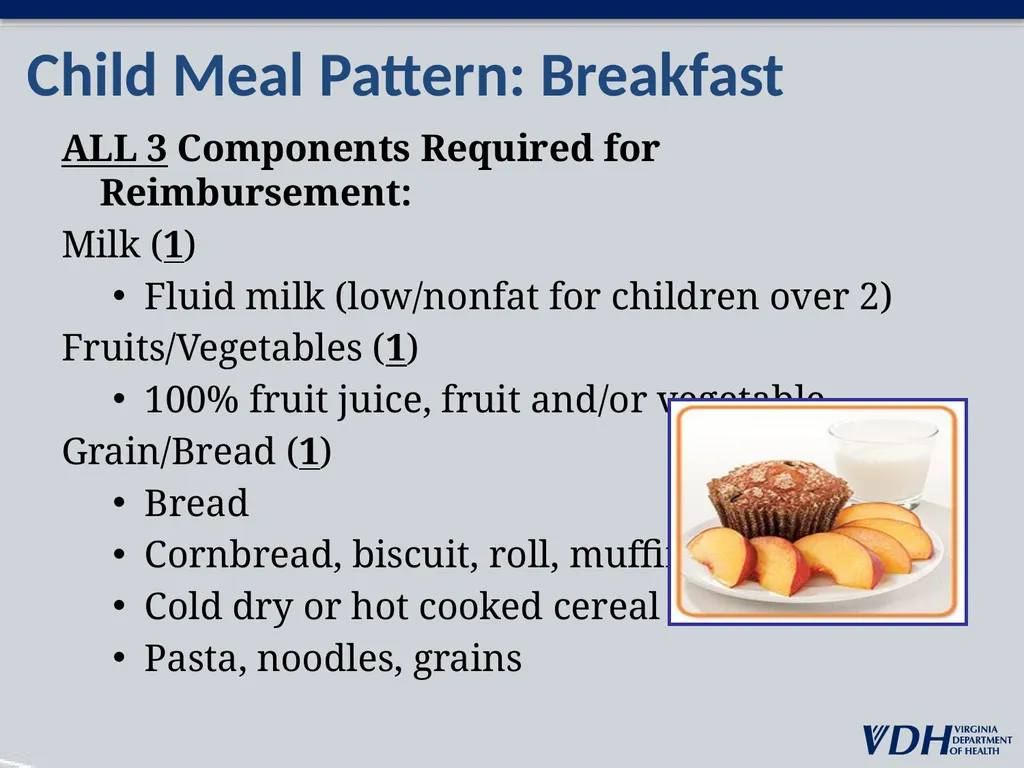
slide4. Child Meal Pattern: Breakfast ALL 3 Components Required for Reimbursement:
Milk (1)
Fluid milk (low/nonfat for children over 2)
Fruits/Vegetables (1)
100% fruit juice, fruit and/or vegetable
Grain/Bread (1)
Bread
Cornbread, biscuit, roll, muffin
Cold dry or hot cooked cereal
Pasta, noodles, grains<br>
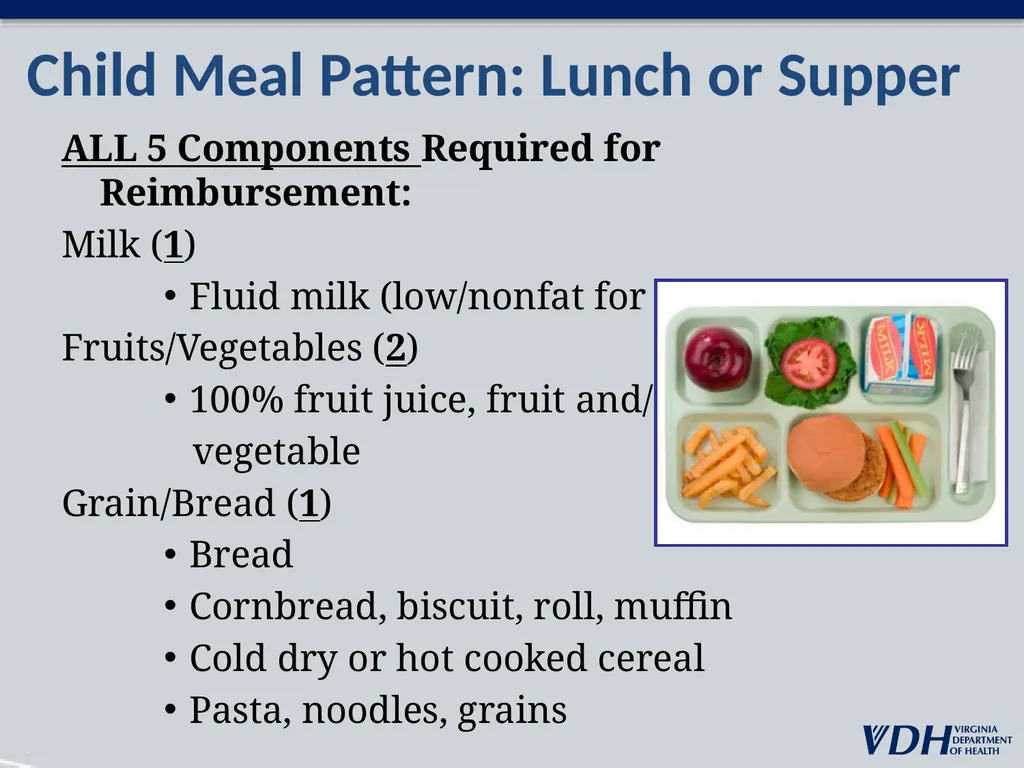
slide5. Child Meal Pattern: Lunch or Supper ALL 5 Components Required for Reimbursement:
Milk (1)
Fluid milk (low/nonfat for children over 2)
Fruits/Vegetables (2)
100% fruit juice, fruit and/or
vegetable
Grain/Bread (1)
Bread
Cornbread, biscuit, roll, muffin
Cold dry or hot cooked cereal
Pasta, noodles, grains<br>
slide6. Child Meal Pattern: Lunch or Supper ALL 5 Components Required for Reimbursement (cont):
Meat/Meat Alternate (1)
Meat, poultry, fish, or alternate protein product
Cheese
Egg
Cooked dry beans or peas
Peanut, other nut or seed butters, nuts and/or seeds
Yogurt<br>
slide7. Child Meal Pattern: Snack 2:4 Components Required for Reimbursement (cont):
Milk (1)
Fluid milk (low/nonfat for children over 2)
Fruits/Vegetables (1)
100% fruit juice, fruit and/or vegetable
Grain/Bread (1)
Bread
Cornbread, biscuit, roll, muffin
Cold dry or hot cooked cereal
Pasta, noodles, grains<br>
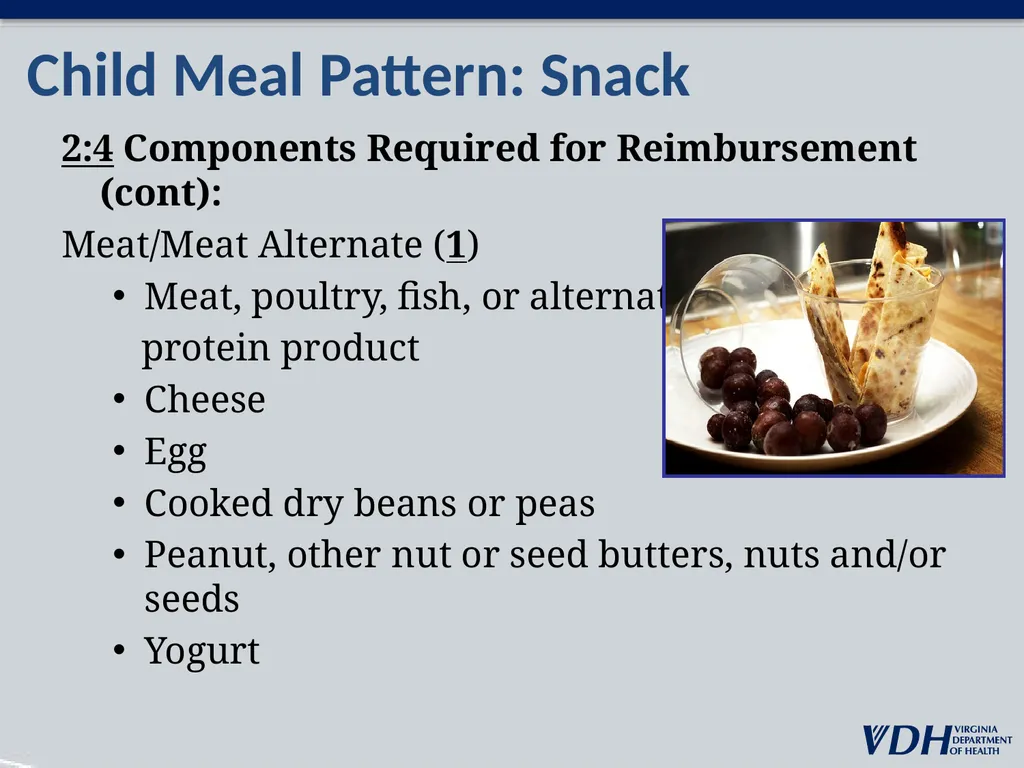
slide8. Child Meal Pattern: Snack 2:4 Components Required for Reimbursement (cont):
Meat/Meat Alternate (1)
Meat, poultry, fish, or alternate
protein product
Cheese
Egg
Cooked dry beans or peas
Peanut, other nut or seed butters, nuts and/or seeds
Yogurt<br>
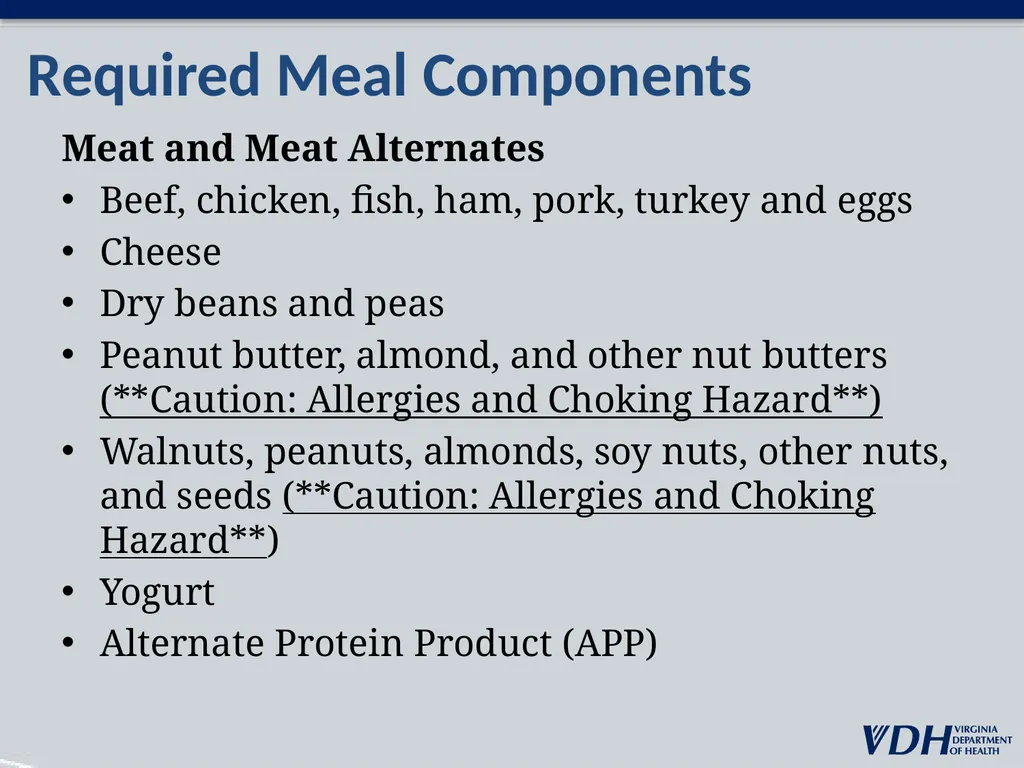
slide9. Required Meal Components Meat and Meat Alternates
Beef, chicken, fish, ham, pork, turkey and eggs
Cheese
Dry beans and peas
Peanut butter, almond, and other nut butters (**Caution: Allergies and Choking Hazard**)
Walnuts, peanuts, almonds, soy nuts, other nuts, and seeds (**Caution: Allergies and Choking Hazard**)
Yogurt
Alternate Protein Product (APP)<br>
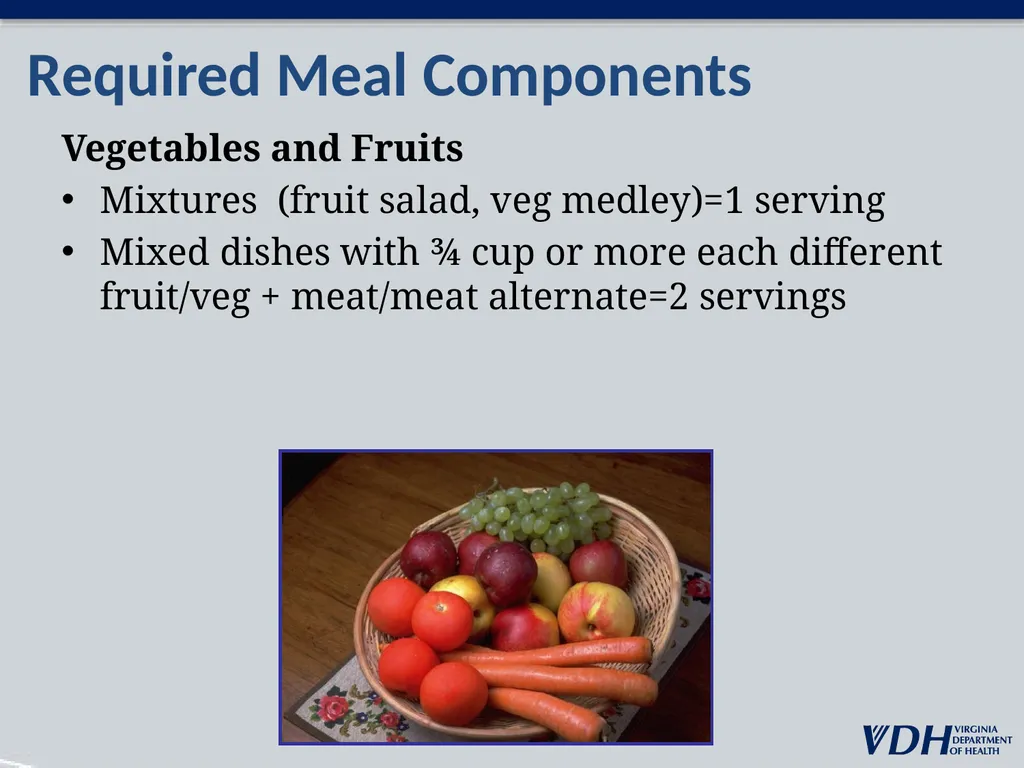
slide10. Required Meal Components Vegetables and Fruits
Mixtures (fruit salad, veg medley)=1 serving
Mixed dishes with ¾ cup or more each different fruit/veg + meat/meat alternate=2 servings<br>
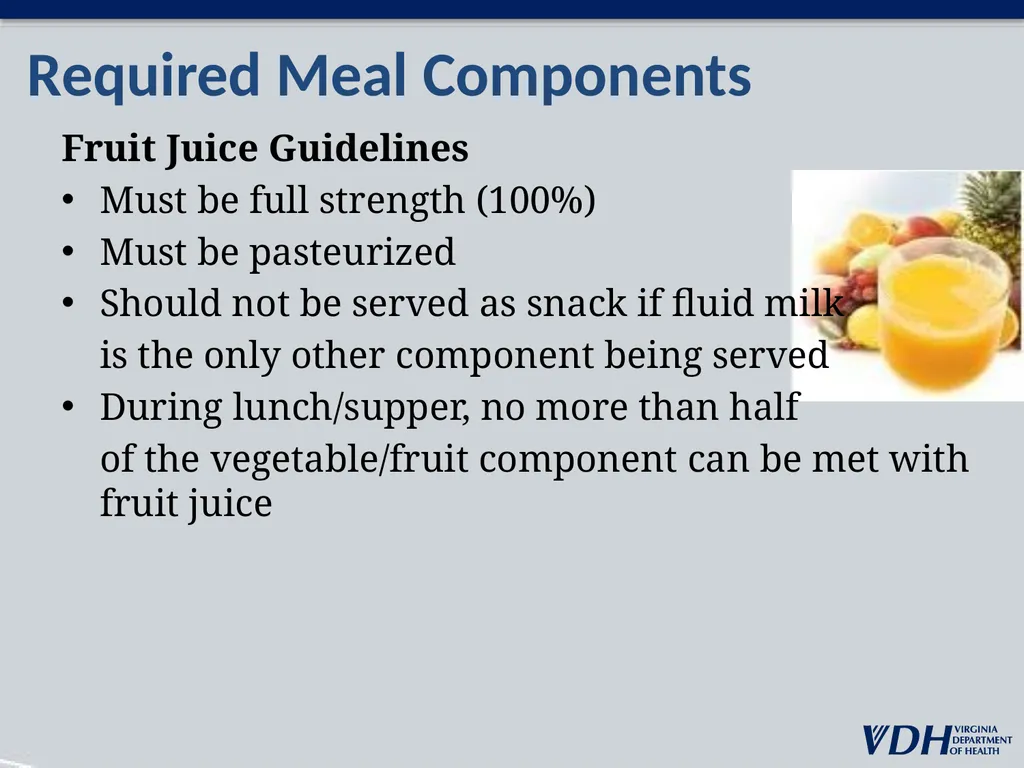
slide11. Required Meal Components Fruit Juice Guidelines
Must be full strength (100%)
Must be pasteurized
Should not be served as snack if fluid milk
is the only other component being served
During lunch/supper, no more than half
of the vegetable/fruit component can be met with fruit juice<br>
slide12. Required Meal Components Grains and Breads:
Required component of all meals
Must be made primarily of whole-grain, enriched or “fortified” flour or meal (first ingredient listed on package)
Includes:
Enriched breads, cereals, and pasta such as white bread and corn tortillas
Whole Grain breads, cereals and pasta such as whole-wheat bread and ready-to-eat cereal<br>
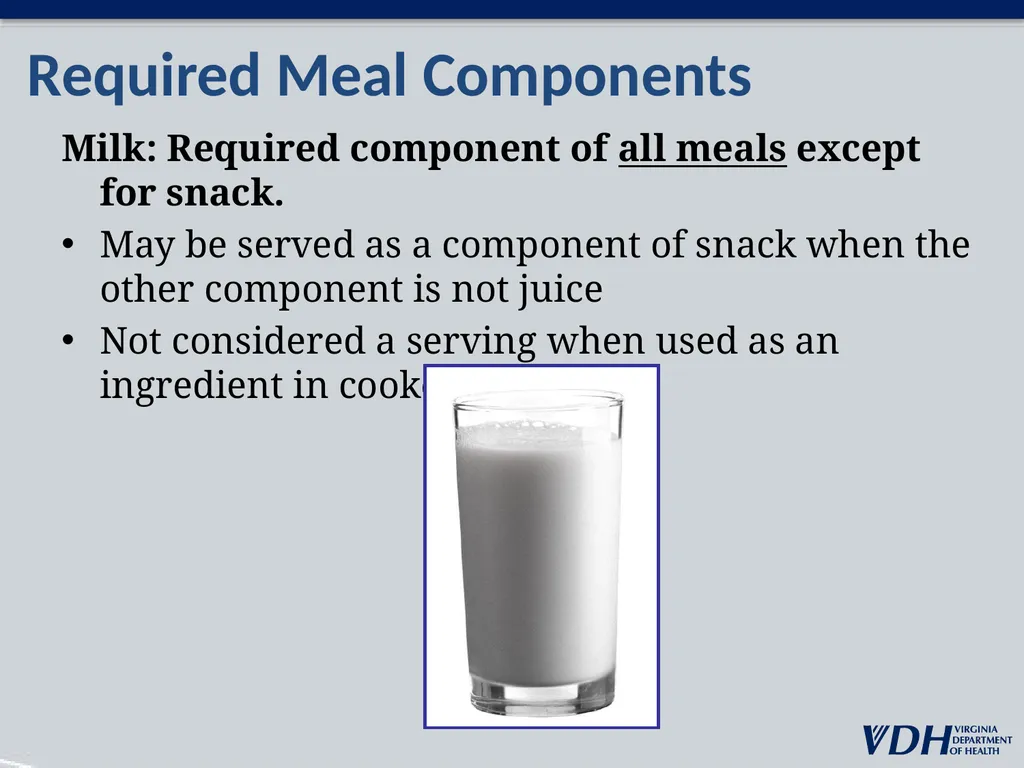
slide13. Required Meal Components Milk: Required component of all meals except for snack.
May be served as a component of snack when the other component is not juice
Not considered a serving when used as an ingredient in cooked meals<br>
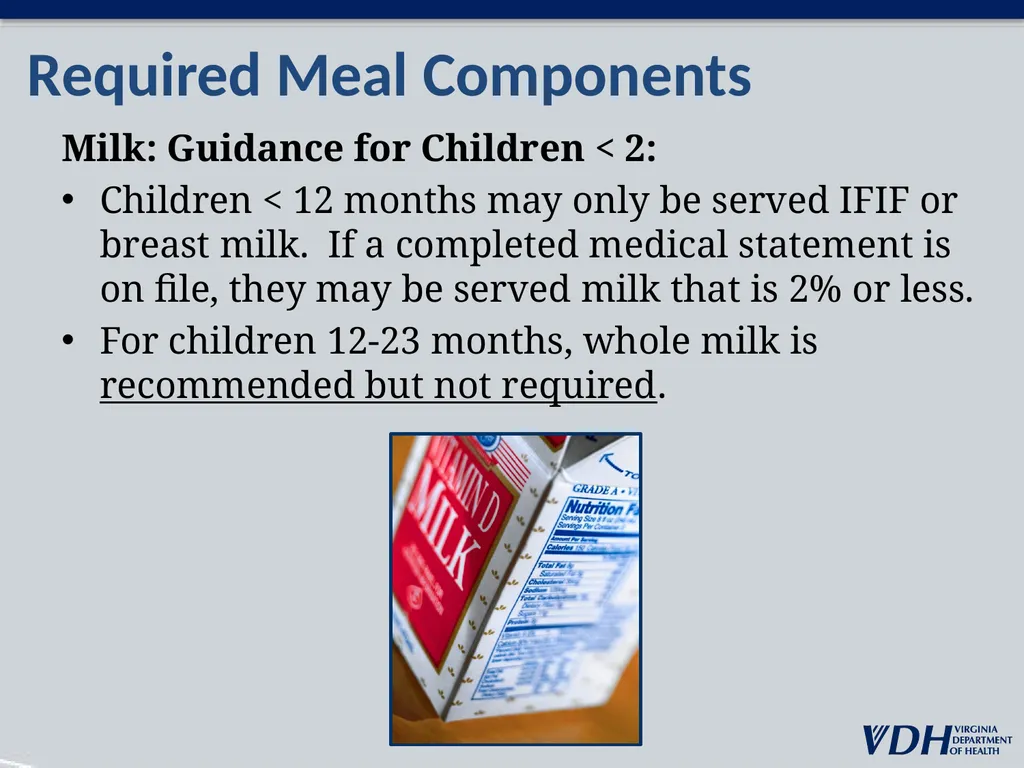
slide14. Required Meal Components Milk: Guidance for Children < 2:
Children < 12 months may only be served IFIF or breast milk. If a completed medical statement is on file, they may be served milk that is 2% or less.
For children 12-23 months, whole milk is recommended but not required.<br>
slide15. Milk in the CACFP Allowable types for participants > 2
Low fat (1% or fat free)
Lactose-reduced or lactose free, buttermilk or acidified milk
Unflavored or flavored, including chocolate or strawberry
Goat’s milk (only if pasteurized)
USDA-approved non-dairy milk substitutes products (e.g. some brands of soy milk) at the parent/guardian’s request as long as it is nutritionally equivalent to cow’s milk.<br>
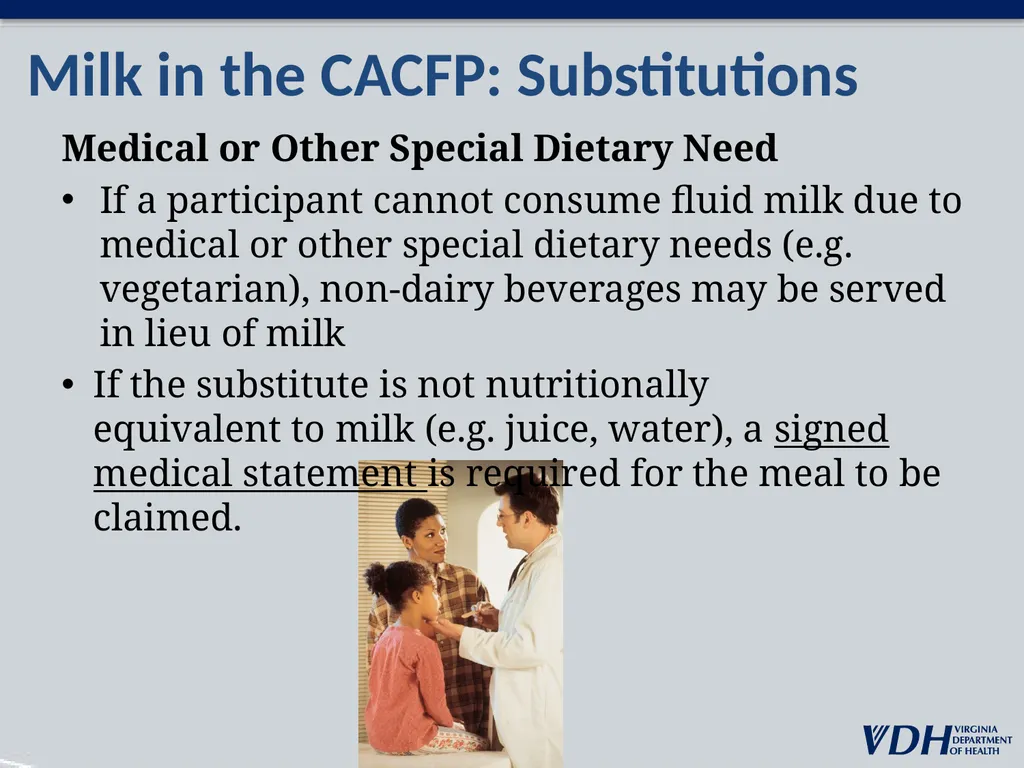
slide16. Milk in the CACFP: Substitutions Medical or Other Special Dietary Need
If a participant cannot consume fluid milk due to medical or other special dietary needs (e.g. vegetarian), non-dairy beverages may be served in lieu of milk
If the substitute is not nutritionally equivalent to milk (e.g. juice, water), a signed medical statement is required for the meal to be claimed.<br>
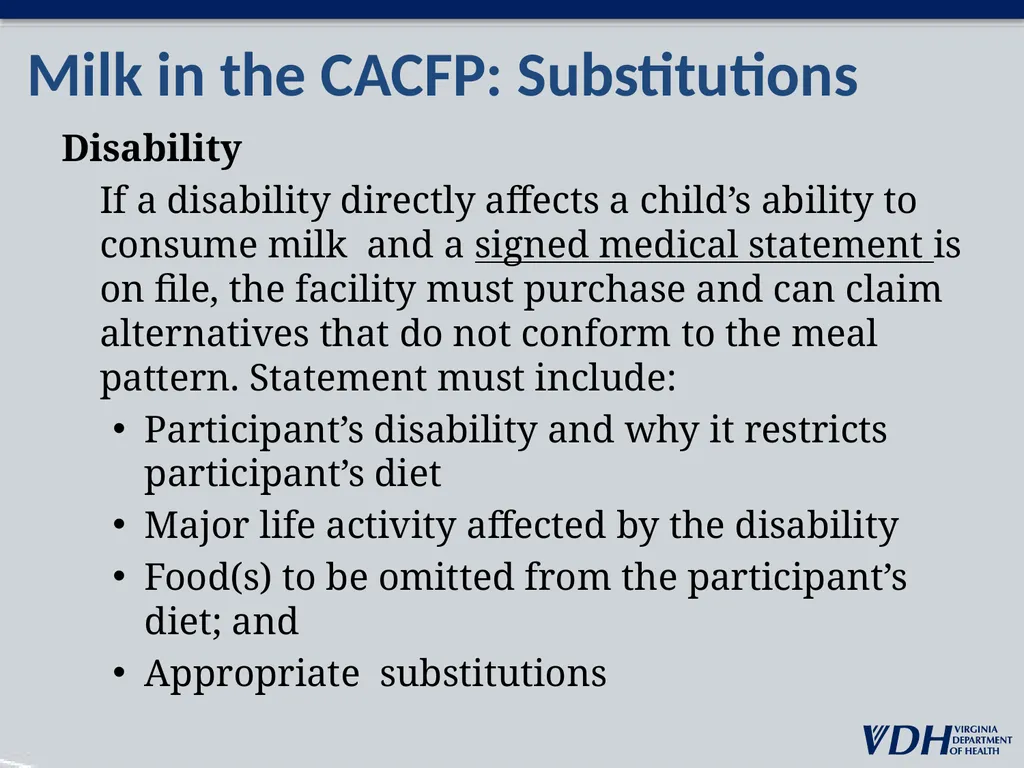
slide17. Milk in the CACFP: Substitutions Disability
If a disability directly affects a child’s ability to consume milk and a signed medical statement is on file, the facility must purchase and can claim alternatives that do not conform to the meal pattern. Statement must include:
Participant’s disability and why it restricts participant’s diet
Major life activity affected by the disability
Food(s) to be omitted from the participant’s diet; and
Appropriate substitutions<br>
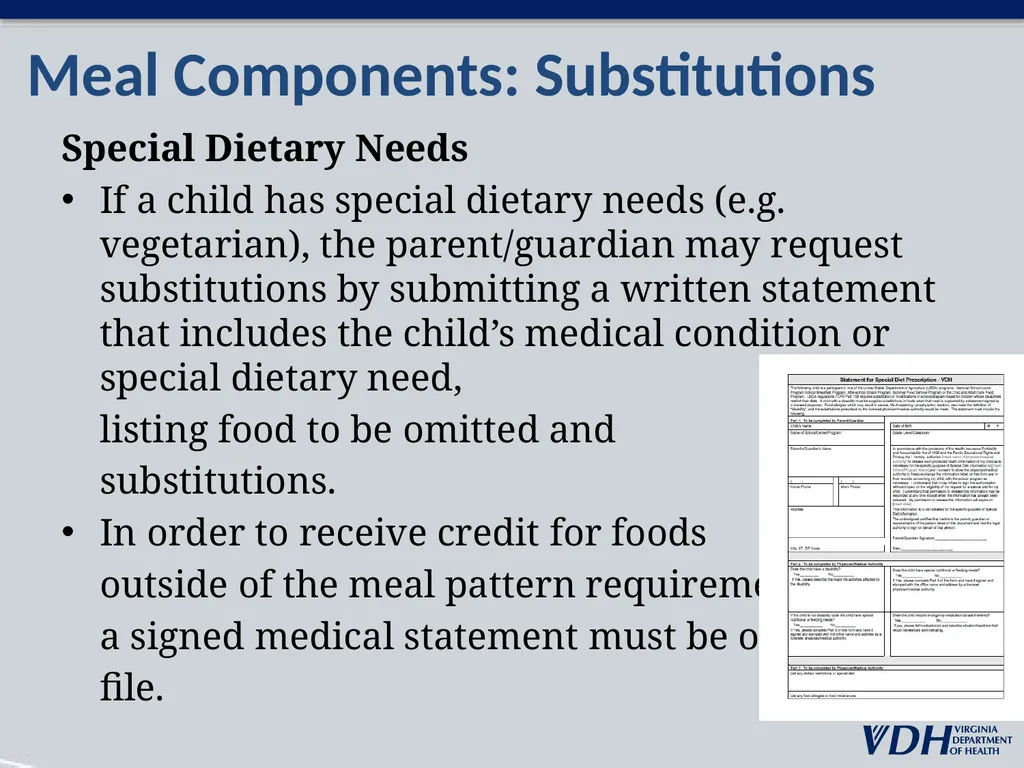
slide18. Meal Components: Substitutions Special Dietary Needs
If a child has special dietary needs (e.g. vegetarian), the parent/guardian may request substitutions by submitting a written statement that includes the child’s medical condition or special dietary need,
listing food to be omitted and
substitutions.
In order to receive credit for foods
outside of the meal pattern requirements,
a signed medical statement must be on
file.<br>
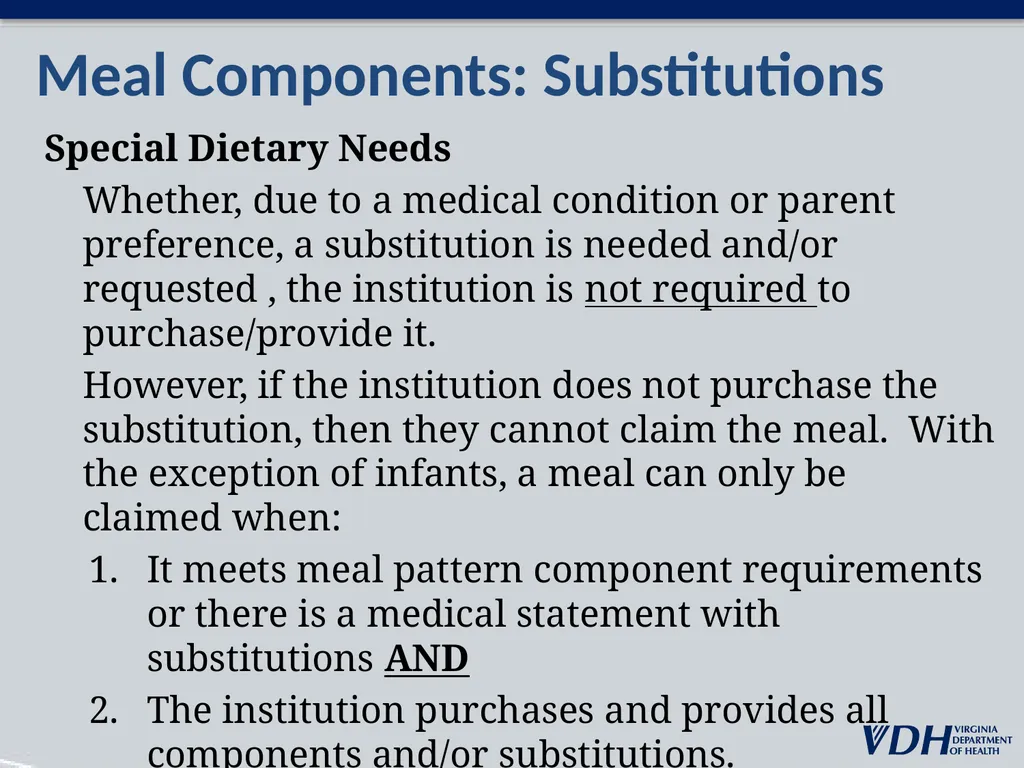
slide19. Meal Components: Substitutions Special Dietary Needs
Whether, due to a medical condition or parent preference, a substitution is needed and/or requested , the institution is not required to purchase/provide it.
However, if the institution does not purchase the substitution, then they cannot claim the meal. With the exception of infants, a meal can only be claimed when:
It meets meal pattern component requirements or there is a medical statement with substitutions AND
The institution purchases and provides all components and/or substitutions.<br>
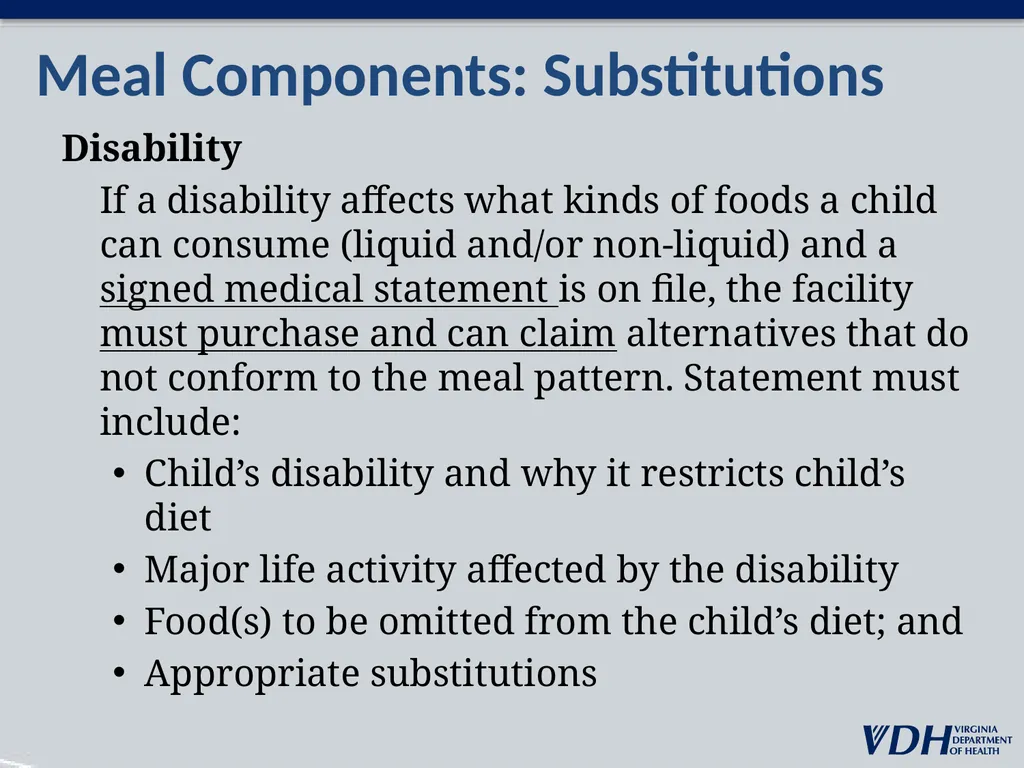
slide20. Meal Components: Substitutions Disability
If a disability affects what kinds of foods a child can consume (liquid and/or non-liquid) and a signed medical statement is on file, the facility must purchase and can claim alternatives that do not conform to the meal pattern. Statement must include:
Child’s disability and why it restricts child’s diet
Major life activity affected by the disability
Food(s) to be omitted from the child’s diet; and
Appropriate substitutions<br>
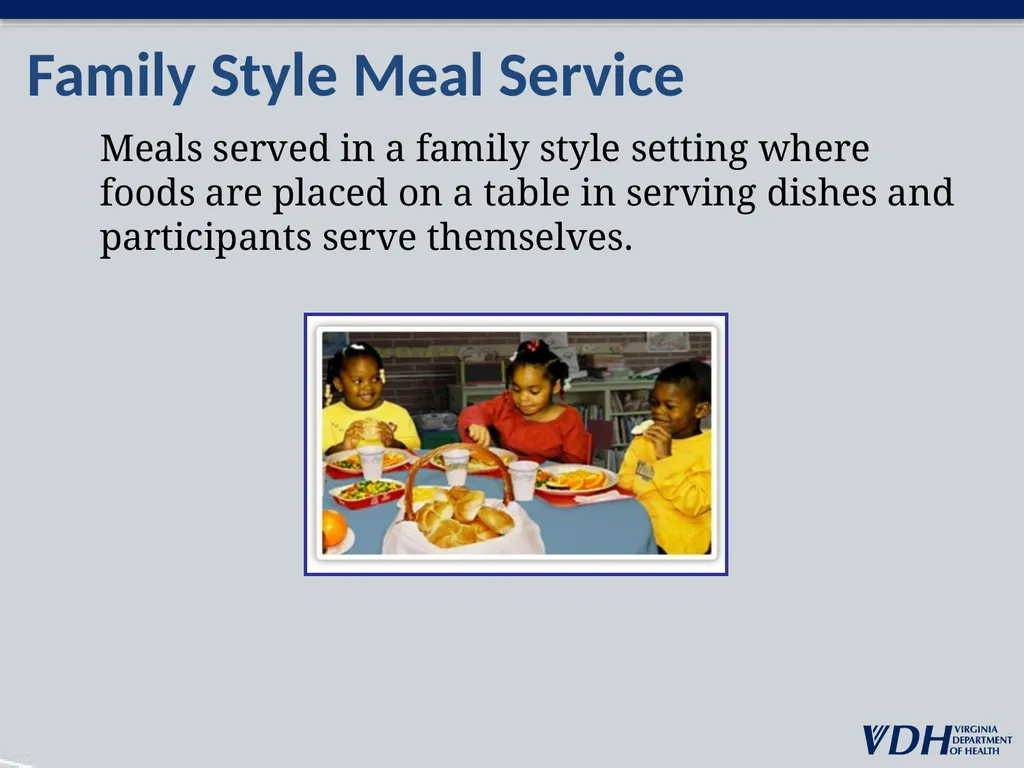
slide21. Family Style Meal Service Meals served in a family style setting where foods are placed on a table in serving dishes and participants serve themselves.<br>
slide22. Family Style Meal Service Meals are able to be claimed so long as:
The amount of food on table provides full required portions of each component for all participants and any supervisors
Every participant is offered and encouraged to take full portion of each required meal component
When a component is refused or full portion size is not taken, a supervisor actively encourages taking a full portion, or offers a 2nd helping<br>
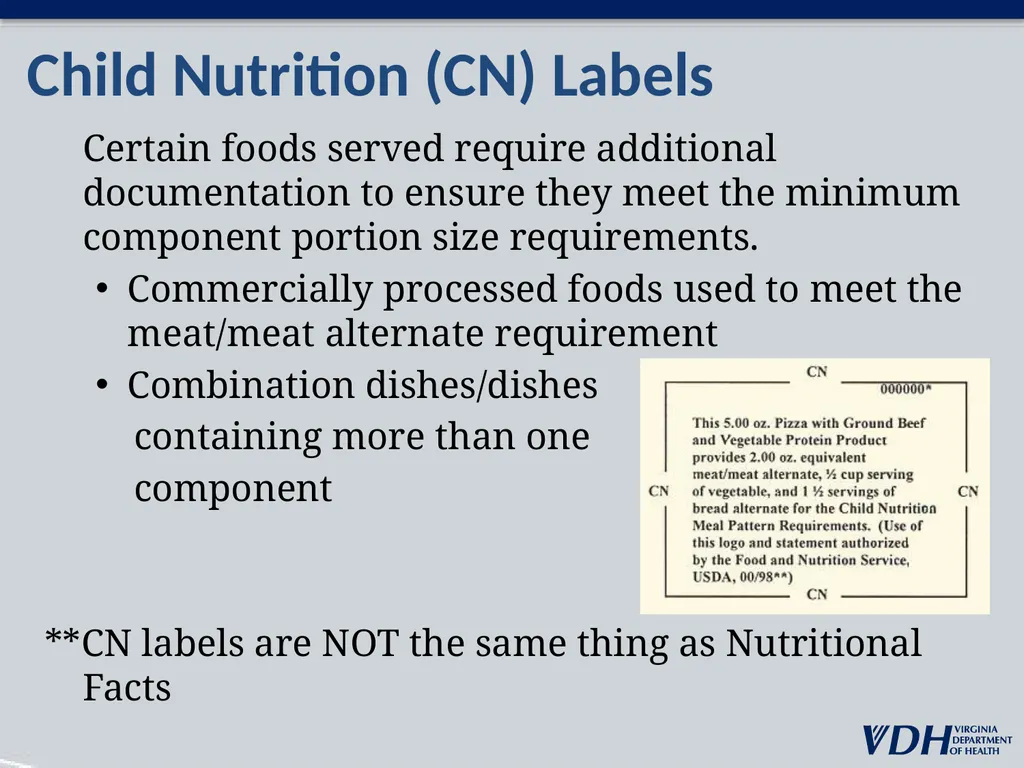
slide23. Child Nutrition (CN) Labels Certain foods served require additional documentation to ensure they meet the minimum component portion size requirements.
Commercially processed foods used to meet the meat/meat alternate requirement
Combination dishes/dishes
containing more than one
component
**CN labels are NOT the same thing as Nutritional Facts<br>
slide24. Child Nutrition (CN) Labels Institutions that prepare main dishes on-site must maintain documentation of:
Recipes used
Amount of each ingredient used in preparing the dish and estimated contribution toward meeting the component requirements
Number of participants that the recipe serves
**Resources:
http://www.fns.usda.gov/tn/resources/foodbuyingguide.html
http://www.fns.usda.gov/cnlabeling/child-nutrition-cn-labeling-program<br>
slide25. Resource: Crediting handbook for the
Child and Adult Care Food Program
http://www.fns.usda.gov/sites/default/files/CACFP_creditinghandbook.pdf<br>

slide26. Questions?<br>
slide2. Training Objectives Successfully determine whether a child’s meal contains all of the meal pattern components requirements
Develop two months’ worth of
menus that include all of the CACFP
meal pattern components and can be
cycled throughout the year.
Submit invoices for CACFP meals
that are fully reimbursable<br>
slide3. Meal Pattern Requirements CACFP meal pattern requirements assist the menu planner in providing well-balanced meals and snacks for children that:
Meet nutritional needs of children
Are consistent with the Dietary Guidelines for Americans
Taste appetizing and contain a variety of food items (rotating foods)<br>
slide4. Child Meal Pattern: Breakfast ALL 3 Components Required for Reimbursement:
Milk (1)
Fluid milk (low/nonfat for children over 2)
Fruits/Vegetables (1)
100% fruit juice, fruit and/or vegetable
Grain/Bread (1)
Bread
Cornbread, biscuit, roll, muffin
Cold dry or hot cooked cereal
Pasta, noodles, grains<br>
slide5. Child Meal Pattern: Lunch or Supper ALL 5 Components Required for Reimbursement:
Milk (1)
Fluid milk (low/nonfat for children over 2)
Fruits/Vegetables (2)
100% fruit juice, fruit and/or
vegetable
Grain/Bread (1)
Bread
Cornbread, biscuit, roll, muffin
Cold dry or hot cooked cereal
Pasta, noodles, grains<br>
slide6. Child Meal Pattern: Lunch or Supper ALL 5 Components Required for Reimbursement (cont):
Meat/Meat Alternate (1)
Meat, poultry, fish, or alternate protein product
Cheese
Egg
Cooked dry beans or peas
Peanut, other nut or seed butters, nuts and/or seeds
Yogurt<br>
slide7. Child Meal Pattern: Snack 2:4 Components Required for Reimbursement (cont):
Milk (1)
Fluid milk (low/nonfat for children over 2)
Fruits/Vegetables (1)
100% fruit juice, fruit and/or vegetable
Grain/Bread (1)
Bread
Cornbread, biscuit, roll, muffin
Cold dry or hot cooked cereal
Pasta, noodles, grains<br>
slide8. Child Meal Pattern: Snack 2:4 Components Required for Reimbursement (cont):
Meat/Meat Alternate (1)
Meat, poultry, fish, or alternate
protein product
Cheese
Egg
Cooked dry beans or peas
Peanut, other nut or seed butters, nuts and/or seeds
Yogurt<br>
slide9. Required Meal Components Meat and Meat Alternates
Beef, chicken, fish, ham, pork, turkey and eggs
Cheese
Dry beans and peas
Peanut butter, almond, and other nut butters (**Caution: Allergies and Choking Hazard**)
Walnuts, peanuts, almonds, soy nuts, other nuts, and seeds (**Caution: Allergies and Choking Hazard**)
Yogurt
Alternate Protein Product (APP)<br>
slide10. Required Meal Components Vegetables and Fruits
Mixtures (fruit salad, veg medley)=1 serving
Mixed dishes with ¾ cup or more each different fruit/veg + meat/meat alternate=2 servings<br>
slide11. Required Meal Components Fruit Juice Guidelines
Must be full strength (100%)
Must be pasteurized
Should not be served as snack if fluid milk
is the only other component being served
During lunch/supper, no more than half
of the vegetable/fruit component can be met with fruit juice<br>
slide12. Required Meal Components Grains and Breads:
Required component of all meals
Must be made primarily of whole-grain, enriched or “fortified” flour or meal (first ingredient listed on package)
Includes:
Enriched breads, cereals, and pasta such as white bread and corn tortillas
Whole Grain breads, cereals and pasta such as whole-wheat bread and ready-to-eat cereal<br>
slide13. Required Meal Components Milk: Required component of all meals except for snack.
May be served as a component of snack when the other component is not juice
Not considered a serving when used as an ingredient in cooked meals<br>
slide14. Required Meal Components Milk: Guidance for Children < 2:
Children < 12 months may only be served IFIF or breast milk. If a completed medical statement is on file, they may be served milk that is 2% or less.
For children 12-23 months, whole milk is recommended but not required.<br>
slide15. Milk in the CACFP Allowable types for participants > 2
Low fat (1% or fat free)
Lactose-reduced or lactose free, buttermilk or acidified milk
Unflavored or flavored, including chocolate or strawberry
Goat’s milk (only if pasteurized)
USDA-approved non-dairy milk substitutes products (e.g. some brands of soy milk) at the parent/guardian’s request as long as it is nutritionally equivalent to cow’s milk.<br>
slide16. Milk in the CACFP: Substitutions Medical or Other Special Dietary Need
If a participant cannot consume fluid milk due to medical or other special dietary needs (e.g. vegetarian), non-dairy beverages may be served in lieu of milk
If the substitute is not nutritionally equivalent to milk (e.g. juice, water), a signed medical statement is required for the meal to be claimed.<br>
slide17. Milk in the CACFP: Substitutions Disability
If a disability directly affects a child’s ability to consume milk and a signed medical statement is on file, the facility must purchase and can claim alternatives that do not conform to the meal pattern. Statement must include:
Participant’s disability and why it restricts participant’s diet
Major life activity affected by the disability
Food(s) to be omitted from the participant’s diet; and
Appropriate substitutions<br>
slide18. Meal Components: Substitutions Special Dietary Needs
If a child has special dietary needs (e.g. vegetarian), the parent/guardian may request substitutions by submitting a written statement that includes the child’s medical condition or special dietary need,
listing food to be omitted and
substitutions.
In order to receive credit for foods
outside of the meal pattern requirements,
a signed medical statement must be on
file.<br>
slide19. Meal Components: Substitutions Special Dietary Needs
Whether, due to a medical condition or parent preference, a substitution is needed and/or requested , the institution is not required to purchase/provide it.
However, if the institution does not purchase the substitution, then they cannot claim the meal. With the exception of infants, a meal can only be claimed when:
It meets meal pattern component requirements or there is a medical statement with substitutions AND
The institution purchases and provides all components and/or substitutions.<br>
slide20. Meal Components: Substitutions Disability
If a disability affects what kinds of foods a child can consume (liquid and/or non-liquid) and a signed medical statement is on file, the facility must purchase and can claim alternatives that do not conform to the meal pattern. Statement must include:
Child’s disability and why it restricts child’s diet
Major life activity affected by the disability
Food(s) to be omitted from the child’s diet; and
Appropriate substitutions<br>
slide21. Family Style Meal Service Meals served in a family style setting where foods are placed on a table in serving dishes and participants serve themselves.<br>
slide22. Family Style Meal Service Meals are able to be claimed so long as:
The amount of food on table provides full required portions of each component for all participants and any supervisors
Every participant is offered and encouraged to take full portion of each required meal component
When a component is refused or full portion size is not taken, a supervisor actively encourages taking a full portion, or offers a 2nd helping<br>
slide23. Child Nutrition (CN) Labels Certain foods served require additional documentation to ensure they meet the minimum component portion size requirements.
Commercially processed foods used to meet the meat/meat alternate requirement
Combination dishes/dishes
containing more than one
component
**CN labels are NOT the same thing as Nutritional Facts<br>
slide24. Child Nutrition (CN) Labels Institutions that prepare main dishes on-site must maintain documentation of:
Recipes used
Amount of each ingredient used in preparing the dish and estimated contribution toward meeting the component requirements
Number of participants that the recipe serves
**Resources:
http://www.fns.usda.gov/tn/resources/foodbuyingguide.html
http://www.fns.usda.gov/cnlabeling/child-nutrition-cn-labeling-program<br>
slide25. Resource: Crediting handbook for the
Child and Adult Care Food Program
http://www.fns.usda.gov/sites/default/files/CACFP_creditinghandbook.pdf<br>
slide26. Questions?<br>