
GUIDE TO COMPETING USA Climbing Competitions
Description: GUIDE TO COMPETING USA Climbing Competitions Agenda: -How competing works -QEs, regionals, - age categories etc. -Schedule -memberships -different types of competitions -USAC competitor and parent guide to competing How Does Competing
Related Topics
Download Presentation
"GUIDE TO COMPETING USA Climbing Competitions" is the property of its rightful owner. Permission is granted to download and print the materials on this website for personal, non-commercial use only, and to display it on your personal computer provided you do not modify the materials and that you retain all copyright notices contained in the materials. By downloading content from our website, you accept the terms of this agreement.
Presentation Transcript
slide1. GUIDE TO COMPETING
USA Climbing Competitions<br>
slide2. Agenda: -How competing works
-QE’s, regionals,
- age categories etc.
-Schedule
-memberships
-different types of competitions
-USAC competitor and parent guide to competing<br>
slide3. How Does Competing Work? The youth climbing competitions Movement team members participate in are run by USA climbing. USA Climbing Competitions are split up into two seasons: Bouldering and Ropes
There are four levels of Competitions in both seasons: Qualifying events, then the Regional, Divisional, and National Championships
ACCESS THE USAC RULEBOOK HERE<br>
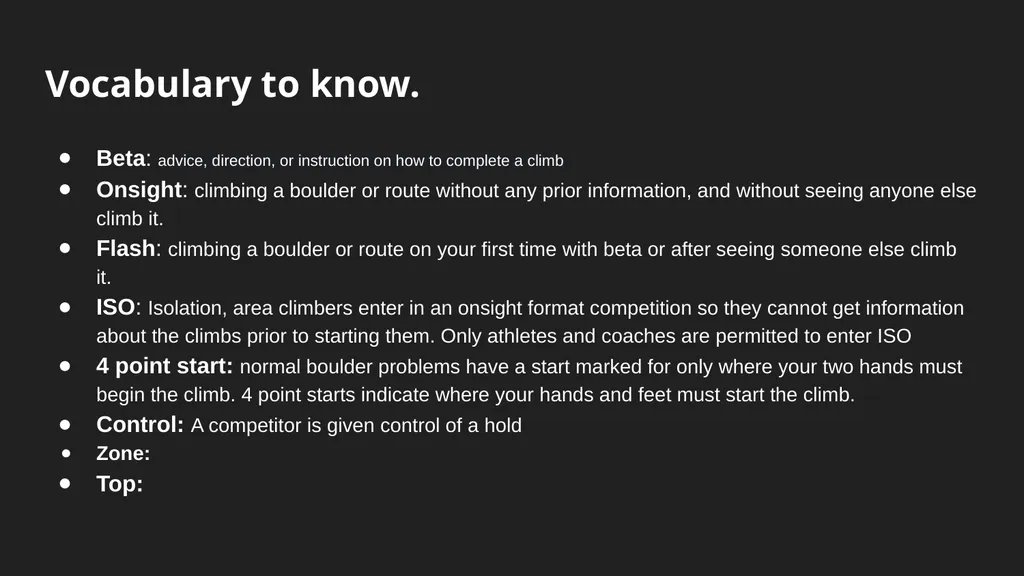
slide4. Vocabulary to know. Beta: advice, direction, or instruction on how to complete a climb
Onsight: climbing a boulder or route without any prior information, and without seeing anyone else climb it.
Flash: climbing a boulder or route on your first time with beta or after seeing someone else climb it.
ISO: Isolation, area climbers enter in an onsight format competition so they cannot get information about the climbs prior to starting them. Only athletes and coaches are permitted to enter ISO
4 point start: normal boulder problems have a start marked for only where your two hands must begin the climb. 4 point starts indicate where your hands and feet must start the climb.
Control: A competitor is given control of a hold
Zone:
Top:<br>
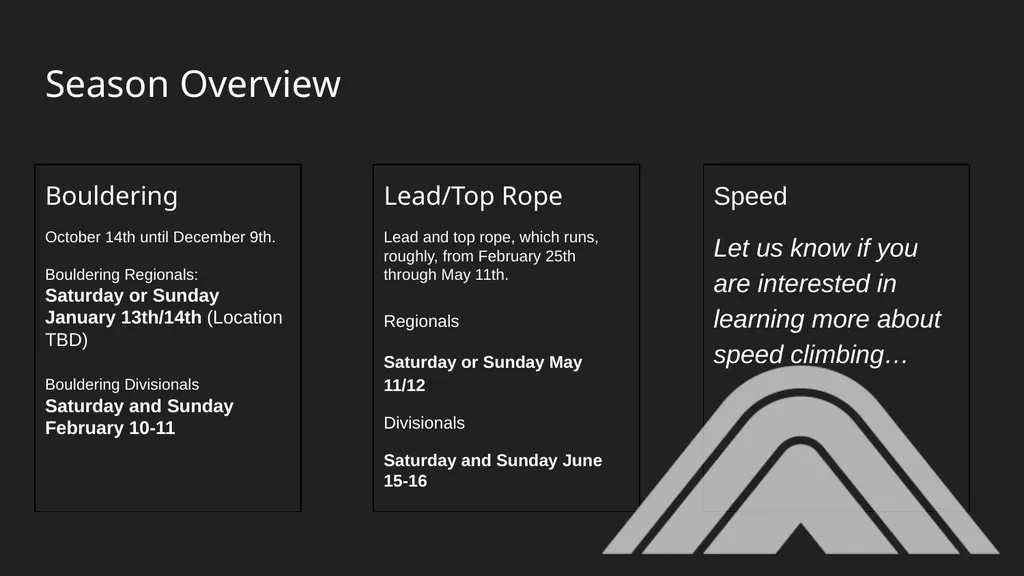
slide5. Season Overview Bouldering
October 14th until December 9th.
Bouldering Regionals:
Saturday or Sunday January 13th/14th (Location TBD)
Bouldering Divisionals
Saturday and Sunday February 10-11 Lead/Top Rope
Lead and top rope, which runs, roughly, from February 25th through May 11th.
Regionals
Saturday or Sunday May 11/12
Divisionals
Saturday and Sunday June 15-16 Speed
Let us know if you are interested in learning more about speed climbing…<br>
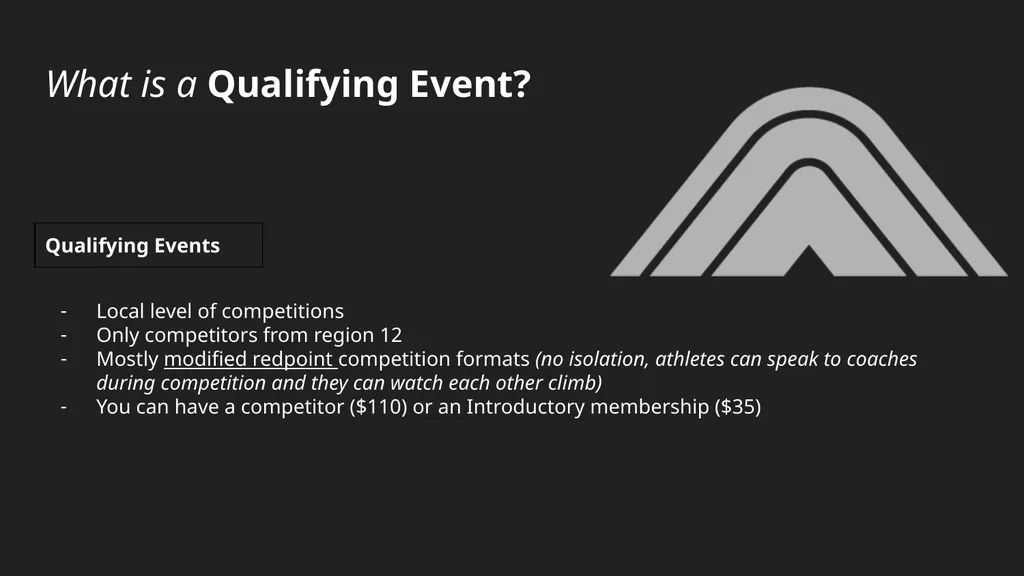
slide6. What is a Qualifying Event? Qualifying Events Local level of competitions
Only competitors from region 12
Mostly modified redpoint competition formats (no isolation, athletes can speak to coaches during competition and they can watch each other climb)
You can have a competitor ($110) or an Introductory membership ($35)<br>
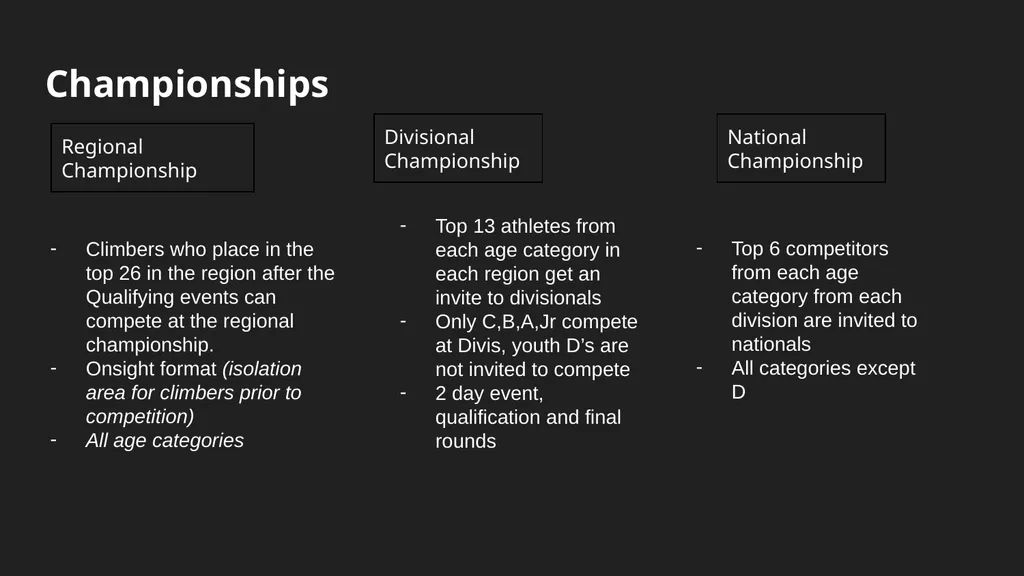
slide7. Championships Divisional Championship National Championship Regional Championship Climbers who place in the top 26 in the region after the Qualifying events can compete at the regional championship.
Onsight format (isolation area for climbers prior to competition)
All age categories Top 13 athletes from each age category in each region get an invite to divisionals
Only C,B,A,Jr compete at Divis, youth D’s are not invited to compete
2 day event, qualification and final rounds Top 6 competitors from each age category from each division are invited to nationals
All categories except D<br>
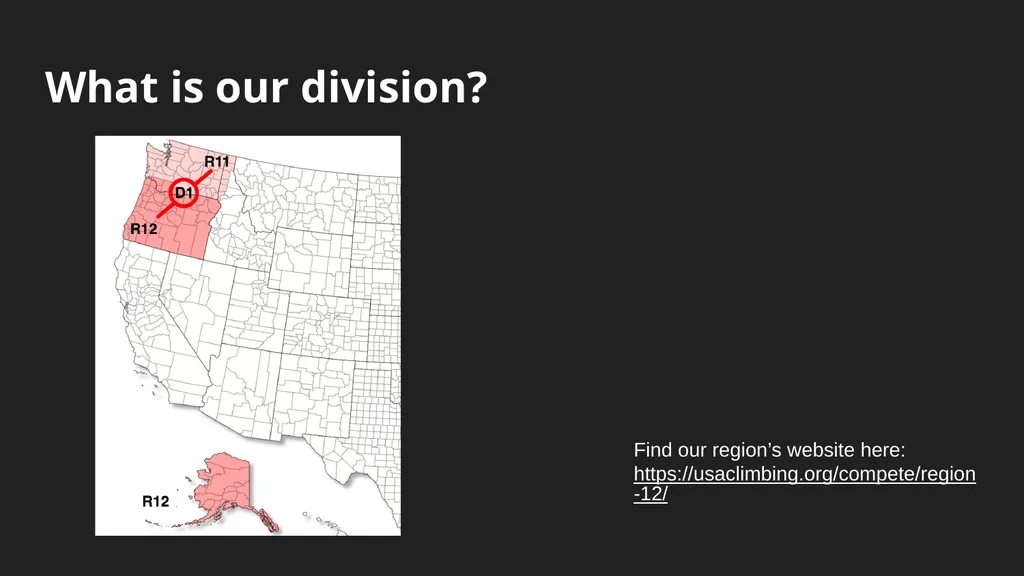
slide8. What is our division? Find our region’s website here: https://usaclimbing.org/compete/region-12/<br>
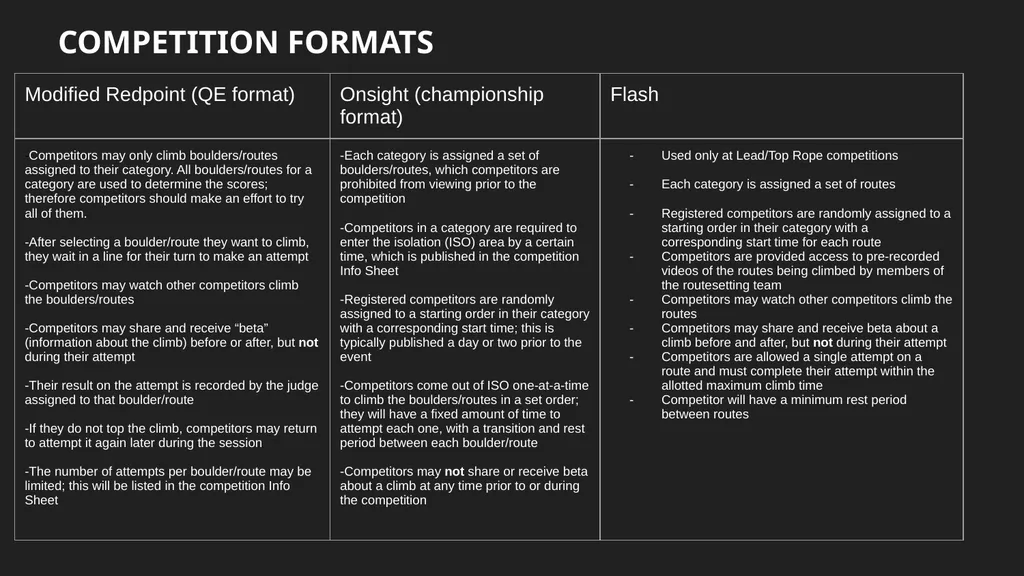
slide9. COMPETITION FORMATS<br>
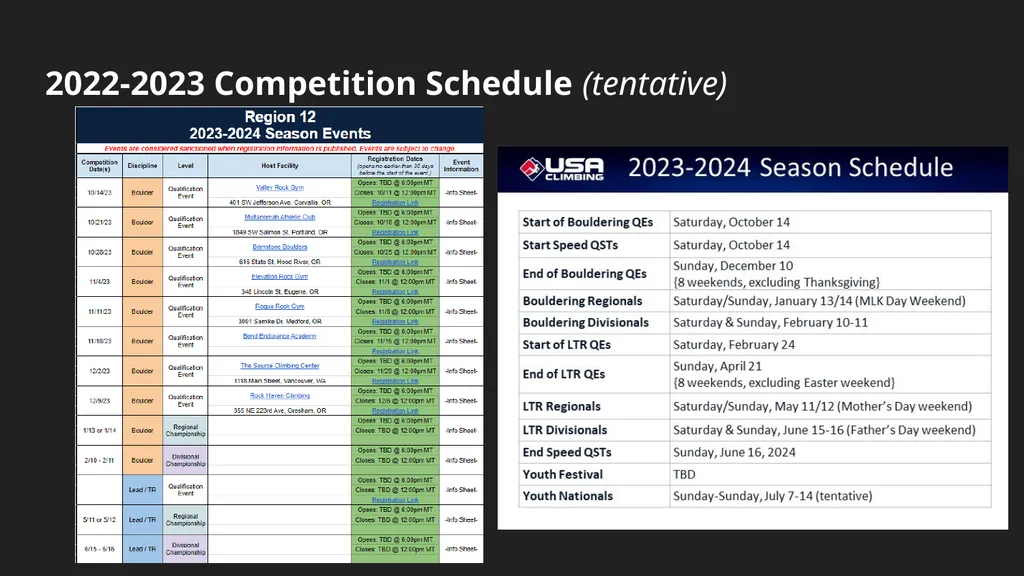
slide10. 2022-2023 Competition Schedule (tentative)<br>
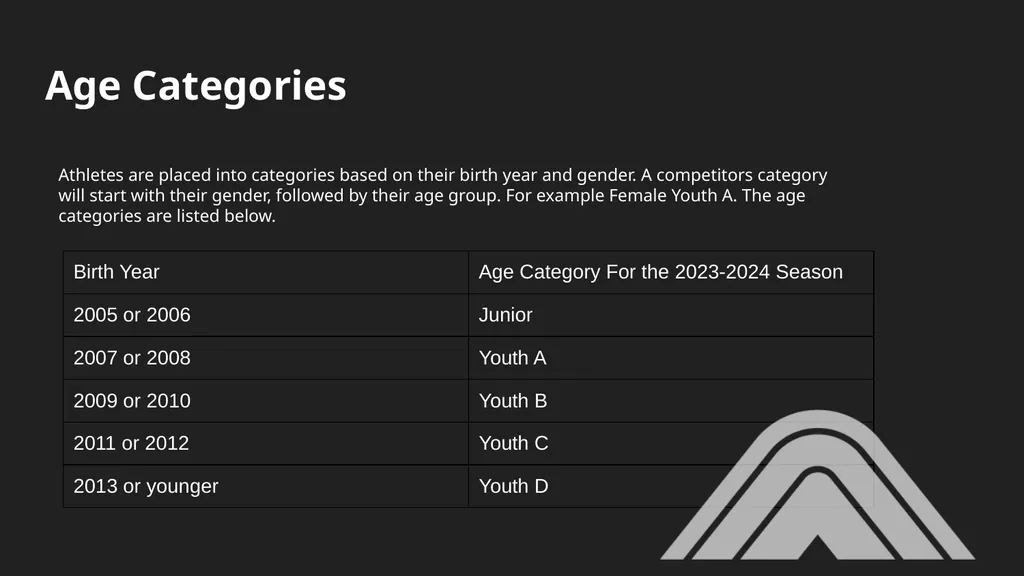
slide11. Age Categories Athletes are placed into categories based on their birth year and gender. A competitors category will start with their gender, followed by their age group. For example Female Youth A. The age categories are listed below.<br>
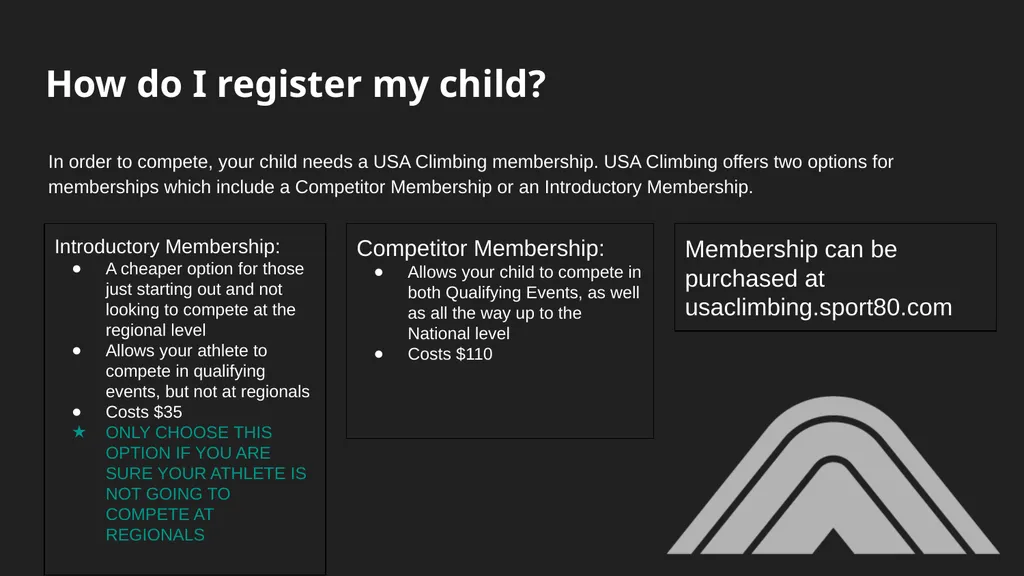
slide12. How do I register my child? In order to compete, your child needs a USA Climbing membership. USA Climbing offers two options for memberships which include a Competitor Membership or an Introductory Membership. Introductory Membership:
A cheaper option for those just starting out and not looking to compete at the regional level
Allows your athlete to compete in qualifying events, but not at regionals
Costs $35
ONLY CHOOSE THIS OPTION IF YOU ARE SURE YOUR ATHLETE IS NOT GOING TO COMPETE AT REGIONALS Competitor Membership:
Allows your child to compete in both Qualifying Events, as well as all the way up to the National level
Costs $110 Membership can be purchased at usaclimbing.sport80.com<br>
slide13. Volunteering An integral part of the Youth competition series is volunteering. Even if you don’t have any climbing or competition experience, there is always a way for you to help out.
Volunteering is also a great way to gain a deeper understanding of the rules and expectations of a competition.
We would to see more families active with volunteering.
There are a lot of jobs to do, so it takes a village.<br>
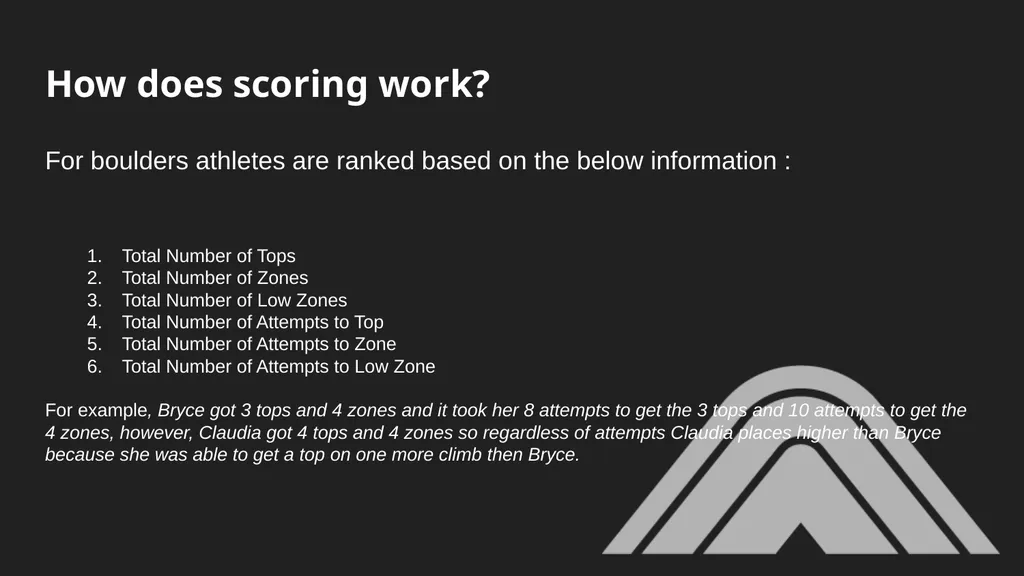
slide14. How does scoring work? For boulders athletes are ranked based on the below information :
Total Number of Tops
Total Number of Zones
Total Number of Low Zones
Total Number of Attempts to Top
Total Number of Attempts to Zone
Total Number of Attempts to Low Zone
For example, Bryce got 3 tops and 4 zones and it took her 8 attempts to get the 3 tops and 10 attempts to get the 4 zones, however, Claudia got 4 tops and 4 zones so regardless of attempts Claudia places higher than Bryce because she was able to get a top on one more climb then Bryce.<br>
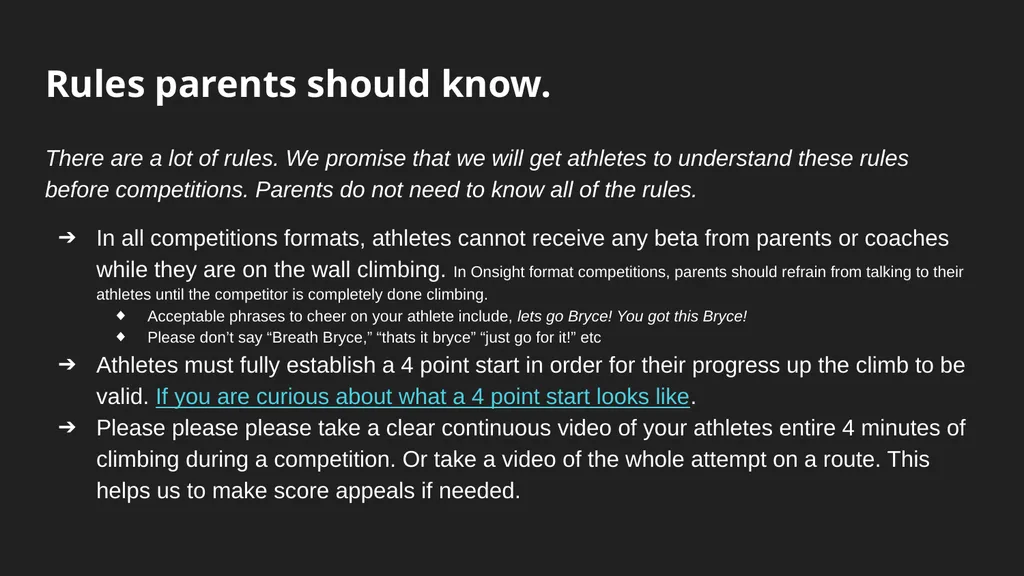
slide15. Rules parents should know. There are a lot of rules. We promise that we will get athletes to understand these rules before competitions. Parents do not need to know all of the rules.
In all competitions formats, athletes cannot receive any beta from parents or coaches while they are on the wall climbing. In Onsight format competitions, parents should refrain from talking to their athletes until the competitor is completely done climbing.
Acceptable phrases to cheer on your athlete include, lets go Bryce! You got this Bryce!
Please don’t say “Breath Bryce,” “thats it bryce” “just go for it!” etc
Athletes must fully establish a 4 point start in order for their progress up the climb to be valid. If you are curious about what a 4 point start looks like.
Please please please take a clear continuous video of your athletes entire 4 minutes of climbing during a competition. Or take a video of the whole attempt on a route. This helps us to make score appeals if needed.<br>
USA Climbing Competitions<br>
slide2. Agenda: -How competing works
-QE’s, regionals,
- age categories etc.
-Schedule
-memberships
-different types of competitions
-USAC competitor and parent guide to competing<br>
slide3. How Does Competing Work? The youth climbing competitions Movement team members participate in are run by USA climbing. USA Climbing Competitions are split up into two seasons: Bouldering and Ropes
There are four levels of Competitions in both seasons: Qualifying events, then the Regional, Divisional, and National Championships
ACCESS THE USAC RULEBOOK HERE<br>
slide4. Vocabulary to know. Beta: advice, direction, or instruction on how to complete a climb
Onsight: climbing a boulder or route without any prior information, and without seeing anyone else climb it.
Flash: climbing a boulder or route on your first time with beta or after seeing someone else climb it.
ISO: Isolation, area climbers enter in an onsight format competition so they cannot get information about the climbs prior to starting them. Only athletes and coaches are permitted to enter ISO
4 point start: normal boulder problems have a start marked for only where your two hands must begin the climb. 4 point starts indicate where your hands and feet must start the climb.
Control: A competitor is given control of a hold
Zone:
Top:<br>
slide5. Season Overview Bouldering
October 14th until December 9th.
Bouldering Regionals:
Saturday or Sunday January 13th/14th (Location TBD)
Bouldering Divisionals
Saturday and Sunday February 10-11 Lead/Top Rope
Lead and top rope, which runs, roughly, from February 25th through May 11th.
Regionals
Saturday or Sunday May 11/12
Divisionals
Saturday and Sunday June 15-16 Speed
Let us know if you are interested in learning more about speed climbing…<br>
slide6. What is a Qualifying Event? Qualifying Events Local level of competitions
Only competitors from region 12
Mostly modified redpoint competition formats (no isolation, athletes can speak to coaches during competition and they can watch each other climb)
You can have a competitor ($110) or an Introductory membership ($35)<br>
slide7. Championships Divisional Championship National Championship Regional Championship Climbers who place in the top 26 in the region after the Qualifying events can compete at the regional championship.
Onsight format (isolation area for climbers prior to competition)
All age categories Top 13 athletes from each age category in each region get an invite to divisionals
Only C,B,A,Jr compete at Divis, youth D’s are not invited to compete
2 day event, qualification and final rounds Top 6 competitors from each age category from each division are invited to nationals
All categories except D<br>
slide8. What is our division? Find our region’s website here: https://usaclimbing.org/compete/region-12/<br>
slide9. COMPETITION FORMATS<br>
slide10. 2022-2023 Competition Schedule (tentative)<br>
slide11. Age Categories Athletes are placed into categories based on their birth year and gender. A competitors category will start with their gender, followed by their age group. For example Female Youth A. The age categories are listed below.<br>
slide12. How do I register my child? In order to compete, your child needs a USA Climbing membership. USA Climbing offers two options for memberships which include a Competitor Membership or an Introductory Membership. Introductory Membership:
A cheaper option for those just starting out and not looking to compete at the regional level
Allows your athlete to compete in qualifying events, but not at regionals
Costs $35
ONLY CHOOSE THIS OPTION IF YOU ARE SURE YOUR ATHLETE IS NOT GOING TO COMPETE AT REGIONALS Competitor Membership:
Allows your child to compete in both Qualifying Events, as well as all the way up to the National level
Costs $110 Membership can be purchased at usaclimbing.sport80.com<br>
slide13. Volunteering An integral part of the Youth competition series is volunteering. Even if you don’t have any climbing or competition experience, there is always a way for you to help out.
Volunteering is also a great way to gain a deeper understanding of the rules and expectations of a competition.
We would to see more families active with volunteering.
There are a lot of jobs to do, so it takes a village.<br>
slide14. How does scoring work? For boulders athletes are ranked based on the below information :
Total Number of Tops
Total Number of Zones
Total Number of Low Zones
Total Number of Attempts to Top
Total Number of Attempts to Zone
Total Number of Attempts to Low Zone
For example, Bryce got 3 tops and 4 zones and it took her 8 attempts to get the 3 tops and 10 attempts to get the 4 zones, however, Claudia got 4 tops and 4 zones so regardless of attempts Claudia places higher than Bryce because she was able to get a top on one more climb then Bryce.<br>
slide15. Rules parents should know. There are a lot of rules. We promise that we will get athletes to understand these rules before competitions. Parents do not need to know all of the rules.
In all competitions formats, athletes cannot receive any beta from parents or coaches while they are on the wall climbing. In Onsight format competitions, parents should refrain from talking to their athletes until the competitor is completely done climbing.
Acceptable phrases to cheer on your athlete include, lets go Bryce! You got this Bryce!
Please don’t say “Breath Bryce,” “thats it bryce” “just go for it!” etc
Athletes must fully establish a 4 point start in order for their progress up the climb to be valid. If you are curious about what a 4 point start looks like.
Please please please take a clear continuous video of your athletes entire 4 minutes of climbing during a competition. Or take a video of the whole attempt on a route. This helps us to make score appeals if needed.<br>