Harm Reduction Strategies to Address Crack and
Description: Harm Reduction Strategies to Address Crack and Injection Drug Use Mella Brown and Bo Yih Thom harmreductionconsultantsgmail.com Types of Drugs Focus on: Opiates CNS Stimulants Alcohol Women are often poly drug users Opiates Painkillers -
Related Topics
Download Presentation
"Harm Reduction Strategies to Address Crack and" is the property of its rightful owner. Permission is granted to download and print the materials on this website for personal, non-commercial use only, and to display it on your personal computer provided you do not modify the materials and that you retain all copyright notices contained in the materials. By downloading content from our website, you accept the terms of this agreement.
Presentation Transcript
slide1. Harm Reduction Strategies to Address Crack and Injection Drug Use Mella Brown and Bo Yih Thom
harmreductionconsultants@gmail.com<br>
slide2. Types of Drugs Focus on:
Opiates
CNS Stimulants
Alcohol
Women are often poly drug users<br>
slide3. Opiates Painkillers
- percocet, oxycodone, fentanyl, heroin, morphine, demerol, delaudid, etc.
- physical and emotional pain
Central Nervous System(CNS) Depressant
brain and spinal cord work together to process info from senses and respond<br>
slide4. How are opiates used? Pills
- swallowed, crushed and snorted, or injected
Heroin
- smoked, snorted, or injected
Methadone
By prescription, daily “drink”<br>
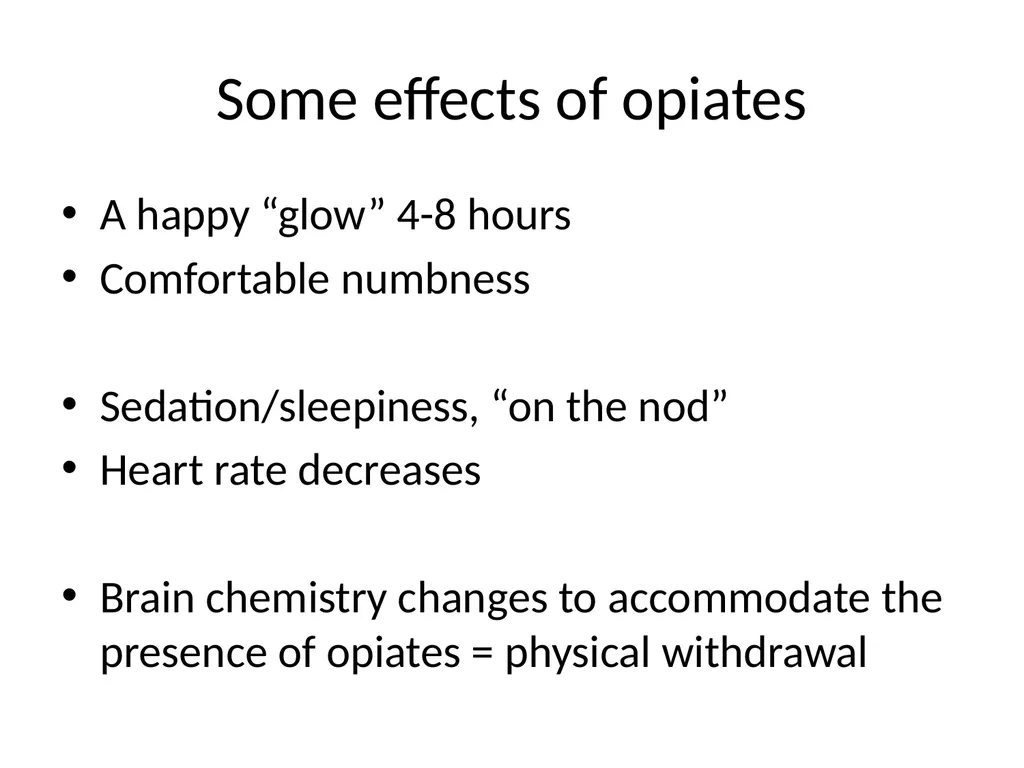
slide5. Some effects of opiates A happy “glow” 4-8 hours
Comfortable numbness
Sedation/sleepiness, “on the nod”
Heart rate decreases
Brain chemistry changes to accommodate the presence of opiates = physical withdrawal<br>
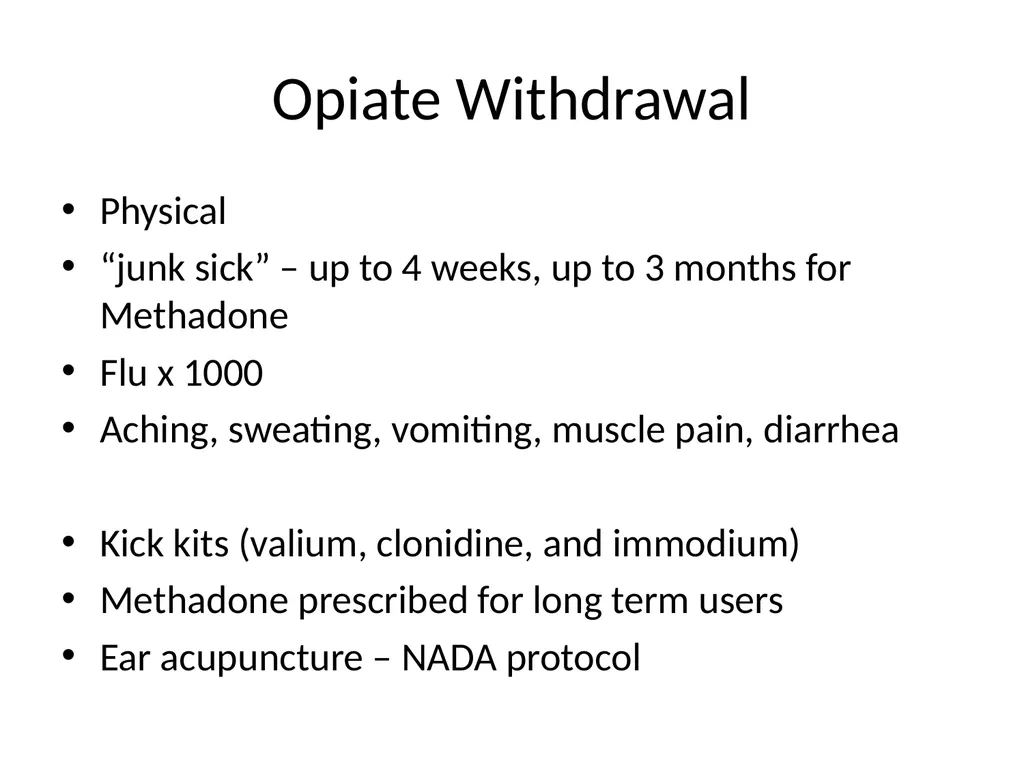
slide6. Opiate Withdrawal Physical
“junk sick” – up to 4 weeks, up to 3 months for Methadone
Flu x 1000
Aching, sweating, vomiting, muscle pain, diarrhea
Kick kits (valium, clonidine, and immodium)
Methadone prescribed for long term users
Ear acupuncture – NADA protocol<br>
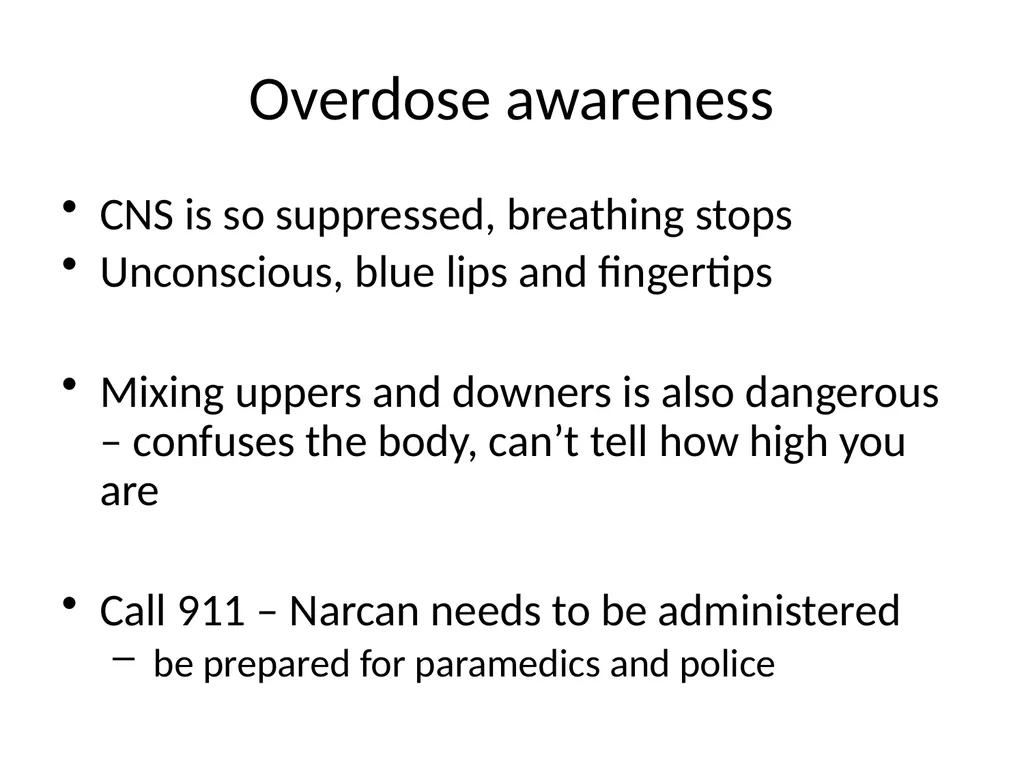
slide7. Overdose awareness CNS is so suppressed, breathing stops
Unconscious, blue lips and fingertips
Mixing uppers and downers is also dangerous – confuses the body, can’t tell how high you are
Call 911 – Narcan needs to be administered
be prepared for paramedics and police<br>
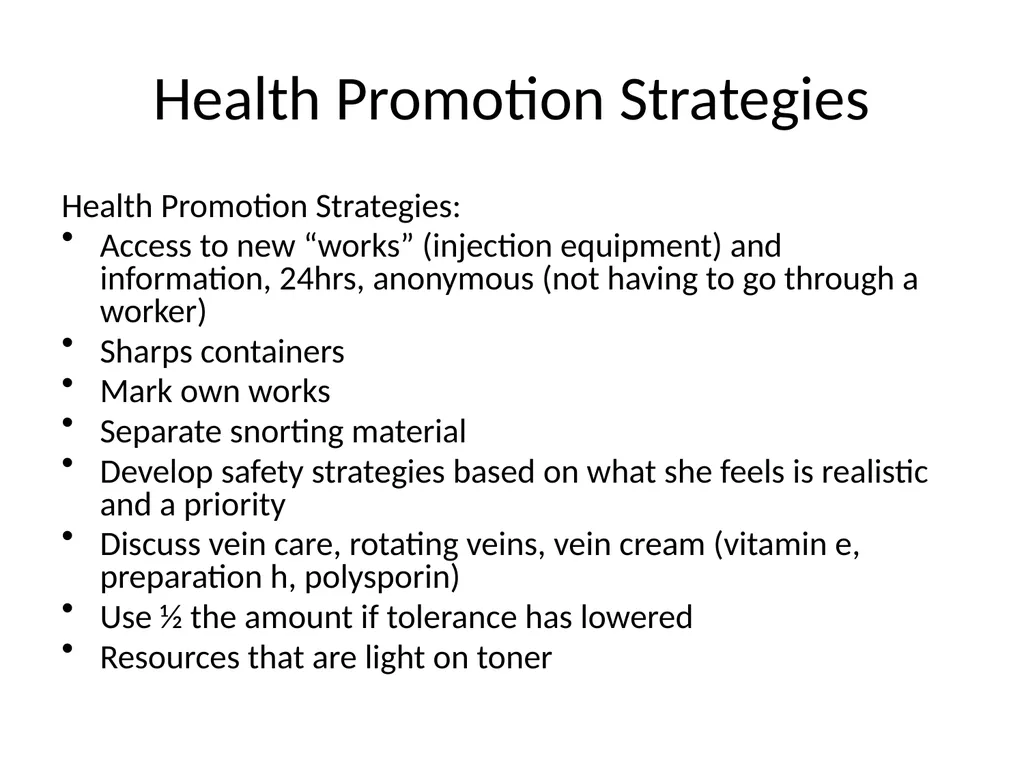
slide8. Health Promotion Strategies Health Promotion Strategies:
Access to new “works” (injection equipment) and information, 24hrs, anonymous (not having to go through a worker)
Sharps containers
Mark own works
Separate snorting material
Develop safety strategies based on what she feels is realistic and a priority
Discuss vein care, rotating veins, vein cream (vitamin e, preparation h, polysporin)
Use ½ the amount if tolerance has lowered
Resources that are light on toner<br>
slide9. Stimulants “Uppers”
CNS Stimulant
Cocaine, crack
Speed
Crystal Meth<br>
slide10. How are stimulants used? Swallowing
- pills, tablets – speed, “bennys”
Snorting
- cocaine, speed, crystal meth
Smoking
- crack and crystal meth
Injection
- all can be injected<br>
slide11. Some effects of stimulants Euphoric feelings, 5-15 minutes
Can be more social, confident, energetic, talkative, hyper (alert), or anxious
Shorter half life = more frequent administration
Cookie feet
Loss of appetite
Dehydration
Increased heart rate<br>
slide12. Withdrawal from Stimulants Primarily psychological – urges to use can still be very strong
Happy brain chemicals (seratonin, dopamine) are depleted
Big emotions, emotional and physical pain
Hopelessness and self loathing – watch for suicidality
Extremely tired
Irritable, sensitive to light, noise
Lasts about 3 days<br>
slide13. Overdose awareness Severe dehydration, overheating, lack of sleep, water and nutrients
Seizures, “doing the chicken”
Often in sets of 3
Protect head, never put anything in mouth
Cool down with wet towels in armpits, backs of knees, luke warm shower with a friend, let her make the water cooler by herself
Stop using for now<br>
slide14. Harm Reduction Strategies Strategies re: hydration, food, and sleep
Support to understand withdrawal symptoms as a part of using (hangover)
Collect resin with a plastic straw instead of a metal blade
Access to safer crack use kits which address dangers associated with homemade pipes
HIV and HCV, damage to lungs from metal fatigue, health problems associated with aluminum foil, aluminum cans, and chemicals from heated plastic<br>
slide15. Hepatitis C In blood
Destroys liver
Very hardy virus
Transmitted through white blood cells
Many strands
Interferon (will need support), milk thistle<br>
slide16. Toxic pipes – Tin Can aluminum
Plastic coating
Ashes
Debris
Sharp edges
Worst health choice
Most popular where barriers exist because it’s quick and disposible<br>
slide17. Toxic Pipes – Copper Elbow Aluminum
Ask
Copper in lungs from collecting resin
Hot – can cause burns
“An old friend”<br>
slide18. Toxic pipes – Asthma inhaler Aluminum
Plastic
Ashes
Ingestion of plastic from scraping<br>
slide19. Toxic Pipes – Water Bottle Plastic
Ashes
Aluminum<br>
slide20. Toxic Pipes – Ginseng Bottles Metal fatigue
Sharp edges, cuts and burns<br>
slide21. Safer Crack Use Kits Sturdy Pyrex
Screens reduce damage to lungs
Health promotion messages
Supplies for 1+<br>
slide22. A note on cigarrettes Knock out the ash
Cover the filter<br>
slide23. Alcohol CNS depressant
Ingested by drinking
Wine, beer, liquor, cooking wine, hand sanitizer, mouthwash<br>
slide24. Some effects of alcohol Happy at first, but can bring on difficult emotions and depression
Impaired thinking and memory
Decreased fine motor skills
Decreased perception (pain, time)<br>
slide25. Withdrawal Insomnia, sweats and shakes
Can lead to seizures
- non-medical withdrawal management
services (detox) may require initial
supervision in hospital<br>
slide26. Harm Reduction Strategies Mixing alcohol with other CNS depressants (heroin, methadone, percocet) is extremely dangerous. It is also dangerous to mix with benzodiazepines (valium)
Alcohol is really bad on the liver, a concern for those living with Hepatitis C (HCV)
Pace drinking, alternate with water, teas, etc.
Safety planning – a place to pass out
Taper instead of “cold turkey” if drinking heavily<br>
slide27. Resources Harmreductionconsultants@gmail.com
CATIE – free, excellent harm reduction information in easy to read formats
Toronto Public Health – Narcan training
416-392-0520
National Acupuncture Detoxification Association (NADA)<br>

harmreductionconsultants@gmail.com<br>
slide2. Types of Drugs Focus on:
Opiates
CNS Stimulants
Alcohol
Women are often poly drug users<br>
slide3. Opiates Painkillers
- percocet, oxycodone, fentanyl, heroin, morphine, demerol, delaudid, etc.
- physical and emotional pain
Central Nervous System(CNS) Depressant
brain and spinal cord work together to process info from senses and respond<br>
slide4. How are opiates used? Pills
- swallowed, crushed and snorted, or injected
Heroin
- smoked, snorted, or injected
Methadone
By prescription, daily “drink”<br>
slide5. Some effects of opiates A happy “glow” 4-8 hours
Comfortable numbness
Sedation/sleepiness, “on the nod”
Heart rate decreases
Brain chemistry changes to accommodate the presence of opiates = physical withdrawal<br>
slide6. Opiate Withdrawal Physical
“junk sick” – up to 4 weeks, up to 3 months for Methadone
Flu x 1000
Aching, sweating, vomiting, muscle pain, diarrhea
Kick kits (valium, clonidine, and immodium)
Methadone prescribed for long term users
Ear acupuncture – NADA protocol<br>
slide7. Overdose awareness CNS is so suppressed, breathing stops
Unconscious, blue lips and fingertips
Mixing uppers and downers is also dangerous – confuses the body, can’t tell how high you are
Call 911 – Narcan needs to be administered
be prepared for paramedics and police<br>
slide8. Health Promotion Strategies Health Promotion Strategies:
Access to new “works” (injection equipment) and information, 24hrs, anonymous (not having to go through a worker)
Sharps containers
Mark own works
Separate snorting material
Develop safety strategies based on what she feels is realistic and a priority
Discuss vein care, rotating veins, vein cream (vitamin e, preparation h, polysporin)
Use ½ the amount if tolerance has lowered
Resources that are light on toner<br>
slide9. Stimulants “Uppers”
CNS Stimulant
Cocaine, crack
Speed
Crystal Meth<br>
slide10. How are stimulants used? Swallowing
- pills, tablets – speed, “bennys”
Snorting
- cocaine, speed, crystal meth
Smoking
- crack and crystal meth
Injection
- all can be injected<br>
slide11. Some effects of stimulants Euphoric feelings, 5-15 minutes
Can be more social, confident, energetic, talkative, hyper (alert), or anxious
Shorter half life = more frequent administration
Cookie feet
Loss of appetite
Dehydration
Increased heart rate<br>
slide12. Withdrawal from Stimulants Primarily psychological – urges to use can still be very strong
Happy brain chemicals (seratonin, dopamine) are depleted
Big emotions, emotional and physical pain
Hopelessness and self loathing – watch for suicidality
Extremely tired
Irritable, sensitive to light, noise
Lasts about 3 days<br>
slide13. Overdose awareness Severe dehydration, overheating, lack of sleep, water and nutrients
Seizures, “doing the chicken”
Often in sets of 3
Protect head, never put anything in mouth
Cool down with wet towels in armpits, backs of knees, luke warm shower with a friend, let her make the water cooler by herself
Stop using for now<br>
slide14. Harm Reduction Strategies Strategies re: hydration, food, and sleep
Support to understand withdrawal symptoms as a part of using (hangover)
Collect resin with a plastic straw instead of a metal blade
Access to safer crack use kits which address dangers associated with homemade pipes
HIV and HCV, damage to lungs from metal fatigue, health problems associated with aluminum foil, aluminum cans, and chemicals from heated plastic<br>
slide15. Hepatitis C In blood
Destroys liver
Very hardy virus
Transmitted through white blood cells
Many strands
Interferon (will need support), milk thistle<br>
slide16. Toxic pipes – Tin Can aluminum
Plastic coating
Ashes
Debris
Sharp edges
Worst health choice
Most popular where barriers exist because it’s quick and disposible<br>
slide17. Toxic Pipes – Copper Elbow Aluminum
Ask
Copper in lungs from collecting resin
Hot – can cause burns
“An old friend”<br>
slide18. Toxic pipes – Asthma inhaler Aluminum
Plastic
Ashes
Ingestion of plastic from scraping<br>
slide19. Toxic Pipes – Water Bottle Plastic
Ashes
Aluminum<br>
slide20. Toxic Pipes – Ginseng Bottles Metal fatigue
Sharp edges, cuts and burns<br>
slide21. Safer Crack Use Kits Sturdy Pyrex
Screens reduce damage to lungs
Health promotion messages
Supplies for 1+<br>
slide22. A note on cigarrettes Knock out the ash
Cover the filter<br>
slide23. Alcohol CNS depressant
Ingested by drinking
Wine, beer, liquor, cooking wine, hand sanitizer, mouthwash<br>
slide24. Some effects of alcohol Happy at first, but can bring on difficult emotions and depression
Impaired thinking and memory
Decreased fine motor skills
Decreased perception (pain, time)<br>
slide25. Withdrawal Insomnia, sweats and shakes
Can lead to seizures
- non-medical withdrawal management
services (detox) may require initial
supervision in hospital<br>
slide26. Harm Reduction Strategies Mixing alcohol with other CNS depressants (heroin, methadone, percocet) is extremely dangerous. It is also dangerous to mix with benzodiazepines (valium)
Alcohol is really bad on the liver, a concern for those living with Hepatitis C (HCV)
Pace drinking, alternate with water, teas, etc.
Safety planning – a place to pass out
Taper instead of “cold turkey” if drinking heavily<br>
slide27. Resources Harmreductionconsultants@gmail.com
CATIE – free, excellent harm reduction information in easy to read formats
Toronto Public Health – Narcan training
416-392-0520
National Acupuncture Detoxification Association (NADA)<br>