03
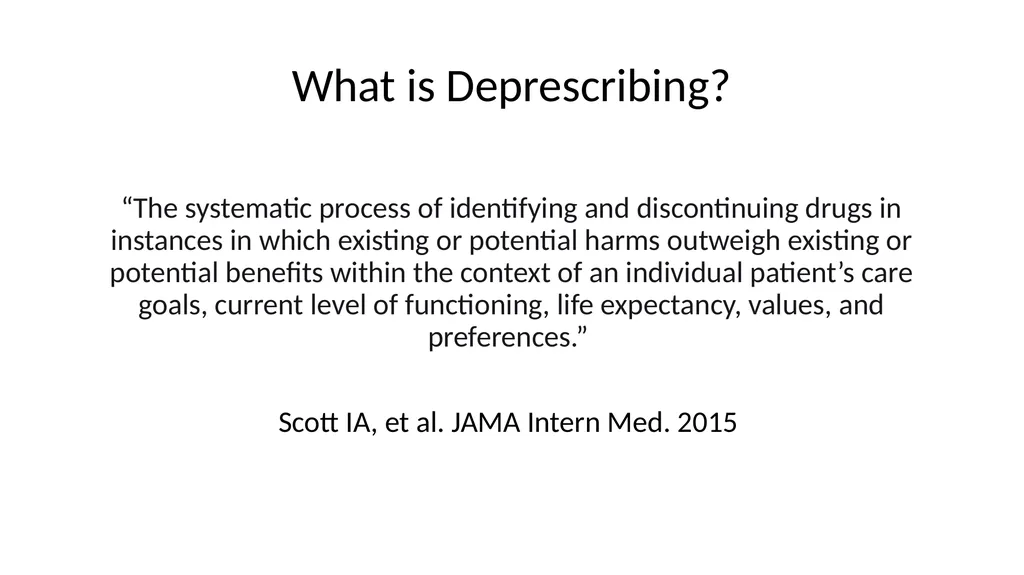
What is Deprescribing? “The systematic process of identifying and discontinuing drugs in instances in which existing or potential harms outweigh existing or potential benefits within the context of an individual patient’s care goals, current level of functioning, life expectancy, values, and preferences.”
Scott IA, et al. JAMA Intern Med. 2015<br>
04
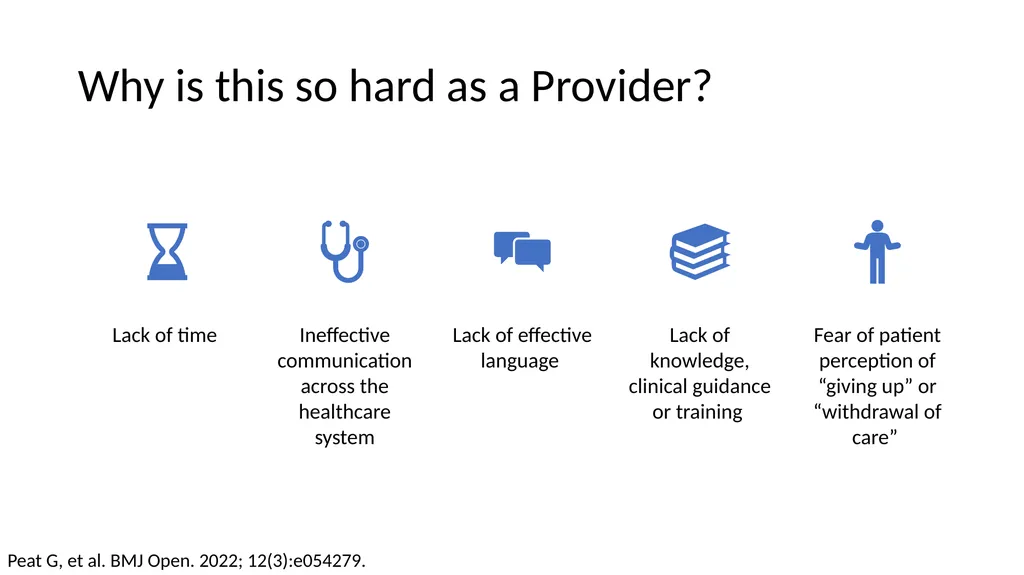
Why is this so hard as a Provider? Peat G, et al. BMJ Open. 2022; 12(3):e054279.<br>
05
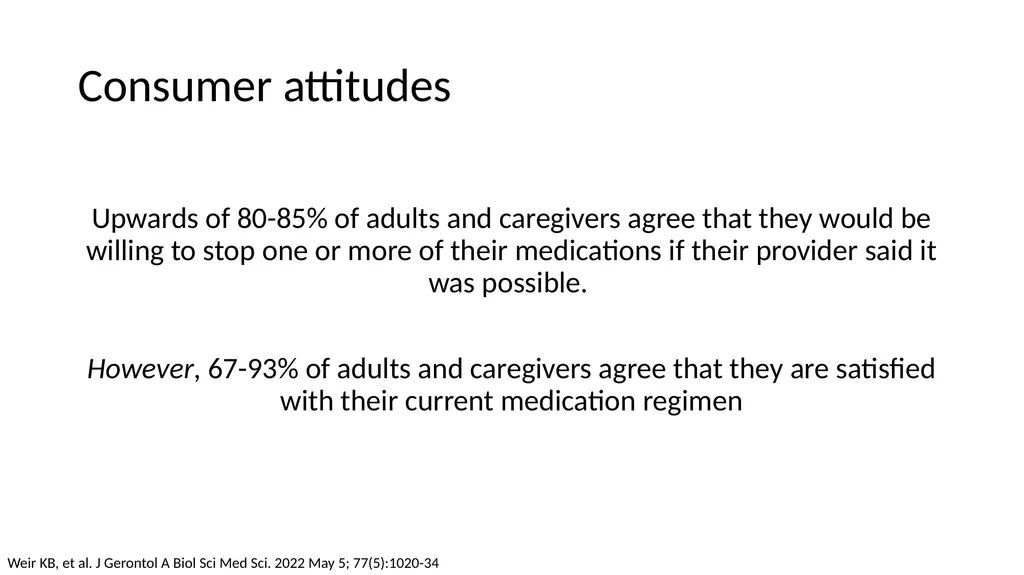
Consumer attitudes Upwards of 80-85% of adults and caregivers agree that they would be willing to stop one or more of their medications if their provider said it was possible.
However, 67-93% of adults and caregivers agree that they are satisfied with their current medication regimen Weir KB, et al. J Gerontol A Biol Sci Med Sci. 2022 May 5; 77(5):1020-34<br>
06
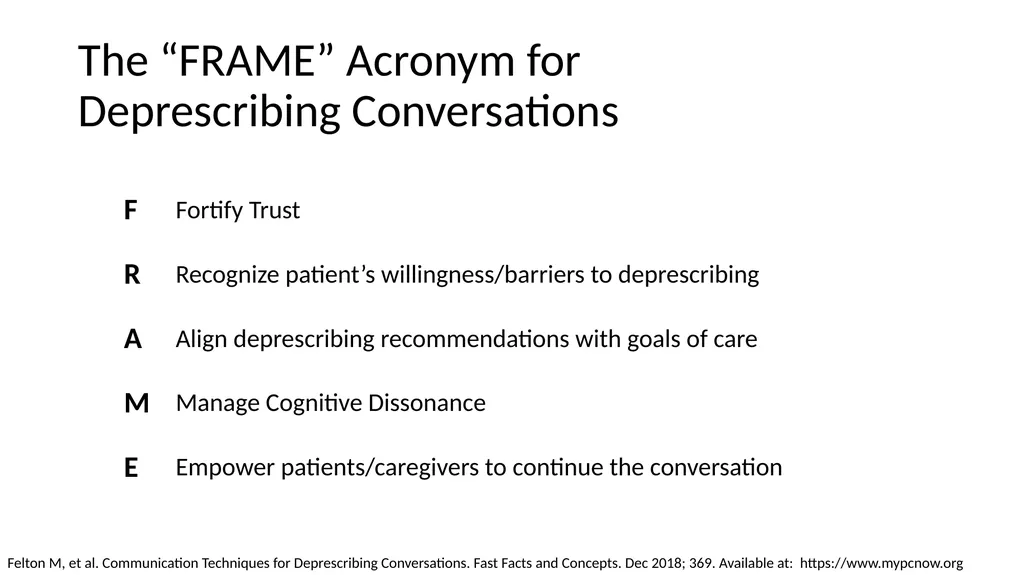
The “FRAME” Acronym for Deprescribing Conversations Felton M, et al. Communication Techniques for Deprescribing Conversations. Fast Facts and Concepts. Dec 2018; 369. Available at: https://www.mypcnow.org<br>
07
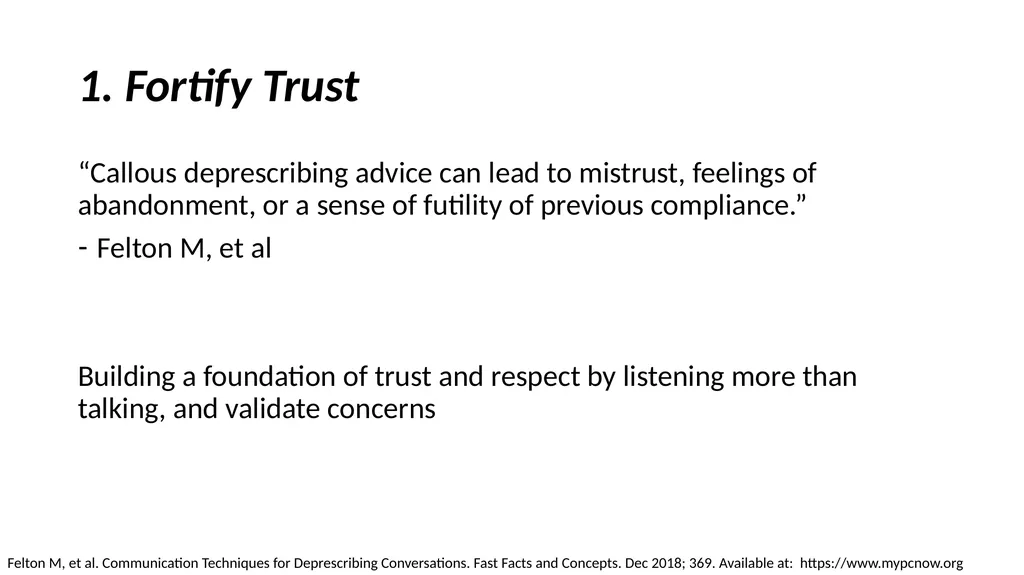
1. Fortify Trust “Callous deprescribing advice can lead to mistrust, feelings of abandonment, or a sense of futility of previous compliance.”
Felton M, et al
Building a foundation of trust and respect by listening more than talking, and validate concerns Felton M, et al. Communication Techniques for Deprescribing Conversations. Fast Facts and Concepts. Dec 2018; 369. Available at: https://www.mypcnow.org<br>
08
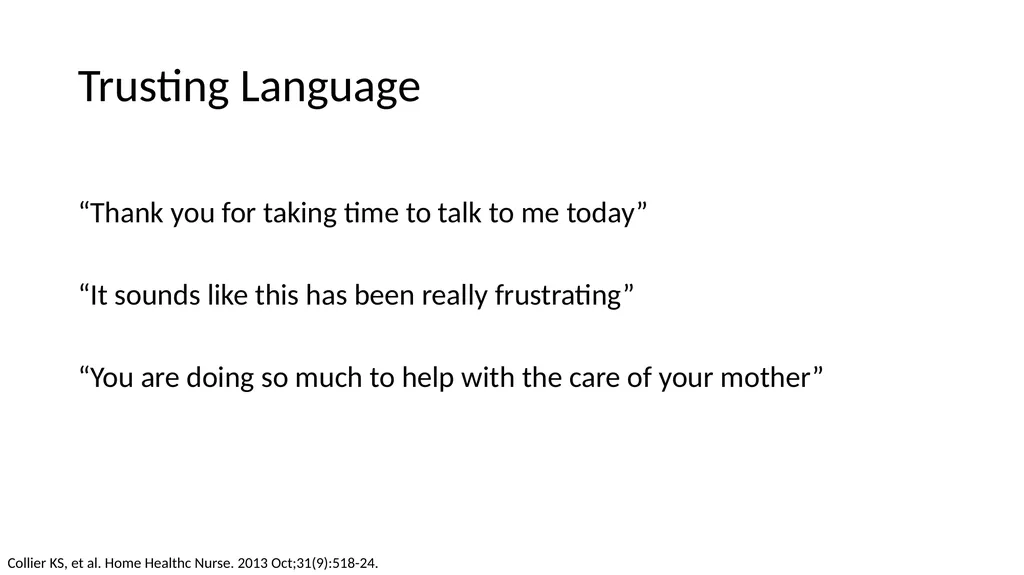
Trusting Language “Thank you for taking time to talk to me today”
“It sounds like this has been really frustrating”
“You are doing so much to help with the care of your mother” Collier KS, et al. Home Healthc Nurse. 2013 Oct;31(9):518-24.<br>
09
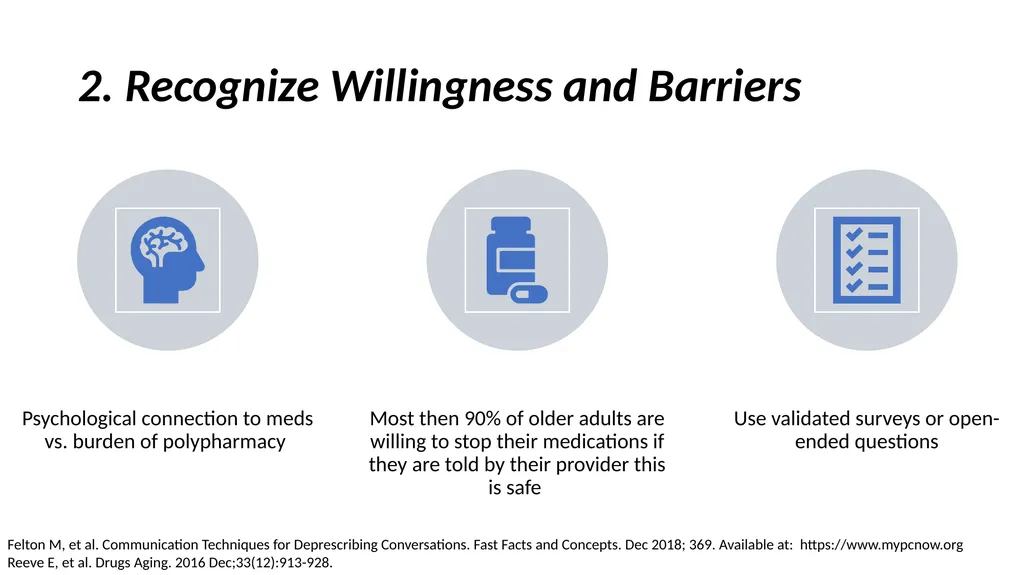
2. Recognize Willingness and Barriers Felton M, et al. Communication Techniques for Deprescribing Conversations. Fast Facts and Concepts. Dec 2018; 369. Available at: https://www.mypcnow.org
Reeve E, et al. Drugs Aging. 2016 Dec;33(12):913-928.<br>
10
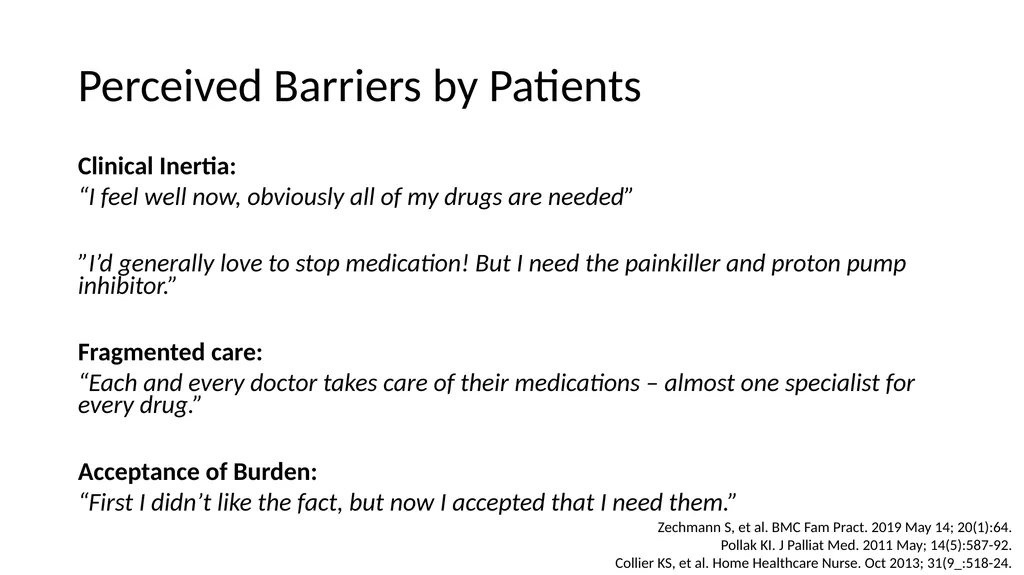
Perceived Barriers by Patients Clinical Inertia:
“I feel well now, obviously all of my drugs are needed”
”I’d generally love to stop medication! But I need the painkiller and proton pump inhibitor.”
Fragmented care:
“Each and every doctor takes care of their medications – almost one specialist for every drug.”
Acceptance of Burden:
“First I didn’t like the fact, but now I accepted that I need them.” Zechmann S, et al. BMC Fam Pract. 2019 May 14; 20(1):64.
Pollak KI. J Palliat Med. 2011 May; 14(5):587-92.
Collier KS, et al. Home Healthcare Nurse. Oct 2013; 31(9_:518-24.<br>
11
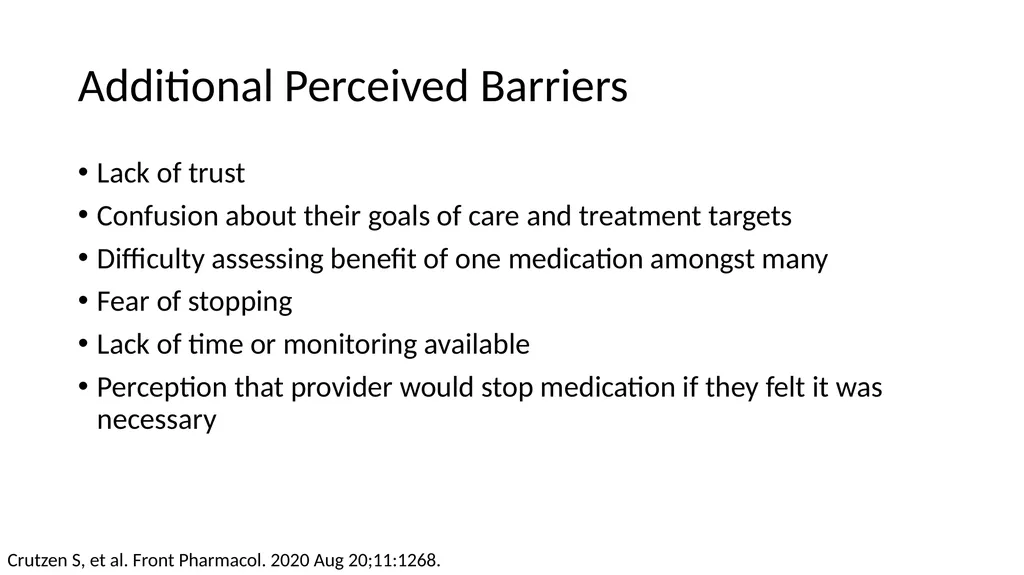
Additional Perceived Barriers Lack of trust
Confusion about their goals of care and treatment targets
Difficulty assessing benefit of one medication amongst many
Fear of stopping
Lack of time or monitoring available
Perception that provider would stop medication if they felt it was necessary Crutzen S, et al. Front Pharmacol. 2020 Aug 20;11:1268.<br>
12
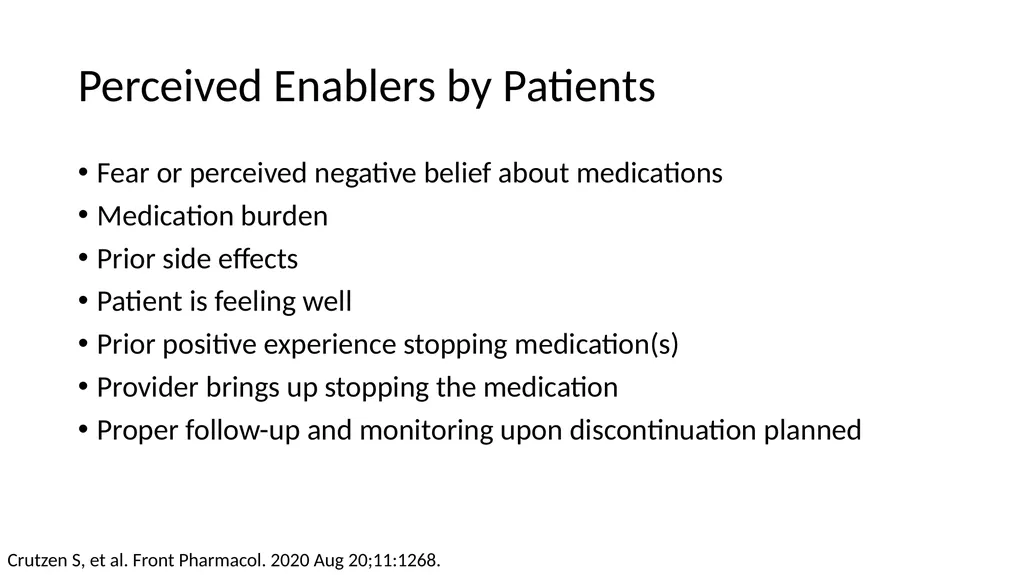
Perceived Enablers by Patients Fear or perceived negative belief about medications
Medication burden
Prior side effects
Patient is feeling well
Prior positive experience stopping medication(s)
Provider brings up stopping the medication
Proper follow-up and monitoring upon discontinuation planned Crutzen S, et al. Front Pharmacol. 2020 Aug 20;11:1268.<br>
13
Break “Barriers” and Support “Enablers” with the Proper Resources<br>
15
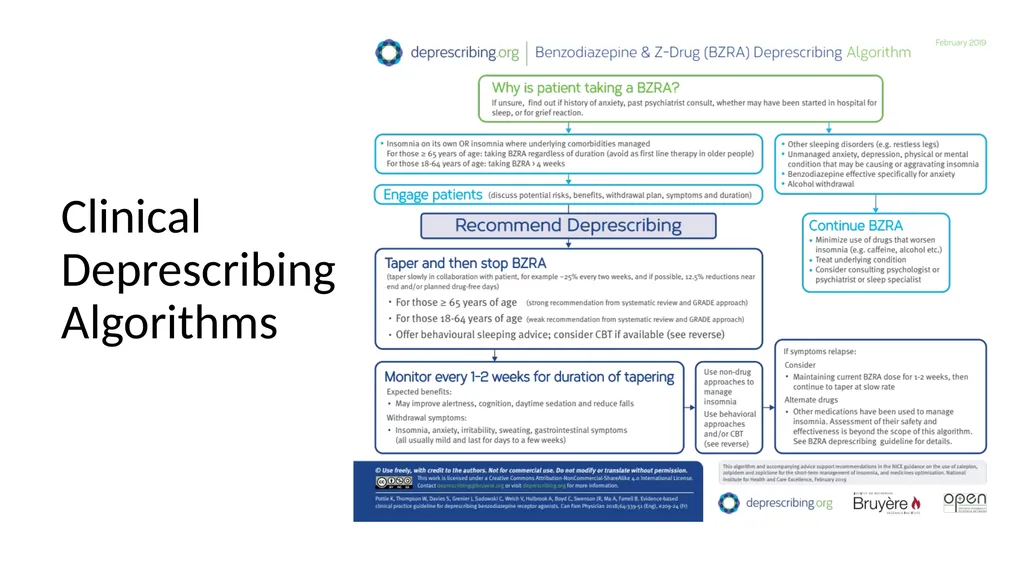
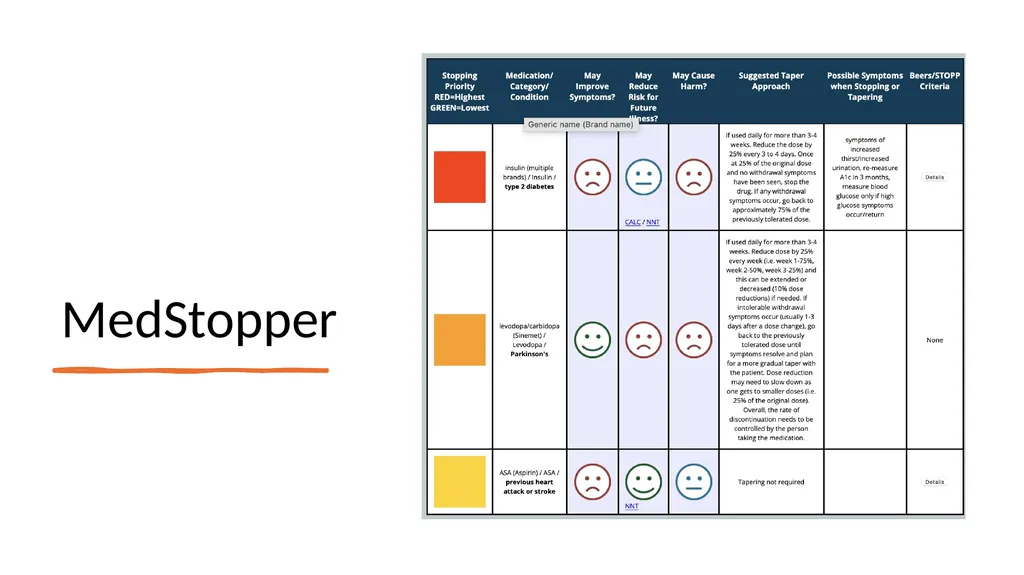
Clinical Deprescribing Algorithms<br>
16
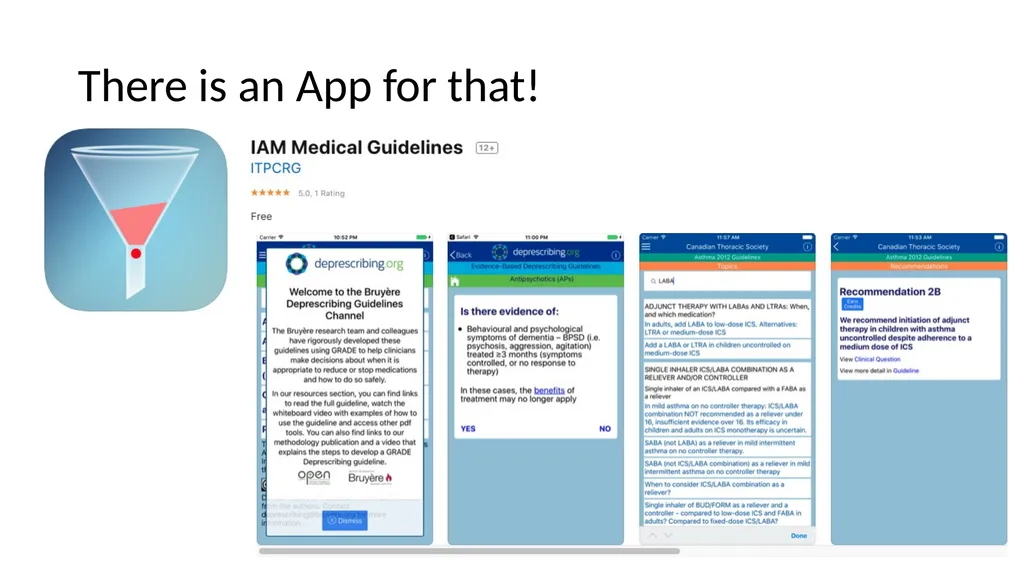
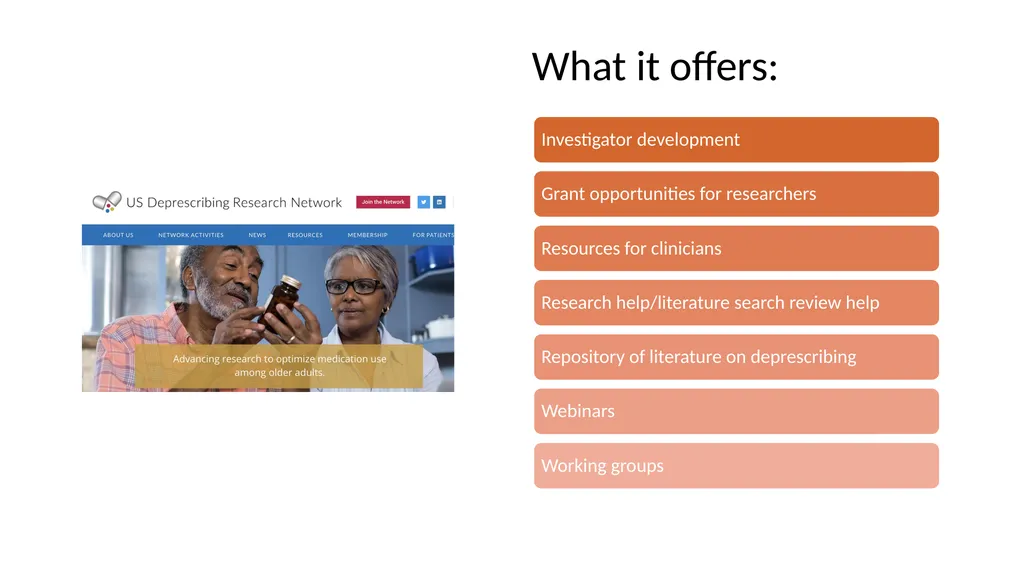
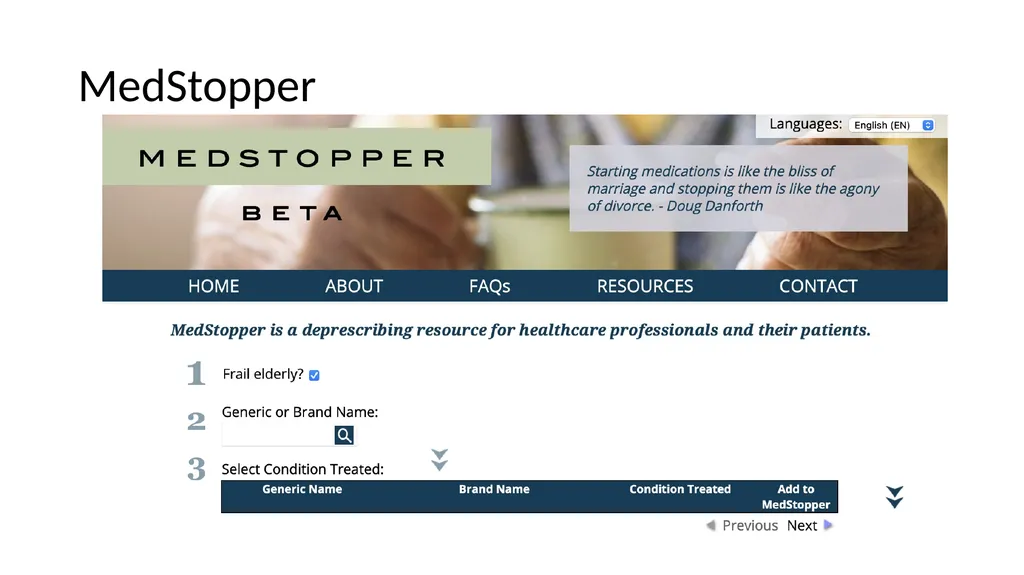
There is an App for that!<br>
18
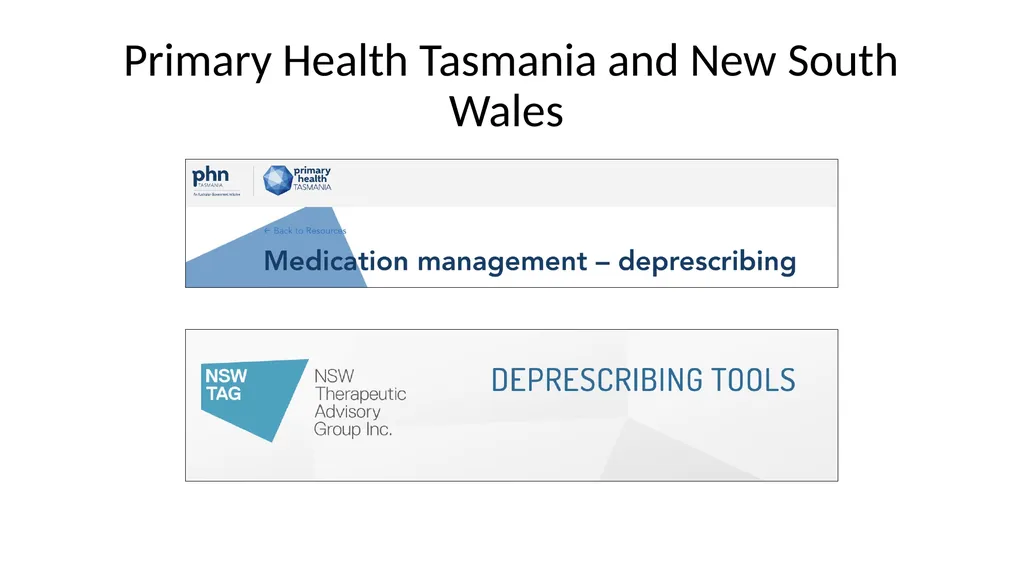
Primary Health Tasmania and New South Wales<br>
19
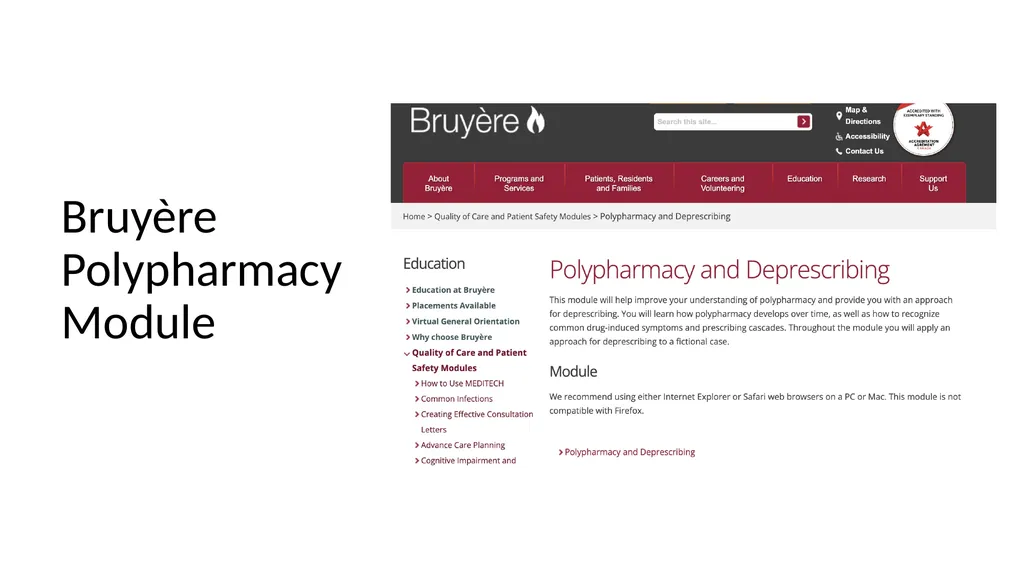
Bruyère Polypharmacy Module<br>
22
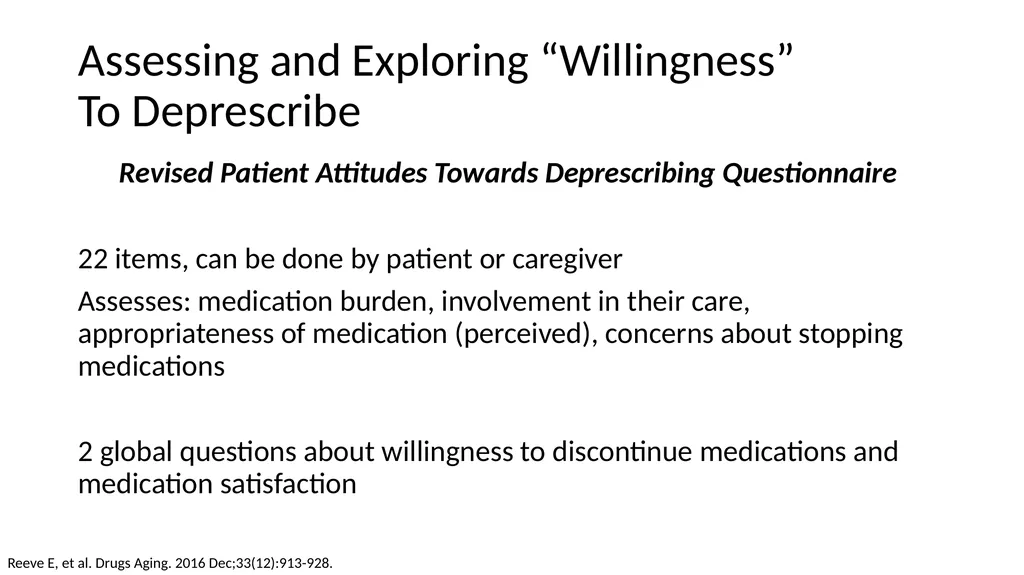
Assessing and Exploring “Willingness” To Deprescribe Revised Patient Attitudes Towards Deprescribing Questionnaire
22 items, can be done by patient or caregiver
Assesses: medication burden, involvement in their care, appropriateness of medication (perceived), concerns about stopping medications
2 global questions about willingness to discontinue medications and medication satisfaction Reeve E, et al. Drugs Aging. 2016 Dec;33(12):913-928.<br>
23
So, you don’t want to give you patients a 22-item survey!? Just ask them a couple questions:
“Do you feel like you are taking too many medications?”
�“Do you feel like your medications are inconvenient to take, which ones?”�
“Do you feel like one or more of your medications is causing harm or is no longer needed? Which ones?”
�“If we stopped one of your medications, would you be worried about side effects or loss of long-term benefit?” Reeve E, et al. Drugs Aging. 2016 Dec;33(12):913-928.<br>
24
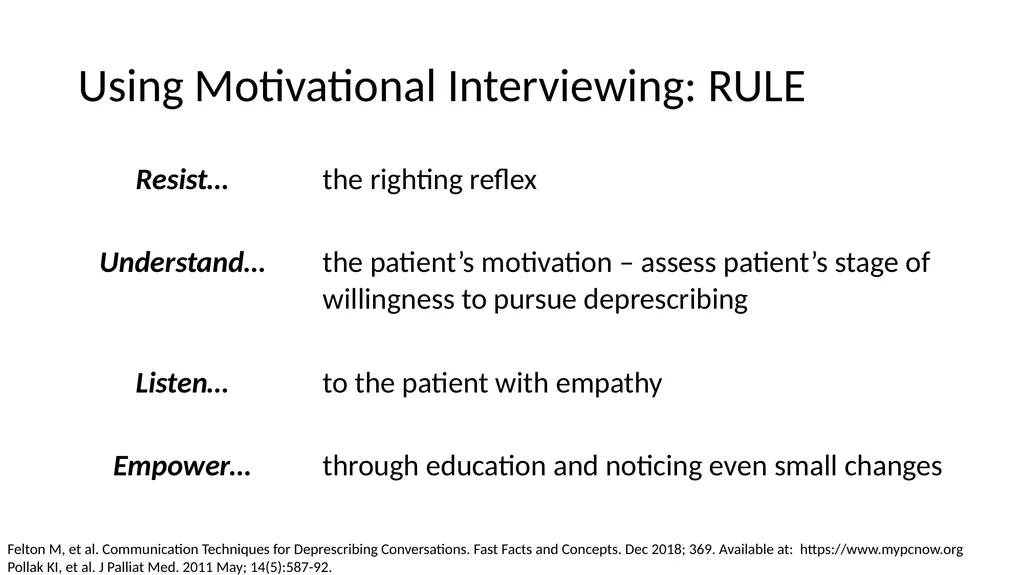
Using Motivational Interviewing: RULE Felton M, et al. Communication Techniques for Deprescribing Conversations. Fast Facts and Concepts. Dec 2018; 369. Available at: https://www.mypcnow.org
Pollak KI, et al. J Palliat Med. 2011 May; 14(5):587-92.<br>
25
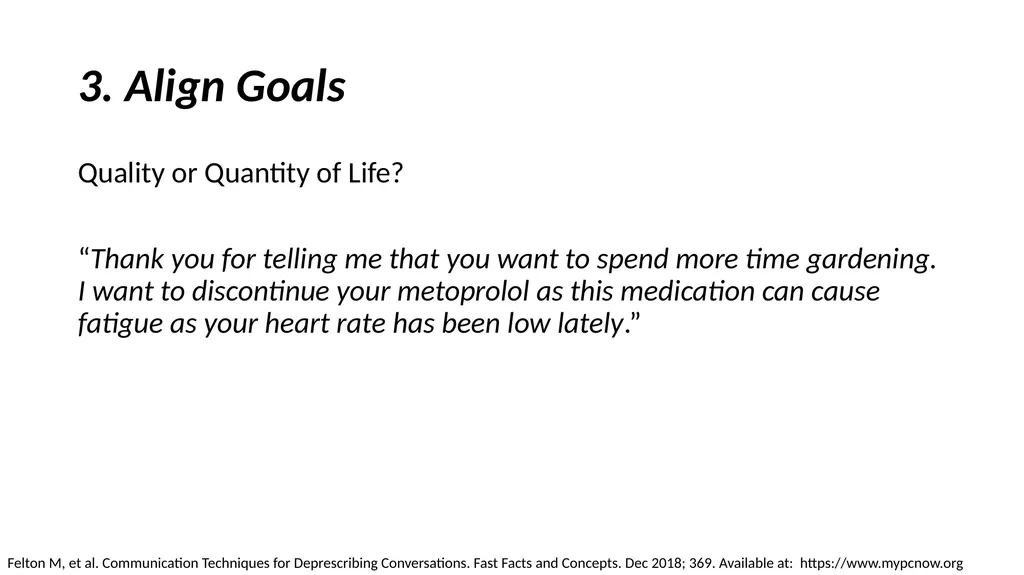
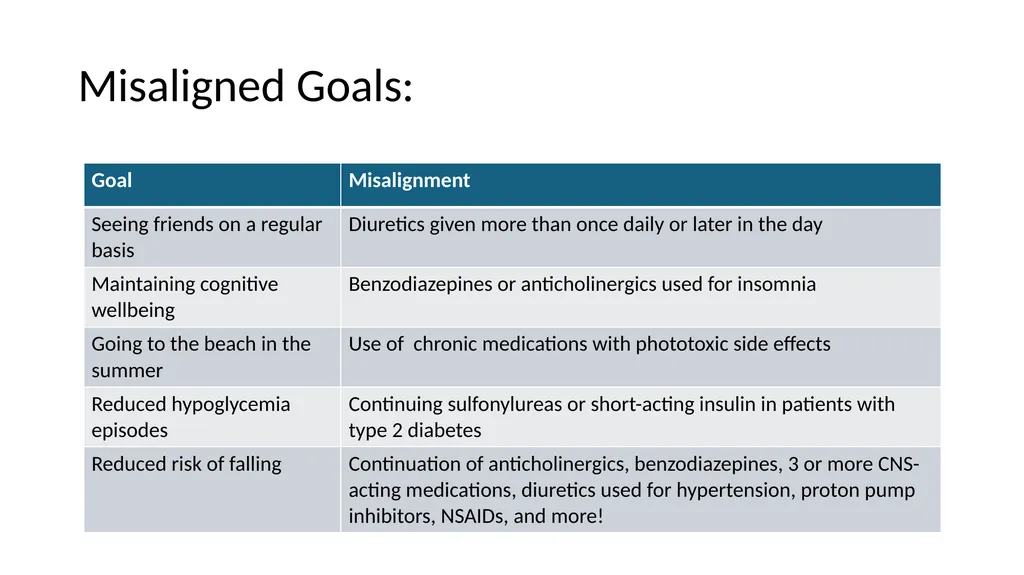
3. Align Goals Quality or Quantity of Life?
“Thank you for telling me that you want to spend more time gardening. I want to discontinue your metoprolol as this medication can cause fatigue as your heart rate has been low lately.” Felton M, et al. Communication Techniques for Deprescribing Conversations. Fast Facts and Concepts. Dec 2018; 369. Available at: https://www.mypcnow.org<br>
27
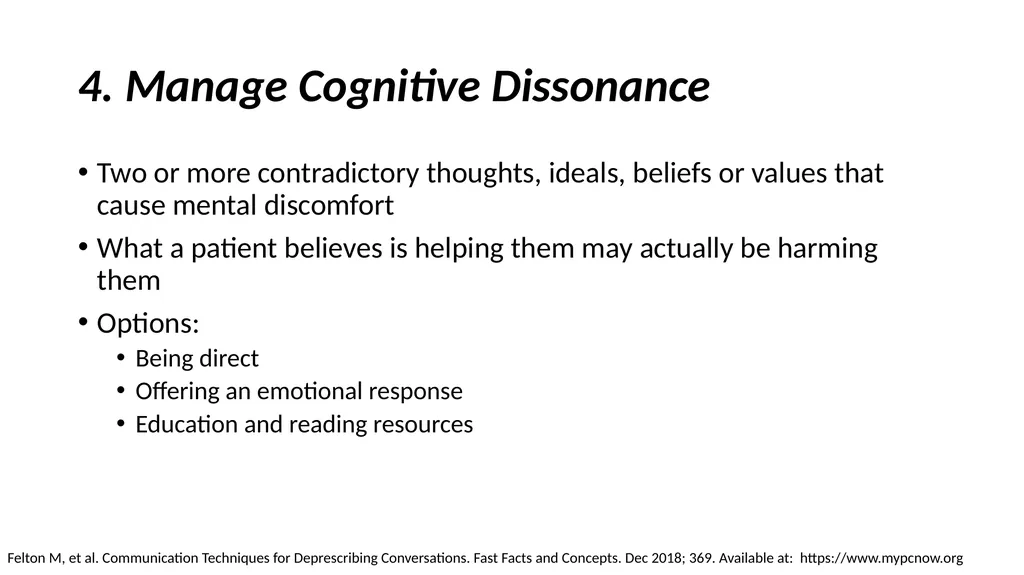
4. Manage Cognitive Dissonance Two or more contradictory thoughts, ideals, beliefs or values that cause mental discomfort
What a patient believes is helping them may actually be harming them
Options:
Being direct
Offering an emotional response
Education and reading resources Felton M, et al. Communication Techniques for Deprescribing Conversations. Fast Facts and Concepts. Dec 2018; 369. Available at: https://www.mypcnow.org<br>
28
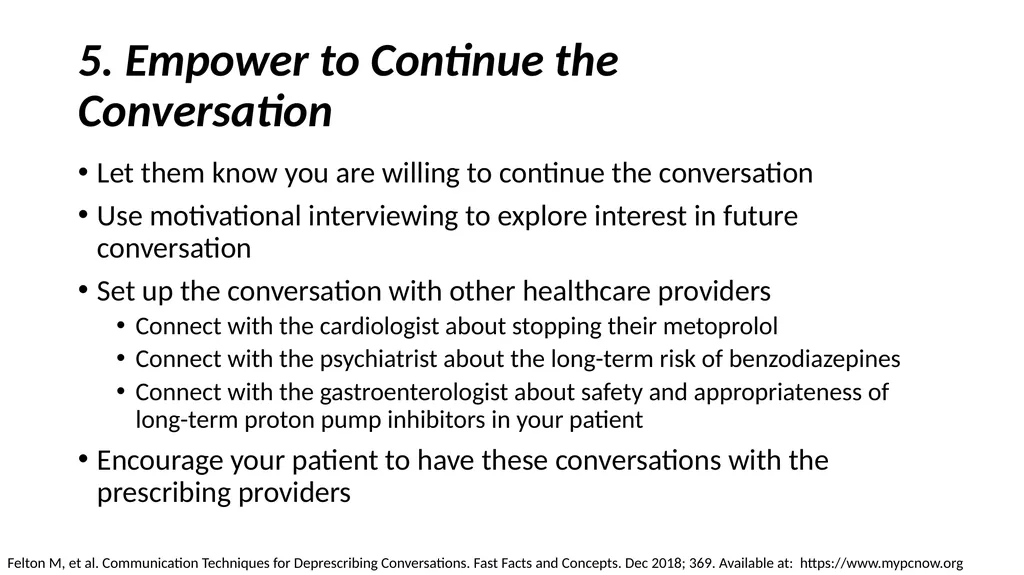
5. Empower to Continue the Conversation Let them know you are willing to continue the conversation
Use motivational interviewing to explore interest in future conversation
Set up the conversation with other healthcare providers
Connect with the cardiologist about stopping their metoprolol
Connect with the psychiatrist about the long-term risk of benzodiazepines
Connect with the gastroenterologist about safety and appropriateness of long-term proton pump inhibitors in your patient
Encourage your patient to have these conversations with the prescribing providers Felton M, et al. Communication Techniques for Deprescribing Conversations. Fast Facts and Concepts. Dec 2018; 369. Available at: https://www.mypcnow.org<br>
29
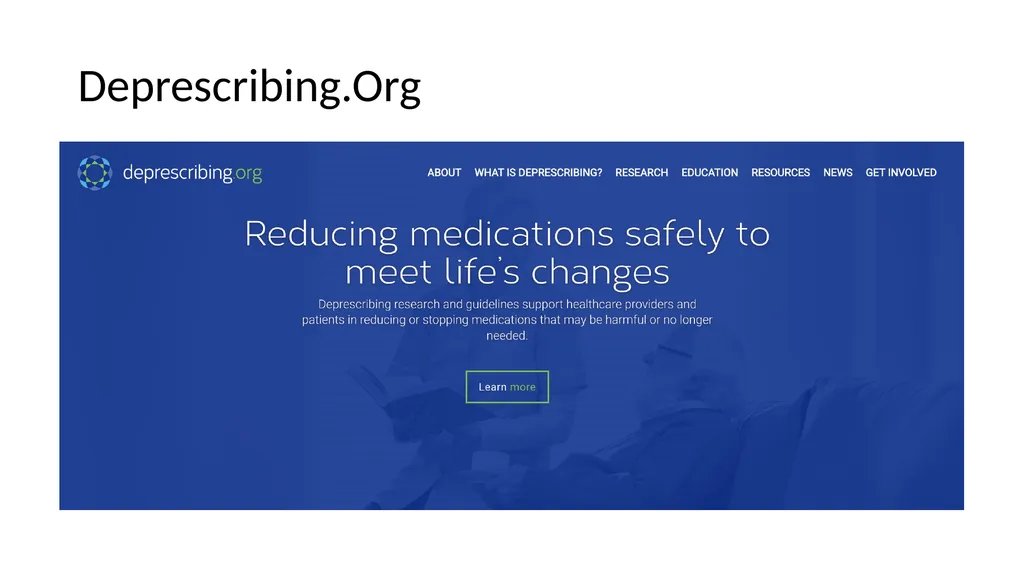
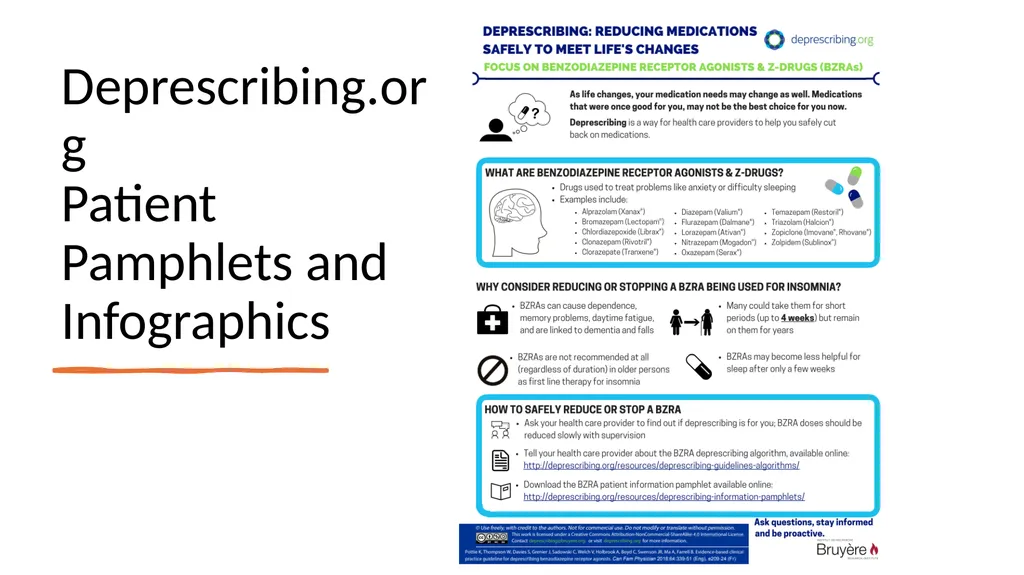
Deprescribing.org �Patient Pamphlets and Infographics<br>
32
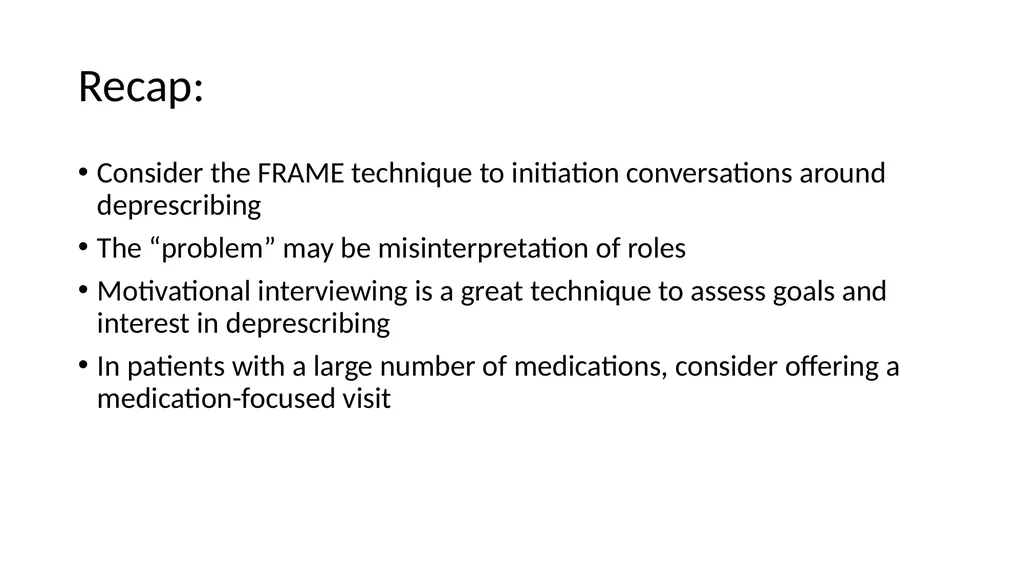
Recap: Consider the FRAME technique to initiation conversations around deprescribing
The “problem” may be misinterpretation of roles
Motivational interviewing is a great technique to assess goals and interest in deprescribing
In patients with a large number of medications, consider offering a medication-focused visit<br>
33
Questions? Sydney Springer, Pharm.D, M.S., BCPS, BCGP
Email: springers339@gmail.com<br>