Horror Sound Effects and Techniques Τρίτη 1803 For silent movies Aimilia karapostoli, architect PhD Silent film A silent film is a film without synchronized recorded sound (or more generally, no audible dialogue). Though silent films
"Horror Sound Effects and Techniques Τρίτη 18/03" is the property of its rightful owner. Permission is granted to
download and print the materials on this website for personal, non-commercial use only, and to display it
on your personal computer provided you do not modify the materials and that you retain all copyright
notices contained in the materials. By downloading content from our website, you accept the terms of this
agreement.
Presentation Transcript
01
Horror Sound Effects and Techniques Τρίτη 18/03 For silent movies Aimilia karapostoli, architect PhD<br>
02
Silent film A silent film is a film without synchronized recorded sound (or more generally, no audible dialogue). Though silent films convey narrative and emotion visually, various plot elements (such as a setting or era) or key lines of dialogue may, when necessary, be conveyed by the use of inter-title cards.
The term "silent film" is something of a misnomer, as these films were almost always accompanied by live sounds. During the silent era, which existed from the mid-1890s to the late 1920s, a pianist, theater organist—or even, in larger cities, an orchestra—would play music to accompany the films.<br>
03
Diegetic vs. non-diegetic horror sound effects Before we get into the sound effects and musical production frequently found in horror films, let’s take a minute to define the 2 categories of sound we hear in this (and any) type of cinema.
First, there is diegetic sound. These are the sounds that emanate from the world of the film. These would be things like screams, knocking doors, ghost sound effects, flesh being wounded, whispers and so on.
Non-diegetic, on the other hand, is placed there by the filmmakers in post-production and can include sounds like music, foley sounds and other designed sounds.<br>
04
Michel Chion, influenced by Pierre Schaeffer and his treatise on Musical Objects, recognizes at least three ways of listening that cover different objects and coexist harmoniously most of the time;
the casual,
the semantic, and
the reduced hearing.
Casual listening, which is the most common, consists of listening to the sound in order to gather information about its cause or source.
Semantic listening refers to a code or language that can interpret a message, such as spoken language and Morse code.
Finally, reduced listening is the model of listening that focuses on the features of the sound itself, independent of its cause and meaning.<br>
05
Instruments commonly used in horror films Stringed instruments
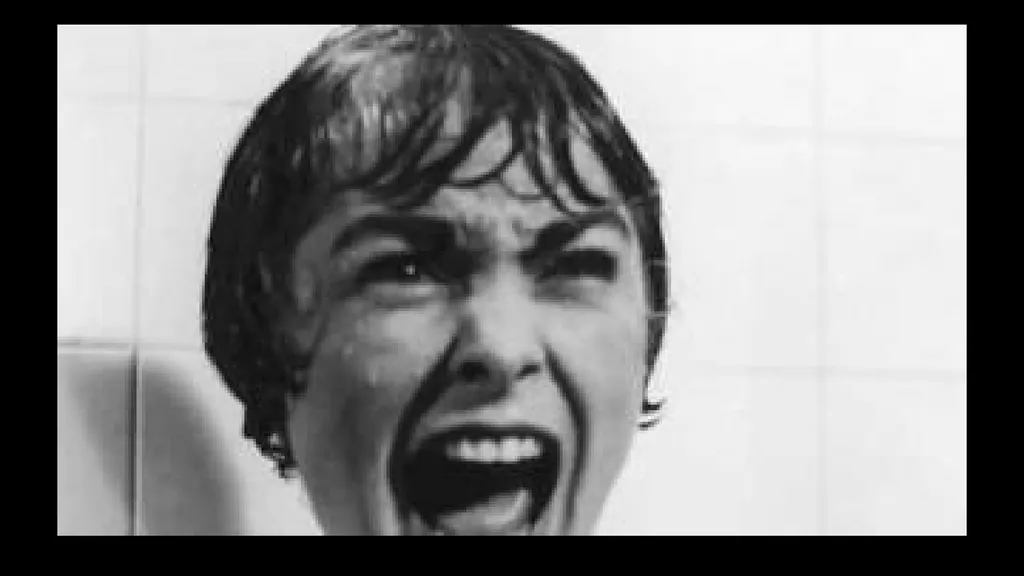
One filmmaker who flipped this on its head was Alfred Hitchcock. In the horror movie Psycho, the score is known for many stabbing staccato and arpeggio strings. The stabbing staccato sounds, of course, reach their absolute peak during the iconic shower murder scene.<br>
06
Instruments commonly used in horror films Synthesizers & Theremin
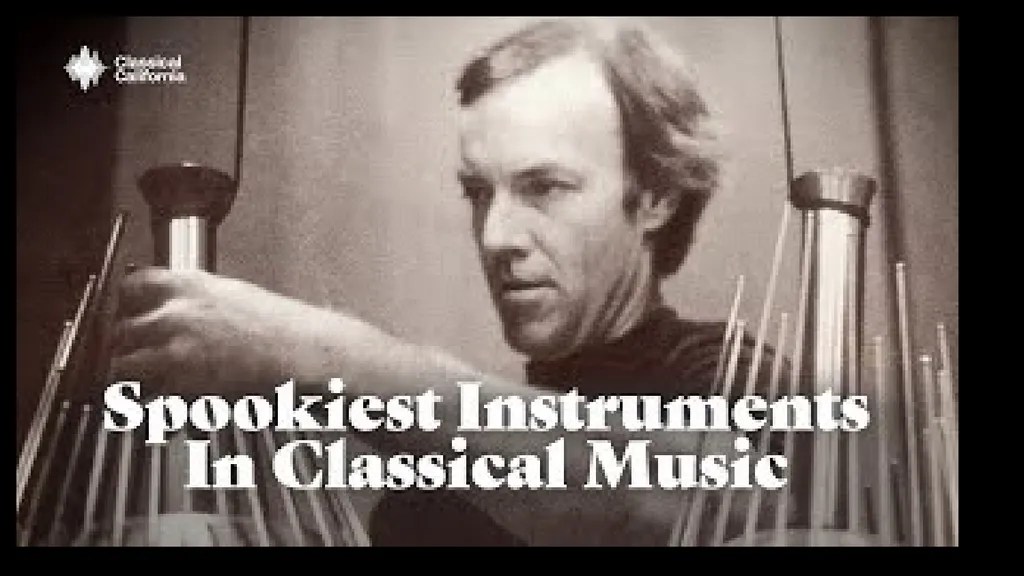
In the 1950s, the Theremin, a type of proto-synthesizer, became popular as a musical instrument and sound design element in science-fiction-horror films. While it doesn’t have the chromatic depth of a piano or synthesizer, the Theremin is great at creating dissonant and atonal sounds—perfect for horror films.
With the 1970s and 1980s horror films, especially of the sci-fi horror variety, the synthesizer came into its own. Filmmaker John Carpenter, for instance, scored his own films with synthesizers, like in the movies Halloween and The Thing. Likewise, in zombie films, synthesizers are ever-present.<br>
07
Instruments commonly used in horror films Guitar
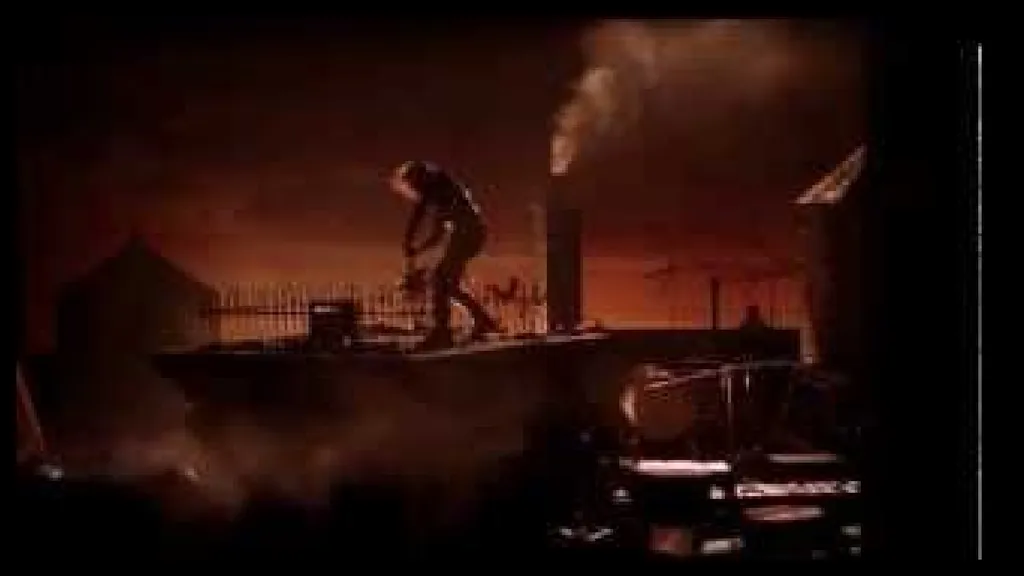
While not as common as synths, guitar run-through effects are an excellent choice for horror films. The Italian band Goblin, for instance, created a guitar-centric score for Dario Argento’s horror classic Suspiria. Trippy and unsettling, it perfectly matches Argento’s psychedelic horror film.
The 1994 gothic horror film The Crow is another example of a movie with great songs that feature guitar (and synths). If you watch any Rob Zombie film, you’ll hear a lot of guitars, which makes sense since he was a founding member of the 1990s industrial metal band White Zombie.<br>
08
5 Essential sound effects for horror films 1. Breathing
“ch ch ch ha ha ha” sound from Friday the 13th,
breathing sound effects are one of many essential horror audio tracks. But filmmakers can play with all sorts of breathing to unnerve audiences.
If a character has been running but stops to hide, their heavy breathing might just give them away to their pursuer. Similarly, when a character is dying, the actor and even the sound designer can really play with how their breathing changes from second to second.
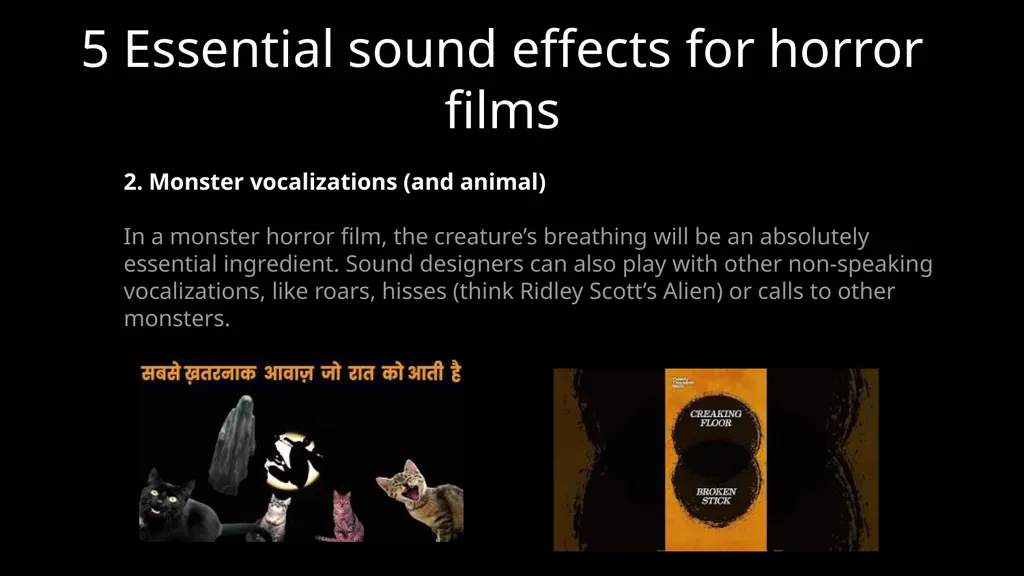
5 Essential sound effects for horror films 2. Monster vocalizations (and animal)
In a monster horror film, the creature’s breathing will be an absolutely essential ingredient. Sound designers can also play with other non-speaking vocalizations, like roars, hisses (think Ridley Scott’s Alien) or calls to other monsters.<br>
10
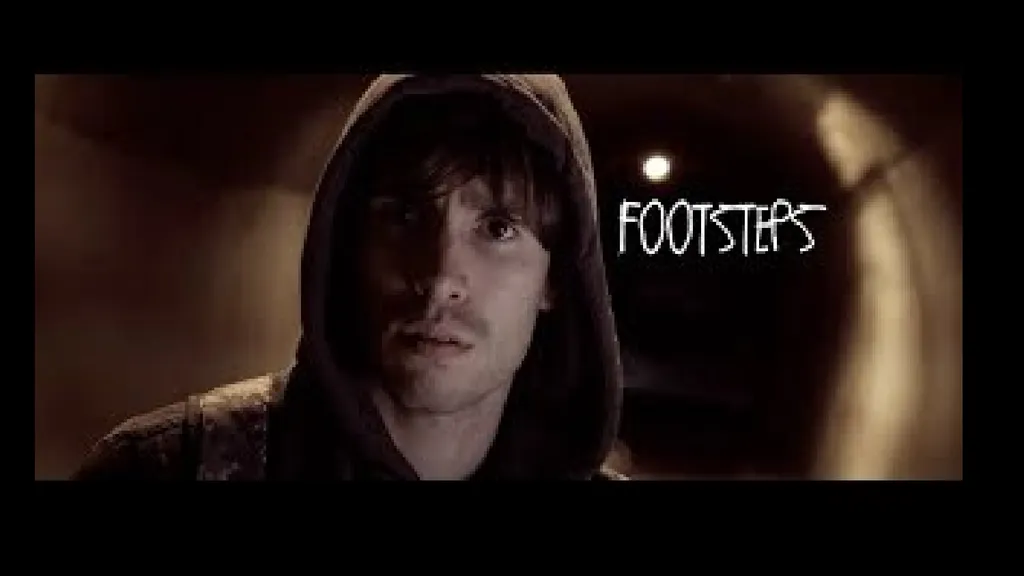
5 Essential sound effects for horror films 3. Footsteps
Nothing creates tension and terror quite like the footsteps of a killer or creature pursuing its victim. Sound designers can play with the volume and character of footsteps, and by adding reverb, delay and other effects to the audio mix, these footfalls can take on much more sonic complexity.<br>
11
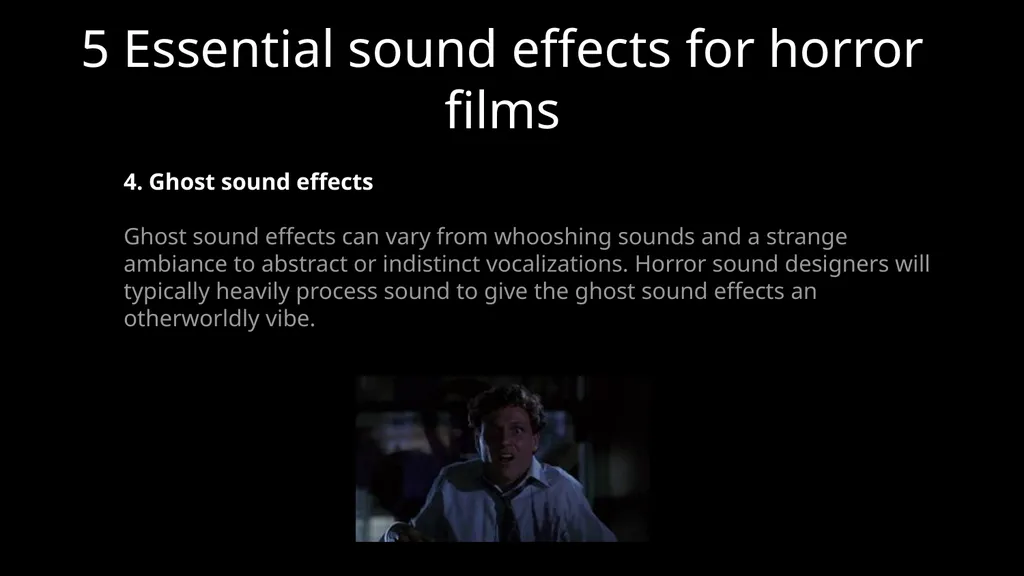
5 Essential sound effects for horror films 4. Ghost sound effects
Ghost sound effects can vary from whooshing sounds and a strange ambiance to abstract or indistinct vocalizations. Horror sound designers will typically heavily process sound to give the ghost sound effects an otherworldly vibe.<br>
12
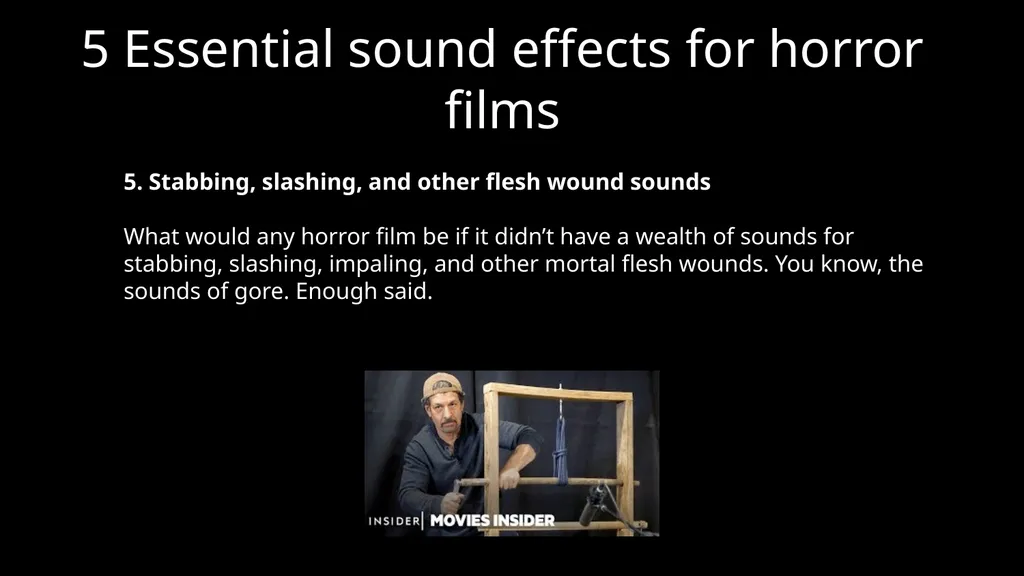
5 Essential sound effects for horror films 5. Stabbing, slashing, and other flesh wound sounds
What would any horror film be if it didn’t have a wealth of sounds for stabbing, slashing, impaling, and other mortal flesh wounds. You know, the sounds of gore. Enough said.<br>
13
https://www.audacityteam.org
για να πειράξετε μόνο τον ήχο, μπορείτε να κάνετε περισσότερο zoom, ευκολότερα cut και να συνδέσετε σε ένα layer αντιστοίχως, ατμόσφαιρα και μουσική.
https://freesound.org
ιδανικο για να βρείτε ηχητικά εφέ οπως πουλιά, αυτοκίνητα κοκ προτιμήστε τα κλιπ με κατάληξη *.wav δλδ ασυμπίεστα αρχεία ήχου.<br>
14
https://www.youtube.com/watch?v=cnTABrR0Kdw
Ambience
- Speed
- Panning
- Filters
- Drones
- Music
- Rhythm Make your sound atmospheres<br>