Hot Topic 3 Calculating Blood Loss at Delivery Catherine Angotti RN, MN, BScN Clinical Nurse Specialist, Labour and Delivery Mount Sinai Hospital Disclosures I have no disclosures, conflict of interests or affiliation with other
"Hot Topic #3 Calculating Blood Loss at Delivery" is the property of its rightful owner. Permission is granted to
download and print the materials on this website for personal, non-commercial use only, and to display it
on your personal computer provided you do not modify the materials and that you retain all copyright
notices contained in the materials. By downloading content from our website, you accept the terms of this
agreement.
Presentation Transcript
01
Hot Topic #3 Calculating Blood Loss at Delivery
Catherine Angotti RN, MN, BScN
Clinical Nurse Specialist, Labour and Delivery
Mount Sinai Hospital<br>
02
Disclosures I have no disclosures, conflict of interests or affiliation with other organizations to disclose.<br>
03
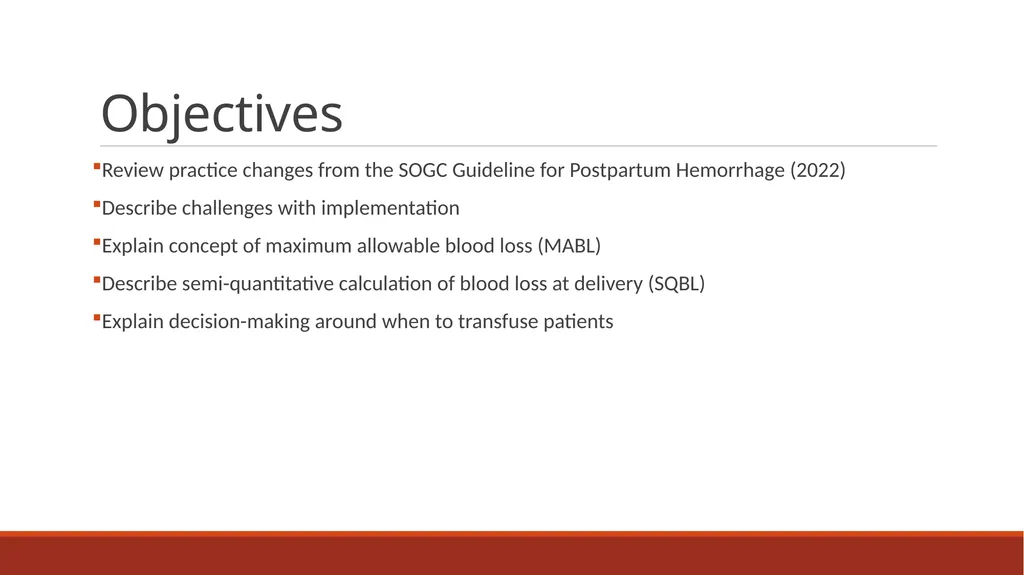
Objectives Review practice changes from the SOGC Guideline for Postpartum Hemorrhage (2022)
Describe challenges with implementation
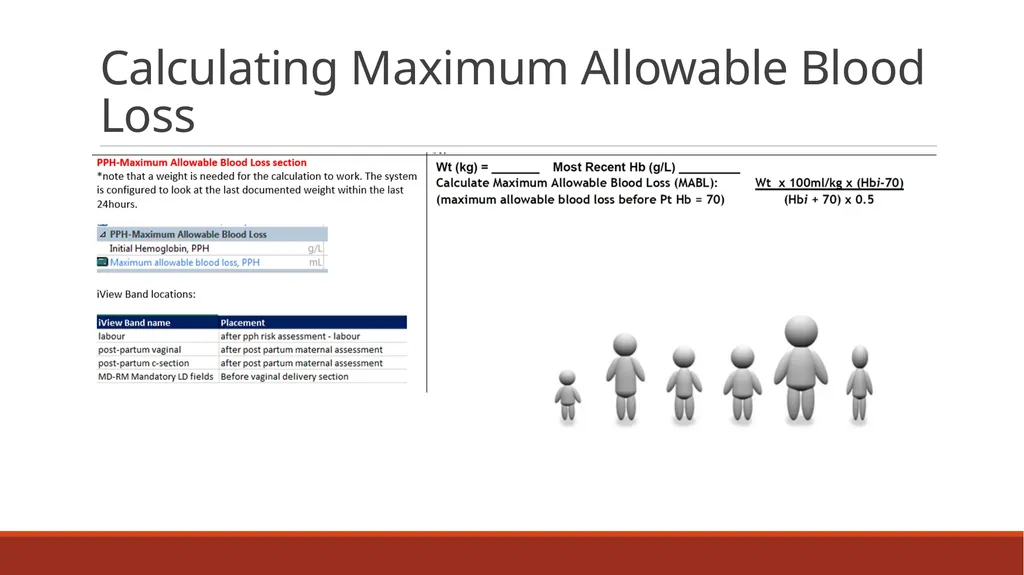
Explain concept of maximum allowable blood loss (MABL)
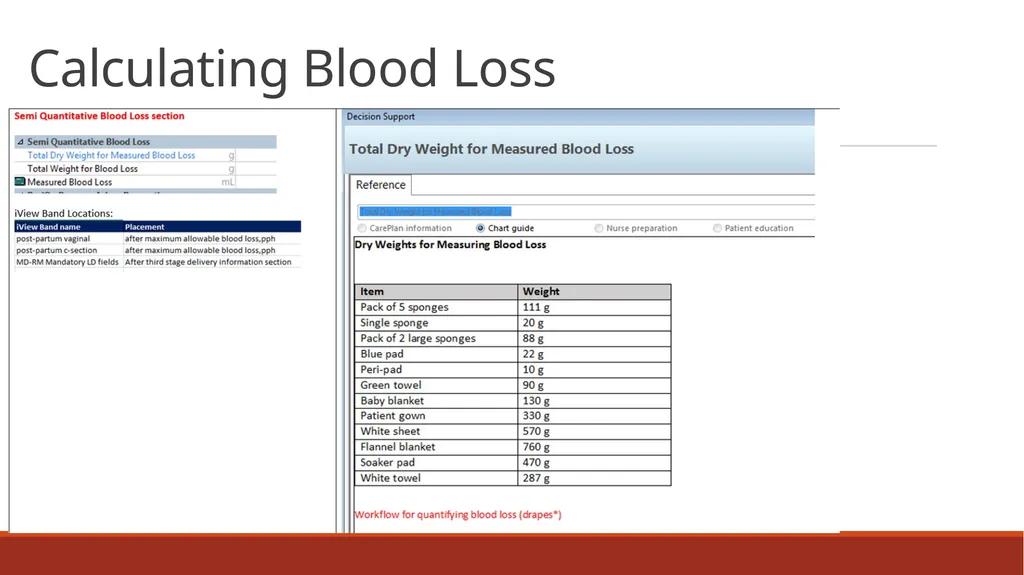
Describe semi-quantitative calculation of blood loss at delivery (SQBL)
Explain decision-making around when to transfuse patients<br>
04
Introduction New SOGC Guidelines (12/2022) had many recommendations and practice changes that needed to be implemented to promote ongoing patient safety at MSH
PPH occurs 3.5 – 6% of each 100 births (SOGC, 2022).
MSH data collection reviewed shows PPH rate is 8 – 10% or closer to 700 PPH/year<br>
05
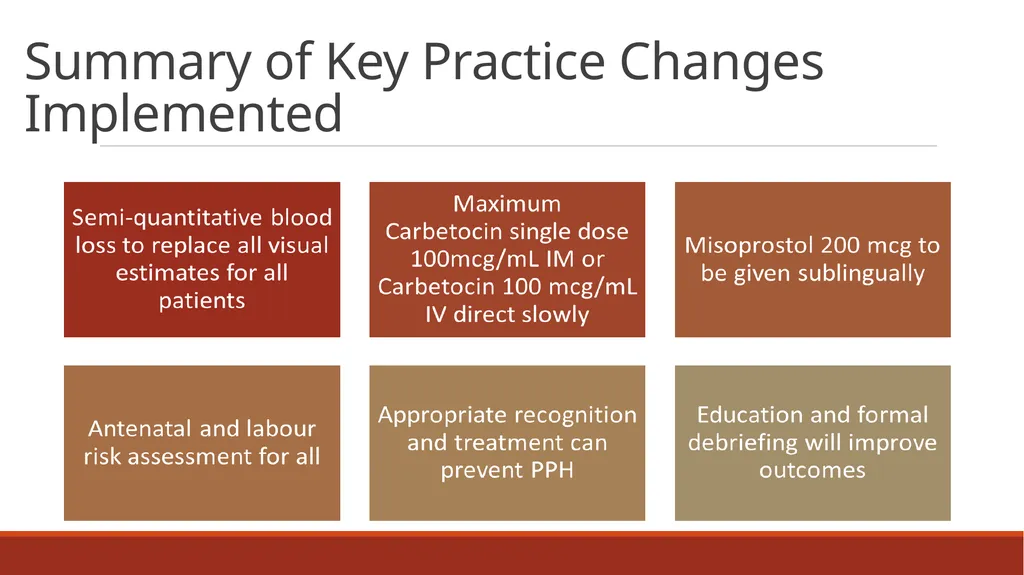
Summary of Key Practice Changes Implemented<br>
06
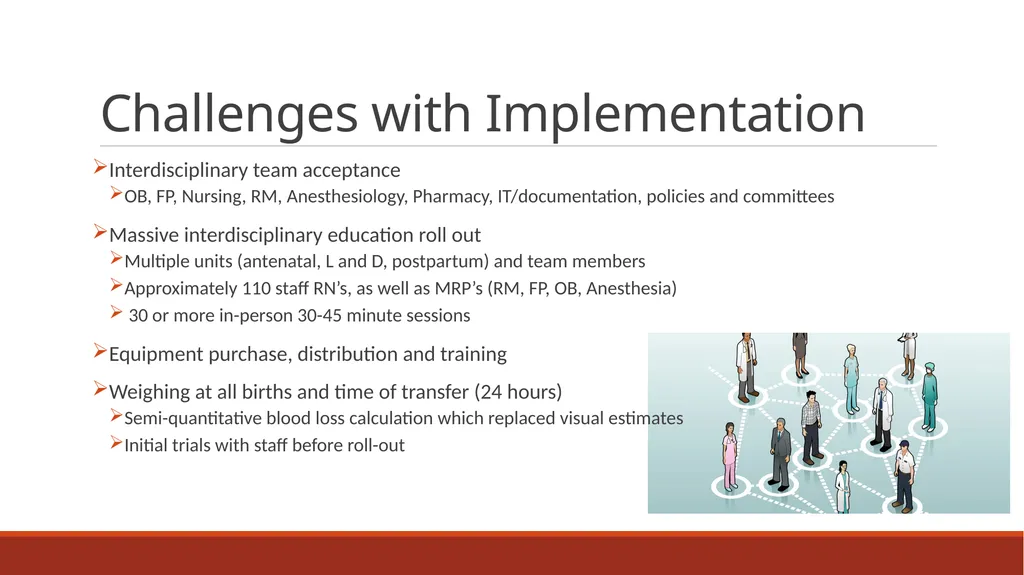
Challenges with Implementation Interdisciplinary team acceptance
OB, FP, Nursing, RM, Anesthesiology, Pharmacy, IT/documentation, policies and committees
Massive interdisciplinary education roll out
Multiple units (antenatal, L and D, postpartum) and team members
Approximately 110 staff RN’s, as well as MRP’s (RM, FP, OB, Anesthesia)
30 or more in-person 30-45 minute sessions
Equipment purchase, distribution and training
Weighing at all births and time of transfer (24 hours)
Semi-quantitative blood loss calculation which replaced visual estimates
Initial trials with staff before roll-out<br>
07
Calculating Maximum Allowable Blood Loss<br>
08
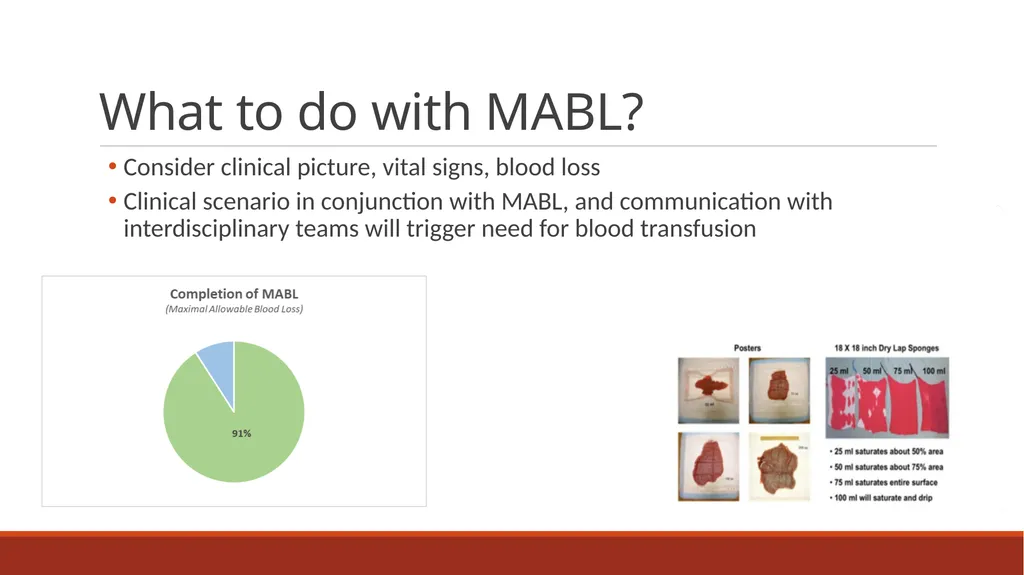
What to do with MABL? Consider clinical picture, vital signs, blood loss
Clinical scenario in conjunction with MABL, and communication with interdisciplinary teams will trigger need for blood transfusion<br>
09
Calculating Blood Loss<br>
10
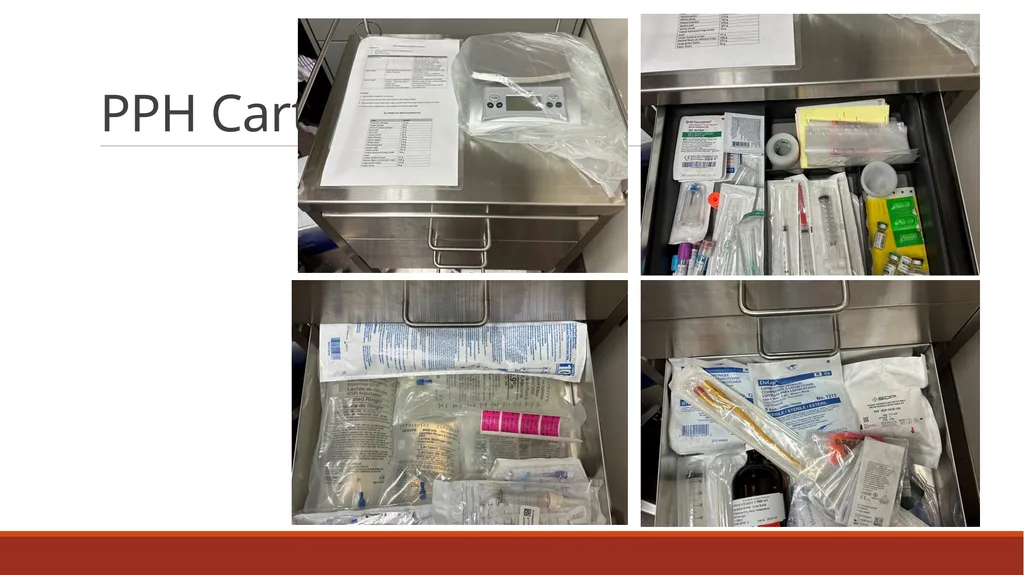
PPH Cart<br>
11
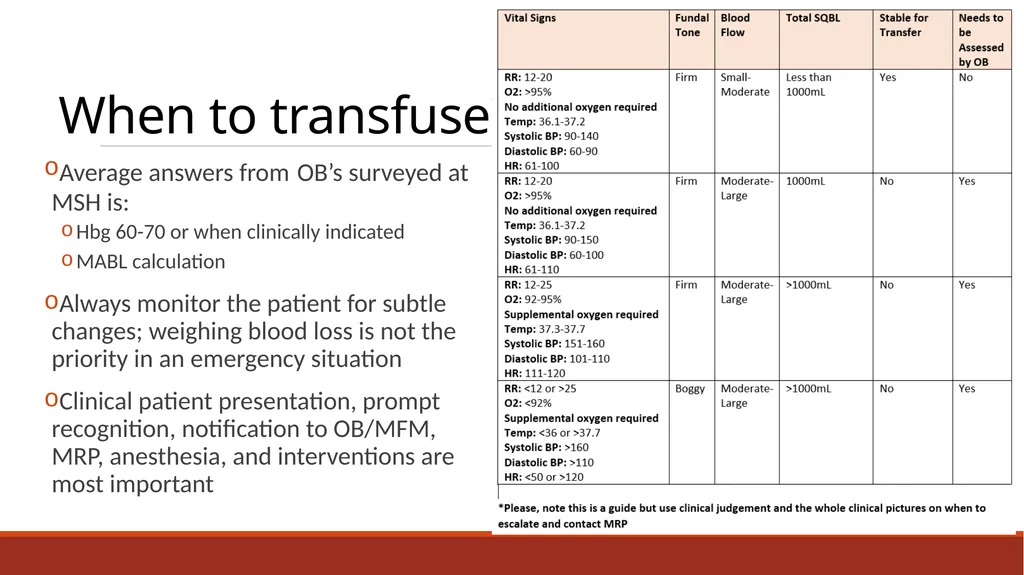
When to transfuse? Average answers from OB’s surveyed at MSH is:
Hbg 60-70 or when clinically indicated
MABL calculation
Always monitor the patient for subtle changes; weighing blood loss is not the priority in an emergency situation
Clinical patient presentation, prompt recognition, notification to OB/MFM, MRP, anesthesia, and interventions are most important<br>
12
References California Maternity Quality Care Collaborative (2022). Obstetric Hemorrhage Toolkit, retrieved from: https://www.cmqcc.org/resources-tool-kits/toolkits/ob-hemorrhage-toolkit
Canadian Patient Safety Institute (CPSI) (2016). Hospital Harm Improvement Resource: Obstetric Hemorrhage, retrieved from https://www.patientsafetyinstitute.ca/en/toolsResources/Hospital-Harm-Measure/Documents/Resource-Library/HHIR%20Obstetric%20Hemorrage.pdf
The Society of Obstetricians and Gynaecologists of Canada (2022). SOCG Clinical Practice Guideline: Postpartum Hemorrhage and Hemorrhagic Shock. No. 431, December 2022 (Replaces No. 235, October 2009 & No. 115, June 2002)<br>