
How does Nature Influence Culture and Vice Versa?

Description: How does Nature Influence Culture and Vice Versa? Timo Maran Department of Semiotics, University of Tartu Step 1. Modern Constitution A long tradition of seeing culture and nature as separate from one-another. Nature - eternal and
Related Topics
Download Presentation
"How does Nature Influence Culture and Vice Versa?" is the property of its rightful owner. Permission is granted to download and print the materials on this website for personal, non-commercial use only, and to display it on your personal computer provided you do not modify the materials and that you retain all copyright notices contained in the materials. By downloading content from our website, you accept the terms of this agreement.
Presentation Transcript
slide1. How does Nature Influence Culture and Vice Versa? Timo Maran
Department of Semiotics, University of Tartu<br>
slide2. Step 1. Modern Constitution A long tradition of seeing culture and nature as separate from one-another.
Nature - eternal and independent of human action; culture - fully human-made domain of freedom.
Latour, Bruno (1993). We have never been modern. Harvard University Press.<br>
slide3. Step 2. Ecological View Human is one among millions of species inhabiting the Earth.
Human as every other species is dependent on resources.
Culture is foremost an ability to create and modify human ecological niche.
Laland, K. N., Odling‐Smee, J. and Feldman, M. W. (2001), Cultural niche construction and human evolution. Journal of Evolutionary Biology, 14: 22-33.<br>
slide4. Step 3. Culture is Model Culture is connected to the environment and is at the same time independent of it.
Culture is a meta-layer of descriptions, and images that humans spread over ecology.
Being active in culture means changing the environment.
Maran, T.; Kull, K. (2014). Ecosemiotics: main principles and current developments. Geografiska Annaler: Series B, Human Geography 96 (1): 41–50.<br>
slide5. Step 4. Estonian Identity Estonian culture has been seen as standing close to nature.
This conviction has many roots and many layers. Folklore collections
Nature in early Estonian literature
Estonians as „nation of forest“
Nostalgy of WWII refugees
Uralic roots
Environmental movement of 1980ties
Postmodern interpretations<br>
slide6. Step 5. Anthropocene In Anthropocene roles become reversed - natural agencies are very active, and culture needs to adjust and accommodate.
Ecosemiotic vision on nature as alive, significant and full of agencies.
What possibilities culture offers for adjusting and adapting with changing environment?
Maran, T.; Kull, K. (2014). Ecosemiotics: main principles and current developments. Geografiska Annaler: Series B, Human Geography 96 (1): 41–50.<br>
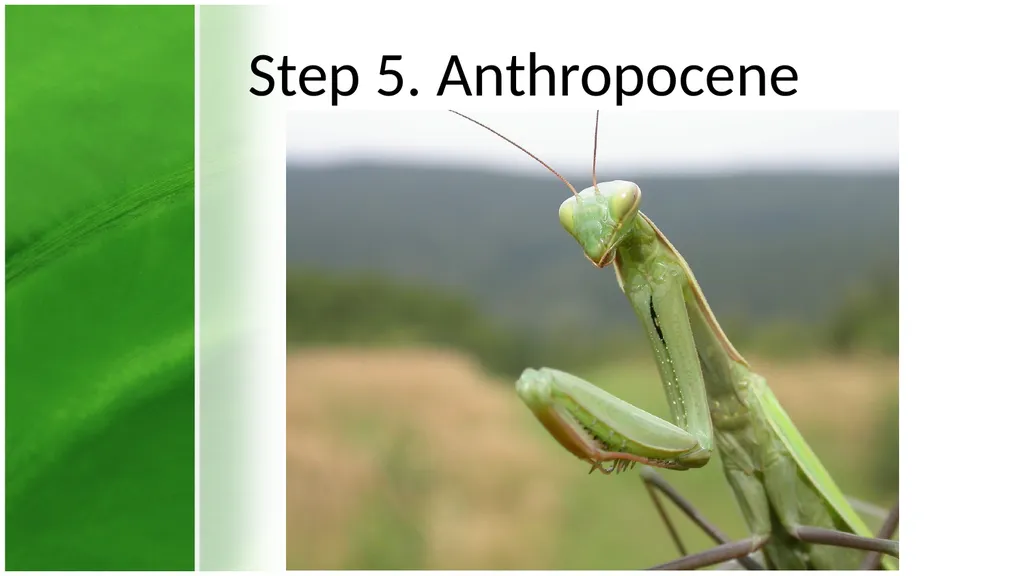
slide7. Step 5. Anthropocene<br>
slide8. Step 6. Strategies of Survival Technological solutions cannot answer to the question, to what direction we should move as a society.
Culture is a laboratory for studying new possible ways of living.
By use of imagination culture can make environmental processes and other life forms tangible for us.
van Dooren, T., Kirksey, E. Münster, U. 2016. Multispecies studies: cultivating arts of attentiveness. Environmental Humanities 8(1): 1-23.<br>
slide9. Step 7. Biocultural Diversity The major challenge is to overcome closed and anthropocentric cultural discourses.
Instead of discussing cultural diversity and biodiversity separately we should aim at biocultural diversity. Cultures of the future will be open to other life-forms.
Culture needs to take an active role in building new entanglements between us and the rest of the ecosystem.
Farina, A. (2018). Rural Sanctuary: an ecosemiotic agency to preserve human cultural heritage and biodiversity. Biosemiotics 11 (1):139-158.
Bodin Ö. 2017. Collaborative environmental governance: Achieving collective action in social-ecological systems. Science 357(6352).<br>
slide10. Thank you!<br>
Department of Semiotics, University of Tartu<br>
slide2. Step 1. Modern Constitution A long tradition of seeing culture and nature as separate from one-another.
Nature - eternal and independent of human action; culture - fully human-made domain of freedom.
Latour, Bruno (1993). We have never been modern. Harvard University Press.<br>
slide3. Step 2. Ecological View Human is one among millions of species inhabiting the Earth.
Human as every other species is dependent on resources.
Culture is foremost an ability to create and modify human ecological niche.
Laland, K. N., Odling‐Smee, J. and Feldman, M. W. (2001), Cultural niche construction and human evolution. Journal of Evolutionary Biology, 14: 22-33.<br>
slide4. Step 3. Culture is Model Culture is connected to the environment and is at the same time independent of it.
Culture is a meta-layer of descriptions, and images that humans spread over ecology.
Being active in culture means changing the environment.
Maran, T.; Kull, K. (2014). Ecosemiotics: main principles and current developments. Geografiska Annaler: Series B, Human Geography 96 (1): 41–50.<br>
slide5. Step 4. Estonian Identity Estonian culture has been seen as standing close to nature.
This conviction has many roots and many layers. Folklore collections
Nature in early Estonian literature
Estonians as „nation of forest“
Nostalgy of WWII refugees
Uralic roots
Environmental movement of 1980ties
Postmodern interpretations<br>
slide6. Step 5. Anthropocene In Anthropocene roles become reversed - natural agencies are very active, and culture needs to adjust and accommodate.
Ecosemiotic vision on nature as alive, significant and full of agencies.
What possibilities culture offers for adjusting and adapting with changing environment?
Maran, T.; Kull, K. (2014). Ecosemiotics: main principles and current developments. Geografiska Annaler: Series B, Human Geography 96 (1): 41–50.<br>
slide7. Step 5. Anthropocene<br>
slide8. Step 6. Strategies of Survival Technological solutions cannot answer to the question, to what direction we should move as a society.
Culture is a laboratory for studying new possible ways of living.
By use of imagination culture can make environmental processes and other life forms tangible for us.
van Dooren, T., Kirksey, E. Münster, U. 2016. Multispecies studies: cultivating arts of attentiveness. Environmental Humanities 8(1): 1-23.<br>
slide9. Step 7. Biocultural Diversity The major challenge is to overcome closed and anthropocentric cultural discourses.
Instead of discussing cultural diversity and biodiversity separately we should aim at biocultural diversity. Cultures of the future will be open to other life-forms.
Culture needs to take an active role in building new entanglements between us and the rest of the ecosystem.
Farina, A. (2018). Rural Sanctuary: an ecosemiotic agency to preserve human cultural heritage and biodiversity. Biosemiotics 11 (1):139-158.
Bodin Ö. 2017. Collaborative environmental governance: Achieving collective action in social-ecological systems. Science 357(6352).<br>
slide10. Thank you!<br>