
How Pollinators Pollinate Alabama Wildlife

Description: How Pollinators Pollinate Alabama Wildlife Federation Outdoor Classroom Field Journal Activity To use this interactive PowerPoint with your students: Click on Enable Editing. Click the Slide Show tab at the top of the screen. Then
Related Topics
Download Presentation
"How Pollinators Pollinate Alabama Wildlife" is the property of its rightful owner. Permission is granted to download and print the materials on this website for personal, non-commercial use only, and to display it on your personal computer provided you do not modify the materials and that you retain all copyright notices contained in the materials. By downloading content from our website, you accept the terms of this agreement.
Presentation Transcript
slide1. How Pollinators Pollinate Alabama Wildlife Federation Outdoor Classroom Field Journal Activity To use this interactive PowerPoint with your students:
Click on “Enable Editing.”
Click the “Slide Show” tab at the top of the screen.
Then choose “From Beginning” from the menu.<br>
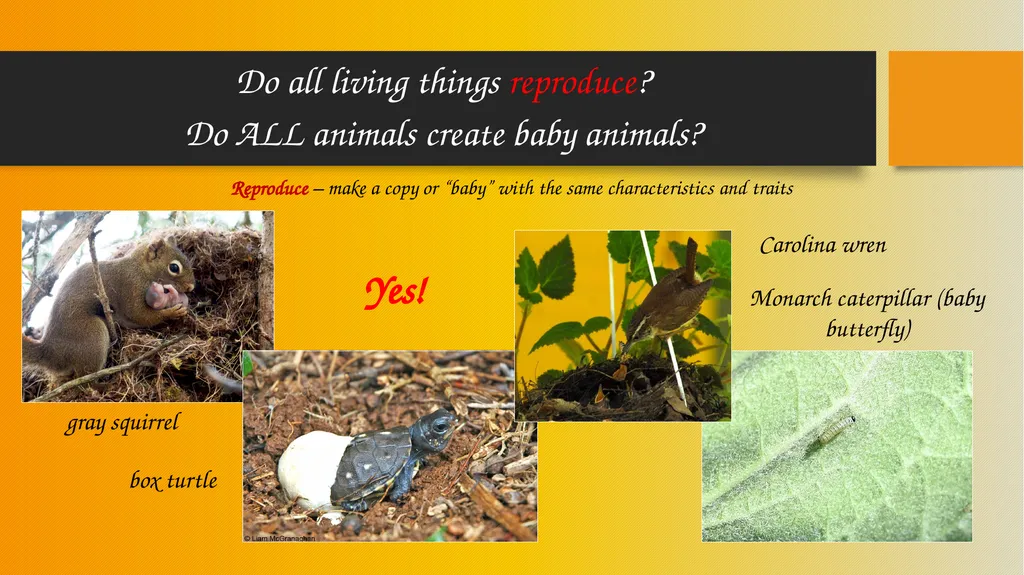
slide2. Do all living things reproduce? Yes! Do ALL animals create baby animals? gray squirrel box turtle Monarch caterpillar (baby butterfly) Carolina wren Reproduce – make a copy or “baby” with the same characteristics and traits<br>
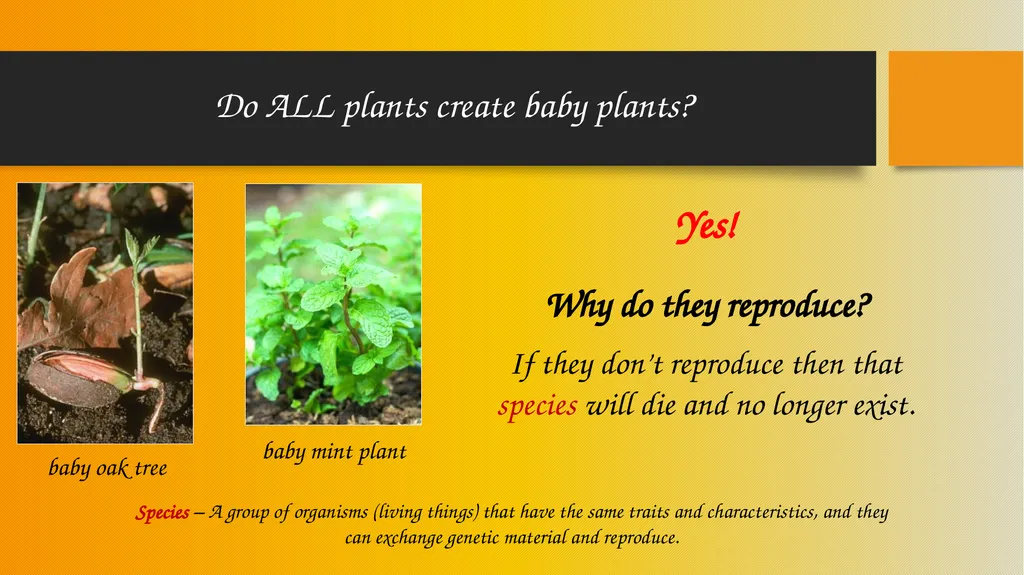
slide3. Yes! If they don’t reproduce then that species will die and no longer exist. Do ALL plants create baby plants? Why do they reproduce? Species – A group of organisms (living things) that have the same traits and characteristics, and they can exchange genetic material and reproduce. baby oak tree baby mint plant<br>
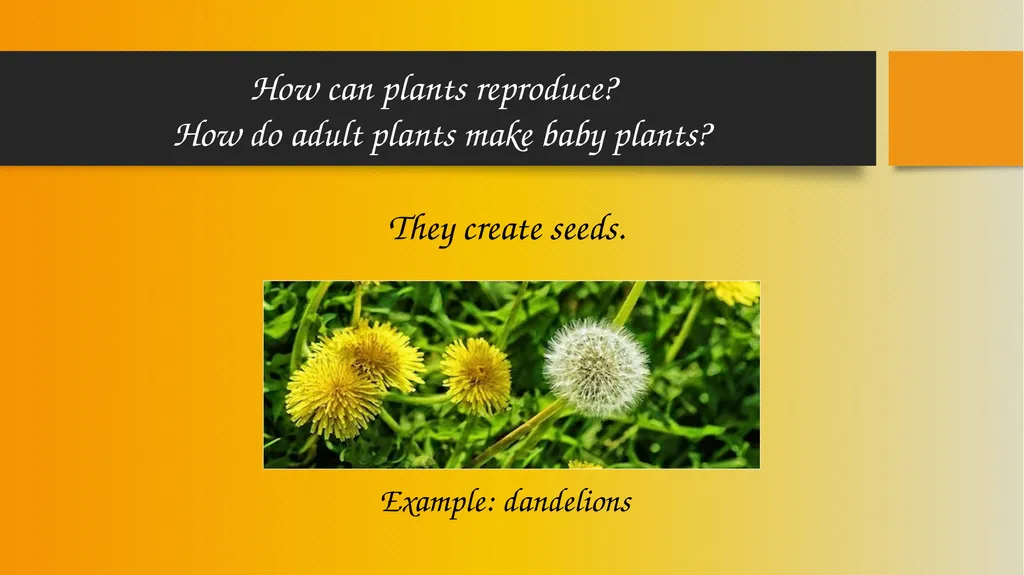
slide4. How can plants reproduce? How do adult plants make baby plants? They create seeds. Example: dandelions<br>
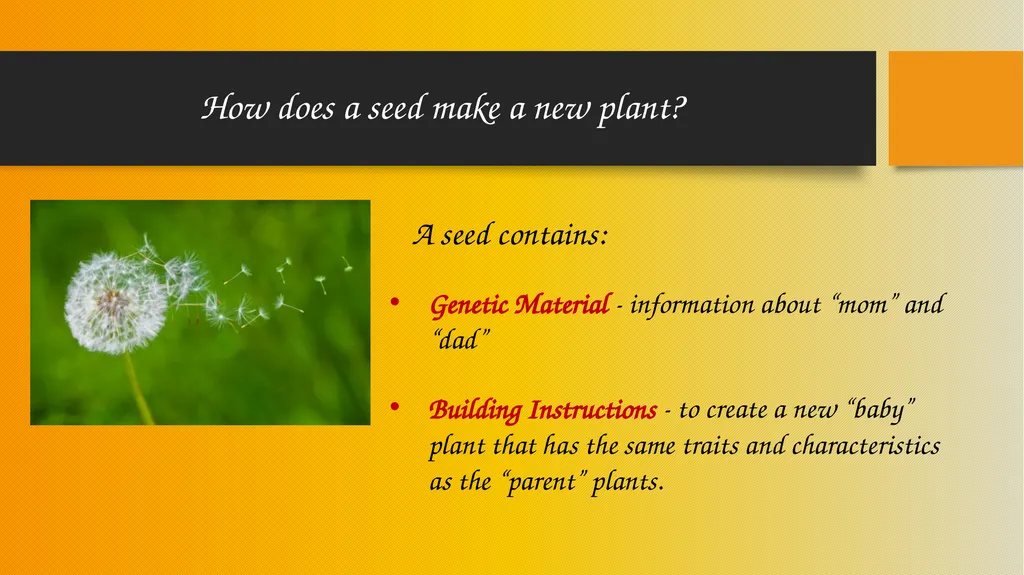
slide5. How does a seed make a new plant? A seed contains: Genetic Material - information about “mom” and “dad” Building Instructions - to create a new “baby” plant that has the same traits and characteristics as the “parent” plants.<br>
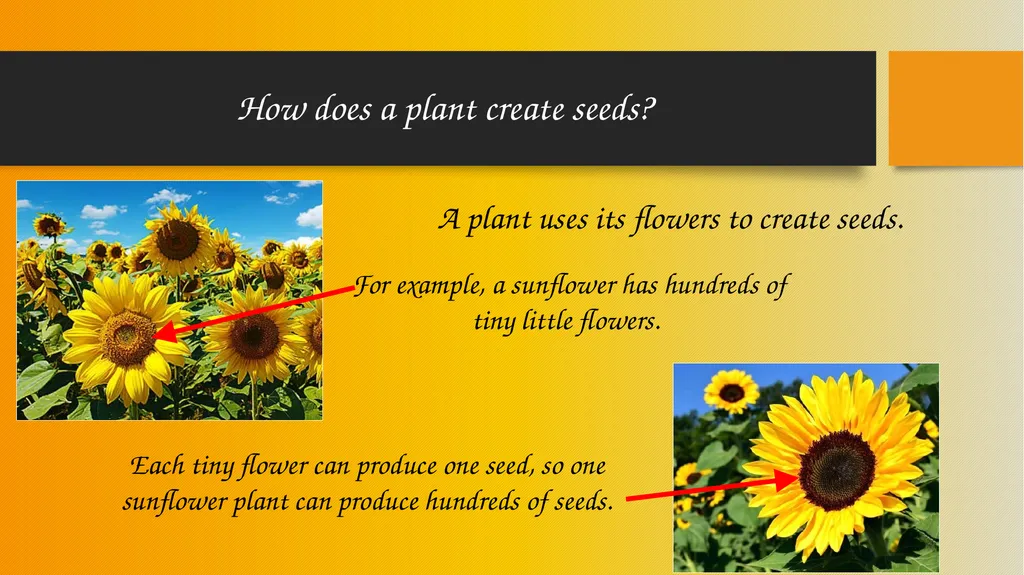
slide6. How does a plant create seeds? For example, a sunflower has hundreds of tiny little flowers. Each tiny flower can produce one seed, so one sunflower plant can produce hundreds of seeds. A plant uses its flowers to create seeds.<br>
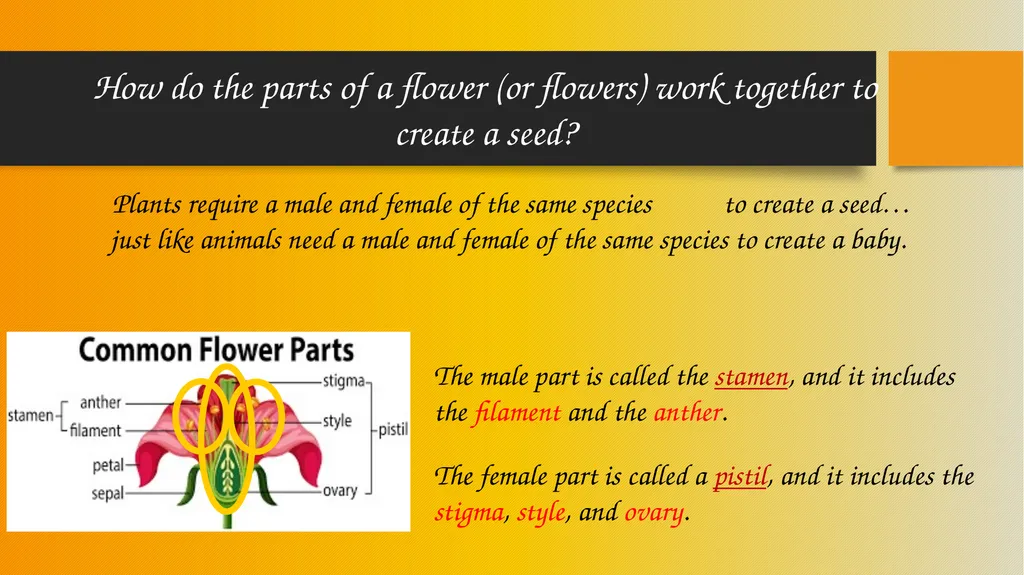
slide7. How do the parts of a flower (or flowers) work together to create a seed? Plants require a male and female of the same species to create a seed…
just like animals need a male and female of the same species to create a baby. The male part is called the stamen, and it includes the filament and the anther. The female part is called a pistil, and it includes the stigma, style, and ovary.<br>
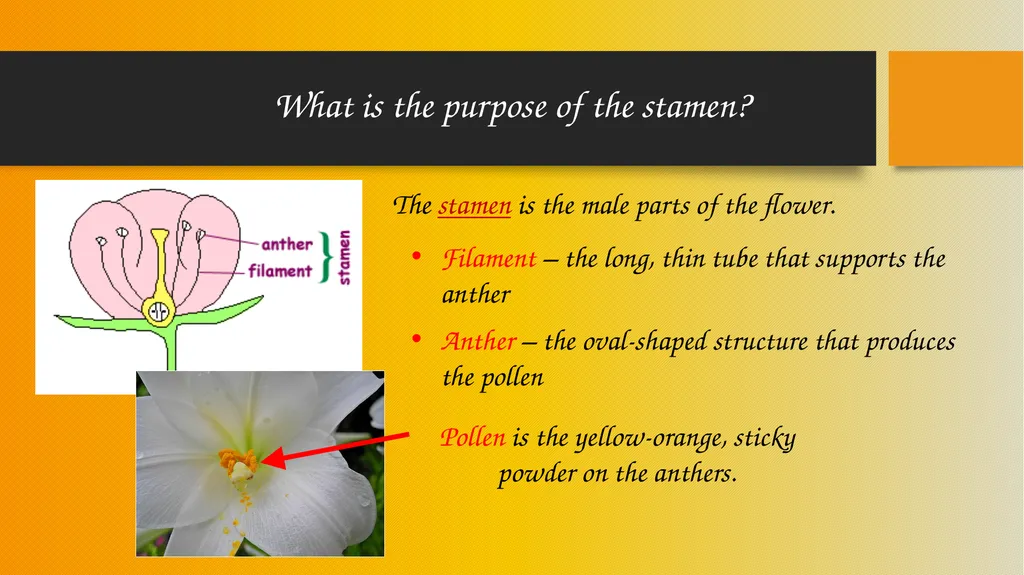
slide8. What is the purpose of the stamen? The stamen is the male parts of the flower. Pollen is the yellow-orange, sticky powder on the anthers. Filament – the long, thin tube that supports the anther Anther – the oval-shaped structure that produces the pollen<br>
slide9. The pistil is the female part of the flower. What is the purpose of the pistil? Stigma - the sticky tip that collects the pollen (from the male part) Style – the tube that the pollen travels down to get to the ovary Ovary – holds the ovules that join the pollen to become seeds, and then the ovary becomes the fruit that holds and protects the seeds<br>
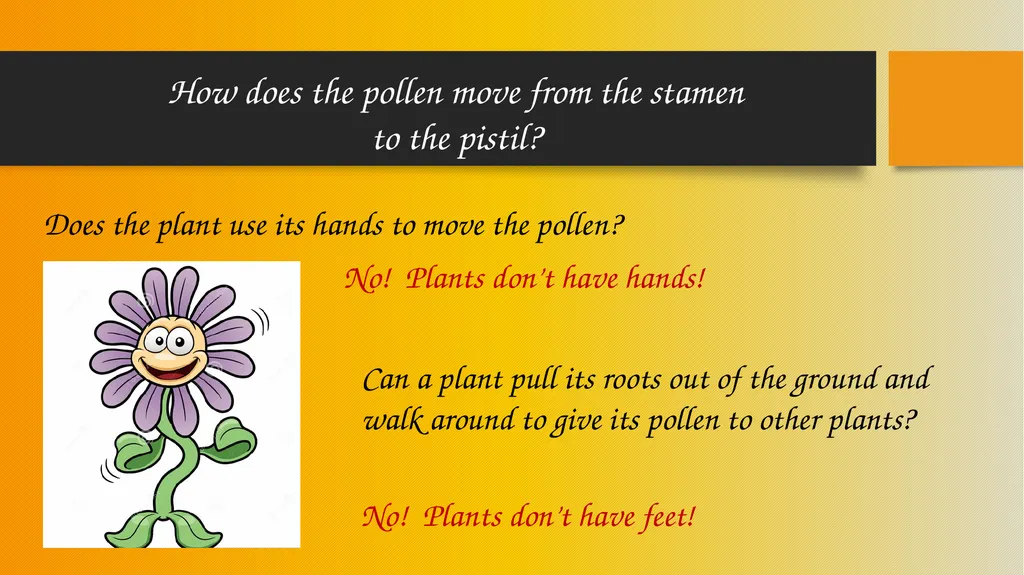
slide10. How does the pollen move from the stamen to the pistil? Does the plant use its hands to move the pollen? Can a plant pull its roots out of the ground and walk around to give its pollen to other plants? No! Plants don’t have hands! No! Plants don’t have feet!<br>
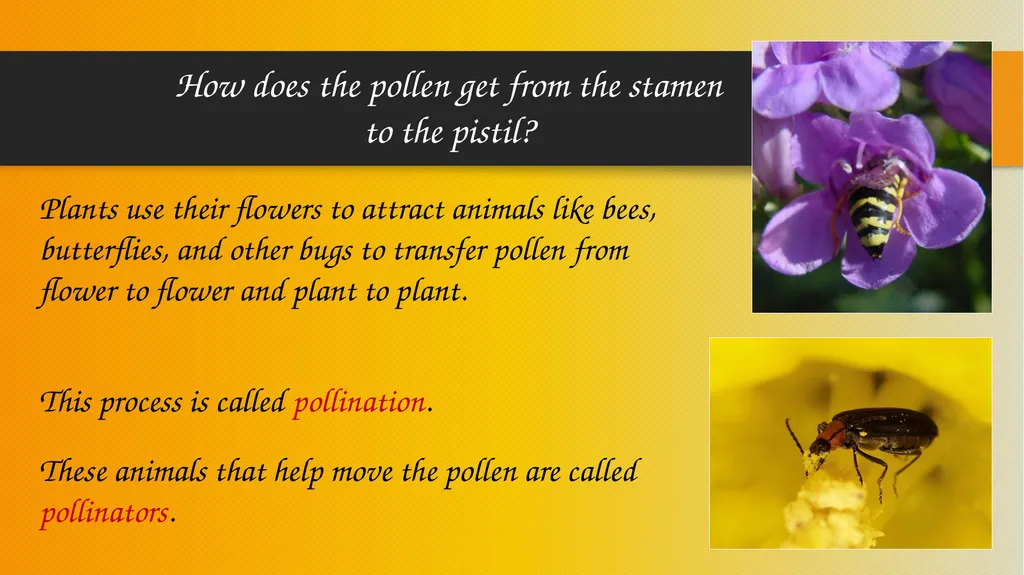
slide11. How does the pollen get from the stamen to the pistil? This process is called pollination. Plants use their flowers to attract animals like bees, butterflies, and other bugs to transfer pollen from flower to flower and plant to plant. These animals that help move the pollen are called pollinators.<br>
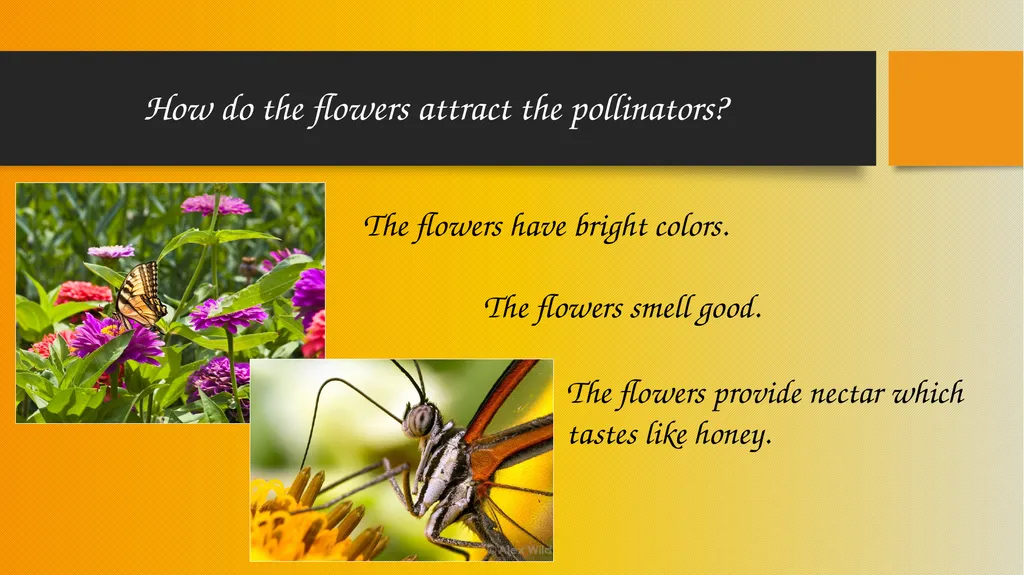
slide12. How do the flowers attract the pollinators? The flowers have bright colors. The flowers smell good. The flowers provide nectar which tastes like honey.<br>
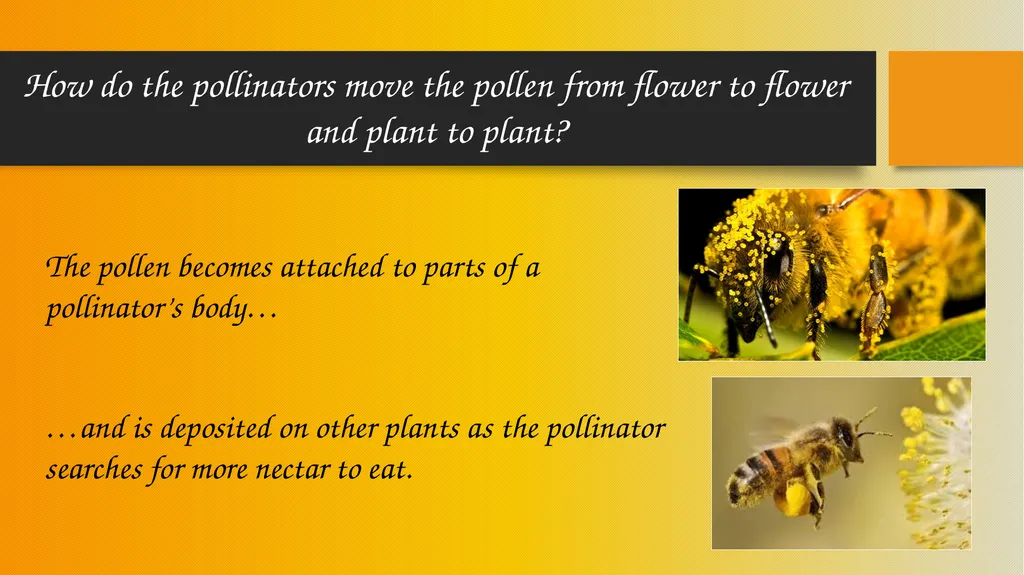
slide13. How do the pollinators move the pollen from flower to flower and plant to plant? The pollen becomes attached to parts of a pollinator’s body… …and is deposited on other plants as the pollinator searches for more nectar to eat.<br>
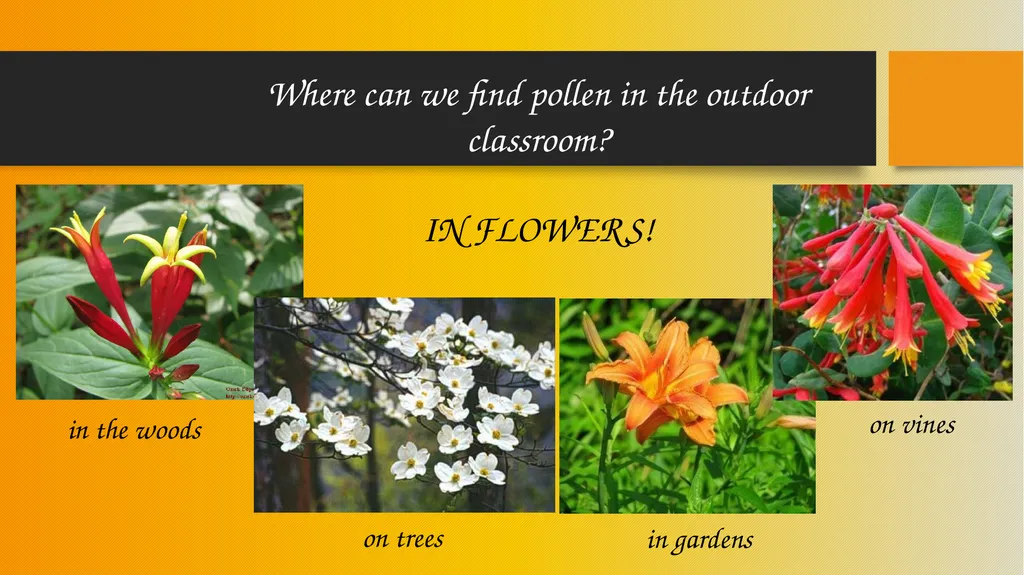
slide14. Where can we find pollen in the outdoor classroom? IN FLOWERS! in gardens on trees in the woods on vines<br>
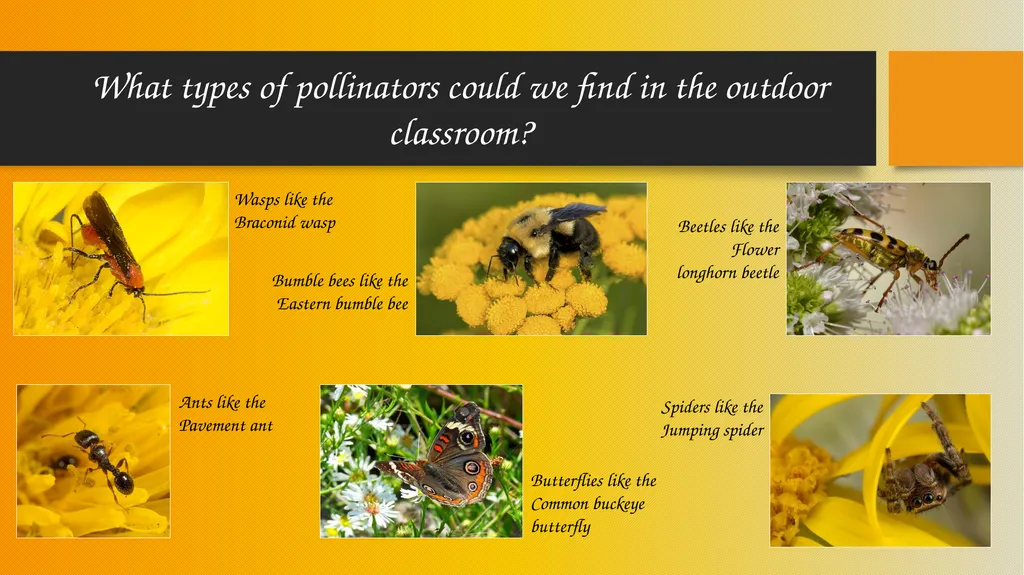
slide15. What types of pollinators could we find in the outdoor classroom? Wasps like the Braconid wasp Bumble bees like the Eastern bumble bee Beetles like the Flower longhorn beetle Ants like the Pavement ant Butterflies like the Common buckeye butterfly Spiders like the Jumping spider<br>
Click on “Enable Editing.”
Click the “Slide Show” tab at the top of the screen.
Then choose “From Beginning” from the menu.<br>
slide2. Do all living things reproduce? Yes! Do ALL animals create baby animals? gray squirrel box turtle Monarch caterpillar (baby butterfly) Carolina wren Reproduce – make a copy or “baby” with the same characteristics and traits<br>
slide3. Yes! If they don’t reproduce then that species will die and no longer exist. Do ALL plants create baby plants? Why do they reproduce? Species – A group of organisms (living things) that have the same traits and characteristics, and they can exchange genetic material and reproduce. baby oak tree baby mint plant<br>
slide4. How can plants reproduce? How do adult plants make baby plants? They create seeds. Example: dandelions<br>
slide5. How does a seed make a new plant? A seed contains: Genetic Material - information about “mom” and “dad” Building Instructions - to create a new “baby” plant that has the same traits and characteristics as the “parent” plants.<br>
slide6. How does a plant create seeds? For example, a sunflower has hundreds of tiny little flowers. Each tiny flower can produce one seed, so one sunflower plant can produce hundreds of seeds. A plant uses its flowers to create seeds.<br>
slide7. How do the parts of a flower (or flowers) work together to create a seed? Plants require a male and female of the same species to create a seed…
just like animals need a male and female of the same species to create a baby. The male part is called the stamen, and it includes the filament and the anther. The female part is called a pistil, and it includes the stigma, style, and ovary.<br>
slide8. What is the purpose of the stamen? The stamen is the male parts of the flower. Pollen is the yellow-orange, sticky powder on the anthers. Filament – the long, thin tube that supports the anther Anther – the oval-shaped structure that produces the pollen<br>
slide9. The pistil is the female part of the flower. What is the purpose of the pistil? Stigma - the sticky tip that collects the pollen (from the male part) Style – the tube that the pollen travels down to get to the ovary Ovary – holds the ovules that join the pollen to become seeds, and then the ovary becomes the fruit that holds and protects the seeds<br>
slide10. How does the pollen move from the stamen to the pistil? Does the plant use its hands to move the pollen? Can a plant pull its roots out of the ground and walk around to give its pollen to other plants? No! Plants don’t have hands! No! Plants don’t have feet!<br>
slide11. How does the pollen get from the stamen to the pistil? This process is called pollination. Plants use their flowers to attract animals like bees, butterflies, and other bugs to transfer pollen from flower to flower and plant to plant. These animals that help move the pollen are called pollinators.<br>
slide12. How do the flowers attract the pollinators? The flowers have bright colors. The flowers smell good. The flowers provide nectar which tastes like honey.<br>
slide13. How do the pollinators move the pollen from flower to flower and plant to plant? The pollen becomes attached to parts of a pollinator’s body… …and is deposited on other plants as the pollinator searches for more nectar to eat.<br>
slide14. Where can we find pollen in the outdoor classroom? IN FLOWERS! in gardens on trees in the woods on vines<br>
slide15. What types of pollinators could we find in the outdoor classroom? Wasps like the Braconid wasp Bumble bees like the Eastern bumble bee Beetles like the Flower longhorn beetle Ants like the Pavement ant Butterflies like the Common buckeye butterfly Spiders like the Jumping spider<br>