
How to work through a Latin Sentence A Technique

How to work through a Latin Sentence A Technique
1 / 1
How to work through a Latin Sentence A Technique - slide 1 of 7 How to work through a Latin Sentence A Technique - slide 2 of 7 How to work through a Latin Sentence A Technique - slide 3 of 7 How to work through a Latin Sentence A Technique - slide 4 of 7 How to work through a Latin Sentence A Technique - slide 5 of 7 How to work through a Latin Sentence A Technique - slide 6 of 7 How to work through a Latin Sentence A Technique - slide 7 of 7
How to work through a Latin Sentence A Technique for Success 1) Remember always to read the sentence from left to right - dont skip around! 2) Always connect the Latin case ending to the words function in the sentence. The order of words

Related Topics

Download this presentation From Below

"How to work through a Latin Sentence A Technique" is the property of its rightful owner. Permission is granted to download and print the materials on this website for personal, non-commercial use only, and to display it on your personal computer provided you do not modify the materials and that you retain all copyright notices contained in the materials. By downloading content from our website, you accept the terms of this agreement.

Presentation Transcript

01
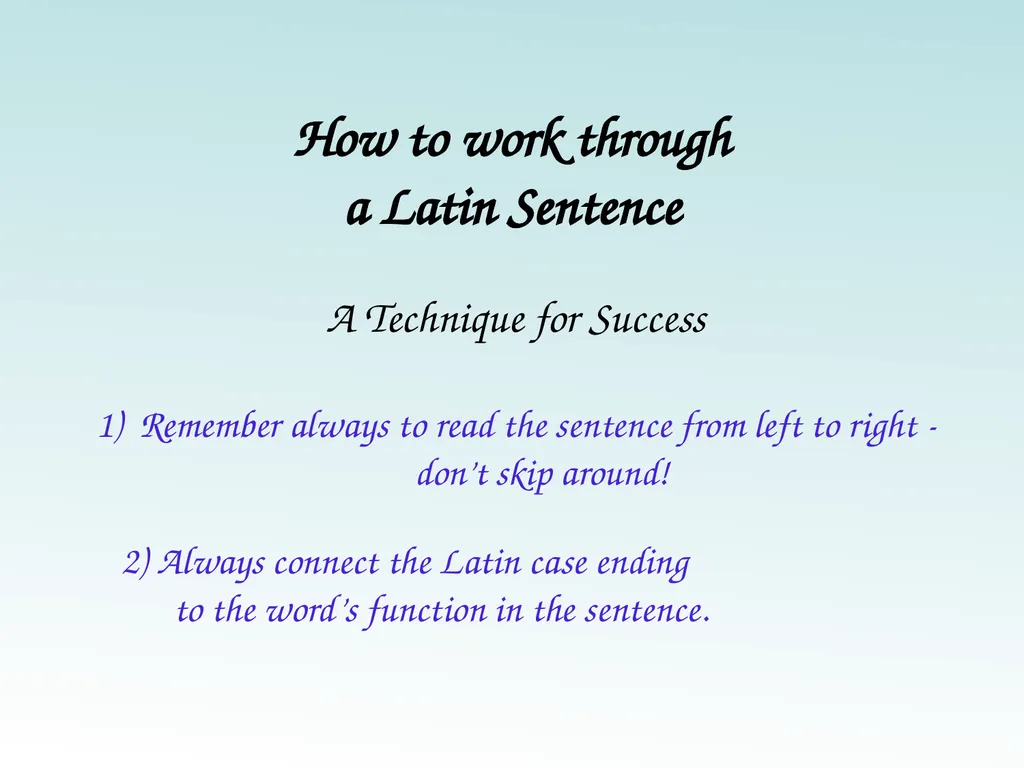
How to work through a Latin Sentence A Technique for Success 1) Remember always to read the sentence from left to right - don’t skip around! 2) Always connect the Latin case ending to the word’s function in the sentence.<br>
02
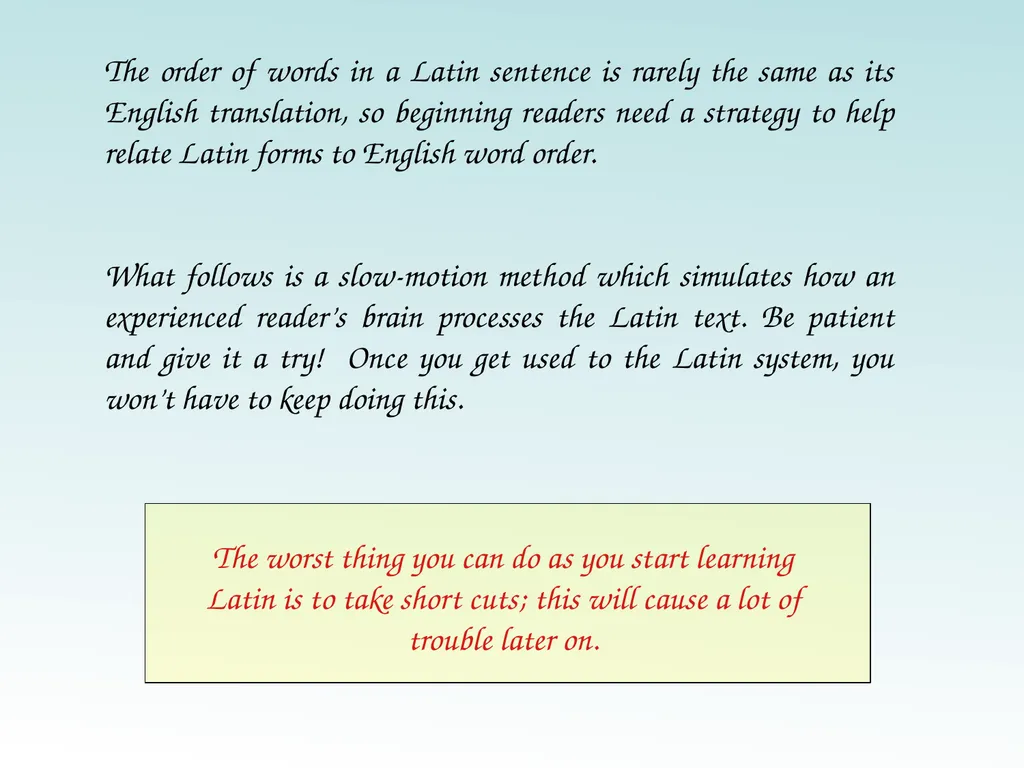
The order of words in a Latin sentence is rarely the same as its English translation, so beginning readers need a strategy to help relate Latin forms to English word order. What follows is a slow-motion method which simulates how an experienced reader’s brain processes the Latin text. Be patient and give it a try! Once you get used to the Latin system, you won’t have to keep doing this.<br>
03
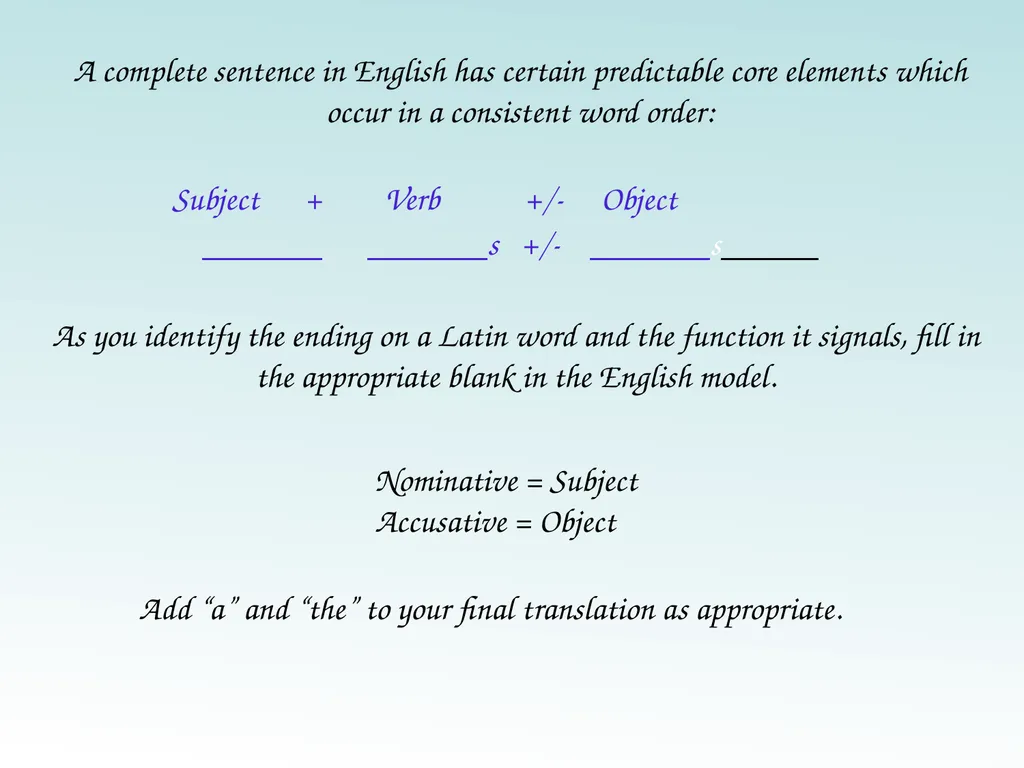
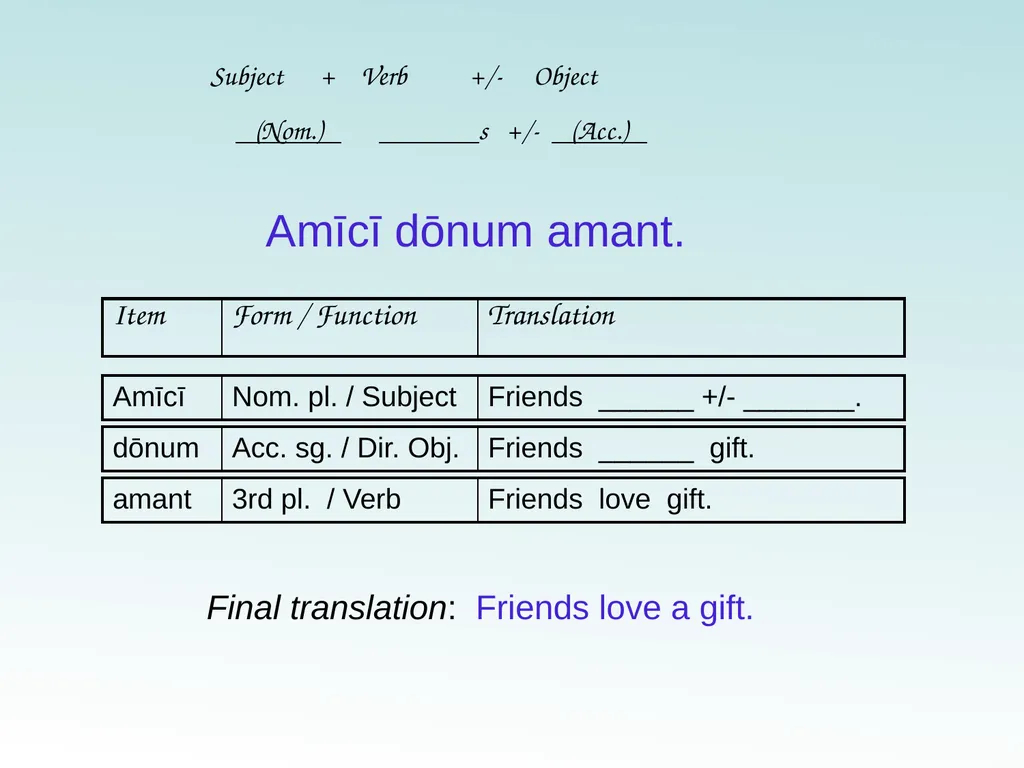
A complete sentence in English has certain predictable core elements which occur in a consistent word order: Subject + Verb +/- Object
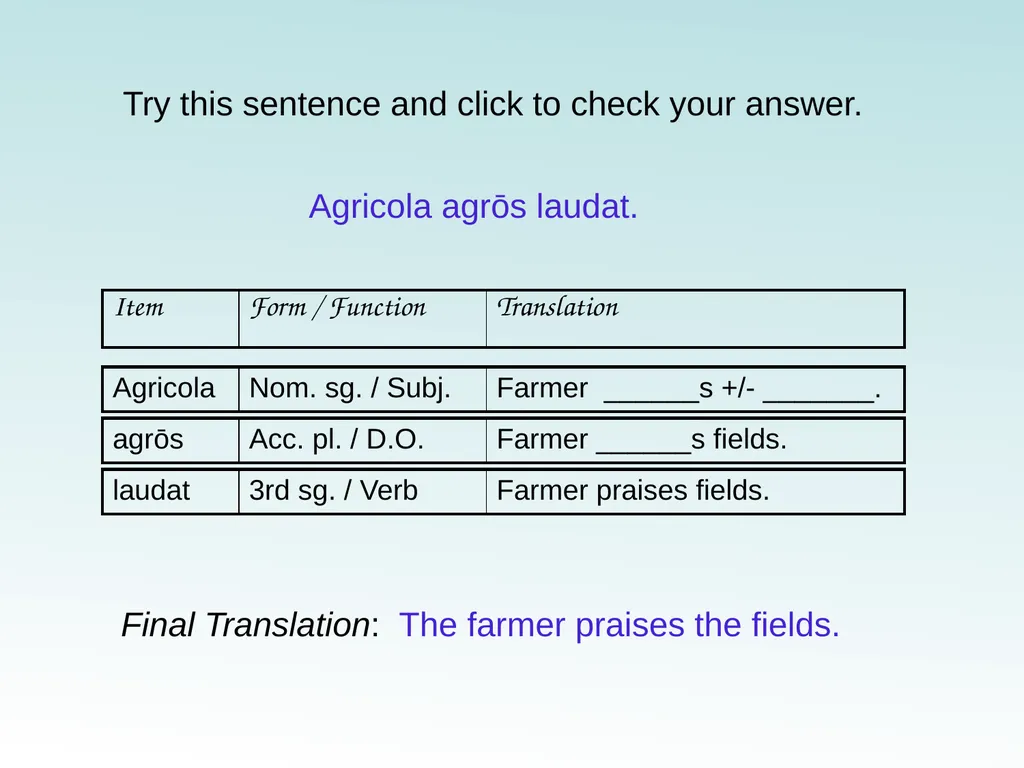
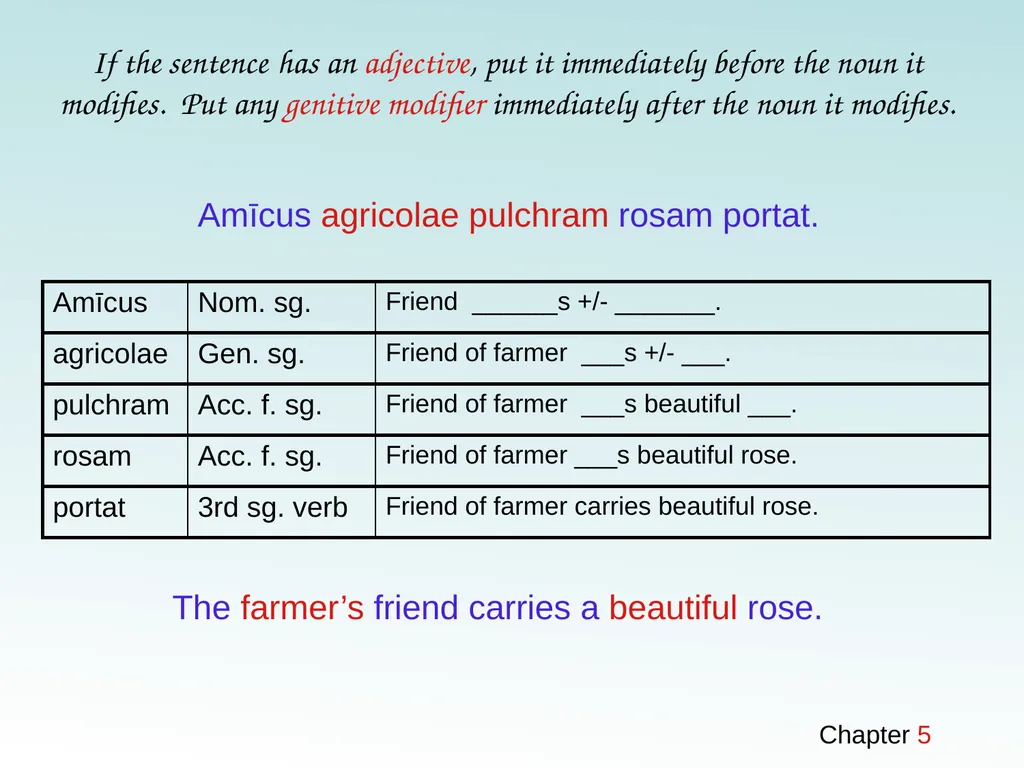
s +/- s Add “a” and “the” to your final translation as appropriate. As you identify the ending on a Latin word and the function it signals, fill in the appropriate blank in the English model. Nominative = Subject
Accusative = Object<br>