04
Ofsted was asked by the government to carry out a rapid review of sexual abuse in schools and colleges.
Review of sexual abuse in schools and colleges - GOV.UK (www.gov.uk)
Published July 2021<br>
05
Definition of Harmful Sexual Behaviour “Sexual behaviours expressed by children and young people under the age of 18 years old that are developmentally inappropriate, may be harmful towards self or others, or be abusive towards another child, young person or adult.” (Hackett, 2014)
“ The most important thing about terminology is that accurate descriptions of the physical acts committed are used, rather than any euphemistic or jargon-ridden phrases” Hackett, 2014
One third of all sexual offences against children and young people are committed by other children and young people (NSPCC, 2016)<br>
06
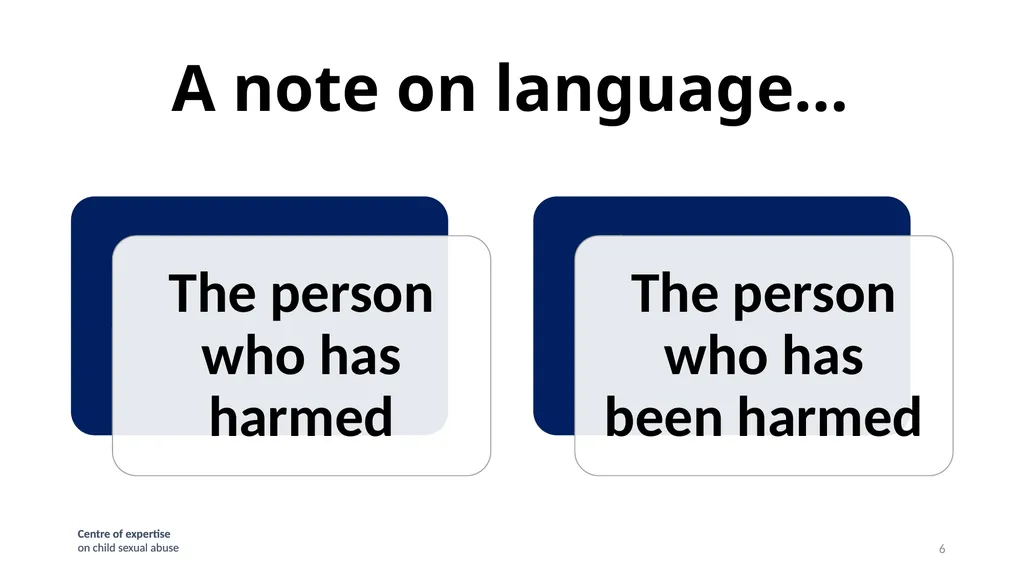
A note on language… 6<br>
07
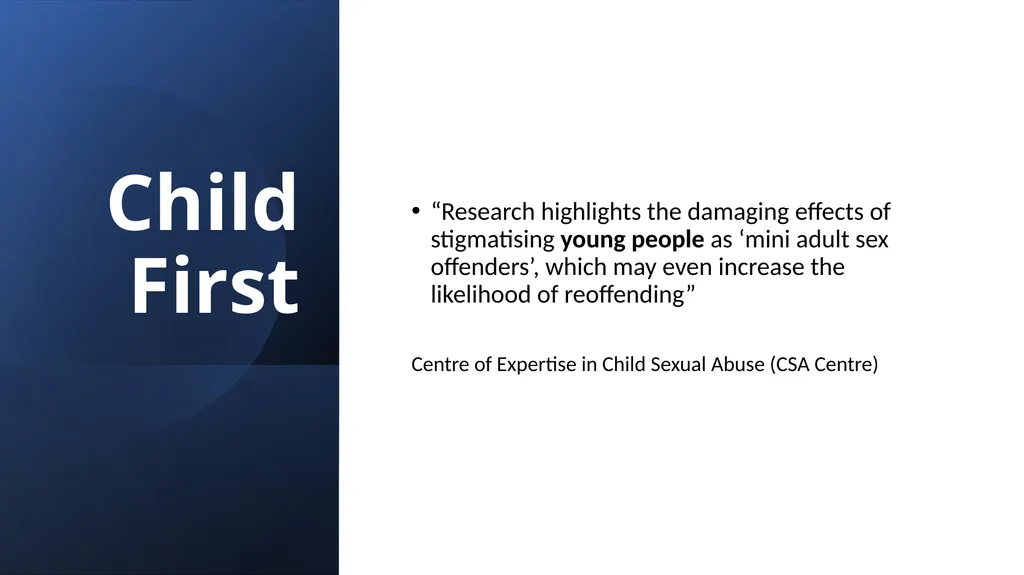
Child First “Research highlights the damaging effects of stigmatising young people as ‘mini adult sex offenders’, which may even increase the likelihood of reoffending”
Centre of Expertise in Child Sexual Abuse (CSA Centre)<br>
08
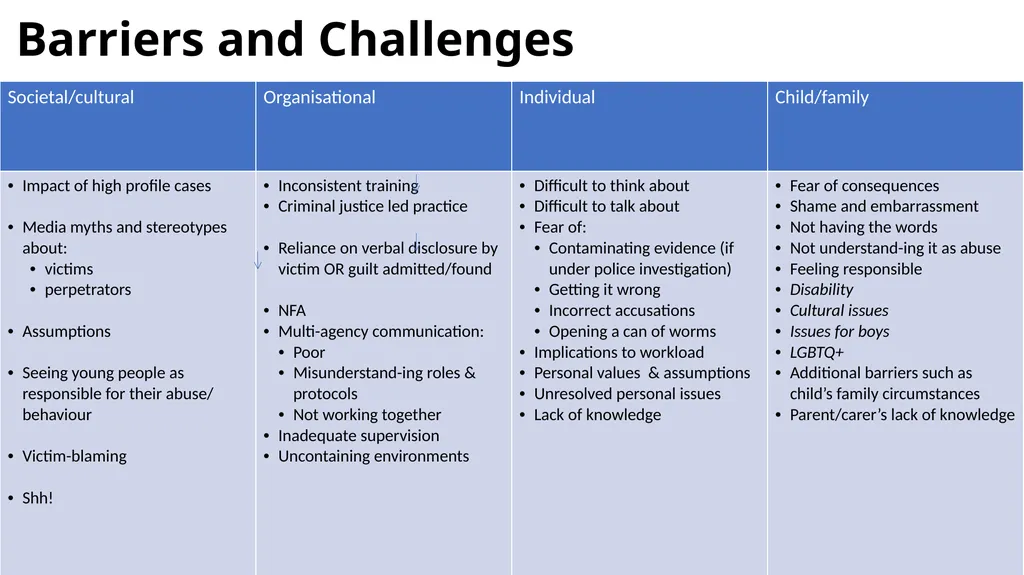
Barriers and Challenges<br>
09
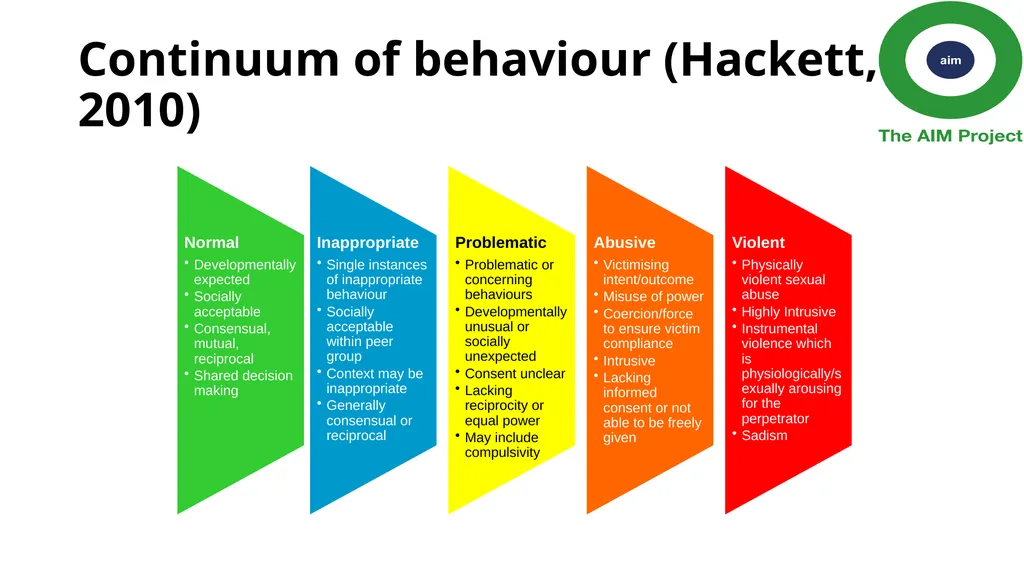
Continuum of behaviour (Hackett, 2010) © The AIM Project 2021<br>
10
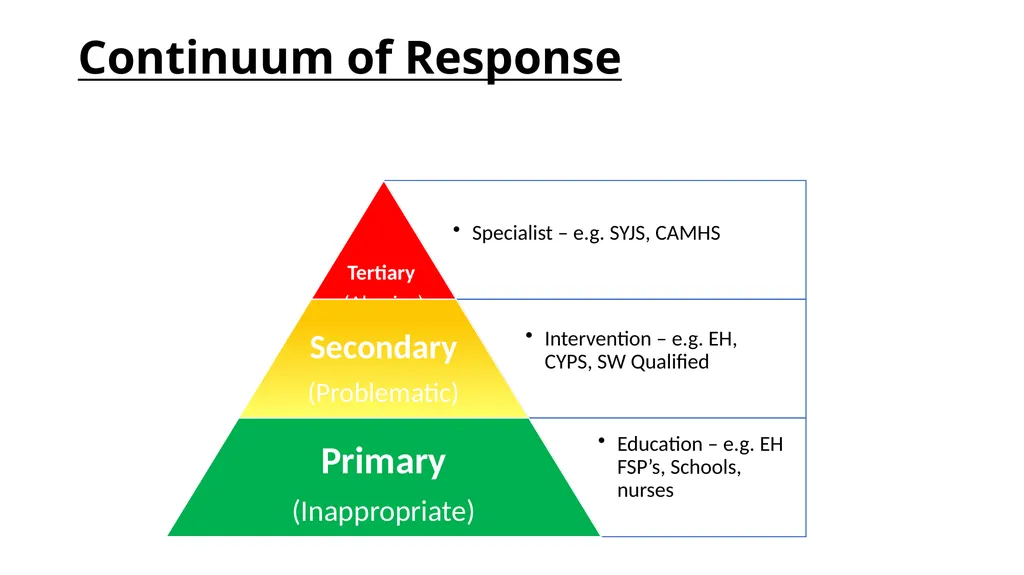
Continuum of Response<br>
11
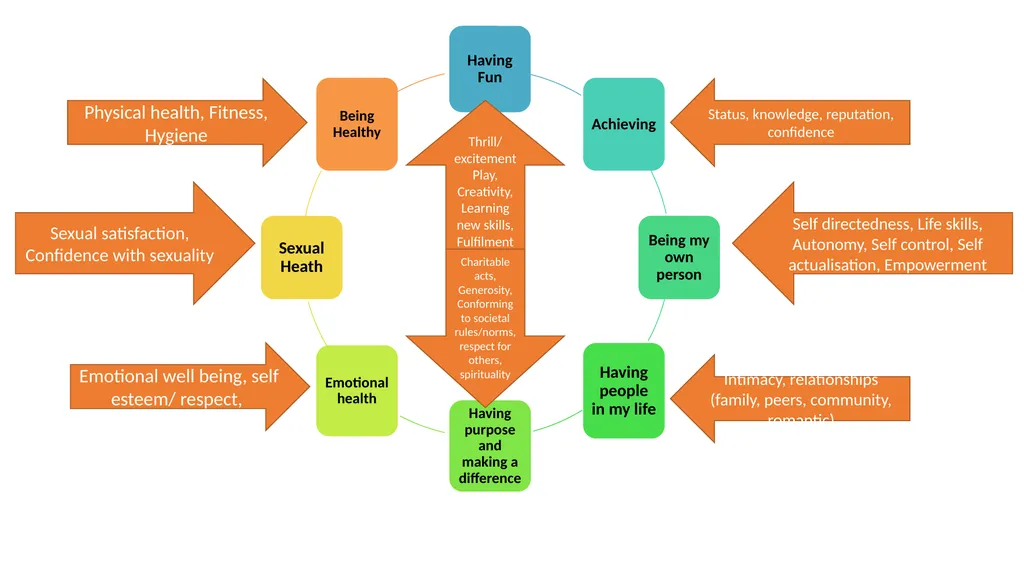
Status, knowledge, reputation, confidence Self directedness, Life skills, Autonomy, Self control, Self actualisation, Empowerment Intimacy, relationships (family, peers, community, romantic) Emotional well being, self esteem/ respect, Sexual satisfaction, Confidence with sexuality Physical health, Fitness, Hygiene Thrill/ excitement Play, Creativity, Learning new skills, Fulfilment Charitable acts, Generosity, Conforming to societal rules/norms, respect for others, spirituality<br>
12
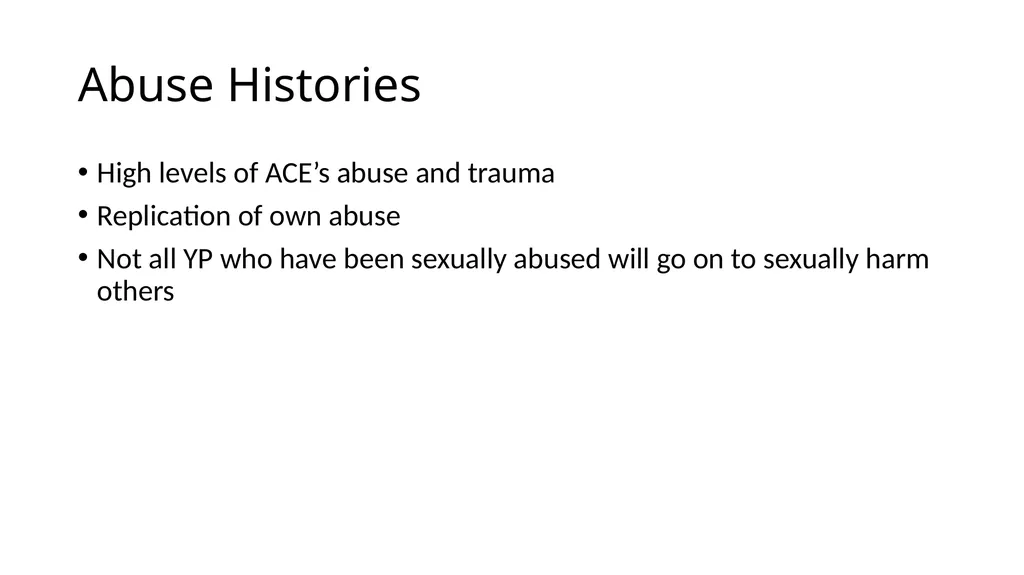
Abuse Histories High levels of ACE’s abuse and trauma
Replication of own abuse
Not all YP who have been sexually abused will go on to sexually harm others<br>
13
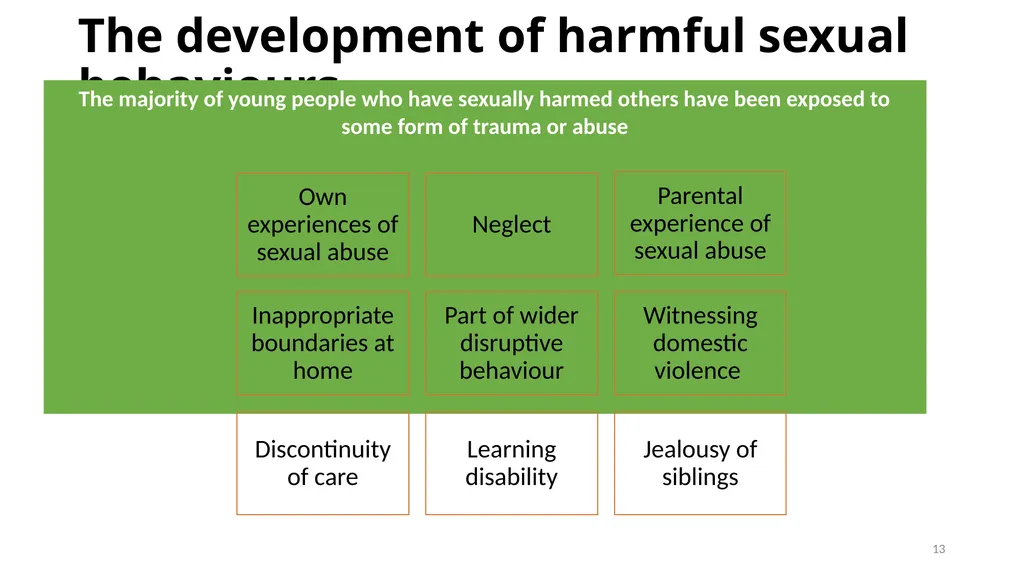
13 The development of harmful sexual behaviours The majority of young people who have sexually harmed others have been exposed to some form of trauma or abuse<br>
14
What areas does an ELSA help with?
Loss and bereavement
Emotional Literacy
Self-esteem
Social Skills
Friendship issues
Relationships
Managing strong feelings
Anxiety and worries
Bullying
Conflict
Emotional Regulation
Growth Mindset
Social and therapeutic stories
Problem solving<br>
15
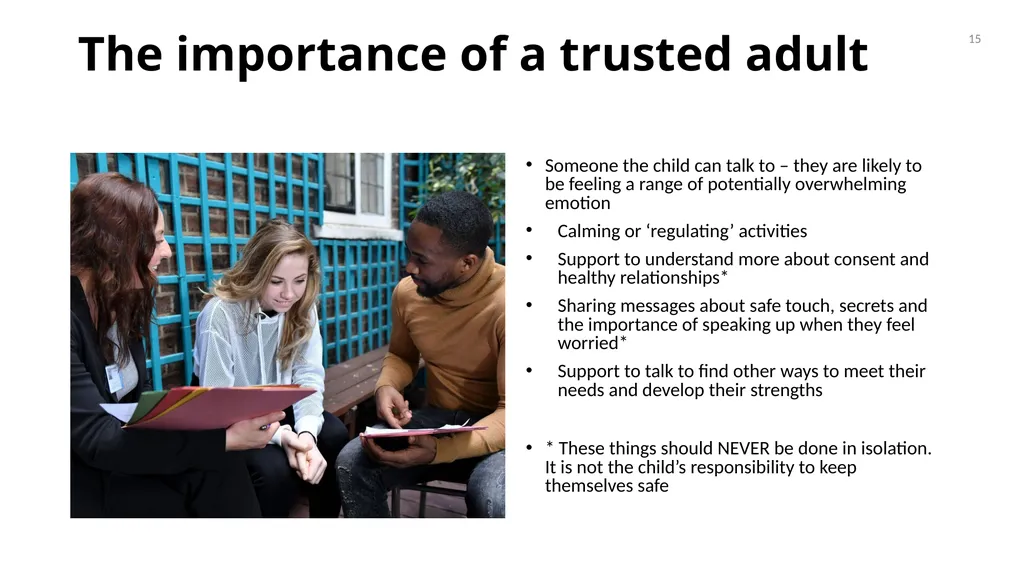
The importance of a trusted adult Someone the child can talk to – they are likely to be feeling a range of potentially overwhelming emotion
Calming or ‘regulating’ activities
Support to understand more about consent and healthy relationships*
Sharing messages about safe touch, secrets and the importance of speaking up when they feel worried*
Support to talk to find other ways to meet their needs and develop their strengths
* These things should NEVER be done in isolation. It is not the child’s responsibility to keep themselves safe 15<br>
16
Supporting the child who has harmed Think about whether the child is safe themselves – you may ask;
I’ve noticed you doing X, some people have different words for this, I wonder what you call it?
I’ve noticed you doing X, I am interested in whether you have seen this somewhere?
I noticed you doing X, tell me about that…
I have noticed you doing X, I am interested to know if you have heard about this anywhere? 16<br>
17
Supporting the child who has harmed Give clear messages that what has happened is not ok
Be clear in your language – “We were told that you put her hand up Sameera’s skirt and put your fingers inside her vagina”.
Be clear that this is not ok – “this is not Ok”
Be clear what action you will be taking – “we will need to speak to your mum about what has happened. I am going to ring her now. Is there anything you would like me to know before I do?” 17<br>
18
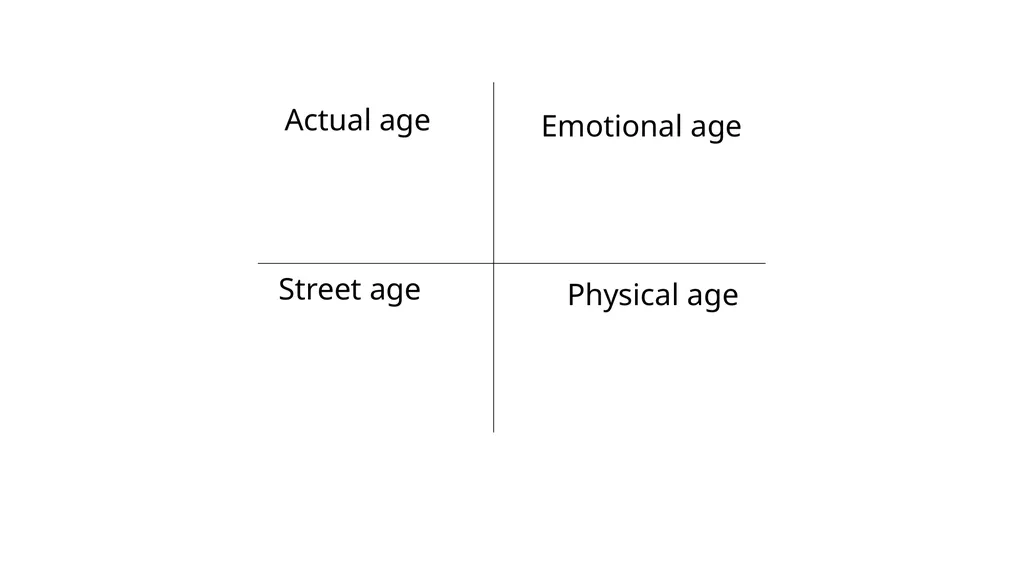
Actual age Emotional age Street age Physical age<br>
19
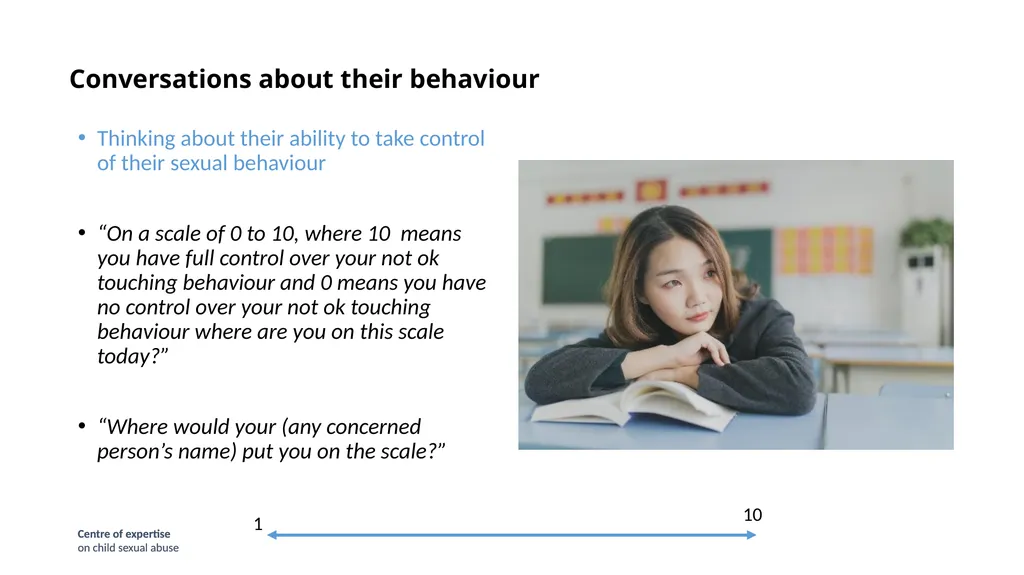
1 10 Conversations about their behaviour Thinking about their ability to take control of their sexual behaviour
“On a scale of 0 to 10, where 10 means you have full control over your not ok touching behaviour and 0 means you have no control over your not ok touching behaviour where are you on this scale today?”
“Where would your (any concerned person’s name) put you on the scale?”<br>
20
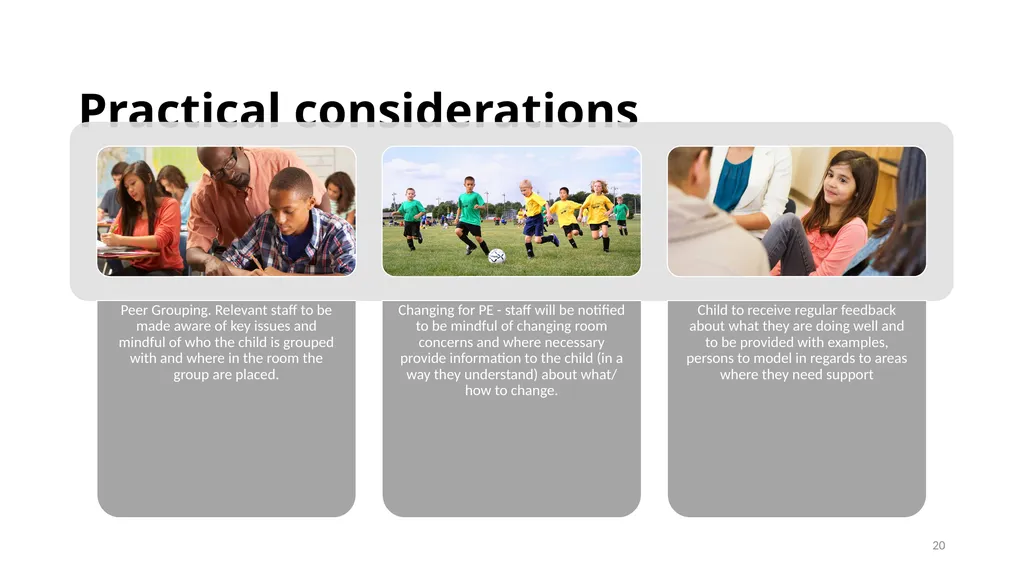
Practical considerations 20<br>
21
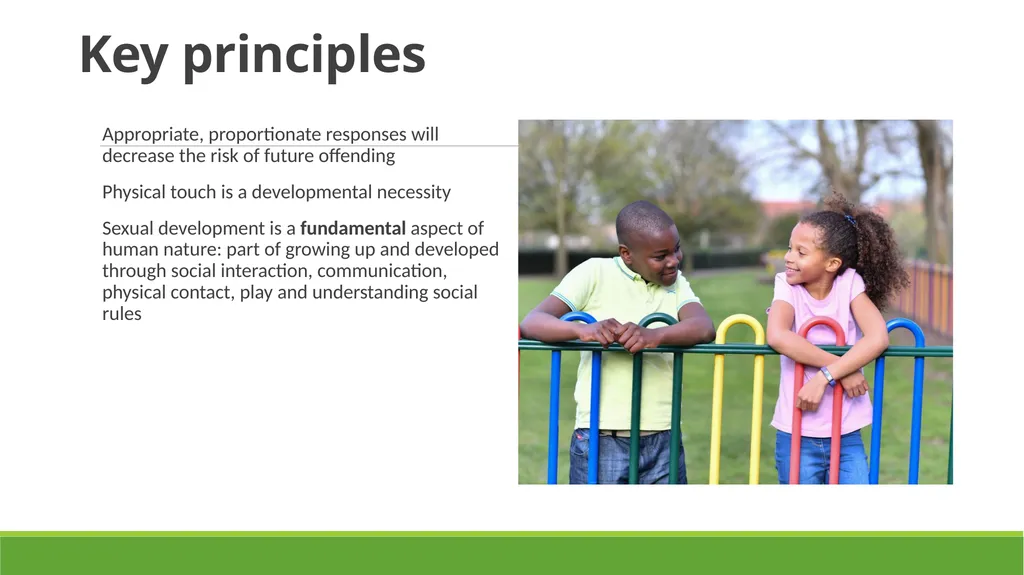
Key principles Appropriate, proportionate responses will decrease the risk of future offending
Physical touch is a developmental necessity
Sexual development is a fundamental aspect of human nature: part of growing up and developed through social interaction, communication, physical contact, play and understanding social rules 21<br>
22
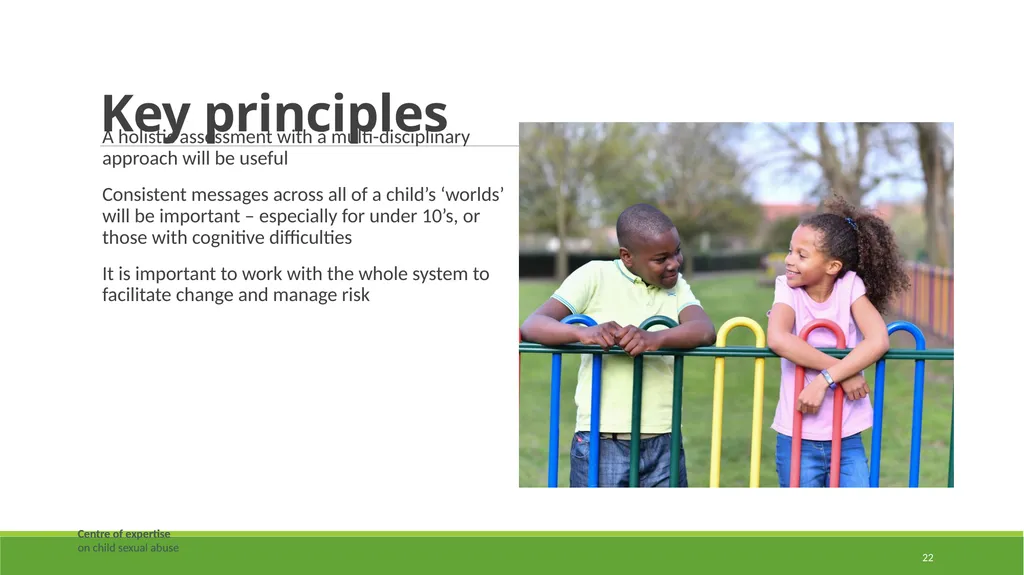
Key principles A holistic assessment with a multi-disciplinary approach will be useful
Consistent messages across all of a child’s ‘worlds’ will be important – especially for under 10’s, or those with cognitive difficulties
It is important to work with the whole system to facilitate change and manage risk 22<br>
23
Interventions Safety Planning
Body Parts and sex education
Healthy relationships
Consent and the law
Pornography
Social Skills development<br>
24
Safety Planning What are the specific concerns?
Who is at risk ?
How imminent is the risk?
In what context?
How will you manage it?<br>
25
Sex and the Law Age of consent
Legal vs illegal behaviours
Online behaviour<br>
26
Pornography Impact
Brain development
Sex education
Real life vs porn life
Healthy relationships
Consent<br>
27
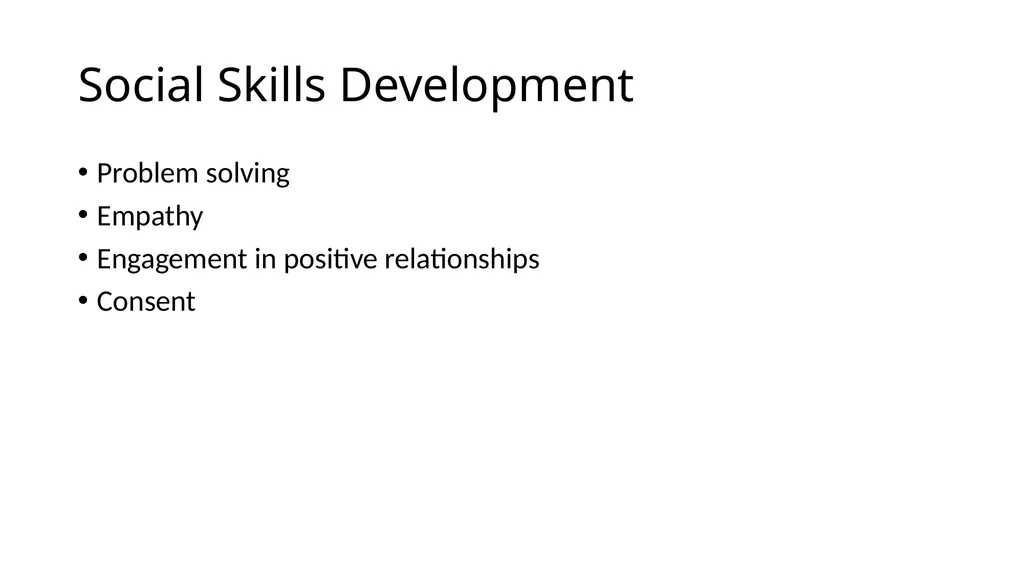
Social Skills Development Problem solving
Empathy
Engagement in positive relationships
Consent<br>
28
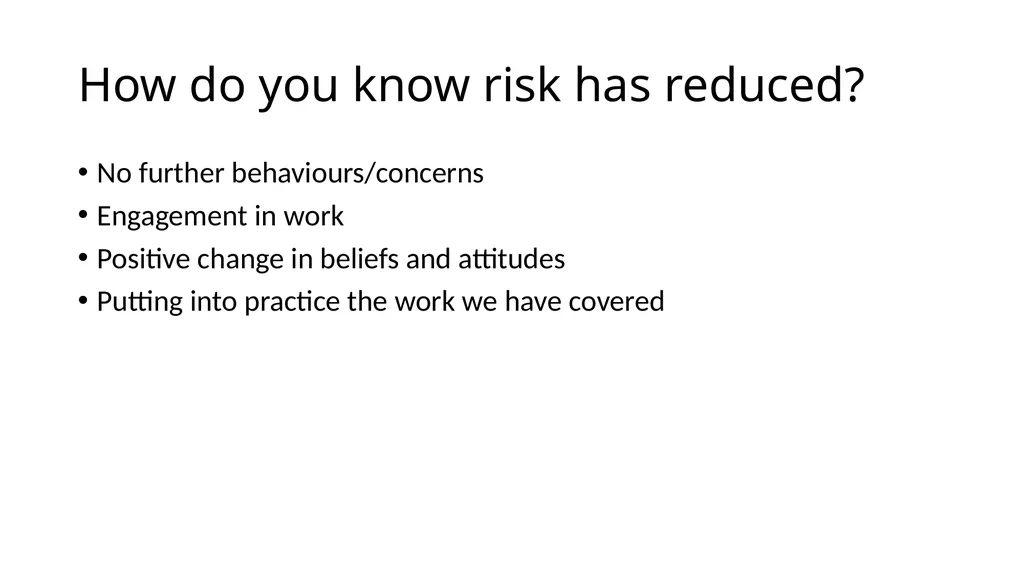
How do you know risk has reduced? No further behaviours/concerns
Engagement in work
Positive change in beliefs and attitudes
Putting into practice the work we have covered<br>
29
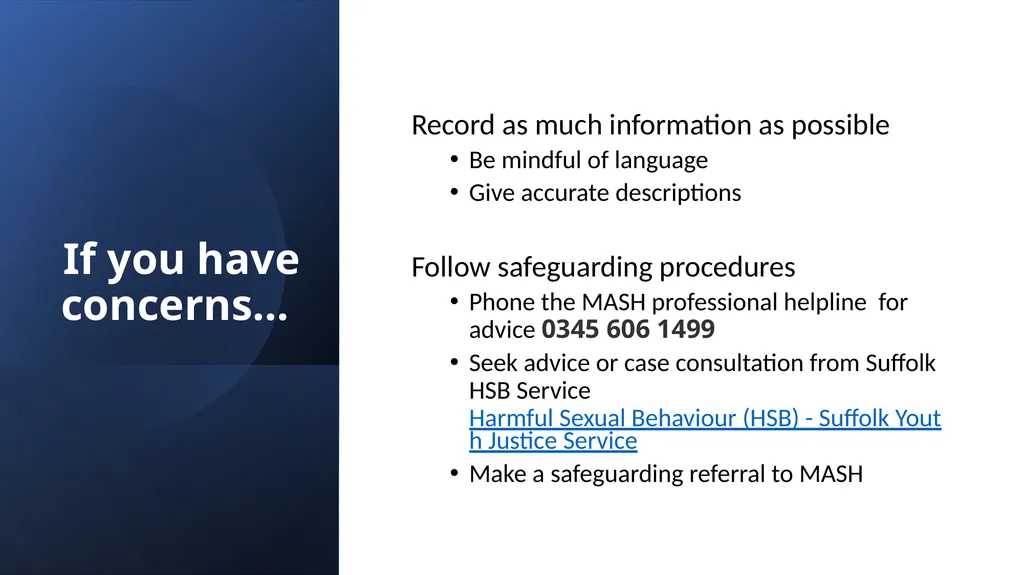
If you have concerns… Record as much information as possible
Be mindful of language
Give accurate descriptions
Follow safeguarding procedures
Phone the MASH professional helpline for advice 0345 606 1499
Seek advice or case consultation from Suffolk HSB Service Harmful Sexual Behaviour (HSB) - Suffolk Youth Justice Service
Make a safeguarding referral to MASH<br>
30
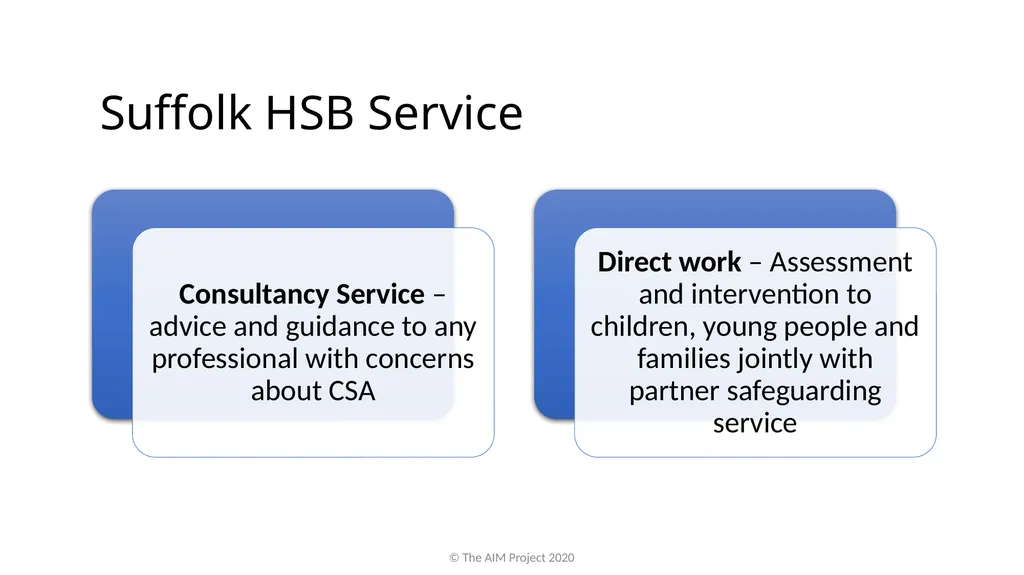
Suffolk HSB Service © The AIM Project 2020<br>