Human Reproductive Systems Human Reproductive Systems We will be studying both the male and female reproductive systems. All males have the same physical body parts for reproduction as other males. All females have the same physical body
"Human Reproductive Systems Human Reproductive" is the property of its rightful owner. Permission is granted to
download and print the materials on this website for personal, non-commercial use only, and to display it
on your personal computer provided you do not modify the materials and that you retain all copyright
notices contained in the materials. By downloading content from our website, you accept the terms of this
agreement.
Presentation Transcript
01
Human Reproductive Systems<br>
02
Human Reproductive Systems We will be studying both the male and female reproductive systems.
All males have the same physical body parts for reproduction as other males. All females have the same physical body parts for reproduction as other females.
We will be looking at drawings of the male and female reproductive systems.
We will learn and use accurate terms for male and female body parts – not slang words.<br>
03
Female Reproductive System<br>
04
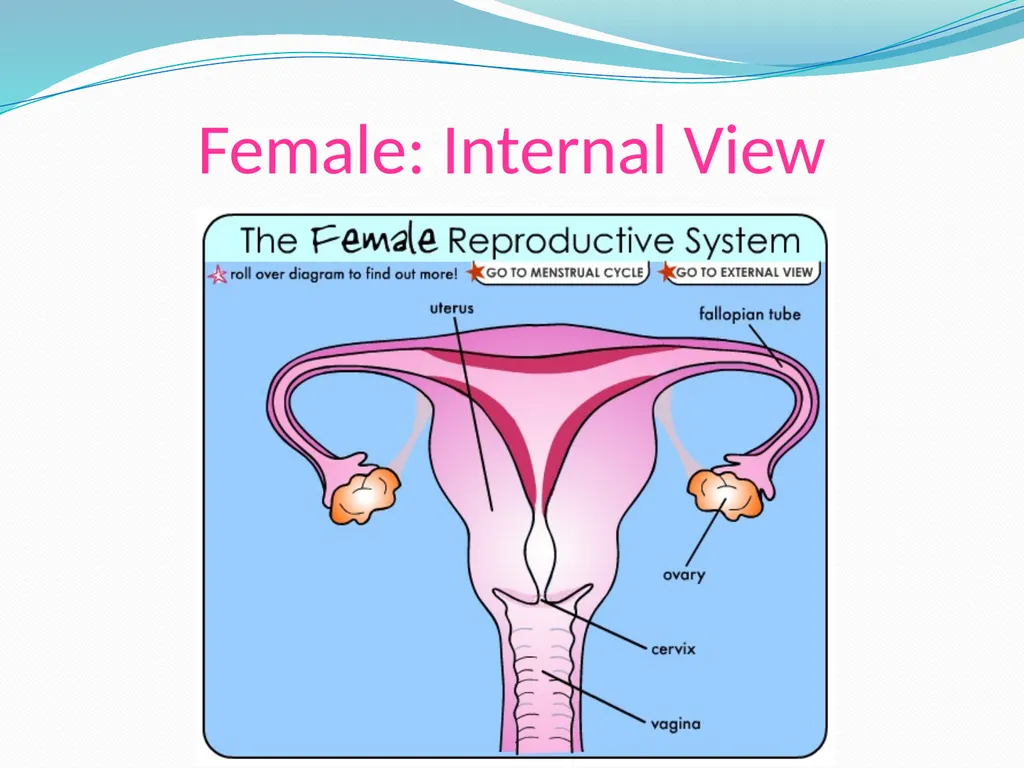
Female: Internal View<br>
05
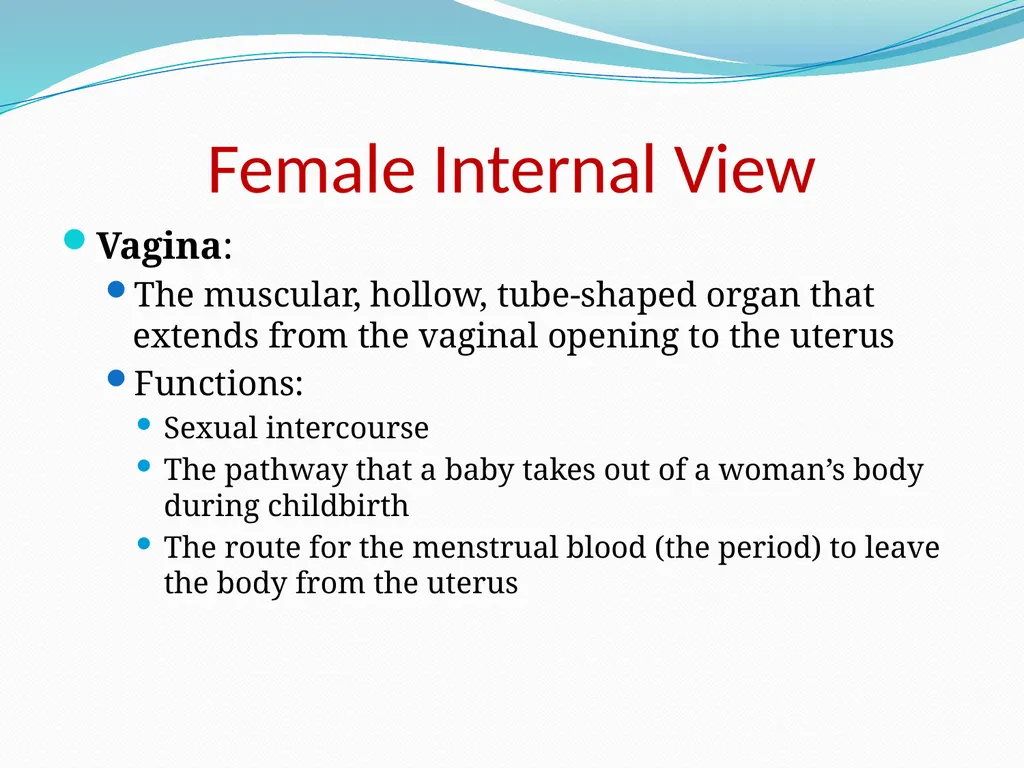
Female Internal View Vagina:
The muscular, hollow, tube-shaped organ that extends from the vaginal opening to the uterus
Functions:
Sexual intercourse
The pathway that a baby takes out of a woman’s body during childbirth
The route for the menstrual blood (the period) to leave the body from the uterus<br>
06
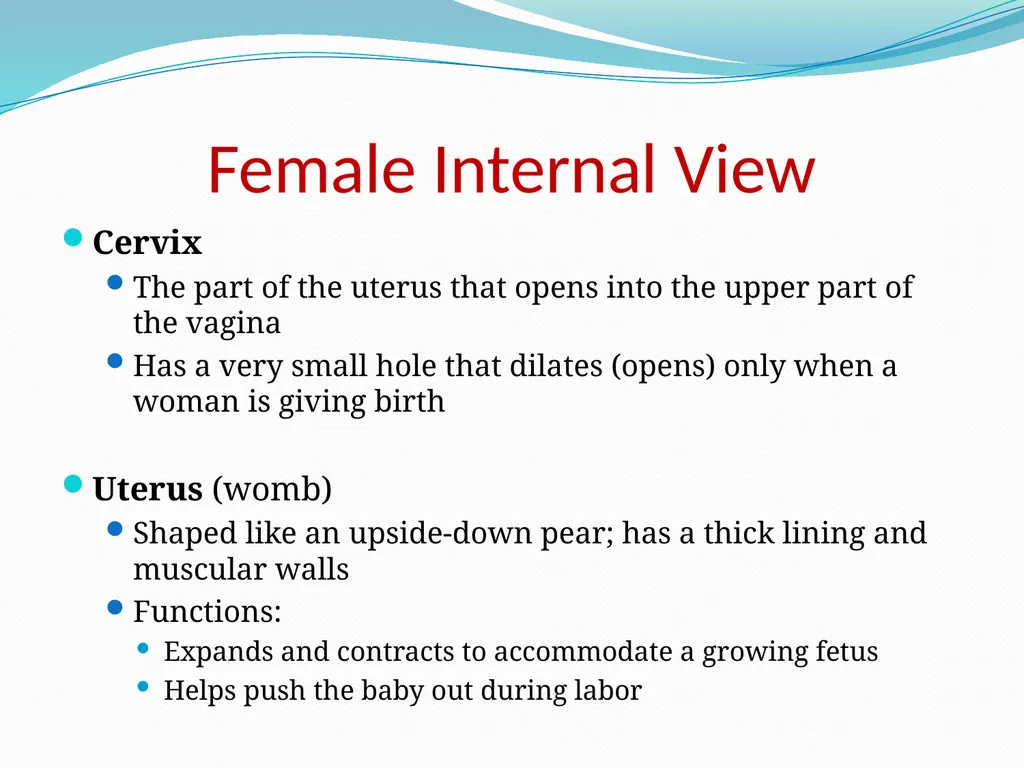
Female Internal View Cervix
The part of the uterus that opens into the upper part of the vagina
Has a very small hole that dilates (opens) only when a woman is giving birth
Uterus (womb)
Shaped like an upside-down pear; has a thick lining and muscular walls
Functions:
Expands and contracts to accommodate a growing fetus
Helps push the baby out during labor<br>
07
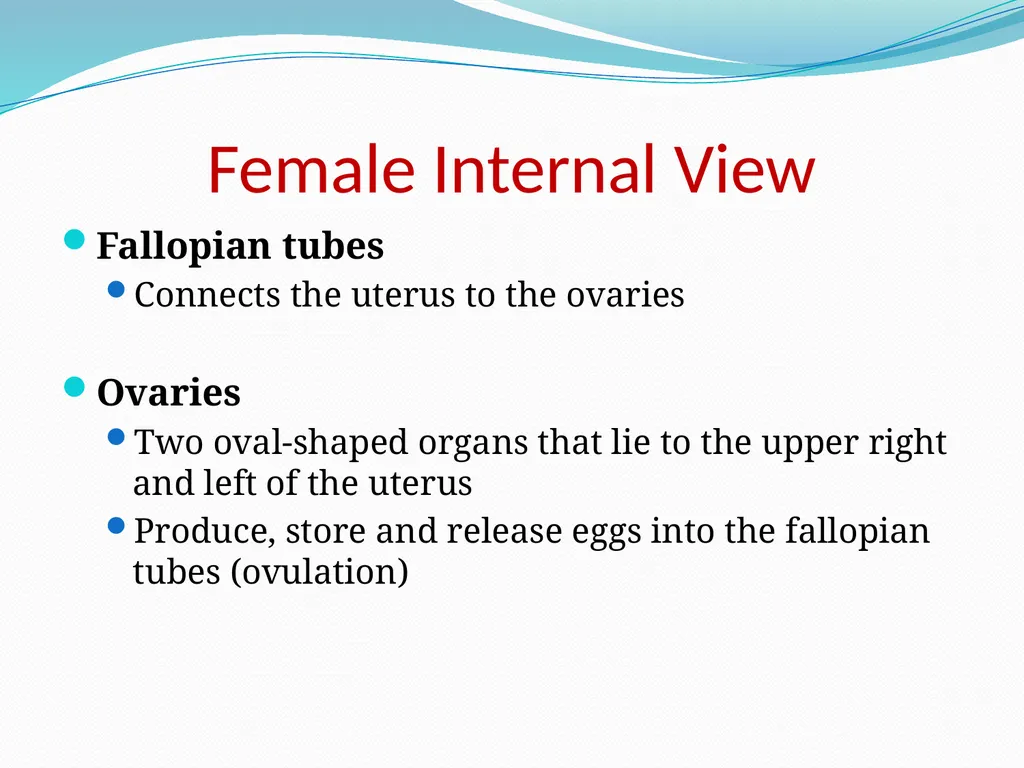
Female Internal View Fallopian tubes
Connects the uterus to the ovaries
Ovaries
Two oval-shaped organs that lie to the upper right and left of the uterus
Produce, store and release eggs into the fallopian tubes (ovulation)<br>
08
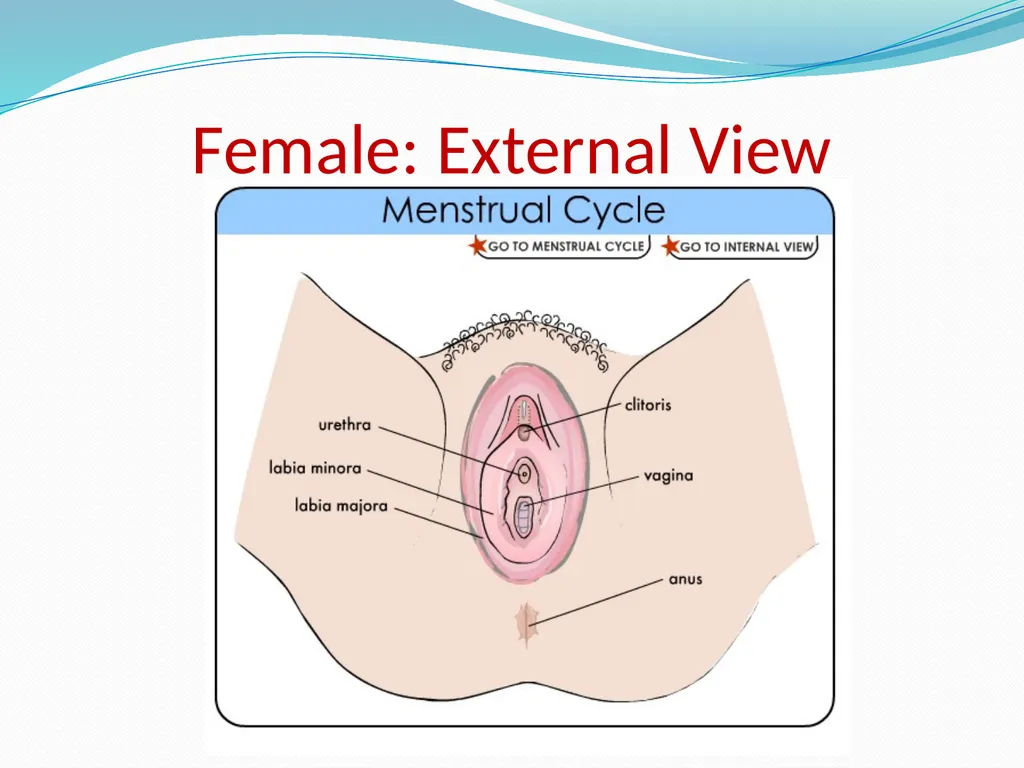
Female: External View<br>
09
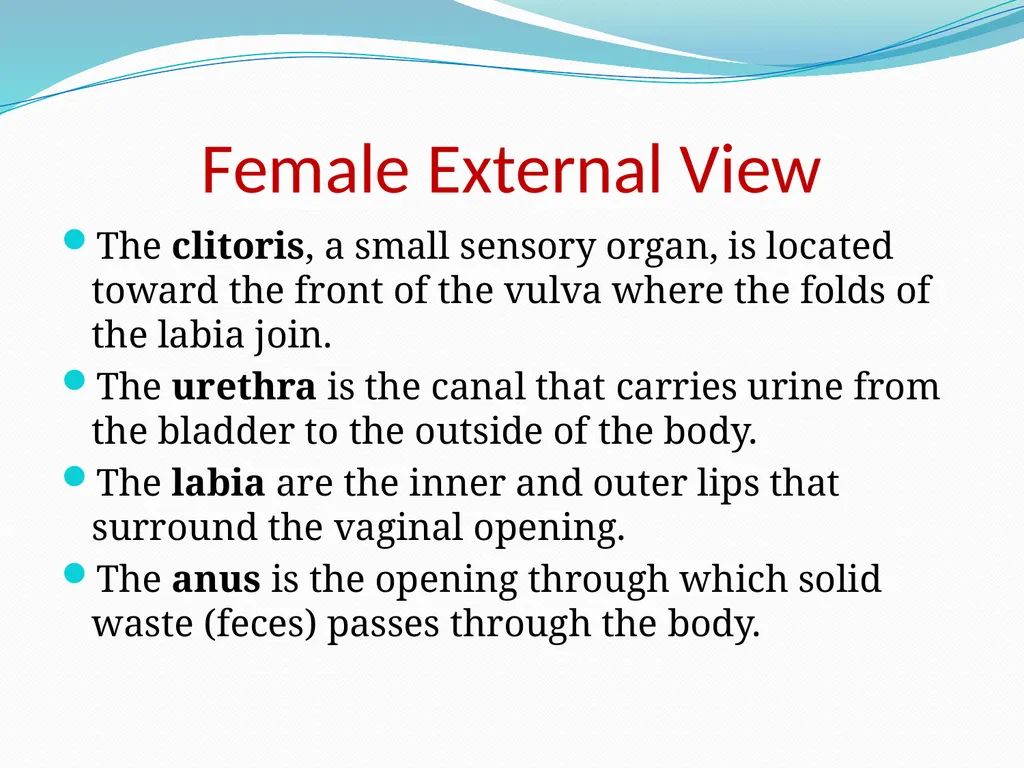
Female External View The clitoris, a small sensory organ, is located toward the front of the vulva where the folds of the labia join.
The urethra is the canal that carries urine from the bladder to the outside of the body.
The labia are the inner and outer lips that surround the vaginal opening.
The anus is the opening through which solid waste (feces) passes through the body.<br>
10
Male Reproductive System<br>
11
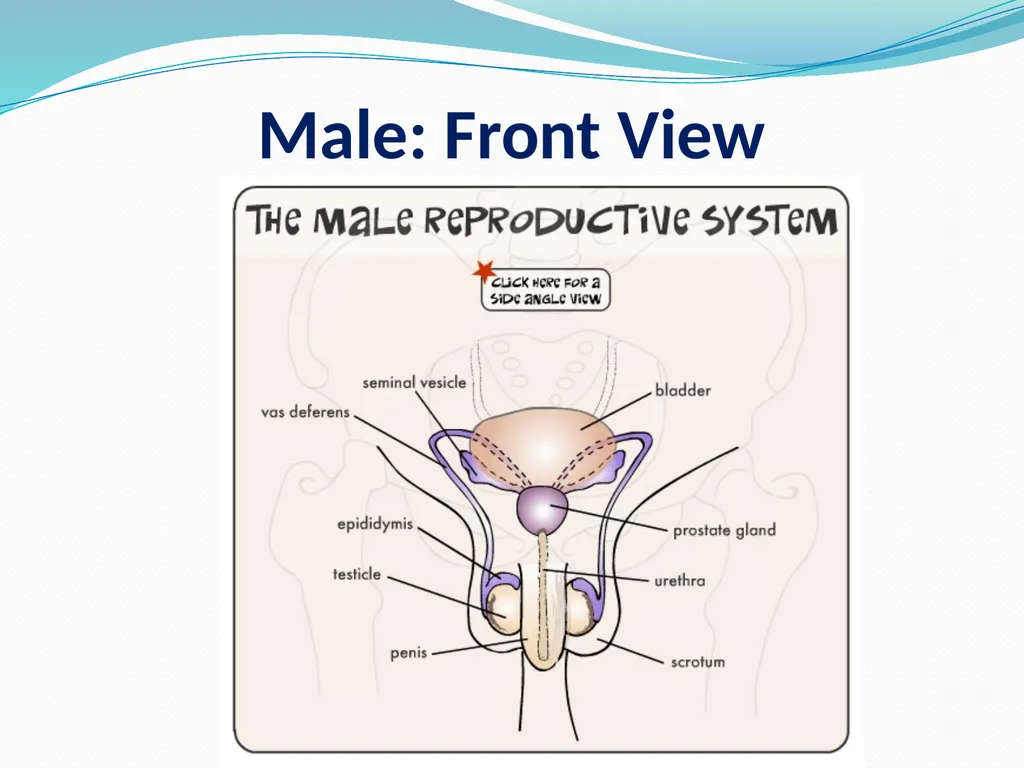
Male: Front View<br>
12
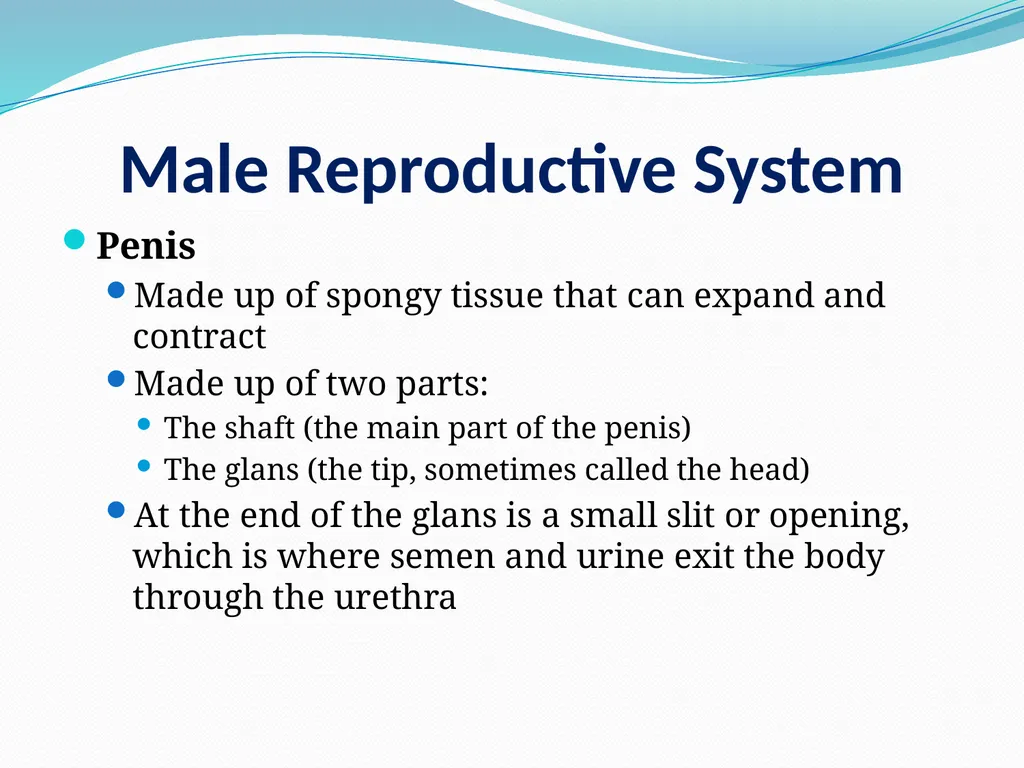
Male Reproductive System Penis
Made up of spongy tissue that can expand and contract
Made up of two parts:
The shaft (the main part of the penis)
The glans (the tip, sometimes called the head)
At the end of the glans is a small slit or opening, which is where semen and urine exit the body through the urethra<br>
13
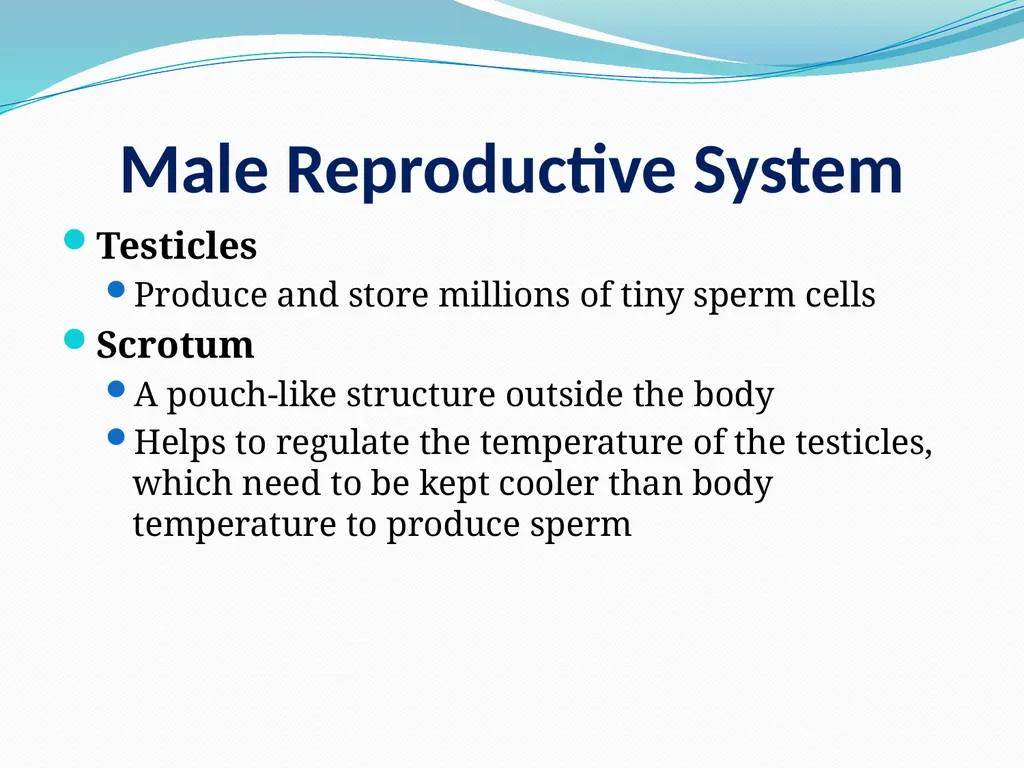
Male Reproductive System Testicles
Produce and store millions of tiny sperm cells
Scrotum
A pouch-like structure outside the body
Helps to regulate the temperature of the testicles, which need to be kept cooler than body temperature to produce sperm<br>
14
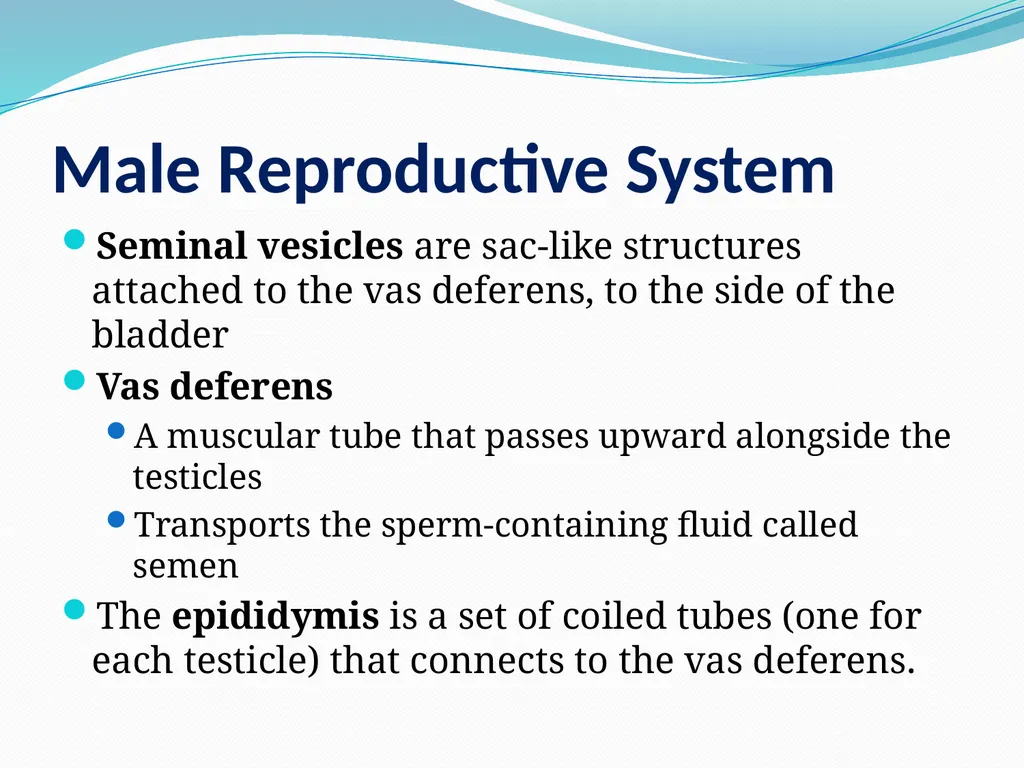
Male Reproductive System Seminal vesicles are sac-like structures attached to the vas deferens, to the side of the bladder
Vas deferens
A muscular tube that passes upward alongside the testicles
Transports the sperm-containing fluid called semen
The epididymis is a set of coiled tubes (one for each testicle) that connects to the vas deferens.<br>
15
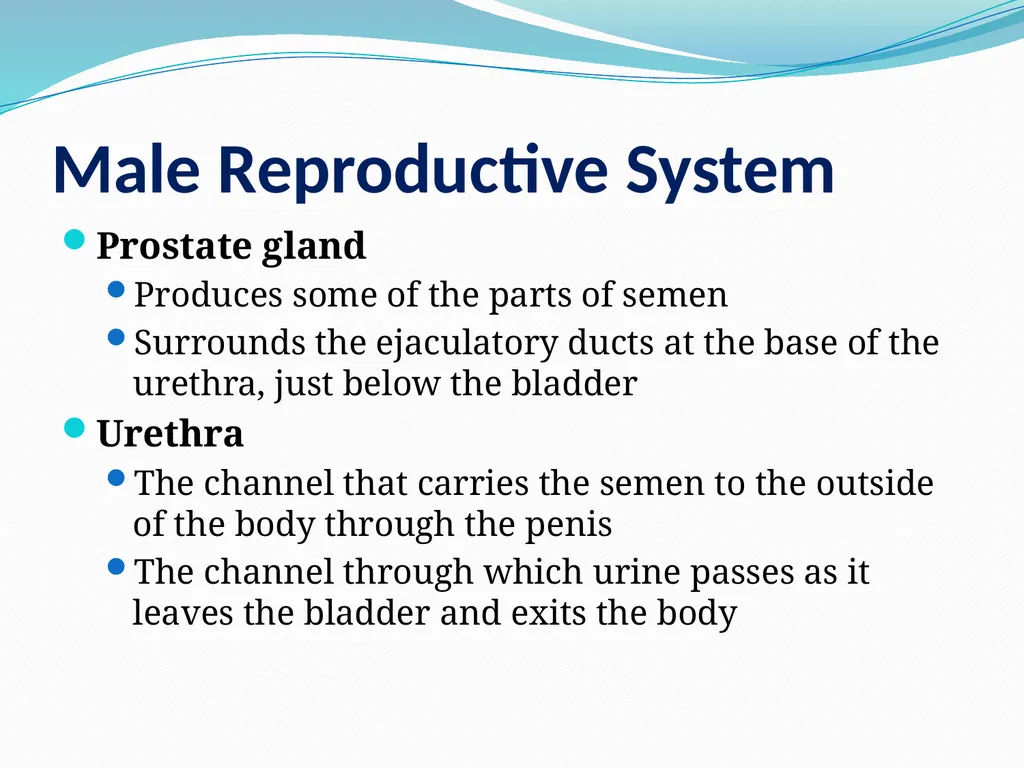
Male Reproductive System Prostate gland
Produces some of the parts of semen
Surrounds the ejaculatory ducts at the base of the urethra, just below the bladder
Urethra
The channel that carries the semen to the outside of the body through the penis
The channel through which urine passes as it leaves the bladder and exits the body<br>
16
Male Reproductive System The bladder is the organ that collects and stores urine produced by the kidneys.
Foreskin
A fold of skin at the end of the penis covering the glans
Some males have a circumcision, which means that a doctor or clergy member cuts away the foreskin<br>
17
Human Reproductive Systems All drawings come from www.kidshealth.com. You can find interactive drawings on this website too.
You can find more information about the human reproductive systems at www.plannedparenthood.com and www.kidshealth.com<br>