Human Rights Due Diligence Policy Aim To familiarise UNPOL with the responsibilities and opportunities emerging from the United Nations Human Rights Due Diligence Policy (UN HRDDP) on UN support to non-UN security forces 1 Relevance The UN
"Human Rights Due Diligence Policy Aim To" is the property of its rightful owner. Permission is granted to
download and print the materials on this website for personal, non-commercial use only, and to display it
on your personal computer provided you do not modify the materials and that you retain all copyright
notices contained in the materials. By downloading content from our website, you accept the terms of this
agreement.
Presentation Transcript
01
Human Rights Due Diligence Policy<br>
02
Aim To familiarise UNPOL with the responsibilities and opportunities emerging from the United Nations Human Rights Due Diligence Policy (UN HRDDP) on UN support to non-UN security forces 1<br>
03
Relevance The UN HRDDP is a binding policy, established by the Secretary-General and repeatedly endorsed by the UN Security Council
Risk management: the UN needs to safeguard its reputation and must not become morally or legally complicit to grave human rights violations
Human rights promotion: the UN uses its security support as a lever to achieve positive change 2<br>
04
Learning Objectives Illustrate the due diligence responsibilities for UNPOL when providing support
List the main elements of HRDDP risk assessments
Describe possible mitigation measures to prevent human rights violations associated with joint operations or operational support
Explain the leverage the HRDDP can provide in advancing the UN Police agenda 3<br>
05
Lesson Overview Basic Principles of the HRDDP
Scope of Application
Risk Assessment
Mitigation Measures
Monitoring Compliance and Intervention
Mission Modalities to Implement the HRDDP 4<br>
06
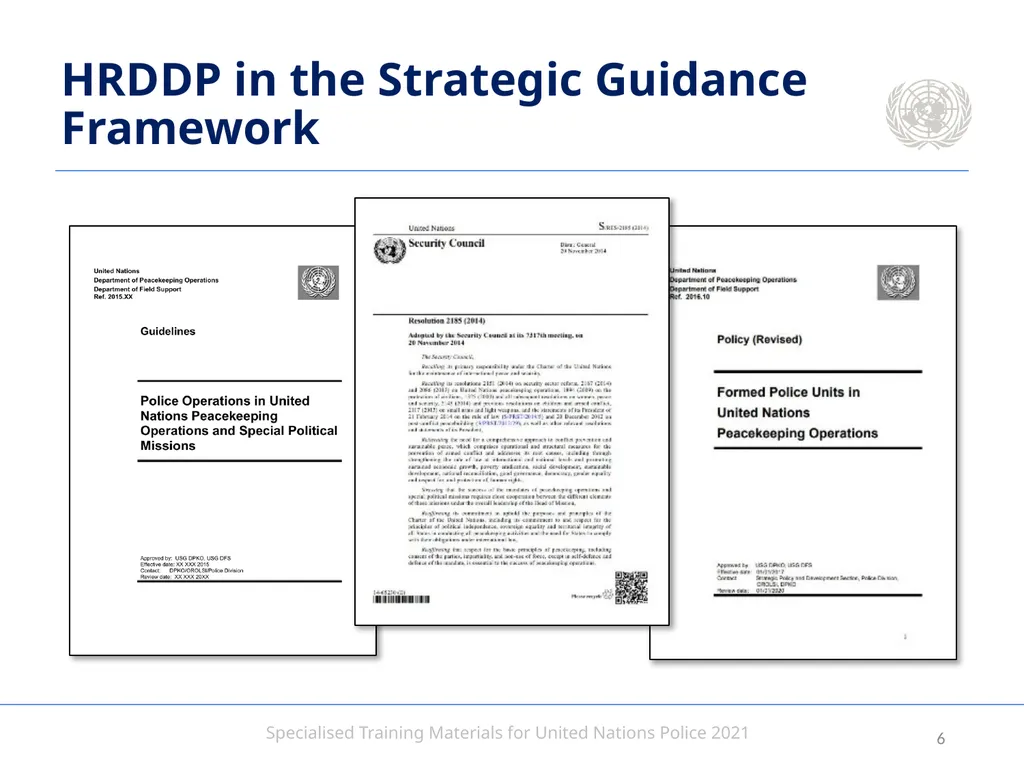
HRDDP in the Strategic Guidance Framework 5<br>
07
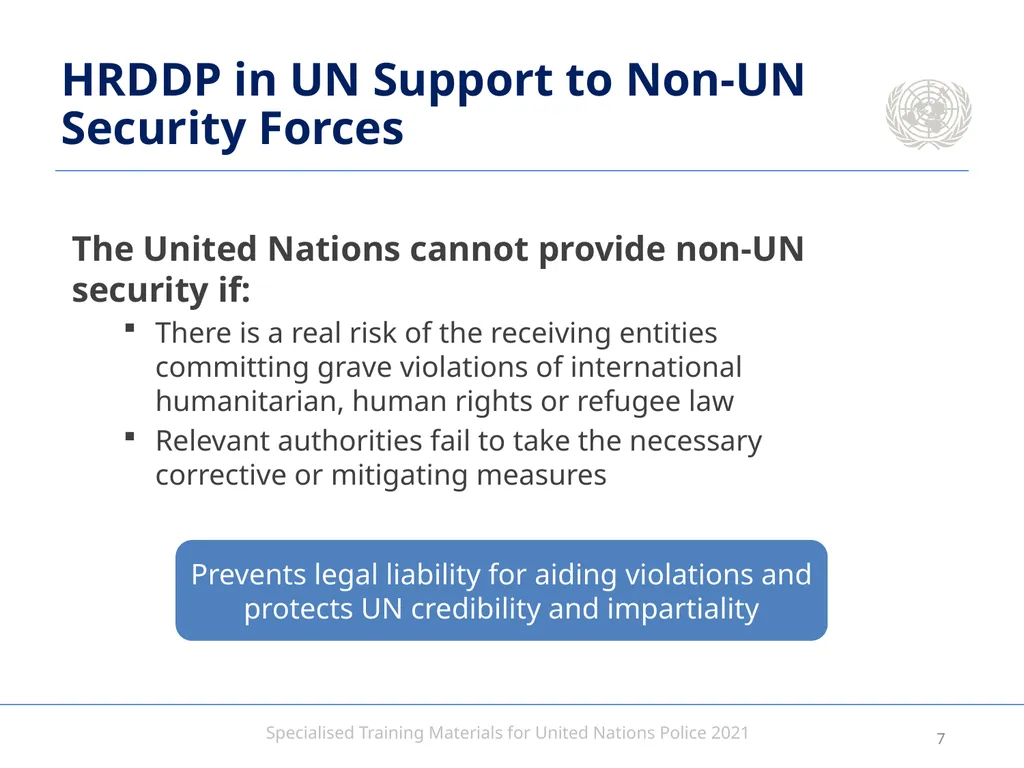
HRDDP in UN Support to Non-UN Security Forces 6 The United Nations cannot provide non-UN security if:
There is a real risk of the receiving entities committing grave violations of international humanitarian, human rights or refugee law
Relevant authorities fail to take the necessary corrective or mitigating measures Prevents legal liability for aiding violations and protects UN credibility and impartiality<br>
08
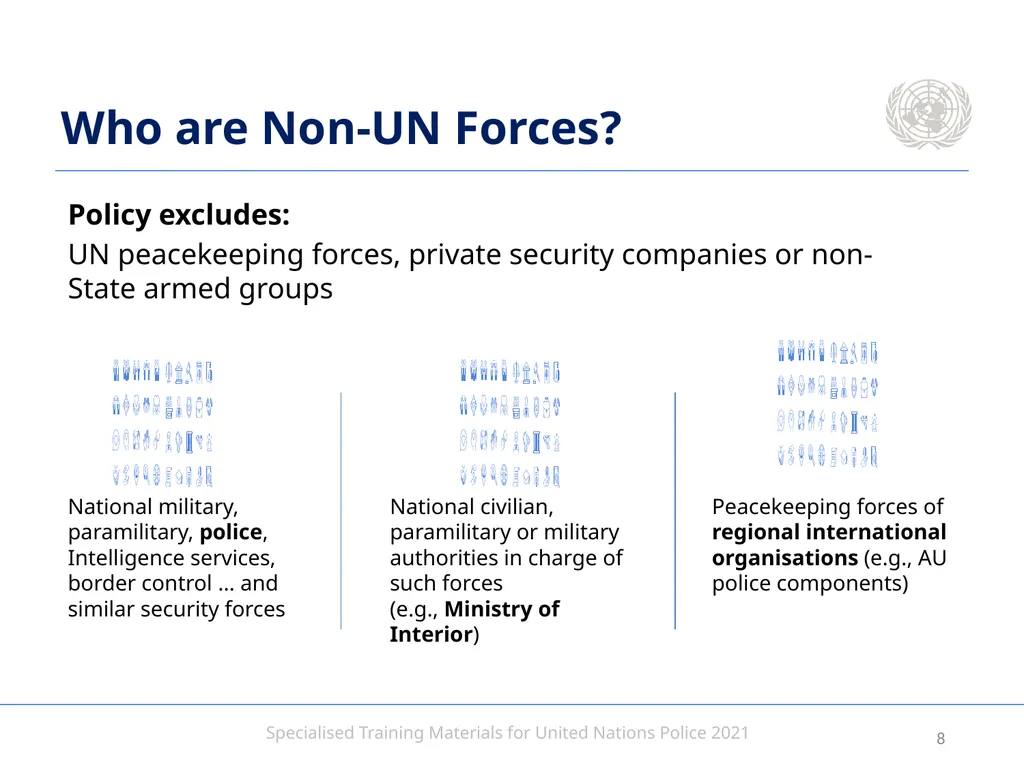
Who are Non-UN Forces? 7 Policy excludes:
UN peacekeeping forces, private security companies or non-State armed groups National military, paramilitary, police, Intelligence services, border control … and similar security forces National civilian, paramilitary or military authorities in charge of such forces
(e.g., Ministry of Interior) Peacekeeping forces of regional international organisations (e.g., AU police components)<br>
09
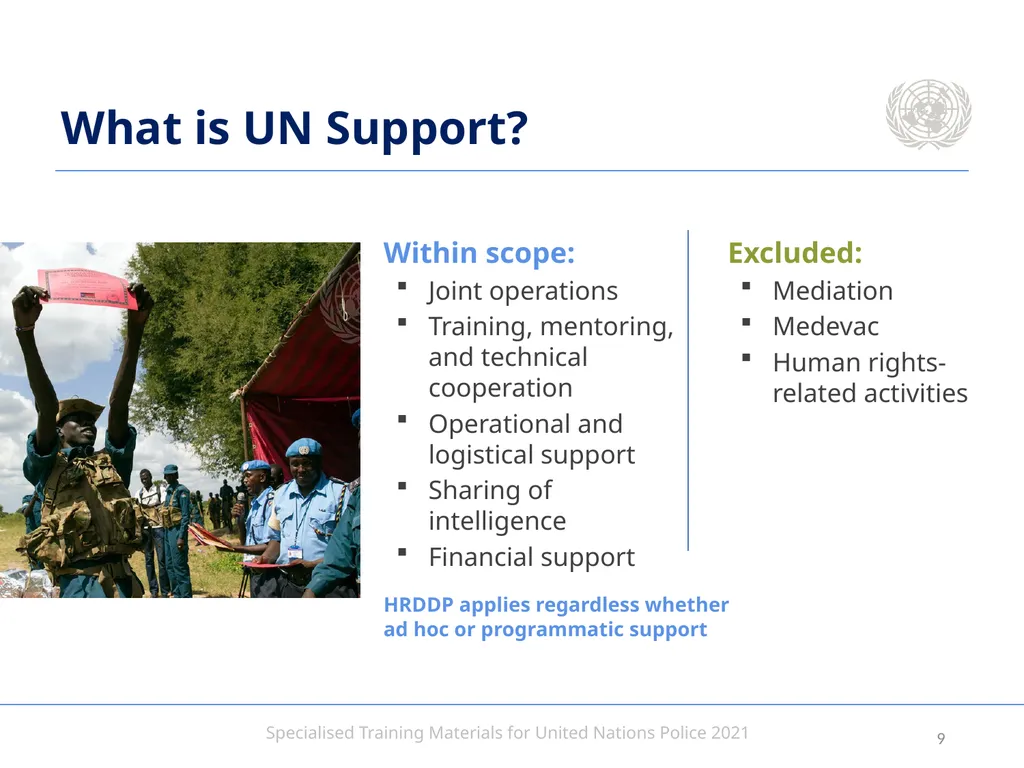
What is UN Support? 8 Within scope:
Joint operations
Training, mentoring, and technical cooperation
Operational and logistical support
Sharing of intelligence
Financial support Excluded:
Mediation
Medevac
Human rights-related activities HRDDP applies regardless whether ad hoc or programmatic support<br>
10
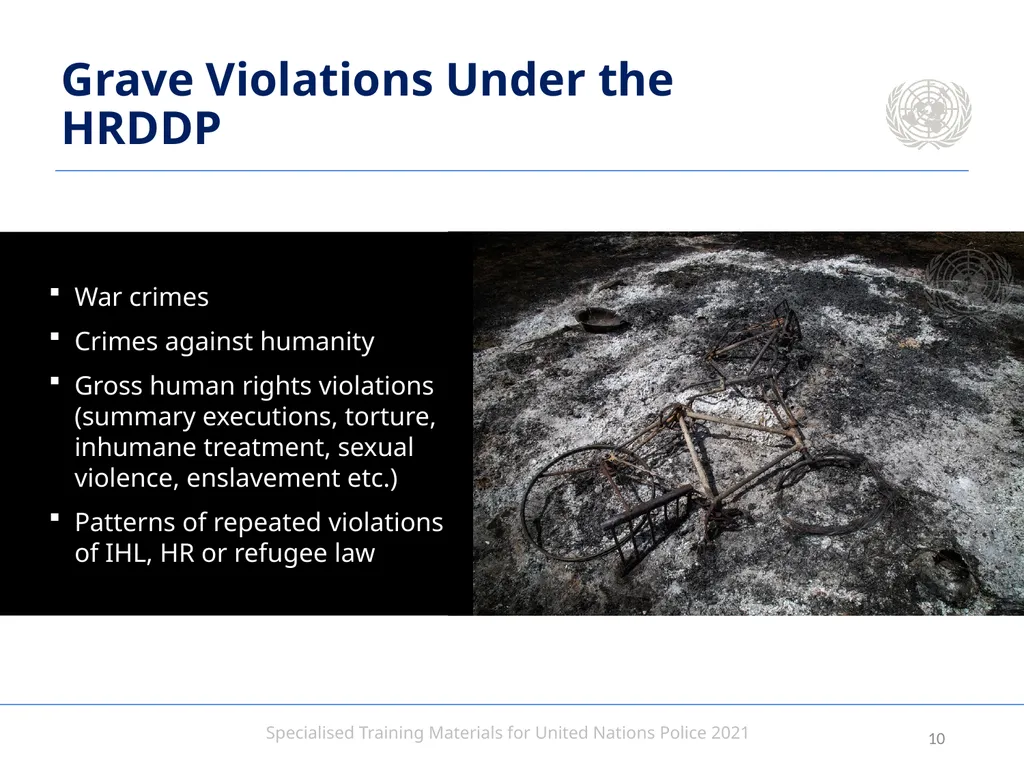
Grave Violations Under the HRDDP 9 War crimes
Crimes against humanity
Gross human rights violations (summary executions, torture, inhumane treatment, sexual violence, enslavement etc.)
Patterns of repeated violations of IHL, HR or refugee law<br>
11
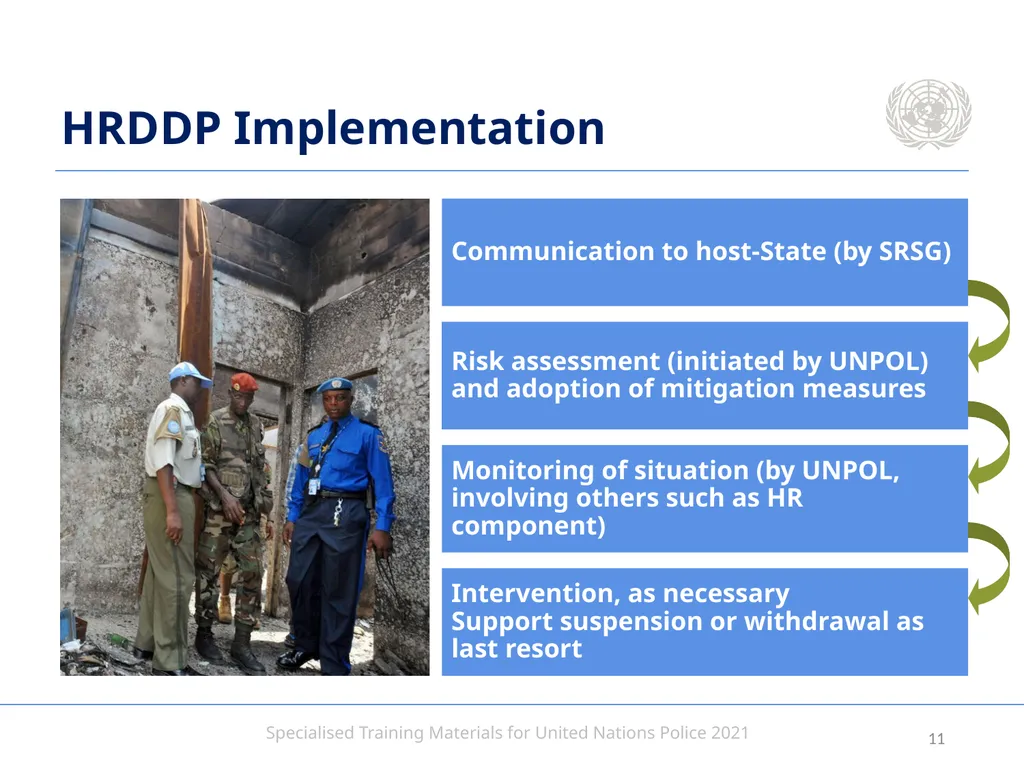
HRDDP Implementation 10 Communication to host-State (by SRSG) Risk assessment (initiated by UNPOL) and adoption of mitigation measures Monitoring of situation (by UNPOL, involving others such as HR component) Intervention, as necessary Support suspension or withdrawal as last resort<br>
12
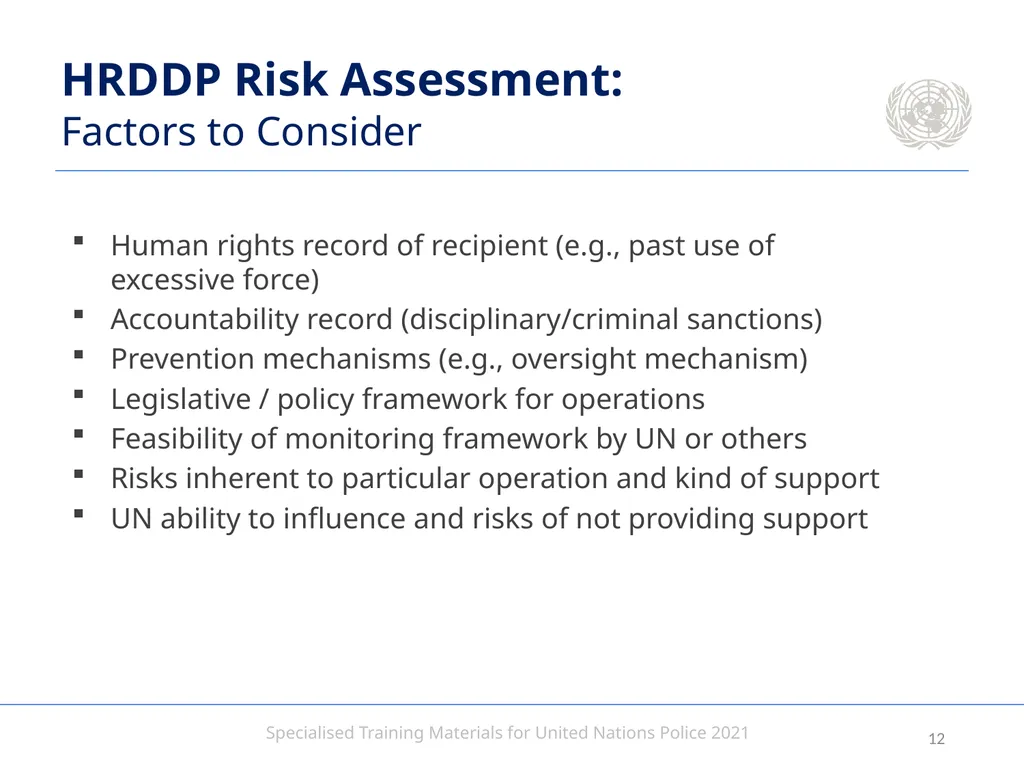
HRDDP Risk Assessment: Factors to Consider 11 Human rights record of recipient (e.g., past use of excessive force)
Accountability record (disciplinary/criminal sanctions)
Prevention mechanisms (e.g., oversight mechanism)
Legislative / policy framework for operations
Feasibility of monitoring framework by UN or others
Risks inherent to particular operation and kind of support
UN ability to influence and risks of not providing support<br>
13
Learning Activity 4.1: Risk Assessment Carefully read the case study
In your groups:
Identify the risk factors for giving UNPOL support to the Leopard Special Police Unit
Record your answers on chart paper
Present your ideas to the plenary
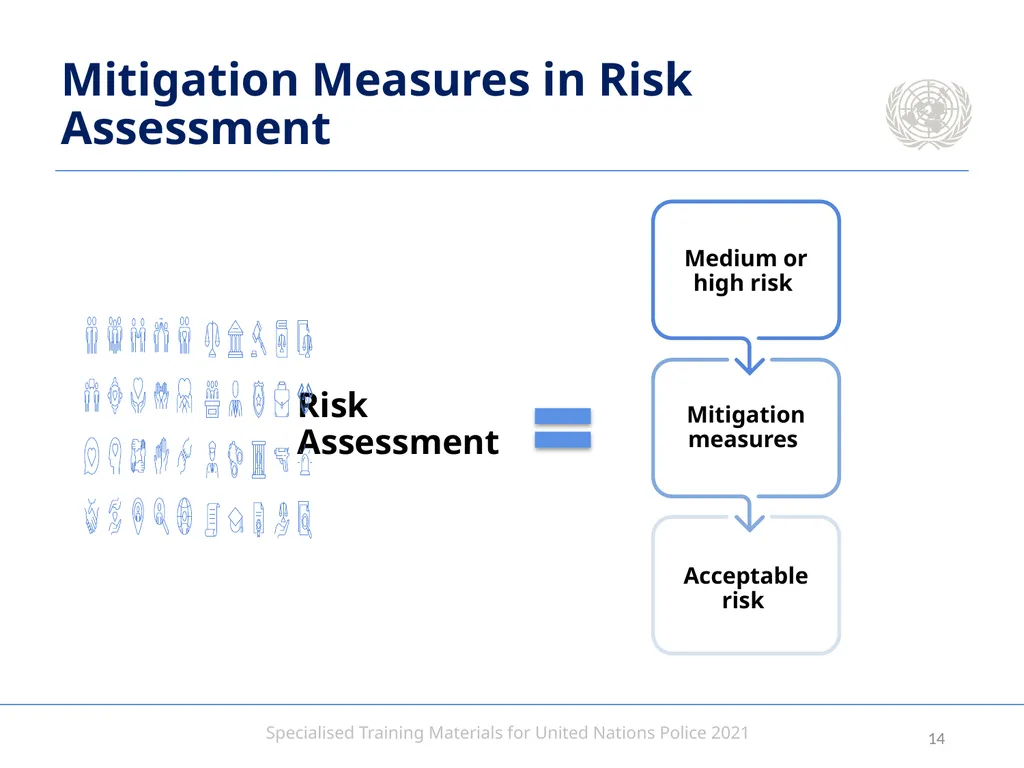
Mitigation Measures in Risk Assessment 13 Risk Assessment<br>
15
Learning Activity 4.2: Mitigation Measures A host-State requests UNPOL and its FPUs to support national police on crowd control in relation to major opposition demonstrations. However, the national police often uses excessive force in handling such demonstrations.
Discuss in your groups:
What mitigating measures would you recommend to reduce the risk that supported national police units engage in excessive force?
How can mitigating measures provide strategic leverage to advance UNPOL’s objectives?
Record your answers on a chart paper
Present your ideas to the plenary
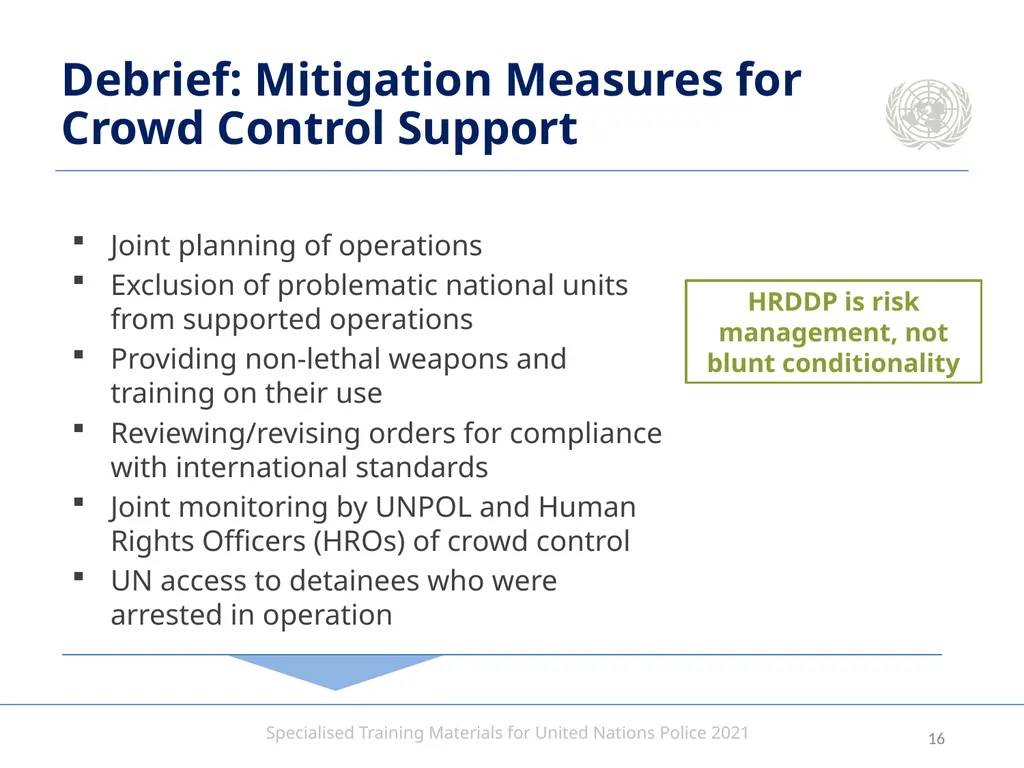
Debrief: Mitigation Measures for Crowd Control Support 15 Joint planning of operations
Exclusion of problematic national units from supported operations
Providing non-lethal weapons and training on their use
Reviewing/revising orders for compliance with international standards
Joint monitoring by UNPOL and Human Rights Officers (HROs) of crowd control
UN access to detainees who were arrested in operation HRDDP is risk management, not blunt conditionality<br>
17
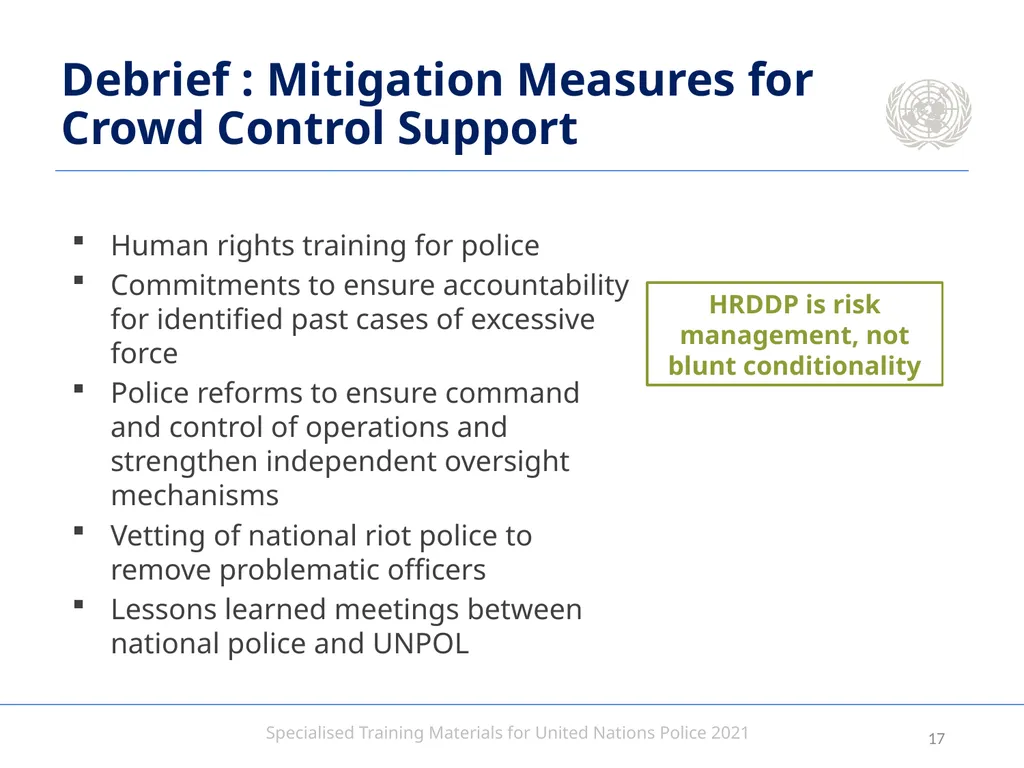
Debrief : Mitigation Measures for Crowd Control Support 16 Human rights training for police
Commitments to ensure accountability for identified past cases of excessive force
Police reforms to ensure command and control of operations and strengthen independent oversight mechanisms
Vetting of national riot police to remove problematic officers
Lessons learned meetings between national police and UNPOL HRDDP is risk management, not blunt conditionality<br>
18
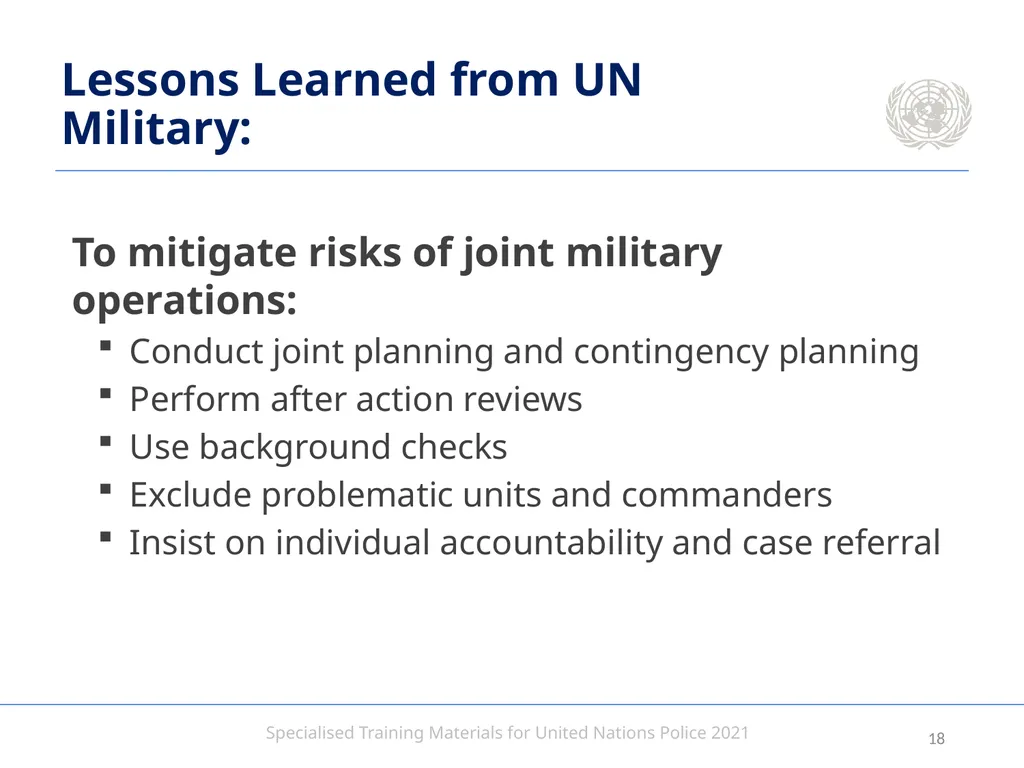
Lessons Learned from UN Military: 17 To mitigate risks of joint military operations:
Conduct joint planning and contingency planning
Perform after action reviews
Use background checks
Exclude problematic units and commanders
Insist on individual accountability and case referral<br>
19
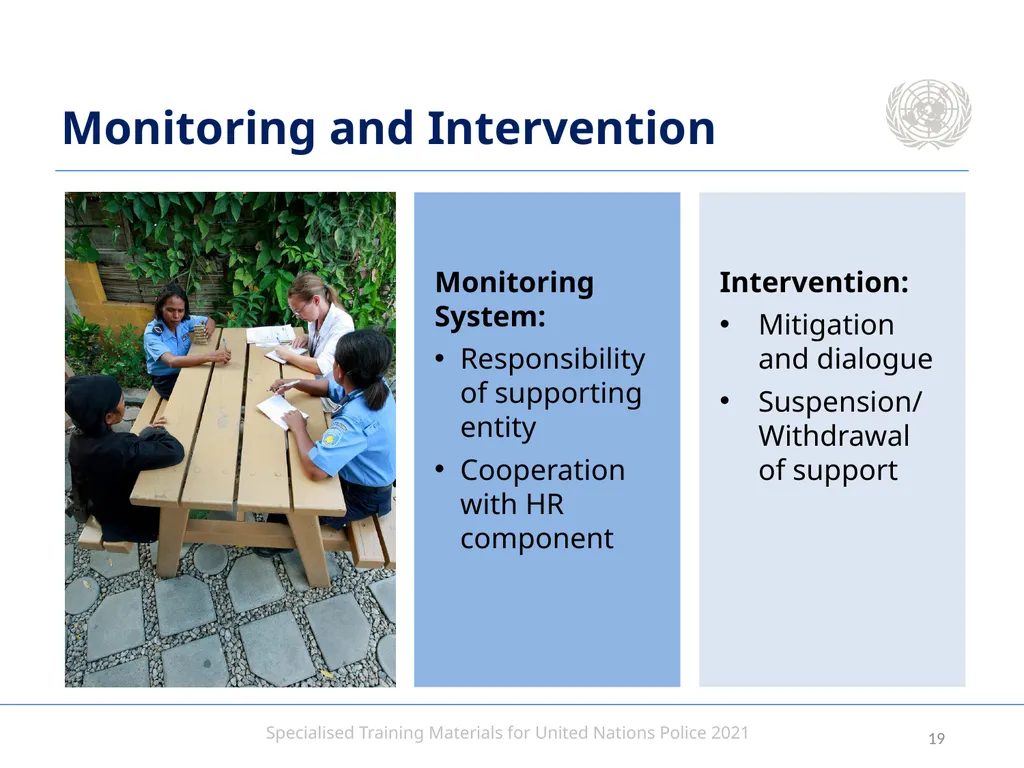
Monitoring and Intervention 18 Monitoring System:
Responsibility of supporting entity
Cooperation with HR component Intervention:
Mitigation and dialogue
Suspension/ Withdrawal of support<br>
20
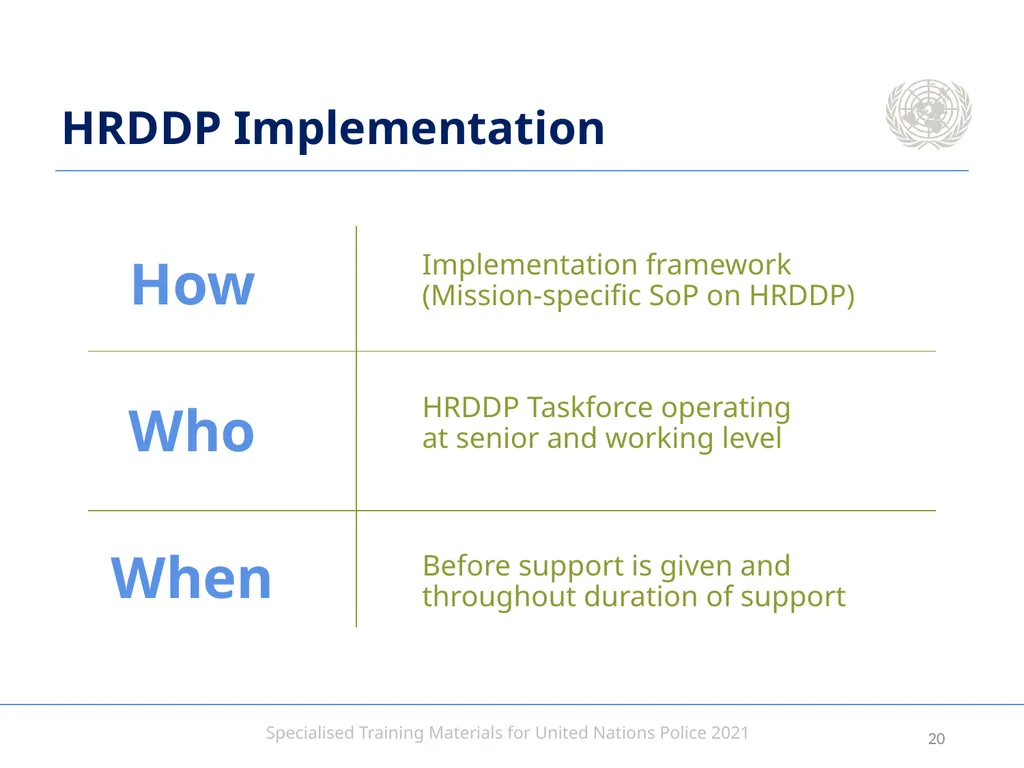
HRDDP Implementation 19 How Who When Implementation framework (Mission-specific SoP on HRDDP) HRDDP Taskforce operating at senior and working level Before support is given and throughout duration of support<br>