
Hypertension 2017 Putting the Guidelines into




Description: Hypertension 2017 Putting the Guidelines into Practice Relationships with commercial interests: GrantsResearch Support: Speakers BureauHonoraria: Consulting Fees: Data Safety and Monitoring: Disclosures This program has received financial
Related Topics
Download Presentation
"Hypertension 2017 Putting the Guidelines into" is the property of its rightful owner. Permission is granted to download and print the materials on this website for personal, non-commercial use only, and to display it on your personal computer provided you do not modify the materials and that you retain all copyright notices contained in the materials. By downloading content from our website, you accept the terms of this agreement.
Presentation Transcript
slide1. Hypertension 2017 Putting the Guidelines into Practice<br>
slide2. Relationships with commercial interests:
Grants/Research Support:
Speakers Bureau/Honoraria:
Consulting Fees:
Data Safety and Monitoring: Disclosures<br>
slide3. This program has received financial support from Servier in the form of an educational grant
This program has not received any in-kind support
Potential for conflict(s) of interest:
_______has received an honoraria funding from Servier, who has product(s) in this therapeutic area Disclosure of Commercial Support<br>
slide4. The information presented is based on recent information that is explicitly ‘‘evidence-based’’ and is solely based on Hypertension Canada Guidelines Mitigating Potential Bias<br>
slide5. Canada has the world’s highest reported national blood pressure control rates
Hypertension Canada is known as the most credible source for evidence-based hypertension guidelines, with annual updates, a well-validated review process and effective dissemination and implementation techniques across Canada Evidence-Based Annual Guidelines<br>
slide6. At the conclusion of this activity, participants will be able to:
Apply appropriate methods for making a diagnosis of hypertension
Implement evidence-based threshold and target BPs
Integrate new guidelines for hypertension management including:
Use of longer-acting over shorter-acting diuretics
Use of single pill combinations as a first-line treatment Learning Objectives<br>
slide7. Hypertension 2017 What’s new?
Longer acting (thiazide-like) diuretics are preferred vs. shorter acting (thiazides)
Single pill combinations as a first line treatment (regardless of the extent of BP elevation)<br>
slide8. Hypertension 2017 What’s still important?
The diagnosis of hypertension should be based on out-of-office measurements; in the office, use automated office BP monitoring (AOBP)
The threshold and target blood pressures are lower in those at greater risk<br>
slide9. Case 1. Office vs. Out-of-Office BP Measurements in the DIAGNOSIS of Hypertension: Which One to Believe? 57-year-old account executive presents for BP follow-up visit
Elevated BP identified 2 months ago during annual exam
Interim BPs taken at local pharmacies have all been normal
Normal hematology, biochemistry, renal function and electrolytes
Normal EKG with no evidence of LVH
Office BP using auscultatory wall-mounted mercury sphygmomanometer: 152/102 mmHg
How would you explain this observation?<br>
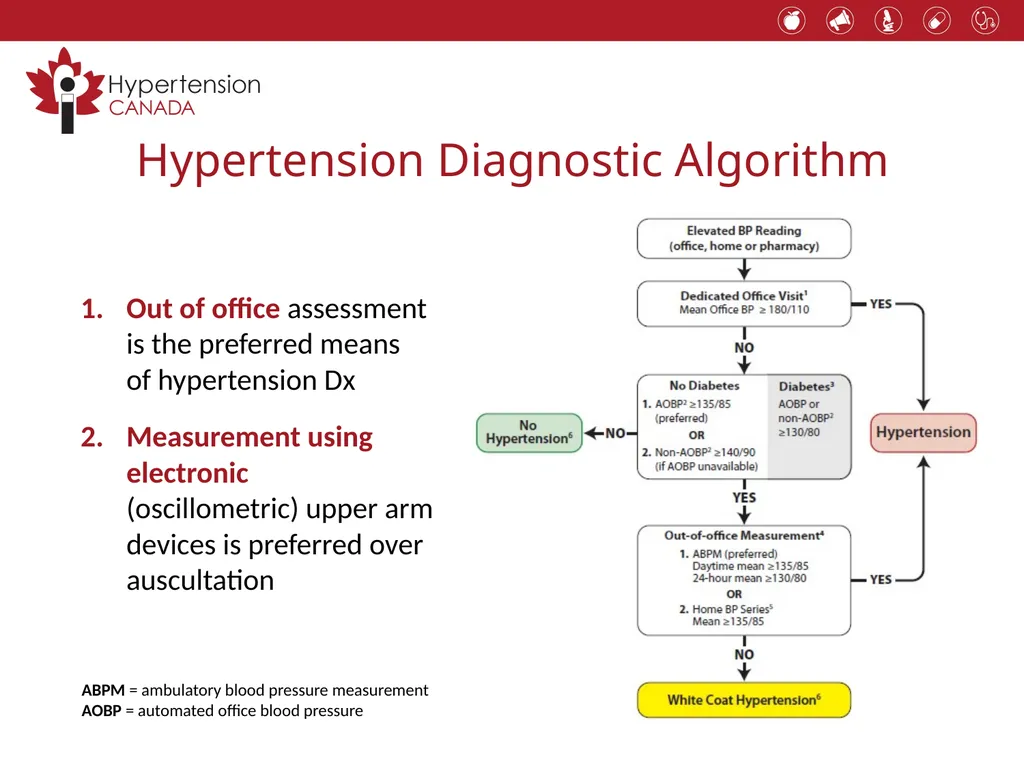
slide10. Out of office assessment is the preferred means of hypertension Dx
Measurement using electronic (oscillometric) upper arm devices is preferred over auscultation Hypertension Diagnostic Algorithm ABPM = ambulatory blood pressure measurement
AOBP = automated office blood pressure<br>
slide11. Out-of-Office Assessment is the Preferred Means of Diagnosing Hypertension<br>
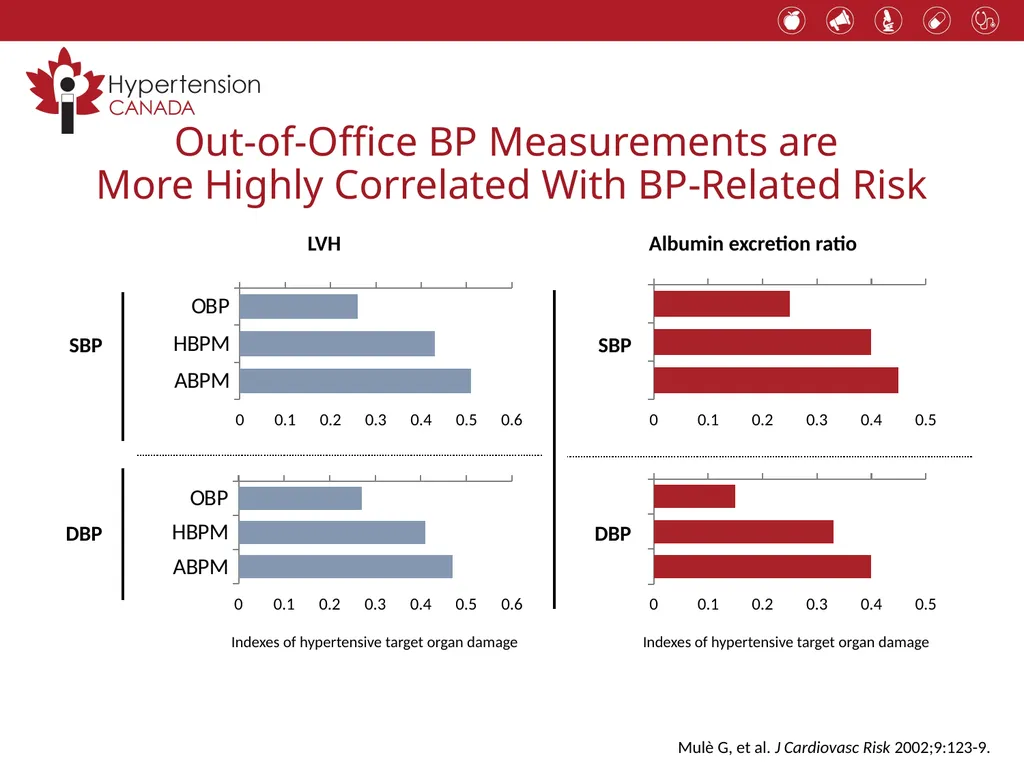
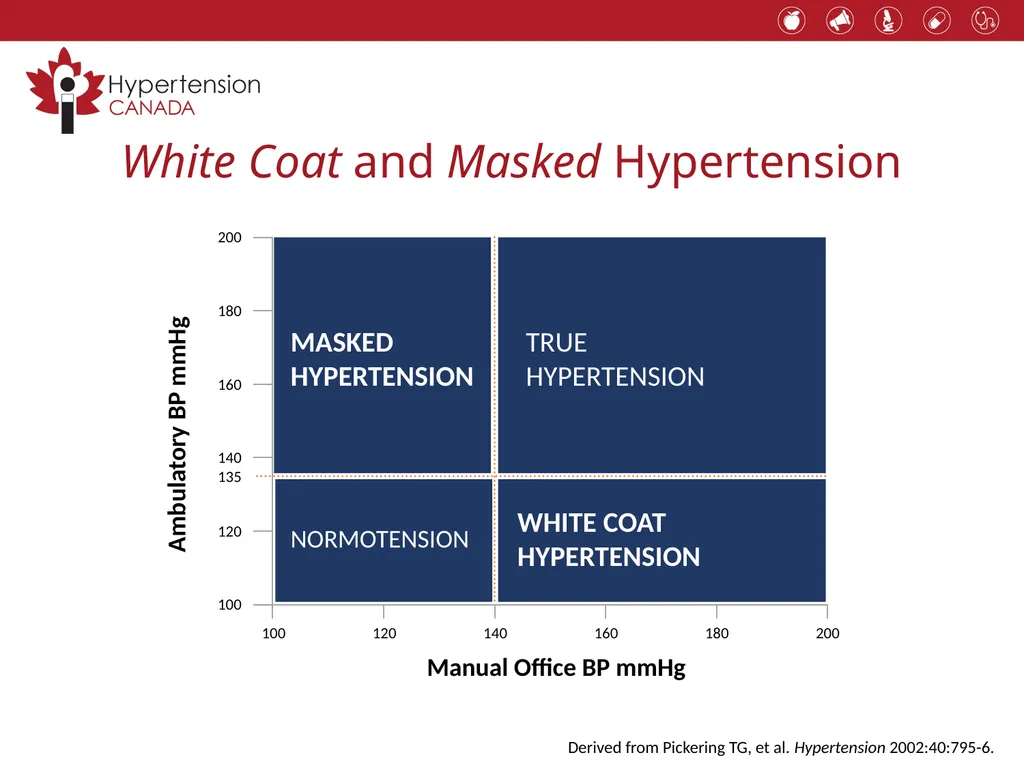
slide12. Out-of-Office BP Measurements Out-of-office measurement identifies white coat hypertension and masked hypertension
ABPM has better predictive ability than OBPM and is the recommended out-of-office measurement method
HBPM has better predictive ability than OBPM and is recommended if ABPM is not tolerated, not readily available or due to patient preference ABPM = ambulatory blood pressure measurement
HBPM = home BP measurement
OBPM = office BP measurement<br>
slide13. Mulè G, et al. J Cardiovasc Risk 2002;9:123-9. SBP DBP LVH Albumin excretion ratio SBP DBP Indexes of hypertensive target organ damage Indexes of hypertensive target organ damage Out-of-Office BP Measurements are More Highly Correlated With BP-Related Risk<br>
slide14. Derived from Pickering TG, et al. Hypertension 2002:40:795-6. White Coat and Masked Hypertension Derived from Pickering TG, et al. Hypertension 2002:40:795-6.<br>
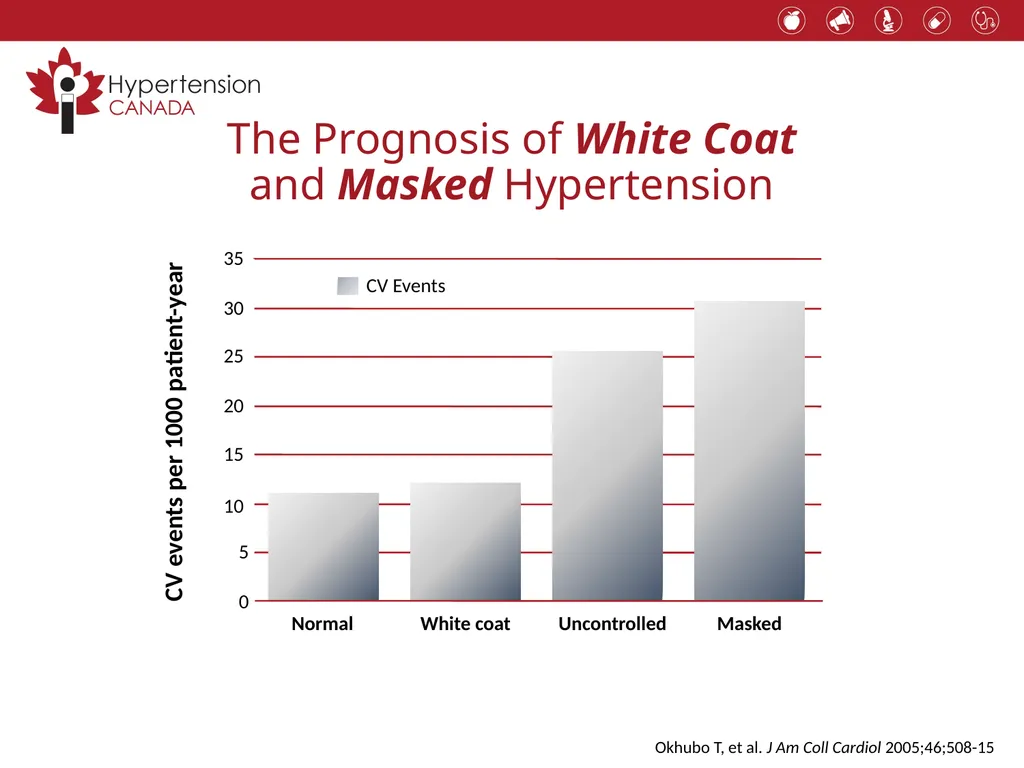
slide15. 0 5 10 15 20 25 30 35 Normal White coat Uncontrolled Masked CV events per 1000 patient-year CV Events Okhubo T, et al. J Am Coll Cardiol 2005;46;508-15 The Prognosis of White Coat and Masked Hypertension<br>
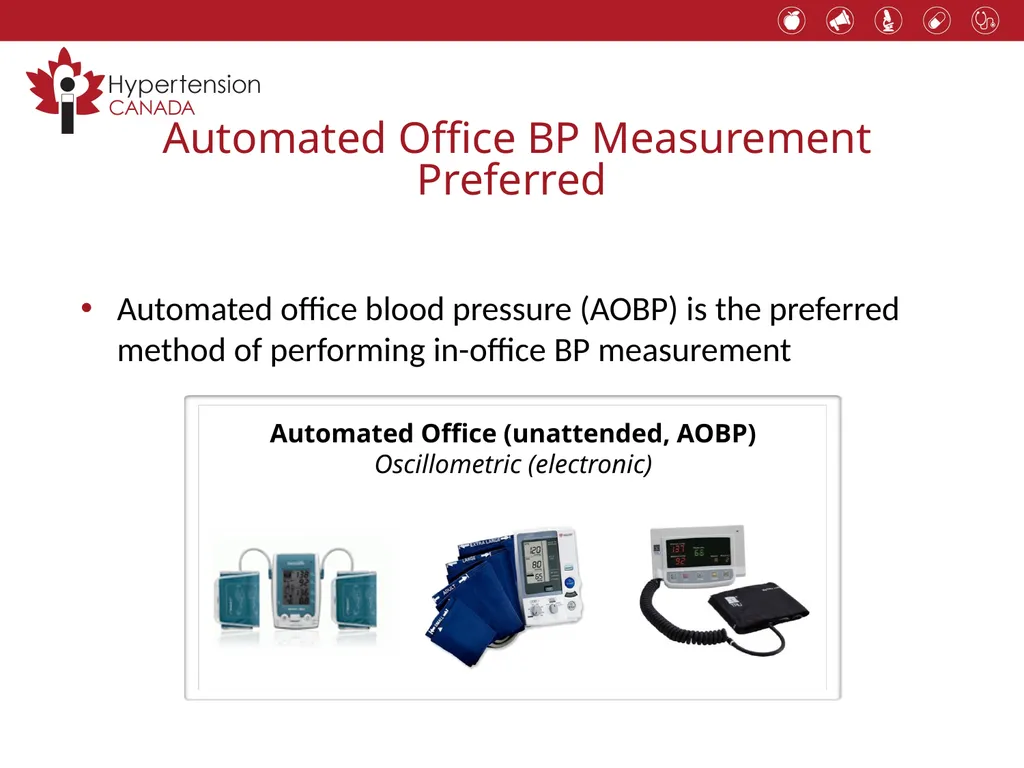
slide16. Automated Office BP Measurement Preferred Automated office blood pressure (AOBP) is the preferred method of performing in-office BP measurement<br>
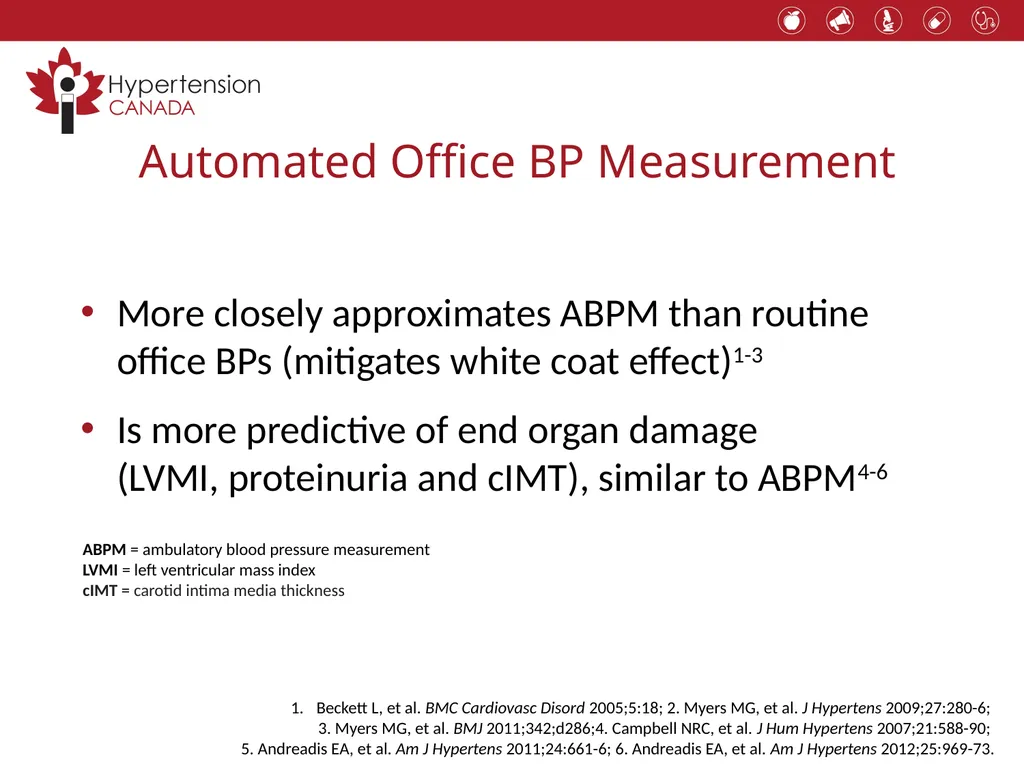
slide17. Automated Office BP Measurement More closely approximates ABPM than routine office BPs (mitigates white coat effect)1-3
Is more predictive of end organ damage (LVMI, proteinuria and cIMT), similar to ABPM4-6 Beckett L, et al. BMC Cardiovasc Disord 2005;5:18; 2. Myers MG, et al. J Hypertens 2009;27:280-6;
3. Myers MG, et al. BMJ 2011;342;d286;4. Campbell NRC, et al. J Hum Hypertens 2007;21:588-90;
5. Andreadis EA, et al. Am J Hypertens 2011;24:661-6; 6. Andreadis EA, et al. Am J Hypertens 2012;25:969-73. ABPM = ambulatory blood pressure measurement
LVMI = left ventricular mass index
cIMT = carotid intima media thickness<br>
slide18. Reflection Case 1 What device do you currently use in the office to measure BP?
What do you tell patients about home BP assessment?<br>
slide19. Hypertension 2017 What’s still important?
The diagnosis of hypertension should be based on out-of-office measurements; in the office, use automatic office BP monitoring (AOBP)
The threshold and target blood pressures are lower in those at greater risk<br>
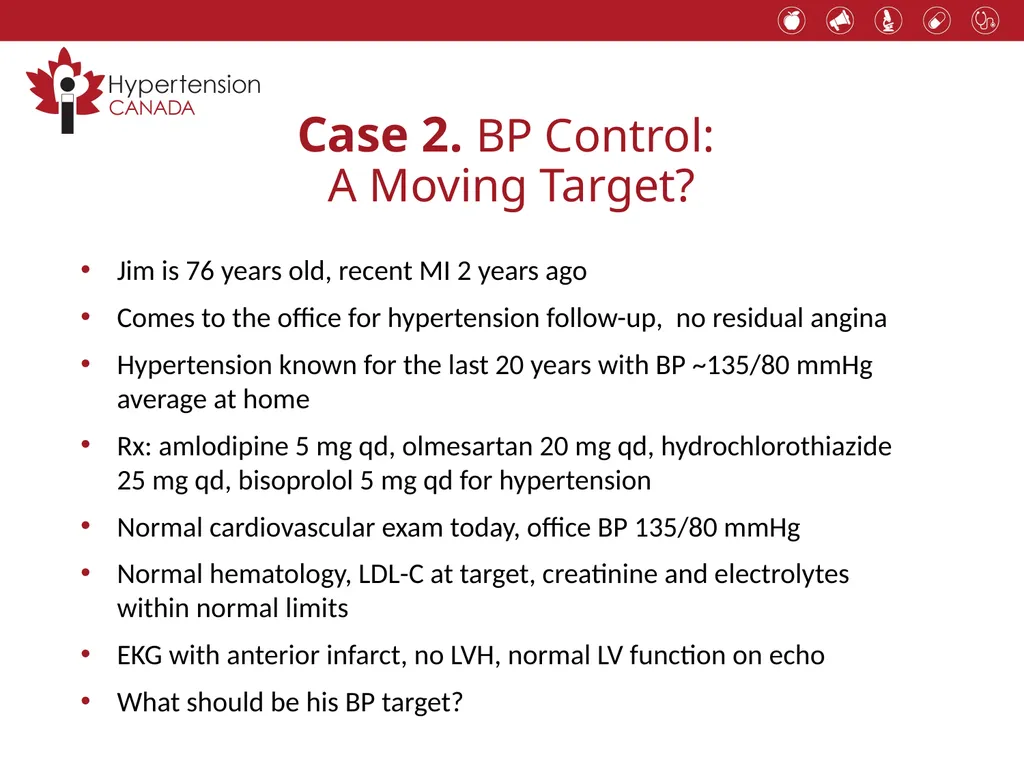
slide20. Case 2. BP Control: A Moving Target? Jim is 76 years old, recent MI 2 years ago
Comes to the office for hypertension follow-up, no residual angina
Hypertension known for the last 20 years with BP ~135/80 mmHg average at home
Rx: amlodipine 5 mg qd, olmesartan 20 mg qd, hydrochlorothiazide 25 mg qd, bisoprolol 5 mg qd for hypertension
Normal cardiovascular exam today, office BP 135/80 mmHg
Normal hematology, LDL-C at target, creatinine and electrolytes within normal limits
EKG with anterior infarct, no LVH, normal LV function on echo
What should be his BP target?<br>
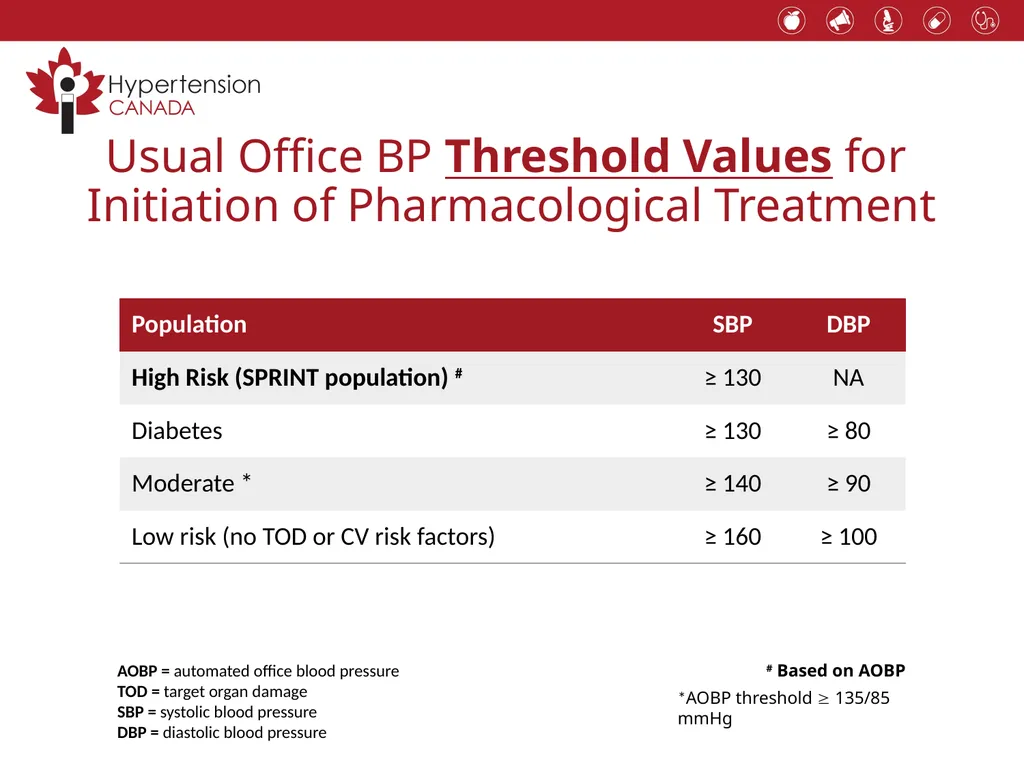
slide21. Usual Office BP Threshold Values for Initiation of Pharmacological Treatment AOBP = automated office blood pressure
TOD = target organ damage
SBP = systolic blood pressure
DBP = diastolic blood pressure # Based on AOBP *AOBP threshold 135/85 mmHg<br>
slide22. Treatment consists of health behaviour ± pharmacological management Recommended Office BP Treatment Targets # Based on AOBP *AOBP threshold 135/85 mmHg<br>
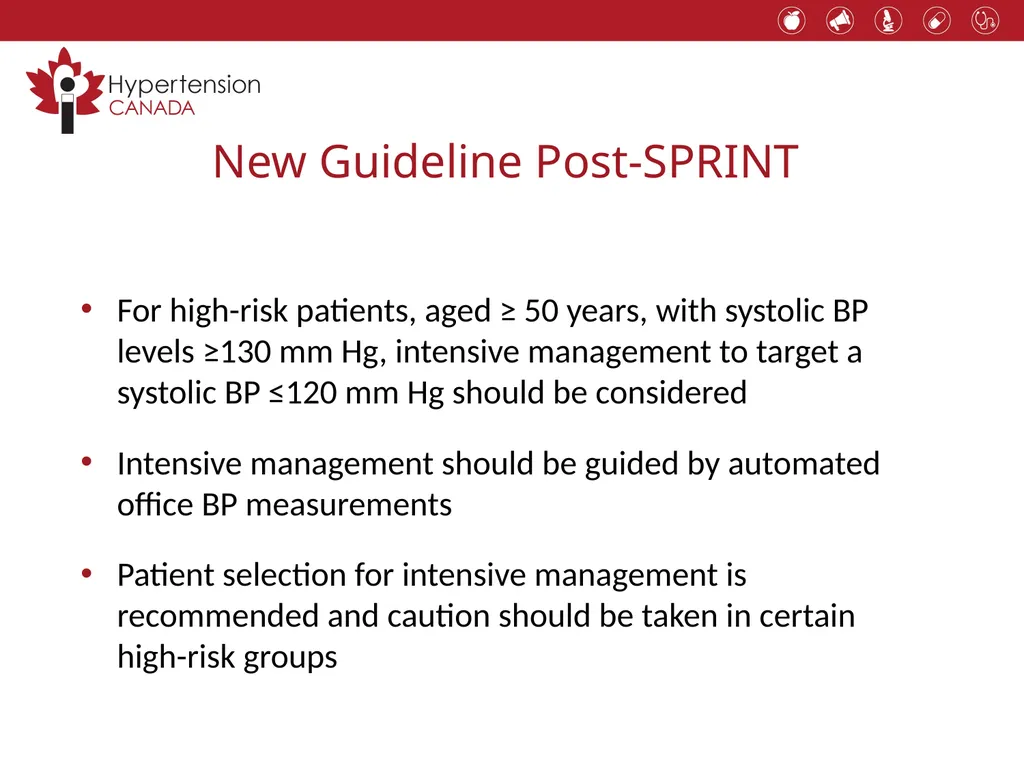
slide23. New Guideline Post-SPRINT For high-risk patients, aged ≥ 50 years, with systolic BP levels ≥130 mm Hg, intensive management to target a systolic BP ≤120 mm Hg should be considered
Intensive management should be guided by automated office BP measurements
Patient selection for intensive management is recommended and caution should be taken in certain high-risk groups<br>
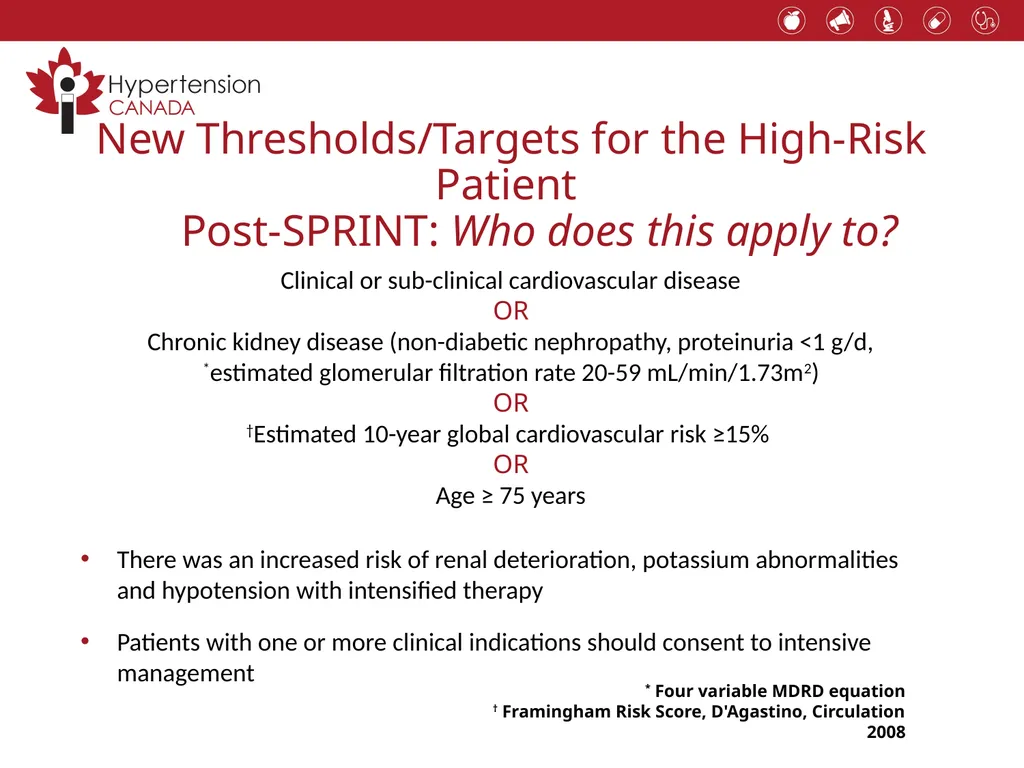
slide24. New Thresholds/Targets for the High-Risk Patient Post-SPRINT: Who does this apply to? There was an increased risk of renal deterioration, potassium abnormalities and hypotension with intensified therapy
Patients with one or more clinical indications should consent to intensive management * Four variable MDRD equation
† Framingham Risk Score, D'Agastino, Circulation 2008 Clinical or sub-clinical cardiovascular disease
OR
Chronic kidney disease (non-diabetic nephropathy, proteinuria <1 g/d, *estimated glomerular filtration rate 20-59 mL/min/1.73m2)
OR
†Estimated 10-year global cardiovascular risk ≥15%
OR
Age ≥ 75 years<br>
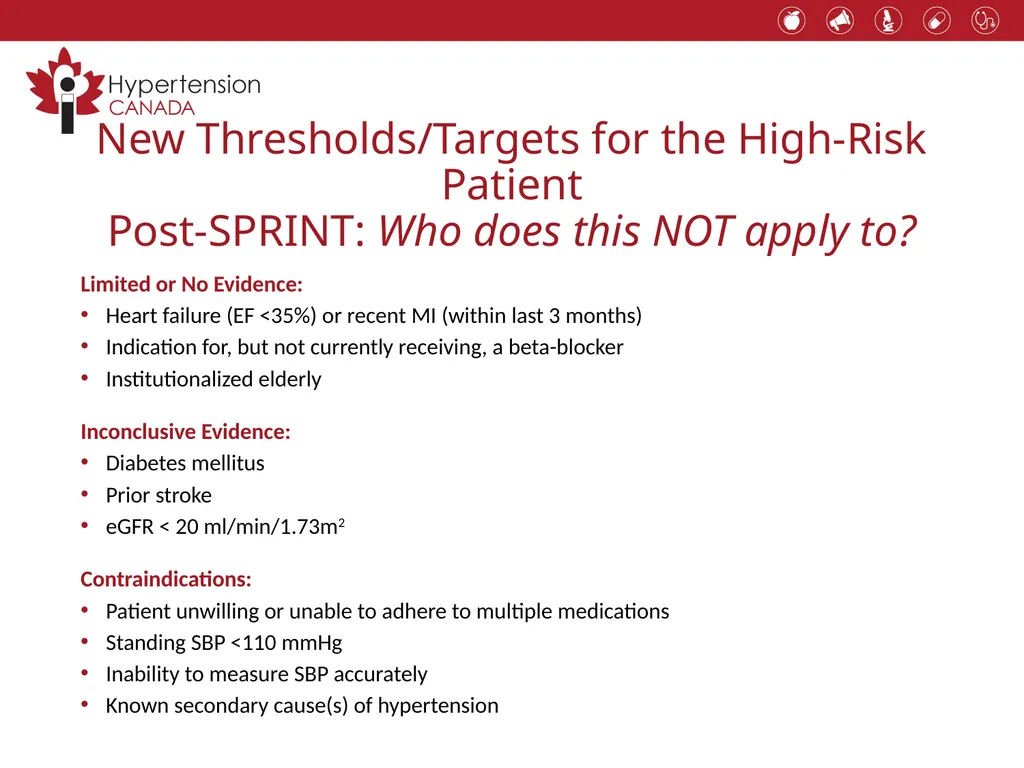
slide25. New Thresholds/Targets for the High-Risk Patient Post-SPRINT: Who does this NOT apply to? Limited or No Evidence:
Heart failure (EF <35%) or recent MI (within last 3 months)
Indication for, but not currently receiving, a beta-blocker
Institutionalized elderly
Inconclusive Evidence:
Diabetes mellitus
Prior stroke
eGFR < 20 ml/min/1.73m2
Contraindications:
Patient unwilling or unable to adhere to multiple medications
Standing SBP <110 mmHg
Inability to measure SBP accurately
Known secondary cause(s) of hypertension<br>
slide26. Reflection Case 2 Do you document BP targets on the patient's chart/EMR?
How do you communicate BP targets to your patient?<br>
slide27. Hypertension 2017 What’s new?
Longer acting (thiazide-like) diuretics are preferred vs. shorter acting (thiazides)
Single pill combinations should be used as a first line treatment (regardless of the extent of BP elevation)<br>
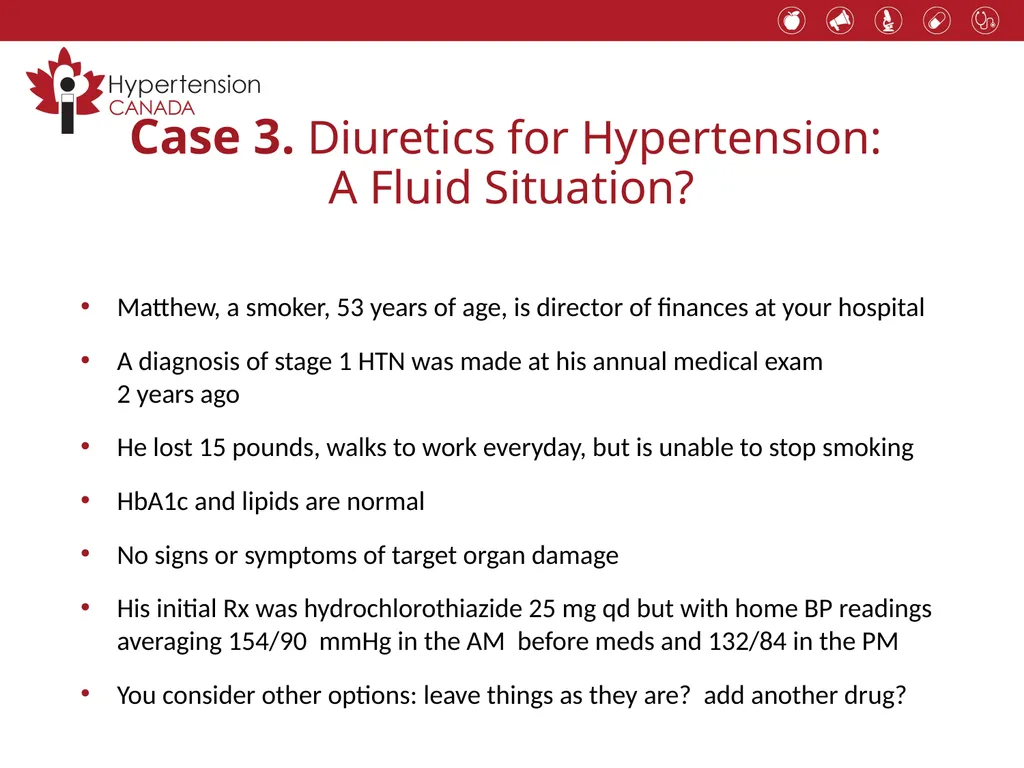
slide28. Case 3. Diuretics for Hypertension: A Fluid Situation? Matthew, a smoker, 53 years of age, is director of finances at your hospital
A diagnosis of stage 1 HTN was made at his annual medical exam 2 years ago
He lost 15 pounds, walks to work everyday, but is unable to stop smoking
HbA1c and lipids are normal
No signs or symptoms of target organ damage
His initial Rx was hydrochlorothiazide 25 mg qd but with home BP readings averaging 154/90 mmHg in the AM before meds and 132/84 in the PM
You consider other options: leave things as they are? add another drug?<br>
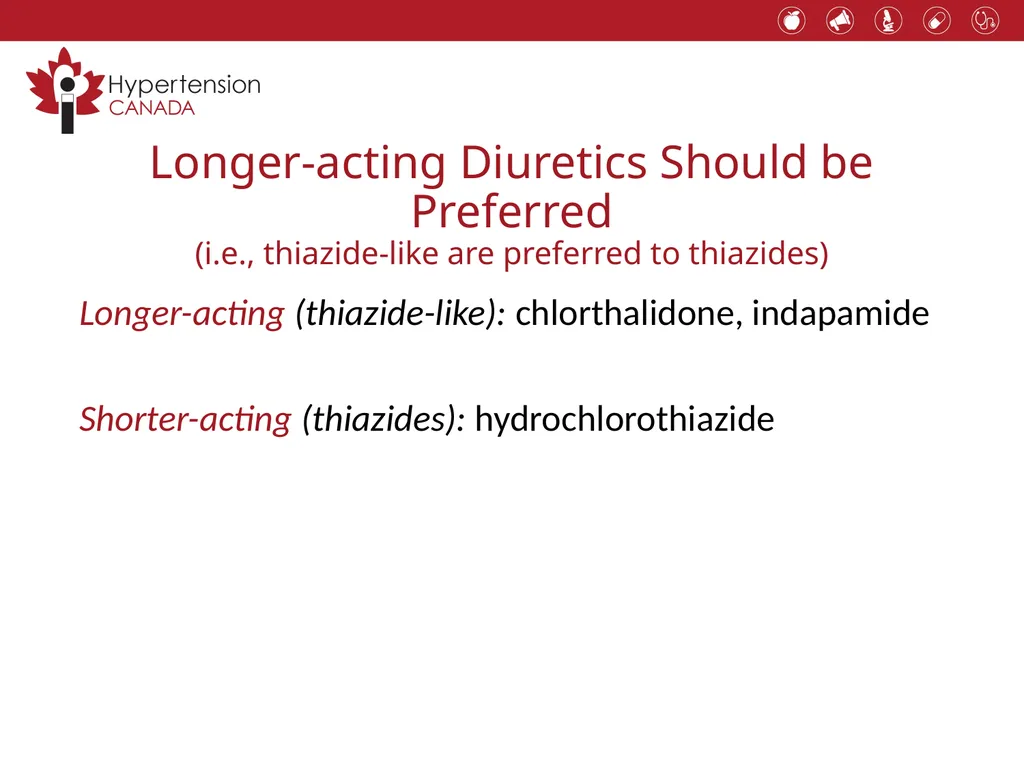
slide29. Longer-acting Diuretics Should be Preferred (i.e., thiazide-like are preferred to thiazides) Longer-acting (thiazide-like): chlorthalidone, indapamide
Shorter-acting (thiazides): hydrochlorothiazide<br>
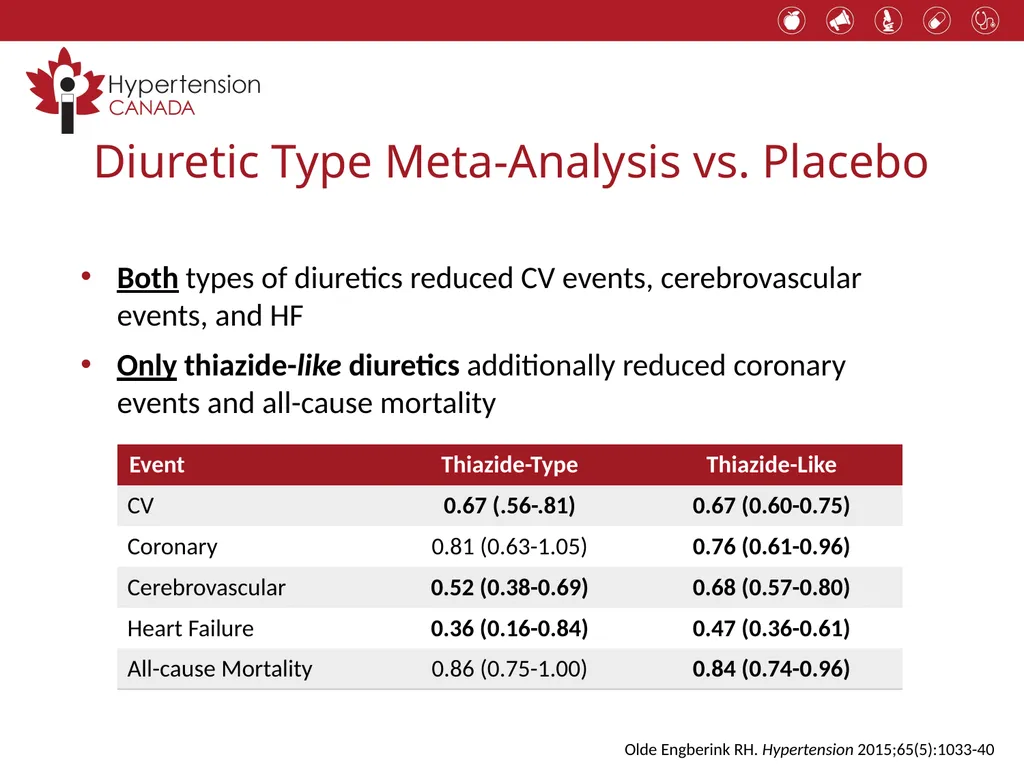
slide30. Diuretic Type Meta-Analysis vs. Placebo Both types of diuretics reduced CV events, cerebrovascular events, and HF
Only thiazide-like diuretics additionally reduced coronary events and all-cause mortality Olde Engberink RH. Hypertension 2015;65(5):1033-40<br>
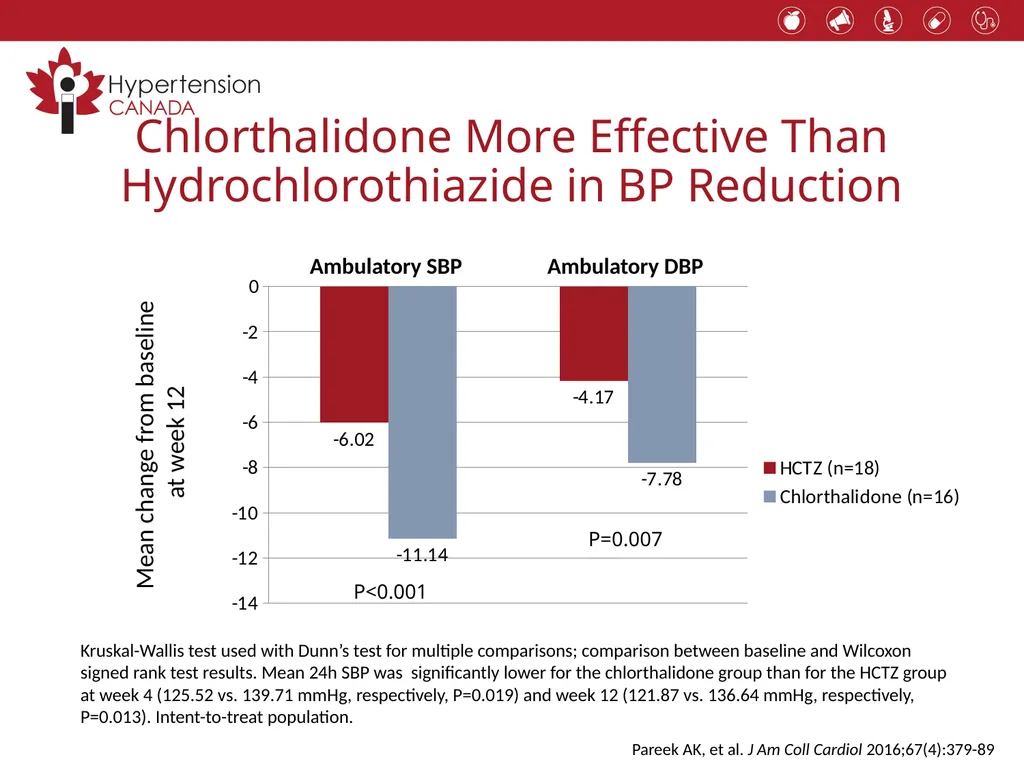
slide31. Mean change from baseline at week 12 Kruskal-Wallis test used with Dunn’s test for multiple comparisons; comparison between baseline and Wilcoxon signed rank test results. Mean 24h SBP was significantly lower for the chlorthalidone group than for the HCTZ group at week 4 (125.52 vs. 139.71 mmHg, respectively, P=0.019) and week 12 (121.87 vs. 136.64 mmHg, respectively, P=0.013). Intent-to-treat population. Chlorthalidone More Effective Than Hydrochlorothiazide in BP Reduction Pareek AK, et al. J Am Coll Cardiol 2016;67(4):379-89<br>
slide32. Summary: Longer-Acting Diuretics Preferred Longer-acting (thiazide-like) diuretics appear more effective at reducing CV events and SBP & DBP than shorter-acting (thiazide) diuretics<br>
slide33. Reflection Case 3 In patients who are currently taking a short-acting diuretic and have good blood pressure control, should you change their therapy?
How are you determining what constitutes good blood pressure control?<br>
slide34. Hypertension 2017 What’s new?
Longer acting (thiazide-like) diuretics are preferred vs. shorter acting (thiazide)
Single pill combinations should be used as a first line treatment (regardless of the extent of BP elevation)<br>
slide35. Case 4. Lightening the Load in the Management of the Patient with Multiple Risk Factors Wally is a 59-year-old who has a remote history of prediabetes, mild hypertension and dyslipidemia. You haven’t seen him for 3 years – he says “I just got tired of taking all those pills.”
Motivated by his family (older sib just had an MI), Wally presents for reassessment of his CV risks, with these results: BP 146/92, HbA1c = 6.8%, LDL = 3.9.
As you consider his antihypertensive therapy, Wally says wistfully – “Bet you’re gonna load me up with pills again…”
What antihypertensive therapy would you consider for this patient?<br>
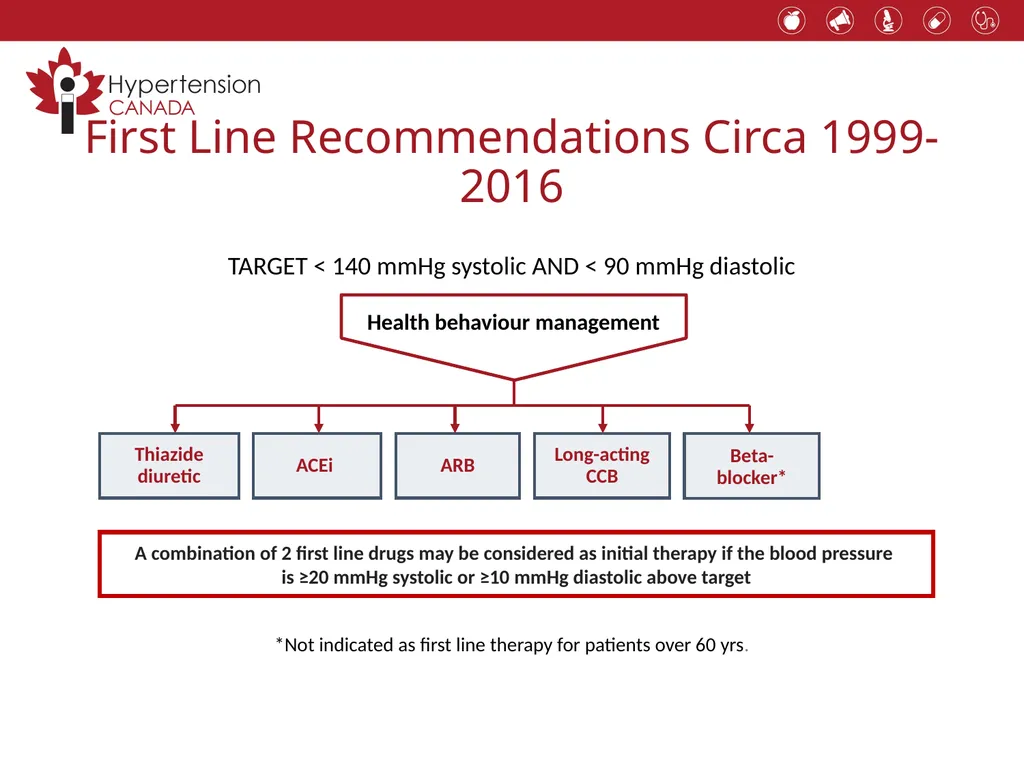
slide36. TARGET < 140 mmHg systolic AND < 90 mmHg diastolic First Line Recommendations Circa 1999-2016 *Not indicated as first line therapy for patients over 60 yrs. A combination of 2 first line drugs may be considered as initial therapy if the blood pressure is ≥20 mmHg systolic or ≥10 mmHg diastolic above target Health behaviour management<br>
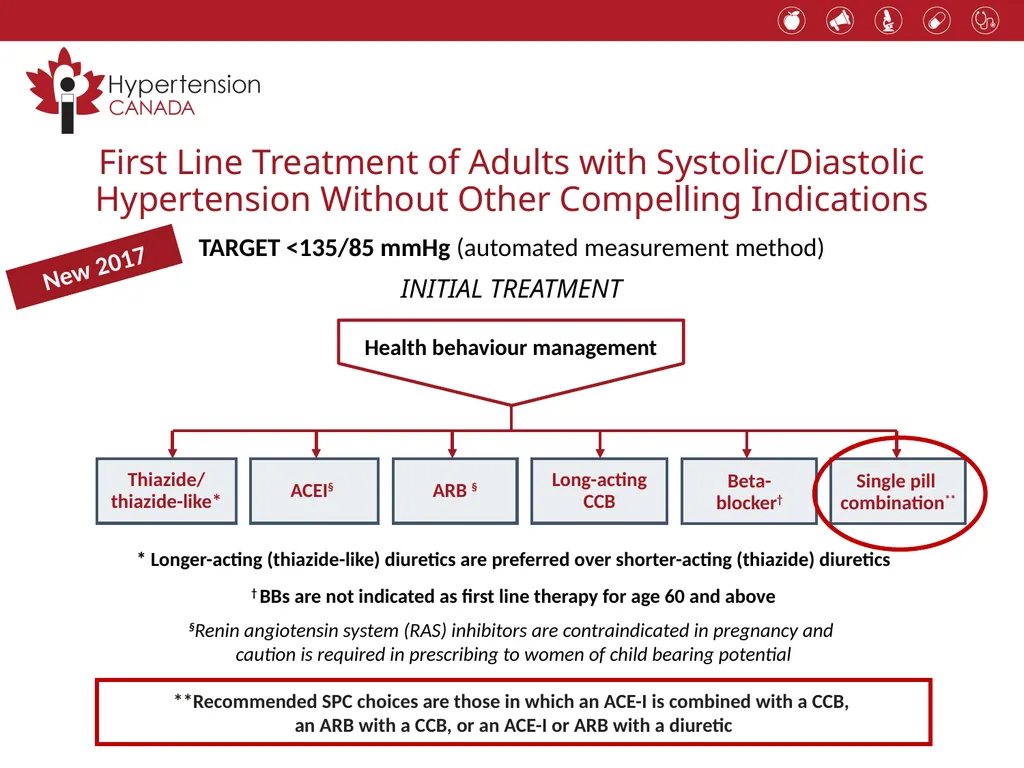
slide37. TARGET <135/85 mmHg (automated measurement method) First Line Treatment of Adults with Systolic/Diastolic Hypertension Without Other Compelling Indications Health behaviour management † BBs are not indicated as first line therapy for age 60 and above §Renin angiotensin system (RAS) inhibitors are contraindicated in pregnancy and caution is required in prescribing to women of child bearing potential * Longer-acting (thiazide-like) diuretics are preferred over shorter-acting (thiazide) diuretics New 2017 INITIAL TREATMENT **Recommended SPC choices are those in which an ACE-I is combined with a CCB, an ARB with a CCB, or an ACE-I or ARB with a diuretic<br>
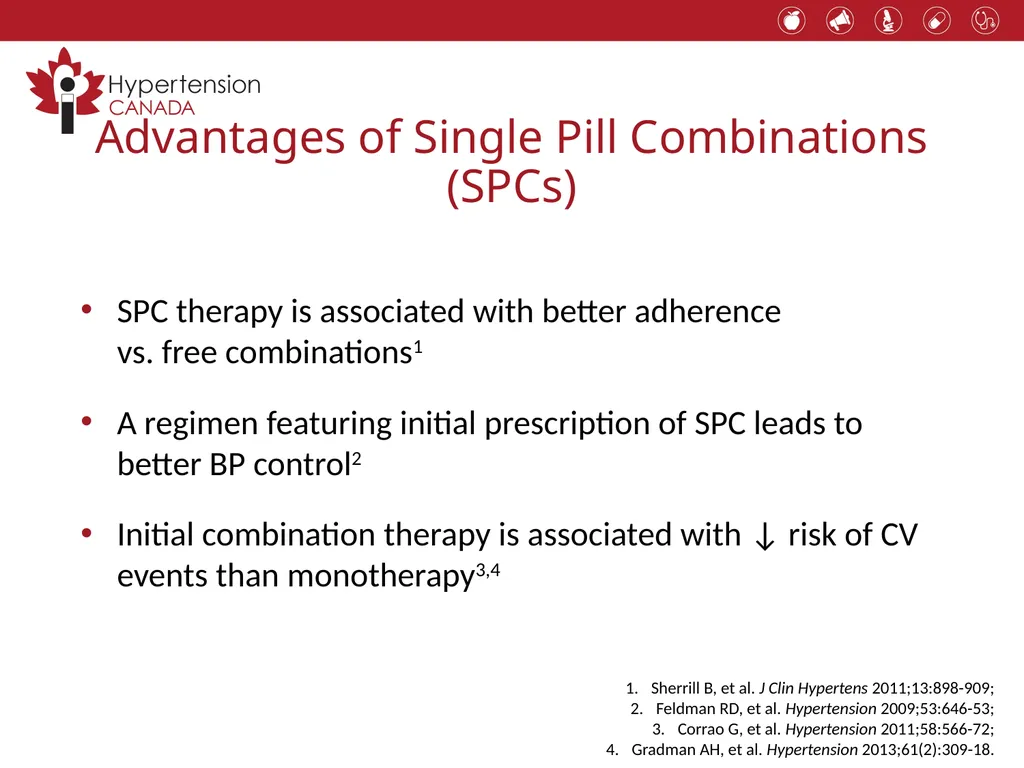
slide38. Advantages of Single Pill Combinations (SPCs) SPC therapy is associated with better adherence vs. free combinations1
A regimen featuring initial prescription of SPC leads to better BP control2
Initial combination therapy is associated with ↓ risk of CV events than monotherapy3,4 Sherrill B, et al. J Clin Hypertens 2011;13:898-909;
Feldman RD, et al. Hypertension 2009;53:646-53;
Corrao G, et al. Hypertension 2011;58:566-72;
Gradman AH, et al. Hypertension 2013;61(2):309-18.<br>
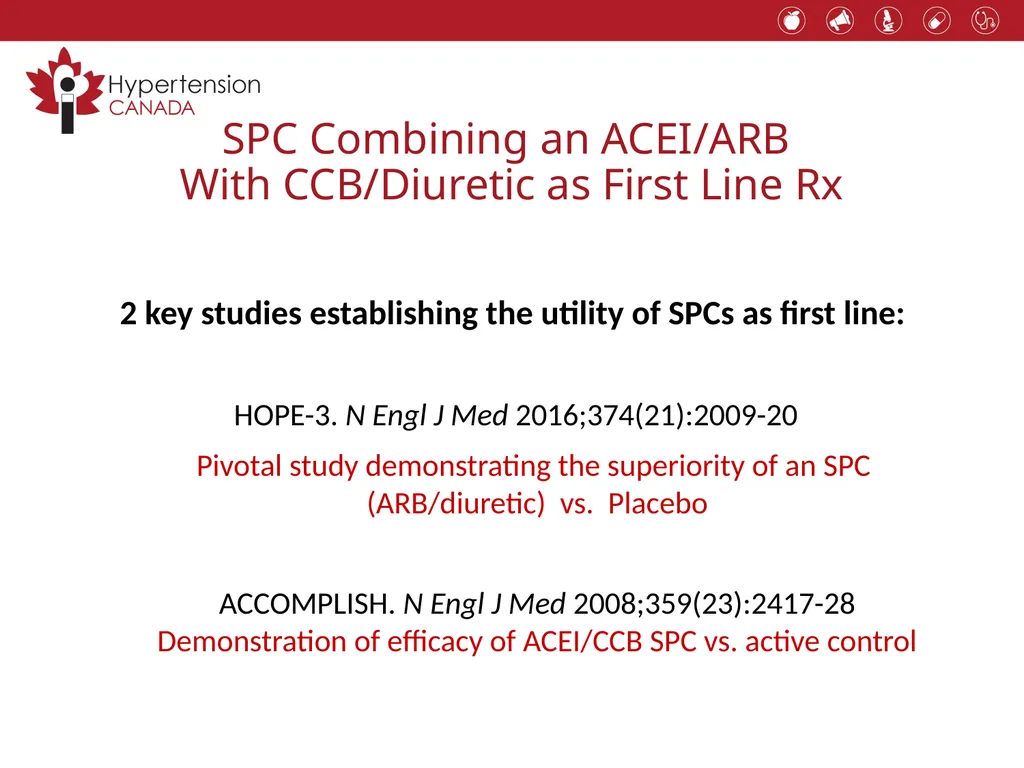
slide39. 2 key studies establishing the utility of SPCs as first line:
HOPE-3. N Engl J Med 2016;374(21):2009-20
Pivotal study demonstrating the superiority of an SPC (ARB/diuretic) vs. Placebo
ACCOMPLISH. N Engl J Med 2008;359(23):2417-28 Demonstration of efficacy of ACEI/CCB SPC vs. active control SPC Combining an ACEI/ARB With CCB/Diuretic as First Line Rx<br>
slide40. Reflection Case 4 Will you start patients with newly diagnosed mild hypertension on single pill combination therapy?
What are the barriers to prescribing SPCs?<br>
slide41. Hypertension 2017 What’s new?
Longer-acting (thiazide-like) diuretics are preferred vs. shorter-acting (thiazides)
Single pill combinations as a first line treatment (regardless of the extent of BP elevation)<br>
slide42. Hypertension 2017 What’s still important?
The diagnosis of hypertension should be based on out-of-office measurements; in the office, use automated office BP measurement (AOBP)
The threshold and target blood pressures are lower in those at greater risk<br>
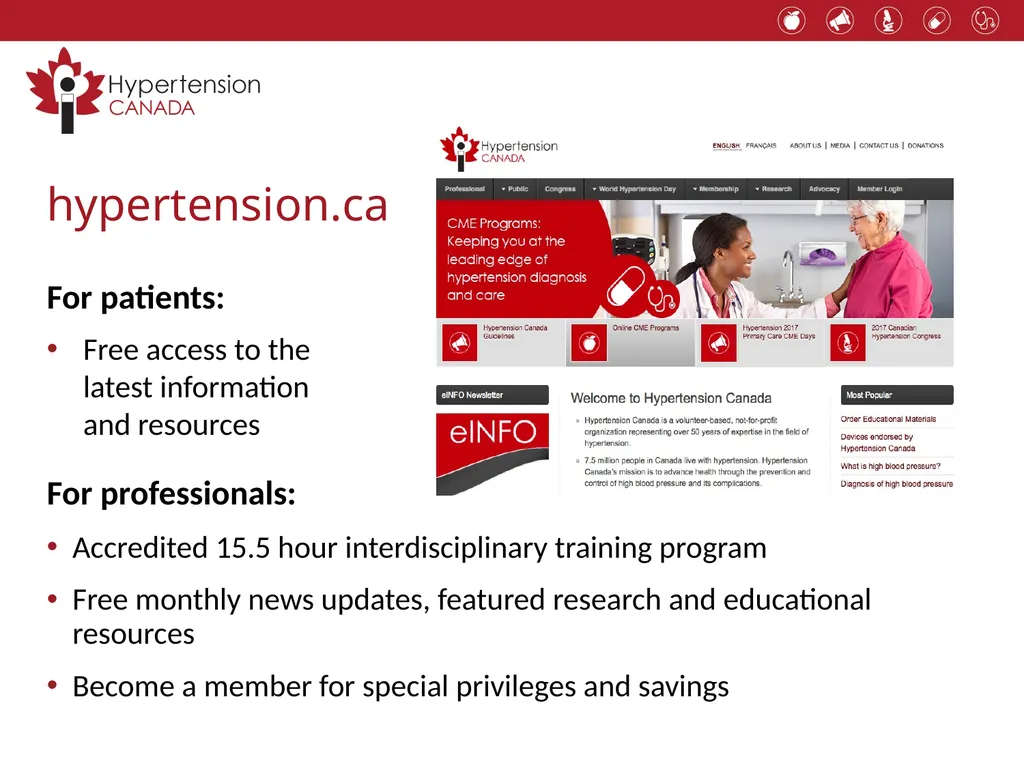
slide43. hypertension.ca For professionals:
Accredited 15.5 hour interdisciplinary training program
Free monthly news updates, featured research and educational resources
Become a member for special privileges and savings For patients:
Free access to the latest information and resources<br>
slide2. Relationships with commercial interests:
Grants/Research Support:
Speakers Bureau/Honoraria:
Consulting Fees:
Data Safety and Monitoring: Disclosures<br>
slide3. This program has received financial support from Servier in the form of an educational grant
This program has not received any in-kind support
Potential for conflict(s) of interest:
_______has received an honoraria funding from Servier, who has product(s) in this therapeutic area Disclosure of Commercial Support<br>
slide4. The information presented is based on recent information that is explicitly ‘‘evidence-based’’ and is solely based on Hypertension Canada Guidelines Mitigating Potential Bias<br>
slide5. Canada has the world’s highest reported national blood pressure control rates
Hypertension Canada is known as the most credible source for evidence-based hypertension guidelines, with annual updates, a well-validated review process and effective dissemination and implementation techniques across Canada Evidence-Based Annual Guidelines<br>
slide6. At the conclusion of this activity, participants will be able to:
Apply appropriate methods for making a diagnosis of hypertension
Implement evidence-based threshold and target BPs
Integrate new guidelines for hypertension management including:
Use of longer-acting over shorter-acting diuretics
Use of single pill combinations as a first-line treatment Learning Objectives<br>
slide7. Hypertension 2017 What’s new?
Longer acting (thiazide-like) diuretics are preferred vs. shorter acting (thiazides)
Single pill combinations as a first line treatment (regardless of the extent of BP elevation)<br>
slide8. Hypertension 2017 What’s still important?
The diagnosis of hypertension should be based on out-of-office measurements; in the office, use automated office BP monitoring (AOBP)
The threshold and target blood pressures are lower in those at greater risk<br>
slide9. Case 1. Office vs. Out-of-Office BP Measurements in the DIAGNOSIS of Hypertension: Which One to Believe? 57-year-old account executive presents for BP follow-up visit
Elevated BP identified 2 months ago during annual exam
Interim BPs taken at local pharmacies have all been normal
Normal hematology, biochemistry, renal function and electrolytes
Normal EKG with no evidence of LVH
Office BP using auscultatory wall-mounted mercury sphygmomanometer: 152/102 mmHg
How would you explain this observation?<br>
slide10. Out of office assessment is the preferred means of hypertension Dx
Measurement using electronic (oscillometric) upper arm devices is preferred over auscultation Hypertension Diagnostic Algorithm ABPM = ambulatory blood pressure measurement
AOBP = automated office blood pressure<br>
slide11. Out-of-Office Assessment is the Preferred Means of Diagnosing Hypertension<br>
slide12. Out-of-Office BP Measurements Out-of-office measurement identifies white coat hypertension and masked hypertension
ABPM has better predictive ability than OBPM and is the recommended out-of-office measurement method
HBPM has better predictive ability than OBPM and is recommended if ABPM is not tolerated, not readily available or due to patient preference ABPM = ambulatory blood pressure measurement
HBPM = home BP measurement
OBPM = office BP measurement<br>
slide13. Mulè G, et al. J Cardiovasc Risk 2002;9:123-9. SBP DBP LVH Albumin excretion ratio SBP DBP Indexes of hypertensive target organ damage Indexes of hypertensive target organ damage Out-of-Office BP Measurements are More Highly Correlated With BP-Related Risk<br>
slide14. Derived from Pickering TG, et al. Hypertension 2002:40:795-6. White Coat and Masked Hypertension Derived from Pickering TG, et al. Hypertension 2002:40:795-6.<br>
slide15. 0 5 10 15 20 25 30 35 Normal White coat Uncontrolled Masked CV events per 1000 patient-year CV Events Okhubo T, et al. J Am Coll Cardiol 2005;46;508-15 The Prognosis of White Coat and Masked Hypertension<br>
slide16. Automated Office BP Measurement Preferred Automated office blood pressure (AOBP) is the preferred method of performing in-office BP measurement<br>
slide17. Automated Office BP Measurement More closely approximates ABPM than routine office BPs (mitigates white coat effect)1-3
Is more predictive of end organ damage (LVMI, proteinuria and cIMT), similar to ABPM4-6 Beckett L, et al. BMC Cardiovasc Disord 2005;5:18; 2. Myers MG, et al. J Hypertens 2009;27:280-6;
3. Myers MG, et al. BMJ 2011;342;d286;4. Campbell NRC, et al. J Hum Hypertens 2007;21:588-90;
5. Andreadis EA, et al. Am J Hypertens 2011;24:661-6; 6. Andreadis EA, et al. Am J Hypertens 2012;25:969-73. ABPM = ambulatory blood pressure measurement
LVMI = left ventricular mass index
cIMT = carotid intima media thickness<br>
slide18. Reflection Case 1 What device do you currently use in the office to measure BP?
What do you tell patients about home BP assessment?<br>
slide19. Hypertension 2017 What’s still important?
The diagnosis of hypertension should be based on out-of-office measurements; in the office, use automatic office BP monitoring (AOBP)
The threshold and target blood pressures are lower in those at greater risk<br>
slide20. Case 2. BP Control: A Moving Target? Jim is 76 years old, recent MI 2 years ago
Comes to the office for hypertension follow-up, no residual angina
Hypertension known for the last 20 years with BP ~135/80 mmHg average at home
Rx: amlodipine 5 mg qd, olmesartan 20 mg qd, hydrochlorothiazide 25 mg qd, bisoprolol 5 mg qd for hypertension
Normal cardiovascular exam today, office BP 135/80 mmHg
Normal hematology, LDL-C at target, creatinine and electrolytes within normal limits
EKG with anterior infarct, no LVH, normal LV function on echo
What should be his BP target?<br>
slide21. Usual Office BP Threshold Values for Initiation of Pharmacological Treatment AOBP = automated office blood pressure
TOD = target organ damage
SBP = systolic blood pressure
DBP = diastolic blood pressure # Based on AOBP *AOBP threshold 135/85 mmHg<br>
slide22. Treatment consists of health behaviour ± pharmacological management Recommended Office BP Treatment Targets # Based on AOBP *AOBP threshold 135/85 mmHg<br>
slide23. New Guideline Post-SPRINT For high-risk patients, aged ≥ 50 years, with systolic BP levels ≥130 mm Hg, intensive management to target a systolic BP ≤120 mm Hg should be considered
Intensive management should be guided by automated office BP measurements
Patient selection for intensive management is recommended and caution should be taken in certain high-risk groups<br>
slide24. New Thresholds/Targets for the High-Risk Patient Post-SPRINT: Who does this apply to? There was an increased risk of renal deterioration, potassium abnormalities and hypotension with intensified therapy
Patients with one or more clinical indications should consent to intensive management * Four variable MDRD equation
† Framingham Risk Score, D'Agastino, Circulation 2008 Clinical or sub-clinical cardiovascular disease
OR
Chronic kidney disease (non-diabetic nephropathy, proteinuria <1 g/d, *estimated glomerular filtration rate 20-59 mL/min/1.73m2)
OR
†Estimated 10-year global cardiovascular risk ≥15%
OR
Age ≥ 75 years<br>
slide25. New Thresholds/Targets for the High-Risk Patient Post-SPRINT: Who does this NOT apply to? Limited or No Evidence:
Heart failure (EF <35%) or recent MI (within last 3 months)
Indication for, but not currently receiving, a beta-blocker
Institutionalized elderly
Inconclusive Evidence:
Diabetes mellitus
Prior stroke
eGFR < 20 ml/min/1.73m2
Contraindications:
Patient unwilling or unable to adhere to multiple medications
Standing SBP <110 mmHg
Inability to measure SBP accurately
Known secondary cause(s) of hypertension<br>
slide26. Reflection Case 2 Do you document BP targets on the patient's chart/EMR?
How do you communicate BP targets to your patient?<br>
slide27. Hypertension 2017 What’s new?
Longer acting (thiazide-like) diuretics are preferred vs. shorter acting (thiazides)
Single pill combinations should be used as a first line treatment (regardless of the extent of BP elevation)<br>
slide28. Case 3. Diuretics for Hypertension: A Fluid Situation? Matthew, a smoker, 53 years of age, is director of finances at your hospital
A diagnosis of stage 1 HTN was made at his annual medical exam 2 years ago
He lost 15 pounds, walks to work everyday, but is unable to stop smoking
HbA1c and lipids are normal
No signs or symptoms of target organ damage
His initial Rx was hydrochlorothiazide 25 mg qd but with home BP readings averaging 154/90 mmHg in the AM before meds and 132/84 in the PM
You consider other options: leave things as they are? add another drug?<br>
slide29. Longer-acting Diuretics Should be Preferred (i.e., thiazide-like are preferred to thiazides) Longer-acting (thiazide-like): chlorthalidone, indapamide
Shorter-acting (thiazides): hydrochlorothiazide<br>
slide30. Diuretic Type Meta-Analysis vs. Placebo Both types of diuretics reduced CV events, cerebrovascular events, and HF
Only thiazide-like diuretics additionally reduced coronary events and all-cause mortality Olde Engberink RH. Hypertension 2015;65(5):1033-40<br>
slide31. Mean change from baseline at week 12 Kruskal-Wallis test used with Dunn’s test for multiple comparisons; comparison between baseline and Wilcoxon signed rank test results. Mean 24h SBP was significantly lower for the chlorthalidone group than for the HCTZ group at week 4 (125.52 vs. 139.71 mmHg, respectively, P=0.019) and week 12 (121.87 vs. 136.64 mmHg, respectively, P=0.013). Intent-to-treat population. Chlorthalidone More Effective Than Hydrochlorothiazide in BP Reduction Pareek AK, et al. J Am Coll Cardiol 2016;67(4):379-89<br>
slide32. Summary: Longer-Acting Diuretics Preferred Longer-acting (thiazide-like) diuretics appear more effective at reducing CV events and SBP & DBP than shorter-acting (thiazide) diuretics<br>
slide33. Reflection Case 3 In patients who are currently taking a short-acting diuretic and have good blood pressure control, should you change their therapy?
How are you determining what constitutes good blood pressure control?<br>
slide34. Hypertension 2017 What’s new?
Longer acting (thiazide-like) diuretics are preferred vs. shorter acting (thiazide)
Single pill combinations should be used as a first line treatment (regardless of the extent of BP elevation)<br>
slide35. Case 4. Lightening the Load in the Management of the Patient with Multiple Risk Factors Wally is a 59-year-old who has a remote history of prediabetes, mild hypertension and dyslipidemia. You haven’t seen him for 3 years – he says “I just got tired of taking all those pills.”
Motivated by his family (older sib just had an MI), Wally presents for reassessment of his CV risks, with these results: BP 146/92, HbA1c = 6.8%, LDL = 3.9.
As you consider his antihypertensive therapy, Wally says wistfully – “Bet you’re gonna load me up with pills again…”
What antihypertensive therapy would you consider for this patient?<br>
slide36. TARGET < 140 mmHg systolic AND < 90 mmHg diastolic First Line Recommendations Circa 1999-2016 *Not indicated as first line therapy for patients over 60 yrs. A combination of 2 first line drugs may be considered as initial therapy if the blood pressure is ≥20 mmHg systolic or ≥10 mmHg diastolic above target Health behaviour management<br>
slide37. TARGET <135/85 mmHg (automated measurement method) First Line Treatment of Adults with Systolic/Diastolic Hypertension Without Other Compelling Indications Health behaviour management † BBs are not indicated as first line therapy for age 60 and above §Renin angiotensin system (RAS) inhibitors are contraindicated in pregnancy and caution is required in prescribing to women of child bearing potential * Longer-acting (thiazide-like) diuretics are preferred over shorter-acting (thiazide) diuretics New 2017 INITIAL TREATMENT **Recommended SPC choices are those in which an ACE-I is combined with a CCB, an ARB with a CCB, or an ACE-I or ARB with a diuretic<br>
slide38. Advantages of Single Pill Combinations (SPCs) SPC therapy is associated with better adherence vs. free combinations1
A regimen featuring initial prescription of SPC leads to better BP control2
Initial combination therapy is associated with ↓ risk of CV events than monotherapy3,4 Sherrill B, et al. J Clin Hypertens 2011;13:898-909;
Feldman RD, et al. Hypertension 2009;53:646-53;
Corrao G, et al. Hypertension 2011;58:566-72;
Gradman AH, et al. Hypertension 2013;61(2):309-18.<br>
slide39. 2 key studies establishing the utility of SPCs as first line:
HOPE-3. N Engl J Med 2016;374(21):2009-20
Pivotal study demonstrating the superiority of an SPC (ARB/diuretic) vs. Placebo
ACCOMPLISH. N Engl J Med 2008;359(23):2417-28 Demonstration of efficacy of ACEI/CCB SPC vs. active control SPC Combining an ACEI/ARB With CCB/Diuretic as First Line Rx<br>
slide40. Reflection Case 4 Will you start patients with newly diagnosed mild hypertension on single pill combination therapy?
What are the barriers to prescribing SPCs?<br>
slide41. Hypertension 2017 What’s new?
Longer-acting (thiazide-like) diuretics are preferred vs. shorter-acting (thiazides)
Single pill combinations as a first line treatment (regardless of the extent of BP elevation)<br>
slide42. Hypertension 2017 What’s still important?
The diagnosis of hypertension should be based on out-of-office measurements; in the office, use automated office BP measurement (AOBP)
The threshold and target blood pressures are lower in those at greater risk<br>
slide43. hypertension.ca For professionals:
Accredited 15.5 hour interdisciplinary training program
Free monthly news updates, featured research and educational resources
Become a member for special privileges and savings For patients:
Free access to the latest information and resources<br>