
ICT for Teaching and Learning of Social Sciences -

Description: ICT for Teaching and Learning of Social Sciences - Policy Perspectives, Need and Scope Why Technology needed? ICT Use in India: Policy Directions 1984 1986 1983 ET Scheme 1972 1992 2010 2004 2015 2017 2013 2012 2018 2020-24 2019 INSAT CLASS
Related Topics
Download Presentation
"ICT for Teaching and Learning of Social Sciences -" is the property of its rightful owner. Permission is granted to download and print the materials on this website for personal, non-commercial use only, and to display it on your personal computer provided you do not modify the materials and that you retain all copyright notices contained in the materials. By downloading content from our website, you accept the terms of this agreement.
Presentation Transcript
slide1. ICT for Teaching and Learning of Social Sciences - Policy Perspectives, Need and Scope<br>
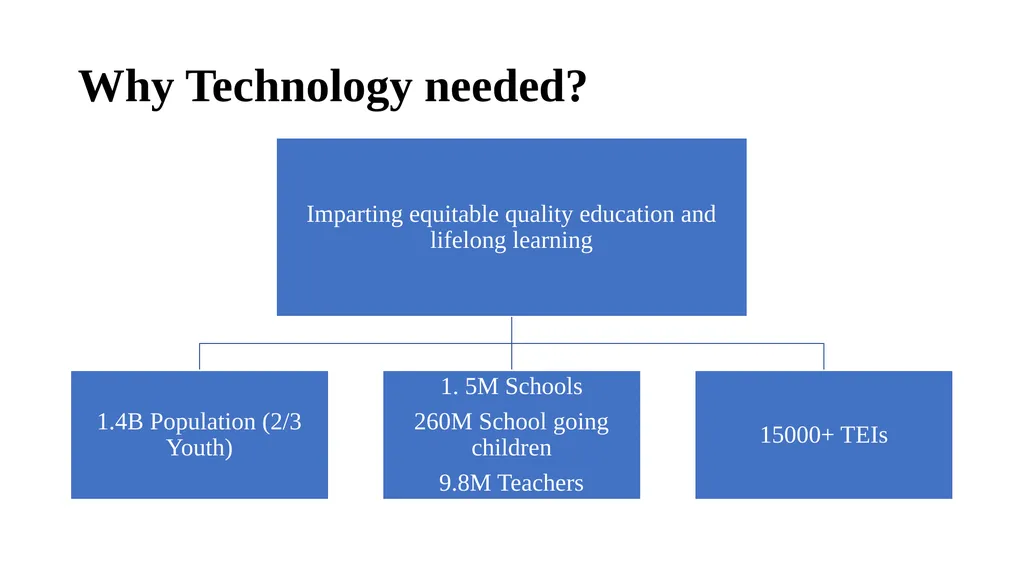
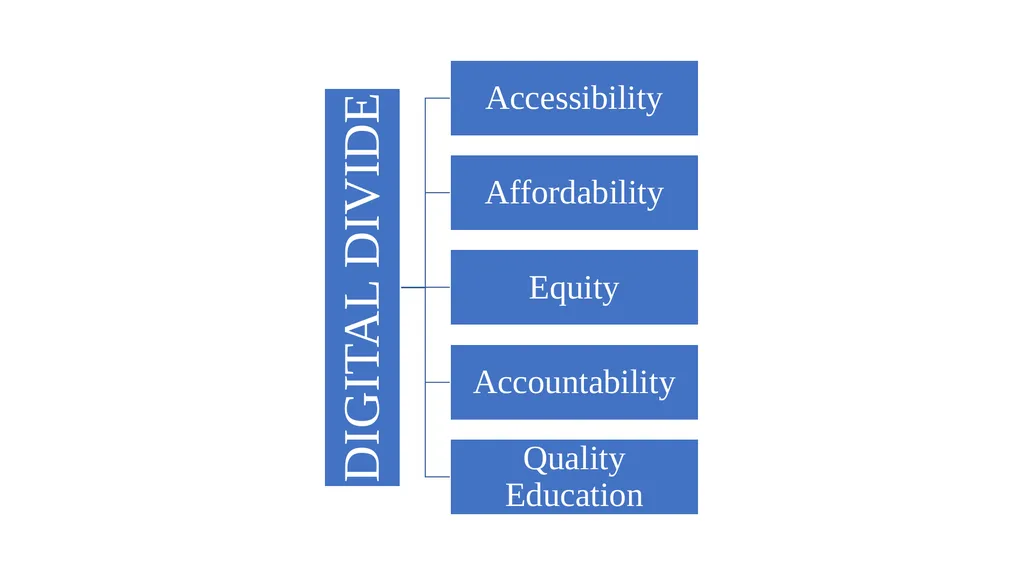
slide2. Why Technology needed?<br>
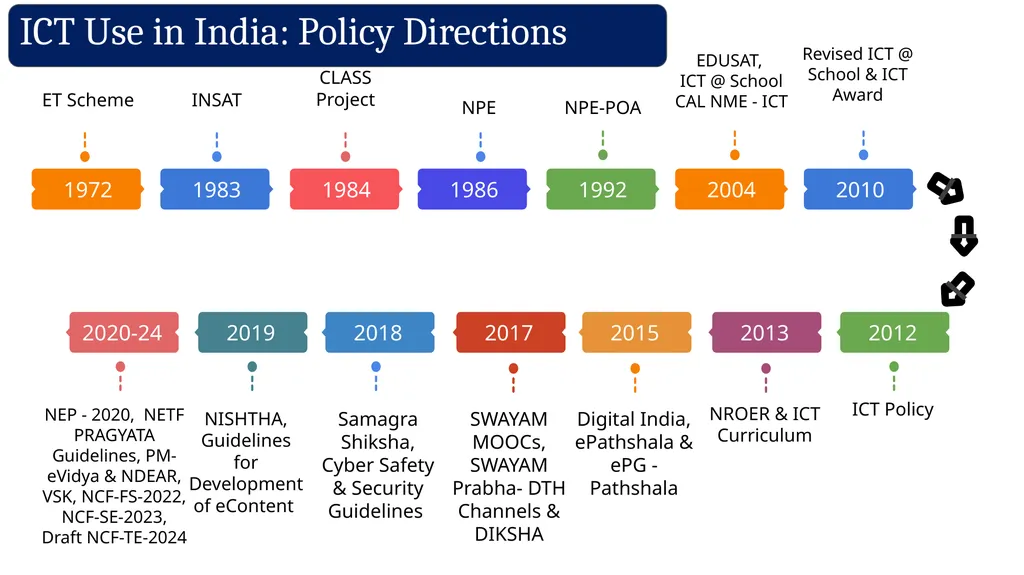
slide3. ICT Use in India: Policy Directions 1984 1986 1983 ET Scheme 1972 1992 2010 2004 2015 2017 2013 2012 2018 2020-24 2019 INSAT CLASS Project NPE NPE-POA EDUSAT,
ICT @ School CAL NME - ICT Revised ICT @ School & ICT Award ICT Policy NROER & ICT Curriculum Digital India, ePathshala & ePG - Pathshala SWAYAM MOOCs, SWAYAM Prabha- DTH Channels & DIKSHA Samagra Shiksha, Cyber Safety & Security Guidelines NISHTHA, Guidelines for Development of eContent NEP - 2020, NETF
PRAGYATA Guidelines, PM-eVidya & NDEAR,
VSK, NCF-FS-2022, NCF-SE-2023, Draft NCF-TE-2024 ICT Use in India: Policy Directions<br>
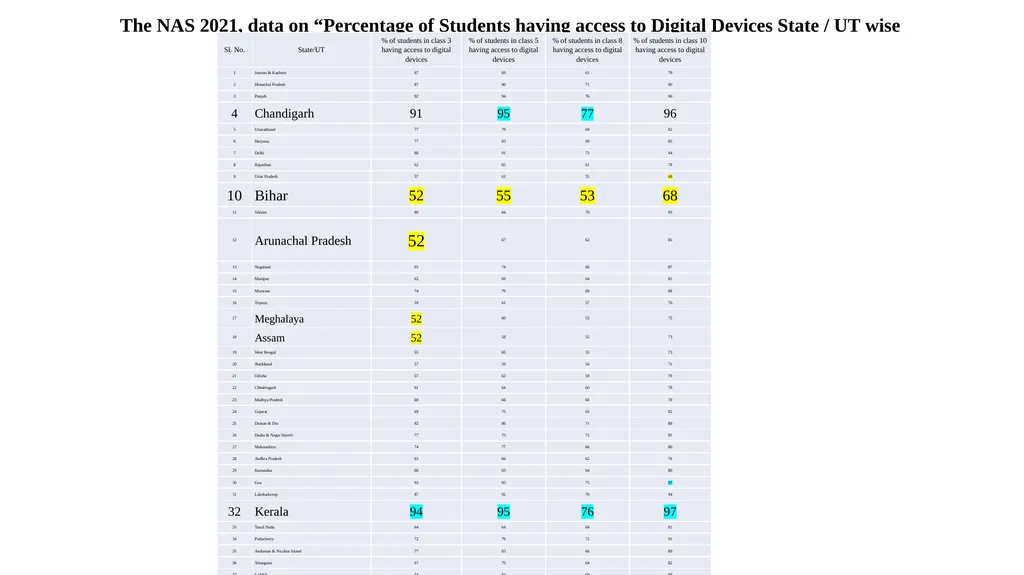
slide4. The NAS 2021, data on “Percentage of Students having access to Digital Devices State / UT wise<br>
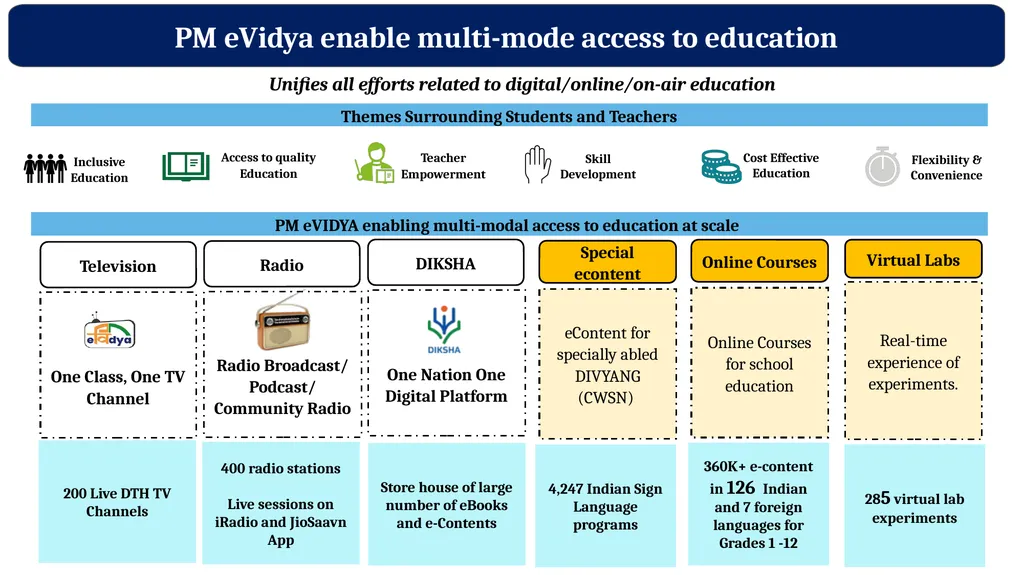
slide6. PM eVidya enable multi-mode access to education Access to quality Education Inclusive Education Teacher Empowerment Skill Development Cost Effective Education Flexibility & Convenience 200 Live DTH TV Channels 400 radio stations
Live sessions on iRadio and JioSaavn App 4,247 Indian Sign Language programs Store house of large number of eBooks and e-Contents PM eVIDYA enabling multi-modal access to education at scale 360K+ e-content in 126 Indian and 7 foreign languages for Grades 1 -12 Themes Surrounding Students and Teachers Virtual Labs Real-time experience of experiments. 285 virtual lab experiments Unifies all efforts related to digital/online/on-air education Television One Class, One TV Channel Radio Radio Broadcast/
Podcast/
Community Radio DIKSHA One Nation One Digital Platform Special econtent eContent for specially abled DIVYANG (CWSN) Online Courses Online Courses for school education<br>
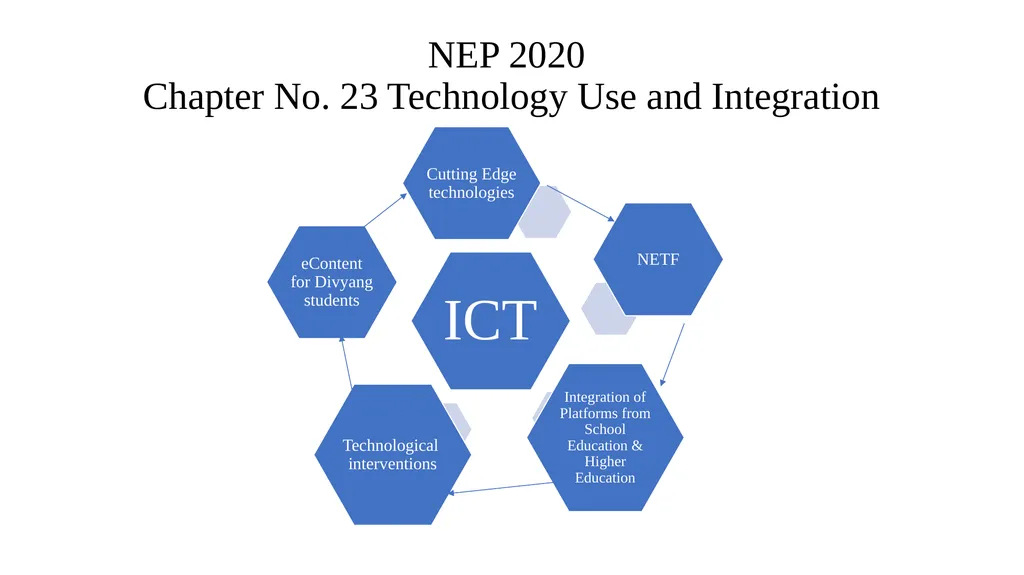
slide7. NEP 2020 Chapter No. 23 Technology Use and Integration<br>
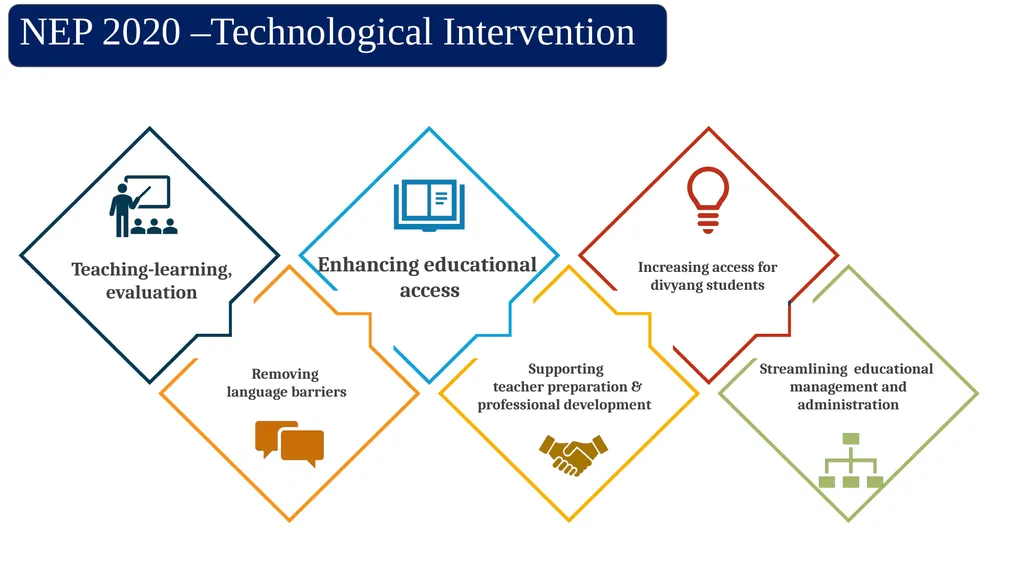
slide8. NEP 2020 –Technological Intervention<br>
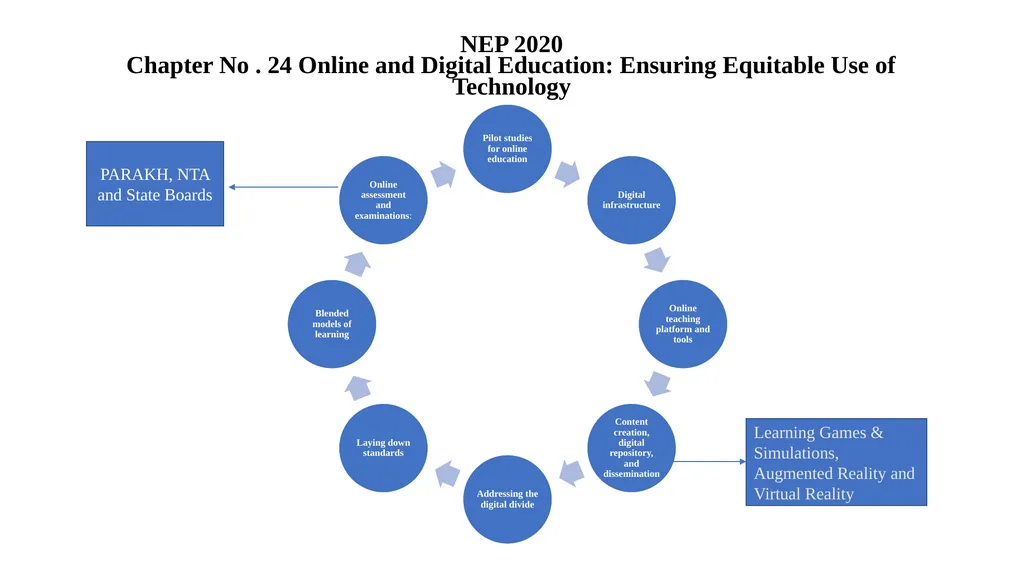
slide9. NEP 2020 Chapter No . 24 Online and Digital Education: Ensuring Equitable Use of Technology PARAKH, NTA and State Boards Learning Games & Simulations, Augmented Reality and
Virtual Reality<br>
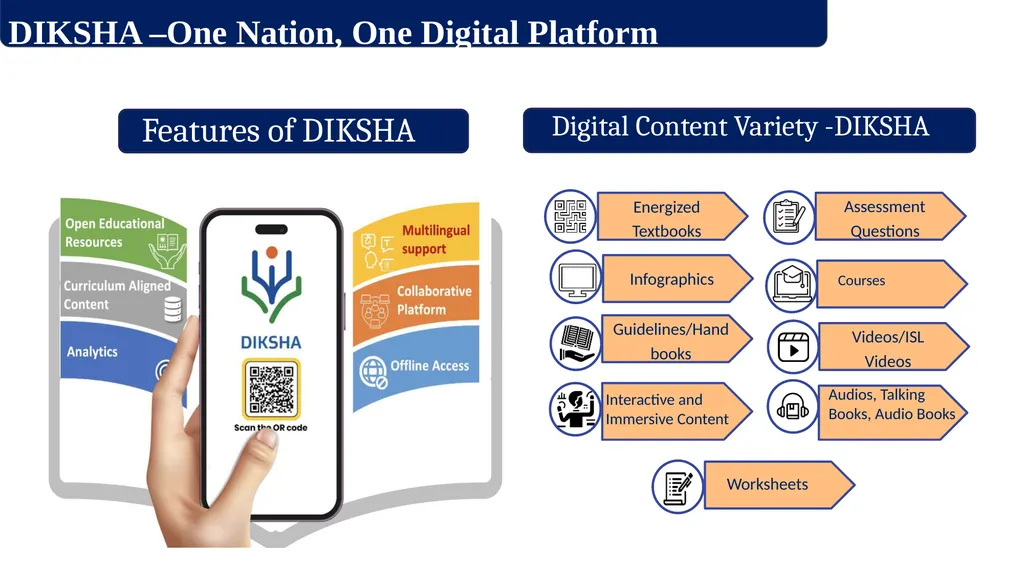
slide10. Features of DIKSHA Digital Content Variety -DIKSHA DIKSHA –One Nation, One Digital Platform Energized
Textbooks Assessment
Questions Infographics Guidelines/Hand
books Videos/ISL
Videos Interactive and Immersive Content Audios, Talking Books, Audio Books Worksheets Courses<br>
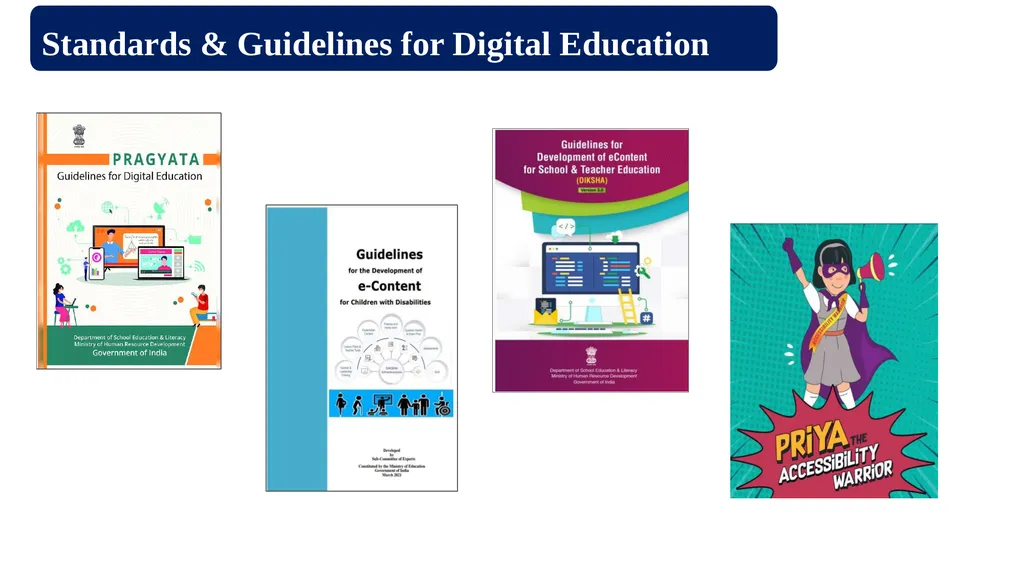
slide11. Standards & Guidelines for Digital Education<br>
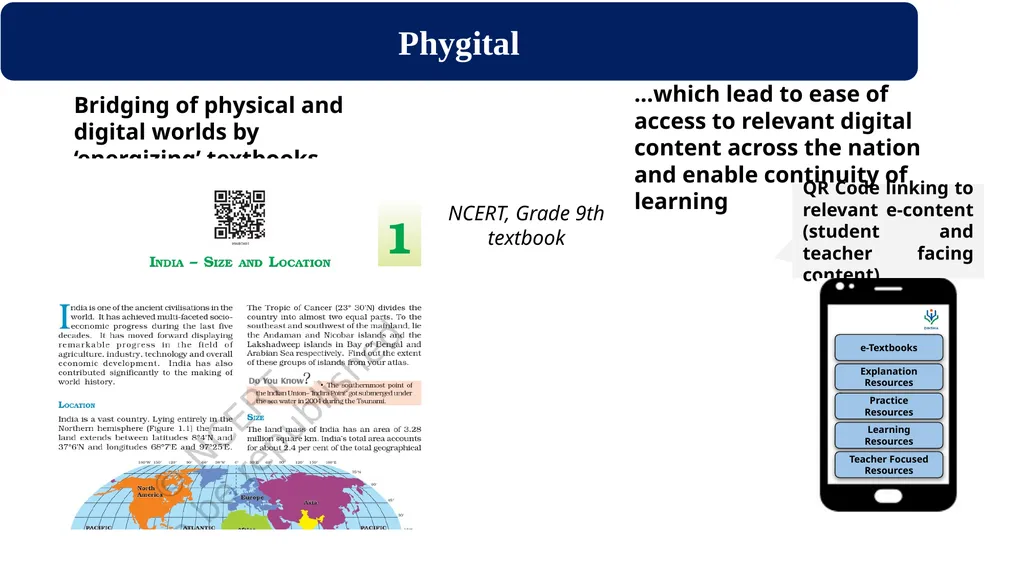
slide12. Phygital Bridging of physical and digital worlds by ‘energizing’ textbooks... NCERT, Grade 9th textbook QR Code linking to relevant e-content (student and teacher facing content) ...which lead to ease of access to relevant digital content across the nation and enable continuity of learning<br>
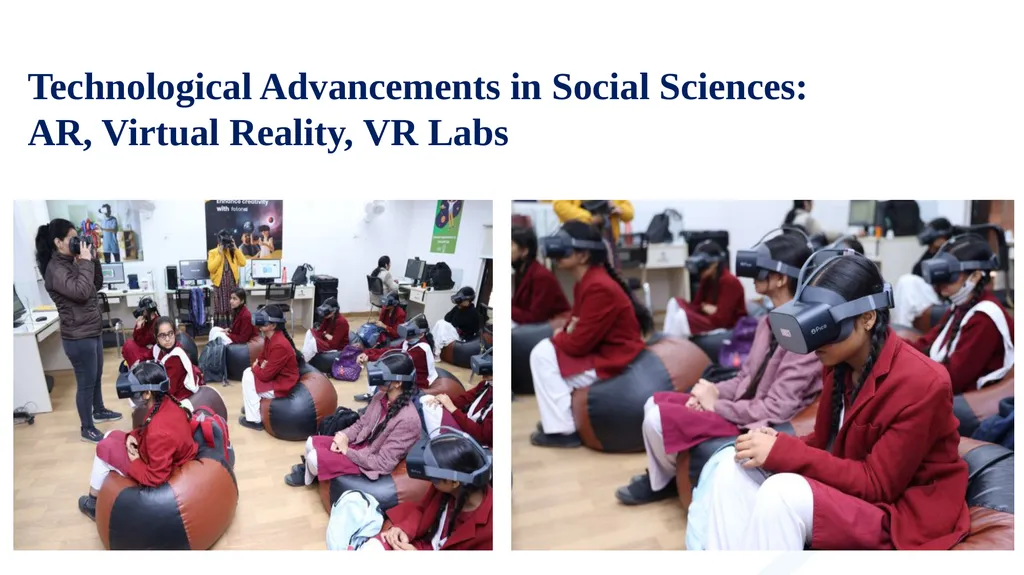
slide13. Experiential Learning Lab Technological Advancements in Social Sciences:
AR, Virtual Reality, VR Labs<br>
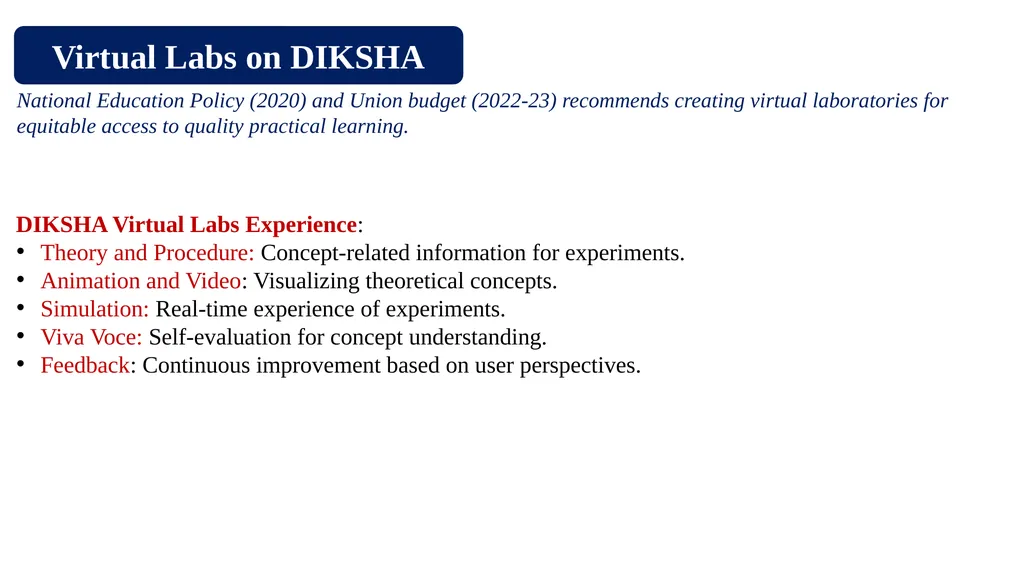
slide14. Virtual Labs on DIKSHA DIKSHA Virtual Labs Experience:
Theory and Procedure: Concept-related information for experiments.
Animation and Video: Visualizing theoretical concepts.
Simulation: Real-time experience of experiments.
Viva Voce: Self-evaluation for concept understanding.
Feedback: Continuous improvement based on user perspectives. National Education Policy (2020) and Union budget (2022-23) recommends creating virtual laboratories for equitable access to quality practical learning.<br>
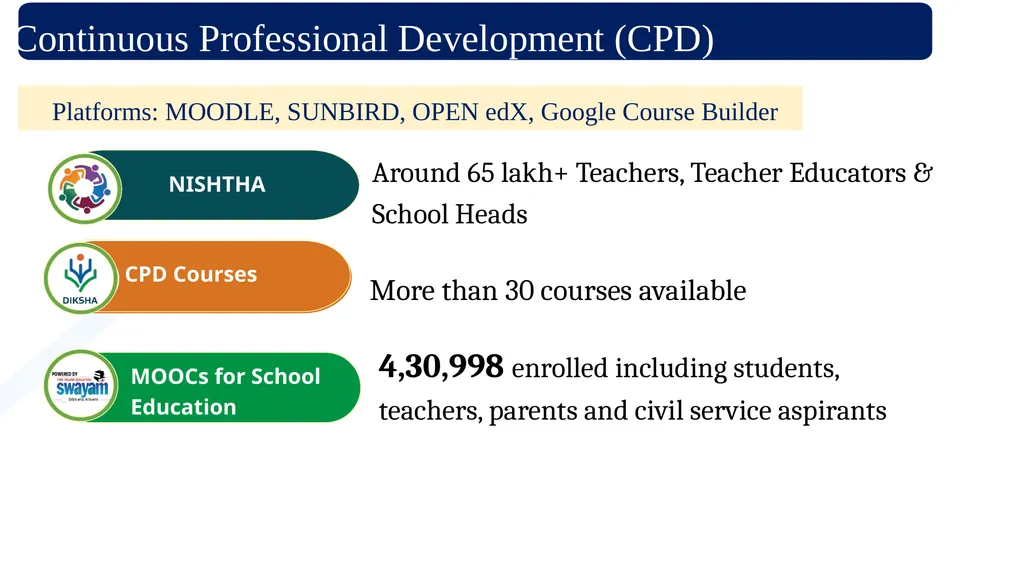
slide15. Continuous Professional Development (CPD) CPD Courses MOOCs for School
Education NISHTHA More than 30 courses available 4,30,998 enrolled including students,
teachers, parents and civil service aspirants Around 65 lakh+ Teachers, Teacher Educators &
School Heads<br>
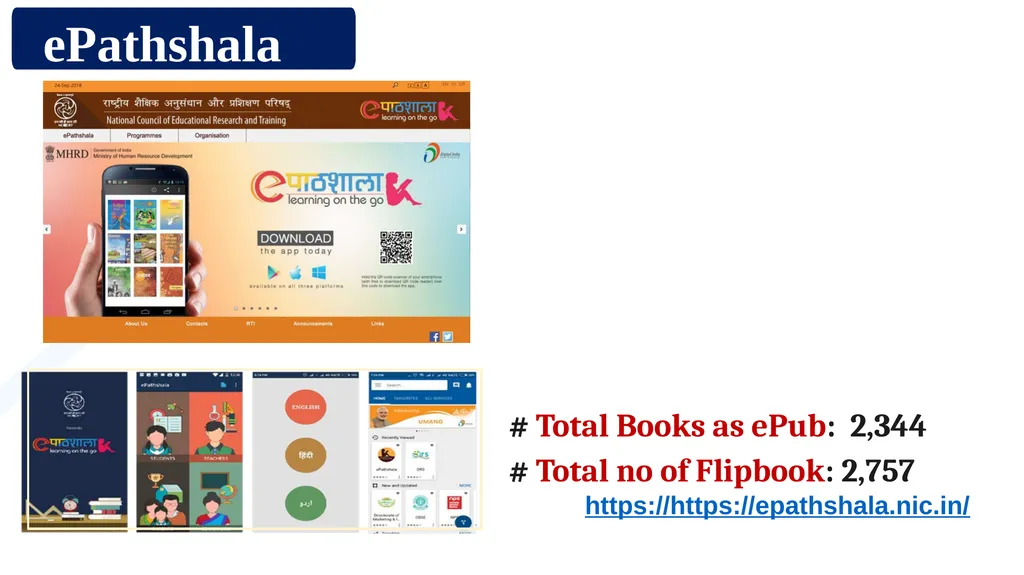
slide16. ePathshala https://https://epathshala.nic.in/ # Total Books as ePub: 2,344 # Total no of Flipbook: 2,757<br>
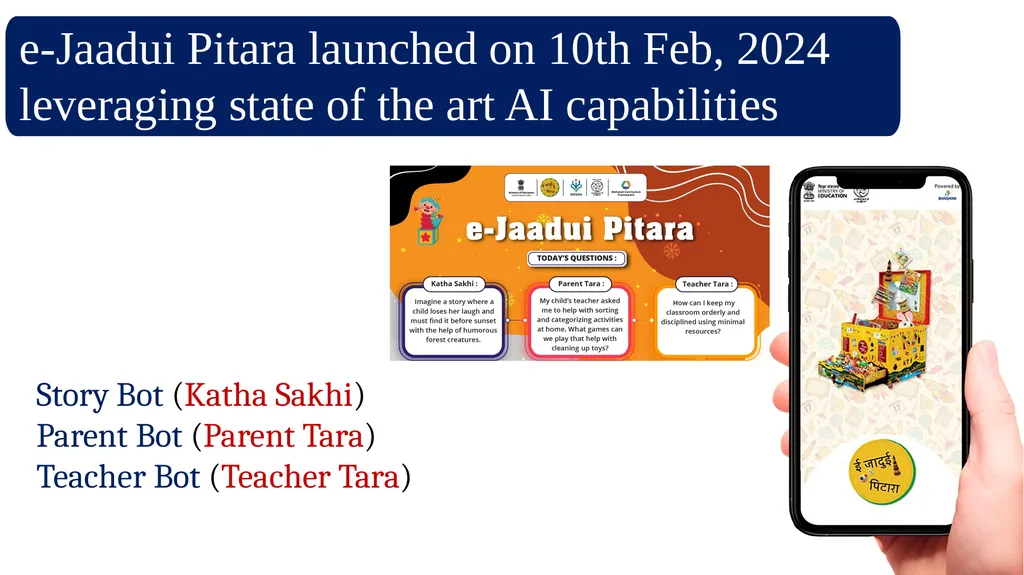
slide17. e-Jaadui Pitara launched on 10th Feb, 2024 leveraging state of the art AI capabilities Story Bot (Katha Sakhi)
Parent Bot (Parent Tara)
Teacher Bot (Teacher Tara)<br>
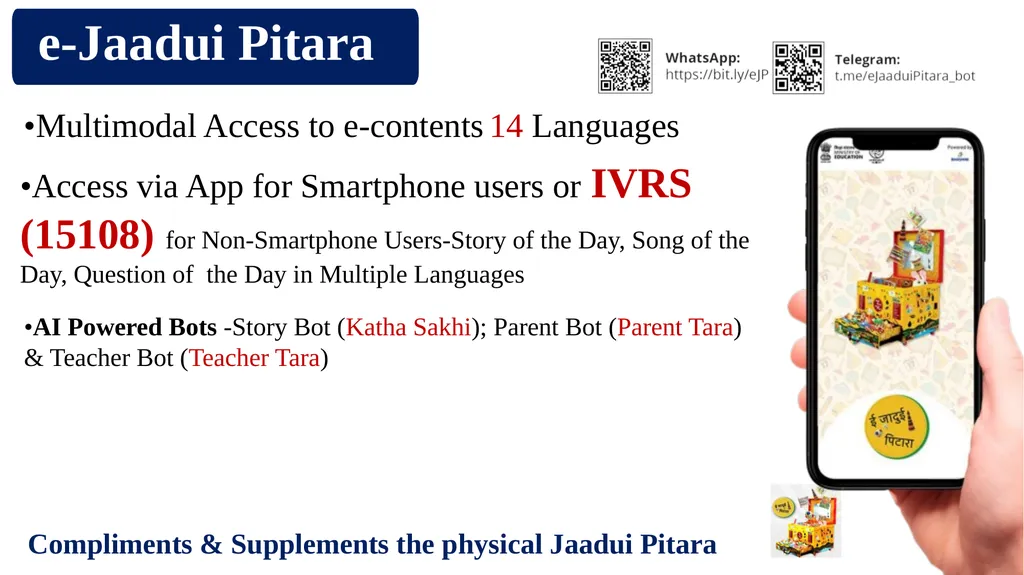
slide18. Compliments & Supplements the physical Jaadui Pitara •Multimodal Access to e-contents 14 Languages •Access via App for Smartphone users or IVRS (15108) for Non-Smartphone Users-Story of the Day, Song of the Day, Question of the Day in Multiple Languages •AI Powered Bots -Story Bot (Katha Sakhi); Parent Bot (Parent Tara) & Teacher Bot (Teacher Tara) e-Jaadui Pitara<br>
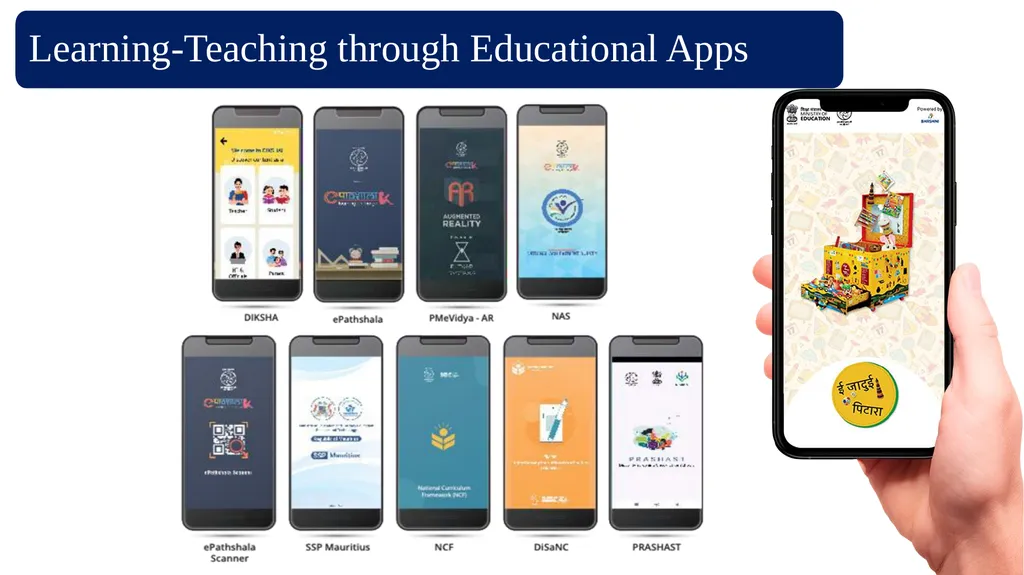
slide19. Learning-Teaching through Educational Apps<br>
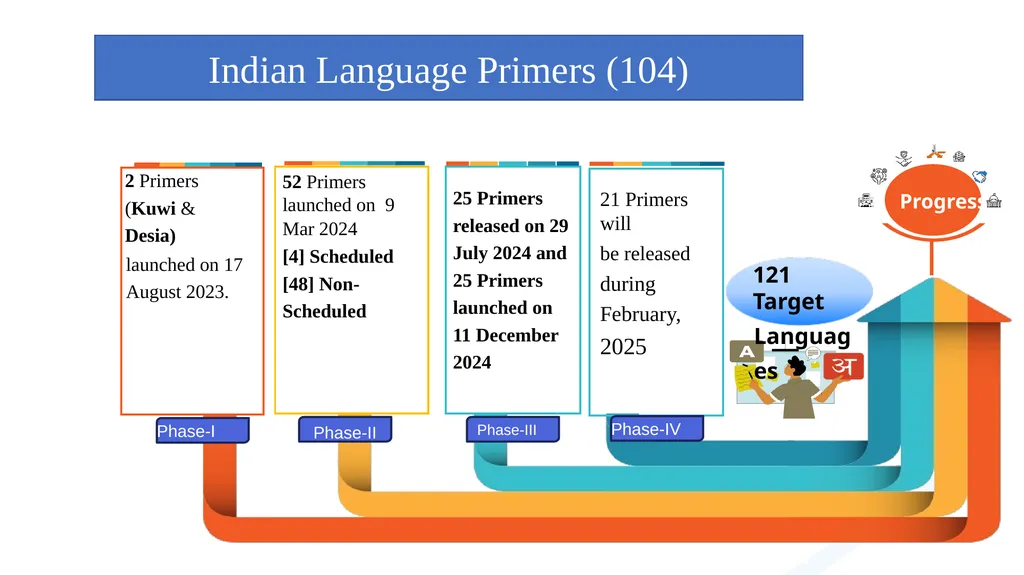
slide20. Indian Language Primers (104)<br>
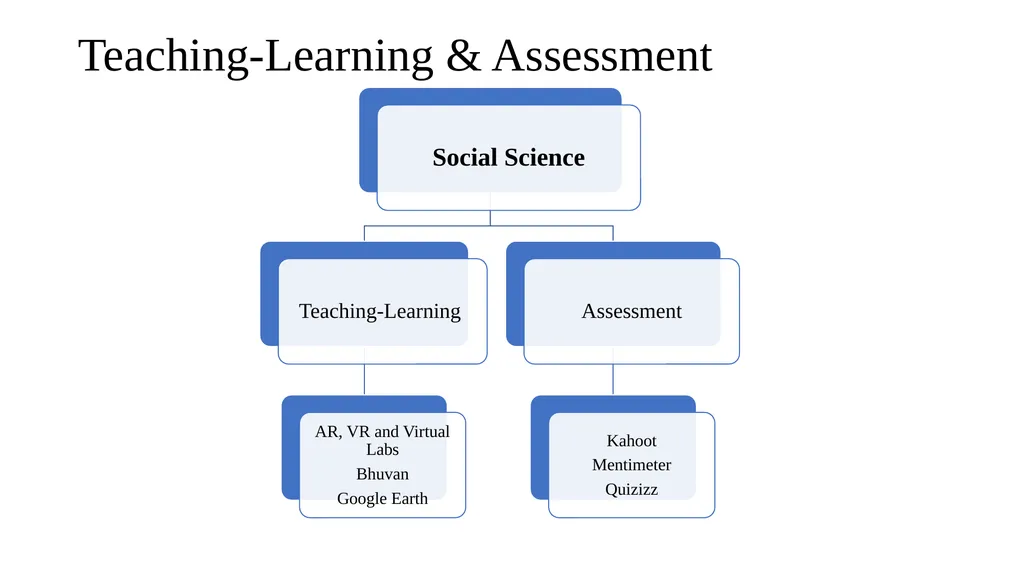
slide21. Teaching-Learning & Assessment<br>
slide2. Why Technology needed?<br>
slide3. ICT Use in India: Policy Directions 1984 1986 1983 ET Scheme 1972 1992 2010 2004 2015 2017 2013 2012 2018 2020-24 2019 INSAT CLASS Project NPE NPE-POA EDUSAT,
ICT @ School CAL NME - ICT Revised ICT @ School & ICT Award ICT Policy NROER & ICT Curriculum Digital India, ePathshala & ePG - Pathshala SWAYAM MOOCs, SWAYAM Prabha- DTH Channels & DIKSHA Samagra Shiksha, Cyber Safety & Security Guidelines NISHTHA, Guidelines for Development of eContent NEP - 2020, NETF
PRAGYATA Guidelines, PM-eVidya & NDEAR,
VSK, NCF-FS-2022, NCF-SE-2023, Draft NCF-TE-2024 ICT Use in India: Policy Directions<br>
slide4. The NAS 2021, data on “Percentage of Students having access to Digital Devices State / UT wise<br>
slide6. PM eVidya enable multi-mode access to education Access to quality Education Inclusive Education Teacher Empowerment Skill Development Cost Effective Education Flexibility & Convenience 200 Live DTH TV Channels 400 radio stations
Live sessions on iRadio and JioSaavn App 4,247 Indian Sign Language programs Store house of large number of eBooks and e-Contents PM eVIDYA enabling multi-modal access to education at scale 360K+ e-content in 126 Indian and 7 foreign languages for Grades 1 -12 Themes Surrounding Students and Teachers Virtual Labs Real-time experience of experiments. 285 virtual lab experiments Unifies all efforts related to digital/online/on-air education Television One Class, One TV Channel Radio Radio Broadcast/
Podcast/
Community Radio DIKSHA One Nation One Digital Platform Special econtent eContent for specially abled DIVYANG (CWSN) Online Courses Online Courses for school education<br>
slide7. NEP 2020 Chapter No. 23 Technology Use and Integration<br>
slide8. NEP 2020 –Technological Intervention<br>
slide9. NEP 2020 Chapter No . 24 Online and Digital Education: Ensuring Equitable Use of Technology PARAKH, NTA and State Boards Learning Games & Simulations, Augmented Reality and
Virtual Reality<br>
slide10. Features of DIKSHA Digital Content Variety -DIKSHA DIKSHA –One Nation, One Digital Platform Energized
Textbooks Assessment
Questions Infographics Guidelines/Hand
books Videos/ISL
Videos Interactive and Immersive Content Audios, Talking Books, Audio Books Worksheets Courses<br>
slide11. Standards & Guidelines for Digital Education<br>
slide12. Phygital Bridging of physical and digital worlds by ‘energizing’ textbooks... NCERT, Grade 9th textbook QR Code linking to relevant e-content (student and teacher facing content) ...which lead to ease of access to relevant digital content across the nation and enable continuity of learning<br>
slide13. Experiential Learning Lab Technological Advancements in Social Sciences:
AR, Virtual Reality, VR Labs<br>
slide14. Virtual Labs on DIKSHA DIKSHA Virtual Labs Experience:
Theory and Procedure: Concept-related information for experiments.
Animation and Video: Visualizing theoretical concepts.
Simulation: Real-time experience of experiments.
Viva Voce: Self-evaluation for concept understanding.
Feedback: Continuous improvement based on user perspectives. National Education Policy (2020) and Union budget (2022-23) recommends creating virtual laboratories for equitable access to quality practical learning.<br>
slide15. Continuous Professional Development (CPD) CPD Courses MOOCs for School
Education NISHTHA More than 30 courses available 4,30,998 enrolled including students,
teachers, parents and civil service aspirants Around 65 lakh+ Teachers, Teacher Educators &
School Heads<br>
slide16. ePathshala https://https://epathshala.nic.in/ # Total Books as ePub: 2,344 # Total no of Flipbook: 2,757<br>
slide17. e-Jaadui Pitara launched on 10th Feb, 2024 leveraging state of the art AI capabilities Story Bot (Katha Sakhi)
Parent Bot (Parent Tara)
Teacher Bot (Teacher Tara)<br>
slide18. Compliments & Supplements the physical Jaadui Pitara •Multimodal Access to e-contents 14 Languages •Access via App for Smartphone users or IVRS (15108) for Non-Smartphone Users-Story of the Day, Song of the Day, Question of the Day in Multiple Languages •AI Powered Bots -Story Bot (Katha Sakhi); Parent Bot (Parent Tara) & Teacher Bot (Teacher Tara) e-Jaadui Pitara<br>
slide19. Learning-Teaching through Educational Apps<br>
slide20. Indian Language Primers (104)<br>
slide21. Teaching-Learning & Assessment<br>