IDENTIFICATION AND MANAGEMENT ABORTION Prepared
Description: IDENTIFICATION AND MANAGEMENT ABORTION Prepared by: Loveness Mwase Kaweche Mwase Ackson Chandula Warwick-Etatmba OUTLINE Introduction Objectives Incidence Classification Causes Diagnosis Complications Management Prevention Warwick-Etatmba
Related Topics
Download Presentation
"IDENTIFICATION AND MANAGEMENT ABORTION Prepared" is the property of its rightful owner. Permission is granted to download and print the materials on this website for personal, non-commercial use only, and to display it on your personal computer provided you do not modify the materials and that you retain all copyright notices contained in the materials. By downloading content from our website, you accept the terms of this agreement.
Presentation Transcript
slide1. IDENTIFICATION AND MANAGEMENT ABORTION Prepared by:
Loveness Mwase
Kaweche Mwase
Ackson Chandula
Warwick-Etatmba<br>
slide2. OUTLINE Introduction
Objectives
Incidence
Classification
Causes
Diagnosis
Complications
Management
Prevention
Warwick-Etatmba<br>
slide3. INTRODUCTION Definition
A process where a woman has threat or termination of (intrauterine) pregnancy by any means below 28 weeks safely or unsafely.
More than half of abortions in developing country are unsafe.
It may occur legally or illegally in safe, less safe, unsafe and very unsafe situations.
One of a major contributing factor to maternal mortality rate with epidemiological evidence as a public health problem national wide and globally.
Warwick-Etatmba<br>
slide4. OBJECTIVES Understand definition, causes, prevention and management of Abortion
Appreciate magnitude.
Recognize presentation of complications.
Practice effective management.
Warwick-Etatmba<br>
slide5. INCIDENCE Directly-9%
Indirectly-43%(Hemorrhage +Sepsis
Warwick-Etatmba<br>
slide6. CLASSIFICATION It may be spontaneous or induced
According outcome
Safe
Unsafe
Clinically
Threatening
Complete
Incomplete
Missed
Warwick-Etatmba<br>
slide7. CAUSES Includes
Maternal conditions e.g. infections, uterine defects, cervical incompetence and malaria
Fetal conditions e.g. maldevelopment of ovum, Chromosomal abnormality and defective implantation.
Underlining causes e.g. Nutritional status.
Warwick-Etatmba<br>
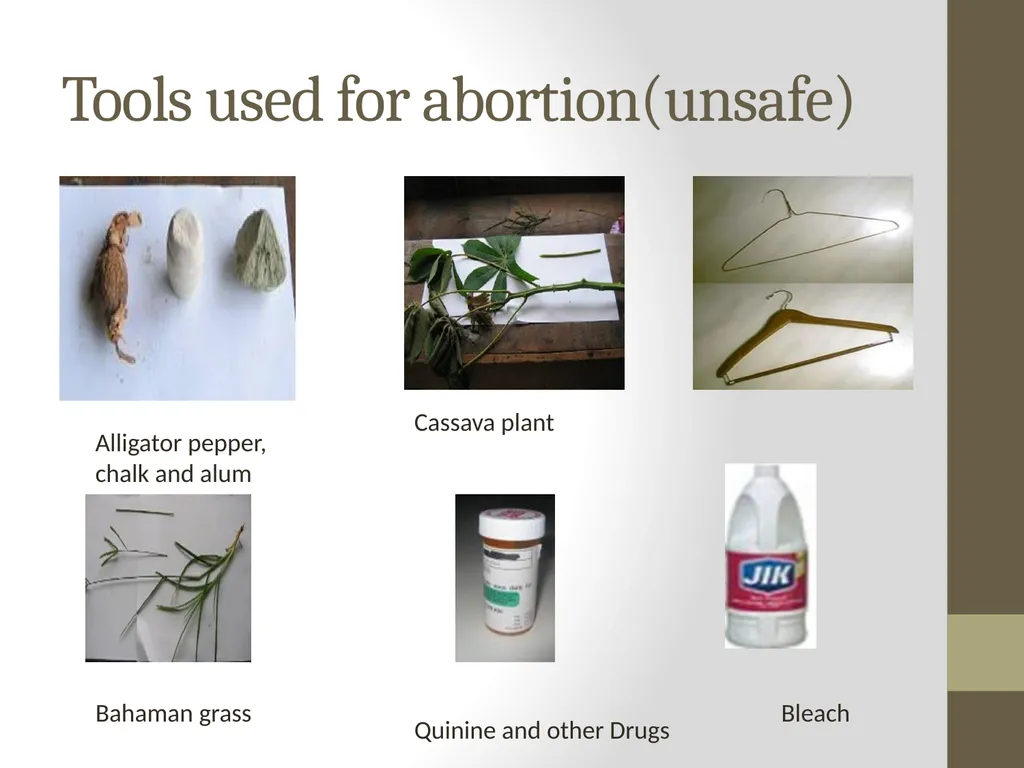
slide8. Tools used for abortion(unsafe) Alligator pepper, chalk and alum Cassava plant Bahaman grass Bleach Quinine and other Drugs<br>
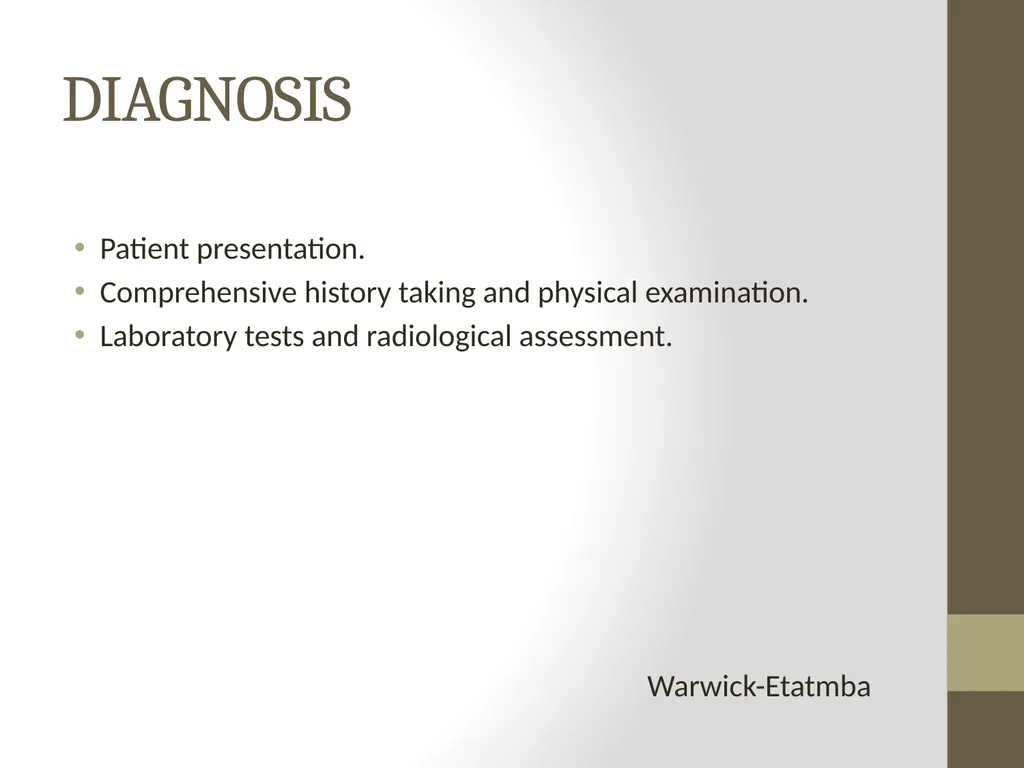
slide9. DIAGNOSIS Patient presentation.
Comprehensive history taking and physical examination.
Laboratory tests and radiological assessment.
Warwick-Etatmba<br>
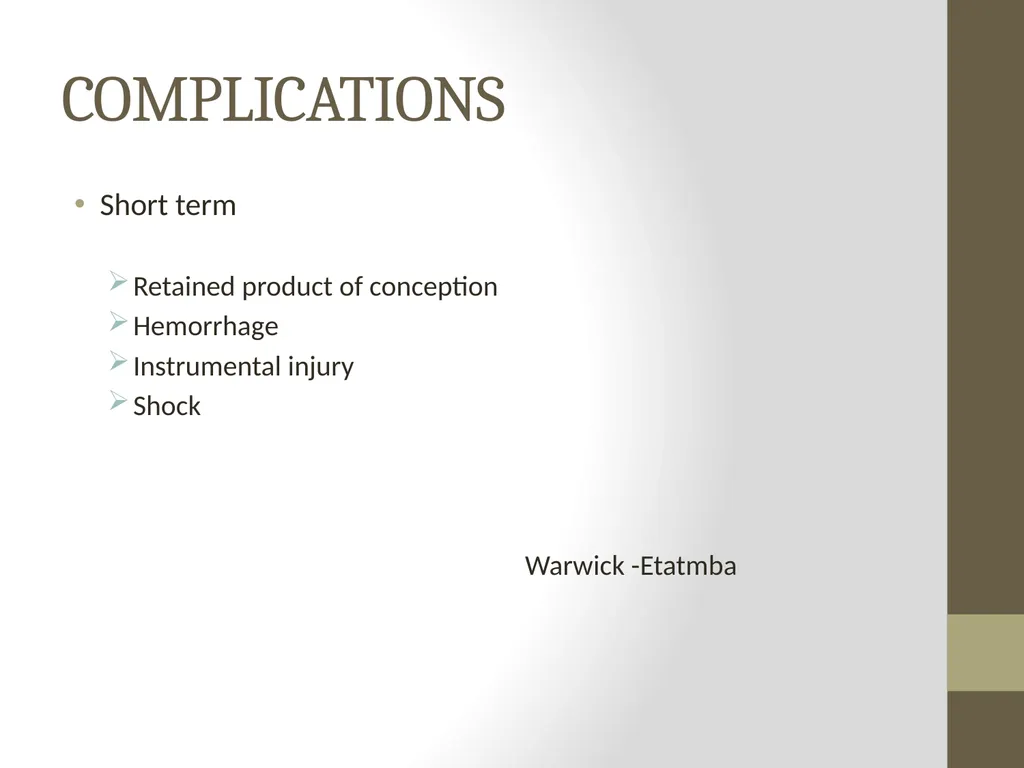
slide10. COMPLICATIONS Short term
Retained product of conception
Hemorrhage
Instrumental injury
Shock
Warwick -Etatmba<br>
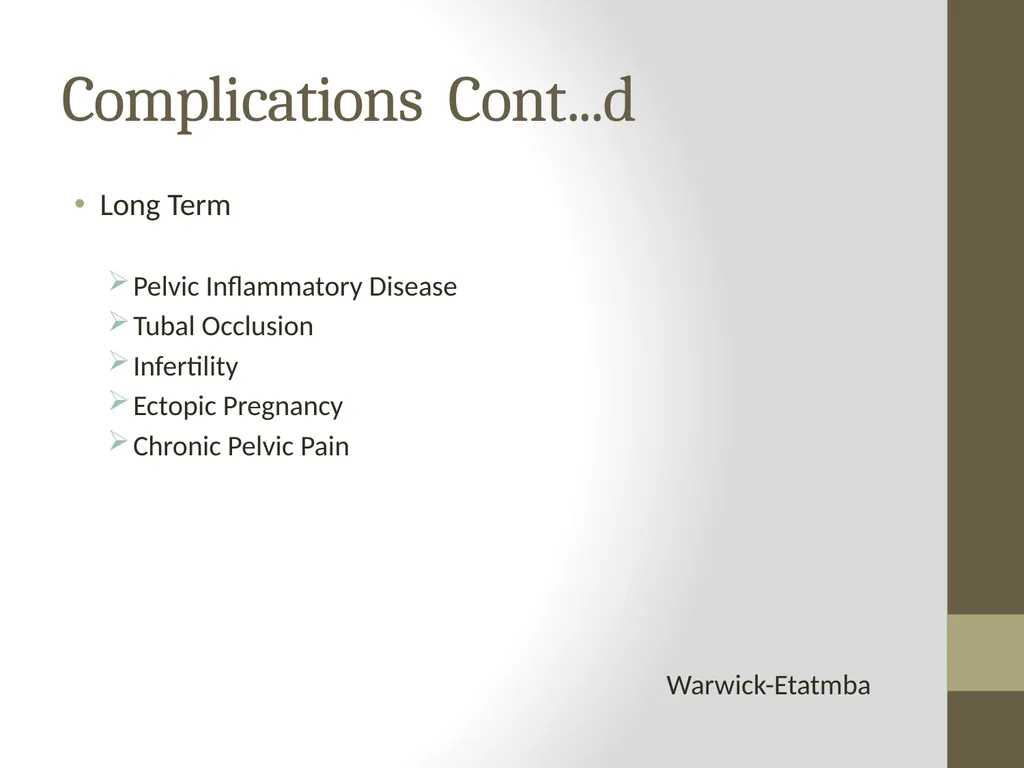
slide11. Complications Cont...d Long Term
Pelvic Inflammatory Disease
Tubal Occlusion
Infertility
Ectopic Pregnancy
Chronic Pelvic Pain
Warwick-Etatmba<br>
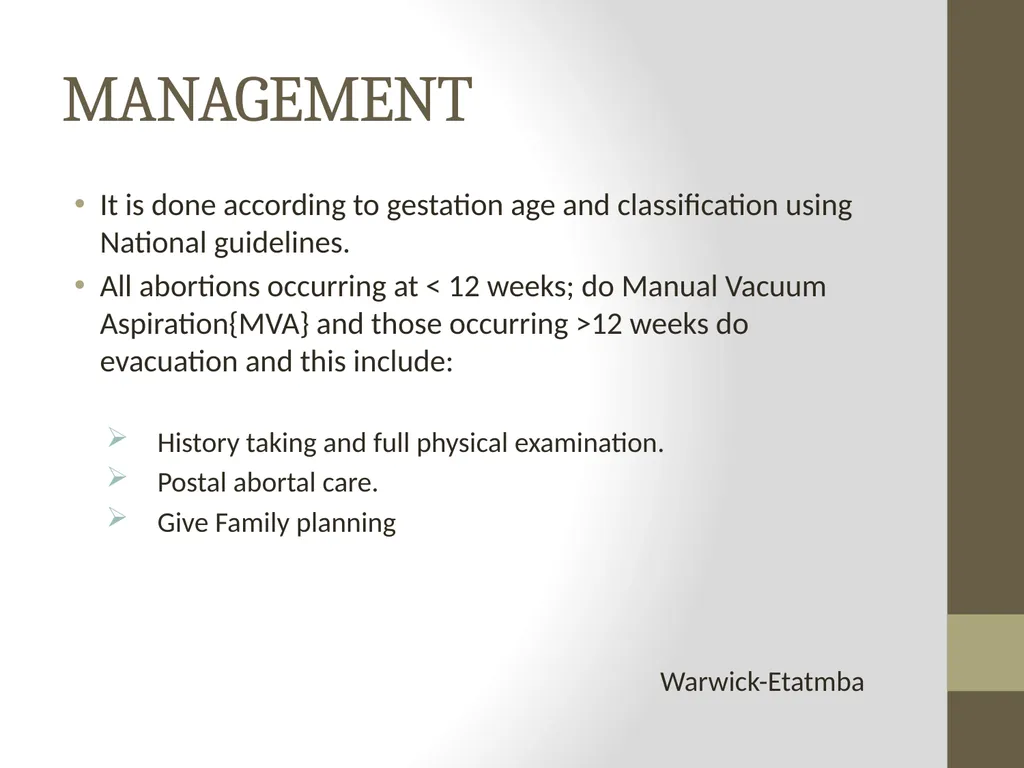
slide12. MANAGEMENT It is done according to gestation age and classification using National guidelines.
All abortions occurring at < 12 weeks; do Manual Vacuum Aspiration{MVA} and those occurring >12 weeks do evacuation and this include:
History taking and full physical examination.
Postal abortal care.
Give Family planning
Warwick-Etatmba<br>
slide13. PREVENTION Counseling and Health Education
Access to Family Planning methods
Antenatal Services– Screening for risk groups
Warwick-Etatmba<br>
slide14. REFERENCES WHO Systemic Review of Causes of Maternal Death

US Agency for International Development
Life Saving Skills Manual.
THANK YOU.<br>
Loveness Mwase
Kaweche Mwase
Ackson Chandula
Warwick-Etatmba<br>
slide2. OUTLINE Introduction
Objectives
Incidence
Classification
Causes
Diagnosis
Complications
Management
Prevention
Warwick-Etatmba<br>
slide3. INTRODUCTION Definition
A process where a woman has threat or termination of (intrauterine) pregnancy by any means below 28 weeks safely or unsafely.
More than half of abortions in developing country are unsafe.
It may occur legally or illegally in safe, less safe, unsafe and very unsafe situations.
One of a major contributing factor to maternal mortality rate with epidemiological evidence as a public health problem national wide and globally.
Warwick-Etatmba<br>
slide4. OBJECTIVES Understand definition, causes, prevention and management of Abortion
Appreciate magnitude.
Recognize presentation of complications.
Practice effective management.
Warwick-Etatmba<br>
slide5. INCIDENCE Directly-9%
Indirectly-43%(Hemorrhage +Sepsis
Warwick-Etatmba<br>
slide6. CLASSIFICATION It may be spontaneous or induced
According outcome
Safe
Unsafe
Clinically
Threatening
Complete
Incomplete
Missed
Warwick-Etatmba<br>
slide7. CAUSES Includes
Maternal conditions e.g. infections, uterine defects, cervical incompetence and malaria
Fetal conditions e.g. maldevelopment of ovum, Chromosomal abnormality and defective implantation.
Underlining causes e.g. Nutritional status.
Warwick-Etatmba<br>
slide8. Tools used for abortion(unsafe) Alligator pepper, chalk and alum Cassava plant Bahaman grass Bleach Quinine and other Drugs<br>
slide9. DIAGNOSIS Patient presentation.
Comprehensive history taking and physical examination.
Laboratory tests and radiological assessment.
Warwick-Etatmba<br>
slide10. COMPLICATIONS Short term
Retained product of conception
Hemorrhage
Instrumental injury
Shock
Warwick -Etatmba<br>
slide11. Complications Cont...d Long Term
Pelvic Inflammatory Disease
Tubal Occlusion
Infertility
Ectopic Pregnancy
Chronic Pelvic Pain
Warwick-Etatmba<br>
slide12. MANAGEMENT It is done according to gestation age and classification using National guidelines.
All abortions occurring at < 12 weeks; do Manual Vacuum Aspiration{MVA} and those occurring >12 weeks do evacuation and this include:
History taking and full physical examination.
Postal abortal care.
Give Family planning
Warwick-Etatmba<br>
slide13. PREVENTION Counseling and Health Education
Access to Family Planning methods
Antenatal Services– Screening for risk groups
Warwick-Etatmba<br>
slide14. REFERENCES WHO Systemic Review of Causes of Maternal Death
US Agency for International Development
Life Saving Skills Manual.
THANK YOU.<br>