
Identities Exposed How Design Flaws in
Description: Identities Exposed How Design Flaws in Authentication Solutions May Compromise Your Privacy About Me David Johansson Started working as a security consultant in 2007 Building security solutions (e.g., SAML 2.0 IdP) Helping others design and
Related Topics
Download Presentation
"Identities Exposed How Design Flaws in" is the property of its rightful owner. Permission is granted to download and print the materials on this website for personal, non-commercial use only, and to display it on your personal computer provided you do not modify the materials and that you retain all copyright notices contained in the materials. By downloading content from our website, you accept the terms of this agreement.
Presentation Transcript
slide1. Identities Exposed How Design Flaws in Authentication Solutions May Compromise Your Privacy<br>
slide2. About Me David Johansson
Started working as a security consultant in 2007
Building security solutions (e.g., SAML 2.0 IdP)
Helping others design and build secure software
Based in London since 3 years, working for Cigital (now part of Synopsys)<br>
slide3. What if Everyone knows who you are? Your Privacy<br>
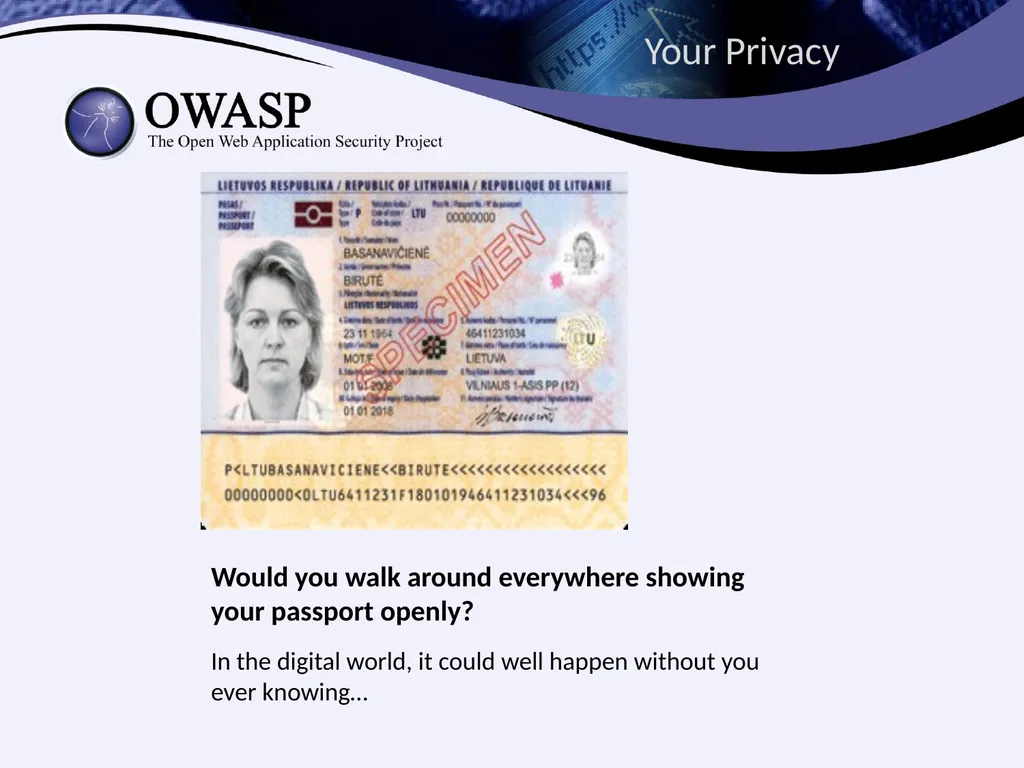
slide4. Would you walk around everywhere showing your passport openly? In the digital world, it could well happen without you ever knowing… Your Privacy<br>
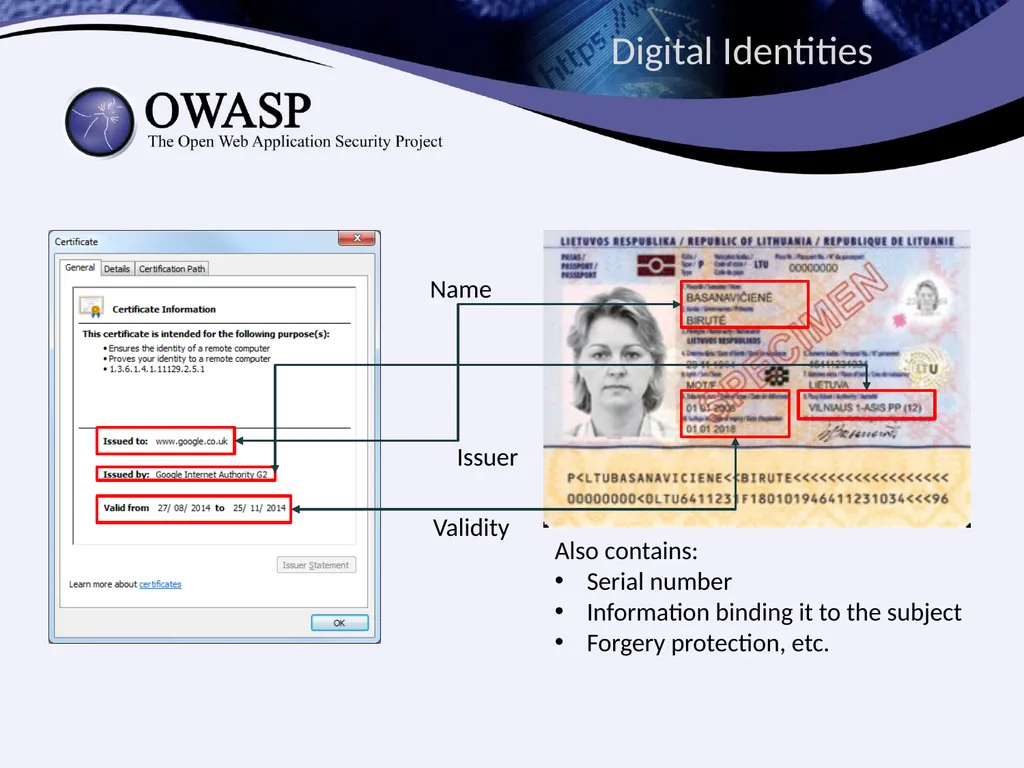
slide5. Digital Identities Name Issuer Validity Also contains:
Serial number
Information binding it to the subject
Forgery protection, etc.<br>
slide6. National Electronic ID In Sweden we have national electronic IDs
Used for online authentication/signing
Government e-services, Online banks, etc.
Contains PII
Full name, Date of birth, Personal identity number (NIN/SSN-equivalent)
Based on client certificates protected by custom software<br>
slide7. Please Update Your Software! In 2013, a letter was sent out to around 500,000 individuals in Sweden
Urged users to update their electronic ID software
Why such a drastic action?
Imagine Microsoft’s “Patch Tuesdays” being delivered by Royal Mail…<br>
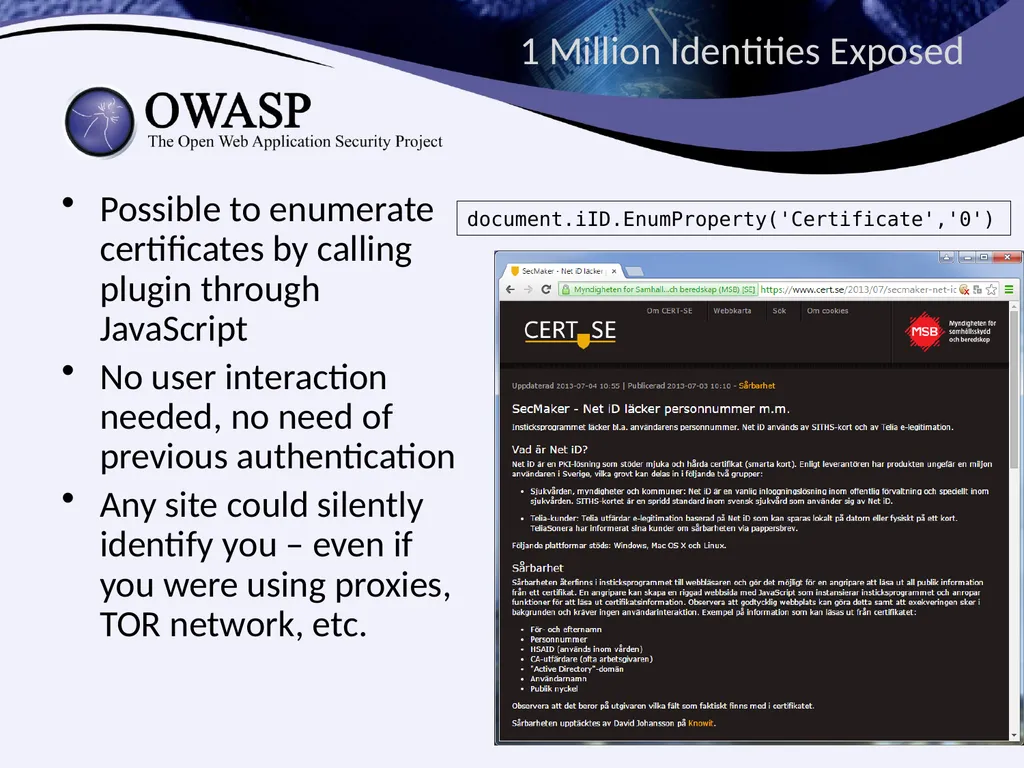
slide8. 1 Million Identities Exposed Possible to enumerate certificates by calling plugin through JavaScript
No user interaction needed, no need of previous authentication
Any site could silently identify you – even if you were using proxies, TOR network, etc. document.iID.EnumProperty('Certificate','0')<br>
slide9. The Privacy Problem Was this just an odd software error?
Or is there a problem with privacy in authentication solutions in general?<br>
slide10. Privacy Requirements Authentication Solutions<br>
slide11. Security vs. Privacy Security is considered an important aspect when designing authentication:
Password policies
Multi-factor authentication
Protect passwords in transit and at rest
Prevent brute-force attacks
Prevent replay attacks, etc.
But does this protect users’ privacy?<br>
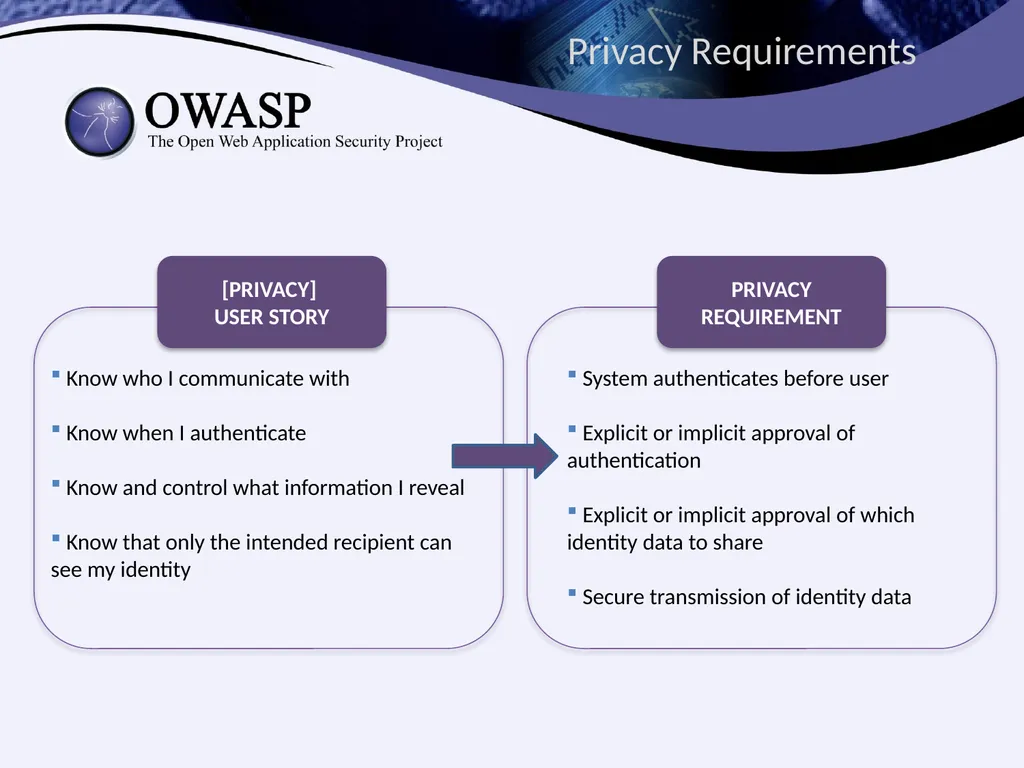
slide12. [Privacy] User Stories As a user, I want to know who I communicate with before I authenticate myself so that I avoid revealing my identity to unknown entities.<br>
slide13. [Privacy] User Stories As a user, I want to know when I authenticate so that I only reveal my identity when I intend to do so.<br>
slide14. [Privacy] User Stories As a user, I want to know and control what information I reveal when I authenticate so that I only reveal information about myself that I intend to share with the other party.<br>
slide15. [Privacy] User Stories As a user, I want to know that only the intended recipient can see my identity when I authenticate so that I don’t expose my identity to others listening in on the conversation.<br>
slide16. Privacy Requirements Know who I communicate with
Know when I authenticate
Know and control what information I reveal
Know that only the intended recipient can see my identity System authenticates before user
Explicit or implicit approval of authentication
Explicit or implicit approval of which identity data to share
Secure transmission of identity data [Privacy] User Story Privacy Requirement<br>
slide17. SSL/TLS Client Certificate Authentication Privacy Issues in<br>
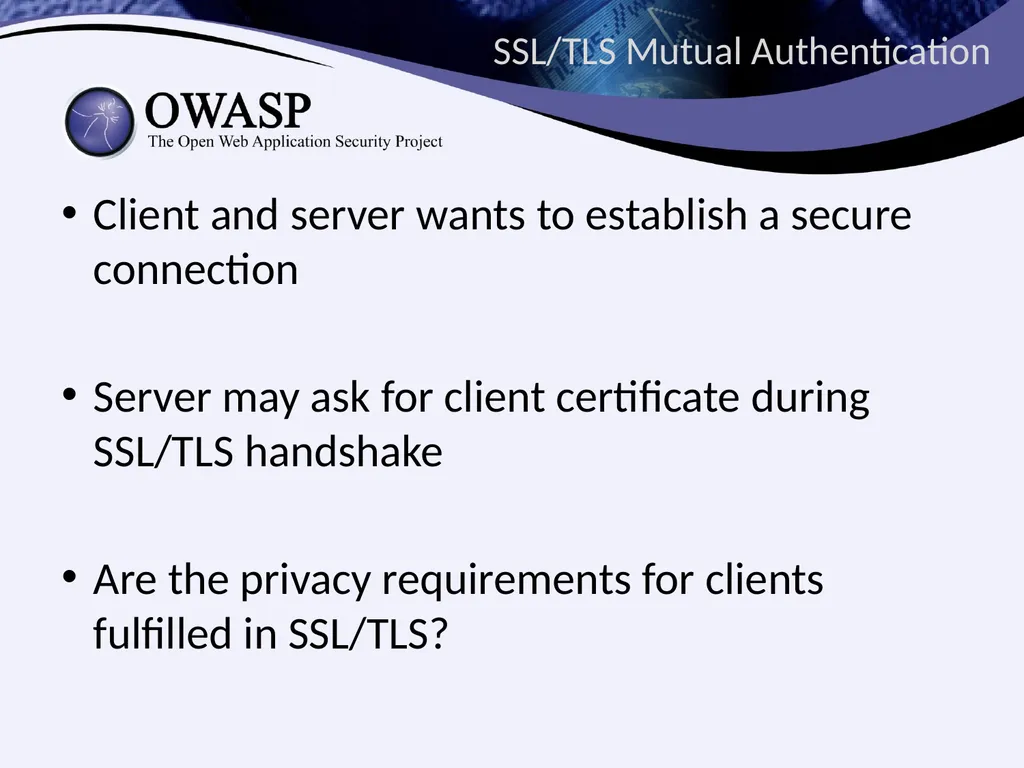
slide18. SSL/TLS Mutual Authentication Client and server wants to establish a secure connection
Server may ask for client certificate during SSL/TLS handshake
Are the privacy requirements for clients fulfilled in SSL/TLS?<br>
slide19. Demo 1: The Browser Bug TLS Client Privacy - Round 1: Internet Explorer vs. Chrome<br>
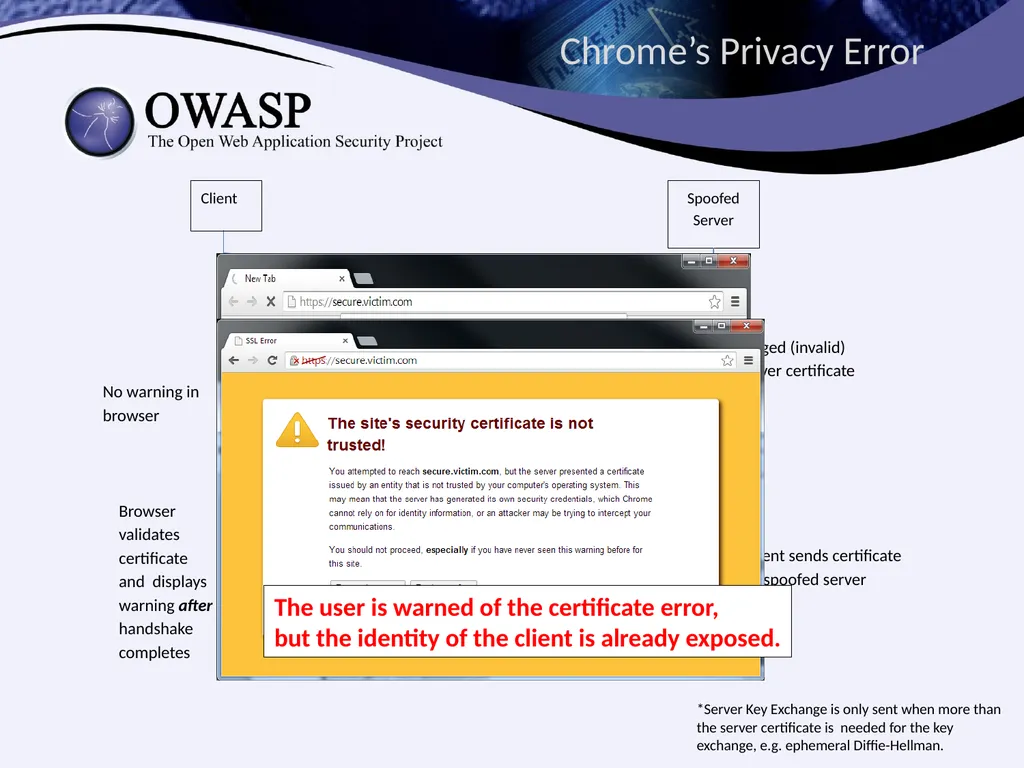
slide20. Chrome’s Privacy Error Spoofed Server Client Client Hello Server Hello Server Certificate Server Key Exchange* Certificate Request Server Hello Done Client Certificate Client Key Exchange Certificate Verify ChangeCipherSpec Finished Client sends certificate to spoofed server No warning in browser Forged (invalid) server certificate Browser validates certificate and displays warning after handshake completes The user is warned of the certificate error, but the identity of the client is already exposed. *Server Key Exchange is only sent when more than the server certificate is needed for the key exchange, e.g. ephemeral Diffie-Hellman.<br>
slide21. Privacy - Round 1: Microsoft IE 1 – 0 Google Chrome Wait, not so fast!
Internet Explorer used to do the same…
…and in fact all browsers can be fooled! And the winner is…<br>
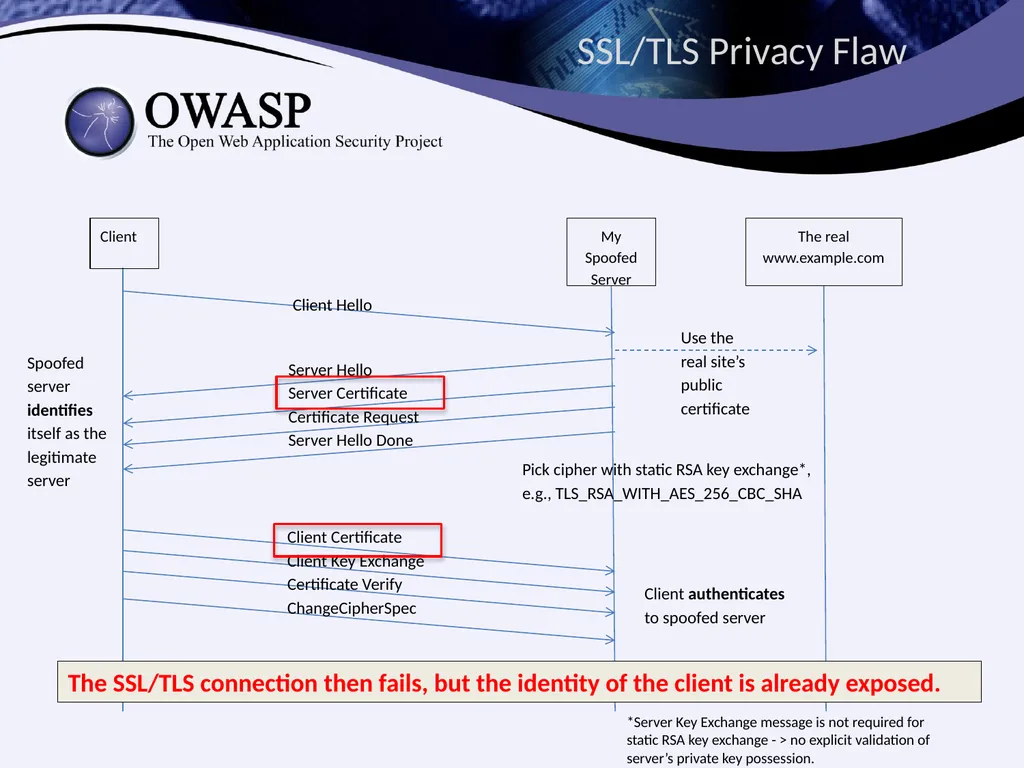
slide22. SSL/TLS Privacy Flaw My Spoofed Server Client The real www.example.com Client Hello Server Hello Server Certificate Certificate Request Server Hello Done Client Certificate Client Key Exchange Certificate Verify ChangeCipherSpec Finished Use the real site’s public certificate Client authenticates to spoofed server Spoofed server identifies itself as the legitimate server The SSL/TLS connection then fails, but the identity of the client is already exposed. Pick cipher with static RSA key exchange*, e.g., TLS_RSA_WITH_AES_256_CBC_SHA *Server Key Exchange message is not required for static RSA key exchange - > no explicit validation of server’s private key possession.<br>
slide23. Demo 2: The TLS Privacy Flaw TLS Client Privacy - Round 2: All Your Identities Are Belong To Us<br>
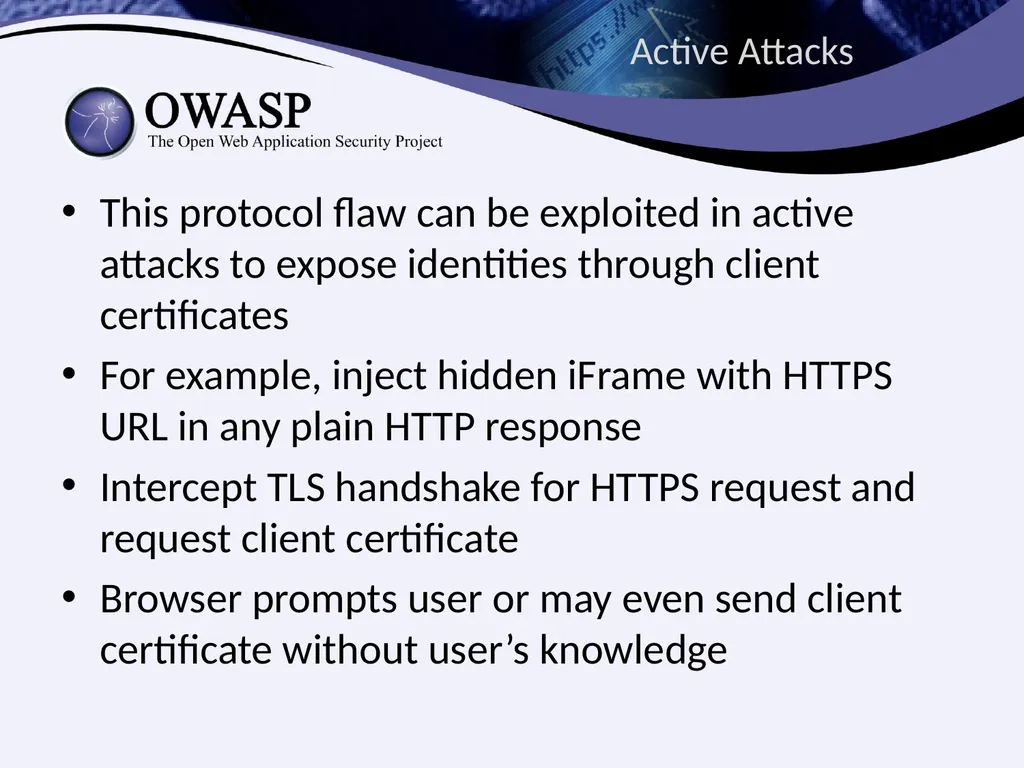
slide24. Active Attacks This protocol flaw can be exploited in active attacks to expose identities through client certificates
For example, inject hidden iFrame with HTTPS URL in any plain HTTP response
Intercept TLS handshake for HTTPS request and request client certificate
Browser prompts user or may even send client certificate without user’s knowledge<br>
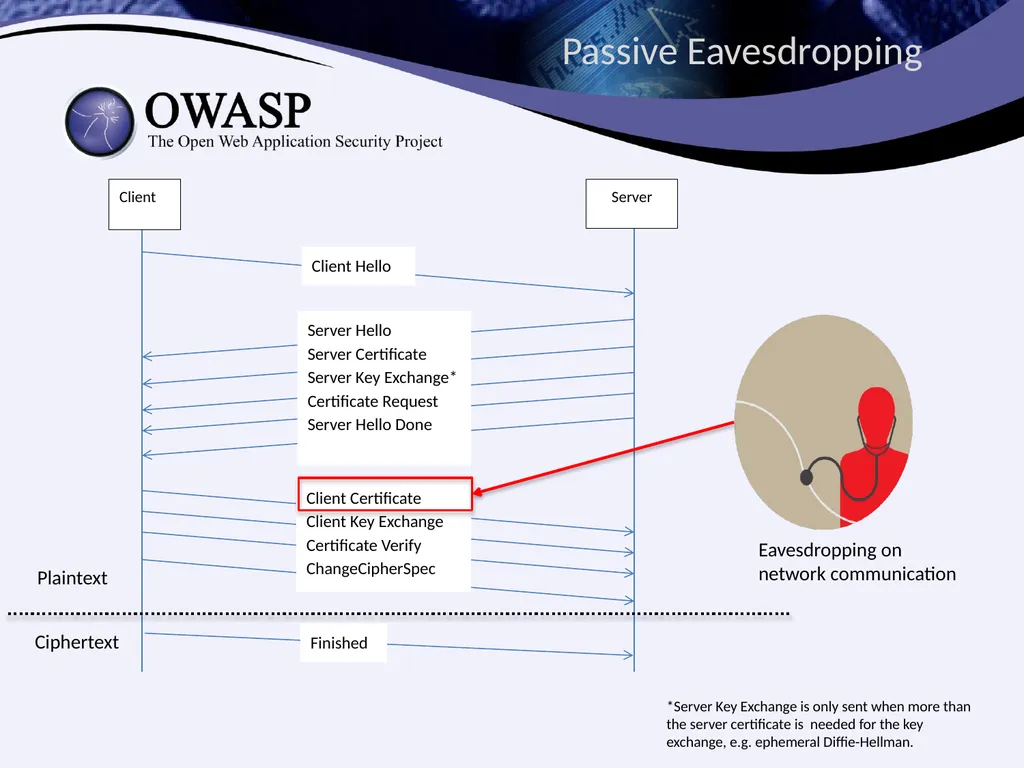
slide25. Passive Eavesdropping Plaintext Ciphertext Eavesdropping on network communication *Server Key Exchange is only sent when more than the server certificate is needed for the key exchange, e.g. ephemeral Diffie-Hellman.<br>
slide26. SSL/TLS Mutual Authentication System authenticates before user
Explicit or implicit approval of authentication
Explicit or implicit approval of which identity data to share
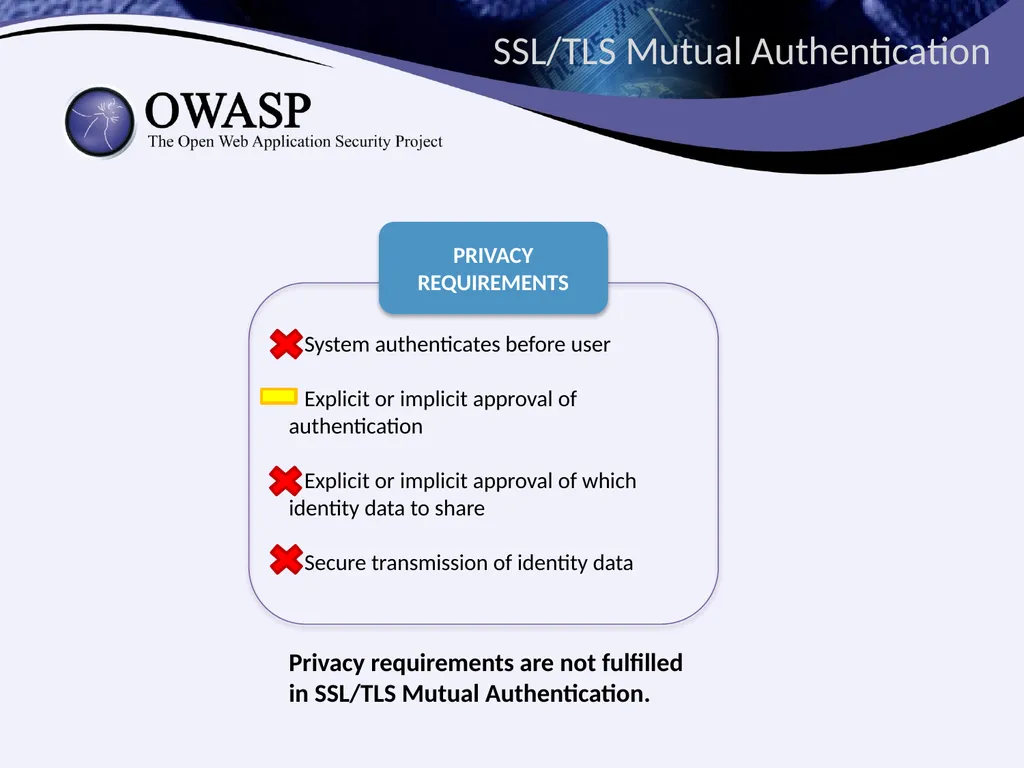
Secure transmission of identity data Privacy RequirementS Privacy requirements are not fulfilled in SSL/TLS Mutual Authentication.<br>
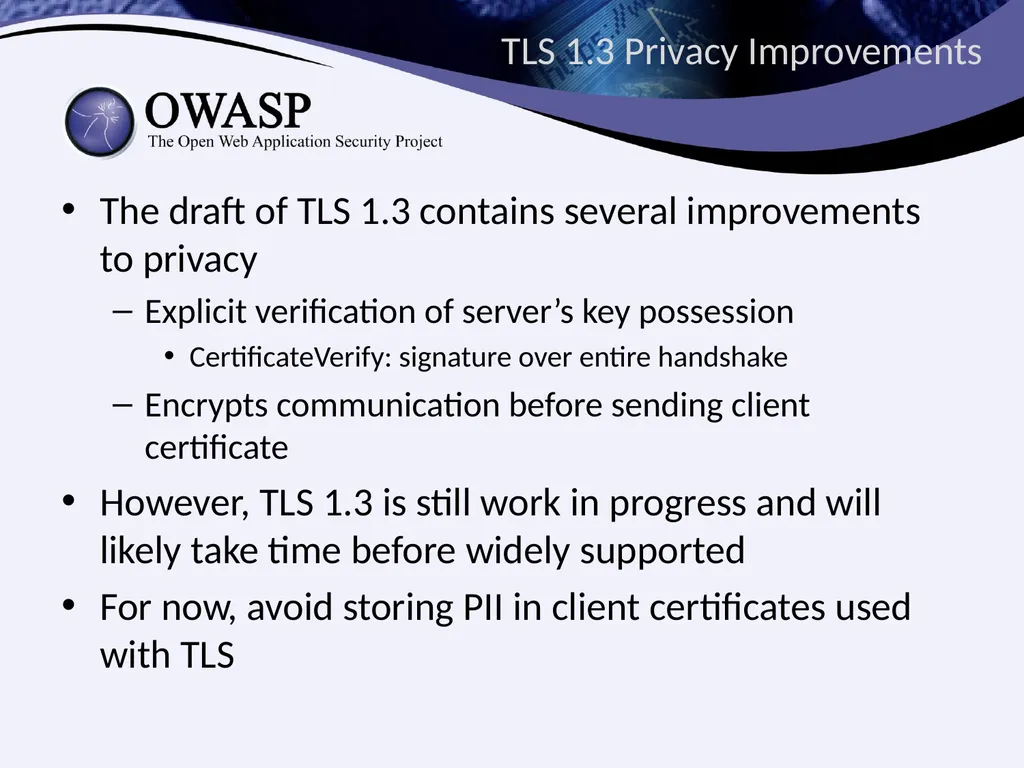
slide27. TLS 1.3 Privacy Improvements The draft of TLS 1.3 contains several improvements to privacy
Explicit verification of server’s key possession
CertificateVerify: signature over entire handshake
Encrypts communication before sending client certificate
However, TLS 1.3 is still work in progress and will likely take time before widely supported
For now, avoid storing PII in client certificates used with TLS<br>
slide28. SAML 2.0 SSO Passive authentication requests in<br>
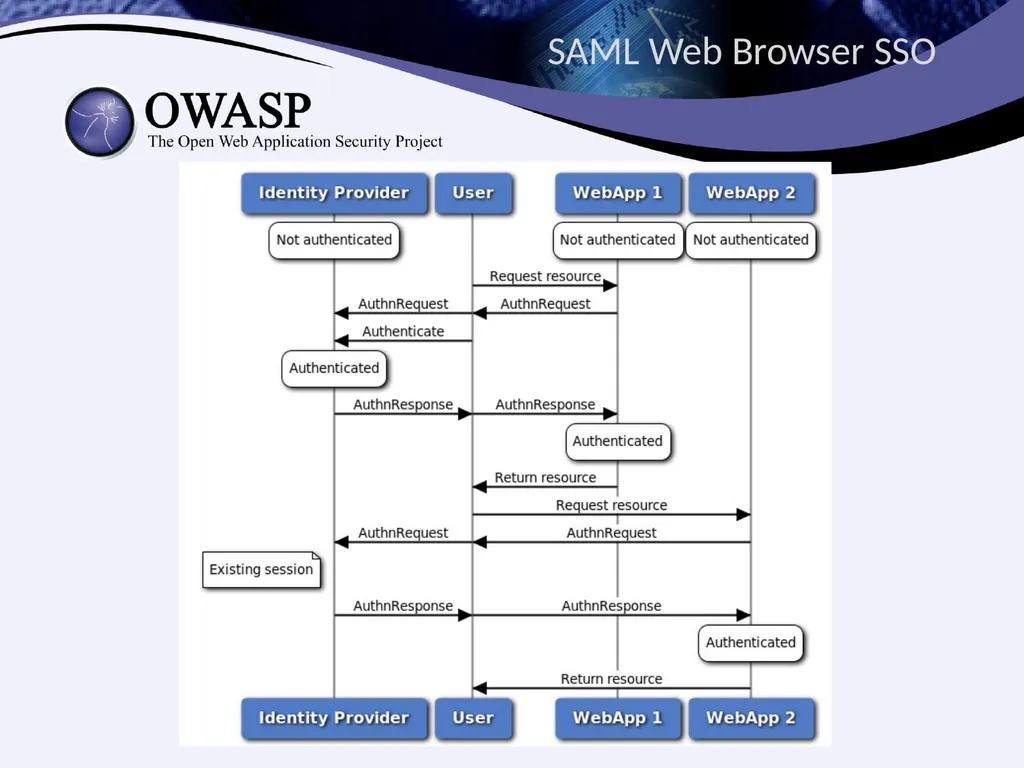
slide29. SAML Web Browser SSO<br>
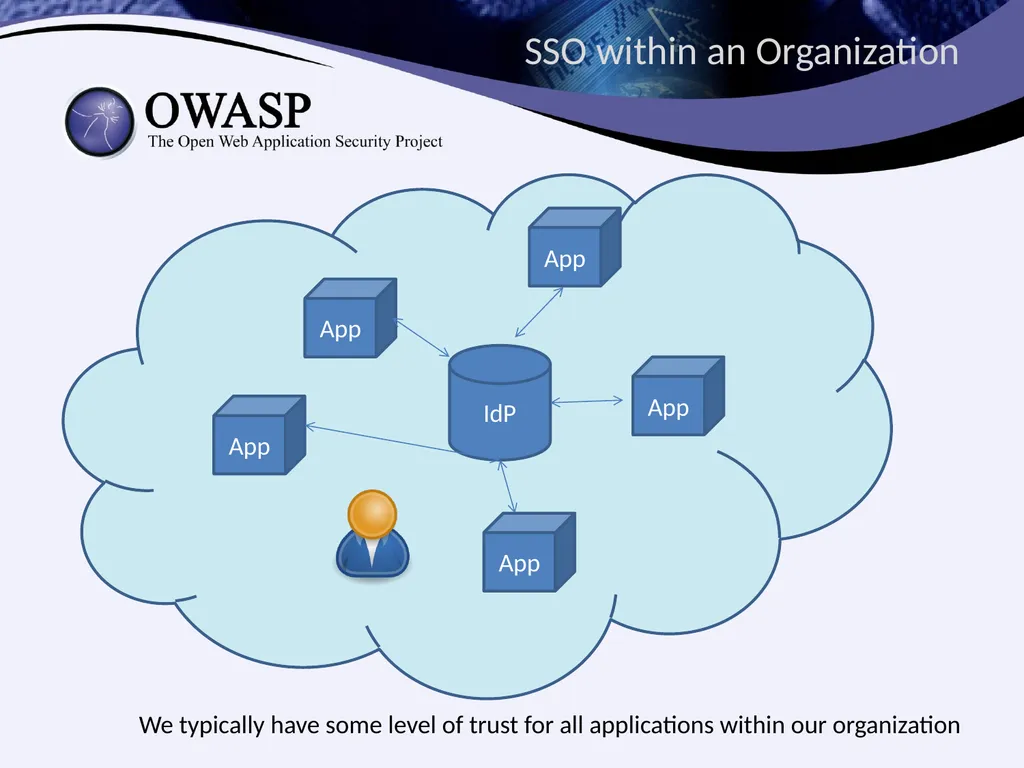
slide30. SSO within an Organization IdP App App App App App We typically have some level of trust for all applications within our organization<br>
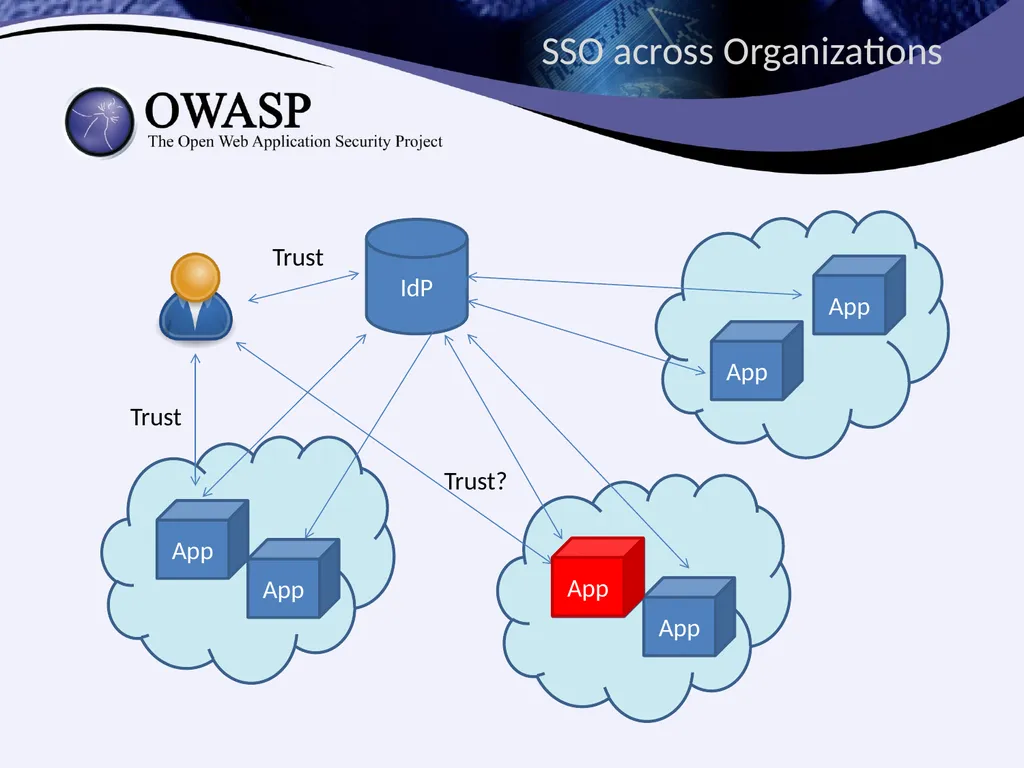
slide31. SSO across Organizations IdP App App App App App App Trust Trust Trust? App<br>
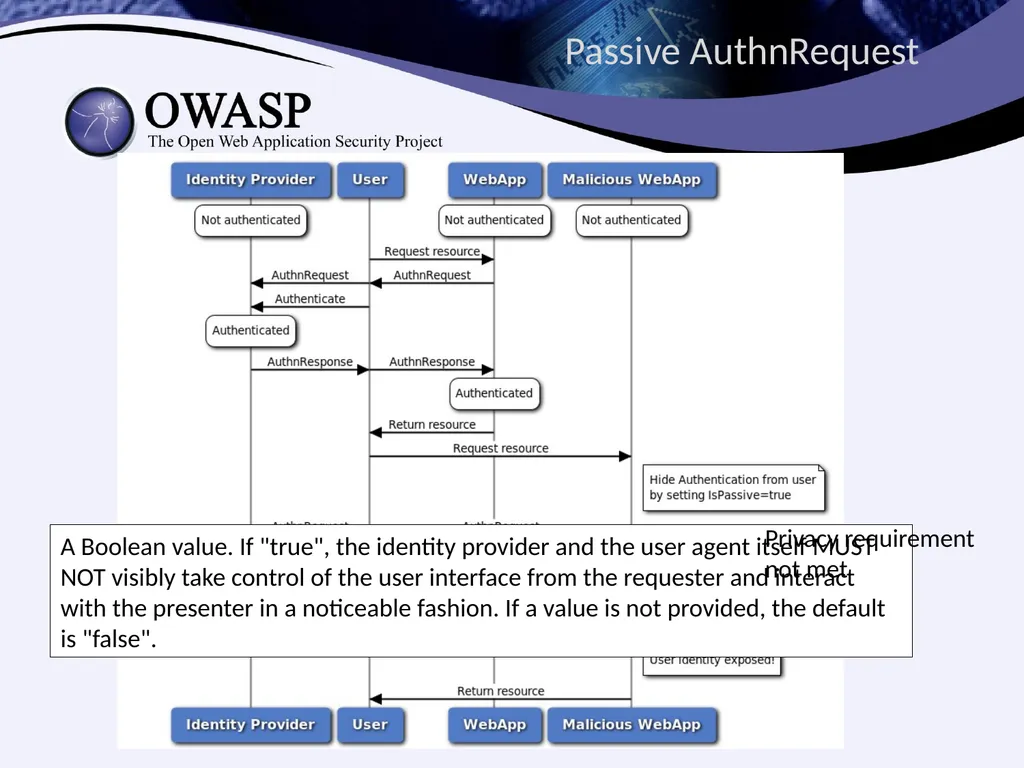
slide32. Passive AuthnRequest A Boolean value. If "true", the identity provider and the user agent itself MUST NOT visibly take control of the user interface from the requester and interact with the presenter in a noticeable fashion. If a value is not provided, the default is "false". Privacy requirement not met<br>
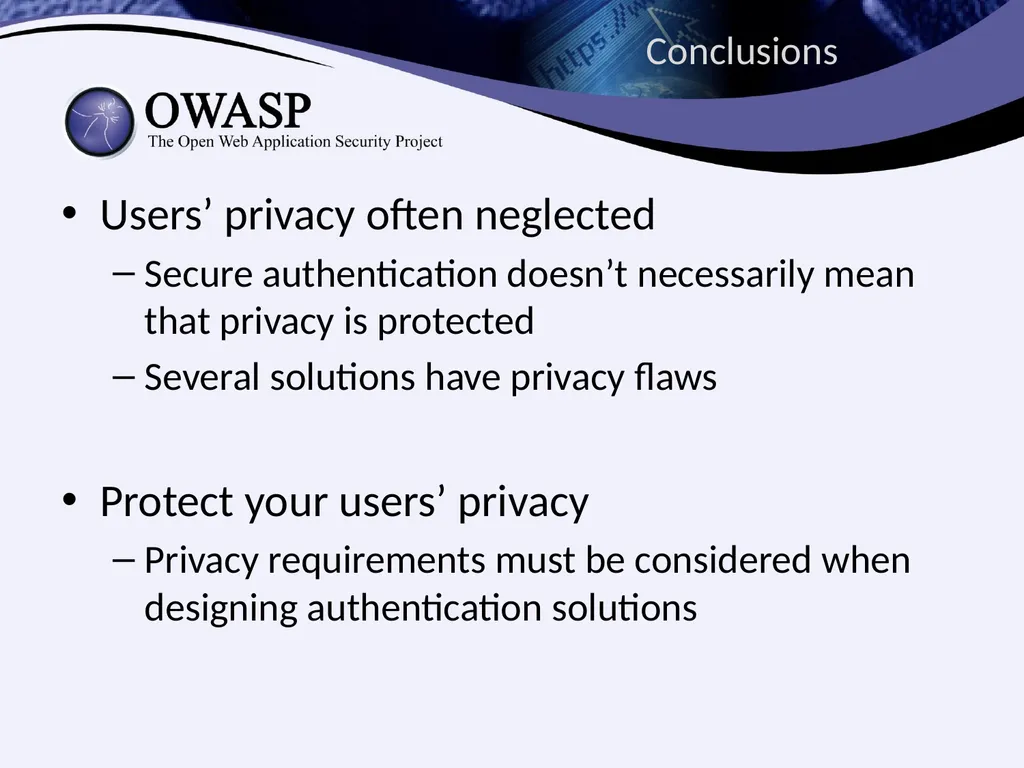
slide33. Conclusions Users’ privacy often neglected
Secure authentication doesn’t necessarily mean that privacy is protected
Several solutions have privacy flaws
Protect your users’ privacy
Privacy requirements must be considered when designing authentication solutions<br>
slide34. Questions?
(Whitepaper on TLS privacy issues to be released soon…)<br>
slide2. About Me David Johansson
Started working as a security consultant in 2007
Building security solutions (e.g., SAML 2.0 IdP)
Helping others design and build secure software
Based in London since 3 years, working for Cigital (now part of Synopsys)<br>
slide3. What if Everyone knows who you are? Your Privacy<br>
slide4. Would you walk around everywhere showing your passport openly? In the digital world, it could well happen without you ever knowing… Your Privacy<br>
slide5. Digital Identities Name Issuer Validity Also contains:
Serial number
Information binding it to the subject
Forgery protection, etc.<br>
slide6. National Electronic ID In Sweden we have national electronic IDs
Used for online authentication/signing
Government e-services, Online banks, etc.
Contains PII
Full name, Date of birth, Personal identity number (NIN/SSN-equivalent)
Based on client certificates protected by custom software<br>
slide7. Please Update Your Software! In 2013, a letter was sent out to around 500,000 individuals in Sweden
Urged users to update their electronic ID software
Why such a drastic action?
Imagine Microsoft’s “Patch Tuesdays” being delivered by Royal Mail…<br>
slide8. 1 Million Identities Exposed Possible to enumerate certificates by calling plugin through JavaScript
No user interaction needed, no need of previous authentication
Any site could silently identify you – even if you were using proxies, TOR network, etc. document.iID.EnumProperty('Certificate','0')<br>
slide9. The Privacy Problem Was this just an odd software error?
Or is there a problem with privacy in authentication solutions in general?<br>
slide10. Privacy Requirements Authentication Solutions<br>
slide11. Security vs. Privacy Security is considered an important aspect when designing authentication:
Password policies
Multi-factor authentication
Protect passwords in transit and at rest
Prevent brute-force attacks
Prevent replay attacks, etc.
But does this protect users’ privacy?<br>
slide12. [Privacy] User Stories As a user, I want to know who I communicate with before I authenticate myself so that I avoid revealing my identity to unknown entities.<br>
slide13. [Privacy] User Stories As a user, I want to know when I authenticate so that I only reveal my identity when I intend to do so.<br>
slide14. [Privacy] User Stories As a user, I want to know and control what information I reveal when I authenticate so that I only reveal information about myself that I intend to share with the other party.<br>
slide15. [Privacy] User Stories As a user, I want to know that only the intended recipient can see my identity when I authenticate so that I don’t expose my identity to others listening in on the conversation.<br>
slide16. Privacy Requirements Know who I communicate with
Know when I authenticate
Know and control what information I reveal
Know that only the intended recipient can see my identity System authenticates before user
Explicit or implicit approval of authentication
Explicit or implicit approval of which identity data to share
Secure transmission of identity data [Privacy] User Story Privacy Requirement<br>
slide17. SSL/TLS Client Certificate Authentication Privacy Issues in<br>
slide18. SSL/TLS Mutual Authentication Client and server wants to establish a secure connection
Server may ask for client certificate during SSL/TLS handshake
Are the privacy requirements for clients fulfilled in SSL/TLS?<br>
slide19. Demo 1: The Browser Bug TLS Client Privacy - Round 1: Internet Explorer vs. Chrome<br>
slide20. Chrome’s Privacy Error Spoofed Server Client Client Hello Server Hello Server Certificate Server Key Exchange* Certificate Request Server Hello Done Client Certificate Client Key Exchange Certificate Verify ChangeCipherSpec Finished Client sends certificate to spoofed server No warning in browser Forged (invalid) server certificate Browser validates certificate and displays warning after handshake completes The user is warned of the certificate error, but the identity of the client is already exposed. *Server Key Exchange is only sent when more than the server certificate is needed for the key exchange, e.g. ephemeral Diffie-Hellman.<br>
slide21. Privacy - Round 1: Microsoft IE 1 – 0 Google Chrome Wait, not so fast!
Internet Explorer used to do the same…
…and in fact all browsers can be fooled! And the winner is…<br>
slide22. SSL/TLS Privacy Flaw My Spoofed Server Client The real www.example.com Client Hello Server Hello Server Certificate Certificate Request Server Hello Done Client Certificate Client Key Exchange Certificate Verify ChangeCipherSpec Finished Use the real site’s public certificate Client authenticates to spoofed server Spoofed server identifies itself as the legitimate server The SSL/TLS connection then fails, but the identity of the client is already exposed. Pick cipher with static RSA key exchange*, e.g., TLS_RSA_WITH_AES_256_CBC_SHA *Server Key Exchange message is not required for static RSA key exchange - > no explicit validation of server’s private key possession.<br>
slide23. Demo 2: The TLS Privacy Flaw TLS Client Privacy - Round 2: All Your Identities Are Belong To Us<br>
slide24. Active Attacks This protocol flaw can be exploited in active attacks to expose identities through client certificates
For example, inject hidden iFrame with HTTPS URL in any plain HTTP response
Intercept TLS handshake for HTTPS request and request client certificate
Browser prompts user or may even send client certificate without user’s knowledge<br>
slide25. Passive Eavesdropping Plaintext Ciphertext Eavesdropping on network communication *Server Key Exchange is only sent when more than the server certificate is needed for the key exchange, e.g. ephemeral Diffie-Hellman.<br>
slide26. SSL/TLS Mutual Authentication System authenticates before user
Explicit or implicit approval of authentication
Explicit or implicit approval of which identity data to share
Secure transmission of identity data Privacy RequirementS Privacy requirements are not fulfilled in SSL/TLS Mutual Authentication.<br>
slide27. TLS 1.3 Privacy Improvements The draft of TLS 1.3 contains several improvements to privacy
Explicit verification of server’s key possession
CertificateVerify: signature over entire handshake
Encrypts communication before sending client certificate
However, TLS 1.3 is still work in progress and will likely take time before widely supported
For now, avoid storing PII in client certificates used with TLS<br>
slide28. SAML 2.0 SSO Passive authentication requests in<br>
slide29. SAML Web Browser SSO<br>
slide30. SSO within an Organization IdP App App App App App We typically have some level of trust for all applications within our organization<br>
slide31. SSO across Organizations IdP App App App App App App Trust Trust Trust? App<br>
slide32. Passive AuthnRequest A Boolean value. If "true", the identity provider and the user agent itself MUST NOT visibly take control of the user interface from the requester and interact with the presenter in a noticeable fashion. If a value is not provided, the default is "false". Privacy requirement not met<br>
slide33. Conclusions Users’ privacy often neglected
Secure authentication doesn’t necessarily mean that privacy is protected
Several solutions have privacy flaws
Protect your users’ privacy
Privacy requirements must be considered when designing authentication solutions<br>
slide34. Questions?
(Whitepaper on TLS privacy issues to be released soon…)<br>