Implementation of nOPV2 for cVDPV2 Outbreak Response 2 Contents Key Resources on nOPV2 17 nOPV2: An Innovative Tool for cVDPV2 Outbreak Response 3 4 The Need for nOPV2: Circulating Vaccine-Derived Poliovirus (cVDPV) Circulating
"Implementation of nOPV2 for cVDPV2 Outbreak" is the property of its rightful owner. Permission is granted to
download and print the materials on this website for personal, non-commercial use only, and to display it
on your personal computer provided you do not modify the materials and that you retain all copyright
notices contained in the materials. By downloading content from our website, you accept the terms of this
agreement.
Presentation Transcript
01
Implementation of nOPV2 for cVDPV2 Outbreak Response<br>
02
2 Contents Key Resources on nOPV2 17<br>
03
nOPV2: An Innovative Tool for cVDPV2 Outbreak Response 3<br>
04
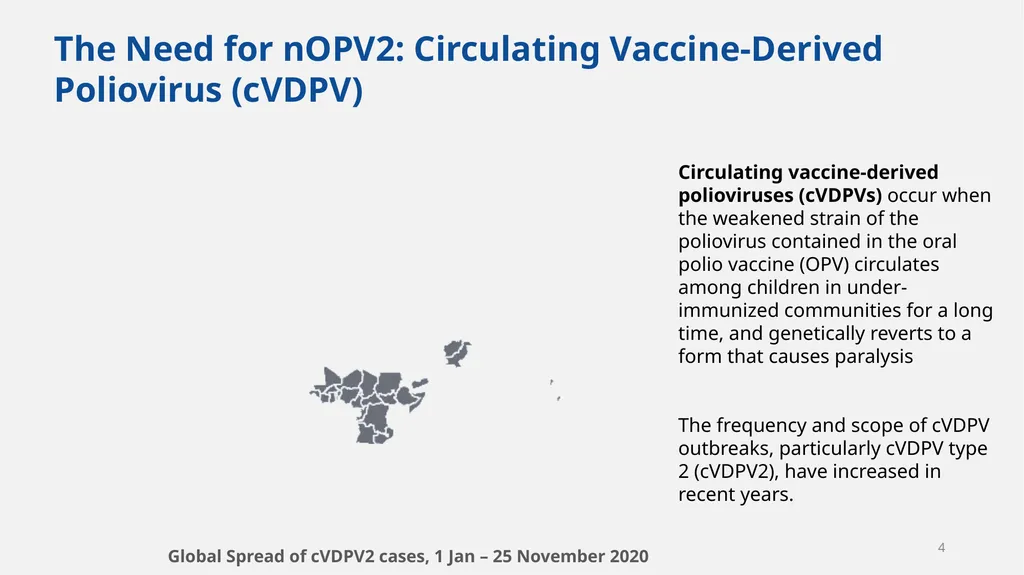
4 The Need for nOPV2: Circulating Vaccine-Derived Poliovirus (cVDPV) Circulating vaccine-derived polioviruses (cVDPVs) occur when the weakened strain of the poliovirus contained in the oral polio vaccine (OPV) circulates among children in under-immunized communities for a long time, and genetically reverts to a form that causes paralysis
The frequency and scope of cVDPV outbreaks, particularly cVDPV type 2 (cVDPV2), have increased in recent years. Spread of cVDPV2 cases, 2019 Global Spread of cVDPV2 cases, 1 Jan – 25 November 2020<br>
05
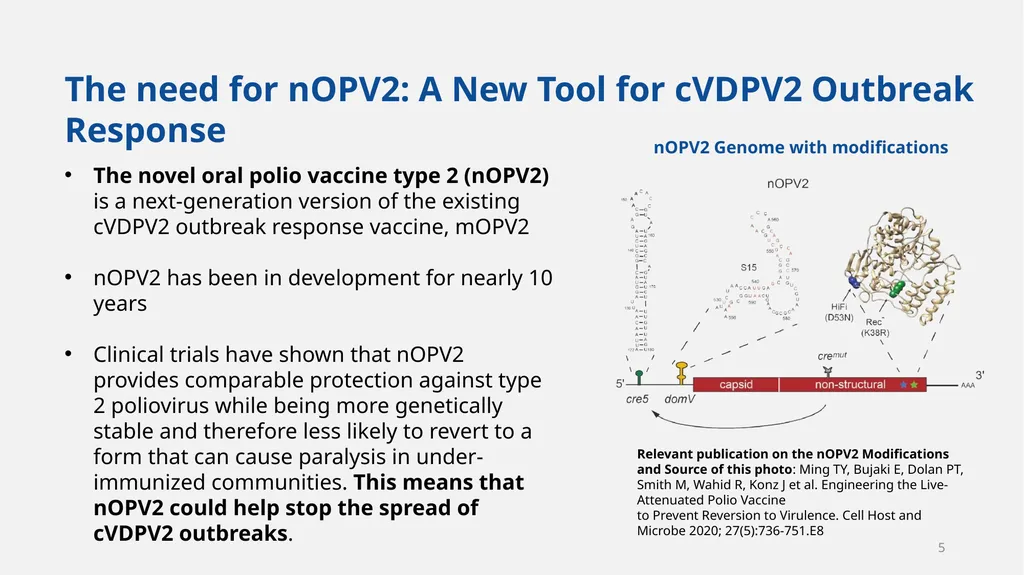
5 nOPV2 Genome with modifications Relevant publication on the nOPV2 Modifications and Source of this photo: Ming TY, Bujaki E, Dolan PT, Smith M, Wahid R, Konz J et al. Engineering the Live-Attenuated Polio Vaccine
to Prevent Reversion to Virulence. Cell Host and Microbe 2020; 27(5):736-751.E8 The need for nOPV2: A New Tool for cVDPV2 Outbreak Response The novel oral polio vaccine type 2 (nOPV2) is a next-generation version of the existing cVDPV2 outbreak response vaccine, mOPV2
nOPV2 has been in development for nearly 10 years
Clinical trials have shown that nOPV2 provides comparable protection against type 2 poliovirus while being more genetically stable and therefore less likely to revert to a form that can cause paralysis in under-immunized communities. This means that nOPV2 could help stop the spread of cVDPV2 outbreaks.<br>
06
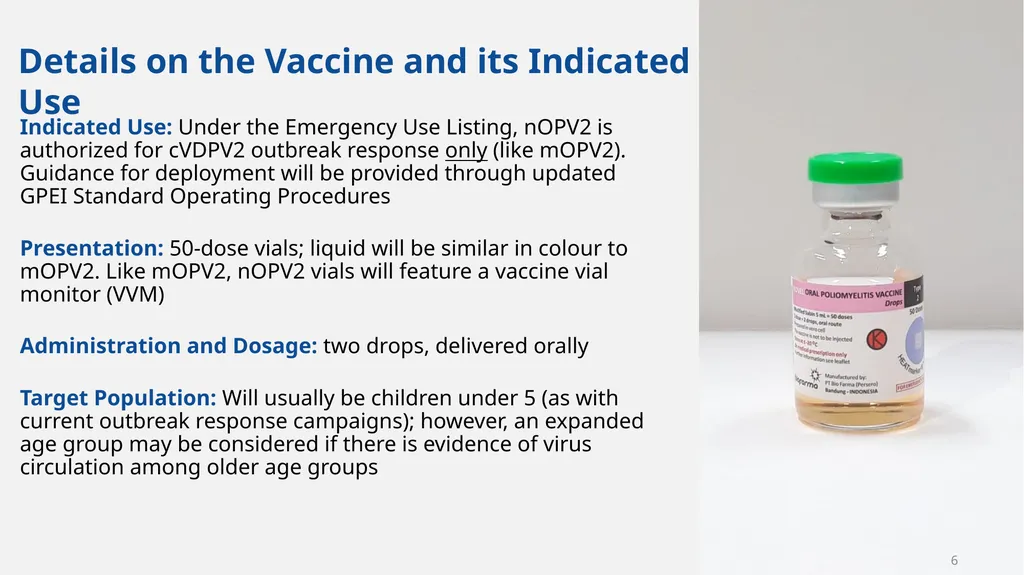
6 Details on the Vaccine and its Indicated Use Indicated Use: Under the Emergency Use Listing, nOPV2 is authorized for cVDPV2 outbreak response only (like mOPV2). Guidance for deployment will be provided through updated GPEI Standard Operating Procedures
Presentation: 50-dose vials; liquid will be similar in colour to mOPV2. Like mOPV2, nOPV2 vials will feature a vaccine vial monitor (VVM)
Administration and Dosage: two drops, delivered orally
Target Population: Will usually be children under 5 (as with current outbreak response campaigns); however, an expanded age group may be considered if there is evidence of virus circulation among older age groups 6<br>
07
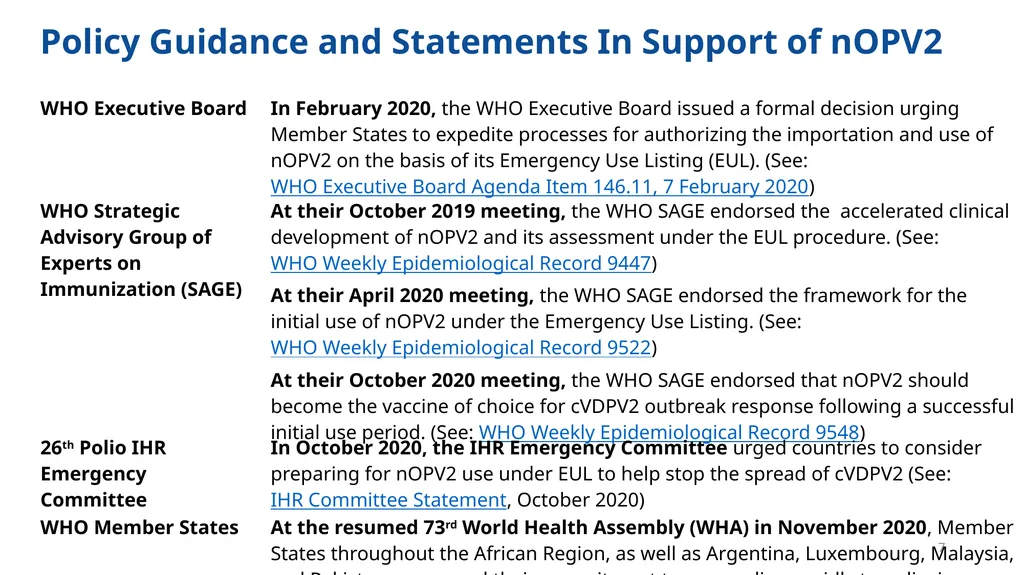
7 Policy Guidance and Statements In Support of nOPV2<br>
08
Plans for nOPV2 Rollout 8<br>
09
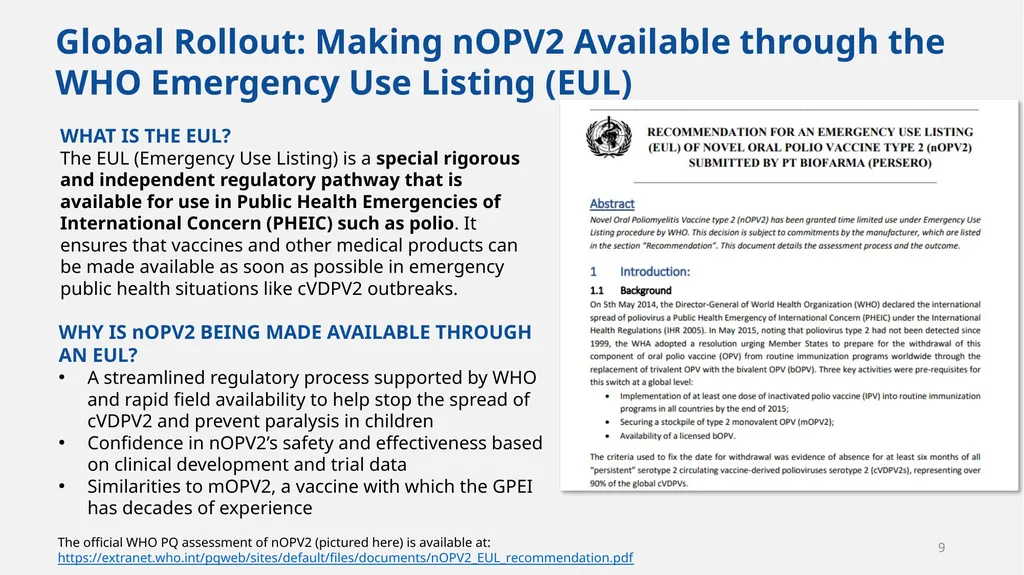
9 Global Rollout: Making nOPV2 Available through the WHO Emergency Use Listing (EUL) WHAT IS THE EUL?
The EUL (Emergency Use Listing) is a special rigorous and independent regulatory pathway that is available for use in Public Health Emergencies of International Concern (PHEIC) such as polio. It ensures that vaccines and other medical products can be made available as soon as possible in emergency public health situations like cVDPV2 outbreaks. WHY IS nOPV2 BEING MADE AVAILABLE THROUGH AN EUL?
A streamlined regulatory process supported by WHO and rapid field availability to help stop the spread of cVDPV2 and prevent paralysis in children
Confidence in nOPV2’s safety and effectiveness based on clinical development and trial data
Similarities to mOPV2, a vaccine with which the GPEI has decades of experience The official WHO PQ assessment of nOPV2 (pictured here) is available at: https://extranet.who.int/pqweb/sites/default/files/documents/nOPV2_EUL_recommendation.pdf<br>
10
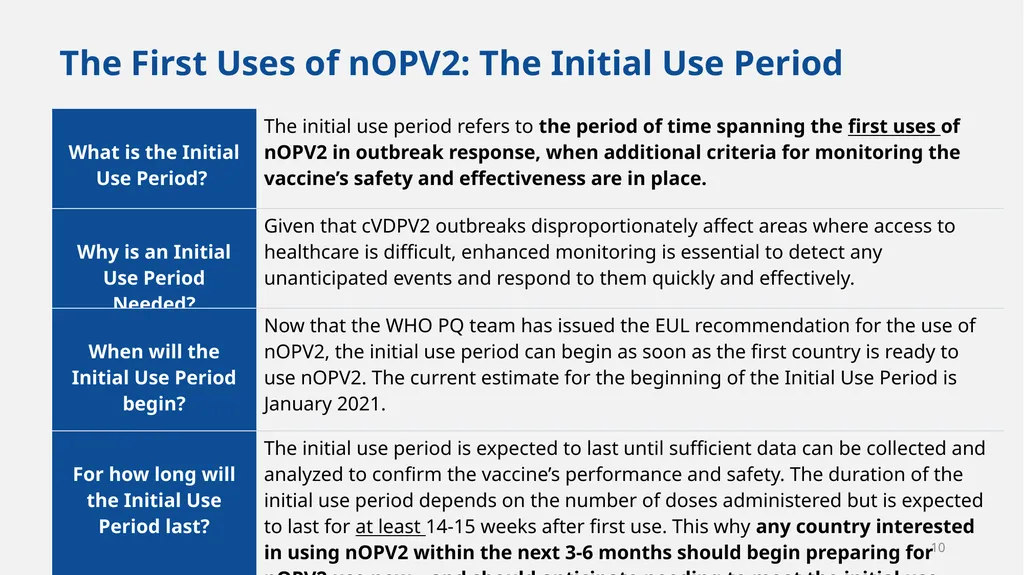
10 The First Uses of nOPV2: The Initial Use Period<br>
11
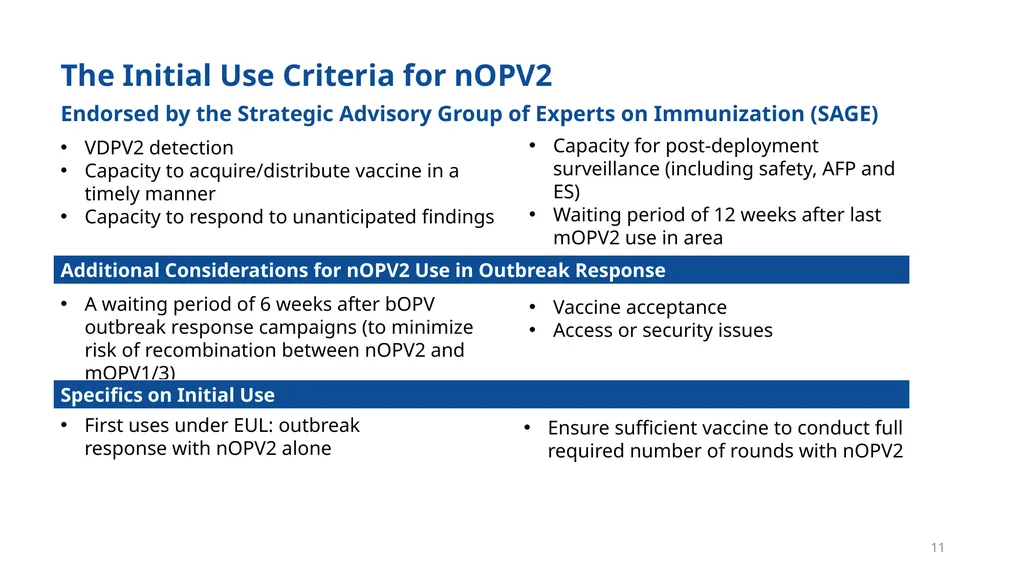
VDPV2 detection
Capacity to acquire/distribute vaccine in a timely manner
Capacity to respond to unanticipated findings First uses under EUL: outbreak response with nOPV2 alone Capacity for post-deployment surveillance (including safety, AFP and ES)
Waiting period of 12 weeks after last mOPV2 use in area A waiting period of 6 weeks after bOPV outbreak response campaigns (to minimize risk of recombination between nOPV2 and mOPV1/3) Vaccine acceptance
Access or security issues Endorsed by the Strategic Advisory Group of Experts on Immunization (SAGE) Additional Considerations for nOPV2 Use in Outbreak Response Specifics on Initial Use 11 The Initial Use Criteria for nOPV2 Ensure sufficient vaccine to conduct full required number of rounds with nOPV2<br>
12
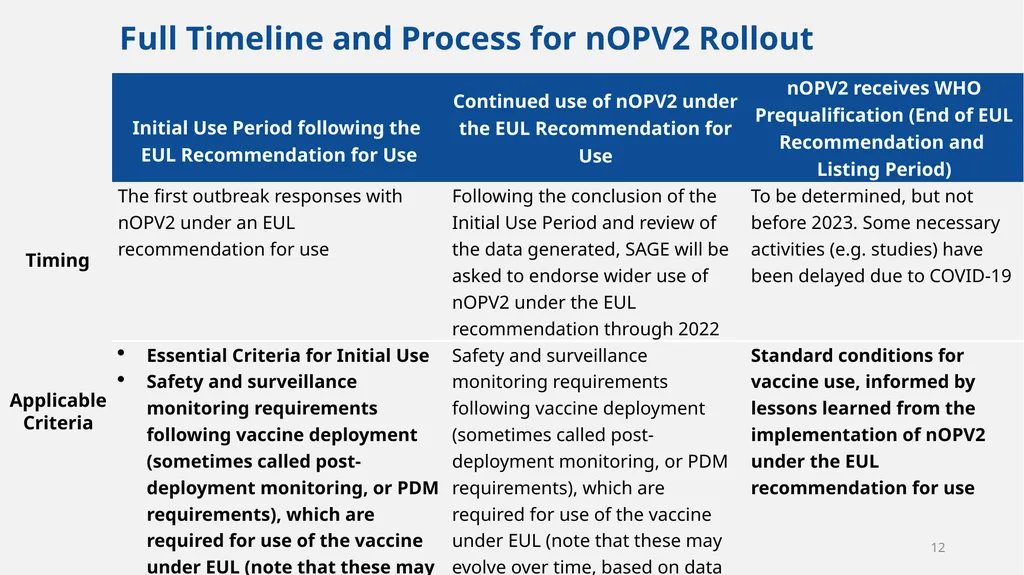
Timing Applicable Criteria Full Timeline and Process for nOPV2 Rollout 12<br>
13
Process for Country Readiness and Implementation 13<br>
14
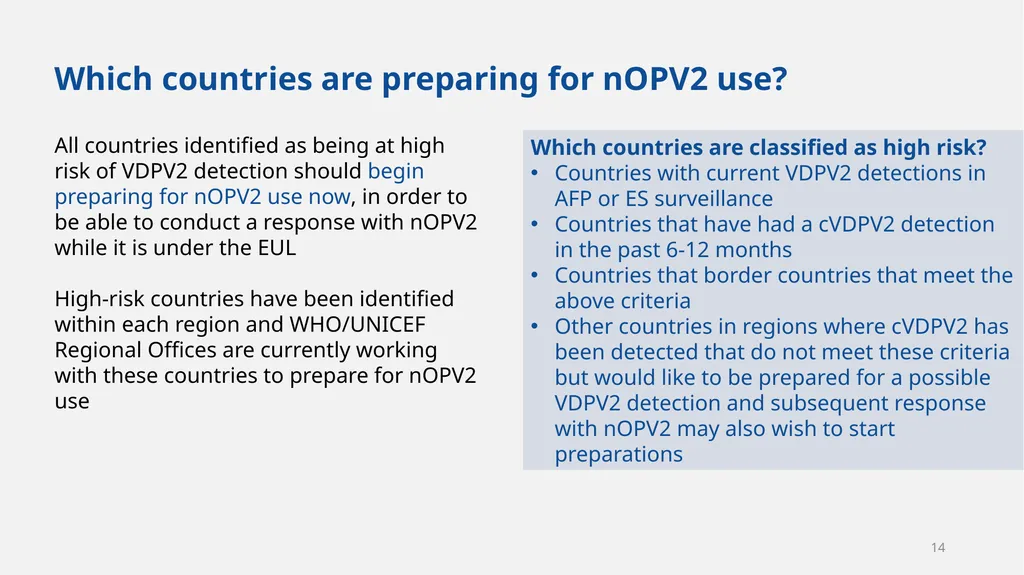
Which countries are classified as high risk?
Countries with current VDPV2 detections in AFP or ES surveillance
Countries that have had a cVDPV2 detection in the past 6-12 months
Countries that border countries that meet the above criteria
Other countries in regions where cVDPV2 has been detected that do not meet these criteria but would like to be prepared for a possible VDPV2 detection and subsequent response with nOPV2 may also wish to start preparations Which countries are preparing for nOPV2 use? 14 All countries identified as being at high risk of VDPV2 detection should begin preparing for nOPV2 use now, in order to be able to conduct a response with nOPV2 while it is under the EUL
High-risk countries have been identified within each region and WHO/UNICEF Regional Offices are currently working with these countries to prepare for nOPV2 use<br>
15
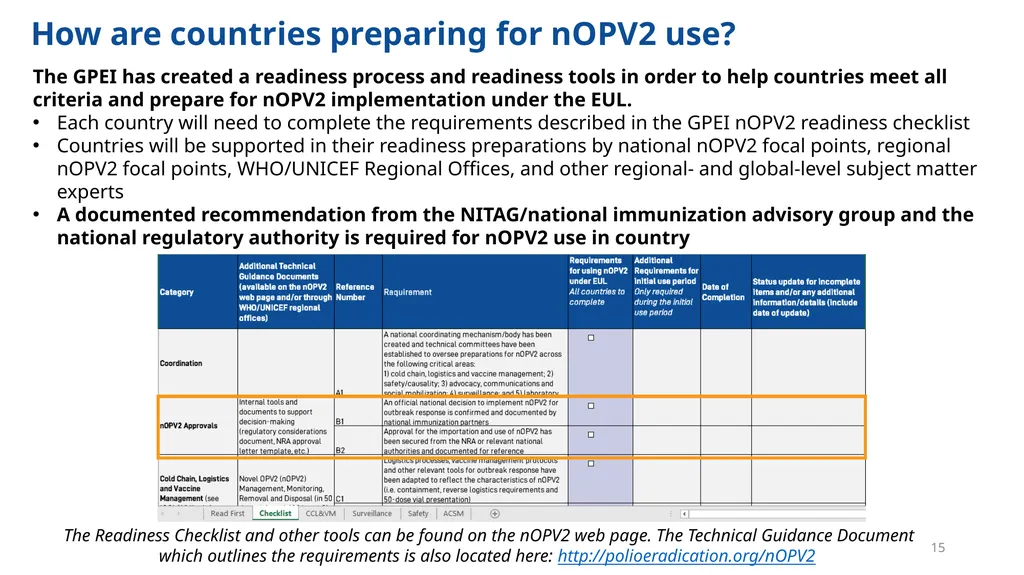
How are countries preparing for nOPV2 use? 15 The Readiness Checklist and other tools can be found on the nOPV2 web page. The Technical Guidance Document which outlines the requirements is also located here: http://polioeradication.org/nOPV2 The GPEI has created a readiness process and readiness tools in order to help countries meet all criteria and prepare for nOPV2 implementation under the EUL.
Each country will need to complete the requirements described in the GPEI nOPV2 readiness checklist
Countries will be supported in their readiness preparations by national nOPV2 focal points, regional nOPV2 focal points, WHO/UNICEF Regional Offices, and other regional- and global-level subject matter experts
A documented recommendation from the NITAG/national immunization advisory group and the national regulatory authority is required for nOPV2 use in country<br>
16
How are countries preparing for nOPV2 use? (continued)
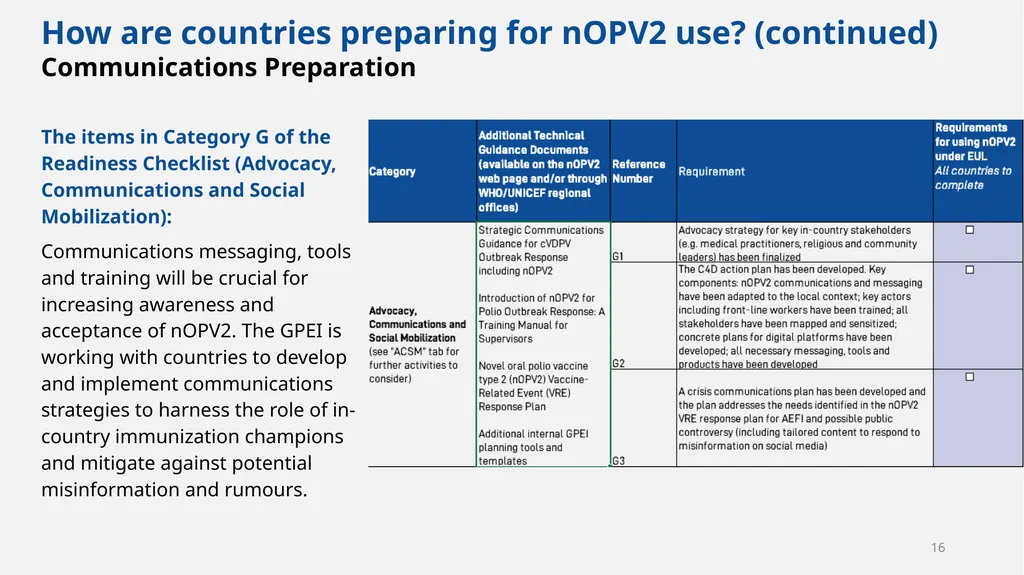
Communications Preparation 16 The items in Category G of the Readiness Checklist (Advocacy, Communications and Social Mobilization):
Communications messaging, tools and training will be crucial for increasing awareness and acceptance of nOPV2. The GPEI is working with countries to develop and implement communications strategies to harness the role of in-country immunization champions and mitigate against potential misinformation and rumours.<br>
17
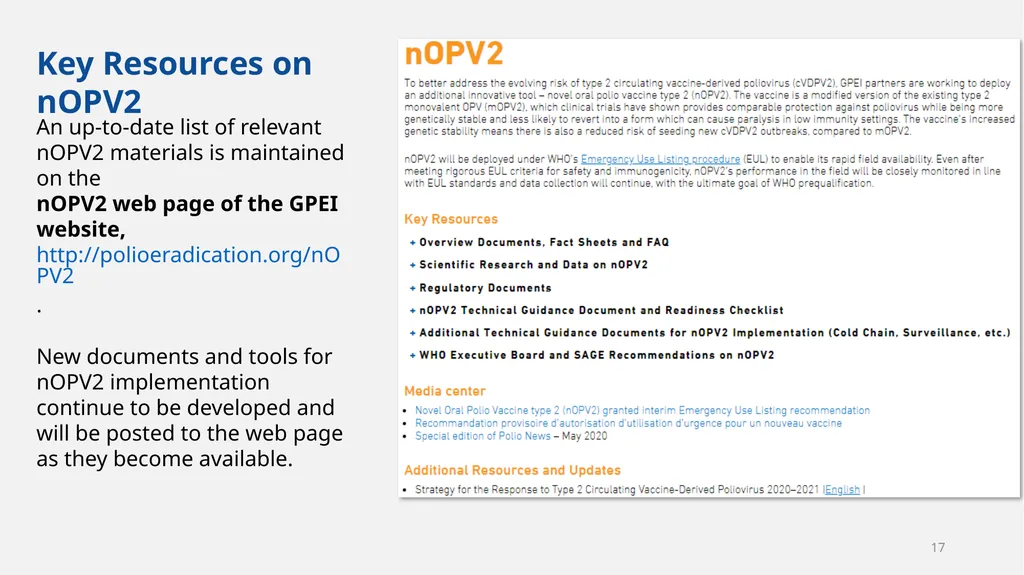
17 An up-to-date list of relevant nOPV2 materials is maintained on the
nOPV2 web page of the GPEI website, http://polioeradication.org/nOPV2.
New documents and tools for nOPV2 implementation continue to be developed and will be posted to the web page as they become available. Key Resources on nOPV2<br>