
Improving Accessibility of Emergency Evacuations:
MT
Published · 19 slides · 0 views
1 / 1
Description
Improving Accessibility of Emergency Evacuations: Communication and Alert 2023 Kevin Quigley, Dalhousie University Kaitlynne Lowe, Dalhousie University Purpose of Our Study 2 The purpose is to conduct an exploratory study and bring an
Related Topics
Share
Embed code
Download this presentation From Below
"Improving Accessibility of Emergency Evacuations:" is the property of its rightful owner. Permission is granted to download and print the materials on this website for personal, non-commercial use only, and to display it on your personal computer provided you do not modify the materials and that you retain all copyright notices contained in the materials. By downloading content from our website, you accept the terms of this agreement.
Presentation Transcript
01
Improving Accessibility of Emergency Evacuations: Communication and Alert 2023
Kevin Quigley, Dalhousie University Kaitlynne Lowe, Dalhousie University<br>
Kevin Quigley, Dalhousie University Kaitlynne Lowe, Dalhousie University<br>
02
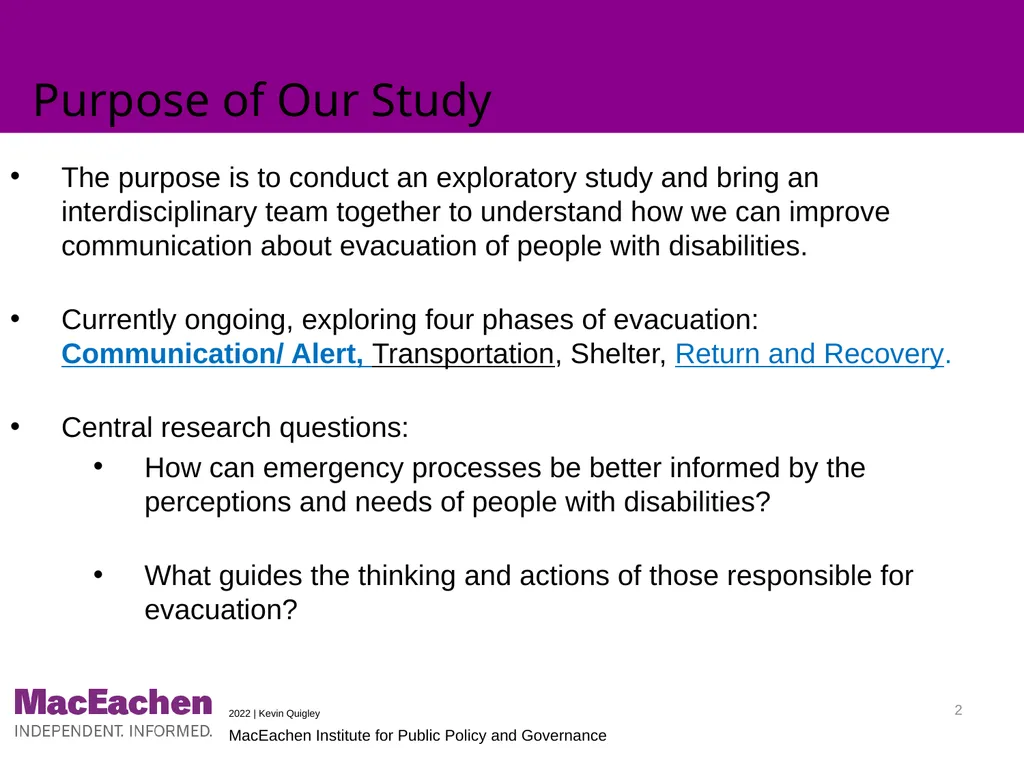
Purpose of Our Study 2 The purpose is to conduct an exploratory study and bring an interdisciplinary team together to understand how we can improve communication about evacuation of people with disabilities.
Currently ongoing, exploring four phases of evacuation: Communication/ Alert, Transportation, Shelter, Return and Recovery.
Central research questions:
How can emergency processes be better informed by the perceptions and needs of people with disabilities?
What guides the thinking and actions of those responsible for evacuation?<br>
03
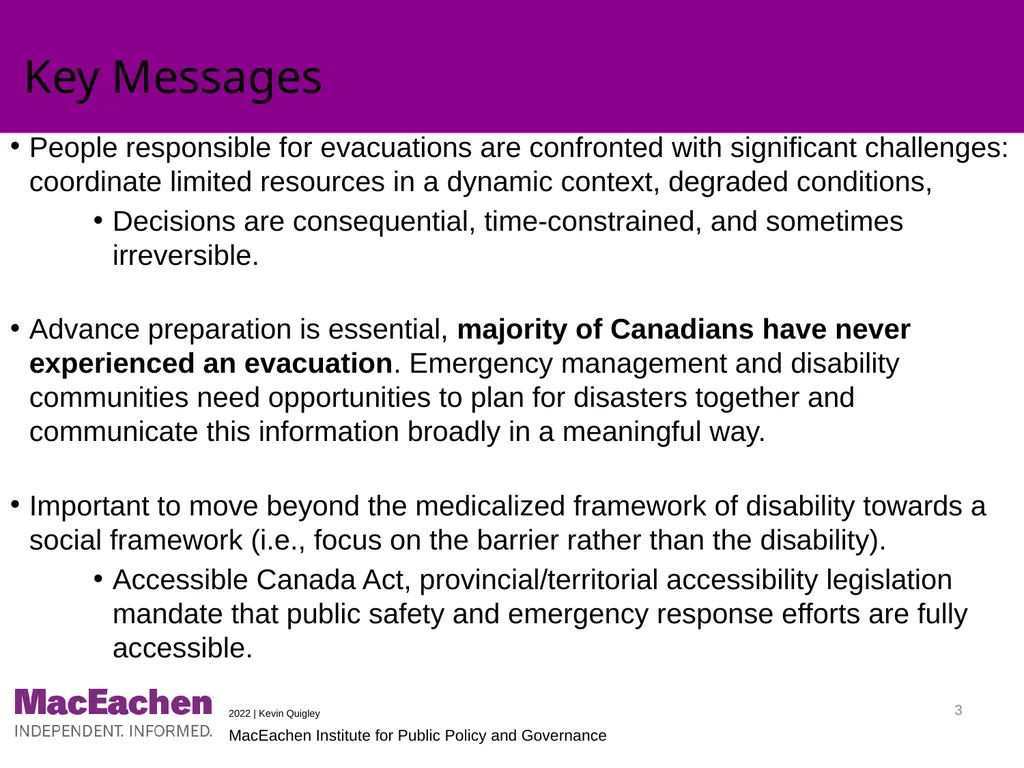
Key Messages 3 People responsible for evacuations are confronted with significant challenges: coordinate limited resources in a dynamic context, degraded conditions,
Decisions are consequential, time-constrained, and sometimes irreversible.
Advance preparation is essential, majority of Canadians have never experienced an evacuation. Emergency management and disability communities need opportunities to plan for disasters together and communicate this information broadly in a meaningful way.
Important to move beyond the medicalized framework of disability towards a social framework (i.e., focus on the barrier rather than the disability).
Accessible Canada Act, provincial/territorial accessibility legislation mandate that public safety and emergency response efforts are fully accessible.<br>
04
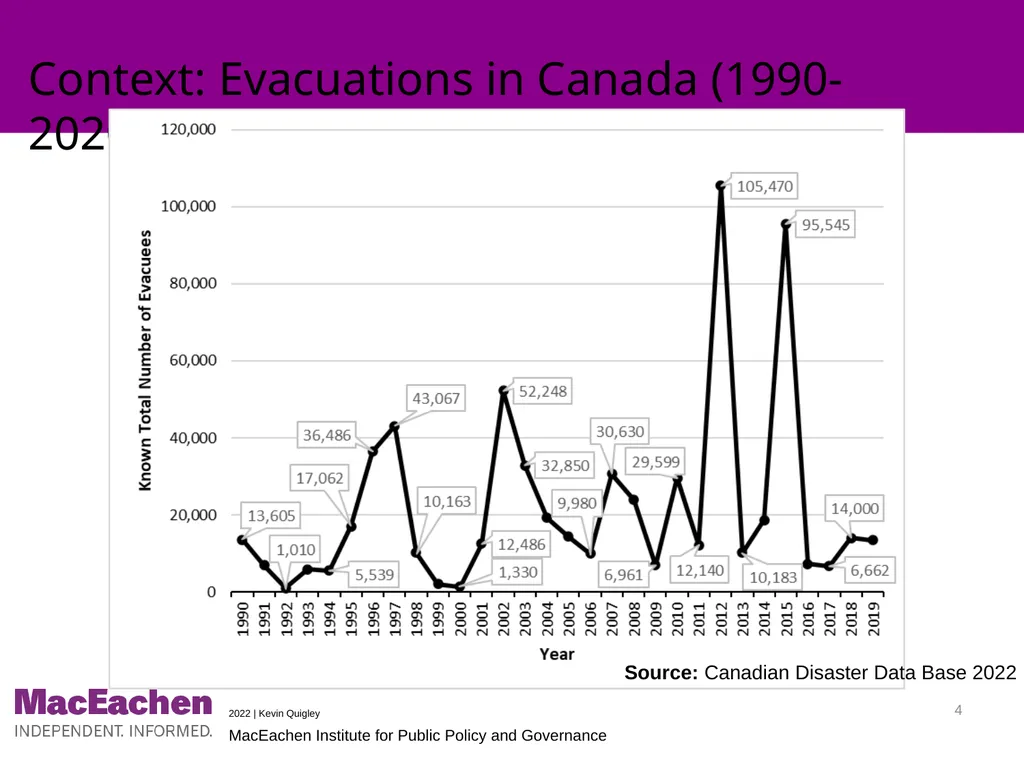
Context: Evacuations in Canada (1990-2020) 4 Source: Canadian Disaster Data Base 2022<br>
05
Context: The most significant evacuations in Canada have occurred between 2011 and 2020 5 Evacuations are not common in Canada, but have increased in frequency, severity, and cost over the past ten years. The most common events resulting in evacuation are floods and wildfires.
Over 670,000 people have been evacuated in Canada during 273 evacuations between 1990 and 2020.
The total number of known evacuees increased by 35% between 2000-2010 compared to 1990-1999;
This increased by 52% between 2011-2020 compared to 2000-2010
Approximately 45% of known costs have been paid by insurance Source: Canadian Disaster Data Base 2022<br>
06
Context: People with Disabilities in Canada 6 Over 22% of Canadians identify as having a disability (Statistics Canada 2018)
44.9% of respondents with physical disabilities required at least one type of aid, assistive device, or accessibility feature within their home. (Choi 2021)
18.2% of people with disabilities who do not use the internet noted at least one information and technology communication (ICT) reason. (Choi 2021)
11.7% used a device (e.g., cellphone, computer, smartwatch with specialized features, software or adaptations. (Choi 2021)
Rates of disability increase as the population ages
Policies to enable living at home and aging-in-place mean people with disabilities and seniors are often dispersed throughout communities.<br>
07
Risk Literature Frameworks Used to Guide Our Research 7 Psychology and Social Psychology of Risk
Individual risk perception
Social factors influencing risk
Trust in authorities and institutions
Risk Governance
International Risk Governance Council Framework (Ortwin Renn)
Hood, Rothstein, and Baldwin Risk Regulation Regimes<br>
Individual risk perception
Social factors influencing risk
Trust in authorities and institutions
Risk Governance
International Risk Governance Council Framework (Ortwin Renn)
Hood, Rothstein, and Baldwin Risk Regulation Regimes<br>
08
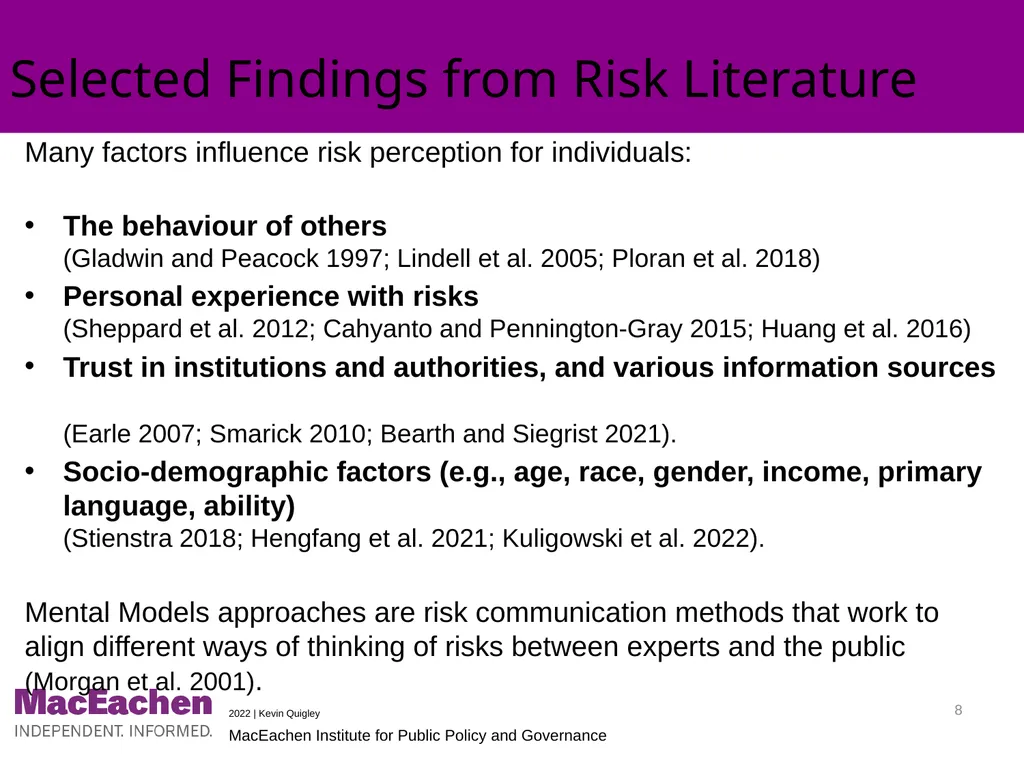
Selected Findings from Risk Literature 8 Many factors influence risk perception for individuals:
The behaviour of others (Gladwin and Peacock 1997; Lindell et al. 2005; Ploran et al. 2018)
Personal experience with risks (Sheppard et al. 2012; Cahyanto and Pennington-Gray 2015; Huang et al. 2016)
Trust in institutions and authorities, and various information sources (Earle 2007; Smarick 2010; Bearth and Siegrist 2021).
Socio-demographic factors (e.g., age, race, gender, income, primary language, ability) (Stienstra 2018; Hengfang et al. 2021; Kuligowski et al. 2022).
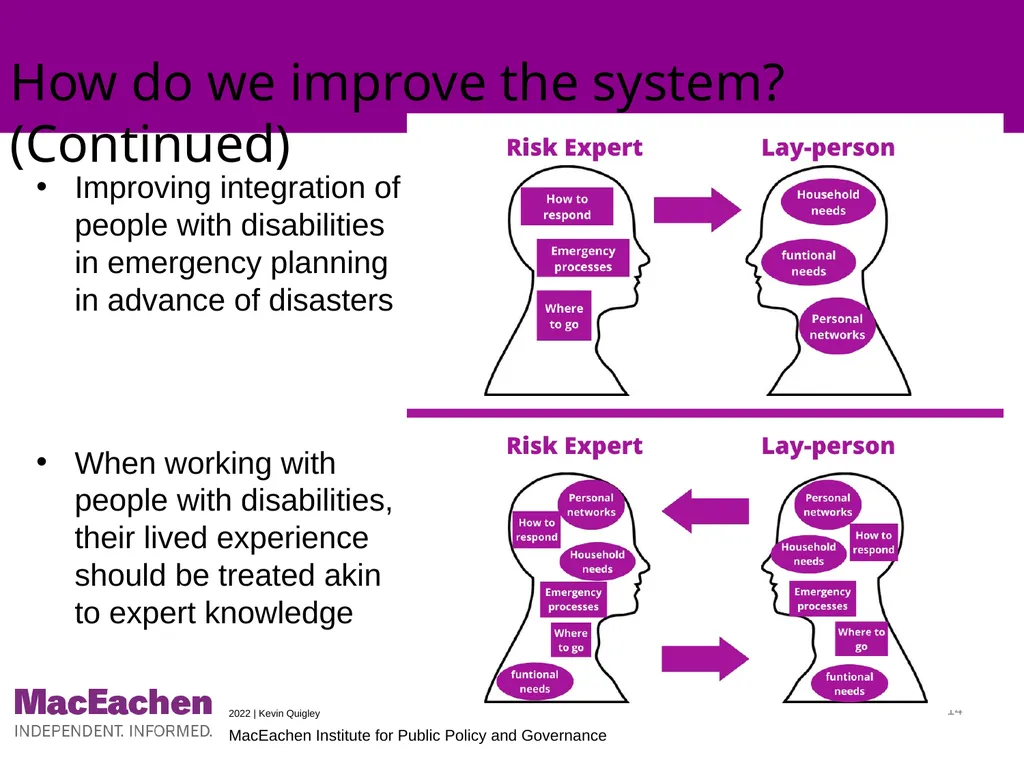
Mental Models approaches are risk communication methods that work to align different ways of thinking of risks between experts and the public (Morgan et al. 2001).<br>
09
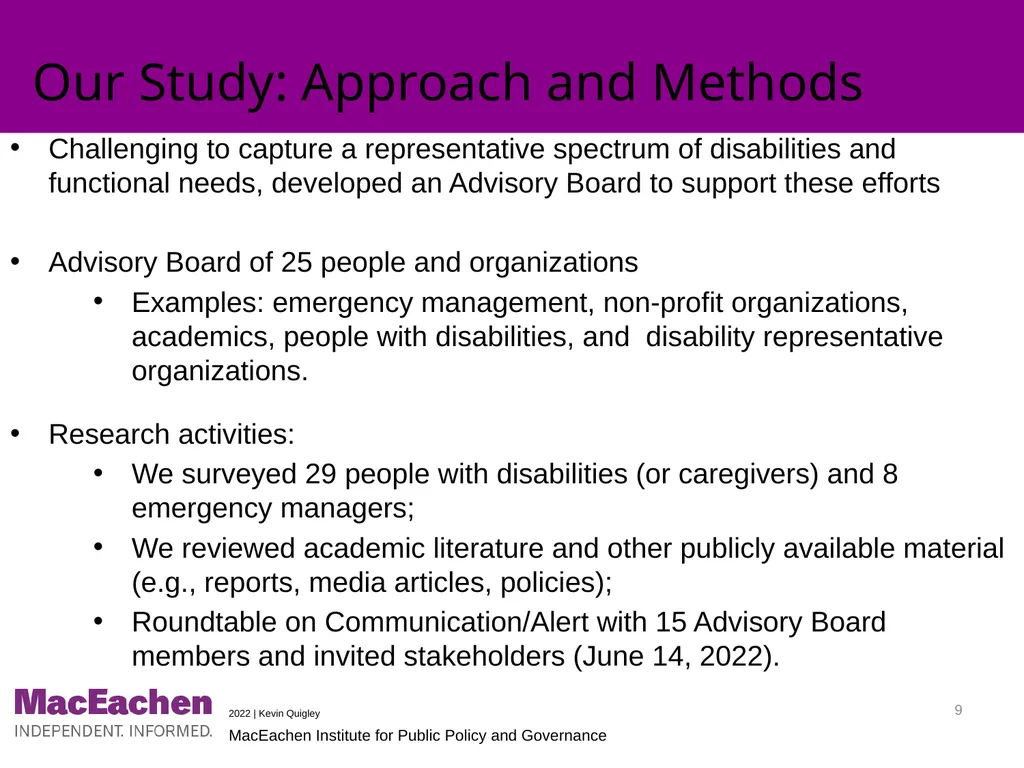
Our Study: Approach and Methods 9 Challenging to capture a representative spectrum of disabilities and functional needs, developed an Advisory Board to support these efforts
Advisory Board of 25 people and organizations
Examples: emergency management, non-profit organizations, academics, people with disabilities, and disability representative organizations.
Research activities:
We surveyed 29 people with disabilities (or caregivers) and 8 emergency managers;
We reviewed academic literature and other publicly available material (e.g., reports, media articles, policies);
Roundtable on Communication/Alert with 15 Advisory Board members and invited stakeholders (June 14, 2022).<br>
10
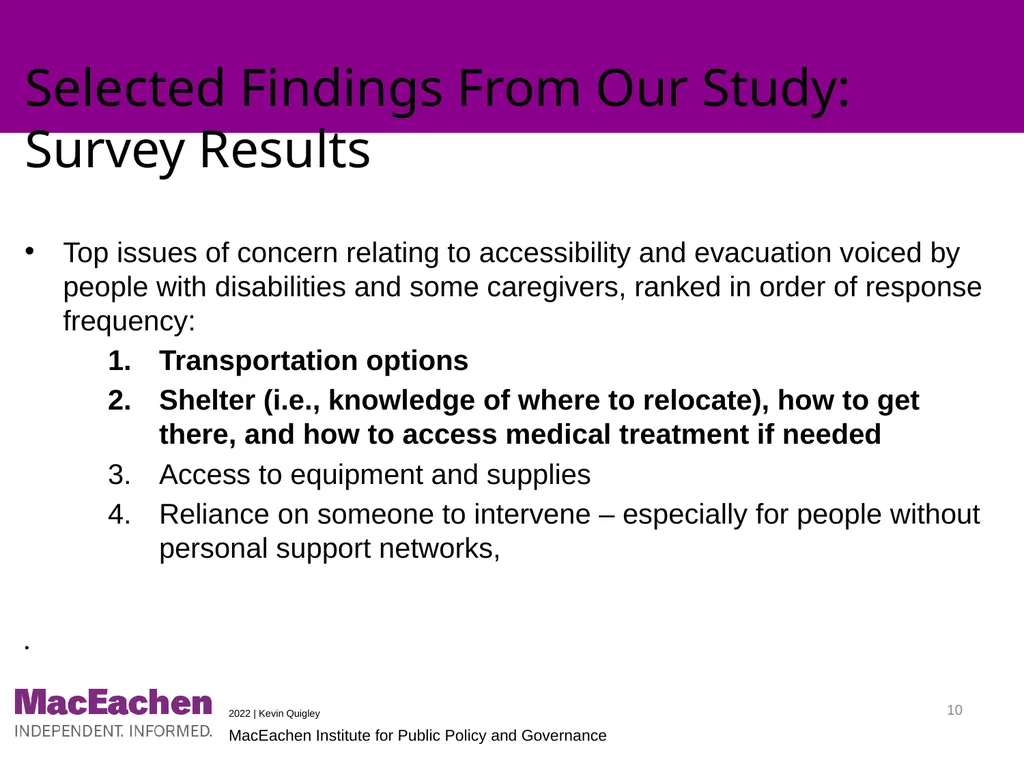
Selected Findings From Our Study: Survey Results 10 Top issues of concern relating to accessibility and evacuation voiced by people with disabilities and some caregivers, ranked in order of response frequency:
Transportation options
Shelter (i.e., knowledge of where to relocate), how to get there, and how to access medical treatment if needed
Access to equipment and supplies
Reliance on someone to intervene – especially for people without personal support networks,<br>
Transportation options
Shelter (i.e., knowledge of where to relocate), how to get there, and how to access medical treatment if needed
Access to equipment and supplies
Reliance on someone to intervene – especially for people without personal support networks,<br>
11
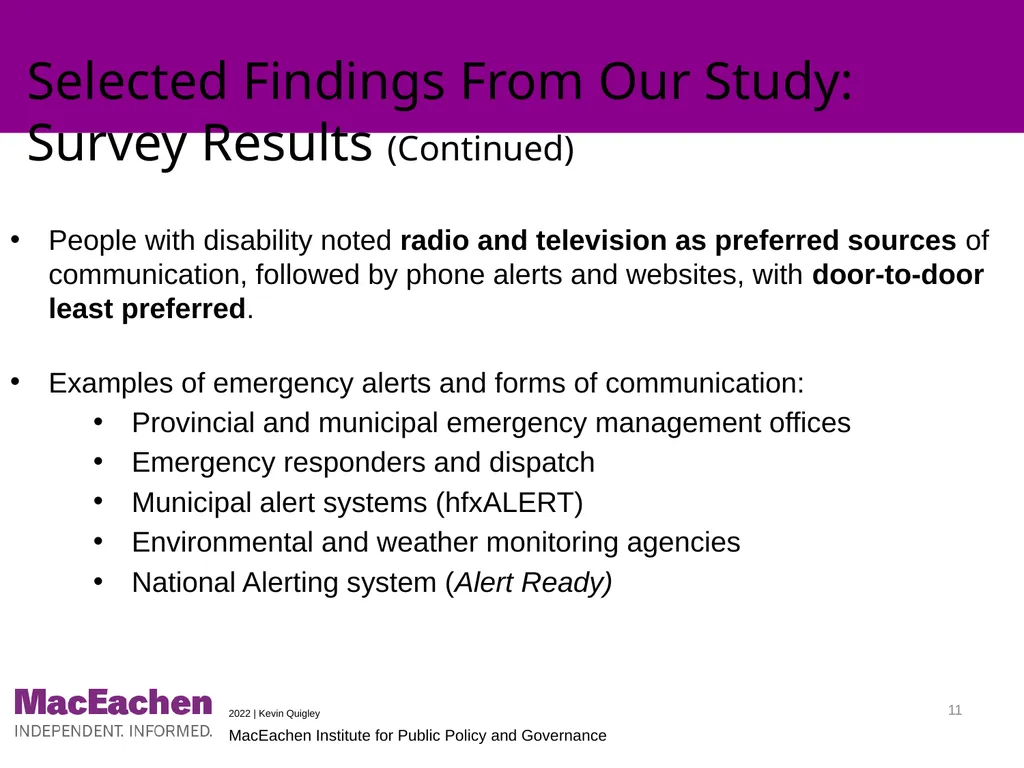
Selected Findings From Our Study: Survey Results (Continued) 11 People with disability noted radio and television as preferred sources of communication, followed by phone alerts and websites, with door-to-door least preferred.
Examples of emergency alerts and forms of communication:
Provincial and municipal emergency management offices
Emergency responders and dispatch
Municipal alert systems (hfxALERT)
Environmental and weather monitoring agencies
National Alerting system (Alert Ready)<br>
Examples of emergency alerts and forms of communication:
Provincial and municipal emergency management offices
Emergency responders and dispatch
Municipal alert systems (hfxALERT)
Environmental and weather monitoring agencies
National Alerting system (Alert Ready)<br>
12
Selected Findings From Our Study: Survey Results (Continued) 12 Responses from emergency managers show different perceptions about accessibility of evacuation processes
Lack of consensus about accessibility within emergency management community
Jurisdictional and organizational differences
Variation in strategy and implementation<br>
Lack of consensus about accessibility within emergency management community
Jurisdictional and organizational differences
Variation in strategy and implementation<br>
13
How do we improve the system? 13 Gather information: Information is gathered and processed in a psychological, social, and institutional context. Information-sharing and how the data is managed over time are important considerations;
Example of databases and registries (e.g., vulnerable person registries)
Set standards: Much of the focus in emergency response and accessible communication concerns standards; can be too bureaucratized and may not account for diverse functional needs and socio-demographic identities (and intersections thereof).
Change behaviour: There can be gaps between standards and implementation. Behaviour change requires appropriate training and deliberate implementation. Culture change is key.<br>
14
14 Improving integration of people with disabilities in emergency planning in advance of disasters
When working with people with disabilities, their lived experience should be treated akin to expert knowledge How do we improve the system? (Continued)<br>
When working with people with disabilities, their lived experience should be treated akin to expert knowledge How do we improve the system? (Continued)<br>
15
For more information 15 Contact Information:
Kaitlynne Lowe (Kaitlynne.lowe@dal.ca)
We’re continuously seeking research partners!
See the MacEachen Institute website
Briefing Note for Communication/Alert research available
Panel Presentation for Return Research available
Additional resources and research
Events Research for this project is funded by SSHRC and Accessibility Standards Canada<br>
16
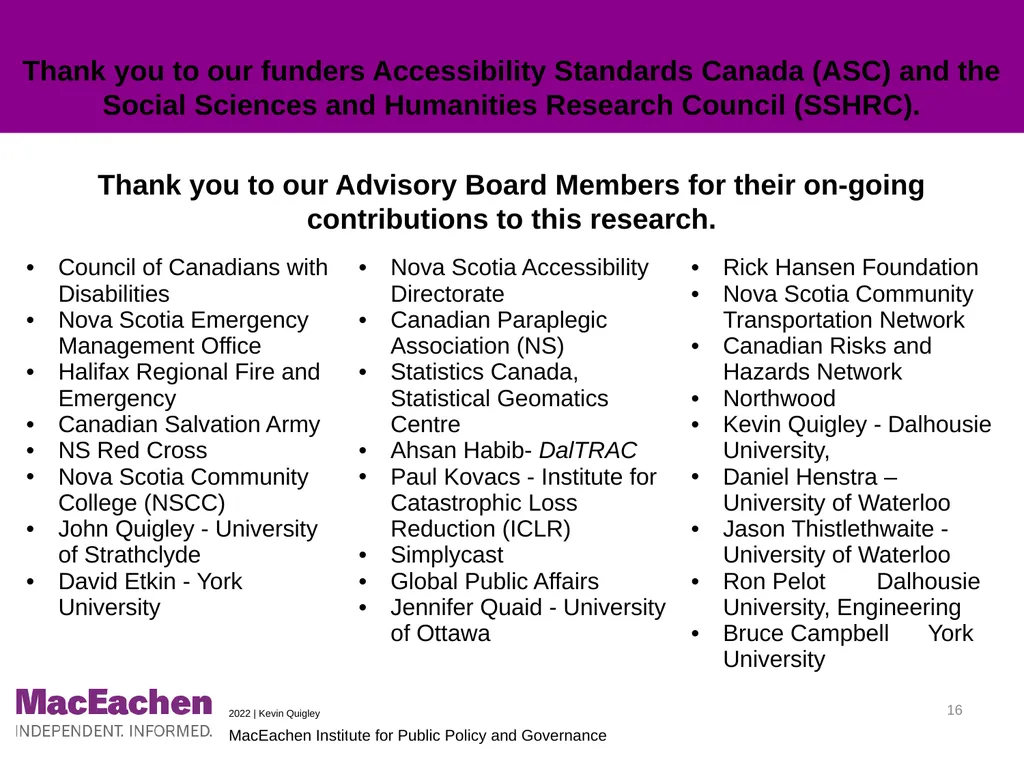
16 Thank you to our funders Accessibility Standards Canada (ASC) and the Social Sciences and Humanities Research Council (SSHRC).
Thank you to our Advisory Board Members for their on-going contributions to this research.<br>
Thank you to our Advisory Board Members for their on-going contributions to this research.<br>
17
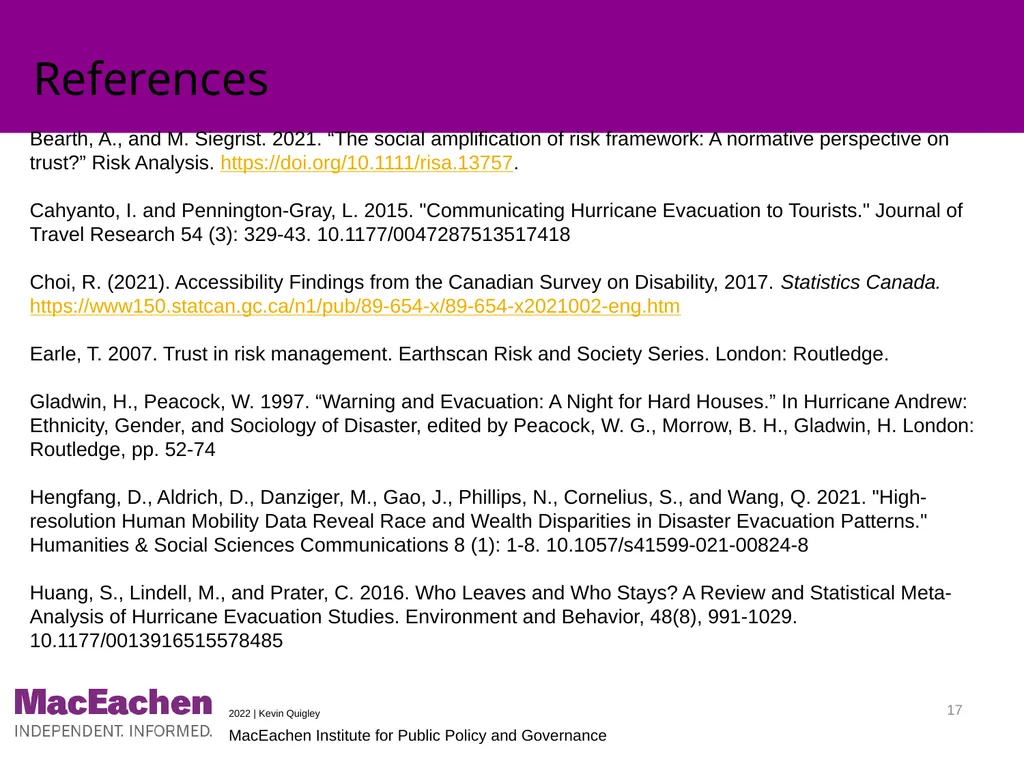
References 17 Bearth, A., and M. Siegrist. 2021. “The social amplification of risk framework: A normative perspective on trust?” Risk Analysis. https://doi.org/10.1111/risa.13757.
Cahyanto, I. and Pennington-Gray, L. 2015. "Communicating Hurricane Evacuation to Tourists." Journal of Travel Research 54 (3): 329-43. 10.1177/0047287513517418
Choi, R. (2021). Accessibility Findings from the Canadian Survey on Disability, 2017. Statistics Canada. https://www150.statcan.gc.ca/n1/pub/89-654-x/89-654-x2021002-eng.htm
Earle, T. 2007. Trust in risk management. Earthscan Risk and Society Series. London: Routledge.
Gladwin, H., Peacock, W. 1997. “Warning and Evacuation: A Night for Hard Houses.” In Hurricane Andrew: Ethnicity, Gender, and Sociology of Disaster, edited by Peacock, W. G., Morrow, B. H., Gladwin, H. London: Routledge, pp. 52-74
Hengfang, D., Aldrich, D., Danziger, M., Gao, J., Phillips, N., Cornelius, S., and Wang, Q. 2021. "High-resolution Human Mobility Data Reveal Race and Wealth Disparities in Disaster Evacuation Patterns." Humanities & Social Sciences Communications 8 (1): 1-8. 10.1057/s41599-021-00824-8
Huang, S., Lindell, M., and Prater, C. 2016. Who Leaves and Who Stays? A Review and Statistical Meta-Analysis of Hurricane Evacuation Studies. Environment and Behavior, 48(8), 991-1029. 10.1177/0013916515578485<br>
18
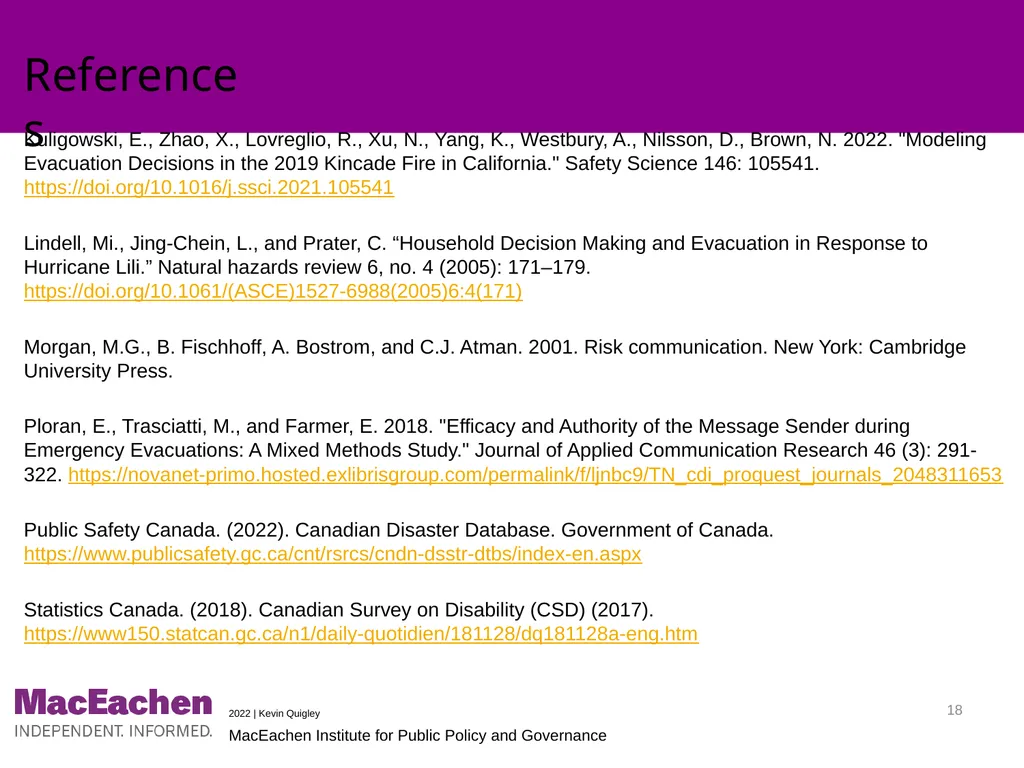
References 18 Kuligowski, E., Zhao, X., Lovreglio, R., Xu, N., Yang, K., Westbury, A., Nilsson, D., Brown, N. 2022. "Modeling Evacuation Decisions in the 2019 Kincade Fire in California." Safety Science 146: 105541. https://doi.org/10.1016/j.ssci.2021.105541
Lindell, Mi., Jing-Chein, L., and Prater, C. “Household Decision Making and Evacuation in Response to Hurricane Lili.” Natural hazards review 6, no. 4 (2005): 171–179. https://doi.org/10.1061/(ASCE)1527-6988(2005)6:4(171)
Morgan, M.G., B. Fischhoff, A. Bostrom, and C.J. Atman. 2001. Risk communication. New York: Cambridge University Press.
Ploran, E., Trasciatti, M., and Farmer, E. 2018. "Efficacy and Authority of the Message Sender during Emergency Evacuations: A Mixed Methods Study." Journal of Applied Communication Research 46 (3): 291-322. https://novanet-primo.hosted.exlibrisgroup.com/permalink/f/ljnbc9/TN_cdi_proquest_journals_2048311653
Public Safety Canada. (2022). Canadian Disaster Database. Government of Canada. https://www.publicsafety.gc.ca/cnt/rsrcs/cndn-dsstr-dtbs/index-en.aspx
Statistics Canada. (2018). Canadian Survey on Disability (CSD) (2017). https://www150.statcan.gc.ca/n1/daily-quotidien/181128/dq181128a-eng.htm<br>
19
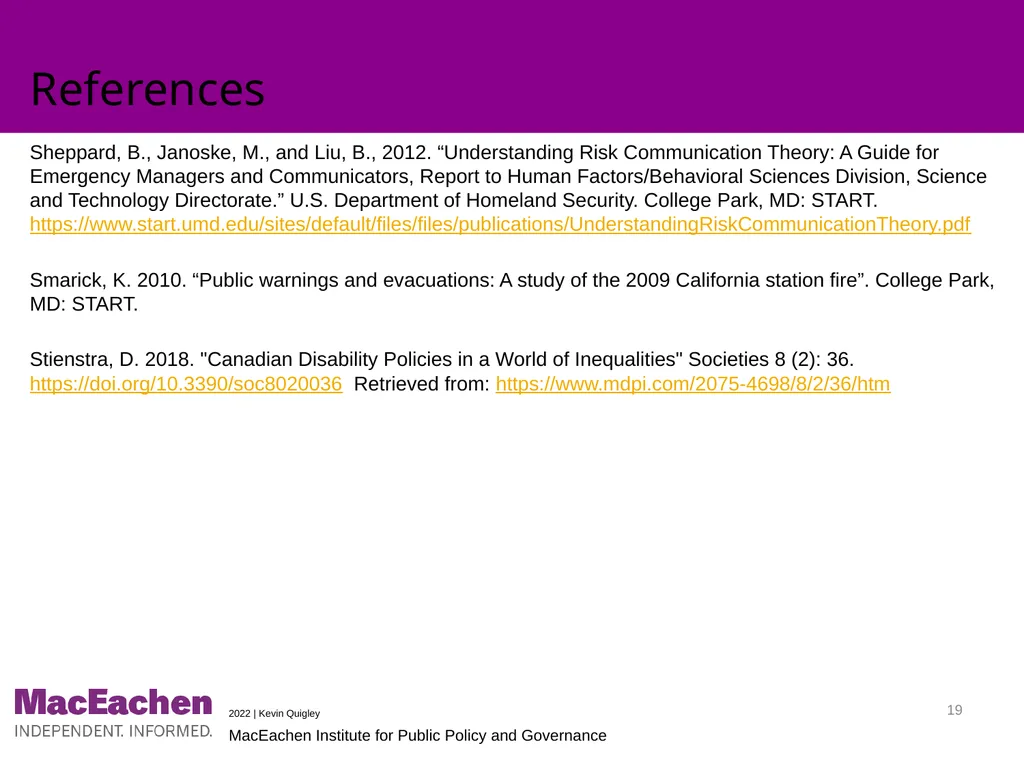
References 19 Sheppard, B., Janoske, M., and Liu, B., 2012. “Understanding Risk Communication Theory: A Guide for Emergency Managers and Communicators, Report to Human Factors/Behavioral Sciences Division, Science and Technology Directorate.” U.S. Department of Homeland Security. College Park, MD: START. https://www.start.umd.edu/sites/default/files/files/publications/UnderstandingRiskCommunicationTheory.pdf
Smarick, K. 2010. “Public warnings and evacuations: A study of the 2009 California station fire”. College Park, MD: START.
Stienstra, D. 2018. "Canadian Disability Policies in a World of Inequalities" Societies 8 (2): 36. https://doi.org/10.3390/soc8020036 Retrieved from: https://www.mdpi.com/2075-4698/8/2/36/htm<br>