Improving Community Adult Nutrition (I-CAN)

Published  . 0 views
↓ Download
Improving Community Adult Nutrition (I-CAN)
1 / 1
Improving Community Adult Nutrition (I-CAN) - slide 1 of 18 Improving Community Adult Nutrition (I-CAN) - slide 2 of 18 Improving Community Adult Nutrition (I-CAN) - slide 3 of 18 Improving Community Adult Nutrition (I-CAN) - slide 4 of 18 Improving Community Adult Nutrition (I-CAN) - slide 5 of 18 Improving Community Adult Nutrition (I-CAN) - slide 6 of 18 Improving Community Adult Nutrition (I-CAN) - slide 7 of 18 Improving Community Adult Nutrition (I-CAN) - slide 8 of 18 Improving Community Adult Nutrition (I-CAN) - slide 9 of 18 Improving Community Adult Nutrition (I-CAN) - slide 10 of 18 Improving Community Adult Nutrition (I-CAN) - slide 11 of 18 Improving Community Adult Nutrition (I-CAN) - slide 12 of 18 Improving Community Adult Nutrition (I-CAN) - slide 13 of 18 Improving Community Adult Nutrition (I-CAN) - slide 14 of 18 Improving Community Adult Nutrition (I-CAN) - slide 15 of 18 Improving Community Adult Nutrition (I-CAN) - slide 16 of 18 Improving Community Adult Nutrition (I-CAN) - slide 17 of 18 Improving Community Adult Nutrition (I-CAN) - slide 18 of 18
Description: Improving Community Adult Nutrition (I-CAN) e-learning RECAP: In Topic 3 How to create a nutritional care plan we covered: Leicestershire Nutrition Dietetic Service I-CAN - Treatment and Prevention of Malnutrition Please DO NOT save or

Related Topics

Download Presentation

"Improving Community Adult Nutrition (I-CAN)" is the property of its rightful owner. Permission is granted to download and print the materials on this website for personal, non-commercial use only, and to display it on your personal computer provided you do not modify the materials and that you retain all copyright notices contained in the materials. By downloading content from our website, you accept the terms of this agreement.

Presentation Transcript

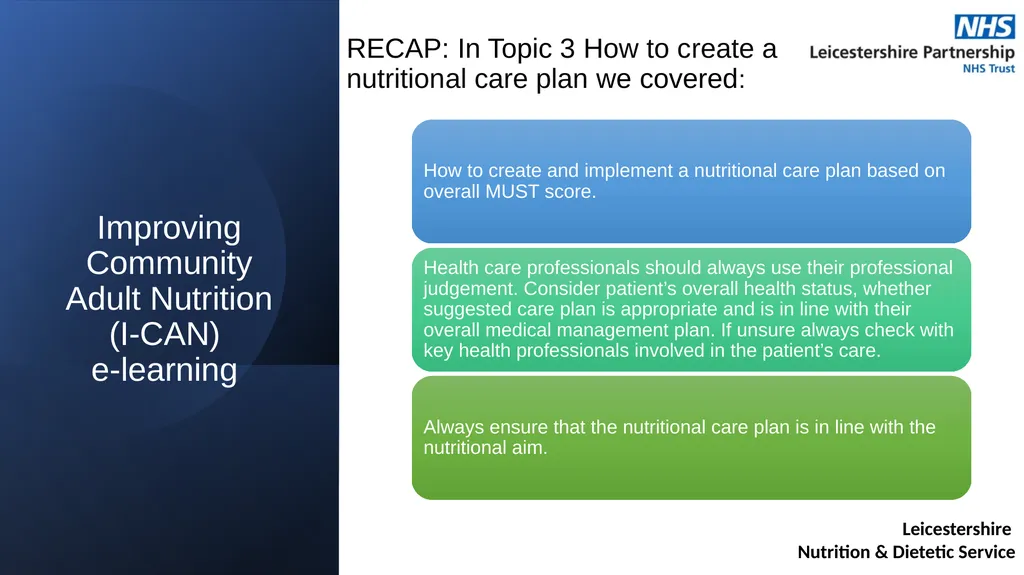
slide1. Improving Community Adult Nutrition (I-CAN) e-learning RECAP: In Topic 3 How to create a nutritional care plan we covered: Leicestershire
Nutrition & Dietetic Service<br>
slide2. I-CAN - Treatment and Prevention of Malnutrition Please DO NOT save or share this PowerPoint to avoid circulation of out of date information<br>
slide3. Aims: To be familiar with strategies used to manage and treat malnutrition in line with MUST management plans (covered in PowerPoint 3).

To understand a systematic approach beginning with a food first strategy, followed by food fortification ideas and thereafter consideration of oral nutritional supplements.

To be aware that treating malnutrition also includes ensuring a nutrient dense diet, adequate fluid intake as well as a suitable environment to optimise oral intake and support health and wellbeing.<br>
slide4. What is Food First & Fortification When someone has a poor appetite and is malnourished, nutrient dense foods and drinks containing nutrition can help to improve energy intake without making portions too big to manage. Protein, energy (calories) and vitamins and minerals are all important for people who are malnourished to ensure they are getting a nutrient-dense diet.

Food First:
This is utilising everyday foods which the patient enjoys and offering them more frequently throughout the day to maximise oral intake.

Food fortification:
Fortifying is when small quantities of everyday foods, such as cheese, milk powder, yoghurt, butter are added to a food or meal to increase the nutritional content, without increasing the portion size. This means every mouthful you eat will be more nourishing.<br>
slide5. Benefits of food first and fortification Provides extra protein, energy and nutrients to:
Promote wound healing
Increase muscle strength
Improve mobility
Reduce risk of infections
Promote weight gain towards a healthy BMI range<br>
slide6. Food First: General Tips for increasing food intake<br>
slide7. Food First: snack, meal and drink ideas Snacks
Dairy based puddings e.g. thick and creamy yogurts/ice cream/custard
Sausage roll/pork pie/scotch egg/bhaji
Crisps
Higher calorie biscuits e.g. chocolate coated/cream filled biscuits
Chocolate and sweets
Slice of cake or cheesecake, chocolate mini roll, malt loaf with butter, scone with jam and cream, cheese, muffins

Please click here to access our diet sheet – ‘Eating with a small appetite’ for more ideas Drinks
Lassi
Milky tea/coffee/hot chocolate/ ovaltine/horlicks
Fresh fruit juice/smoothies
Creamy soups Light meals

Toast with tinned fish/baked beans/ cheese/egg/hummus/butter/marmalade

Jacket potato with cheese/beans/tuna and mayo/coleslaw/butter/chilli con carne

Quiche/omelette/fish fingers/macaroni cheese/cauliflower cheese/corned beef hash<br>
slide8. Food Fortification Handy essentials to have available:<br>
slide9. A bowl of porridge
40g porridge + 2 tbsp double cream + 2 tbsp skimmed milk powder (additionally add +1 tbsp honey to increase calories and flavour)

1 scoop of mash potato made with milk
+ 2 tsps butter *additionally + 25g grated cheddar cheese (if appropriate for patient) and/or 2 tbsp cream

A bowl of tomato soup (150ml)
+ 2 tbsp double cream/2 tsp or butter

Home Made milk shake:
140ml of full fat milk, 1tbsp dried milk powder, handful of fruit, 1 scoop ice cream or 1-2 tbsp cream. Added sauce i.e 1 tbsp strawberry, chocolate, honey or ground nuts

Rice pudding:
2 tbsp of double cream, generous portion of jam How to use handy essentials to fortify meals:<br>
slide10. Nourishing fluids Fluids are important for maintaining optimum bodily function and preventing ill health
Although fluids can be filling which can impact on appetite, they can also provide an opportunity to improve nutritional status when oral intake of foods is minimal e.g. offering nourishing smoothie/pure fruit juice instead of squash
Milkshakes, fruit juices, smoothies and soups can be high in energy, protein, vitamins and minerals
Click here for nourishing drinks recipes
Further detailed information on general hydration guidance is covered in PowerPoint 6<br>
slide11. Alternative food fortification considerations Vegan: houmous, avocado, vegetable oil, ground nuts, dairy free products i.e. soya cream, coconut yogurts and ice cream, homemade milkshake with full fat tin of coconut milk as base
Dairy free diet: soya or other dairy free milks/yogurts fortified with calcium, milk free spreads, honey, jam
Cardio-protective: olive oil, vegetable oil spreads to replace butter/cream, ground nuts
Diabetes: milk powder, cheese, cream, butter, fats and oils (avoid adding extra sugar and sweet foods) Standard food fortification ideas previously mentioned may not be suitable for your resident if they have allergies or restrict their diet for cultural or other health reasons, these ideas could be used instead<br>
slide12. Other considerations:<br>
slide13. Please see Dementia UK Eating and Drinking guide These adaptations can be supportive for those with visual impairments, cognitive decline e.g., dementia/post –stroke or when generally unwell and appetite is reduced<br>
slide14. Oral Nutritional Supplements (ONS) Come in a variety of forms that provide additional energy, protein, vitamins and minerals.
e.g. powdered, pre mixed milkshake, juice style, desserts style, small volume, modified thickness.
Dietitian chooses most appropriate supplement dependent on the patient’s need.<br>
slide15. Key considerations when using ONS ONS should only be prescribed when:
First-line dietary advice has not been sufficient alone They should not be used on a long term basis without regular monitoring and re-assessment Supplements should be taken after or between meals Remember: even if a patient is taking supplements, food first is still of benefit and should be continued. Supplements do not replace food. Prescribing of ONS are based on addressing specific dietary needs following individual patient’s dietetic assessment therefore they should ONLY be given to that individual ONS can be offered chilled or warm, however if specific IDDSI fluid levels in place by SLT then this may alter the thickness of fluids and therefore may not be appropriate Flavour fatigue can affect compliance, therefore flavours should be varied<br>
slide16. Knowledge Check: Ethel is still feeling poorly following her chest infection and still eating less than ½ her meals and losing weight. Consider how you could fortify her current diet. Also think about what other factors are important to optimise oral intake ?<br>
slide17. Food fortification ideas to encourage/offer Ethel Breakfast:
Cereal: Use enriched milk/add 1-2 tablespoons double cream/ jam/honey
Toast: Add extra thick spread of butter/encourage other toppings jam/honey/marmalade/chocolate spread Fluids:
Tea: Ensure full fat milk used, add extra milk, sugar
Hot chocolate: add cream, marshmallows, full fat milk
Offer variety of fluids- consider fresh juice/home made milkshakes/smoothies as an alternative? Lunch/Evening meal:
Soup: Add butter/cream/cheese
Chicken Pie: Add extra cream and cheese to filling
Mash potato: Add butter, cream, cheese
Veg: Add melted butter when serving Environment:
Consider if Ethel eats better with others?
Is there adequate lighting?
Are there any distractions?
Is the temperature of the food appropriate ? Snacks/Pudding:
Can we offer some custard/full fat yoghurt alongside fruitcake?
Would Ethel like some cheese and crackers instead of plain biscuits?<br>
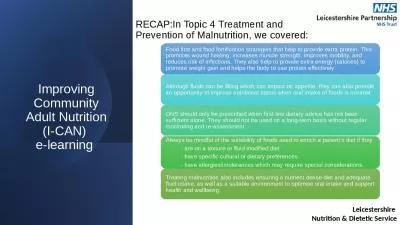
slide18. Summary Food first and food fortification strategies help to provide extra protein to promote wound healing, increase muscle strength, improve mobility, reduce risk of infections. They also help to provide extra energy (calories) to promote weight gain and helps the body to use protein effectively.

Although fluids can be filling which can impact on appetite, they can also provide an opportunity to improve nutritional status when oral intake of foods is minimal.

ONS should only be prescribed when first-line dietary advice has not been sufficient alone. They should not be used on a long term basis without regular monitoring and re-assessment.

Always be mindful of the suitability of foods used to enrich a patient’s diet if they
- are on a texture or fluid modified diet
- have specific cultural or dietary preferences
- have allergies/intolerances which may require special considerations.

Treating malnutrition also includes ensuring a nutrient dense diet, adequate fluid intake as well as a suitable environment to optimise oral intake and support health and wellbeing.<br>