
In-field Trainings Methods of Implementation Type



Description: In-field Trainings Methods of Implementation Type the name of your organization here. 1 WHERE ARE WE?: In-field Trainings in SHEPs 4 Steps 2 In-field Trainings are where the farmers acquire new skills and knowledge. PART 1: CONCEPT 3 WHY?:
Related Topics
Download Presentation
"In-field Trainings Methods of Implementation Type" is the property of its rightful owner. Permission is granted to download and print the materials on this website for personal, non-commercial use only, and to display it on your personal computer provided you do not modify the materials and that you retain all copyright notices contained in the materials. By downloading content from our website, you accept the terms of this agreement.
Presentation Transcript
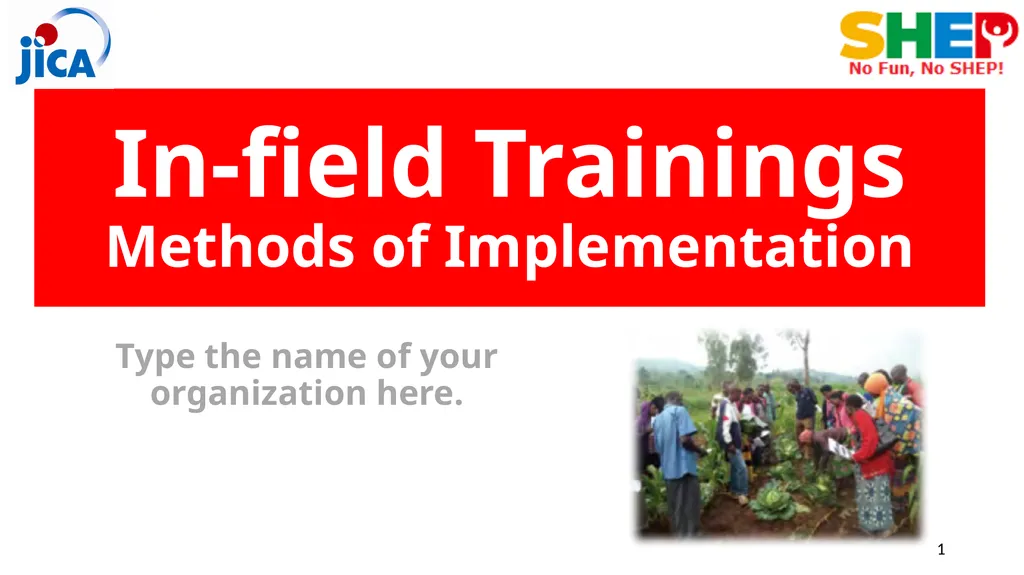
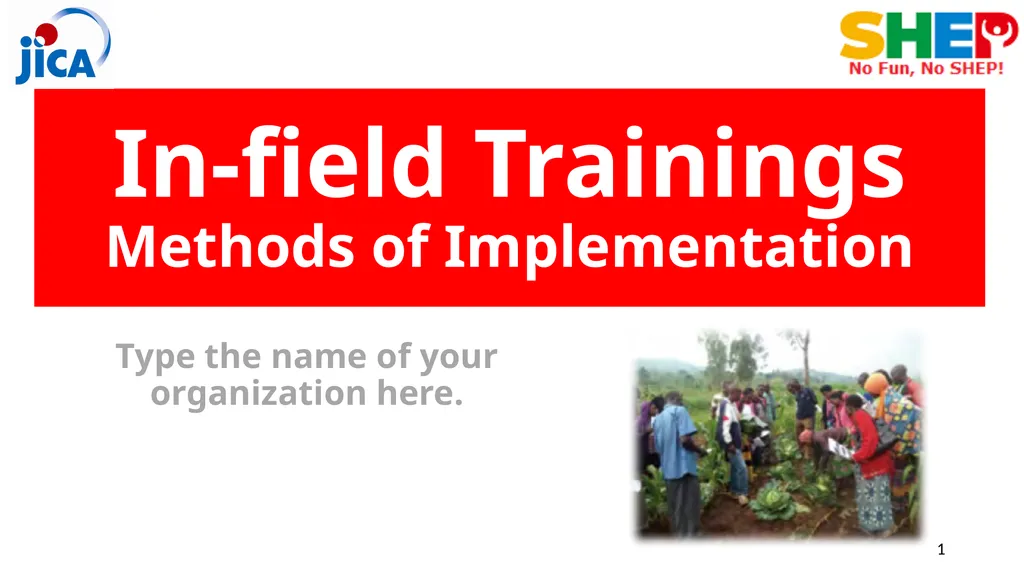
slide1. In-field Trainings
Methods of Implementation Type the name of your organization here. 1<br>
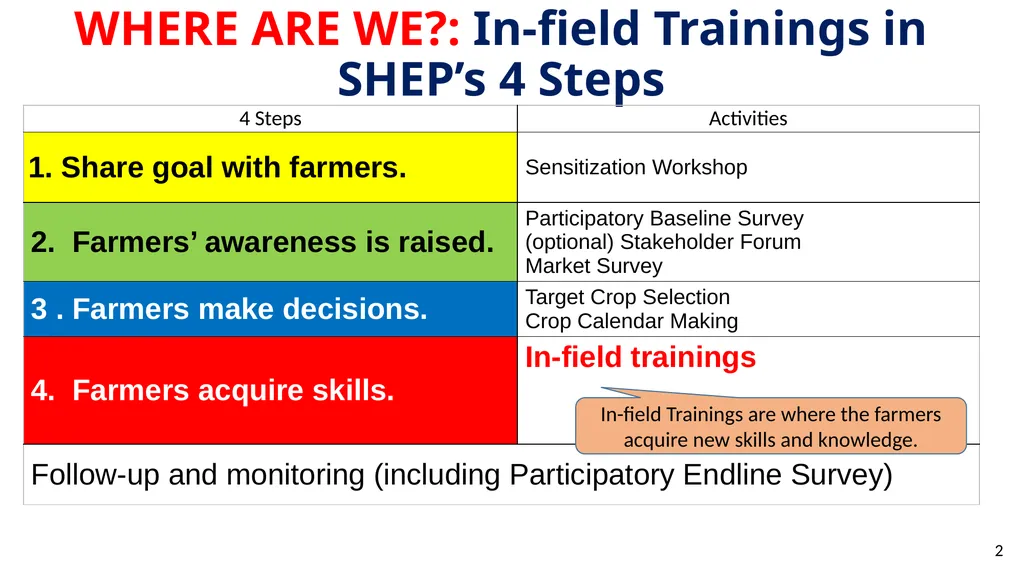
slide2. WHERE ARE WE?: In-field Trainings in SHEP’s 4 Steps 2 In-field Trainings are where the farmers acquire new skills and knowledge.<br>
slide3. PART 1: CONCEPT 3<br>
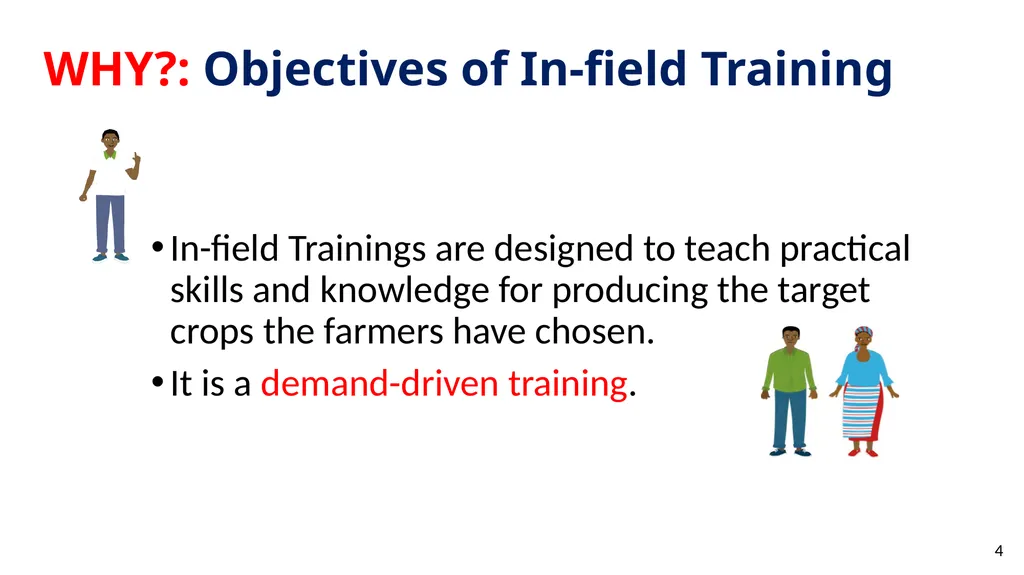
slide4. WHY?: Objectives of In-field Training In-field Trainings are designed to teach practical skills and knowledge for producing the target crops the farmers have chosen.
It is a demand-driven training. 4<br>
slide5. WHAT?: Outline of In-field Training The extension staff organizes training sessions where the target farmers learn skills, techniques and knowledge necessary for the production of the target crops.
The training should be practical and conducted at the farmers’ fields or in their vicinity with ample demonstrations and exercises. 5<br>
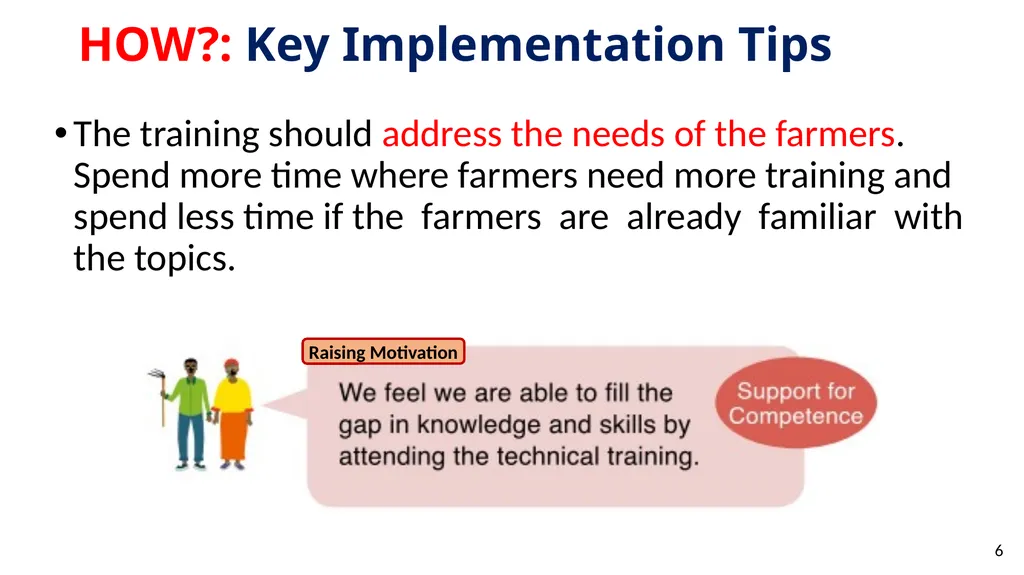
slide6. HOW?: Key Implementation Tips The training should address the needs of the farmers. Spend more time where farmers need more training and spend less time if the farmers are already familiar with the topics. 6 Raising Motivation<br>
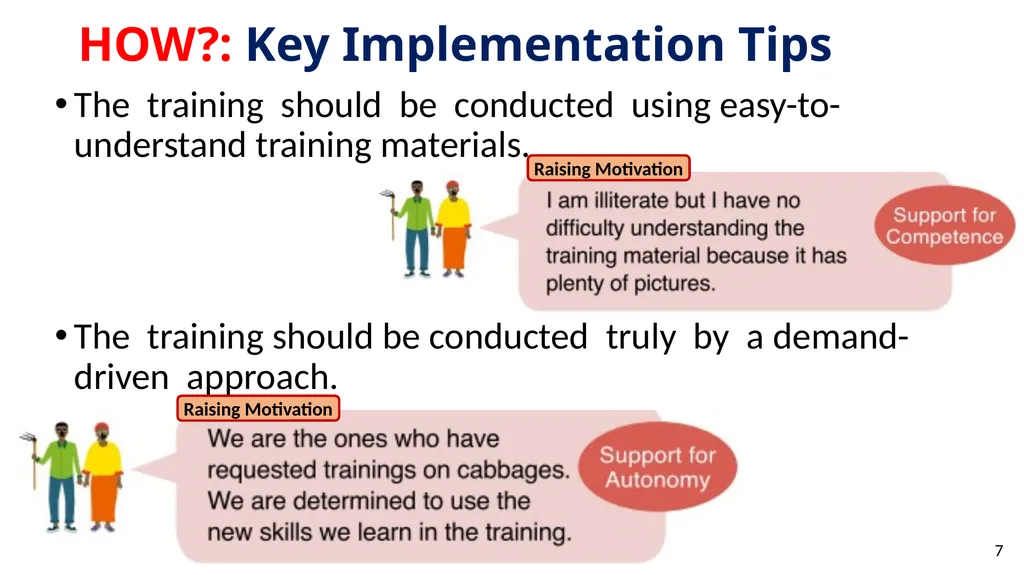
slide7. HOW?: Key Implementation Tips The training should be conducted truly by a demand-driven approach. 7 Raising Motivation The training should be conducted using easy-to-understand training materials. Raising Motivation<br>
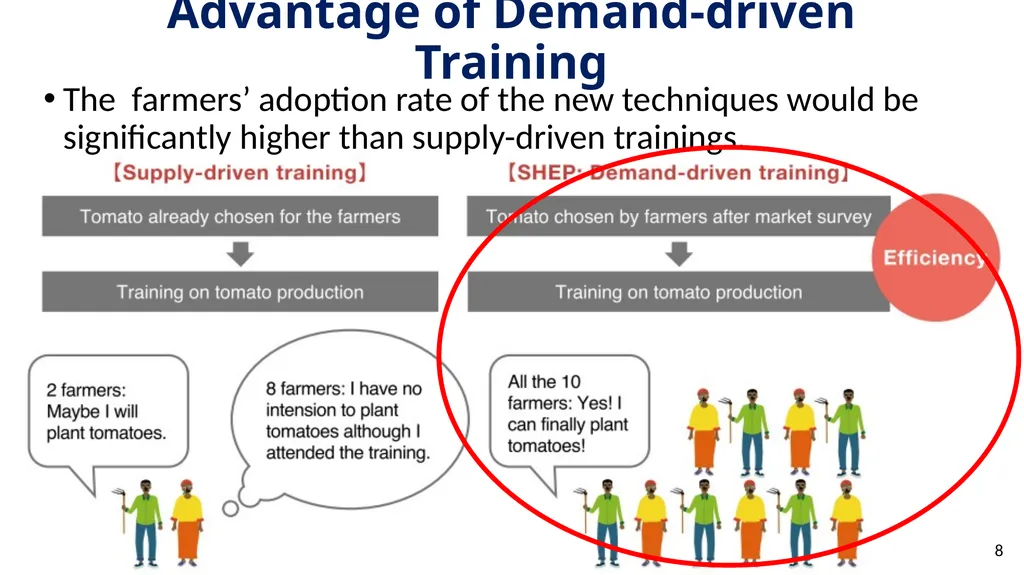
slide8. Advantage of Demand-driven Training 8 The farmers’ adoption rate of the new techniques would be significantly higher than supply-driven trainings.<br>
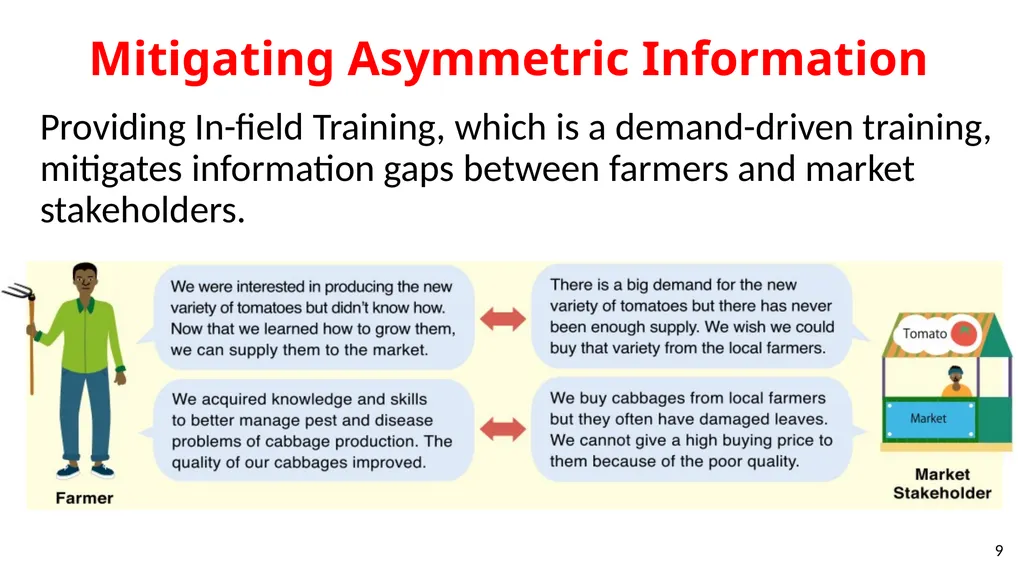
slide9. 9 Mitigating Asymmetric Information Providing In-field Training, which is a demand-driven training, mitigates information gaps between farmers and market stakeholders.<br>
slide10. PART 2: PRACTICE 10<br>
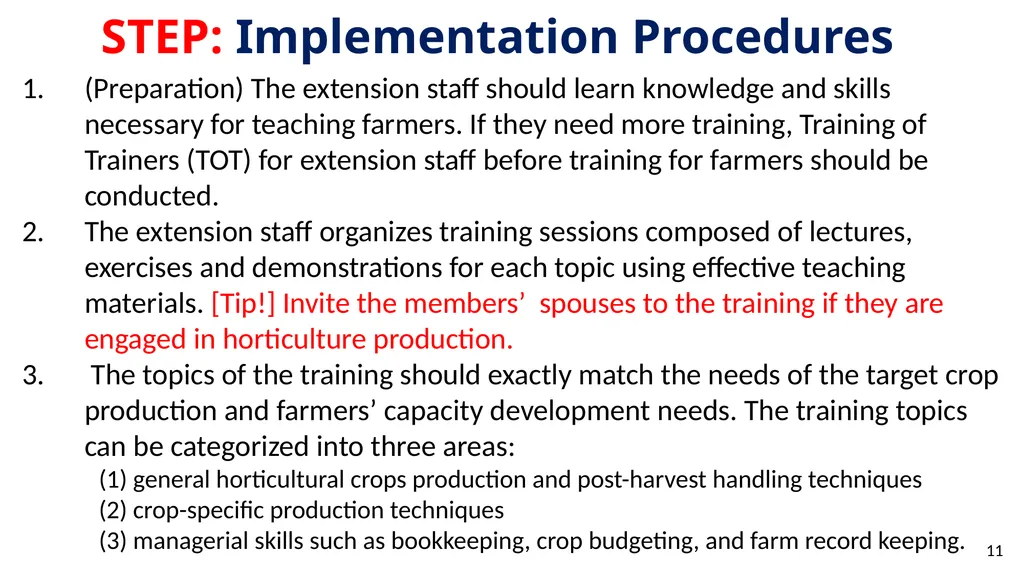
slide11. STEP: Implementation Procedures (Preparation) The extension staff should learn knowledge and skills necessary for teaching farmers. If they need more training, Training of Trainers (TOT) for extension staff before training for farmers should be conducted.
The extension staff organizes training sessions composed of lectures, exercises and demonstrations for each topic using effective teaching materials. [Tip!] Invite the members’ spouses to the training if they are engaged in horticulture production.
The topics of the training should exactly match the needs of the target crop production and farmers’ capacity development needs. The training topics can be categorized into three areas:
(1) general horticultural crops production and post-harvest handling techniques
(2) crop-specific production techniques
(3) managerial skills such as bookkeeping, crop budgeting, and farm record keeping. 11<br>
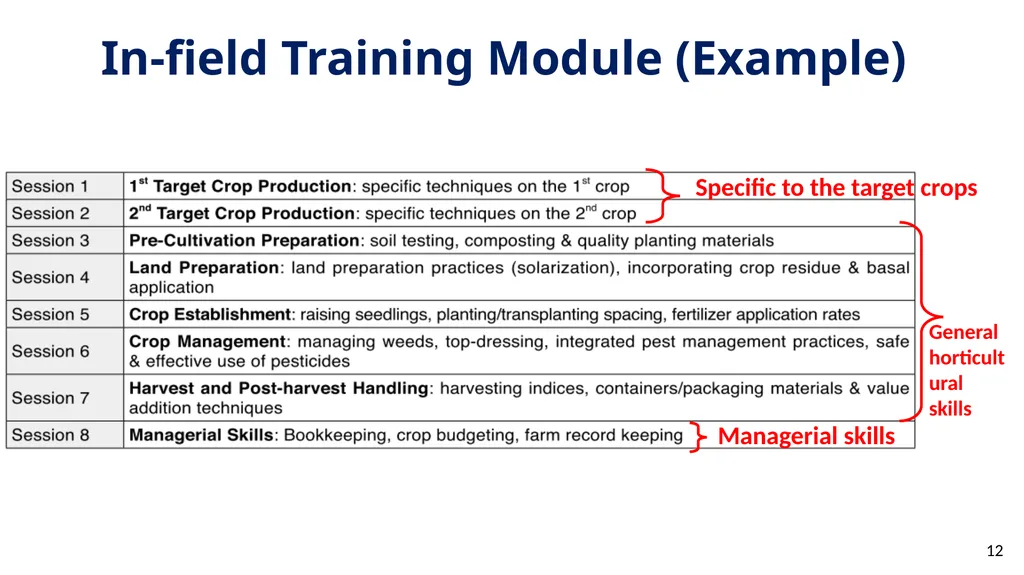
slide12. In-field Training Module (Example) 12 Specific to the target crops General horticultural skills Managerial skills<br>
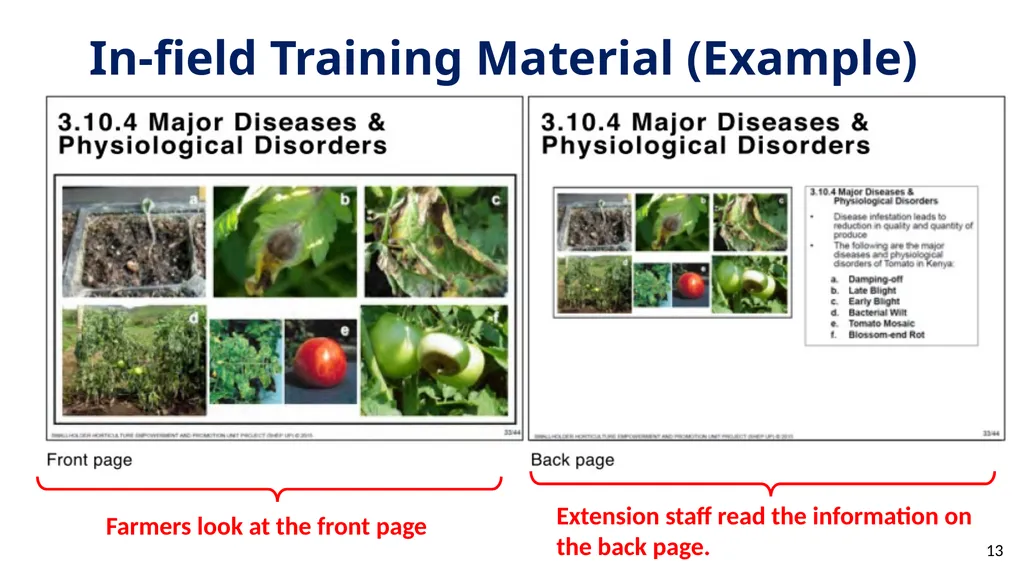
slide13. In-field Training Material (Example) 13 Extension staff read the information on the back page. Farmers look at the front page<br>
slide14. CHECKLIST: Points to be Confirmed after In-field Training The target farmers understand and acquire technical knowledge and skills taught in the trainings.
The target farmers do not face any technical, financial or social difficulties applying techniques taught in the trainings. (If they do, identify the problems, consult them and give appropriate guidance to them.)
Male-female ratio of the participants is balanced.
Participation of the members’ spouses is encouraged.
Gender stereotype and gender-insensitive training methods and materials are avoided.
Sufficient consideration is given to illiterate farmers in designing training methods.
Labor-saving techniques or tools/ equipment, especially for women’s benefit, are introduced. 14<br>
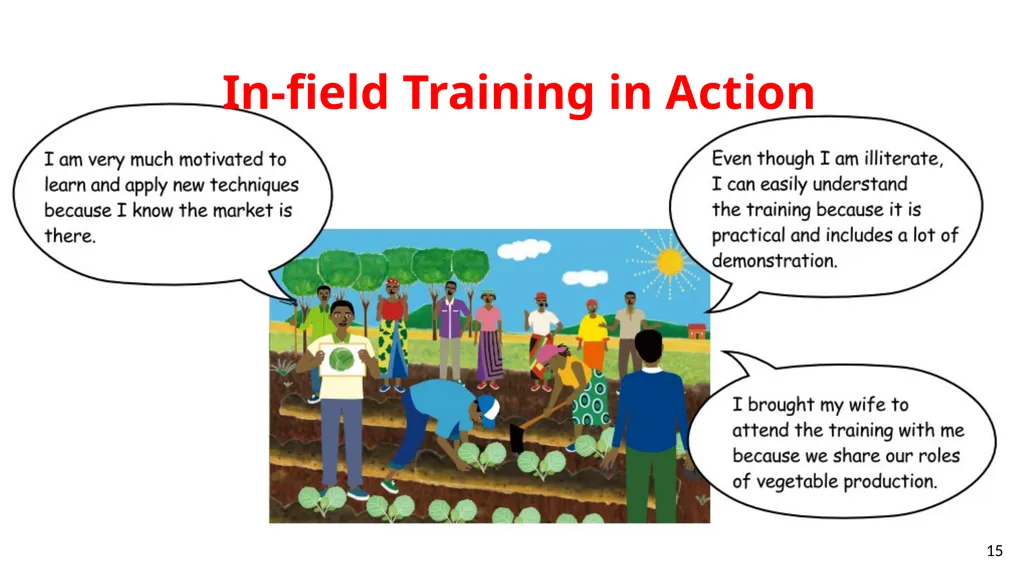
slide15. 15 In-field Training in Action<br>
slide16. TROUBLESHOOTING What if the farmers have difficulties in understanding? Try to make the training as practical as possible. For example, use a language easy for them to understand, choose user-friendly training materials, show techniques by conducting plenty of demonstrations.
What if the farmers are too busy to attend the trainings? Ideally, the In-field Trainings should be conducted before the farmers become busy planting crops. However, when such an arrangement is not possible, try organizing trainings when farmers’ availability is high. 16<br>
slide17. 17 Way Forward: Implementation Schedule, Reporting, add any other necessary info. here<br>
slide2. WHERE ARE WE?: In-field Trainings in SHEP’s 4 Steps 2 In-field Trainings are where the farmers acquire new skills and knowledge.<br>
slide3. PART 1: CONCEPT 3<br>
slide4. WHY?: Objectives of In-field Training In-field Trainings are designed to teach practical skills and knowledge for producing the target crops the farmers have chosen.
It is a demand-driven training. 4<br>
slide5. WHAT?: Outline of In-field Training The extension staff organizes training sessions where the target farmers learn skills, techniques and knowledge necessary for the production of the target crops.
The training should be practical and conducted at the farmers’ fields or in their vicinity with ample demonstrations and exercises. 5<br>
slide6. HOW?: Key Implementation Tips The training should address the needs of the farmers. Spend more time where farmers need more training and spend less time if the farmers are already familiar with the topics. 6 Raising Motivation<br>
slide7. HOW?: Key Implementation Tips The training should be conducted truly by a demand-driven approach. 7 Raising Motivation The training should be conducted using easy-to-understand training materials. Raising Motivation<br>
slide8. Advantage of Demand-driven Training 8 The farmers’ adoption rate of the new techniques would be significantly higher than supply-driven trainings.<br>
slide9. 9 Mitigating Asymmetric Information Providing In-field Training, which is a demand-driven training, mitigates information gaps between farmers and market stakeholders.<br>
slide10. PART 2: PRACTICE 10<br>
slide11. STEP: Implementation Procedures (Preparation) The extension staff should learn knowledge and skills necessary for teaching farmers. If they need more training, Training of Trainers (TOT) for extension staff before training for farmers should be conducted.
The extension staff organizes training sessions composed of lectures, exercises and demonstrations for each topic using effective teaching materials. [Tip!] Invite the members’ spouses to the training if they are engaged in horticulture production.
The topics of the training should exactly match the needs of the target crop production and farmers’ capacity development needs. The training topics can be categorized into three areas:
(1) general horticultural crops production and post-harvest handling techniques
(2) crop-specific production techniques
(3) managerial skills such as bookkeeping, crop budgeting, and farm record keeping. 11<br>
slide12. In-field Training Module (Example) 12 Specific to the target crops General horticultural skills Managerial skills<br>
slide13. In-field Training Material (Example) 13 Extension staff read the information on the back page. Farmers look at the front page<br>
slide14. CHECKLIST: Points to be Confirmed after In-field Training The target farmers understand and acquire technical knowledge and skills taught in the trainings.
The target farmers do not face any technical, financial or social difficulties applying techniques taught in the trainings. (If they do, identify the problems, consult them and give appropriate guidance to them.)
Male-female ratio of the participants is balanced.
Participation of the members’ spouses is encouraged.
Gender stereotype and gender-insensitive training methods and materials are avoided.
Sufficient consideration is given to illiterate farmers in designing training methods.
Labor-saving techniques or tools/ equipment, especially for women’s benefit, are introduced. 14<br>
slide15. 15 In-field Training in Action<br>
slide16. TROUBLESHOOTING What if the farmers have difficulties in understanding? Try to make the training as practical as possible. For example, use a language easy for them to understand, choose user-friendly training materials, show techniques by conducting plenty of demonstrations.
What if the farmers are too busy to attend the trainings? Ideally, the In-field Trainings should be conducted before the farmers become busy planting crops. However, when such an arrangement is not possible, try organizing trainings when farmers’ availability is high. 16<br>
slide17. 17 Way Forward: Implementation Schedule, Reporting, add any other necessary info. here<br>